mitochondria and chloroplasts

0.0(0)
studied byStudied by 0 people
0.0(0)
call with kaiCall with Kai
learnLearn
examPractice Test
spaced repetitionSpaced Repetition
heart puzzleMatch
flashcardsFlashcards
GameKnowt Play
Card Sorting

1/28

encourage image

There's no tags or description

Looks like no tags are added yet.

Last updated 1:46 PM on 1/20/26
Name
Mastery
Learn
Test
Matching
Spaced
Call with Kai

No analytics yet

Send a link to your students to track their progress

29 Terms

1
New cards

both energy producing organelles

  • Chloroplasts 

    • Fixation of co2 into sugars and other organic molecules 

    • Requires energy (from sunlight) 

    • Splitting of water and release of water  

  • Mitochondria 

    • Release co2 

    • Consume oxygen 

2
New cards

mitochondria structure

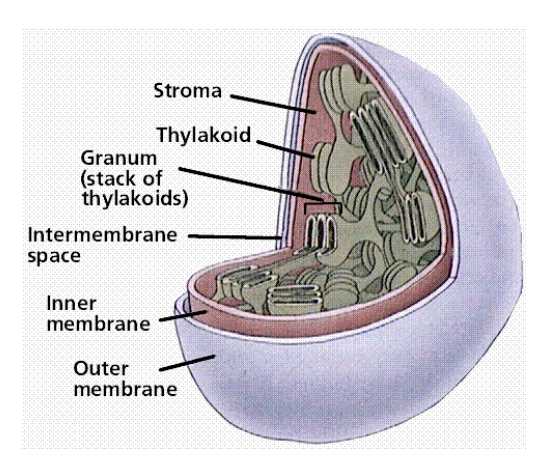
  • 2 different membranes 

    • Outer = porous 

    • Intermembrane proteins 

    • Nutrients and small organic molecules can move freely across 

    • Inner = highly folded 

    • Folds are called cristae 

    • Increases surface area 

  • Matrix 

    • Where proteins are present (e.g. enzymes for citric acid cycle) 
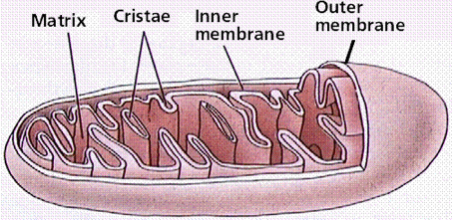
<ul><li><p class="Paragraph SCXO143265935 BCX4" style="text-align: left;"><span style="background-color: inherit; line-height: 19.55px; color: windowtext;"><span>2 different membranes</span></span><span style="line-height: 19.55px; color: windowtext;"><span>&nbsp;</span></span></p><ul><li><p class="Paragraph SCXO143265935 BCX4" style="text-align: left;"><span style="background-color: inherit; line-height: 19.55px; color: windowtext;"><span>Outer = porous</span></span><span style="line-height: 19.55px; color: windowtext;"><span>&nbsp;</span></span></p></li><li><p class="Paragraph SCXO143265935 BCX4" style="text-align: left;"><span style="background-color: inherit; line-height: 19.55px; color: windowtext;"><span>Intermembrane proteins</span></span><span style="line-height: 19.55px; color: windowtext;"><span>&nbsp;</span></span></p></li><li><p class="Paragraph SCXO143265935 BCX4" style="text-align: left;"><span style="background-color: inherit; line-height: 19.55px; color: windowtext;"><span>Nutrients and small organic molecules can move freely across</span></span><span style="line-height: 19.55px; color: windowtext;"><span>&nbsp;</span></span></p></li><li><p class="Paragraph SCXO143265935 BCX4" style="text-align: left;"><span style="background-color: inherit; line-height: 19.55px; color: windowtext;"><span>Inner = highly folded</span></span><span style="line-height: 19.55px; color: windowtext;"><span>&nbsp;</span></span></p></li><li><p class="Paragraph SCXO143265935 BCX4" style="text-align: left;"><span style="background-color: inherit; line-height: 19.55px; color: windowtext;"><span>Folds are called cristae</span></span><span style="line-height: 19.55px; color: windowtext;"><span>&nbsp;</span></span></p></li><li><p class="Paragraph SCXO143265935 BCX4" style="text-align: left;"><span style="background-color: inherit; line-height: 19.55px; color: windowtext;"><span>Increases surface area</span></span><span style="line-height: 19.55px; color: windowtext;"><span>&nbsp;</span></span></p></li></ul></li><li><p class="Paragraph SCXO143265935 BCX4" style="text-align: left;"><span style="background-color: inherit; line-height: 19.55px; color: windowtext;"><span>Matrix</span></span><span style="line-height: 19.55px; color: windowtext;"><span>&nbsp;</span></span></p><ul><li><p class="Paragraph SCXO143265935 BCX4" style="text-align: left;"><span style="background-color: inherit; line-height: 19.55px; color: windowtext;"><span>Where proteins are present (e.g. enzymes for citric acid cycle)</span></span><span style="line-height: 19.55px; color: windowtext;"><span>&nbsp;</span></span></p></li></ul></li></ul><p></p>
3
New cards

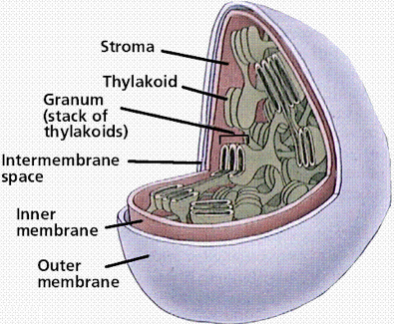
chloroplast structure

  • 3 membranes 

    • Inner 

    • Outer 

    • Thylakoid 

    • Into stacks of grana 

    • Large areas of membrane 

    • Where ATP synthase sits 

    • Where most photosynthetic machinery is 

    • e.g. photosystems 

<ul><li><p class="Paragraph SCXO255463684 BCX4" style="text-align: left;"><span style="background-color: inherit; line-height: 19.55px; color: windowtext;"><span>3 membranes</span></span><span style="line-height: 19.55px; color: windowtext;"><span>&nbsp;</span></span></p><ul><li><p class="Paragraph SCXO255463684 BCX4" style="text-align: left;"><span style="background-color: inherit; line-height: 19.55px; color: windowtext;"><span>Inner</span></span><span style="line-height: 19.55px; color: windowtext;"><span>&nbsp;</span></span></p></li><li><p class="Paragraph SCXO255463684 BCX4" style="text-align: left;"><span style="background-color: inherit; line-height: 19.55px; color: windowtext;"><span>Outer</span></span><span style="line-height: 19.55px; color: windowtext;"><span>&nbsp;</span></span></p></li><li><p class="Paragraph SCXO255463684 BCX4" style="text-align: left;"><span style="background-color: inherit; line-height: 19.55px; color: windowtext;"><span>Thylakoid</span></span><span style="line-height: 19.55px; color: windowtext;"><span>&nbsp;</span></span></p></li><li><p class="Paragraph SCXO255463684 BCX4" style="text-align: left;"><span style="background-color: inherit; line-height: 19.55px; color: windowtext;"><span>Into stacks of grana</span></span><span style="line-height: 19.55px; color: windowtext;"><span>&nbsp;</span></span></p></li><li><p class="Paragraph SCXO255463684 BCX4" style="text-align: left;"><span style="background-color: inherit; line-height: 19.55px; color: windowtext;"><span>Large areas of membrane</span></span><span style="line-height: 19.55px; color: windowtext;"><span>&nbsp;</span></span></p></li><li><p class="Paragraph SCXO255463684 BCX4" style="text-align: left;"><span style="background-color: inherit; line-height: 19.55px; color: windowtext;"><span>Where ATP synthase sits</span></span><span style="line-height: 19.55px; color: windowtext;"><span>&nbsp;</span></span></p></li><li><p class="Paragraph SCXO255463684 BCX4" style="text-align: left;"><span style="background-color: inherit; line-height: 19.55px; color: windowtext;"><span>Where most photosynthetic machinery is</span></span><span style="line-height: 19.55px; color: windowtext;"><span>&nbsp;</span></span></p></li><li><p class="Paragraph SCXO255463684 BCX4" style="text-align: left;"><span style="background-color: inherit; line-height: 19.55px; color: windowtext;"><span>e.g. photosystems</span></span><span style="line-height: 19.55px; color: windowtext;"><span>&nbsp;</span></span></p></li></ul></li></ul><p></p>
4
New cards

mitochondria ATP synthesis

  • Anabolic reactions of cells responsible for growth and repair processes 

  • Catabolic reactions release energy needed to drive anabolic reactions 

  • Must be an efficient linking or coupling of energy yielding to energy requiring processes 

  • ATP is most commonly used as this energy intermediate 

  • Energy currency of the cell 

  • Transfers the energy captured during cellular respiration to the cellular sites that use energy 

  • Cleavage of phosphate bonds provides energy 

  • Cells obtain most of their energy from membrane bound mechanisms 

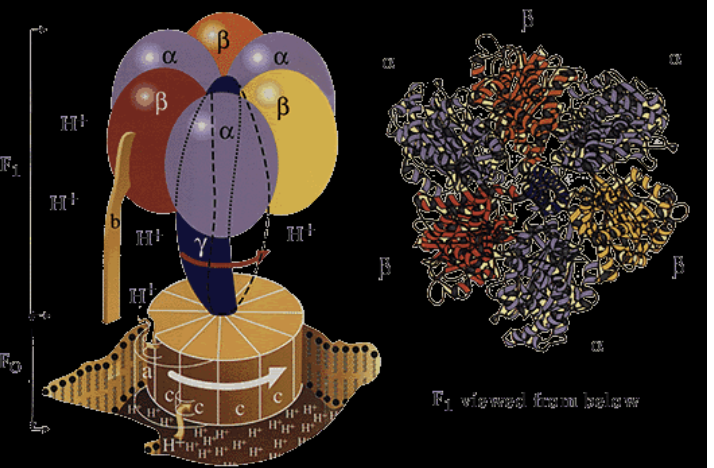
    • ATP synthase is found in the mitochondrial inner membrane, the chloroplast thylakoid membrane and the inner membrane of eubacteria 

    • Large multisubunit F-type ATPase made up of an F0 which in integral in the membrane and F1 which is peripheral 
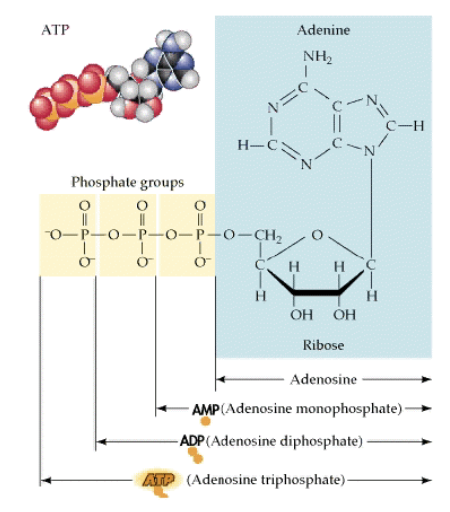
<ul><li><p class="Paragraph SCXO77585672 BCX4" style="text-align: left;"><span style="background-color: inherit; line-height: 19.55px; color: windowtext;"><span>Anabolic reactions of cells responsible for growth and repair processes</span></span><span style="line-height: 19.55px; color: windowtext;"><span>&nbsp;</span></span></p></li><li><p class="Paragraph SCXO77585672 BCX4" style="text-align: left;"><span style="background-color: inherit; line-height: 19.55px; color: windowtext;"><span>Catabolic reactions release energy needed to drive anabolic reactions</span></span><span style="line-height: 19.55px; color: windowtext;"><span>&nbsp;</span></span></p></li><li><p class="Paragraph SCXO77585672 BCX4" style="text-align: left;"><span style="background-color: inherit; line-height: 19.55px; color: windowtext;"><span>Must be an efficient linking or coupling of energy yielding to energy requiring processes</span></span><span style="line-height: 19.55px; color: windowtext;"><span>&nbsp;</span></span></p></li><li><p class="Paragraph SCXO77585672 BCX4" style="text-align: left;"><span style="background-color: inherit; line-height: 19.55px; color: windowtext;"><span>ATP is most commonly used as this energy intermediate</span></span><span style="line-height: 19.55px; color: windowtext;"><span>&nbsp;</span></span></p></li><li><p class="Paragraph SCXO77585672 BCX4" style="text-align: left;"><span style="background-color: inherit; line-height: 19.55px; color: windowtext;"><span>Energy currency of the cell</span></span><span style="line-height: 19.55px; color: windowtext;"><span>&nbsp;</span></span></p></li><li><p class="Paragraph SCXO77585672 BCX4" style="text-align: left;"><span style="background-color: inherit; line-height: 19.55px; color: windowtext;"><span>Transfers the energy captured during cellular respiration to the cellular sites that use energy</span></span><span style="line-height: 19.55px; color: windowtext;"><span>&nbsp;</span></span></p></li><li><p class="Paragraph SCXO77585672 BCX4" style="text-align: left;"><span style="background-color: inherit; line-height: 19.55px; color: windowtext;"><span>Cleavage of phosphate bonds provides energy</span></span><span style="line-height: 19.55px; color: windowtext;"><span>&nbsp;</span></span></p></li><li><p class="Paragraph SCXO65924309 BCX4" style="text-align: left;"><span style="background-color: inherit; line-height: 19.55px; color: windowtext;"><span>Cells obtain most of their energy from membrane bound mechanisms</span></span><span style="line-height: 19.55px; color: windowtext;"><span>&nbsp;</span></span></p><ul><li><p class="Paragraph SCXO65924309 BCX4" style="text-align: left;"><span style="background-color: inherit; line-height: 19.55px; color: windowtext;"><span>ATP synthase is found in the mitochondrial inner membrane, the chloroplast thylakoid membrane and the inner membrane of eubacteria</span></span><span style="line-height: 19.55px; color: windowtext;"><span>&nbsp;</span></span></p></li><li><p class="Paragraph SCXO65924309 BCX4" style="text-align: left;"><span style="background-color: inherit; line-height: 19.55px; color: windowtext;"><span>Large multisubunit F-type ATPase made up of an F0 which in integral in the membrane and F1 which is peripheral</span></span><span style="line-height: 19.55px; color: windowtext;"><span>&nbsp;</span></span></p></li></ul></li></ul><p></p>
5
New cards

structure and function of ATP synthase

  • Large head is attached through a stalk to the transmembrane carrier for protons 

  • As protons pass through the carrier it is thought that the stalk spins inducing the head to produce ATP 

  • As protons move through ATP synthase, the stalk rotates 

    • Causes conformational change of shape (distorts F1) as gamma stalk is asymmetrical  

    • Provides energy for production of ATP from ADP and Pi 

    • From slides 

      • This rotation drives the conformational transitions of the catalytic subunits which, in turn, alters the nucleotide binding site affinities. As a consequence, conformational energy flows from the catalytic subunit into the bound ADP and Pi to promote their dehydration into ATP. 
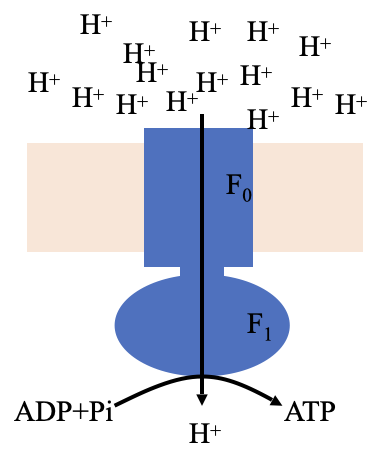
<ul><li><p class="Paragraph SCXO127503130 BCX4" style="text-align: left;"><span style="background-color: inherit; line-height: 19.55px; color: windowtext;"><span>Large head is attached through a stalk to the transmembrane carrier for protons</span></span><span style="line-height: 19.55px; color: windowtext;"><span>&nbsp;</span></span></p></li><li><p class="Paragraph SCXO127503130 BCX4" style="text-align: left;"><span style="background-color: inherit; line-height: 19.55px; color: windowtext;"><span>As protons pass through the carrier it is thought that the stalk spins inducing the head to produce ATP</span></span><span style="line-height: 19.55px; color: windowtext;"><span>&nbsp;</span></span></p></li><li><p class="Paragraph SCXO127503130 BCX4" style="text-align: left;"><span style="background-color: inherit; line-height: 19.55px; color: windowtext;"><span>As protons move through ATP synthase, the stalk rotates</span></span><span style="line-height: 19.55px; color: windowtext;"><span>&nbsp;</span></span></p><ul><li><p class="Paragraph SCXO97168275 BCX4" style="text-align: left;"><span style="background-color: inherit; line-height: 19.55px; color: windowtext;"><span>Causes conformational change of shape (distorts F1) as gamma stalk is asymmetrical&nbsp;</span></span><span style="line-height: 19.55px; color: windowtext;"><span>&nbsp;</span></span></p></li><li><p class="Paragraph SCXO97168275 BCX4" style="text-align: left;"><span style="background-color: inherit; line-height: 19.55px; color: windowtext;"><span>Provides energy for production of ATP from ADP and Pi</span></span><span style="line-height: 19.55px; color: windowtext;"><span>&nbsp;</span></span></p></li><li><p class="Paragraph SCXO97168275 BCX4" style="text-align: left;"><span style="background-color: inherit; line-height: 19.55px; color: windowtext;"><span>From slides</span></span><span style="line-height: 19.55px; color: windowtext;"><span>&nbsp;</span></span></p><ul><li><p class="Paragraph SCXO97168275 BCX4" style="text-align: left;"><span style="background-color: inherit; line-height: 19.55px;"><span>This rotation drives the conformational transitions of the catalytic subunits which, in turn, alters the nucleotide binding site affinities. As a consequence, conformational energy flows from the catalytic subunit into the bound ADP and Pi to promote their dehydration into ATP.</span></span><span style="line-height: 19.55px;"><span>&nbsp;</span></span></p></li></ul></li></ul></li></ul><p></p>
6
New cards
<p>more on ATP synthase</p>

more on ATP synthase

  • The proton gradient is a form of stored energy 

    • Determines pH 

    • Across mitochondria  

      • Intermembrane space = pH 7 

      • Matrix space = pH 8 

  • Can produce around 100 ATP per second 

  • Around 3 protons are needed to synthesise 1 molecule of ATP 

  • Can be reversed 

    • Use the hydrolysis of ATP to pump protons across membrane in the opposite direction  

  • Location in mitochondria and chloroplasts 
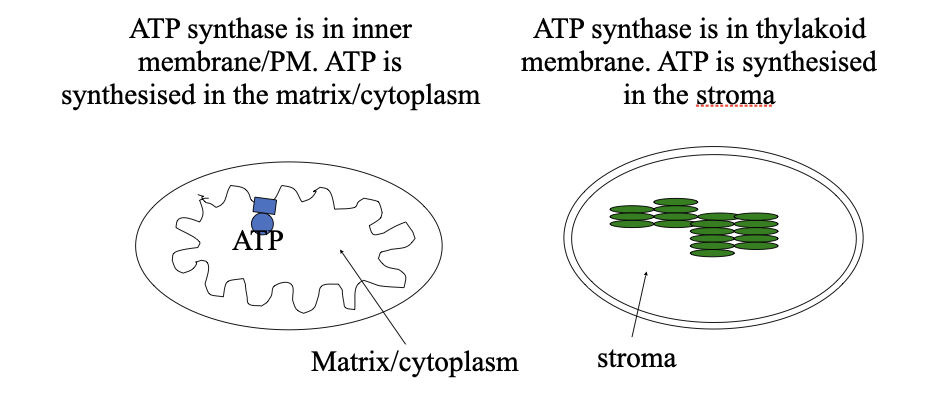
<ul><li><p class="Paragraph SCXO243229490 BCX4" style="text-align: left;"><span style="background-color: inherit; line-height: 19.55px; color: windowtext;"><span>The proton gradient is a form of stored energy</span></span><span style="line-height: 19.55px; color: windowtext;"><span>&nbsp;</span></span></p><ul><li><p class="Paragraph SCXO243229490 BCX4" style="text-align: left;"><span style="background-color: inherit; line-height: 19.55px; color: windowtext;"><span>Determines pH</span></span><span style="line-height: 19.55px; color: windowtext;"><span>&nbsp;</span></span></p></li><li><p class="Paragraph SCXO243229490 BCX4" style="text-align: left;"><span style="background-color: inherit; line-height: 19.55px; color: windowtext;"><span>Across mitochondria&nbsp;</span></span><span style="line-height: 19.55px; color: windowtext;"><span>&nbsp;</span></span></p><ul><li><p class="Paragraph SCXO243229490 BCX4" style="text-align: left;"><span style="background-color: inherit; line-height: 19.55px; color: windowtext;"><span>Intermembrane space = pH 7</span></span><span style="line-height: 19.55px; color: windowtext;"><span>&nbsp;</span></span></p></li><li><p class="Paragraph SCXO243229490 BCX4" style="text-align: left;"><span style="background-color: inherit; line-height: 19.55px; color: windowtext;"><span>Matrix space = pH 8</span></span><span style="line-height: 19.55px; color: windowtext;"><span>&nbsp;</span></span></p></li></ul></li></ul></li><li><p class="Paragraph SCXO243229490 BCX4" style="text-align: left;"><span style="background-color: inherit; line-height: 19.55px; color: windowtext;"><span>Can produce around 100 ATP per second</span></span><span style="line-height: 19.55px; color: windowtext;"><span>&nbsp;</span></span></p></li><li><p class="Paragraph SCXO90501964 BCX4" style="text-align: left;"><span style="background-color: inherit; line-height: 19.55px; color: windowtext;"><span>Around 3 protons are needed to synthesise 1 molecule of ATP</span></span><span style="line-height: 19.55px; color: windowtext;"><span>&nbsp;</span></span></p></li><li><p class="Paragraph SCXO90501964 BCX4" style="text-align: left;"><span style="background-color: inherit; line-height: 19.55px; color: windowtext;"><span>Can be reversed</span></span><span style="line-height: 19.55px; color: windowtext;"><span>&nbsp;</span></span></p><ul><li><p class="Paragraph SCXO90501964 BCX4" style="text-align: left;"><span style="background-color: inherit; line-height: 19.55px; color: windowtext;"><span>Use the hydrolysis of ATP to pump protons across membrane in the opposite direction&nbsp;</span></span><span style="line-height: 19.55px; color: windowtext;"><span>&nbsp;</span></span></p></li></ul></li><li><p class="Paragraph SCXO90501964 BCX4" style="text-align: left;"><span style="background-color: inherit; line-height: 19.55px; color: windowtext;"><span>Location in mitochondria and chloroplasts</span></span><span style="line-height: 19.55px; color: windowtext;"><span>&nbsp;</span></span></p></li></ul><p></p>
7
New cards
<p>how is the proton gradient across the mitochondrial membrane generated</p>

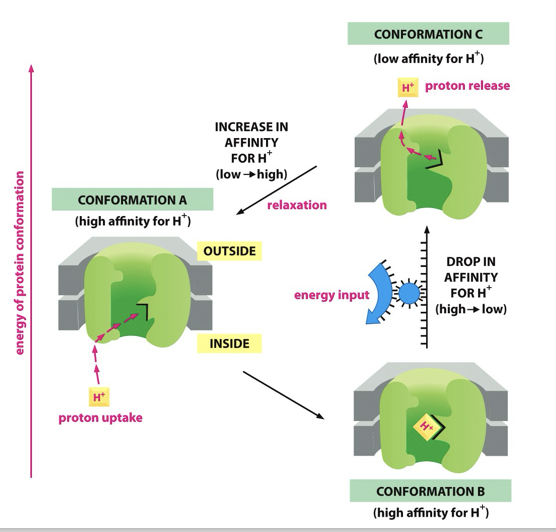
how is the proton gradient across the mitochondrial membrane generated

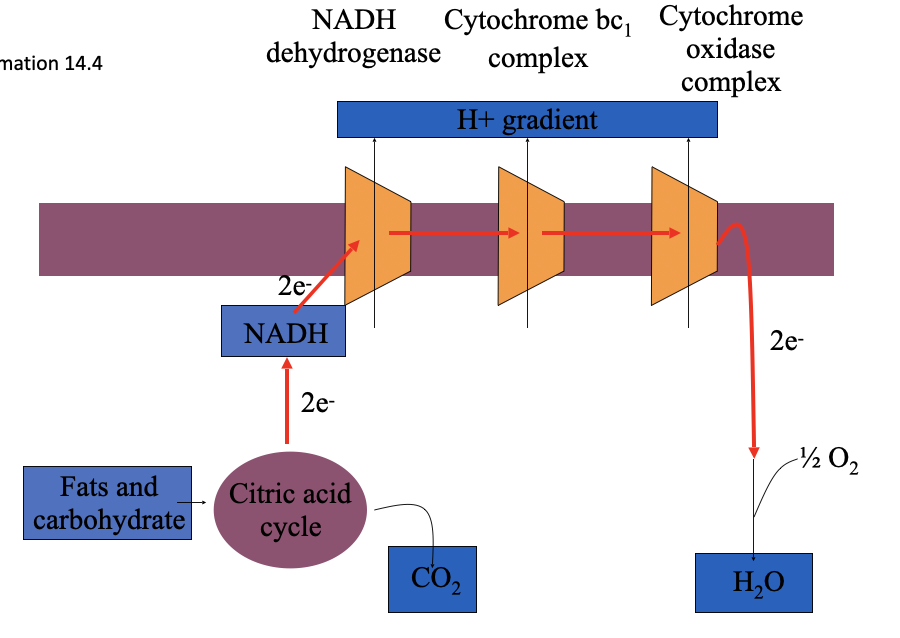
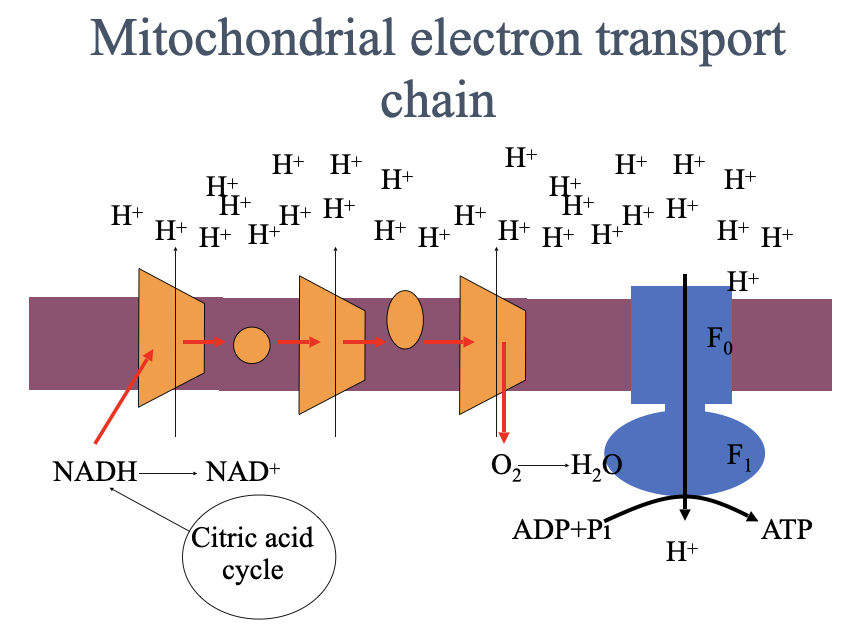
  • High energy electrons are passed along an electron transport chain 

    • An electron can bind and release a proton at each step in the chain 

    • When an electron is lost, the affinity for the proton is reduced and it is released 

    • This is oxidation 

  • These electron transfers release large amounts of energy which is used to pump H+ across the membrane 

  • Creates an electrochemical proton gradient 
<ul><li><p class="Paragraph SCXO131531521 BCX4" style="text-align: left;"><span style="background-color: inherit; line-height: 19.55px; color: windowtext;"><span>High energy electrons are passed along an electron transport chain</span></span><span style="line-height: 19.55px; color: windowtext;"><span>&nbsp;</span></span></p><ul><li><p class="Paragraph SCXO131531521 BCX4" style="text-align: left;"><span style="background-color: inherit; line-height: 19.55px; color: windowtext;"><span>An electron can bind and release a proton at each step in the chain</span></span><span style="line-height: 19.55px; color: windowtext;"><span>&nbsp;</span></span></p></li><li><p class="Paragraph SCXO131531521 BCX4" style="text-align: left;"><span style="background-color: inherit; line-height: 19.55px; color: windowtext;"><span>When an electron is lost, the affinity for the proton is reduced and it is released</span></span><span style="line-height: 19.55px; color: windowtext;"><span>&nbsp;</span></span></p></li><li><p class="Paragraph SCXO131531521 BCX4" style="text-align: left;"><span style="background-color: inherit; line-height: 19.55px; color: windowtext;"><span>This is oxidation</span></span><span style="line-height: 19.55px; color: windowtext;"><span>&nbsp;</span></span></p></li></ul></li><li><p class="Paragraph SCXO131531521 BCX4" style="text-align: left;"><span style="background-color: inherit; line-height: 19.55px; color: windowtext;"><span>These electron transfers release large amounts of energy which is used to pump H+ across the membrane</span></span><span style="line-height: 19.55px; color: windowtext;"><span>&nbsp;</span></span></p></li><li><p class="Paragraph SCXO131531521 BCX4" style="text-align: left;"><span style="background-color: inherit; line-height: 19.55px; color: windowtext;"><span>Creates an electrochemical proton gradient</span></span><span style="line-height: 19.55px; color: windowtext;"><span>&nbsp;</span></span></p></li></ul><p></p>
8
New cards

NAD in mitochondrial membrane

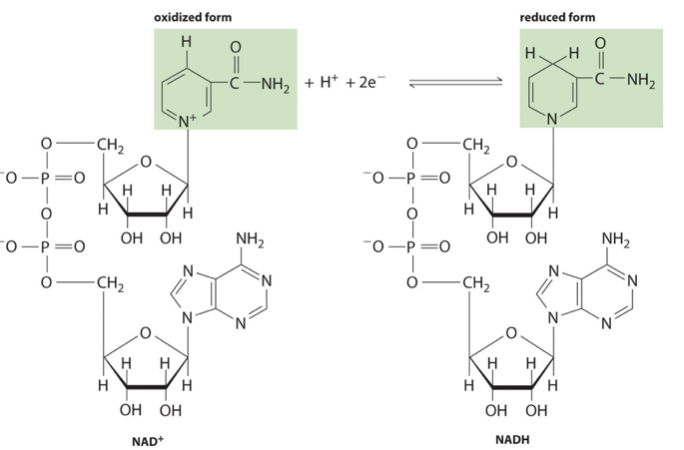
  • NAD + e- + H+ -> NADH 

    • Reduction 

    • Loses electron at NADH dehydrogenase 

      • oxidation 

    • Goes back to krebs  

    • Electron is transferred along electron transport chain 

    • Electron goes to final electron acceptor = water 
<ul><li><p class="Paragraph SCXO191508377 BCX4" style="text-align: left;"><span style="background-color: inherit; line-height: 19.55px; color: windowtext;"><span>NAD + e- + H+ -&gt; NADH</span></span><span style="line-height: 19.55px; color: windowtext;"><span>&nbsp;</span></span></p><ul><li><p class="Paragraph SCXO191508377 BCX4" style="text-align: left;"><span style="background-color: inherit; line-height: 19.55px; color: windowtext;"><span>Reduction</span></span><span style="line-height: 19.55px; color: windowtext;"><span>&nbsp;</span></span></p></li><li><p class="Paragraph SCXO191508377 BCX4" style="text-align: left;"><span style="background-color: inherit; line-height: 19.55px; color: windowtext;"><span>Loses electron at NADH dehydrogenase</span></span><span style="line-height: 19.55px; color: windowtext;"><span>&nbsp;</span></span></p><ul><li><p class="Paragraph SCXO191508377 BCX4" style="text-align: left;"><span style="background-color: inherit; line-height: 19.55px; color: windowtext;"><span>oxidation</span></span><span style="line-height: 19.55px; color: windowtext;"><span>&nbsp;</span></span></p></li></ul></li><li><p class="Paragraph SCXO191508377 BCX4" style="text-align: left;"><span style="background-color: inherit; line-height: 19.55px; color: windowtext;"><span>Goes back to krebs&nbsp;</span></span><span style="line-height: 19.55px; color: windowtext;"><span>&nbsp;</span></span></p></li><li><p class="Paragraph SCXO191508377 BCX4" style="text-align: left;"><span style="background-color: inherit; line-height: 19.55px; color: windowtext;"><span>Electron is transferred along electron transport chain</span></span><span style="line-height: 19.55px; color: windowtext;"><span>&nbsp;</span></span></p></li><li><p class="Paragraph SCXO191508377 BCX4" style="text-align: left;"><span style="background-color: inherit; line-height: 19.55px; color: windowtext;"><span>Electron goes to final electron acceptor = water</span></span><span style="line-height: 19.55px; color: windowtext;"><span>&nbsp;</span></span></p></li></ul></li></ul><p></p>
9
New cards

mobile electron carriers

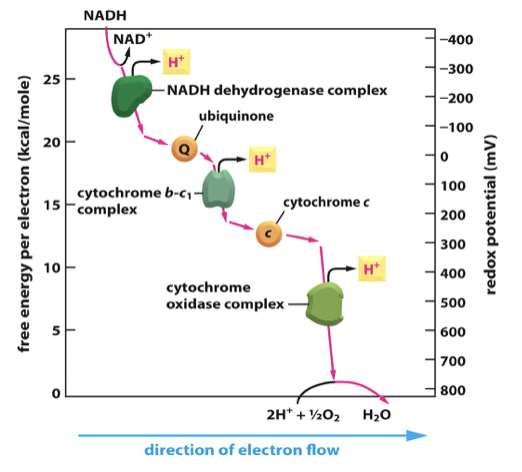
  • Ubiquinone carries electrons from the NADH dehydrogenase to the cytochrome b-c1 complex 

  • Cytochrome c carries electrons from the cytochrome b-c1 complex to the cytochrome oxidase complex 

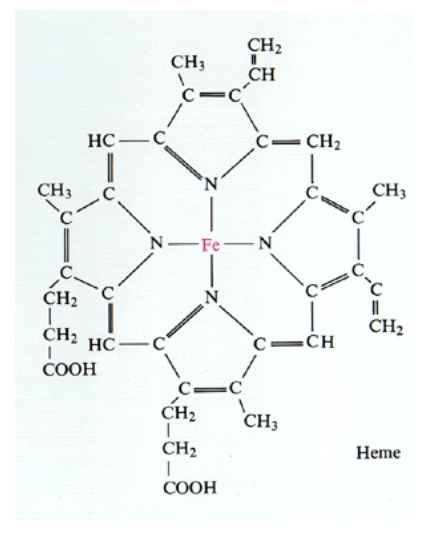
    • Has haem groups 

10
New cards

chemiosmotic coupling

  • The linkage of electron transport, proton pumping and ATP synthesis 

  • In mitochondria this is known as oxidative phosphorylation 

    • Consumption of oxygen 

11
New cards

how do electrons move along the electron transport chain?

  • By a series of oxidation, reduction reactions 

  • As one reactant is oxidised (loses electrons), another is reduced (gains electrons) 

  • Reducing agents ranked according to electron transfer potential 

  • NADH has high electron transfer potential (-ve value) 

  • H2O has low electron transfer potential (+ve value) 

  • Standard redox potential E’0 (measured in Volts) 

  • ΔG0’ = -nFΔE’0 

  • Redox potential (electron affinity) increases along the mitochondrial electron transport chain 

    • Important as energy decreases down chain 
<ul><li><p class="Paragraph SCXO72376660 BCX4" style="text-align: left;"><span style="background-color: inherit; line-height: 19.55px; color: windowtext;"><span>By a series of oxidation, reduction reactions</span></span><span style="line-height: 19.55px; color: windowtext;"><span>&nbsp;</span></span></p></li><li><p class="Paragraph SCXO72376660 BCX4" style="text-align: left;"><span style="background-color: inherit; line-height: 19.55px; color: windowtext;"><span>As one reactant is oxidised (loses electrons), another is reduced (gains electrons)</span></span><span style="line-height: 19.55px; color: windowtext;"><span>&nbsp;</span></span></p></li><li><p class="Paragraph SCXO72376660 BCX4" style="text-align: left;"><span style="background-color: inherit; line-height: 19.55px;"><span>Reducing agents ranked according to electron transfer potential</span></span><span style="line-height: 19.55px;"><span>&nbsp;</span></span></p></li><li><p class="Paragraph SCXO72376660 BCX4" style="text-align: left;"><span style="background-color: inherit; line-height: 19.55px;"><span>NADH has high electron transfer potential (-ve value)</span></span><span style="line-height: 19.55px;"><span>&nbsp;</span></span></p></li><li><p class="Paragraph SCXO72376660 BCX4" style="text-align: left;"><span style="background-color: inherit; line-height: 19.55px;"><span>H</span><sub><span>2</span></sub><span>O has low electron transfer potential (+ve value)</span></span><span style="line-height: 19.55px;"><span>&nbsp;</span></span></p></li><li><p class="Paragraph SCXO72376660 BCX4" style="text-align: left;"><span style="background-color: inherit; line-height: 19.55px;"><span>Standard redox potential E’</span><sub><span>0</span></sub><span> (measured in Volts)</span></span><span style="line-height: 19.55px;"><span>&nbsp;</span></span></p></li><li><p class="Paragraph SCXO72376660 BCX4" style="text-align: left;"><span style="background-color: inherit; line-height: 19.55px;"><span>ΔG</span><sub><span>0</span></sub><span>’ = -nFΔE’</span><sub><span>0</span></sub></span><span style="line-height: 19.55px;"><span>&nbsp;</span></span></p></li><li><p class="Paragraph SCXO72376660 BCX4" style="text-align: left;"><span style="background-color: inherit; line-height: 19.55px;"><span>Redox potential (electron affinity) increases along the mitochondrial electron transport chain</span></span><span style="line-height: 19.55px;"><span>&nbsp;</span></span></p><ul><li><p class="Paragraph SCXO72376660 BCX4" style="text-align: left;"><span style="background-color: inherit; line-height: 19.55px;"><span>Important as energy decreases down chain</span></span><span style="line-height: 19.55px;"><span>&nbsp;</span></span></p></li></ul></li></ul><p></p>
12
New cards

the nature of electron carrying groups

  • Prosthetic groups are associated with these  

    • Metal associated with them have different redox potentials 

    • Have different electron affinities 

  • NADH dehydrogenase 

    • Flavin nucleotides 

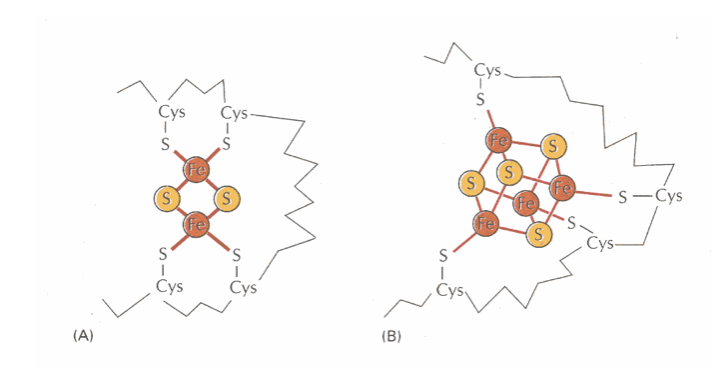
    • Fe-S 

  • Cytochrome b-c1 complex 

    • Haem 

    • Fe-S 

  • Cytochrome c 

    • Haem 

  • Cytochrome oxidase complex 

    • Haem 

    • CuA 

    • CuB 

13
New cards

iron sulfur (Fe-S)

knowt flashcard image
14
New cards

haem

knowt flashcard image
15
New cards
<p>the citric acid cycle</p>

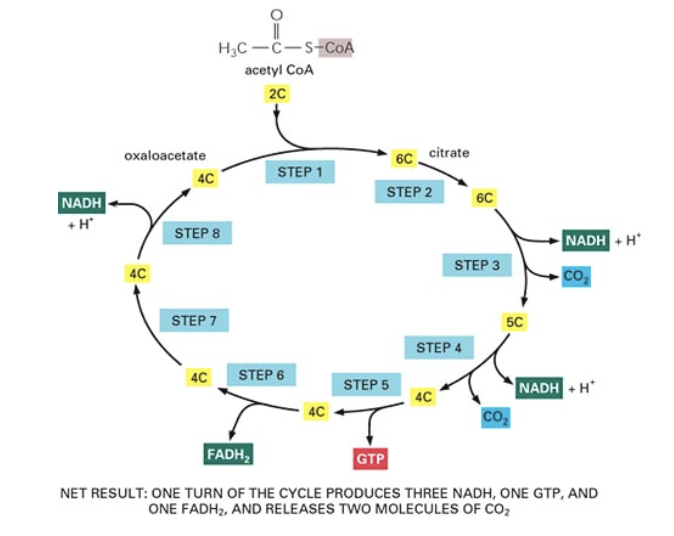
the citric acid cycle

knowt flashcard image
16
New cards

mitochondria structure

  • Matrix 

    • Enzymes of citric acid cycle 

    • Mitochondrial DNA 

    • etc 

  • Inner membrane 

    • Electron transfer proteins 

    • ATP synthase 

    • Transport proteins 

  • Outer membrane 

    • Has large pores 

    • Lipid synthesis 

    • Conversion of lipid substrates into forms that can be metabolised in the matrix 

  • Intermembrane space 

    • Several enzymes that use ATP passing out of the matrix phosphorylate other nucleotides 

  • Cristae 

<ul><li><p class="Paragraph SCXO72853444 BCX4" style="text-align: left;"><span style="background-color: inherit; line-height: 19.55px;"><span>Matrix</span></span><span style="line-height: 19.55px;"><span>&nbsp;</span></span></p><ul><li><p class="Paragraph SCXO72853444 BCX4" style="text-align: left;"><span style="background-color: inherit; line-height: 19.55px;"><span>Enzymes of citric acid cycle</span></span><span style="line-height: 19.55px;"><span>&nbsp;</span></span></p></li><li><p class="Paragraph SCXO72853444 BCX4" style="text-align: left;"><span style="background-color: inherit; line-height: 19.55px;"><span>Mitochondrial DNA</span></span><span style="line-height: 19.55px;"><span>&nbsp;</span></span></p></li><li><p class="Paragraph SCXO72853444 BCX4" style="text-align: left;"><span style="background-color: inherit; line-height: 19.55px;"><span>etc</span></span><span style="line-height: 19.55px;"><span>&nbsp;</span></span></p></li></ul></li><li><p class="Paragraph SCXO72853444 BCX4" style="text-align: left;"><span style="background-color: inherit; line-height: 19.55px;"><span>Inner membrane</span></span><span style="line-height: 19.55px;"><span>&nbsp;</span></span></p><ul><li><p class="Paragraph SCXO72853444 BCX4" style="text-align: left;"><span style="background-color: inherit; line-height: 19.55px;"><span>Electron transfer proteins</span></span><span style="line-height: 19.55px;"><span>&nbsp;</span></span></p></li><li><p class="Paragraph SCXO72853444 BCX4" style="text-align: left;"><span style="background-color: inherit; line-height: 19.55px;"><span>ATP synthase</span></span><span style="line-height: 19.55px;"><span>&nbsp;</span></span></p></li><li><p class="Paragraph SCXO72853444 BCX4" style="text-align: left;"><span style="background-color: inherit; line-height: 19.55px;"><span>Transport proteins</span></span><span style="line-height: 19.55px;"><span>&nbsp;</span></span></p></li></ul></li><li><p class="Paragraph SCXO72853444 BCX4" style="text-align: left;"><span style="background-color: inherit; line-height: 19.55px;"><span>Outer membrane</span></span><span style="line-height: 19.55px;"><span>&nbsp;</span></span></p><ul><li><p class="Paragraph SCXO72853444 BCX4" style="text-align: left;"><span style="background-color: inherit; line-height: 19.55px;"><span>Has large pores</span></span><span style="line-height: 19.55px;"><span>&nbsp;</span></span></p></li><li><p class="Paragraph SCXO72853444 BCX4" style="text-align: left;"><span style="background-color: inherit; line-height: 19.55px;"><span>Lipid synthesis</span></span><span style="line-height: 19.55px;"><span>&nbsp;</span></span></p></li><li><p class="Paragraph SCXO72853444 BCX4" style="text-align: left;"><span style="background-color: inherit; line-height: 19.55px;"><span>Conversion of lipid substrates into forms that can be metabolised in the matrix</span></span><span style="line-height: 19.55px;"><span>&nbsp;</span></span></p></li></ul></li><li><p class="Paragraph SCXO72853444 BCX4" style="text-align: left;"><span style="background-color: inherit; line-height: 19.55px;"><span>Intermembrane space</span></span><span style="line-height: 19.55px;"><span>&nbsp;</span></span></p><ul><li><p class="Paragraph SCXO72853444 BCX4" style="text-align: left;"><span style="background-color: inherit; line-height: 19.55px;"><span>Several enzymes that use ATP passing out of the matrix phosphorylate other nucleotides</span></span><span style="line-height: 19.55px;"><span>&nbsp;</span></span></p></li></ul></li><li><p class="Paragraph SCXO72853444 BCX4" style="text-align: left;"><span style="background-color: inherit; line-height: 19.55px;"><span>Cristae</span></span><span style="line-height: 19.55px;"><span>&nbsp;</span></span></p></li></ul><p></p>
17
New cards

agents that interfere with oxidative phosphorylation

  • Cyanide and carbon monoxide inhibit cytochrome oxidase 

  • Block the passage of electrons to oxygen 

  • ATP synthesis grinds to a halt 

18
New cards

uncoupled mitochondria generate heat

  • In most newborn mammals including humans a type of adipose tissue (brown fat) uses fuel oxidation to produce heat and not ATP 

  • This is achieved by a protein (thermogenin) which provides a path for protons to return to the matrix without passing through the F0F1 complex 

  • The energy is dissipated as heat 

  • Protons flow through mitochondrial membrane but not through ATP synthase 

  • chloroplasts use energy from sunlight to fix carbon
<ul><li><p class="Paragraph SCXO244762101 BCX4" style="text-align: left;"><span style="background-color: inherit; line-height: 19.55px;"><span>In most newborn mammals including humans a type of adipose tissue (brown fat) uses fuel oxidation to produce heat and not ATP</span></span><span style="line-height: 19.55px;"><span>&nbsp;</span></span></p></li><li><p class="Paragraph SCXO244762101 BCX4" style="text-align: left;"><span style="background-color: inherit; line-height: 19.55px;"><span>This is achieved by a protein (thermogenin) which provides a path for protons to return to the matrix without passing through the F</span><sub><span>0</span></sub><span>F</span><sub><span>1</span></sub><span> complex</span></span><span style="line-height: 19.55px;"><span>&nbsp;</span></span></p></li><li><p class="Paragraph SCXO244762101 BCX4" style="text-align: left;"><span style="background-color: inherit; line-height: 19.55px;"><span>The energy is dissipated as heat</span></span><span style="line-height: 19.55px;"><span>&nbsp;</span></span></p></li><li><p class="Paragraph SCXO244762101 BCX4" style="text-align: left;"><span style="background-color: inherit; line-height: 19.55px;"><span>Protons flow through mitochondrial membrane but not through ATP synthase</span></span><span style="line-height: 19.55px;"><span>&nbsp;</span></span></p></li><li><p class="Paragraph SCXO244762101 BCX4" style="text-align: left;"><span style="line-height: 19.55px;"><span>chloroplasts use energy from sunlight to fix carbon</span></span></p></li></ul><p></p>
19
New cards

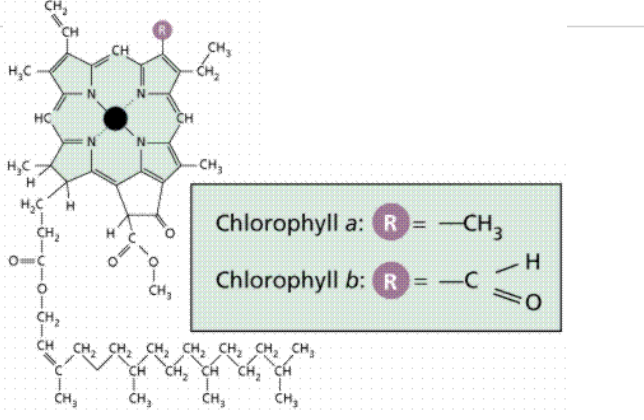
features of photophosphorylation

  • Unlike NADH, water is a poor donor of electrons 

  • Requires energy input in the form of light to create a good electron donor 
20
New cards
<p>how is the proton gradient across the thylakoid membrane generated</p>

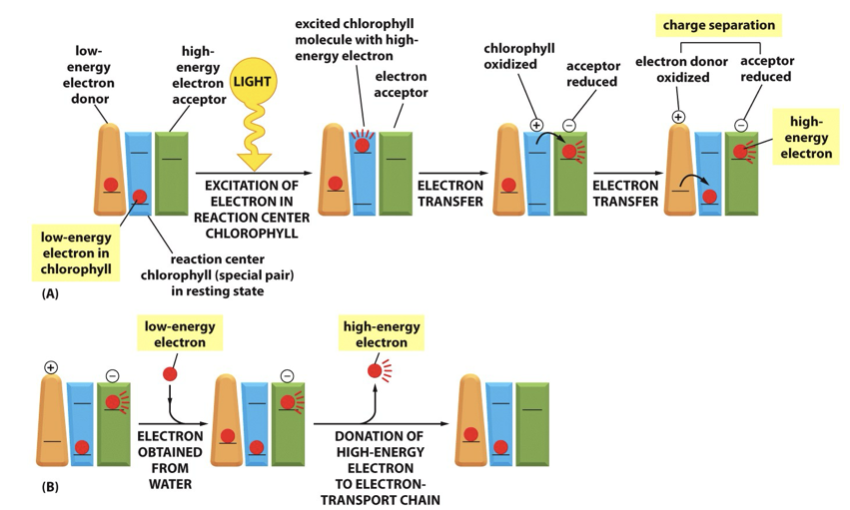
how is the proton gradient across the thylakoid membrane generated

  • Again electron transfer is coupled to proton pumping 

  • Also protons released upon water oxidation contribute to the electrochemical proton gradient 

  • Sunlight is absorbed by chlorophyll molecules and electrons interact with photons of light raising them to a higher energy level  

  • The energy from hundreds of chlorophyll molecules (in the antenna complex) is channelled into a special pair of chlorophyll molecules in the reaction centre 
<ul><li><p class="Paragraph SCXO262186080 BCX4" style="text-align: left;"><span style="background-color: inherit; line-height: 19.55px;"><span>Again electron transfer is coupled to proton pumping</span></span><span style="line-height: 19.55px;"><span>&nbsp;</span></span></p></li><li><p class="Paragraph SCXO262186080 BCX4" style="text-align: left;"><span style="background-color: inherit; line-height: 19.55px;"><span>Also protons released upon water oxidation contribute to the electrochemical proton gradient</span></span><span style="line-height: 19.55px;"><span>&nbsp;</span></span></p></li><li><p class="Paragraph SCXO262186080 BCX4" style="text-align: left;"><span style="background-color: inherit; line-height: 19.55px;"><span>Sunlight is absorbed by chlorophyll molecules and electrons interact with photons of light raising them to a higher energy level&nbsp;</span></span><span style="line-height: 19.55px;"><span>&nbsp;</span></span></p></li><li><p class="Paragraph SCXO262186080 BCX4" style="text-align: left;"><span style="background-color: inherit; line-height: 19.55px;"><span>The energy from hundreds of chlorophyll molecules (in the antenna complex) is channelled into a special pair of chlorophyll molecules in the reaction centre</span></span><span style="line-height: 19.55px;"><span>&nbsp;</span></span></p></li></ul><p></p>
21
New cards
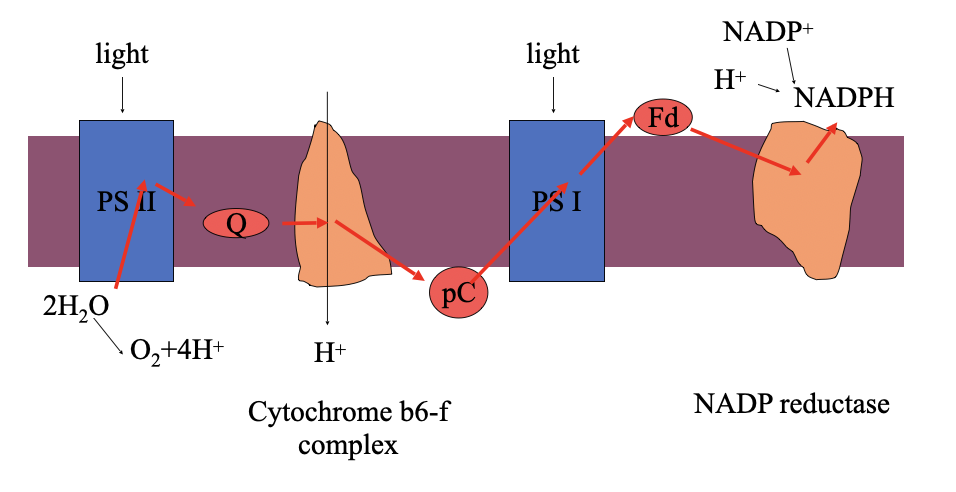
<p>photosystems</p>

photosystems

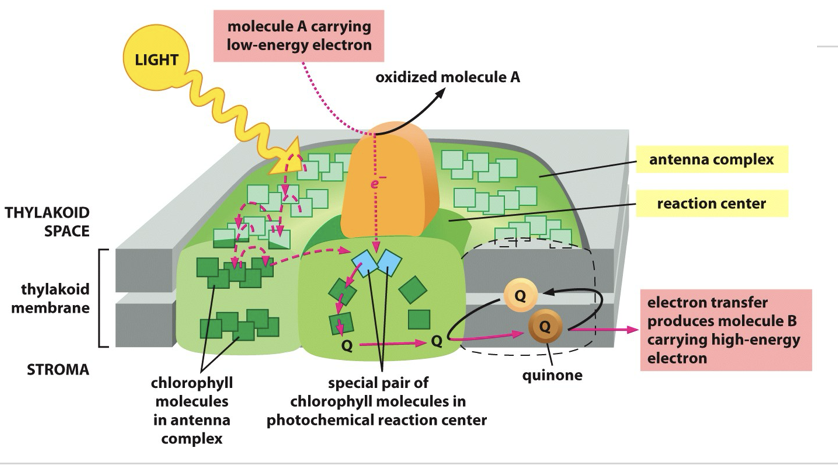
  • Reaction center chlorophyll

    • PS II: Uses P680 (absorbs light best at 680 nm)

    • PS I: Uses P700 (absorbs light best at 700 nm)

  • Order in the light reactions

    • PS II: Acts first in the light-dependent reactions

    • PS I: Acts second

  • Primary function

    • PS II: Splits water (photolysis) to release oxygen, protons (H⁺), and electrons

    • PS I: Produces NADPH by transferring electrons to NADP⁺

  • Electron source

    • PS II: Electrons come from water (H₂O)

    • PS I: Electrons come from PS II via the electron transport chain

  • Contribution to ATP formation

    • PS II: Helps create a proton gradient used for ATP synthesis

    • PS I: Does not directly contribute to the proton gradient (in non-cyclic photophosphorylation

the two photosystems work in series
<ul><li><p><strong>Reaction center chlorophyll</strong></p><ul><li><p><strong>PS II:</strong> Uses <strong>P680</strong> (absorbs light best at 680 nm)</p></li><li><p><strong>PS I:</strong> Uses <strong>P700</strong> (absorbs light best at 700 nm)</p></li></ul></li><li><p><strong>Order in the light reactions</strong></p><ul><li><p><strong>PS II:</strong> Acts <strong>first</strong> in the light-dependent reactions</p></li><li><p><strong>PS I:</strong> Acts <strong>second</strong></p></li></ul></li><li><p><strong>Primary function</strong></p><ul><li><p><strong>PS II:</strong> Splits water (<strong>photolysis</strong>) to release <strong>oxygen, protons (H⁺), and electrons</strong></p></li><li><p><strong>PS I:</strong> Produces <strong>NADPH</strong> by transferring electrons to NADP⁺</p></li></ul></li><li><p><strong>Electron source</strong></p><ul><li><p><strong>PS II:</strong> Electrons come from <strong>water (H₂O)</strong></p></li><li><p><strong>PS I:</strong> Electrons come from <strong>PS II via the electron transport chain</strong></p></li></ul></li><li><p><strong>Contribution to ATP formation</strong></p><ul><li><p><strong>PS II:</strong> Helps create a <strong>proton gradient</strong> used for ATP synthesis</p></li><li><p><strong>PS I:</strong> Does <strong>not</strong> directly contribute to the proton gradient (in non-cyclic photophosphorylation</p></li></ul></li></ul><p></p><p>the two photosystems work in series</p><p></p>
22
New cards

mobile electron carriers

  • Plastoquinone (closely resembles ubiquinone of mitochondria) 

  • Plastocyanin (a small copper containing protein) 

  • Ferredoxin (a small protein containing an iron-sulphur centre) 

23
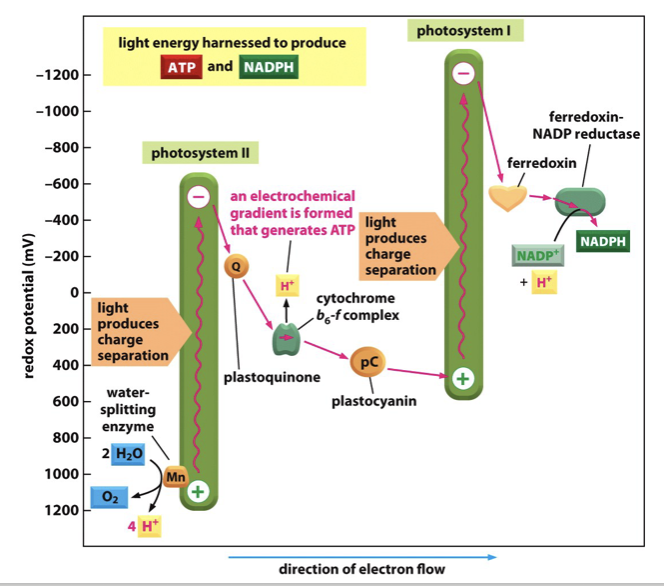
New cards

redox potentials

knowt flashcard image
24
New cards

light energy is converted to chemical energy

  • ATP is generated by the proton gradient across the thylakoid membrane in the same way as in mitochondria 

  • H+ generated by the splitting of water also contributes to the proton gradient 

  • The high energy electrons are ultimately passed on to form the high energy compound NADPH 

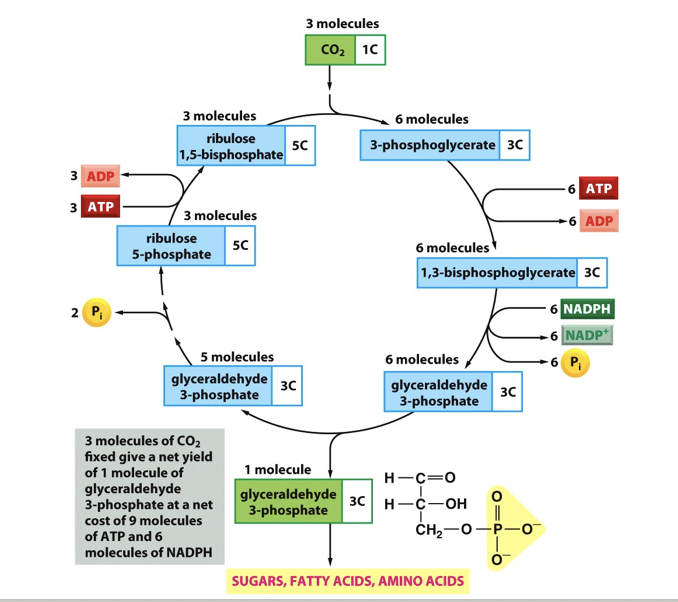
    • ATP and NADPH are used for carbon fixation in the calvin cycle 

    • For every 3 carbon sugar produced 9 molecules of ATP and 6 of NADPH are required 

25
New cards

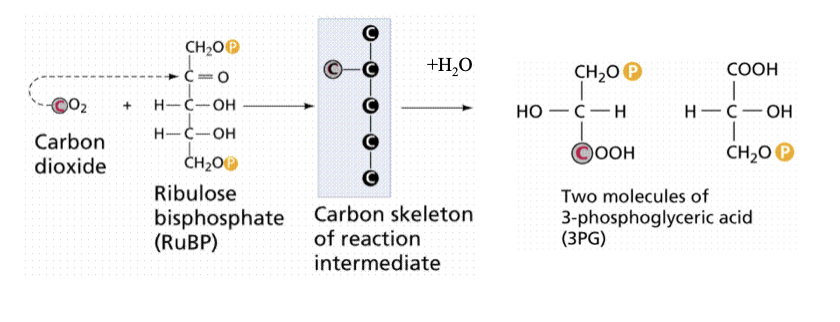
rubisco

  • Ribulose bis phosphate carboxylase 

  • Catalyses the initial reaction in carbon fixation 

  • It is a sluggish enzyme, processing only about 3 molecules of substrate per second 

  • Can make up to 50% of total chloroplast protein 

  • Claimed to be the most abundant enzyme on earth 

  • Rubisco fixes carbon 

<ul><li><p class="Paragraph SCXO110133958 BCX4" style="text-align: left;"><span style="background-color: inherit; line-height: 19.55px;"><span>Ribulose bis phosphate carboxylase</span></span><span style="line-height: 19.55px;"><span>&nbsp;</span></span></p></li><li><p class="Paragraph SCXO110133958 BCX4" style="text-align: left;"><span style="background-color: inherit; line-height: 19.55px;"><span>Catalyses the initial reaction in carbon fixation</span></span><span style="line-height: 19.55px;"><span>&nbsp;</span></span></p></li><li><p class="Paragraph SCXO110133958 BCX4" style="text-align: left;"><span style="background-color: inherit; line-height: 19.55px;"><span>It is a sluggish enzyme, processing only about 3 molecules of substrate per second</span></span><span style="line-height: 19.55px;"><span>&nbsp;</span></span></p></li><li><p class="Paragraph SCXO110133958 BCX4" style="text-align: left;"><span style="background-color: inherit; line-height: 19.55px;"><span>Can make up to 50% of total chloroplast protein</span></span><span style="line-height: 19.55px;"><span>&nbsp;</span></span></p></li><li><p class="Paragraph SCXO110133958 BCX4" style="text-align: left;"><span style="background-color: inherit; line-height: 19.55px;"><span>Claimed to be the most abundant enzyme on earth</span></span><span style="line-height: 19.55px;"><span>&nbsp;</span></span></p></li><li><p class="Paragraph SCXO110133958 BCX4" style="text-align: left;"><span style="background-color: inherit; line-height: 19.55px;"><span>Rubisco fixes carbon</span></span><span style="line-height: 19.55px;"><span>&nbsp;</span></span></p></li></ul><p></p>
26
New cards

carbon fixation

knowt flashcard image
27
New cards

chloroplasts

  • Thylakoid 

    • Photosystems 1 and 2 

    • ATP synthase 

    • NADP reductase 

  • Stroma 

    • ATP synthesised 

    • NADPH synthesised 

    • Carbon fixation 

    • DNA 

28
New cards

similarities between processes in mitochondria and chloroplasts

  • Both use proton gradients across membranes to produce ATP using ATP synthase 

  • Electron transport along an electron transport chain drives proton pump 

  • Similarities between some of the components of electron transport chain (cytochrome bc and b6f show sequence similarity and ubiquinone and plastoquinone resemble one another) 

29
New cards

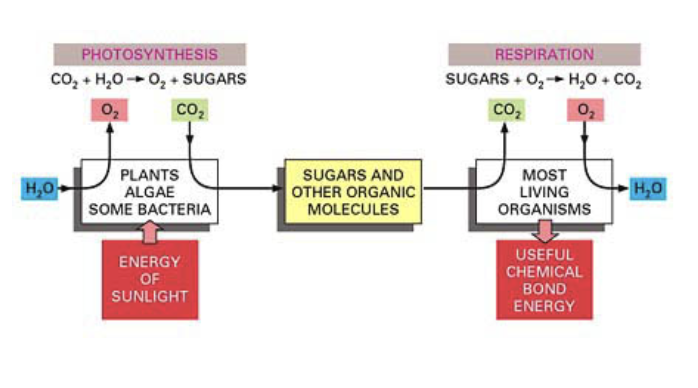
differences between chloroplasts and mitochondria

  • Chloroplasts 

    • Low energy electrons come from water but are excited to higher energy by light 

    • Ultimate electron acceptor is NADP+ 

    • Chemical bond energy and reducing power utilised in carbon fixation  

  • Mitochondria 

    • High energy electrons come from NADH 

    • Ultimate electron acceptor is oxygen 

    • Chemical bond energy used in cellular processes 
<ul><li><p class="Paragraph SCXO176100568 BCX4" style="text-align: left;"><span style="background-color: inherit; line-height: 19.55px;"><span>Chloroplasts</span></span><span style="line-height: 19.55px;"><span>&nbsp;</span></span></p><ul><li><p class="Paragraph SCXO176100568 BCX4" style="text-align: left;"><span style="background-color: inherit; line-height: 19.55px;"><span>Low energy electrons come from water but are excited to higher energy by light</span></span><span style="line-height: 19.55px;"><span>&nbsp;</span></span></p></li><li><p class="Paragraph SCXO176100568 BCX4" style="text-align: left;"><span style="background-color: inherit; line-height: 19.55px;"><span>Ultimate electron acceptor is NADP+</span></span><span style="line-height: 19.55px;"><span>&nbsp;</span></span></p></li><li><p class="Paragraph SCXO176100568 BCX4" style="text-align: left;"><span style="background-color: inherit; line-height: 19.55px;"><span>Chemical bond energy and reducing power utilised in carbon fixation&nbsp;</span></span><span style="line-height: 19.55px;"><span>&nbsp;</span></span></p></li></ul></li><li><p class="Paragraph SCXO176100568 BCX4" style="text-align: left;"><span style="background-color: inherit; line-height: 19.55px;"><span>Mitochondria</span></span><span style="line-height: 19.55px;"><span>&nbsp;</span></span></p><ul><li><p class="Paragraph SCXO176100568 BCX4" style="text-align: left;"><span style="background-color: inherit; line-height: 19.55px;"><span>High energy electrons come from NADH</span></span><span style="line-height: 19.55px;"><span>&nbsp;</span></span></p></li><li><p class="Paragraph SCXO176100568 BCX4" style="text-align: left;"><span style="background-color: inherit; line-height: 19.55px;"><span>Ultimate electron acceptor is oxygen</span></span><span style="line-height: 19.55px;"><span>&nbsp;</span></span></p></li><li><p class="Paragraph SCXO176100568 BCX4" style="text-align: left;"><span style="background-color: inherit; line-height: 19.55px;"><span>Chemical bond energy used in cellular processes</span></span><span style="line-height: 19.55px;"><span>&nbsp;</span></span></p></li></ul></li></ul><p></p>