obesity bio medical perspective
 Call Kai
 Learn
Learn Practice Test
 Spaced Repetition
 Match
Match Flashcards
 Knowt Play
1/21

Earn XP
Description and Tags
public health
Name | Mastery | Learn | Test | Matching | Spaced | Call with Kai |
|---|
No analytics yet
Send a link to your students to track their progress
22 Terms
obesity is a common chronic disease of adults and children
it is an ideal case study of 6 different public health perspectives
National and international Overweight and Obesity efforts focus on ____, ____, and ____ strategies to make healthy eating and active living accessible and affordable
biomedical, policy, environmental
stigma = co-occurrence of labeling, stereotyping, separation, status loss, and discrimination in a context in which power is exercised
know the difference between a stigma and discrimination
(bio medical perspective)
high amount of body fat relative to lean body mass
obesity
individuals: >30% body fat in females , >25% body fat in males
populations: body mass index (BMI) > 30
BMI
Measure of body density
BMI= kilograms / meters squared
As Asian populations develop negative health consequences at a lower BMI than Western Populations, some nations have redefined obesity
ex: The Japanese have defined obesity as any BMI greater than 25, while China defines it as any BMI of greater than 28.
visceral fat accumulation is related to many diseases
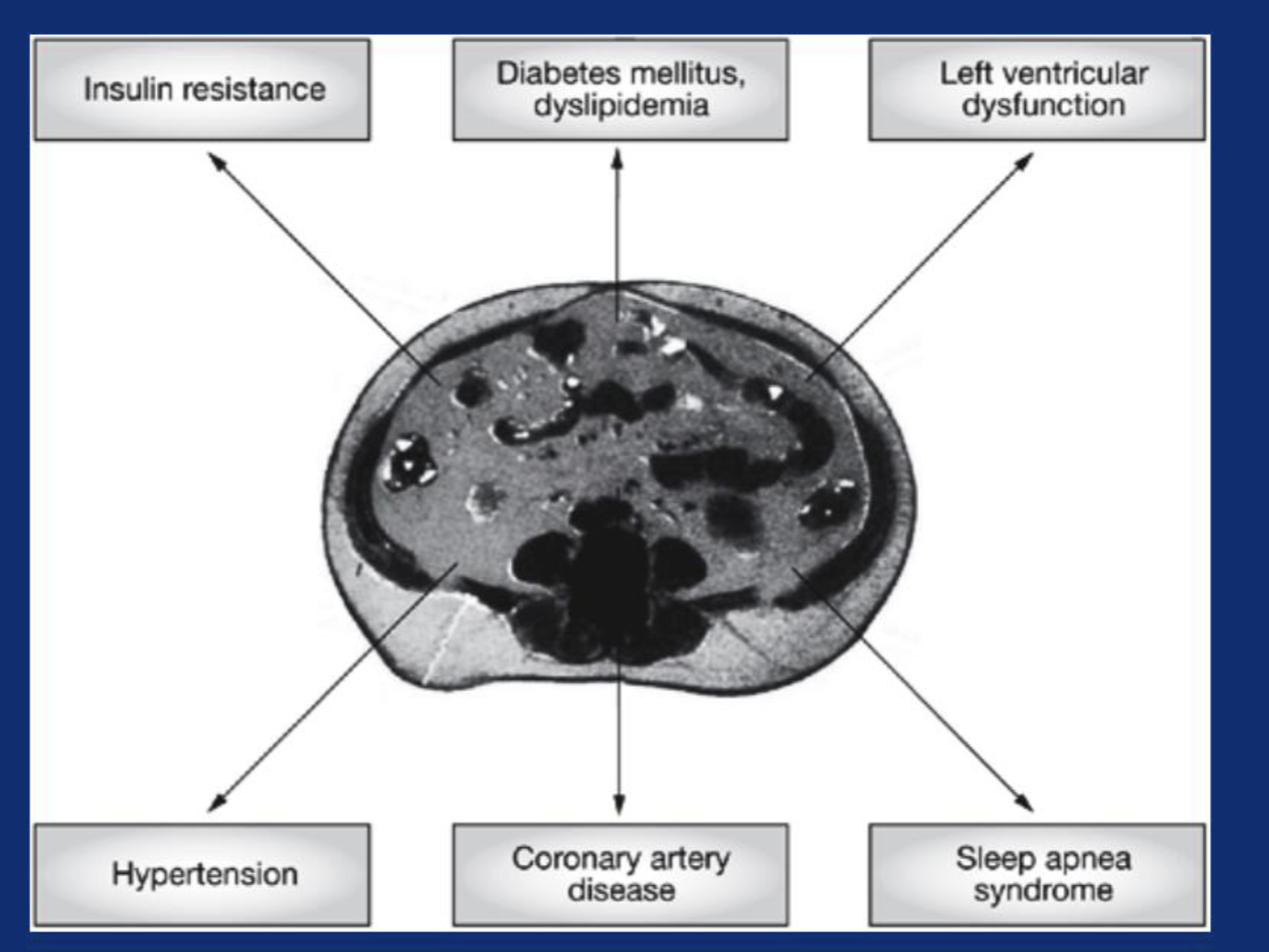
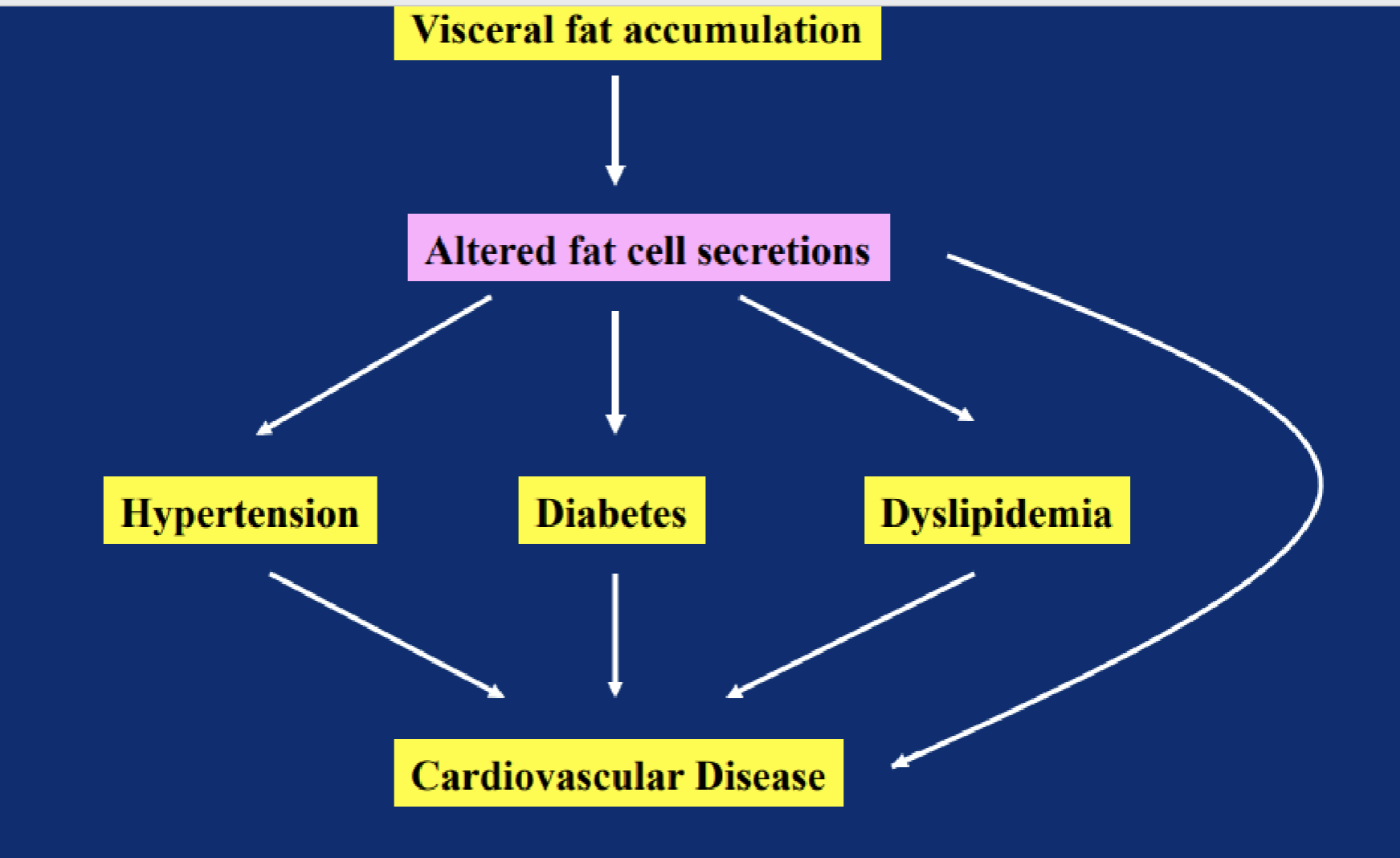
Hunger signal
Ghrelin
short term satiety signals
nerves in the stomach
hormones released from intestine
hormones released from pancreas
nutrients sensed by brain
Long term satiety signal
Leptin
why do humans have propensity to gain weight ?
genetics, thrifty genes
propensity for calorically dense foods
the food environment
changing energy expenditure patterns
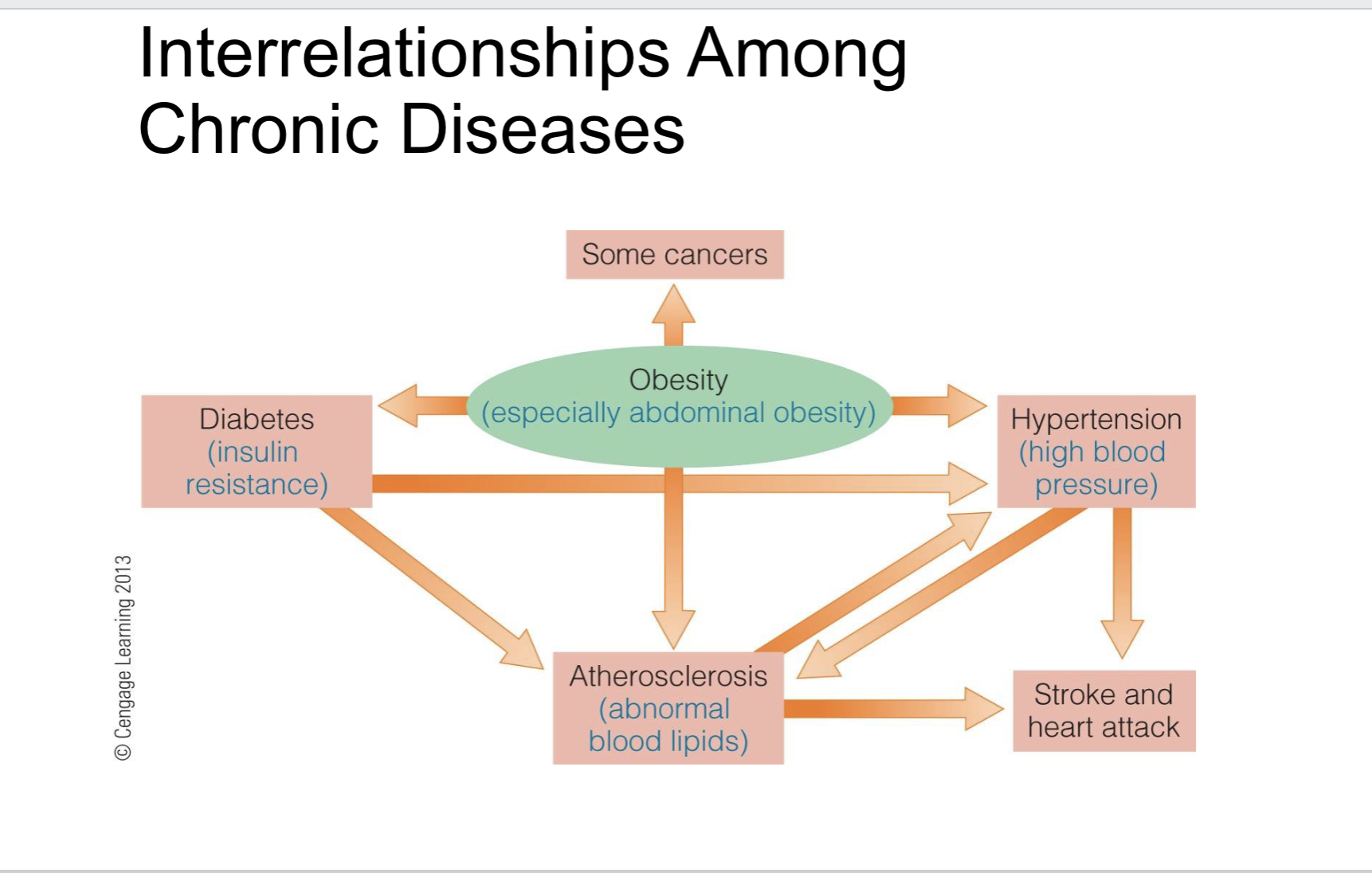
obesity relations
underweight
<18.5
normal
18.5-24.9
overweight
25-29.9
obese
>30.0
regulation of energy intake
First law of Thermodynamics: “energy is neither created nor destroyed”
regulation of energy intake
Energy intake = energy expenditure + Change in body stores of energy
regulation of energy intake
Energy balance = energy intake - energy expenditure = 0
regulation of energy intake
One view of weight gain, then, is that more calories in versus calories out leads to weight gain

