denty man practice
 Call Kai
 Learn
Learn Practice Test
 Spaced Repetition
 Match
Match Flashcards
 Knowt Play
1/179

There's no tags or description
Looks like no tags are added yet.
Name | Mastery | Learn | Test | Matching | Spaced | Call with Kai |
|---|
No analytics yet
Send a link to your students to track their progress
180 Terms
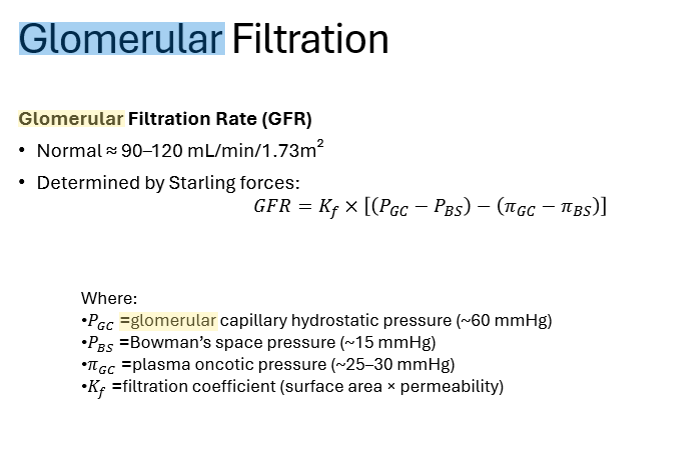
A healthy adult has a glomerular filtration rate of approximately:
90-120 mL/min
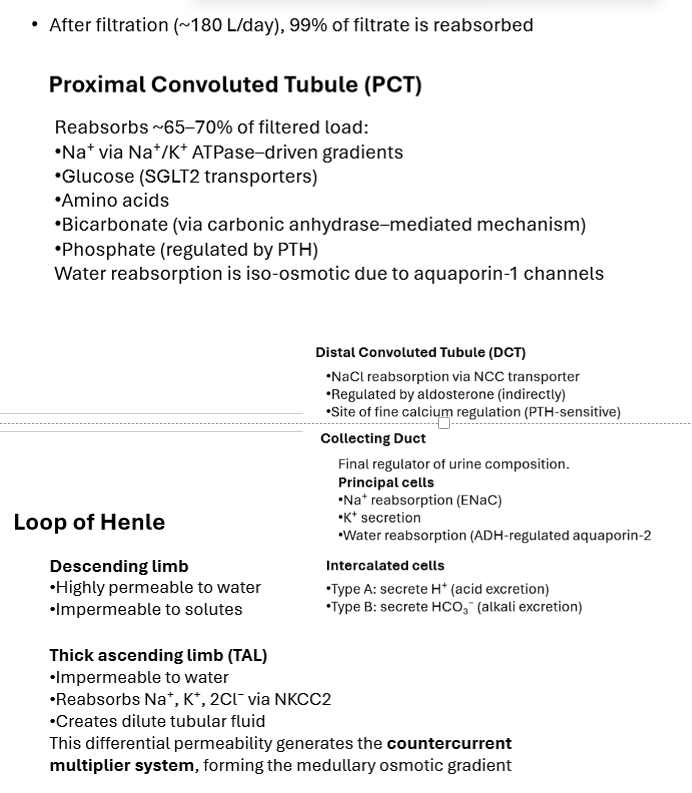
Which nephron segment reabsorbs the largest percentage of filtered sodium and water?
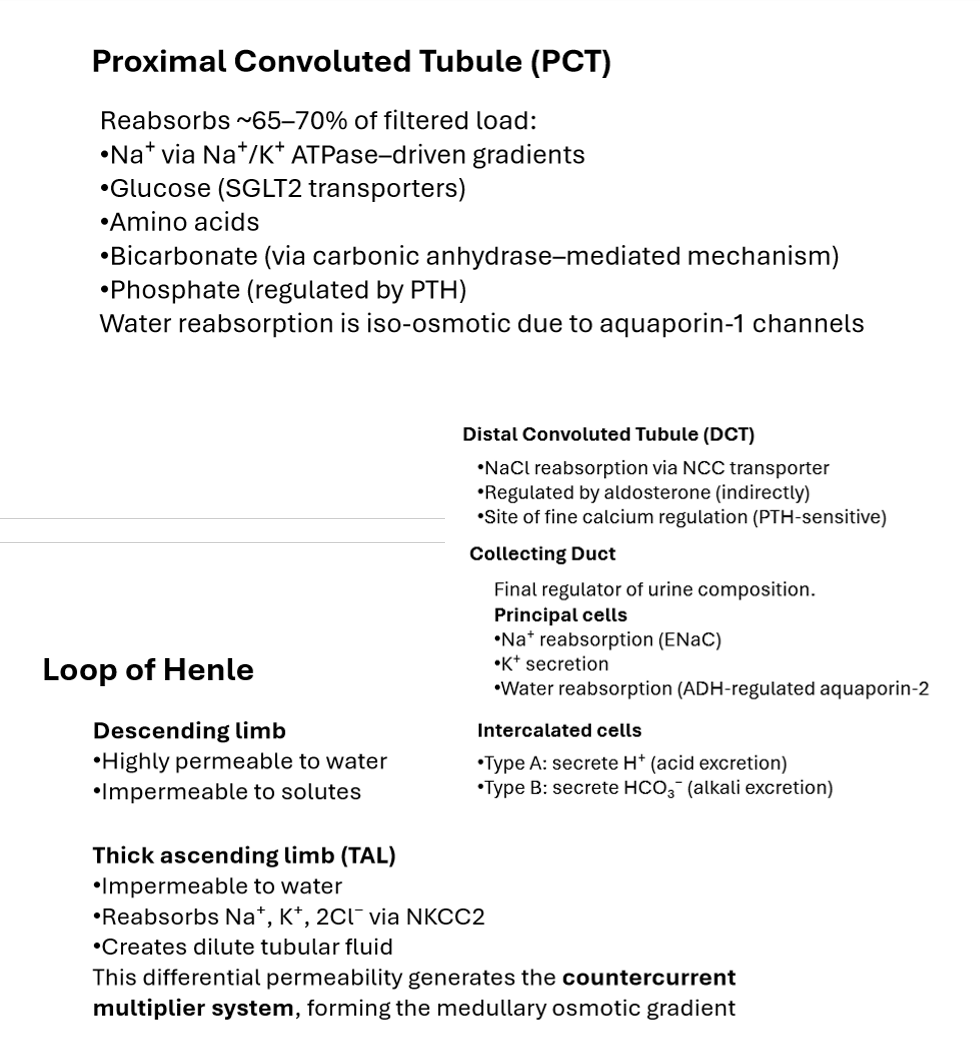
Proximal convoluted tubule. Reabsorbs ~65–70% of filtrate.
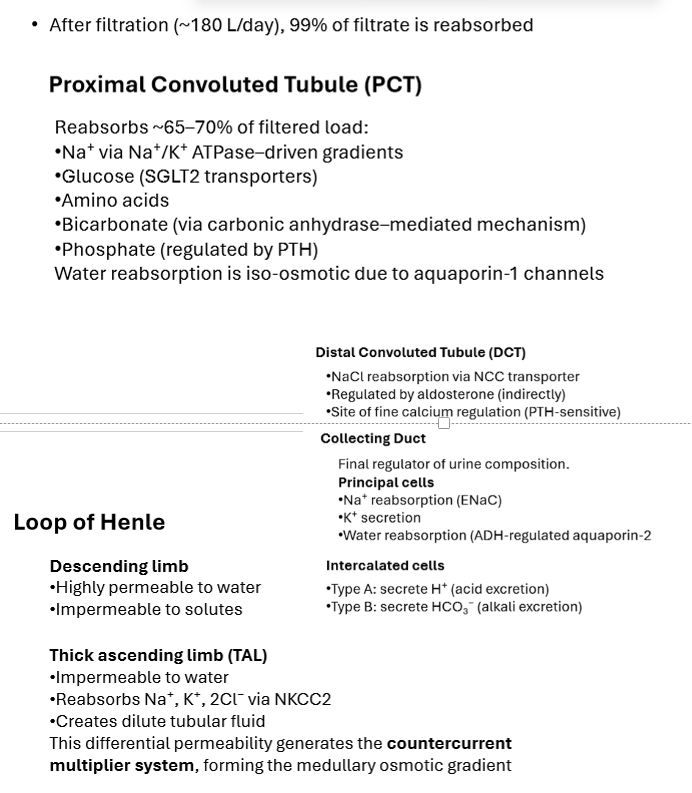
Which transporter in the thick ascending limb of the loop of Henle is responsible for sodium, potassium, and chloride reabsorption?
NKCC2
Antidiuretic hormone (ADH) primarily increases water reabsorption in which structure?
Collecting duct. ADH inserts aquaporin-2 channels.
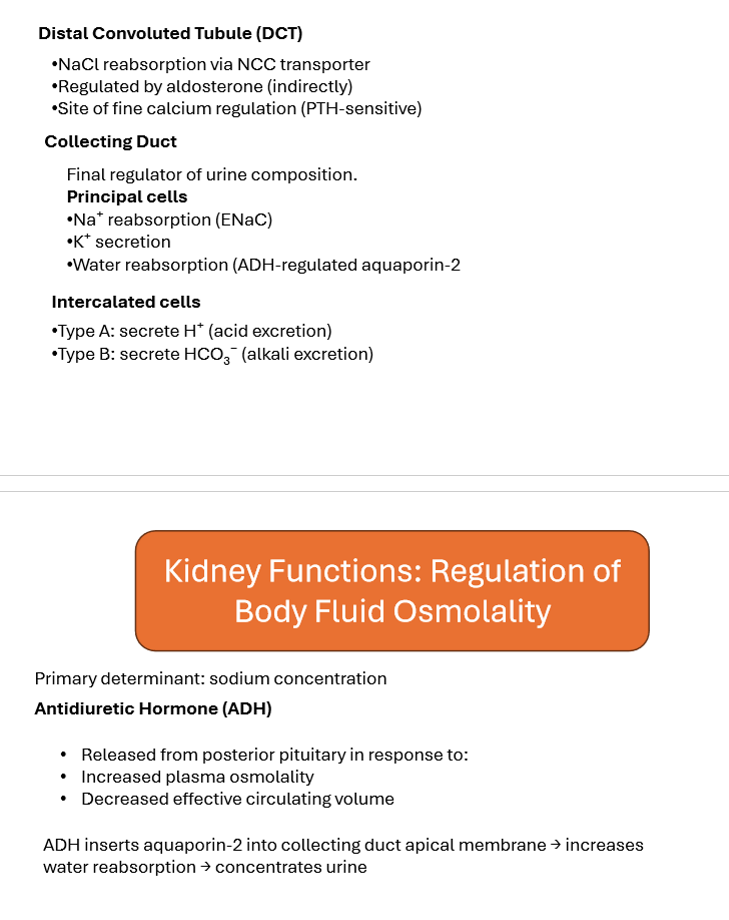
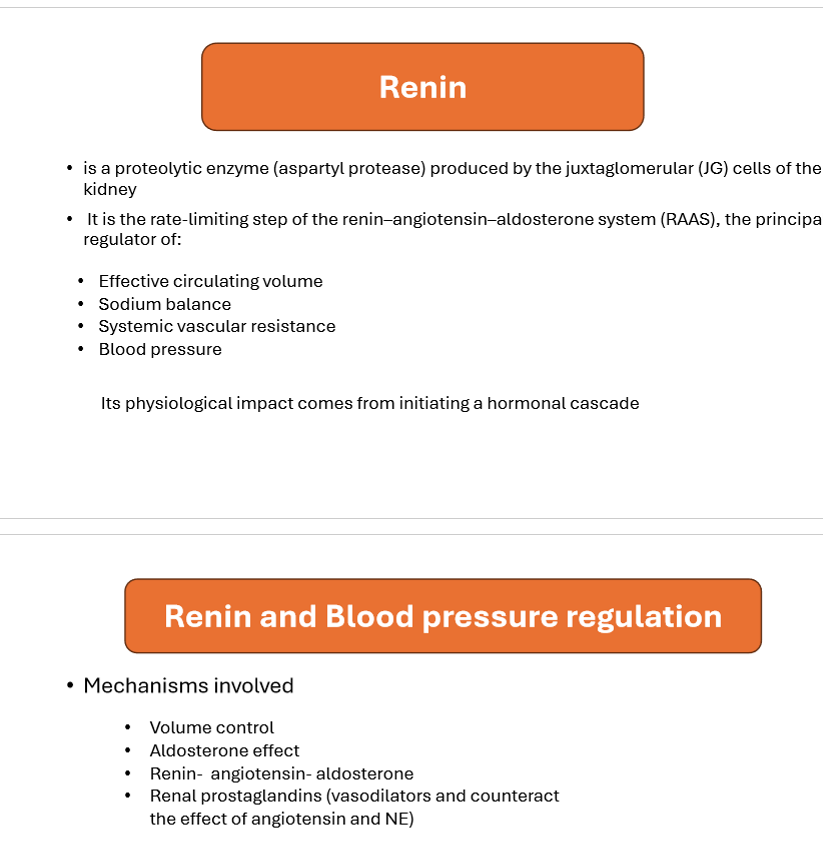
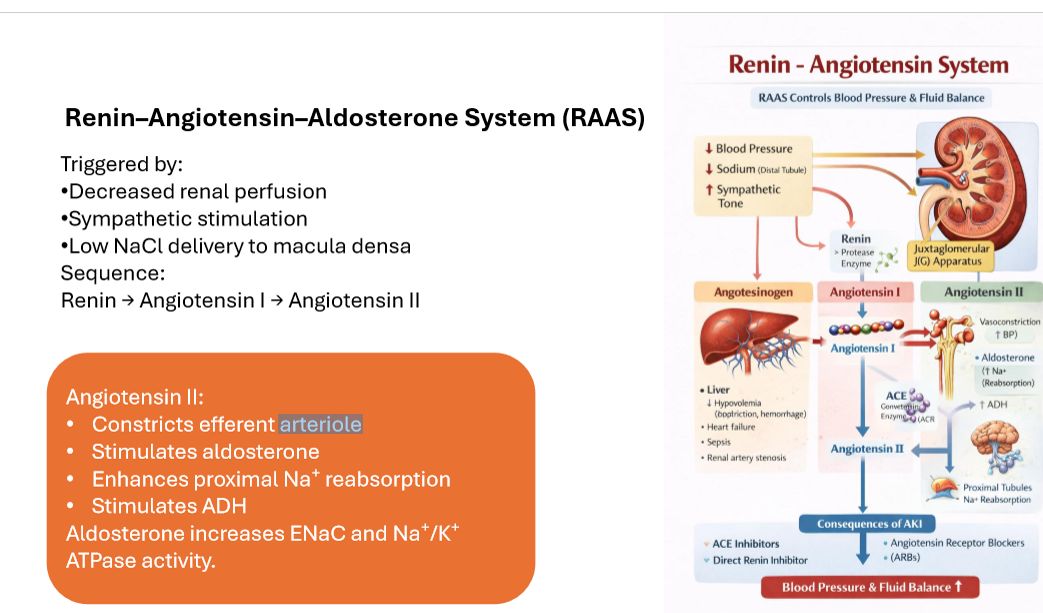
Which of the following stimulates renin release?
Decreased renal perfusion (drop in BP and Sodium and increase in sympathetic tone)
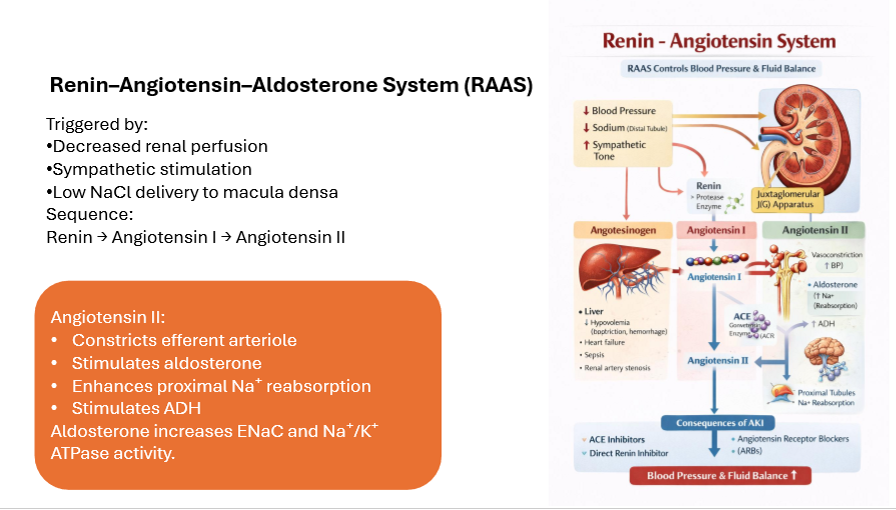
A patient with chronic kidney disease develops normocytic anemia.The most likely cause is decreased production of:
Erythropoietin
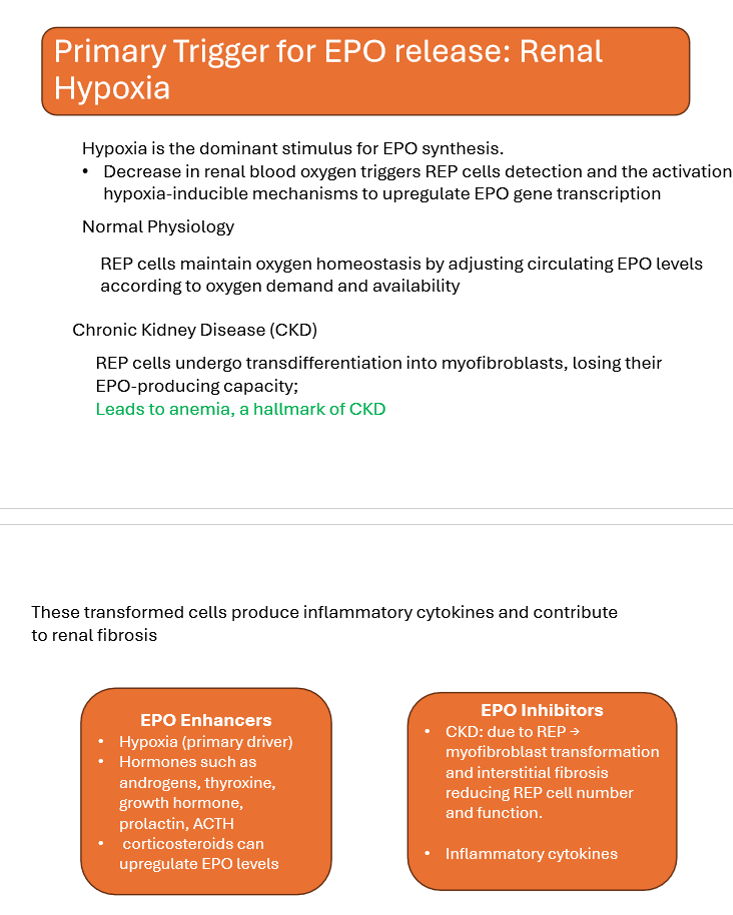
Kidney produces EPO → stimulates RBC production.
CKD → anemia.
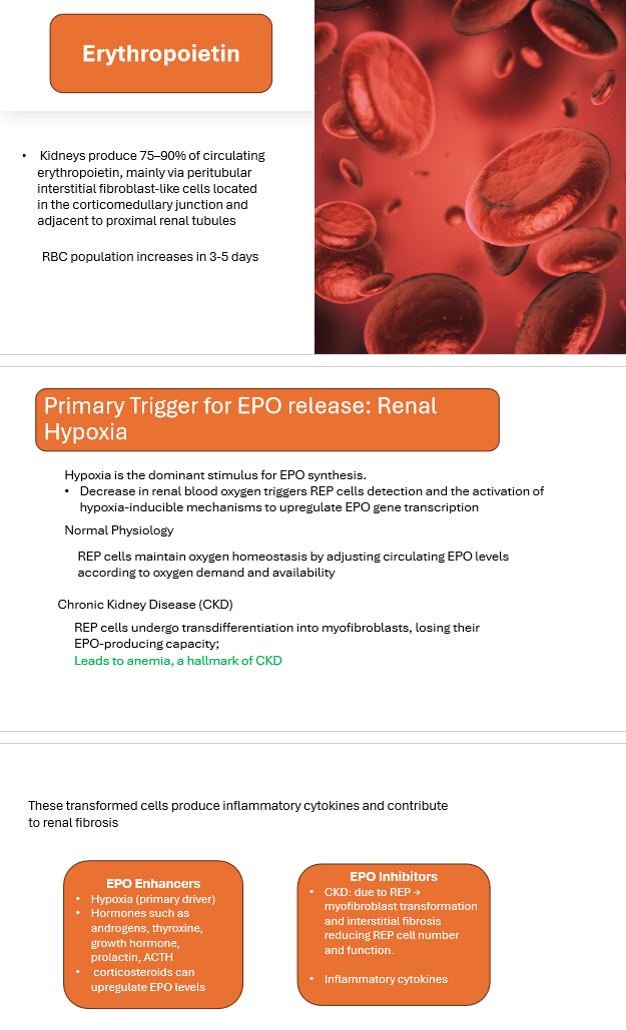
Which of the following is the most common cause of chronic kidney disease in developed countries?
Diabetes mellitus
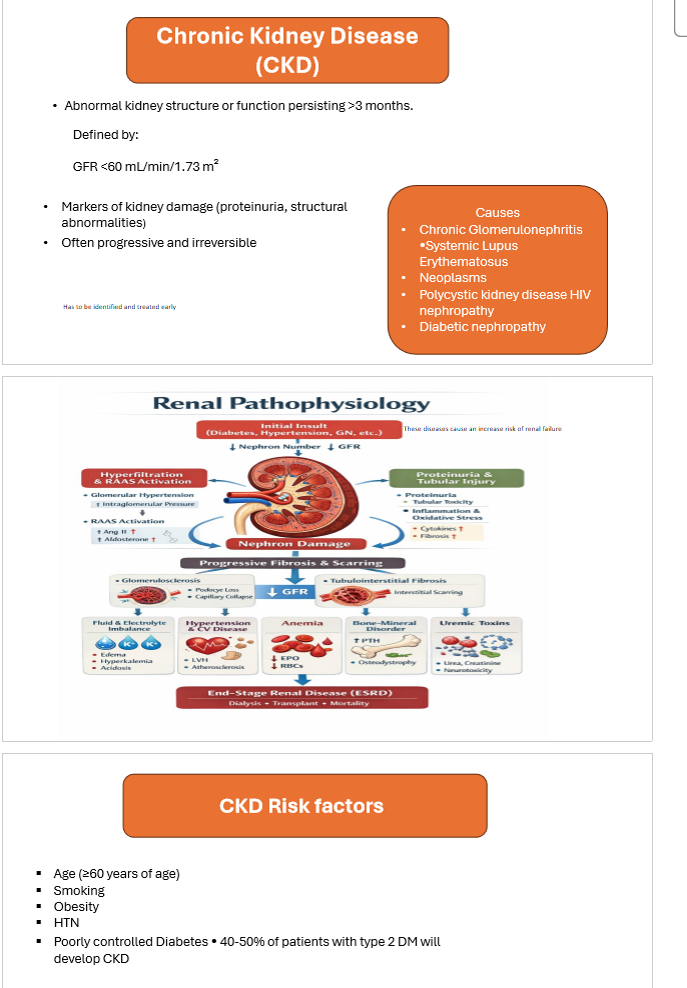
A hospitalized patient develops acute kidney injury. Urinalysis reveals muddy brown granular casts.
What is the most likely diagnosis?
Acute tubular necrosis
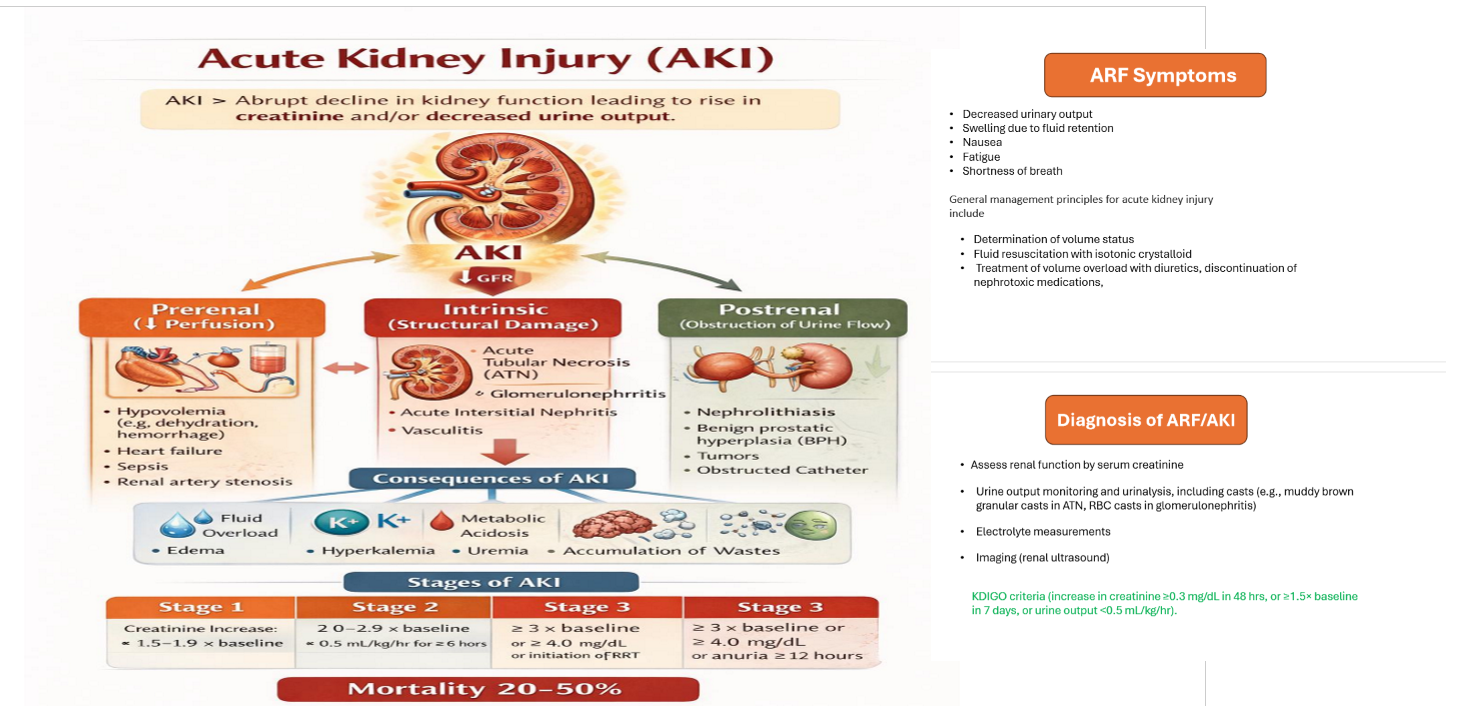
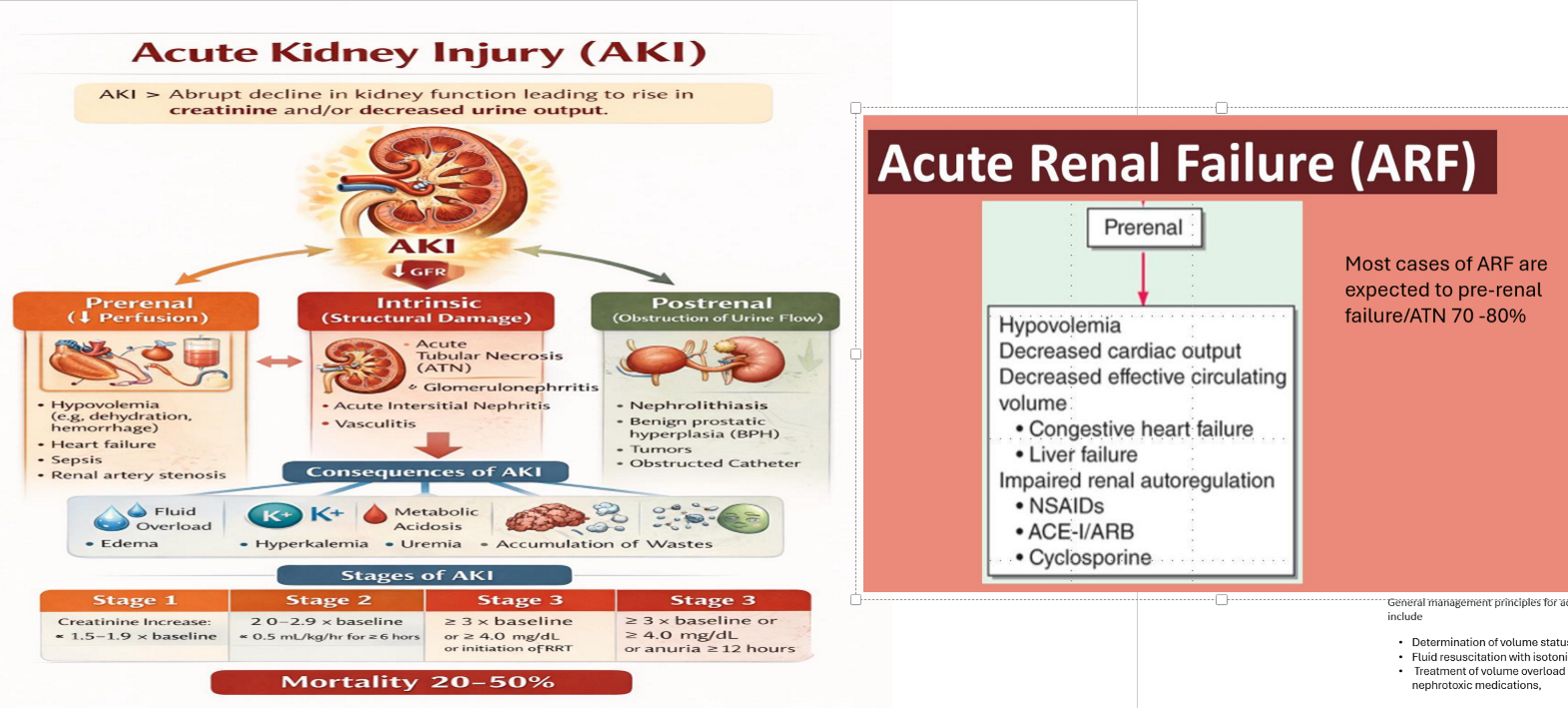
A patient develops AKI after severe dehydration from vomiting.
This represents which type of renal failure?
Prerenal
Which of the following is the best day to perform routine dental treatment for a patient on hemodialysis?
Day after dialysis
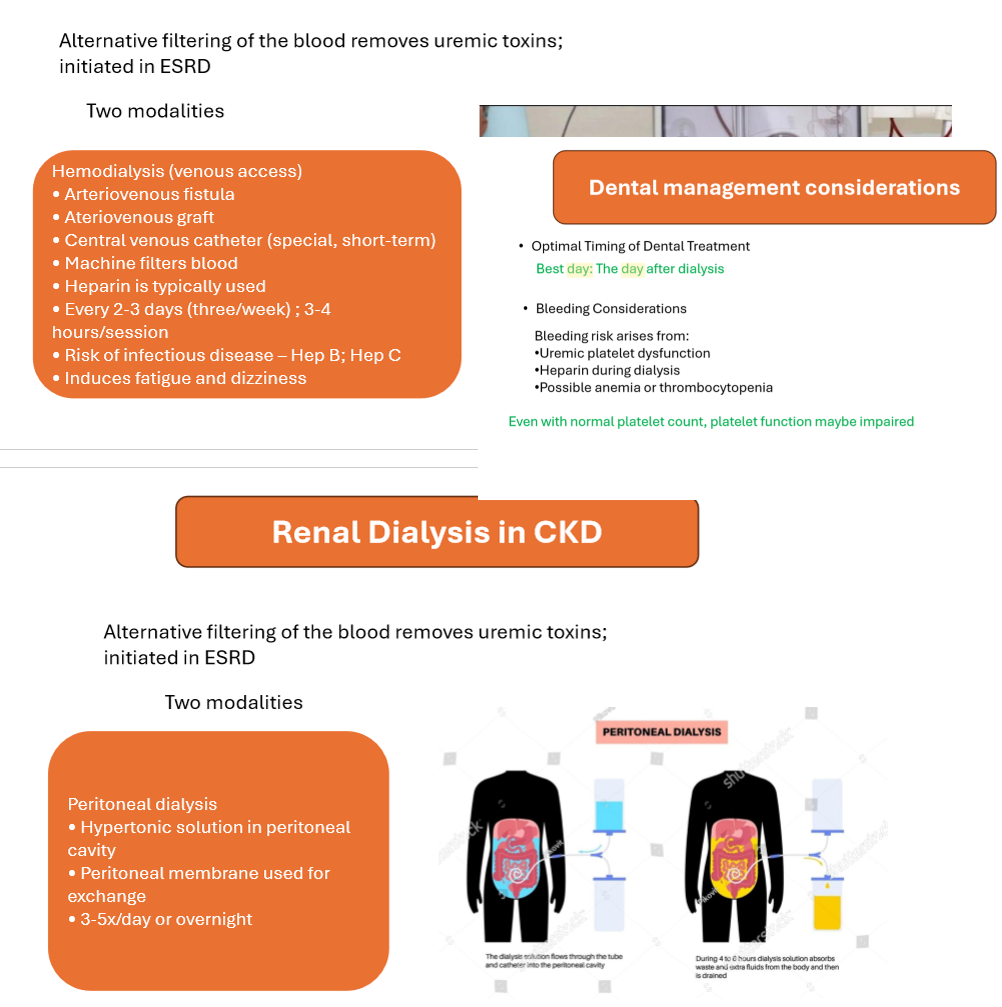
A patient with renal failure is undergoing dialysis and requires tooth extraction. The increased bleeding risk is primarily due to:
Platelet dysfunction
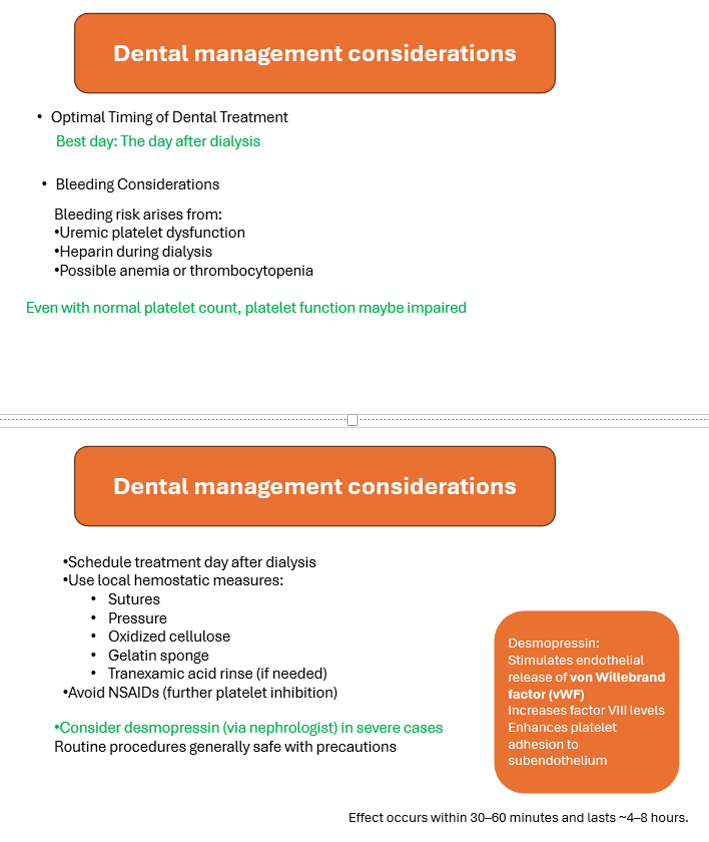
Which analgesic is preferred in patients with chronic kidney disease?
Acetaminophen
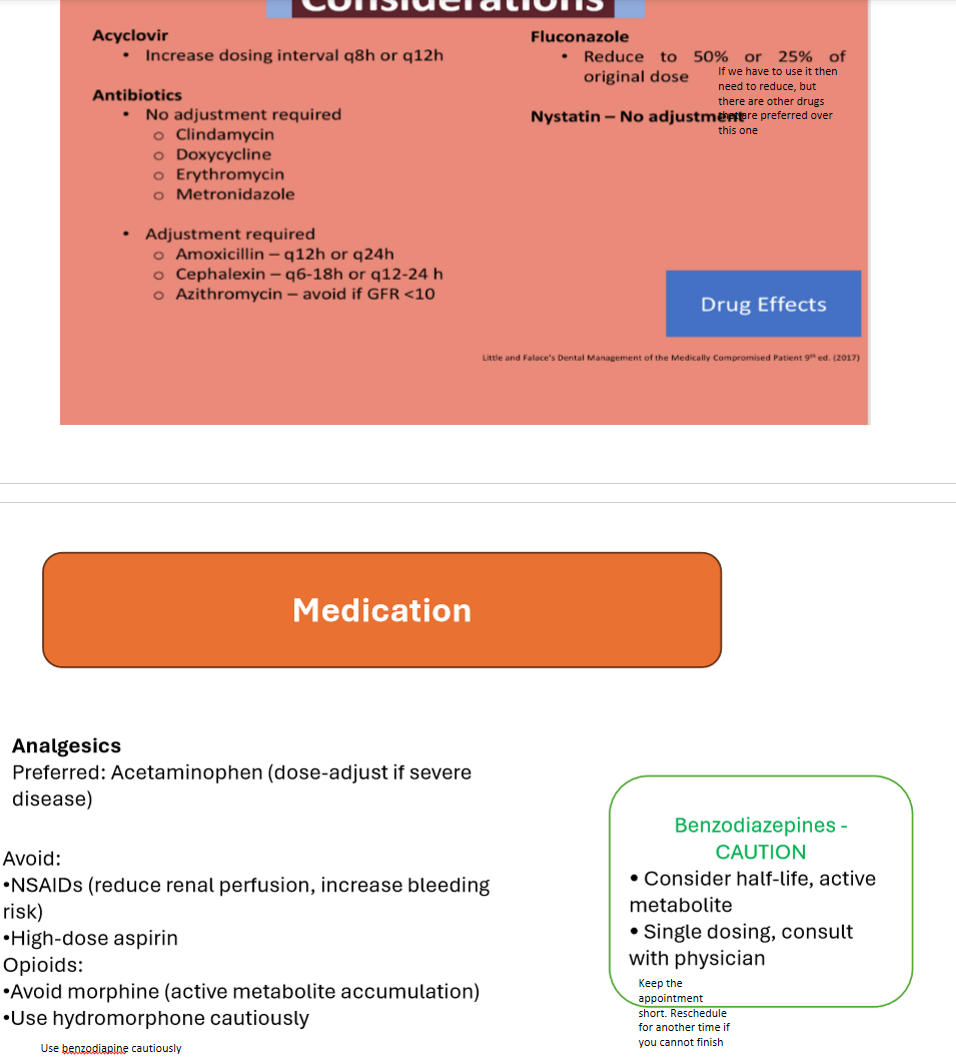
A patient with an arteriovenous fistula for dialysis presents for dental care.
Which statement is correct?
Avoid fistula arm for BP
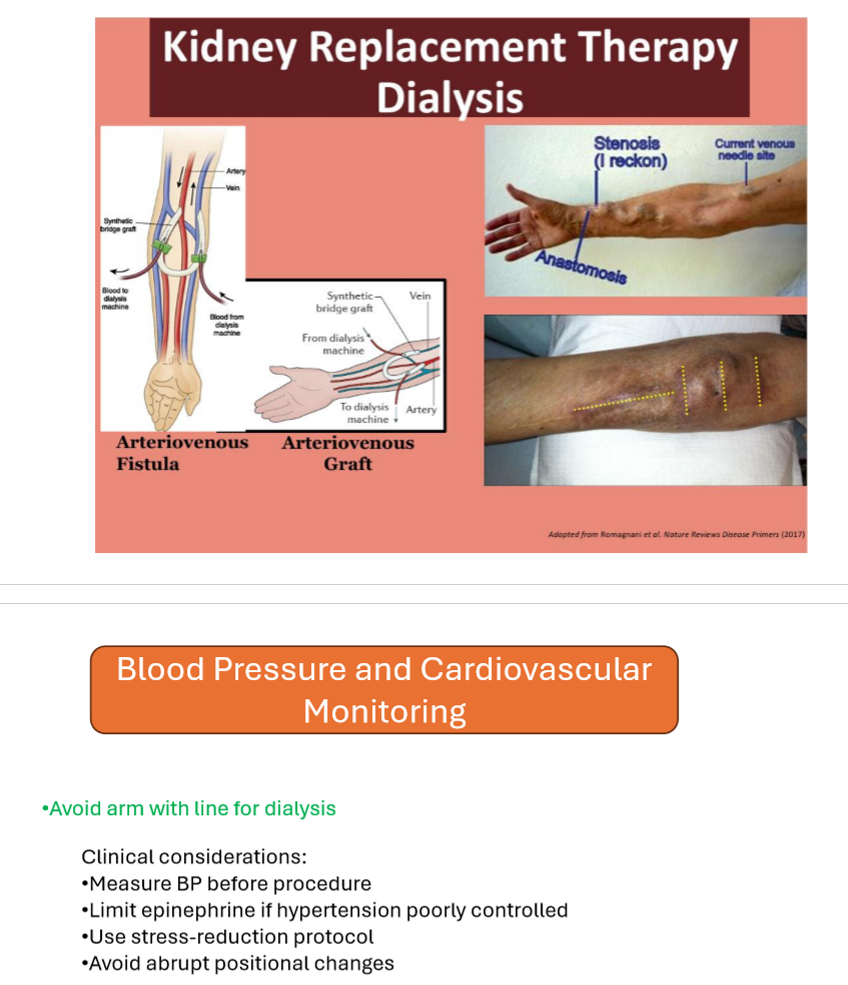
Kidney failure leads to decreased production of active vitamin D, which can result in:
Hypocalcemia
CKD → ↓ active vitamin D → ↓ Ca²⁺.
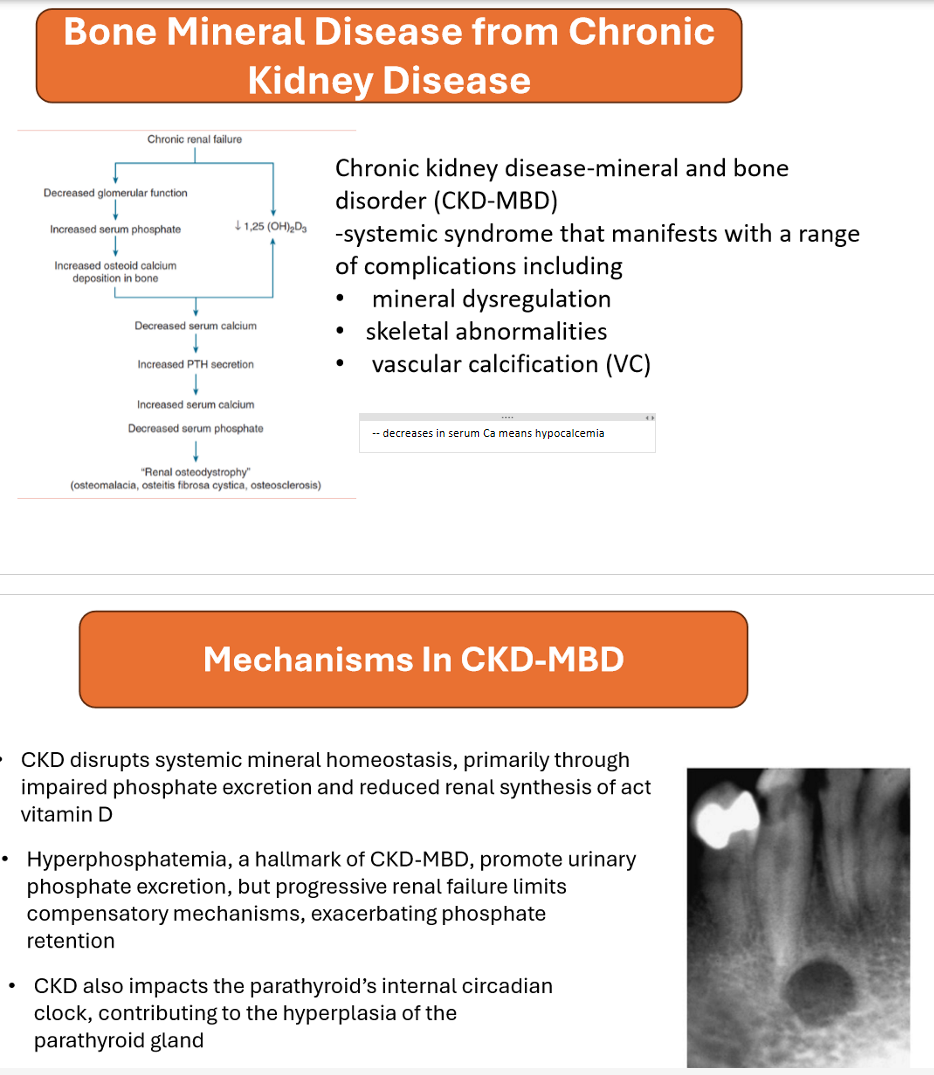
A patient recently received a kidney transplant 1 month ago and presents for dental treatment.
What is the best management?
Avoid elective dental treatment
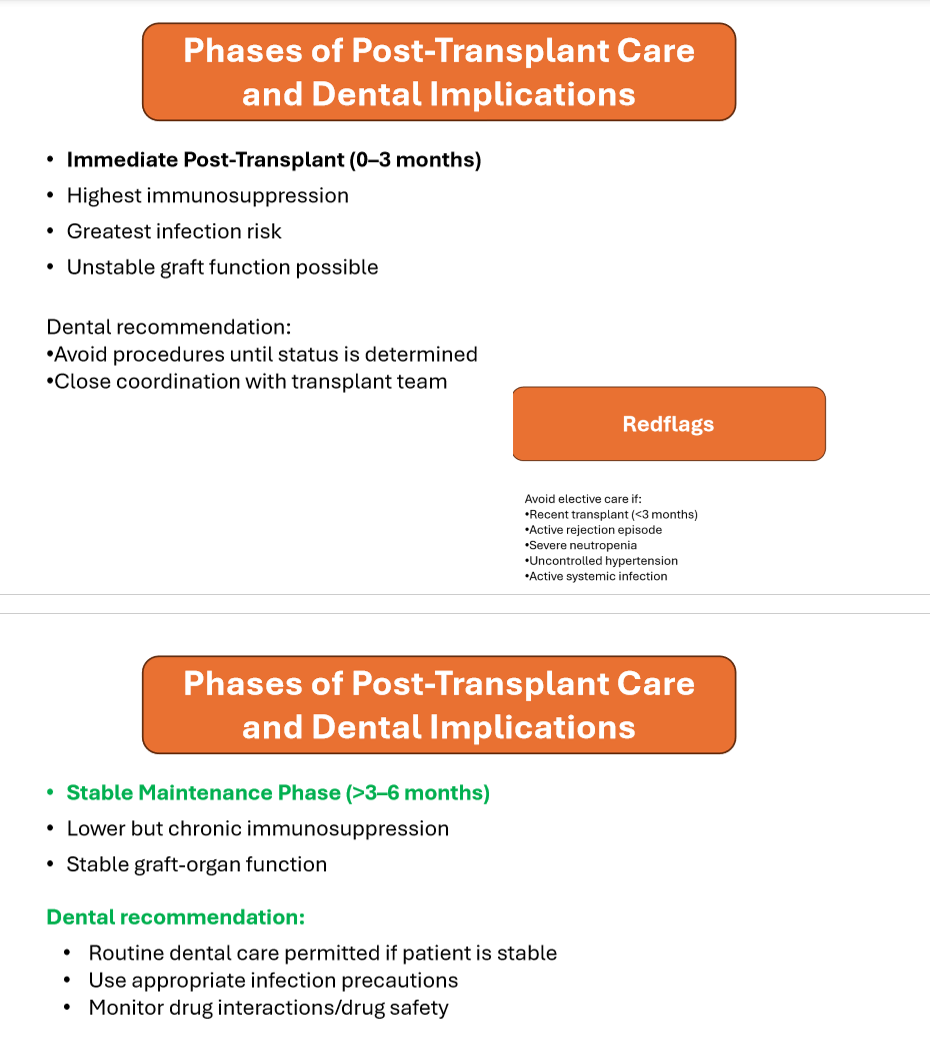
The kidneys receive approximately what percentage of cardiac output?
20-25%
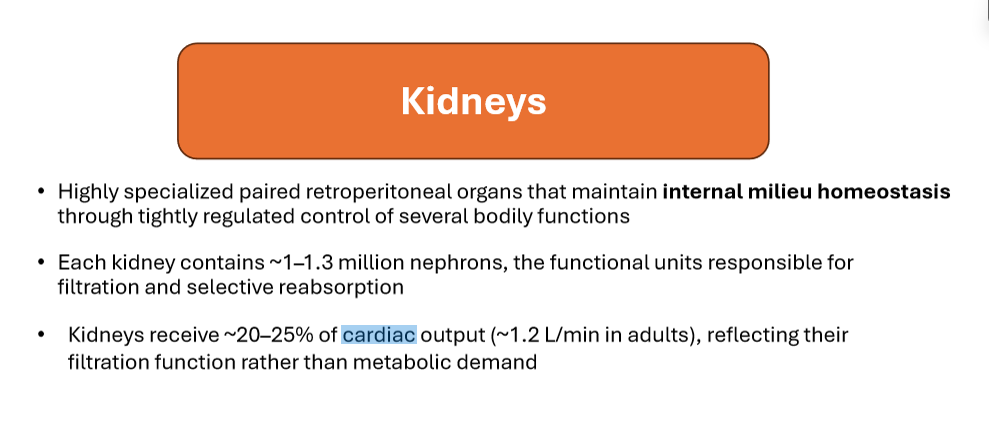
The descending limb of the loop of Henle is primarily permeable to:
water
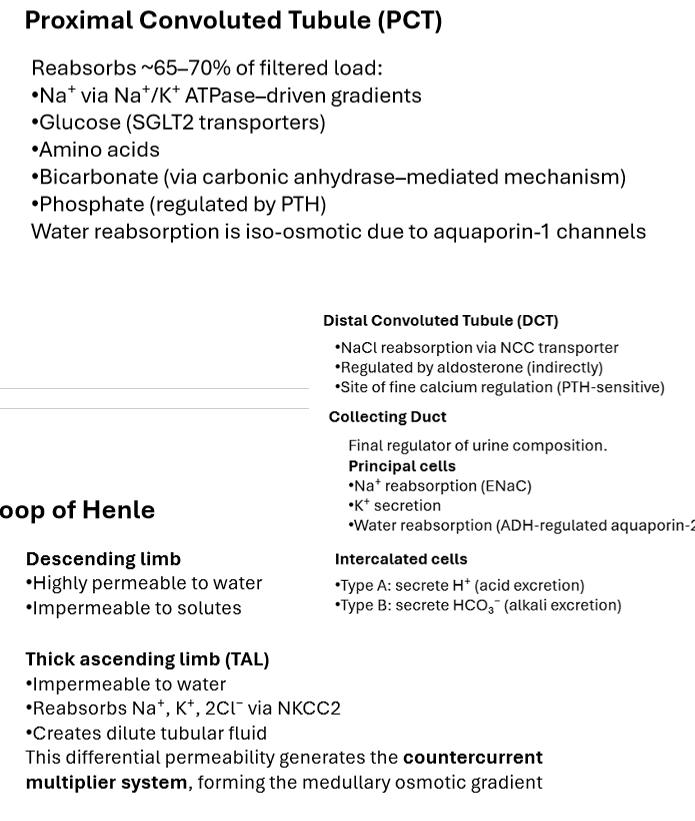
Which transporter is responsible for sodium, potassium, and chloride reabsorption in the thick ascending limb?
NKCC2
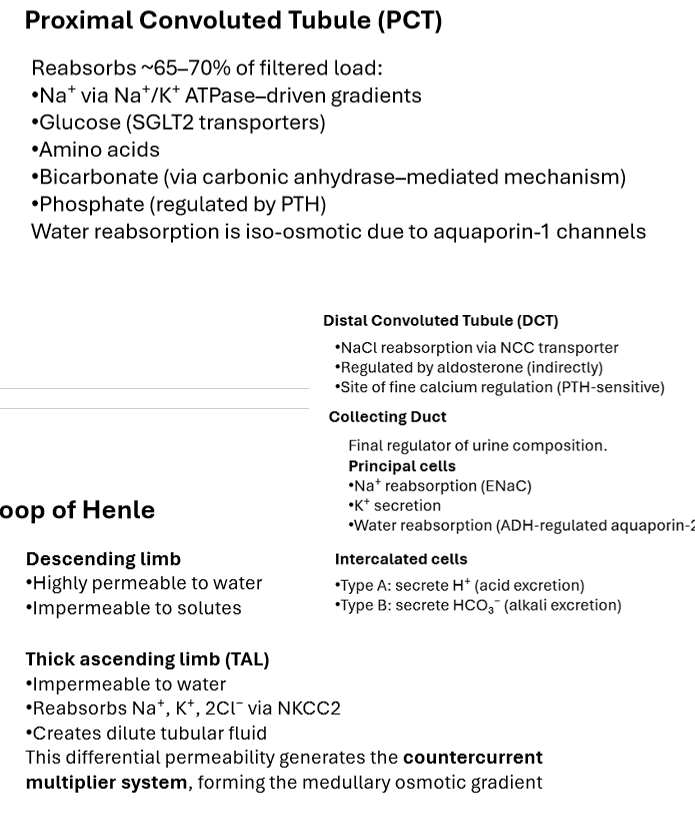
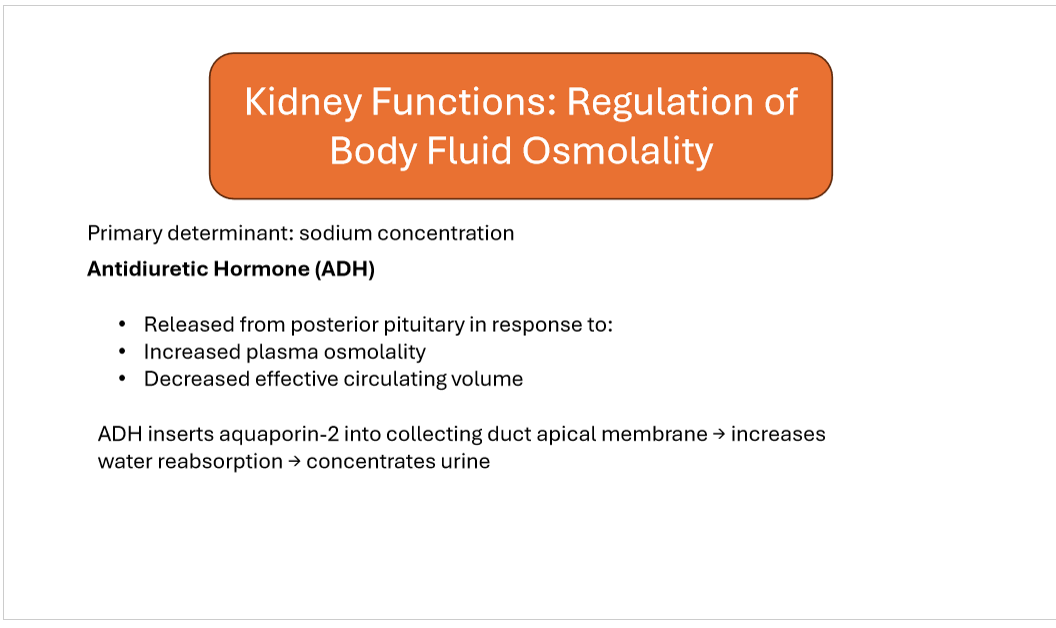
Antidiuretic hormone (ADH) increases water reabsorption by inserting which channel into the collecting duct?
Aquaporin-2
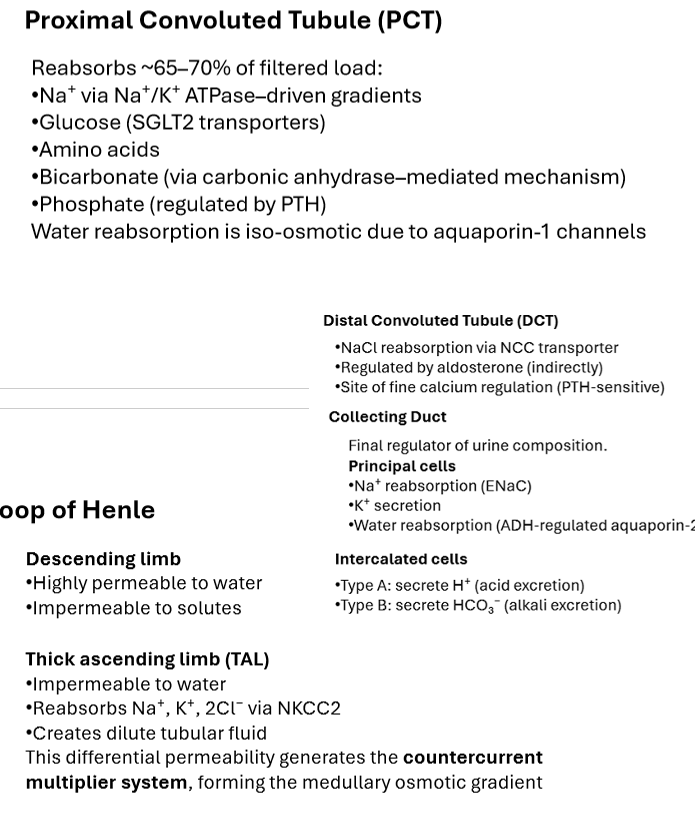
Which of the following stimulates renin release from the juxtaglomerular cells?
Decreased renal perfusion
Angiotensin II has which of the following effects on the kidney?
Constricts efferent arteriole
Which hormone produced by the kidney stimulates red blood cell production?
Erythropoietin
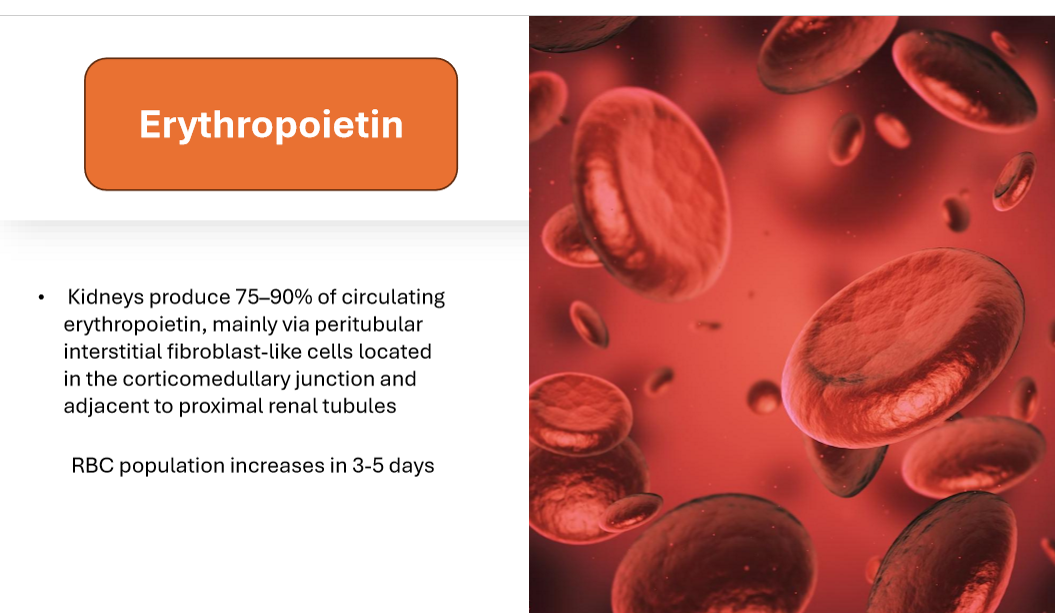
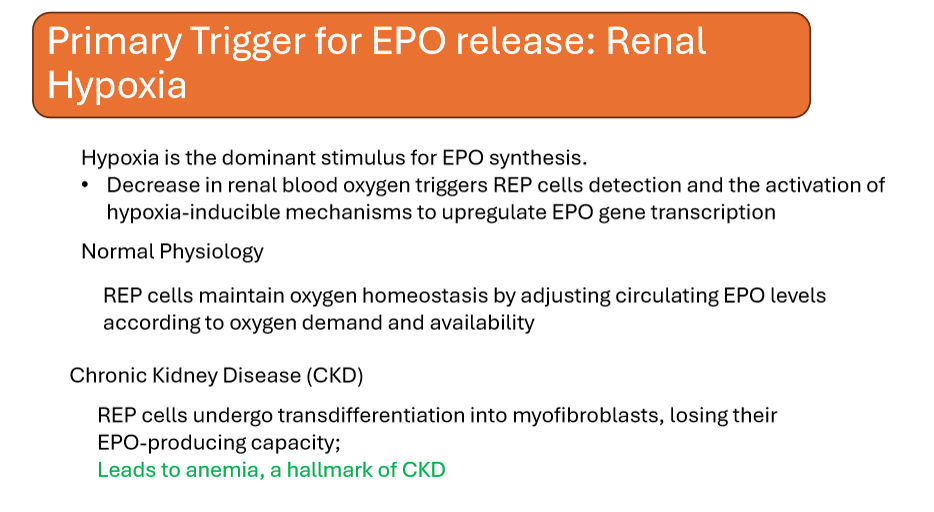
A major cause of anemia in patients with chronic kidney disease is:
Reduced erythropoietin production
Which of the following is the most common cause of chronic kidney disease?
Diabetes mellitus
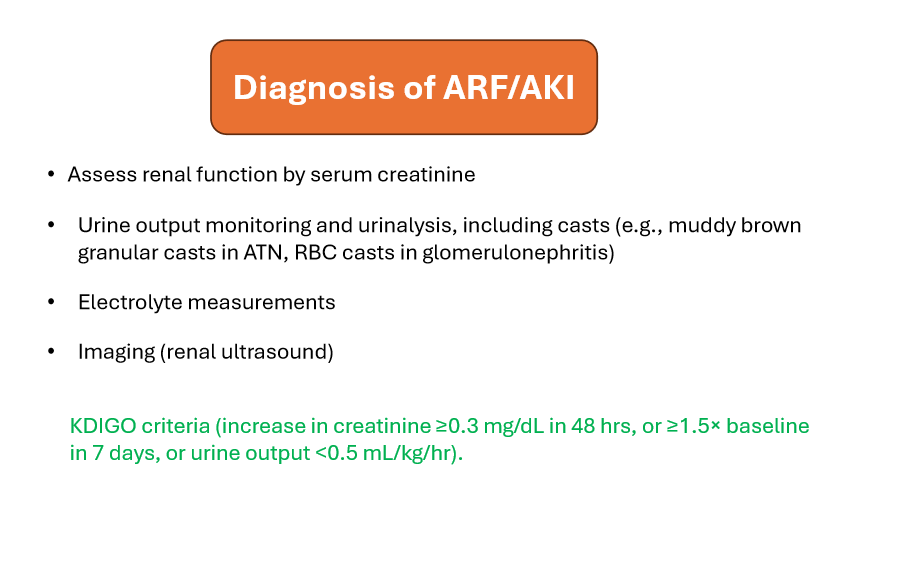
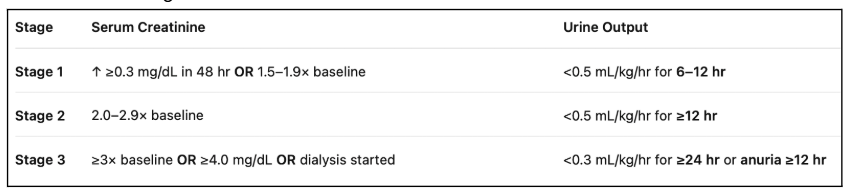
Acute kidney injury is defined by which of the following changes?
Creatinine increase ≥0.3 mg/dL within 48 hours
Which of the following is an example of prerenal acute kidney injury?
severe dehydration
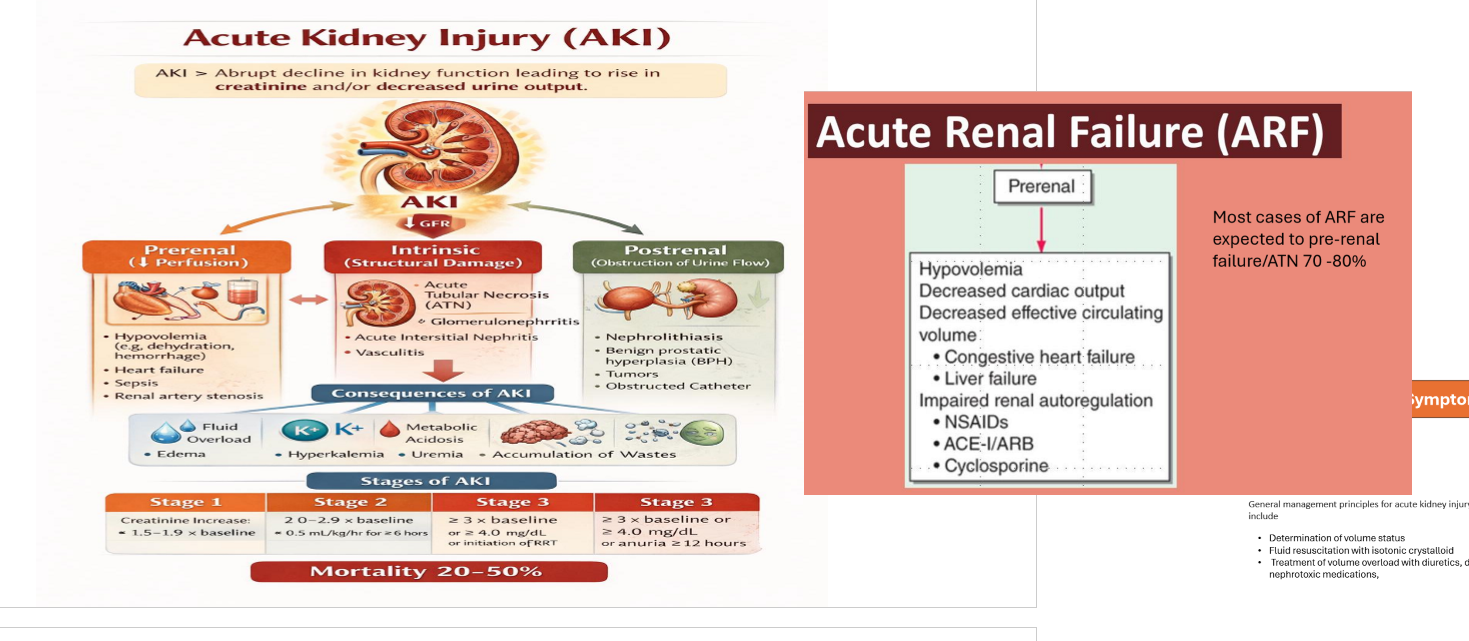
Muddy brown granular casts" on urinalysis suggest:
Acute tubular necrosis
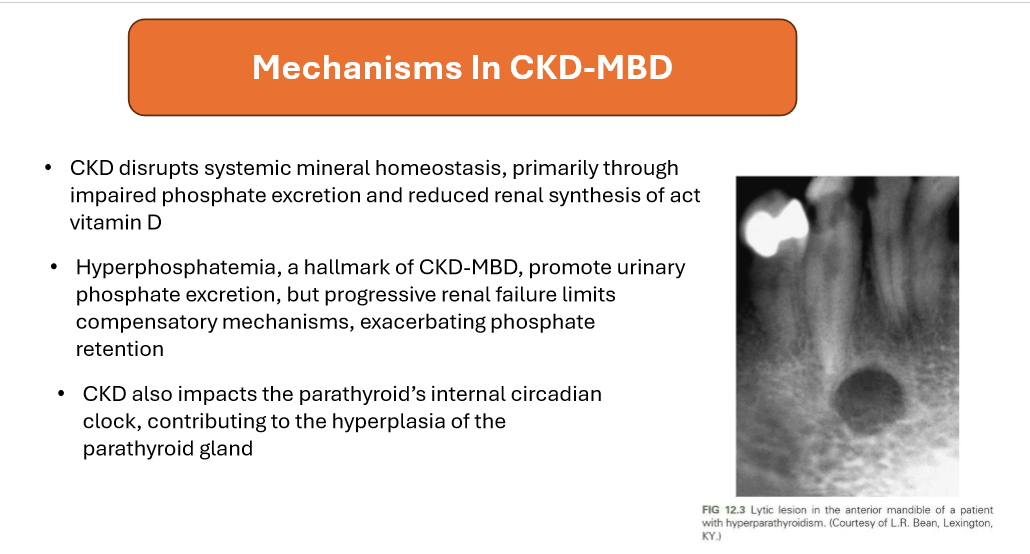
Which condition is caused by reduced phosphate excretion in chronic kidney disease?
Hyperphosphatemia
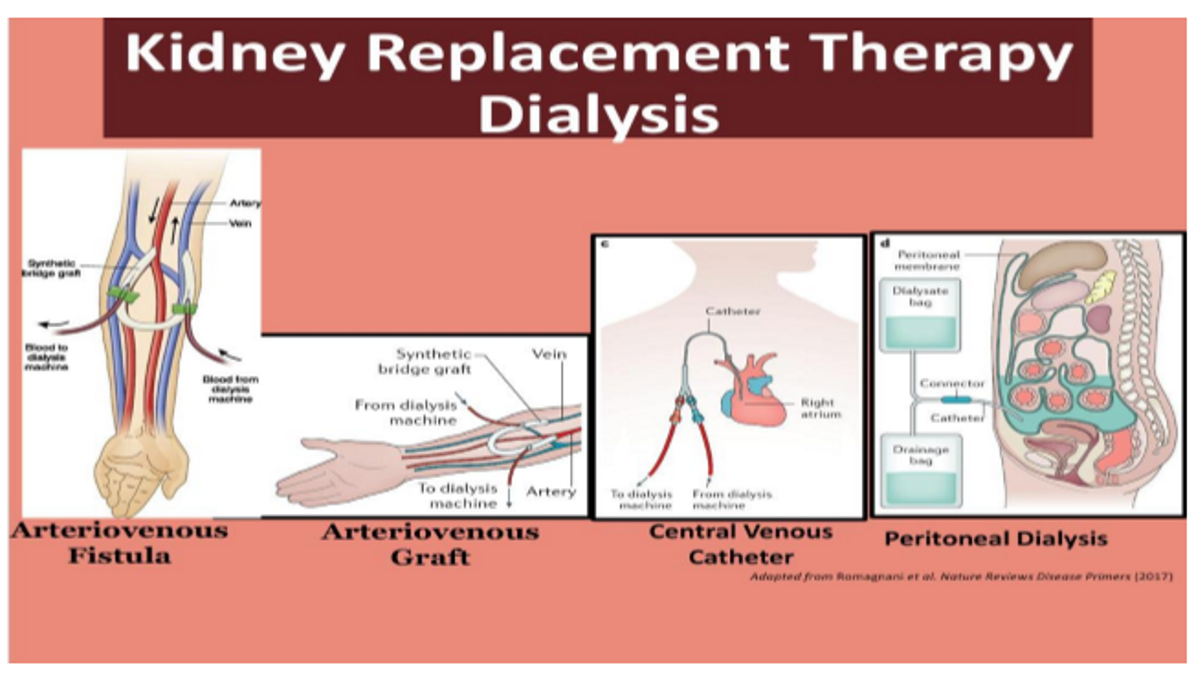
Which dialysis method uses the peritoneal membrane as a filtration surface?
Peritoneal dialysis
Patients on dialysis often have increased bleeding risk primarily because of:
Platelet dysfunction due to uremia
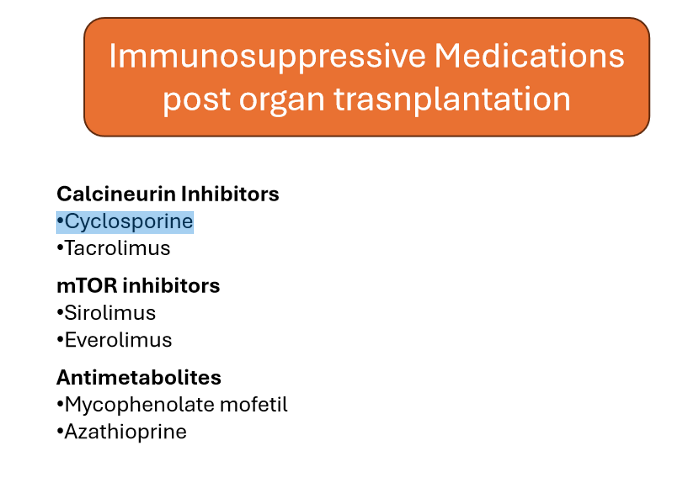
Which of the following is a common immunosuppressive drug used after organ transplantation?
Cyclosporine
Dental treatment should generally be avoided during which period after organ transplantation?
first 3 months
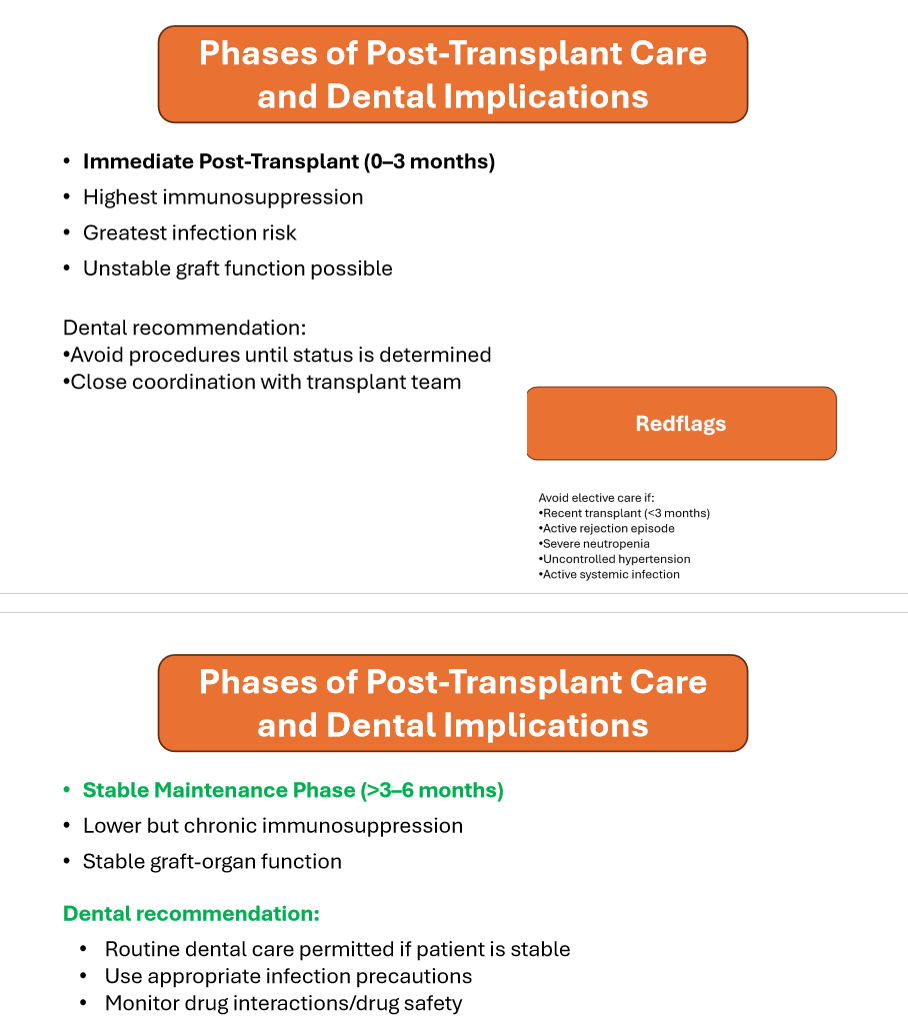
An arteriovenous fistula used for dialysis:
Does NOT require antibiotic prophylaxis
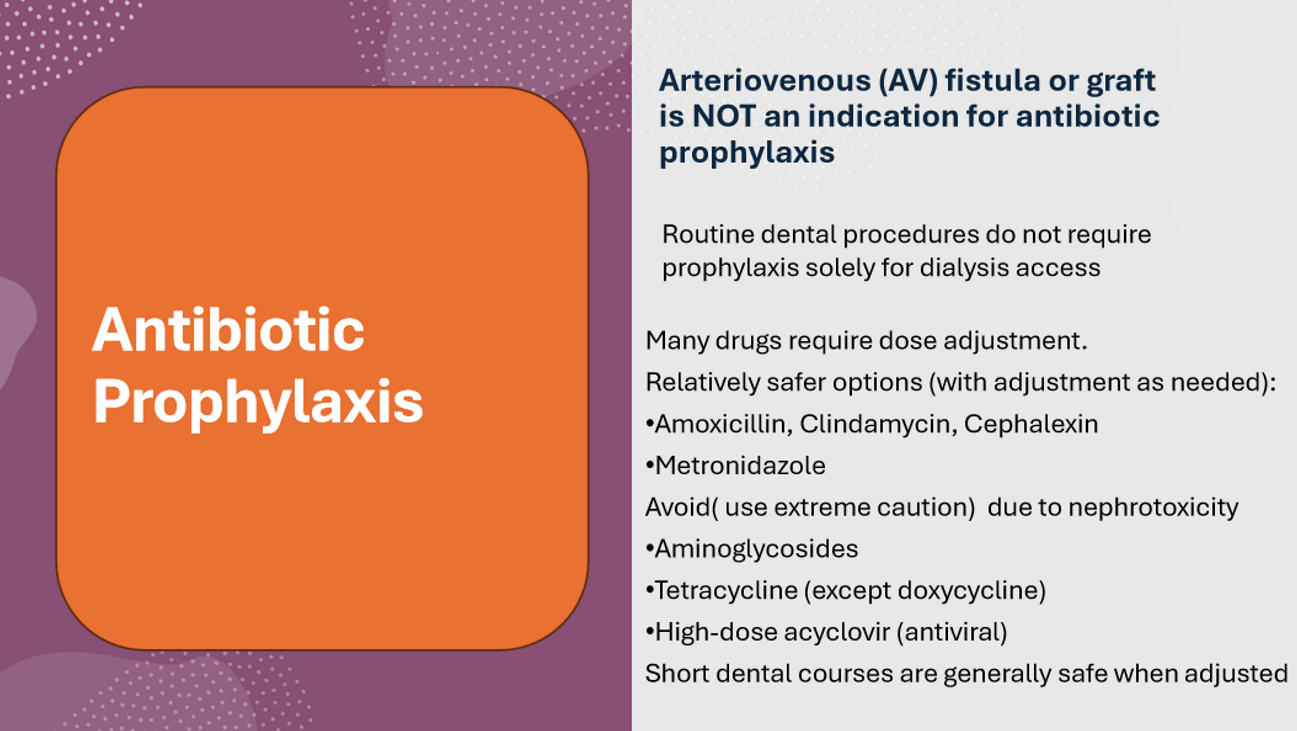
Hemodialysis is usually performed:
3 times per week
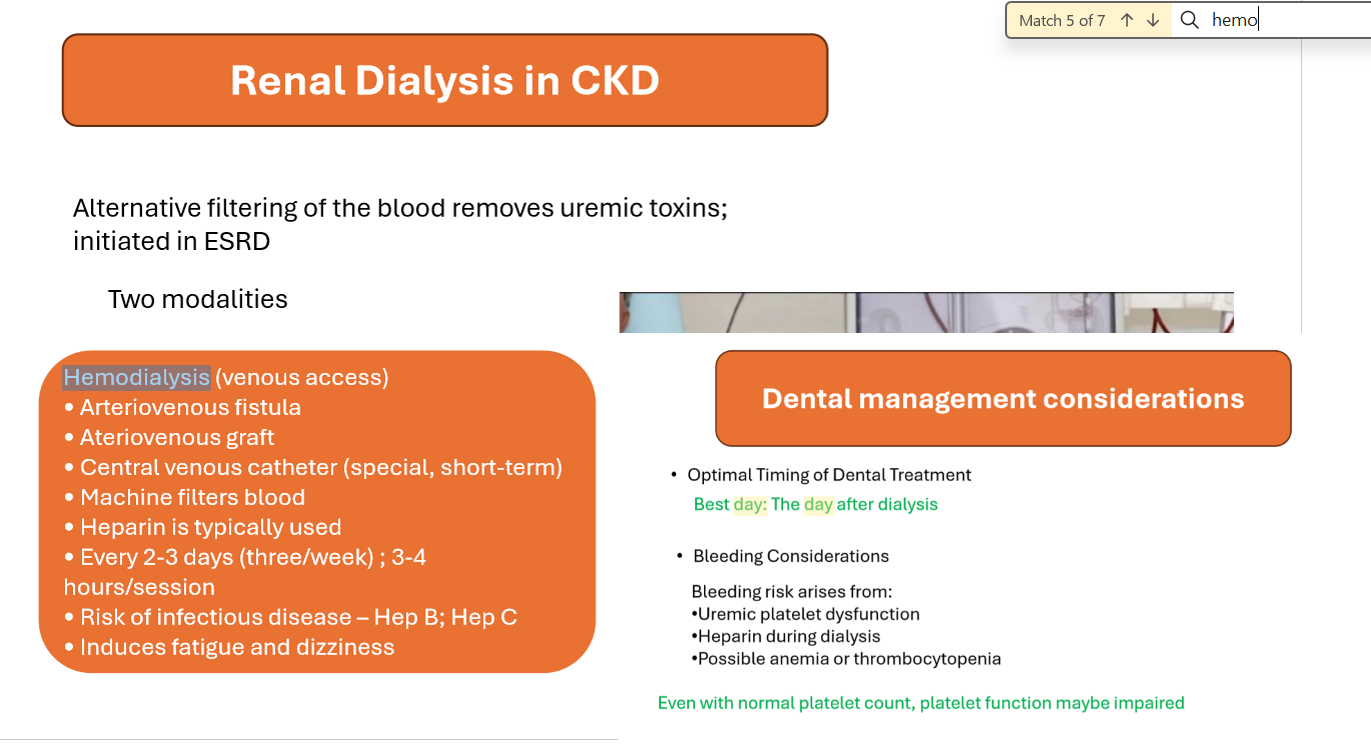
Dialysis is typically initiated in patients with:
ESRD with uremic toxin buildup
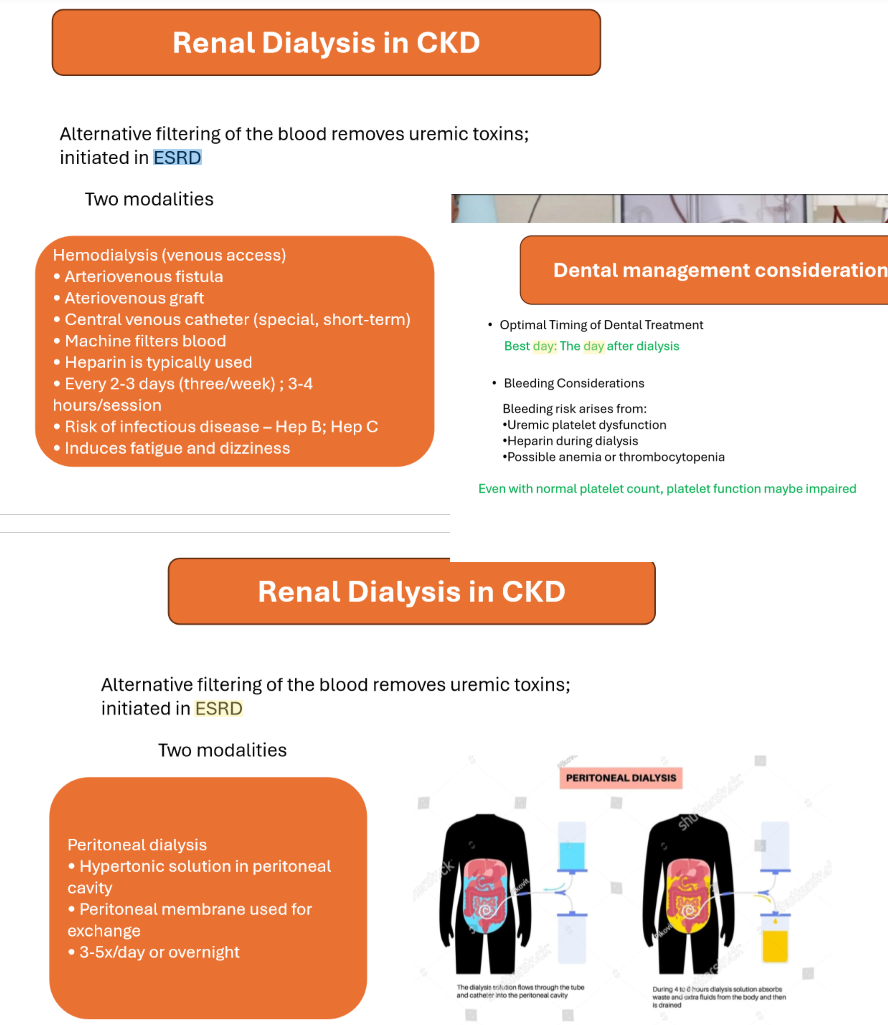
Which mineral imbalance commonly occurs in CKD?
Hyperphosphatemia
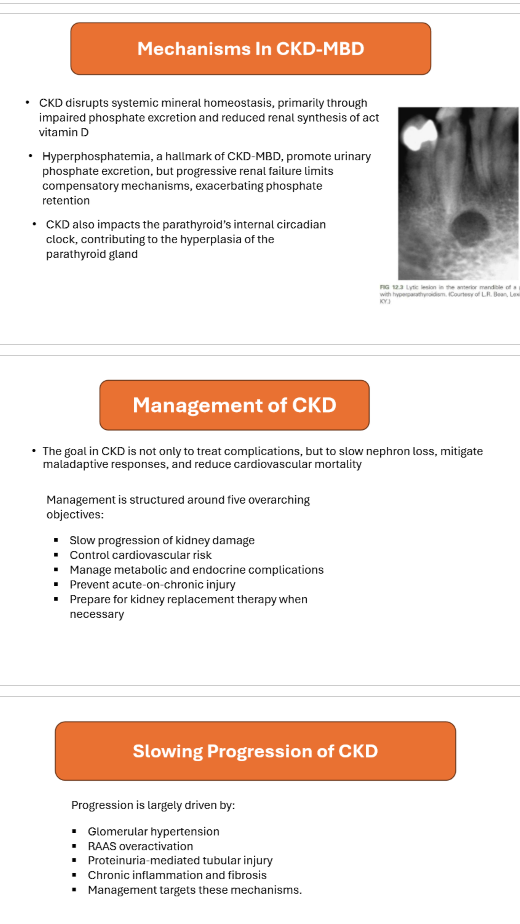
Chronic kidney disease is defined as kidney damage lasting longer than:
3 months
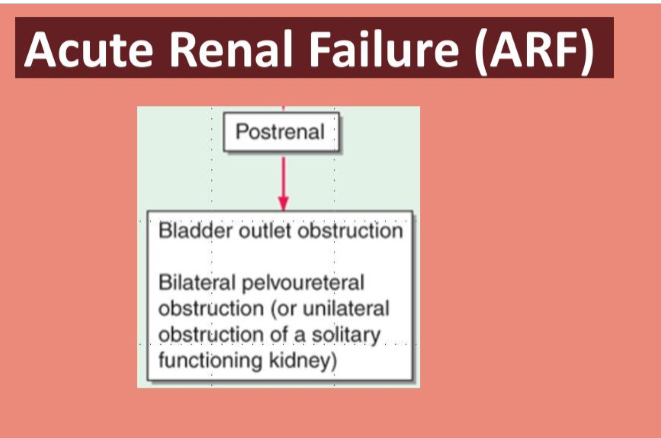
A urinary obstruction causing kidney failure would be classified as:
postrenal
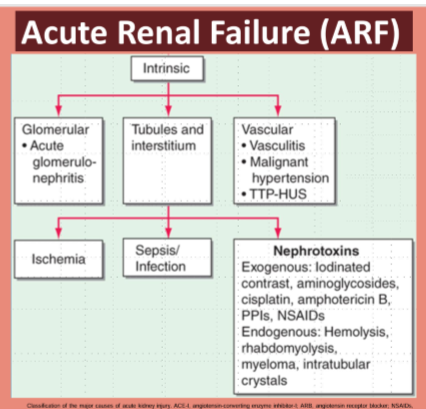
Acute tubular necrosis is classified as:
intrinsic renal
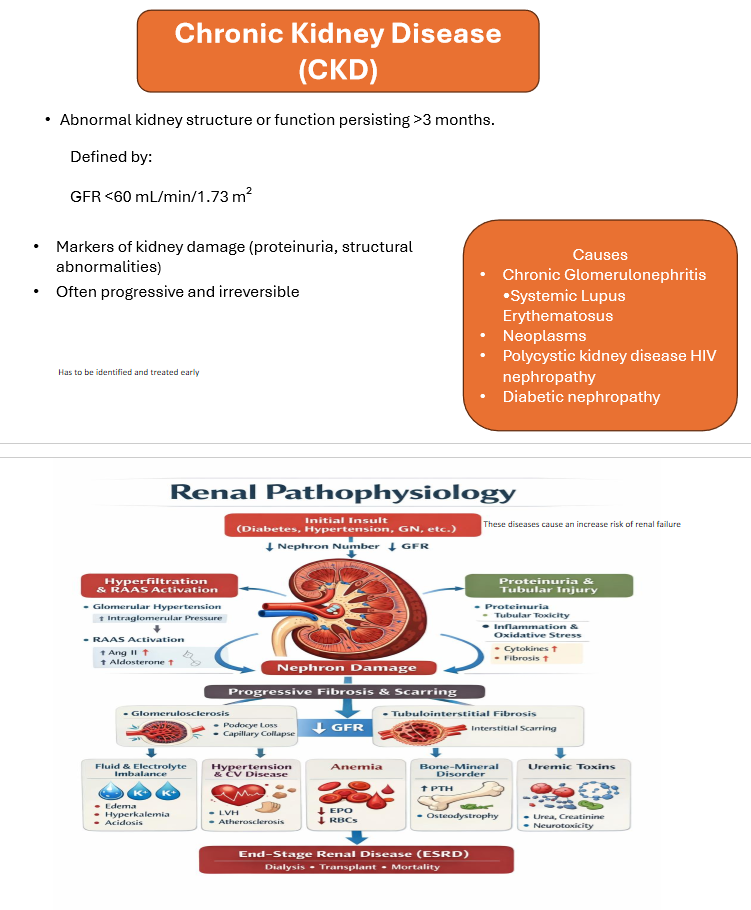
Acute kidney injury (AKI) is defined as:
Abrupt decline in kidney function (GFR)
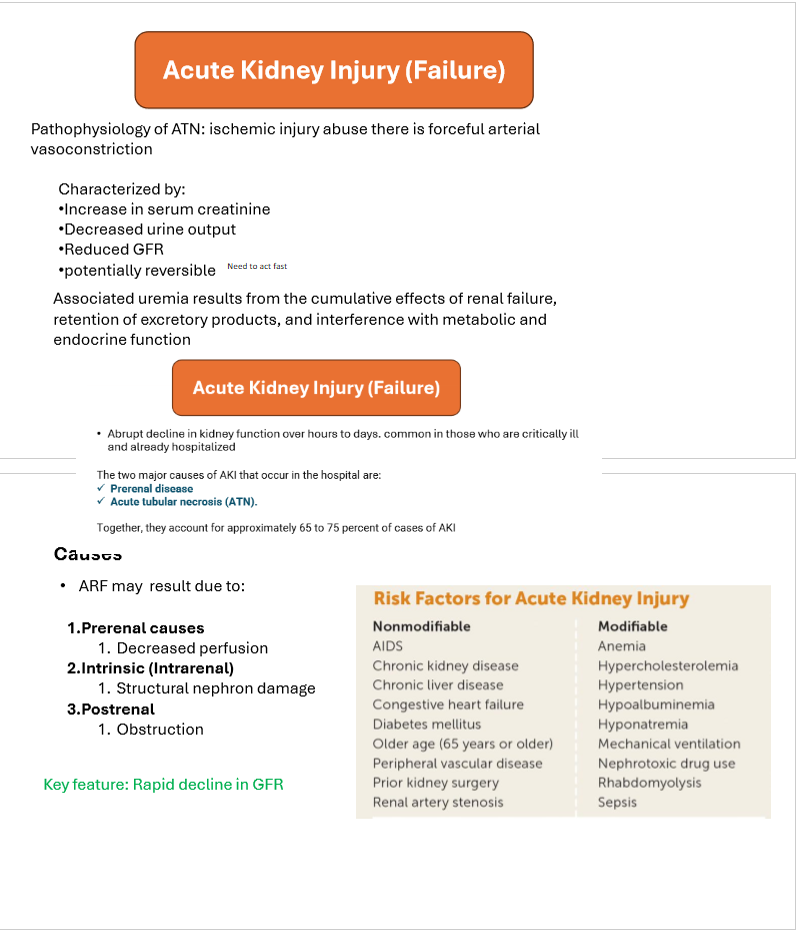
What is the primary stimulus for erythropoietin release?
hypoxia
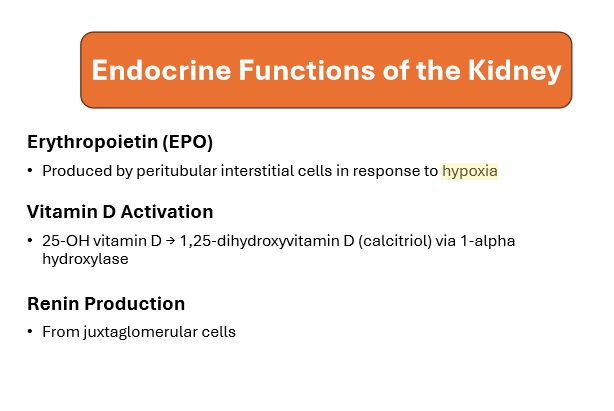
Renin is released by which kidney cells?
Juxtaglomerular cells
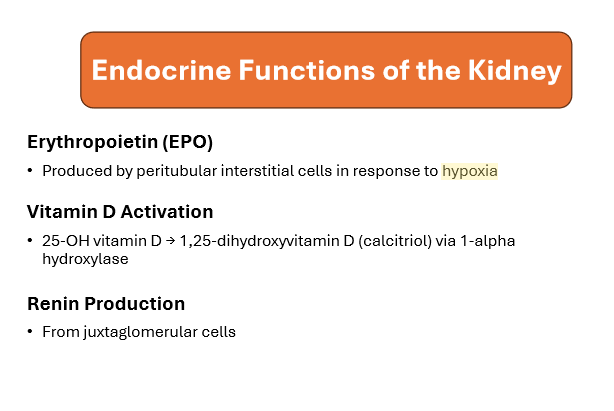
Which hormone is responsible for increasing sodium reabsorption in the collecting duct?
aldosterone
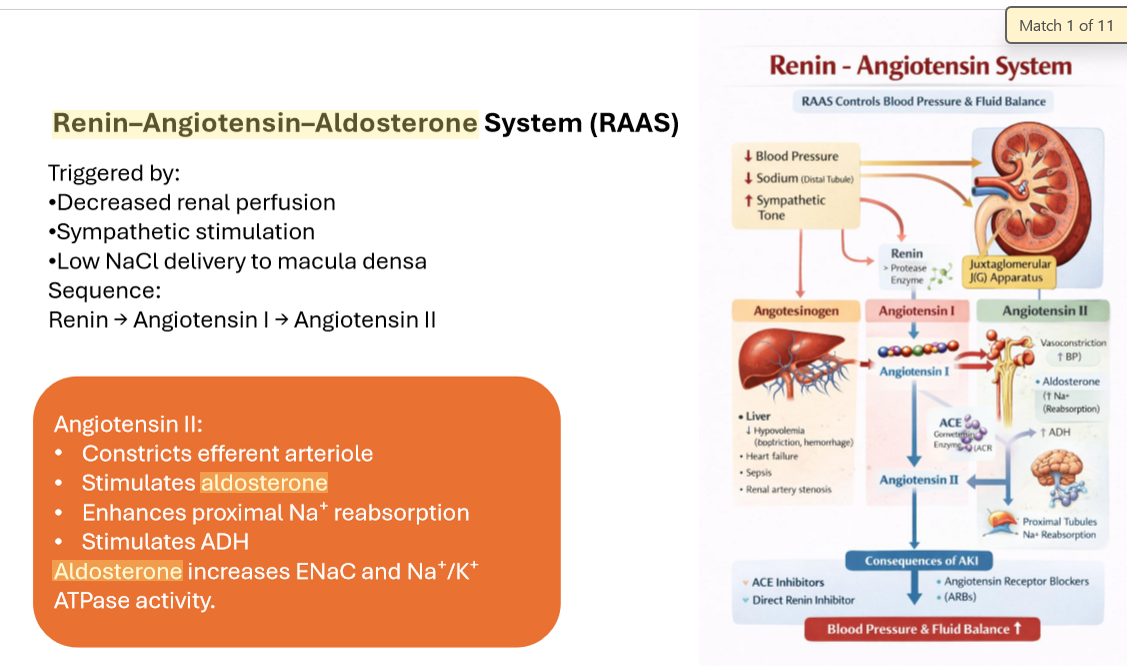
ADH is released primarily in response to:
Increased plasma osmolality
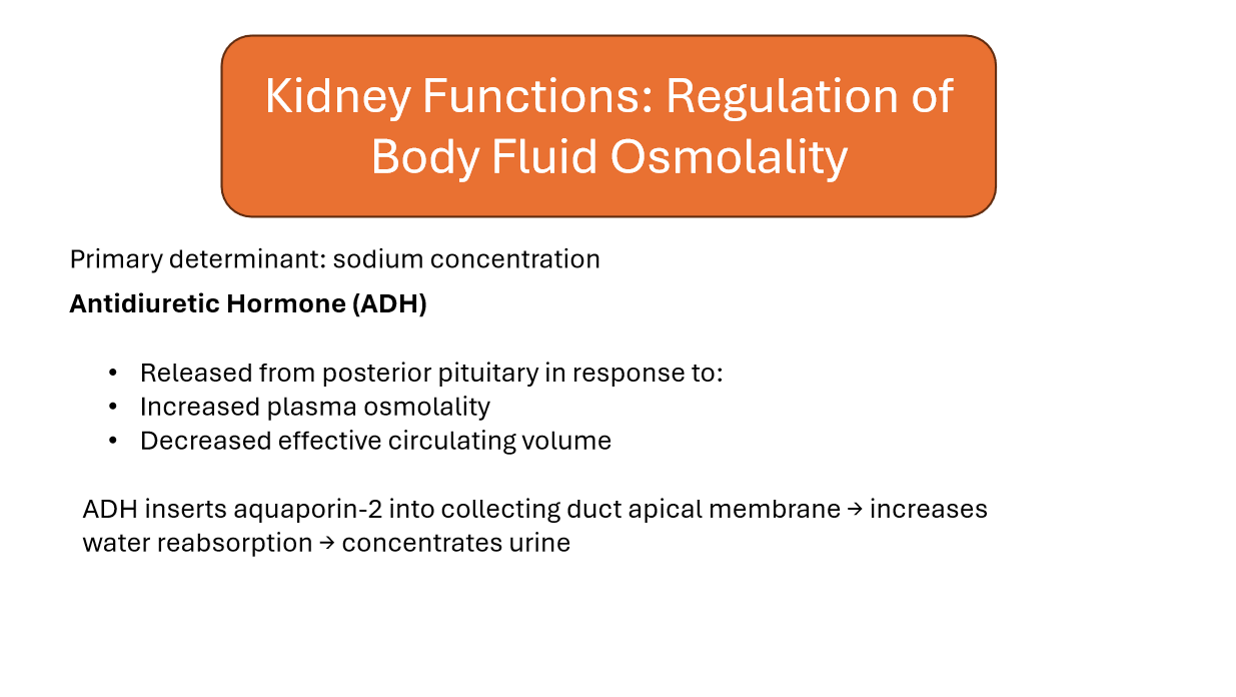
Which nephron segment is the primary site of ADH action?
collecting duct
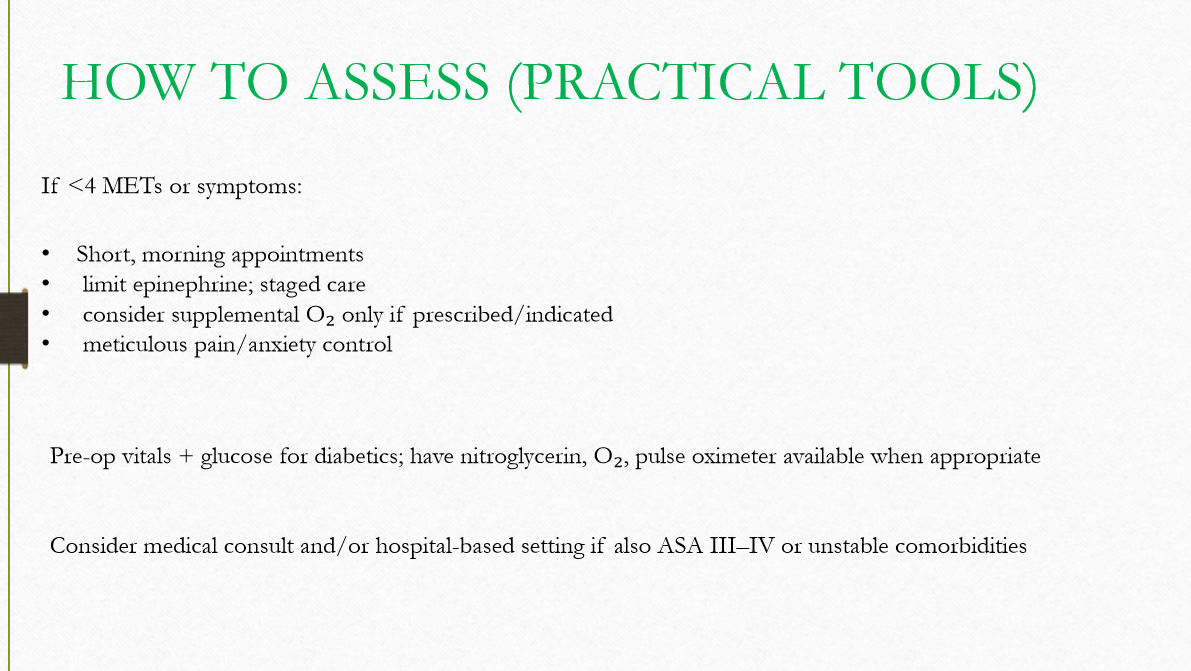
A 67-year-old patient with poorly controlled diabetes and limited ability to climb stairs presents for dental extraction.
Which is the best management approach?
Treatment modification with possible medical consultation
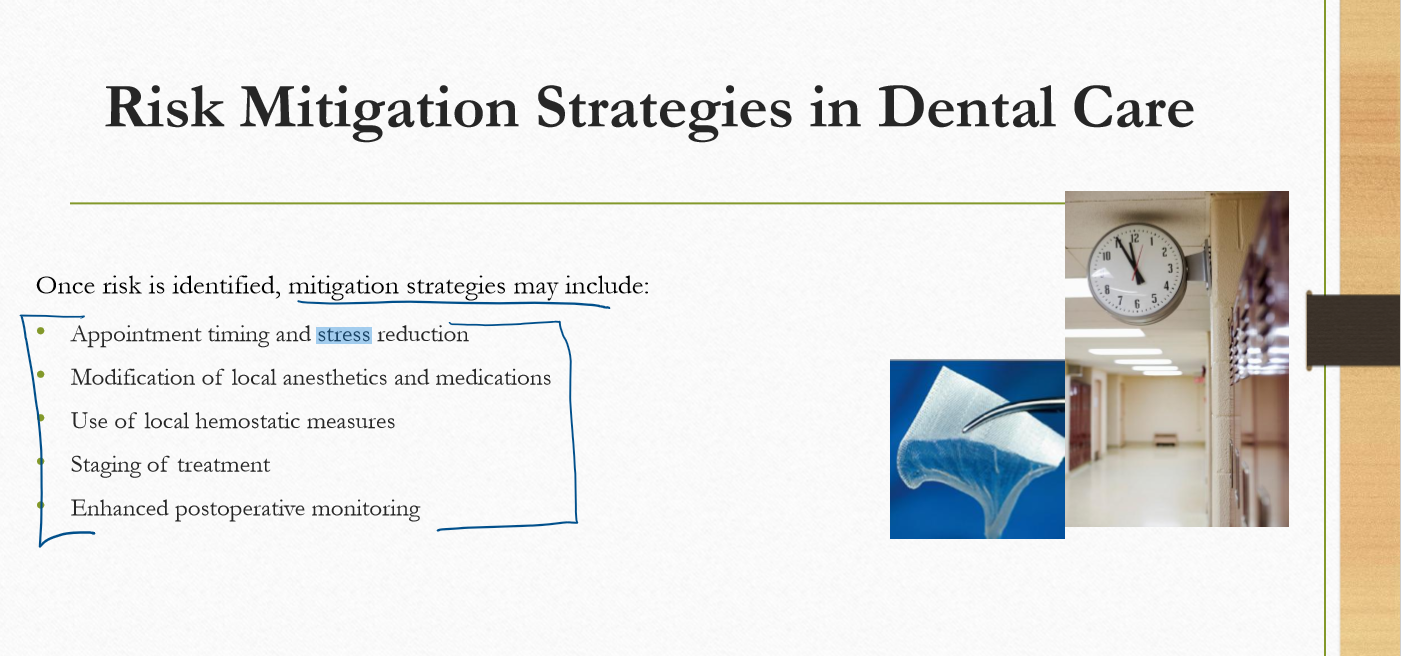
Which strategy helps reduce medical risk during dental treatment?
Stress-reduction protocols
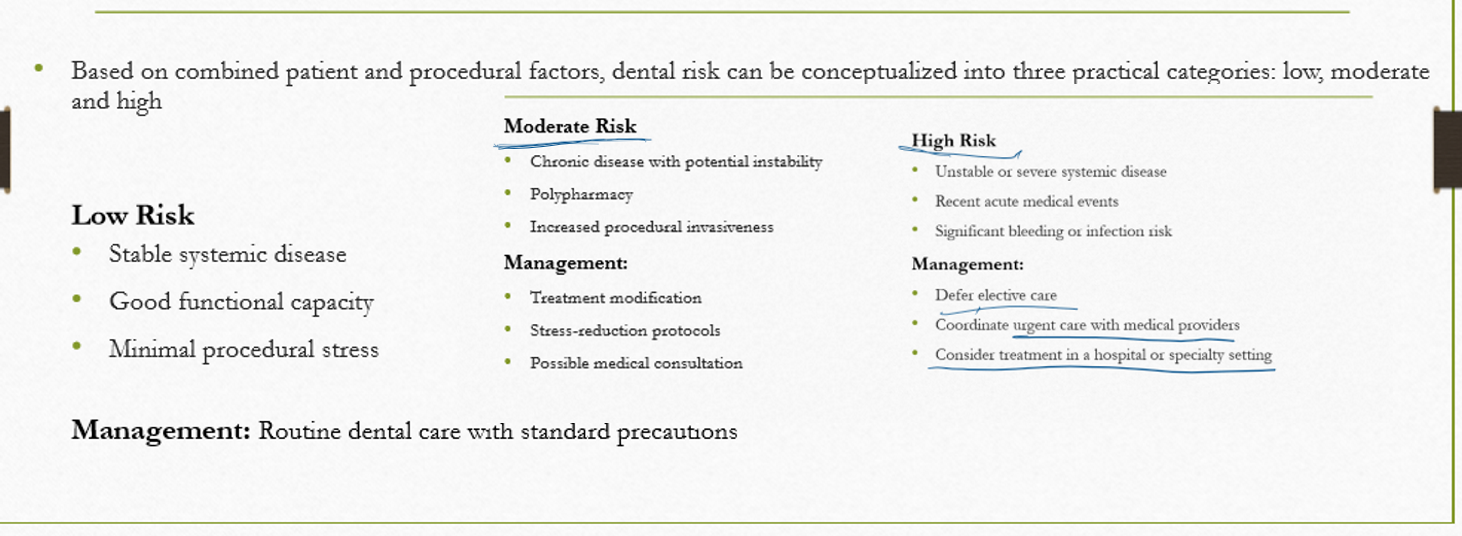
Which of the following represents a high-risk dental patient?
Recent myocardial infarction
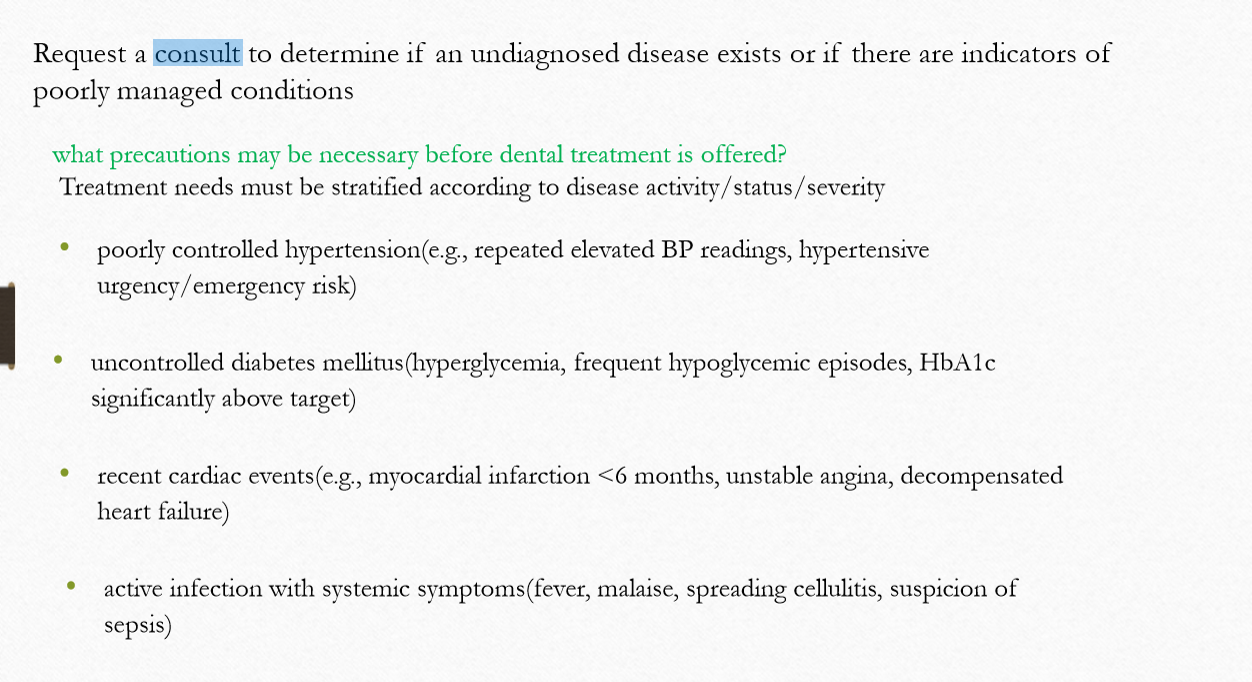
Which of the following conditions is most likely to require medical consultation before dental treatment?
Uncontrolled diabetes
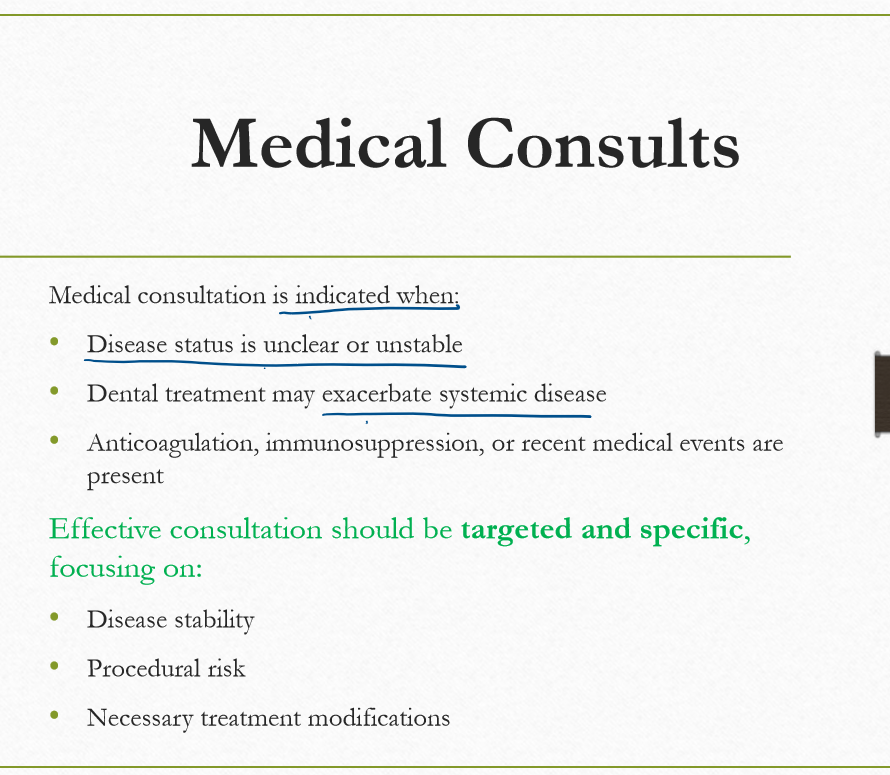
A medical consultation should be requested when:
The disease status is unclear
The patient has unstable systemic disease
Dental treatment could worsen systemic disease
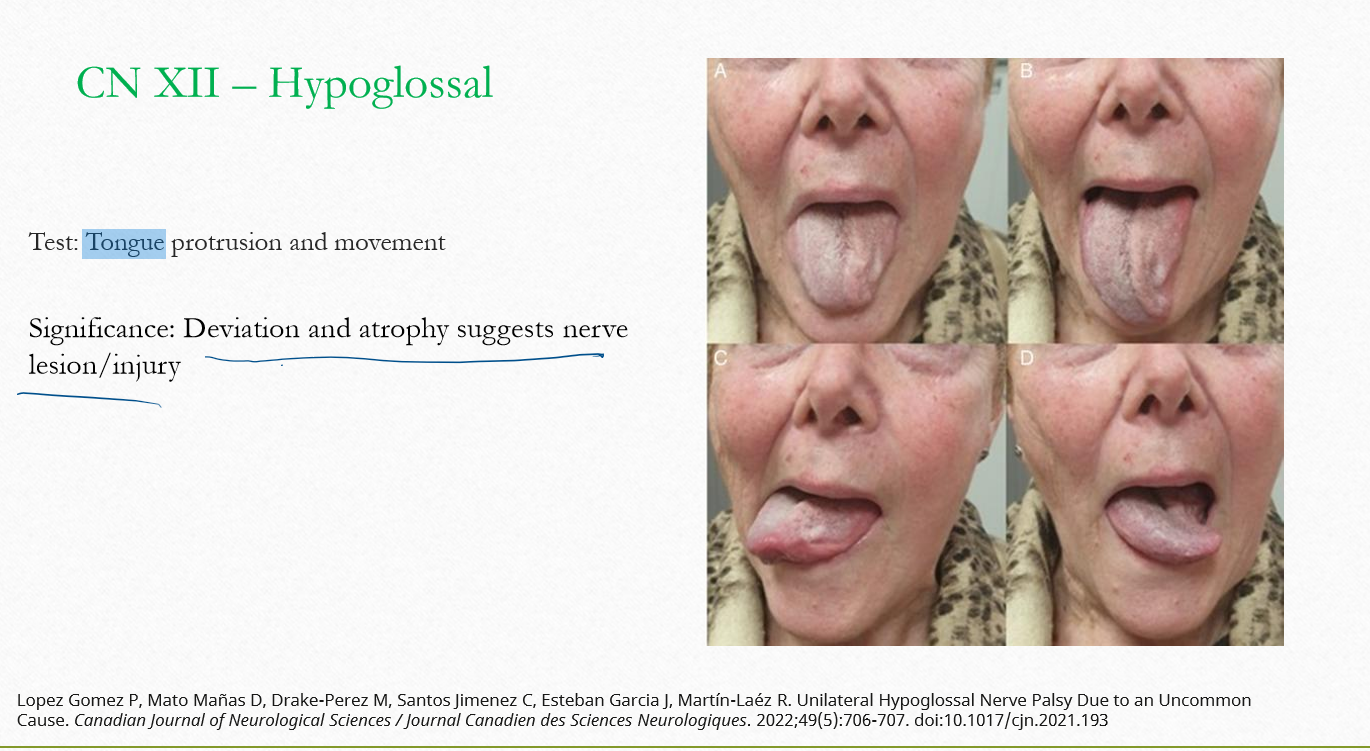
Deviation of the tongue when protruded suggests dysfunction of:
CN XII
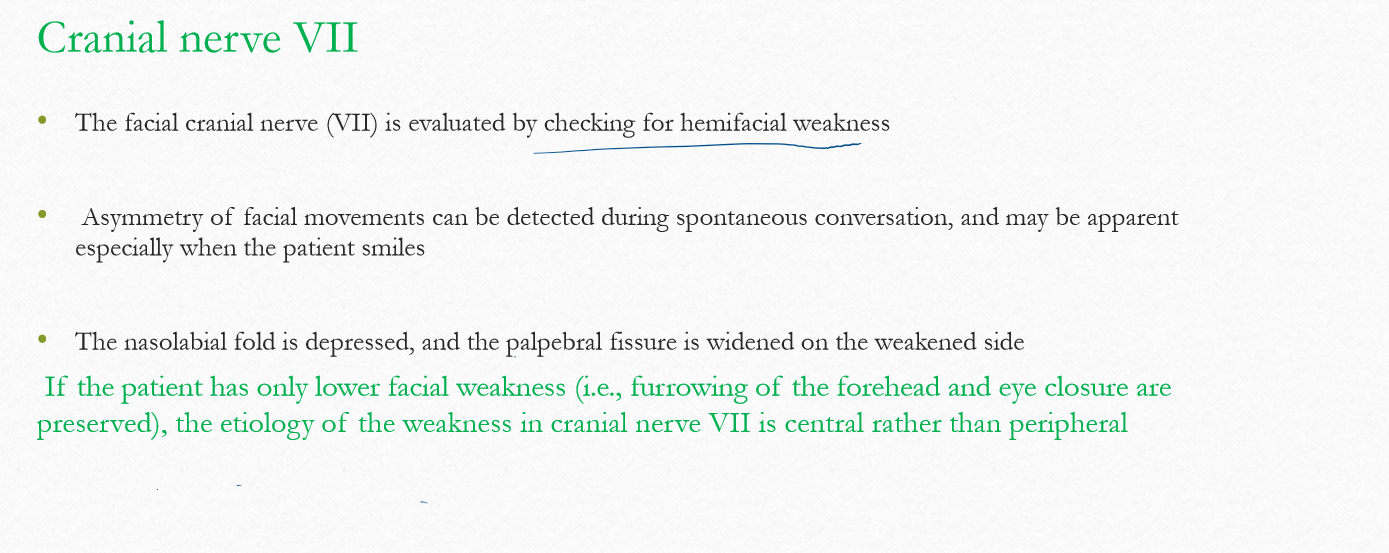
Weakness of facial muscles during smiling may indicate damage to:
CN VII
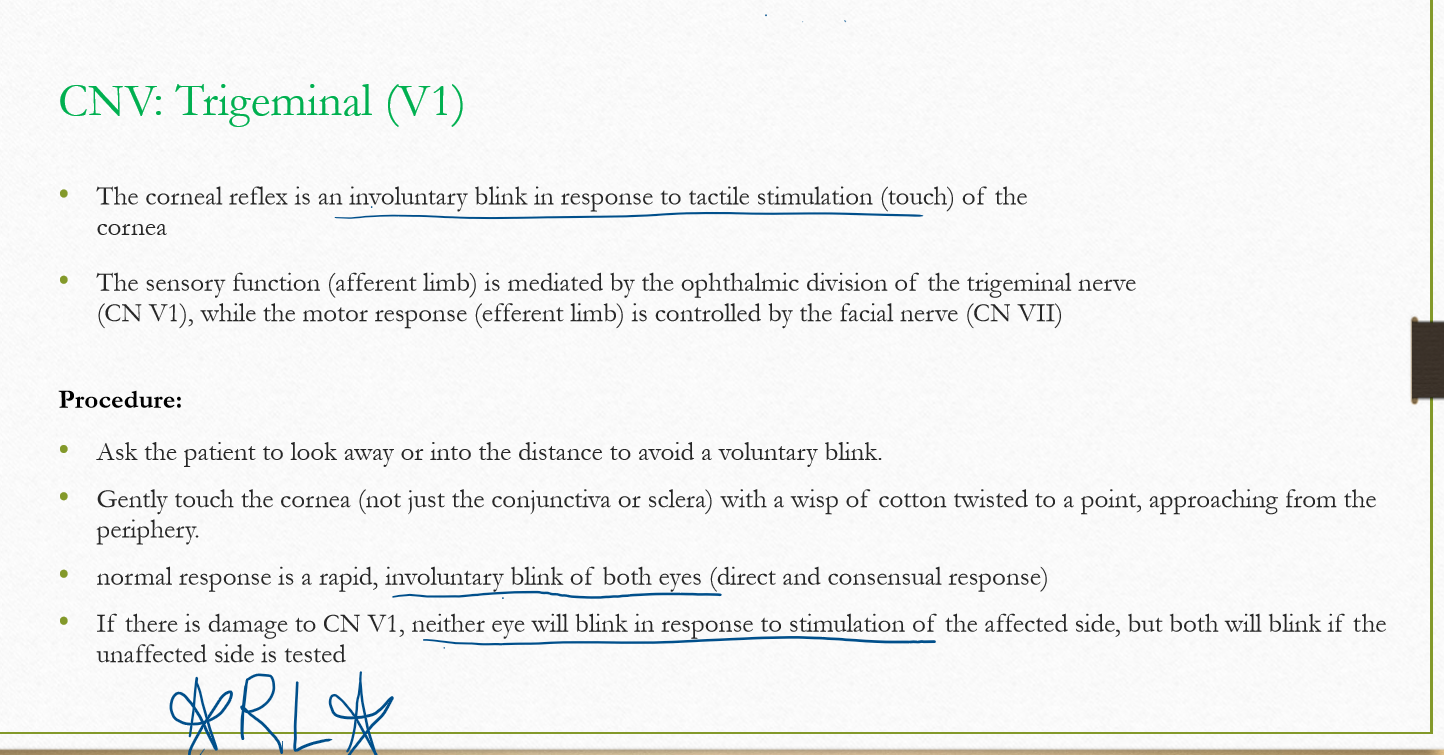
The corneal reflex is mediated by which nerve division?
CN V1
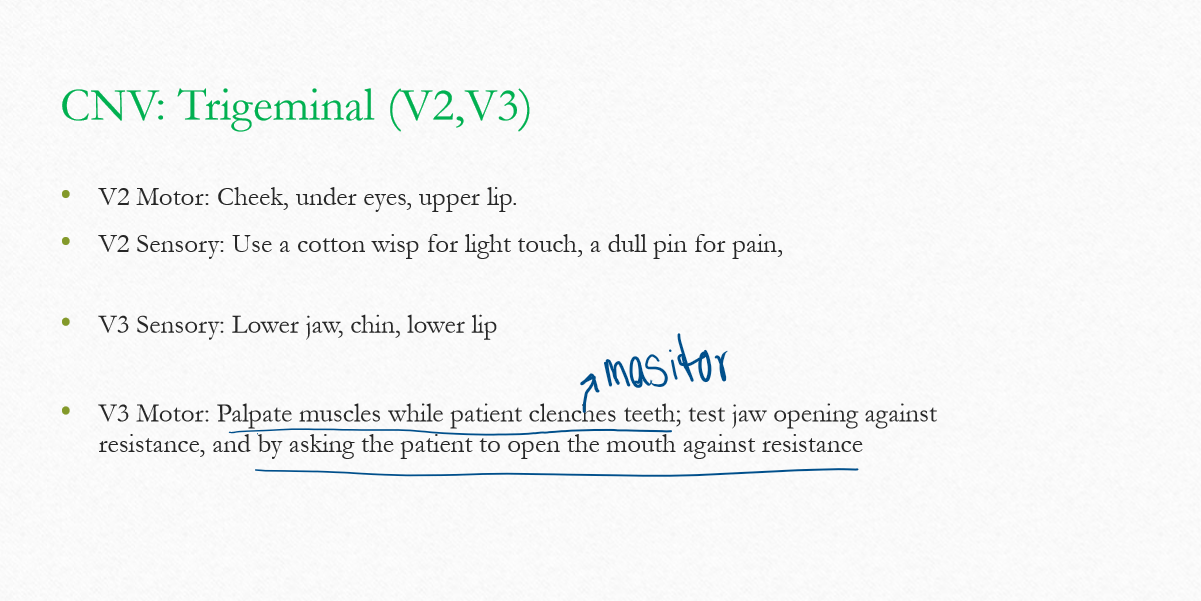
Which cranial nerve is most important for facial sensation and mastication muscles?
CN V
The cranial nerve responsible for smell is:
CN 1

A lymph node that is soft, mobile, and tender is most likely associated with:
Acute infection or inflammation
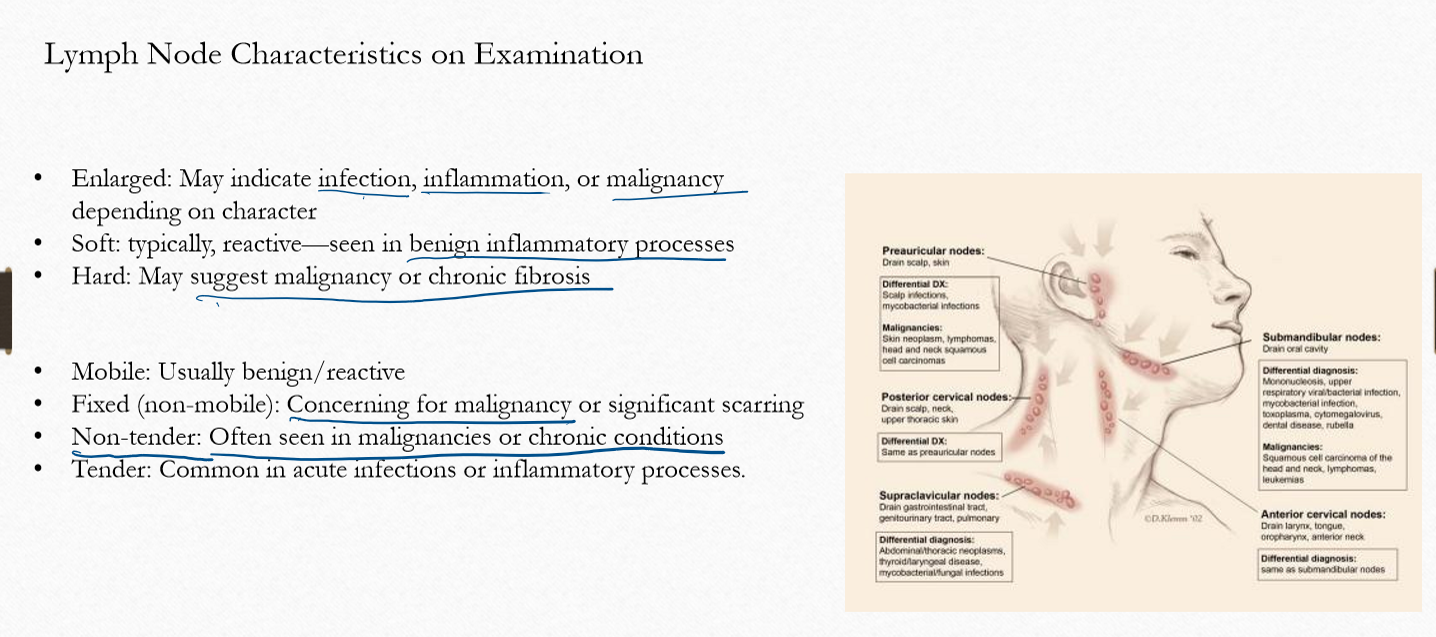
A lymph node that is hard, fixed, and non-tender may indicate:
Possible malignancy
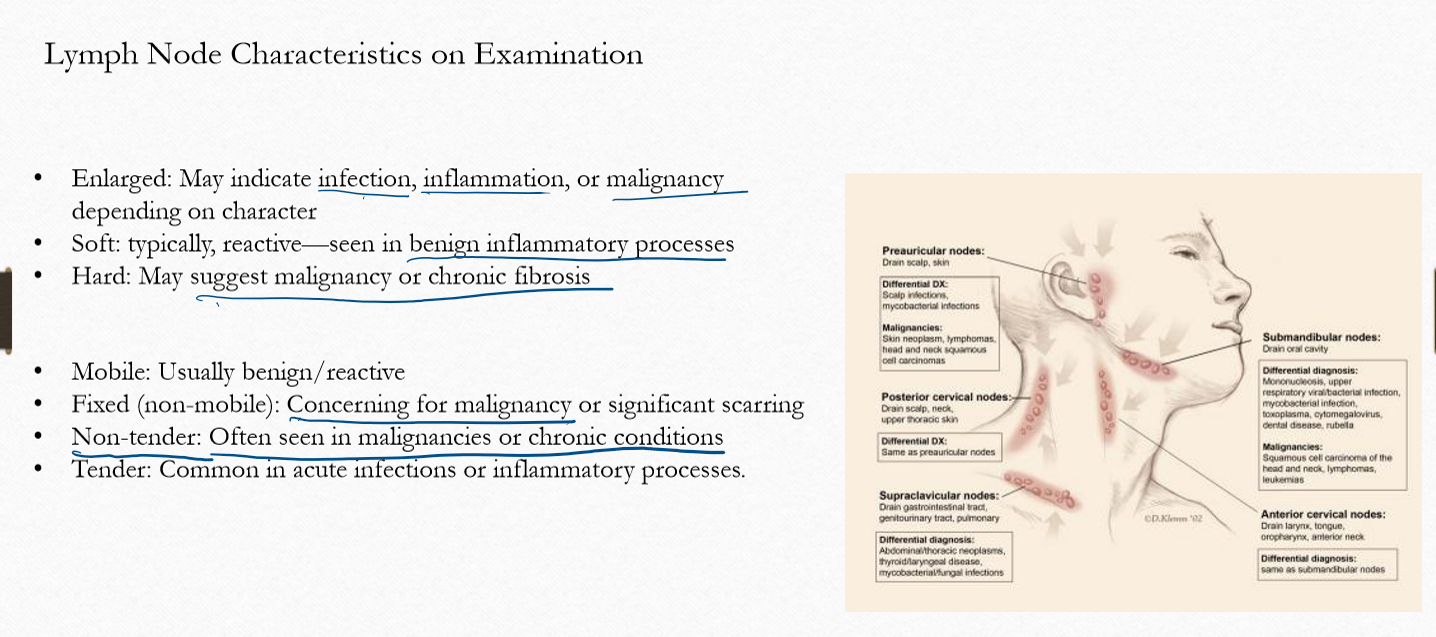
Pallor observed in a patient may indicate:
anemia
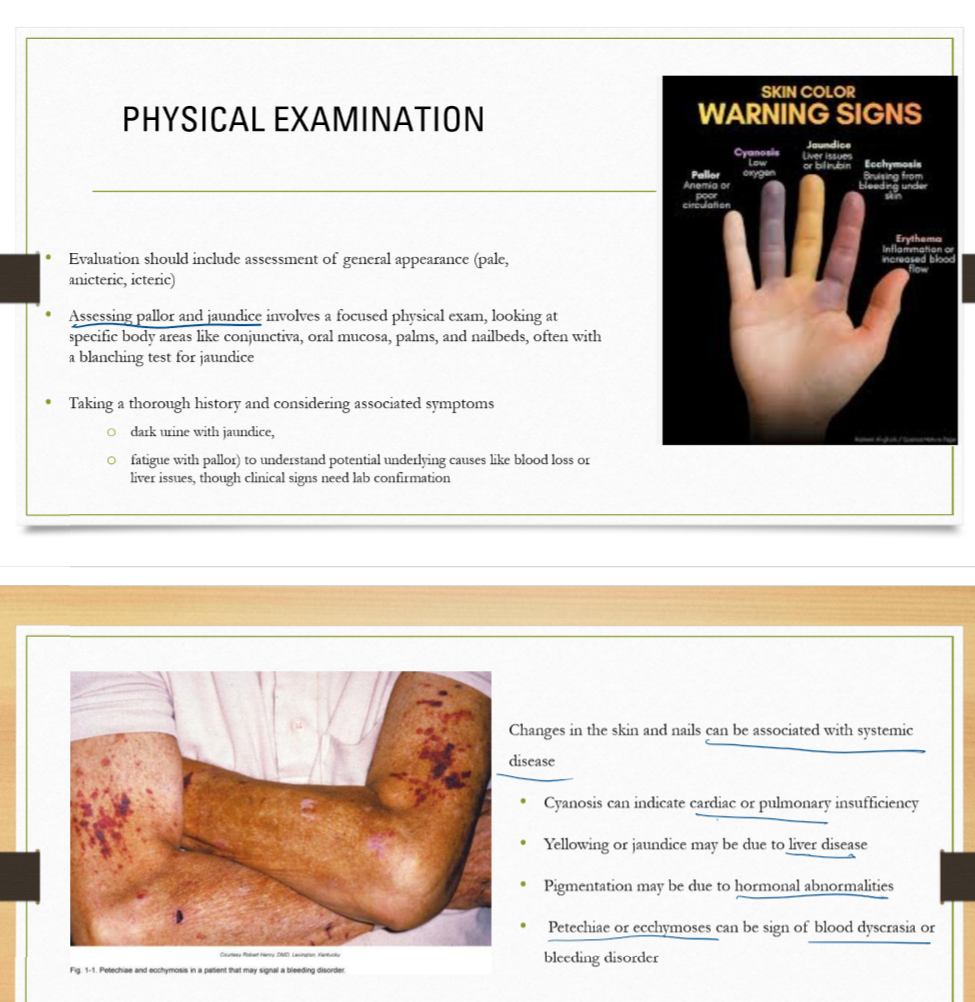
The four components of physical examination are:
Inspection, palpation, percussion, auscultation
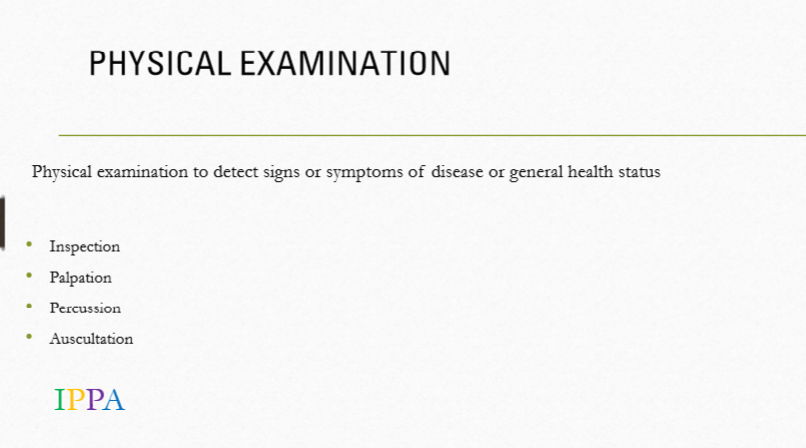
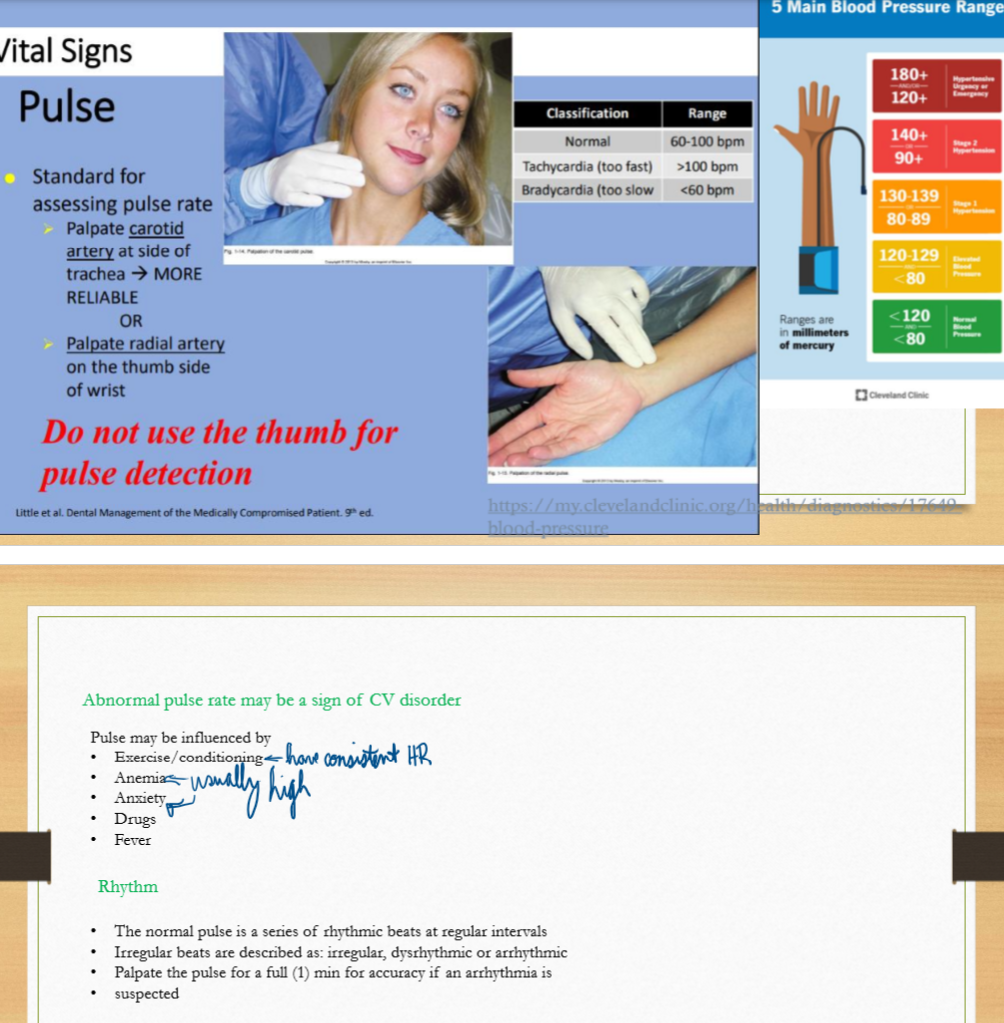
If an arrhythmia is suspected, the pulse should be palpated for:
1 full minute
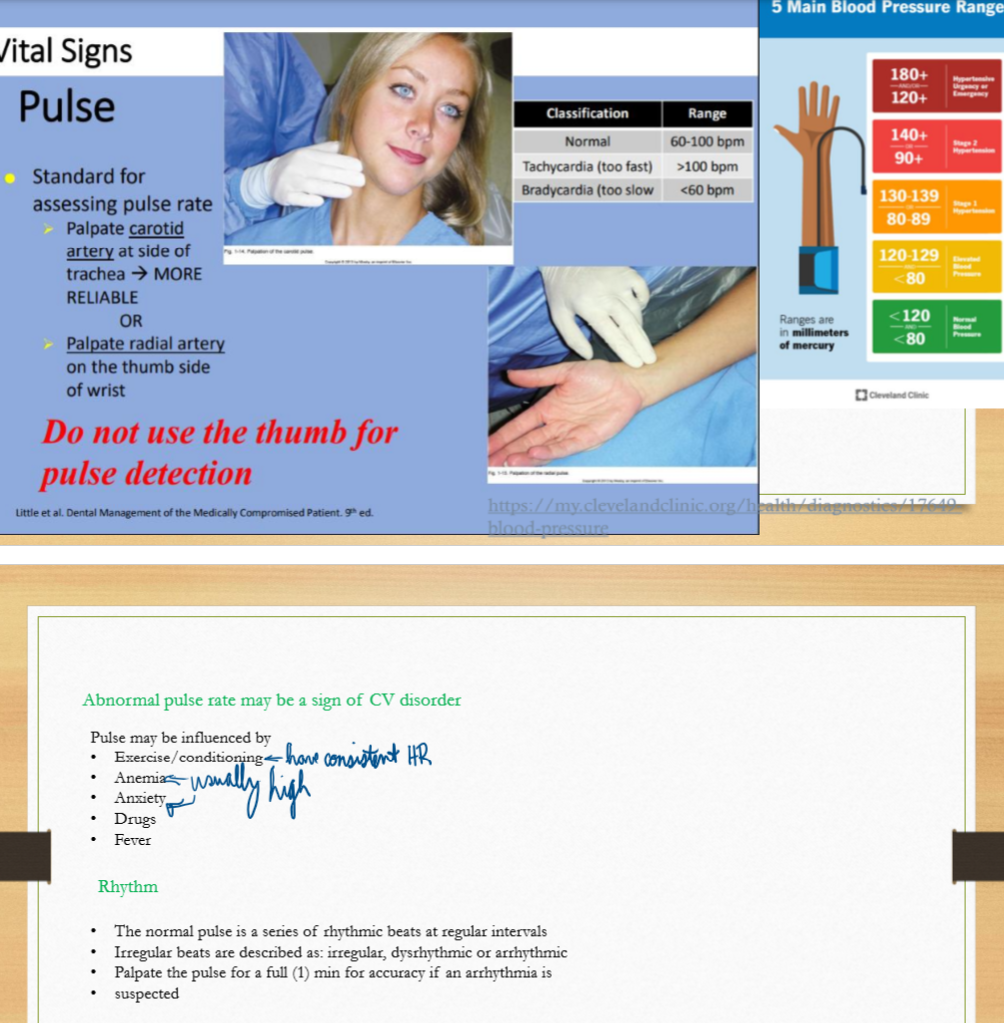
Which of the following can influence pulse rate?
exercise, fever, anxiety
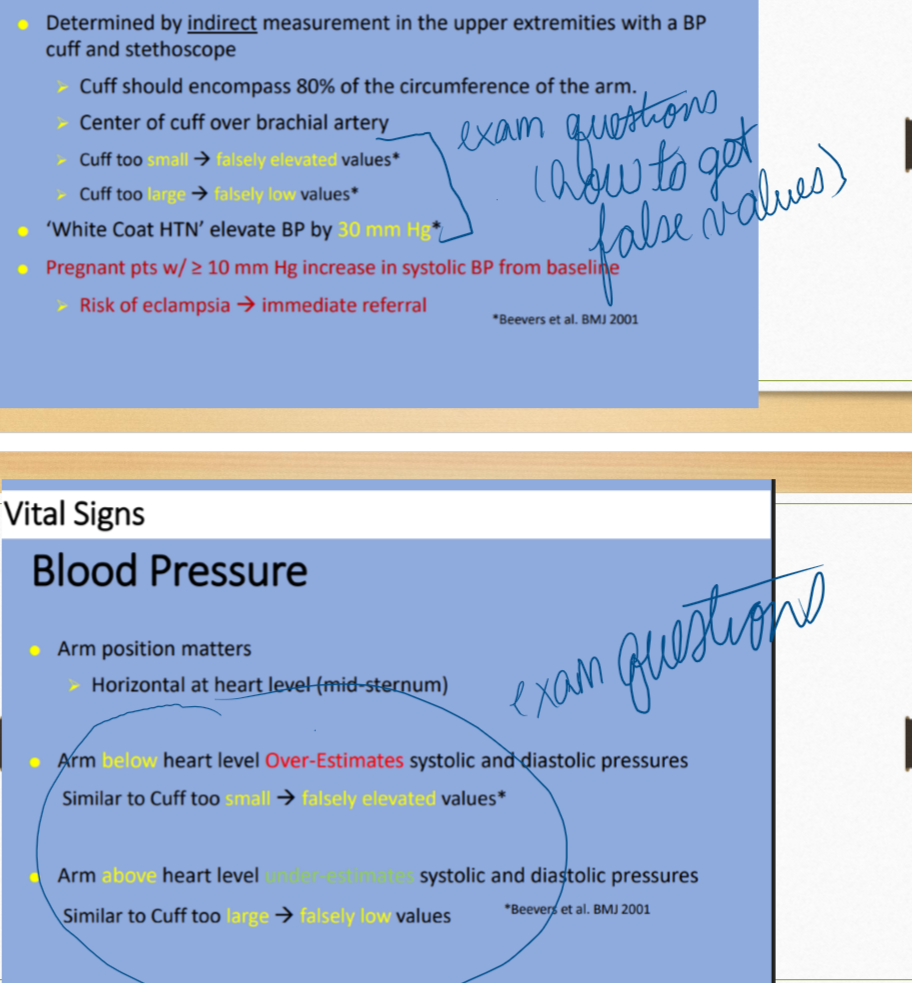
Blood pressure should be measured with the patient's arm positioned:
at heart level
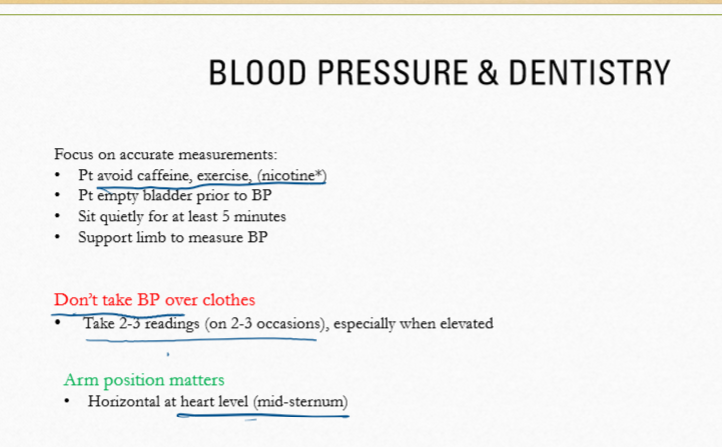
Before measuring blood pressure, the patient should sit quietly for at least:
5 minutes
Which of the following tools assesses basic activities of daily living?
Katz ADL scale
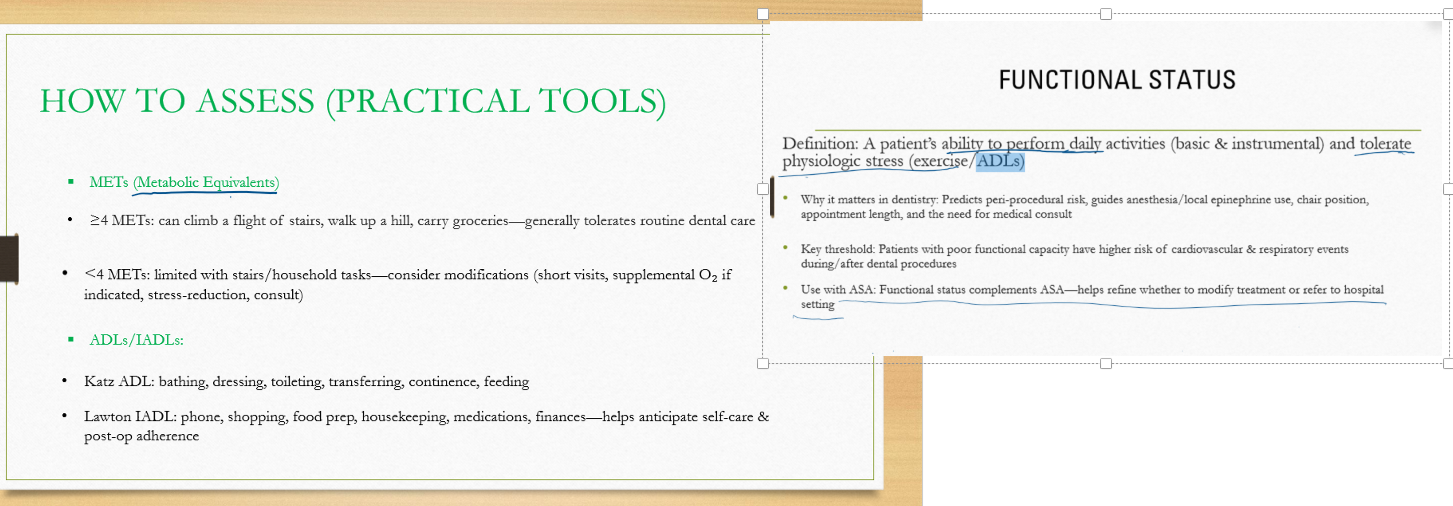
Patients with <4 METs functional capacity may require which dental modifications?
Stress reduction protocols
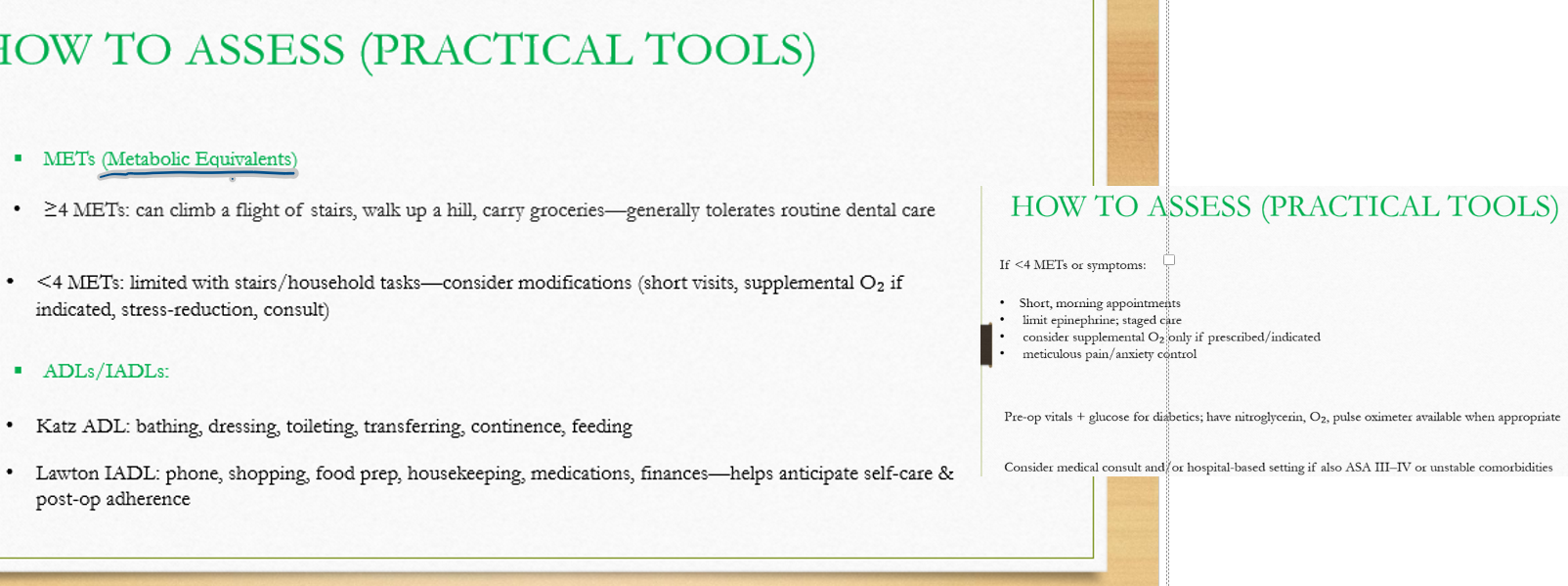
A patient who can climb one flight of stairs or walk uphill without stopping likely has a functional capacity of:
≥4 METs
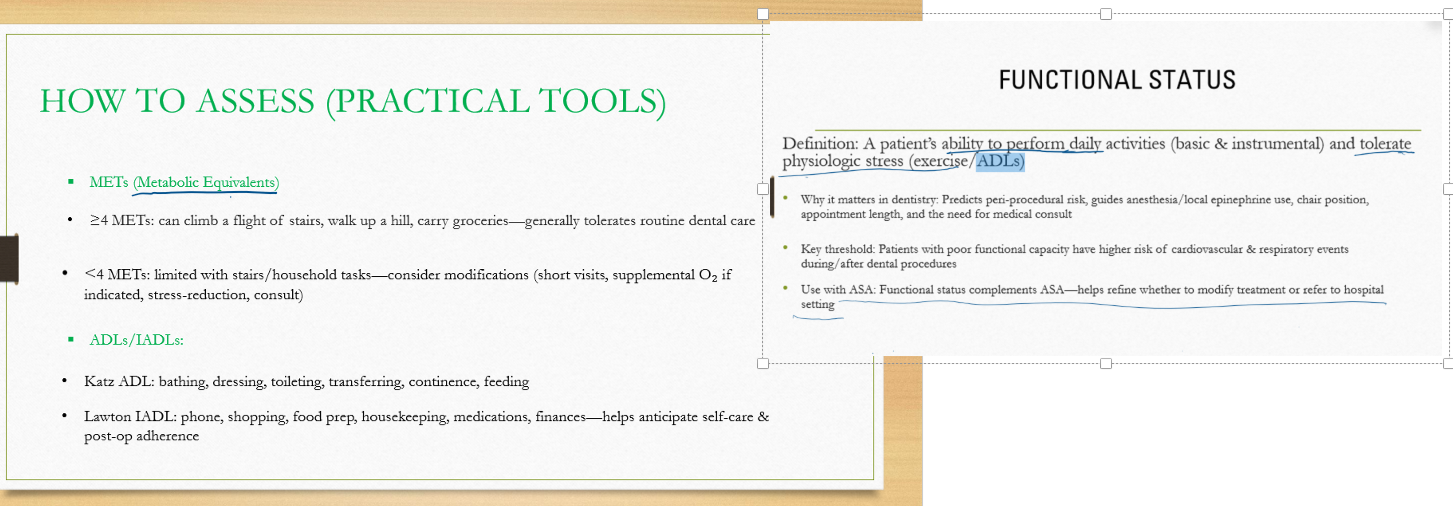
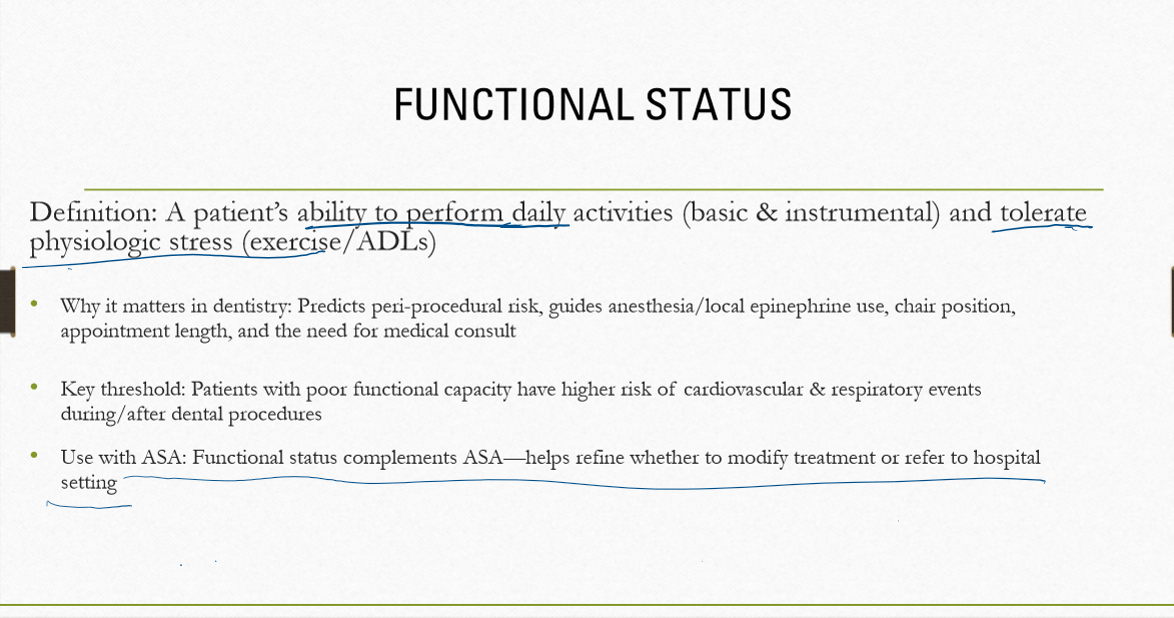
Functional status primarily measures a patient's:
Ability to tolerate physiologic stress and perform daily activities
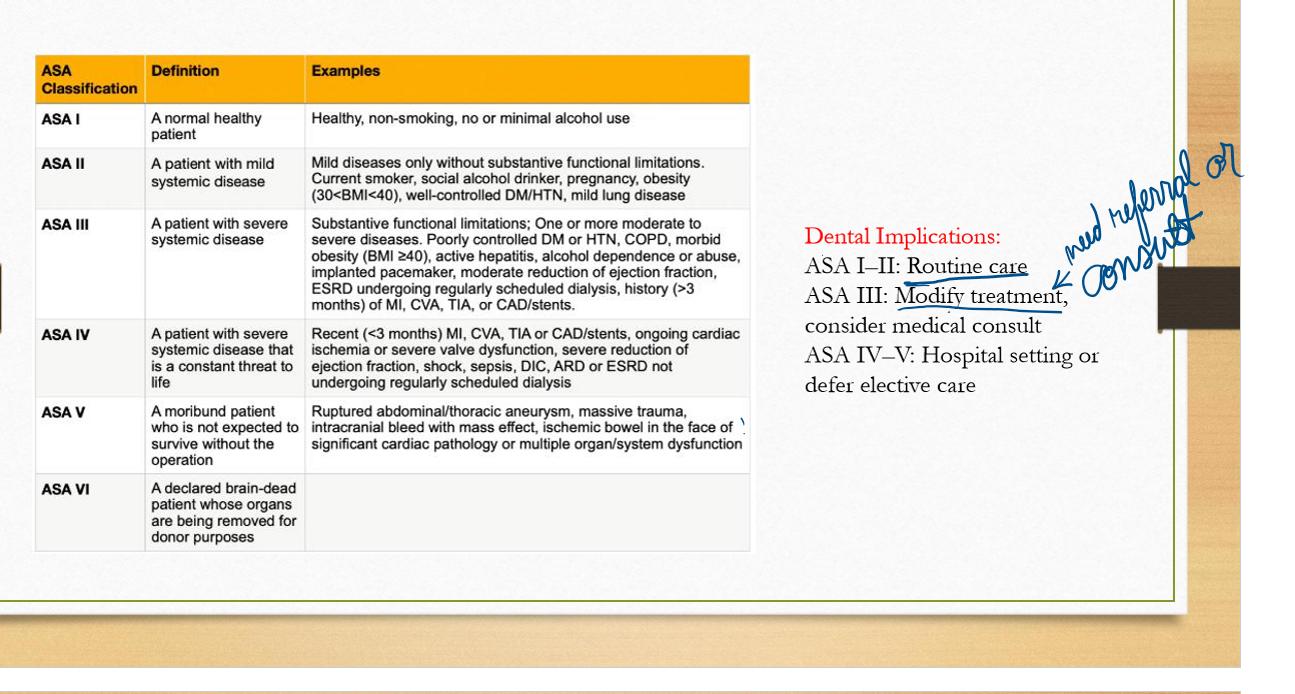
A patient with unstable angina or decompensated heart failure is most likely classified as:
ASA IV
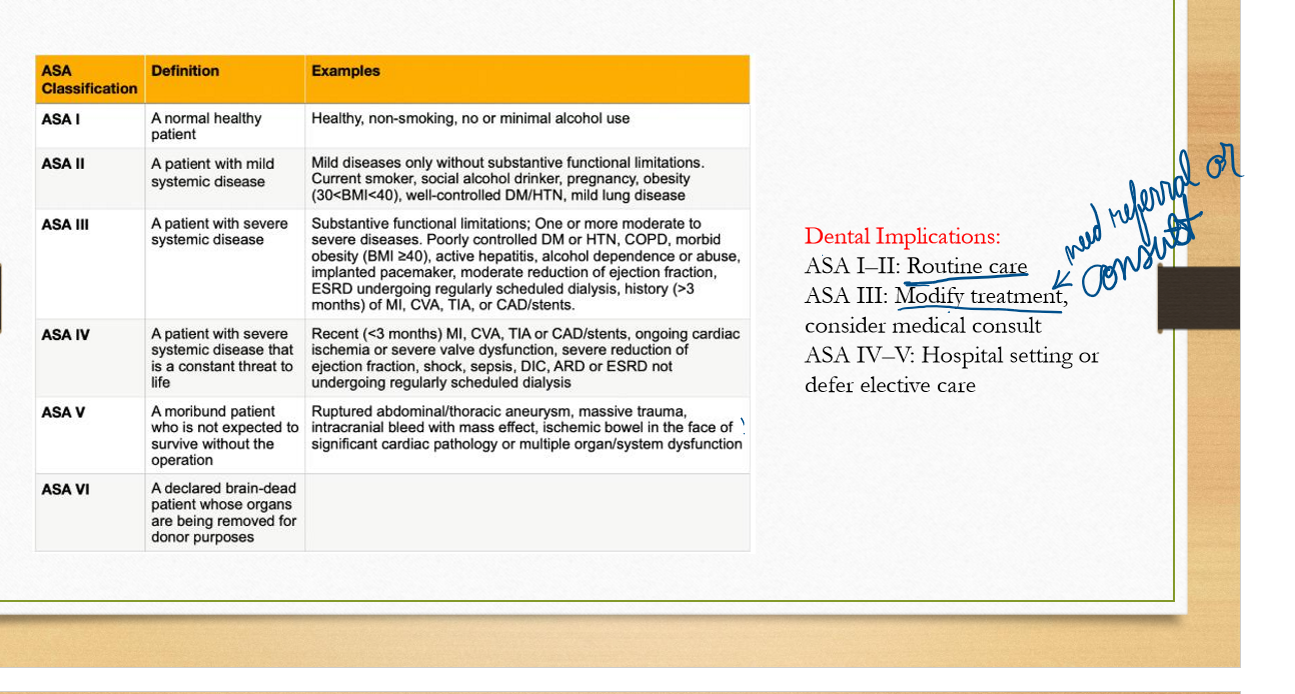
Routine dental care is typically appropriate for which ASA classifications?
ASA I and II
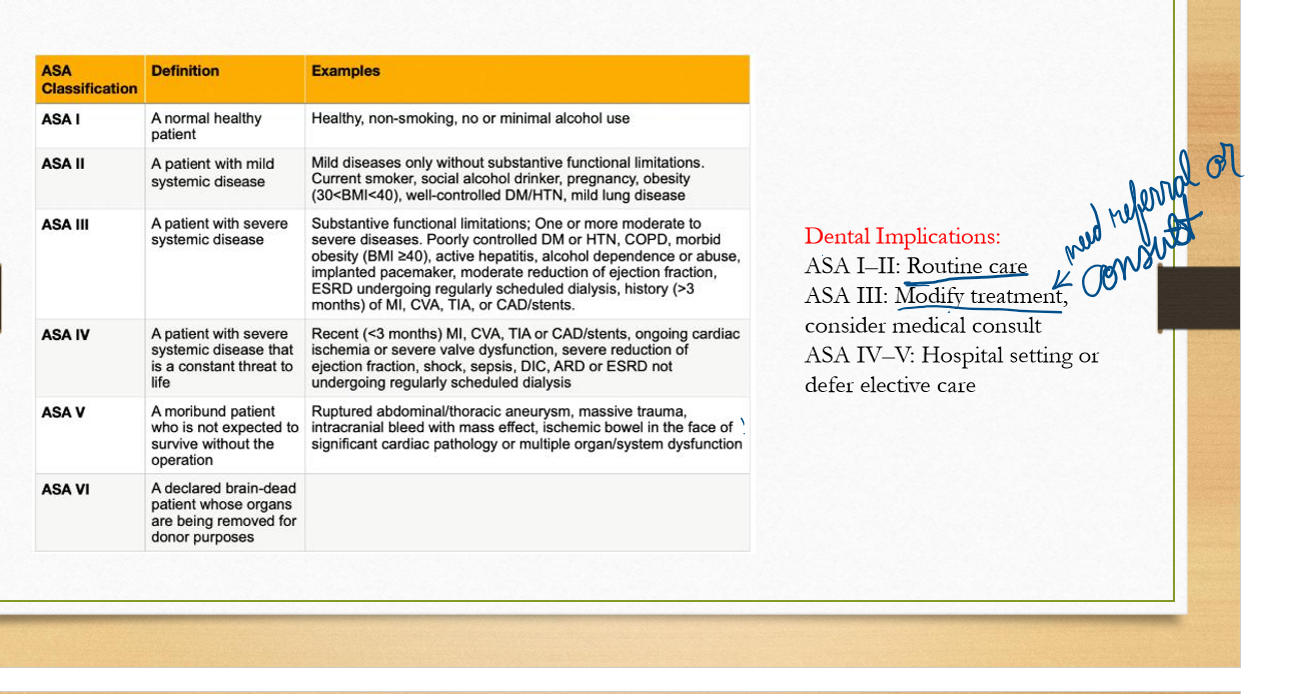
A patient with severe systemic disease that limits activity but is not incapacitating is classified as:
ASA III
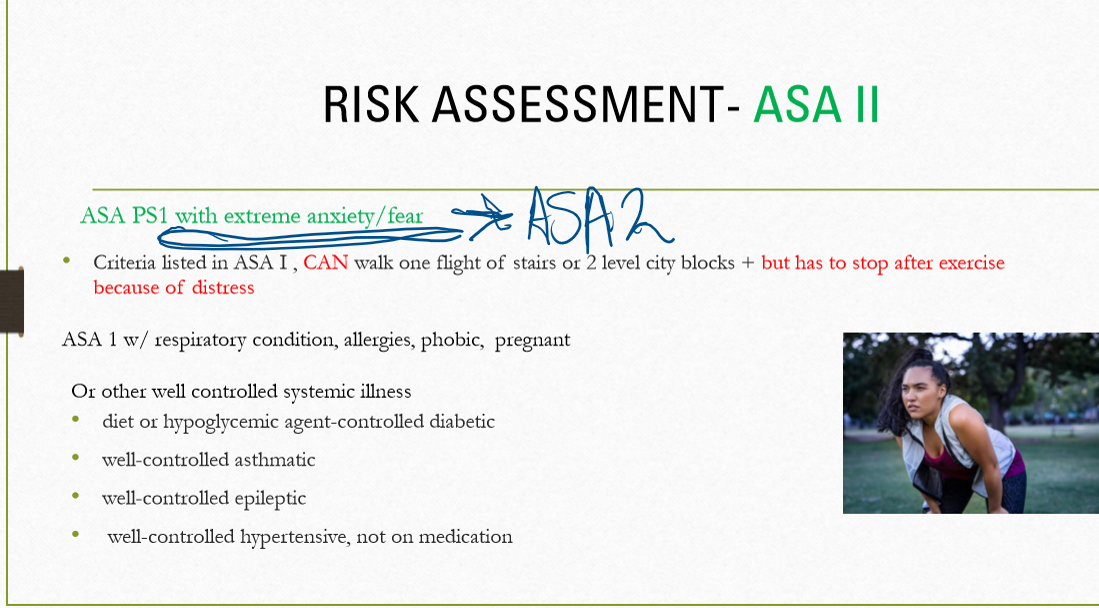
A patient with well-controlled asthma or controlled diabetes would most likely be classified as:
ASA II
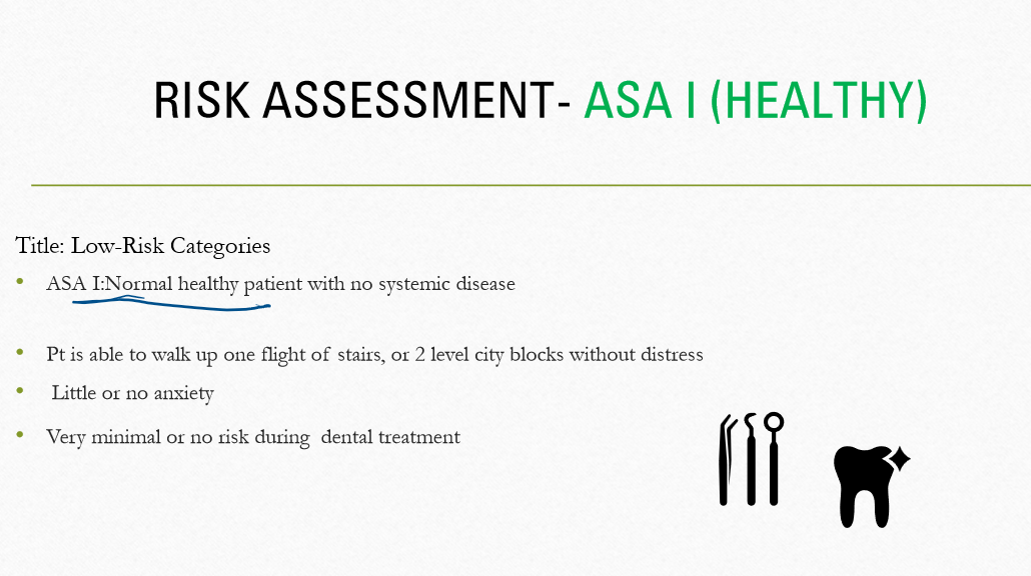
A healthy patient with no systemic disease is classified as:
ASA 1
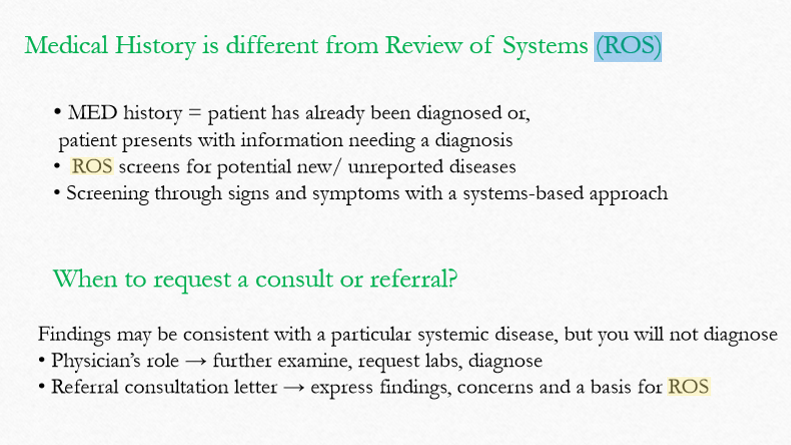
Which of the following best describes the Review of Systems (ROS)?
Screening for possible undiagnosed disease using symptoms
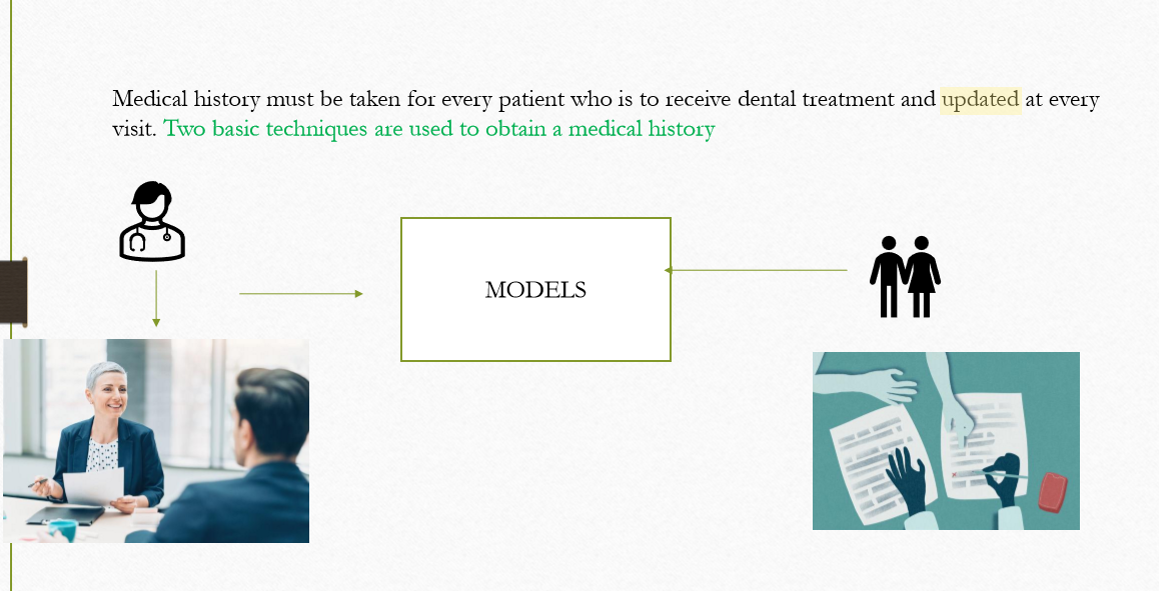
Medical histories should be obtained:
At the first visit and updated at every appointment
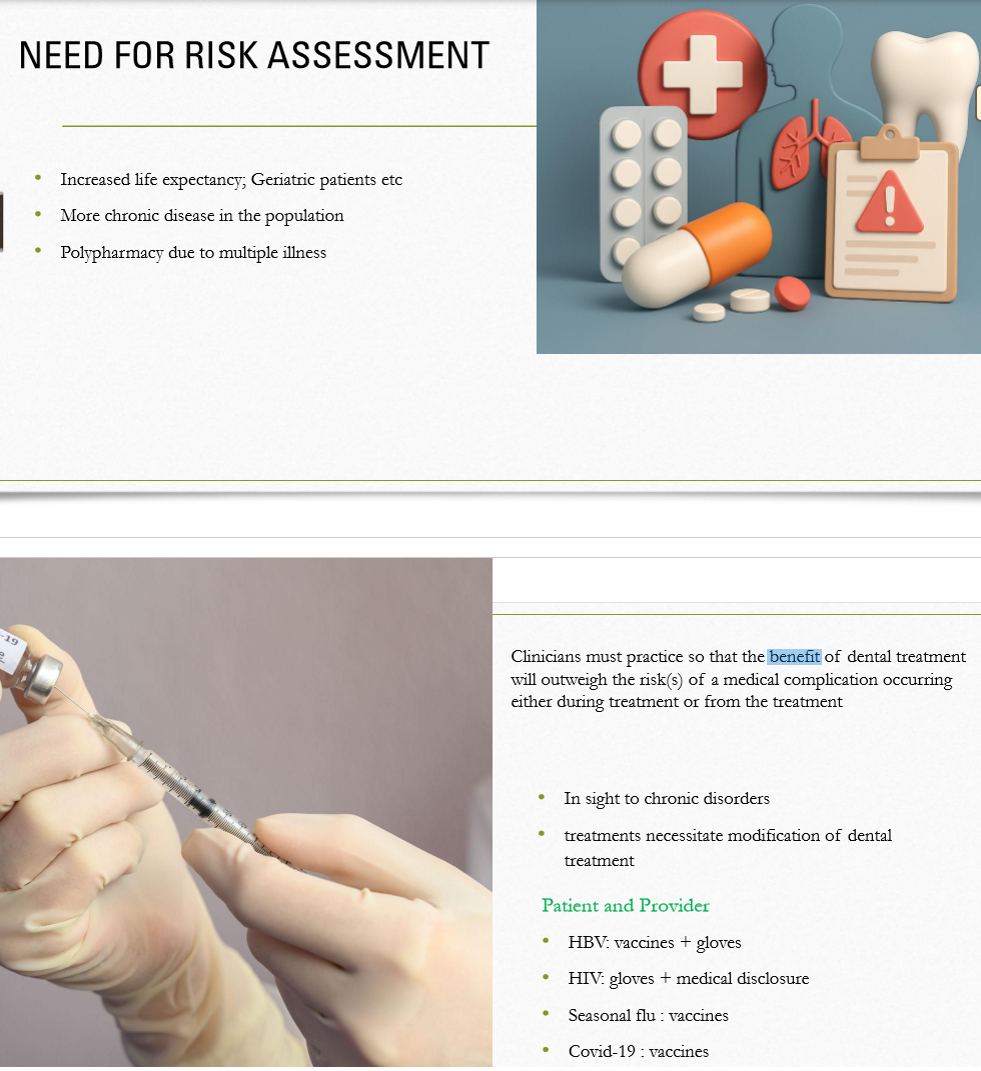
Which of the following is the primary goal of obtaining a comprehensive medical history before dental treatment?
To ensure the benefits of dental treatment outweigh potential medical risks
A 45-year-old woman presents with fatigue and burning of the tongue. Oral examination shows a smooth erythematous tongue and angular cheilitis. Laboratory findings reveal low ferritin and low hemoglobin.
What is the most likely diagnosis?
Iron deficiency anemia
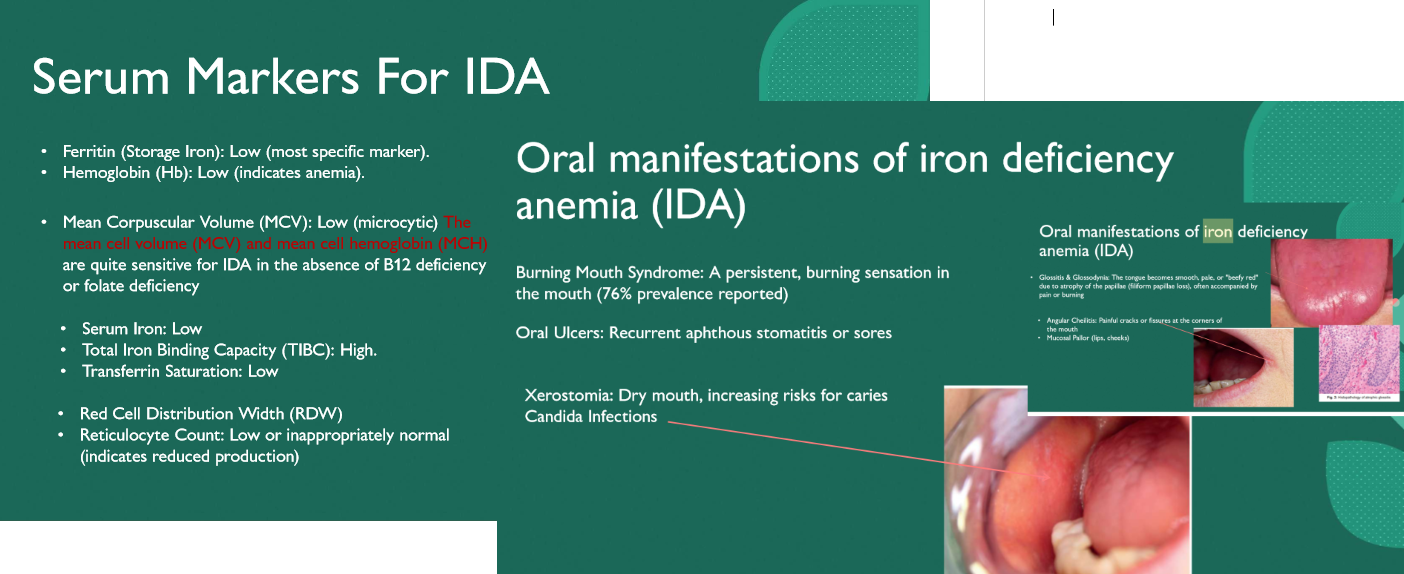
Which laboratory test is the most specific indicator of iron deficiency anemia?
ferritin
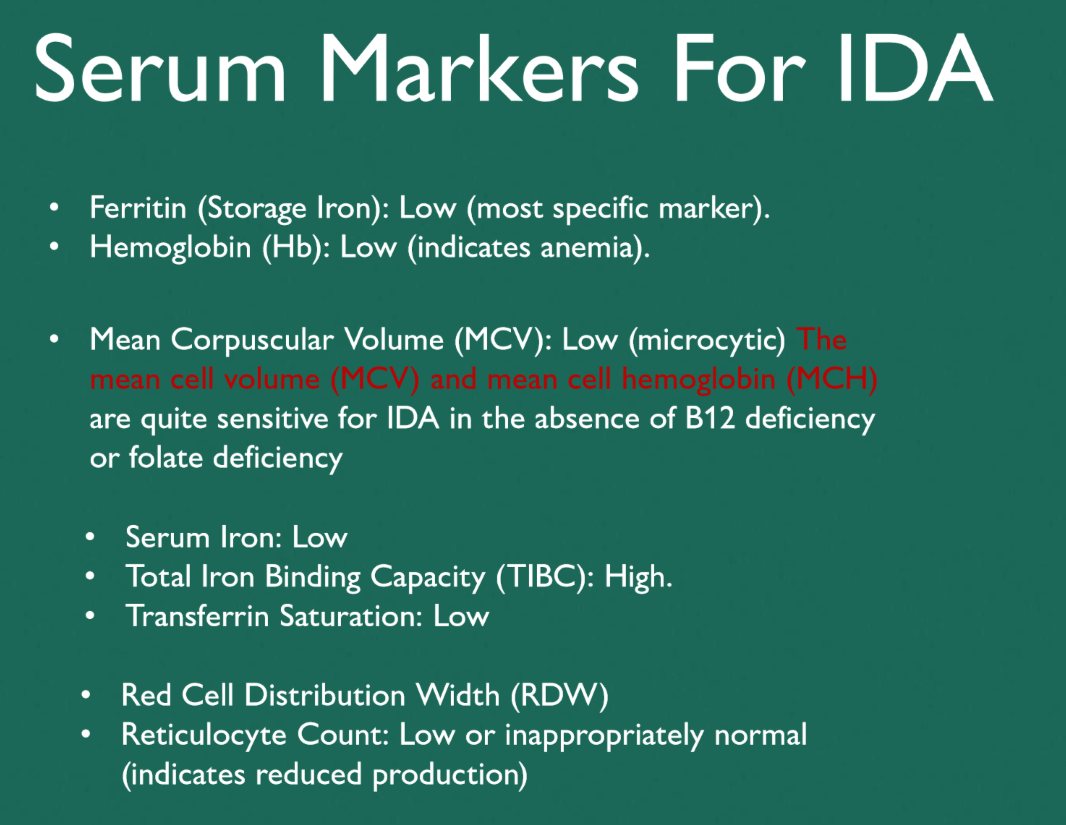
Iron deficiency anemia typically produces which RBC morphology?
Microcytic hypochromic
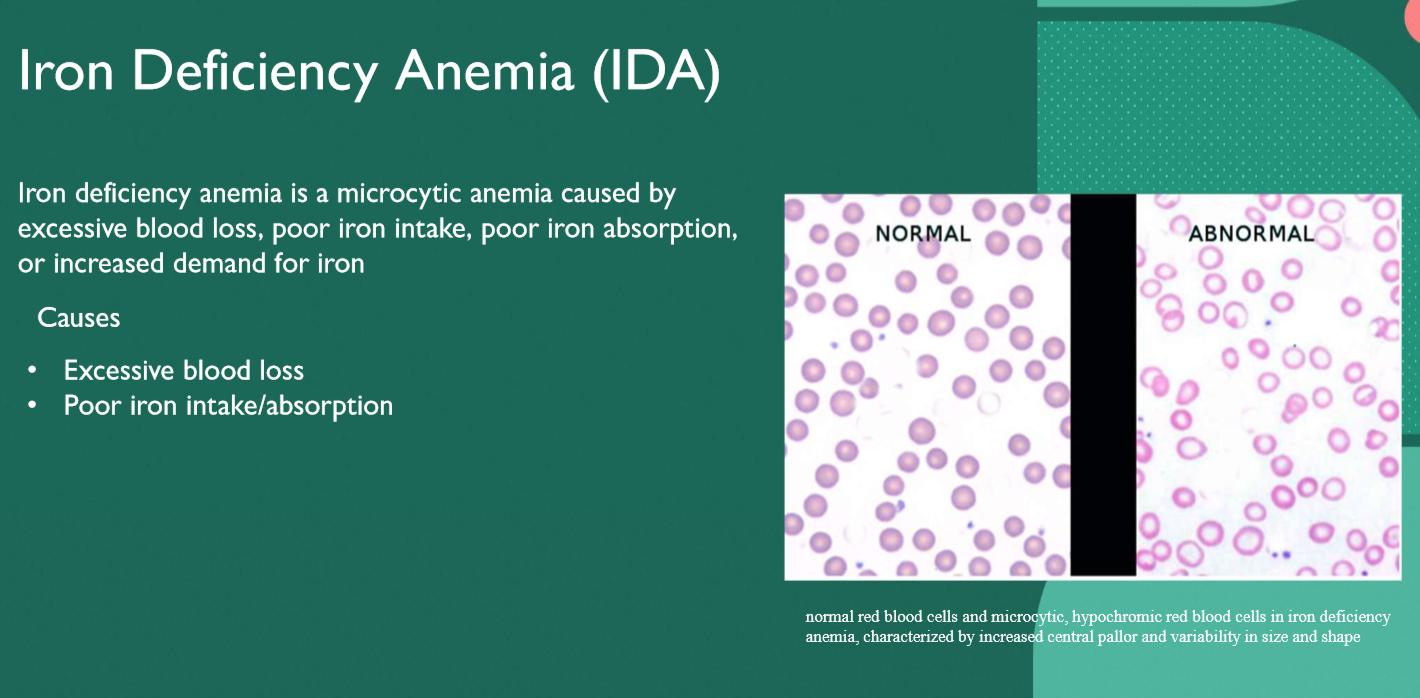
A 60-year-old woman presents with dysphagia, iron deficiency anemia, and esophageal webs.
What syndrome is most likely?
Plummer-Vinson syndrome
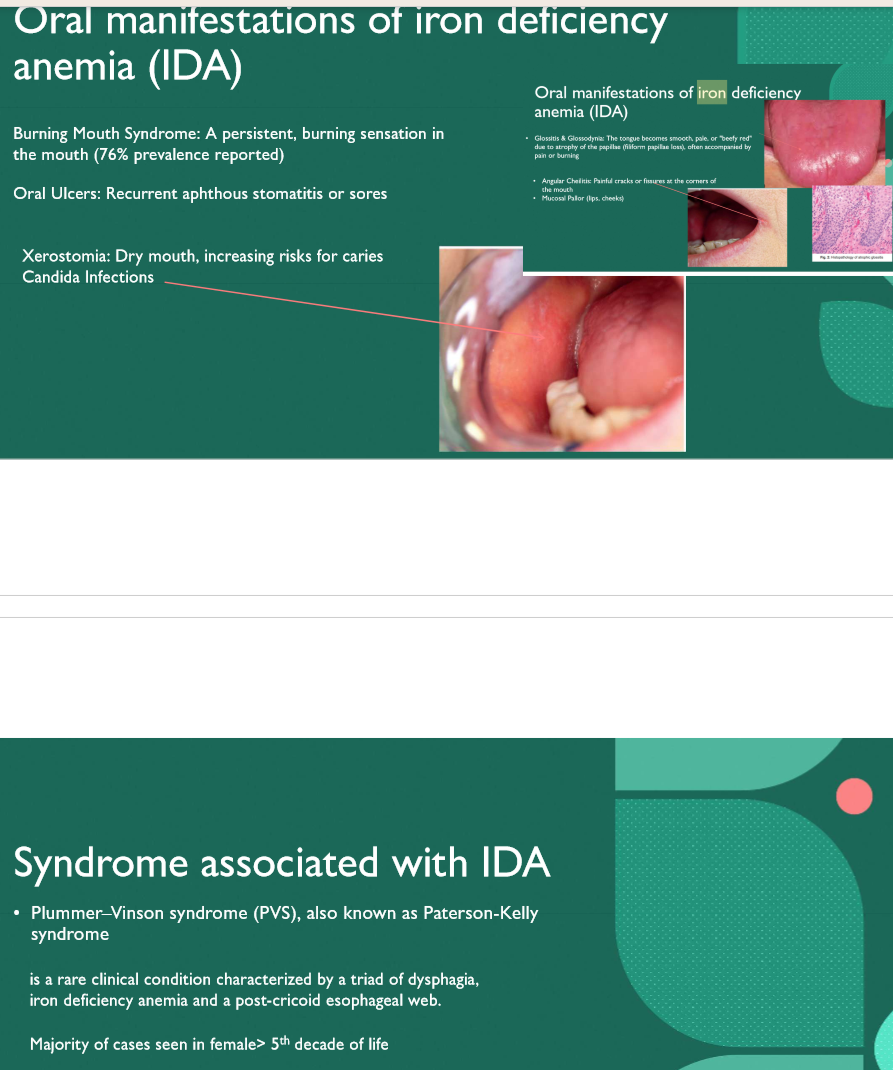
Which oral manifestation is most commonly seen in pernicious anemia?
atrophic glossitis
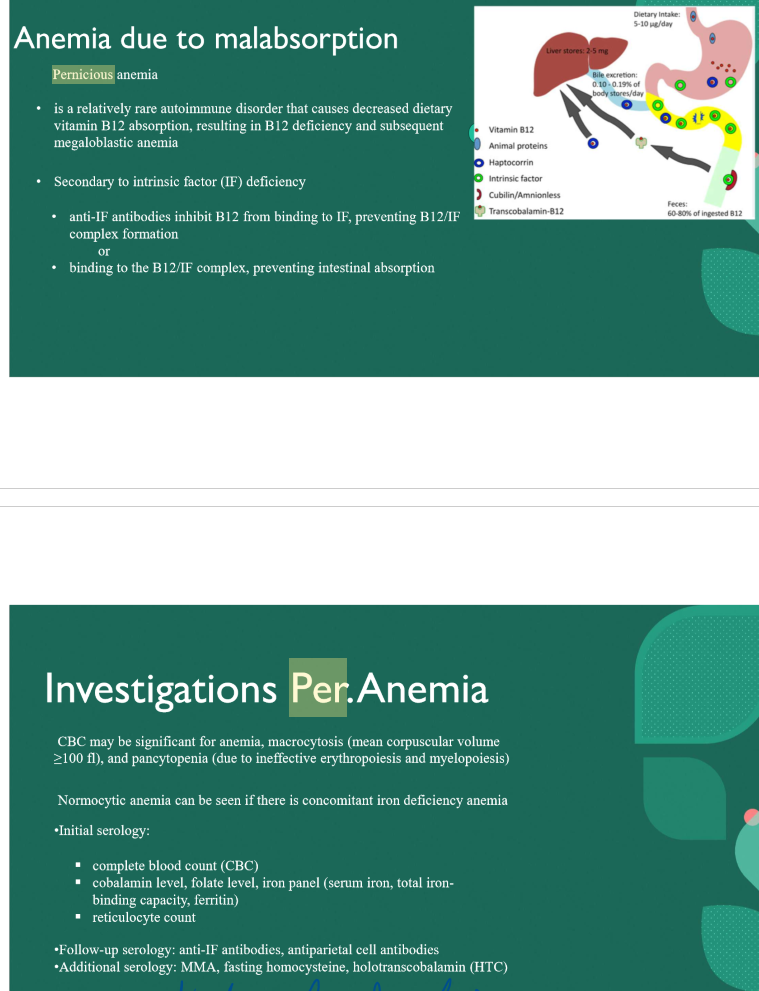
Pernicious anemia results from deficiency of:
intrinsic factor
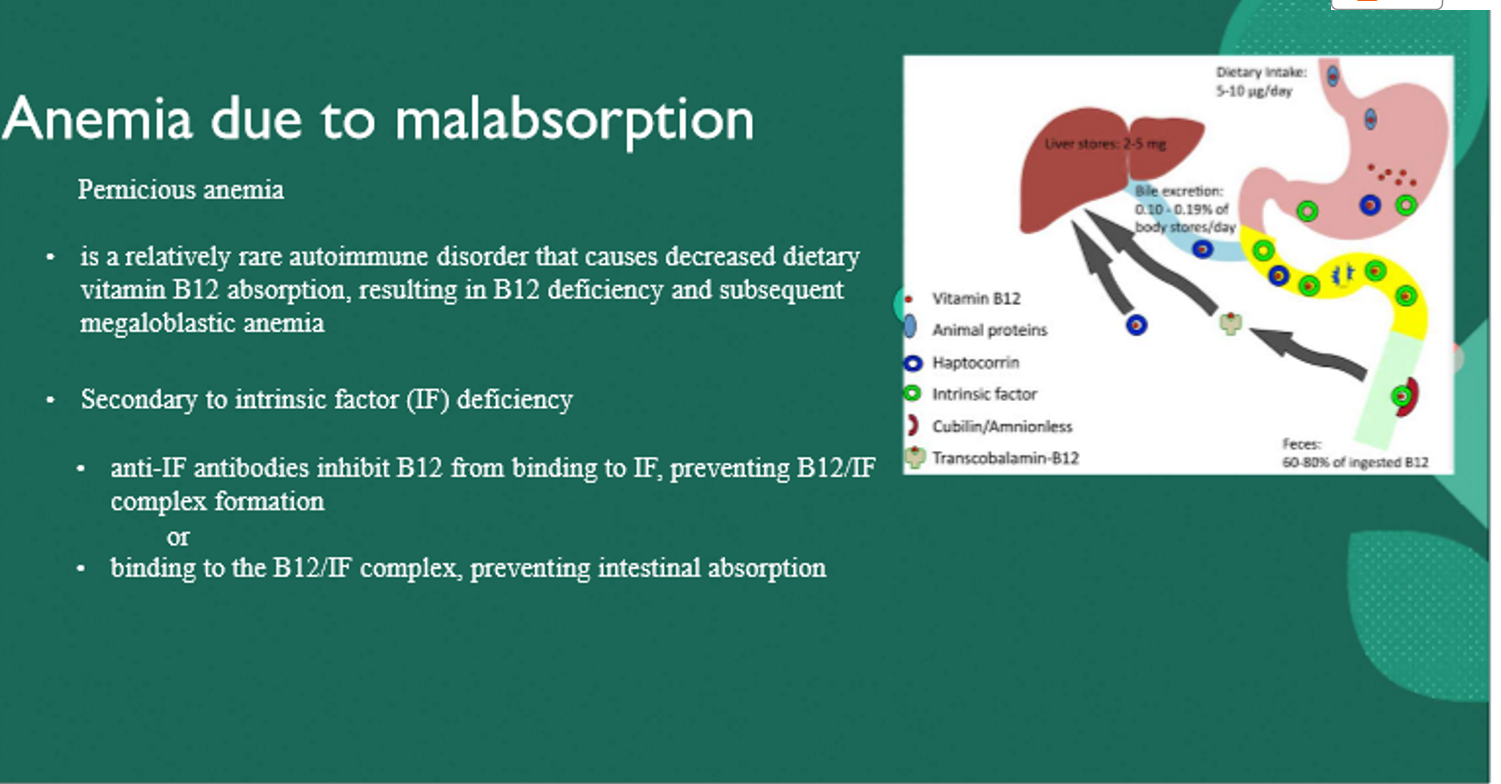
A patient with pernicious anemia will most likely demonstrate which RBC change?
Macrocytosis
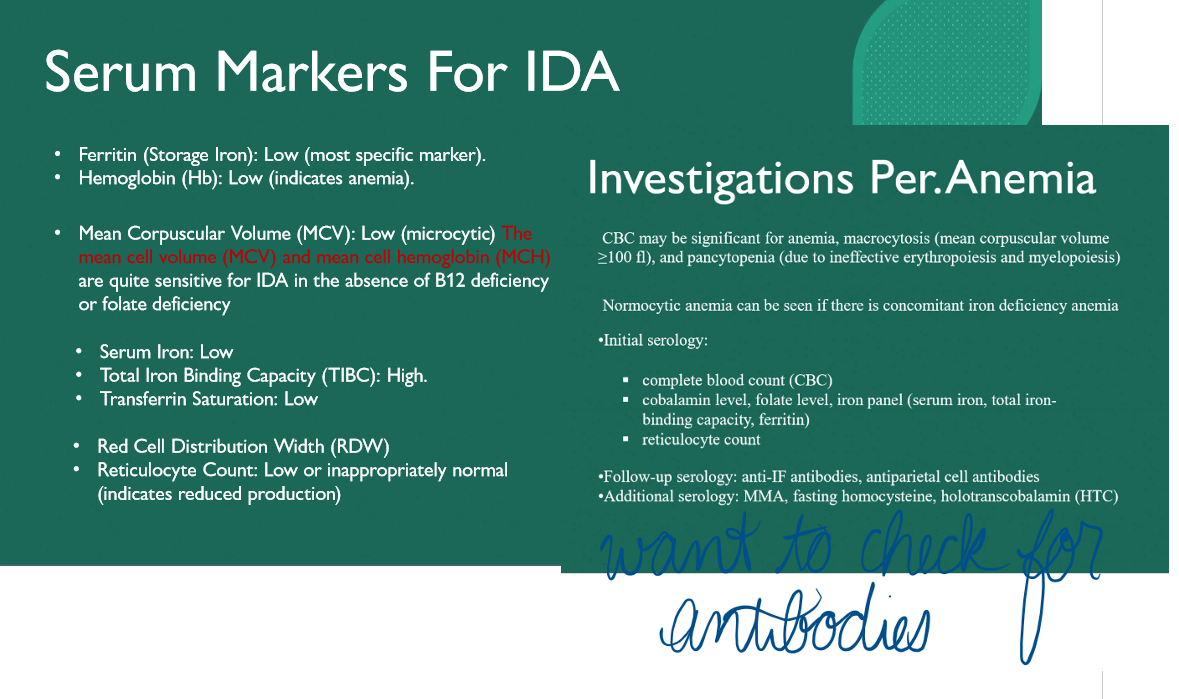
Sickle cell disease results from mutation of which hemoglobin type?
Hemoglobin S
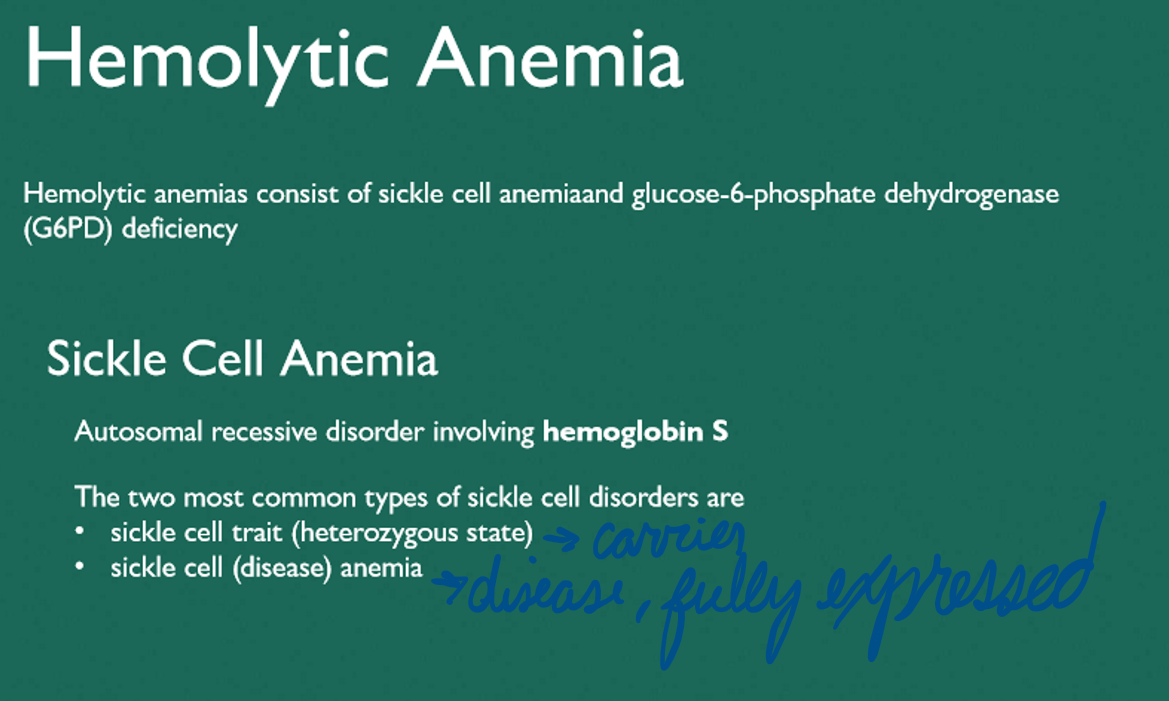
Which condition can precipitate a sickle cell crisis?
hypoxia

Which dental management strategy is most appropriate for a patient with sickle cell disease?
minimize stress
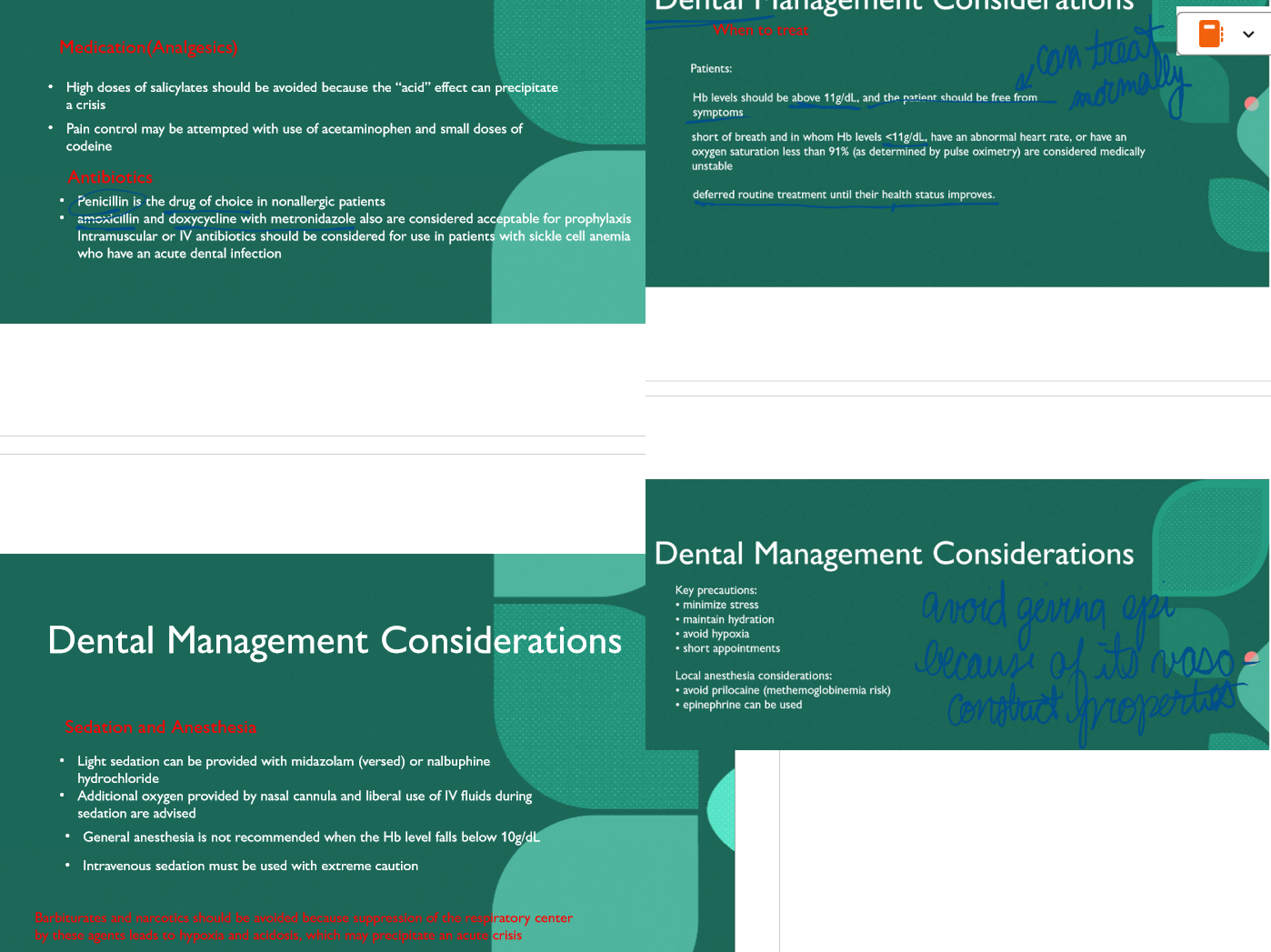
Which local anesthetic should be avoided in sickle cell disease?
prilocaine
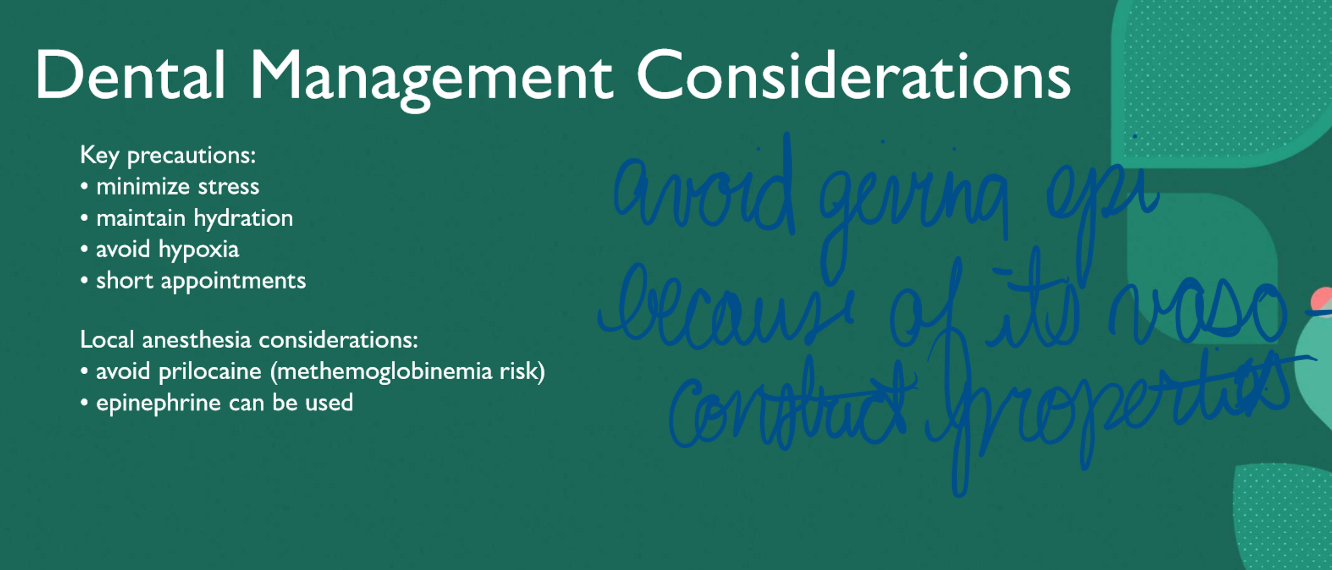
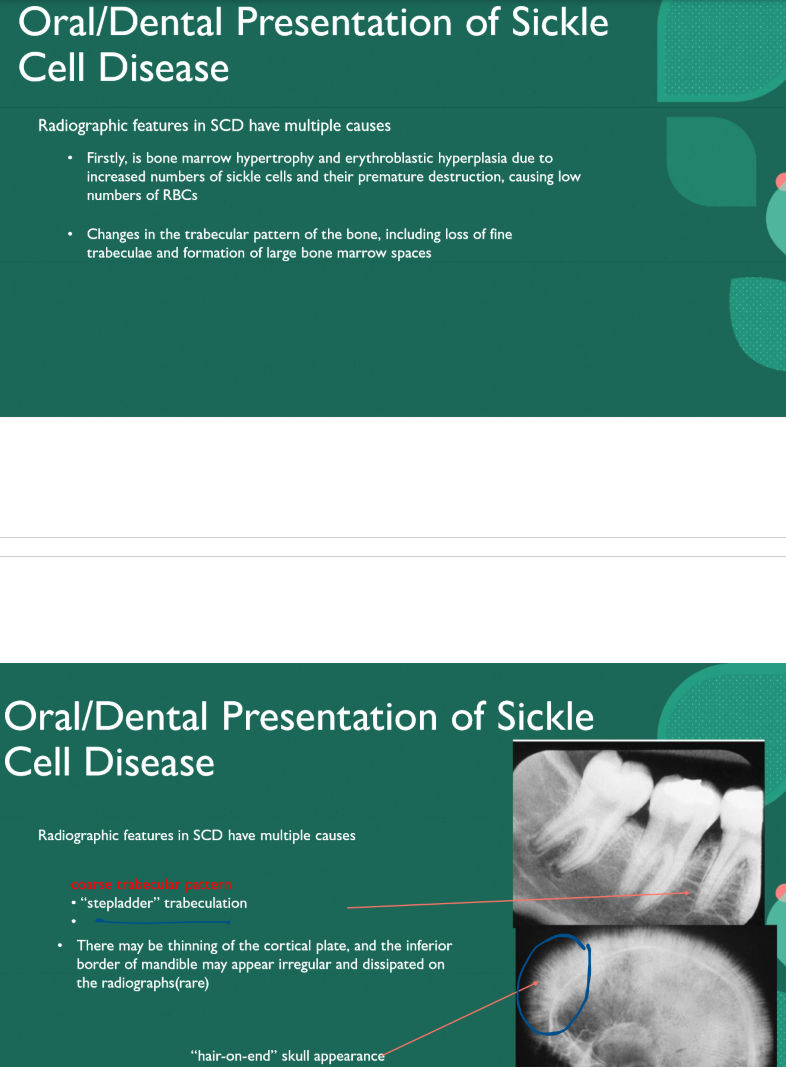
Radiographic examination of patients with sickle cell disease may show:
Hair-on-end pattern
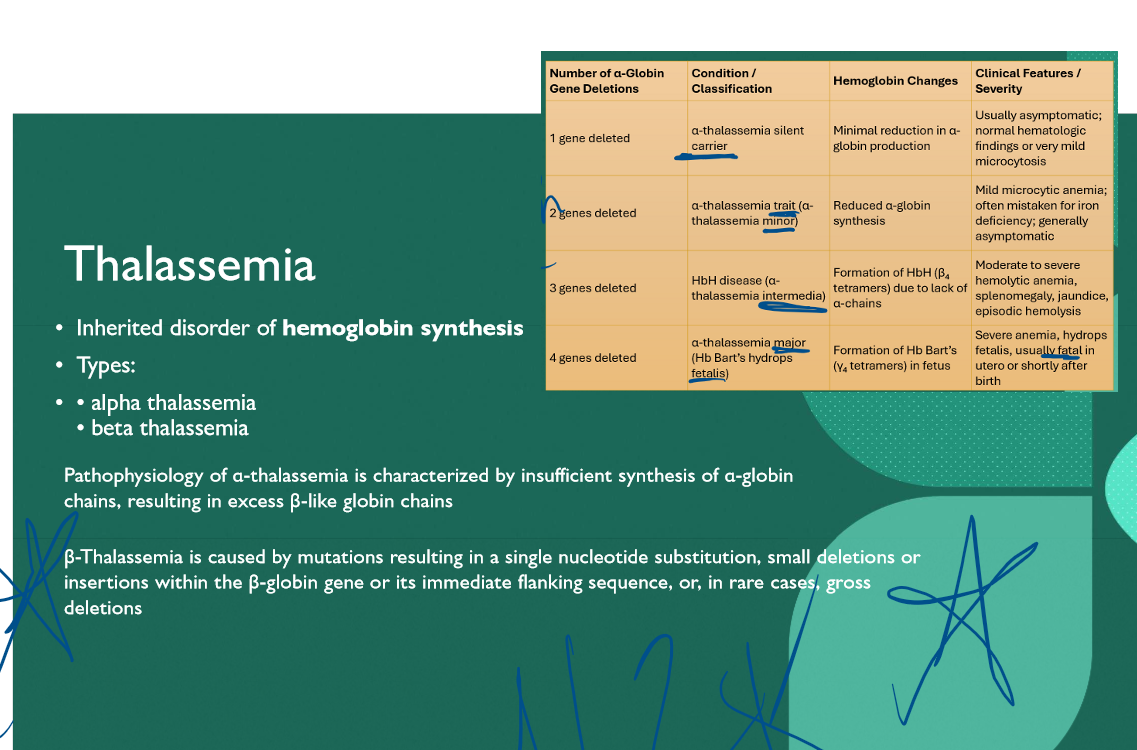
Thalassemia is best described as a disorder involving:
Hemoglobin synthesis
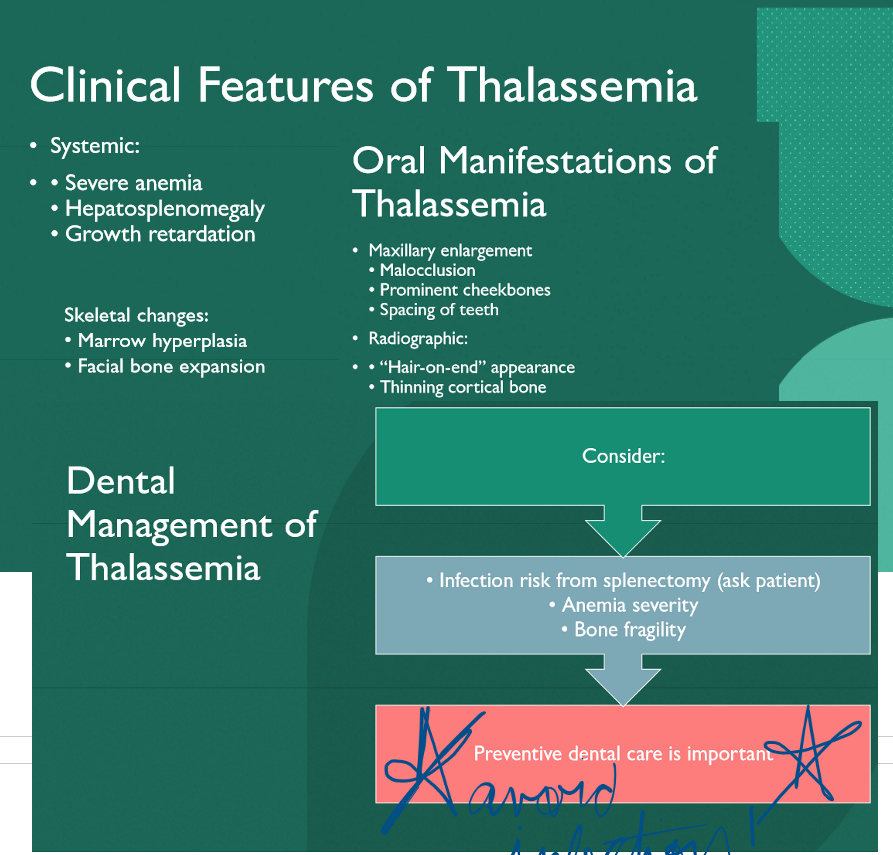
Which facial feature is commonly associated with thalassemia?
Maxillary enlargement
Aplastic anemia is characterized by:
Pancytopenia
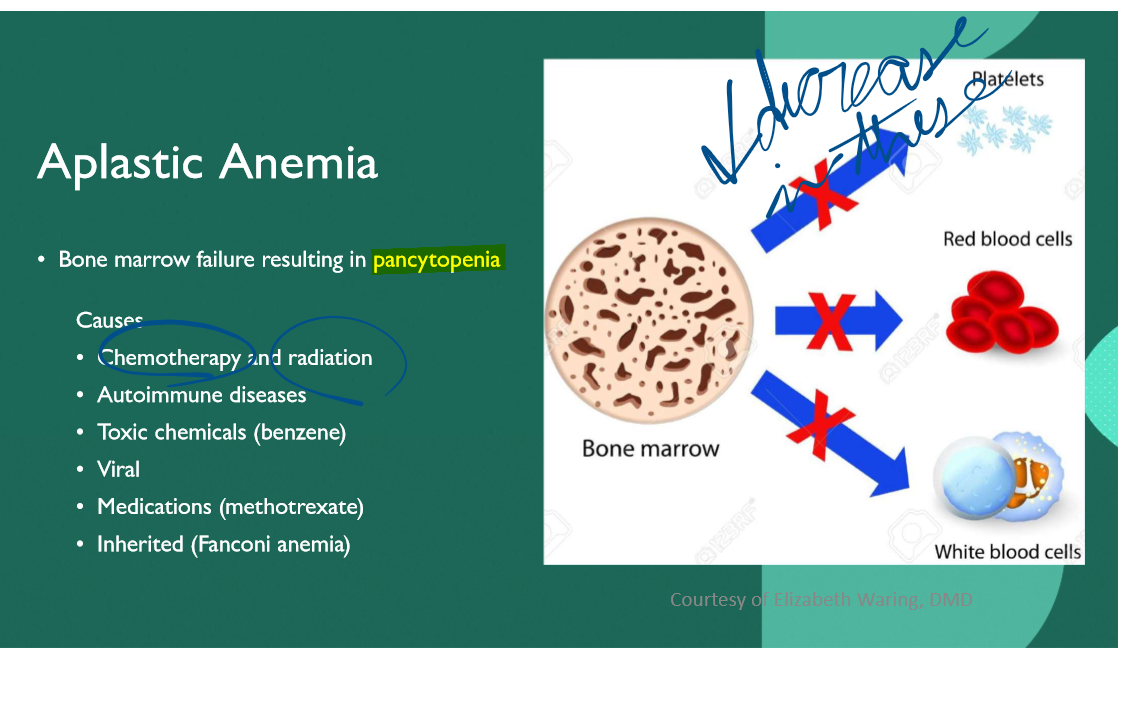
Which oral finding may occur in aplastic anemia?
petechiae
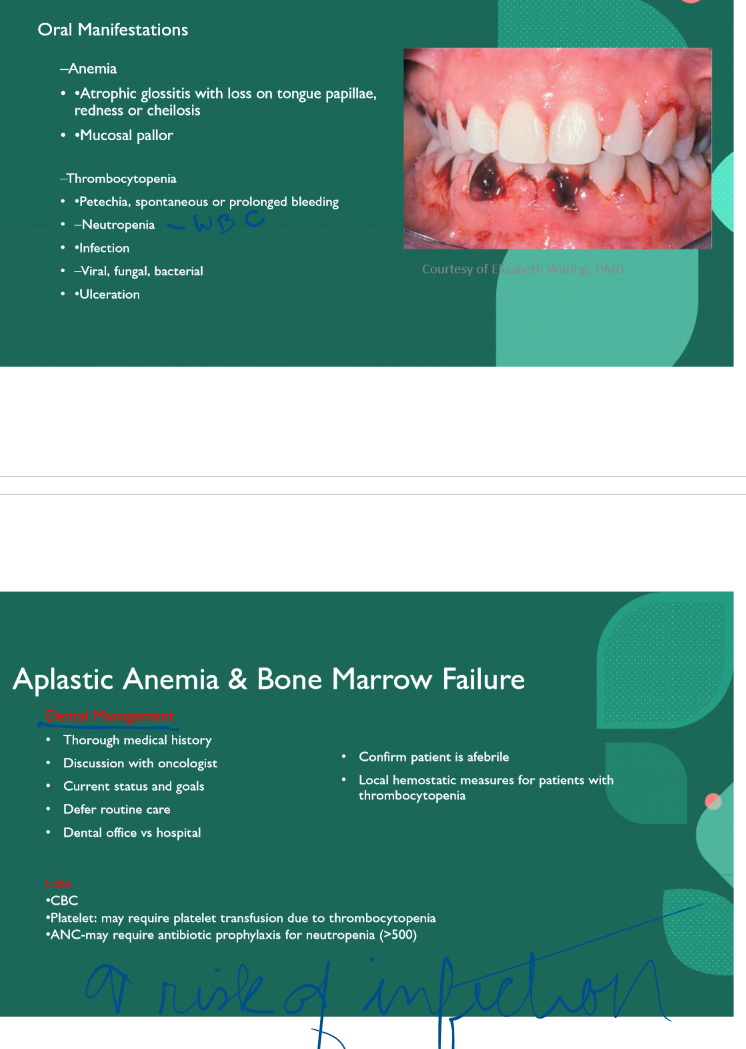
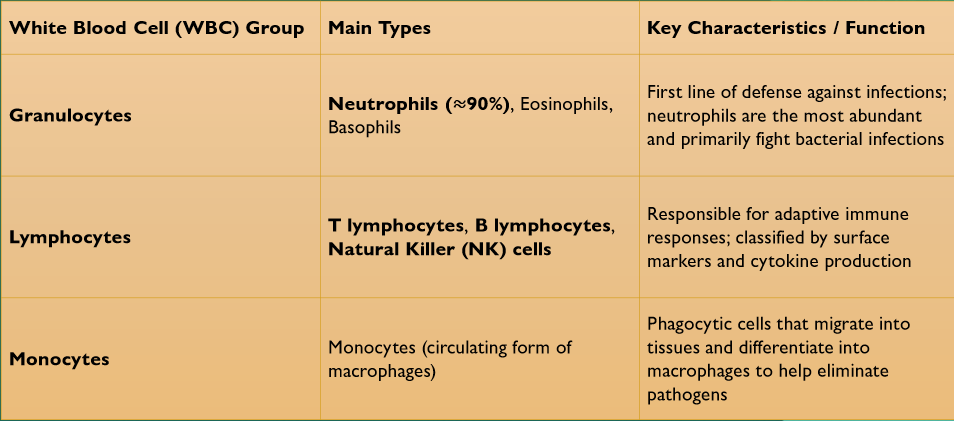
Neutrophils are primarily responsible for defense against:
bacterial infections

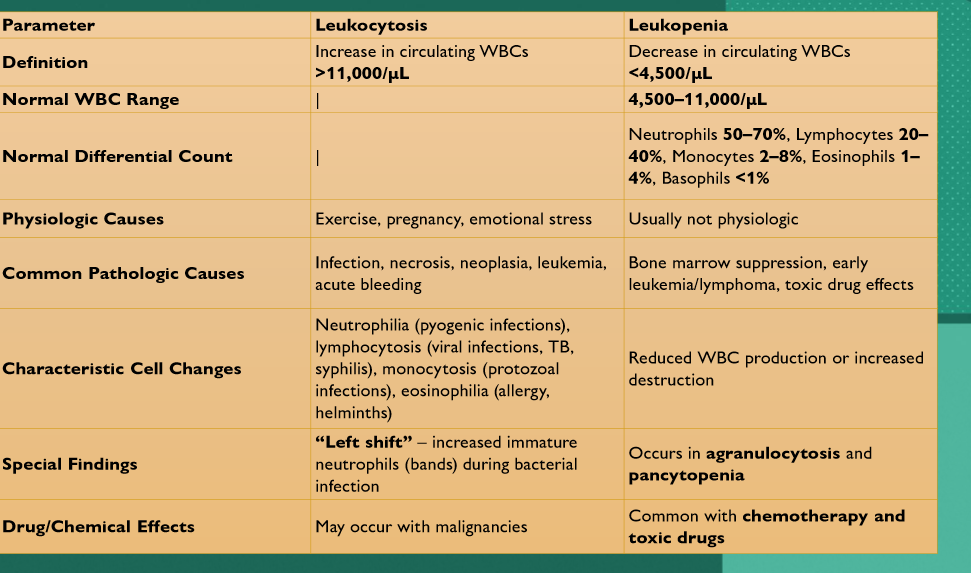
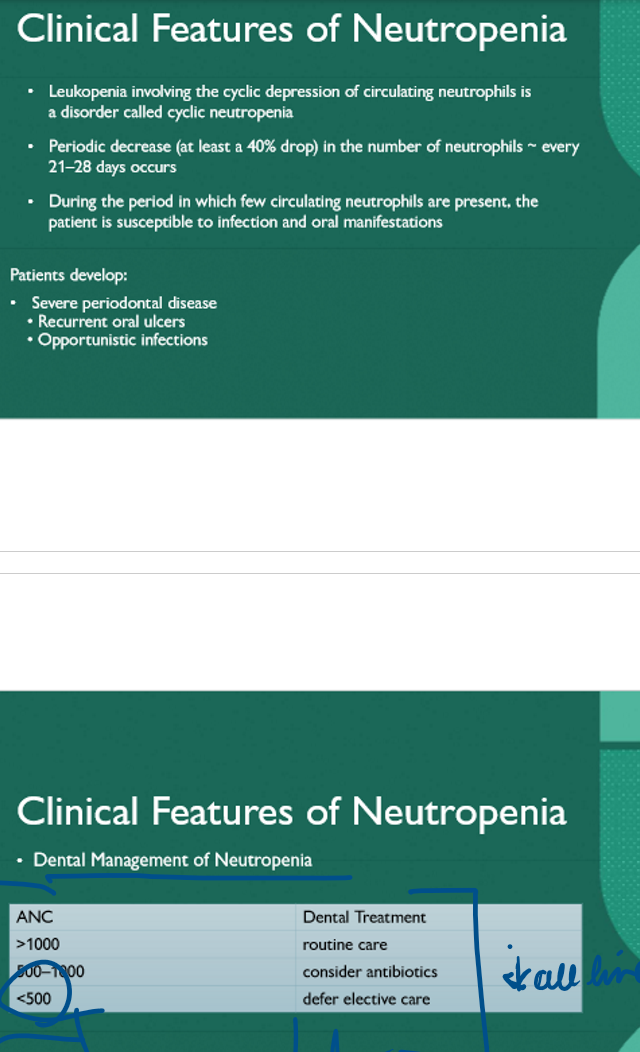
Patients with neutropenia are most likely to develop:
Severe periodontal disease
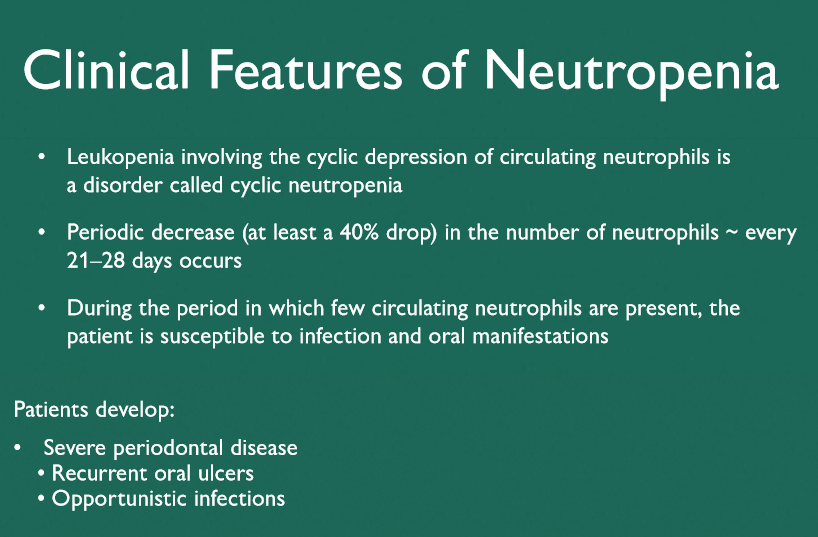
Cyclic neutropenia occurs approximately every:
21-28 days
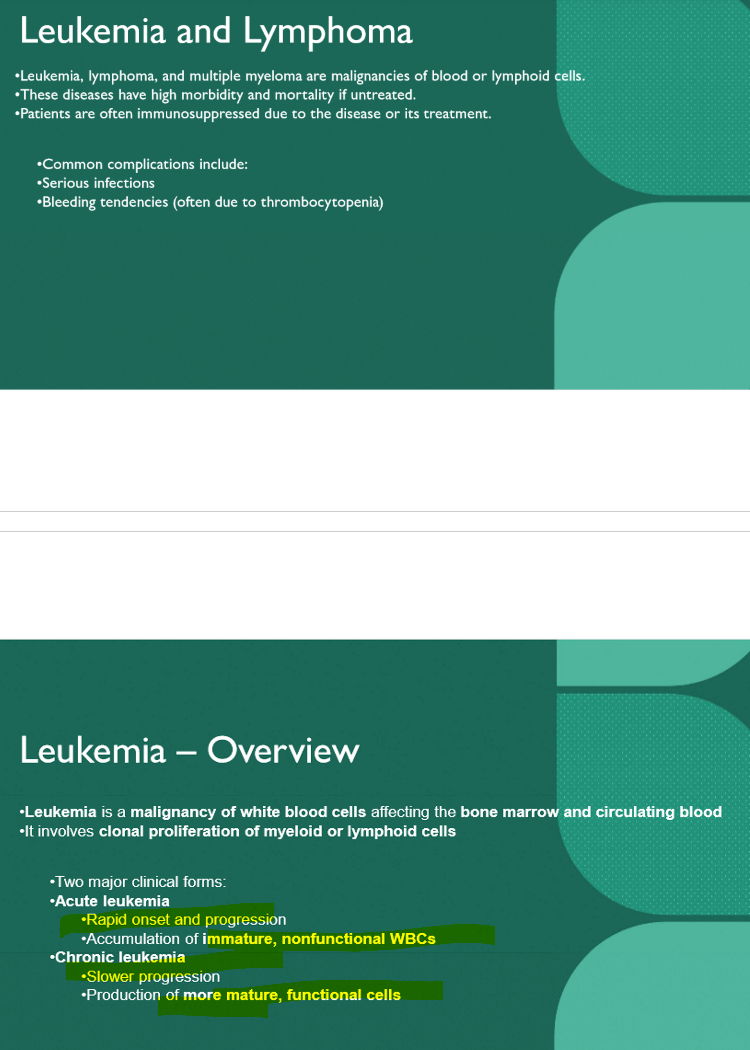
Leukemia is defined as:
Malignancy of white blood cells
Which oral manifestation is most characteristic of leukemia?
Gingival enlargement (specifically with AML; secondary is spontaneous bleeding)
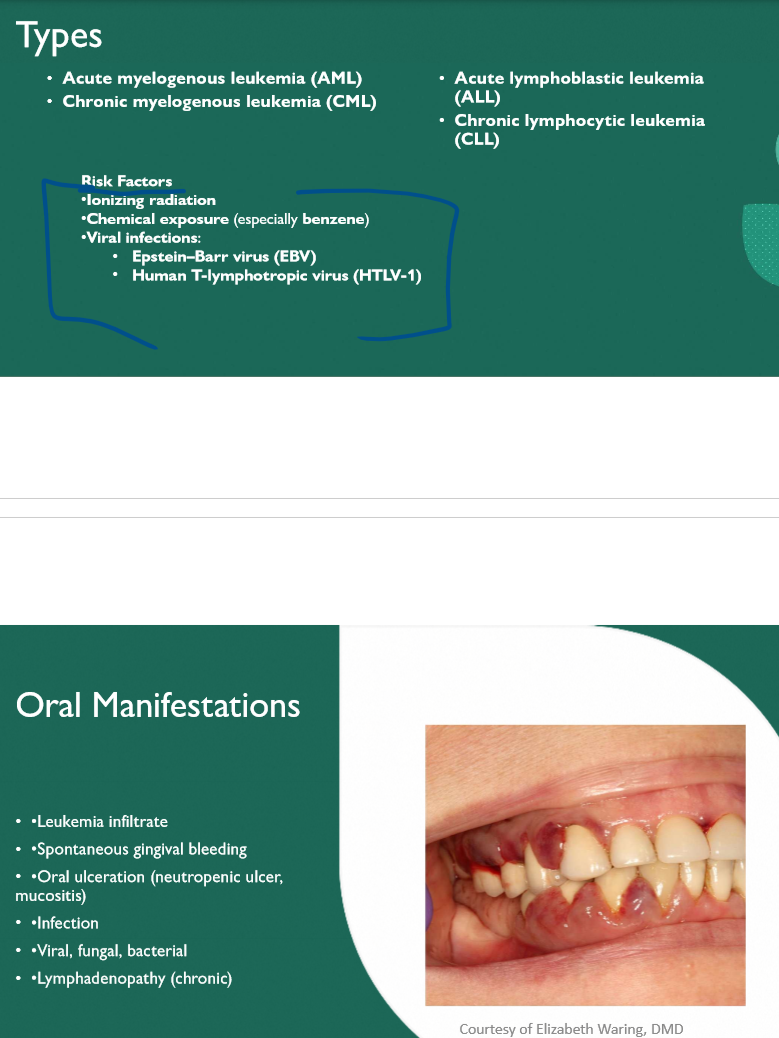
Which type of leukemia progresses most rapidly?
Acute leukemia
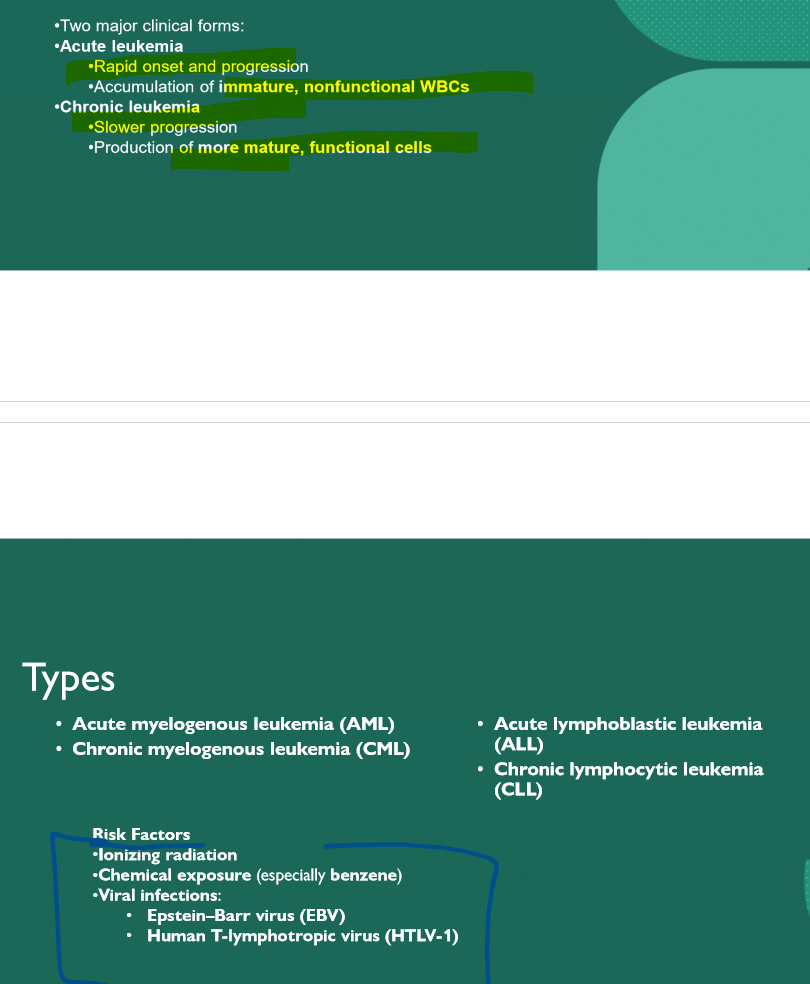
Which cell type is characteristic of Hodgkin lymphoma?
Reed-Sternberg cells
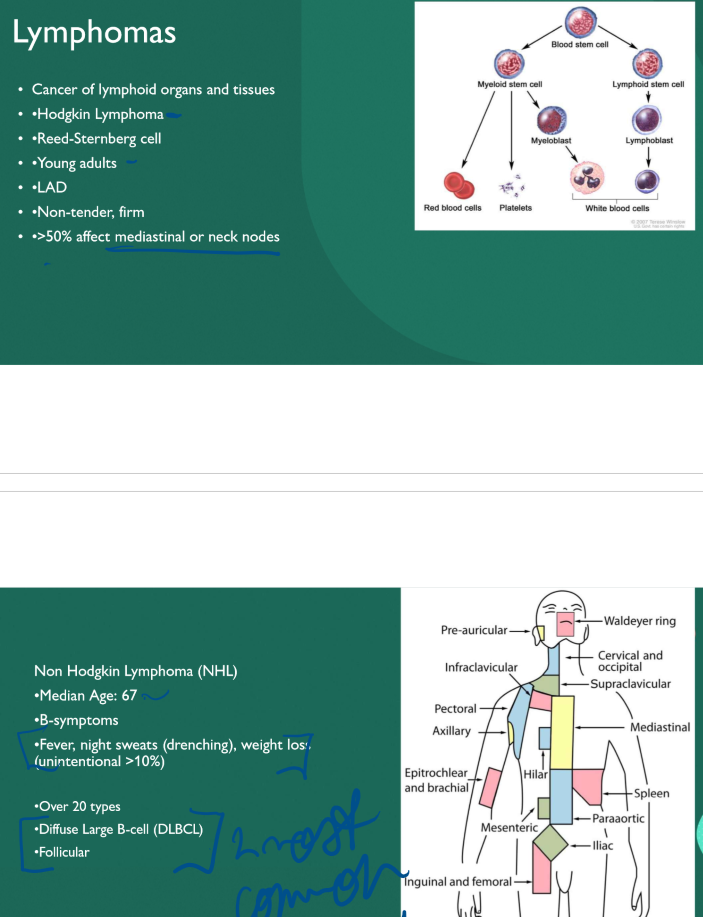
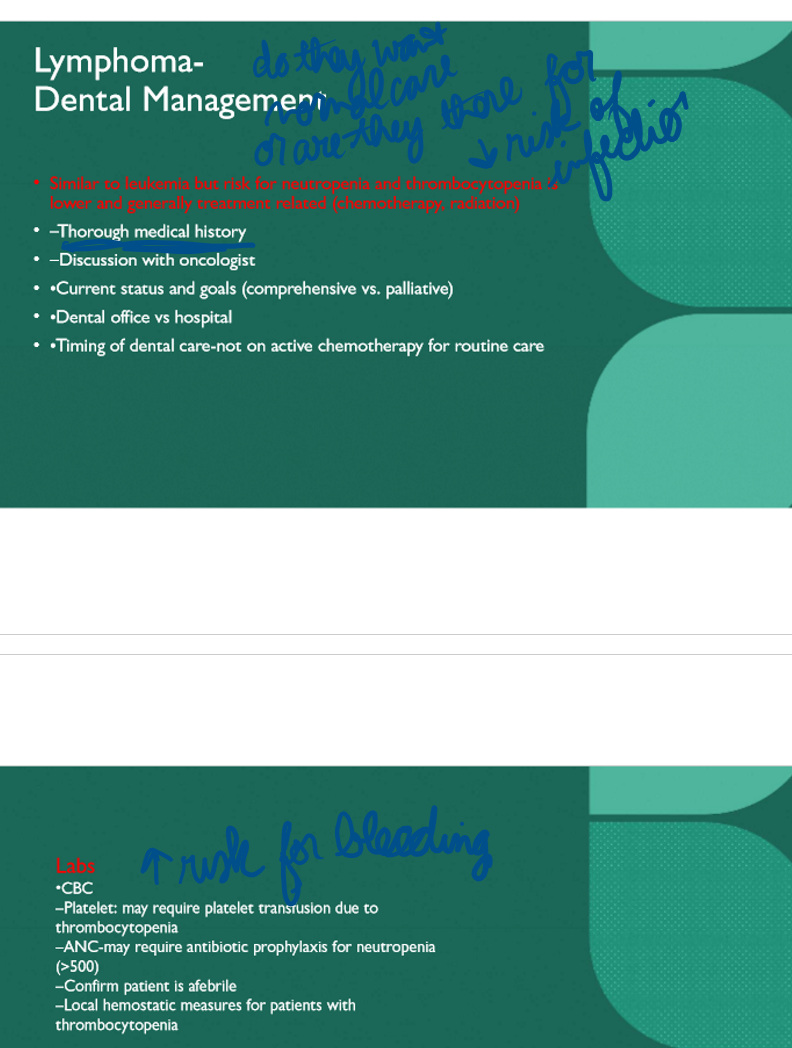
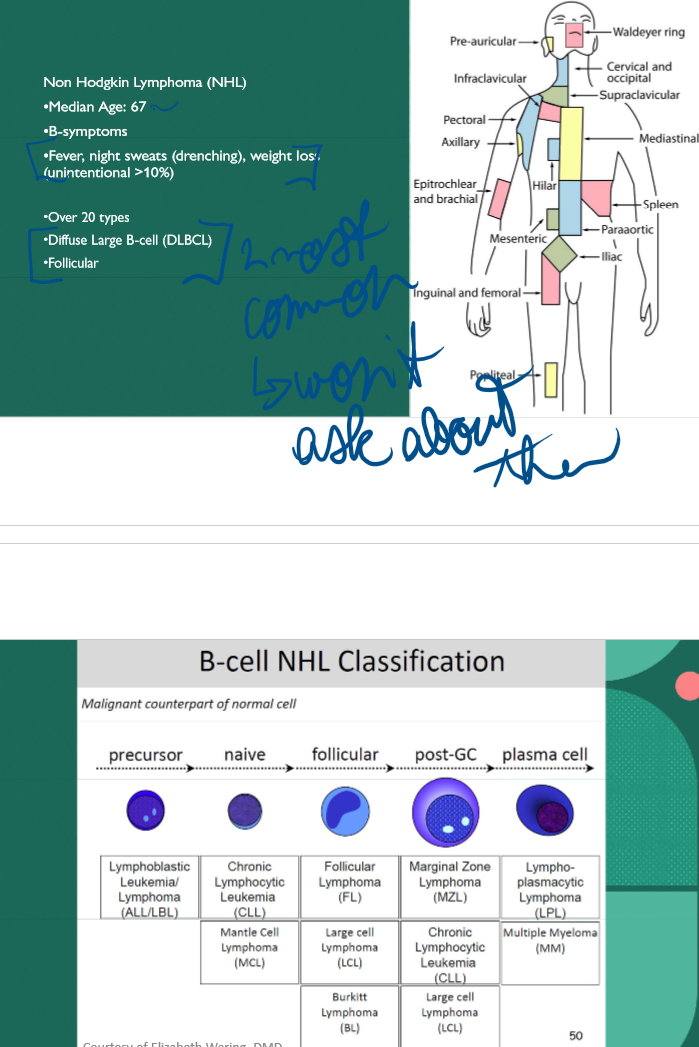
Which symptoms are known as B symptoms in lymphoma?
Fever, night sweats, weight loss