Introduction to Mycology
 Studied by 0 people
 Call Kai
 Learn
Learn Practice Test
 Spaced Repetition
 Match
Match Flashcards
1/57

There's no tags or description
Looks like no tags are added yet.
Name | Mastery | Learn | Test | Matching | Spaced | Call with Kai |
|---|
No analytics yet
Send a link to your students to track their progress
58 Terms
Ergosterol
cell membrane bilayer component found in fungi, similar to cholesterol in animal cells. It plays a crucial role in maintaining membrane structure and function.
India ink
stain used for fungi
Hypha
Basic structural unit
Mycelium
Aggregates of hypha
Septate hypha
with crosswalk/partitions
Aseptate hypha
continuous, non-segmented strands of hyphae (Zygomycetes, Rizous, Mucor)
Mold phase
cottony mycelial mass
room temp
occurs in filaments, hyphae
Yeast phase
Creamy colonies resembling bacteria
Grows at 37
Solitary cells produce by budding
Monomorphic
Mold or yeast
Dimorphic
Capable of 2 growths (mold or yeast)
Mycelium, fruitbody
Parts of fungi
Fungi imperfecti
Asexual reproduction
Perfect fungi
Asexual and sexual reproduction modes, known for producing specialized reproductive structures.
Asexual reproduction
Budding, fragmentation, fission
Mitosis
cell division for asexual reproduction
Sporangiospores
enclosed in sporangium (rhisopus, mucor)
Conidiospores
end of hyphae (aspergillus, penicillium) that are asexually produced.
Chlamydospores
In between hyphae (candida)
Arthrospores
fragmentation of hyphae (trichosporon)
Blastospores
budding (Candida albicans)
Sexual reproduction
Fusion of 2 hyphae with their nuclei
Heterothallic
requires another individual thallus
Homothallic
ability to self-fertile
Ascospores
enclosed in ASCUS/ASCI
Zygospores
fusion of 2 gametes/haploid nuclei (zygomycetes)
Oospore
forms when an oogonium (female gamete) fuses with an antheridial (male gamete), producing a thick-walled spore (Oomycota)
Basidiospore
Enclosed in a club-shaped basidium (Basidiomycetes)
Ascospores
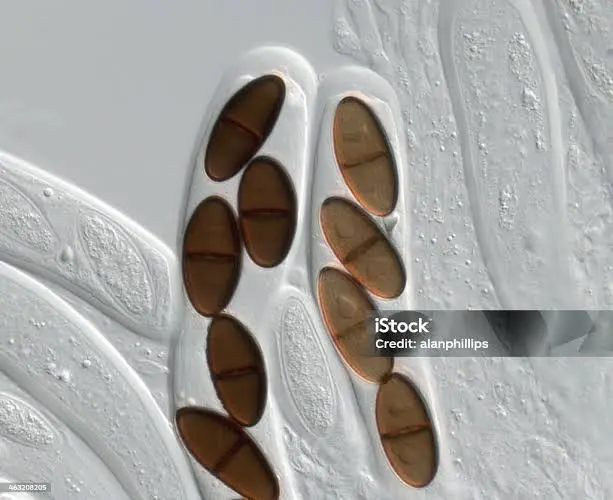
Sporotrichosis
rose gardener disease
Inhalation/direct contact
mode of transmission
KOH mount 10%
dissolves keratin
Staining
India ink, methenamine silver, calcofluor white
Periodic acid schiff
in fungi, magenta color
Lactophenol cotton blue
blue discoloration of CW
Saboraud dextrose agar
general isolation (nocardia bac)
Mycosel/Mycobiotic
SDA + Cycloheximide, inhibits fast-growing fungi, chloramphenicol
Cornmeal agar
studying mycelium or pseudomycelium
Birdseed agar
used for the cultivation of Cryptococcus species, contains nutrients for yeast growth.
Cottonseed agar
use to convert Blastomyces mold to yeast phase
Germ tube test
out grow produced by spores
releasing fungi during germination
Urease test
Cryptococcus neoformans, Coccidioides immitis, Histoplasma capsulatum, Sporothrix schenckii, Trichosporon. Aspergillus.
Hair Perforation Test
use to differentiates Dermatophytes
Polyenes
binds to Ergosterol; Amphotericin B
Azoles
inhibits conversion of lanosterol to ergosterol; Miconazole
Allylamines
inhibits epoxidase; Terbinafine
Echinocandins
inhibits glucan formation; Caspofungin
Exogeneous Route
Airborne, Cutaneous (Trauma/Direct Inoculation)
Endogenous Route
Colonization By Normal Flora
Primary Infection
Direct Infection/Establishment Of Pathogen
Opportunistic
Causes Diseases In Immunocompromised/ Weakened Immune System
Superficial mycoses
Affects the superficial layer of the skin
Confined to the Striatum corneum
Does not illicit inflammation
Tinea versicolor
Malassezia furfur
Cutaneous mycoses
involve the integument and its appendages
Can illicit inflammation
DERMATOPHYTOSIS
Dermatophytes: Trichophyton, Microsporum, Epidermophyton
Stratum corneum
Tinea corporis
Trichophyton
Subcutaneous mycoses
infects the subcutaneous tissues usually at the point of traumatic inoculation
inflammatory response develops in the subcutaneous tissue frequently with extension into the epidermis
Sporotrichosi
Sporothrix
Deep/system mycoses
Involves organ systems
Route: Respiratory, digestive, circulatory
Histoplasma capsulatum
is a dimorphic fungus that causes histoplasmosis, primarily affecting the lungs and can disseminate to other organs, particularly in immunocompromised individuals.
 Note
Note  Flashcards (145)