Art and Audience: The Rise of the Art Gallery (Early Modern Art and Architecture in Southern Europe)
 Call Kai
 Learn
Learn Practice Test
 Spaced Repetition
 Match
Match Flashcards
 Knowt Play
1/20

There's no tags or description
Looks like no tags are added yet.
Name | Mastery | Learn | Test | Matching | Spaced | Call with Kai |
|---|
No analytics yet
Send a link to your students to track their progress
21 Terms
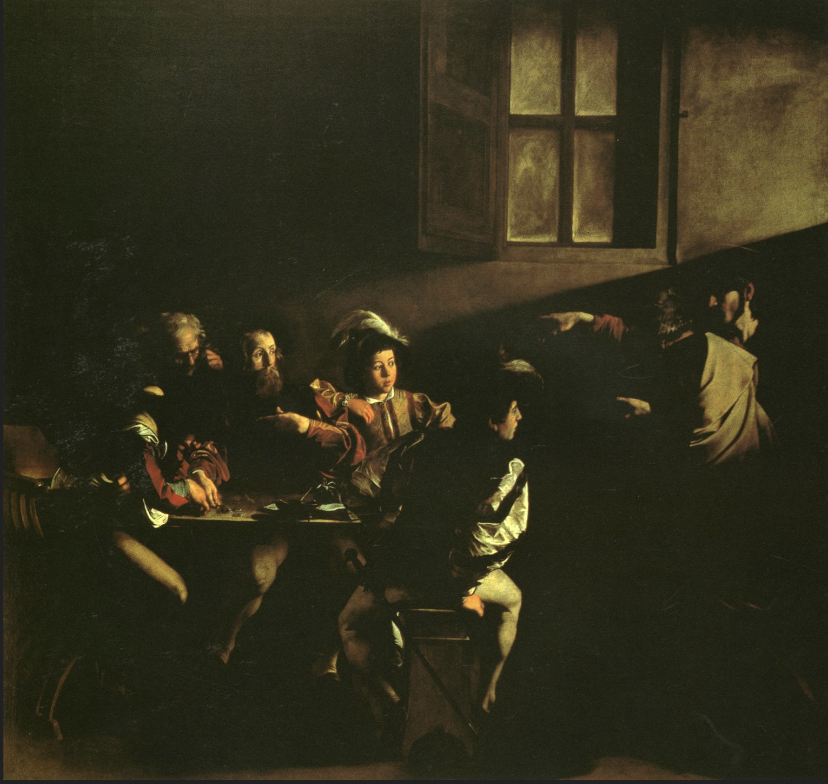
Caravaggio [Michelangelo Merisi] (1571-1610), Italian
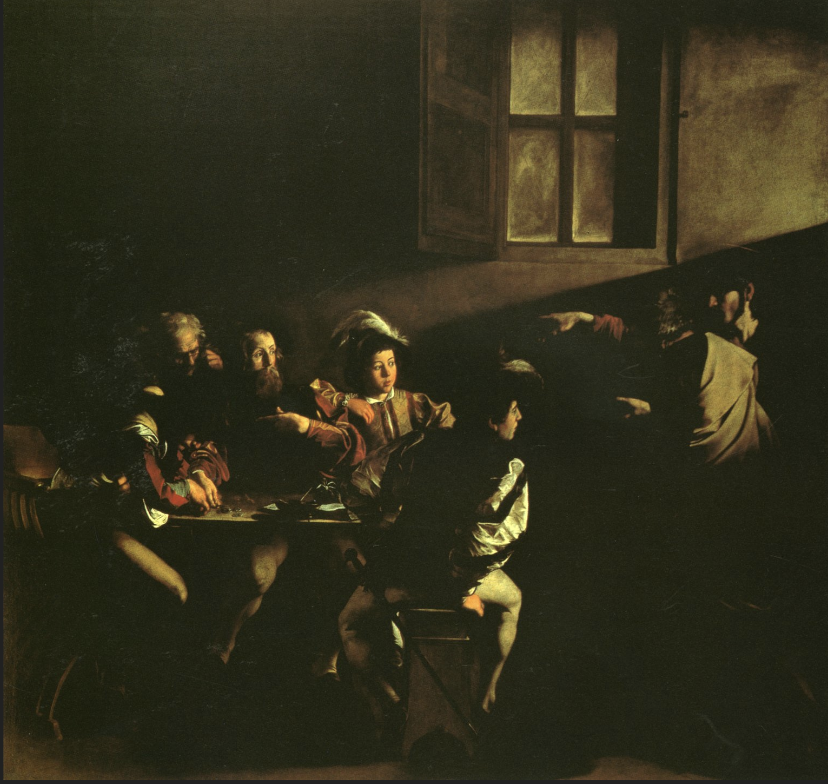
Calling of Saint Matthew, ca. 1599 (Rome, Contarelli Chapel, Church of San Luigi dei Francesi)
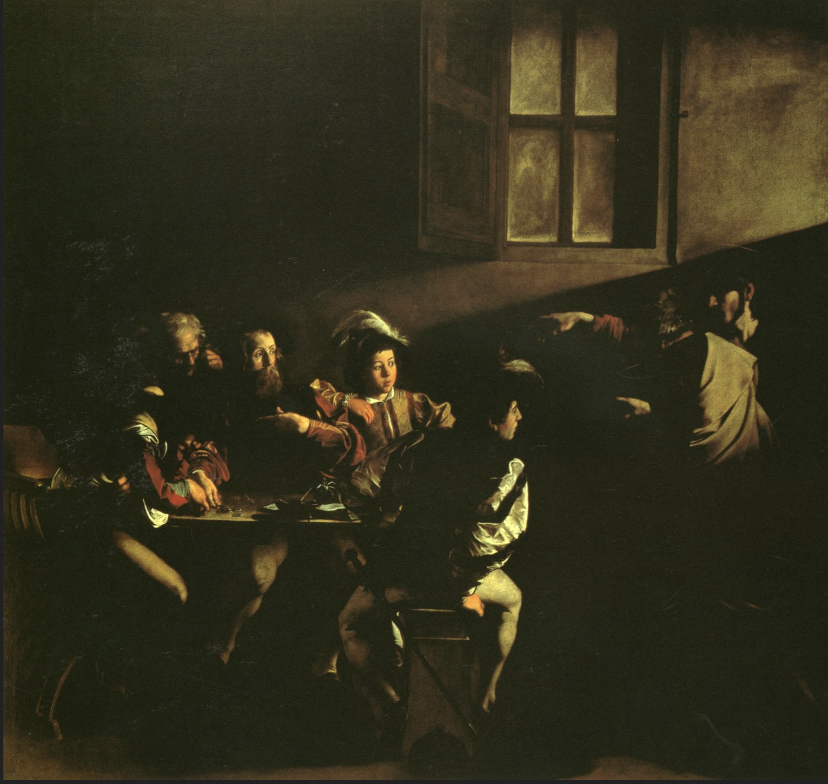
Describe the characteristics of baroque art
deviant art that transgresses boundaries, theatricality, movement, and emotion
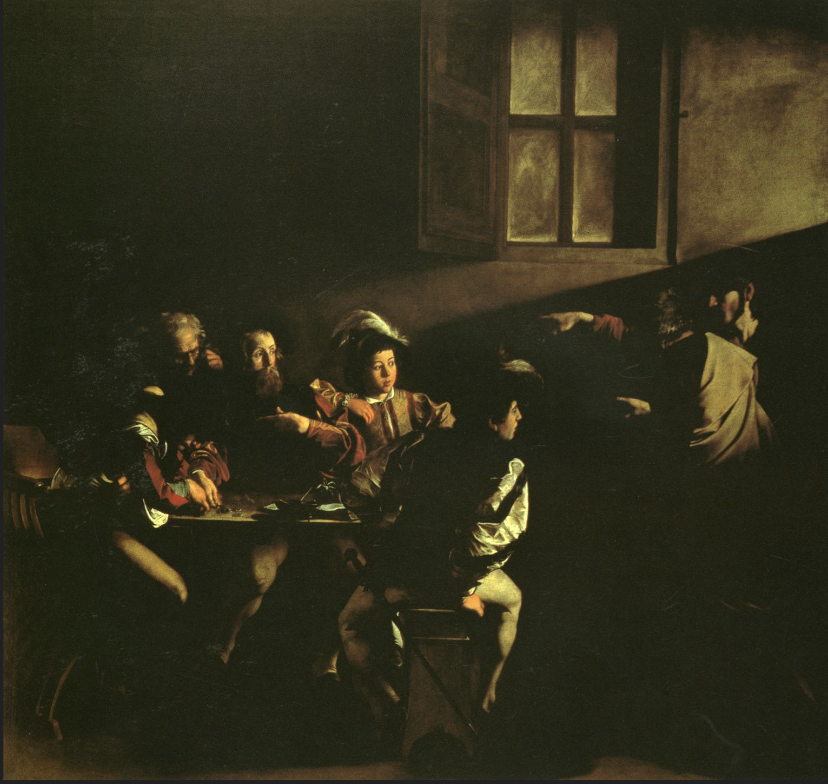
Describe the story behind the calling of saint Matthew
Jesus was walking and saw Matthew so he took him with him to eat with sinners and tax collectors, there Matthew was called to be a disciple
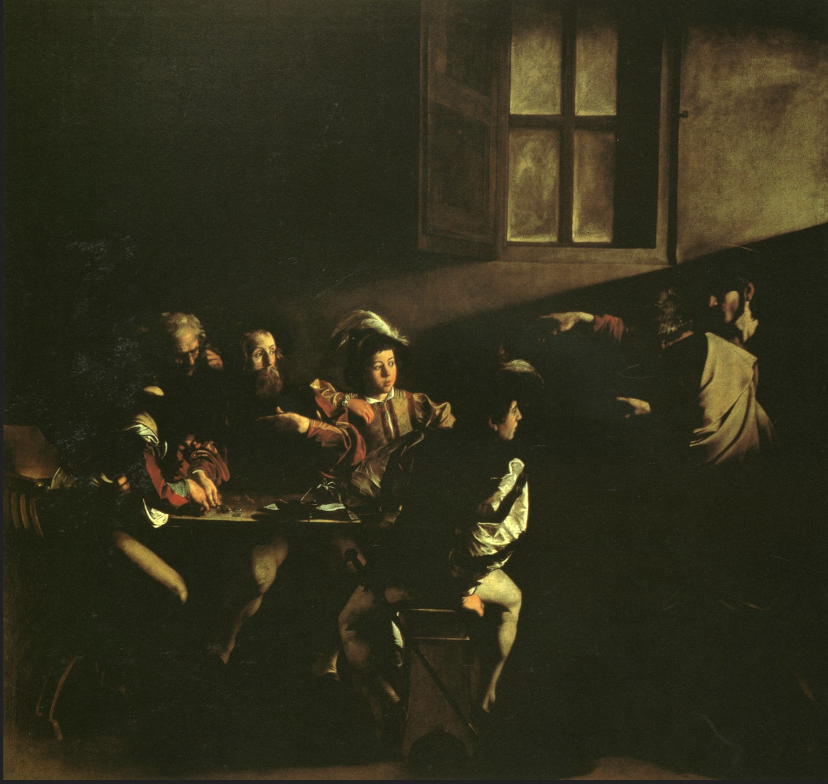
Describe the composition of the calling of saint Matthew and its significance
space ambiguous, setting=rome of Caravaggio, contrast with light and dark: chiaroscuro, diagonal of light=tenebrism, eyes drawn to parts with light= illuminate men at the table, action shown with gestures: Christs hand and bearded mans hand point to Matthew, shows emotion, borrowed from the Creation of Adam=underscores depiction of moment before Matthew realizes he is called and artists dialogue
Describe the figures in the calling of saint Matthew and its significance
Christ enters from the right: slight halo and arm out, view blocked by man=St.Peter, his hand mimics Christ, some dressed nice, some disheveled, financial transaction taking place=look at Christ with doubt and surprise, youth counting money=moment before Matthew realizes his call
Caravaggio [Michelangelo Merisi] (1571-1610), Italian
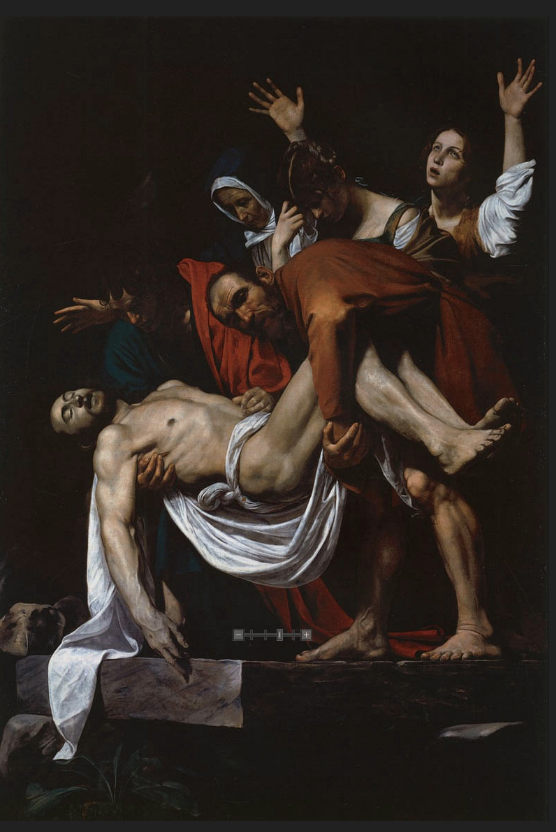
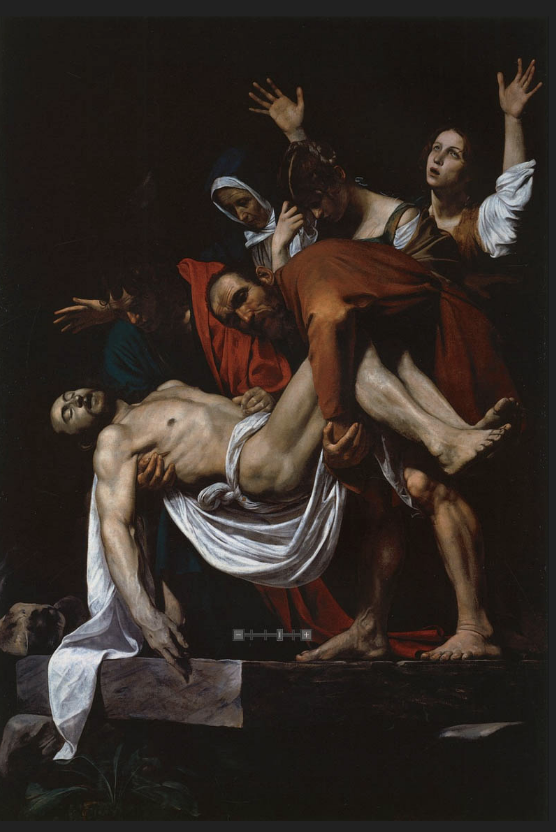
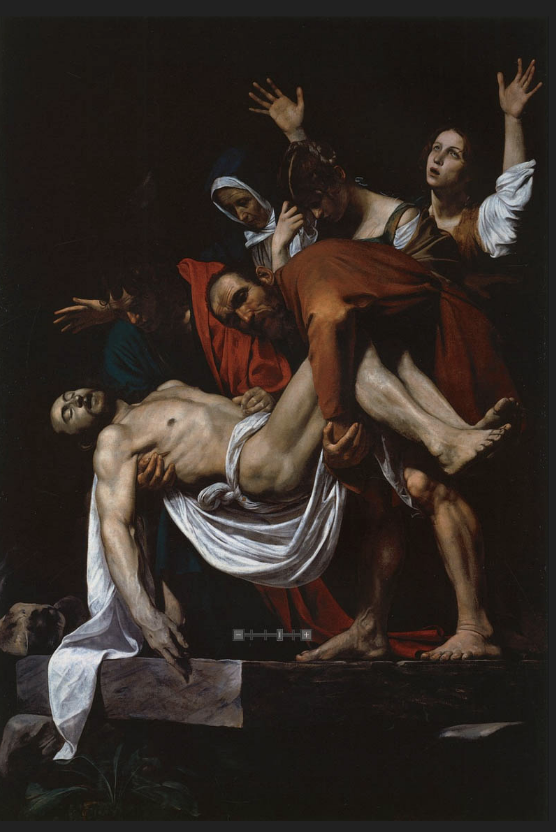
Entombment of Christ, ca. 1603 (Rome, Vatican Pinacoteca)
Describe the composition of the Entombment of Christ and its significance
altarpiece, dramatic: mourners piled on diagonal, slab juts out=void, emerge from black background, rugged natural style, about to throw Christ in our direction=Eucharistic theme
Describe the figures in the entombment of Christ and its significance
common people, Christ: body limp and lifeless, struggle to grip Christ, no shroud, fingers on christ’s wound, Christs body=down to earth and human
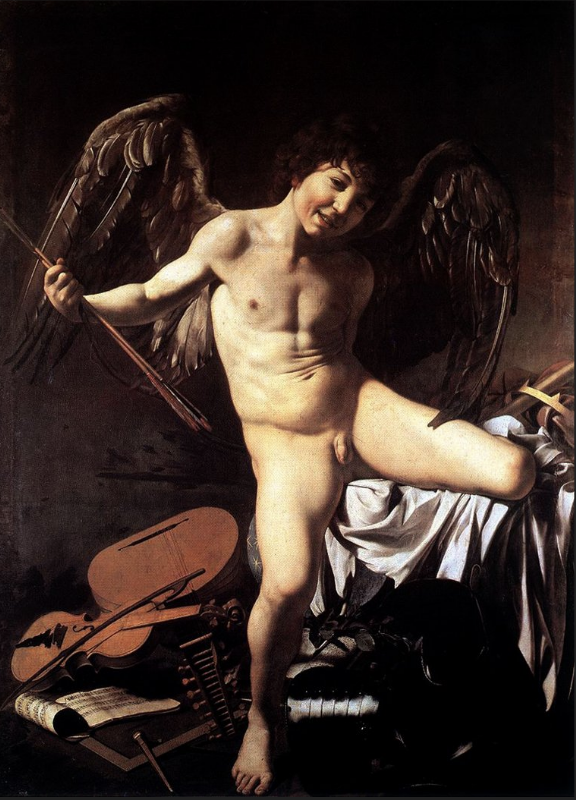
Caravaggio [Michelangelo Merisi] (1571-1610), Italian
Victorious Cupid (Amor Vincit Omnia), ca. 1602 (Berlin, Staatliche Gemäldegalerie)
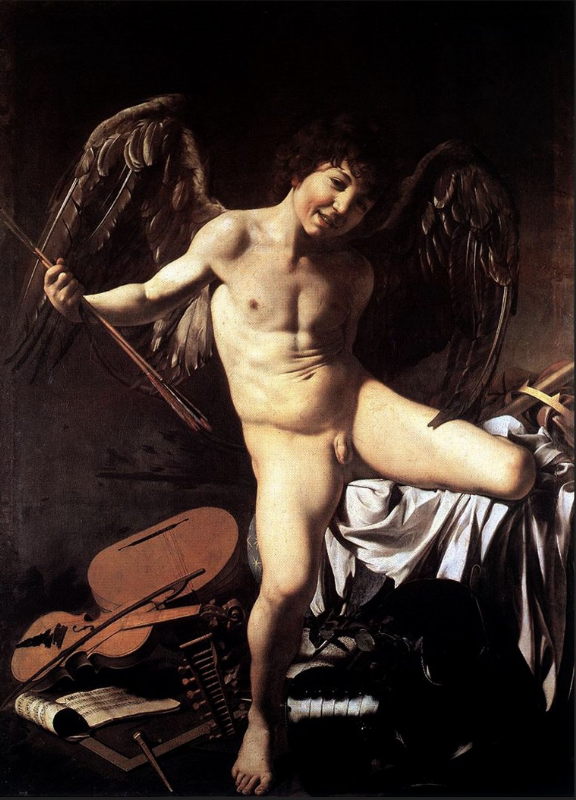
What is the message of Victorious Cupid
shows contempt for world: mocks human achievements with objects on the floor: he is above them, they are powerless compared to his Eros
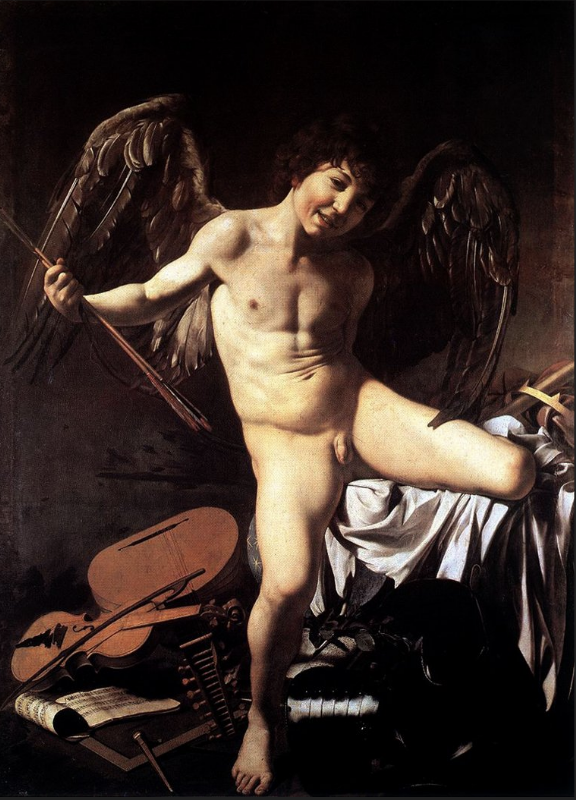
Describe the figure of Victorious Cupid and its significance
young boy: baby face, huge wings, balancing ambiguity=unease, hand mischievous behind back, holds arrows=wounds of love, wing tip sensuous on thigh=point to genitals=highlight with light, eyes: dare us to look away and resist, intense realism and naturalism
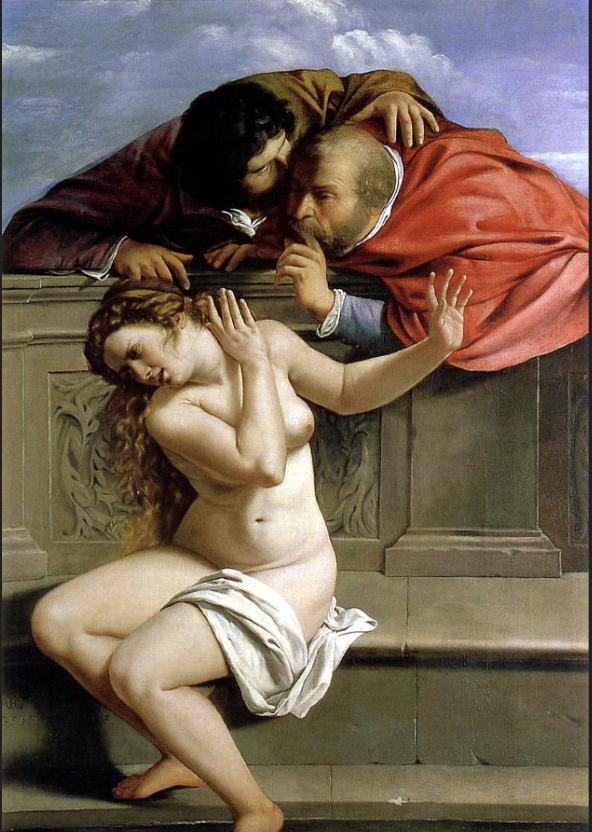
Artemisia Gentileschi (1593-1653), Italian
Susanna and the Elders, 1610 (Pommersfelden, Schloss Weissenstein)
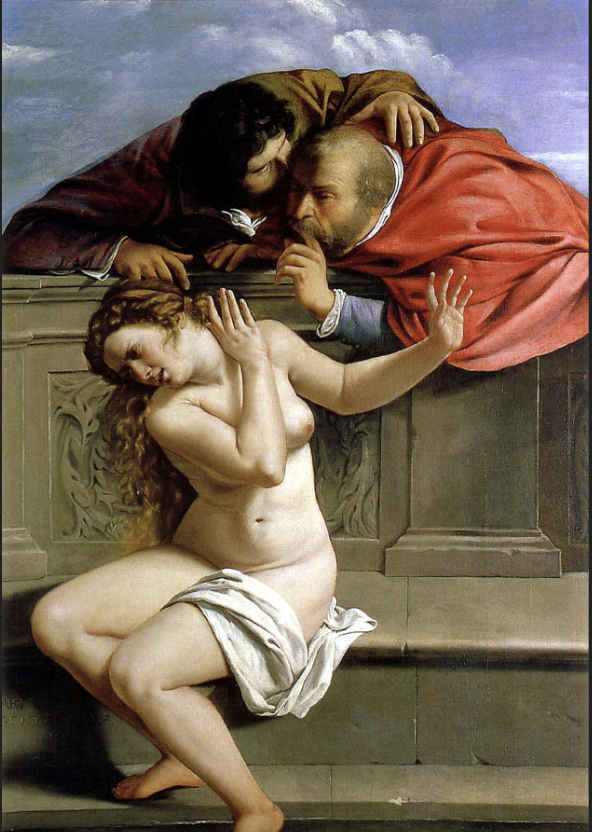
Describe the story behind Susanna and the Elders and its significance
accosted by veuyers, she refused them, the male elders were killed and she triumphed, biblical tale=rationalize depicting nude in the past
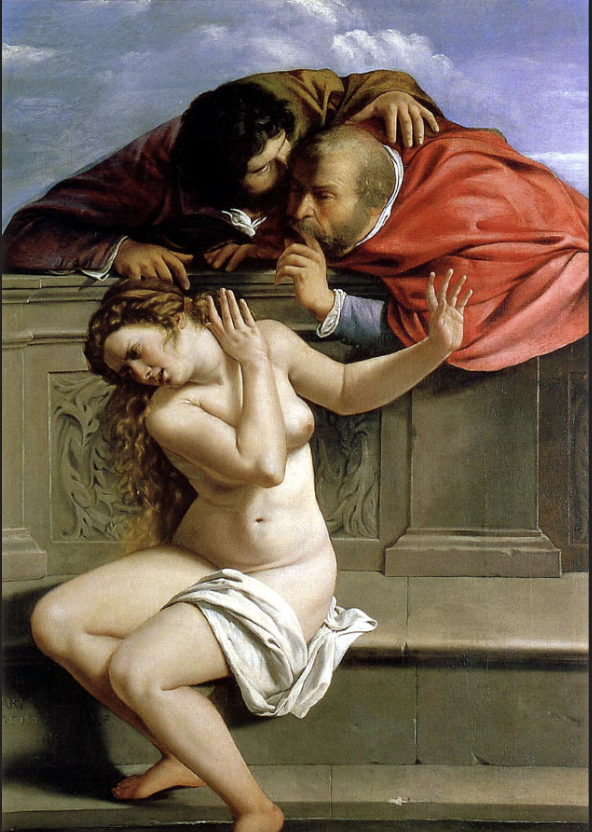
Describe the composition of Susanna and the Elders and its significance
emphasize vulnerability and distress: twisting body and gestures-like Eve and Adam when they were expelled from paradise, shows her anguish and refusal=victimized woman
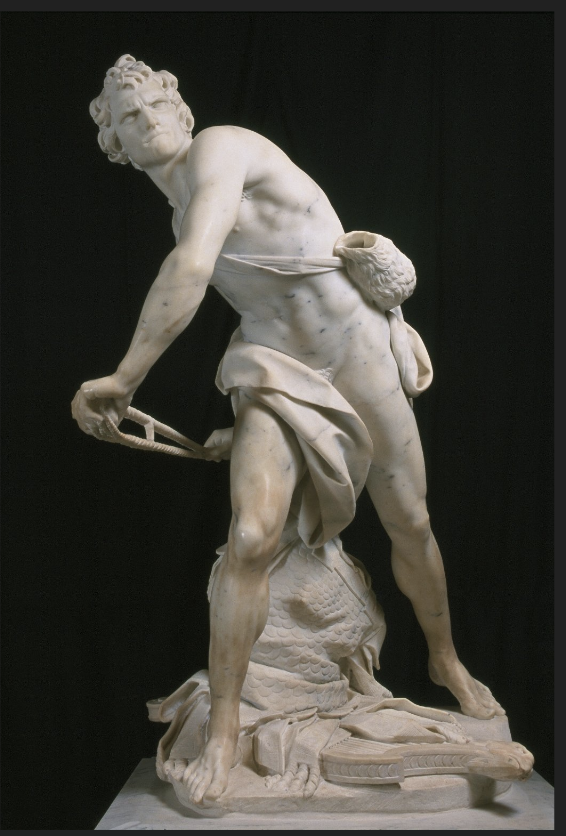
Gianlorenzo Bernini (1598-1680), Italian
David, ca. 1623 (Rome, Galleria Borghese)
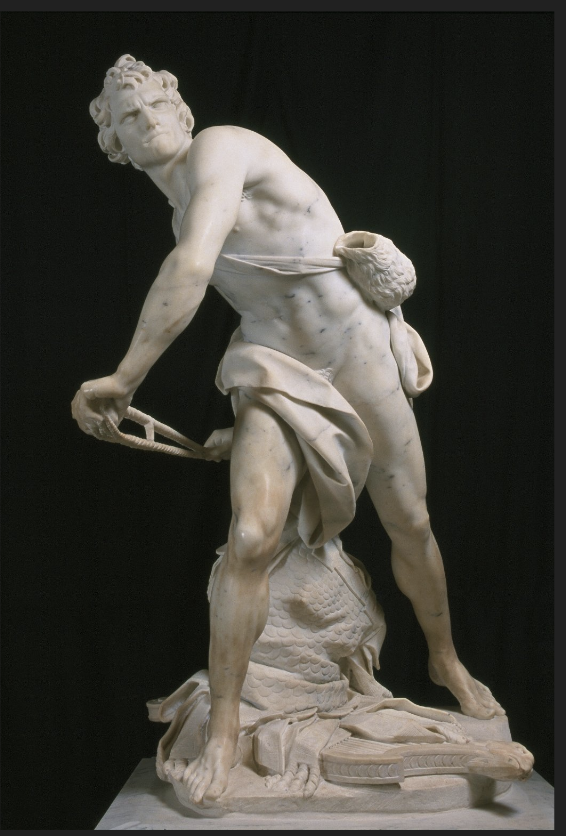
Describe the context of the artist of David
Bernini: drawn to dramatic sculptures, extensive study of past sculptors, stake his claim as the sculptor of the 17th century
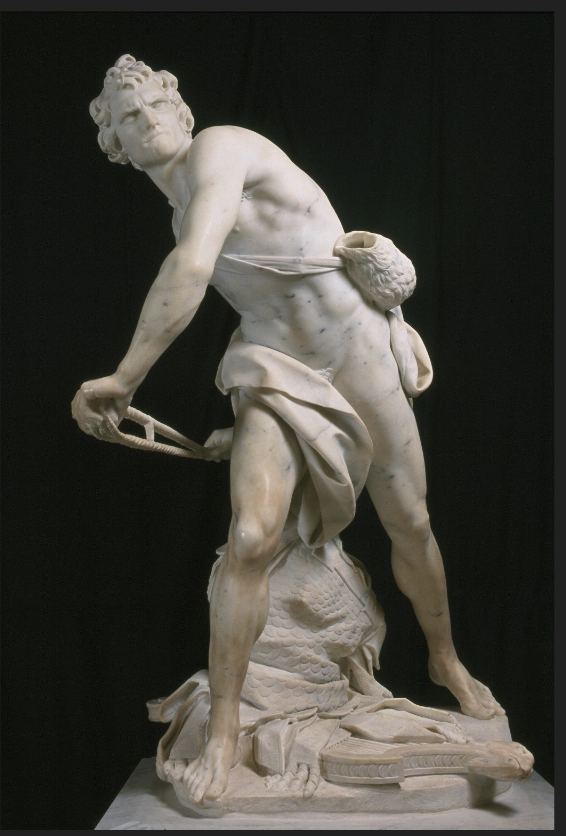
Describe the composition of the David and its significance
broken out of compositional model of Michelangelo: in motion/action in progress, winding up to throw: dynamic pose, frozen mid-motion, twist torso, naturalistic, face contrasts to Michelangelo: scowl, hair shorter and accentuate scowl, brow furrowed, intense concentration
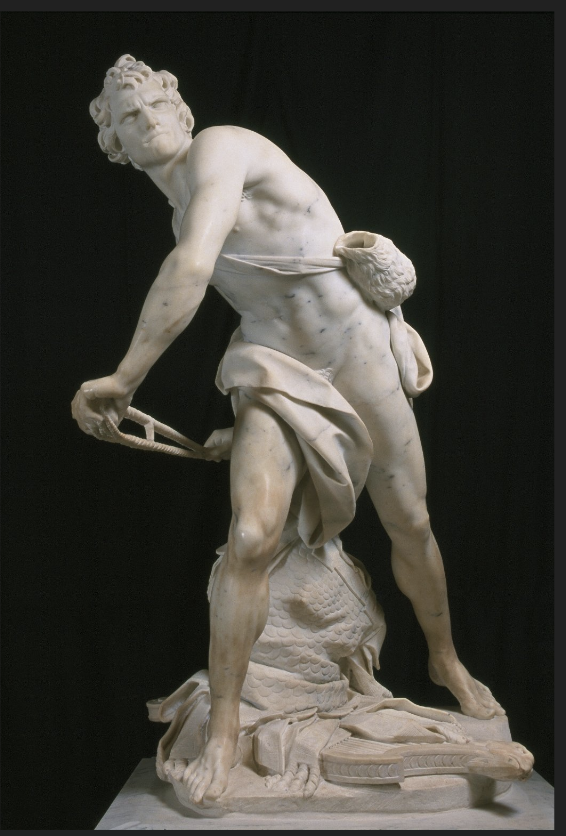
Describe the role of the viewer in David
role of spectator: looks past us, in middle of action, pre-determined view of figure=optimal dynamic impact, central view
Gianlorenzo Bernini (1598-1680), Italian
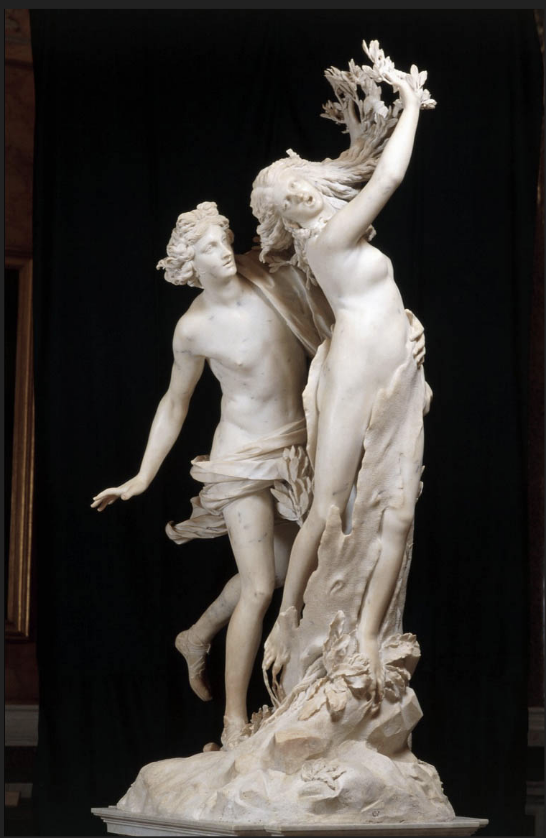
Apollo and Daphne, ca. 1623 (Rome, Galleria Borghese)
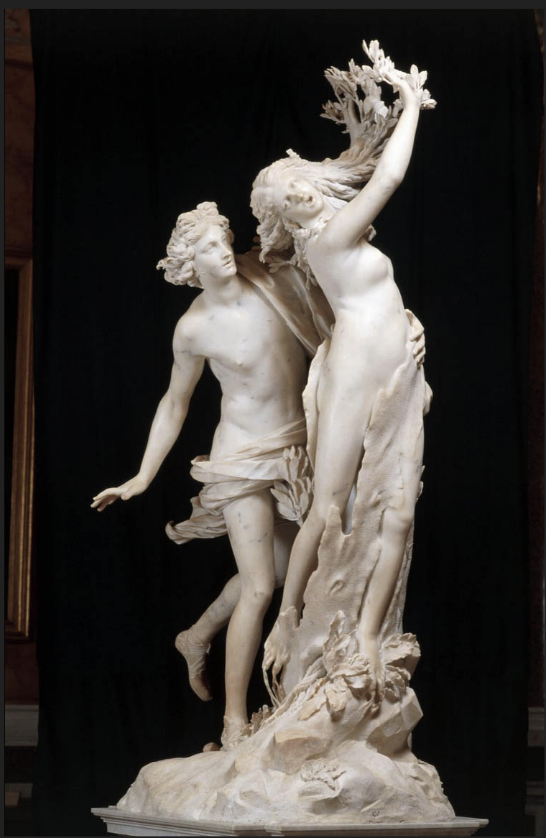
Describe the story behind Apollo and Daphne and its significance
Apollo struck by Cupid’s love arrow, Daphne struck with lead arrow, he chases her and she begs with her father to become a tree=very difficult to depict
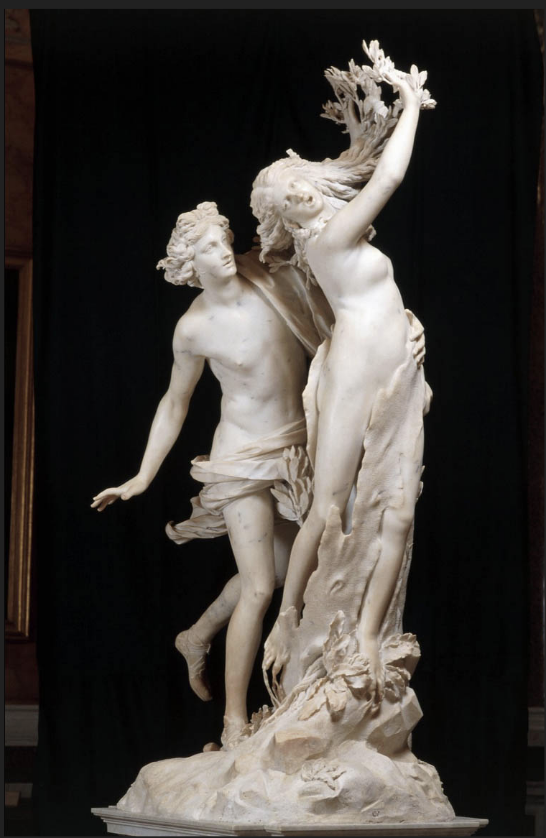
Describe the composition of Apollo and Daphne and its significance
Moment when she just starts to transform: bark on legs and sprouting root, fingers=twigs=mix of texture, Daphne hair whips around: textured, delicate branches and leaves=assisted by other sculptor, faces reveal changing states: Daphne frozen/wooden, rough bark encircle her legs: Apollos hand on bark=chisel marks show texture, seems alive and turning into bark=double transformation, activated and borrowed from antiquity

