Chapter 9: Later Adulthood: Physical, Cognitive, Emotional & Social Development
 Studied by 0 people
 Call Kai
 Learn
Learn Practice Test
 Spaced Repetition
 Match
Match Flashcards
 Knowt Play
1/45

There's no tags or description
Looks like no tags are added yet.
Name | Mastery | Learn | Test | Matching | Spaced |
|---|
No study sessions yet.
46 Terms
aging population
- later adulthood begins at age 65 (1/8 people in US > 65)
- life expectancy in the US
-> women: 79.3/80
-> men: 73.5/75
- among the older americans, the fastest growing segment is the 85 and older group
- causes of increased lifespan: immunizations, advancements in tech, effectiveness of healthcare trends
aging
begins at conception and ends with death; is the process of growing older regardless of chronological age
senescence
the mental and physical decline associated with aging
senility
physical and mental deterioration
- this is derogatory and should not be used
gerontology
the study of the aging process
geriatrics
branch of medicine
- medical speciality caring and treating clients in the older age group
society stereotypes the older person as being:
asexual, unemployable, socially incompetent
ageism
prejudice and discrimination directed at older people
stereotypes on aging
- educate to overcome myths
- recognizer that older Americans feel disrespected or unneeded
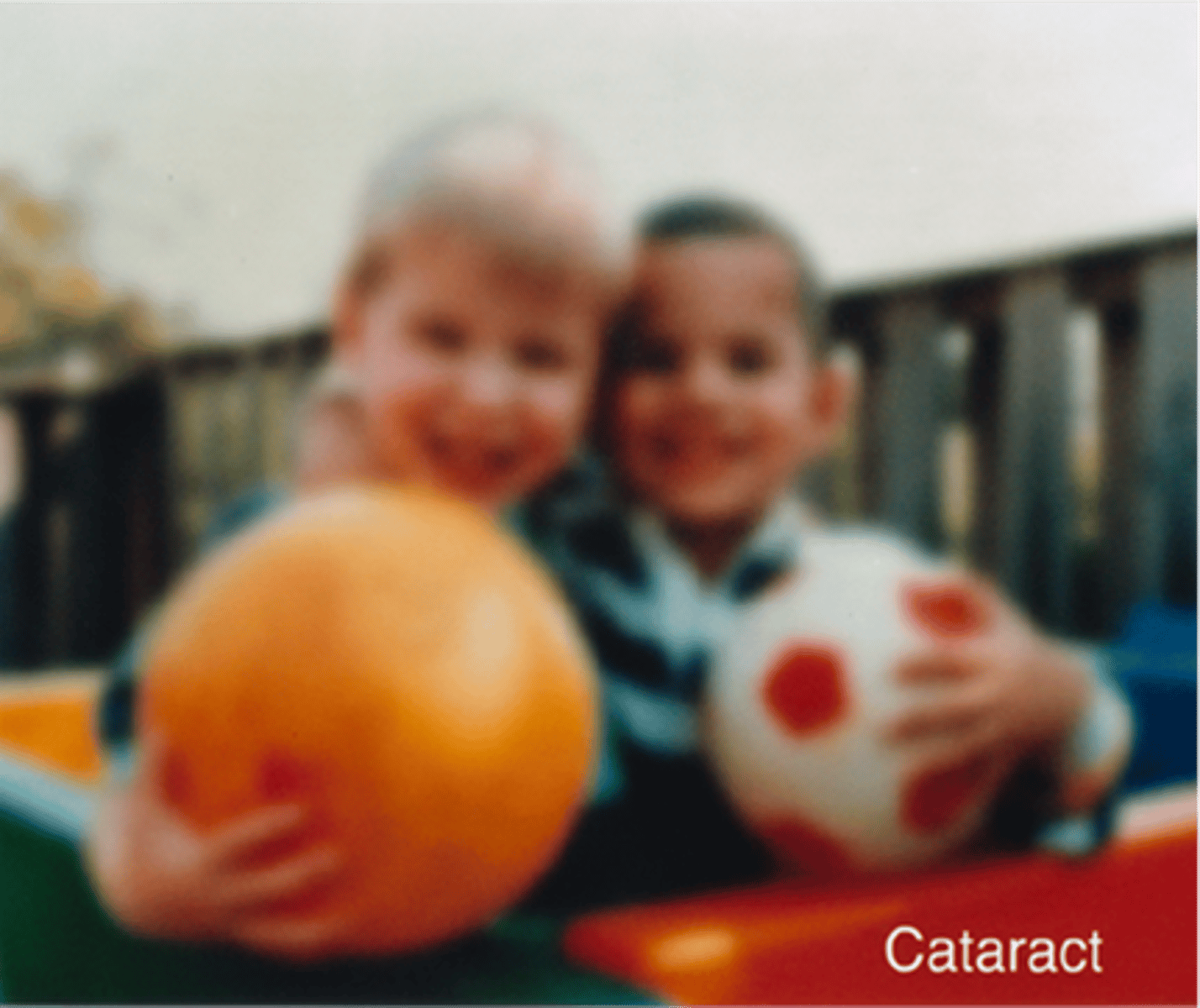
cataracts
a thickening of the lens of the eye that causes vision to become cloudy, opaque, and distorded
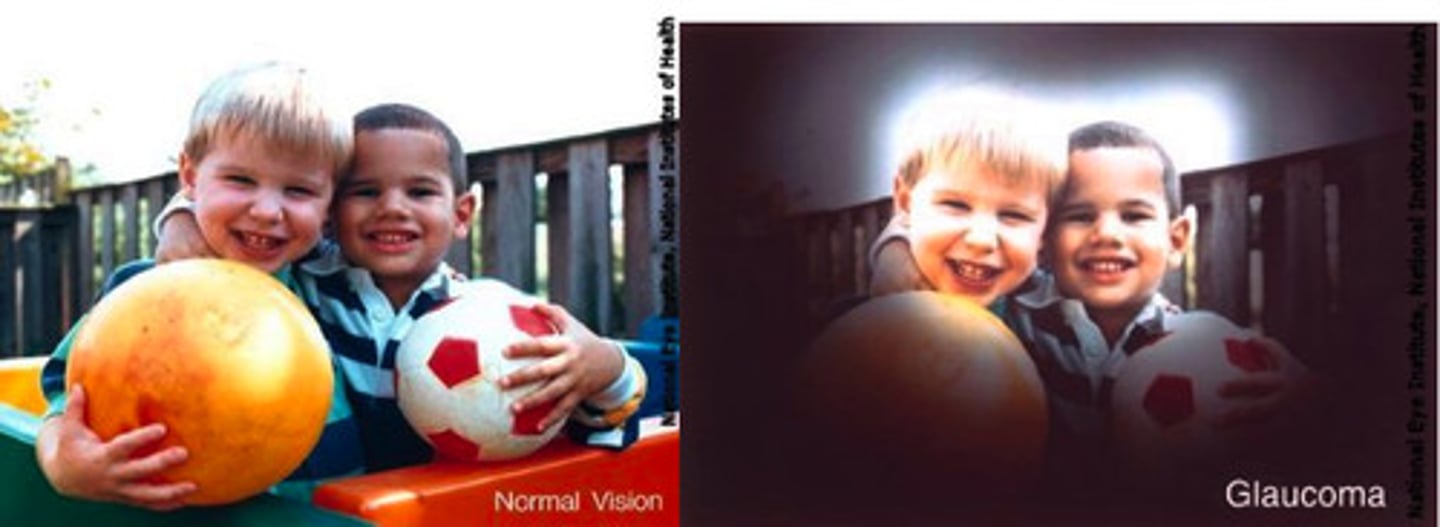
gluacoma
damage to the optic nerve because of the pressure created by a buildup of fluid in the eye
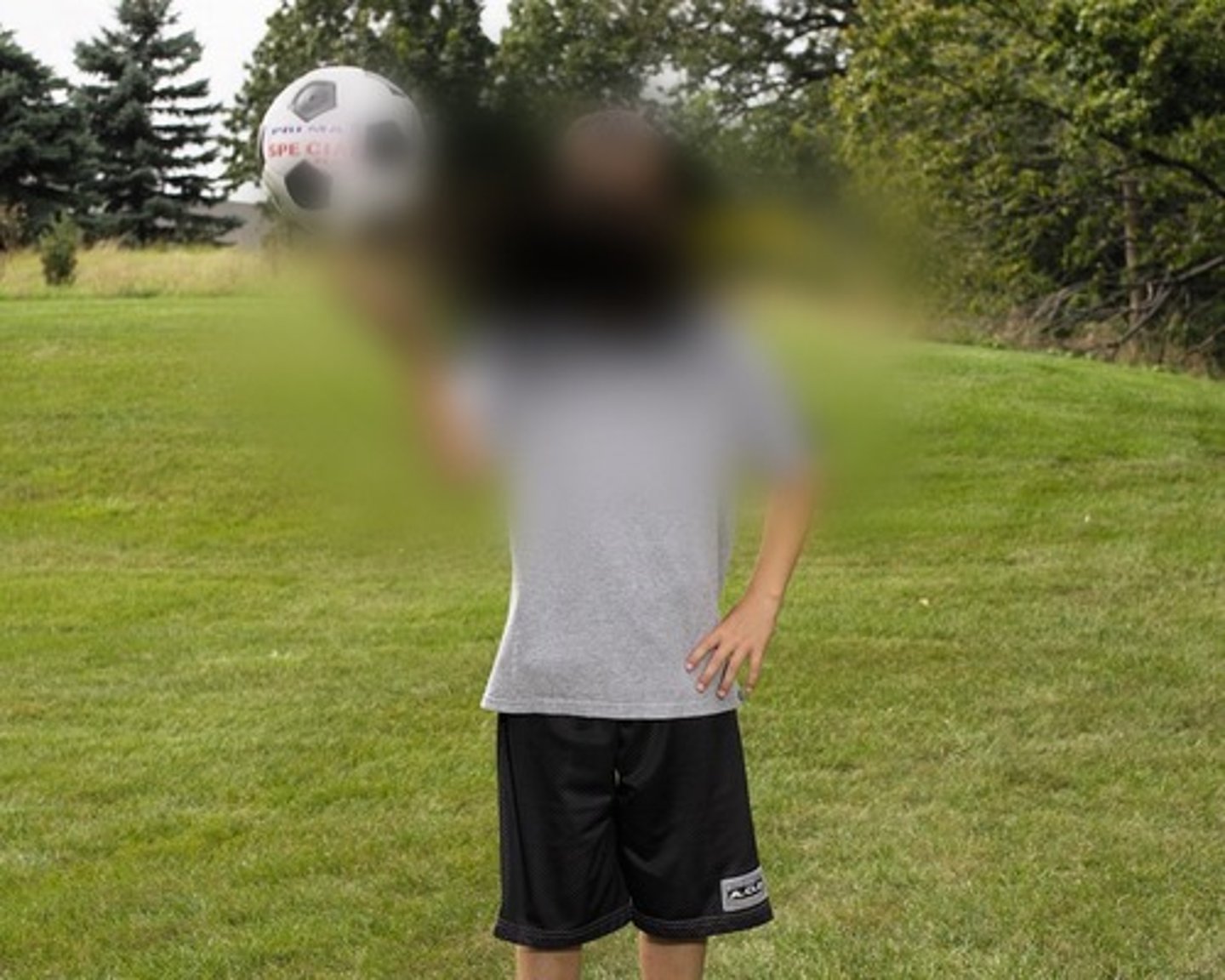
macular degeneration
deterioration of the macula of the retina, which corresponds to the focal center of the visual field
nutritional needs
- appropriate caloric intake based on activity
- restriction of fats, sodium
- adequate vitamin C & D, calcium, zinc
- fluids and fiber increased
- elder have a decrease in thirst drive -> dehydration
- good nutrition can contribute to a healthy immune system and an increased quality of life
rest and sleep
- stage 1 NREM is longer (difficulty falling/staying asleep)
- stage 3 deep sleep is decreased (insomnia -> risk of falls and cognitive impairment)
- REM sleep is decreased
- need at least 7-8 hours
delirium
decreased clarity of awareness of the environment
- direct physiological consequence of a general medical condition
- reversible
sundown syndrome
increase in confusion and agitation that occurs at the end of the day
dementia
symptoms involve a deterioration of mental functioning
- 20% of individuals over the age of 80 have dementia
- irreversible
alzheimer's disease
a common form of dementia that is characterized by a gradual deterioration of memory, reasoning, language, and eventually physical function
familial alzheimer's
- defect in chromosome 1, 14, and 21
- runs in families
- earlier onset
- progresses quicker
sporadic alzheimer's
- no family history
- appears after age 65
- r/t: high cholesterol and diabetes
wisdom
"expertise in the conduct and the meaning of life"
- Baltes & Smith
memory
- long term
- short term
reminiscence
informed sharing of bits and pieces of the past
disengagement theory
claims that elderly people systemically disengage from social roles due to the inevitability of death
- state of elderly depression
activity theory
successful aging occurs when older adults stay active and maintain social interaction
- same person as they were age 40/50
erikson's integrity vs self- despair: integrity
- coming to terms with life
- accepts decisions made
- accepts the course taken in life
- does not fear death
erikson's integrity vs self- despair: despair
- feeling of usefulness
- many regrets
- preoccupied with the thought of death
marriage
responsibility of parenthood and employment diminish
offspring
provides significant support
grandparents
most have special closeness to grandchildren
friends
provides for safety, support and companionship
pets
great companion
- loss of pet can cause DEEp grief
physical abuse
intentional infliction of pain, discomfort or injury
physical neglect
failure to fulfill caregiving obligations
- withholding meds, food, not taking them to doc appointments, etc
- most reported
emotional abuse
verbal assault and humiliation
sexual abuse
unwanted sexual contact of any kind
financial abuse
illegal exploitation of the elder's property or financial resources
- most reported
hoarding
- may be adaptive behavior, although usually regarded as a disagreeable, messy, unsafe characteristic of the elderly or signs of illness
- may be life long habit
- saving items fives the person a sense of security or a reminder of a happier past
health promotions: immunizations
- flu
- pneumonia
health promotions: safety
- falls are the leading cause of injury in the older adult
- motor vehicle accidents
health promotion: special considerations
- assess for syndrome of fragility
- home security, solicitors take advantage
common health problems: polypharmaciy
- comorbidities resulting in many pills
common health problems: failure to thrive
a decline in physical &cognitive function that occurs without explanation
- weight loss, social withdrawal, depression
gariatric care management
elderly who live in their home
assisted living
available for frail or who have physical limitations
- the resident has the independence to come and go
- not confined to one room
extended care facility
increase social withdrawal
- 5% of Americans >65 are living in nursing homes
 Note
Note  Flashcards (53)