fishing for better incentives
 Call Kai
 Learn
Learn Practice Test
 Spaced Repetition
 Match
Match Flashcards
 Knowt Play
1/13

There's no tags or description
Looks like no tags are added yet.
Name | Mastery | Learn | Test | Matching | Spaced | Call with Kai |
|---|
No analytics yet
Send a link to your students to track their progress
14 Terms
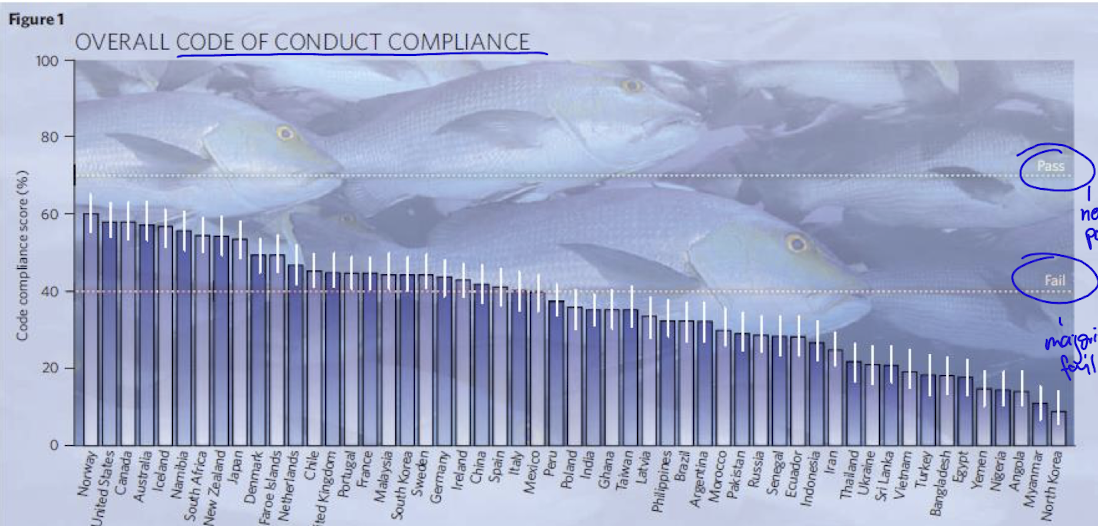
fisheries code of conduct compliance
no countries pass, most of them fail
predicted that large piscivorous fish will be gone before 2048 or earlier
correlations with transparency international corruption index, world bank governance index, UN human development index, and yale environmental performance index
considerations when managing fisheries
depends on characteristics of fish → biology, status of stocks, history of extraction, gear type, commercial vs subsistence, and other recreations or non-extractive values
many failures, some successes
management types
harvest quotas, seasonal closures, ex-vessel tax, regulated entry, marine reserves, individual transferable quotas, regulated efficiency, effort tax
individual transferable quotas (ITQ)
regulator sells a total allowable catch (TAC) based in science
distributes these quotas, typically at auction or for sale at fixed price (bidding occurs until the cost equals the price - economic rent) so incentive to not overharvest as rent goes down
quota rights can be traded, rights based management
some systems buy the right to harvest in perpetuity, as % of TAC
(work similar to marketable pollution permits, so could also do it limited entry themed - restricts access or entry)
efficiency of ITQs
need only to enforce effort based limits rather than catch limits with measuring or weighing
so for example a certificate of operation is all that you would perhaps need and just ID vessels
when catch based it is a whole other problem
slows decline of fisheries and in some cases actually stops it
ITQ example alaskan halibut
management works with US and BC
prior to management plan, the season only lasted a few days until TAC and it was such bad quality, collapsing
adopted ITQ in 1995, only active fishers can buy quotas, new entrants can sublet
season is now 8 months may - nov, profits are steady and fish are better quality
1976 magnuson act and law of the the sea
before act, coastal nations did not have rights to marine resources in high seas - constant conflict
granted rights to coastal nations to marine resources 200 miles from shore
ITQs and participation outside this range needed
ITQs problems
allocation of quotas, reputable?, high-grading incentive (throw back the fish you dont want = overharvest), enforcement and administrative costs, most quotas held by large firms, “privatizing the ocean”?, how to set TAC in the first place?
don’t always prevent overfishing, success may not be universal (depends on governance and diversity), social issues and impacts of reduced local investment/involvement
no one size fits all approach possible
the cobra effect
when an attempted solution to a problem actually makes the problem worse, unintended consequences
how do you ensure that what you want actually happens?
cobra effect example
british were concerned about cobras in dehli so they offered a bounty for every dead cobra
so then people began breeding cobras, city officials stopped the program, the breeders released their cobras and as a result the situation worsened
cobra effect rat example
vietnam under french rule, france built traditional infrastructure - sewers
but these were rat highways resulting in a massive increase in number of rats
so bounty program for each rat tail, but then they noticed rats without tails → people had rat farms and would raise them cut off tails and release them so they could keep procreating
cobra effect traffic example
in colombia license plates were rationed, 1-4 not on friday, 5-8 not on monday
but a black market developed for fake plates, or people started buying more than one car to compensate
total driving went up!
cobra effect UN example
global carbon reduction program, the worse the GHGs the greater the credit recieved
companies started producing more GHG producing products because it meant they got more credits and thus worsened the problem
endangered species act in US example
before a species is listed, there is a review process
land is listed as critical habitat
so during this period there is an opportunity to exploit the resource without repercussion, landowners offset the act by developing before the species is listed
monthly construction permits increased !
Explore top notes

Explore top flashcards
