AP Bio Unit 7 - Natural Selection and Evolution
 Call Kai
 Learn
Learn Practice Test
 Spaced Repetition
 Match
Match Flashcards
 Knowt Play
1/46

There's no tags or description
Looks like no tags are added yet.
Name | Mastery | Learn | Test | Matching | Spaced | Call with Kai |
|---|
No analytics yet
Send a link to your students to track their progress
47 Terms
Species
A group of similar organisms that can breed and produce fertile offspring.
Population
A group of individuals that belong to the same species and live in the same area
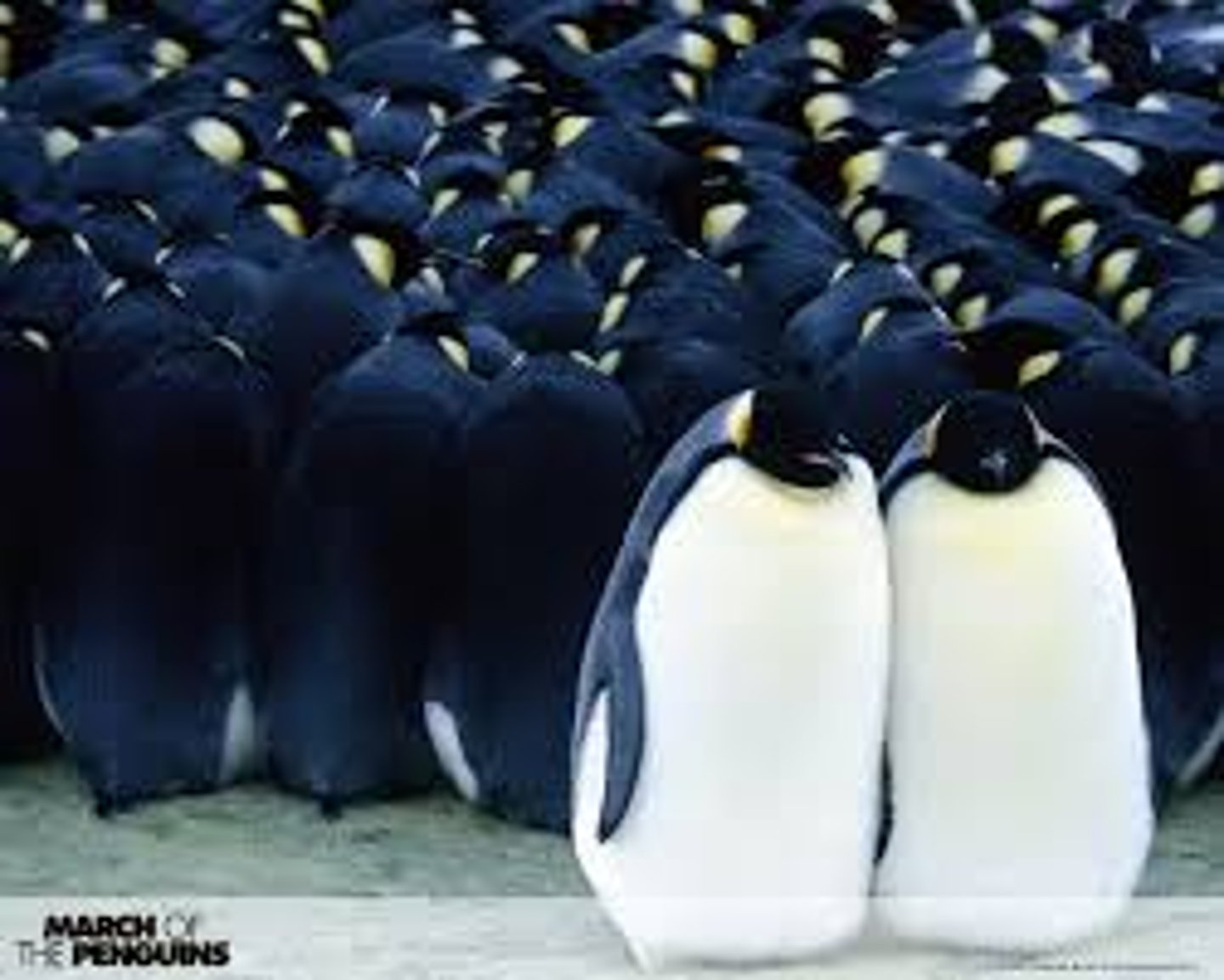
Community
A group of interdependent organisms inhabiting the same region and interacting with each other
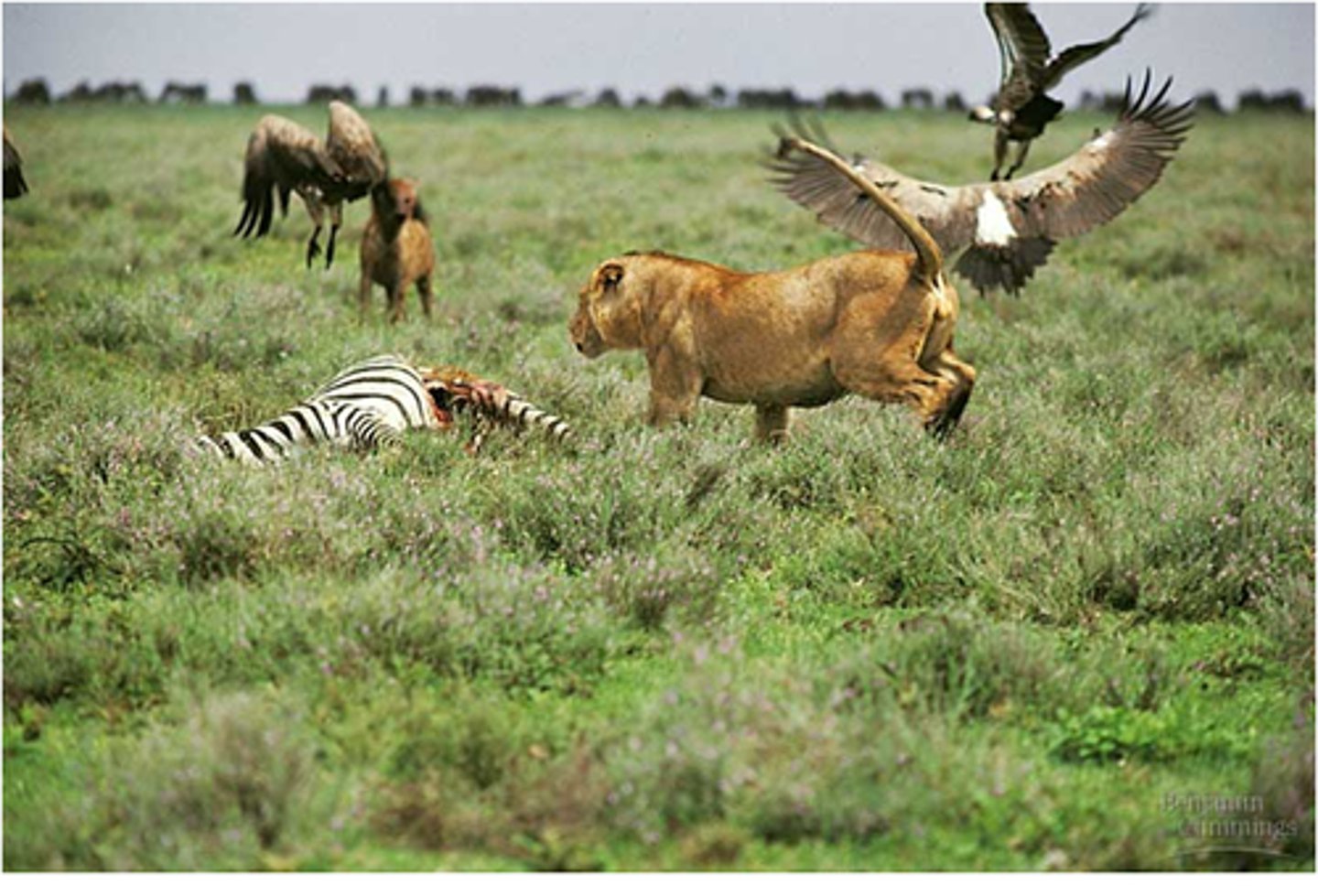
Natural selection
The principle that, among the range of inherited trait variations, those contributing to reproduction and survival will most likely be passed on to succeeding generations
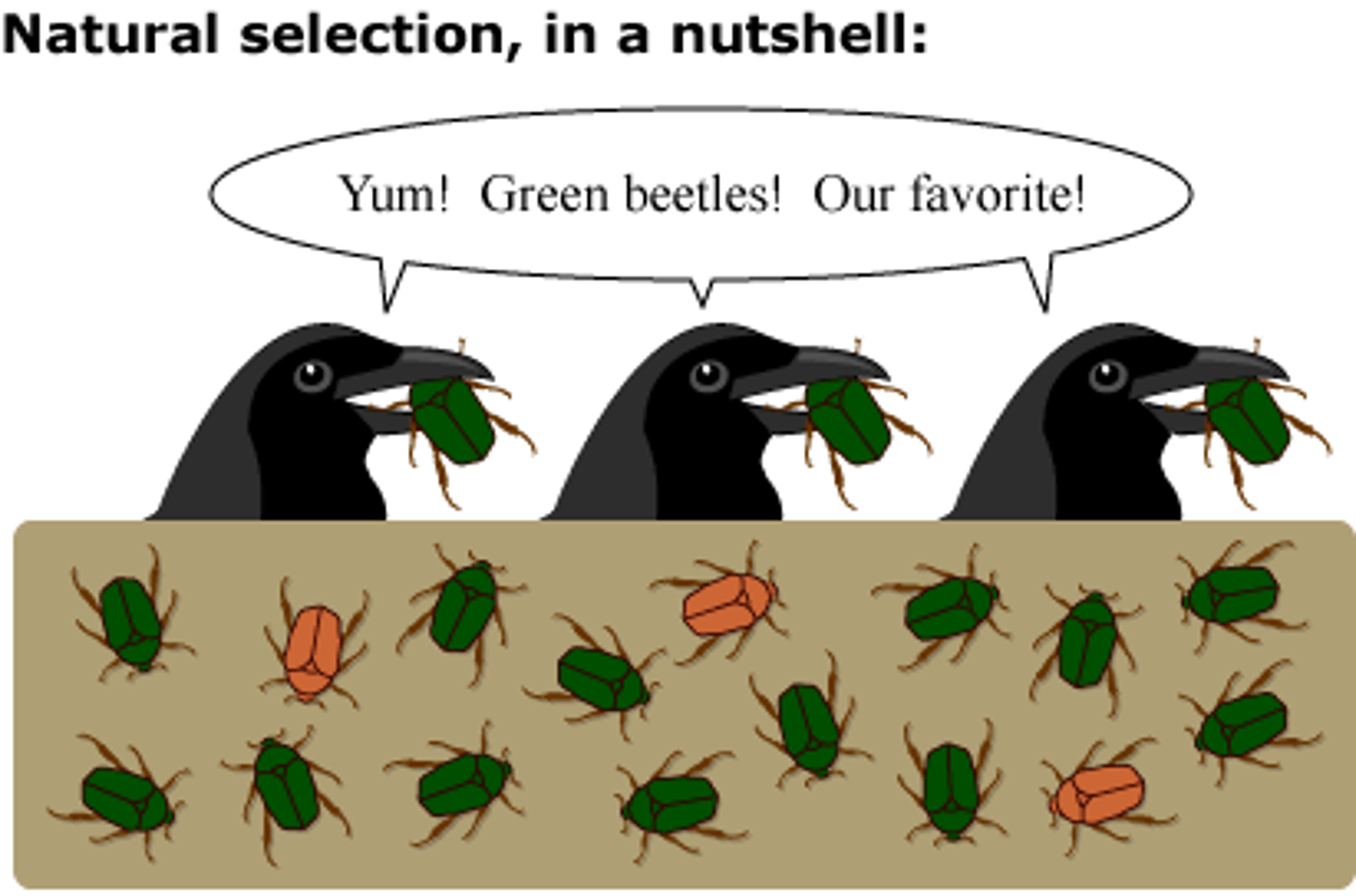
Evolution
Change in the genetic characteristics of a population from generation to generation
Adaptation
A trait that helps an organism survive and reproduce
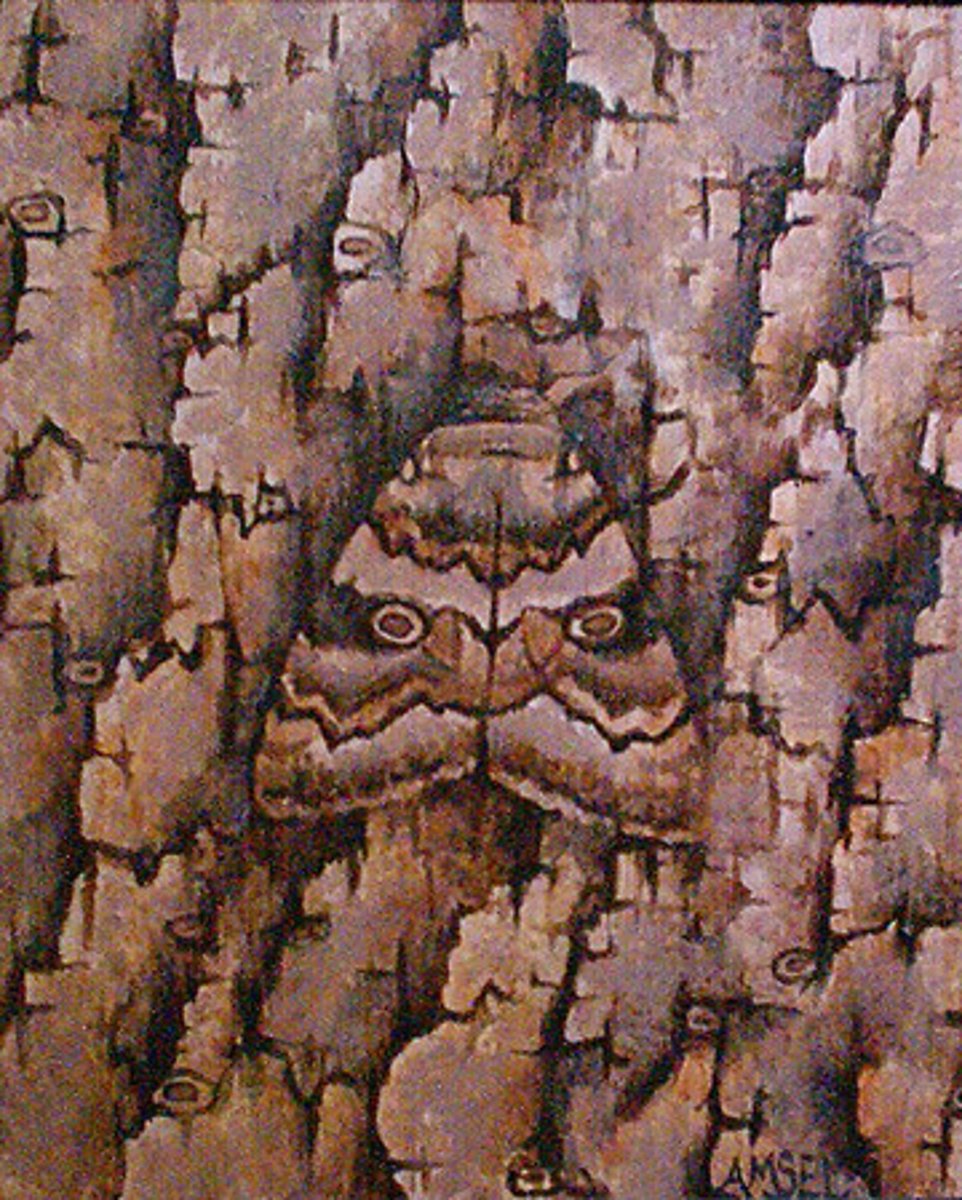
Fitness
Ability of an organism to survive and reproduce in its environment
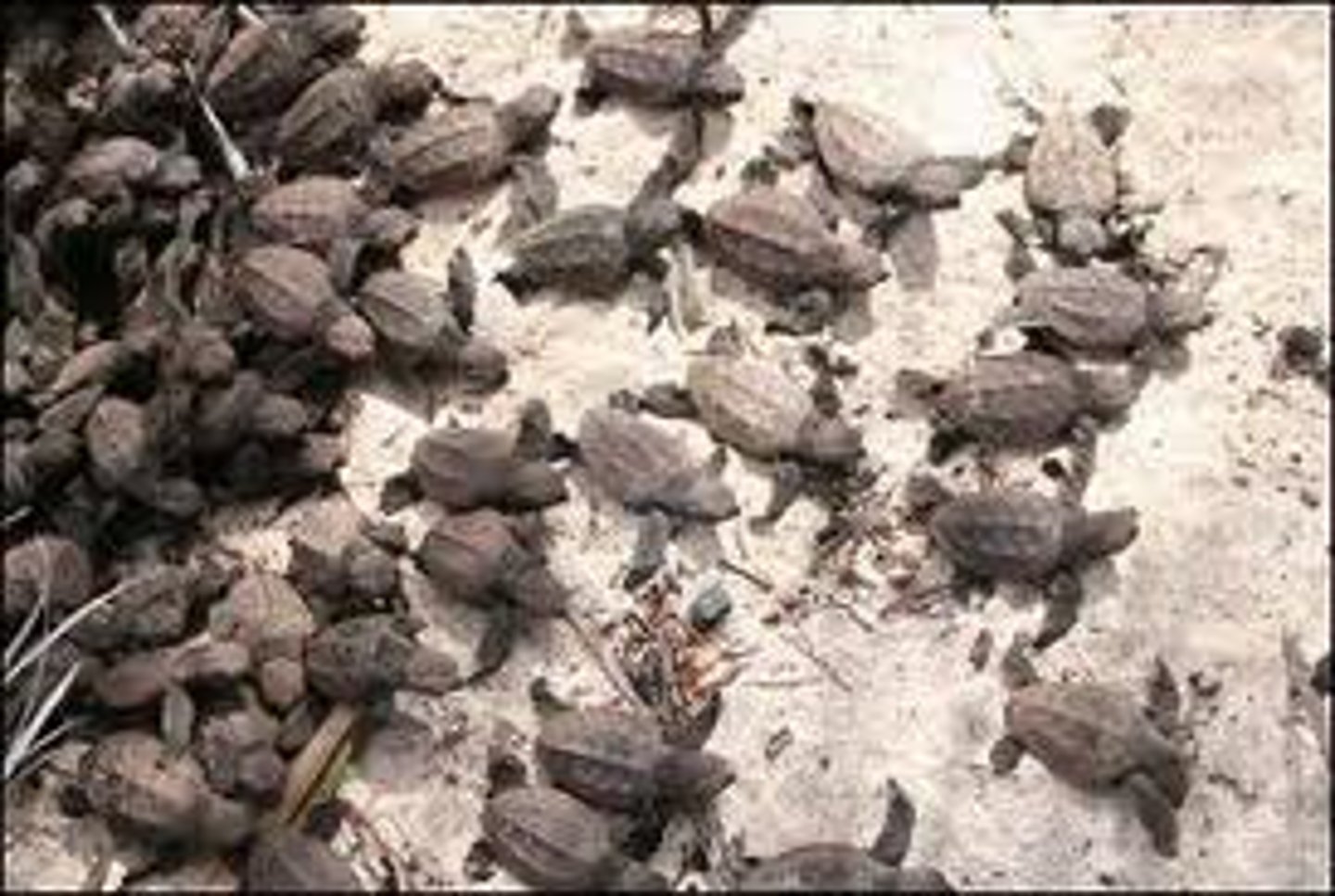
Overproduction
Organisms produce more offspring than can survive
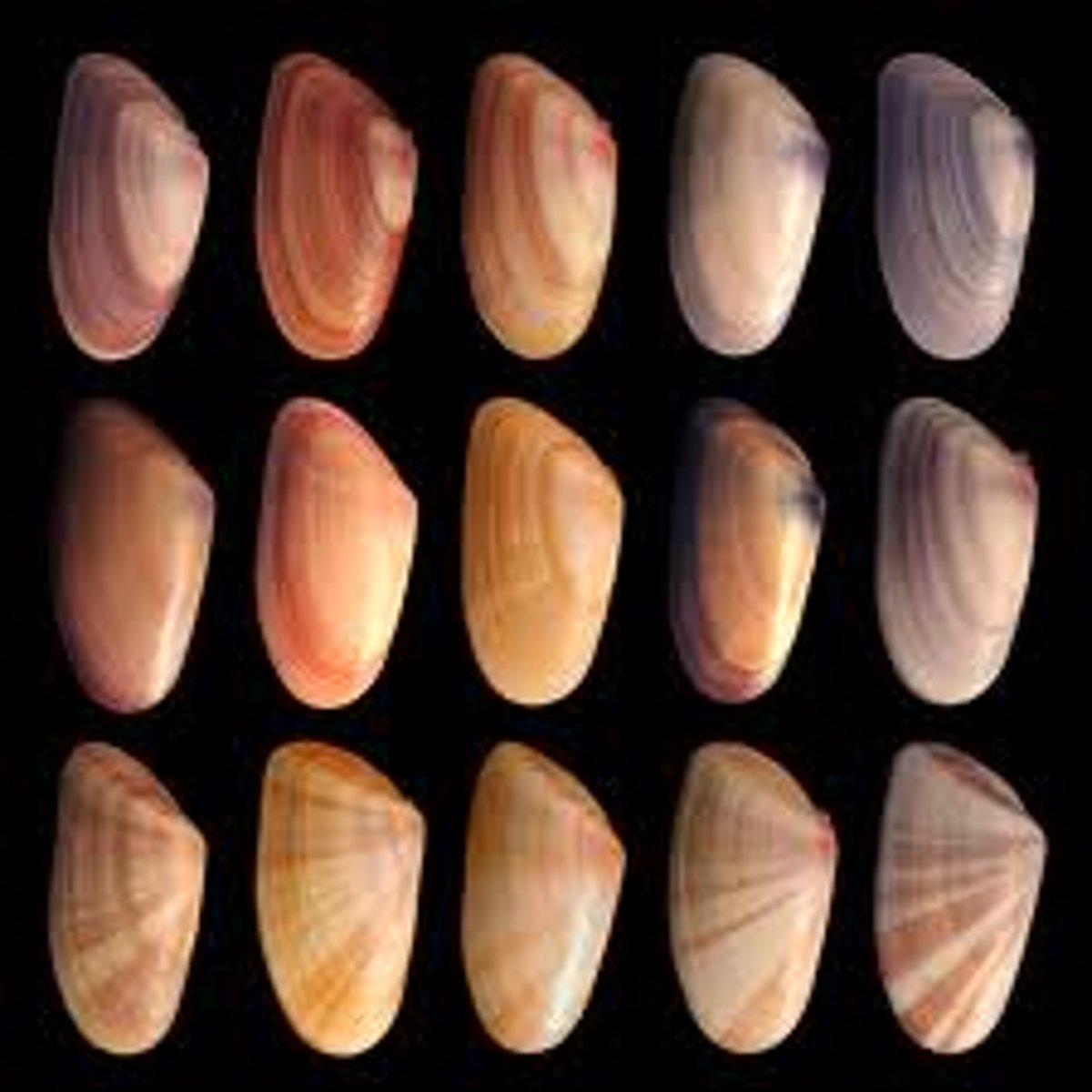
Variation
Any difference between individuals of the same species.
Sexual reproduction
A reproductive process that involves two parents that combine their genetic material to produce a new organism, which differs from both parents
Competition
the struggle between organisms to survive in a habitat with limited resources
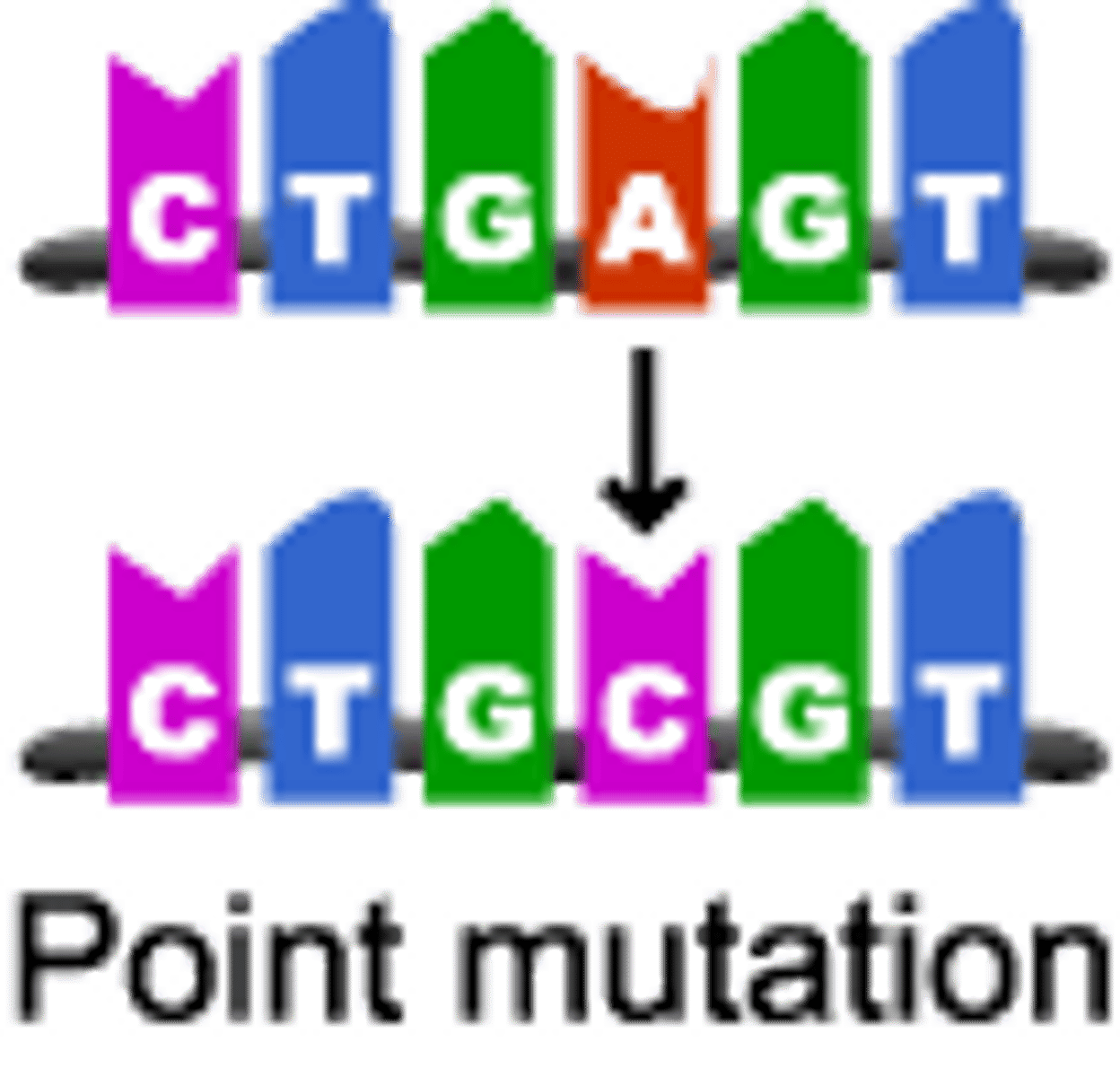
Mutation
A change in the DNA sequence of a gene
Artificial selection
Breeding organisms with specific traits in order to produce offspring with identical traits.
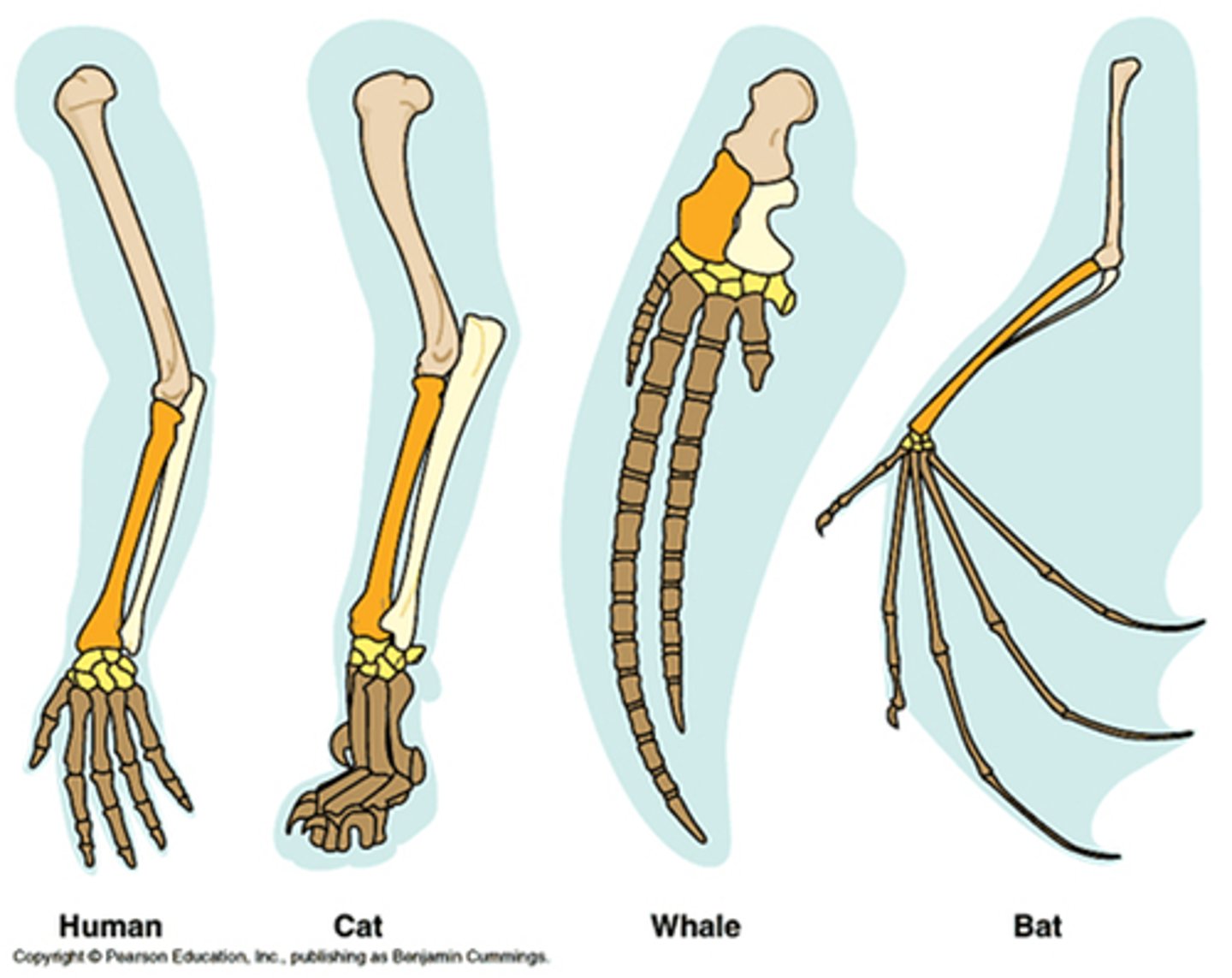
Homologous structures
Structures in different species that are similar because of common ancestry.
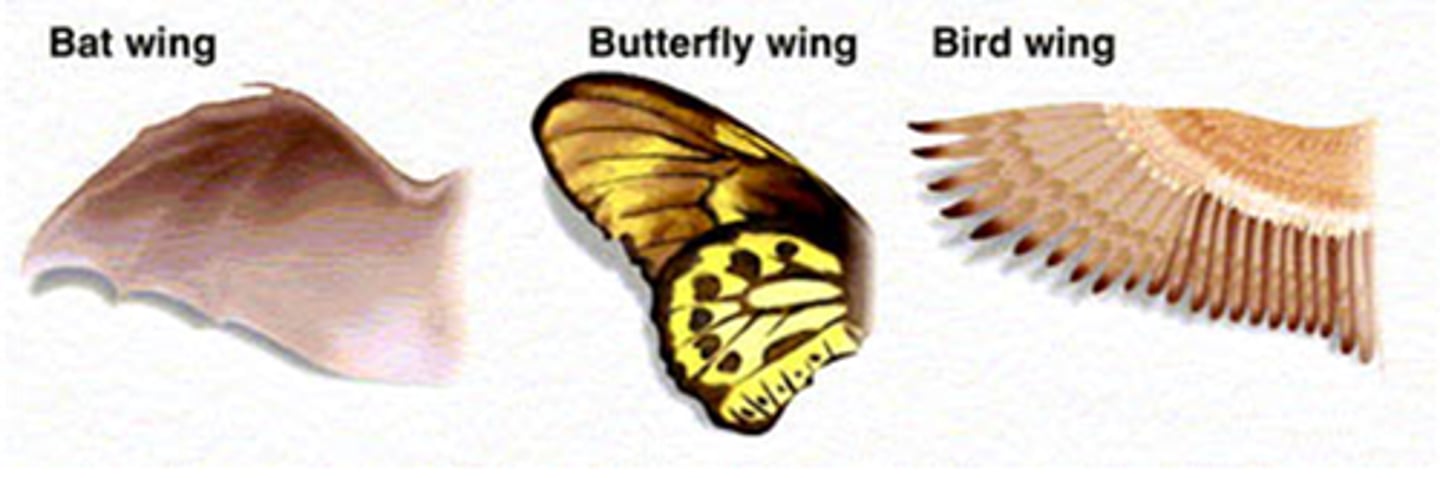
Analogous structures
Body parts that share a common function, but not structure
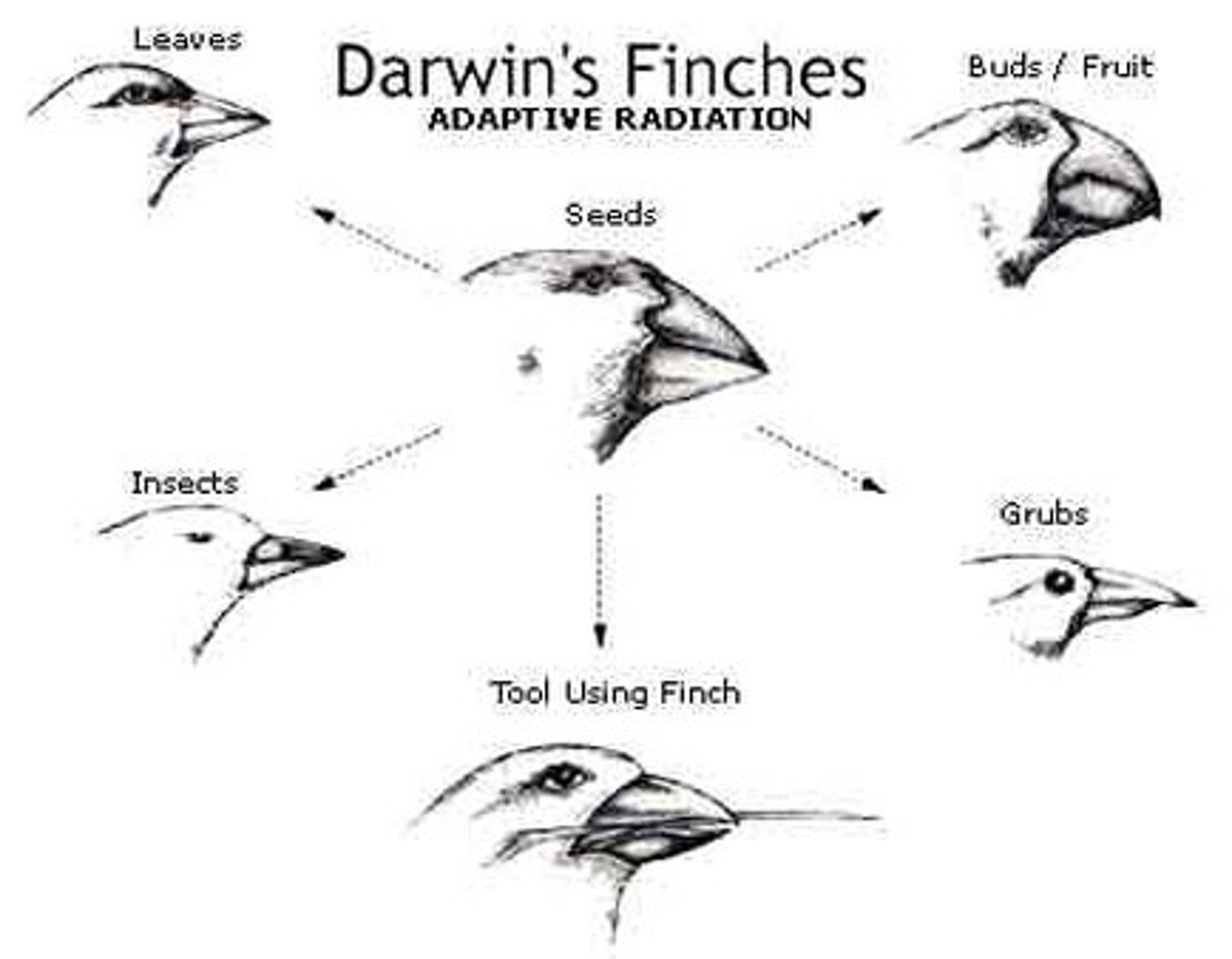
Divergent evolution
when two or more species sharing a common ancestor become more different over time
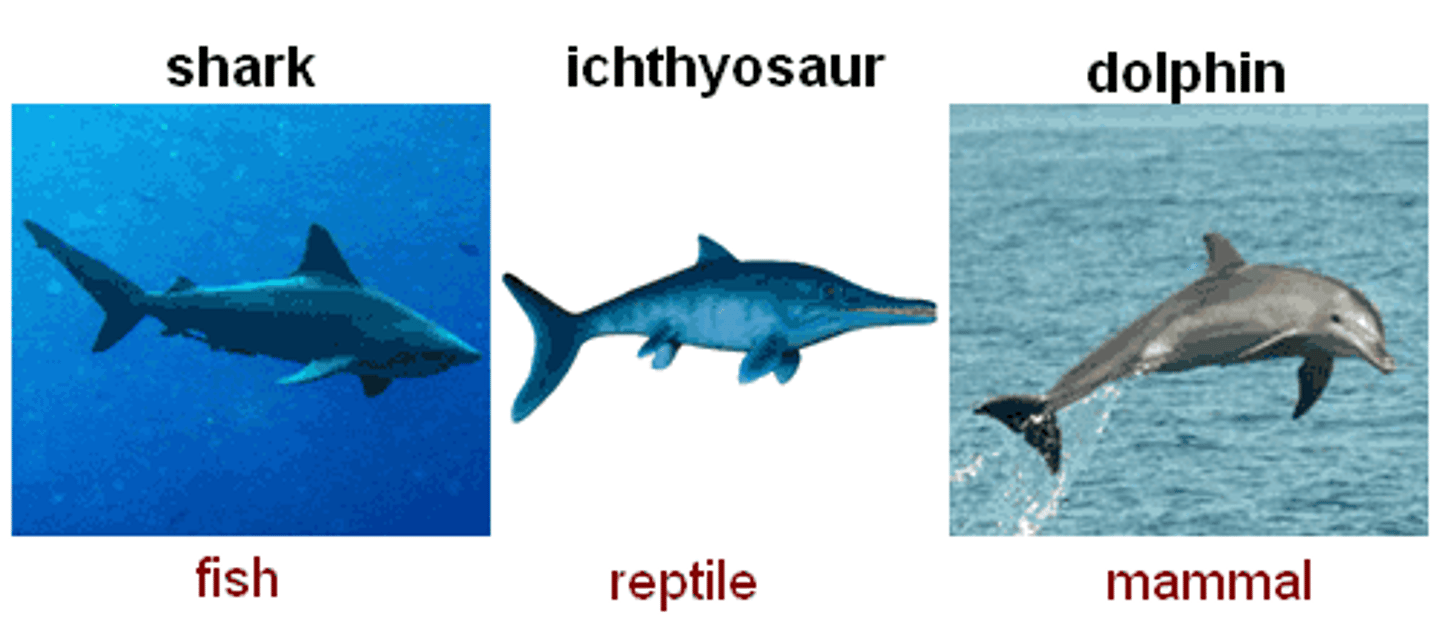
Convergent evolution
Process by which unrelated organisms independently evolve similarities when adapting to similar environments
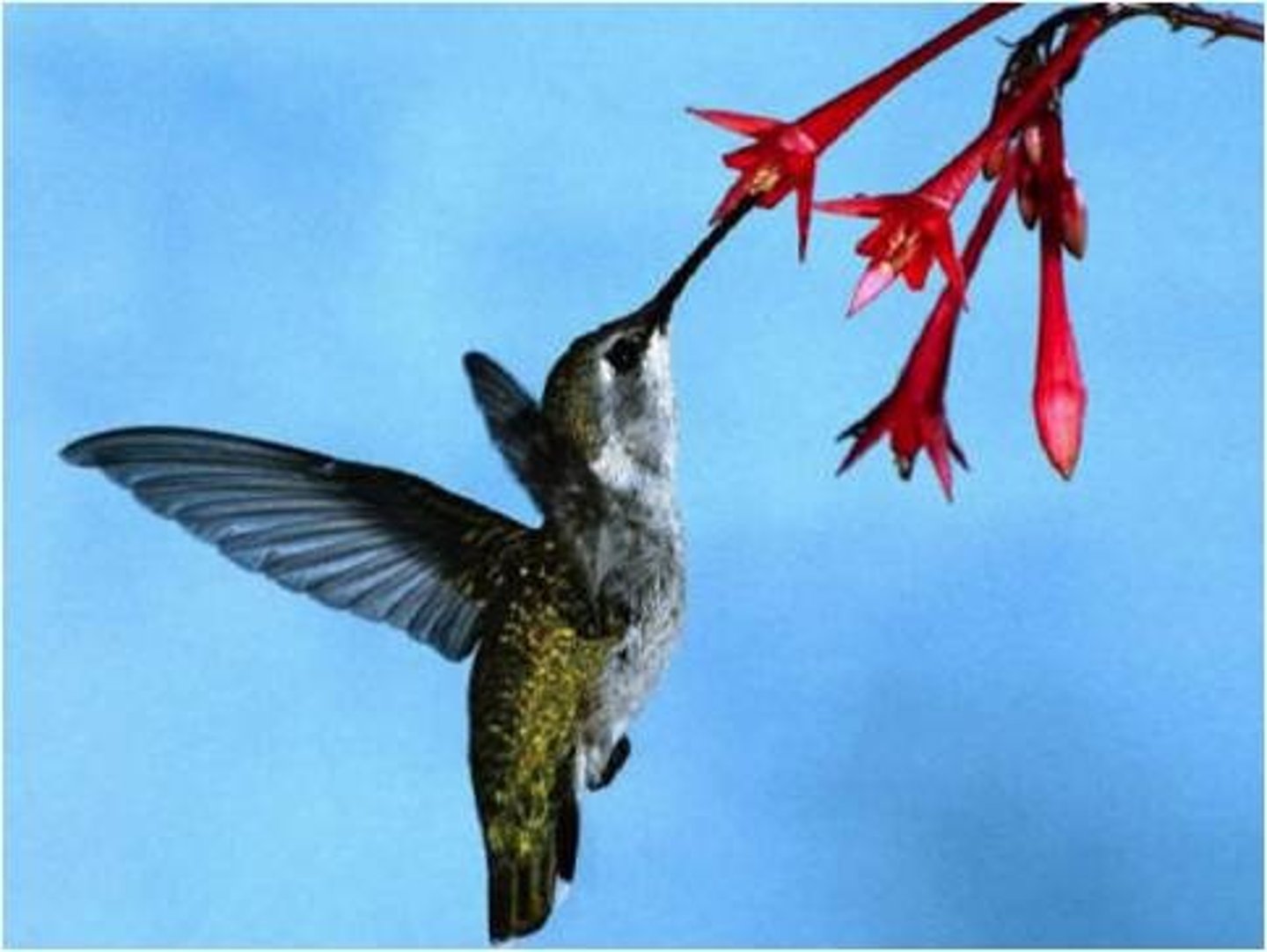
Coevolution
Process by which two species evolve in response to changes in each other
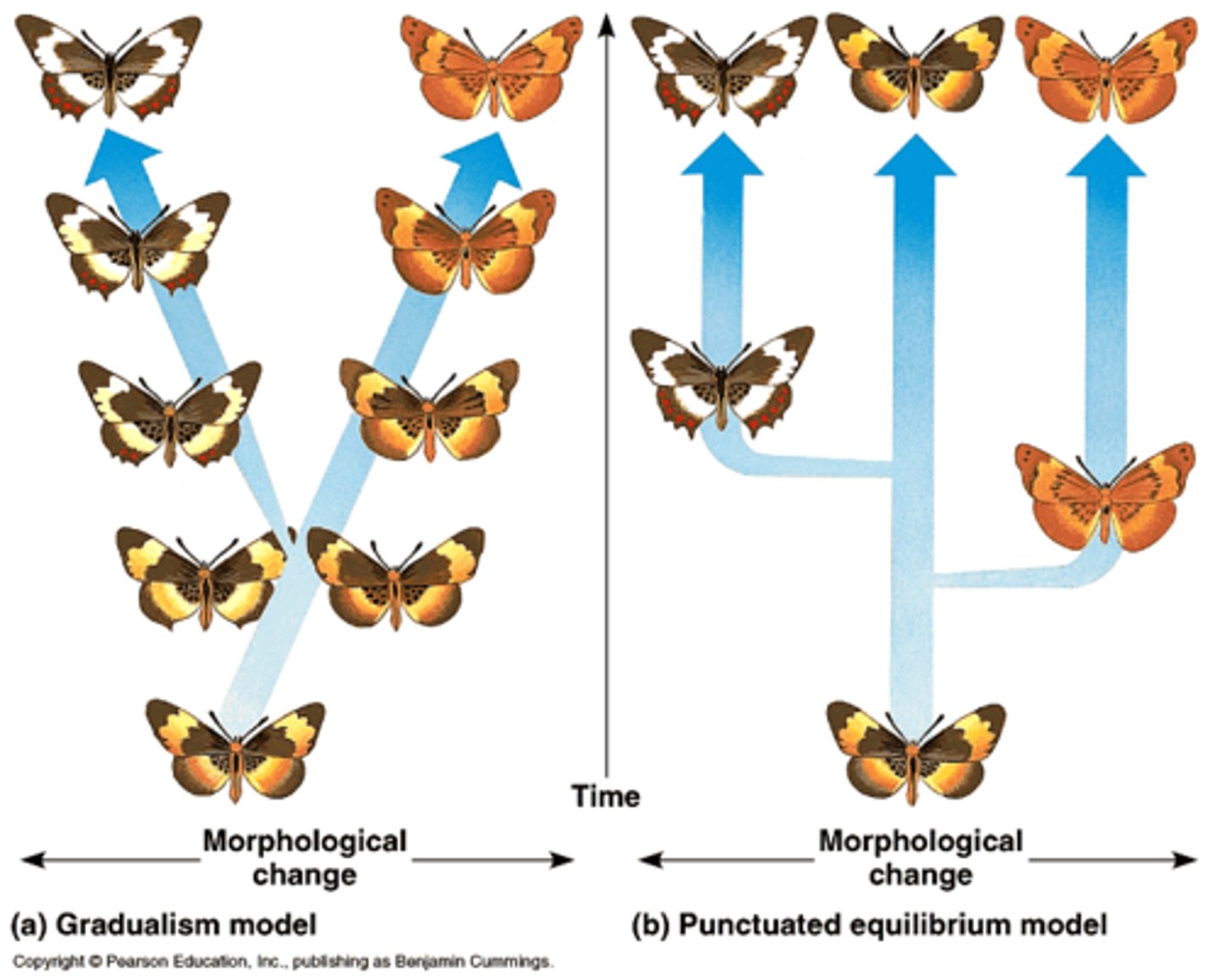
Punctuated equilibrium
Pattern of evolution in which long stable periods are interrupted by brief periods of more rapid change
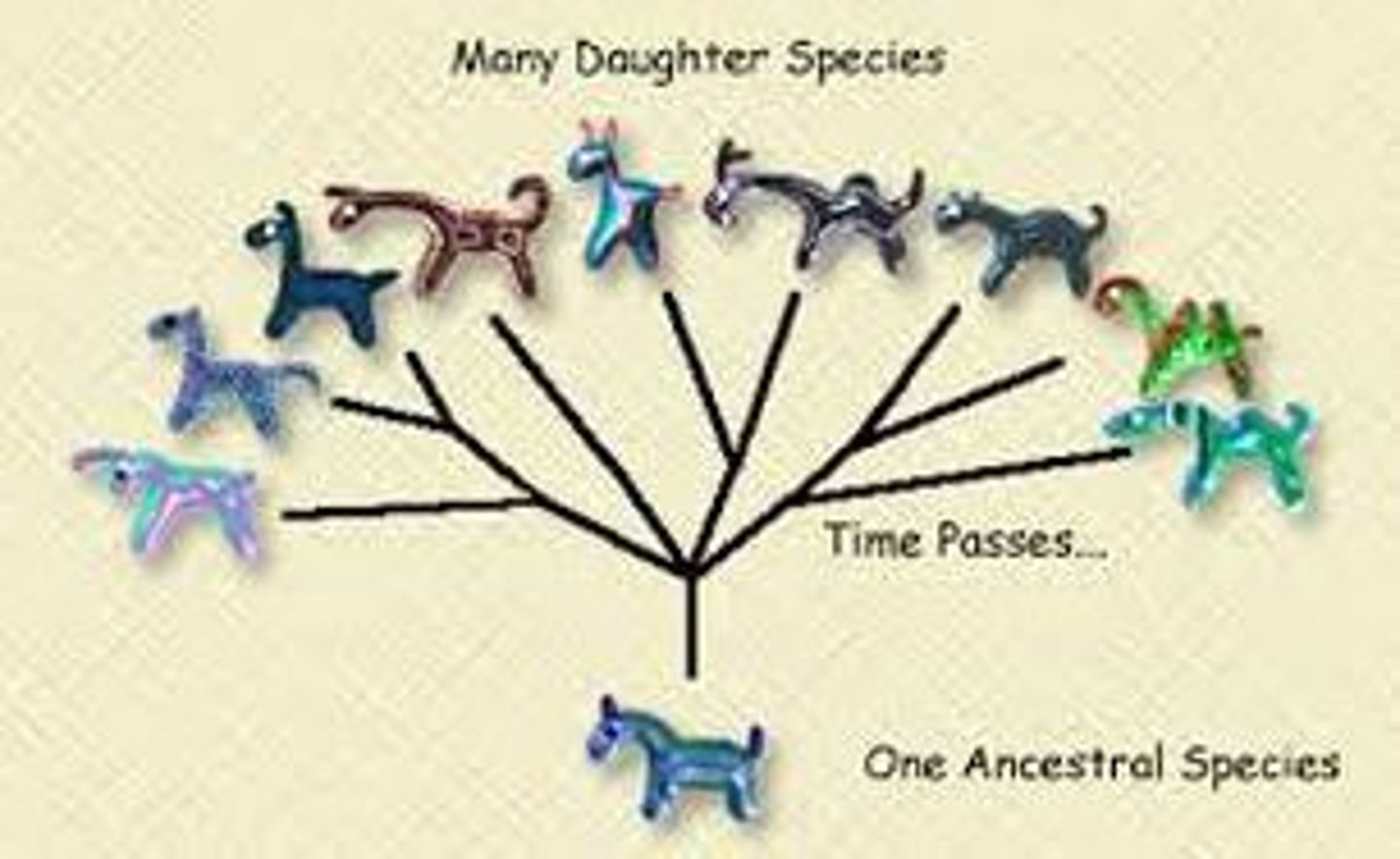
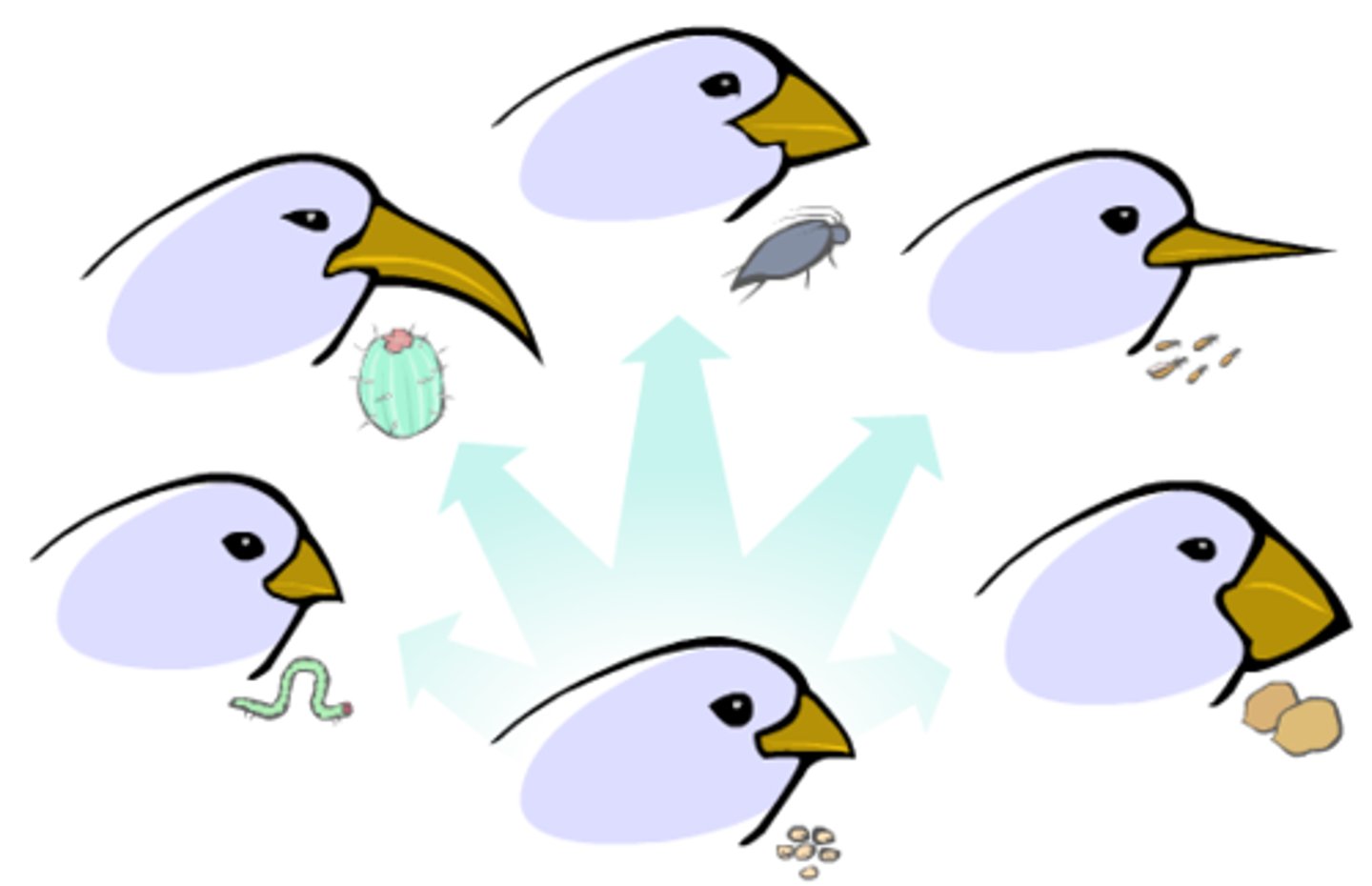
Adaptive radiation
An evolutionary pattern in which many species evolve from a single ancestral species
Allele
Different forms of a gene
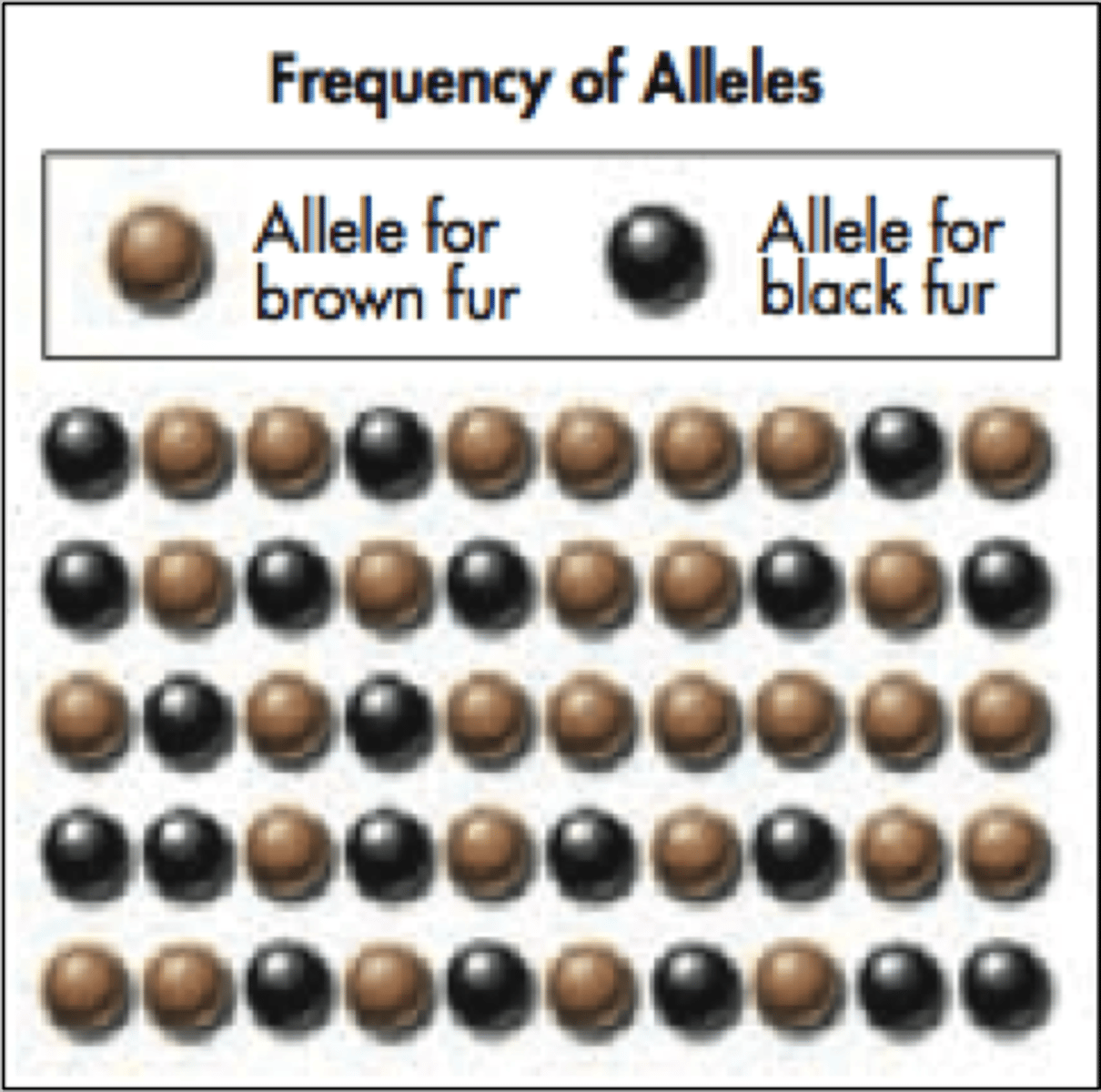
Gene pool
All the genes, including all the different alleles for each gene, that are present in a population at any one time
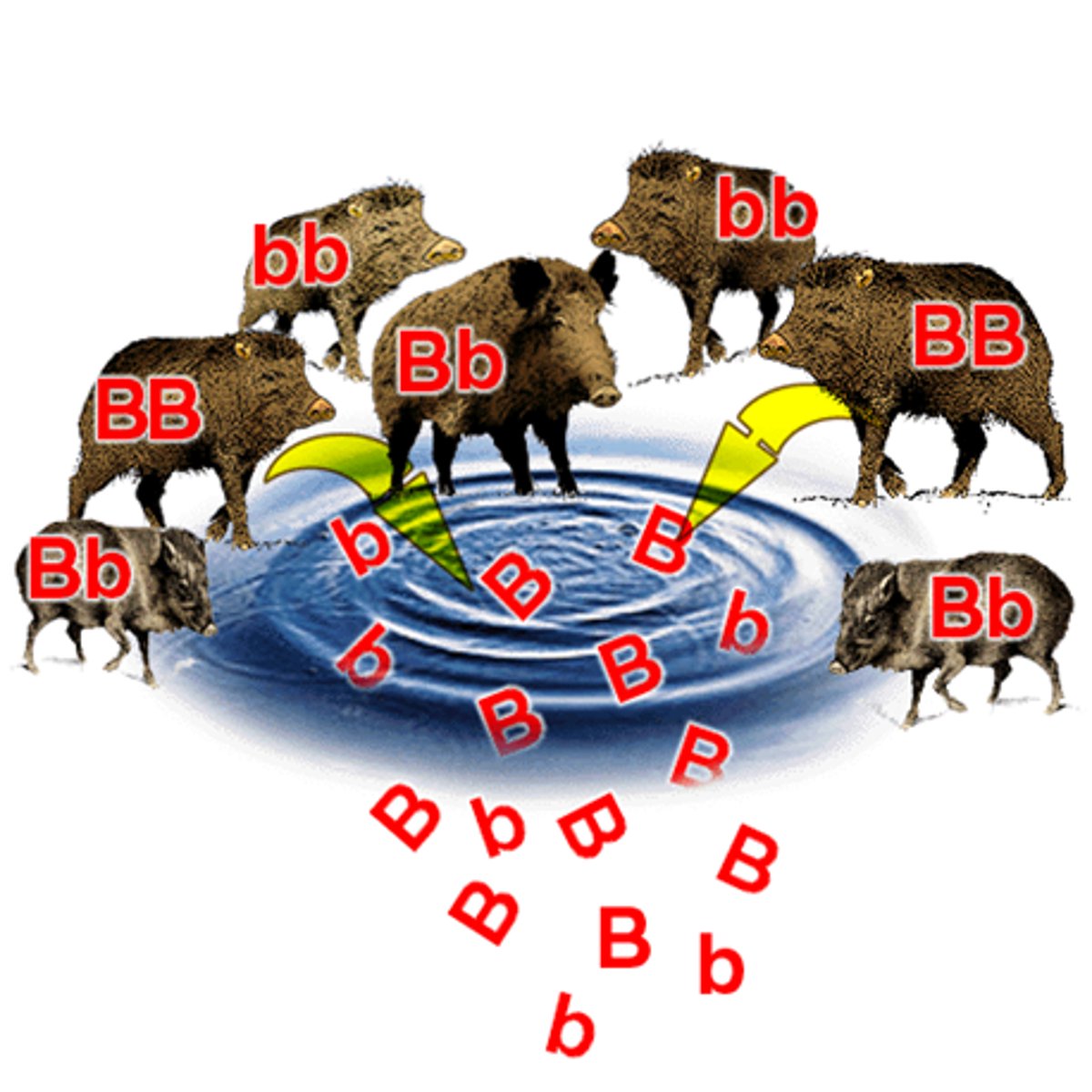
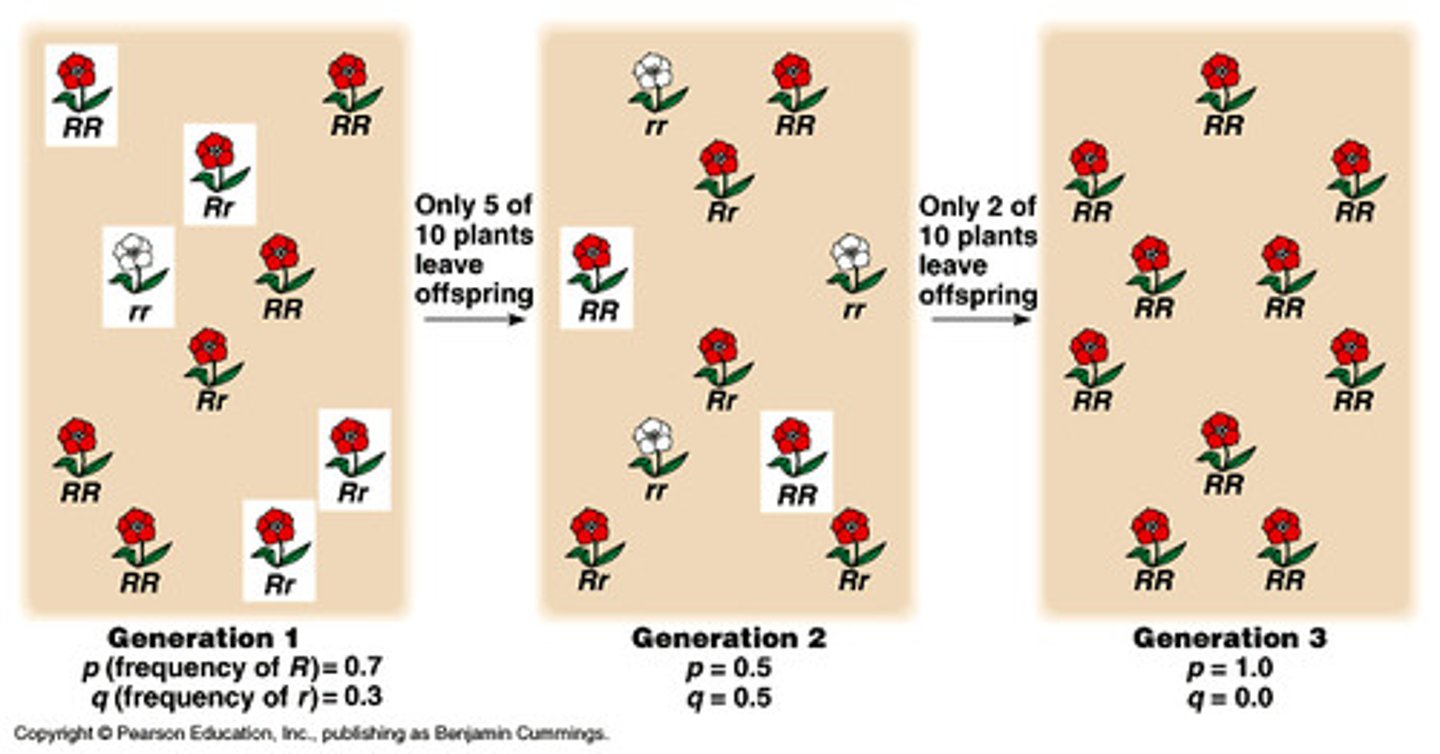
Genetic drift
A change in the allele frequency of a population as a result of chance events rather than natural selection.
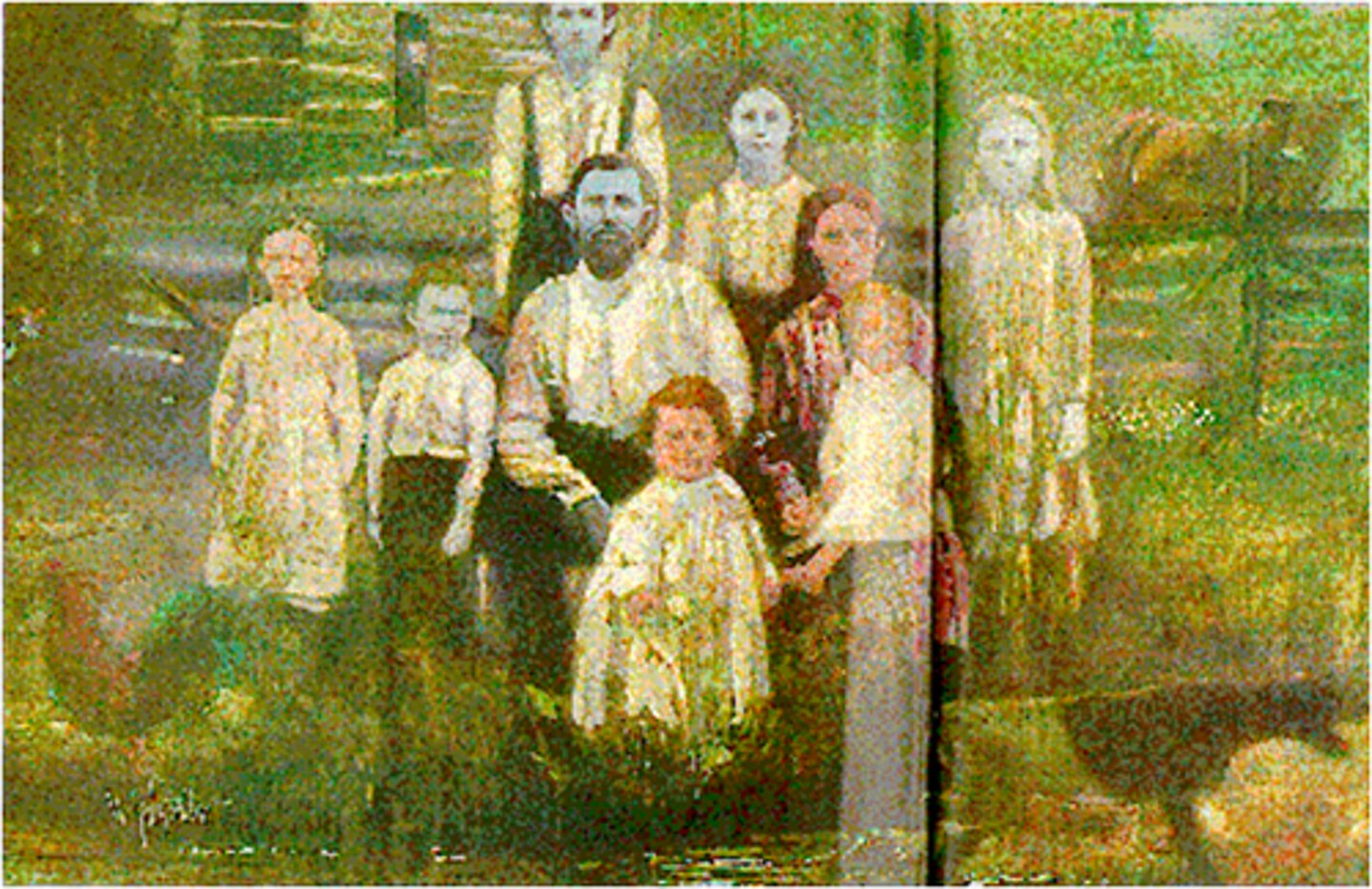
Founder effect
change in allele frequencies as a result of the migration of a small subgroup of a population
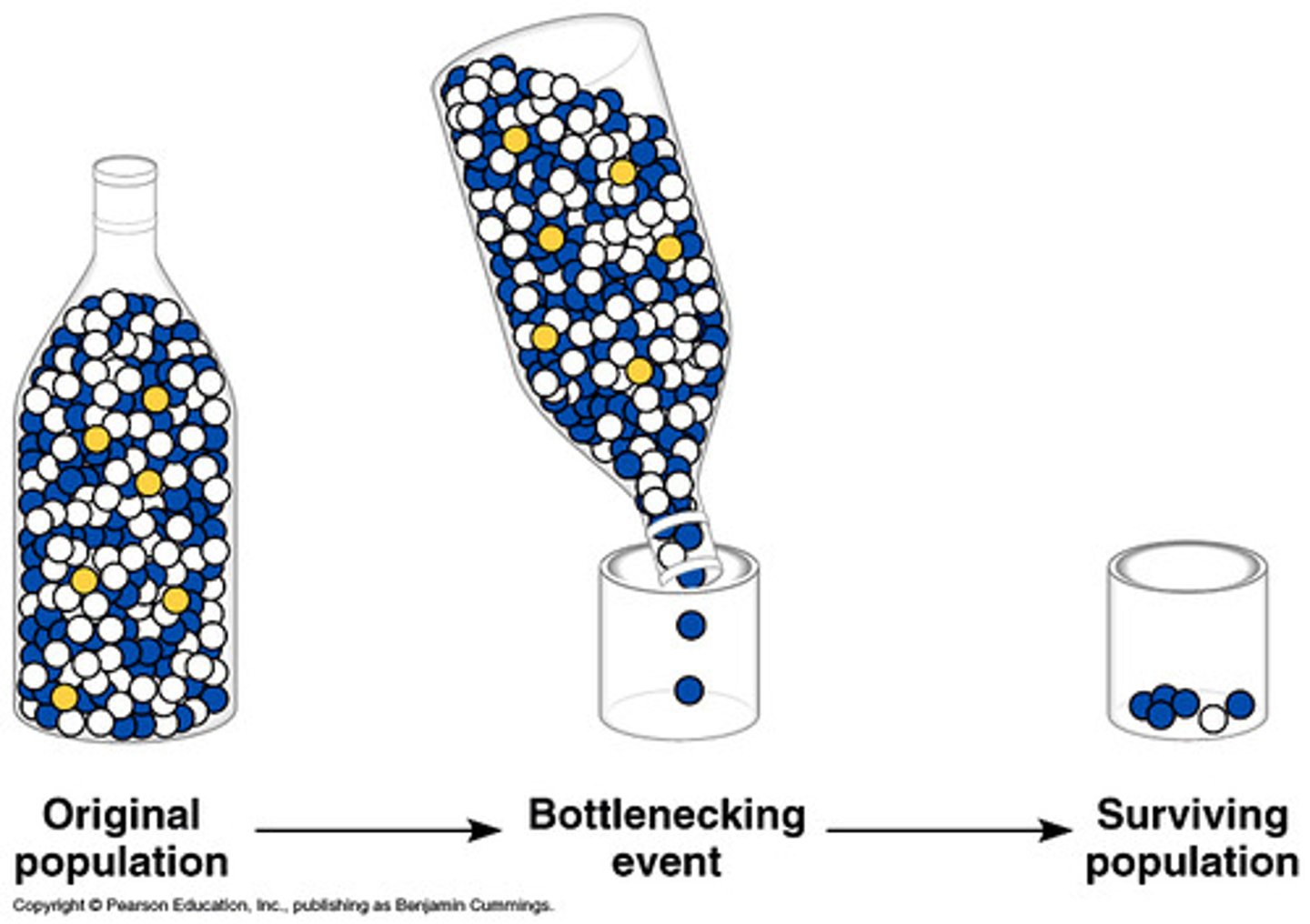
Bottleneck effect
A change in allele frequency following a dramatic reduction in the size of a population
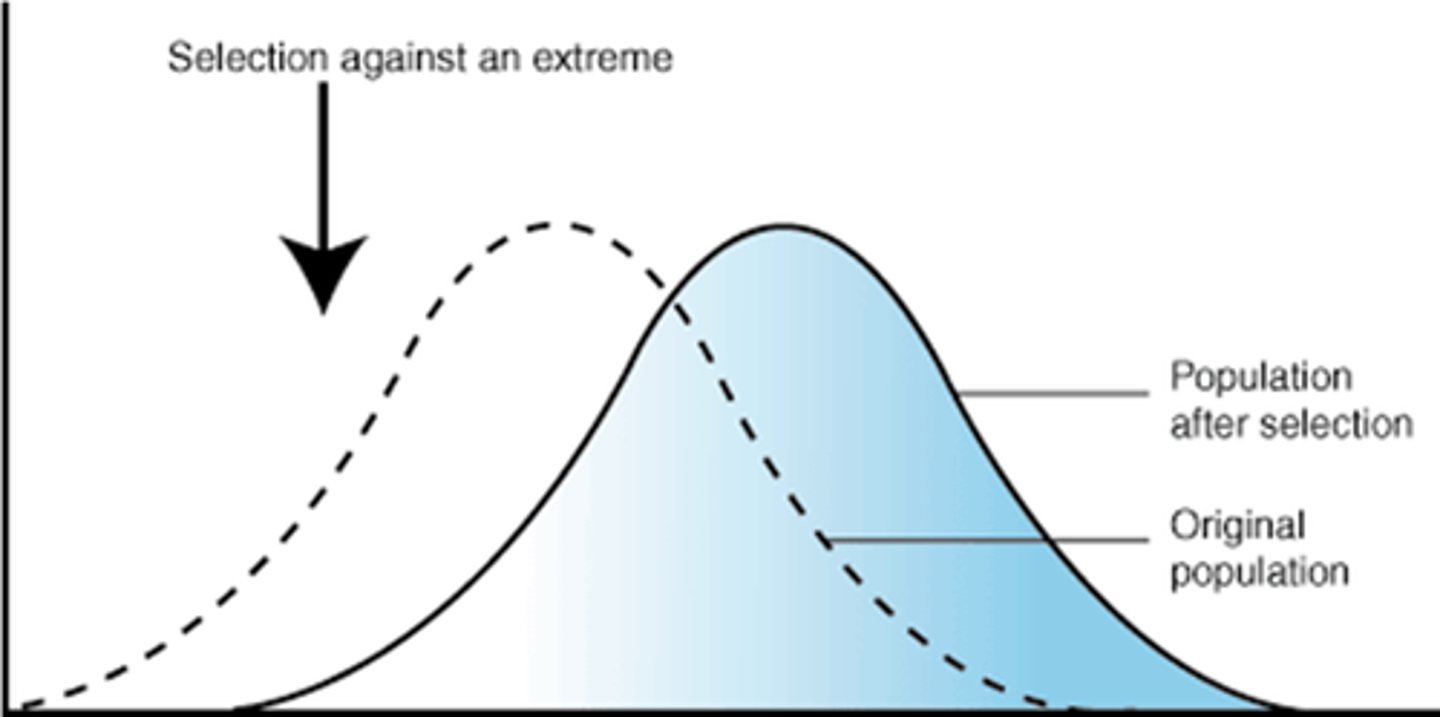
Directional selection
Form of natural selection in which the entire curve moves; occurs when individuals at one end of a distribution curve have higher fitness than individuals in the middle or at the other end of the curve
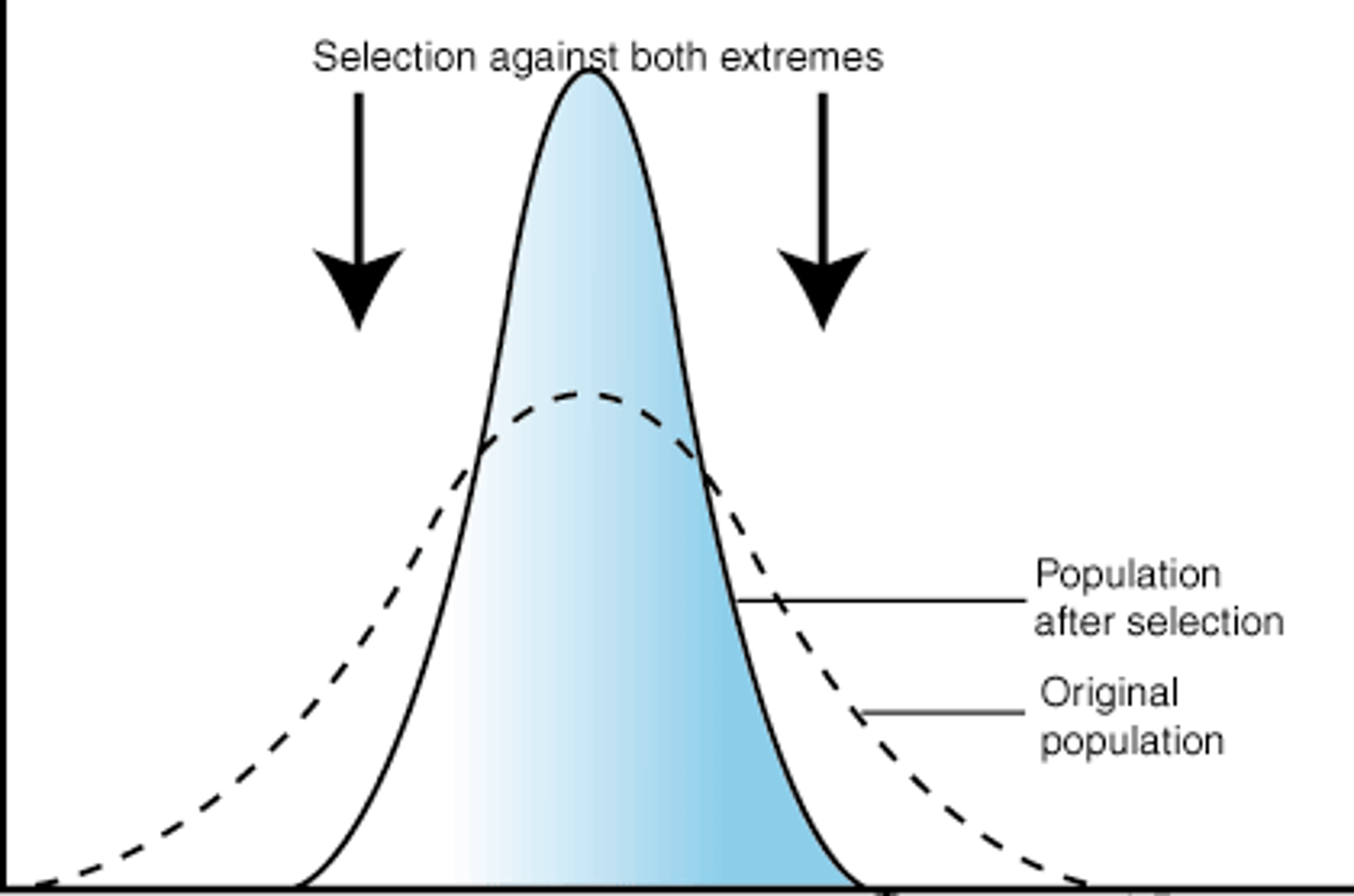
Stabilizing selection
Natural selection that favors intermediate variants by acting against extreme phenotypes
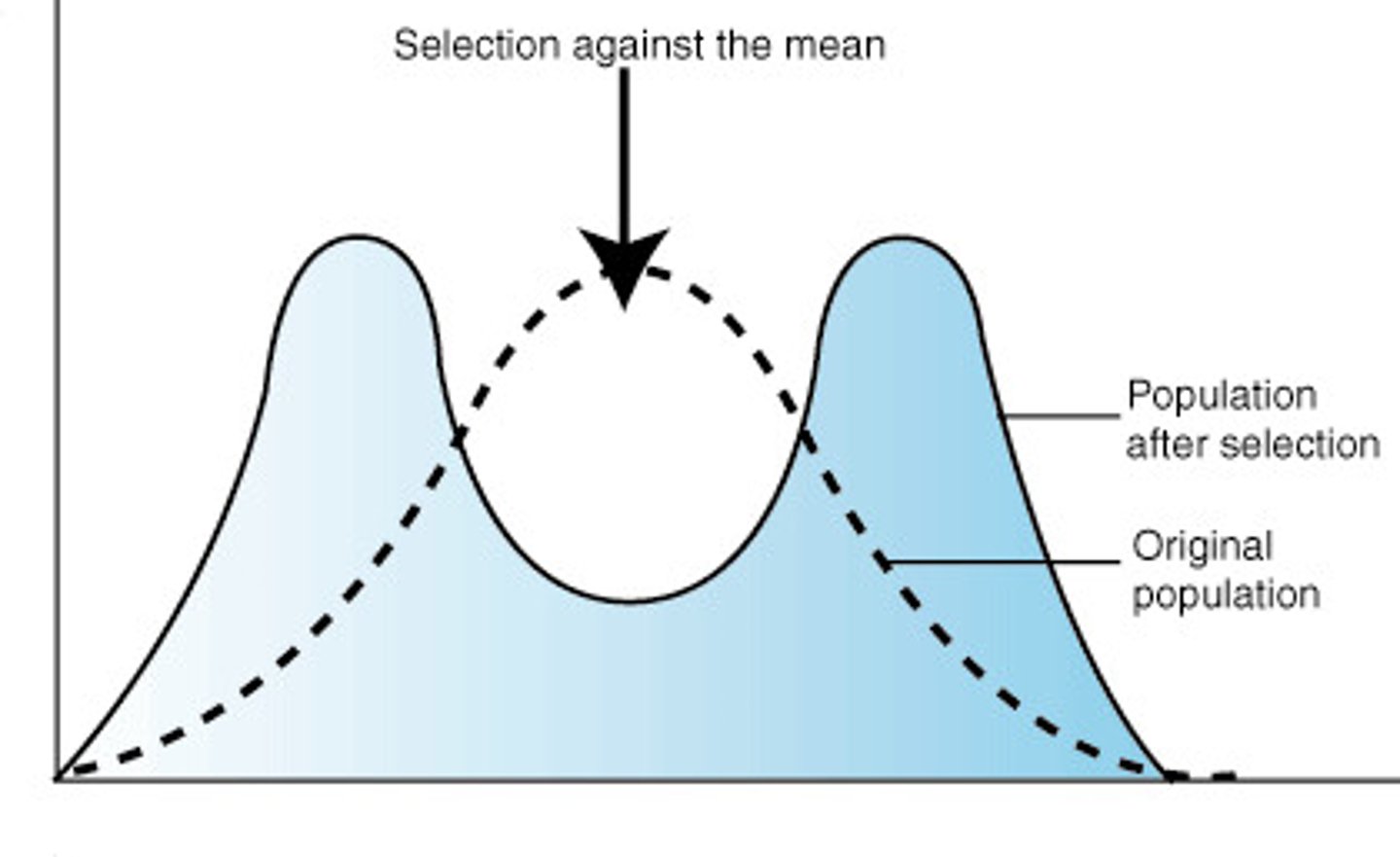
Disruptive selection
form of natural selection in which a single curve splits into two; occurs when individuals at the upper and lower ends of a distribution curve have higher fitness than individuals near the middle
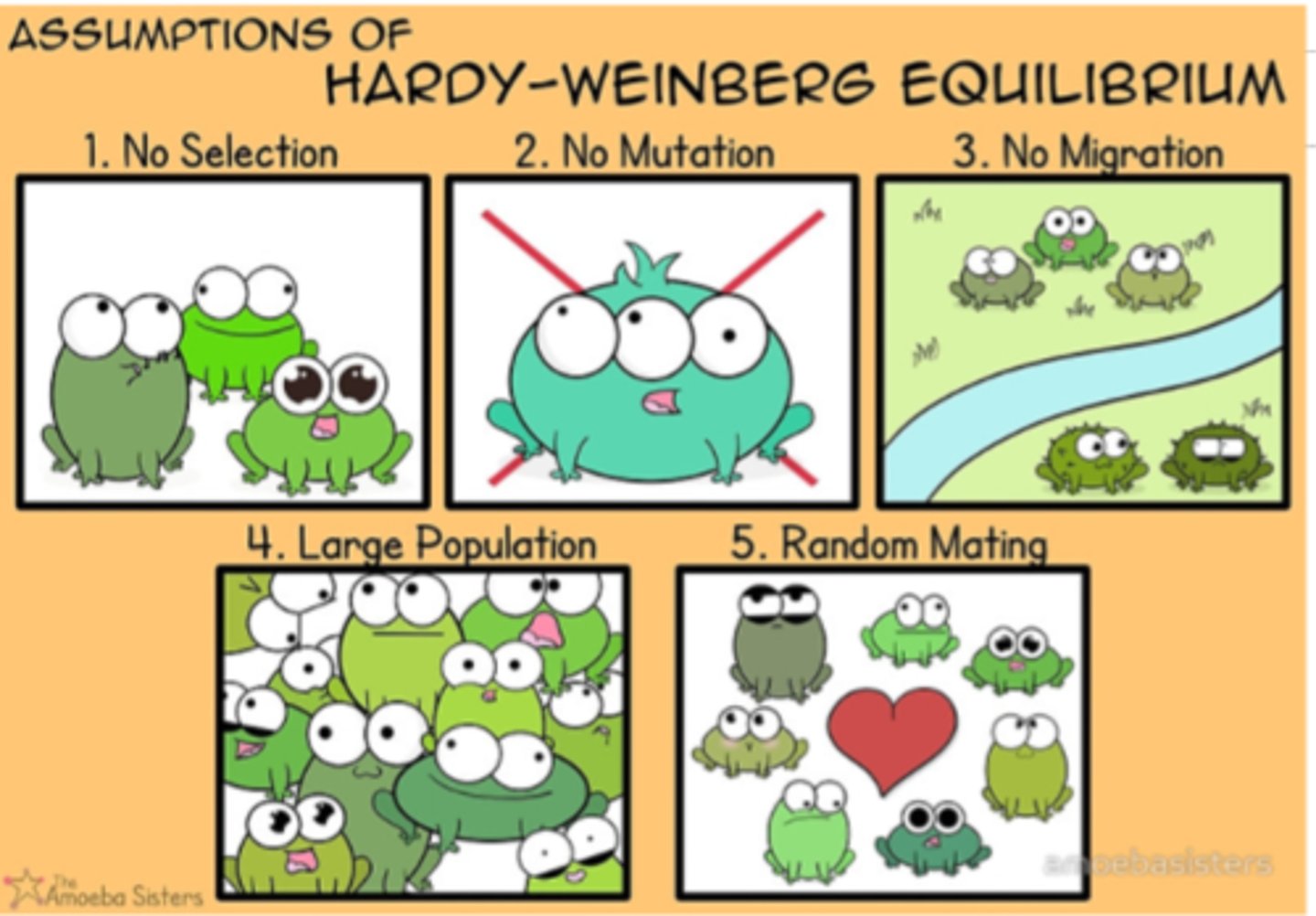
Hardy-Weinberg equilibrium
Condition that occurs when the frequency of alleles in a particular gene pool remain constant over time
Conditions for Hardy-Weinberg Equilibrium
1. No mutations
2. Random mating
3. No natural selection
4. Extremely large population size
5. No gene flow
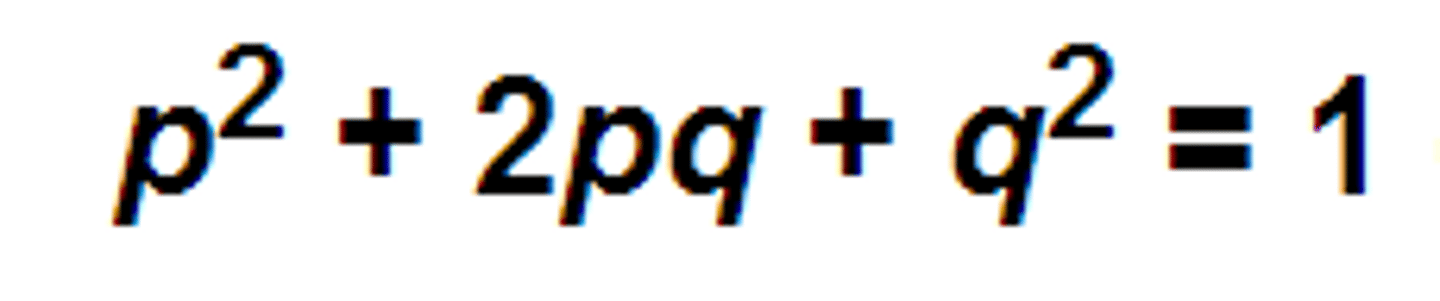
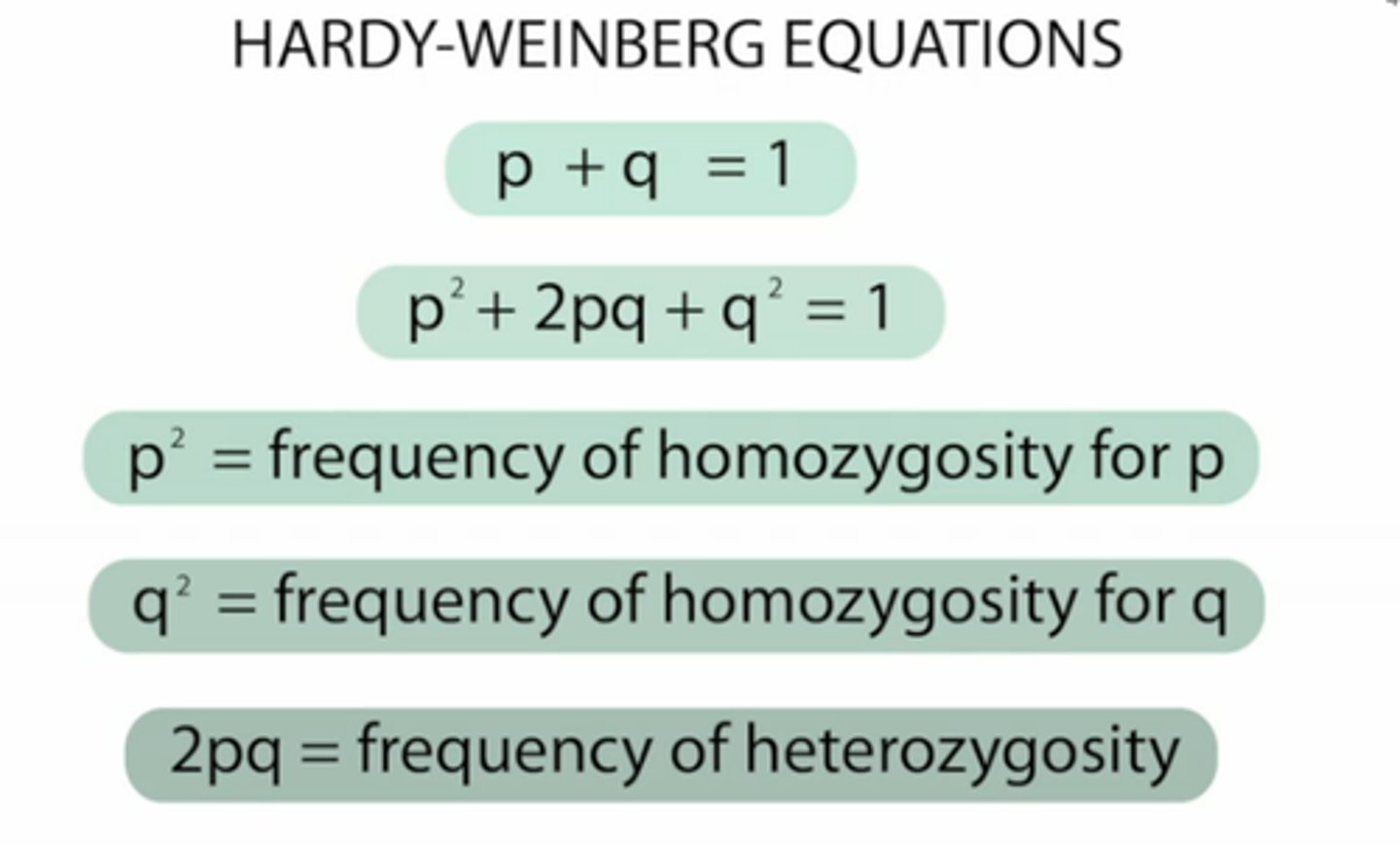
Hardy-Weinberg equation
p^2 + 2pq + q^2 = 1
p + q = 1
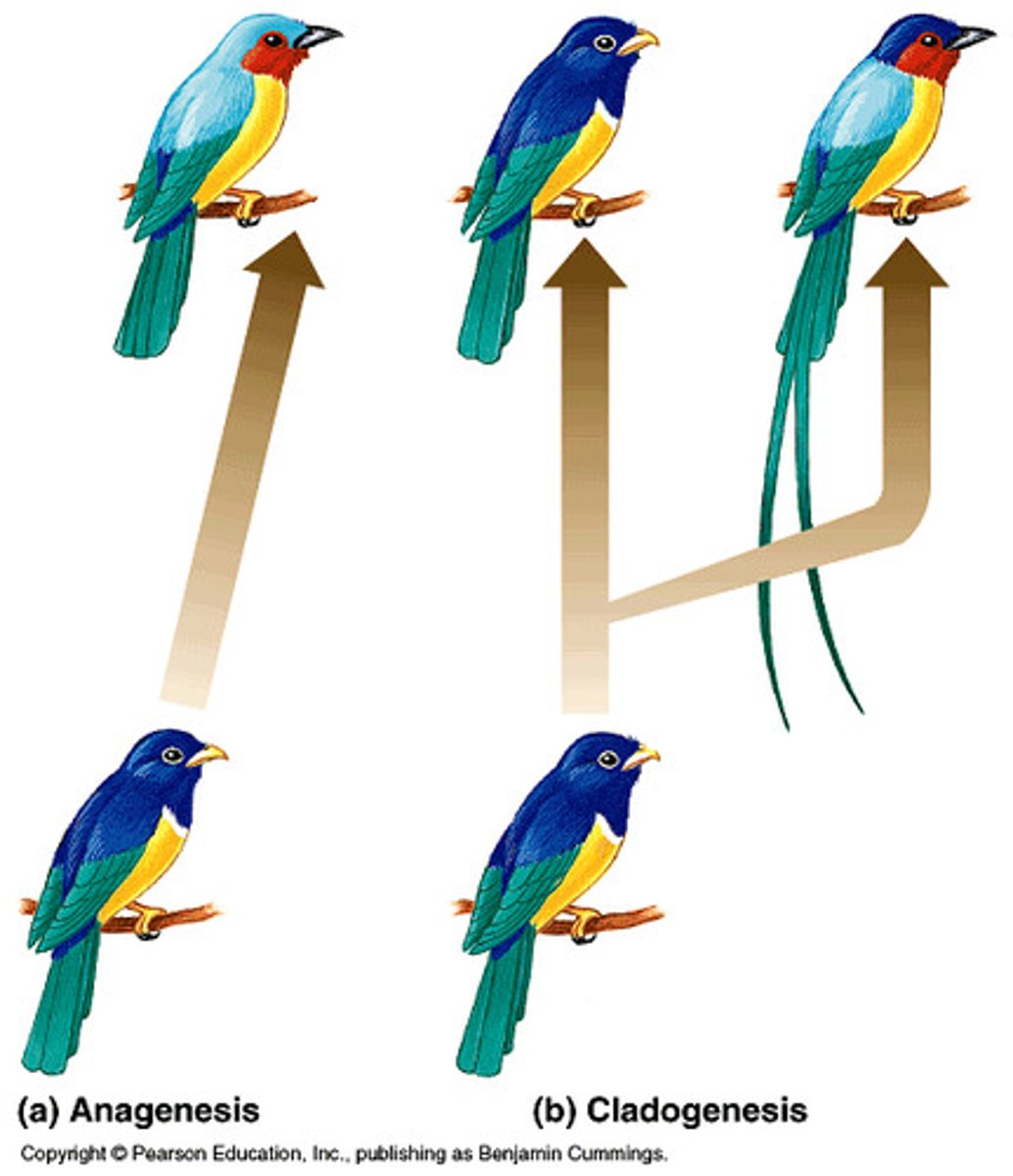
Speciation
Formation of new species
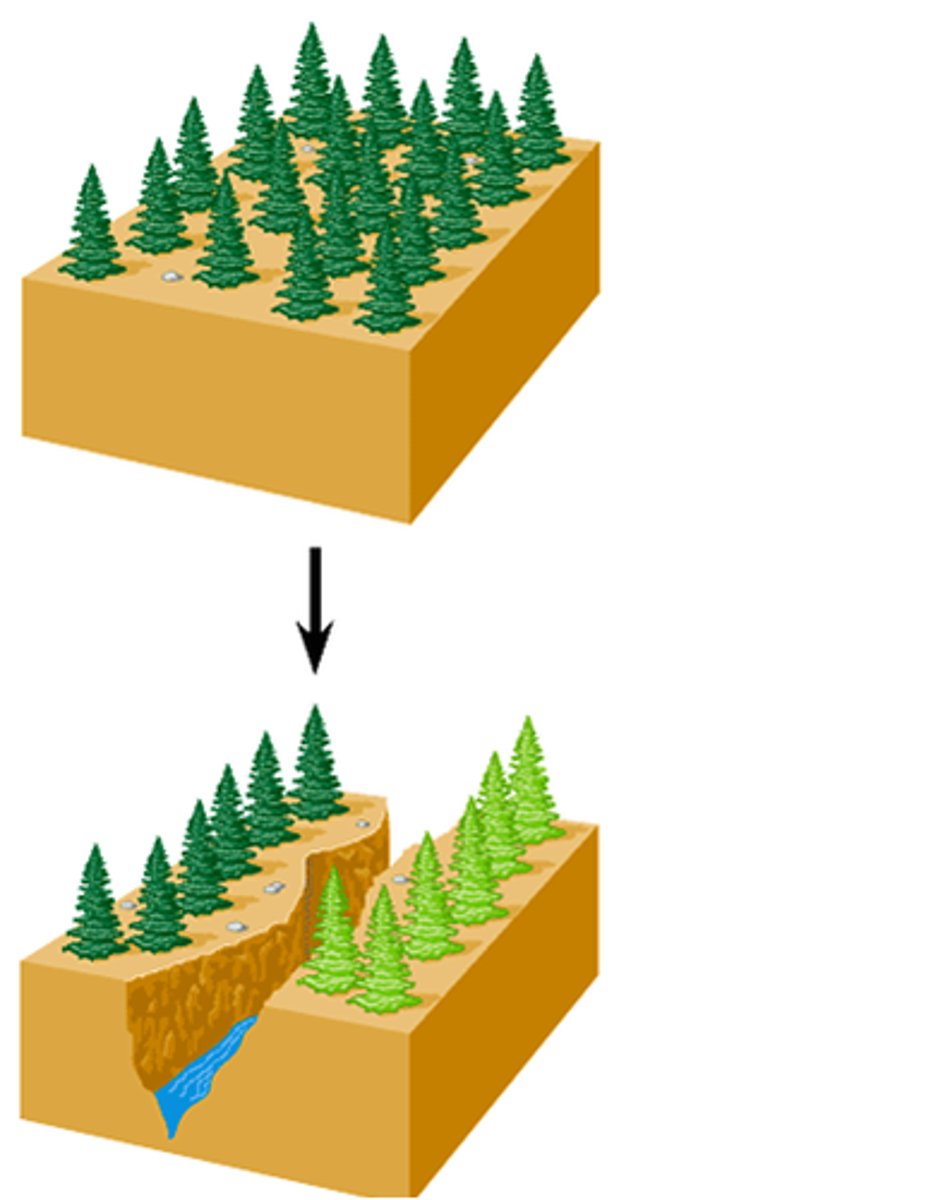
Allopatric speciation
The formation of new species in populations that are geographically isolated from one another.
Sympatric speciation
The formation of new species in populations that live in the same geographic area
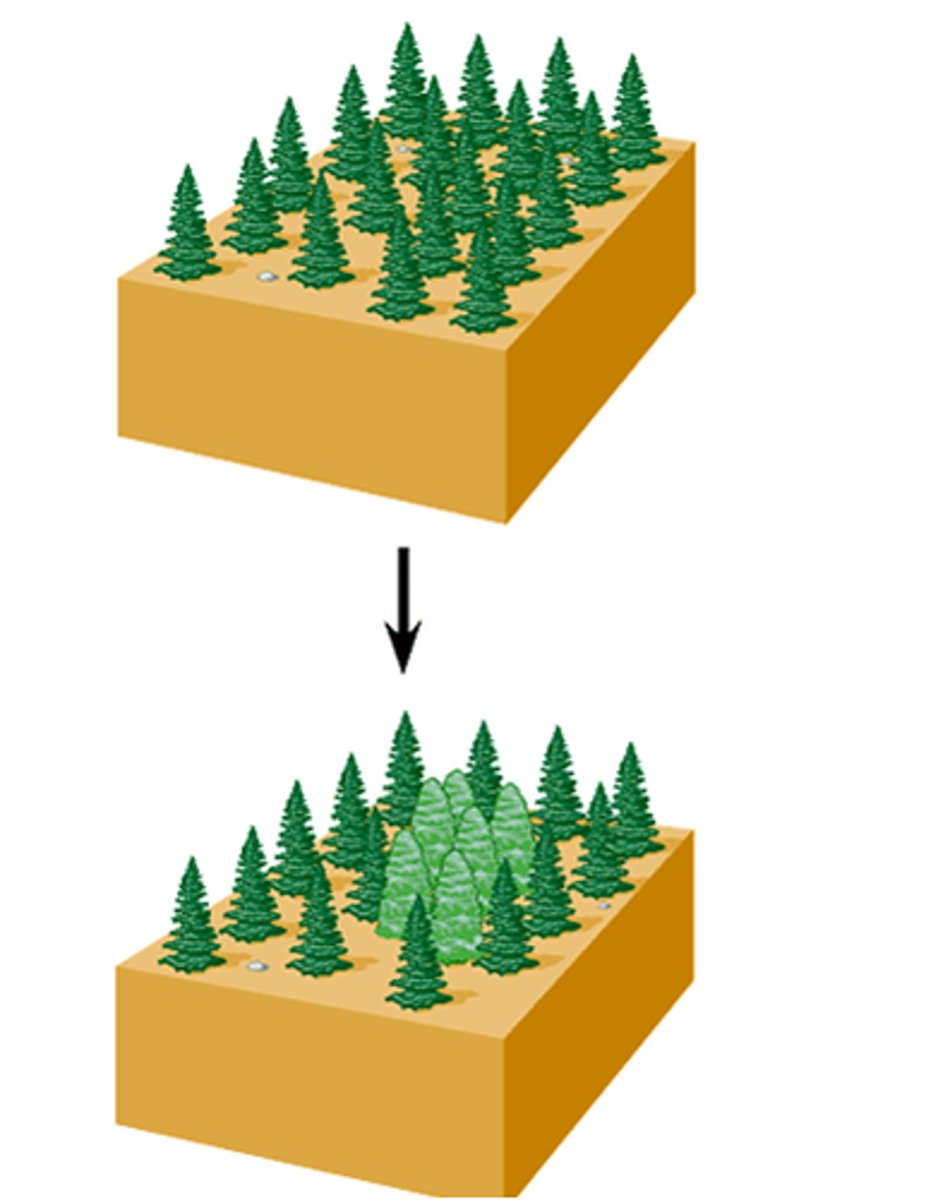
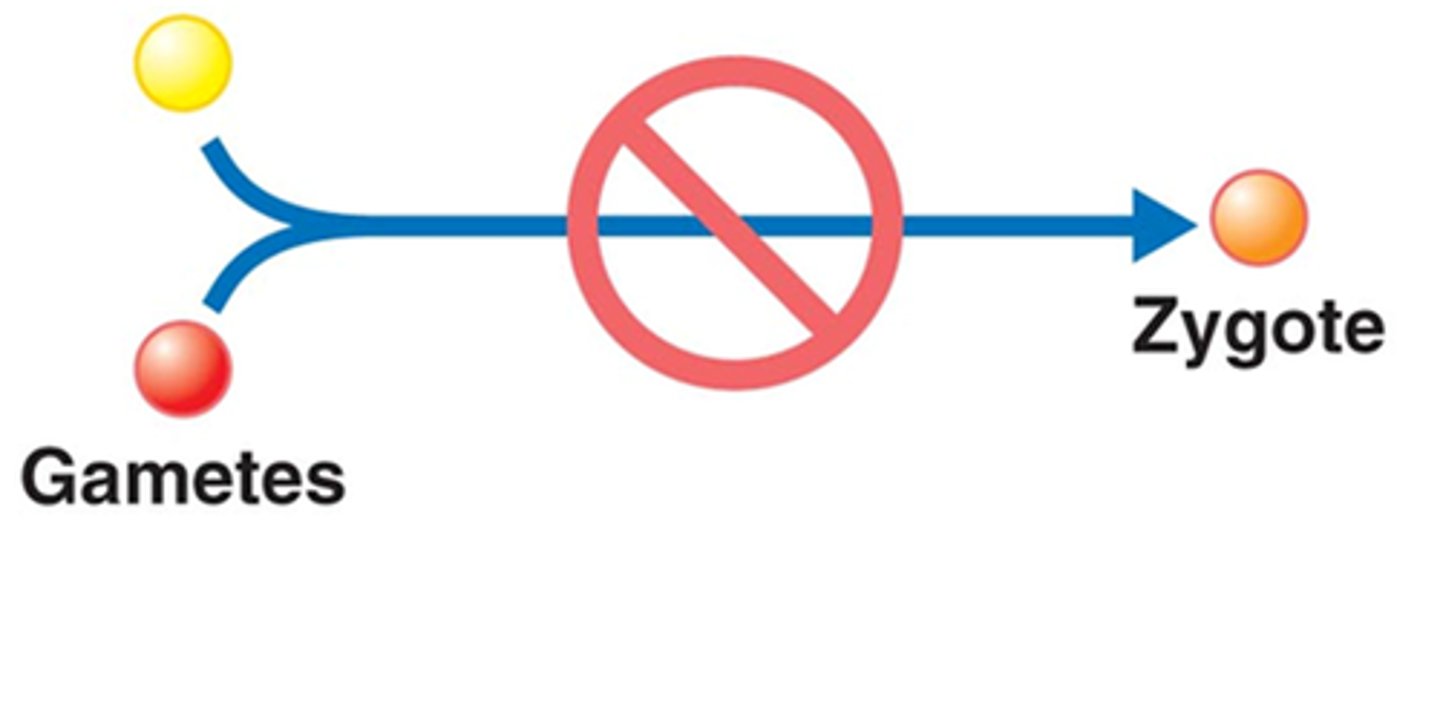
Prezygotic barriers
Barriers that impede mating or hinder fertilization.
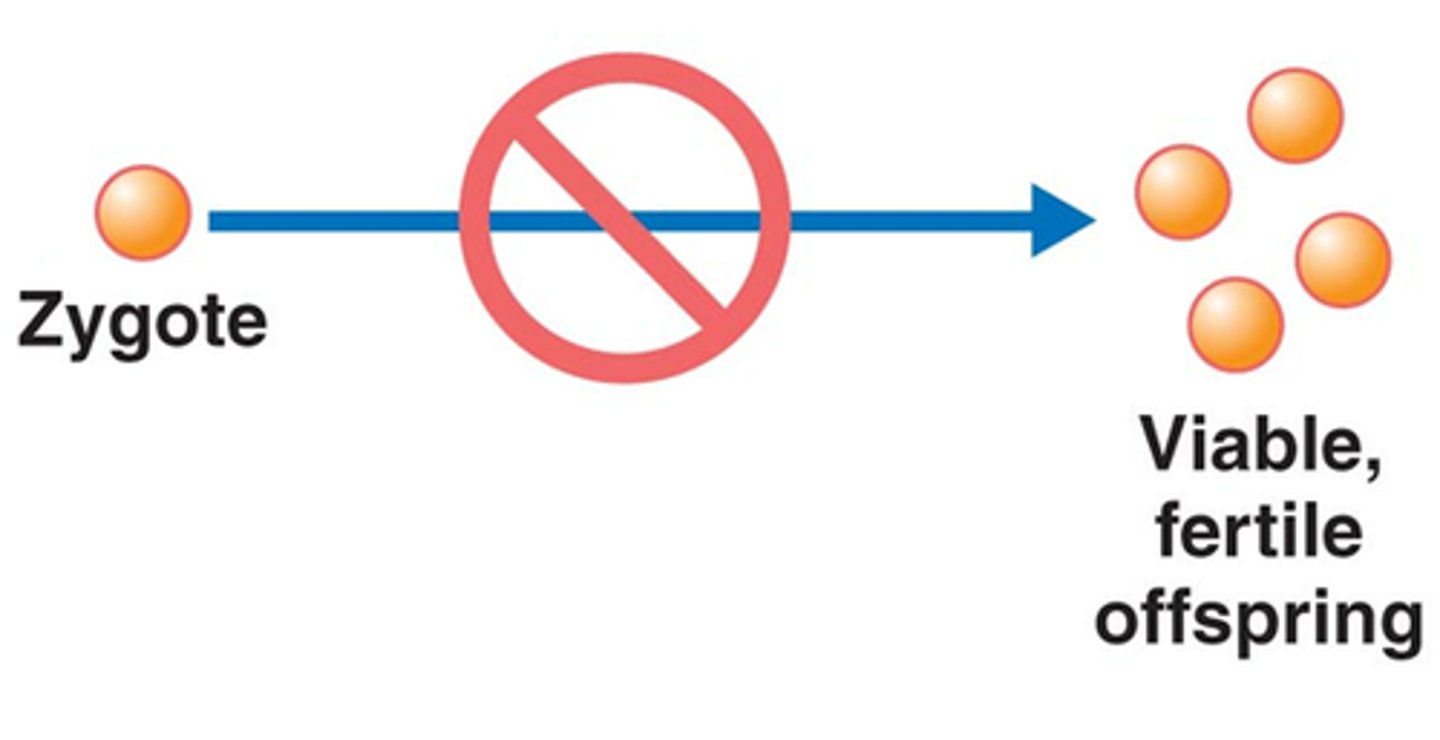
Postzygotic barriers
Barriers that prevent the hybrid zygote from becoming a fertile adult.
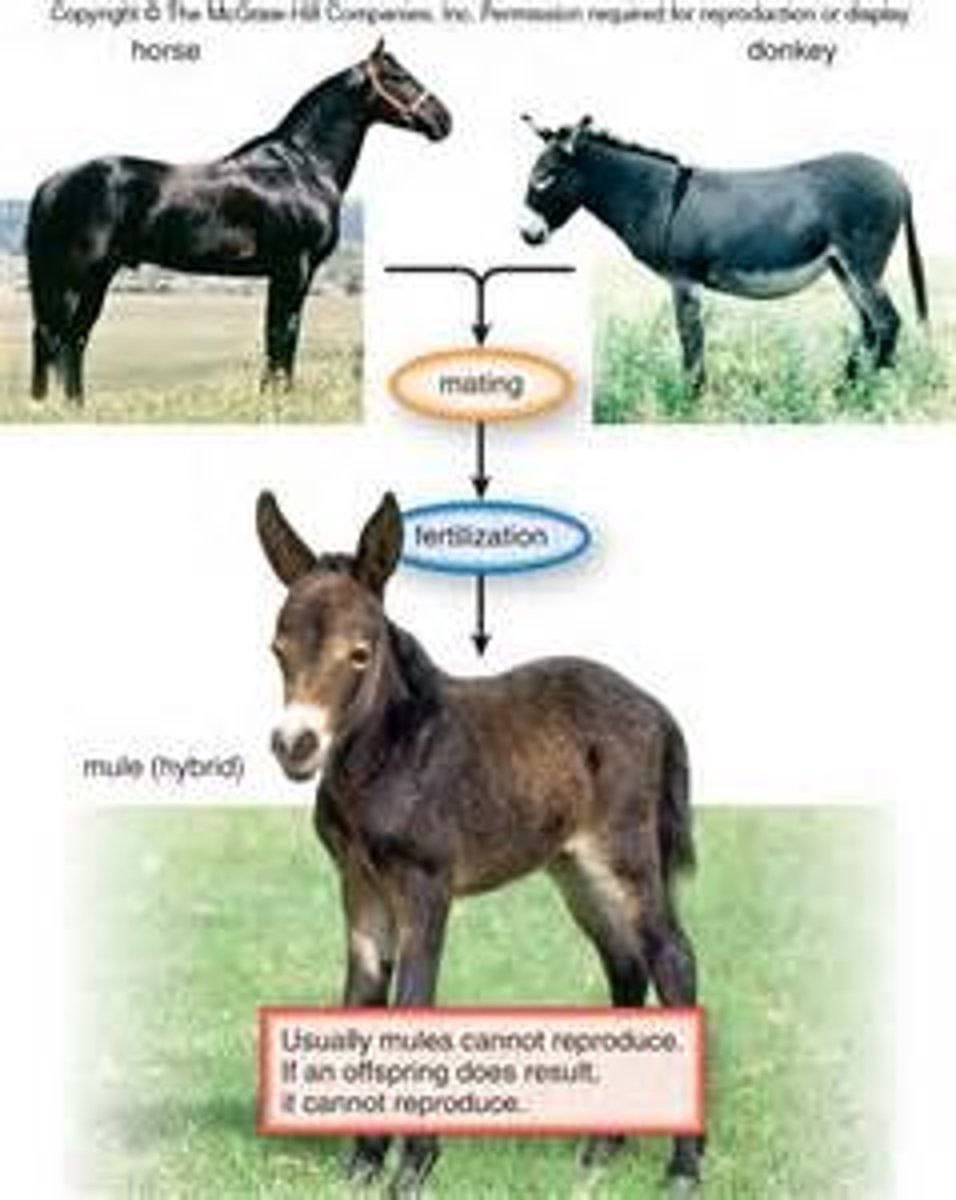
Hybrid sterility
Hybrid offspring from two different species that fail to produce functional gametes and therefore cannot reproduce (for example: mules)
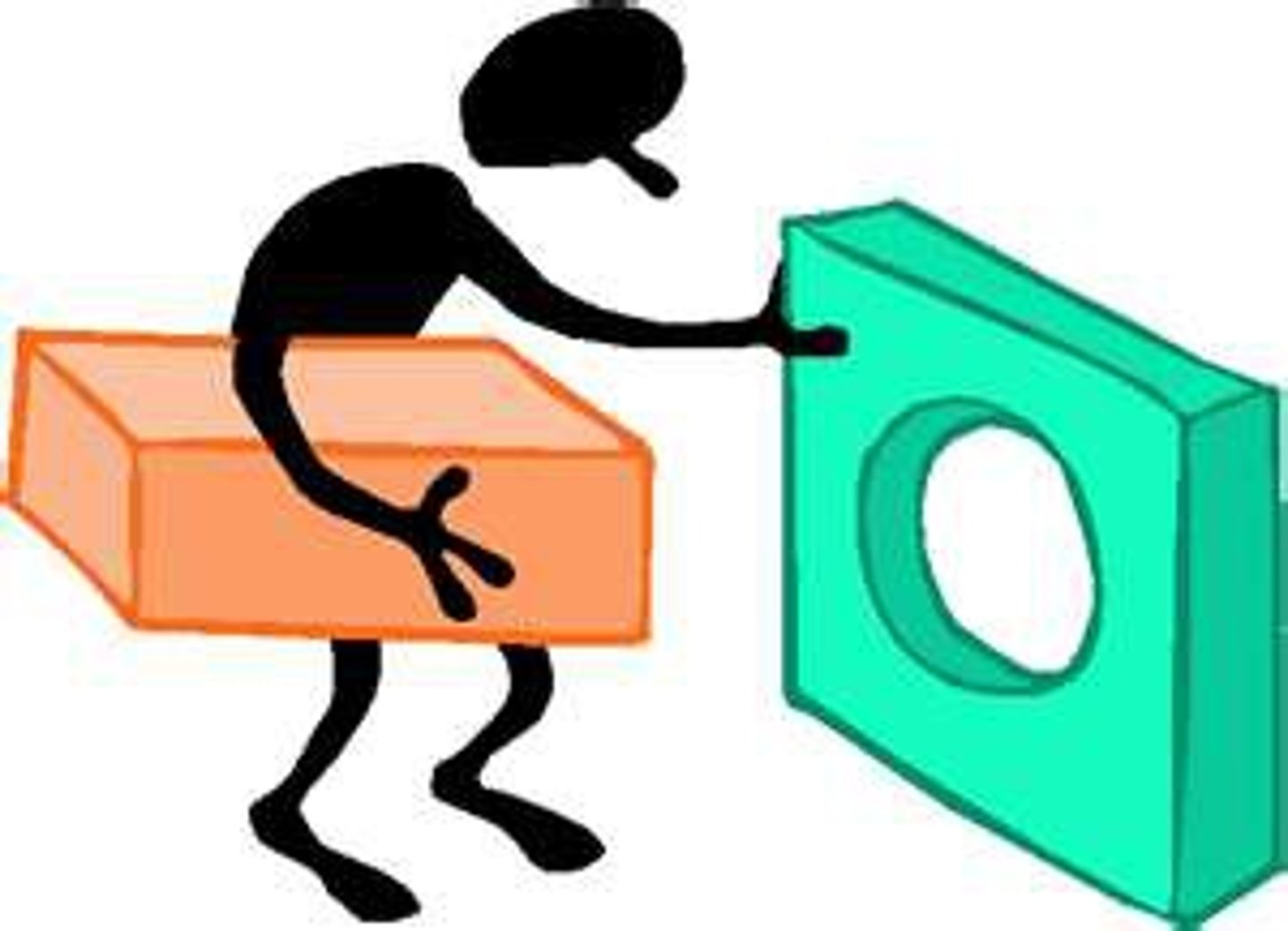
Structural Isolation
Organisms are unable to reproduce due to differences in their genital organs.
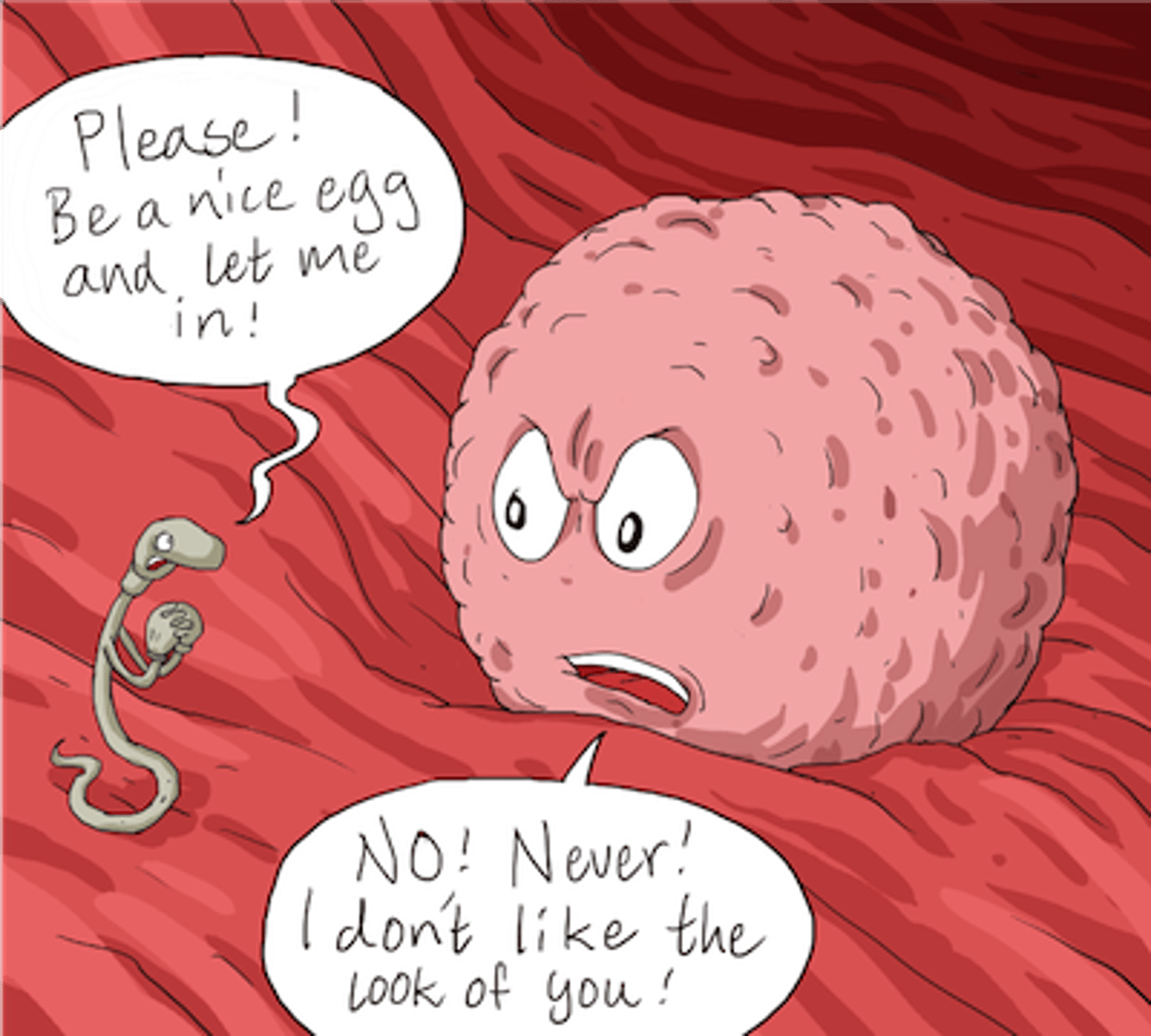
Gametic isolation
A prezygotic reproductive barrier where the sperm of one species may not be able to fertilize the eggs of another species
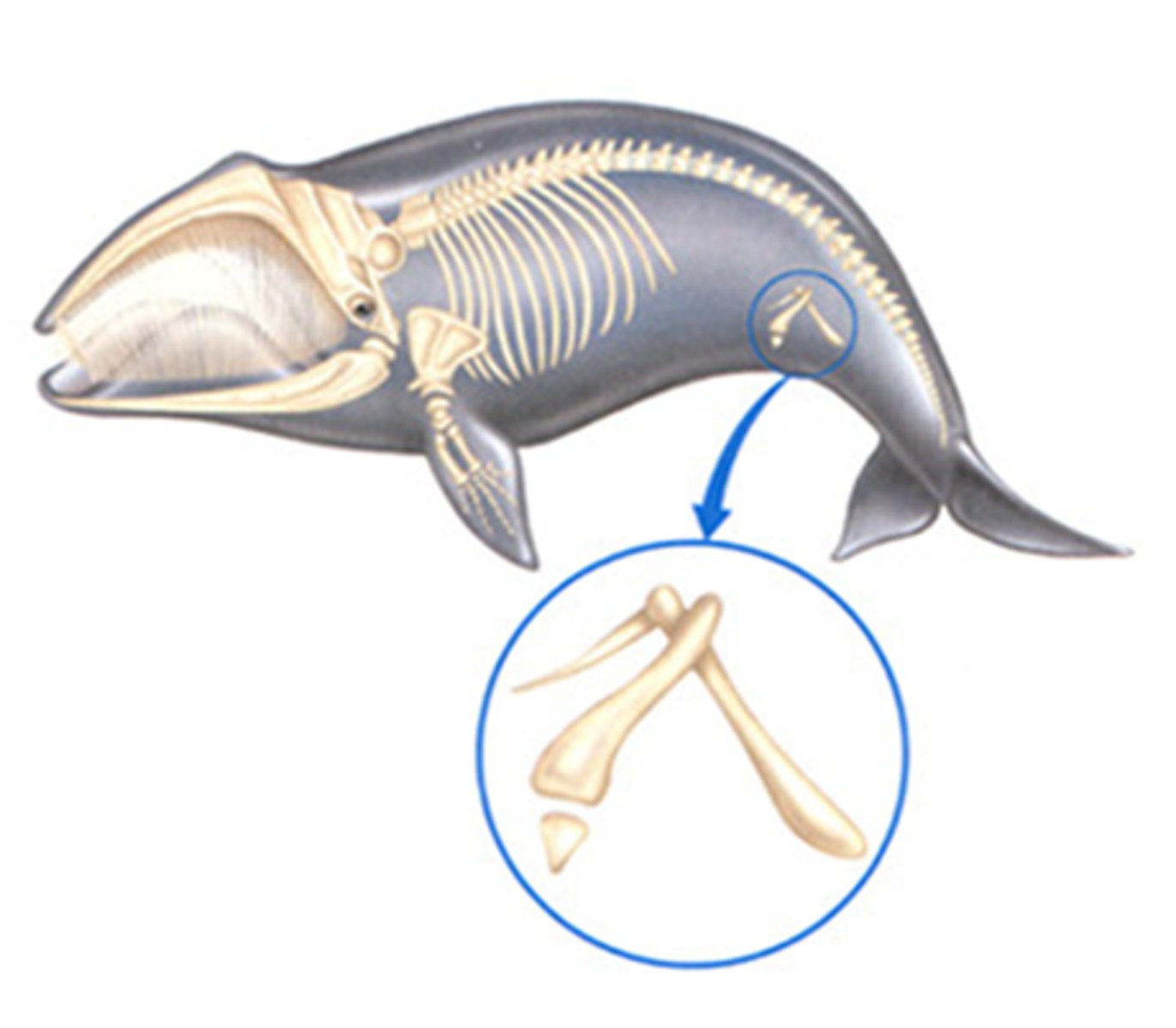
Vestigial structures
remnant of a structure that may have had an important function in a species' ancestors, but has no clear function in the modern species.
Cladogram
Diagram that shows the evolutionary relationships among a group of organisms
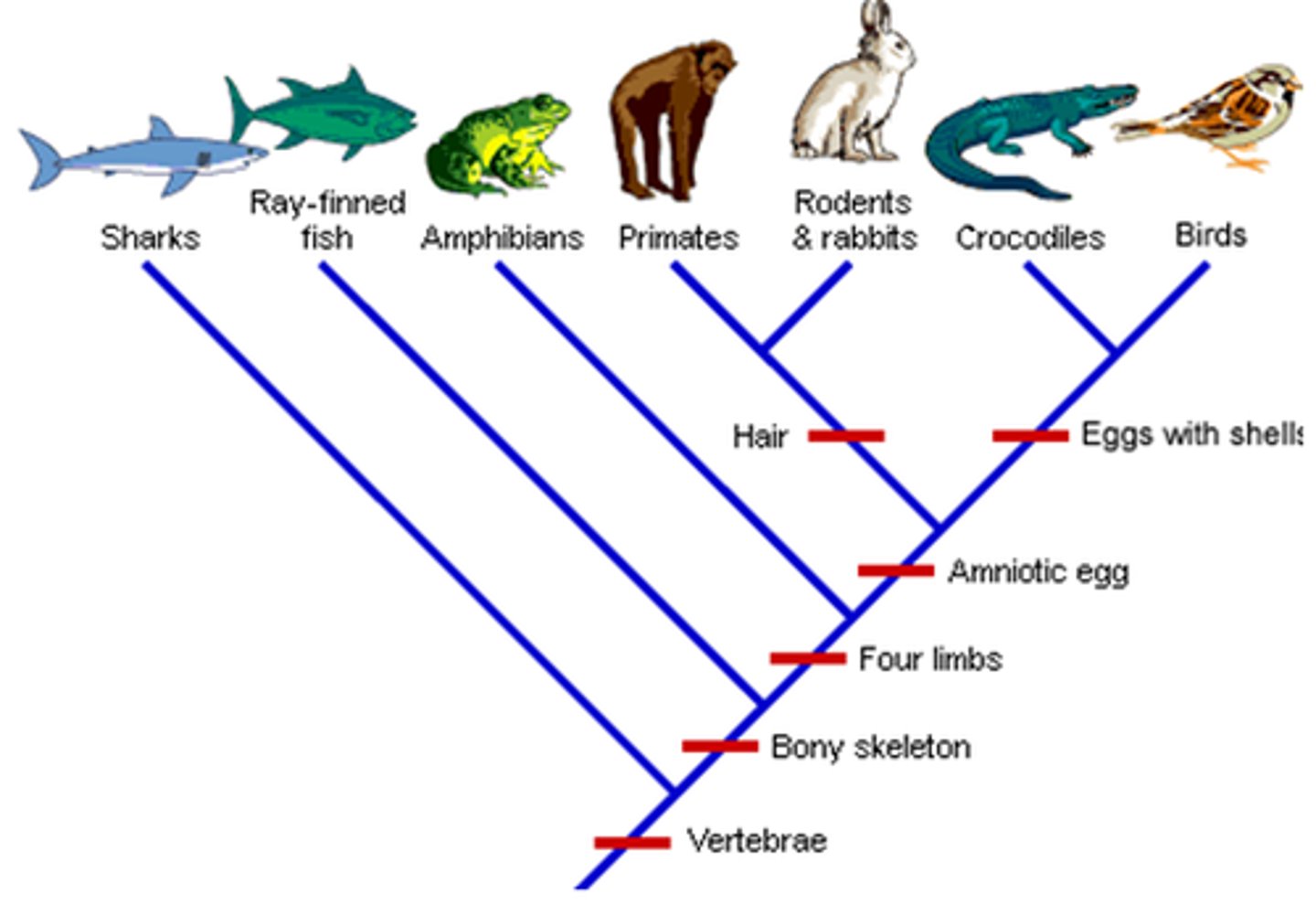
Phylogenetic tree
A family tree that shows the evolutionary relationships thought to exist among groups of organisms
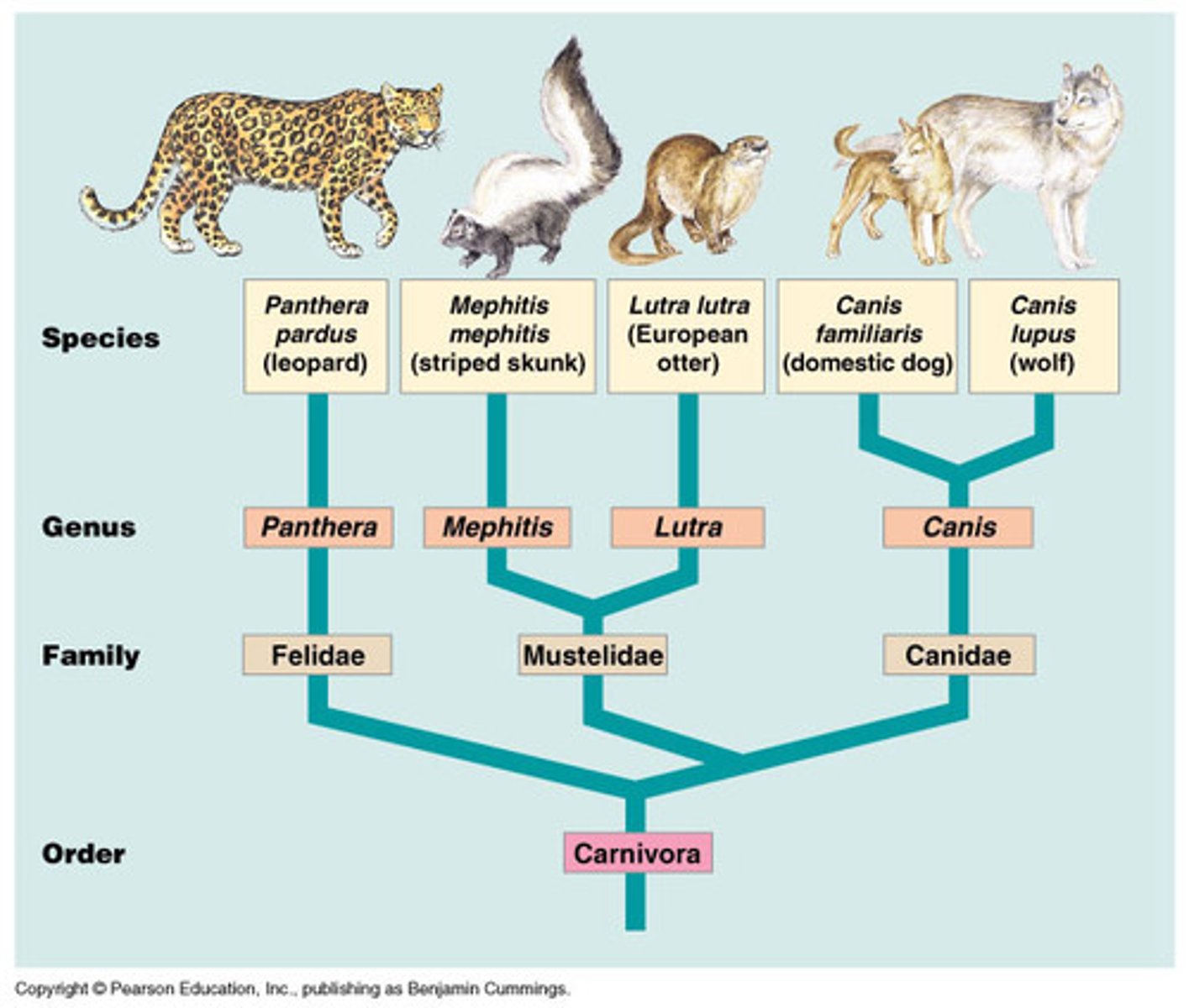
Most recent common ancestor
The ancestral organism from which a group of descendants arose
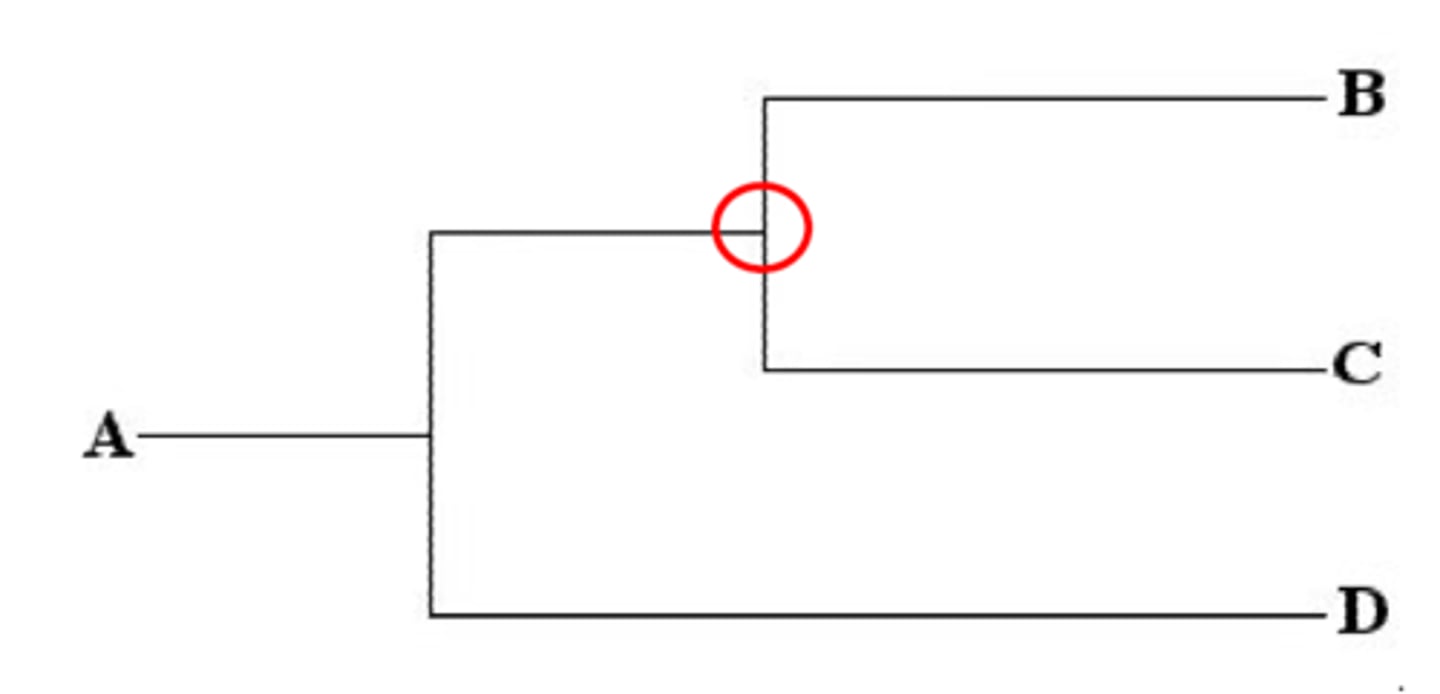
Outgroup
An outgroup is a lineage that falls outside the clade being studied but is closely related to that clade.
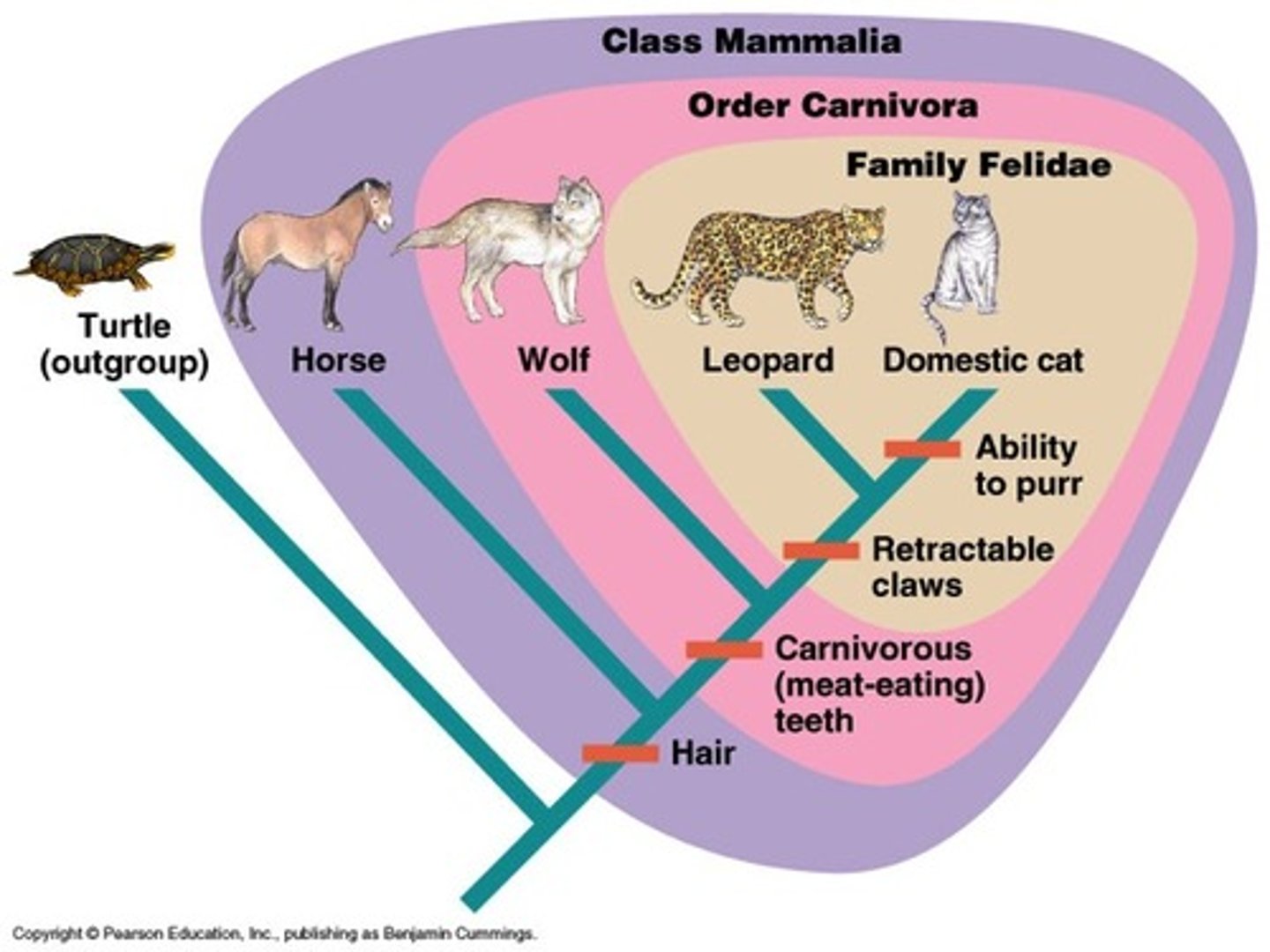
Taxonomy
The scientific study of how living things are classified
Clade
A group of species that includes an ancestral species and all its descendants.
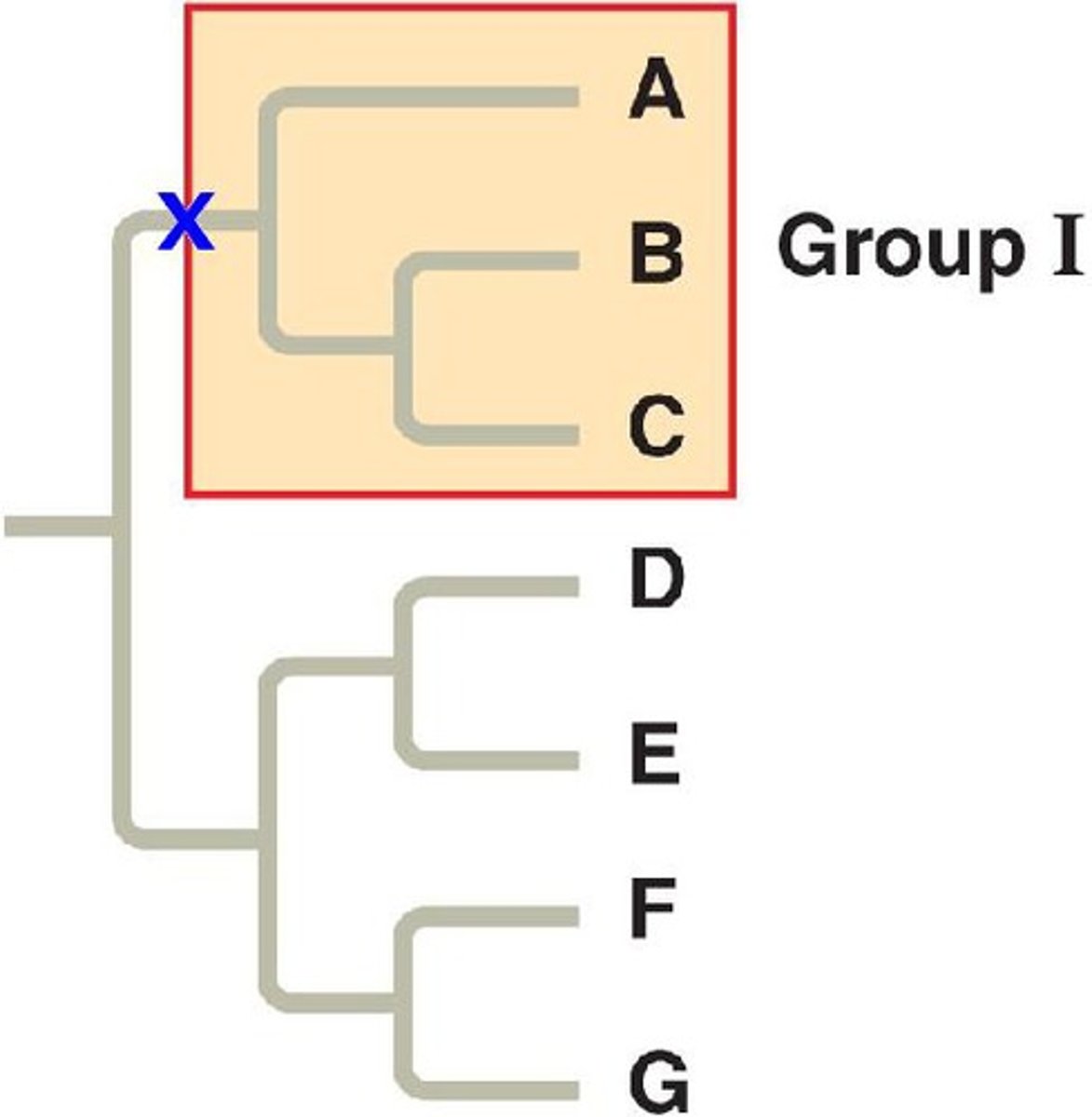
Three domains of life
Bacteria, Archaea, Eukarya

