Math with Confidence 5 Memory Work (Blackline Master 1)
 Call Kai
 Learn
Learn Practice Test
 Spaced Repetition
 Match
Match Flashcards
1/52

There's no tags or description
Looks like no tags are added yet.
Name | Mastery | Learn | Test | Matching | Spaced | Call with Kai |
|---|
No analytics yet
Send a link to your students to track their progress
53 Terms
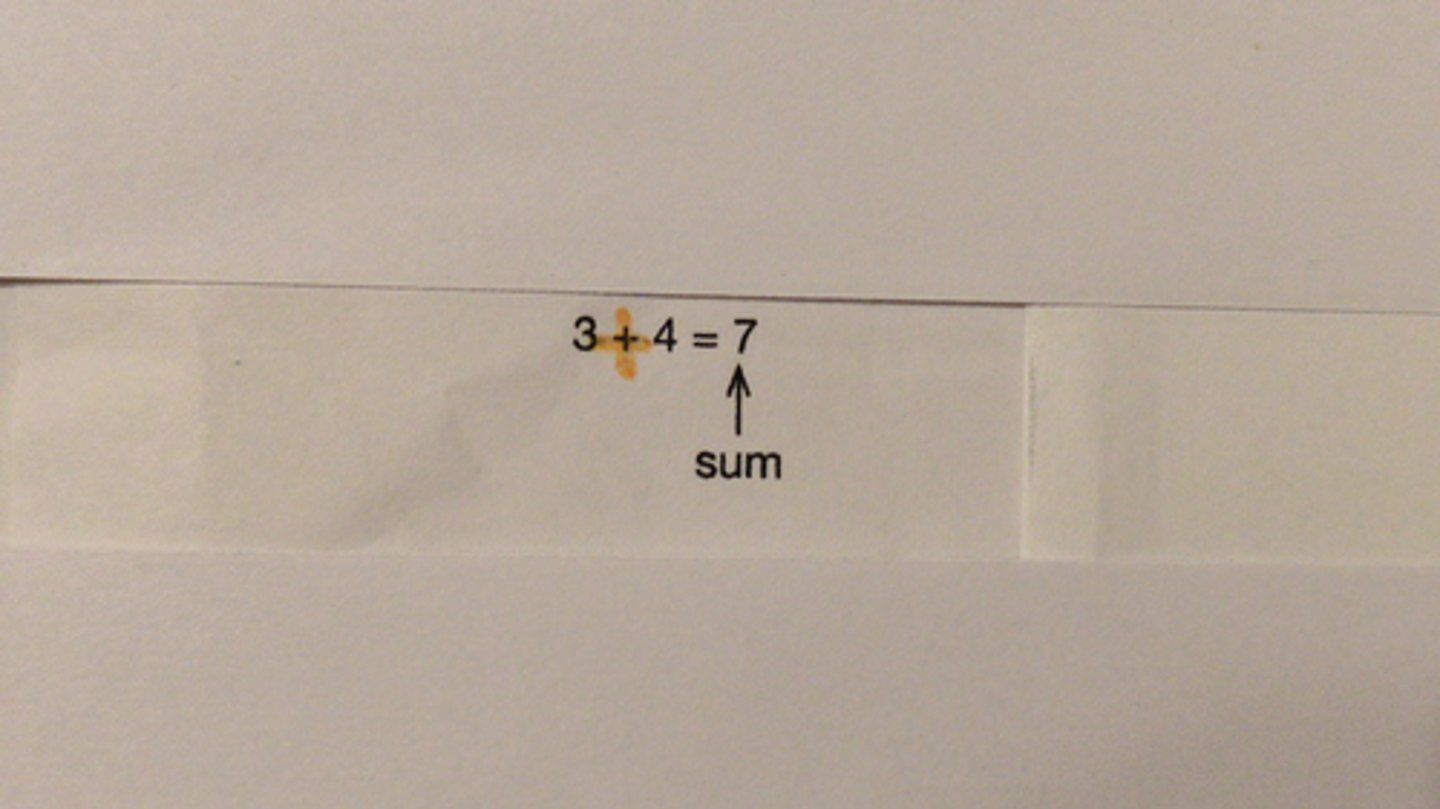
Sum
The result of adding two or more numbers (addends).
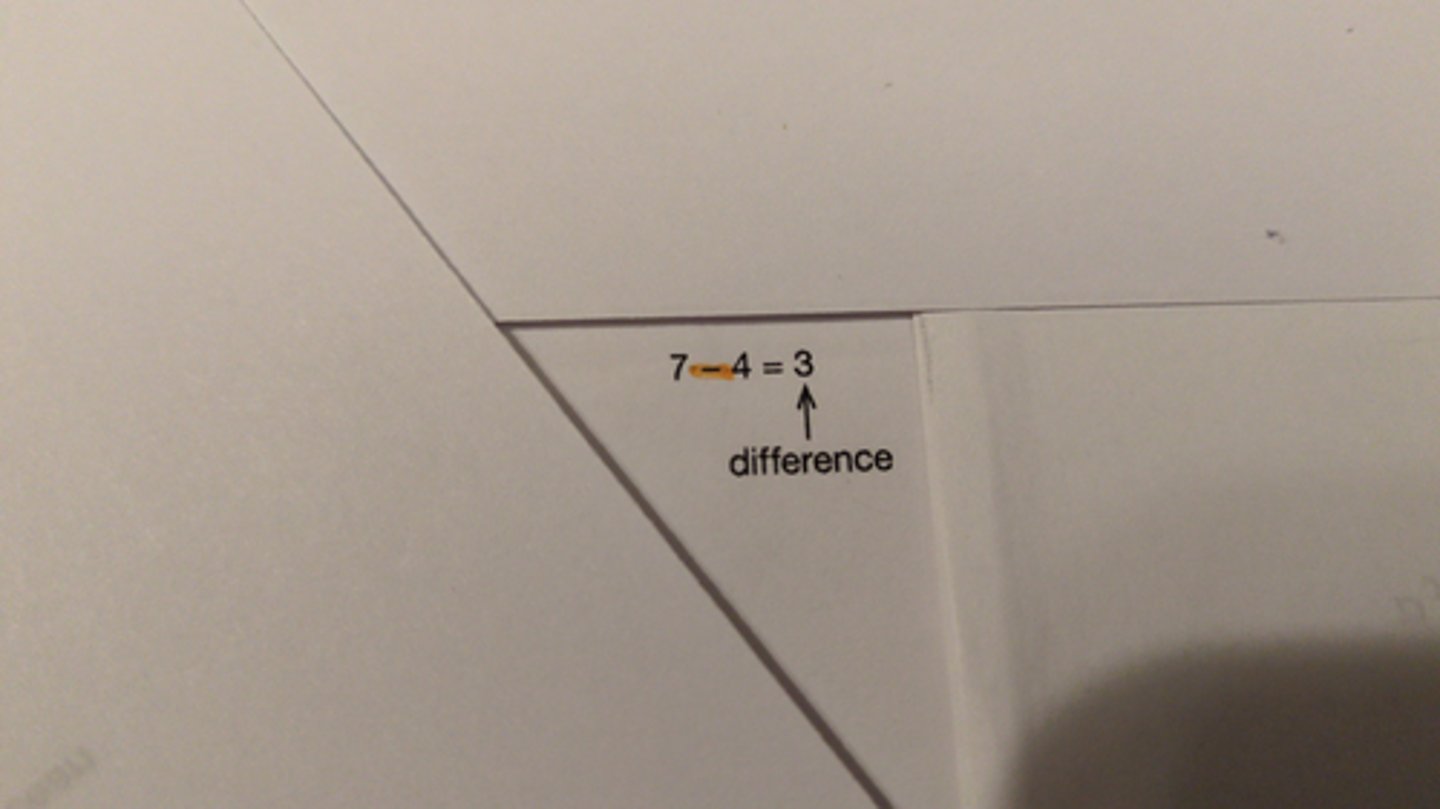
Difference
The result of subtracting one number (subtrahend) from another (minuend).
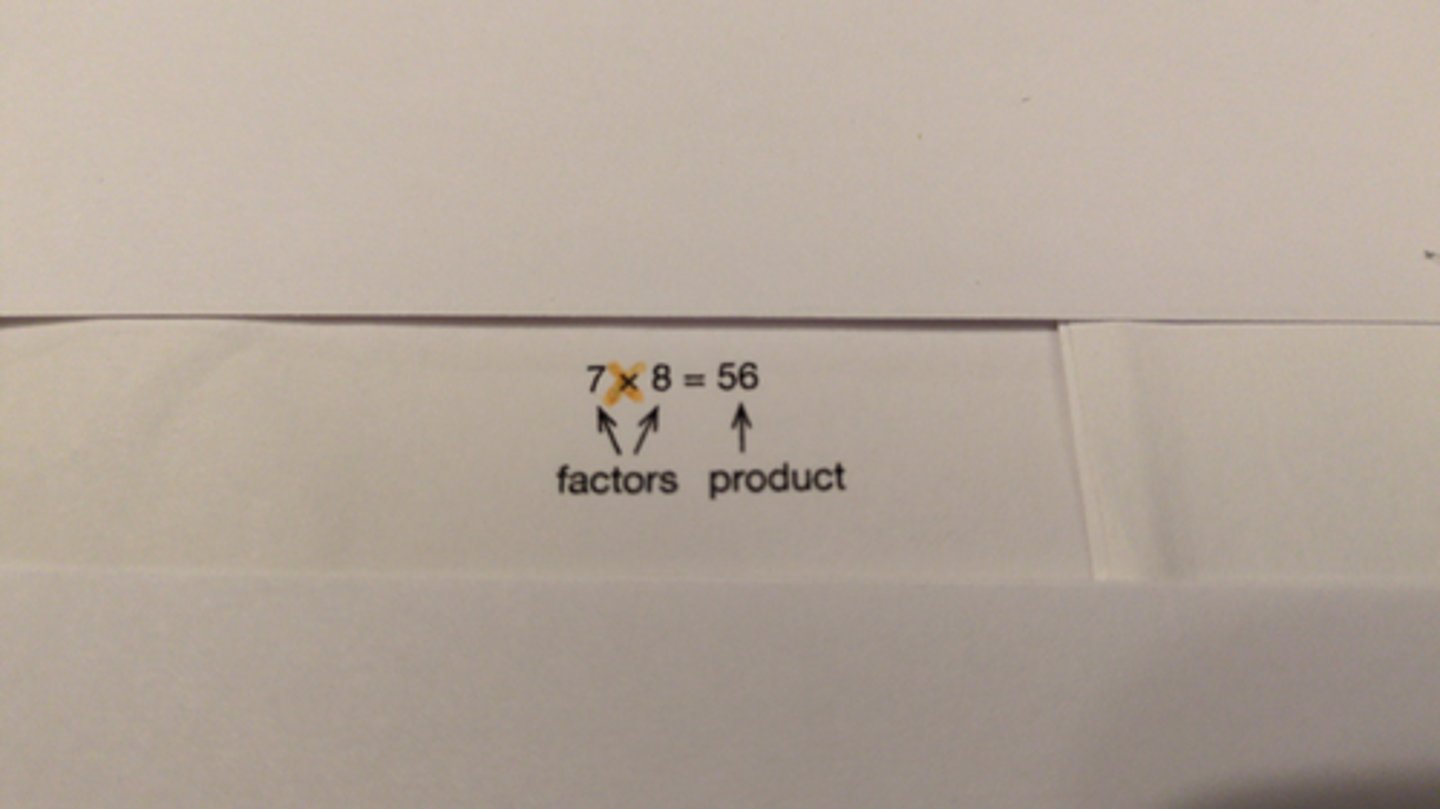
Product
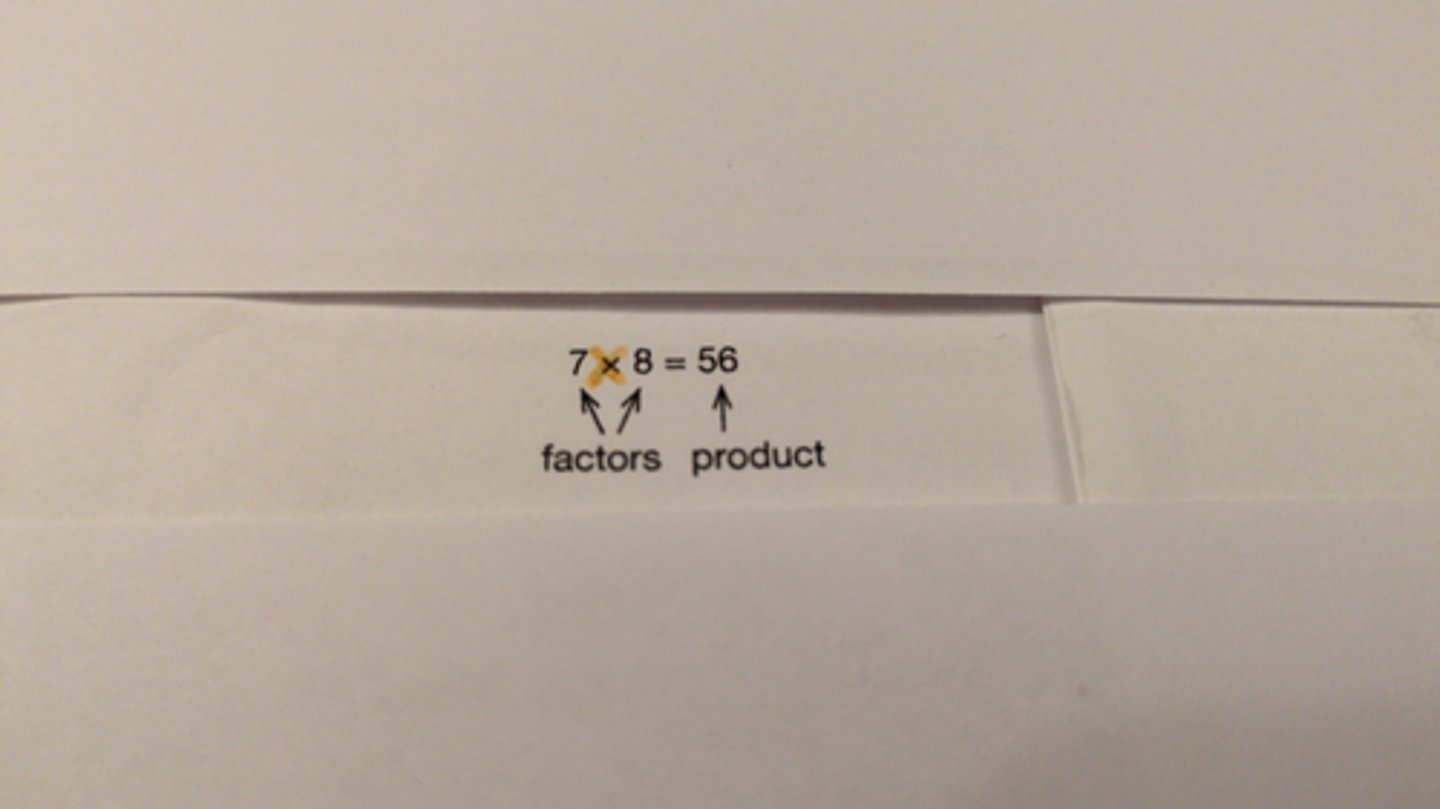
The result of multiplying two or more numbers (factors).
Quotient
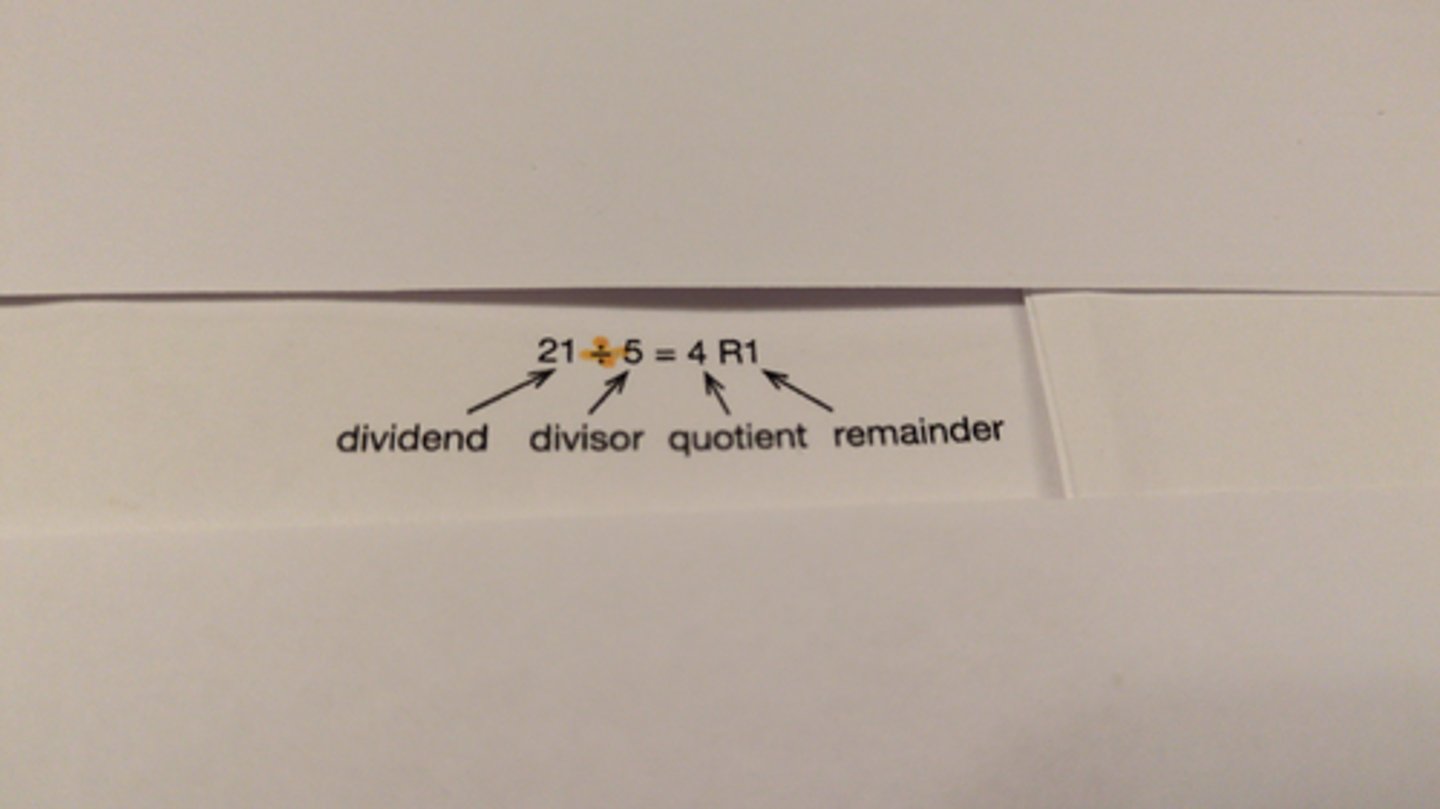
The result of dividing one number (dividend) by another number (divisor).
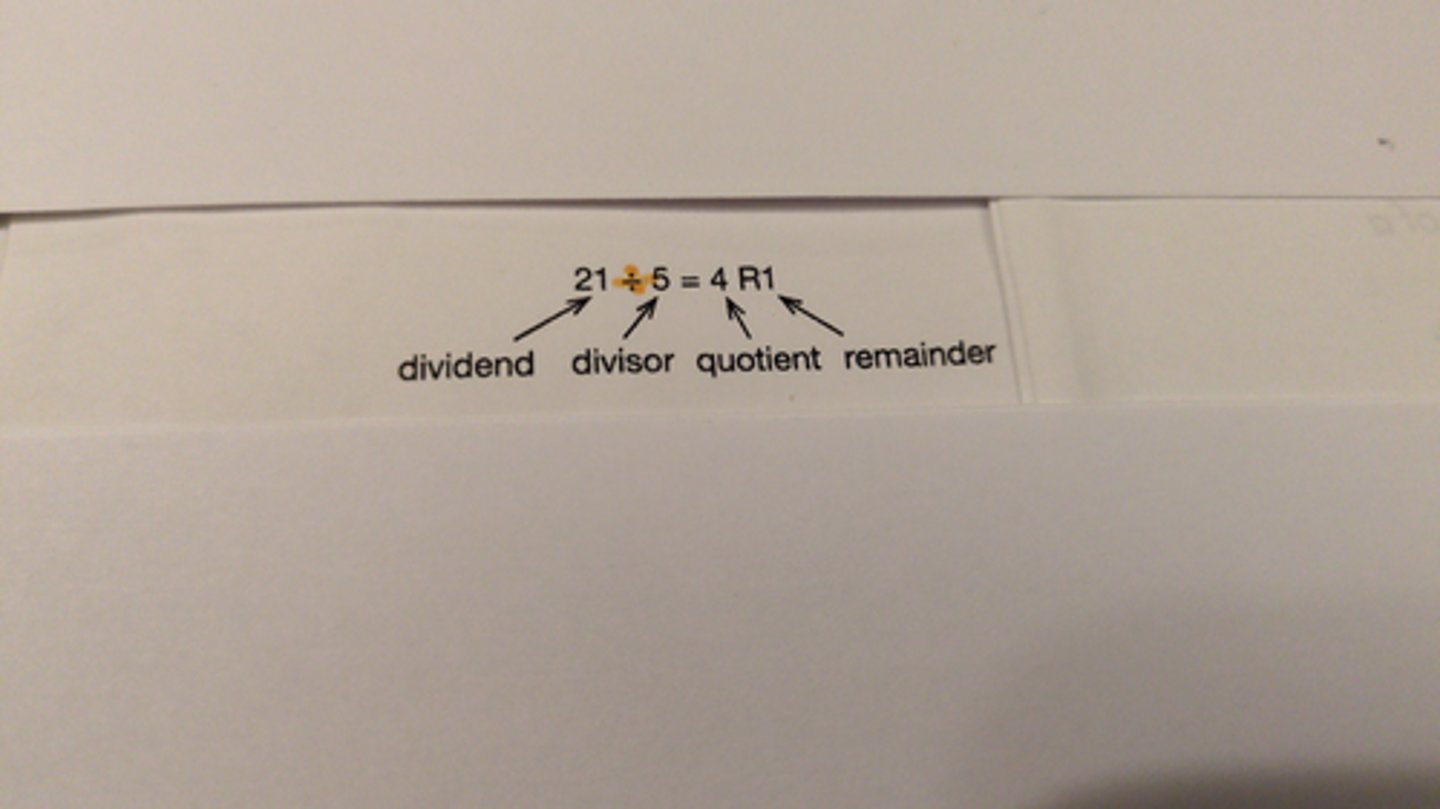
Remainder
The amount left over after division when one number does not divide another evenly.
Order of Operations
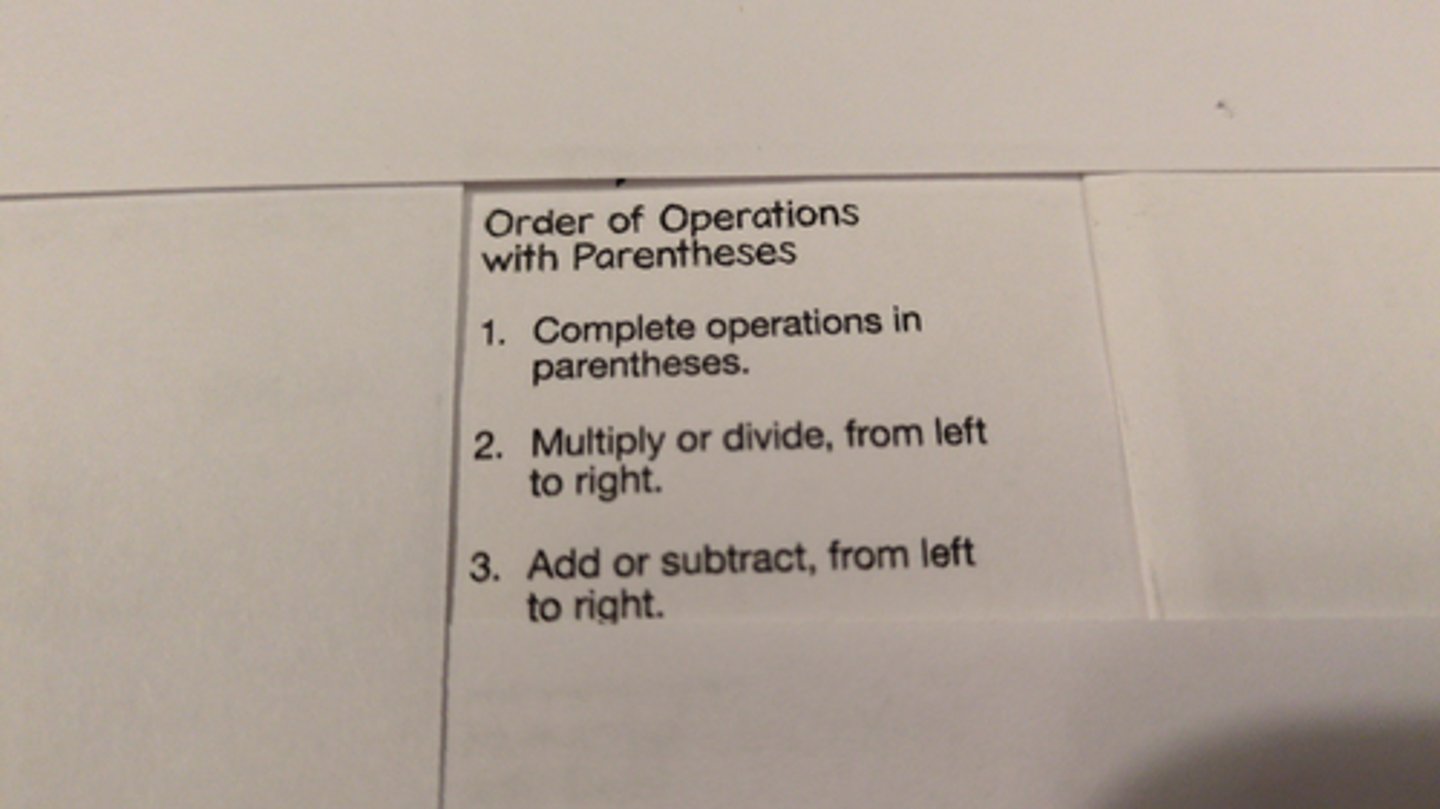
A set of rules for determining the order in which calculations are performed.
Multiples of 12
12, 24, 36, 48, 60...
Factors
Numbers that can be multiplied together to get another number.
LCM
Least common multiple; the smallest multiple that is exactly divisible by two or more numbers.
GCF
Greatest common factor; the largest factor that two or more numbers share.
Prime Number
A number that has exactly two factors: 1 and itself.
Prime numbers cannot be negative numbers, 0, or 1.
The prime numbers under 20 are: 2, 3, 5, 7, 11, 13, 17, 19.
Composite Numbers
Numbers that have more than two factors.
Divisibility Rule for 2
A number is divisible by 2 if it is even.
Divisibility Rule for 5
A number is divisible by 5 if it has 0 or 5 in the ones place.
Divisibility Rule for 10
A number is divisible by 10 if it has 0 in the ones place.
Divisibility Rule for 3
A number is divisible by 3 if the sum of its digits is divisible by 3.
Divisibility Rule for 4
A number is divisible by 4 if it has an even quotient when it is divided by 2.
Divisibility Rule for 6
A number is divisible by 6 if it is even and divisible by 3.
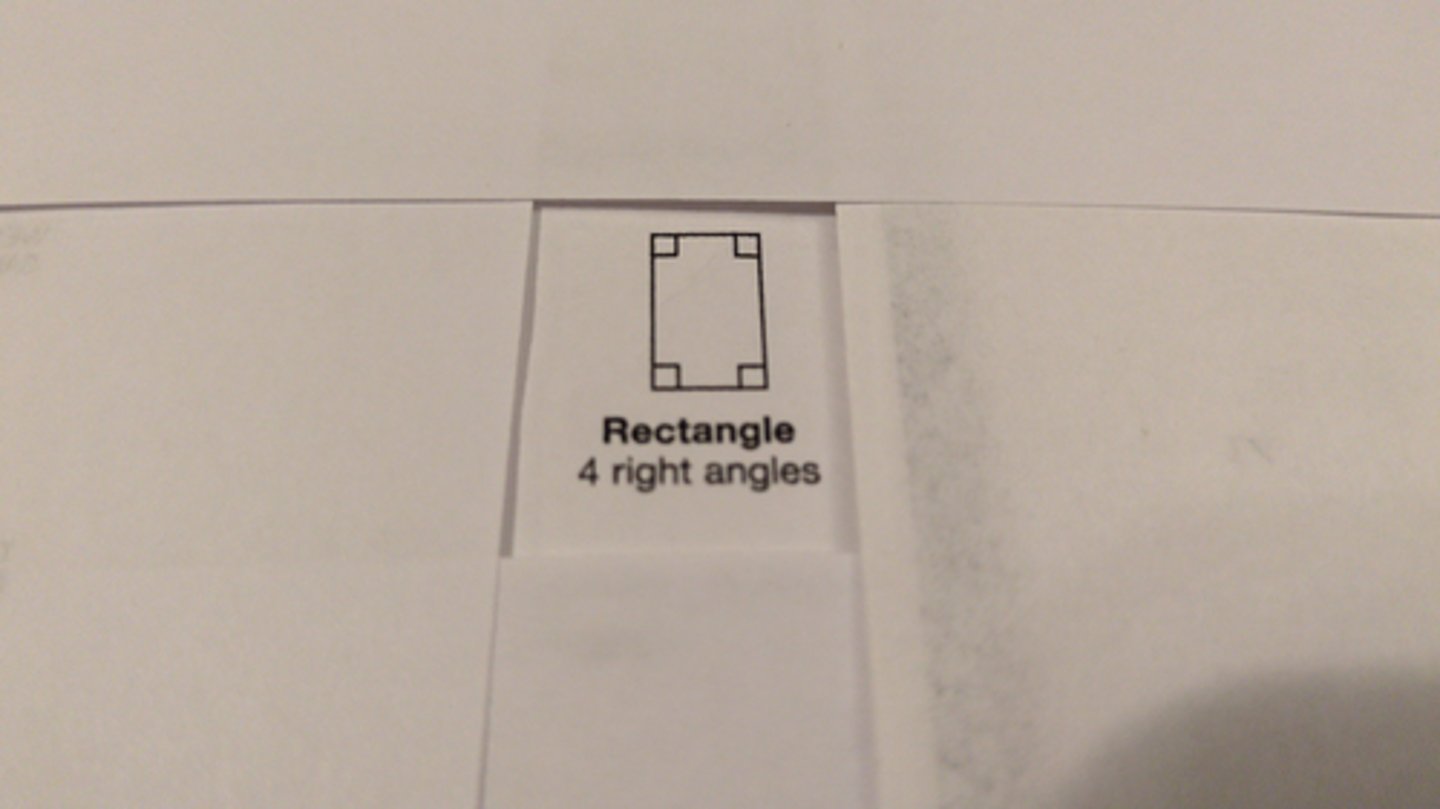
Rectangle
A quadrilateral with 4 right angles and two pairs of parallel sides.
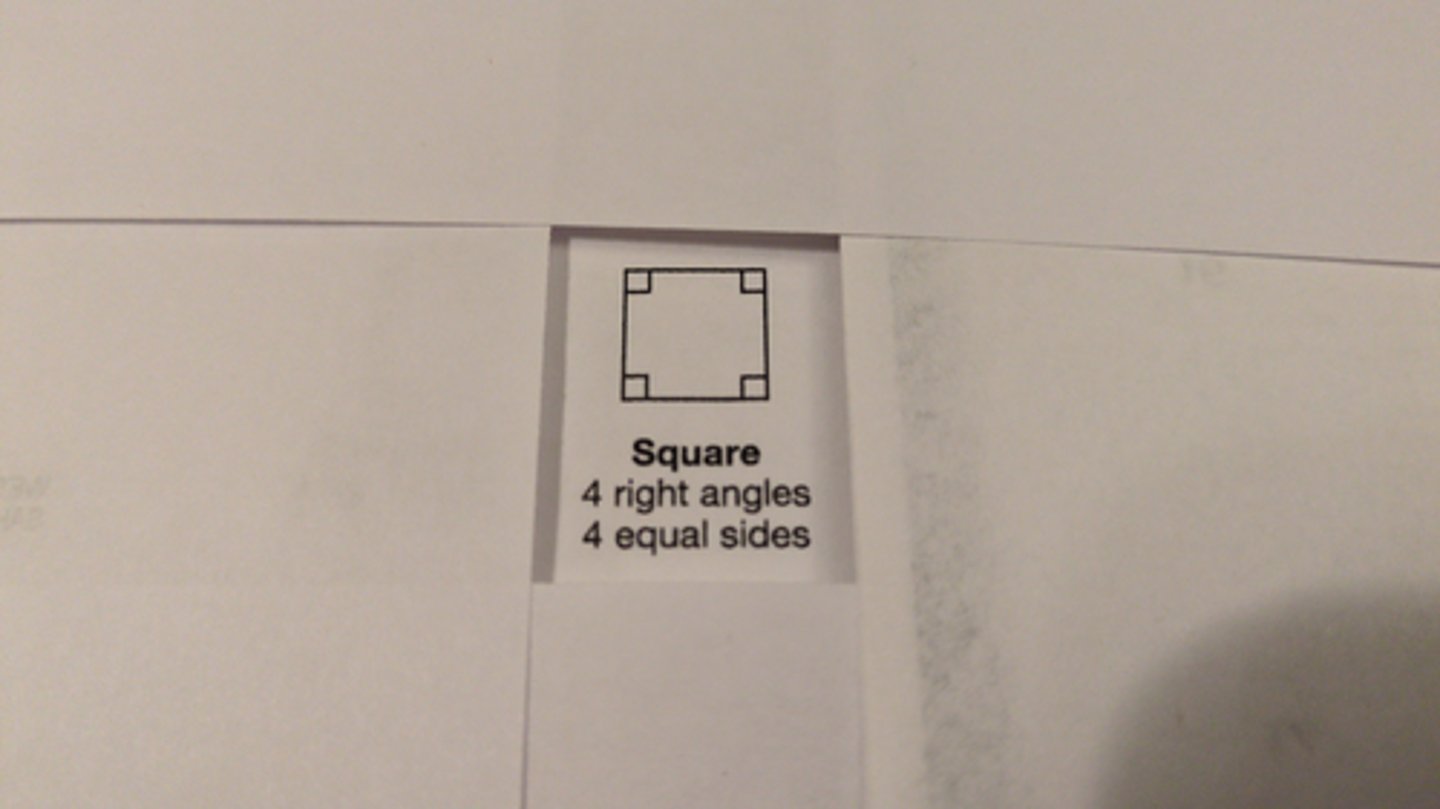
Square
A quadrilateral with 4 right angles and 4 equal sides.
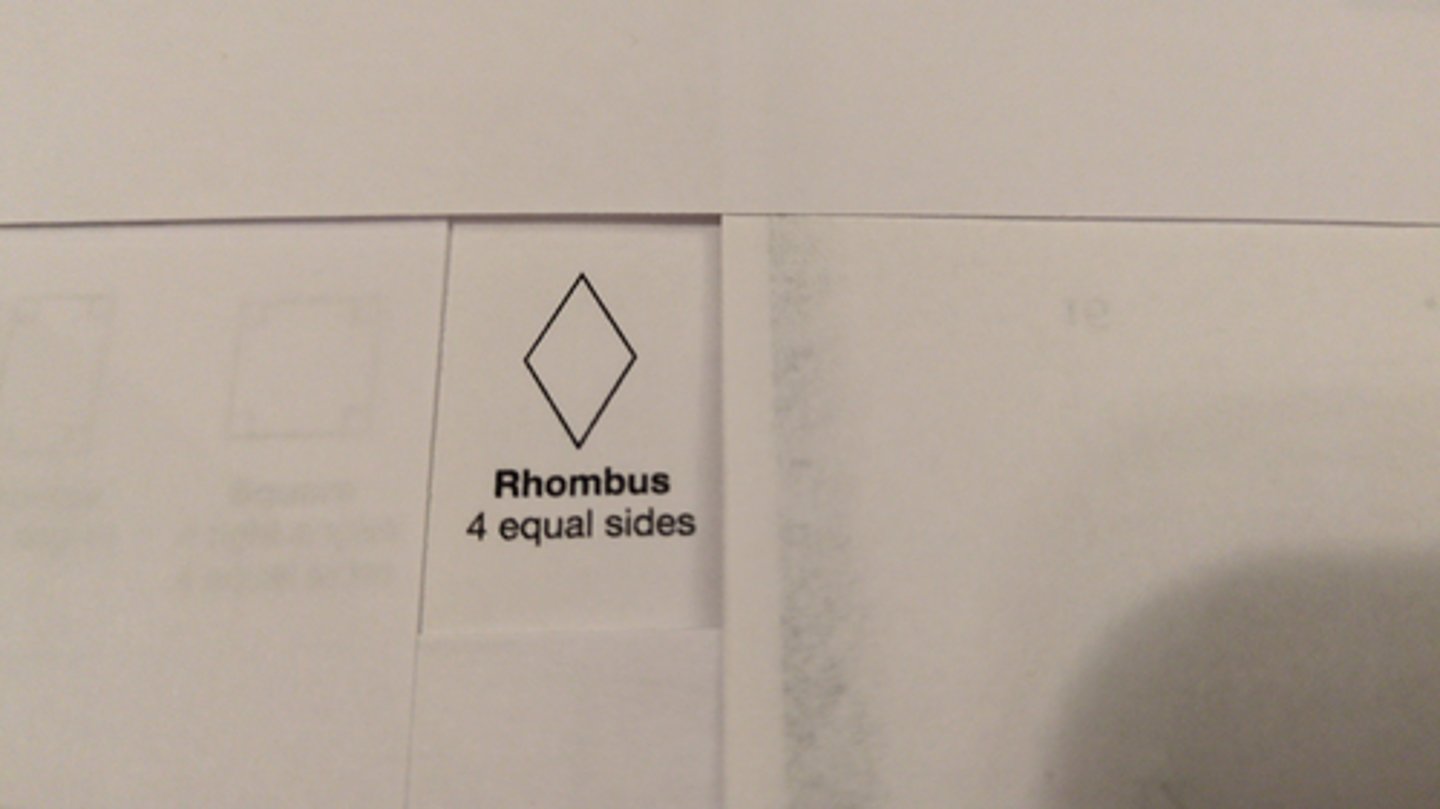
Rhombus
A quadrilateral with 4 equal sides.
A rhombus is a parallelogram with opposite equal acute angles, opposite equal obtuse angles, and four equal sides
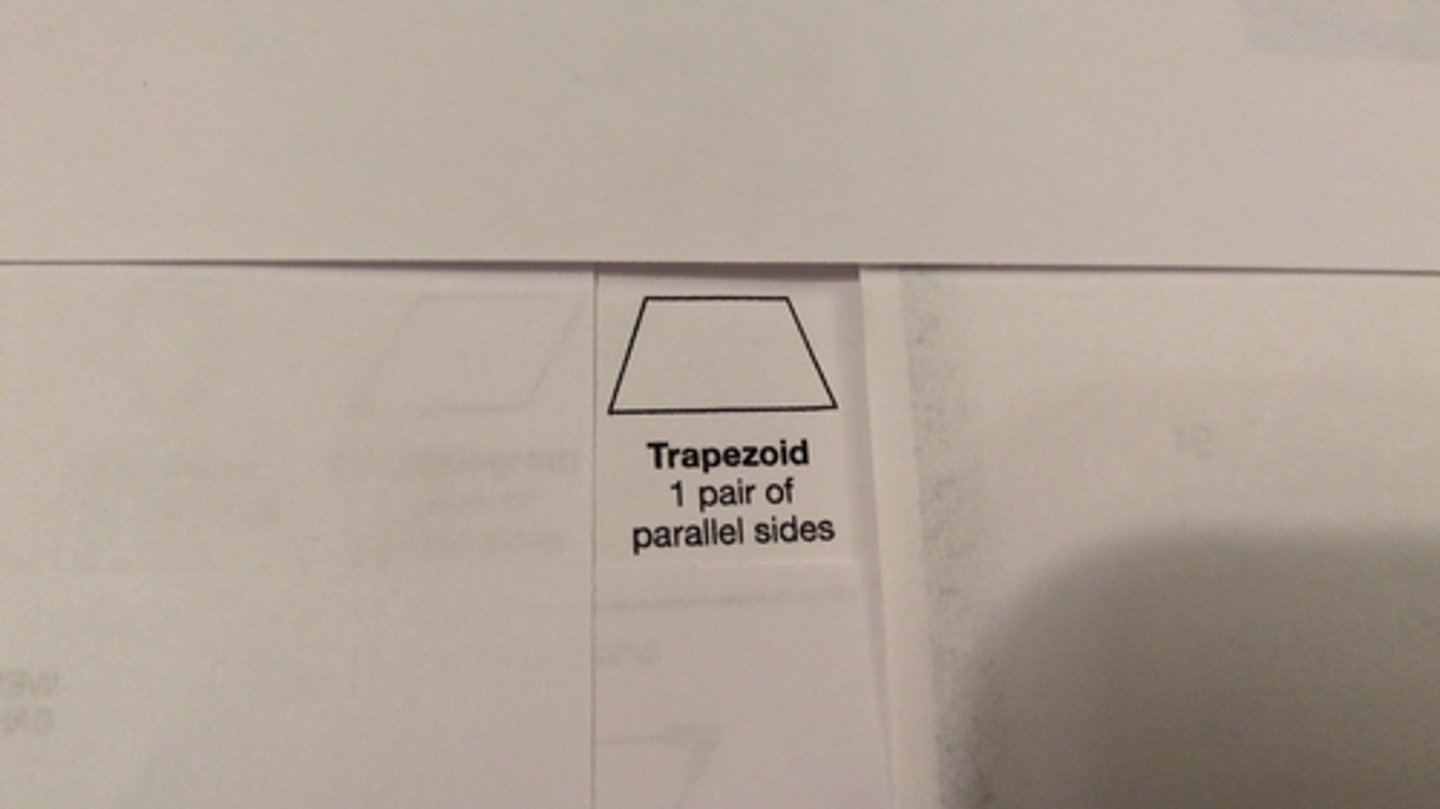
Trapezoid
A quadrilateral with at least one pair of parallel sides.
Right Triangle
A triangle with one right angle.
Multiplying by Zero
Any number multiplied by zero equals zero.
Dividing by Zero
Zero divided by any number equals zero.
0÷8=0
Any number divided by zero equals undefined.
8÷0=undefined
Factors of 12
1, 2, 3, 4, 6, 12
Expression
A mathematical sentence that does not contain an equals sign.
8x6
Equation
A mathematical sentence that contains an equals sign.
8x6=48
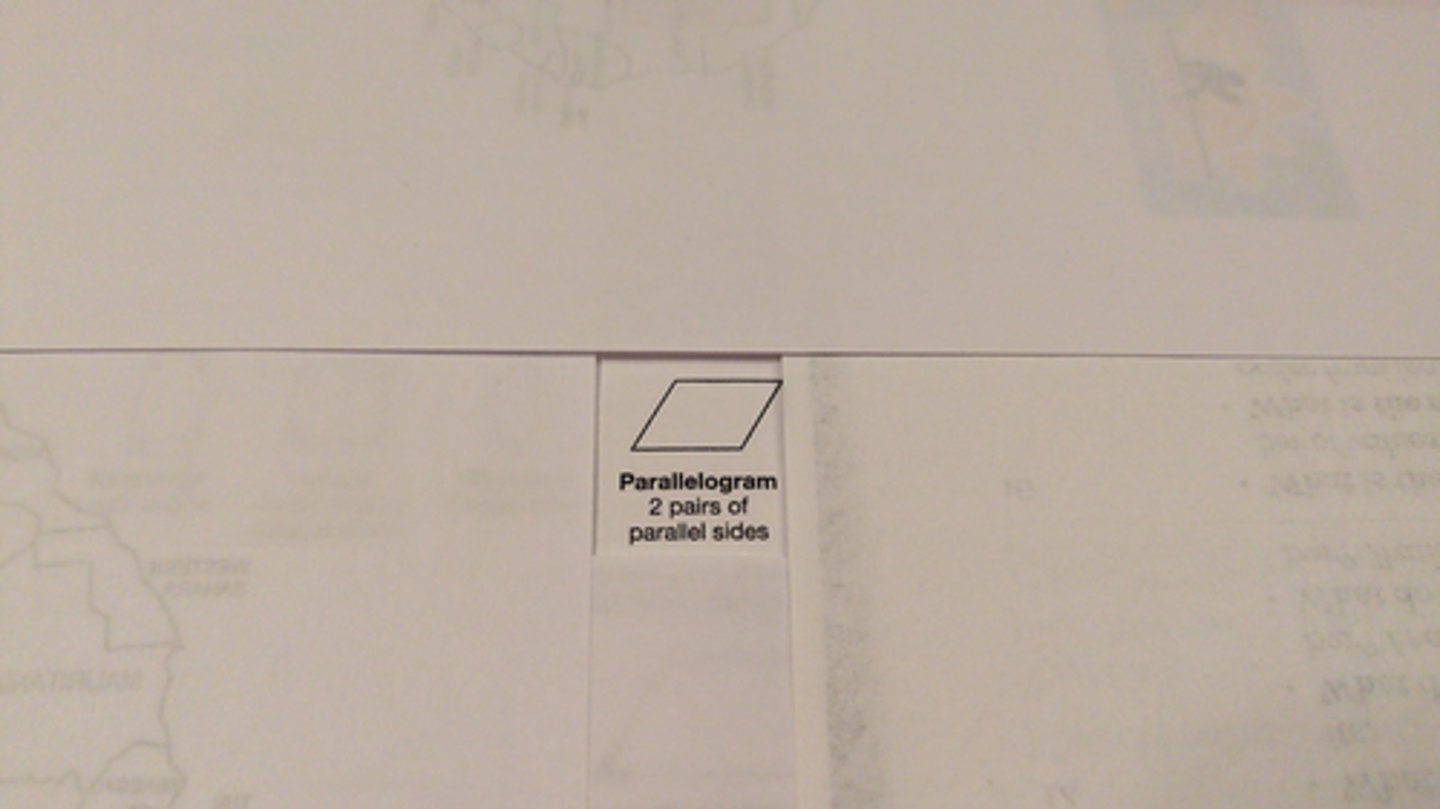
Parallelogram
A quadrilateral with two pairs of parallel sides
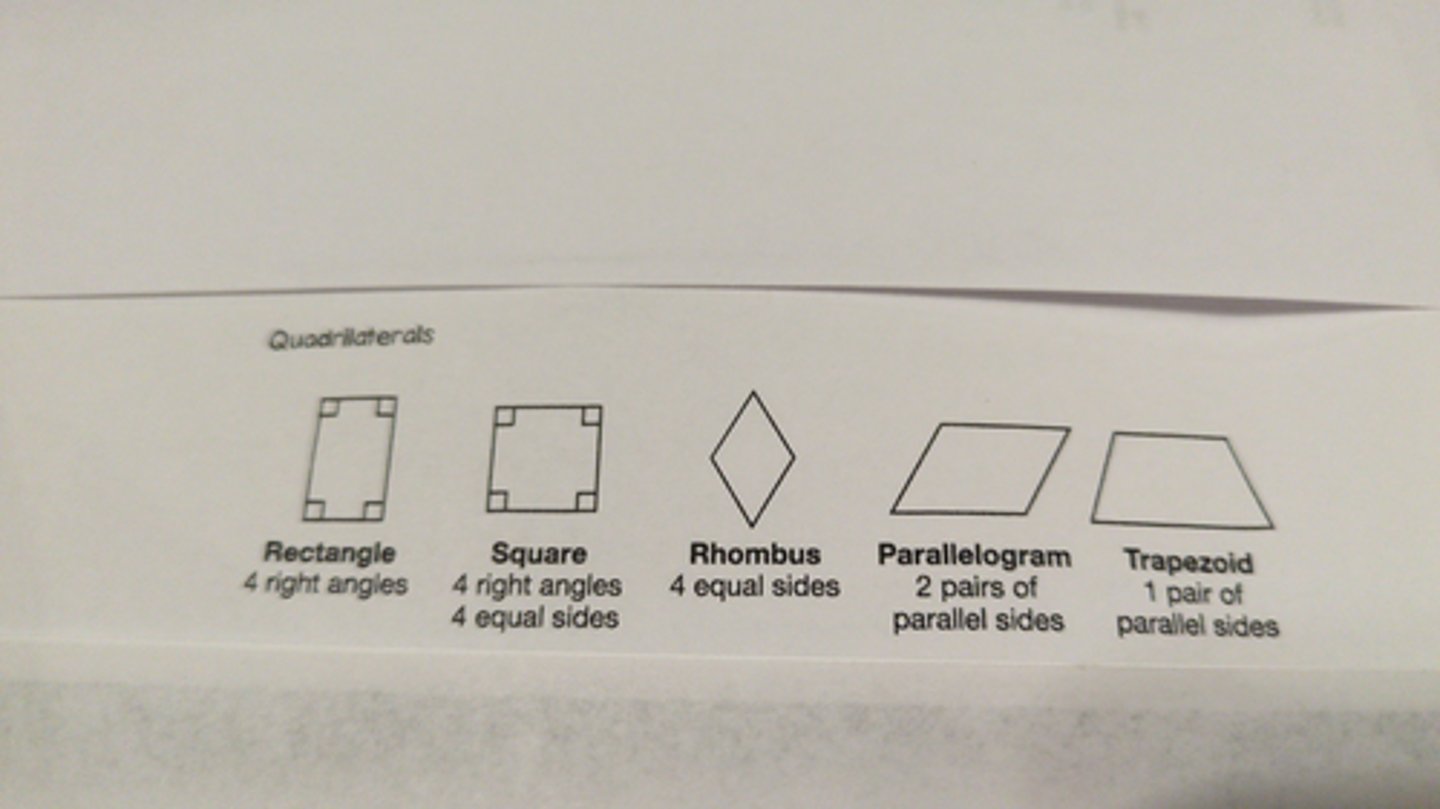
Quadrilaterals
four sided polygons (a flat shape with straight sides)
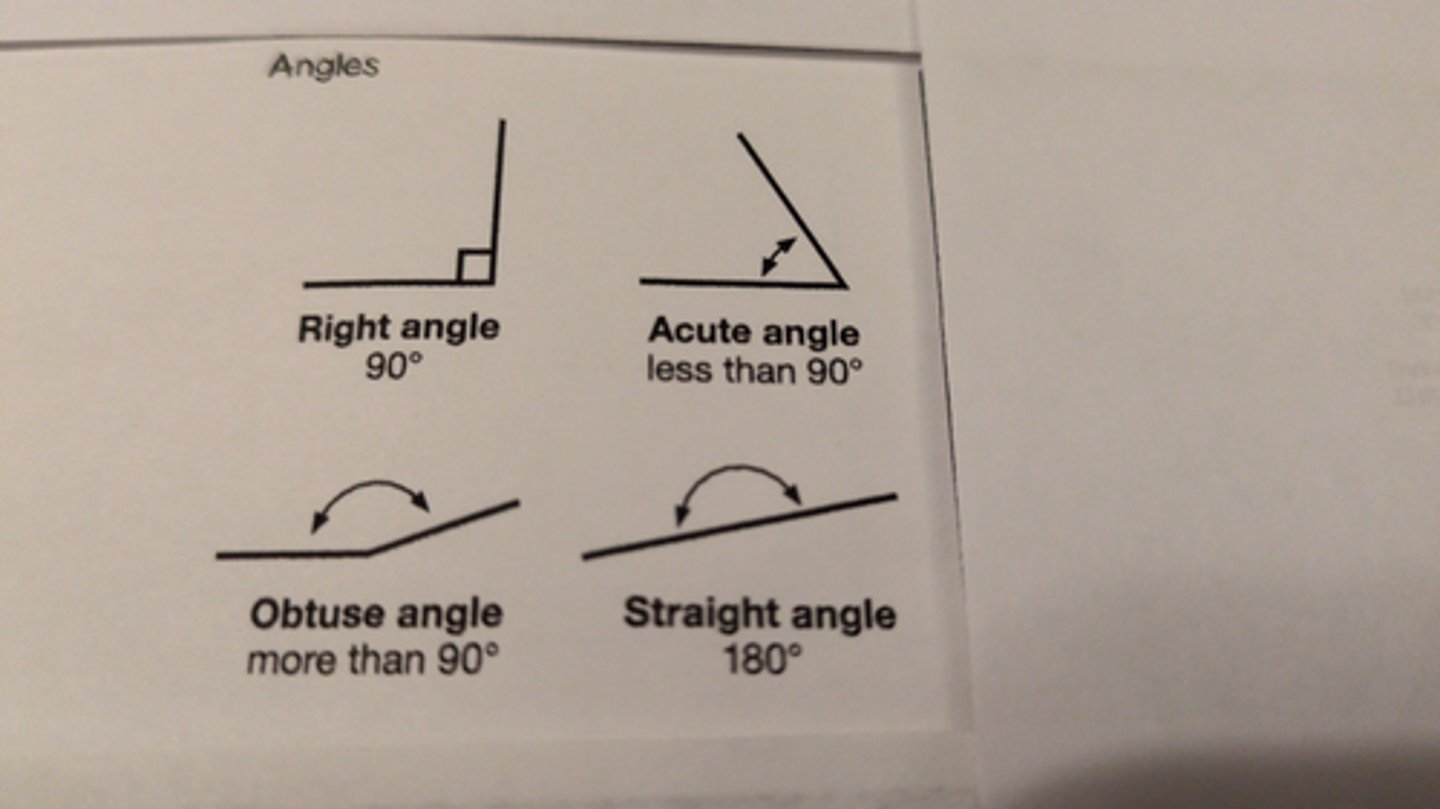
Angles
2 rays joined together at a vertex
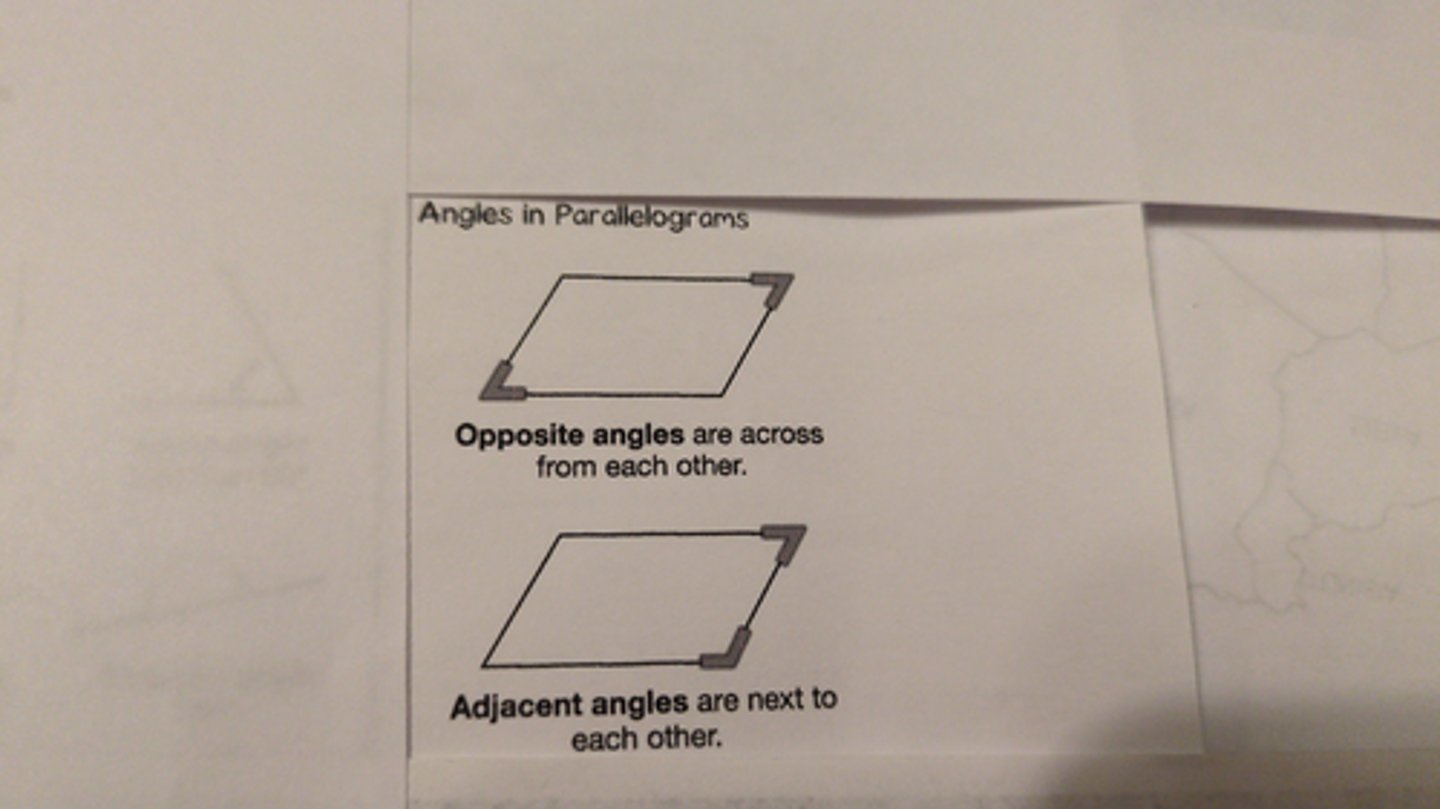
Angles in Parallelograms
opposite (across from each other) or adjacent (next to each other)
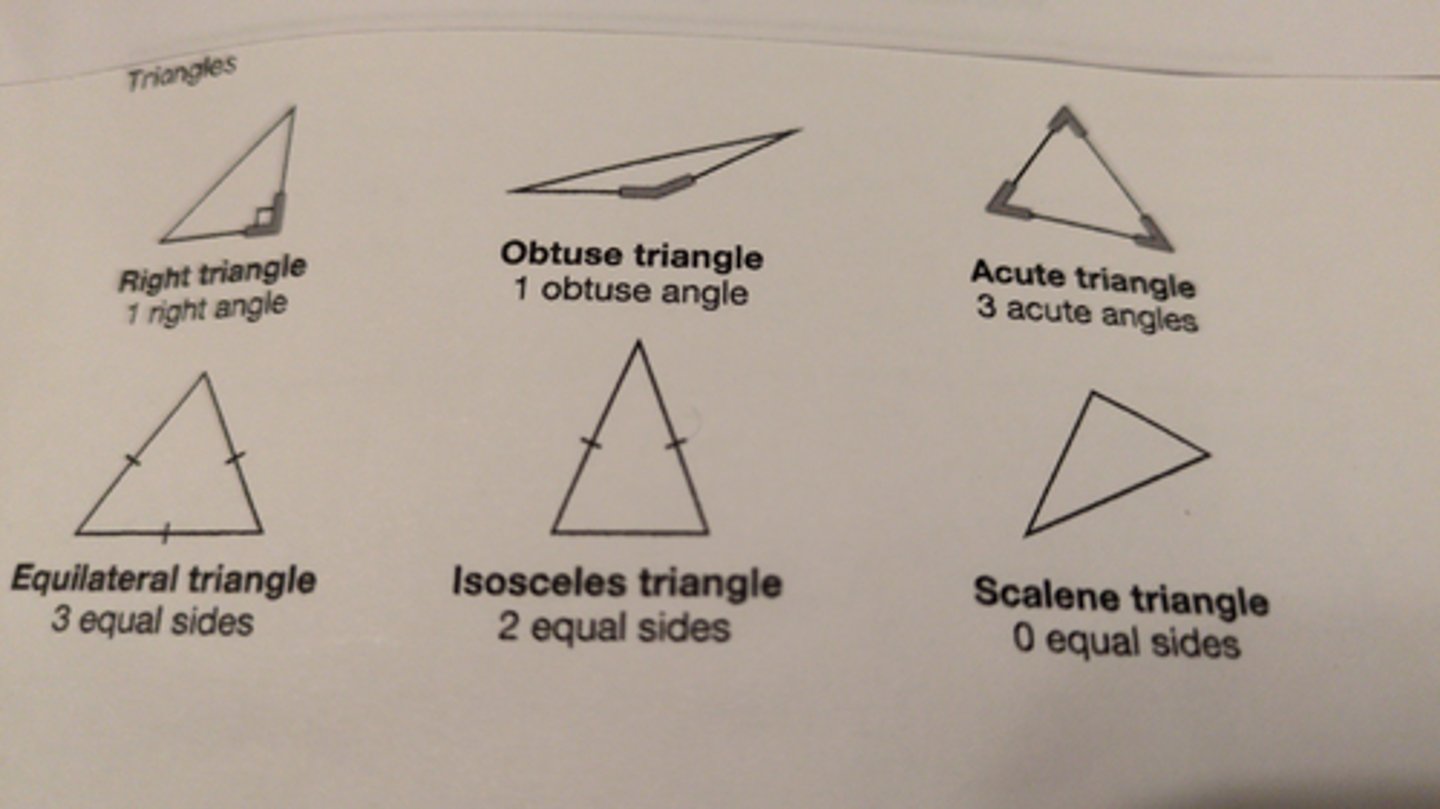
Types of Triangles
right, obtuse, acute, equilateral, isosceles, scalene
1 foot = ____ inches
12 in
1 yard = ____ feet
3 ft
1 yard = _____ inches
36 in
1 mile = ____ feet
5,280 feet
1 pound = ____ ounces
16 oz
1 cup = ___ fluid oz
8 fluid oz
1 centimeter = ___ millimeters
10 mm
1 meter = ____ centimeters
100 cm
1 kilometer = ____ meters
1,000 m
1 kilogram = ____ grams
1000 g
1 liter = ____ milliliters
1000 mL
Mean (average)
The sum of the values divided by the number of values
Median
the middle value when the values are in order from least to greatest
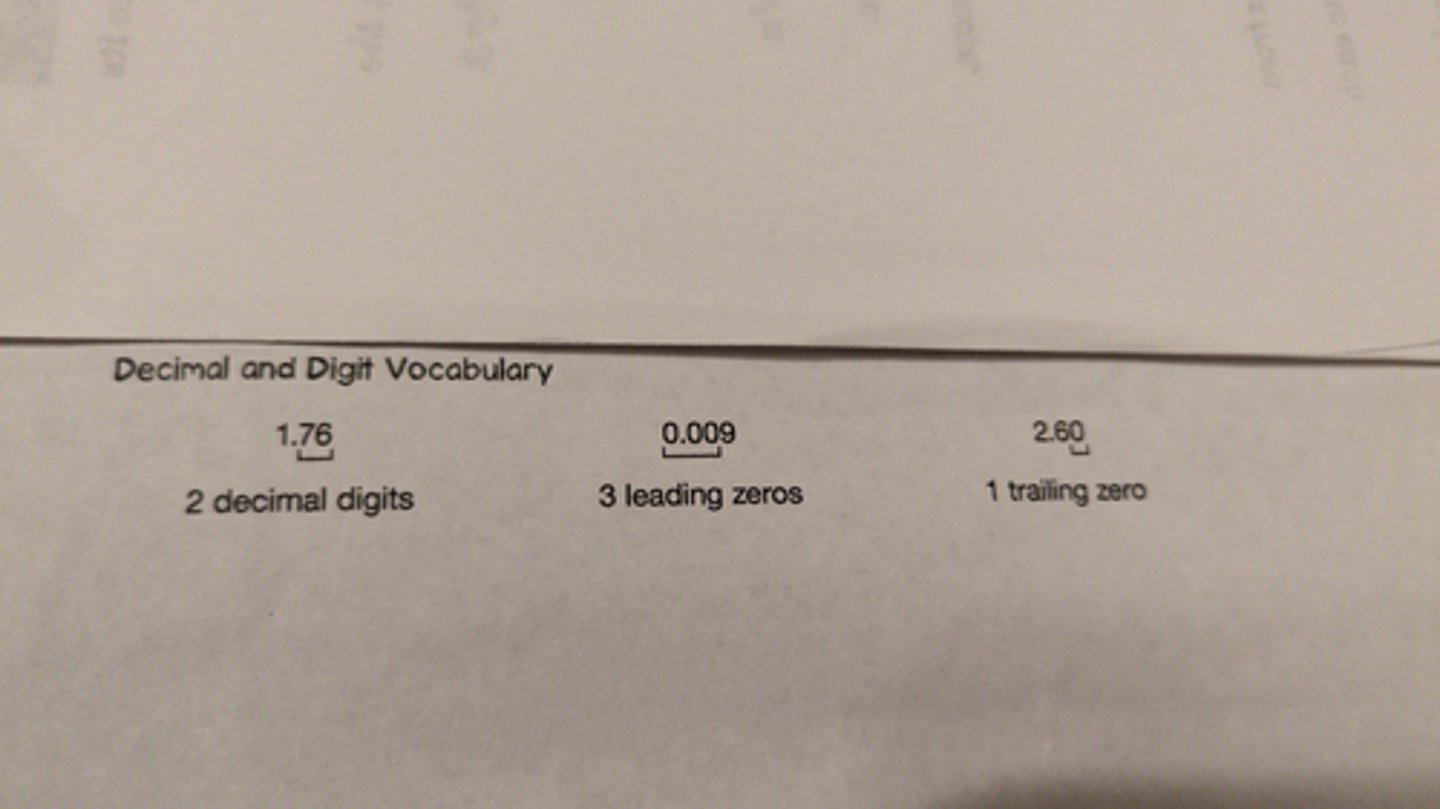
Decimal Vocabulary
decimal digits
leading zeros
trailing zero
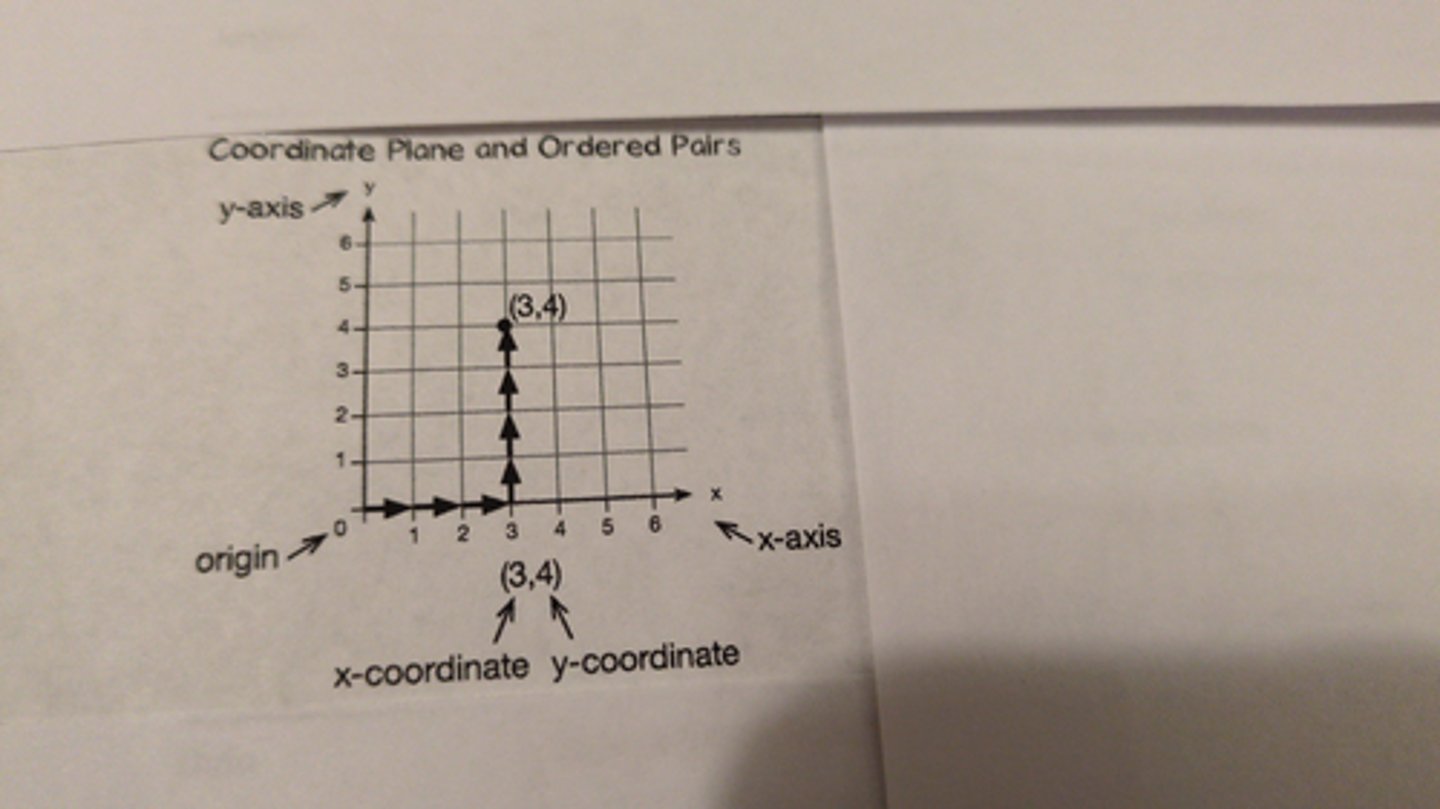
Coordinate Plane and Ordered Pairs
A coordinate plane is a grid formed by two perpendicular number lines (the x-axis and y-axis) that intersect at the origin (0,0).
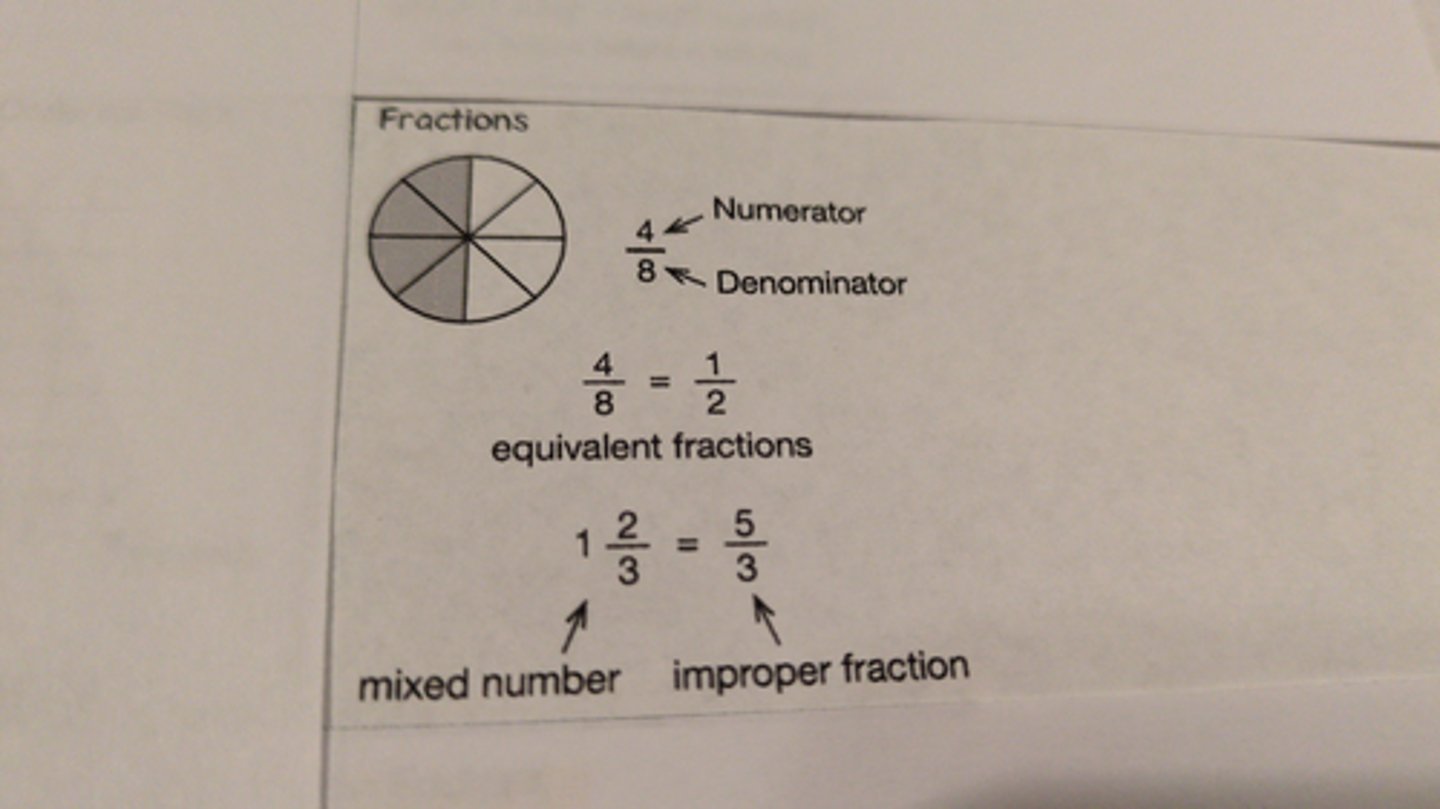
Fractions
a number that expresses parts of a whole
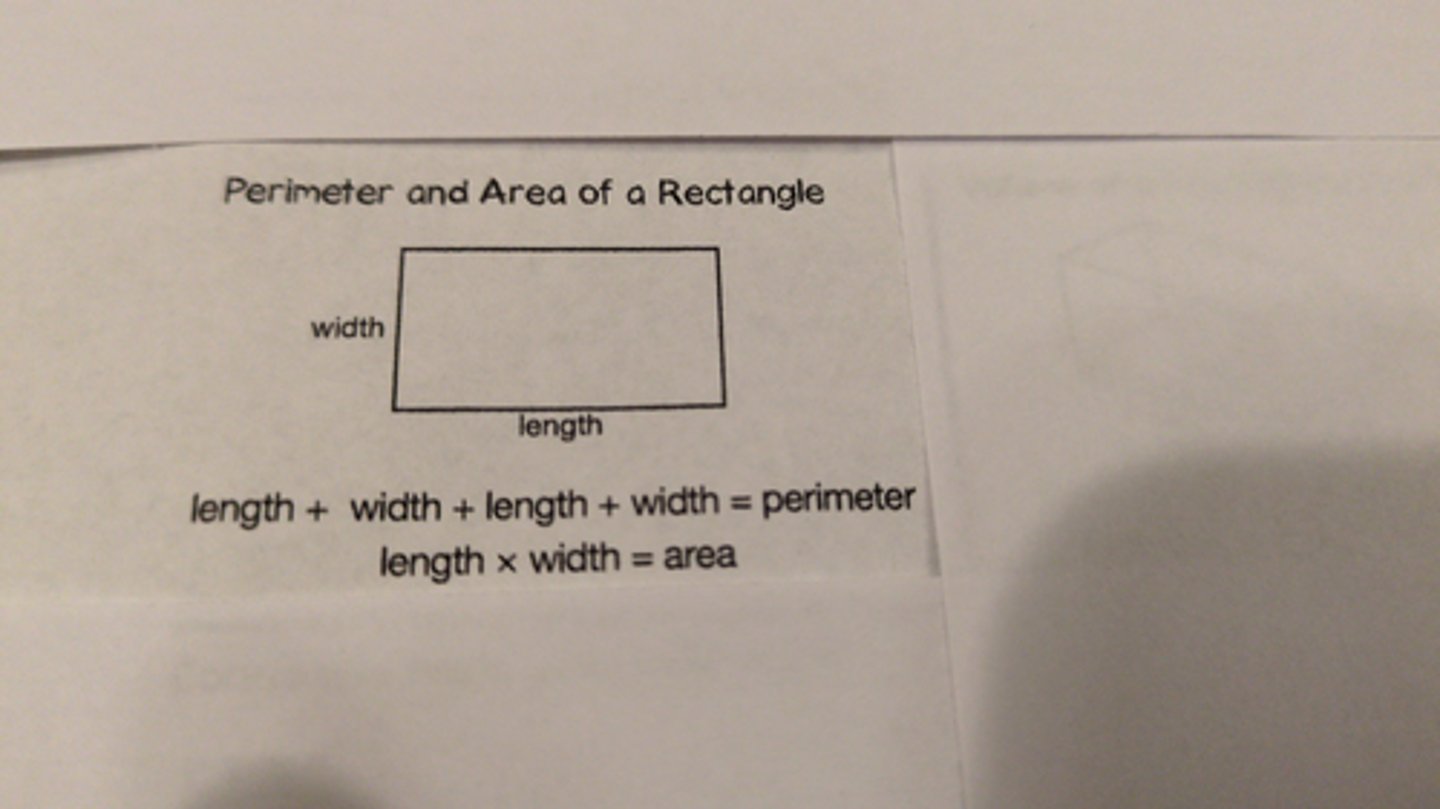
Perimeter of a rectangle
P= 2L + 2w
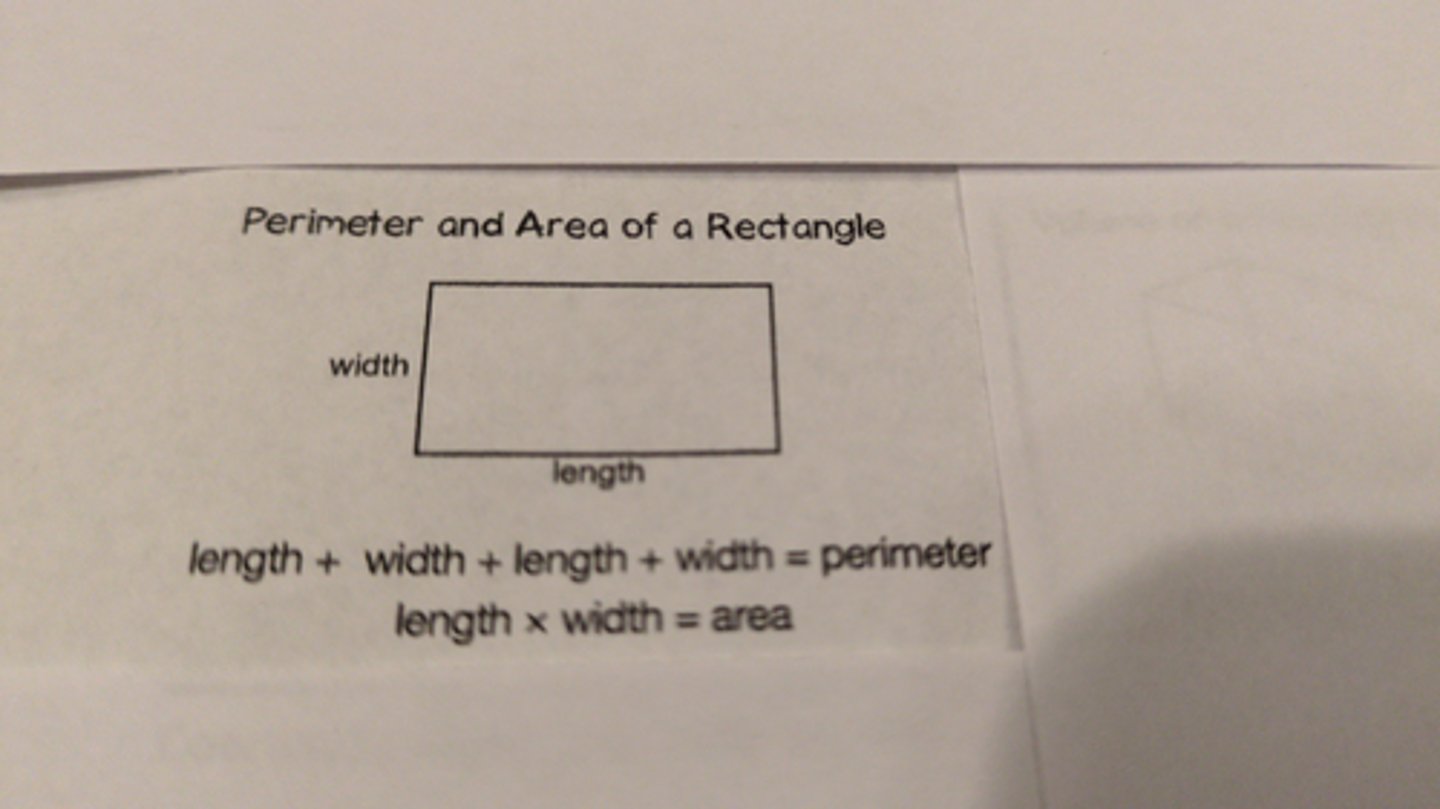
Area of a rectangle
A=lw
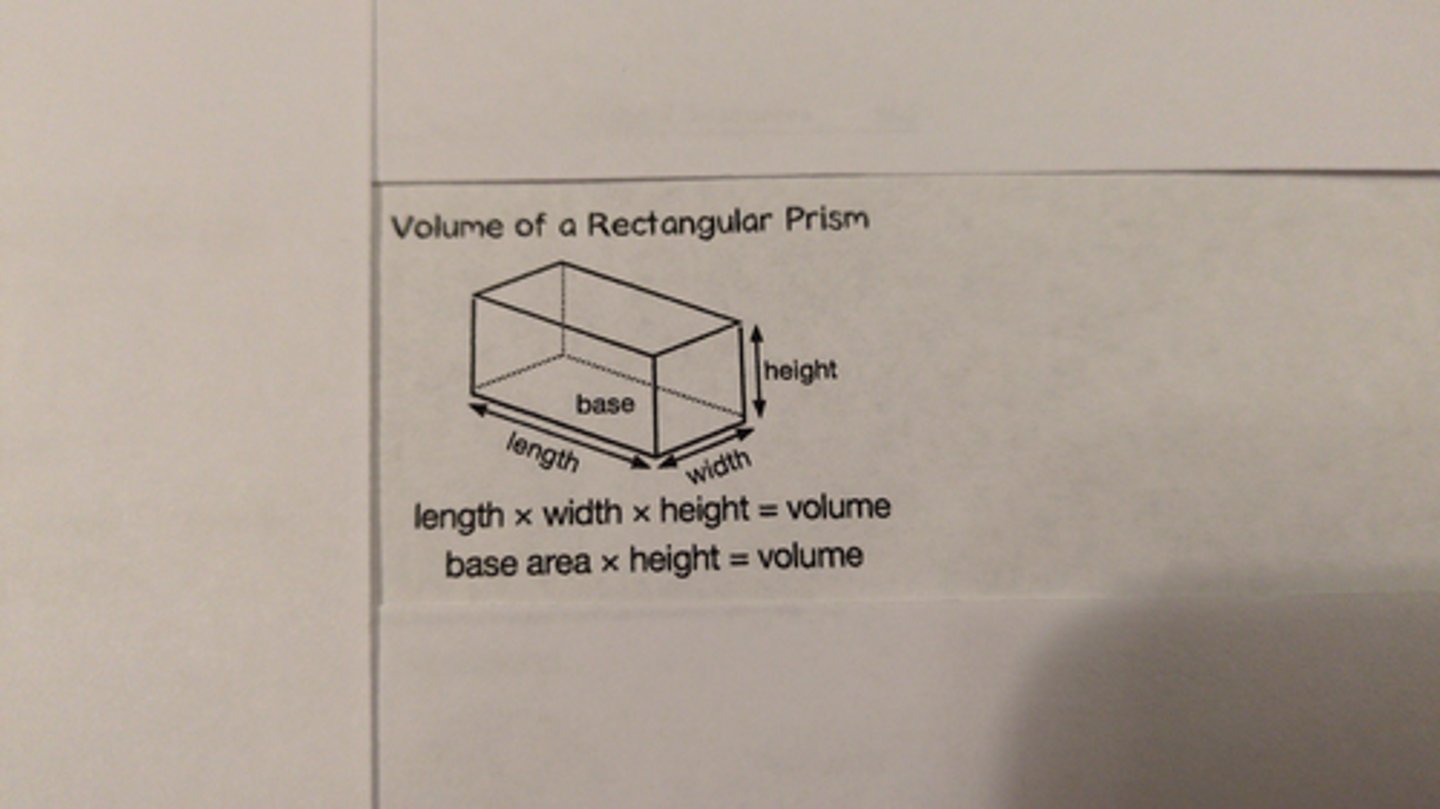
Volume of a rectangular prism
V=lwh
Not studied (52)
You haven't studied these terms yet!

