Intro to Neuroscience Exam 2 FSU (Nelu Radpour)
 Call Kai
 Learn
Learn Practice Test
 Spaced Repetition
 Match
Match Flashcards
 Knowt Play
1/102

There's no tags or description
Looks like no tags are added yet.
Name | Mastery | Learn | Test | Matching | Spaced | Call with Kai |
|---|
No analytics yet
Send a link to your students to track their progress
103 Terms
What are neurotransmitters?
Chemical messengers released by neurons that transmit signals across the synapse.
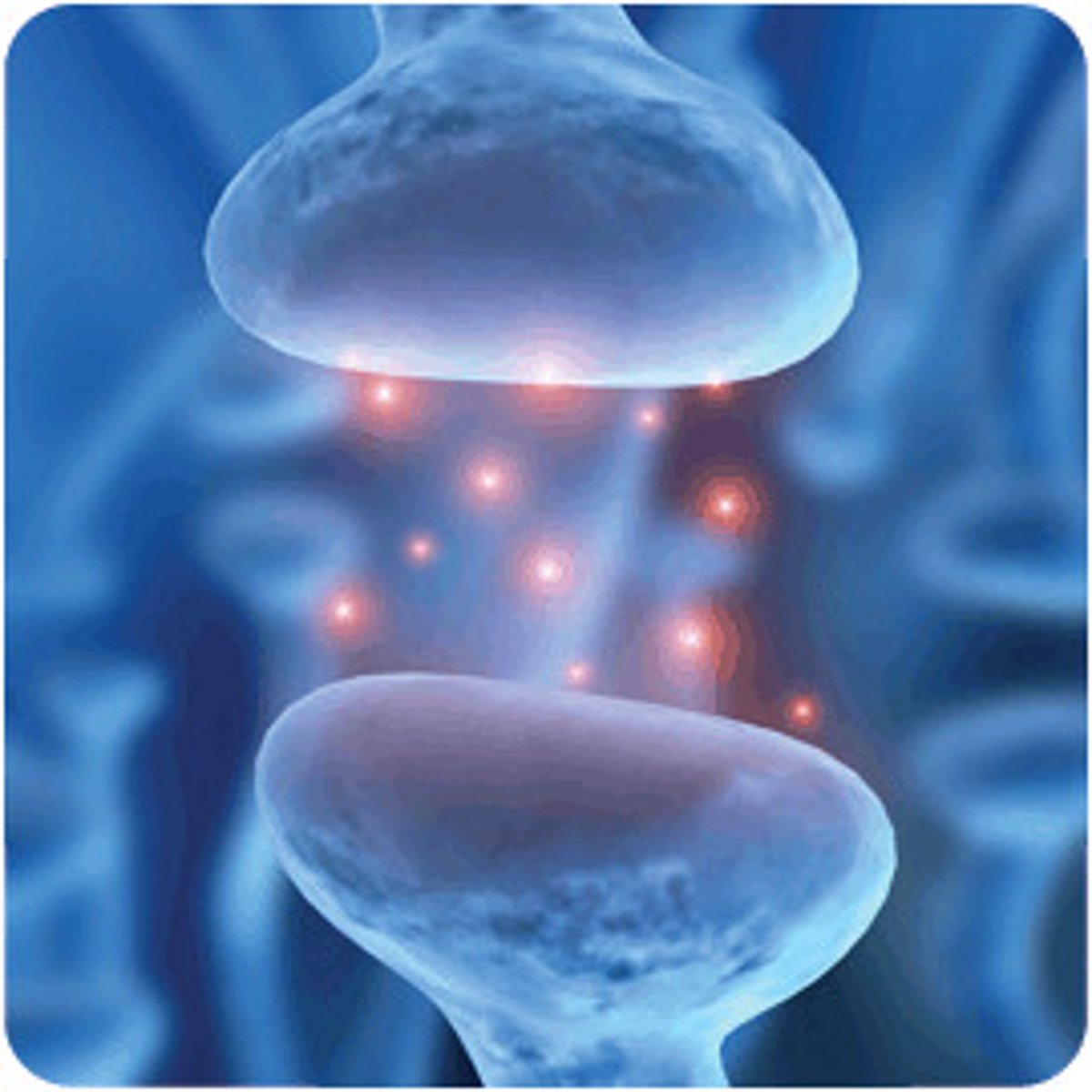
What role do neurotransmitters play in synaptic communication?
They are released from presynaptic terminals, bind to postsynaptic receptors, and influence whether that neuron will fire an action potential.
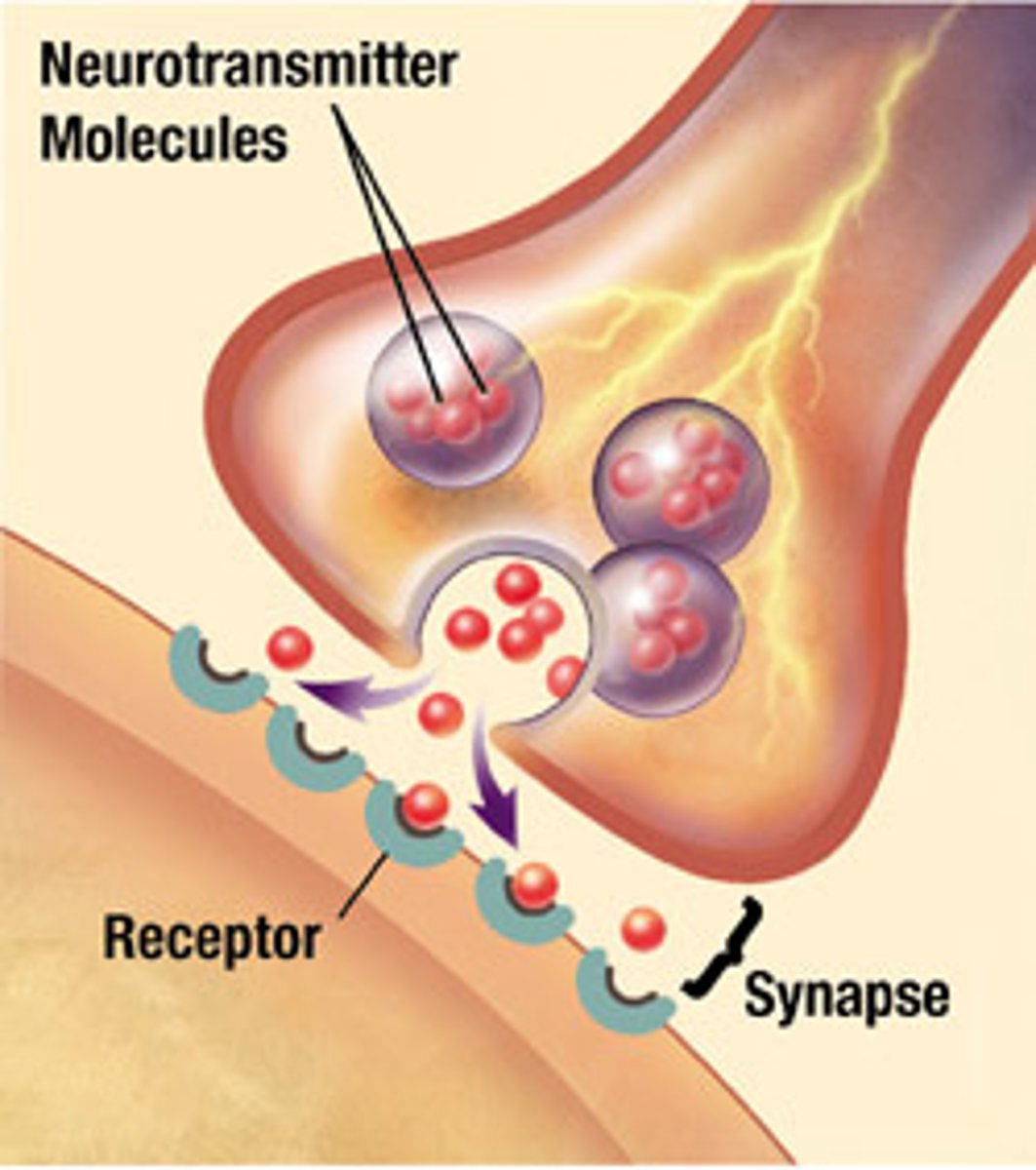
What is an excitatory neurotransmitter?
increases the likelihood that the postsynaptic neuron will fire an action potential.
What is an inhibitory neurotransmitter?
decreases the likelihood that the postsynaptic neuron will fire an action potential.
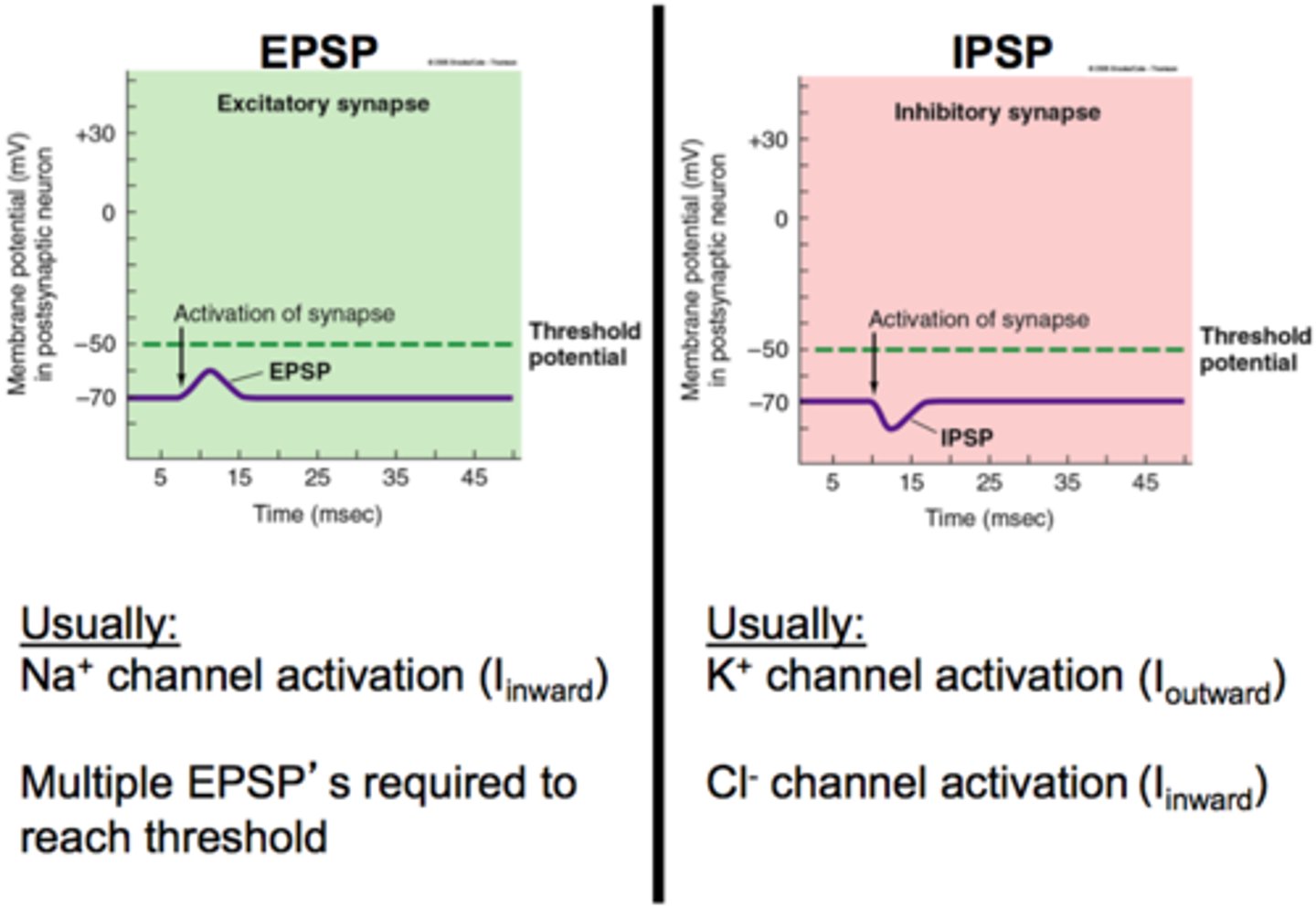
What is an EPSP?
An excitatory postsynaptic potential that depolarizes the neuron.
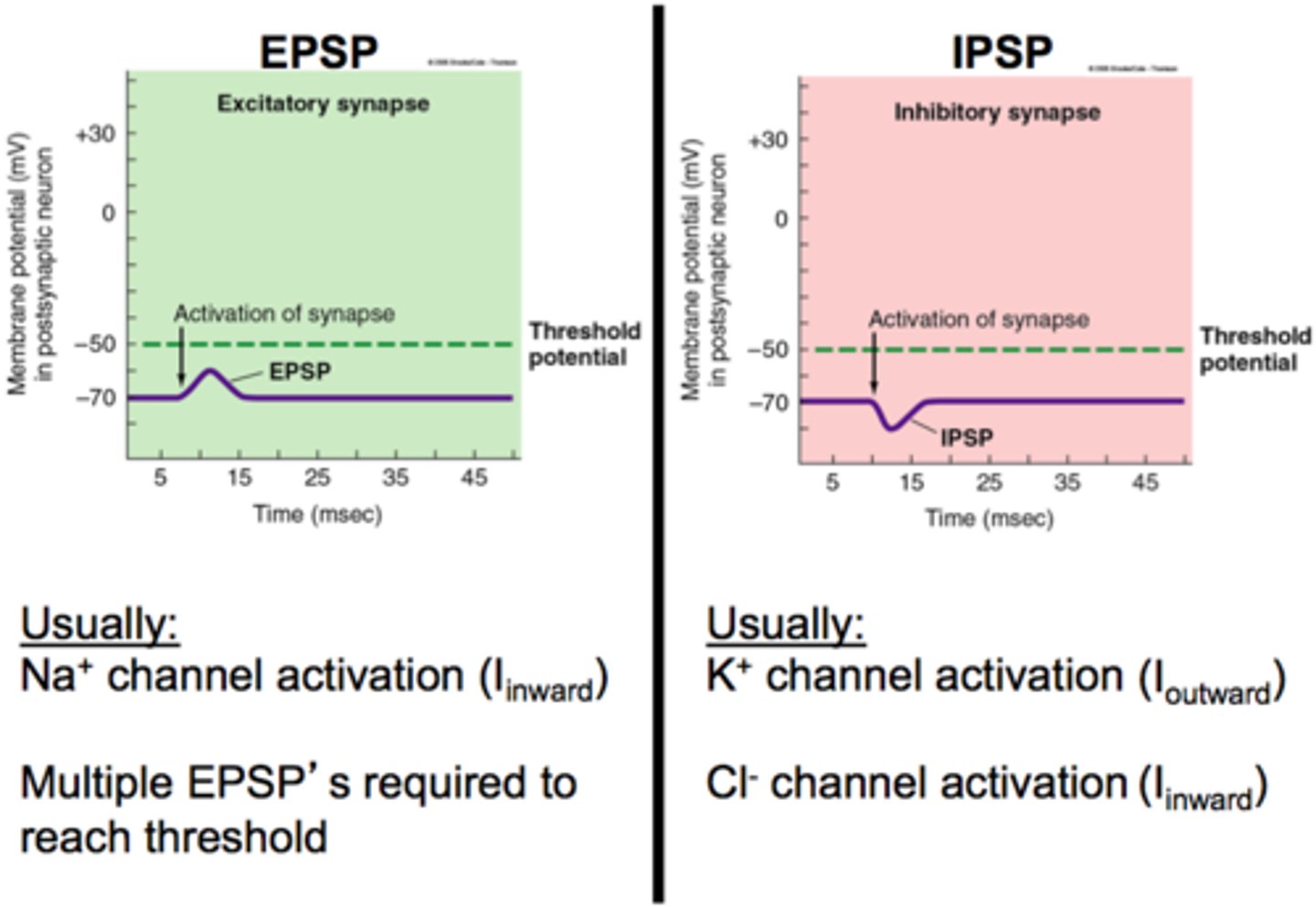
What is an IPSP?
An inhibitory postsynaptic potential that hyperpolarizes the neuron.
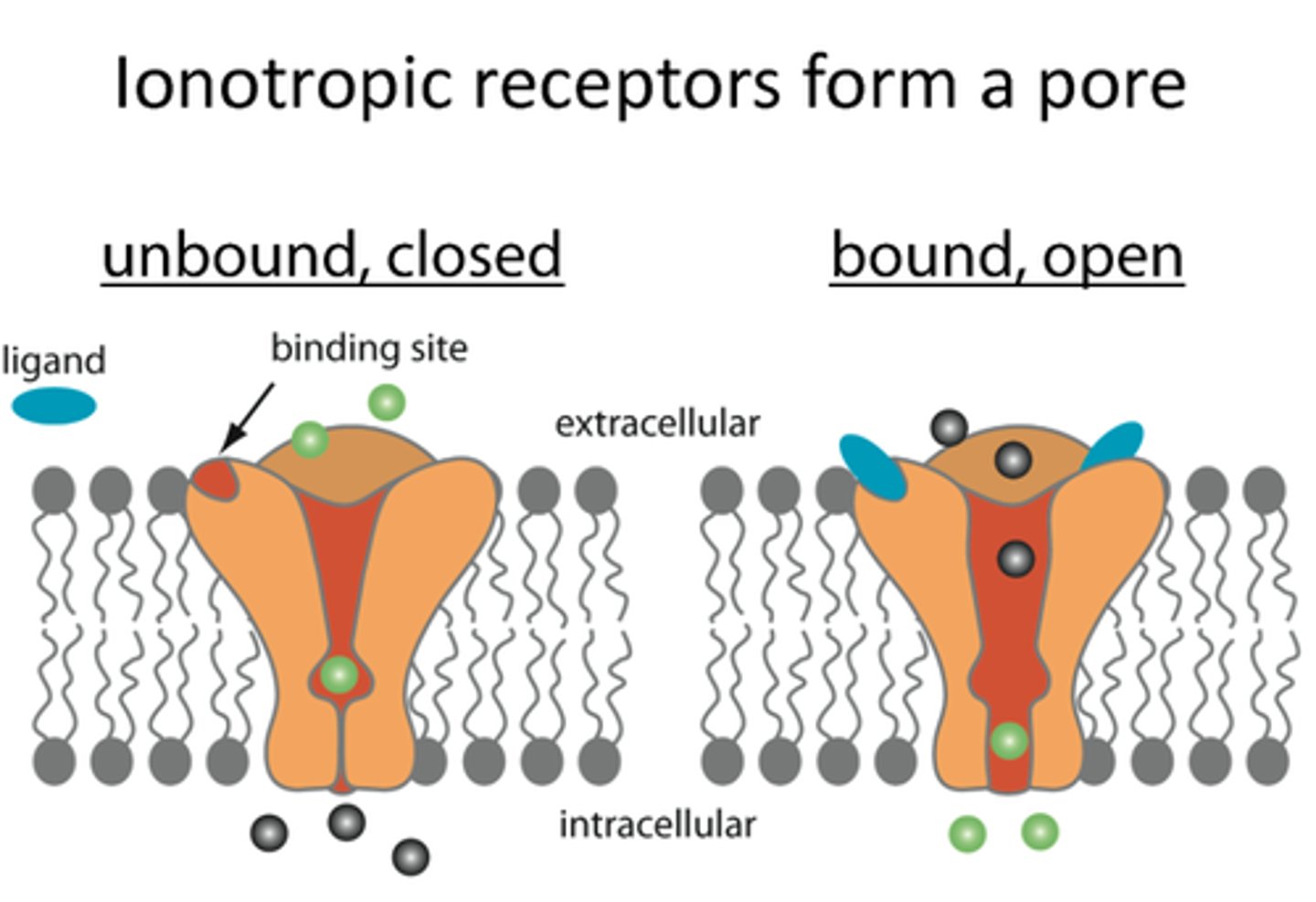
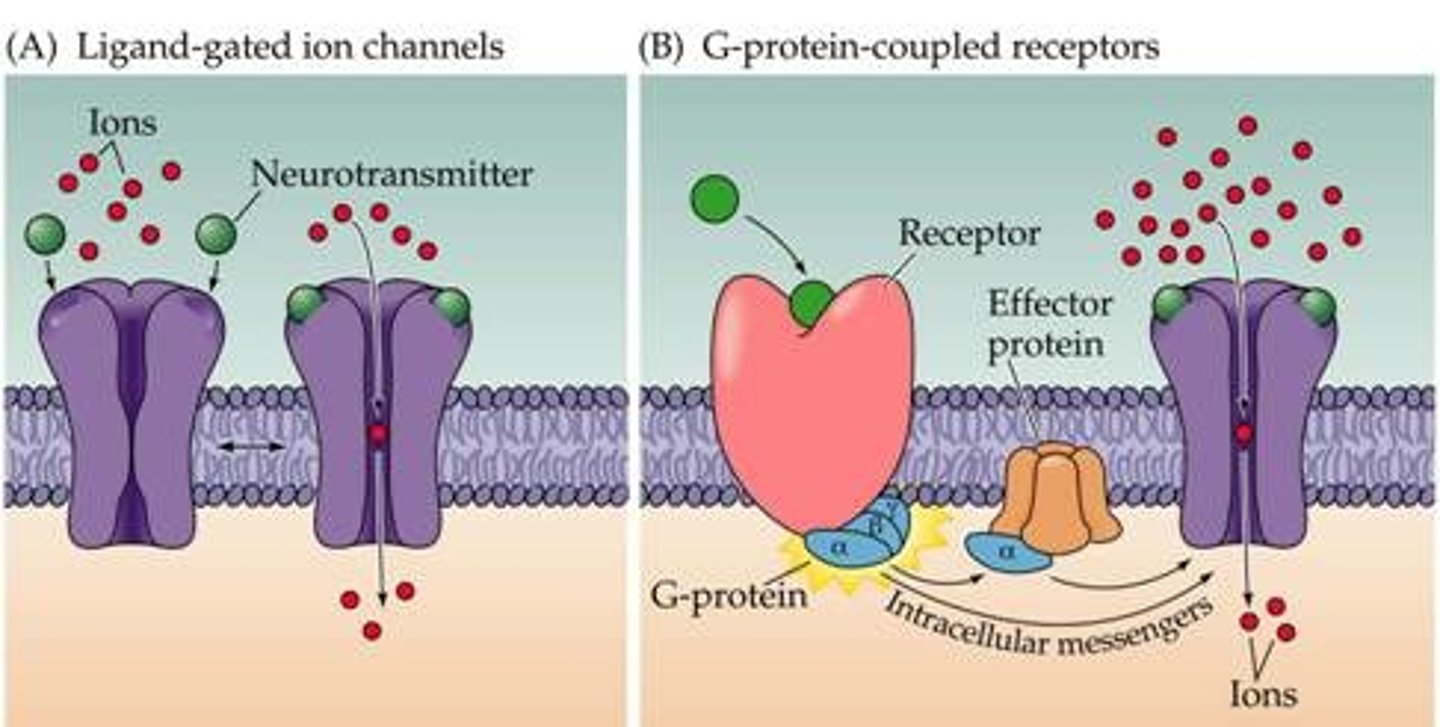
What are ionotropic receptors?
Fast-acting receptors that directly open ion channels when a neurotransmitter binds.
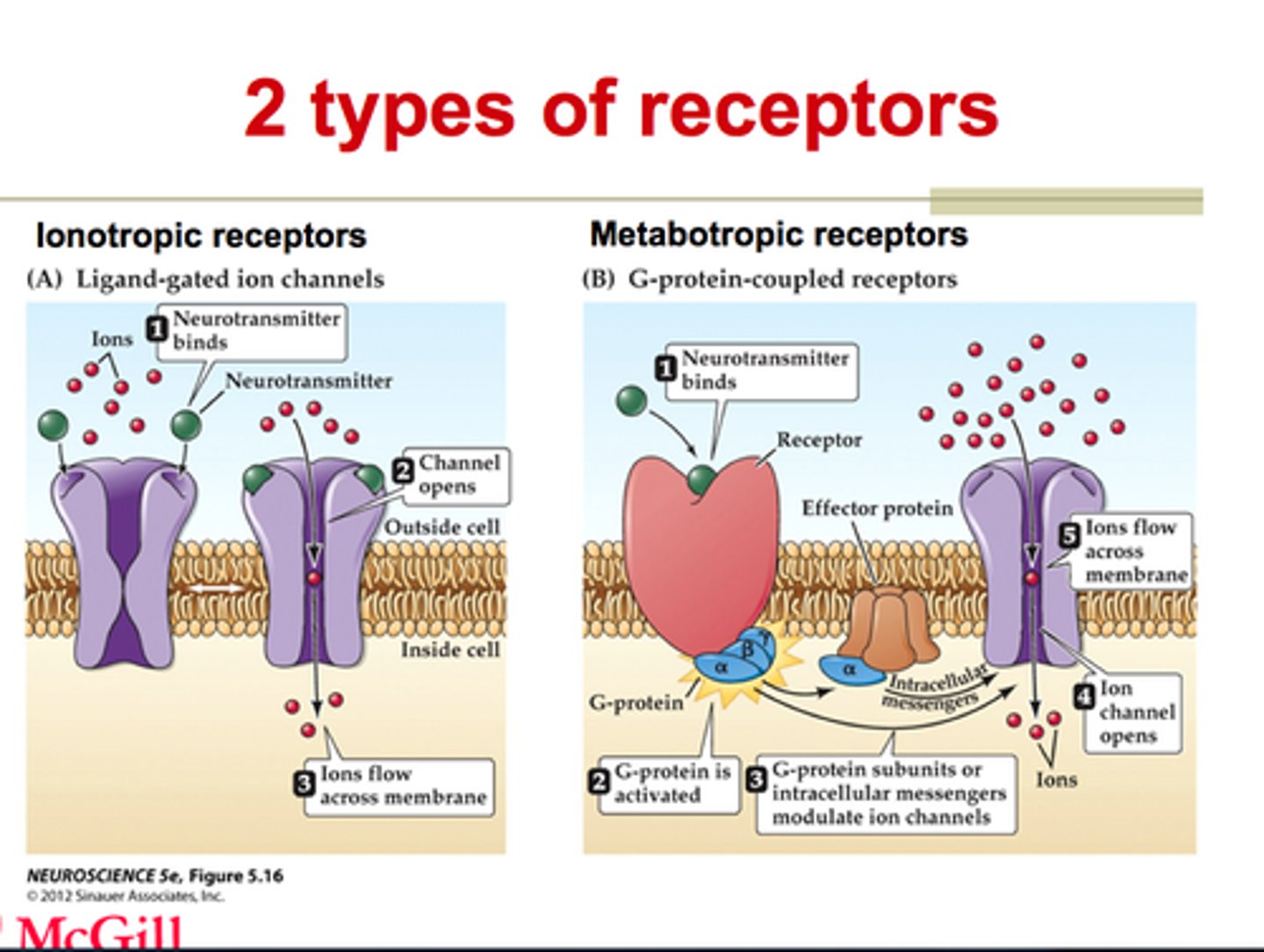
What are metabotropic receptors?
Slower receptors that activate G-proteins and second messenger systems.
What is GABA?
The brain's main inhibitory neurotransmitter.
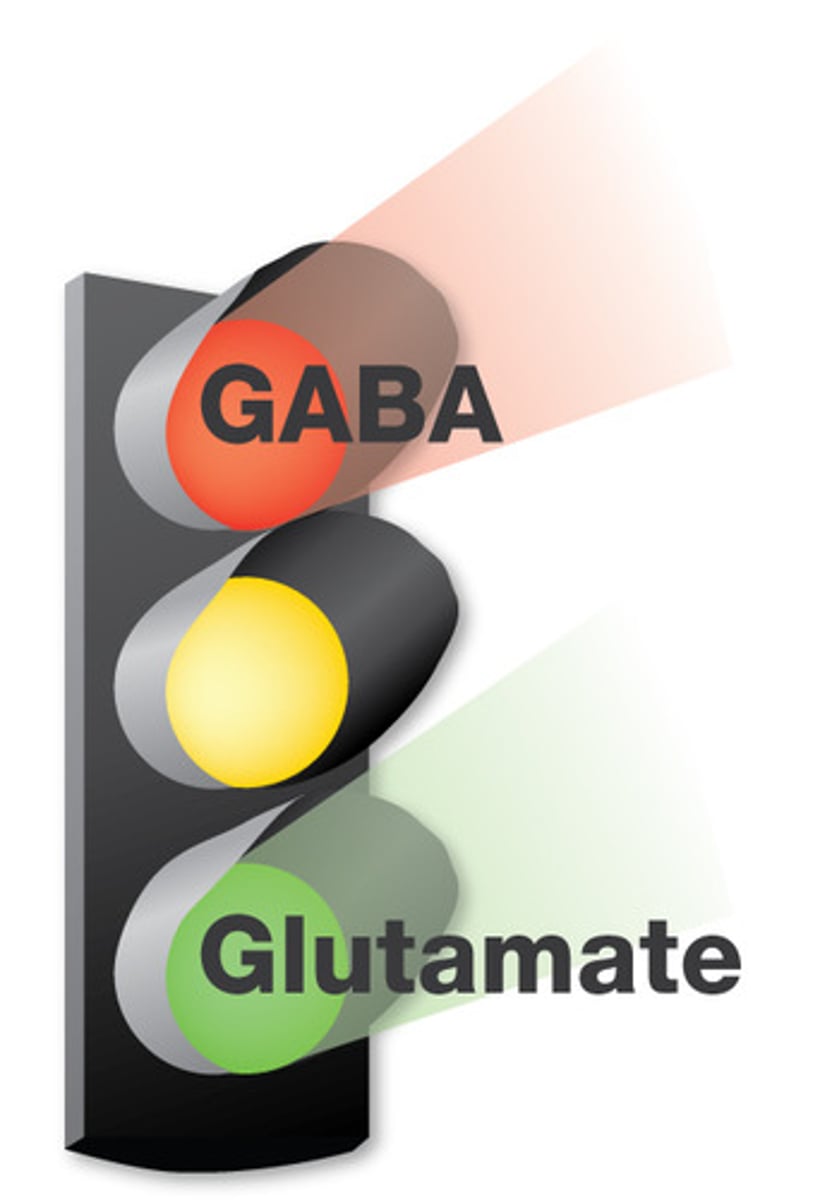
What is glutamate?
The brain's main excitatory neurotransmitter.
What is acetylcholine responsible for?
Muscle movement, attention, learning, and memory.
What is dopamine associated with?
Reward, motivation, movement, and reinforcement learning.
What is serotonin involved in?
Mood regulation, sleep, appetite, and emotional processing.
What is norepinephrine responsible for?
Arousal, alertness, attention, and stress responses.
What are endorphins?
Natural opioids that reduce pain and produce feelings of pleasure.
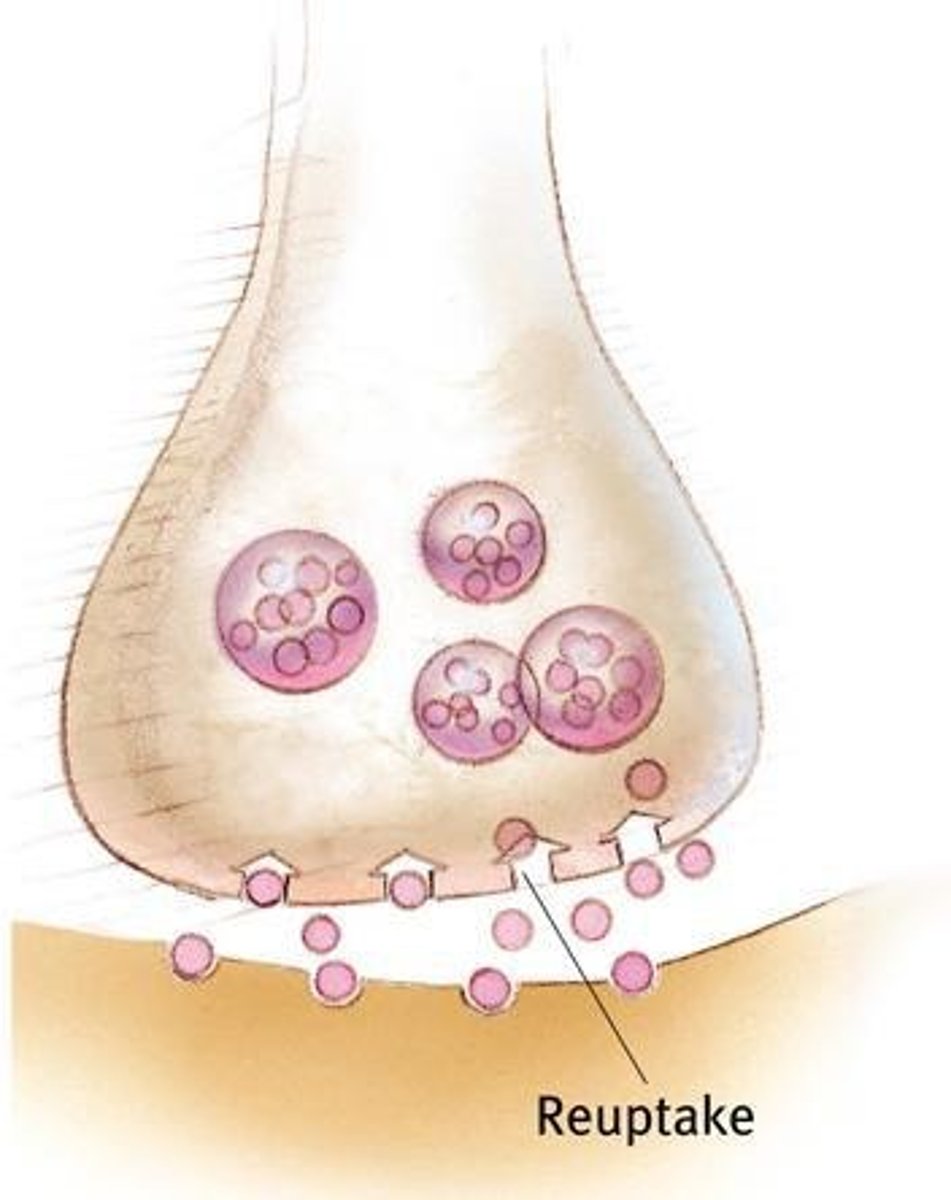
What is reuptake?
The process where neurotransmitters are reabsorbed back into the presynaptic neuron.
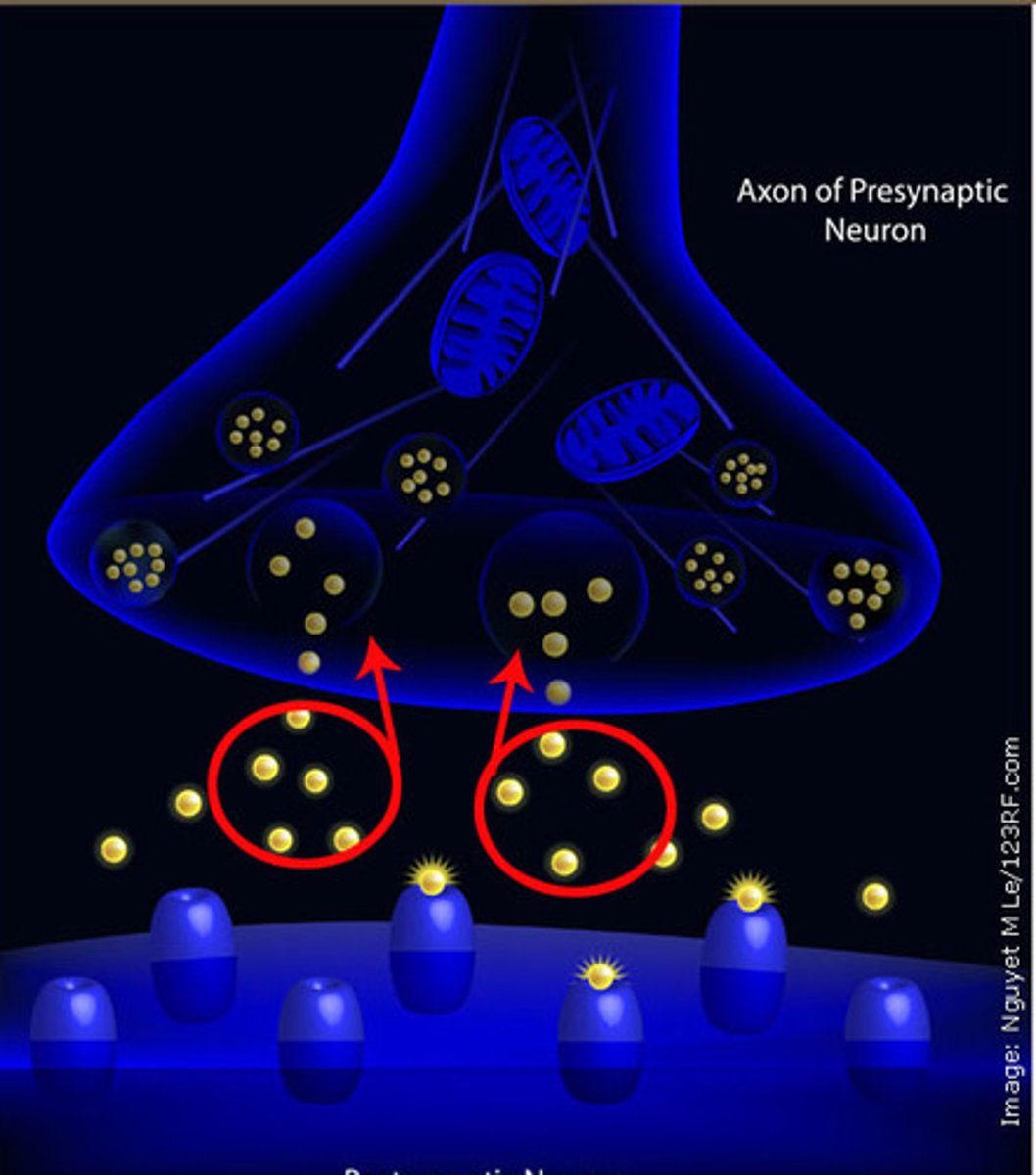
What is enzymatic degradation?
The breakdown of neurotransmitters by enzymes in the synapse.
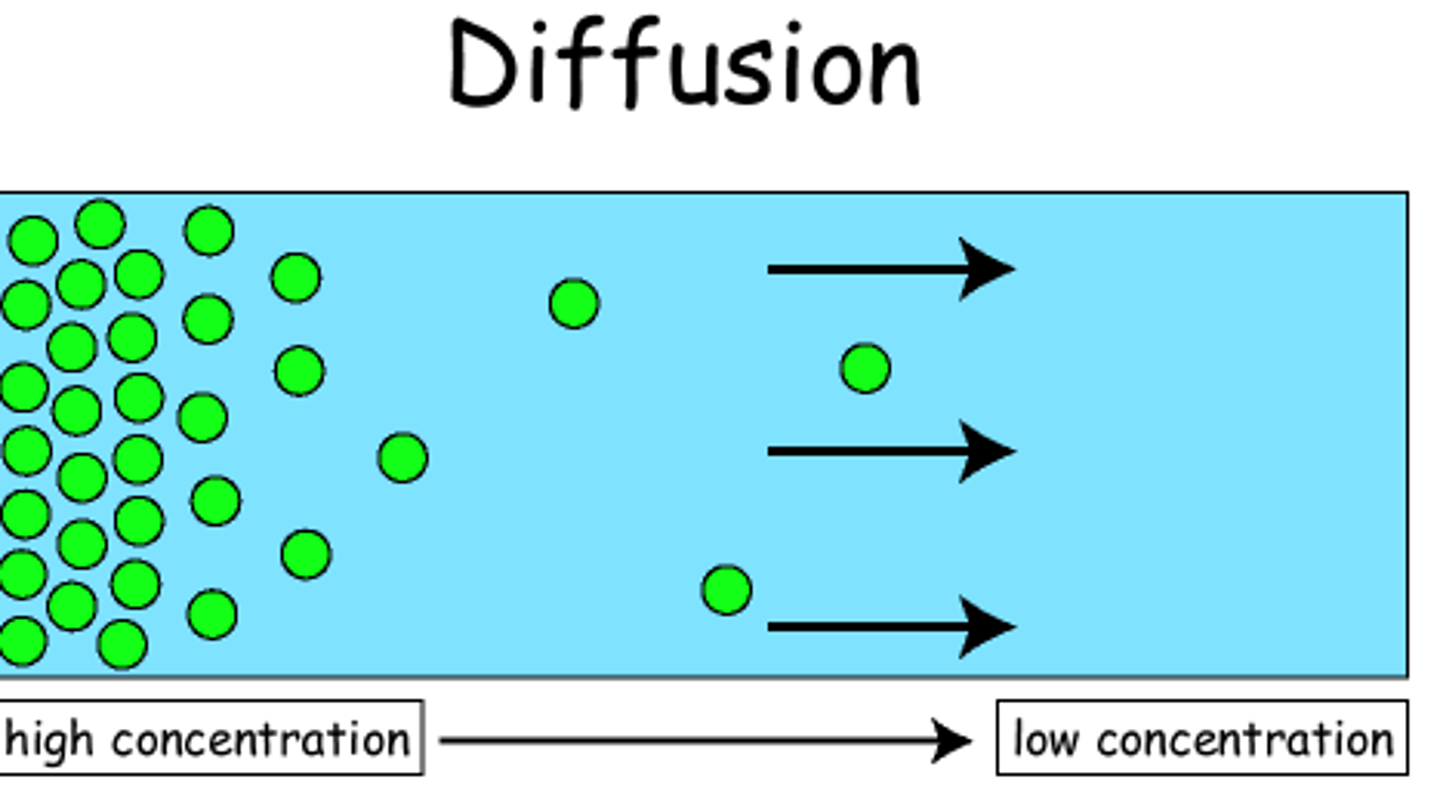
What is diffusion?
Neurotransmitters drifting away from the synapse.
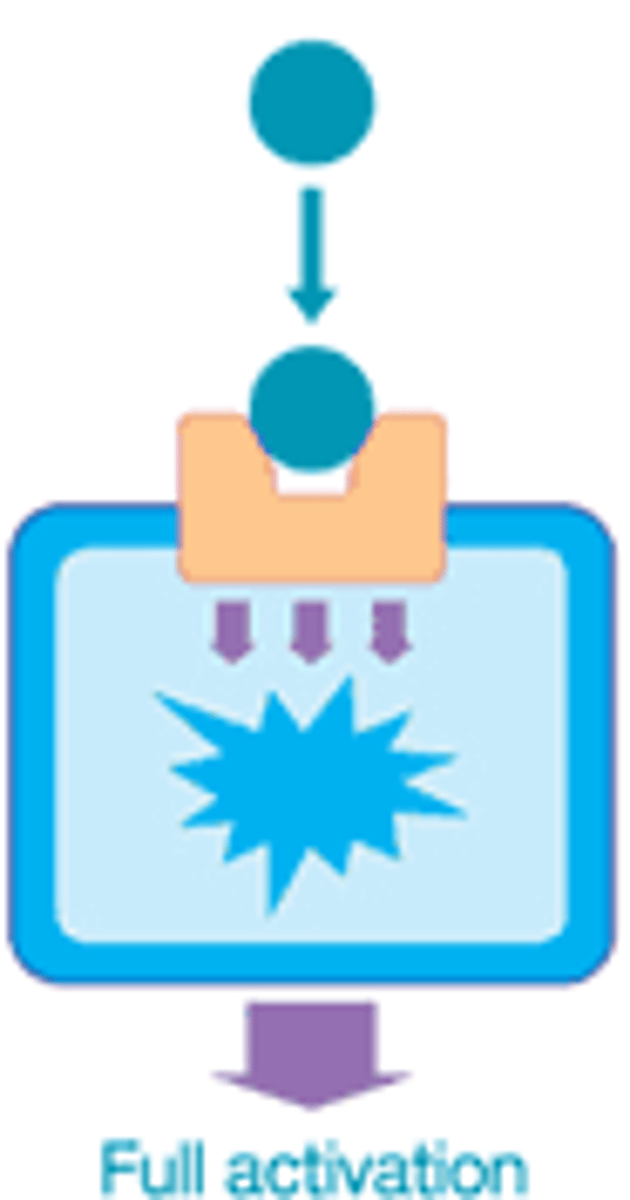
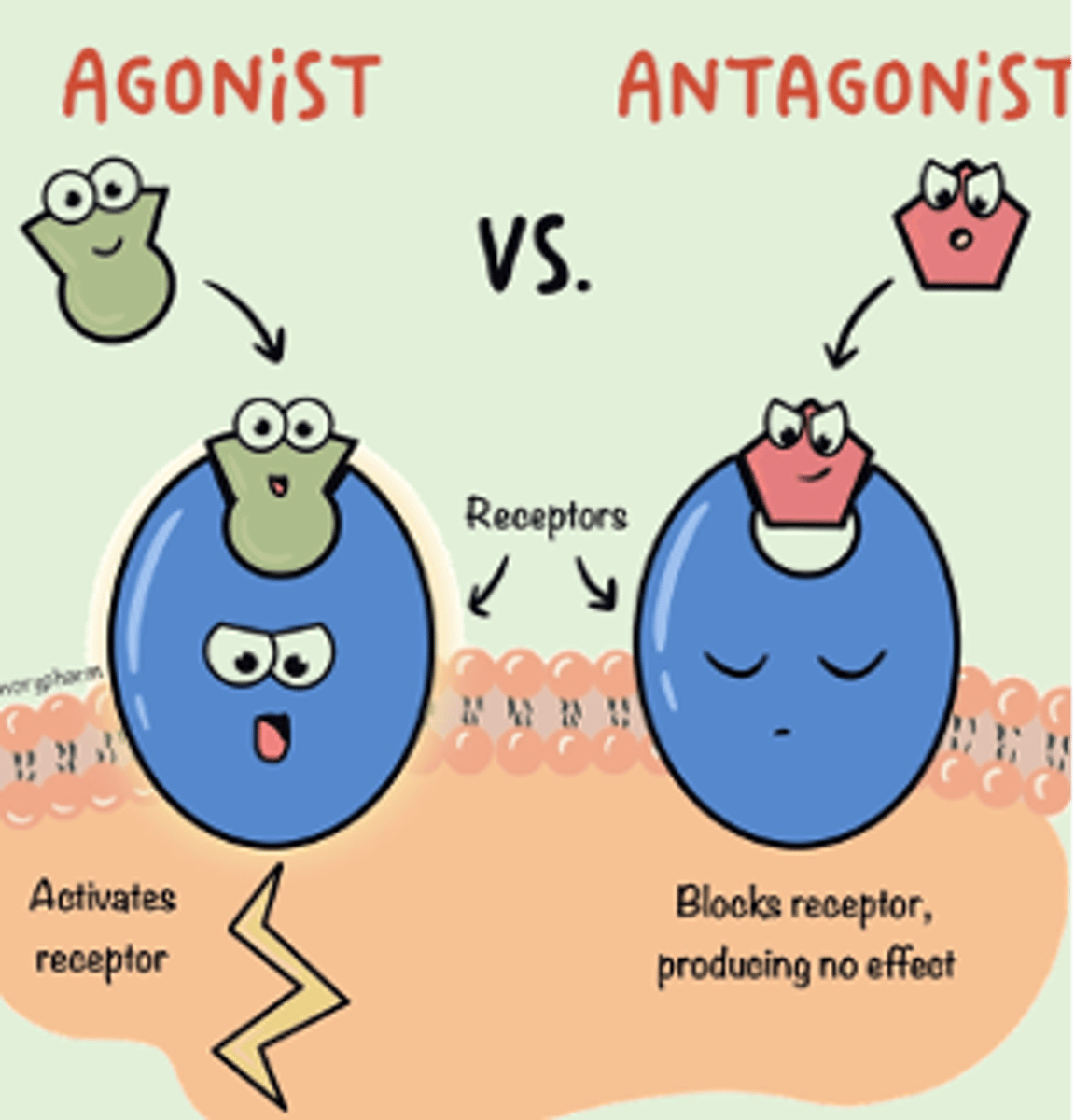
What is an agonist?
A drug that increases or mimics the effect of a neurotransmitter.
What is an antagonist?
A drug that blocks or reduces the effect of a neurotransmitter.
What is psychopharmacology?
The study of how drugs affect the brain and behavior.
What are endogenous substances?
Chemicals produced naturally by the body.
What are exogenous substances?
Chemicals introduced from outside the body, such as drugs.
How do drugs affect neurotransmitter systems?
They can increase release, block reuptake, mimic neurotransmitters, or block receptors.
What are depressants?
Drugs that slow brain activity.
What are stimulants?
Drugs that increase brain activity and alertness.
What are opioids?
Drugs that reduce pain and produce euphoria.
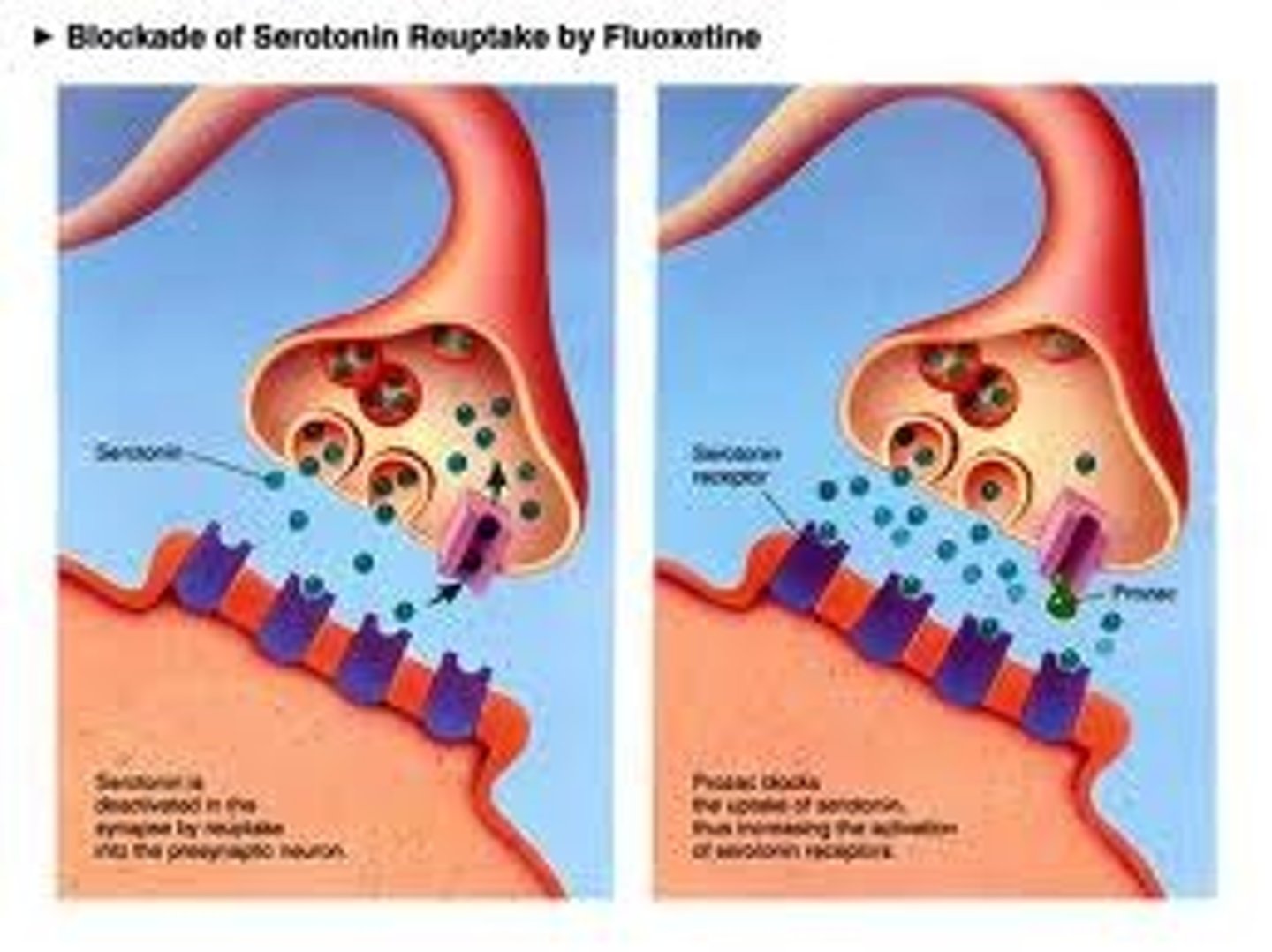
How do SSRIs work?
They block the reuptake of serotonin.
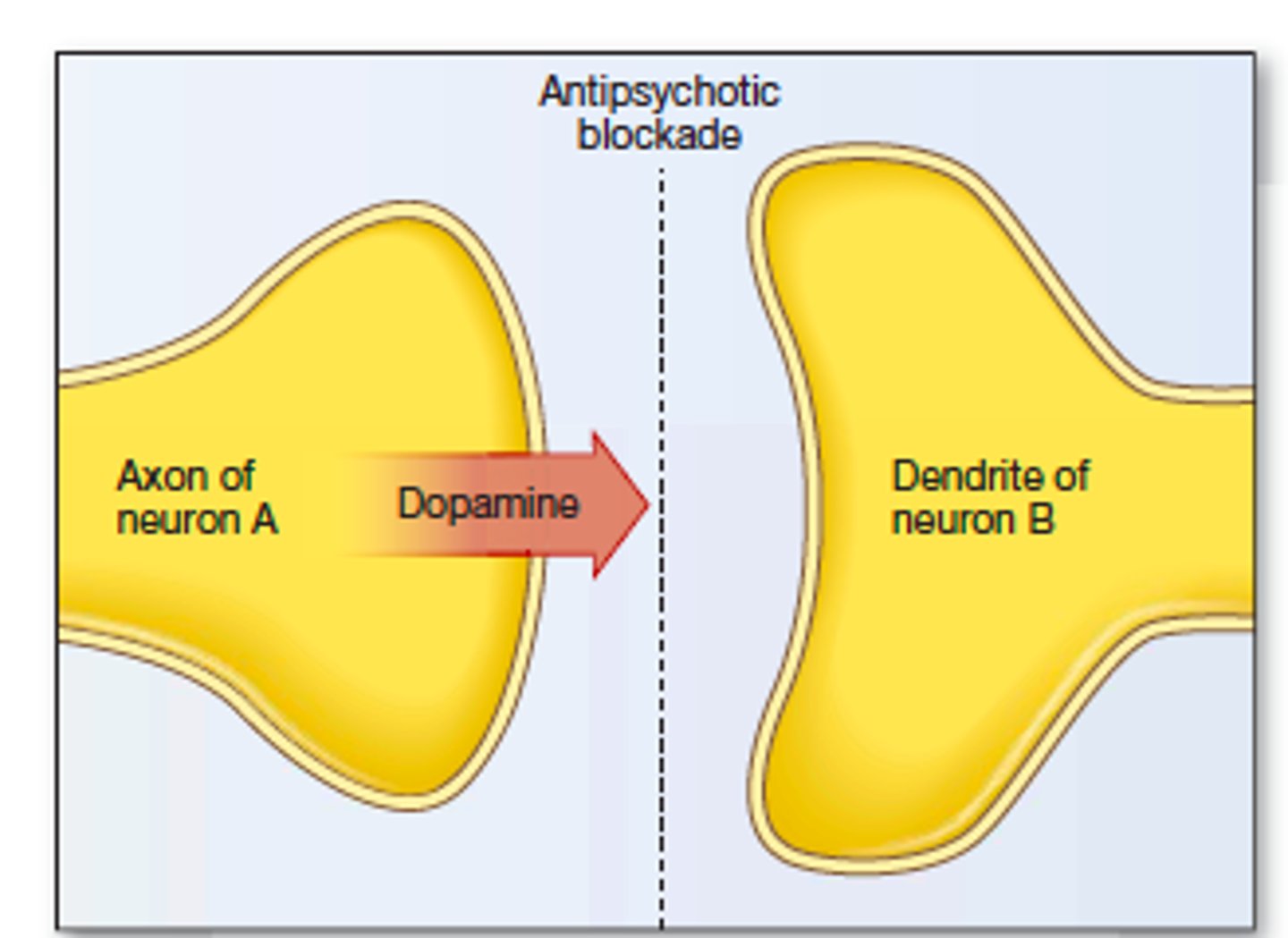
How do antipsychotics work?
They block dopamine receptors.
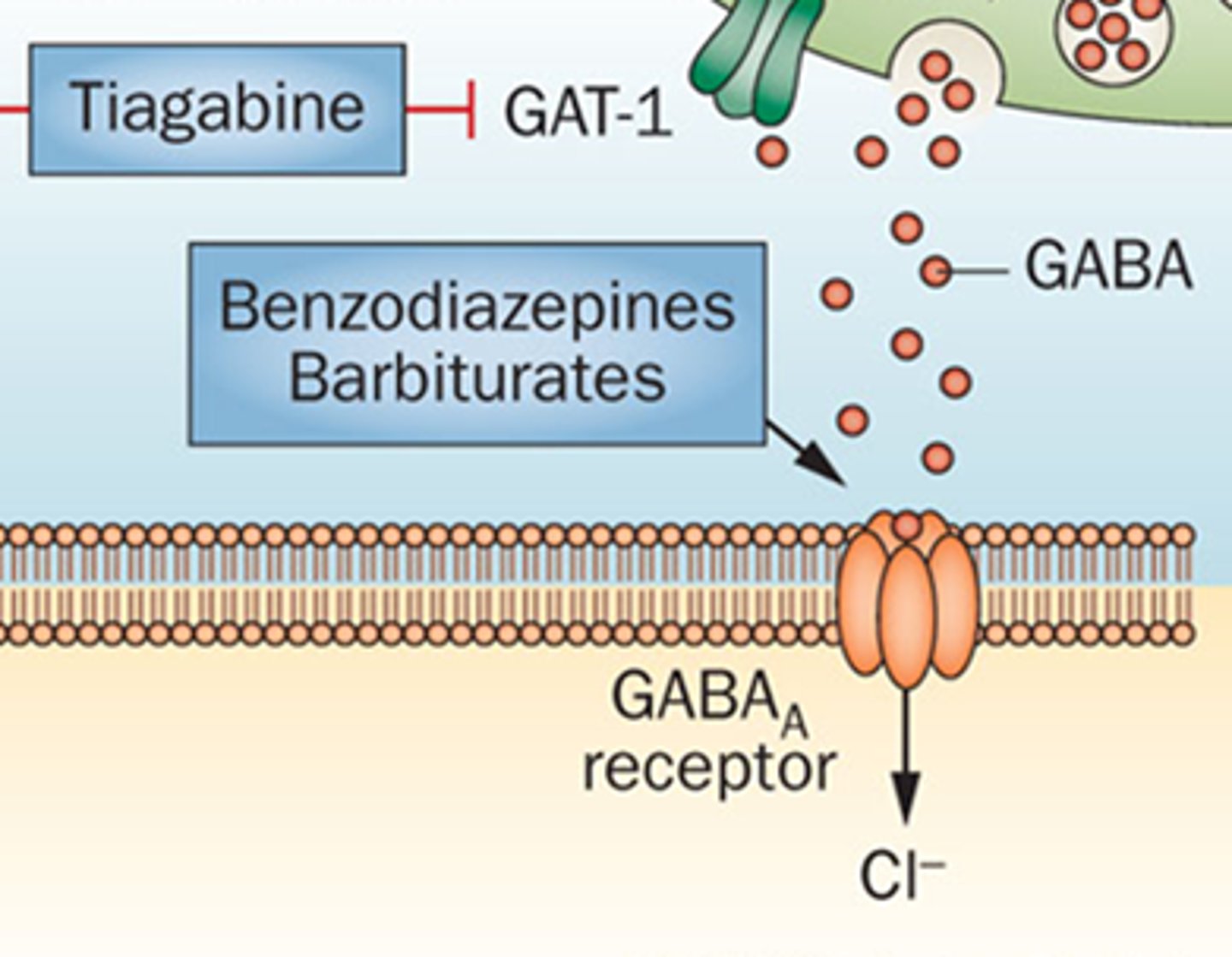
How do benzodiazepines work?
They increase the effect of GABA.
What is tolerance?
A reduced response to a drug after repeated use.
What is sensitization?
An increased response to a drug after repeated use.
What is addiction?
A chronic disorder involving compulsive drug seeking and use despite negative consequences.
What is the mesolimbic dopamine pathway?
A reward pathway involved in motivation and reinforcement.
What is reinforcement?
A process where a behavior is strengthened because it leads to a rewarding outcome.
How does cocaine increase dopamine?
Cocaine blocks dopamine reuptake transporters.
How do SSRIs increase serotonin levels?
They block serotonin reuptake.
Why does blocking reuptake increase neurotransmitter activity?
Because neurotransmitters remain in the synapse longer.
How does repeated drug use change the brain's reward system?
The brain reduces natural dopamine sensitivity.
What are labeled lines?
The principle that different sensory pathways carry specific types of sensory information.
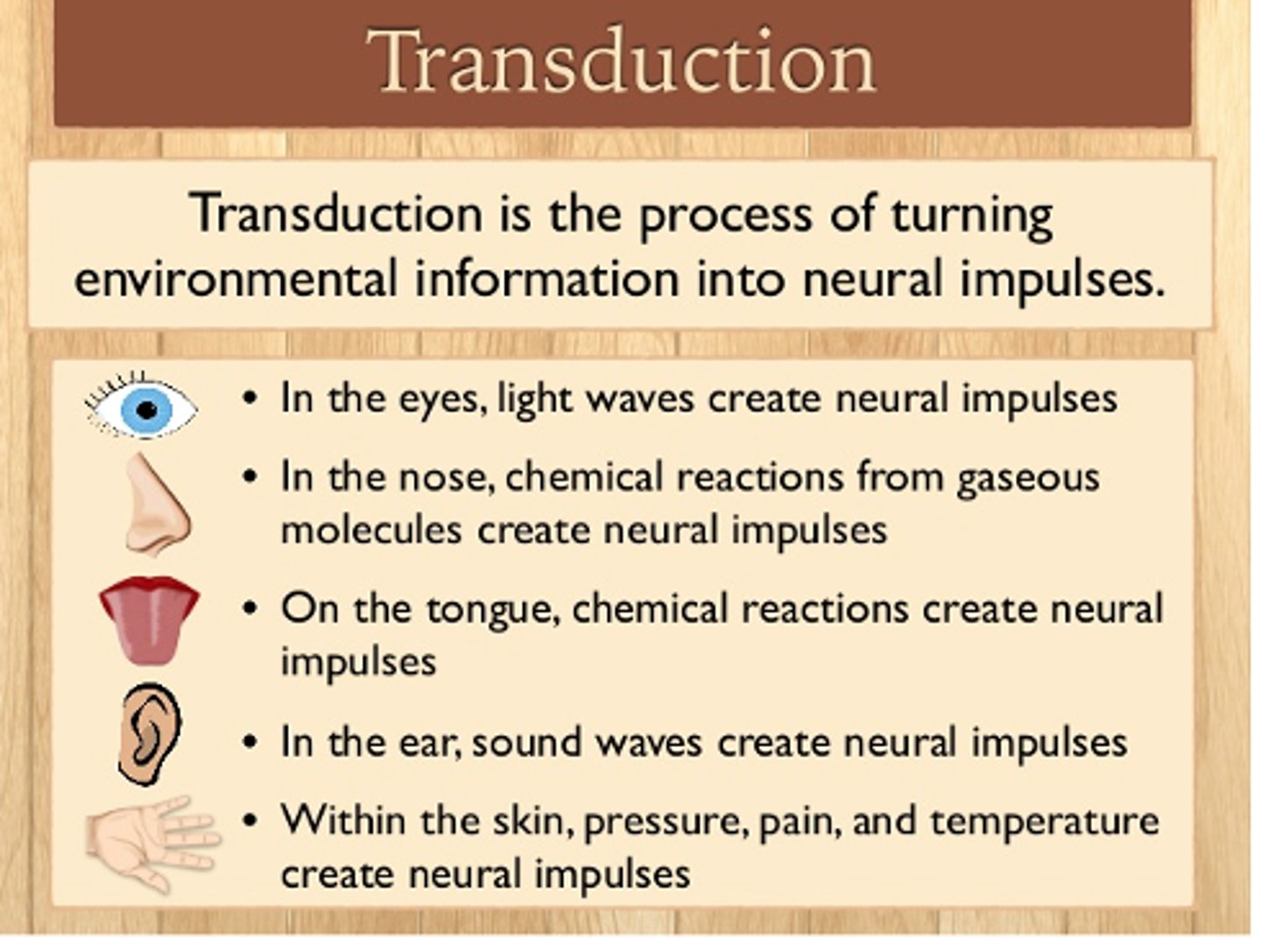
What is sensory transduction?
The process by which sensory receptors convert physical stimuli into neural signals.
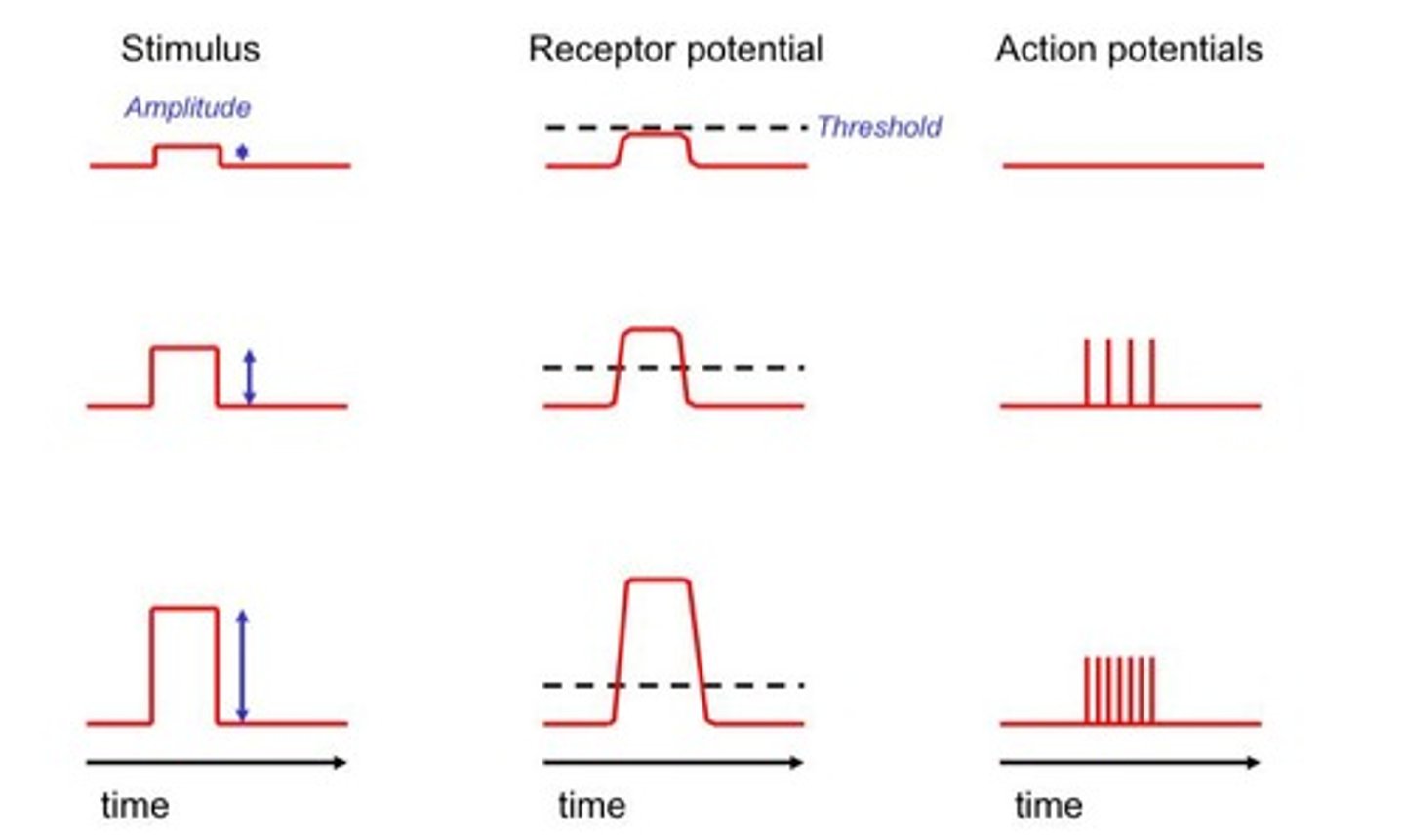
How is stimulus intensity encoded?
Through higher action potential frequency and recruitment of additional neurons.
What are phasic receptors?
Fast-adapting receptors that respond quickly.
What are tonic receptors?
Slowly adapting receptors that continue firing as long as the stimulus is present.
What are the three components of pain?
Sensory, emotional, and cognitive.
What is a receptive field?
The area of the body where stimulation activates a specific sensory neuron.
How do receptive field sizes affect sensory acuity?
Smaller receptive fields allow more precise sensory perception.
What is the somatosensory homunculus?
A map of the body in the somatosensory cortex.
What is the motor homunculus?
A map in the motor cortex showing how much brain area controls movement.
What is neuroplasticity?
The brain's ability to reorganize and change its neural connections.
What does the motor cortex do?
Initiates voluntary movement.
What does the cerebellum do?
Coordinates movement, balance, and precision.
What do the basal ganglia do?
Help control movement initiation and motor learning.
What is the basic mechanism of hearing?
Sound waves vibrate the eardrum, cochlea, and hair cells convert vibrations into neural signals.
What controls balance?
The vestibular system in the inner ear.
How does taste work?
Taste receptors on the tongue detect chemicals in food.
How does smell work?
Olfactory receptors in the nose detect airborne chemicals.
Why are hands more sensitive than elbows?
The somatosensory cortex devotes more brain space to the hands.
What is sensory transduction in simple terms?
The process where the body converts physical stimuli into electrical signals.
How does sensory feedback help adjust movement?
Sensory receptors detect changes and send signals to the brain.
What is the difference between ionotropic and metabotropic receptors?
Ionotropic receptors bind directly to an ion channel and act fast, while metabotropic receptors activate a G-protein and have slower, longer-lasting effects.
What is the most common excitatory neurotransmitter?
Glutamate
What is the most common inhibitory neurotransmitter?
GABA
What role does acetylcholine play?
Muscle movement, attention, learning, and memory.
What functions does dopamine serve?
Reward, motivation, movement, and reinforcement learning.
What are the functions of serotonin?
Mood, sleep, and appetite.
What is the role of norepinephrine?
Arousal, alertness, and stress response.
What do endorphins do?
Provide pain relief and pleasure.
Where are neurotransmitters made?
Inside neurons, usually in the cell body or axon terminal.
What brain nuclei produce serotonin?
Raphe nuclei.
What brain nuclei produce dopamine?
Substantia nigra and ventral tegmental area (VTA).
What brain nuclei produce acetylcholine?
Basal forebrain and pons.
What brain nuclei produce norepinephrine?
Locus coeruleus.
Where do the initial precursors for neurotransmitters come from?
Dietary amino acids obtained through food.
Which neurotransmitters share a synthesis pathway?
Dopamine, norepinephrine, and epinephrine, collectively called catecholamines.
What neurotransmitters are classified as monoamines?
Dopamine, norepinephrine, epinephrine, and serotonin.
Can a neuron respond to more than one neurotransmitter?
Yes, neurons can have multiple receptor types and release multiple neurotransmitters.
What are three ways neurotransmitters are removed from a synapse?
Reuptake, enzymatic degradation, and diffusion away from the synapse.
What defines a drug?
A chemical substance that alters physiological processes.
What is a psychoactive drug?
A drug that alters brain activity, mood, cognition, or behavior.
Which route gets drugs to the brain fastest?
Inhalation (smoking).
What is binding affinity?
The strength with which a drug binds to a receptor.
What is efficacy in pharmacology?
The ability of a drug to activate the receptor.
What does a dose-response curve show?
How the effect of a drug increases as the dose increases.
What is the therapeutic index?
The ratio between effective dose and toxic dose.
What receptors do benzodiazepines and barbiturates bind to?
Both act on GABA-A receptors.
What effects do benzodiazepines have?
Sedation, anxiety reduction, muscle relaxation, and anticonvulsant effects.
Which has a wider therapeutic index: benzodiazepines or barbiturates?
Benzodiazepines.
What is tolerance in pharmacology?
Reduced drug effect after repeated use.
What disease are antipsychotics used to treat?
Schizophrenia.
What neurotransmitter do first-generation antipsychotics block?
Dopamine.
What symptoms do first-generation antipsychotics treat?
Positive symptoms like hallucinations and delusions.
What neurotransmitters do second-generation antipsychotics affect?
Dopamine and serotonin.
What do SSRIs do?
They block serotonin reuptake, increasing serotonin in the synapse.
What do MAOIs do?
They block monoamine oxidase, preventing breakdown of monoamine neurotransmitters.
What is the mesolimbic dopamine pathway responsible for?
Reward, motivation, and reinforcement learning.
What does dopamine release in the nucleus accumbens signal?
That something is rewarding and worth repeating.
What effect does cocaine have on dopamine?
It blocks dopamine reuptake and increases dopamine levels.
What cognitive effects does nicotine have?
Increased attention, improved focus, and increased alertness.
What are the effects of alcohol on the brain?
Increases dopamine release and enhances GABA while inhibiting glutamate.

