Discrete Math Final Exam Review
 Studied by 0 people
 Call with Kai
 Learn
Learn Practice Test
 Spaced Repetition
 Match
Match Flashcards
 Knowt Play
1/115

There's no tags or description
Looks like no tags are added yet.
Name | Mastery | Learn | Test | Matching | Spaced | Call with Kai |
|---|
No study sessions yet.
116 Terms
Recursion
when an object's definition relies on that object
e.g. 2^n = 2x2^(n-1)
Induction
the proof technique used to demonstrate facts about recursive definitions
Set
(loosely speaking) is a collection of objects called elements
e.g. if this class is a set, you are an element
We write x ∈ X when x is an element of the set X
list or rooter notation
the set of whole numbers between 1 and 10 inclusive
{1,2,3,4,5,6,7,8,9,10}
list or rooter notation
is the set of positive whole numbers
{1,2,3,4,...}
Set builder notation
elements are described by some rule or property
set builder notation
the set of whole numbers between 1 and 10 inclusive
{x | x is a whole number and 1≤x≤10}
set builder notation
the set of positive whole numbers
{n | n is a positive whole number}
N
natural numbers
{0,1,2,3,4,...} 0 only counts in CSCI
Z
integers
{...,-2,-1,0,1,2,...}
Q
rational numbers
{(p/q) I p, q ∈ Z and q ≠ 0}
where p and q are both integers
R
real numbers
rational numbers and everything in between
e.g. π,3,(1/3)
subset
given two sets X and Y, we say Y is a subset of X if every element of Y is also in X.
Y⊆X
empty set
set that has no elements
{} or Ø
a subset of every set
collection
set of sets
Power set
collection of all subsets of X
P(X)
e.g. X={1,2,3}
P(X)= {Ø, {1}, {2}, {3}, {1,2}, {1,3}, {2,3}}
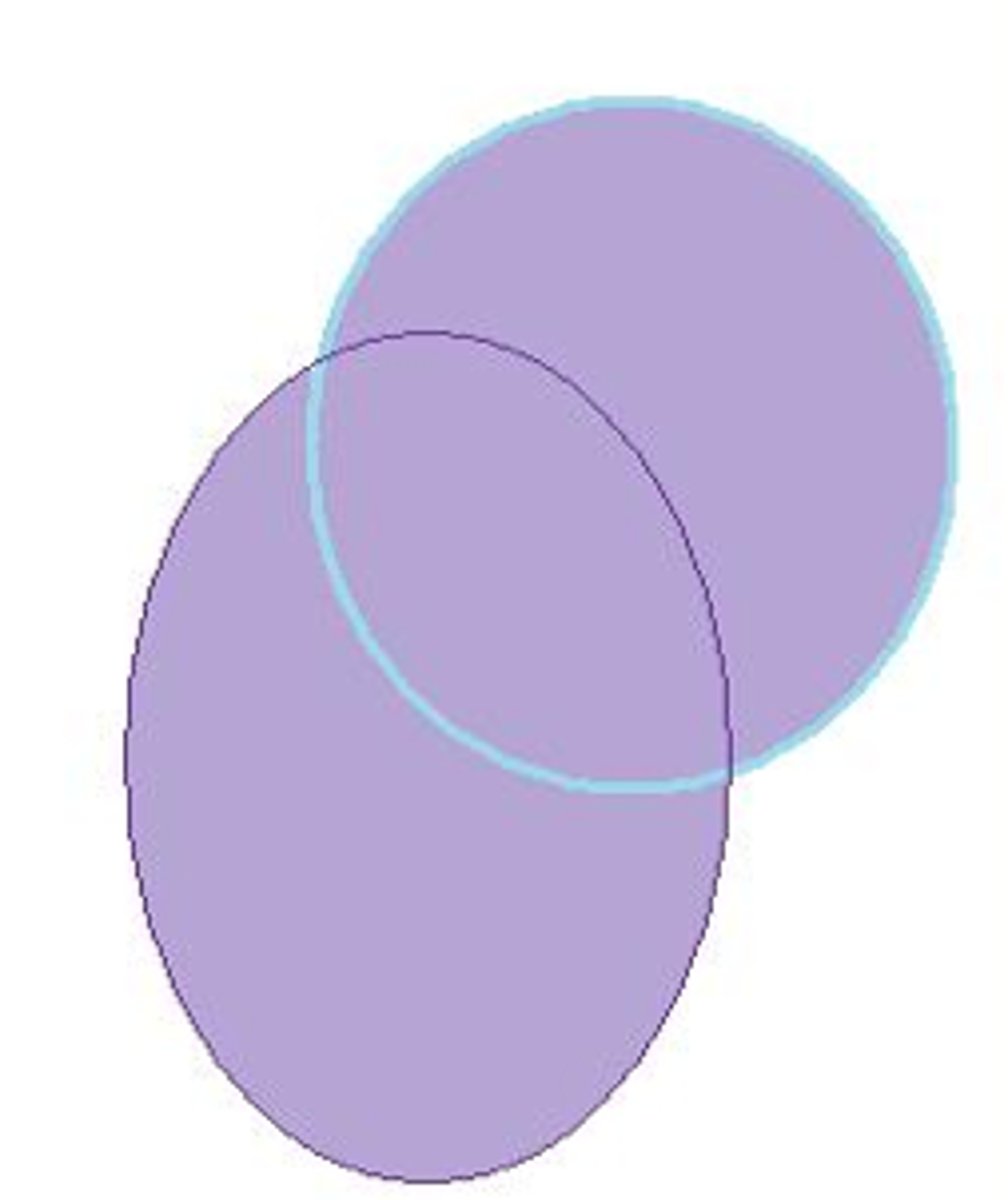
Union
the set of all elements in X or in Y
X={1,3,5}
Y={2,4,6}
X∪Y={1,2,3,4,5,6}
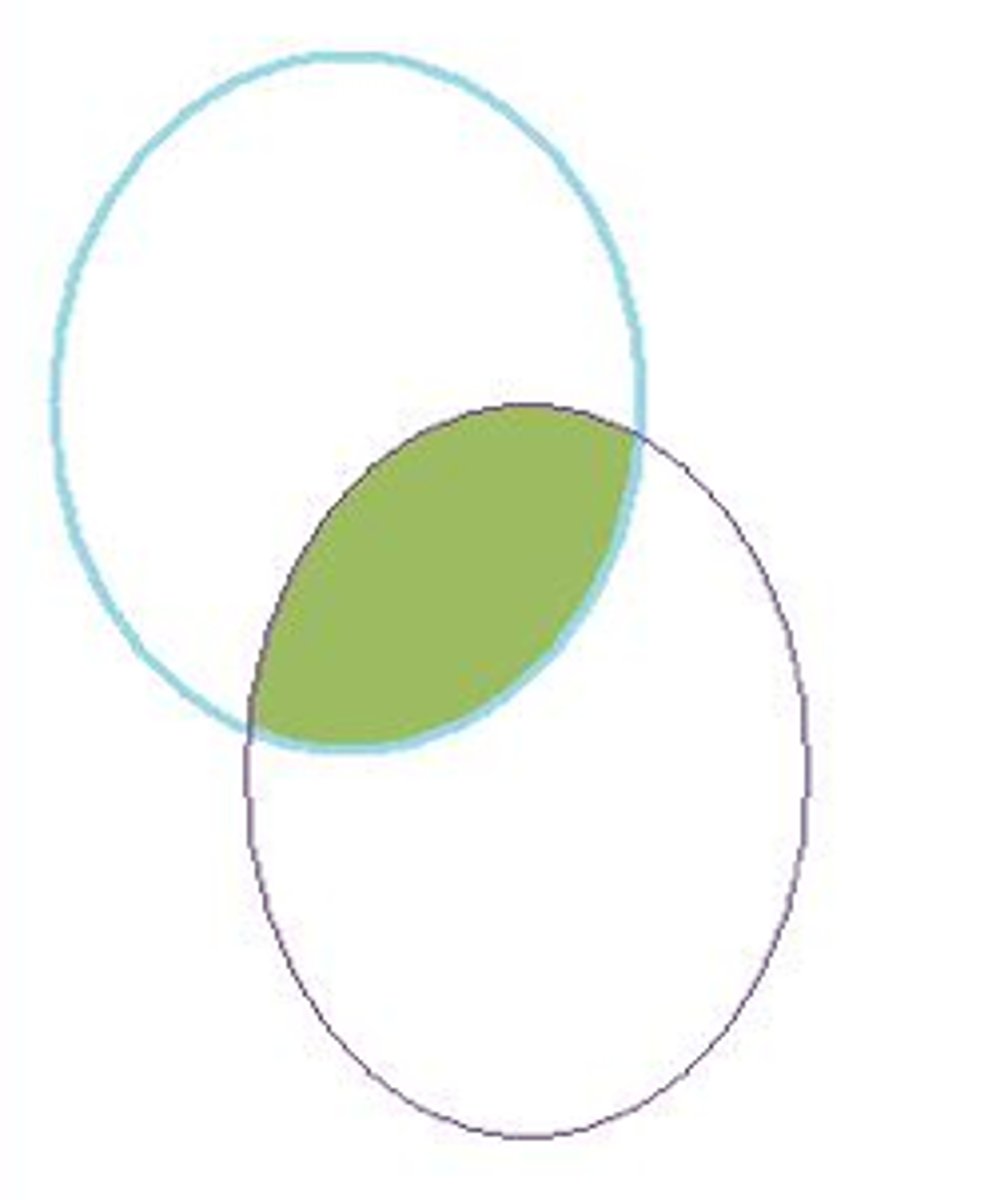
intersection
the set of all elements in X and Y
X={1,2,3}
Y={3,4,5}
X∩Y={3}
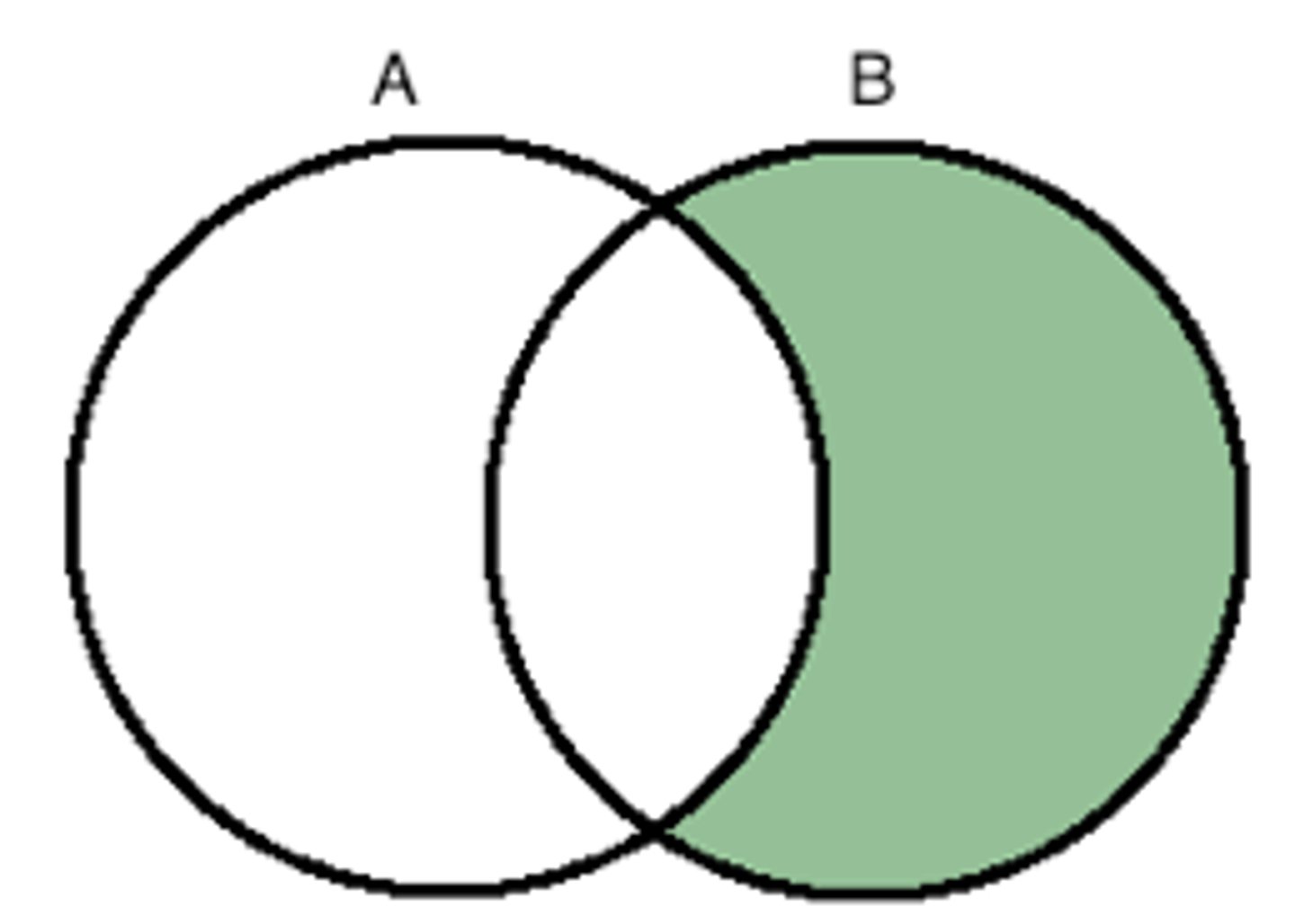
Relative Complement
the set of all elements in X but not in Y
X-Y
universal set
the set containing all objects or elements and of which all other sets are subsets.
e.g. all math majors must take math 160
universal set: CCU
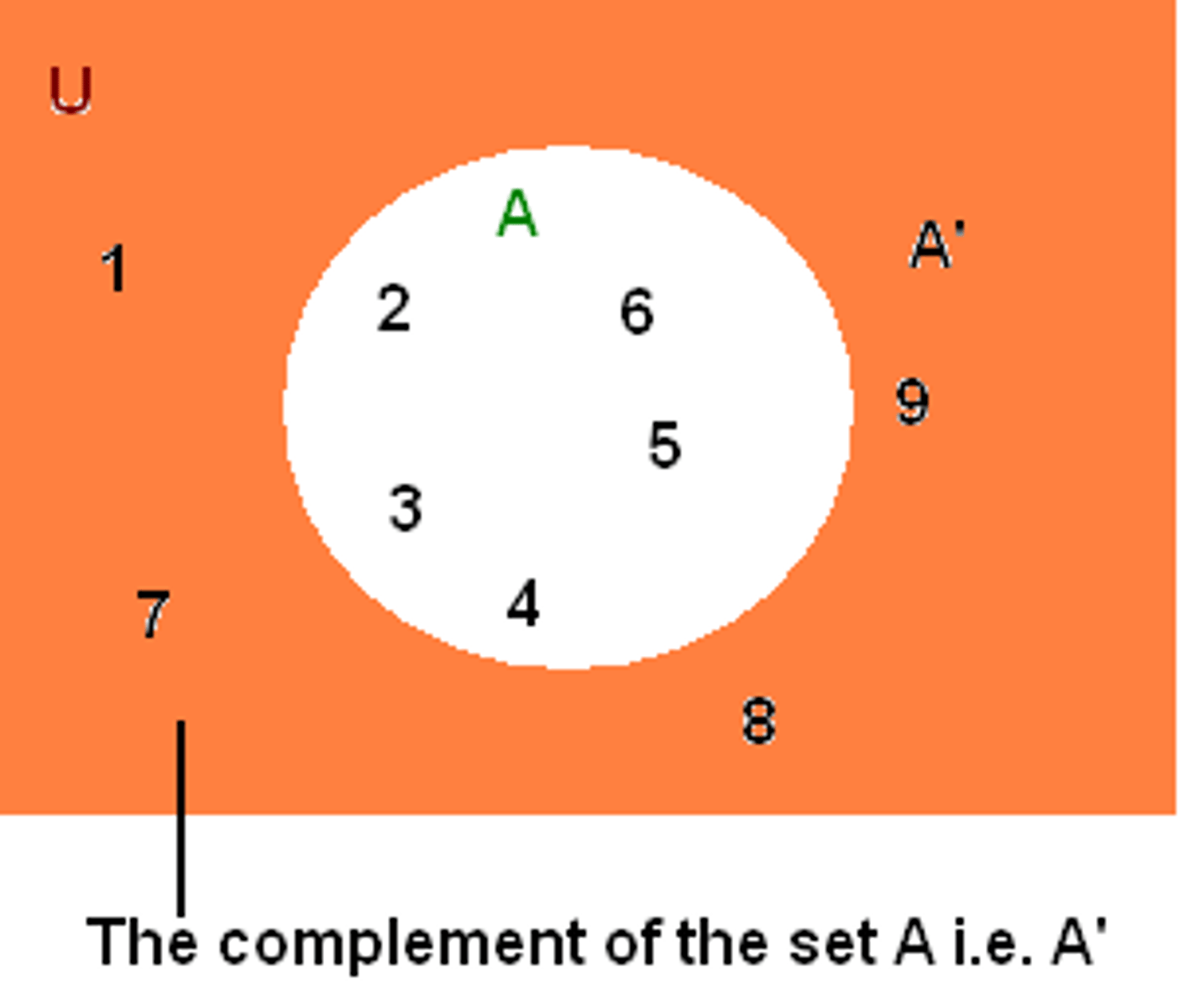
complement
is the set of all elements ( in the universal set but) not in X
X ( with a line over the top)
Cartesian Product
the set of all ordered pairs of elements whose first coordinate is in X and whose second coordinate is in Y
X×Y
{(x, y) | x ∈ X and ∈ Y}
two sets are equal if...
they have exactly the same elements
cardinality
the number of elements (if finite) in X
|X|
e.g. X={1,2,a}
|X|= 3
|A+B|= the number of elements in both set A and set B
union rule
|X∪Y|= |X| + |Y| - |X∩Y|
statement
a sentence that is true or false
conjunction
if p and q are statements, their conjunction in p⋀q (p and q)
the conjunction is true when both p and q are both true and false otherwise
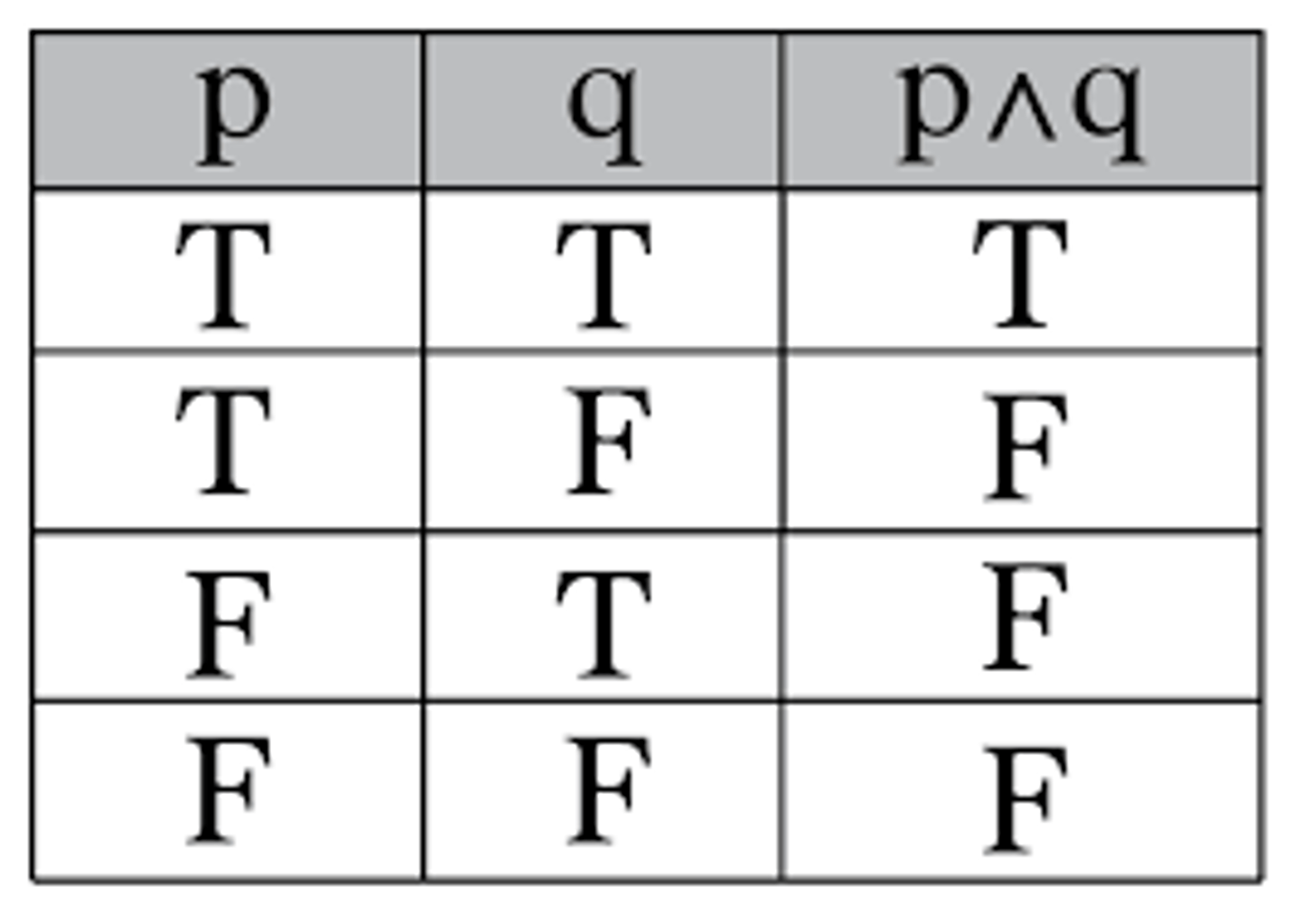
truthtable
a device that lets us tell whether a compound statement is true given whether its pieces are true
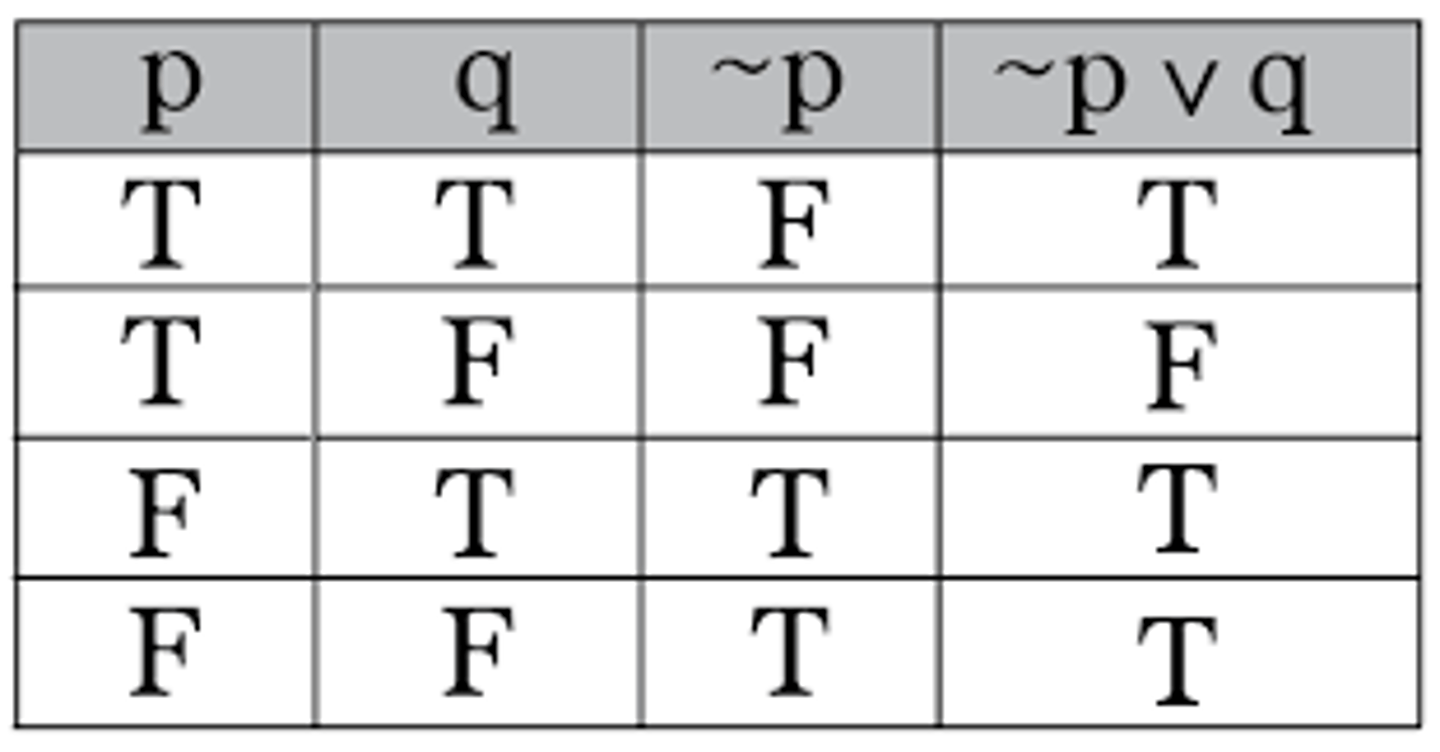
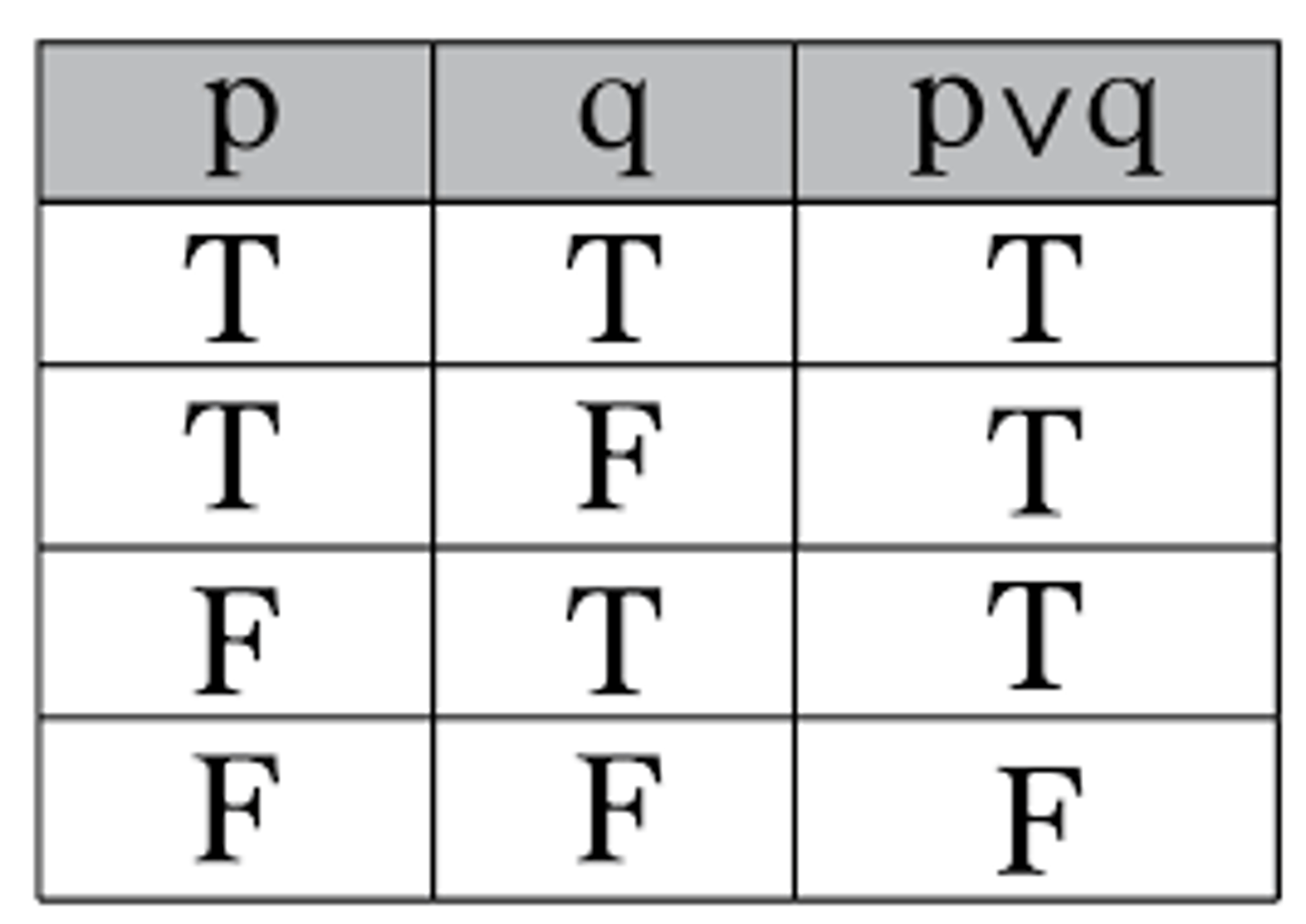
disjunction
p∨q (p or q)
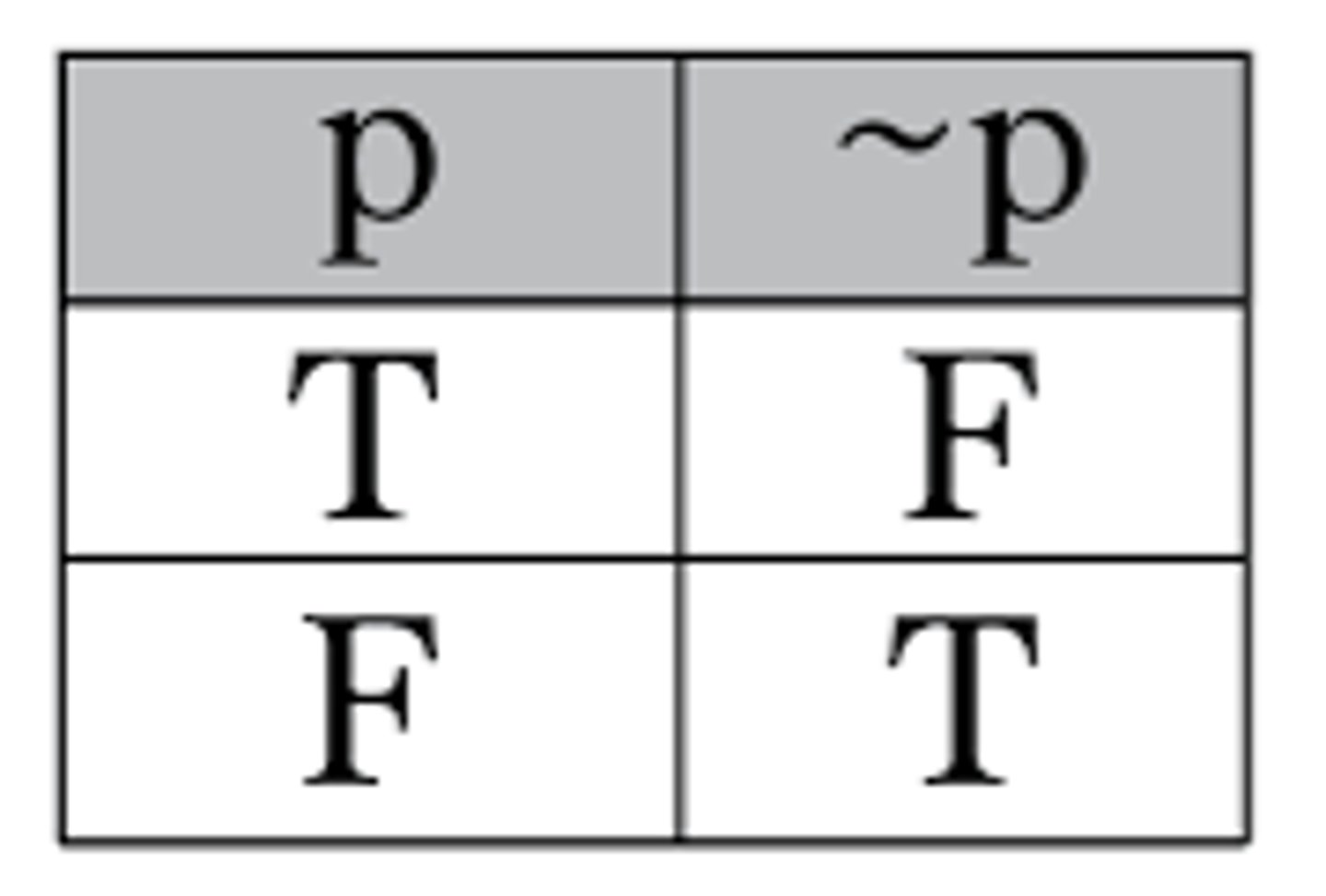
Negation
¬p or ~p (not p)
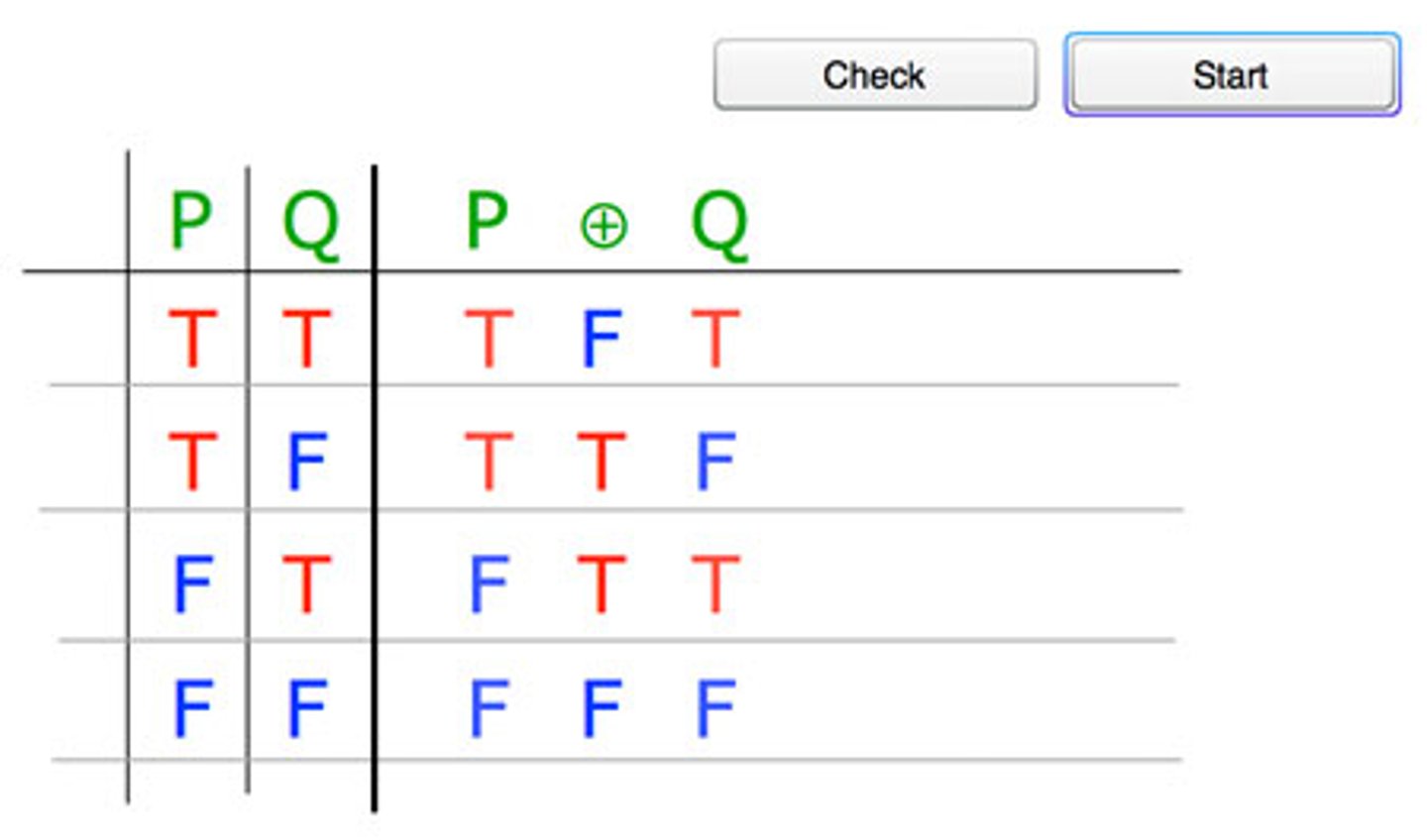
Exclusive-OR
p⊕q (either p or q); p or q, but not both
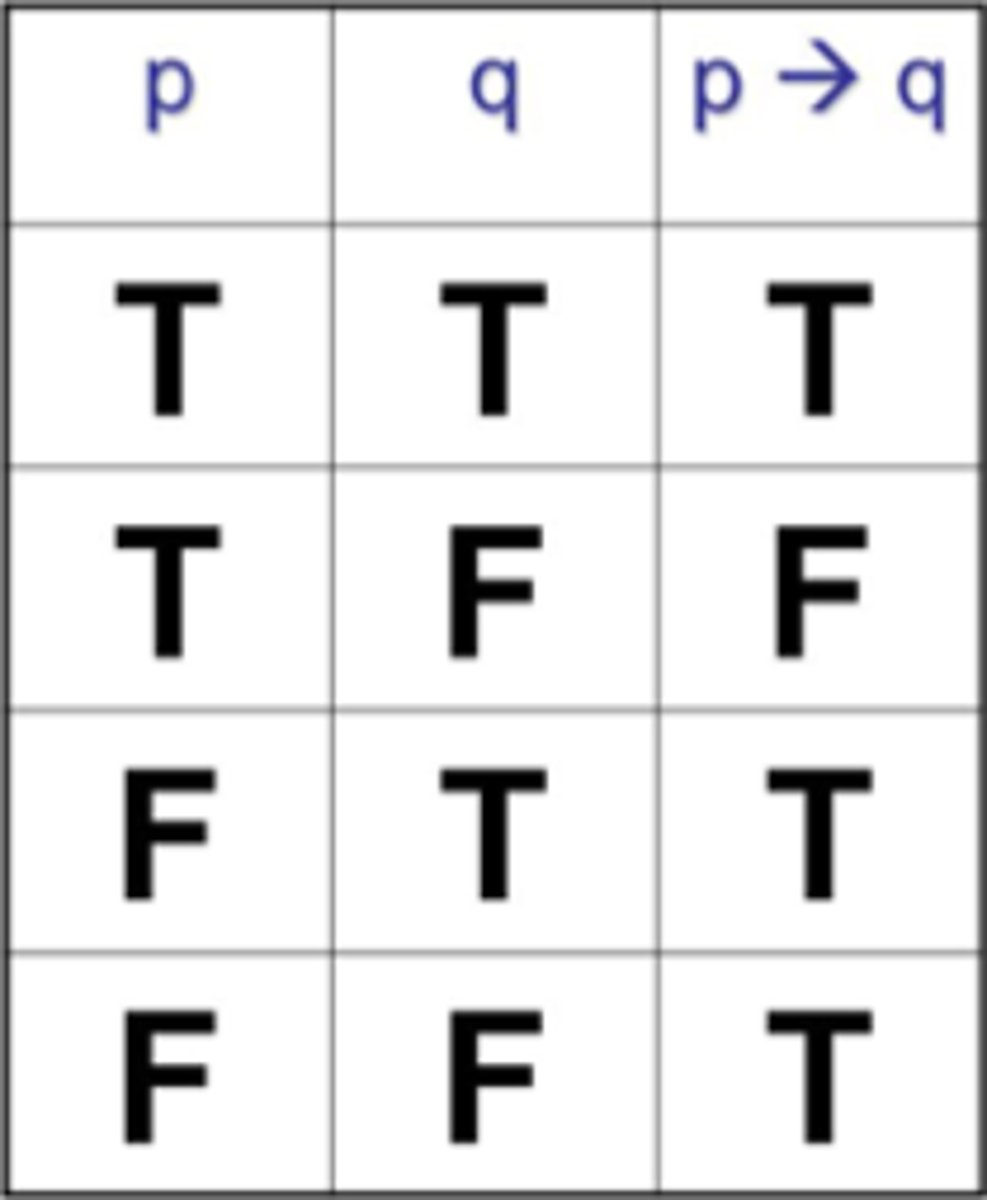
conditional
p→q
"if p then q",
"p implies q",
"p is sufficient for q"
p does not have to be true
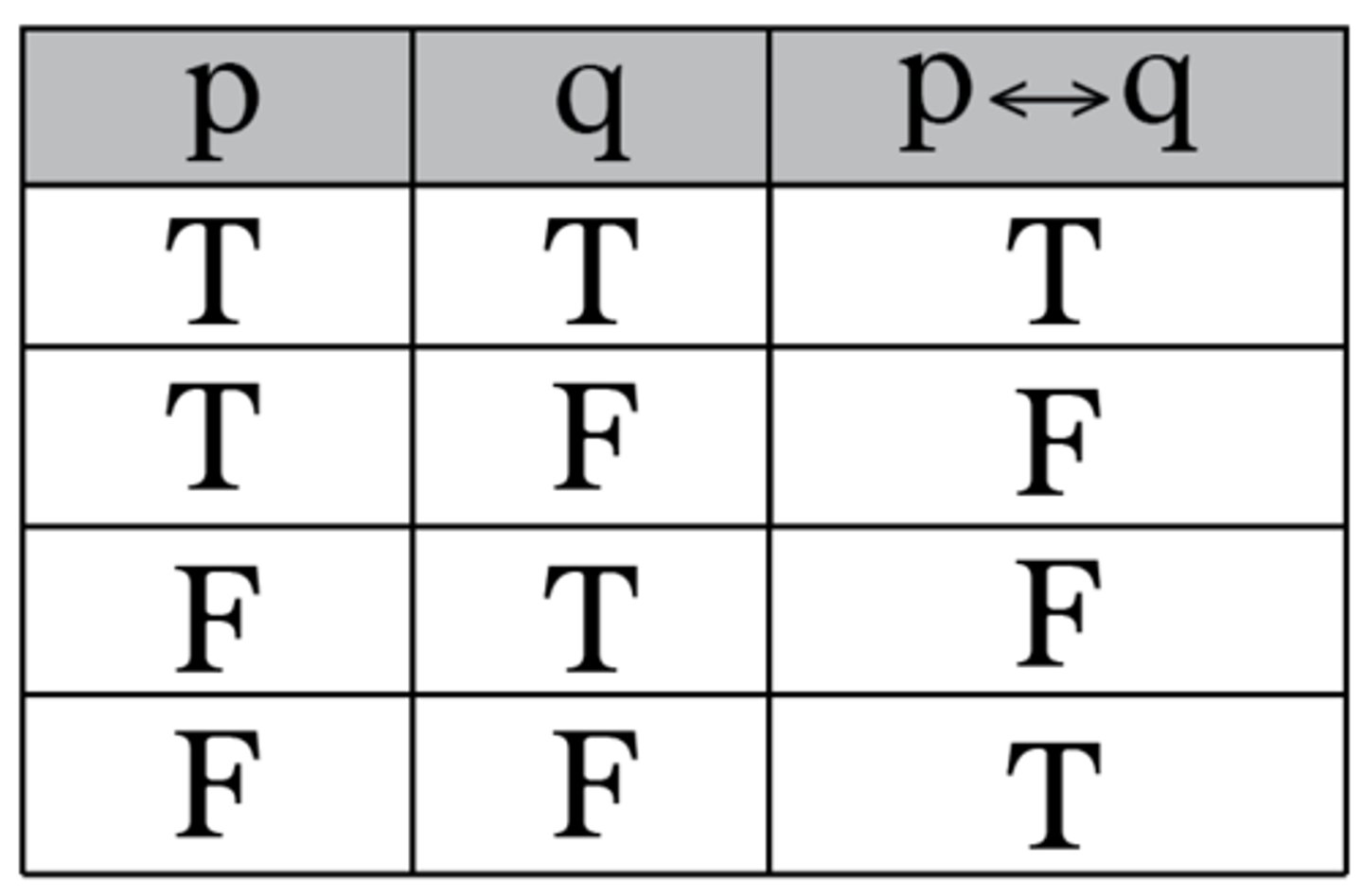
biconditional
p↔q
"p if and only if q"
"p is necessary and sufficient for q"
"p and q are equivalent"
antecedent of p→q
p
consequent of p→q
q
converse of p→q
q→p
inverse of p→q
~p→~q
contrapositive of p→q
~q→~p
two statements φ (phi) and ψ (psi) are equivalent if...
they have the same truth table (value), or if φ↔ψ is always true and we write φ≡ψ
a statement φ is a tautology if...
it is always true, or φ≡T
a statement φ is a contradiction if...
it is always false, or φ≡F
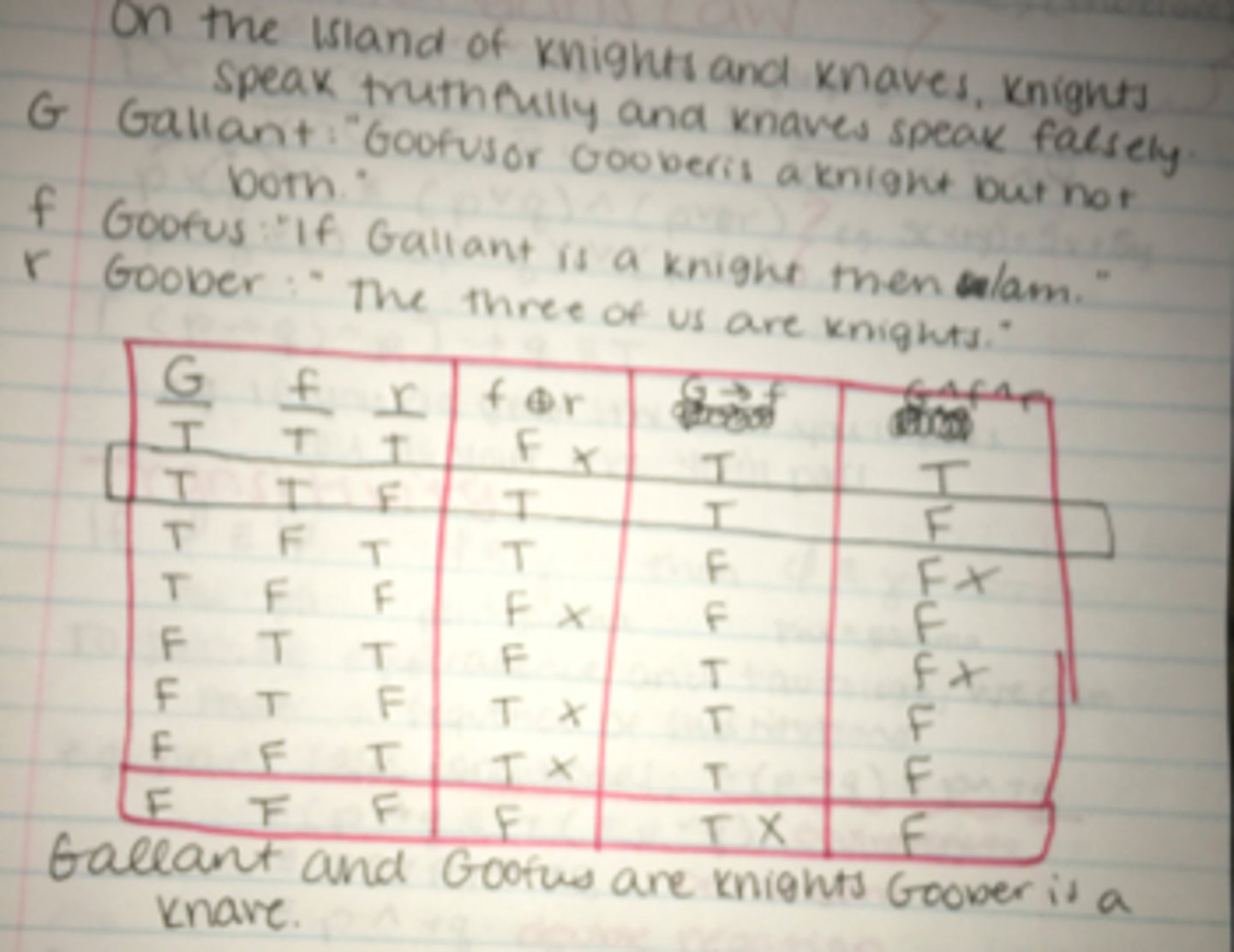
knights and knaves
knights speak the truth
knaves speak falsely
the right answer from truth table is where they match
order of operations
P
E
M
D
A
S
order of operations: logic
not ¬
and/or ∧/∨
conditional →
biconditional ↔
de morgans law logic and sets
¬(p∧q)≡ ¬p∨¬q ( and vice versa)
(complement of X∩Y)= (complement of X) ∪ (complement of Y) - and vice versa
transitivity
φ≡ψ (phi = psi)
ψ≡γ (psi = gamma)
then φ≡γ (phi = gamma)
predicate
a function whose domain is some universe of objects being discussed and whose output is T or F
Q(x)
universal quantifier
declares that a statement is true for every element of the domain
symbol ∀
∀x "for all x"
existential qunatifier
declares that a statement is true for (at least) one member of the domain
∃
∃x "there exists an x"
predicates
∀xP(x) "every x is a P"
∃xP(x) "some x are P"
binary
an example of a recursive number
(100101011100)2 -base 2
= 1x2^11 + 0x2^10 + 0x2^9 + 1x2^8 + ...
=2048 + 256 + 64 + 16 + 8 + 4
=2396
sequence
a list of objects
{Xn} nth term is Xn
closed form of a sequence
an explicit expression
recurrence relation
the terms are defined with respect to previous terms
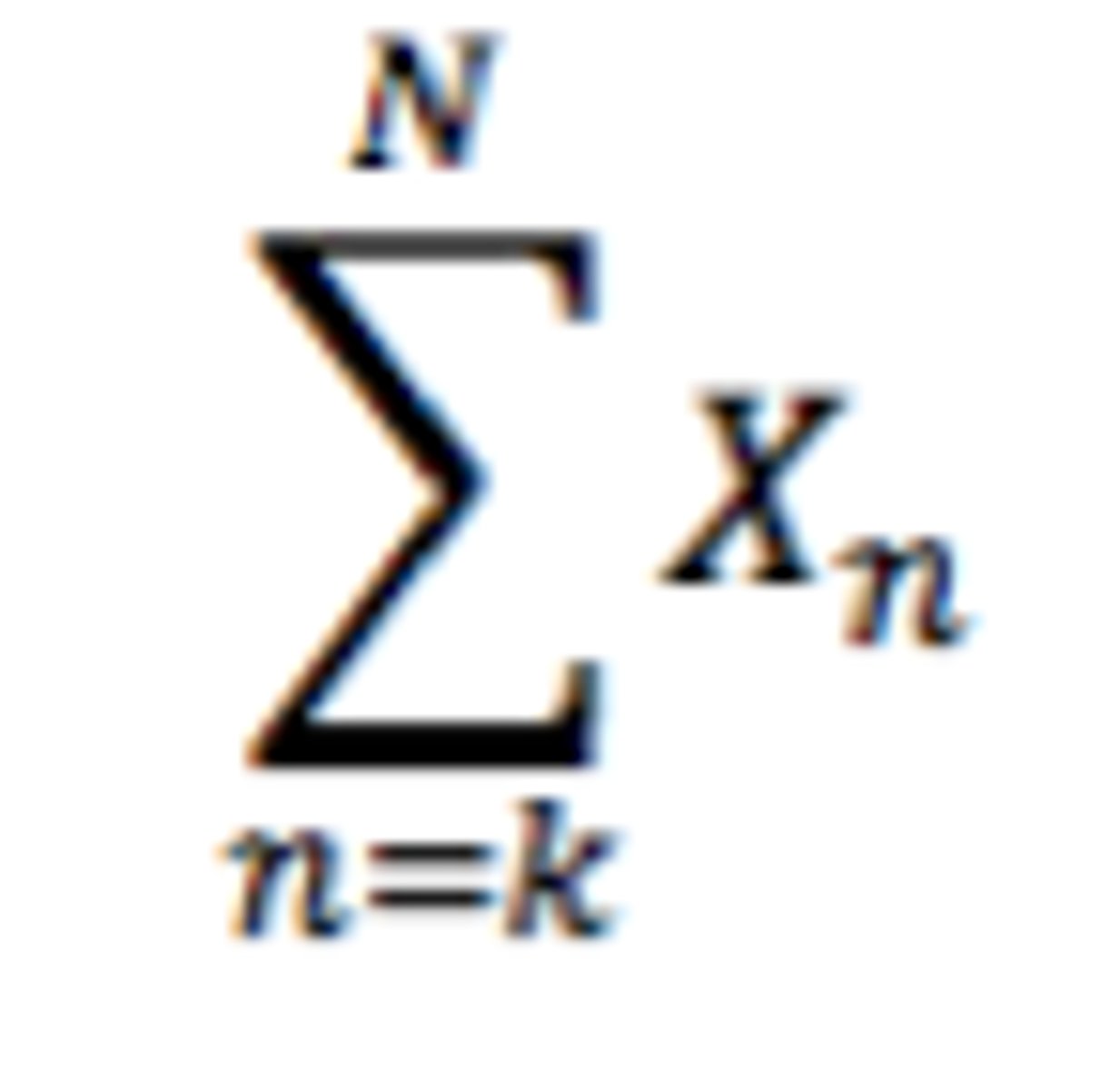
Summation
If {Xn} is a sequence this is the sum of its terms
Xk, Xk+1, Xk+2,...Xn
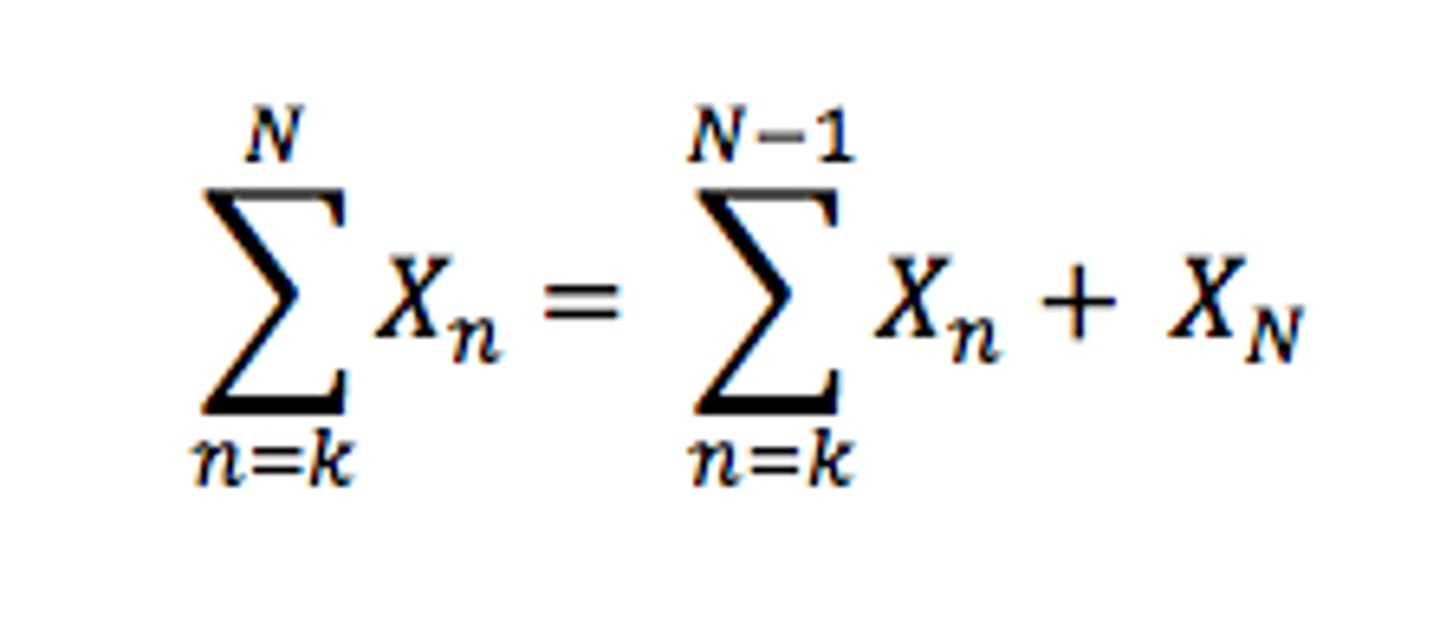
Recursive summation
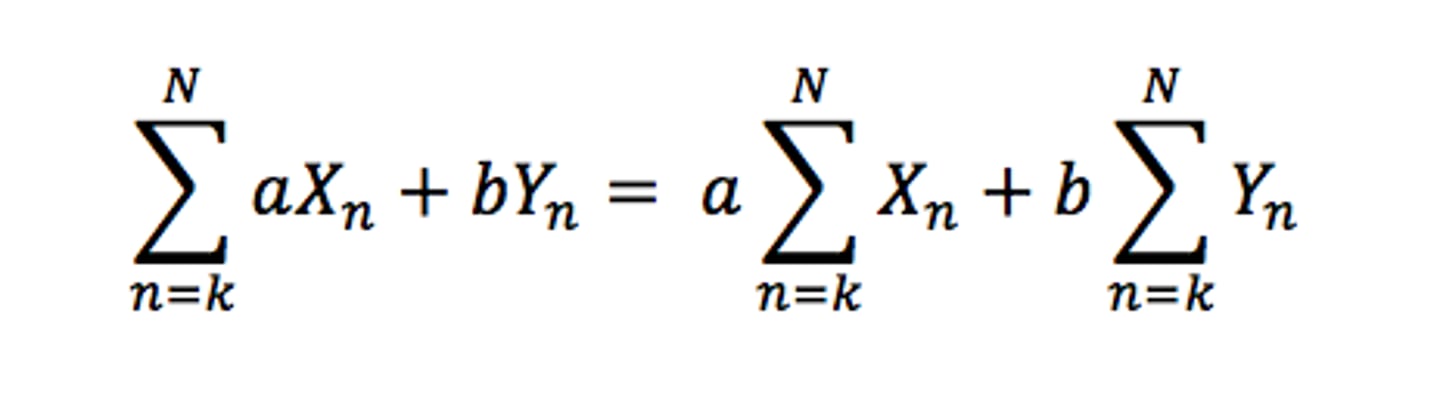
Linearity summation
proofs
we prove statements of the form p→q by assuming p is true and making a sequence of valid equivalences or rules of inference to conclude q is true.
proof by contradiction
of p→q, assumes that ~(p→q) ≡ p∧~q and derive a contradiction
by proving the opposite as nonsense, you get what you originally set out to prove
easiest with proving irrationality (assume its rational)
biconditional proofs
prove p→q and q→p
rational number
p/q where p and q are integers and q≠0
irrational number
one that is not rational
counterexample
an example that shows a statement is false
proofs using induction
1. state base case
2. inductive hypothesis: assume with variable k P(k)
3. inductive step: "we want to show that _______ " P(k+1)
4. use hypothesis (do some math) to show statement is true for k+1
5. conclusion: "by induction..."
growth of functions
constants
log(n) where y=log(x) = base^y=x
linear n
quadratic n^2
exponential #^n
factorial n!
exponentiation n^n
highest order term
f(n) = O(g(n))
if for large enough n, f(n) is not more that a multiple of g(n)
eventually f does not grow faster than g."
f(n) = O(g(n)) if there exist numbers c and k such that if n>k, then f(n)≤Cg(n)
e.g. 3n^3 + logn - 7 + 2^n
O=(2^n)
relation
a relation between X and Y is any subset R⊆X×Y
reflexive
a relation on X is reflexive if every element of X is paired with itself
every element of X is paired with itself- loop at every point
antireflexive
no element is paired with itself- no loops
diagonal relation
∆ = {(x,x) | x ∈ X}
the smallest reflexive relation on X
any relation union the diagonal will be reflexive
symmetric
a relation R is symmetric xRy means yRx
(1,2) and (2,1)
loops and double arrows only/if A=A^t
antisymmetric
R is antisymmetric if xRy and yRx means x=y
the only symmetries occur on∆
no double arrows
transitive
a relation is transitive if whenever xRy and yRz, then xRz
(a, b), (b, c), (a, c)
single edge between X1 and Xn wherever it has a path
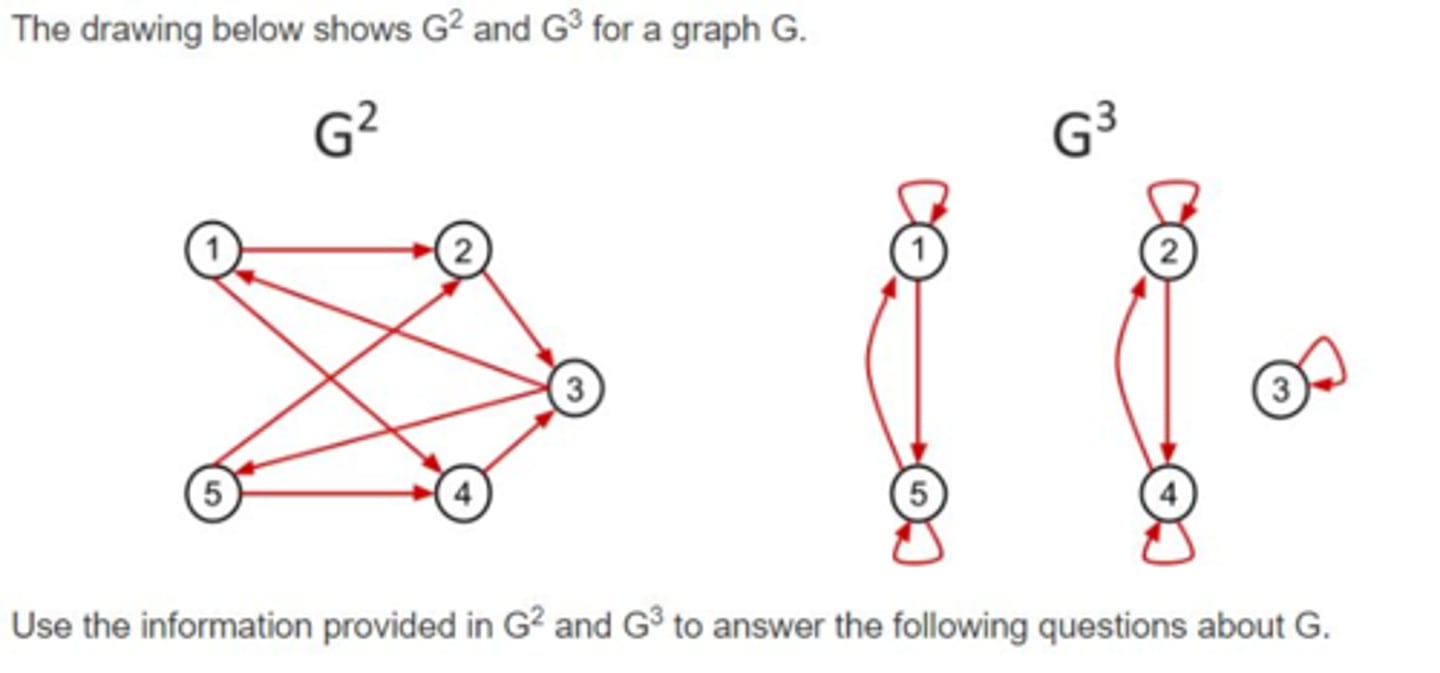
digraphs
a pair (X, E) where X is any set and E is a set of ordered pairs from X.
X is the vertex set
E is the edge set
matrices
A= [aij] to refer to the matrix A whose element is in the ith row and jth column is aij
a mxn matrix has m rows and n columns
![<p>A= [aij] to refer to the matrix A whose element is in the ith row and jth column is aij</p><p>a mxn matrix has m rows and n columns</p>](https://knowt-user-attachments.s3.amazonaws.com/14fe79c1-68f1-4a2e-bd2a-a0421fdadd55.png)
transpose
matrix A^t = [aji]
the rows and columns were exchanged
![<p>matrix A^t = [aji]</p><p>the rows and columns were exchanged</p>](https://knowt-user-attachments.s3.amazonaws.com/dd3185fb-3468-4882-9e34-2b3e6c9c5246.jpg)
Addition and Subtraction of matrices
A±B = [aij ± bij]
![<p>A±B = [aij ± bij]</p>](https://knowt-user-attachments.s3.amazonaws.com/4919c2c7-060c-492b-a52e-565b27a02b81.jpg)
Scalar multiplication
cA = [c*aij]
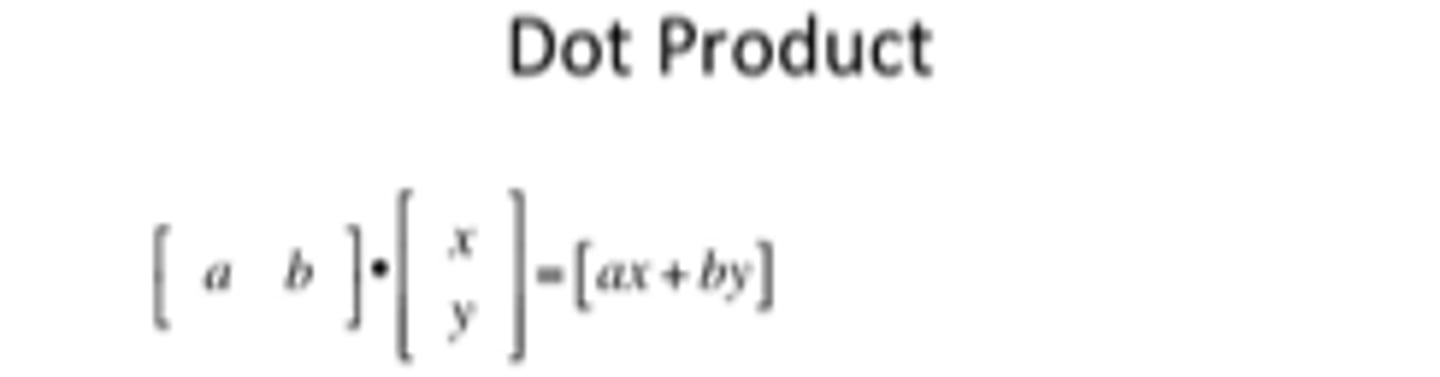
dot product
of a 1xm matrix A and an mx1 matrix B
matrix multiplication
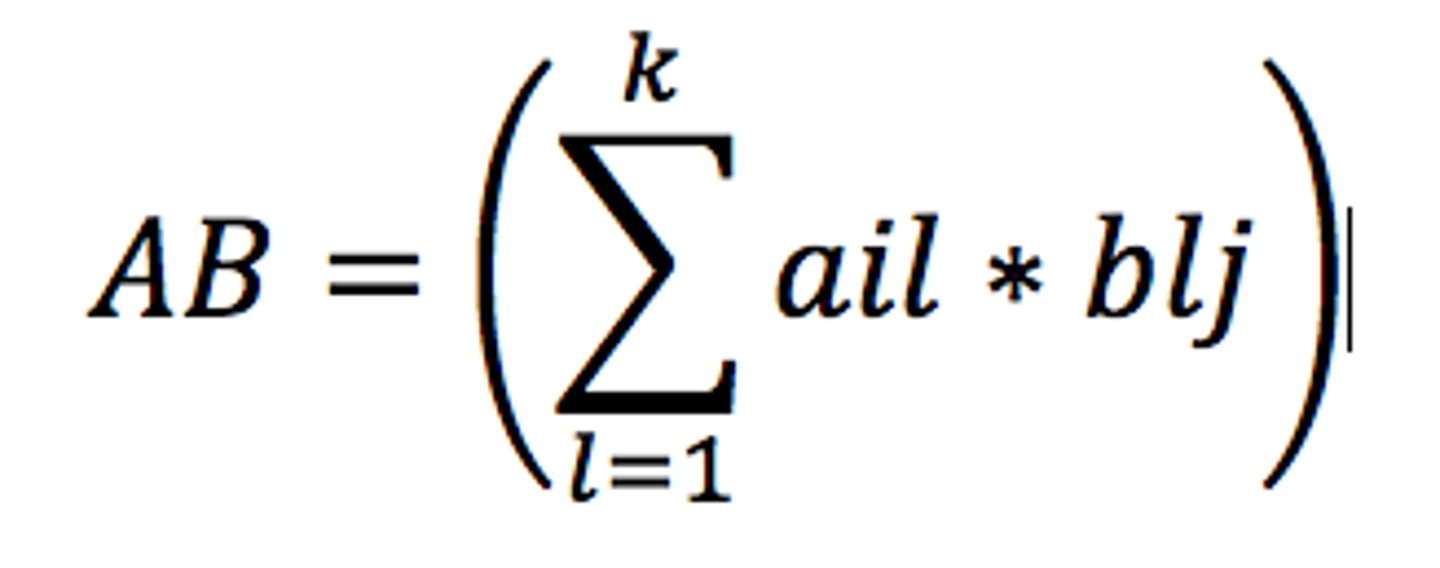
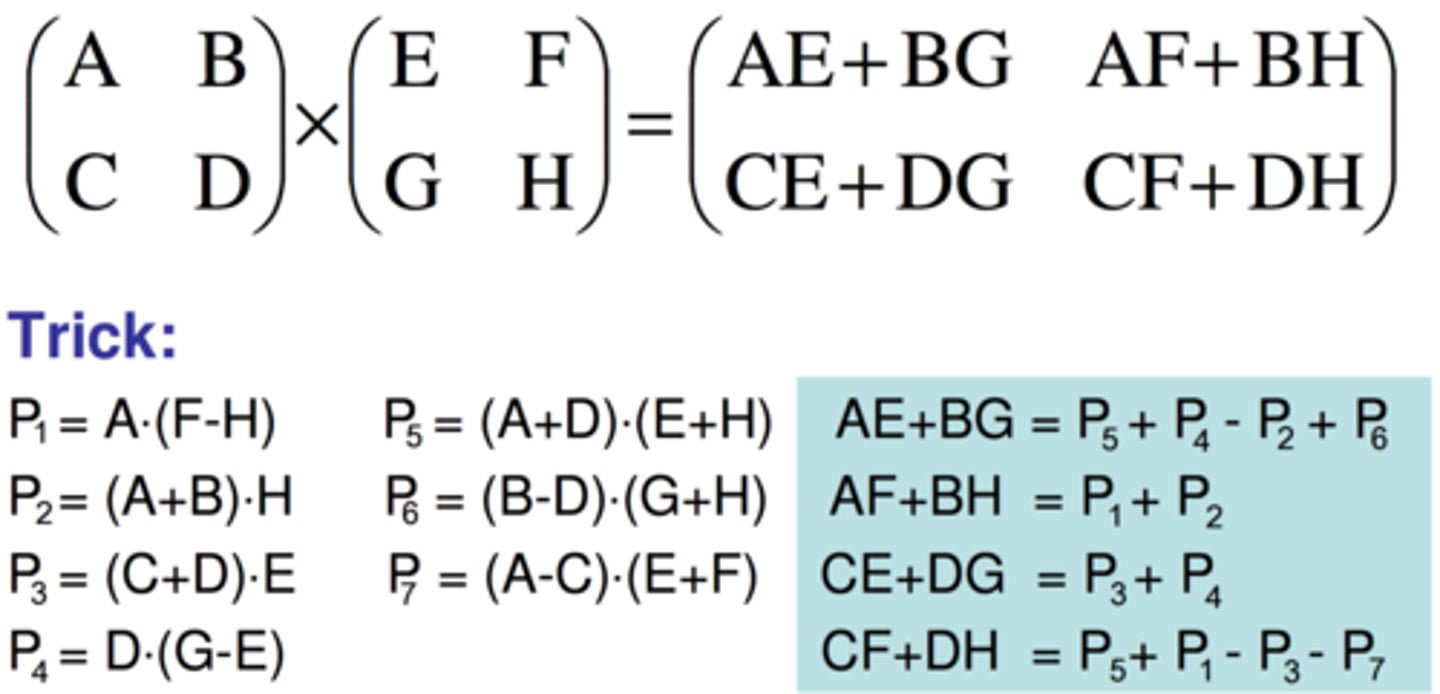
mxk matrix A and kxn matrix B is the matrix mxn
the entry of AB in the ith row and the jth column is the dot product of the ith row of A and the jth column of B.
matrix multiplication ex
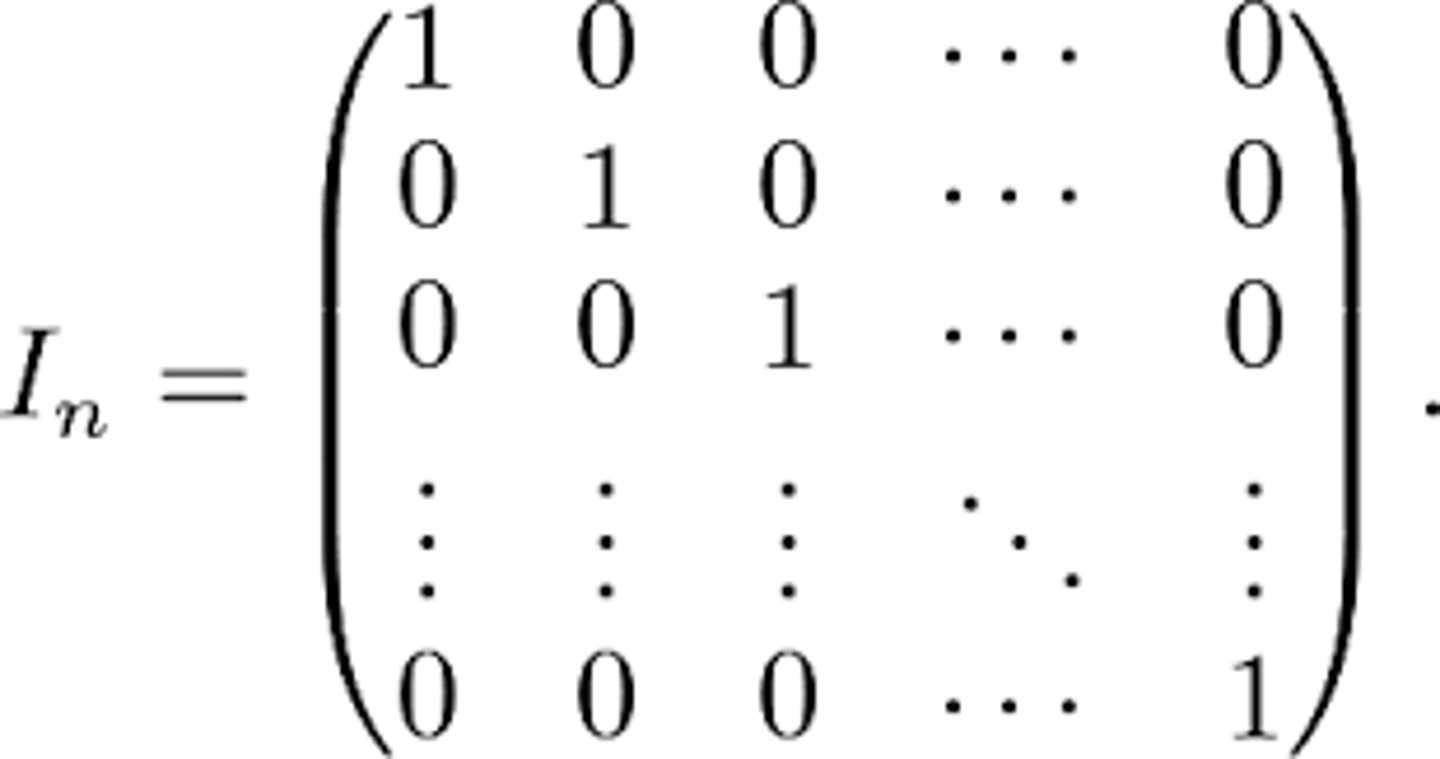
identity matrix
matrix In where the diagonal is all 1s and the rest are all 0s
Boolean Matrix
a matrix whose entries are all bits (1 or 0)
can be combined using conjunct and disjunct (or/and)
bit
an element of the set {0, 1} where 0 represents a false statement and 1 represents a true statement
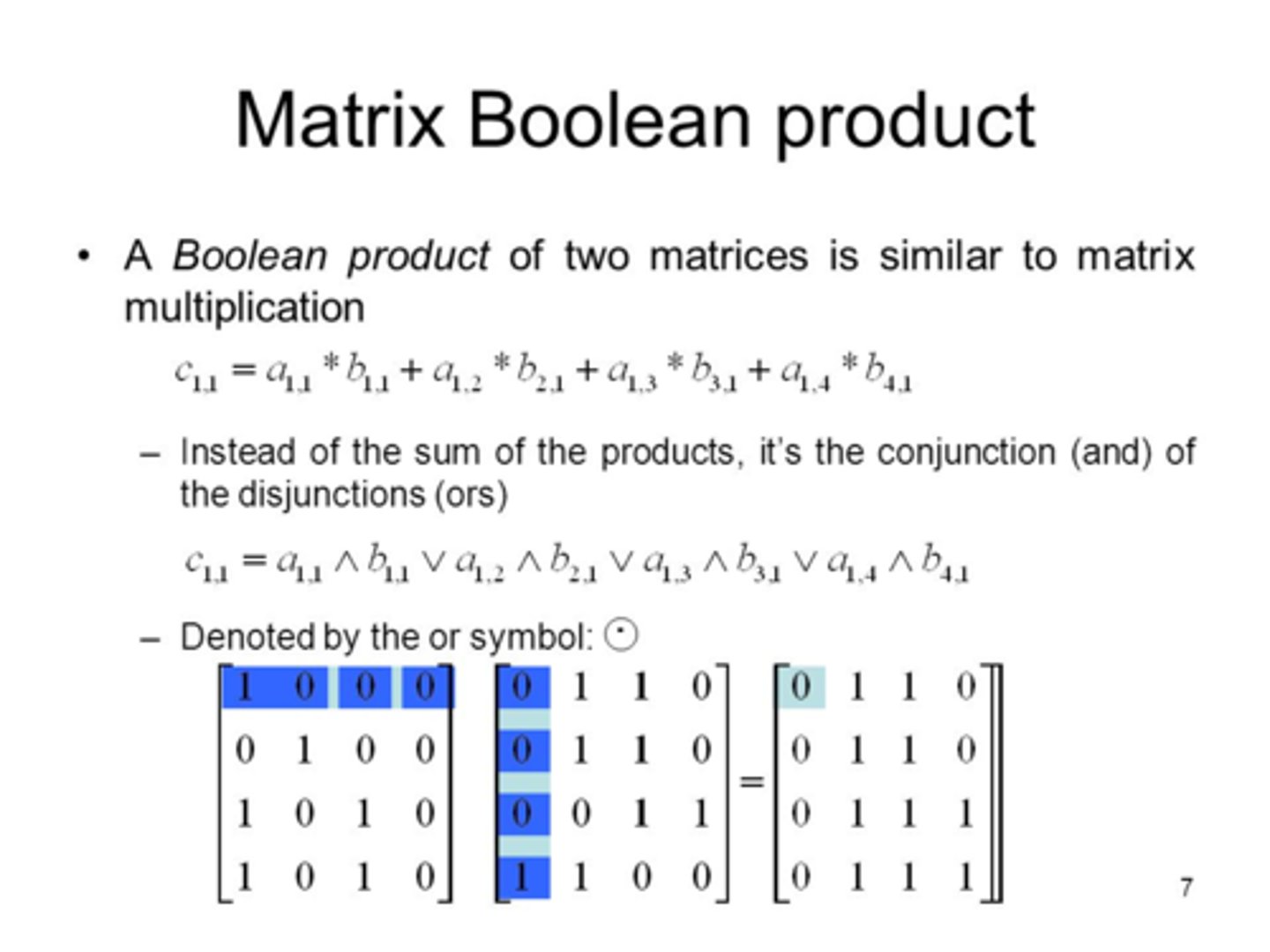
boolean dot product
A⨀B is (a_11∧b_11 )∨(a_12∧b_21 )... = 1 or 0
Boolean product
of a mxk boolean matrix A with a kxn Boolean matrix B is the mxn matrix A⨀B whose (i, j) entry is the boolean dot product of the ith row of A and the jth column of B.
where ever there is a 1 in the same place in A and B, there will be a 1 in the product, otherwise it is a 0.
closure
the smallest set containing X for which P is true
close with refelxiveness, symmetry, transitivity
compostition
of R with S is the relation
(S∘R)↔RS={(a,c)┤|∃ b such that aRb and bSc}
two statements are equivalent if
they are always true together or false together
p∨q ≡ ¬p→q
equivalence relation
is any relation that is reflexive, symmetric, and transitive
φ≡ψ,ψ≡Γ then φ≡Γ
equivalence class
of x ∈ X is [x]= {y|y∈X and xRy}
so [a]=[b]={a, b}
[c]=[d]=[e]={c, d, e}
one element from the set represents the entire set
partitions
a family of disjoint subsets P1, P2, P3,... ,Pn where Pi∩Pj=∅ and
P1∪P2∪P3∪... ∪Pn = X
partial orders
is a relation R is a partially ordered set or poset (X, ≤_R)
generalize ≤
reflexive, antisymmetric, transitive
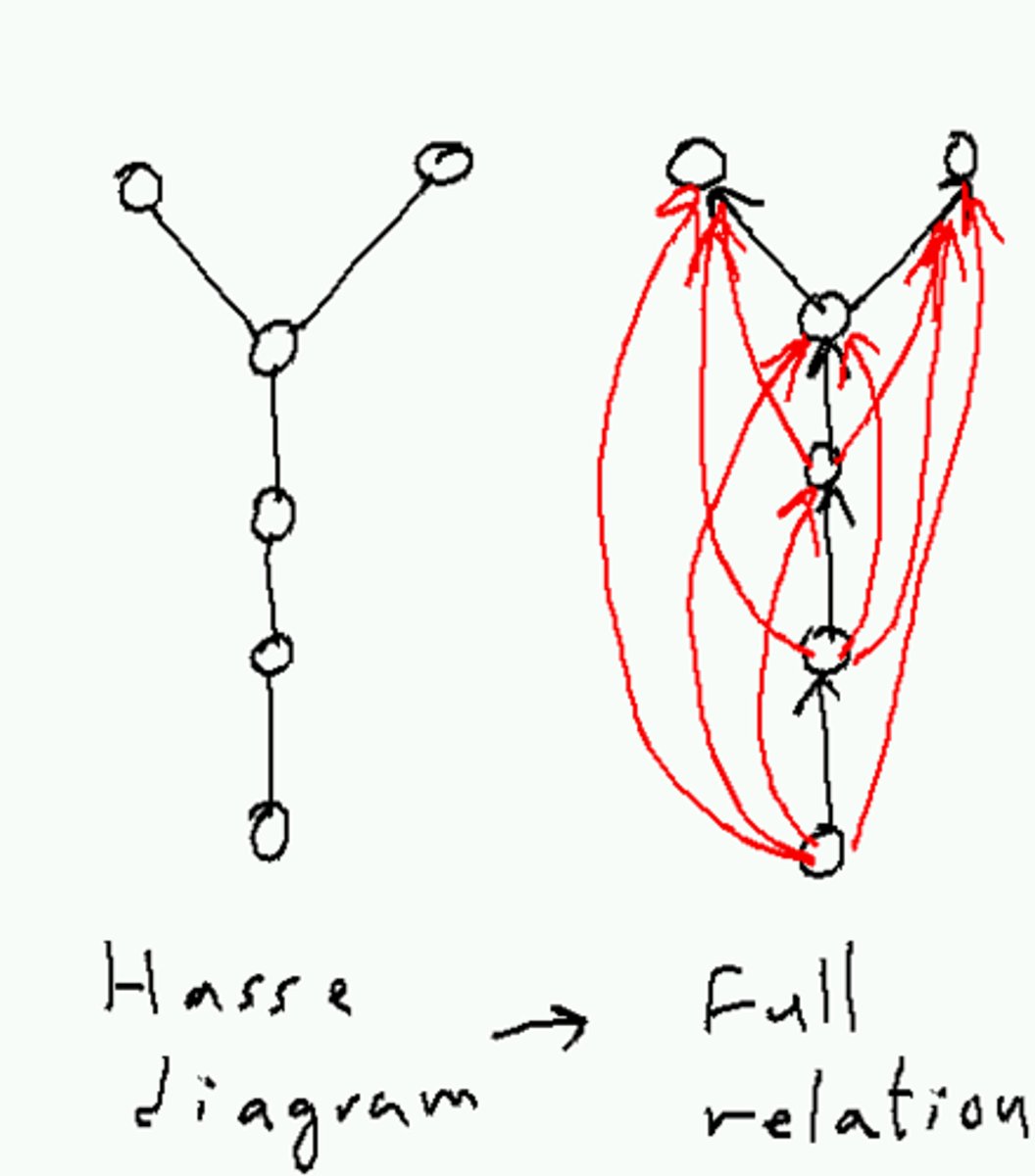
Hasse Diagram
bottom to top, removes clutter and captures flow
take the digraph of poset (X, ≤_R) and:
remove arrows, read edges bottom to top
remove all loops
if an edge connects x and y, y and z, remove the edge between x and z
comparable
two elements x, y of a poset if
X ≤_R Y or Y ≤_R X
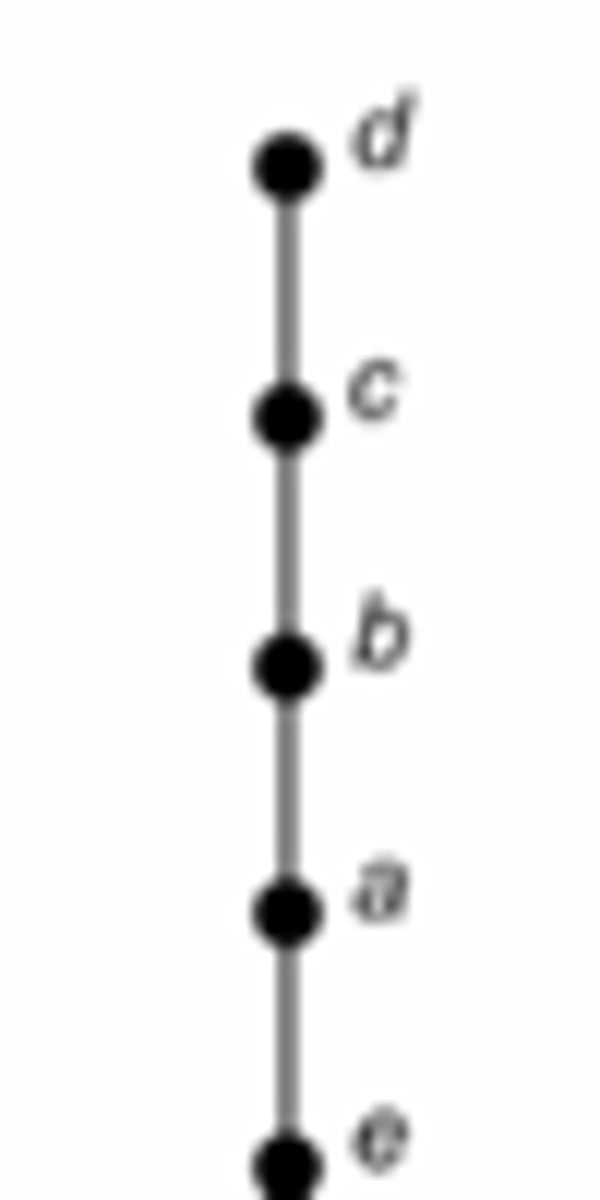
chain
a poset in which any pair of elements is comparable
maximal
if X ≤_R Y for no other y∈X
on hasse there is nothing above it
a single element=maximum
minimal
if Y ≤_R X for no other y∈X
on hasse nothing below it
a single element= minimum
total order
linear partial order
structured like a chain
covers
y covers x if x is related to y and there is no y such that x is related to y which is related to z
 Note
Note  Flashcards (45)