Microeconomics - Chapter 16
 Studied by 0 people
 Call Kai
 Learn
Learn Practice Test
 Spaced Repetition
 Match
Match Flashcards
 Knowt Play
1/30

Earn XP
Description and Tags
Externalities
Name | Mastery | Learn | Test | Matching | Spaced | Call with Kai |
|---|
No analytics yet
Send a link to your students to track their progress
31 Terms
what is an external cost
its an uncompensated cost that an individual or firm imposes on others
3 examples of external costs
air and water pollution, texting while driving, chemical runoff that affects fish stocks
what are external benefits
benefits that individuals or firms confer on others without receiving compensation
3 examples of external benefits
beehives next to almond orchards, education, preserved farmland
what are external costs and benefits known as
externalities
external costs are
negative externalities
external benefits are
positive externalities
def of externalities
the impact on third parties of a transaction between others
The extra safety your neighbor might have because everyone else in the area has purchased burglar alarms is a(n):
external benefit
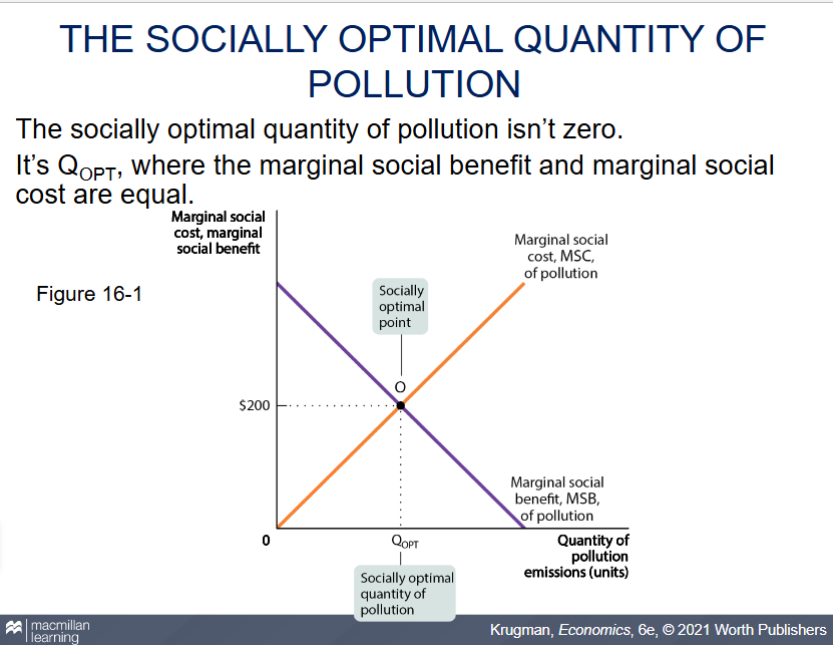
what is the marginal social cost (of pollution)
the additional cost imposed on society as a whole by an additional unit of pollution
what is the marginal social benefit (of pollution)
the additional gain to society as a whole from an additional unit of pollution
what is the socially optimal quantity (of pollution)
the quantity society would choose if all costs and benefits were fully accounted for
will a market economy, left to itself, arrive at the socially optimal quantity?
no, it won’t
recreate the graph of the socially optimal quantity of pollution
sad
recreate the graph of why a market economy produces too much pollution
sad
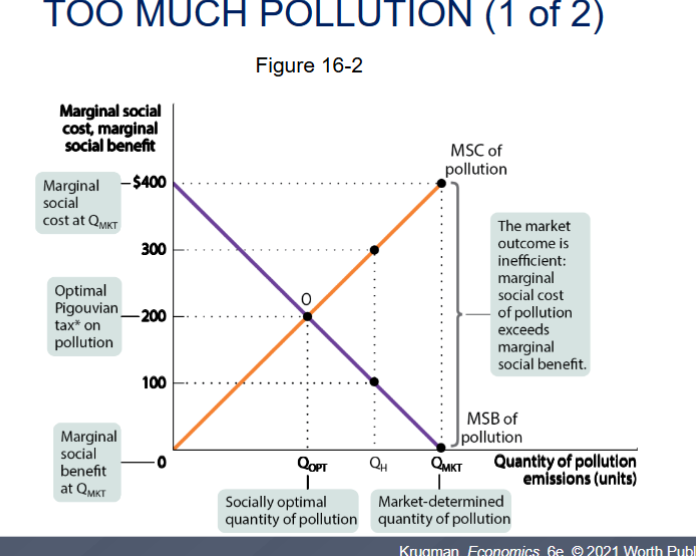
in a market economy without government intervention, polluters will
consider private benefits of pollution rather than social costs
What is the Coase theorem
the economy can reach an efficient solution, even in the presence of externalities, if the costs of making a deal are sufficiently low.
why don’t private parties always internalize externalities?
transaction costs are the problem.
what are transaction costs and what can they prevent
costs of making a deal and they often prevent a mutually beneficial trade from occuring
In reality, the Coase theorem is unlikely to work because:
transaction costs are often high, making negotiations difficult
3 types of government policies used to deal with pollution
environmental standards, emissions taxes, and tradable emissions permits
explain environmental standards
rules that protect the environment by specifying actions of producers and consumers
explain an emissions tax
cost depends on the amount of pollution a firm produces
what are Pigouvian taxes
taxes designed to reduce external costs
explain tradable emission permits
licenses to emit limited quantities of pollutants; the licenses can be bought and sold by polluters
will markets produce enough external benefits
no
what is a technology spillover
its a positive externality that results from knowledge spread among individuals and firms
what is a network externality
the value of the good to an individual is greater when a large number of other people also use the good
3 examples of network externalities
communication systems (telephones), railway systems, air travel
network externalities are subject to
positive feedback, where success breeds greater success and failure breeds failure
example of positive feedback to a network externality
The more popular Windows is, the more software is made for it and the more popular it becomes.
 Note
Note  Flashcards (32)