magnetic flux - ch 21
 Call Kai
 Learn
Learn Practice Test
 Spaced Repetition
 Match
Match Flashcards
 Knowt Play
1/17

There's no tags or description
Looks like no tags are added yet.
Name | Mastery | Learn | Test | Matching | Spaced | Call with Kai |
|---|
No analytics yet
Send a link to your students to track their progress
18 Terms
In the mathematical expression for Magnetic flux, BA cosθ, the magnitude of B is the strength of the magnetic field produced by the current in the loop.
false. b is the magnitude of the external magnetic field
In the mathematical expression for Magnetic flux, BA cosθ, θ is the angle between B and A when the vectors are tip to tail.
False. θ is the angle between B and A when the vectors are tail to tail.
anytime vectors multiplied , rule is vectors must be TAIL TO TAIL, tip to tail is when vectors are added.
false, cos90 is zero, flux will have its minimum value of 0
A in Fardays law magnetic equation
area enclosed by the loop (in m²)
the direction of A is what to the surface of the enclosed loop?
always perpendicular to the surface of the enclosed loop
maximum amount of magnetic field (B)
vector in direction of B
magnetic flux dependent on
strength of external magnetic field, size of loops area and orientation of the loop
when B and A are perpendicular
flux is zero
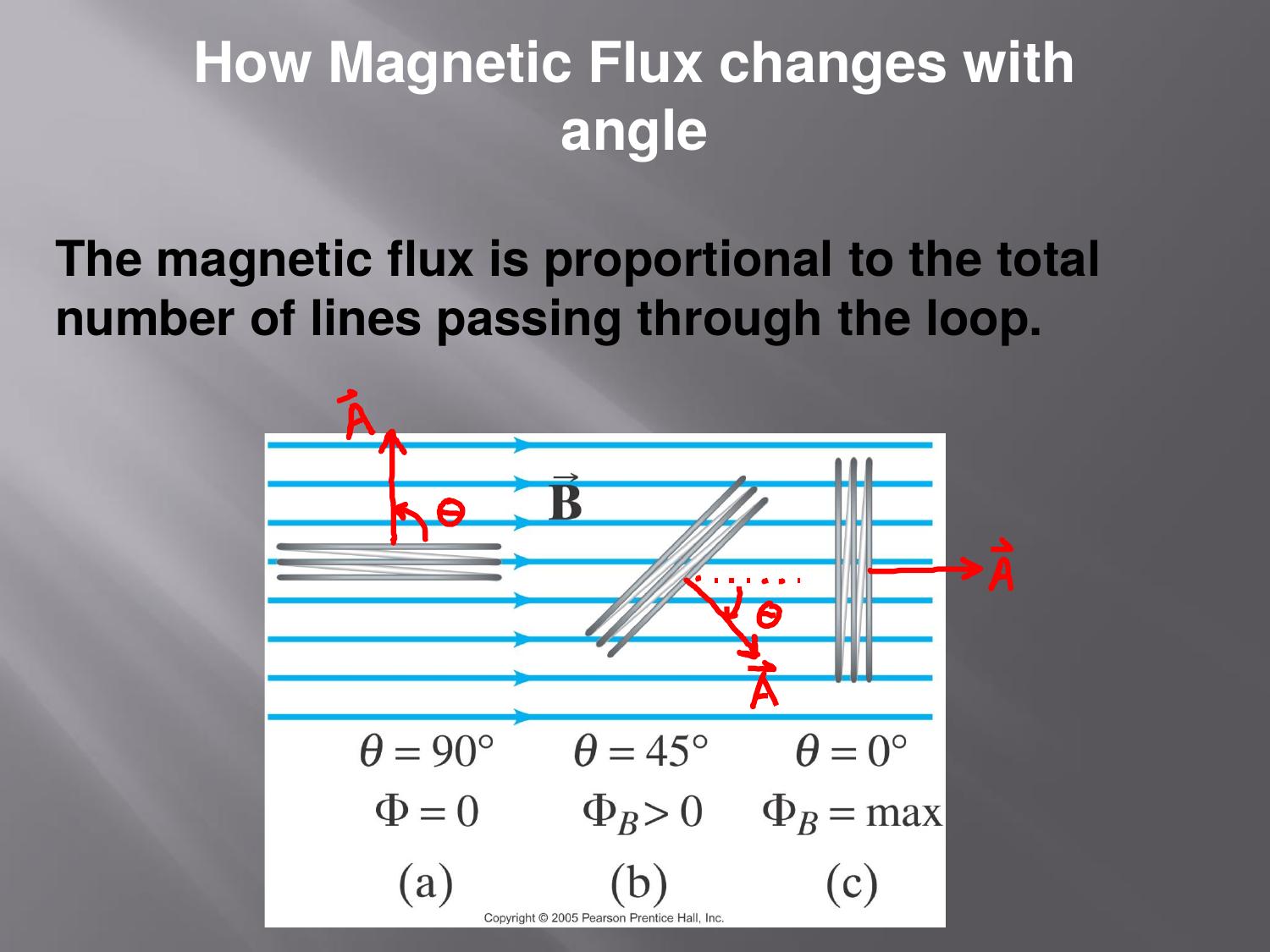
magnetic flux proportional to
number of total lines passing through loop
flux equation (number of loops)
E= voltage/induced emf
N= number of loops , minus sign has to do with direction of the induced emf
delta flux = BAcostheta
since flux is equal to BAcostheta we can change the magnetic flux 3 diff ways
1- change strength of field in loop, B
2- change size of loop , A
3- change orientation of loop in field, theta.

Lenz’s law
explains the minus sign in Farday’s law
says that direction of induced emf will always oppose change that is proudcing emf
As a bar magnet is pushed into a conducting loop, what element of the magnetic flux is changing?
external magnetic field strength, B- creating a battery like effect , when magnetic is pushed into loop it is increasing towards the floor, taken out it would be decreasing towards ceiling
it would not be the area, not changing the size of the conducting loop
it would not be the angle between A and B
faster change of flux
bigger the induced emf
As a loop is rotated in an external magnetic field, what element of the magnetic flux is changing?
angle between A and B
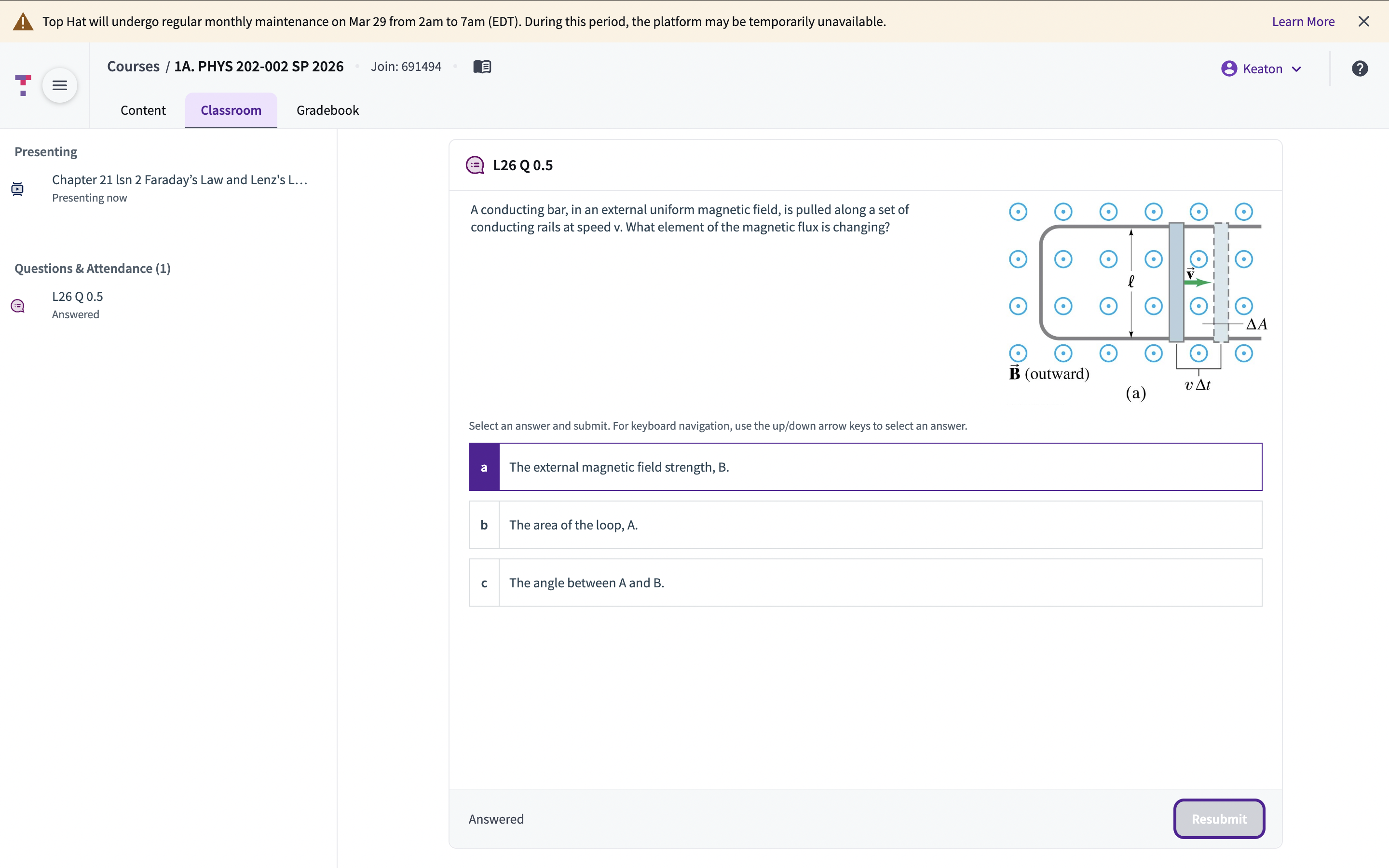
what element of the magnetic flux is changing in this situation?
the area of the loop, A
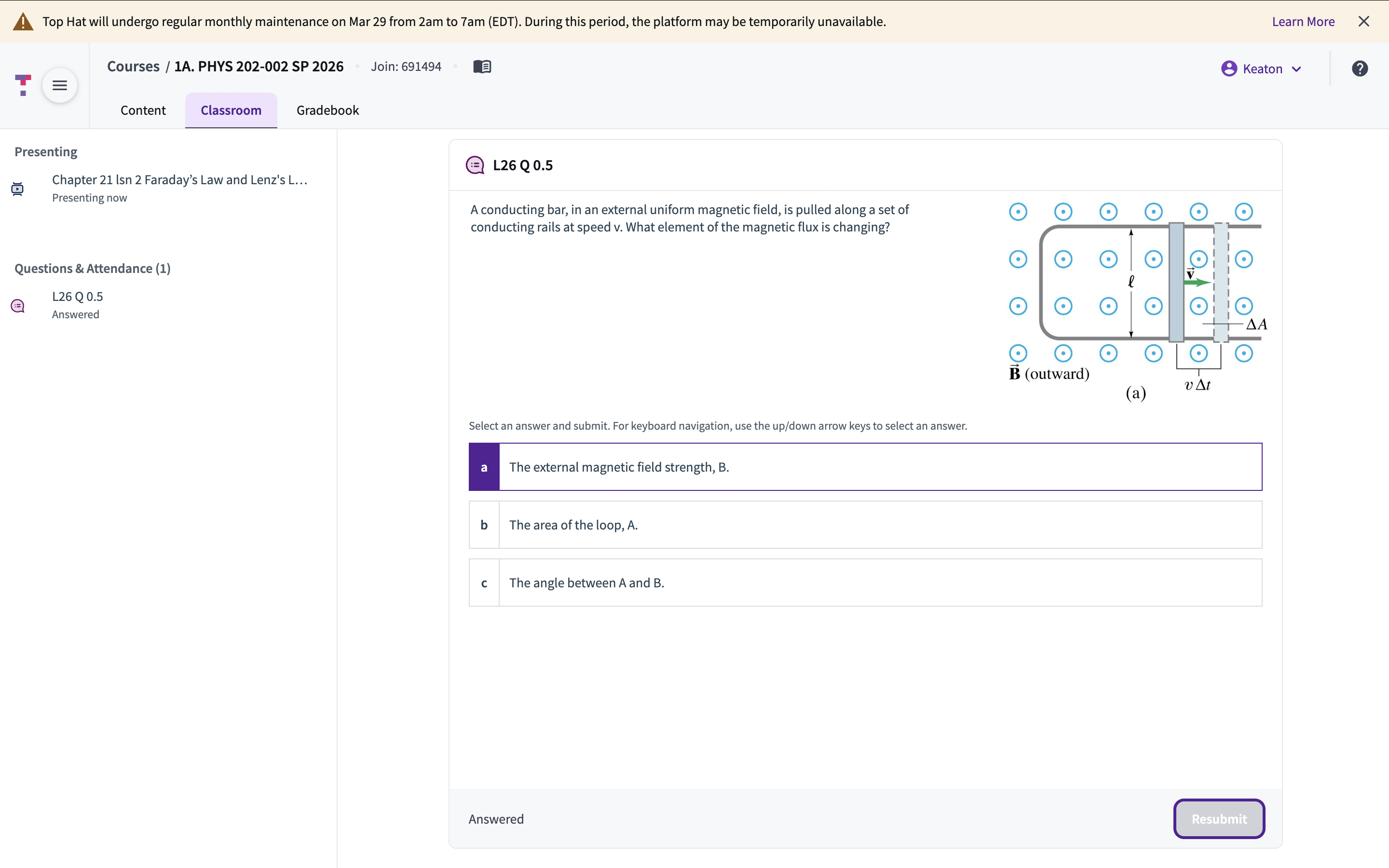
equation to use during this situation
E= Blv
when bar is sliding across rail
as a loop is ROTATING in an external magnetic field, what element of the magnetic flux is changing?
the angle between A and B

