3.6: digestive processes
 Call Kai
 Learn
Learn Practice Test
 Spaced Repetition
 Match
Match Flashcards
 Knowt Play
1/13

There's no tags or description
Looks like no tags are added yet.
Name | Mastery | Learn | Test | Matching | Spaced | Call with Kai |
|---|
No analytics yet
Send a link to your students to track their progress
14 Terms
regulation of digestive activity
hormones: form gastric/ intestinal enteroendocrine cells
-central nervous system regulates small portion of digestion (like hunger)
-enteric nervous sytem: main source of control
→ nervous netweork in esophagus, stomach, intestines
→ regulates digestive tract motility, hormonal secretions, blood flow
> 100 million neurons
-can function independently of CNS but CNS influences activity
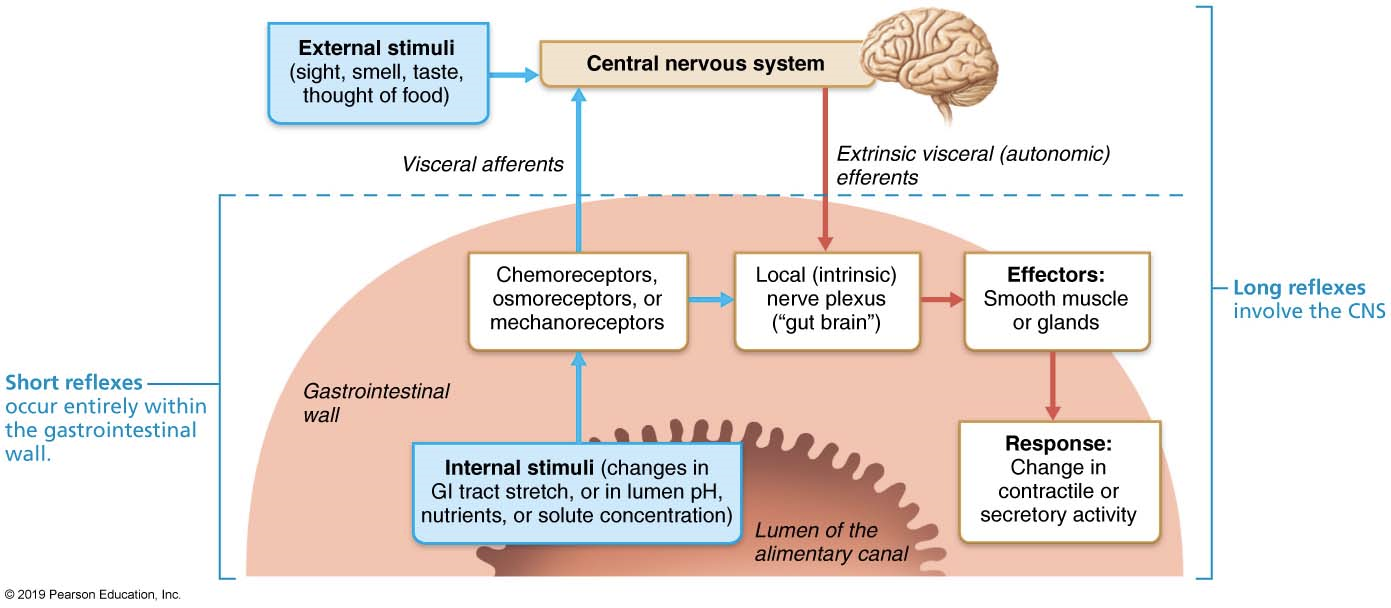
neural regulation of digestion
-short (____) reflexes: for ___ control
→
→
long (_____) reflexes: for ___ control
→
→
myenteric, intrinsic
-regulated solely be enteric system in response to local stimuli
-mediated by mechanoreceptors, chemoreceptos, osmoreceptors in wall of digestive tract
vagovagal, extrinsic
-integration of CNS autonomics
-can be irnitially by internal or external stimuli
mastication
-mechanical processing of injested food
→ easier to swallow
→
-partially ___
-teeth: ____
-lips & cheeks function in ____
-tongue focuses in ____
-muscles of mastication: ____
increased surface area
voluntary & partially reflective
cut food
retaining food
manipulating food
masseter & temporalis elevate jaw
pterygoids: lateral excursion
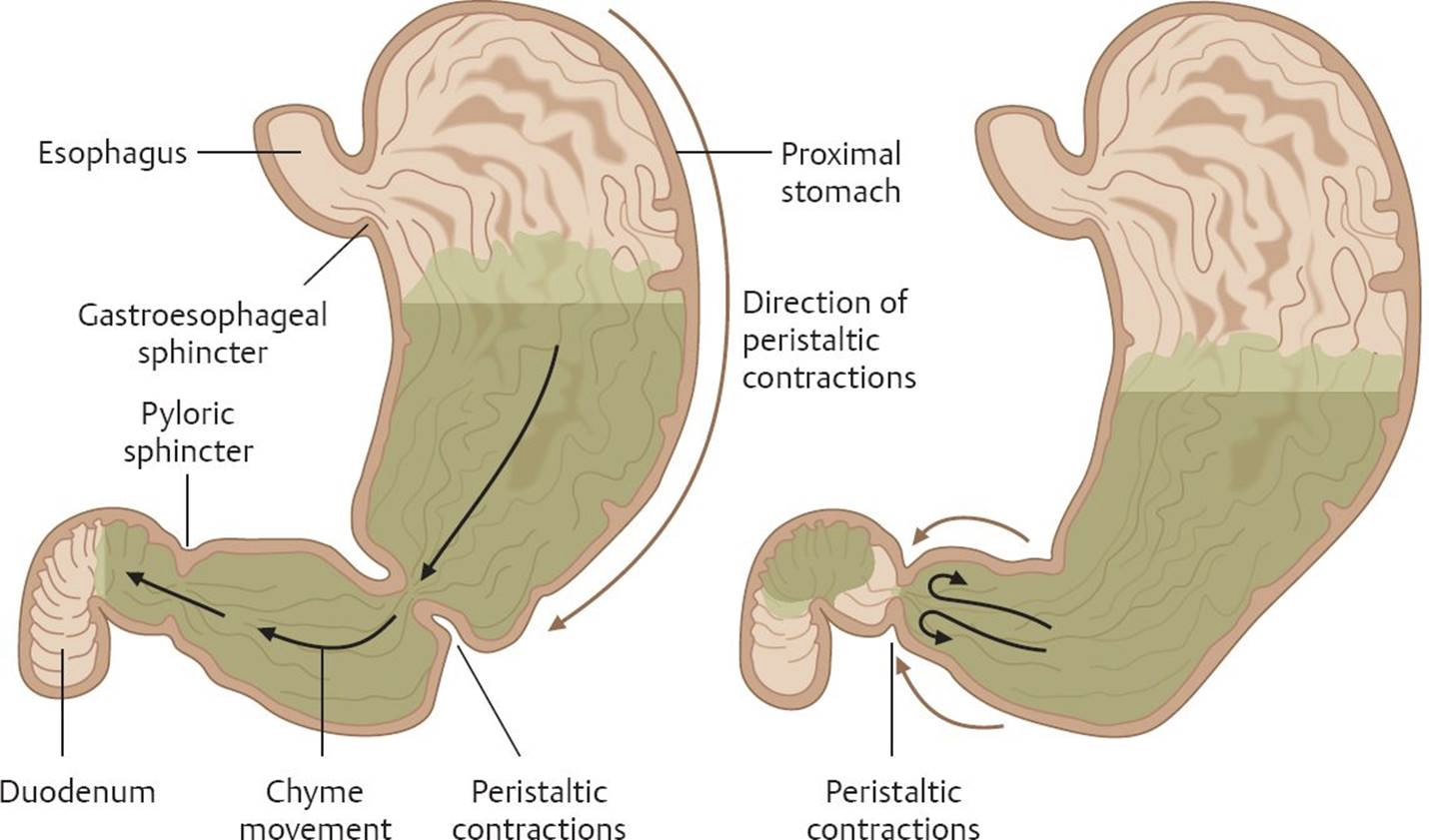
gastric motility
-antral pump:
~3 mL of ___
-overfill of __
-stomach typically ___
-strong contractions mechanically process food to prepare for entering duodenum
-contraction close pyloric sphincter
-chyme passes into duodenum at a time:
→ relaxation of stomach allows sphincter to open
→ provides time to neutralize HCl, digest nutrients
-duodenum inhibits gastric motility
-takes about 4 hrs to empty
vomiting
-controlled by ____
-induced by:
-these help to expel chyme:
emetic center in medulla oblongata
-overstretching of stomach/ duodenum
-chemical irritants
-visceral trauma, intense pain
-psychological/ sensory stimuli
-lower esophageal sphincter relaxing
-intense abdominal contractions
-reverse peristalsis
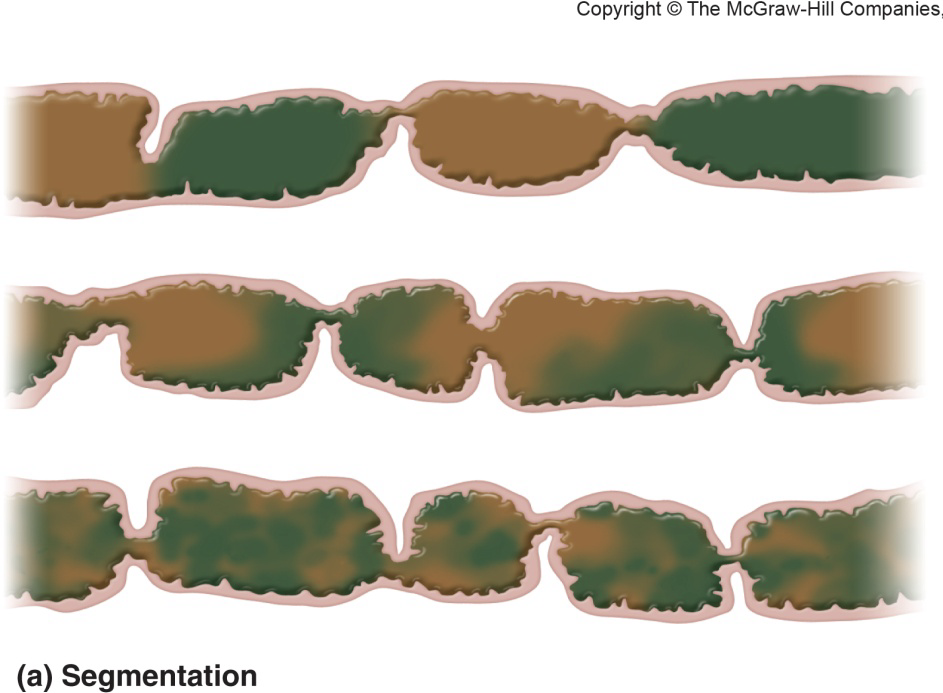
intestinal motility: segmentation
-stationary ___ form & re-from___
→
→
-transition to ____
contractions, in several locations
-mix chyme with bile & digestive juices
-bring chyme into contact w intestinal mucosa
peristalsis after most nutritents are absorbed
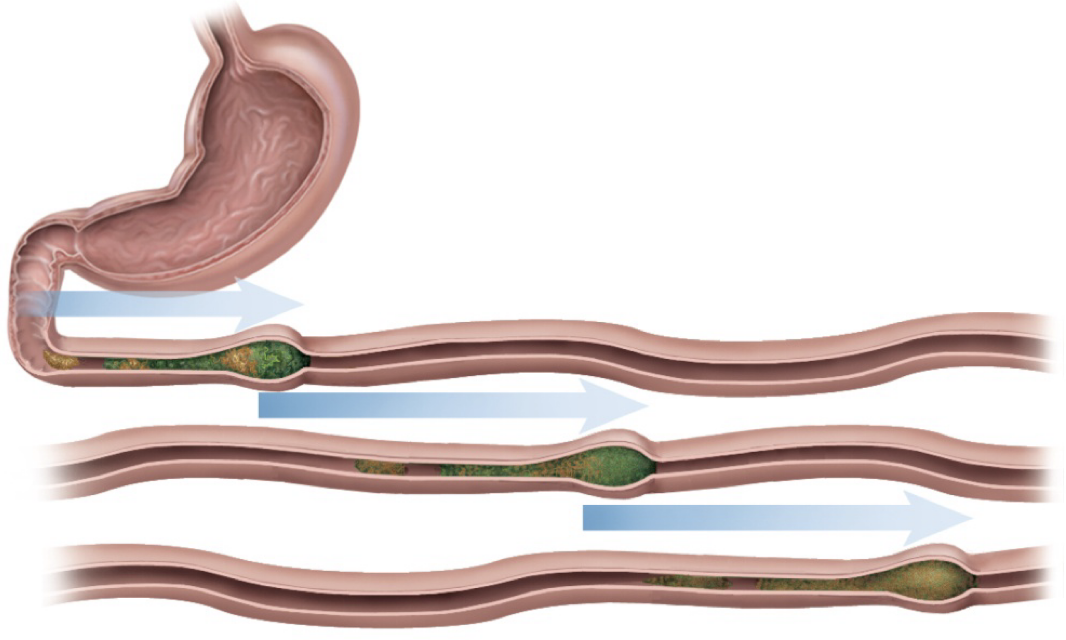
intestinal motility: peristalsis
-____ movement of contents _____
→
→
-refilling of ___
gradual, towrads large intestine
-triggered by duodenal hormones
-moves chyme towards LI over ~2 hrs
-stomach suppresses persistalsis & reactivates segmentation
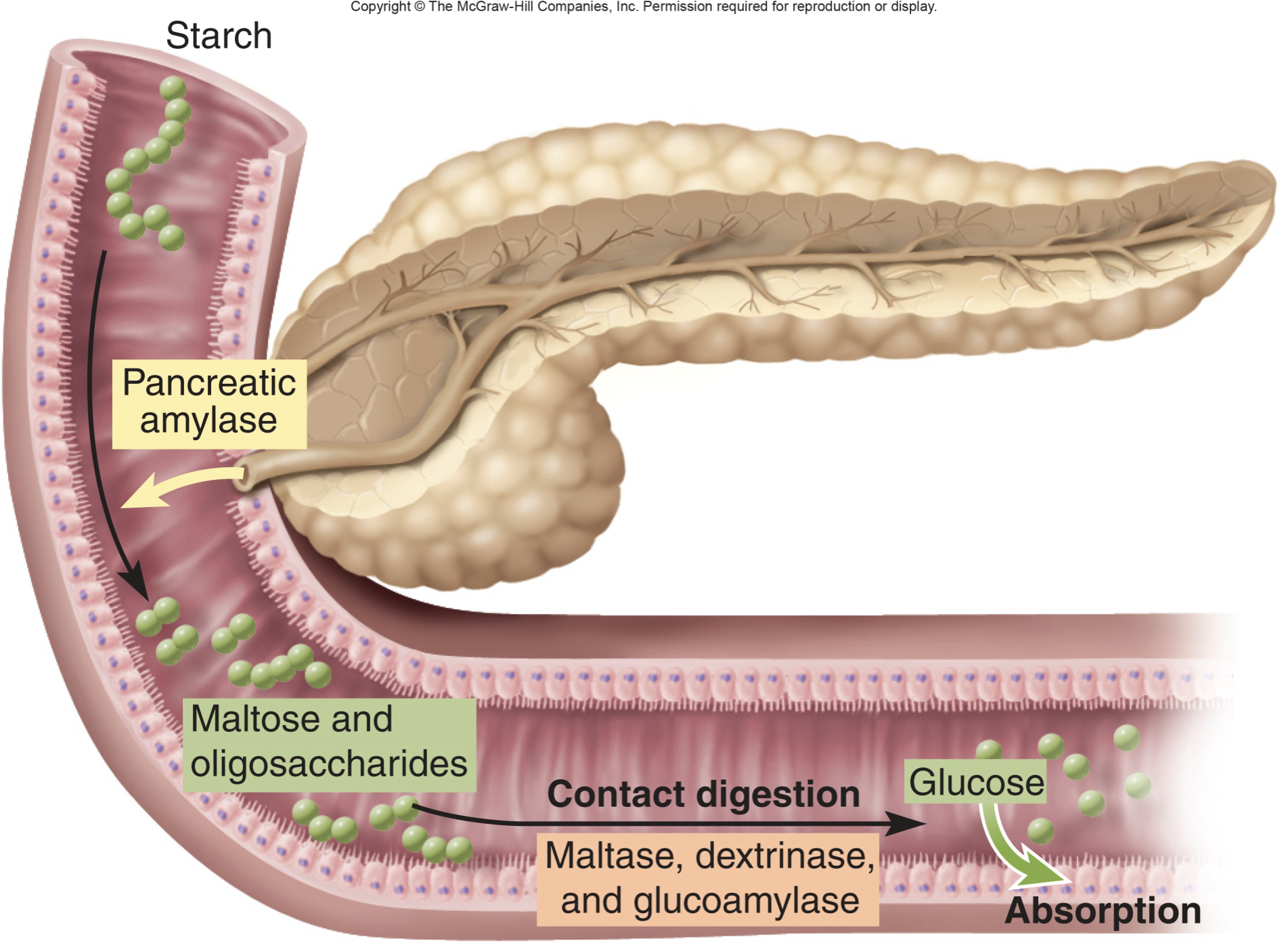
digestion & absorption: carbohydrates
-enterocytess (absorptive cells) can only absorb ___
-begins with ___
-continued by __
-__ digestion produces ___
monosaccharides: larger sugar molecules must be chemicaly broken down
salivary amylase: optimal pH of 6.9-7.0: salivary amylase inactivated by stomach acid
pancreatic amylase
contact; monosaccharides: pas through enterocytes via facilitated diffusion
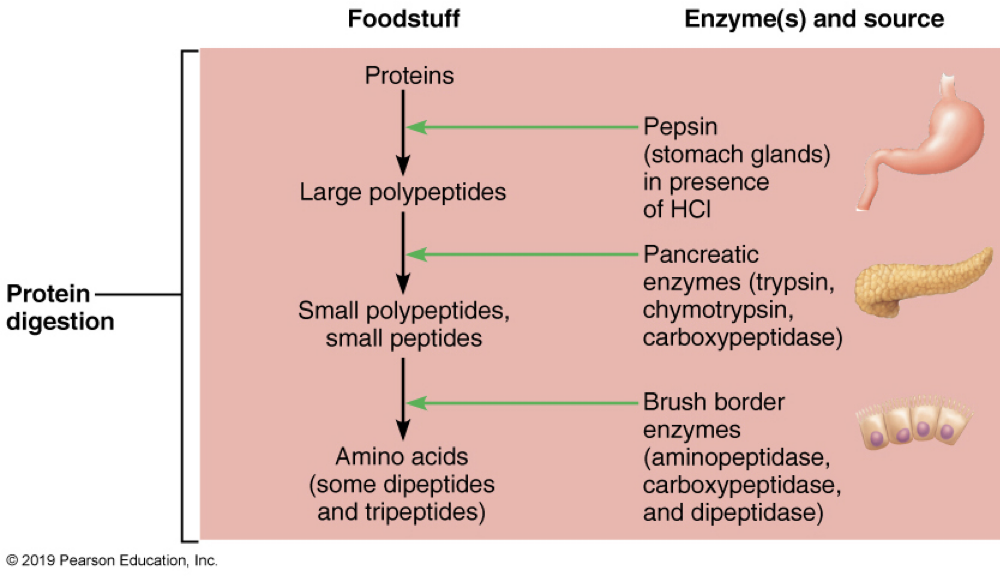
digestion & absorption: proteins
-beings in ___
-pancreatic ___
-brush boarder
stomach w pepsin: first 10-15% of protein digestion, optimal pH of 1/5-2.3: inactivated by pancreatic juice
enzymes take over in duodenum
enzymes digest peptides into free amino acids: absorbed by enterocytes
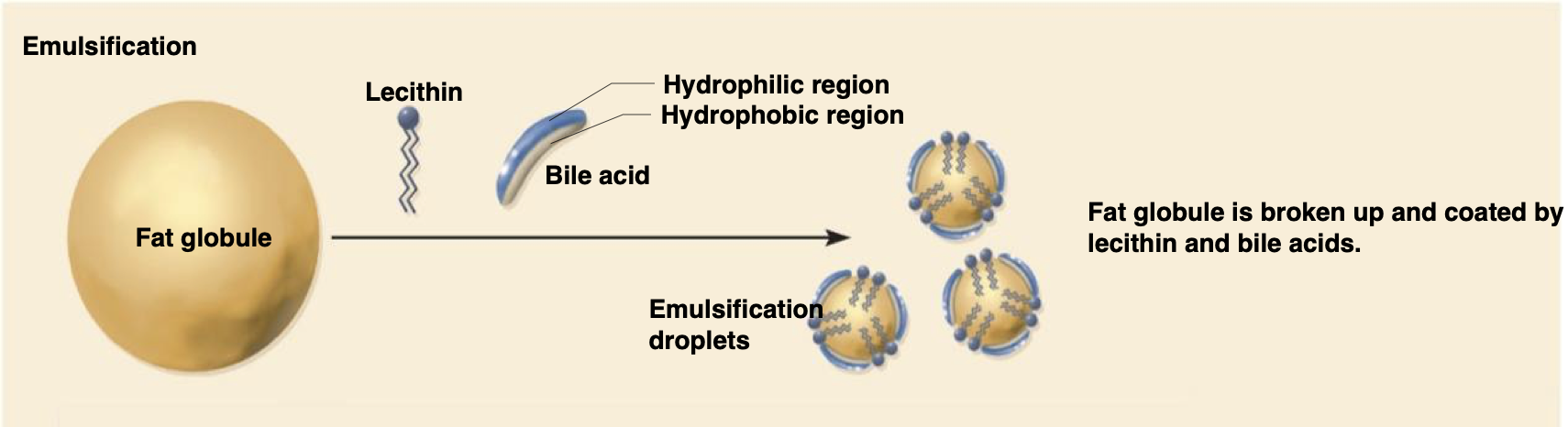
digestion & absorption: lipids
-mechanical digestion:
→
→
-chemical digestion:
→
→
→
-micelles:
-absorbed lipids __
mechanical
-gastric/ intestinal motility produces emulsification droplets (tiny pieces of lipids)
-bile coats droplets to keep from recombining
chemical
-begins in mouth via lingual lipase
-continued by gastric & pancreatic lipase
-produces monoglycerides & free fatty acids
micelles
-made up of bile molecules arranged around lipid center
-carry lipids from chyme to enterocytes
-taken up by lacteal lymph capillaries
-chyle: fat-heavy intestinal lymph
-travels through lymphatic vessels to return too bloodstream
digestion & absorption: vitamins
-fat soluble vitamins:
-water soluble vitamins:
A, D, E, K
-absrobed with other lipids
-not absorbed at all without fat in chyme
B complex & C
-mainly absorbed by diffusion
-B12 requires intrinsic factor (produced by parietal cells in stoamch)
defacation
at rest:
-___ nerve:
-____ nerve:
defacation
1)
2)
3)
hypogastric: sympathetic innervation: relaxes rectum, closes internal anal sphincter
pudendal: somatic motor innervation: closes external sphincter
1) rectum contracts
2) internal sphincter relaxes
3) external sphincter relaxes
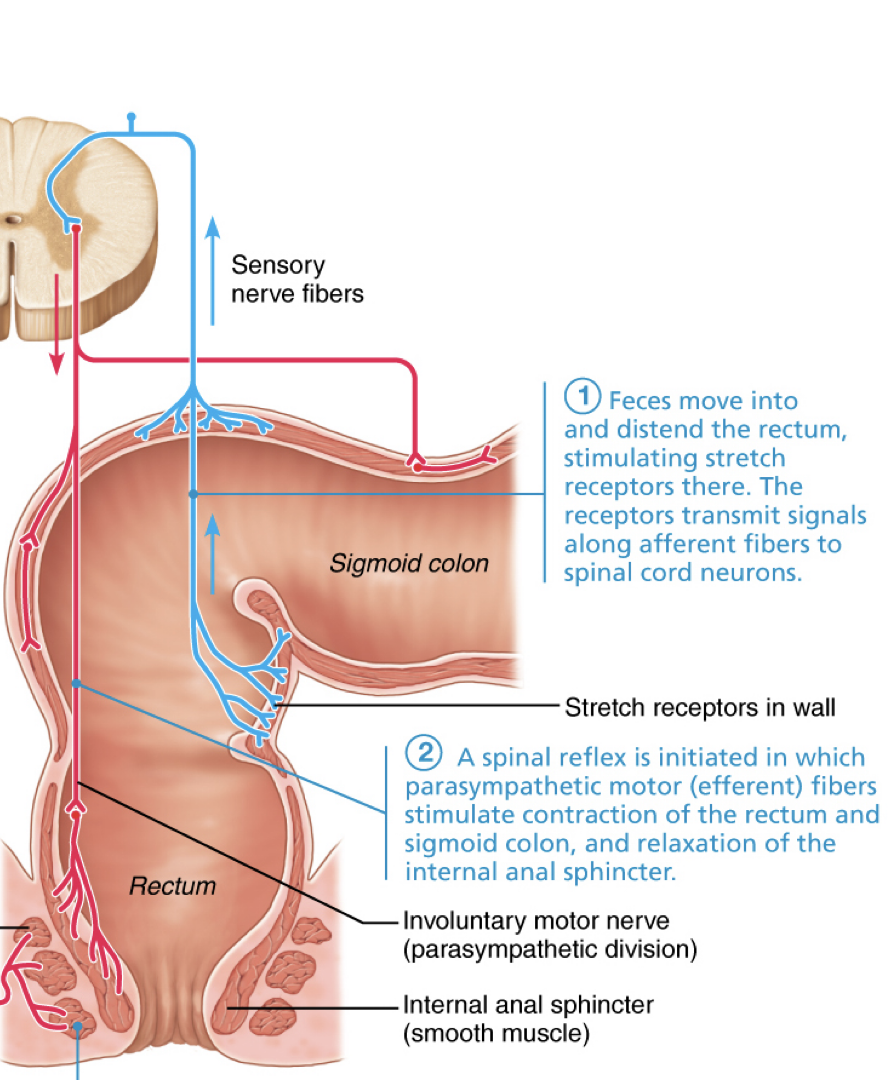
reflexive defacation
-controlled by ___
1)
2)
2 defacation reflexes: stimulated by stretching of rectum
1) intrinsic reflex: mediated by myenteric plexus: stretch stimulus activates peristalsis in descending & sigmoid colon
2) spinal reflex: mediated by pelvic splanchnic nerves:
-stretch stimulus carried to sacral spinal cord
parasymphathetic stimulus:
-contracts rectum
-intensifies peristaltic contractions
-reflexes internal anal sphincter
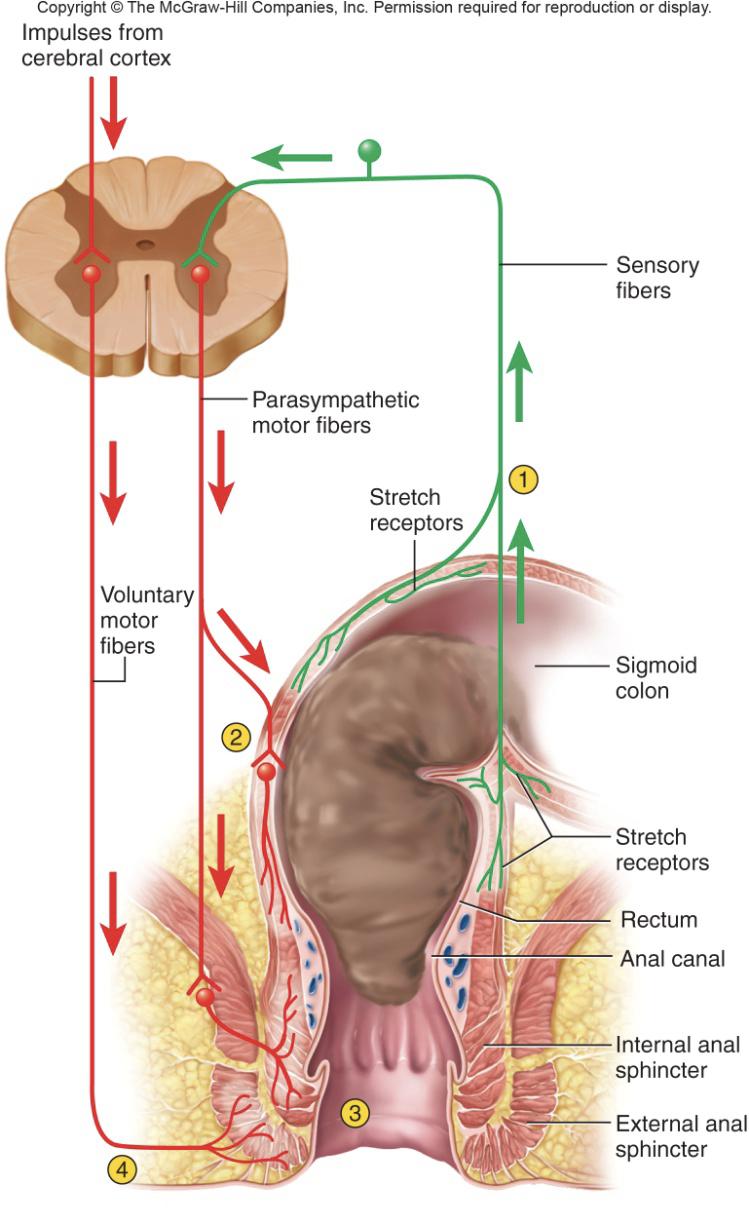
voluntary defacation
-initiated by ___
-___ reflex relaxes ___
-
stretch of rectum
-parasymphathetic, internal anal sphincter
-voluntary relaxation of skeletal mm:
→external anal sphincter (pudendal nerve)
→puborectalis (sacral plexus)
-voluntary suppression
-eternal anal sphincter voluntarily remains closed
-intestinal contractions temporarily cease
-reflexes reoccur when another pass movement moves more feces into rectum

