BIOL 1030 - Topic 8: Plant Diversity
 Call Kai
 Learn
Learn Practice Test
 Spaced Repetition
 Match
Match Flashcards
 Knowt Play
1/59

There's no tags or description
Looks like no tags are added yet.
Name | Mastery | Learn | Test | Matching | Spaced | Call with Kai |
|---|
No analytics yet
Send a link to your students to track their progress
60 Terms
Plants are a part of …
Archaeplastida
Form + 2 main classes
Form:
unicellular
Multicellular
Colonial
2 main classes:
Green algae: paraphyletic
Red algae: monophyletic, have holdfast (root), stipe (stem) and blade (leaf)
Photosynthetic pigments
allow for adaptation to different environments
Can be used to identify members
Different types allow us to use different wavelengths
Plants evolved from green algae, so many plant traits appear in algae, some of which were acquired independently…
multicellulaeiry
Photosynthetic pigments
Cell walls composed of cellulose
Charophytes + traits
Supergroup archaeplastida, Green algae, and closest relative to terrestrial plants
Rings of cellulose synthesizing proteins
distinct circular rings of cellulose-synthesizing proteins in the plasma membrane
Flagellated sperm
In plant species that have flagellated sperm, they most resemble the sperm in charophytes compared to most algae
Formation of phragmoplast
microtubules and associated proteins present in charophytes and land plants after cytokinesis, guiding the assembly of cell plate formation
Molecular analyses of nuclear, mitochondrial and chloroplast DNA also support this
Sproropollenin
a polymer that prevents desiccation (drying out)
A waxy, thick molecule that surrounds the outside (outside of cell wall) and allows plant to stay out of H2O for longer
common in charophytes algae living st the edge of shallow ponds
Plants colonized land ~450 million years ago, and it had its pros and cons… what were they?
Pros:
more unfiltered sunlight
More carbon dioxide
Nutrients in soil
Cons:
water is scarce, harder to disperse sperm
Must grow against gravity
Plants have a wide range of adaptations to allow for survival on land, what are the three main adaptations?
Alternation of generations life cycle
multicellular haploid + diploid stages
Walled spores
contains sporopollenin
Apical meristems
increases exposure to environmental resources
What are some additional derived traits that allowed plants to move on land
Accessory pigments: help with UV protection, antioxidant effects; like sunscreen! Can also make plants taste bad/poisonous to deter snails
Cuticle: waxy layer on the outer epidermis to help prevent desiccation
Stomata (pores): allow exchange of carbon dioxide and oxygen
can close in periods of hot, dry conditions to prevent water loss
Formed symbiotic relationships with fungi
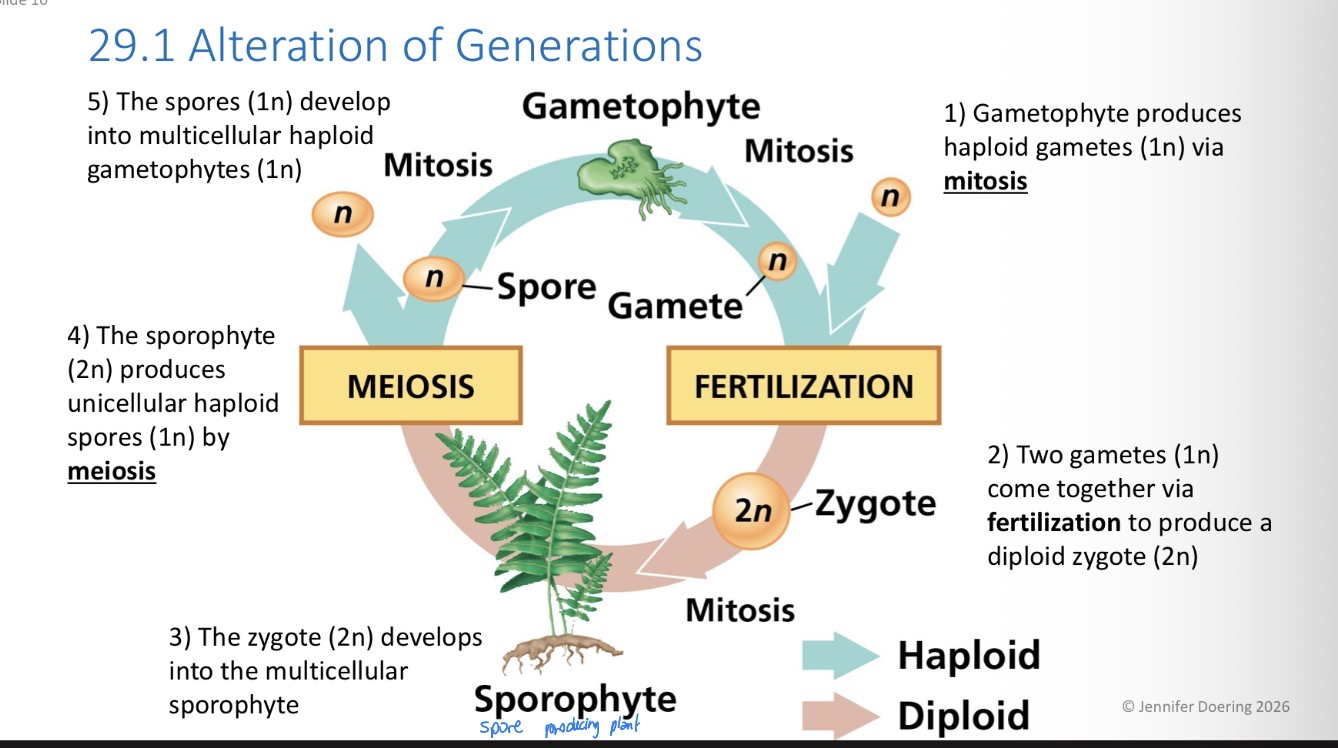
Steps of Alternations of generations
Gametophyte produces haploid gametes (1n) via mitosis
Two gametes (1n) come together via fertilization to produce a diploid zygote (2n)
The zygote (2n) develops into the multicellular sporophyte
The sporophyte (2n) produces unicellular haploid spores (1n) by meiosis
The spores (1n) develop into multicellular haploid gametophytes
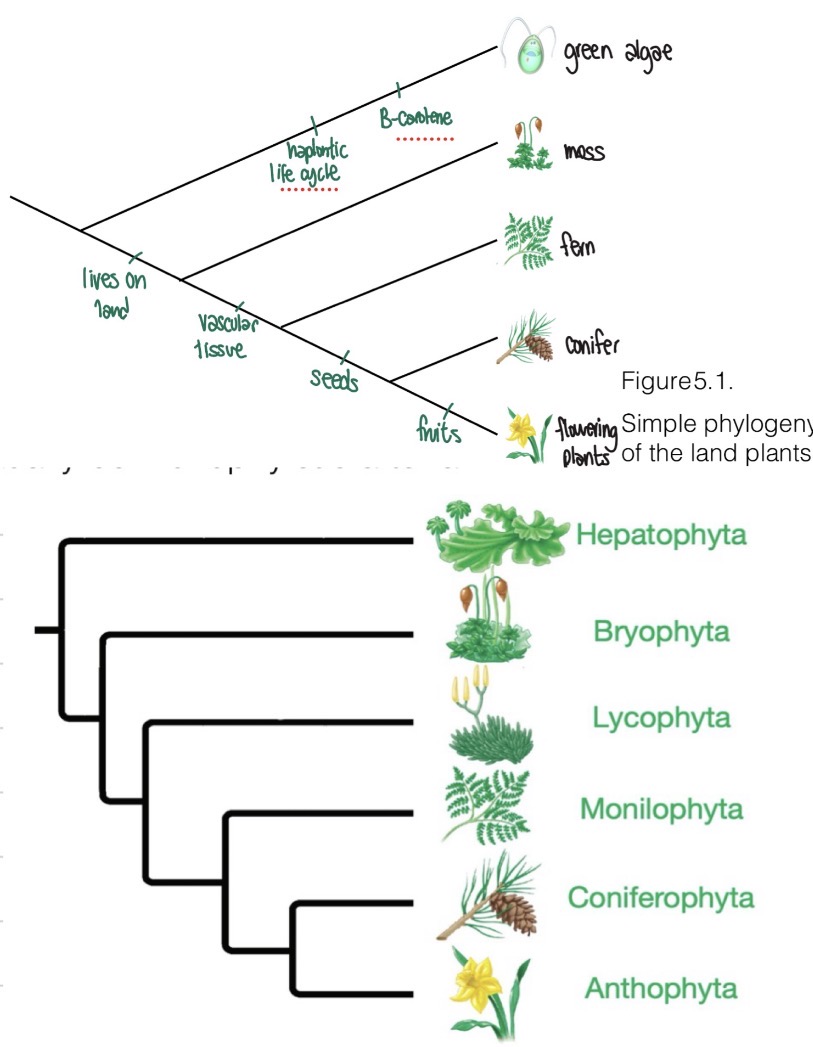
(Broadly) classify plants based on the presence of vascular tissues
Non-vascular plants (bryophytes)
liverworts
Mosses
Hornworts
Vascular plants
Seedless Vascular Plants
Lycophyta (club mosses, spike mosses, quillworts)
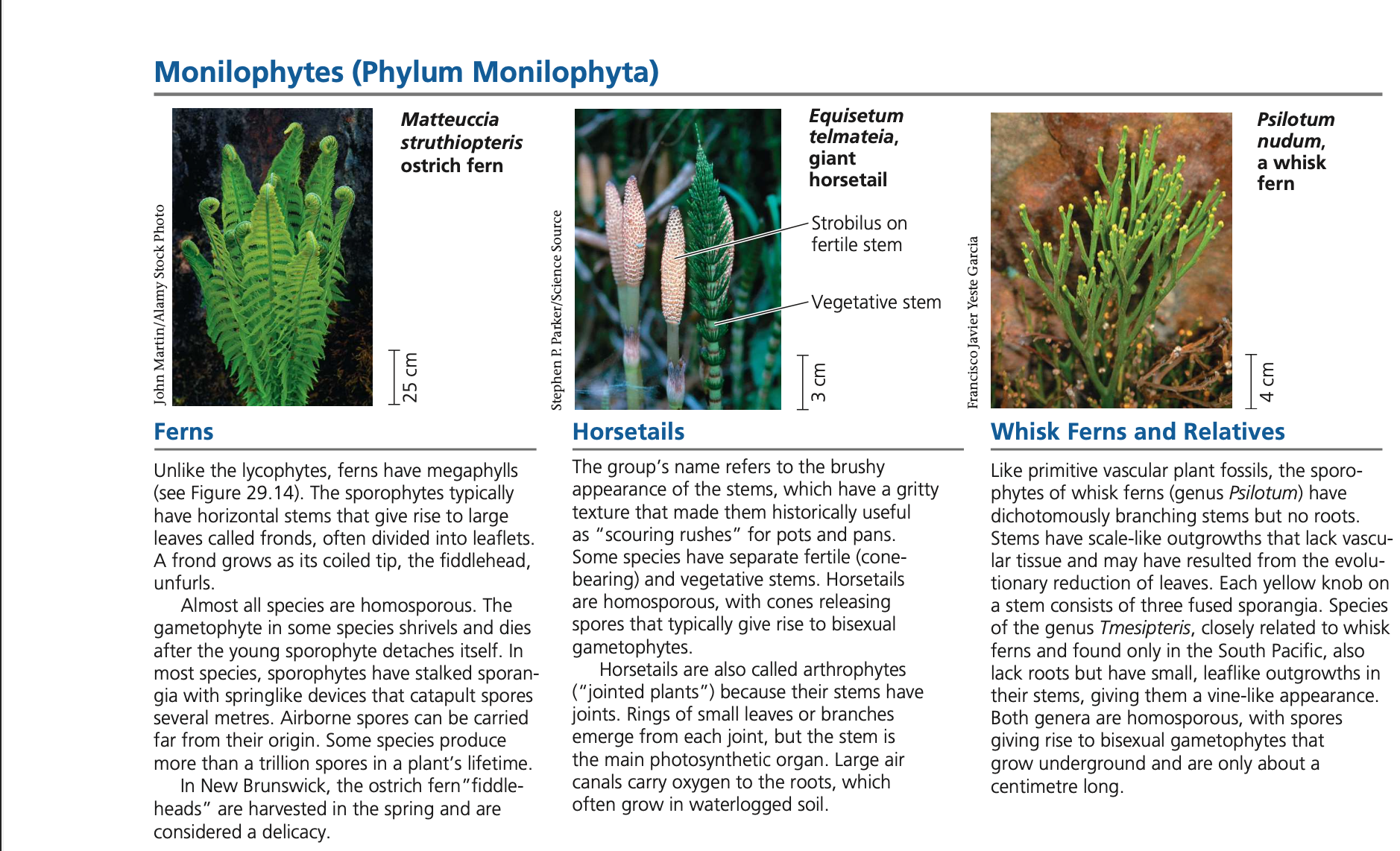
Monilophytes (ferns, horsetails, whisk ferns)
Seed plants
Gymnosperms (conifers, ginkgos, cycads, gnetophytes)
Angiosperms (flowering plants)
Phylogenetic analysis suggest bryophytes diverged early in plant lineage evolution
What are sporophytes and gametophytes?
Sporophytes and gametophytes are the two alternating, multicellular generations in the plant lifecycle. The sporophyte (2n) is diploid and produces spores via meiosis, which develop into the gametophyte (n).
Nonvascular plants (bryophyte) gametophytes
Protonema
Gametophore
Rhizoids
Gametangia
Archegonia
Antheridia
Protonema
“first thread”
Threadlike filaments that develop into buds which grow via a meristem to produce the Gametophores
Gametophore
“ gamete carrier” / “gamete bearer”
Produces gametes via mitosis
Rhizoids
“Root like” filaments that anchor the Gametphyte
Gametangia
produces the gametes
Archegonia: female, produces the egg
Antheridia: male, produces sperm
Bryophyte sporophyte
seta
Foot
Capsule → sporangium
Peristome
Seta
stalk supporting the sporangium
Foot
absorbs nutrients from the gametophyte , supports the seta ( attachment point between sporophyte + gametophyte)
Capsule
sporangium → spore container
Produces spores via meiosis
Peristome
“teeth” on the capsule to regulate spore dispersal
What stage is dominant in Bryophytes?
Haploid
What stage is reduced in Bryophytes?
Diploid (2n)
Are Bryophytes dioecious or monoecious?
dioecious - two houses
male and female gametophytes produced separately
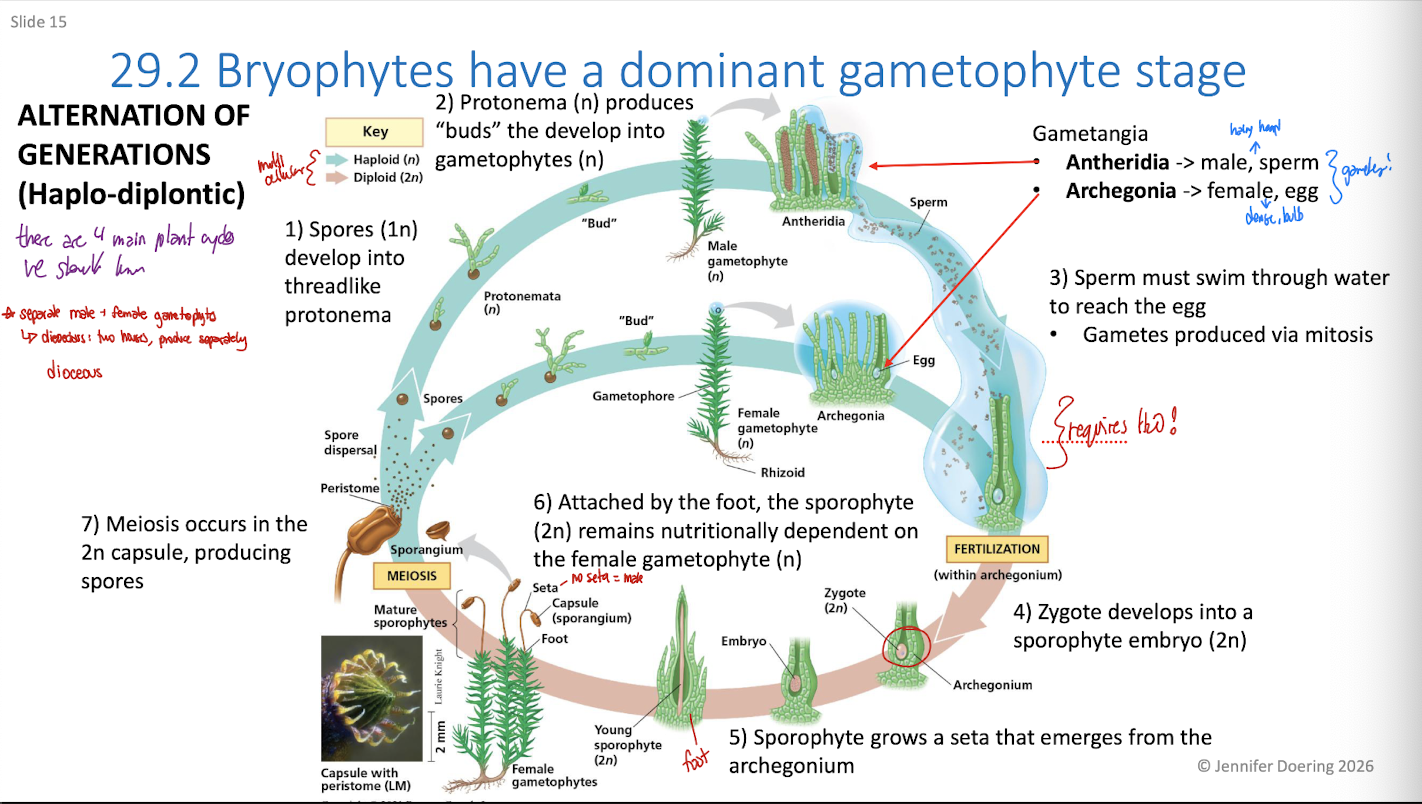
Outline the bryophyte Alternation of Generations
Spores (1n) develop into threadlike protonema
Protonema (n) produces “buds” that develop into gametophytes
Gametangia: gamete container
Sperm must swim through water
gametes are produced via mitosis
Zygote develops into sporophyte embryo (2n)
Sporophyte grows a seta that emerges from the archegonium
Attached by the foot, the sporophyte remains nutritionally dependent on the female gametophyte (n)
Meiosis occurs in the 2n capsule, producing spores
Why are bryophytes ecologically important?
Help retain moisture
Common in moist forests and wetlands, moist bare soil
Can survive harsh environments (cold, dry)
Can tolerate complete water loss and can re-establish when moisture returns
Poikilohydric: ability to survive extreme dehydration by entering a dormant, "air-dried" state and rapidly reviving when water is available.
Some Sphagnum moss comprise peat
Preserves organisms from decaying due to low temp, pH, o2 levels
Important fuel source
Horticultural nutrient to retain moisture in soils
Carbon sink
Seedless vascular plants
First to grow tall due to the rigid structure of vascular tissues
Have additional derived traits
Branched sporophytes now dominant stage
Not nutritionally dependent on thee gametophyte
Some still lack true roots
Vascular tissues
Still need water for fertilization
What does Xylem do? What is it composed of?
water transport, structural support
composed of tracheids and vessel elements, strengthened by lignin
What does Phloem do?
nutrient transport → transport photosynthates
composed of sieve tube elements and companion cells
allows plants to grow tall and still get nutrients to leaves
allows plants to outcompete shorter plants for light
How did sporophytes and gametophytes evolve to what we see in larger, present day plants?
They evolved to be of similar size, eventually leading to a larger sporophyte and reduced gametophyte
What stage is dominant in the Fern Life Cycle
Diploid (2n)
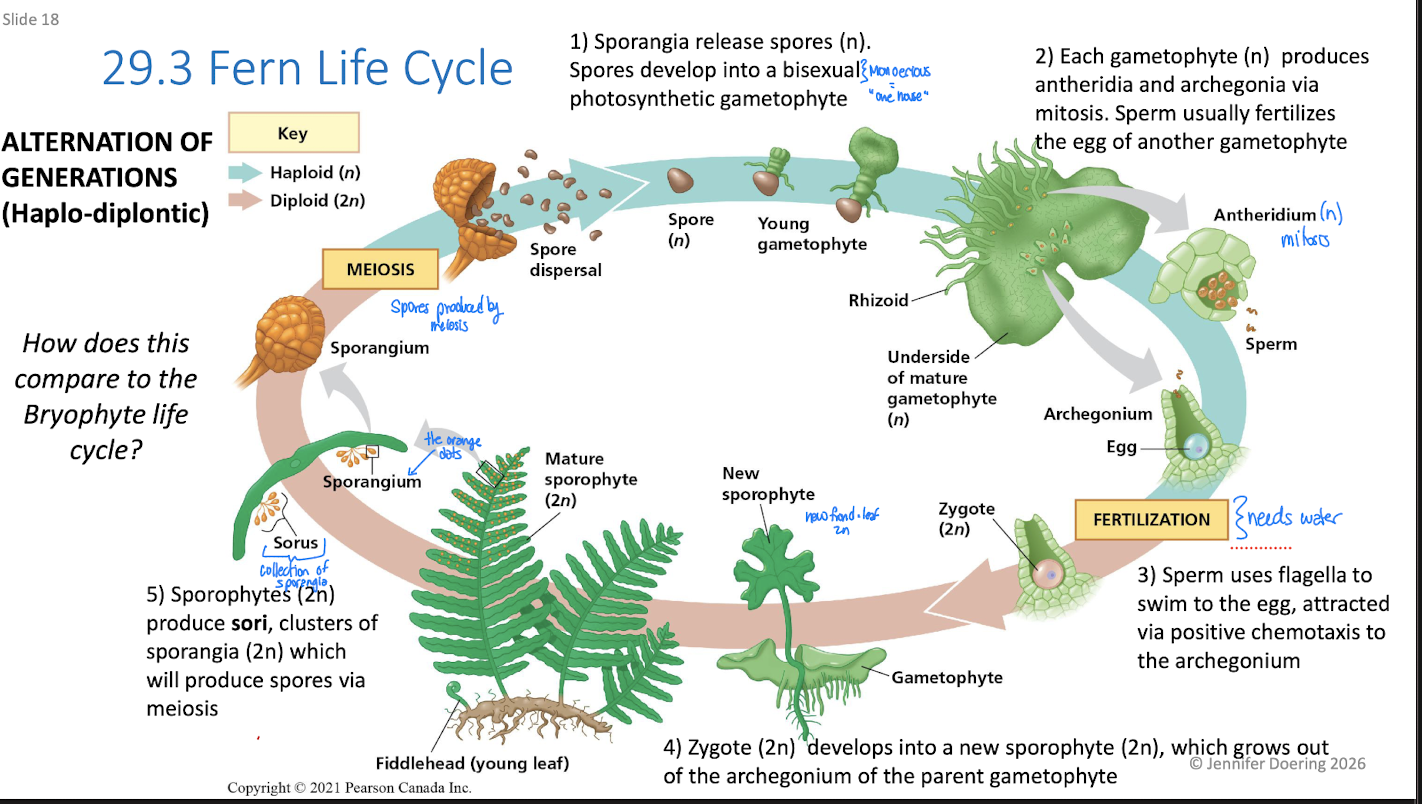
Outline the Fern Life Cycle: Alternation of Generations
Sporangia release spores (n): Spores develop into a bisexual (monoecious) photosynthetic gametophyte
Each gametophyte (n) produces antheridia and archegonia via mitosis. Sperm usually fertilizes the egg off another gametophyte (needs water!)
Sperm uses flagella to swim to the egg, attracted via positive chemotaxis to the archegonium
The zygote (2n) develops into a new sporophyte (2n) which grows out of the archegonium of the parent gametophyte
Sporophytes (2n) produce sori, clusters of sporangia which will produce spores via meiosis
Evolution of roots
vascular tissues are also found in roots
roots absorbed water and nutrients from the soil, anchors the plant
“-Phyll” meaning
Leaf
Evolution of leaves (mega vs micro)
Leaves increase surface area for photosynthesis
Megaphyll → larger, more evolutionarily advanced
Micropyll → smaller, supported by a single strand of vascular tissue
Shoot system
comprised of above the ground organs of the plant
leaves, stems
Root system
comprised of the below ground organs
roots
What do modified leaves allow for?
Reproduction
What are sporophylls?
Modified leaves that bear sporangia (structures that produce spores).
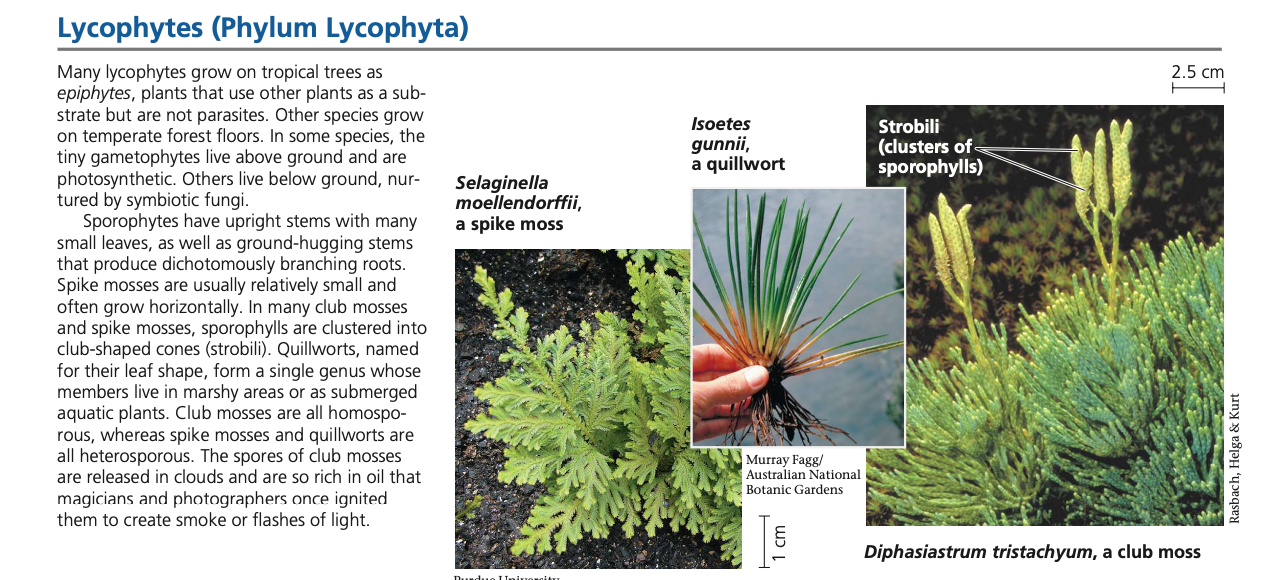
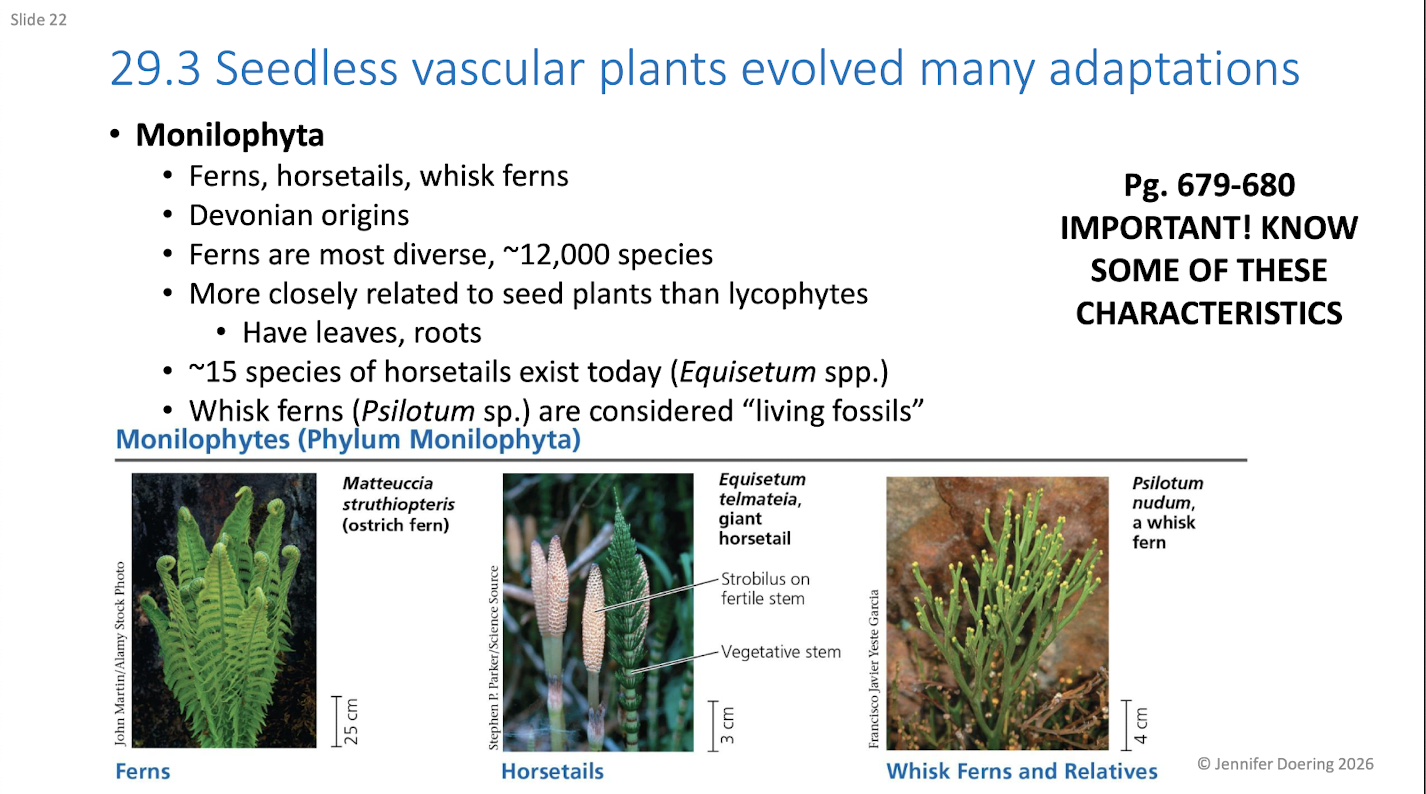
What do fern sporophylls produce?
: Sori (clusters of sporangia).
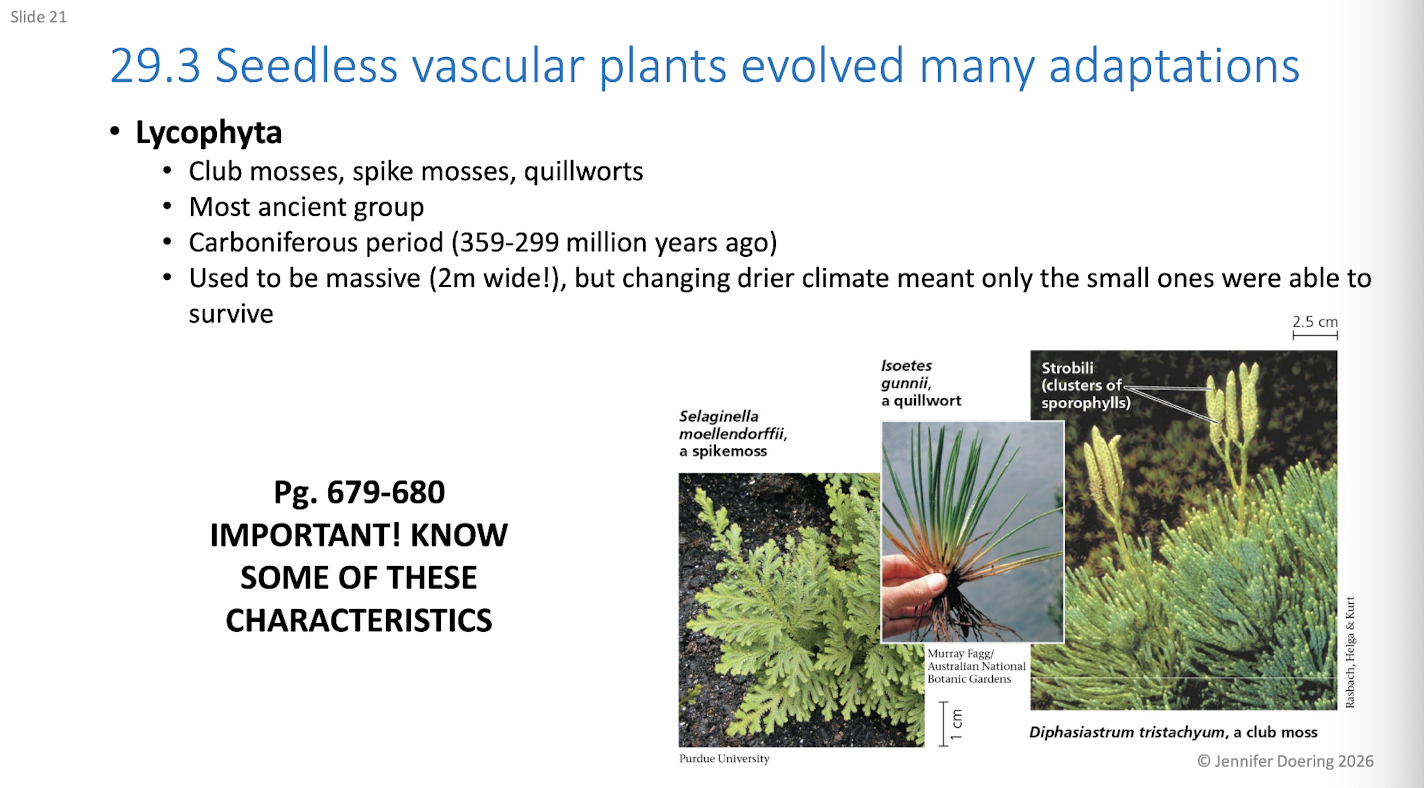
What do lycophytes (club mosses + allies) produce?
Strobili (cone-like structures made of sporophylls).
What are strobili?
Small cone-like reproductive structures made of sporophylls.
What are the modified sporophylls in angiosperms?
Carpels and stamens.
What does “homosporous” mean?
Producing only ONE type of spore.
How many types of sporangia do homosporous plants have?
One type.
What do homosporous spores develop into?
A bisexual gametophyte (produces both eggs and sperm).
Example of a homosporous plant?
Ferns
What does the life cycle look like in homosporous plants?
Sporangium → one type of spore → bisexual gametophyte → eggs + sperm
What does “heterosporous” mean?
Producing TWO different types of spores.
What are the two types of spores?
Megaspores and microspores.
How many types of sporangia do heterosporous plants have?
Two types.
Two types of sporangia produce two kinds of pores…
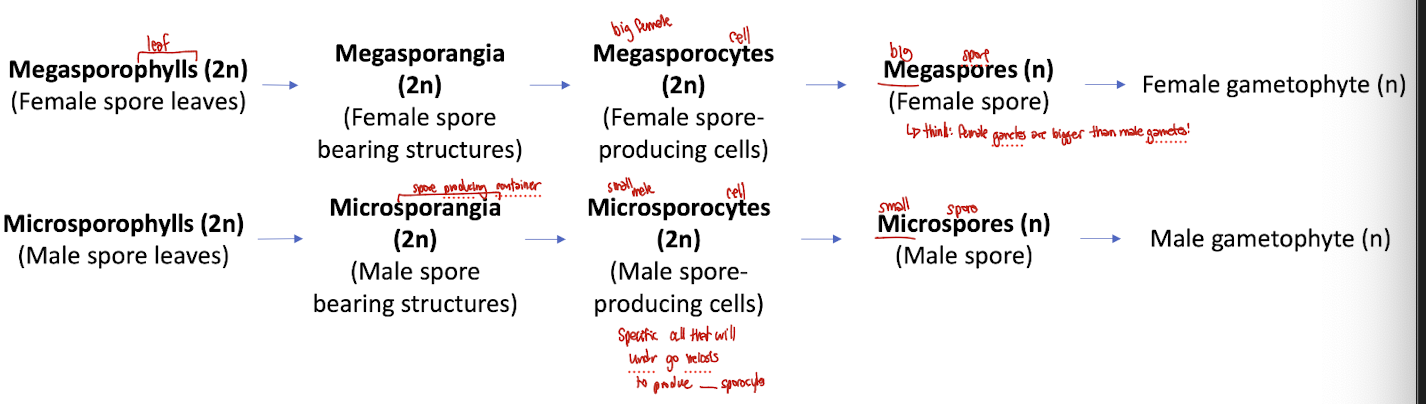
Megasporophylls → megasporangia
Microsporophylls → microsporangia
develop into single sex gametophytes
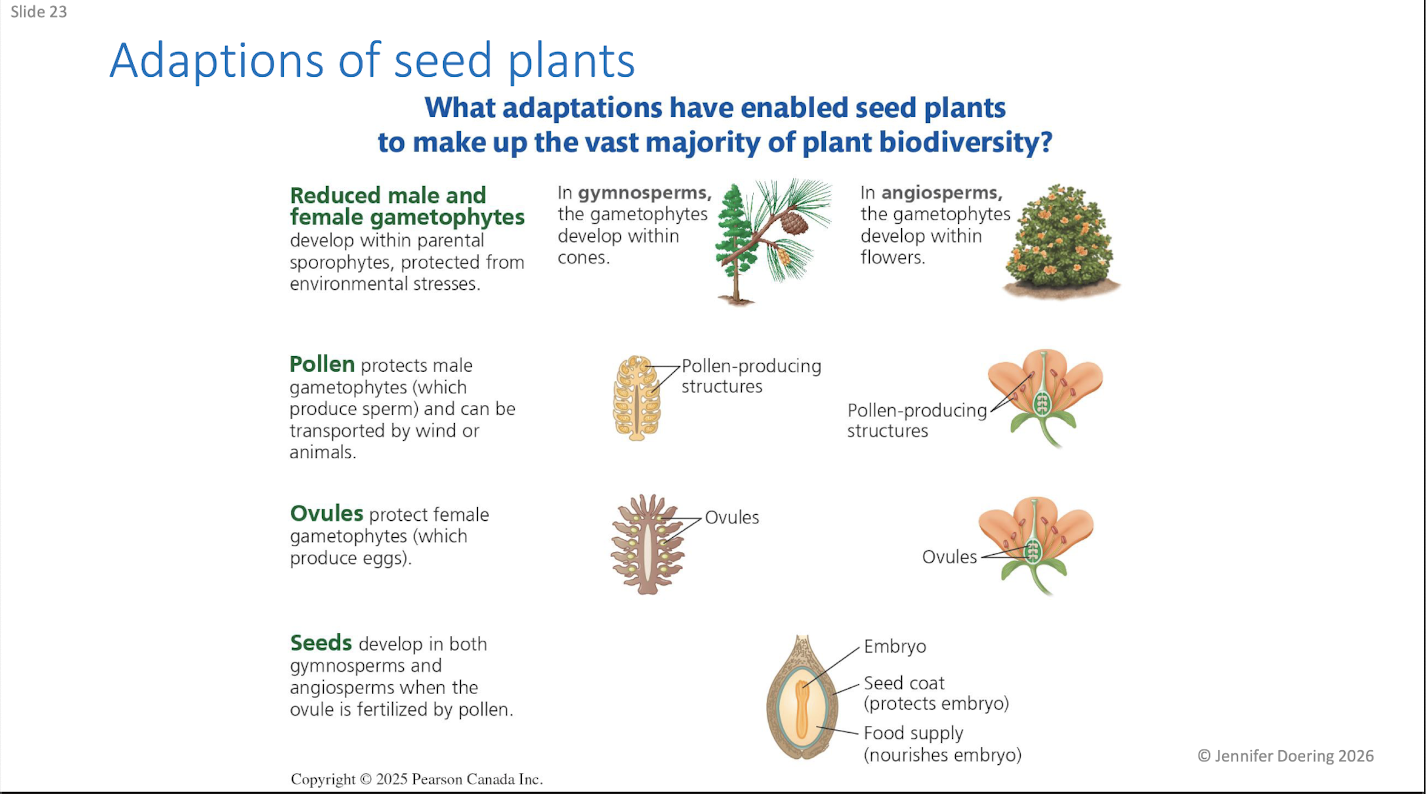
What adaptations have enabled seed plants to make up the vast majority of plant biodiversity
Reduced male and female gametophytes
Pollen
Ovules
Seeds
Reduced gametophytes in seed plants
Microscopic
Tiny gametophytes can develop directly in the sporangium
Protection from the elements such ass UV radiation, dessication
Gametophytes nutritionally dependent on the sporophyte now
What is the rule among seed plants and what does that entail
Heterospory - two kinds of spores
Megasproropylls - female spore leaves, 2n
Microsporophylls - male spore leaves, 2n
Diagram the process from Mega/Microsporophylls to their respective gametophytes