Data Warehousing and Business Intelligence: Concepts, Models, and Industry Applications
 Studied by 0 people
 Call Kai
 Learn
Learn Practice Test
 Spaced Repetition
 Match
Match Flashcards
 Knowt Play
1/27

There's no tags or description
Looks like no tags are added yet.
Name | Mastery | Learn | Test | Matching | Spaced | Call with Kai |
|---|
No analytics yet
Send a link to your students to track their progress
28 Terms
What is the primary purpose of Data Warehousing?
To integrate data from multiple sources into a common data model, reducing redundancy and improving information consistency for decision making.
What are the typical components of Business Intelligence (BI)?
Planning, implementation, and control processes to provide decision support through reporting, querying, and analysis.
How has Business Intelligence evolved over time?
From retrospective assessment to predictive analytics.
What are some business drivers for Data Warehousing?
Supporting operational functions, compliance requirements, business intelligence, and competitive advantage.
What is a Data Warehouse?
An integrated decision support database and related software that collects, transforms, and stores data from various sources.
What is an Enterprise Data Warehouse (EDW)?
A centralized data warehouse designed to service the BI needs of a company.
How is data organized in a Data Warehouse?
Data is organized by subject rather than function, integrated rather than siloed, and is time-variant rather than current valued only.
What is the Bill Inmon Model of Data Warehousing?
It suggests that a data warehouse should be a subject-oriented collection of data.
What is the Ralph Kimball Model of Data Warehousing?
It proposes that a data warehouse should be a copy of transaction data specifically for query and analysis.
What is a Staging Area in Data Warehousing?
An intermediate data store between the original source and the centralized data repository for data transformation and integration.
What is a Data Mart?
A subset of a data warehouse for a specific department or function, focusing on single business processes.
What are the Vs of Big Data?
Volume, Velocity, Variety, Viscosity, Volatility, and Veracity.
What is a Data Lake?
An environment for ingesting, storing, and analyzing large amounts of various types of data with minimal transformation.
What are the main components of a Services Based Architecture (SBA)?
Batch layer, Speed layer, and Servicing layer.
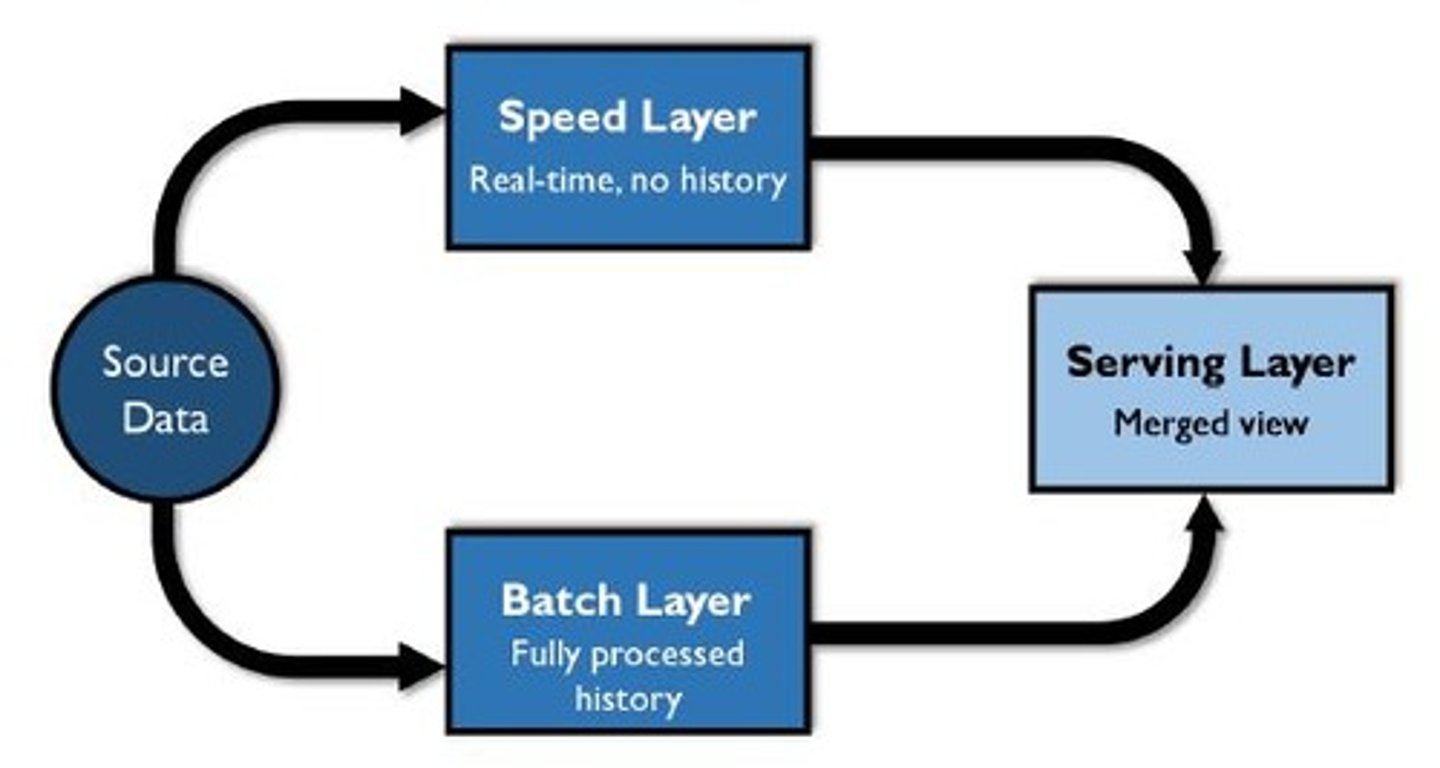
What is Machine Learning (ML)?
The study of algorithms that allow machines to learn from data and improve their performance over time.
What are the three types of Learning Algorithms in ML?
Supervised learning, Unsupervised learning, and Reinforced learning.
What is Sentiment Analysis?
The process of extracting insights from unstructured data to understand consumer feelings about brands.
What is Predictive Analytics?
The modeling of data elements to predict future outcomes based on historical data.
What is Prescriptive Analytics?
It goes beyond predictive analytics to suggest actions that will affect outcomes.
What is the role of a Data Scientist?
To develop hypotheses about behavior observed in data and analyze historical data to validate these hypotheses.
What is the importance of metadata in Big Data management?
To maintain an accurate inventory of data files, their origins, and their value.
What is the goal of Data and Text Mining?
To reveal patterns in data using algorithms and discover relationships not easily found through traditional queries.
What are common measures for evaluating Big Data projects?
Counts and accuracy of models, revenue realization from opportunities, and cost reduction from identified threats.
What is the significance of organizational and cultural change in Big Data?
Business engagement is crucial to realize benefits from Big Data initiatives.
What industries benefit from a well-governed Data Warehouse?
Industries that are highly regulated and require compliance-centric reporting.
What is the purpose of a release plan in Data Warehousing?
To establish a timeline and strategy for implementing and updating the data warehouse.
What is the difference between Data Warehousing and traditional data storage?
Data Warehousing focuses on integration and analysis of data from multiple sources, whereas traditional storage may not prioritize these aspects.
What is the role of a Business Analyst in Big Data projects?
To bridge the gap between data insights and business needs, ensuring that data-driven decisions align with organizational goals.
 Note
Note  Flashcards (355)