ART EXAM # 2 everything together
 Call Kai
 Learn
Learn Practice Test
 Spaced Repetition
 Match
Match Flashcards
 Knowt Play
1/104

There's no tags or description
Looks like no tags are added yet.
Name | Mastery | Learn | Test | Matching | Spaced | Call with Kai |
|---|
No analytics yet
Send a link to your students to track their progress
105 Terms
jean- antoine watteau
rococo
fete galante
Paintings-
pilgrimage to Cythera
Thomas cole
founder of the Hudson River School
Nicolas poussin
French Baroque art
paintings-
Death of Germanicus
peter paul ruben
baroque
paintings-
Raising of the cross
Jacques- Louis David
neoclassicism
jean- Honore Fragonard
rococo
paintings-
The swing
cellini
mannerism
paintings-
Perseus and Medusa
Joseph Mallord William Turner
romanticism
Theodore Gericault
Romanticism
paintings-
Raft of the Medusa
Angelica Kaufmann
Neoclassicism
Benjamin west
Neoclassicism/ history
paintings:
Death of General Wolfe
Caravaggio
baroque
paintings-
the card shop
Gian Lorenzo Bernini
baroque
paintings:
The Ecstasy of Saint Teresa
Paolo Veronese
renaissance/ mannerism
Francisco Goya
Romanticism
paintings:
The third of May
Michelangelo
renaissance, mannerism, fresco
paintings:
Last Judgment
Jean-Auguste-Dominique Ingres
neoclassical/ romanticism
paintings:
Grande Odalisque
Antonio de paredes
still life
paintings:
Ebony Chest
Hals
dutch golden age and baroque style
paintings:
issac massa/ beatrix van der lean
Artemisia Gentileschi
baroque
panini
art style-
rococo
paintings-
Rigaud
art style-
baroque
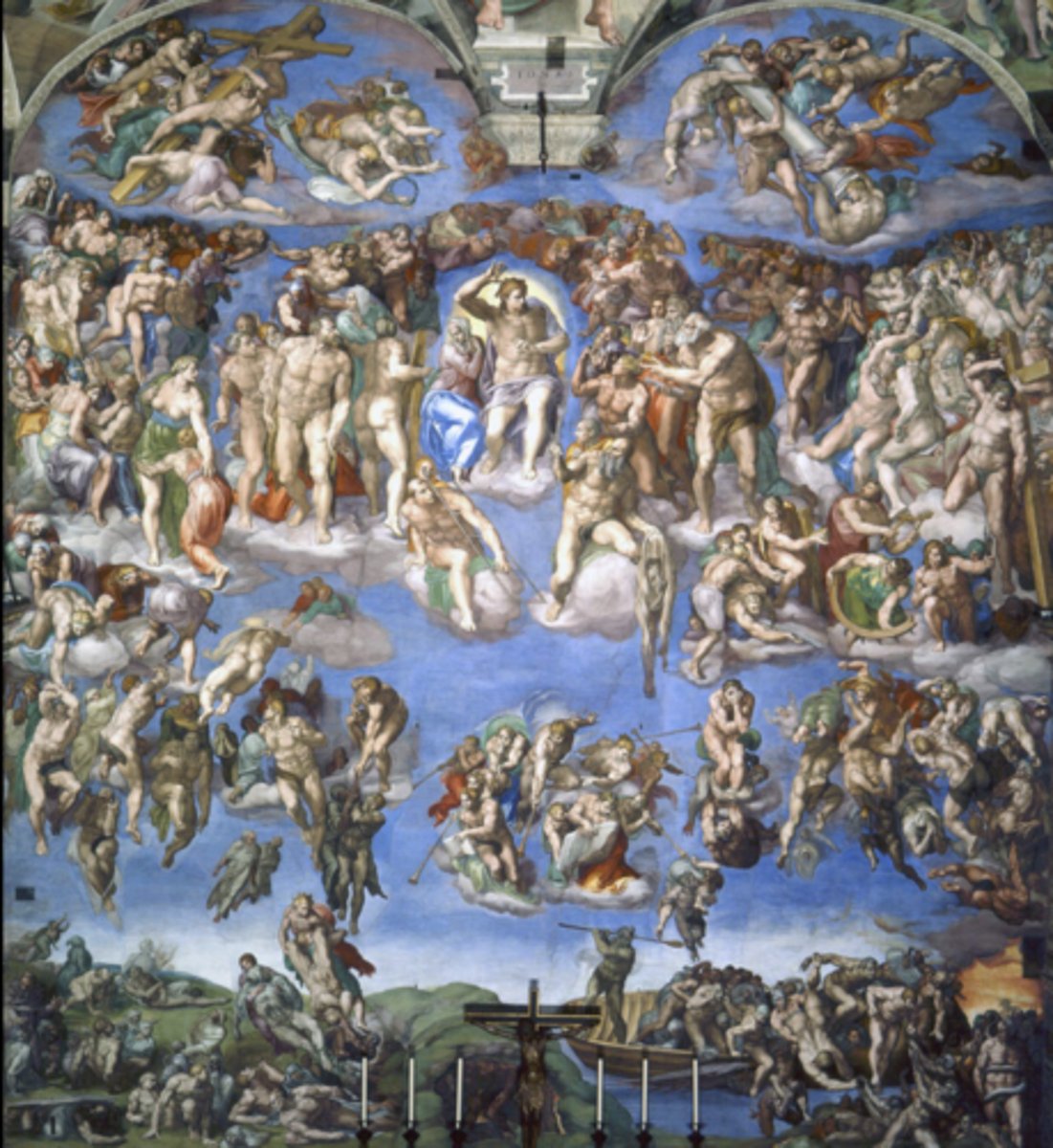
Michelangelo, the Last Judgement, 1536-41
- High Renaissance
-fresco
- mannerism- distorted bodies
- lots of naked people, not canon of proportion
- it established some artistic trends that challenged conventions and led to the formation of a new art style
History painting
meaningful stories from external sources, as current events, the bible, mythology or literature
Mammerism
the last movement of the Renaissance, where bodies are distorted
rome prize
get to go to rome free for a year for the best painting
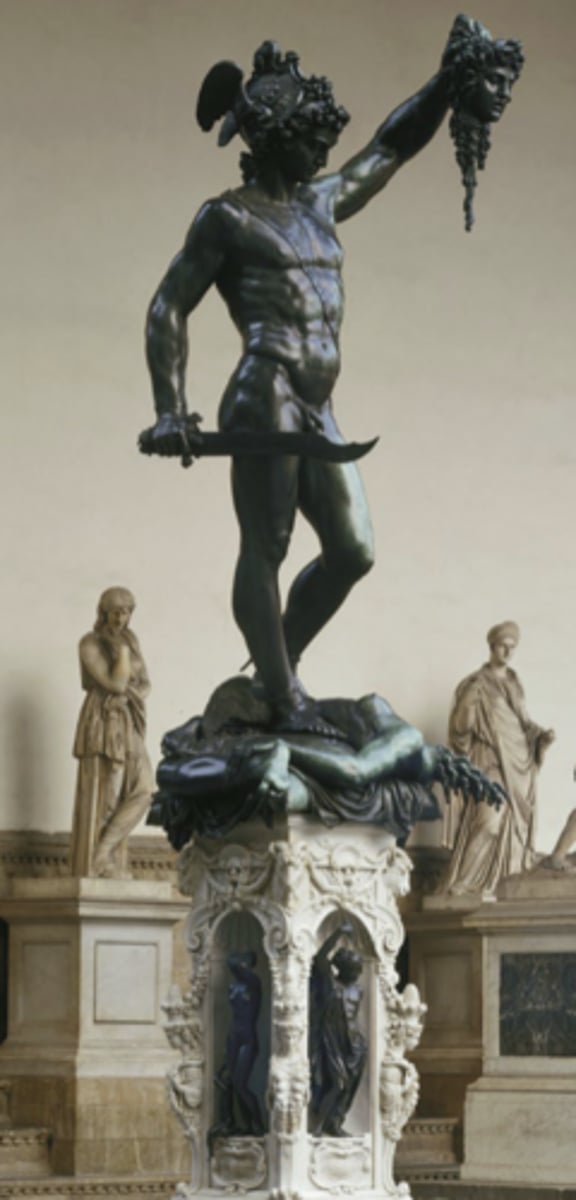
Benvenuto Cellini, Perseus with the head of Medusa, 1545
- bronze
- manerist sculpture
-outside the town hall/ palace ( Piazza della Signoria)
-classical antiquity
- mythological subject
- patron- Duke l de' Medici
- Perseus is a figure from Greek and Roman Mythology
portraits
individual people usually formally posed
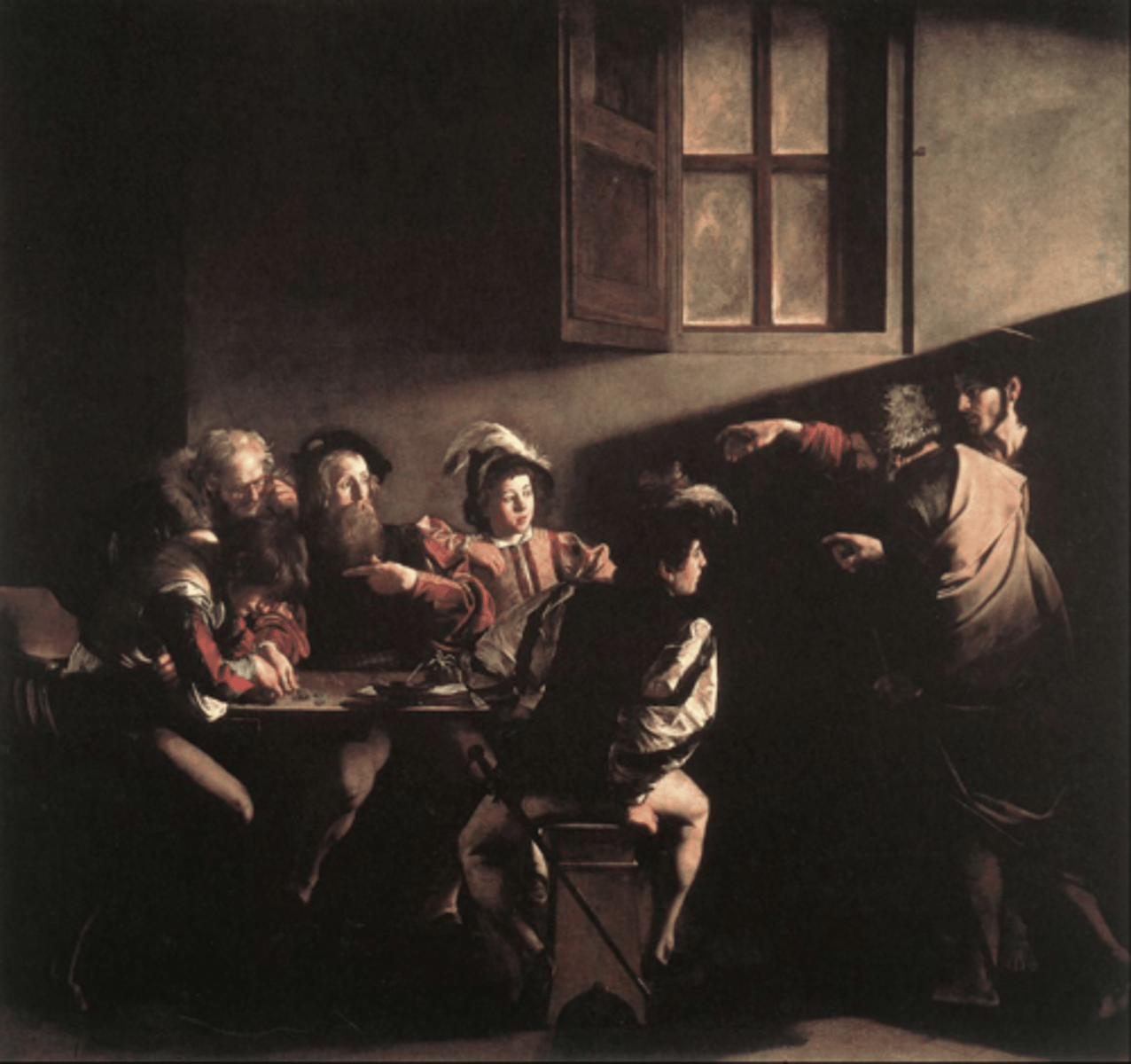
Caravaggio, The Calling of St. Matthew in the Contarelli Chapel
- Chiaroscuro- light to dark
- Contarelli chapel
- baroque
- oil on canvas, which was then hung on the wall
- The subject is a reference to the name of the patron
- it was commissioned by a patron for his commemorative chapel
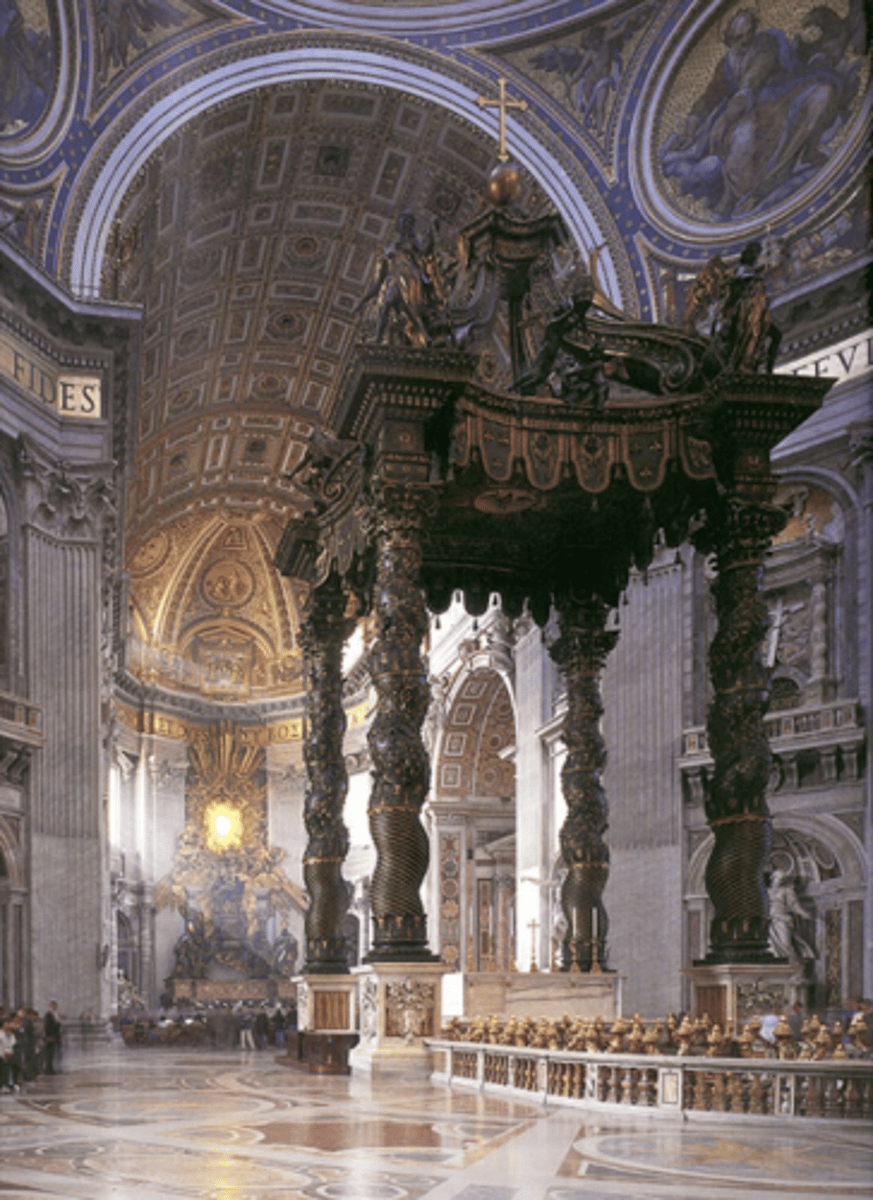
Gianlorenzo Bernini, Baldacchino, St. Peter's, Rome, 1624-33.
- light and shadows
- glided bronze
- This was a monumental stage set in a Catholic church
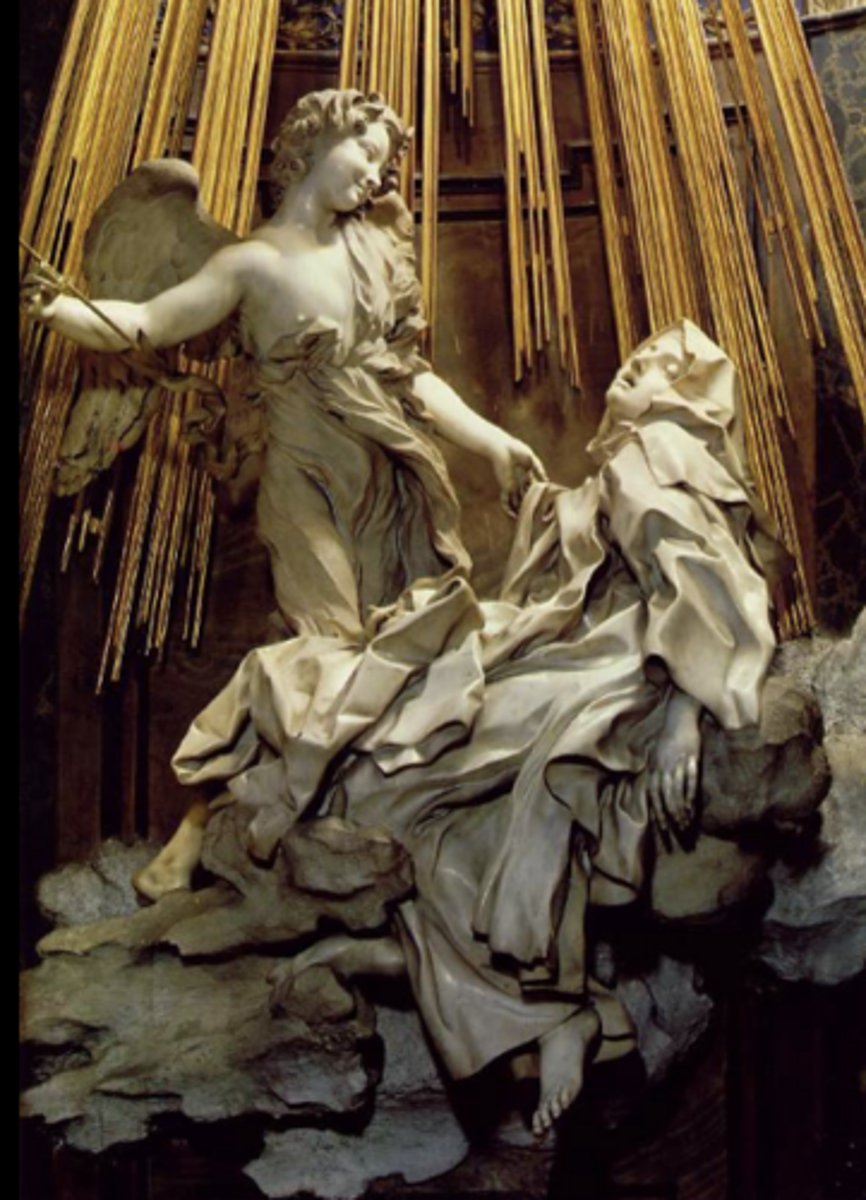
Gianlorenzo Bernini, Ecstasy of St Teresa, Rome,
- baroque art
- religious piece
- Carnaro chapel ( church of Santa Maria della Vittoria)
- sculptor and architect
- subject matter- a woman who had recently been made a saint
- fresco ceiling
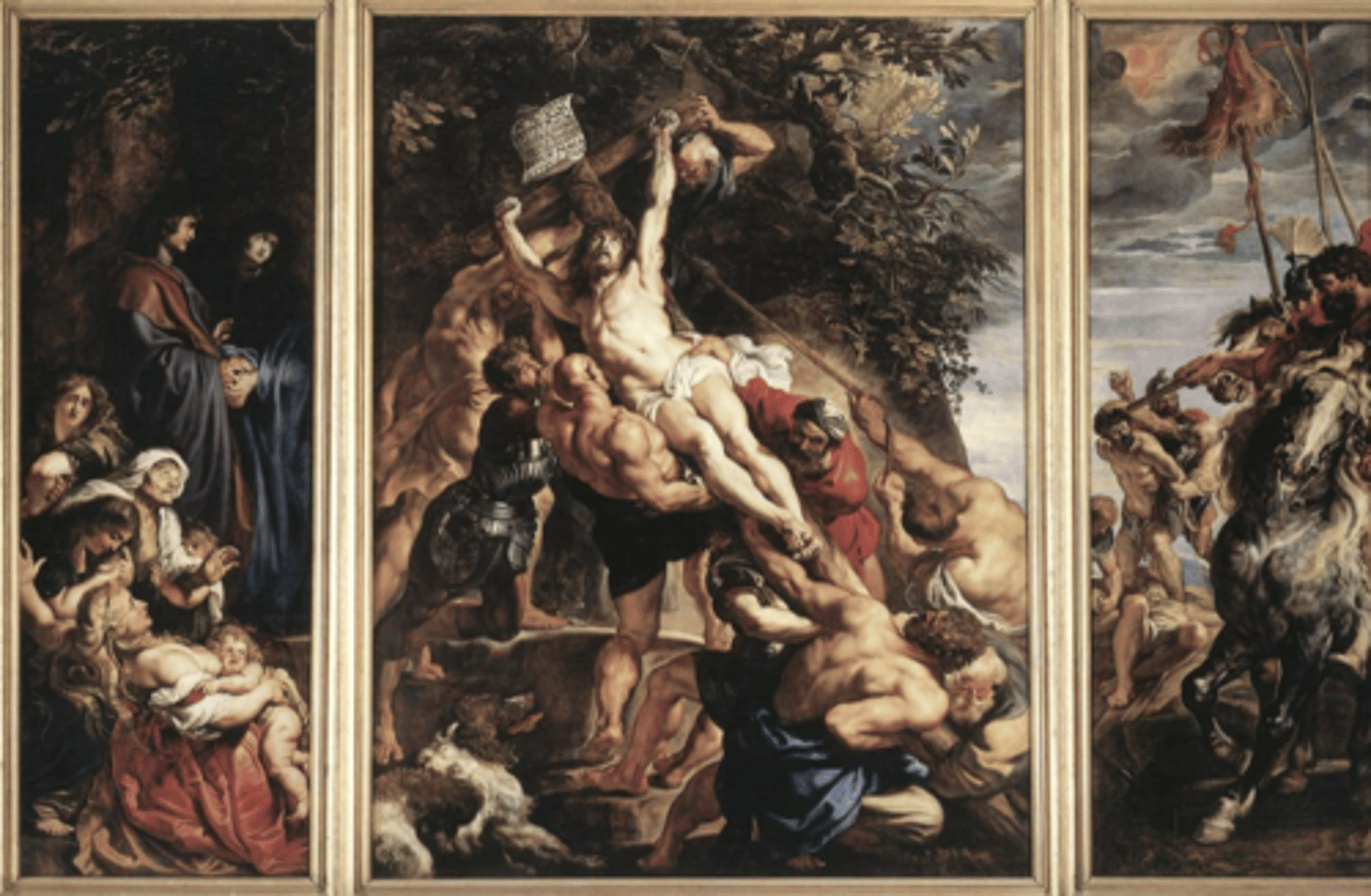
Peter Paul Rubens, Raising of the Cross, 1610
- located in the cathedral in Belgium
- originally for the church of Saint Walburga, but then that burned down
- baroque
- lots of bodies in motion
- The diagonal cross added more drama to show the baroque art
Mannerism
Artistic movement against the Renaissance ideals of symmetry, balance, and simplicity
Counter-reformation
the reaction of the Roman Catholic Church to the Reformation reaffirming the veneration of saints and the authority of the Pope (to which Protestants objected)
Baroque
An artistic style of the seventeenth century characterized by complex forms, bold ornamentation, and contrasting elements
Pope Urban VIII Barberini
was born as Maffeo Barberini and was educated by the Society of Jesuits.
He liked Bernini's artwork and was a huge patron of the arts.
Tenebrism
Painting in the "shadowy manner" using violent contrasts of light and dark as in the work of Caravaggio
chiaroscuro
The treatment of light and shade in a work of art, especially to give an illusion of depth.
baldacchino
a canopy on columns, frequently built over an altar
solomonic
marked by notable wisdom, reasonableness, or discretion especially under trying circumstances.
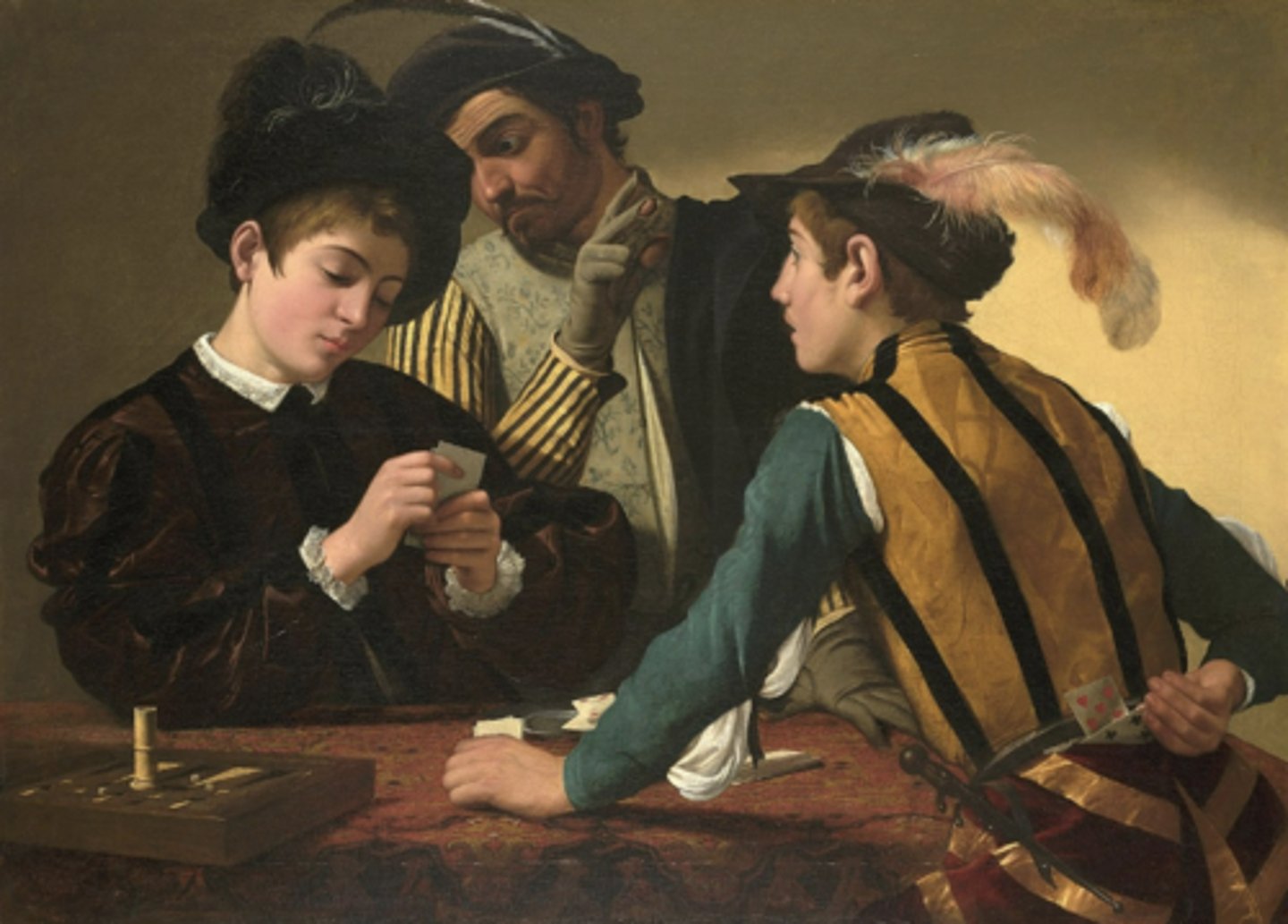
Caravaggios Cardshop
- Located- Kimbell Art Museum in Fort Worth, Texas
- a genre painting
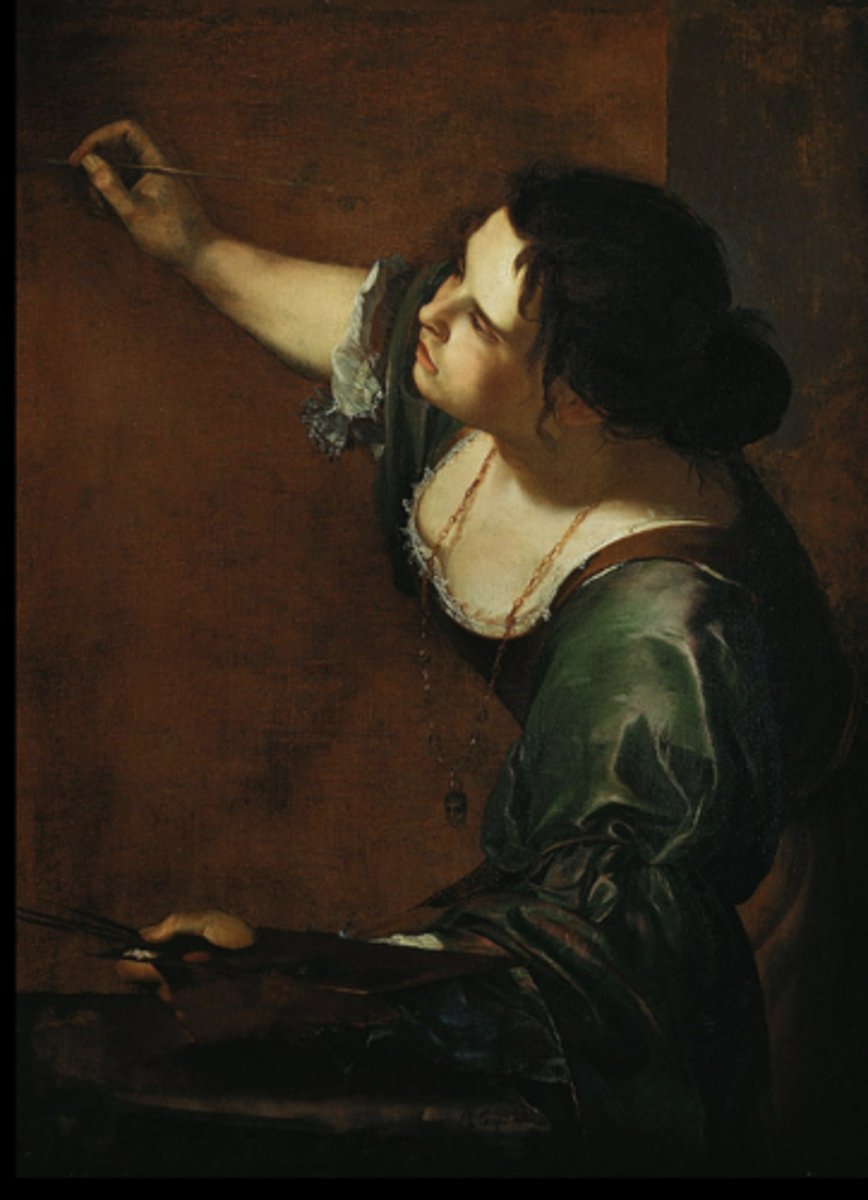
Artemisia Gentileschi, Allegory of Painting (self portrait)
- Baroque art
- painting in the moment
- Windsor castle- the allegory of painting
- foreshortening
- the necklace of a face that she is wearing symbolizes a mask
Antonio de Pereda, Still Life with Ebony Chest, 1652
- dramatic still life
- oil on a canvas
- spain
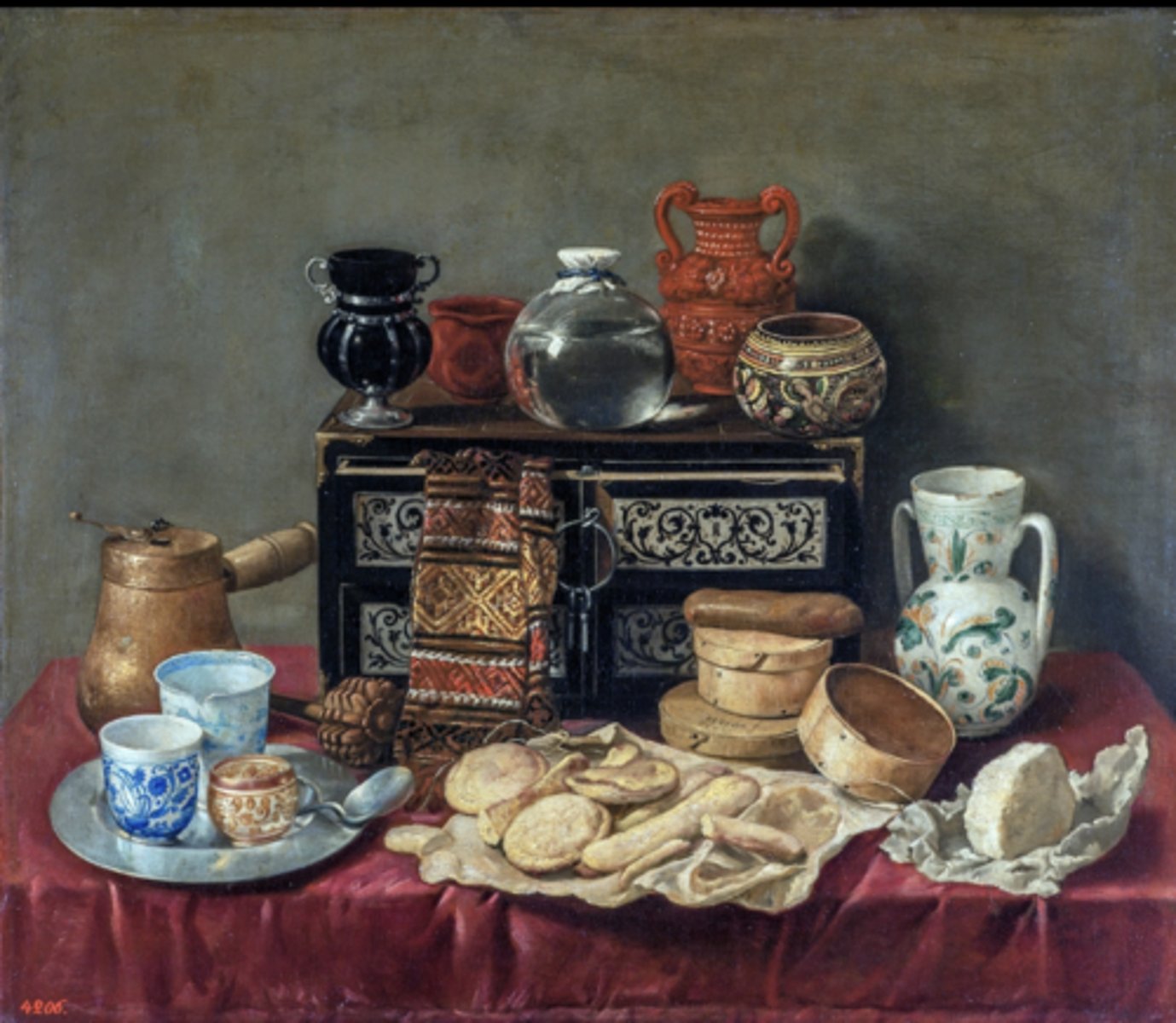
still life
an assortment of objects
genre scenes
painting in which scenes of everyday life are depicted
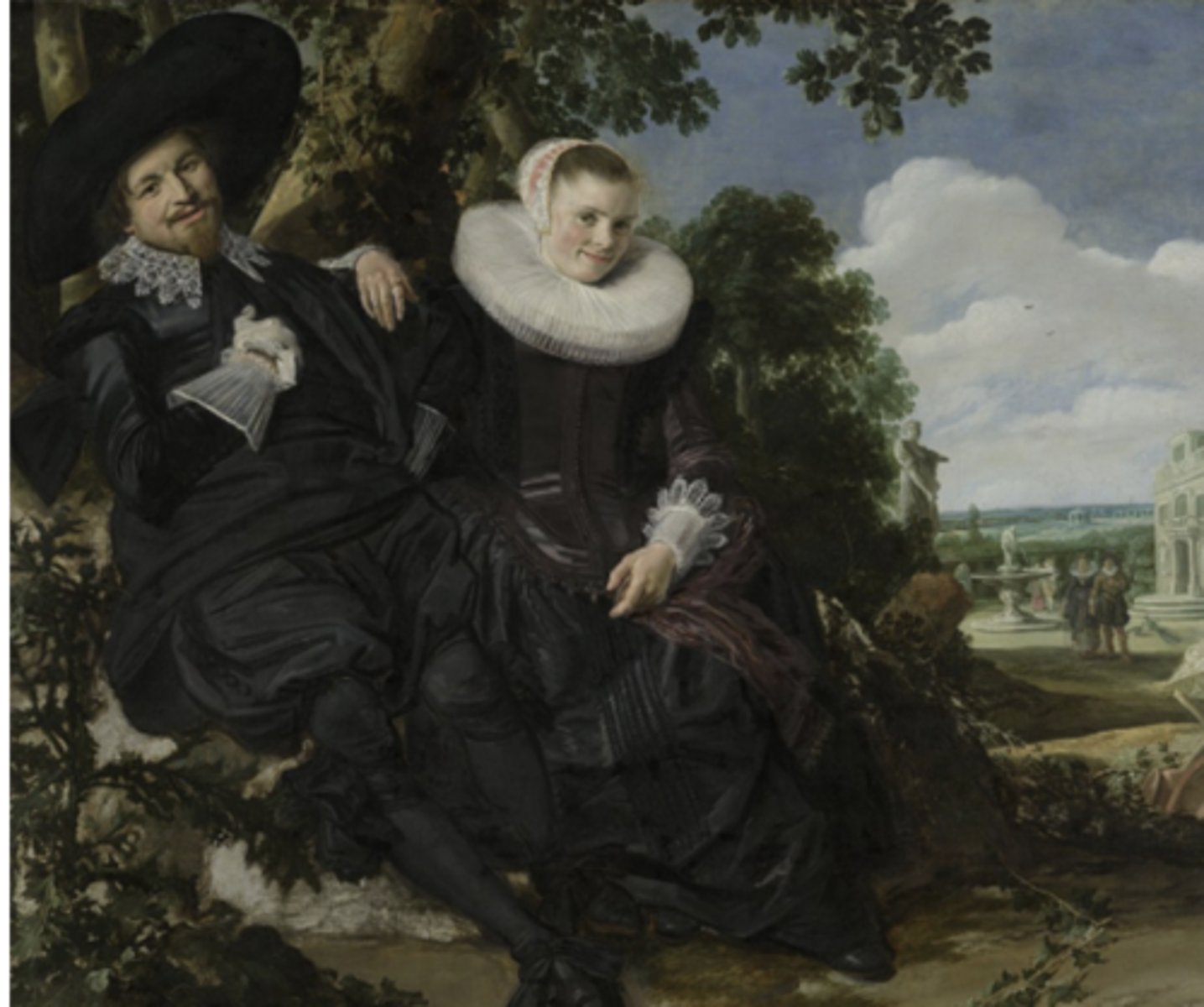
Frans Hals, Marriage Portrait of Isaac Massa and Beatrix van der Laen
A painting of their Wedding
They're happy in this picture, which doesn’t happen often in these paintings
The tree in the back, specifically the ivy, is a symbol of a good marriage
Hung in their house
- baroque
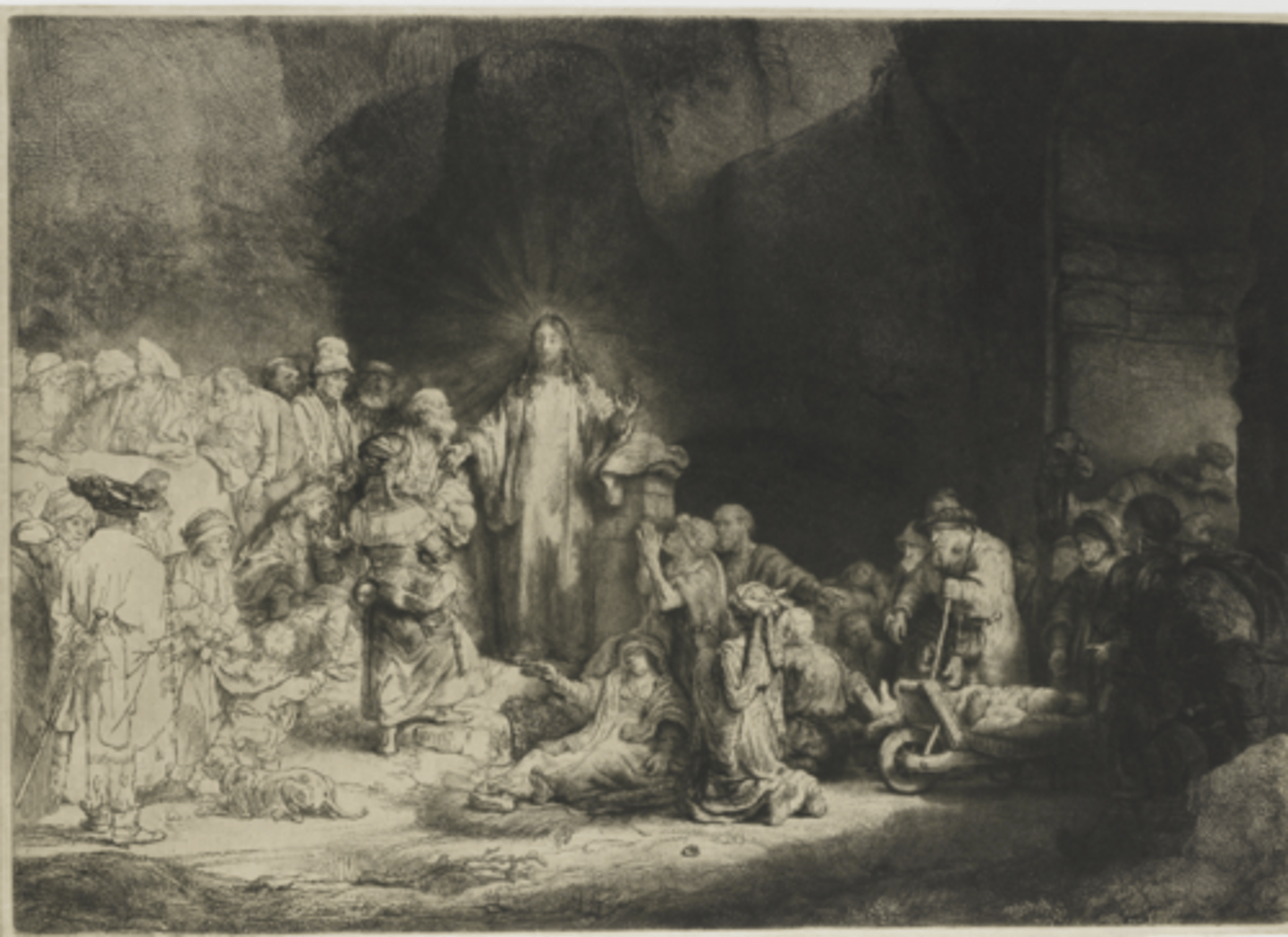
Rembrandt, The Hundred Guilder Print
medium- a mix of etching and drypoint
dutch artist
chiaroscuro
baroque
location- rijkmuseum in Amsterdam
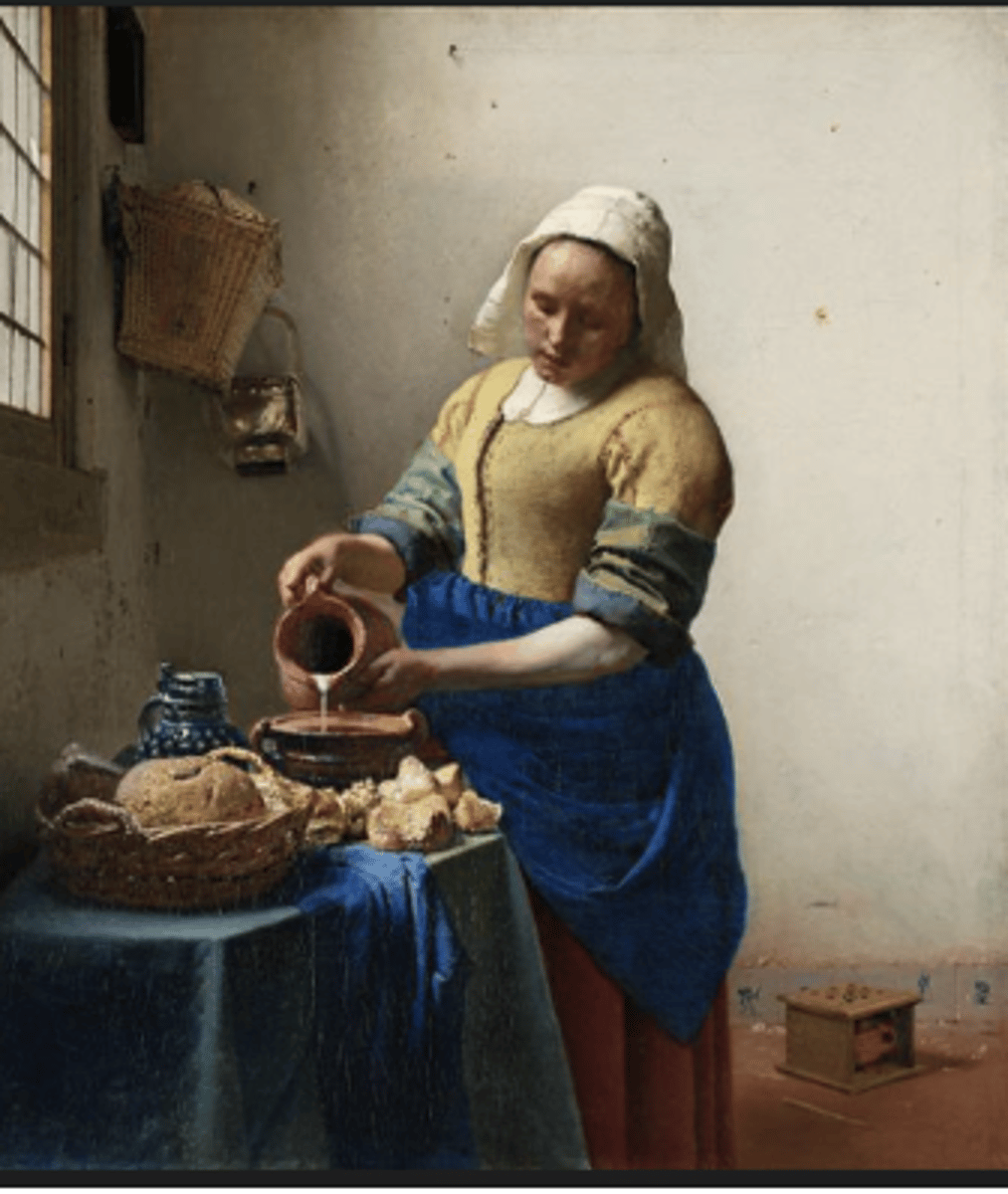
Johannes Vermeer, The Milkmaid 1657
- Dutch/ genre painting
- uses light/ shadows
- a celebration of everyday virtue
group portrait
painting of more than one known person
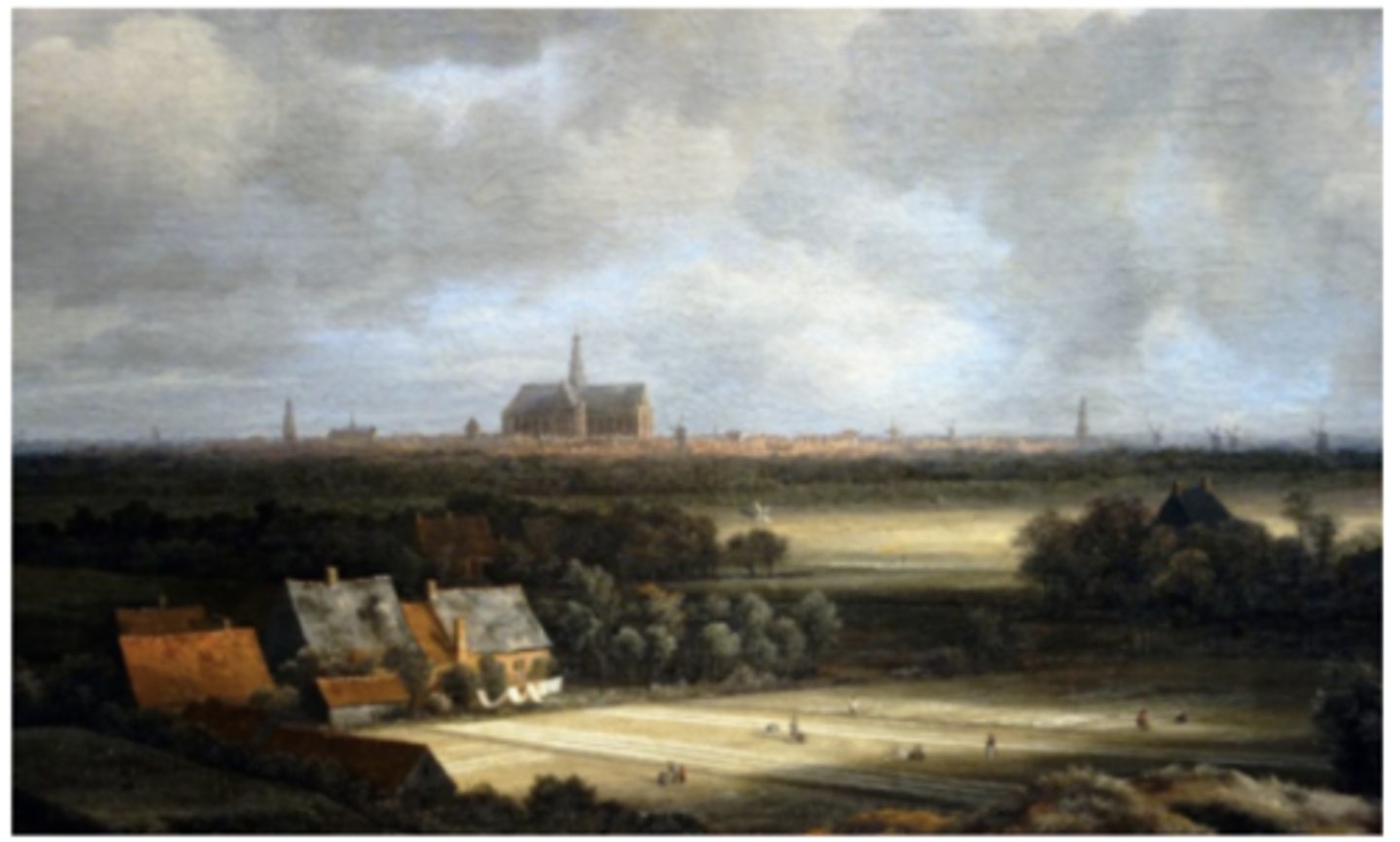
Jacob van Ruisdeal
landscape
baroque
The church in the background is called Saint Bavo
This is Haarlem, where he lived
drypoint
An intaglio printmaking process in which lines are scratched directly into a metal plate with a steel needle; the scratch raises a ridge (burr) that takes the ink.
etching
an intaglio printmaking technique in which a metal plate is covered with an acid-resistant ground and worked with an etching needle to create an image.
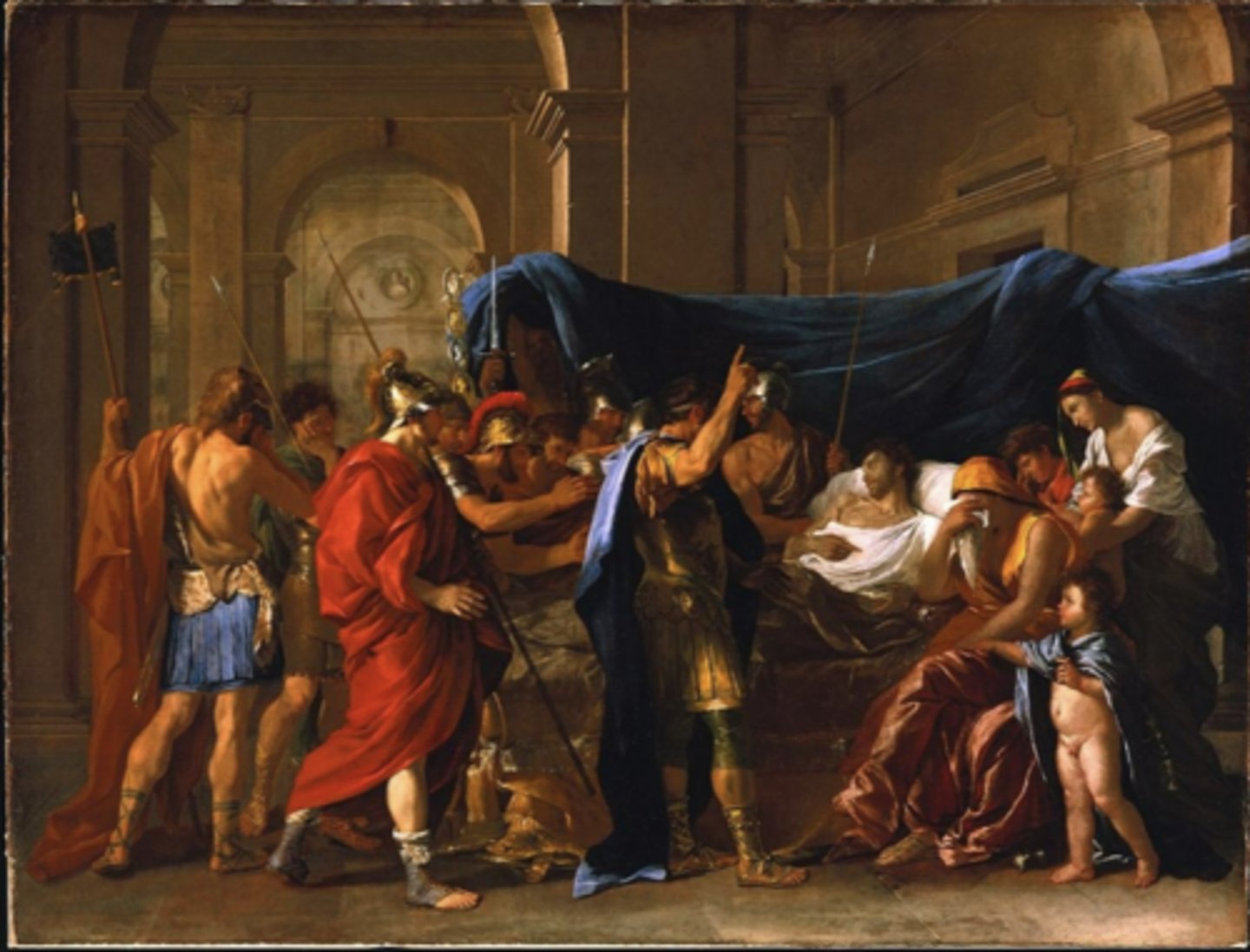
Nicolas Poussin, Death of Germanicus, 1628
- French painter
- ancient Rome
- Renaissance art
- French baroque
- bodies in motion
- the guy in the white lying down is not in the center of the painting
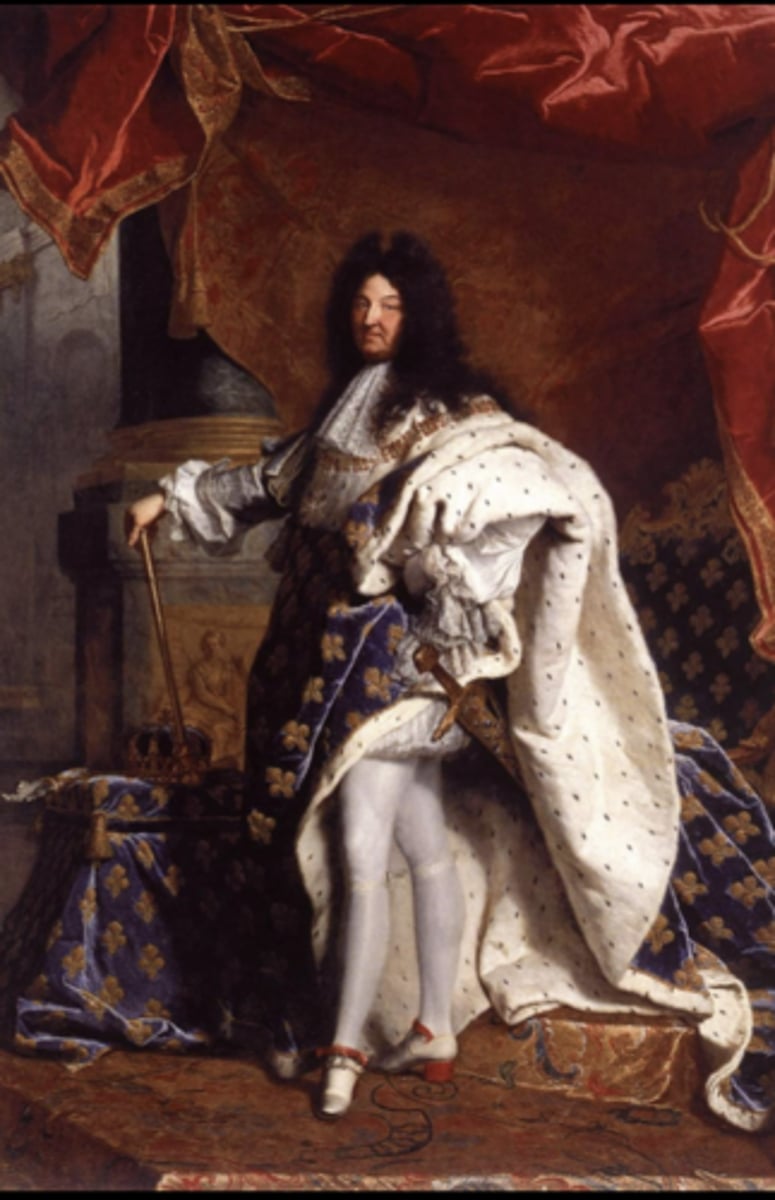
Hyacinth Rigaud, Portrait of Louis XIV 1701
- he is wealthy
- The sword's name is joyful
- The high heels he is wearing help him keep his foot in place on the horse
- built the palace of Versailles
- most famous
Francois Boucher, Madame de Pompadour
-Rococo style
-Wealthy and educated
-Very powerful
-The king changed her to an aristocrat
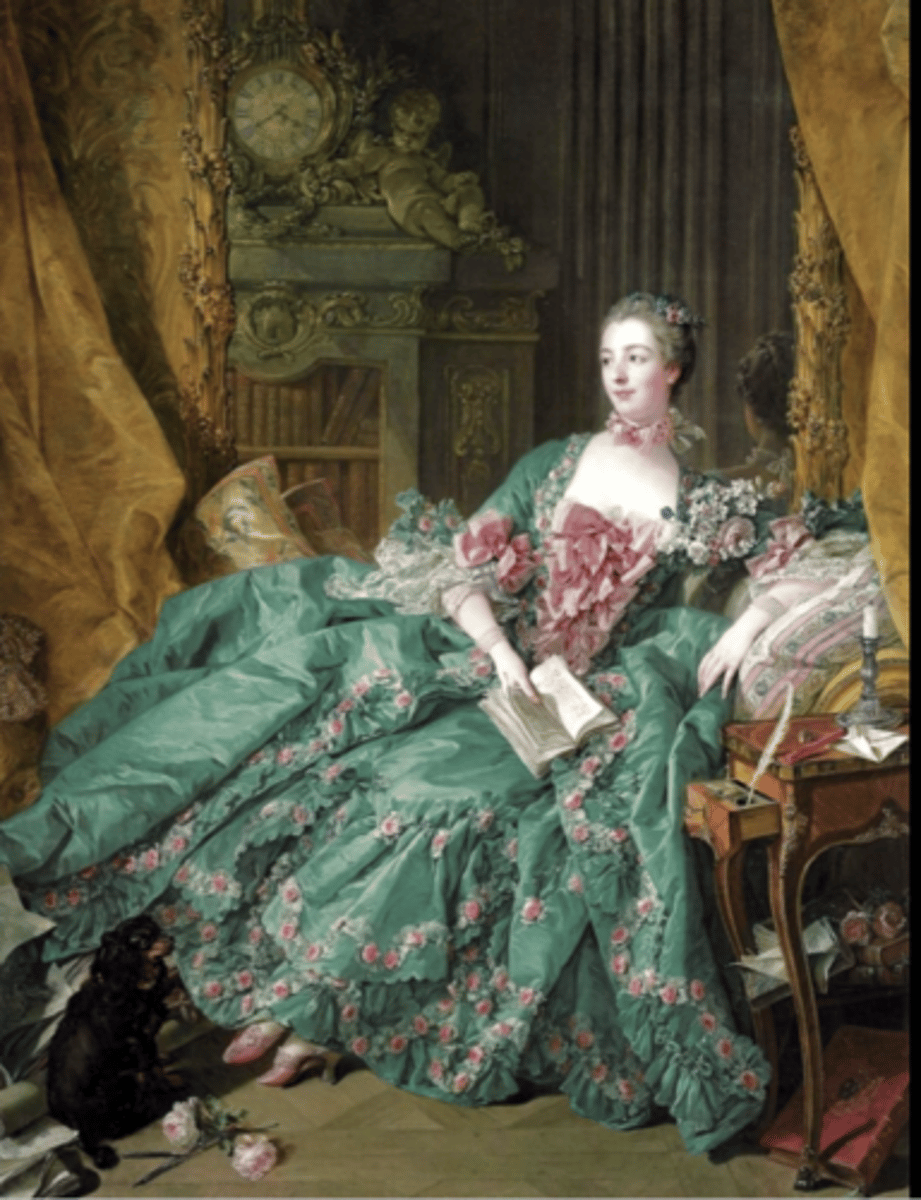
Jean Honore Fragonard, The Swing
-Patron- Baron de Saint-Julien
-Rococo
-by being pushed by a bishop
-it was a private commission for a private home
-Secret love affair
-Cupid & Venus- symbolic rococo, love, sex, flirtatious
- medium- oil
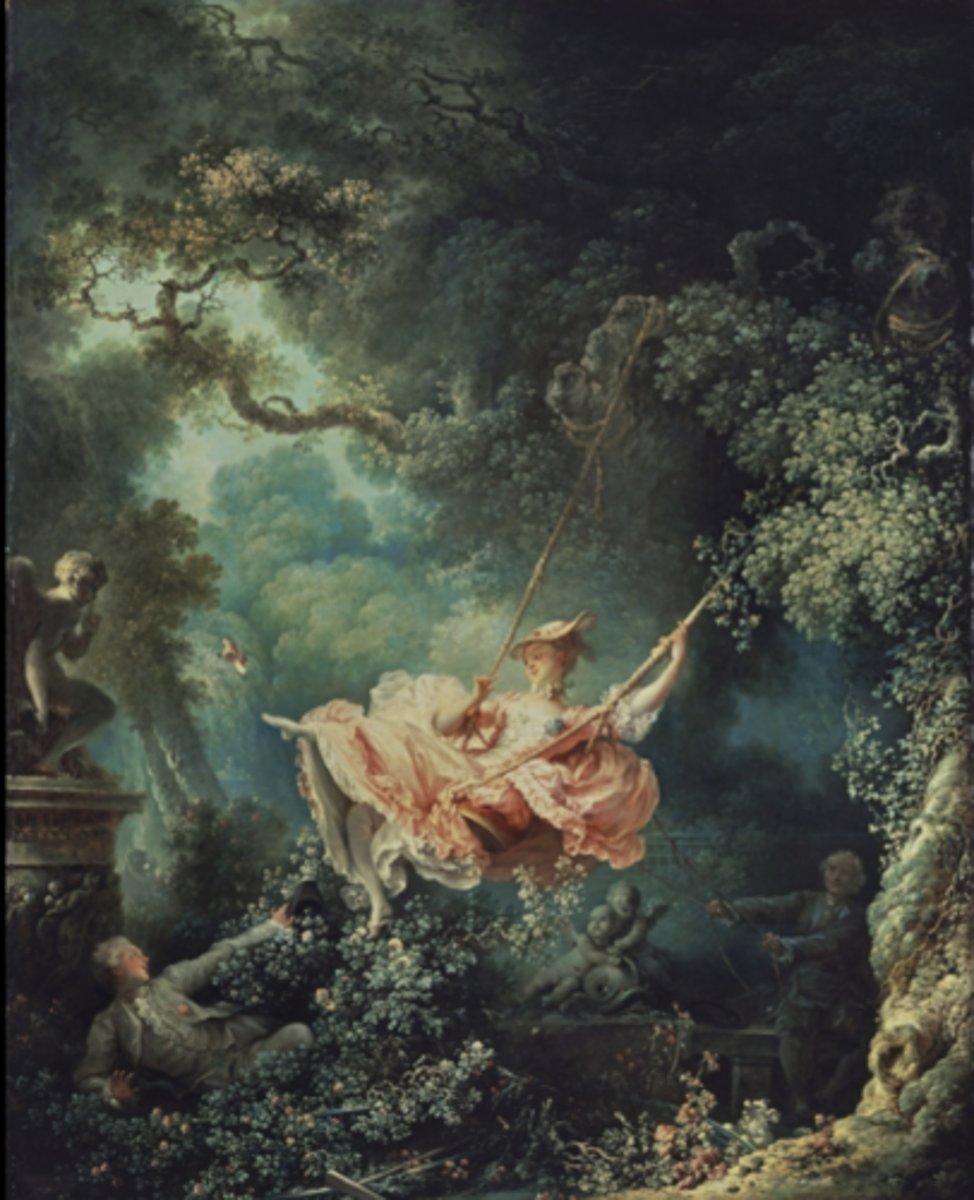
Louis XIV
-The Sun King: Louis XIV
-Louis XIV by Hyacinth Rigaud
-He is wealthy
-The sword's name is joyful
-The high heels help to keep their foot on the horse
Cared about dancing/ fashion/power
-Built the Palace of Versailles
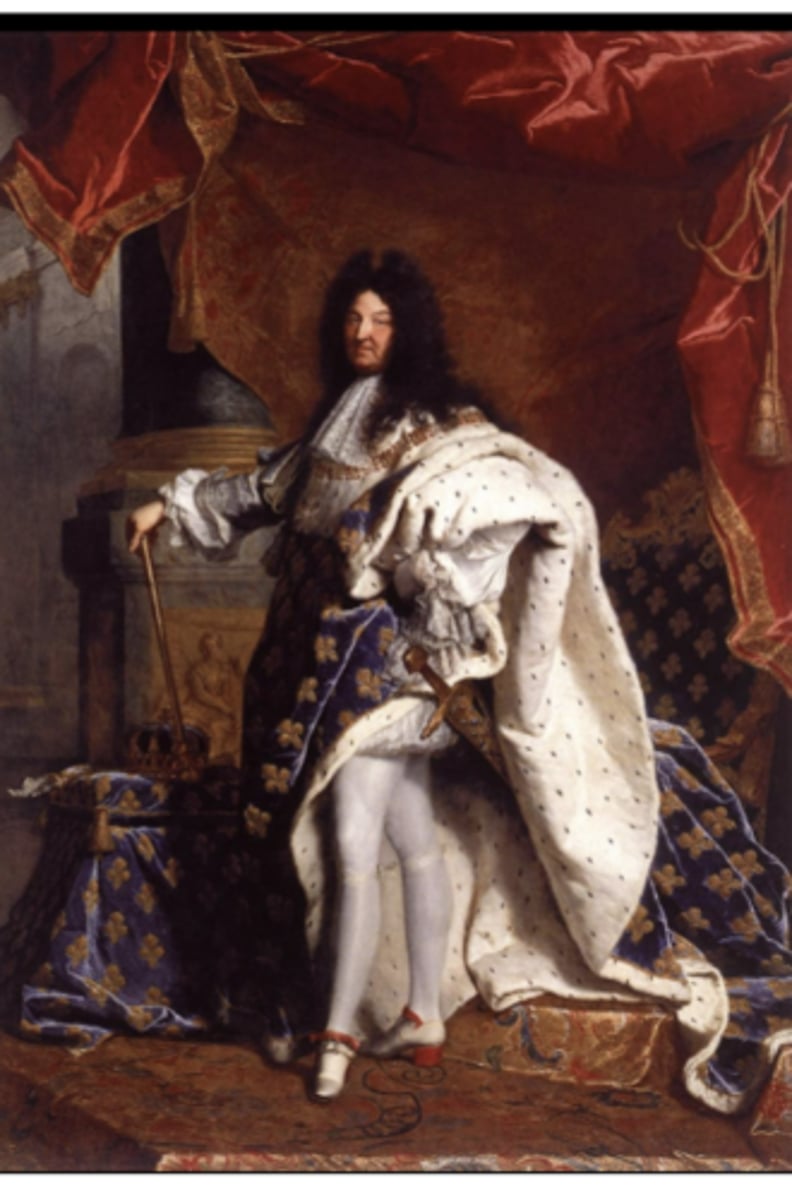
Absolute Monarchy
A system of government in which the head of state is a hereditary position and the king or queen has almost complete power
" The Grand Manner"
baroque, overwhelming, promoted by the royal academy
Hierarchy of the Genres
any formalization which ranks different genres in an art form in terms of their prestige and cultural value
Rococo
-Rococo is a style of interior design, painting, architecture, and sculpture that originated in Paris in the early 18th century. Rococo is characterized by lightness, elegance, and an exuberant use of curving natural forms in ornamentation.
-Light pastels, ivory white, and gold were the predominant colors, and Rococo decorators frequently used mirrors to enhance the sense of open space.
Royal Academy of Painting and Sculpture
It oversaw—and held a monopoly over—the arts in France until 1793. The institution provided indispensable training for artists through both hands-on instruction and lectures, access to prestigious commissions, and the opportunity to exhibit their work. Significantly, it also controlled the arts by privileging certain subjects and by establishing a hierarchy among its members
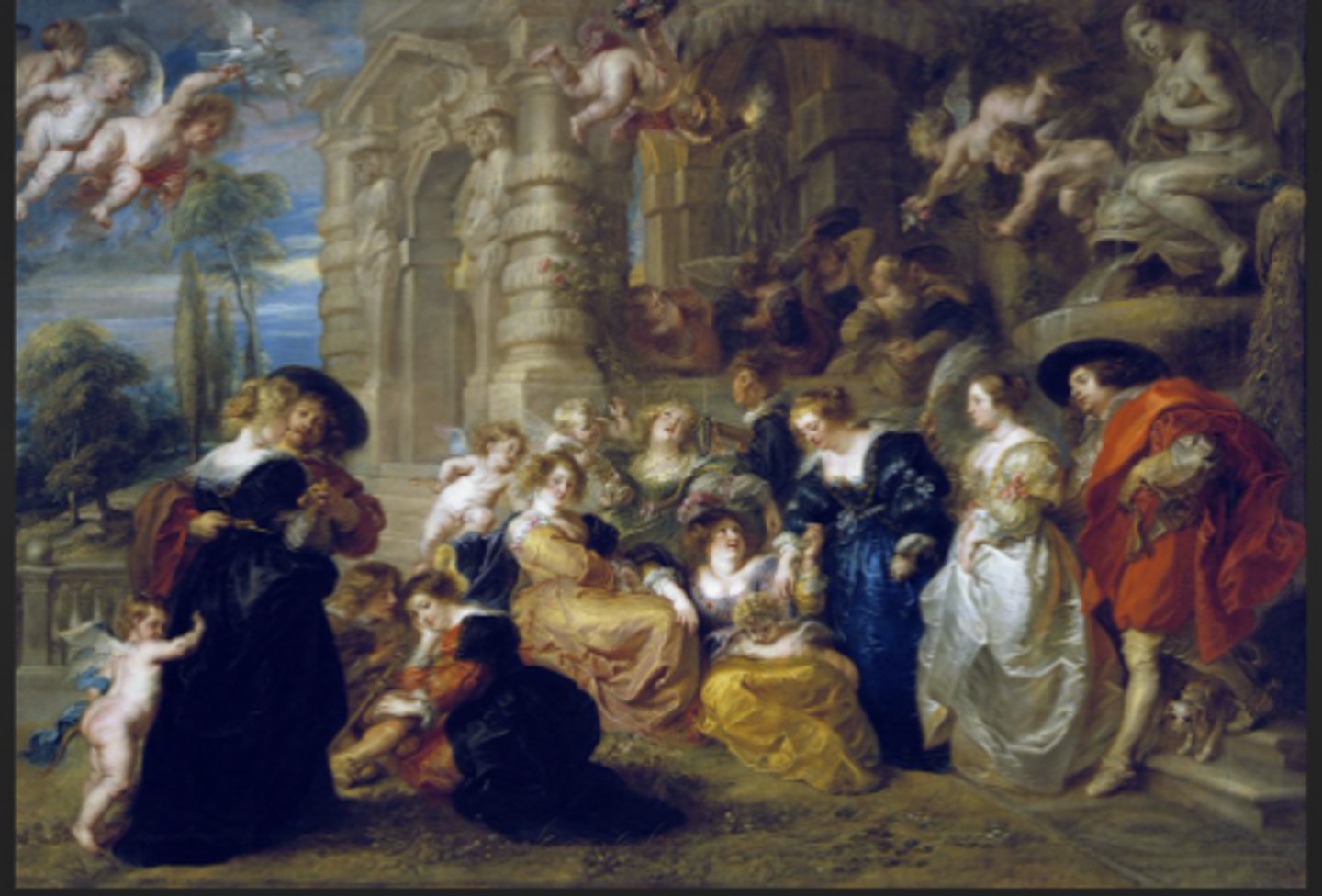
Antonie Watteau/ pilgrimage to Cythera
-Rococo- natural colors, overflowing decor
-The painting he presented to the Royal Academy that got him in
-Venus is the statue on the right side of the painting, covered in roses
- Fete Galante ( new genre of paintings)
- the birthplace of the goddess of love, where everyone will meet their ideal partner
- lovue in paris
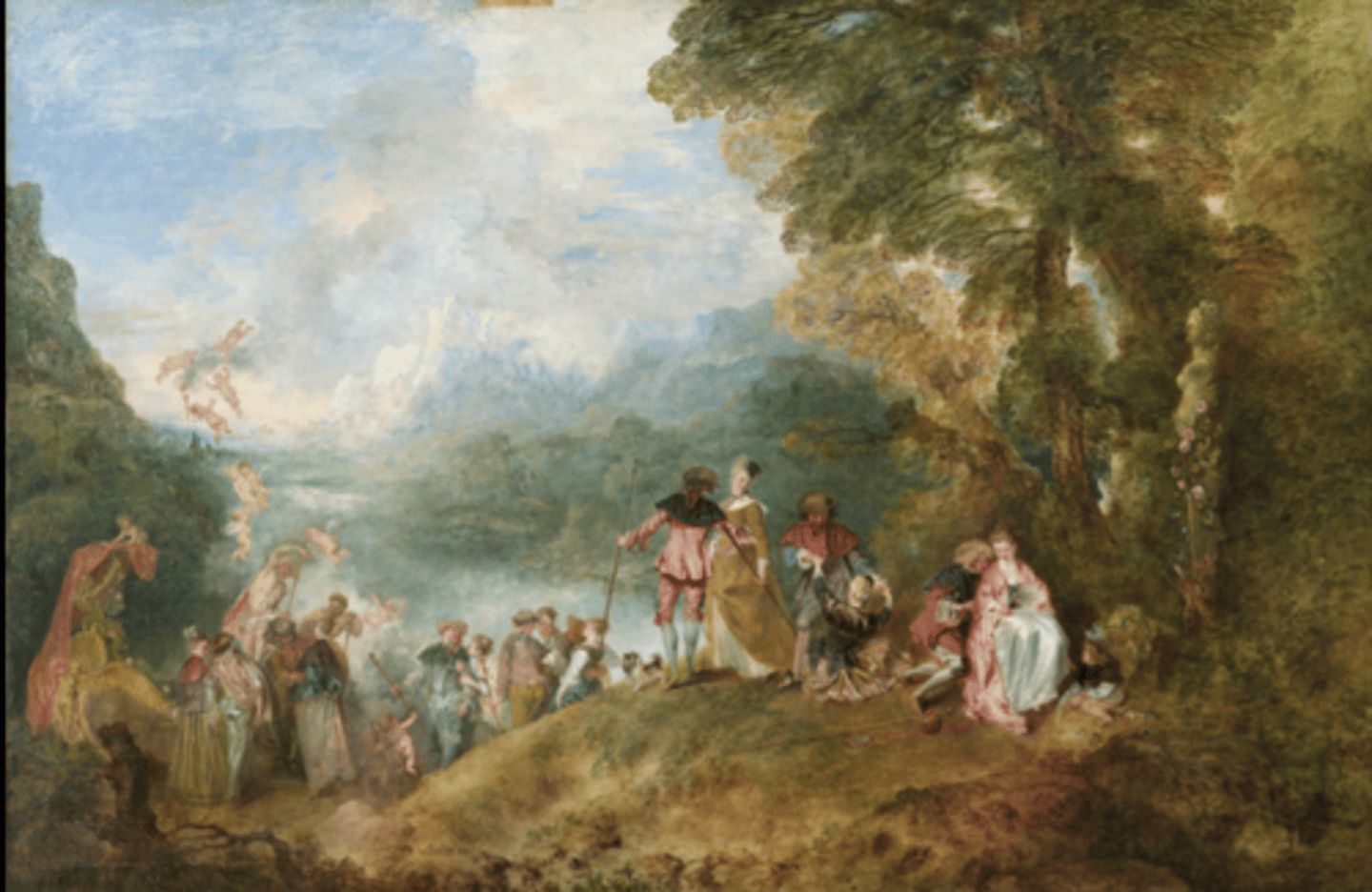
fete galante
An elegant group of people relaxing
- new style made from Watteau
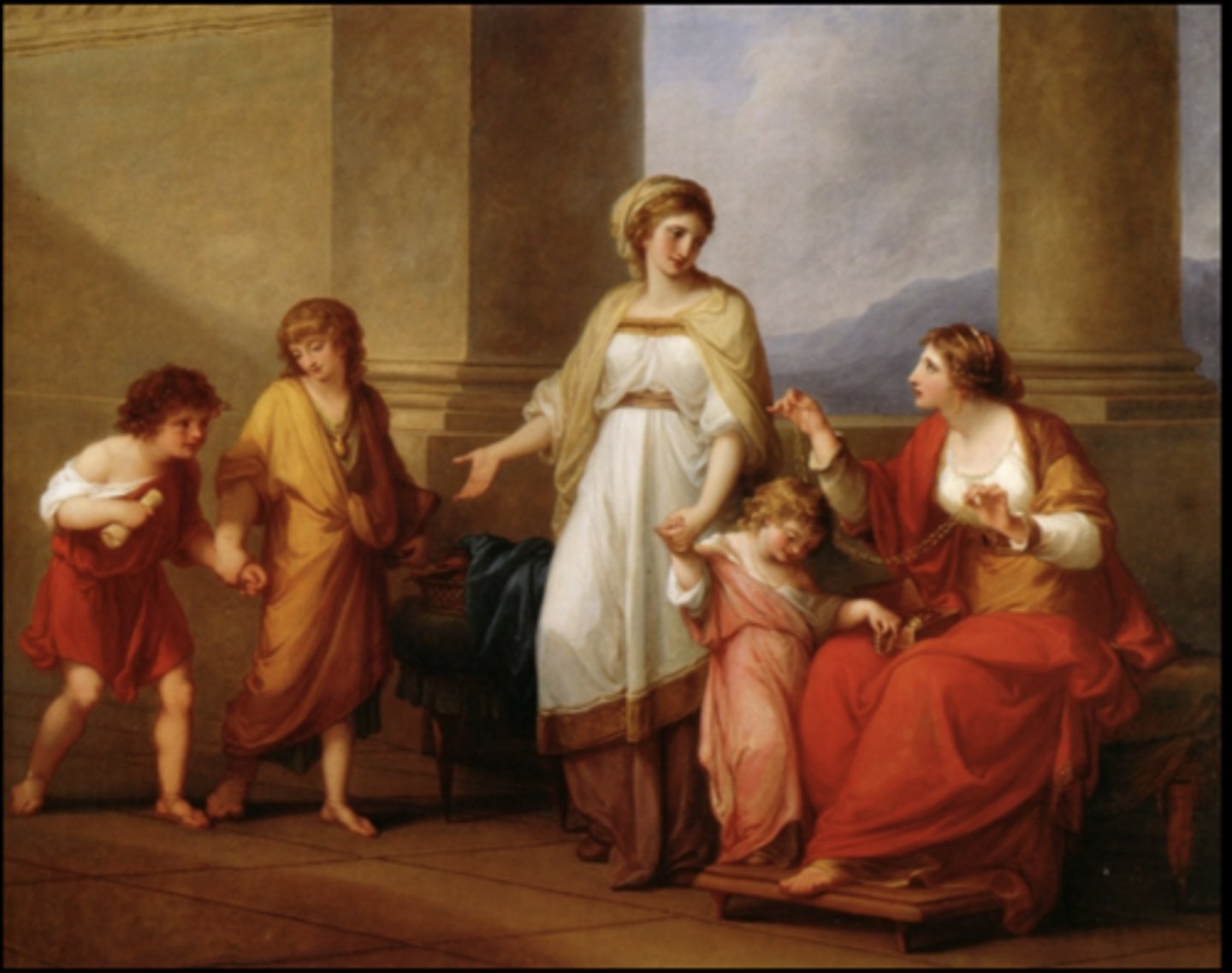
Angelica Kaufmann, Cornelia Presenting Her Children as Her Treasures (Mother of the Gracchi), 1785. Oil.
Neoclassical- because it emphasizes family honor and rational values within the context of classical motifs. Her kids are her treasures instead of any type of jewel the rich lady was handing to her
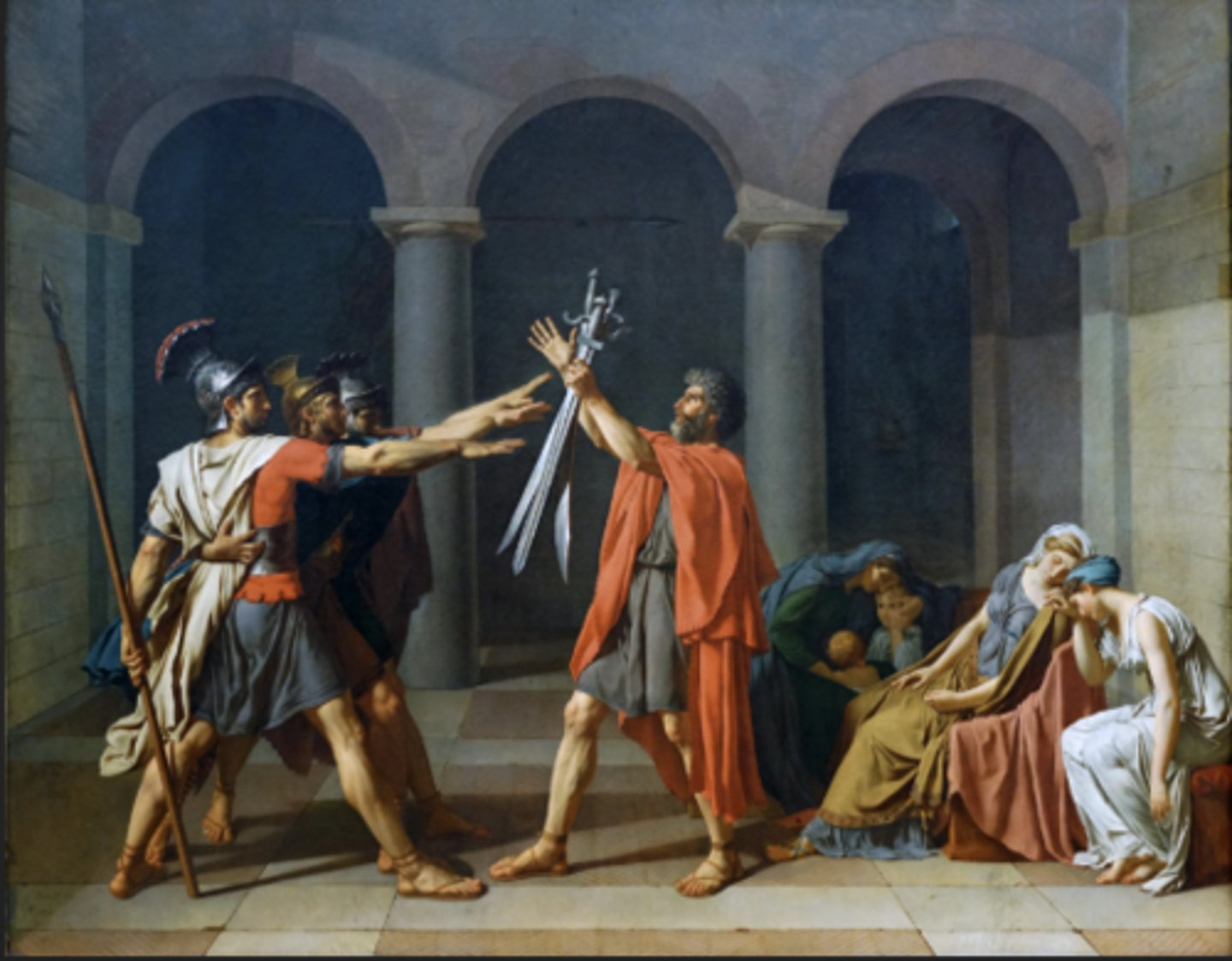
What is the moral of David's painting, The Oath of the Horatii?
One should be willing to sacrifice oneself for honor and one's principles.
group portrait
multiple people that share something in common
Neoclassicism
Neoclassicism is an artistic and cultural movement that emerged in the mid-18th century. Neoclassicism influenced painting, sculpture, architecture, and even literature, becoming a prominent style until the early 19th century.
- The Enlightenment was closely related to Neoclassicism
Johann Winckelmann
-The history of art in antiquity, 1764
-Study of aritech
-Development
The Grand Tour
a cultural tour of Europe formerly undertaken, especially in the 18th century, by a young man of the upper classes as a part of his education.
The Enlightenment
A movement in the 18th century that advocated the use of reason in the reappraisal of accepted ideas and social institutions.
The Rome Prize
A scholarship for painters and sculptors that was established at the Academy in 1663. Winners were allowed to stay in Rome for 3-5 years to study art at the expense of the state
The Salon vs salonnieres
Salon- an elegant party, a tea party, for the upper class
salonnieres- run by aristocratic women
Ancien Regime
The traditional political and social order in Europe before the French Revolution
Jacques- Louis David
-The most important neoclassical painter in Europe
-Won the Prix de Rome and went to study in Rome in 1775
-Had a complicated relationship with the Royal Academy; felt that he was repeatedly snubbed
-A friend of Robespierre and active in the French Revolution was ultimately imprisoned for his political activity
-Later became a painter of Napoleon
-Heroic subject matter, emphasis on stoicism, formal clarity, impression of stability and solidity
-Best known for the oath of Horatti 1784-1785
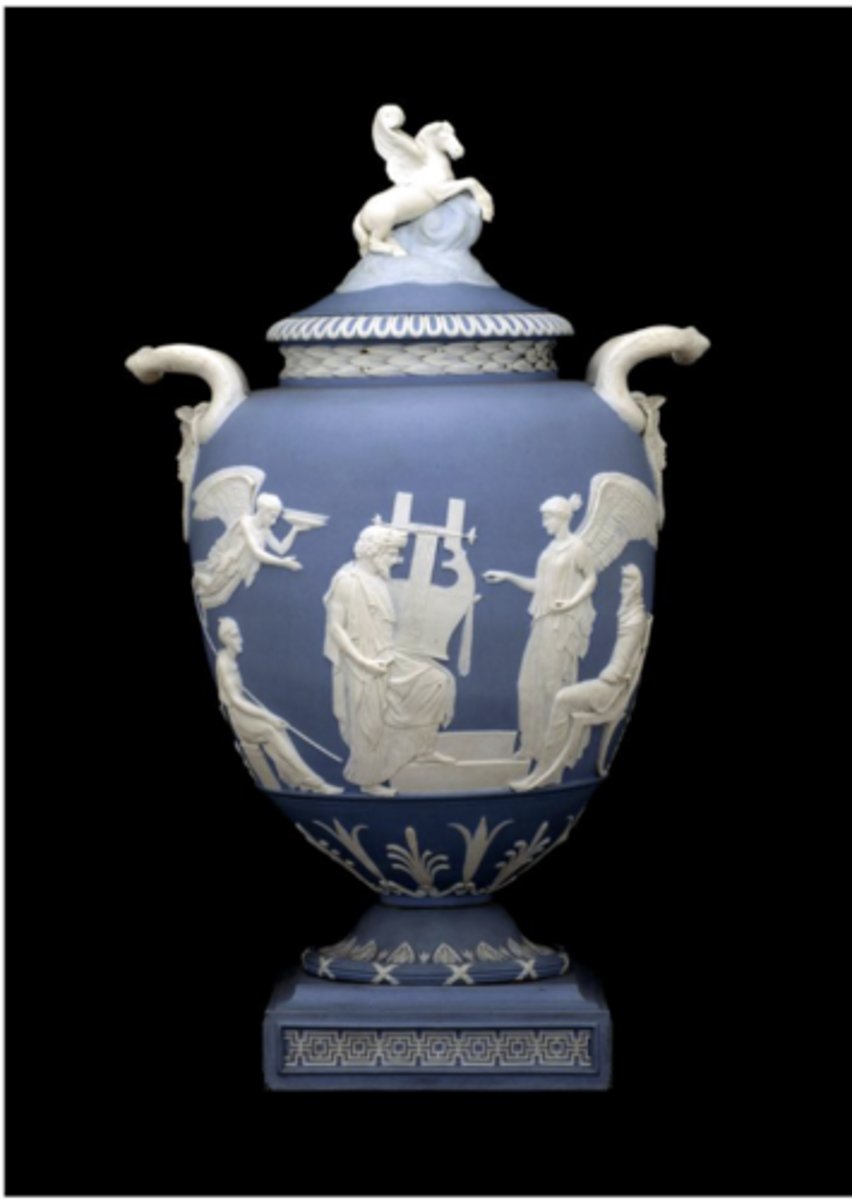
The Pegasus Vase, 1786, jasper ware, for the Wedgwood factory
John Flaxman ( design)
William Hackwood ( modeled)
Wedgewood factory
Etruria factory, Staffordshire, England
Cameo- a type of object/ antiquity
Very scientific
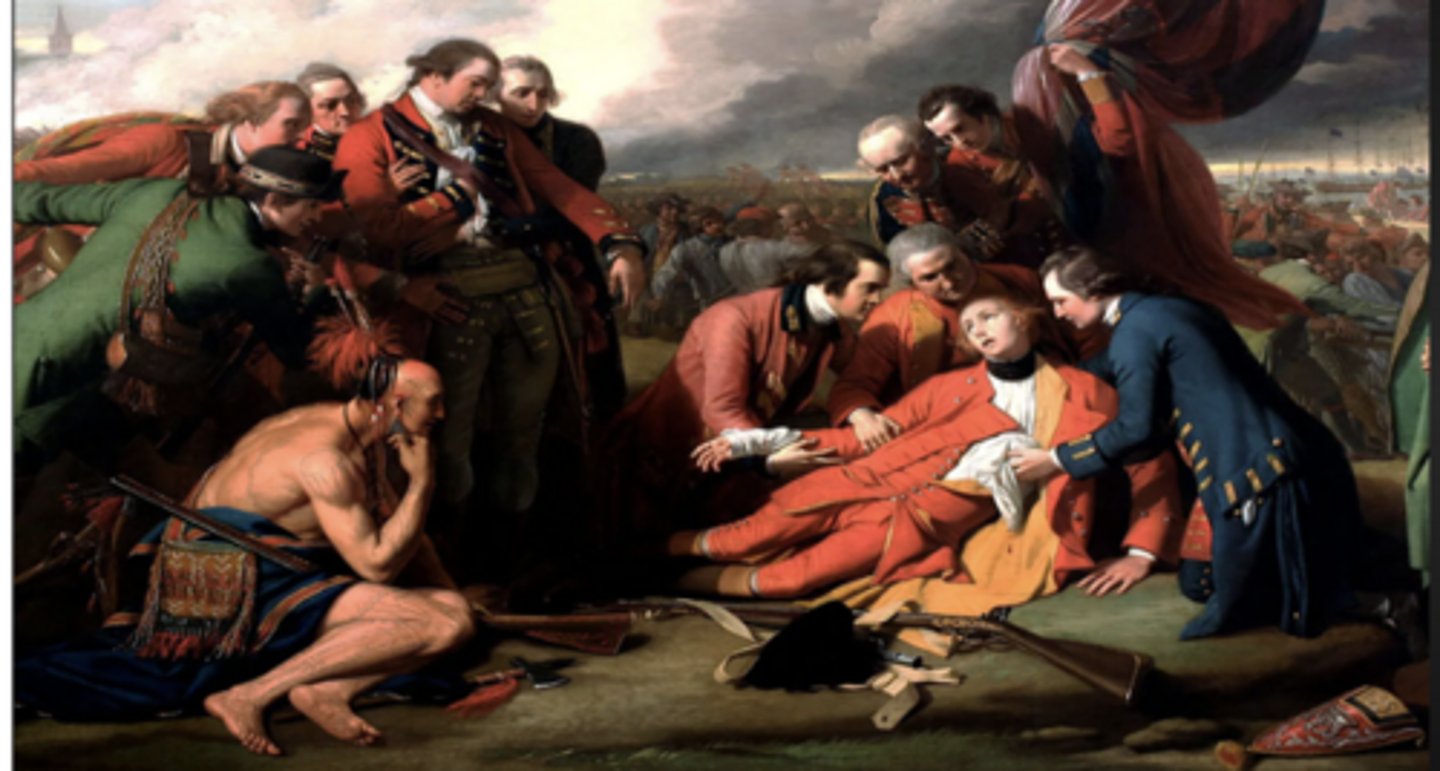
Benjamin West, Death of General Wolfe, 1770
General Wolfe is the guy in the red lying down
Founder of the academy
The Indian and French War
England
No blood
Changes Neoclassicism
Gilbert Stuart, George Washington (Landsdowne portrait)
medium - oil on canvas
Neoclassical reflecting Enlightenment ideals
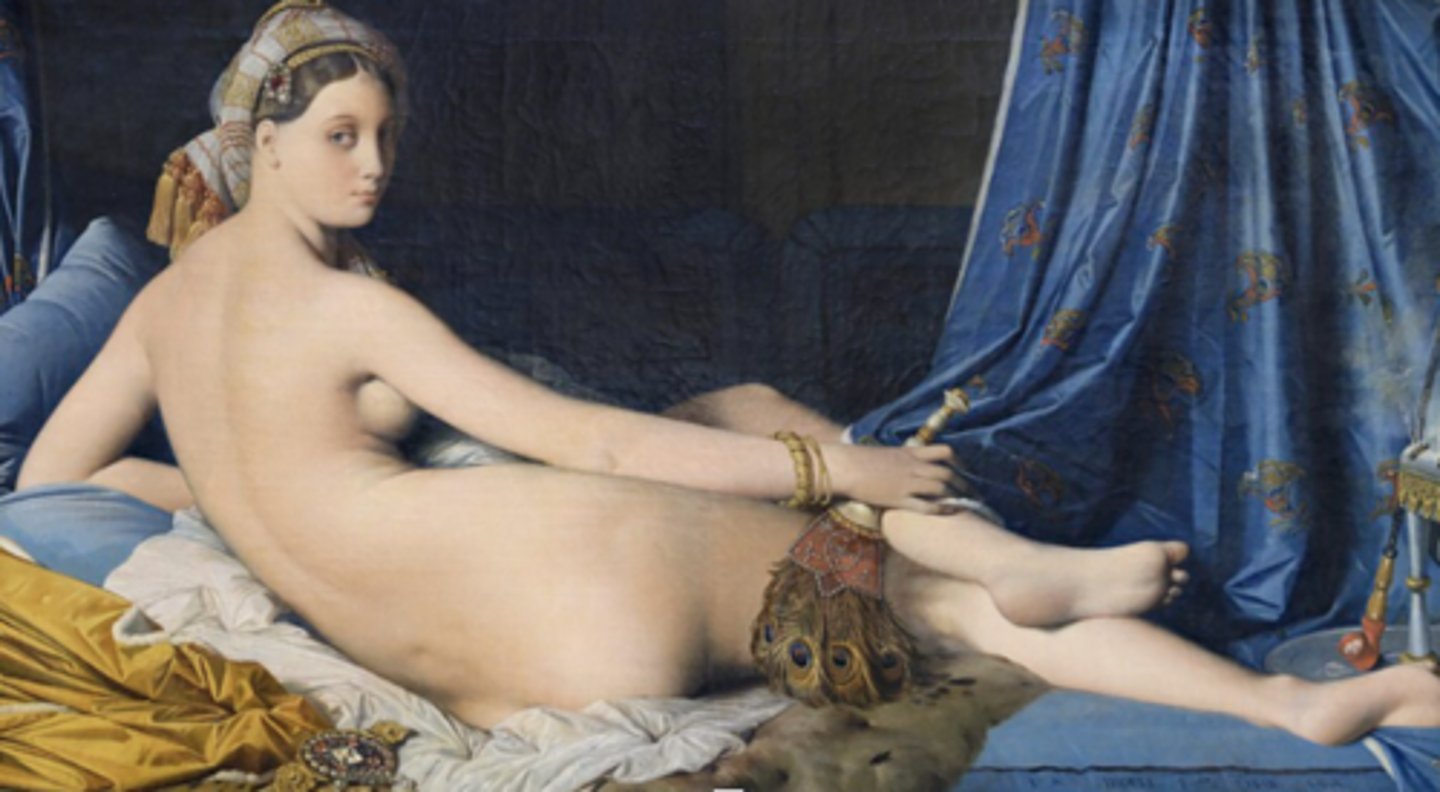
Jean-Auguste-Dominique Ingres .La Grande Odalisque 1814, Oil on canvas
Romanticism painting
Patrón is Napoleon's sister and the queen of Naples; Caroline Murat
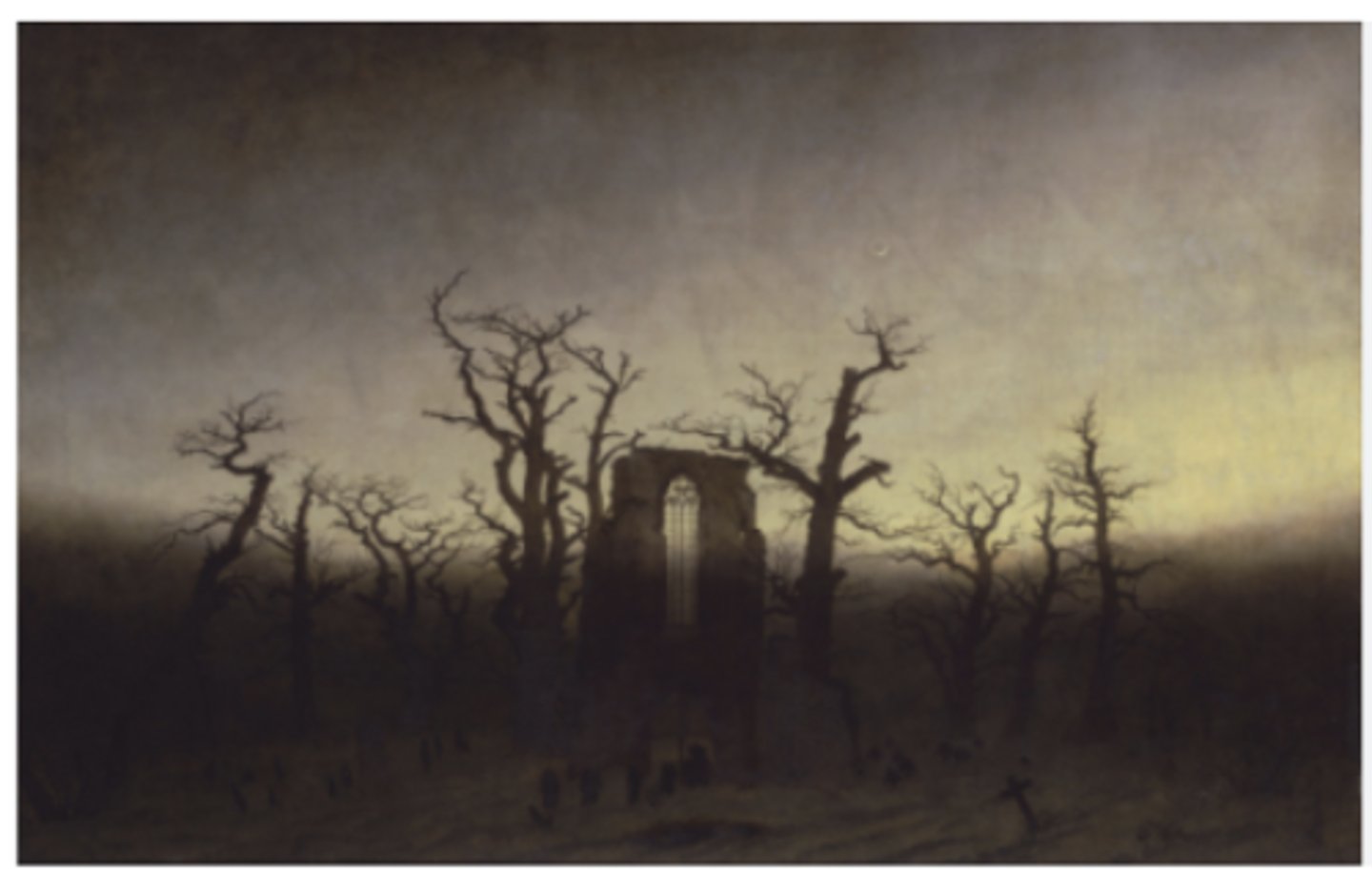
Caspar David Friedrich, The Abbey in an Oak Forest, 1809
Sad, unsettling painting
landscape painting
foreground- crosses
romanticism
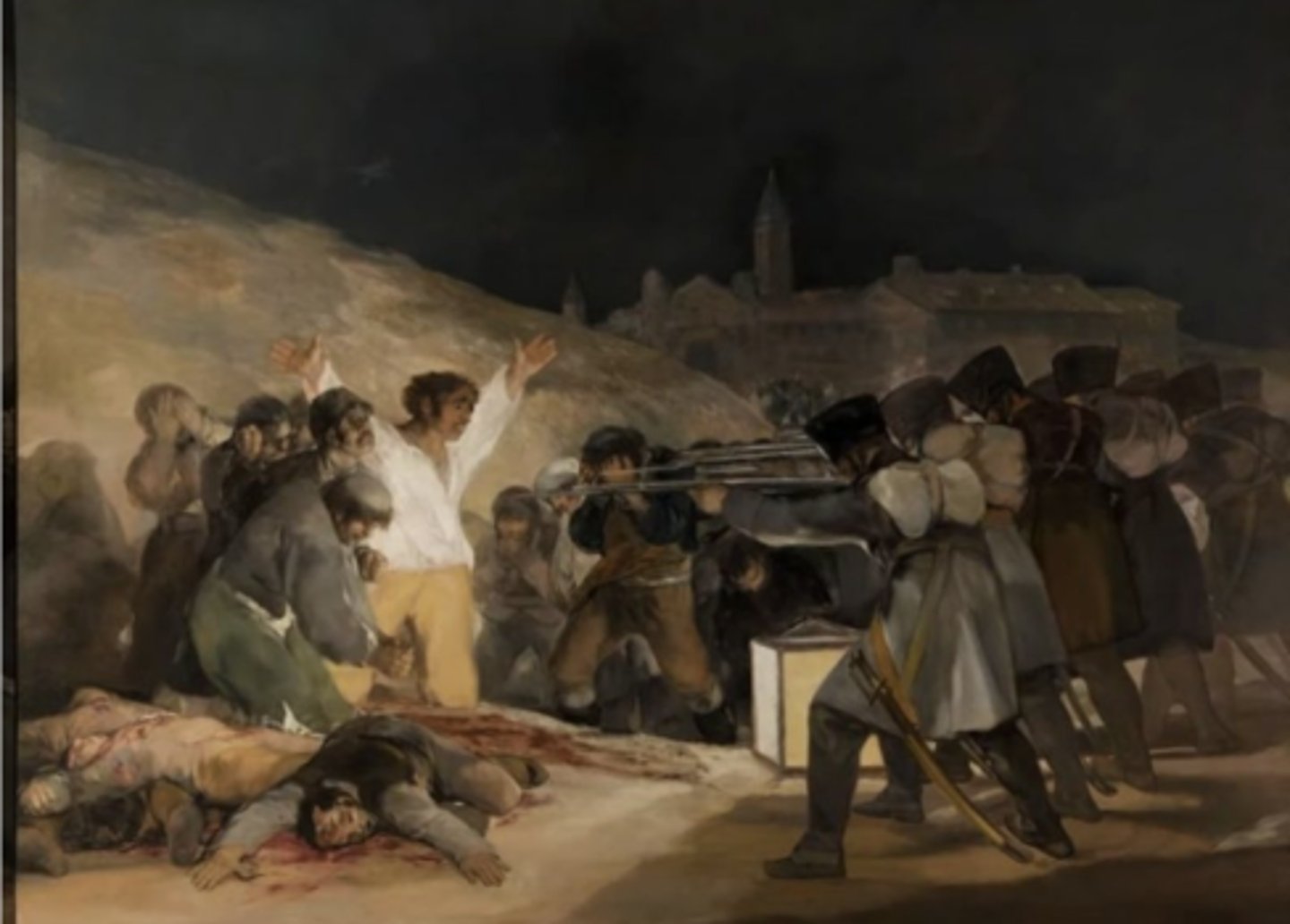
Francisco Goya, The Third of May, 1808, 1814
Romanticism
Medium: oil
Historical painting
Darker colors
Emotional impact
- the napoleonic occupation of Madrid
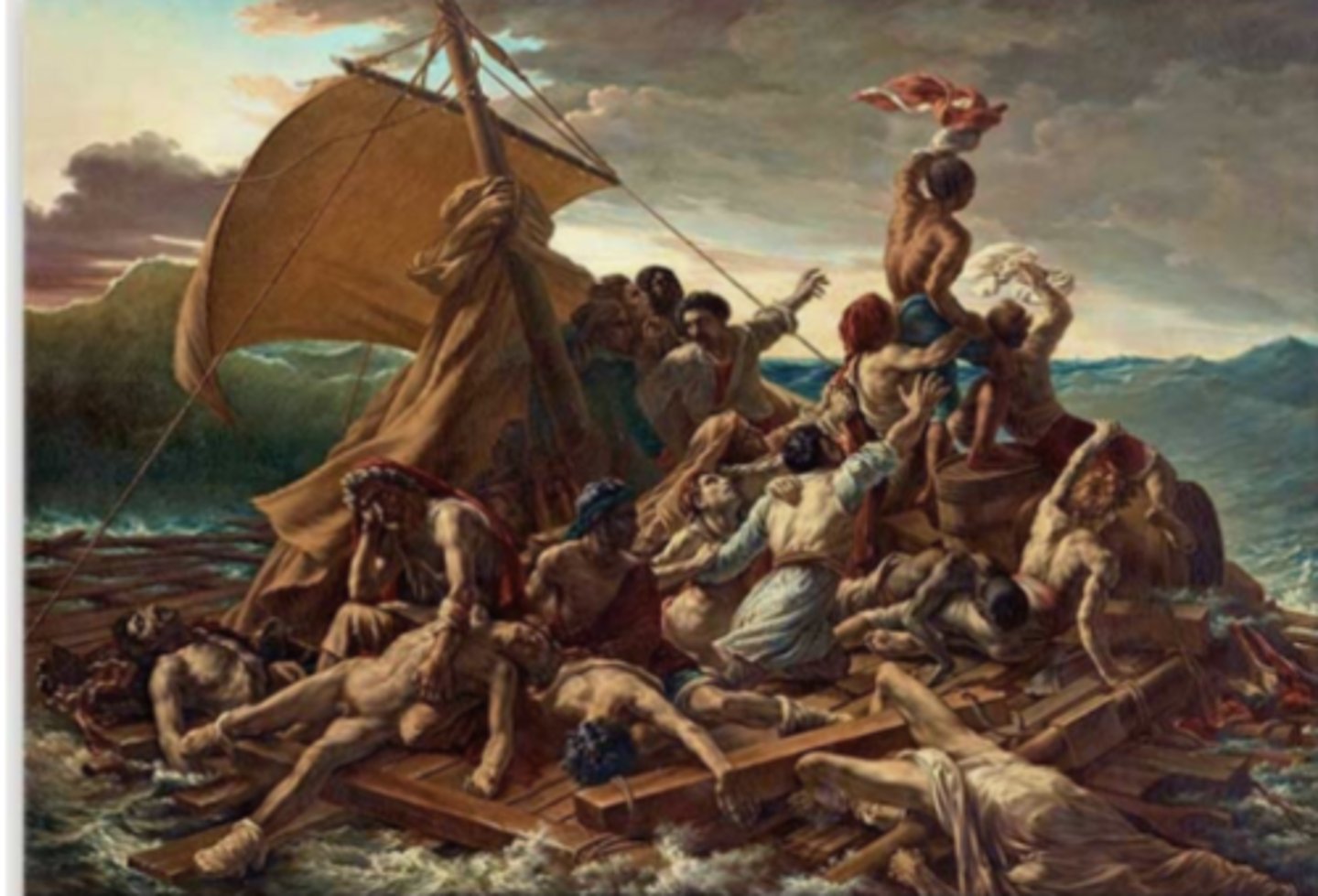
Théodore Géricault, The Raft of the Medusa
Romanticism
Presented at the salon in 1819
Present in the moment of war
The Louvre in Paris
He isn't painting bodies, he's painting corpses
- The ones that got put into a raft were for the higher ups; the lower class got thrown over
Joseph Mallord William Turner, The Slave Ship, 1840
disordered
romanticism
slaves thrown overboard
Museum of Fine Arts Boston
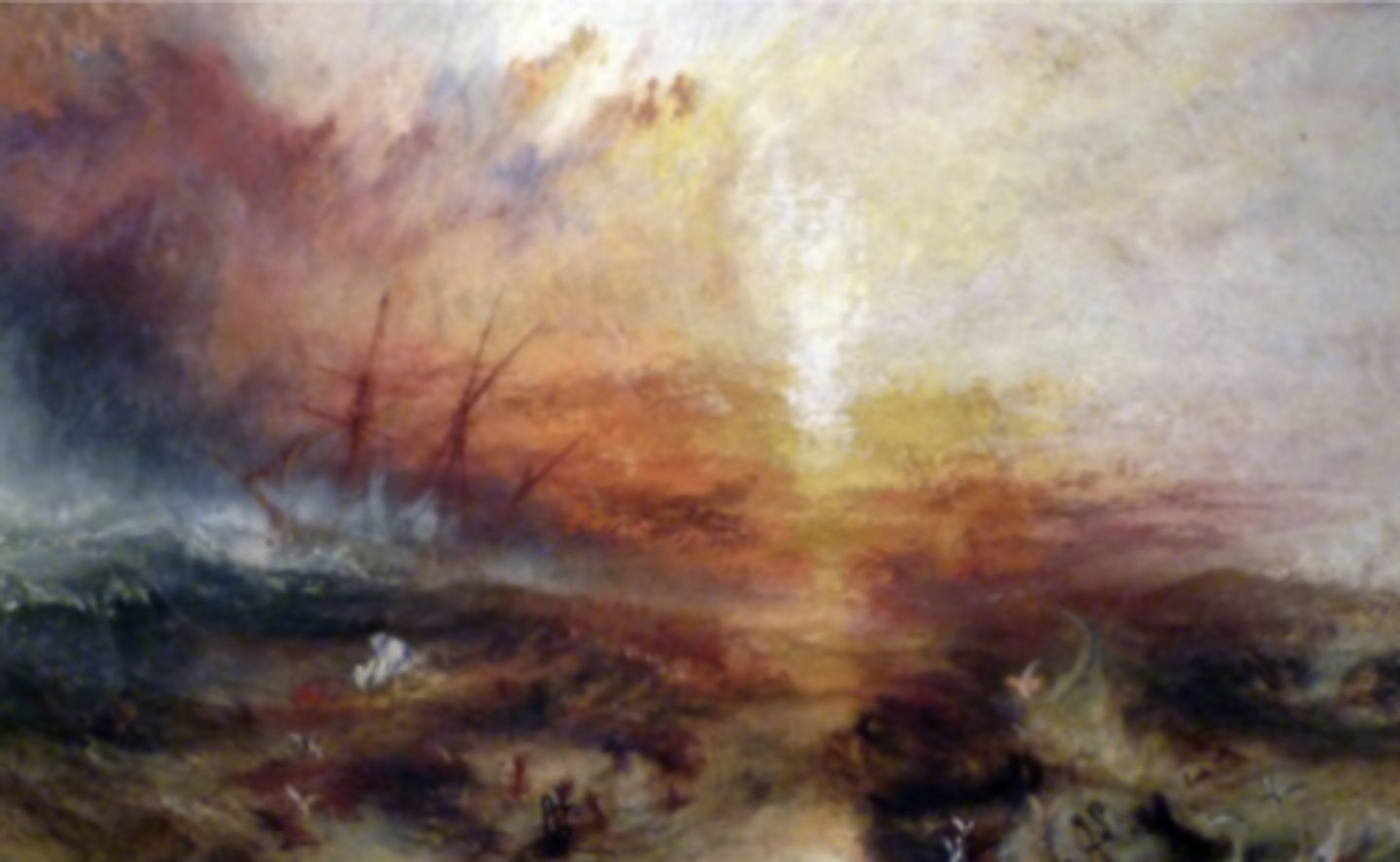
Romanticism
19th century artistic movement that appealed to emotion rather than reason
Orientalism
A term coined by literary scholar Edward Said to describe the way Westerners misunderstood and described colonial subjects and cultures.
odalisque
a female slave in the harems of the East. It was a favorite subject of the 19th century artists in a reclining position
Edmund Burke
(1729-1797) Member of British Parliament and author of Reflections on the Revolution in France (1790), which criticized the underlying principles of the French Revolution and argued conservative thought.
the sublime
a quality of greatness, awe, and grandeur that overwhelms the viewer, often blurring the line between terror and beauty.
Hudson River School
Thomas cole
First American art movement
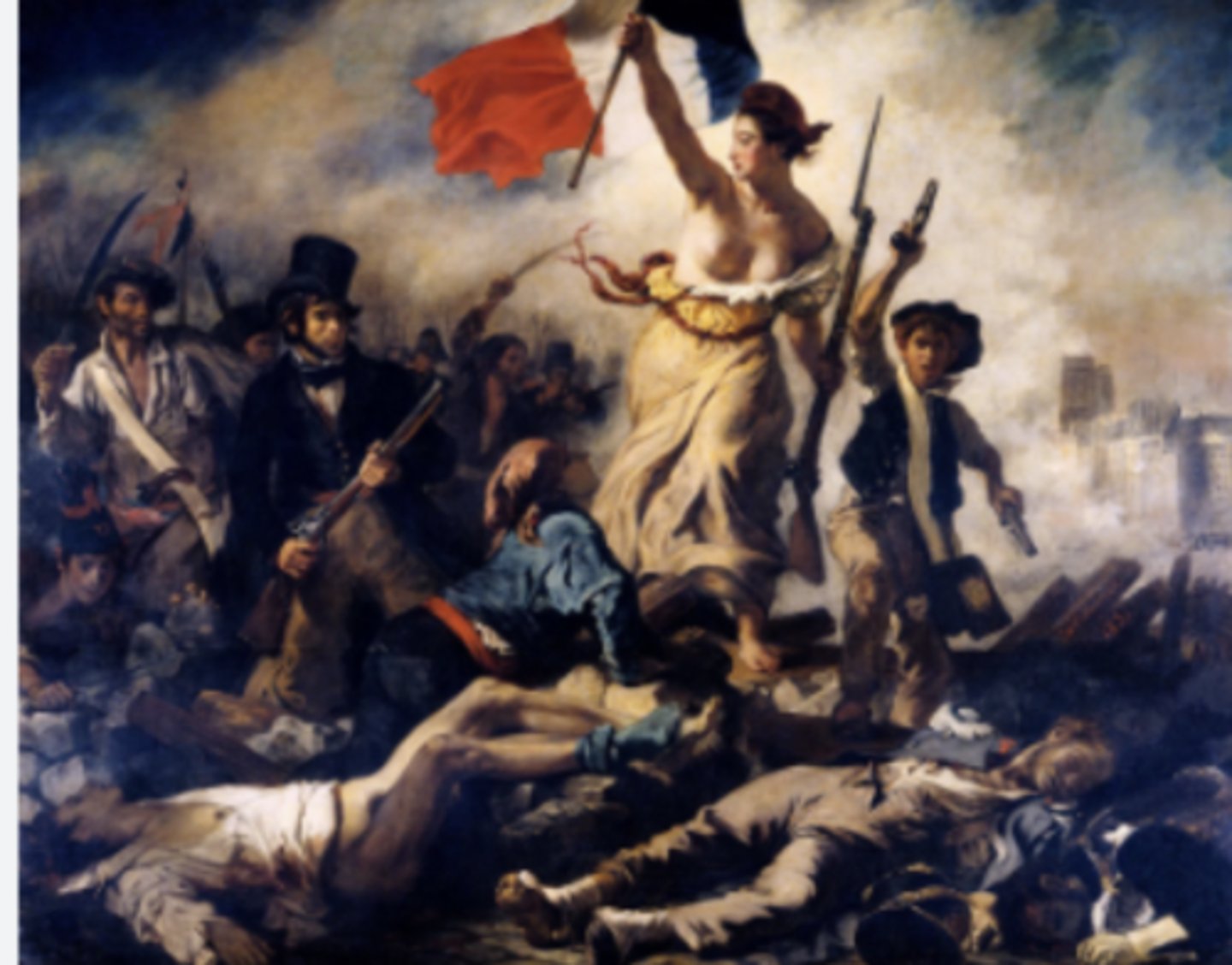
Eugene Delacroix, Liberty leading the people
location- the Louve in pairs
romanticism
Liberty is an allegorical figure, also a symbol of freedom
history painting ( hierarchy of genre painting)
Deloceraix depicts classes united against the monarchy and nobility
Casper David Friedrich
German romantic landscape painter
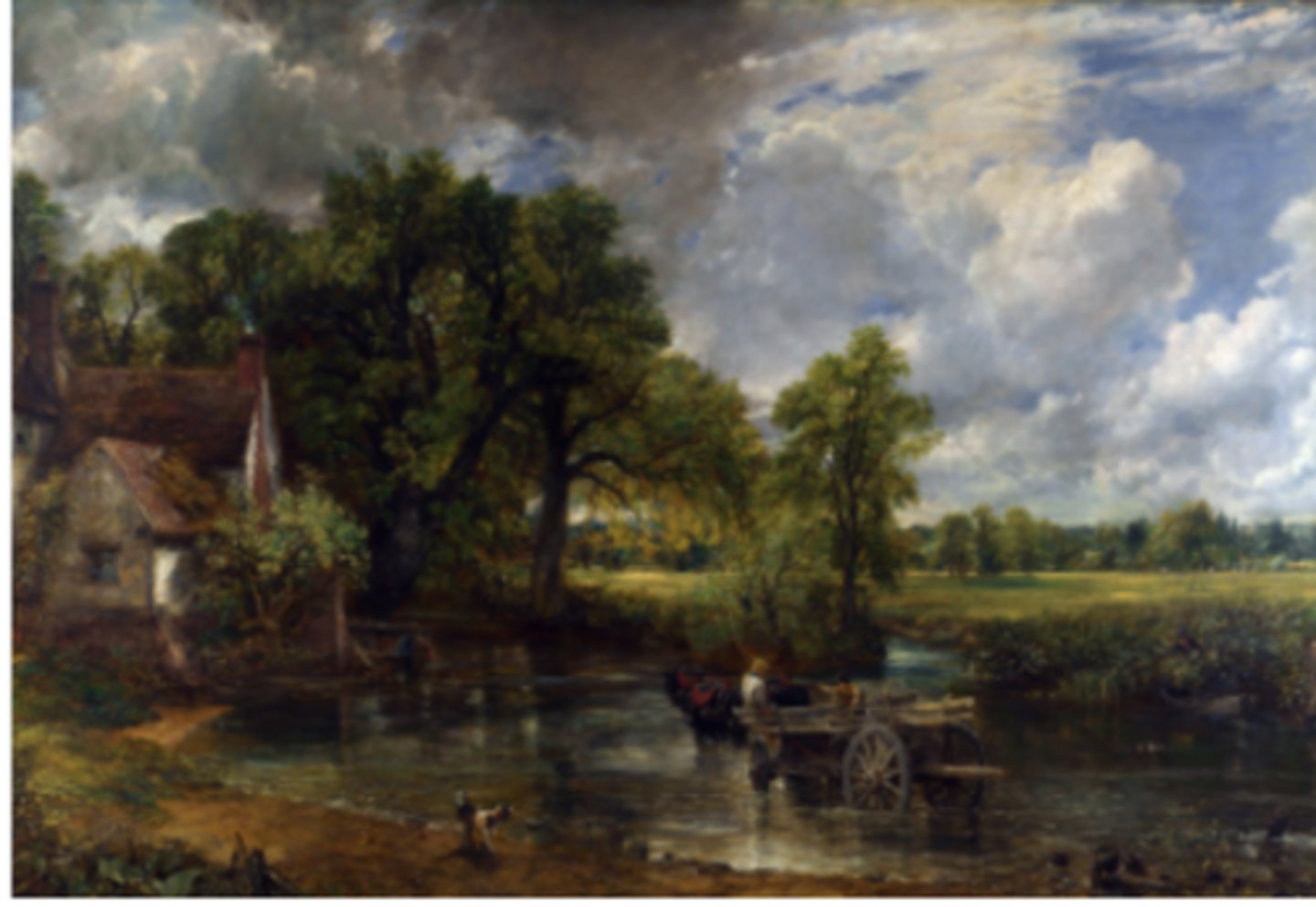
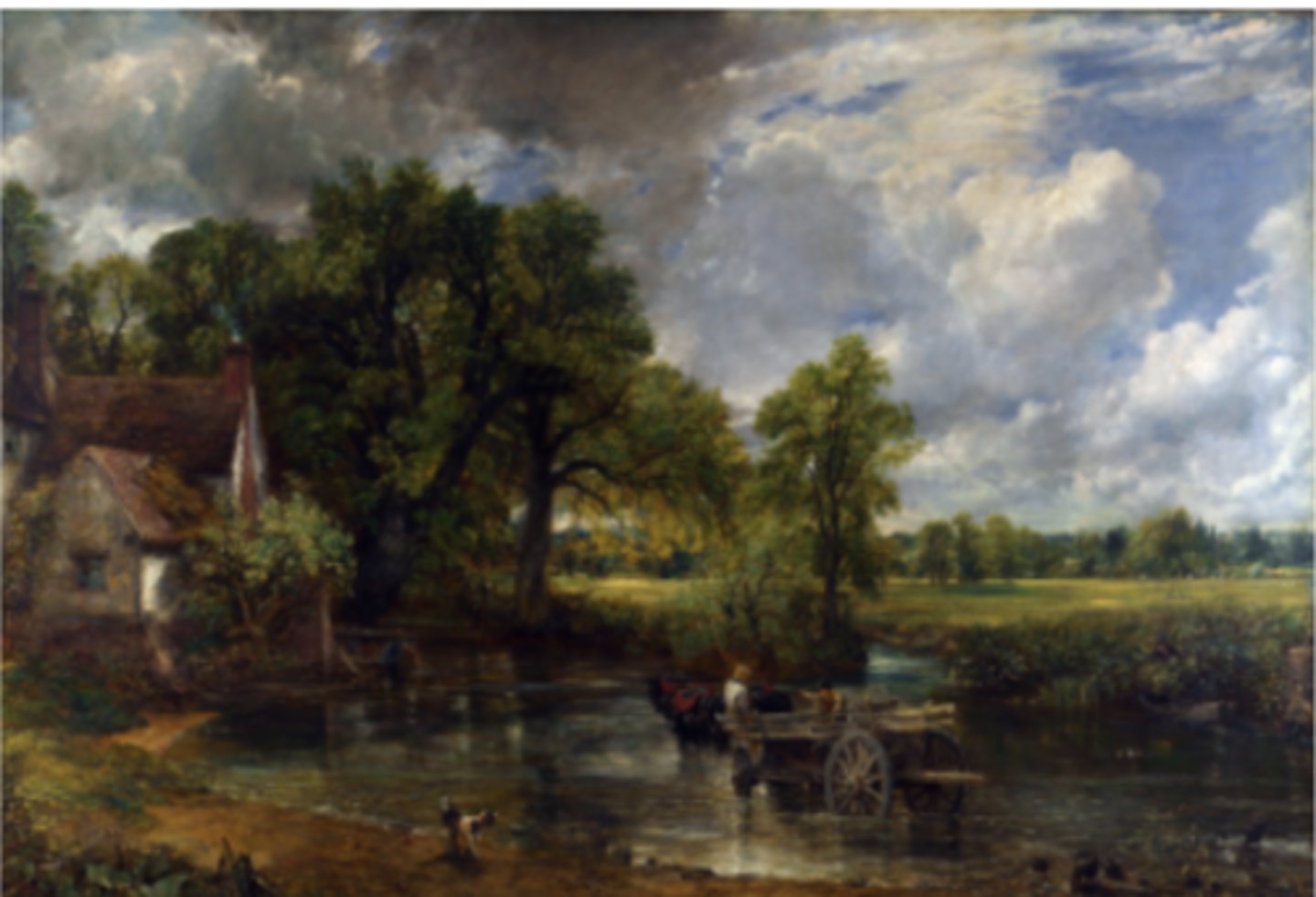
The Haywain- John Constable
Romanticism
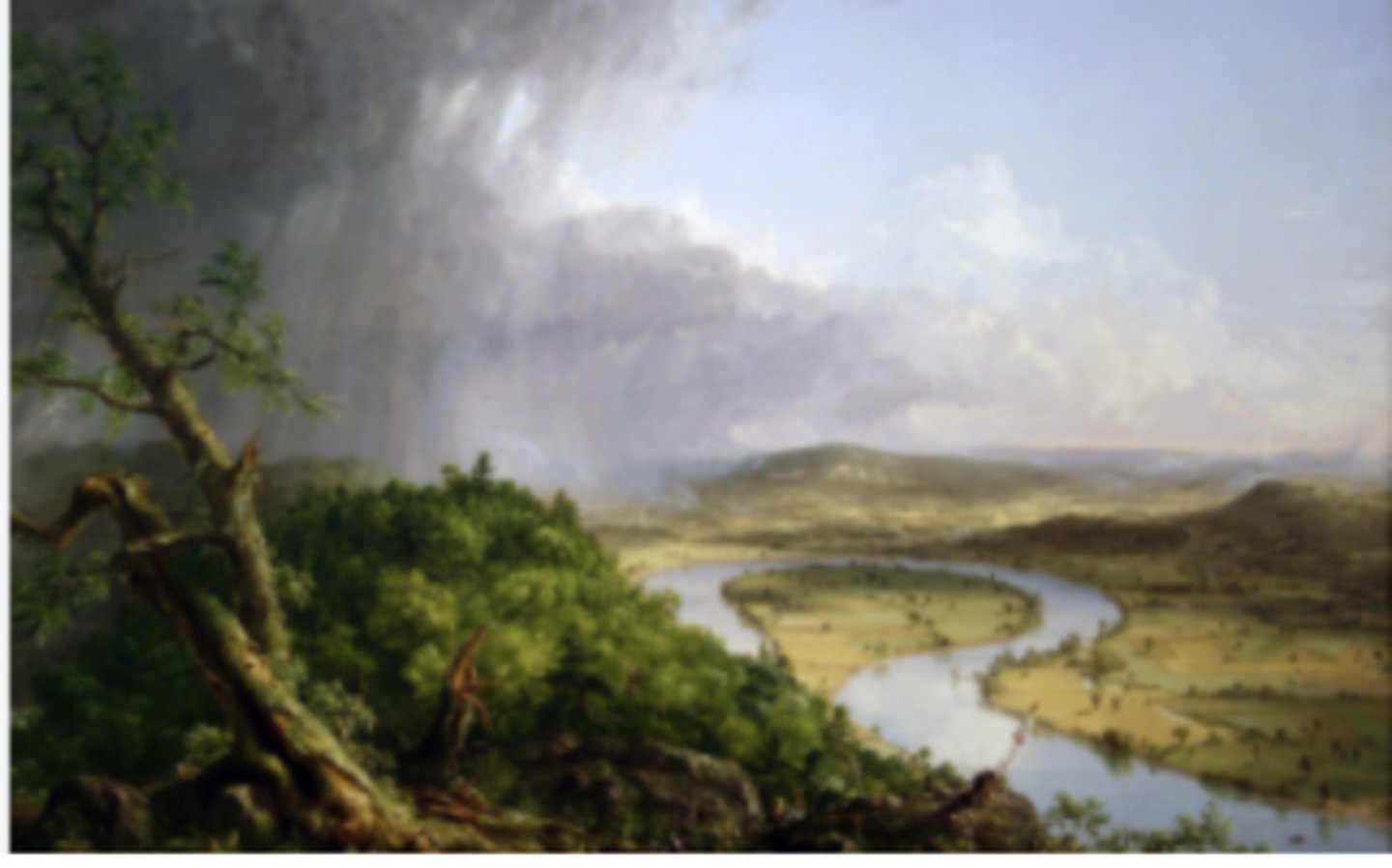
The oxbow- Thomas Cole
Founder of the Hudson River School
landscape
romanticism
a diagonal line from the lower right to the upper left to divide the composition into two unequal halves
The left-hand side of the painting depicts a sublime view of the land, a perspective that elicits feelings of danger and even fear.
The Haywain John Constable
style- romanticism
landscape painting ( lowest subject)
location- National Gallery in London
was in the Royal Academy
historical moment
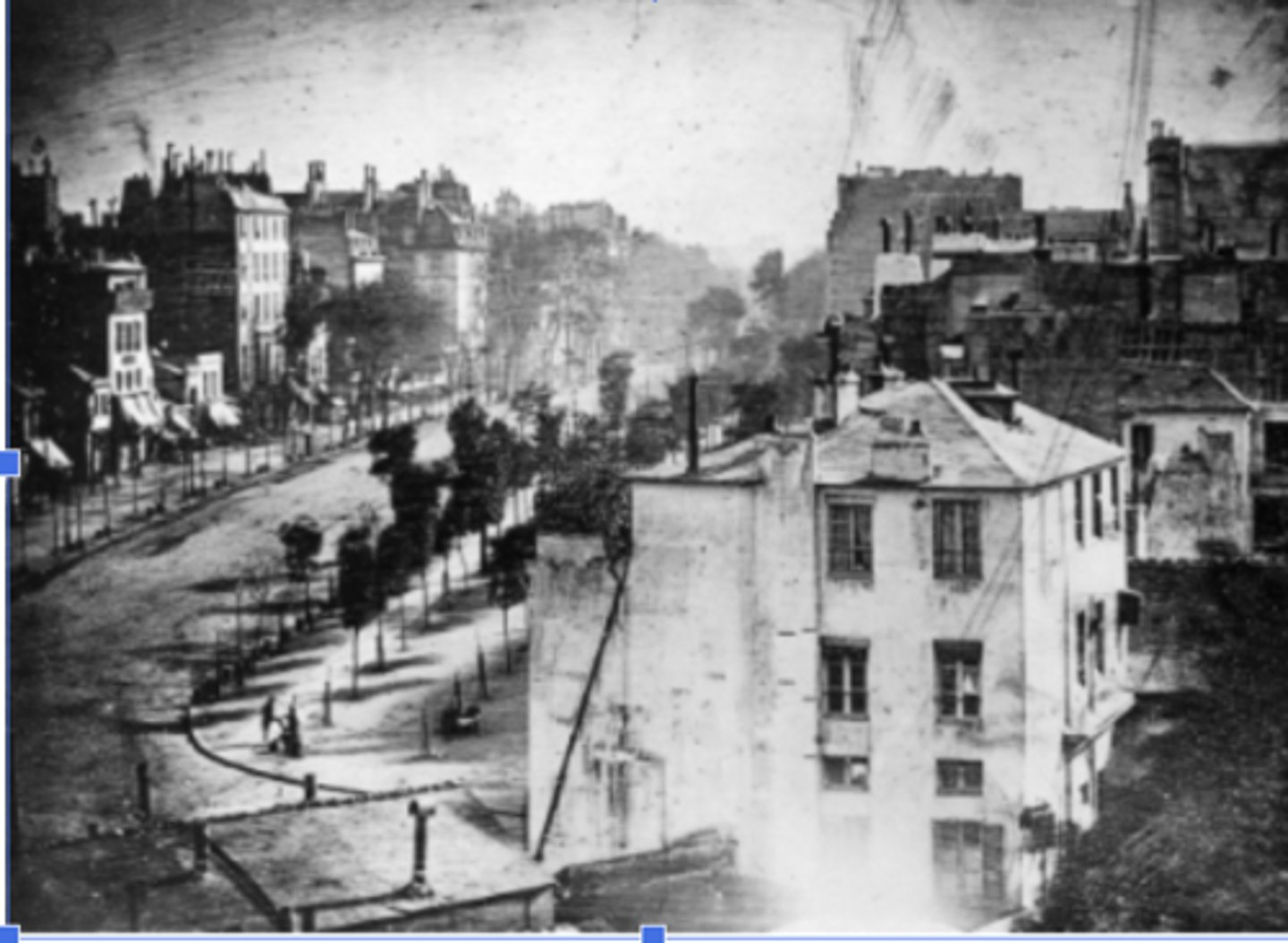
View from the window at Le Gras, Joseph Nicéphore Niepce
The first picture, taken by mechanical means, was the first photograph
First representation of people in an image by Louis Daguerre ( Daguerrotype)- takes a long time to make this image
French artist
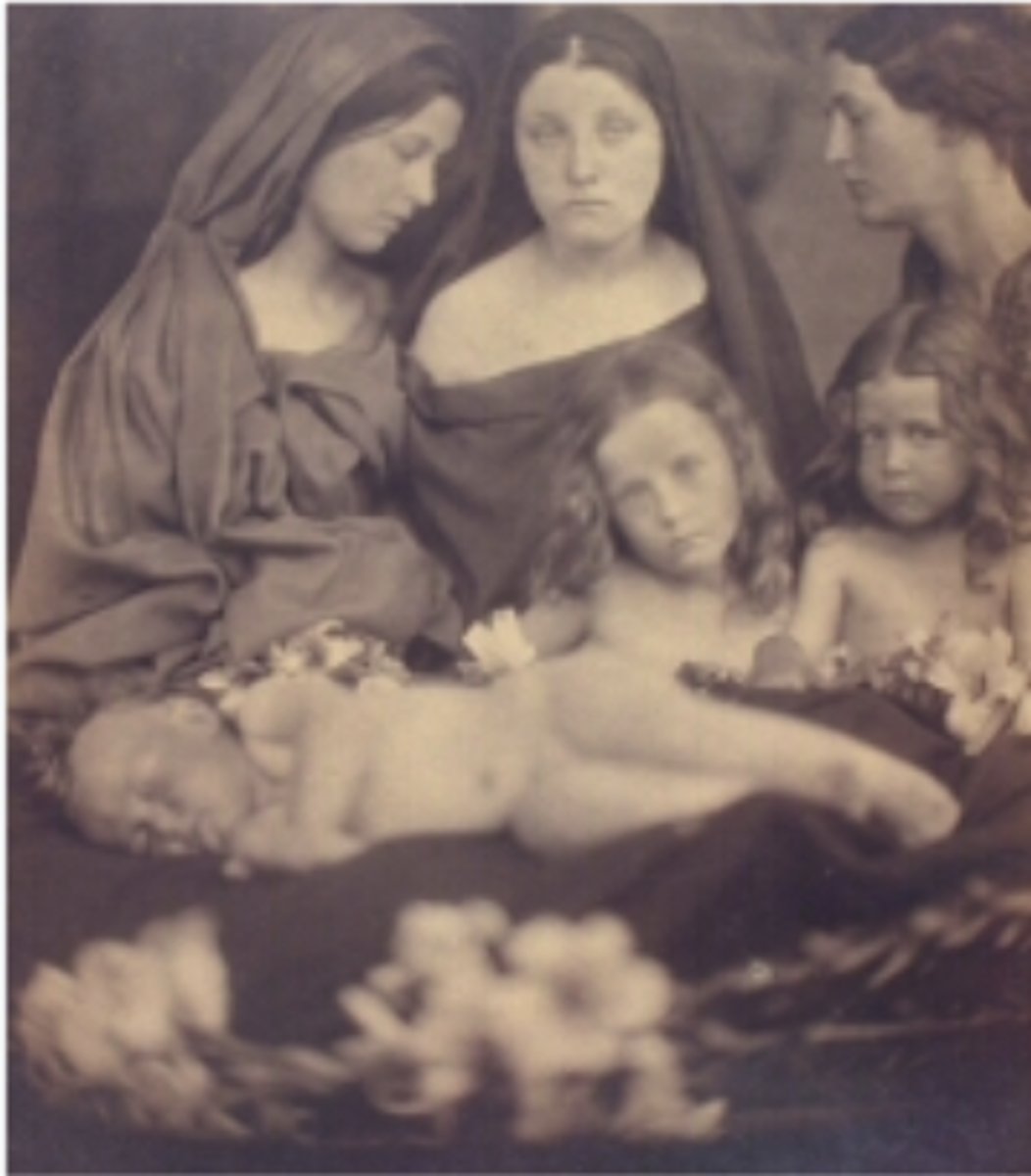
sister spirits, Julia Margaret Cameron
Albumen print
1865
Known for- romantic compositions
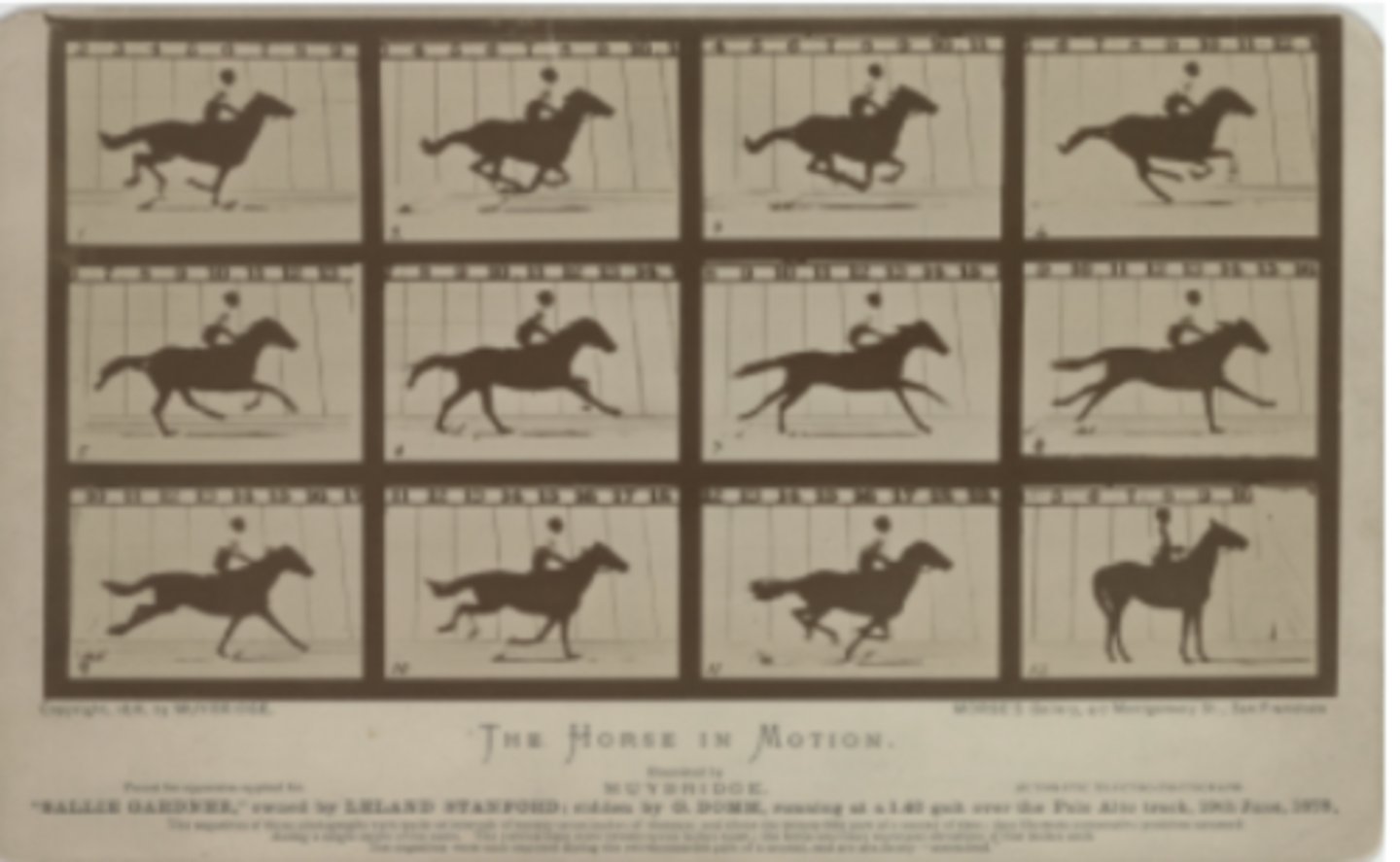
The horse in motion, Eadweard Muybridge
1878 C.E. Albumen print
Muybridge spent the rest of his career improving his technique, making a huge variety of motion studies, lecturing, and publishing. As a result of his motion studies, he is regarded as one of the fathers of the motion picture. Muybridge's motion studies showed the way to a new art form.
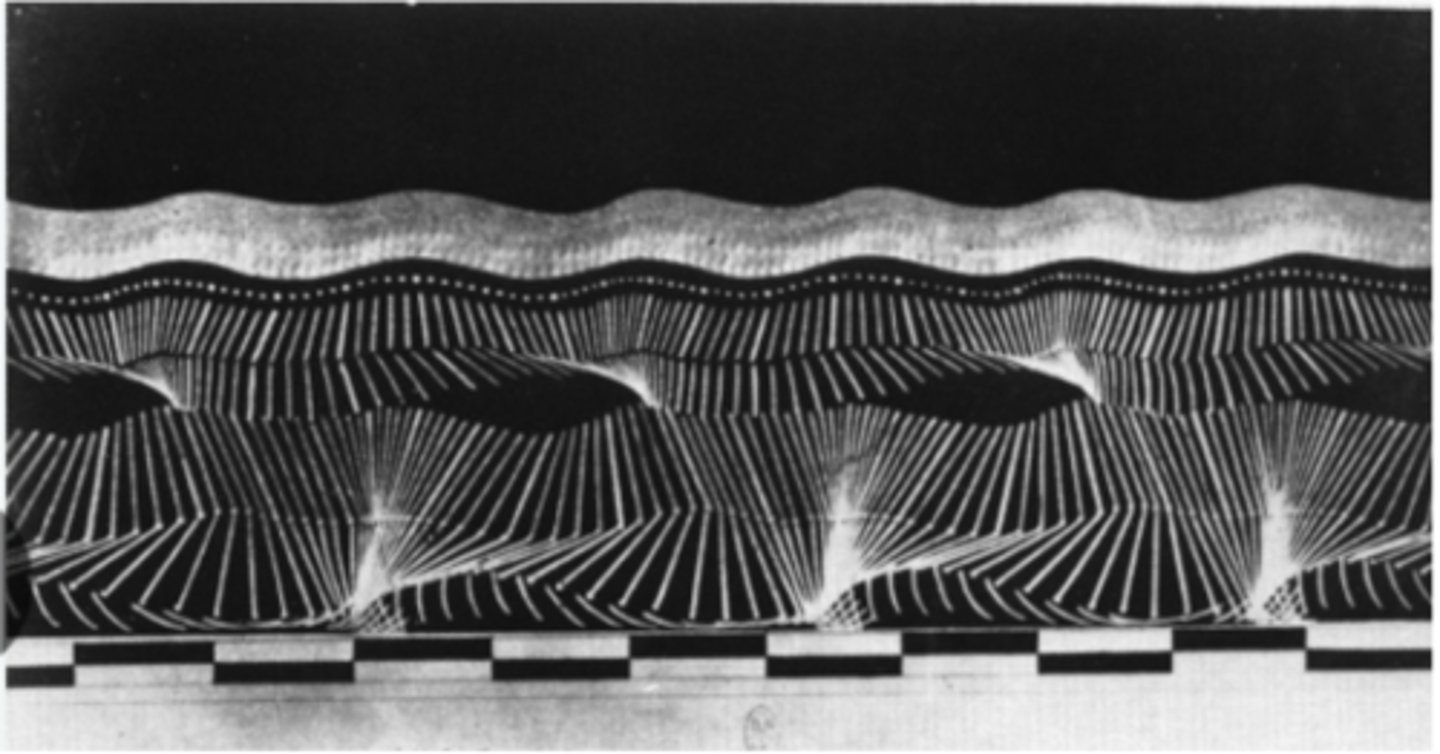
Joinville soldier walking, Etienne- Jules Marey
Geometric Chronophotopgraph
A series of slanted gray lines and a row of dots appear against a black background in wavy bands that reach the side edges of the picture plane. A thick gray stripe undulates along the top
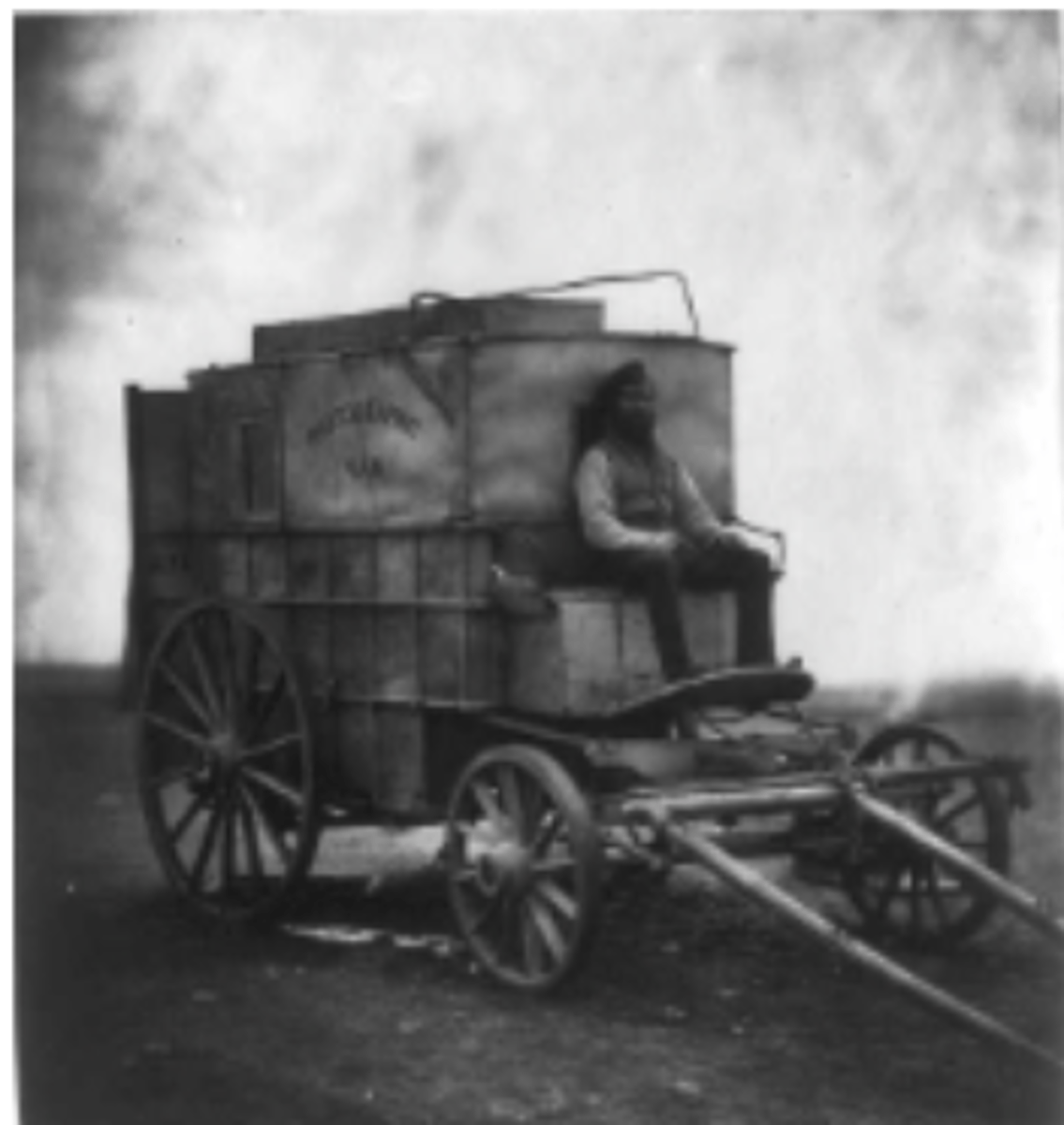
The artist van, Roger Fenton
Salted paper print
Library of Congress
Photography studio on wheels
pro- war
He is most famous for documenting the Crimean War (1855) as one of the first war photographers, creating powerful, staged, and unstaged images of, but not directly depicting, death and battlefields.
still life
bottom of the hierarchy

