Carbohydrates (unit 2)

0.0(0)
studied byStudied by 0 people
0.0(0)
call with kaiCall with Kai
learnLearn
examPractice Test
spaced repetitionSpaced Repetition
heart puzzleMatch
flashcardsFlashcards
GameKnowt Play
Card Sorting

1/65

encourage image

There's no tags or description

Looks like no tags are added yet.

Name
Mastery
Learn
Test
Matching
Spaced
Call with Kai

No study sessions yet.

66 Terms

1
New cards

What are the four major classes of carbohydrates and formula?

monosaccharides : single carbonyl group and 2/more hydroxyl groups

.

disaccharides

.

polysaccharides

.

oligosaccharide: sugars linked by glycosidic bonds

.CnH2Oy

2
New cards

Role of carbohydrates

-Chemical energy( glucose, starch, glycogen)

.

-supportive structures(Cellulose, crustacean shells)

.

-Essential components of nucleic acids

3
New cards
What are monosaccharides and what is their general formula?
Simple sugars that cannot be broken down further; general formula (CH₂O)ₙ
4
New cards

How are monosaccharides named ?

-based on number of C present

.

-the first part of the name represents the number of carbon atoms present and the suffix –ose then added

5
New cards
What three criteria are used to classify monosaccharides?

-Number of carbon atoms

.

-position of carbonyl group

.

-chirality of molecule
6
New cards
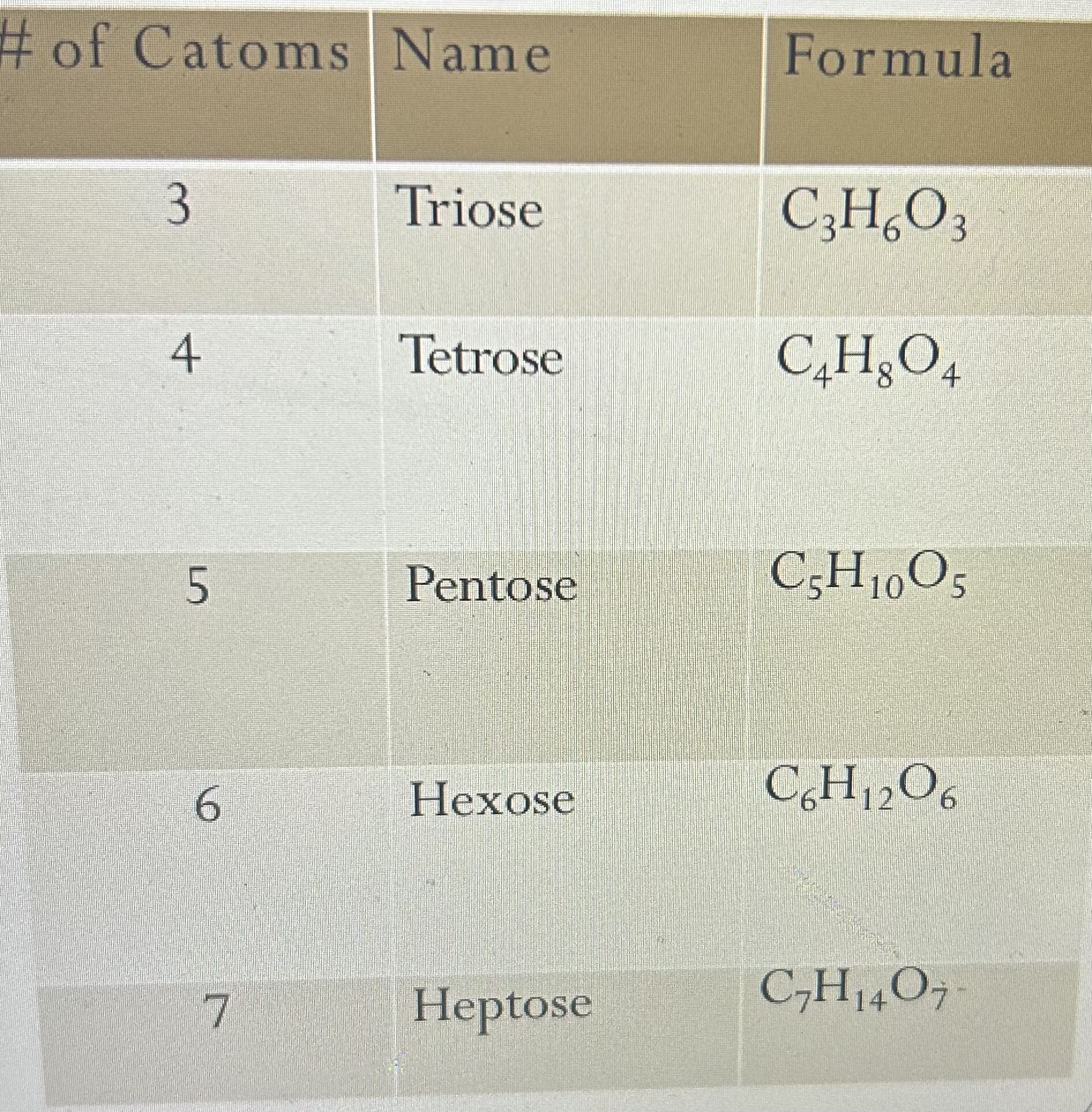
What are the names and molecular formulas of monosaccharides with 3–7 carbons?
Triose C₃H₆O₃; Tetrose C₄H₈O₄; Pentose C₅H₁₀O₅; Hexose C₆H₁₂O₆; Heptose C₇H₁₄O₇
7
New cards
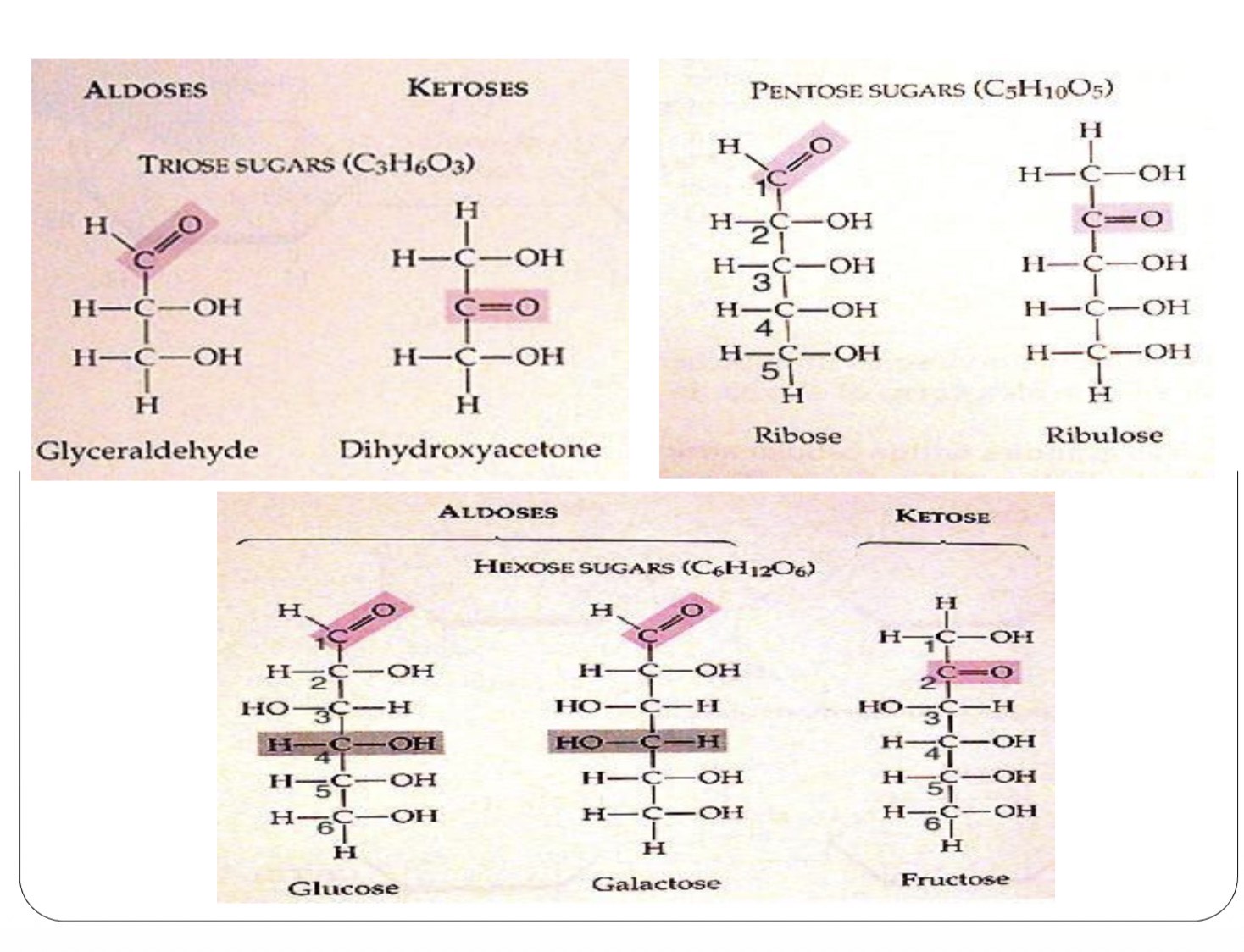
How does the position of the carbonyl group classify monosaccharides?

Terminal carbonyl forms an aldose; molecule aldehyde

.

internal carbonyl forms a ketose molecule ketone
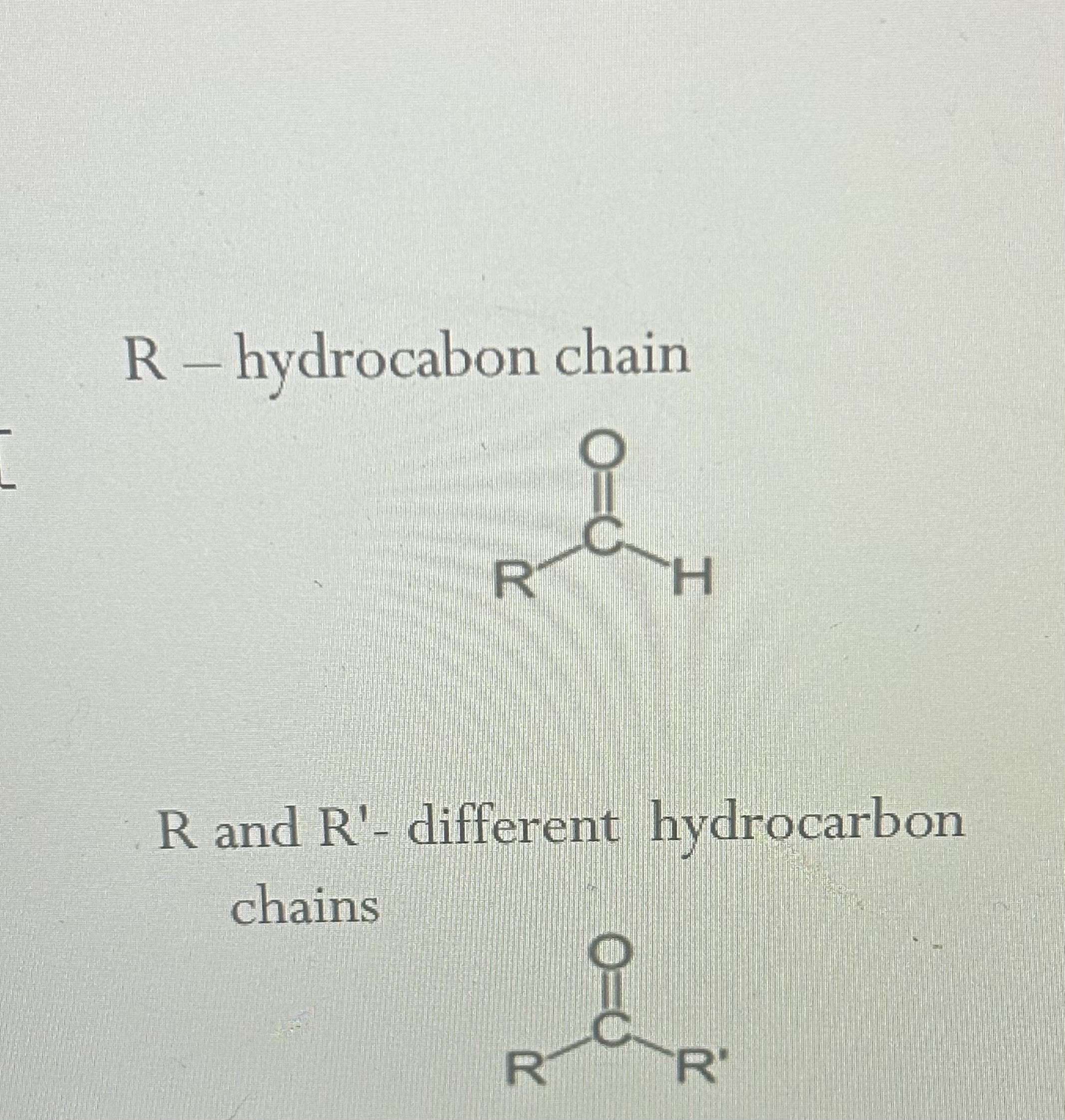
<p>Terminal carbonyl forms an aldose; molecule aldehyde</p><p>.</p><p> internal carbonyl forms a ketose molecule ketone</p>
8
New cards

Egs of aldoses and ketose

knowt flashcard image
9
New cards
What does chirality mean in monosaccharides and what makes a carbon chiral?
Not superimposable on mirror image; carbon bonded to four different groups
10
New cards

How are D- and L- monosaccharides distinguished? bk

By spatial arrangement around the chiral carbon; D or L written before the sugar name
11
New cards

diagram bk

bk

12
New cards
What two structural forms can monosaccharides adopt and how are they represented?
Linear form as Fischer projection and ring form as Haworth projection
13
New cards
Which monosaccharides predominantly exist in ring form and why?
Hexoses because they form stable 5- or 6-membered rings
14
New cards
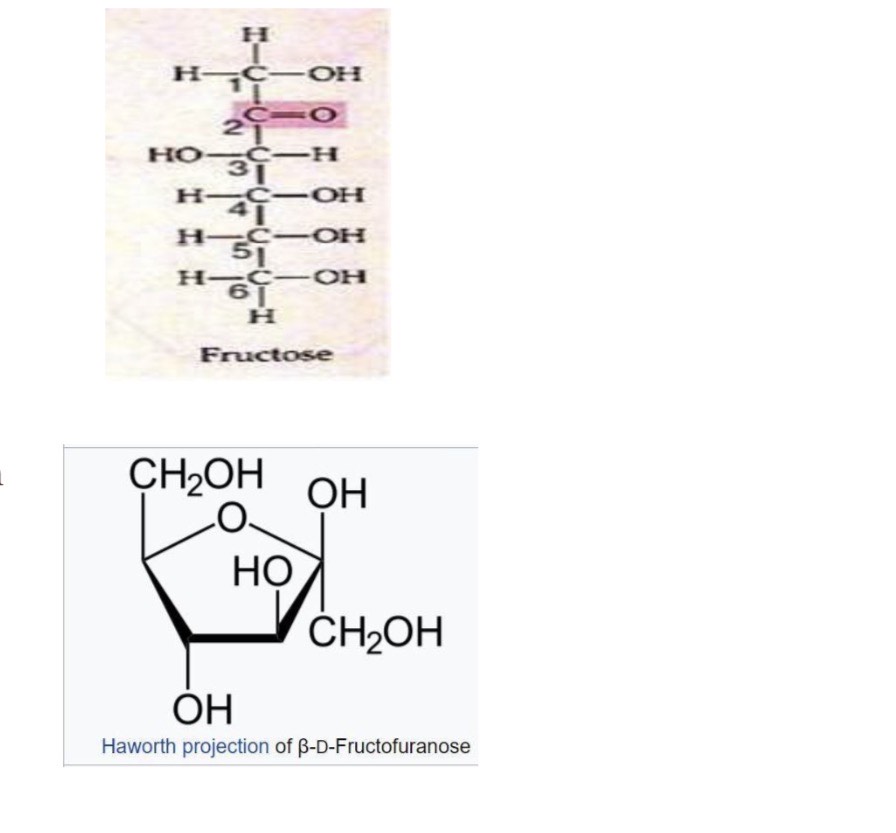
What is the difference between pyranose and furanose rings with examples?

-Pyranose is a 6-membered ring (glucose and galactose)

.

-A five-membered ring is called a Furanose e.g. fructose
15
New cards
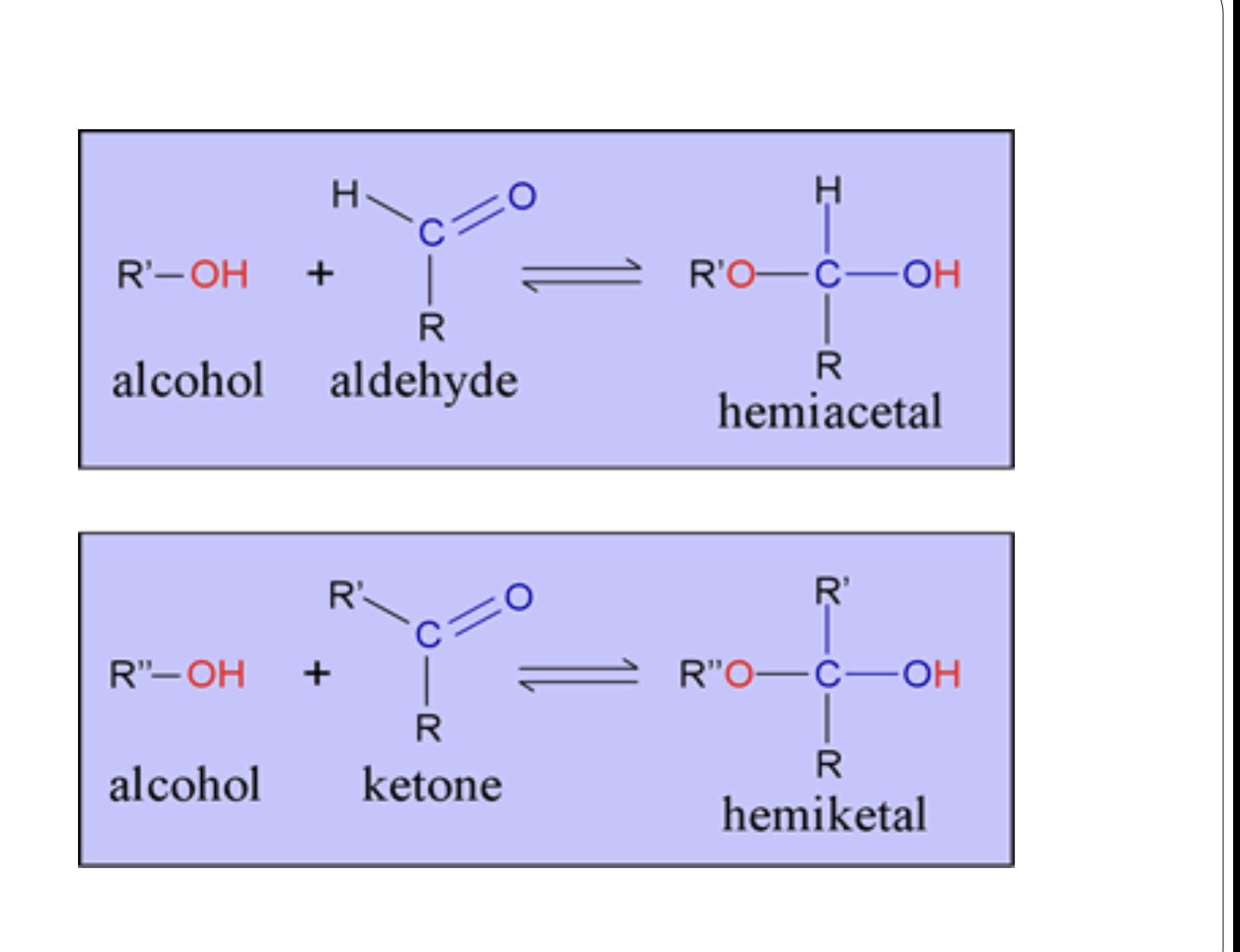
What forms when alcohol reacts with the carbonyl group of a monosaccharide?
A hemiacetal or hemiketal formed under acid or base catalysis
16
New cards

Why are Hemiacetals/hemiketals are usually unstable molecules and in an equilibrium mixture

Since the reaction is reversible they can easily break back down into a carbonyl compound and alcohol as the reaction is reversible

17
New cards

When the hydroxyl is apart of the same molecule with the carbonyl group what occurs

-A 5 or 6 membered ring can be formed

.

-The tendency for this reaction to occur in a six-carbon aldose is greater because the hydroxyl and aldehyde functional groups are contained within the same molecule, and the intramolecular reaction can produce a relatively stable 6-membered ring

18
New cards
Why are cyclic hemiacetals more stable in monosaccharides?
They form stable intramolecular 5- or 6-membered rings
19
New cards

What are α and β anomers and how do they differ?

Isomers differing in OH orientation at the anomeric carbon (Carbon to the right of O2)

20
New cards

What are the rules for converting a Fischer projection to a Haworth projection?bk

bk

21
New cards

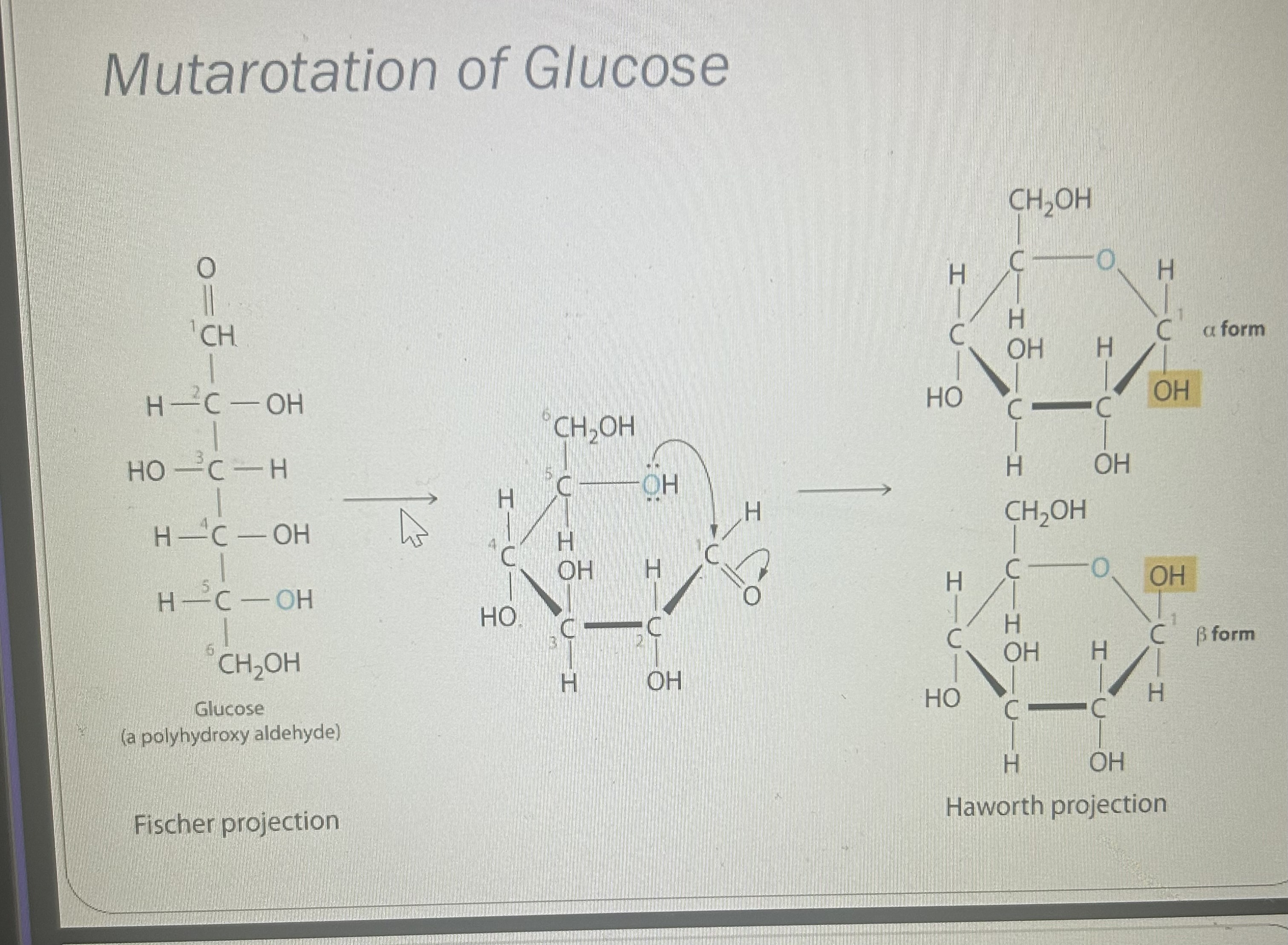
What is mutarotation and in which sugars does it occur?

-The gradual change in specific rotation

.

-Interconversion of α and β anomers in reducing sugars
<p>-The gradual change in specific rotation</p><p>.</p><p>-Interconversion of α and β anomers in reducing sugars</p>
22
New cards

What is the equilibrium ratio of glucose anomers in solution?

Approximately 36% α-glucose and 64% β-glucose(more stable as two OH groups allow electron repulsion allowing more space

23
New cards

How are glycosides formed and what bond is created?

Hemiacetal reacts with alcohol to form acetal or ketal ;

.

- O-glycosidic bond (from anomeric carbon to the OR- group)

.

-This bond links sugars together to form disaccharides and polysaccharides

24
New cards

Another name for glycosides and show acetal reaction bk

acetal (bk)

25
New cards

Why do glycosides not undergo mutarotation and how are they hydrolyzed?

Acetal form is locked

an acetal unlike the hemiacetal is no longer in equilibrium with the open-chain carbonyly containing compound

; hydrolyzed in aqueous acid to yield an alcohol and monosaccharide

26
New cards
How are glycosides named?
Alkyl group name followed by carbohydrate name ending changed from -e to -ide
27
New cards
How are monosaccharides reduced to alditols and what reagents are used?
Carbonyl reduced to hydroxyl using H₂ with catalyst or sodium borohydride
28
New cards
What happens when ketoses are reduced?
Two diastereomeric alditols are formed (e.g. fructose → sorbitol and mannitol)
29
New cards
How are alditols named and give an example?
Drop “-ose” and add “-itol”; glucose → glucitol (sorbitol)
30
New cards
Where is sorbitol found and what is its biological significance?
Fruits; sugar substitute; excess causes cataracts due to aldose reductase activity
31
New cards
What defines a reducing sugar and what product is formed on oxidation?
A sugar that oxidizes to form an aldonic acid
32
New cards
What is the difference between aldonic acids and aldaric acids?
Aldonic acids form by oxidation of aldehyde group; aldaric acids form when both ends are oxidized
33
New cards
How are uronic acids formed and give important examples?
Oxidation of C-6 primary alcohol; glucuronic acid (detoxification)
34
New cards
How do reducing sugars react with Benedict’s reagent?
Reduce Cu²⁺ to form a carboxylic acid
35
New cards
Compare glucose
fructose
36
New cards
What are disaccharides and how are they formed?
Two monosaccharides linked by an O-glycosidic bond via condensation
37
New cards
What glycosidic linkages commonly occur in disaccharides?
1→4 and 1→6 glycosidic bonds
38
New cards
What monosaccharides make up sucrose and is it a reducing sugar?
Glucose and fructose; non-reducing
39
New cards
What glycosidic bond forms sucrose?
α-1
40
New cards
What is invert sugar and why is it sweeter than sucrose?
Hydrolyzed sucrose producing glucose and fructose; fructose is sweeter
41
New cards
What are the biological effects of sucrose consumption?
Rapid energy release; excess causes tooth decay and chronic disease risk
42
New cards
What is lactose composed of and why is it a reducing sugar?
Glucose and galactose; free anomeric carbon present
43
New cards
Which enzyme digests lactose and what causes lactose intolerance?
Lactase; deficiency leads to intolerance
44
New cards
How is lactose used industrially?
Pharmaceutical diluent
45
New cards
What is maltose composed of and is it fermentable?
Two glucose units; fermentable by yeast
46
New cards
What glycosidic bond is present in maltose?
α-1
47
New cards
What are oligosaccharides and their general functions?
3–10 monosaccharides; receptors
48
New cards
What are raffinose and stachyose and where are they found?
Raffinose is trisaccharide; stachyose is tetrasaccharide; found in beans and vegetables
49
New cards
How are oligosaccharides related to blood groups?
Surface oligosaccharides determine blood groups A
50
New cards
What are polysaccharides and their two main categories?
High-molecular-weight carbohydrates; homopolysaccharides and heteropolysaccharides
51
New cards
What defines homopolysaccharides and give examples?
Yield one monosaccharide on hydrolysis; starch
52
New cards
What are the two components of starch and their structures?
Amylose (straight chain) and amylopectin (branched)
53
New cards
Which enzymes digest starch and what products are formed?
α-amylase and α-1
54
New cards
How does glycogen differ structurally from starch?
Glycogen is more highly branched
55
New cards
Why is glycogen biologically important?
Rapid energy storage; supports endurance and muscle activity
56
New cards
What glycosidic linkage is found in cellulose and why is it significant?
β-1
57
New cards
Why is cellulose important in human nutrition and ruminants?
Dietary fiber for humans; digested by microbes in ruminants
58
New cards
What defines heteropolysaccharides?
Yield more than one type of monosaccharide on hydrolysis
59
New cards
Describe the occurrence
structure
60
New cards
What is chondroitin sulfate and why is it important?
Cartilage component; resists compression; osteoarthritis treatment
61
New cards
Where is heparin found and what is its function?
Liver and lungs; anticoagulant preventing blood clots
62
New cards
What is chitin made of and where is it found?
β-1
63
New cards
What is chitosan and list its applications
Soluble fiber; antifungal
64
New cards
What are major industrial uses of cellulose?
Paper
65
New cards
What are key industrial uses of starch?
Papermaking
66
New cards
What are industrial uses of chitin?
Stabilizers