Genetics Bio Test
 Call Kai
 Learn
Learn Practice Test
 Spaced Repetition
 Match
Match Flashcards
 Knowt Play
1/17

There's no tags or description
Looks like no tags are added yet.
Name | Mastery | Learn | Test | Matching | Spaced | Call with Kai |
|---|
No analytics yet
Send a link to your students to track their progress
18 Terms
Genes & Alleles
DNA’s nitrogenous bases code for genes => Alleles are different versions of homologous genes
Every person will have two alleles for every gene - one from each parent
Ex: Someone as two blue alleles for their eye color gene resulting in blue eyes
Mendel’s Law
Gregor Mendel’s pea plant experiment resulted in three laws of inheritance
Law of Dominance
A dominant allele will express itself over a recessive allele
2 main types: dominant and recessive
Law of Segregation
Genes will segregate equally into gametes - all offspring have an equal likelihood of inheriting either allele from a parent
Law of Independent Assortment
The assortment of chromosomes for one gene does not affect the assortment of chromosomes for other genes
Law of Dominance
Dominant: Allele that will always be physically expressed if present
Even if only one out of two
Recessive: Allele that will only ever be expressed if the dominant allele is NOT present
Ex: ABSENCE of a blue eye allele to get blue or green eyes
Needs two
Zygosity
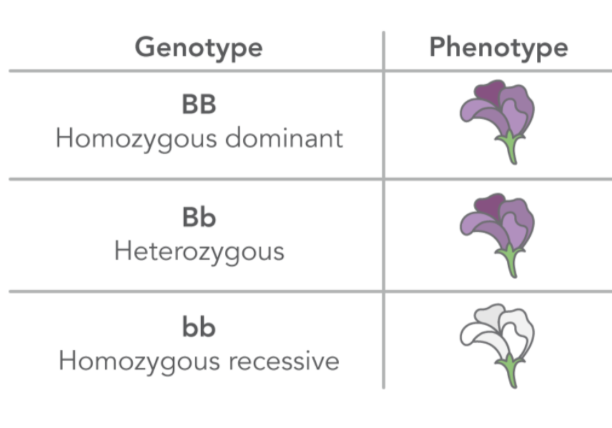
Homozygous: Both of your alleles for a gene are dominant or they are both recessive
Homozygous dominant: BB
Homozygous recessive: bb
Heterozygous: You have one dominant and one recessive allele for a gene
Heterozygous: Bb
The only possibility to express the recessive trait is to be homozygous recessive
Genotype vs. Phenotype
Genotype: The combination of alleles you have for a gene
The actual letters => “Bb”
Phenotype: The physical expression of the gene
Brown hair, green eyes, etc.
Generations
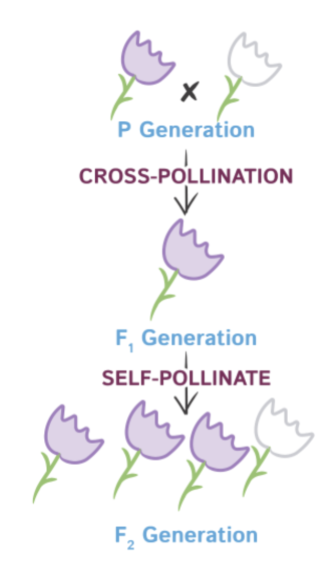
P generation = Parent generation
F1 generation = First generation of offspring from parents
P x P
F2 generation = Second generation of offspring
F1 x F1 = F2
Monohybrid Cross (looking at one specific gene)
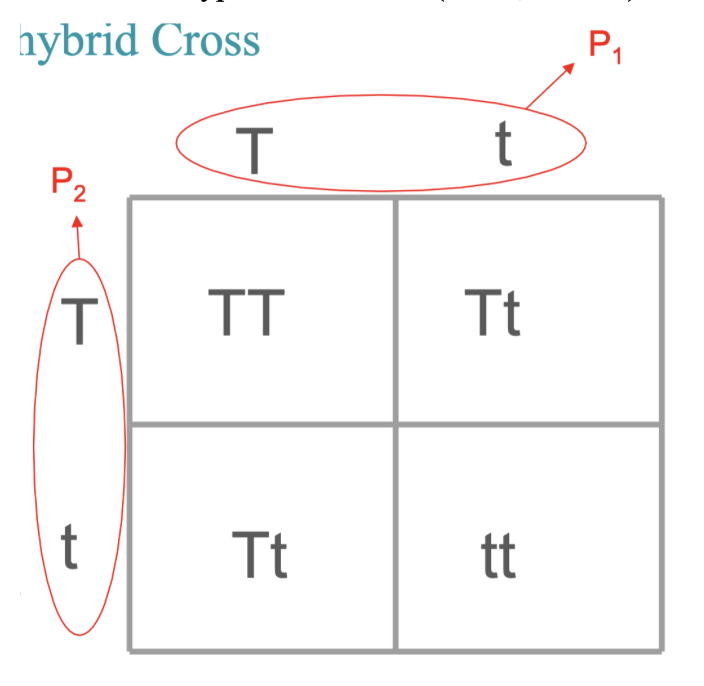
Cross of two parents
T = tall
t = short
Tt x Tt (parent one x parent two)
Genotypic Ratio => 1:2:1
Phenotypic Ratio => 3:1 (3 Tall, 1 Short)
PICTURE DETAILS
All 4 of these possibilities are F1
3 F1’s could be tall bc three have dominant, 1 could be short bc two recessive
Dominant allele is always written first
Dihybrid Crosses
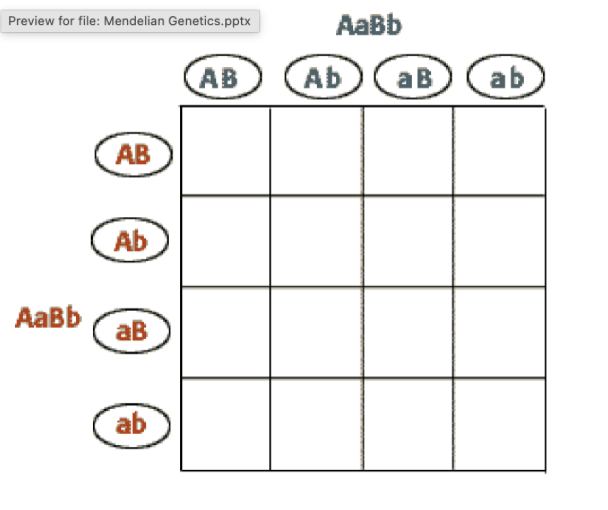
Cross of two parents, analyzing two genes at the same time
AaBb x AaBb
Dihybrid Axis Inputs
Dominant - Dominant: at least one big A, and one big B
If both parents are heterozygous for both genes, the ratio for the phenotypic ratio 9:3:3:1
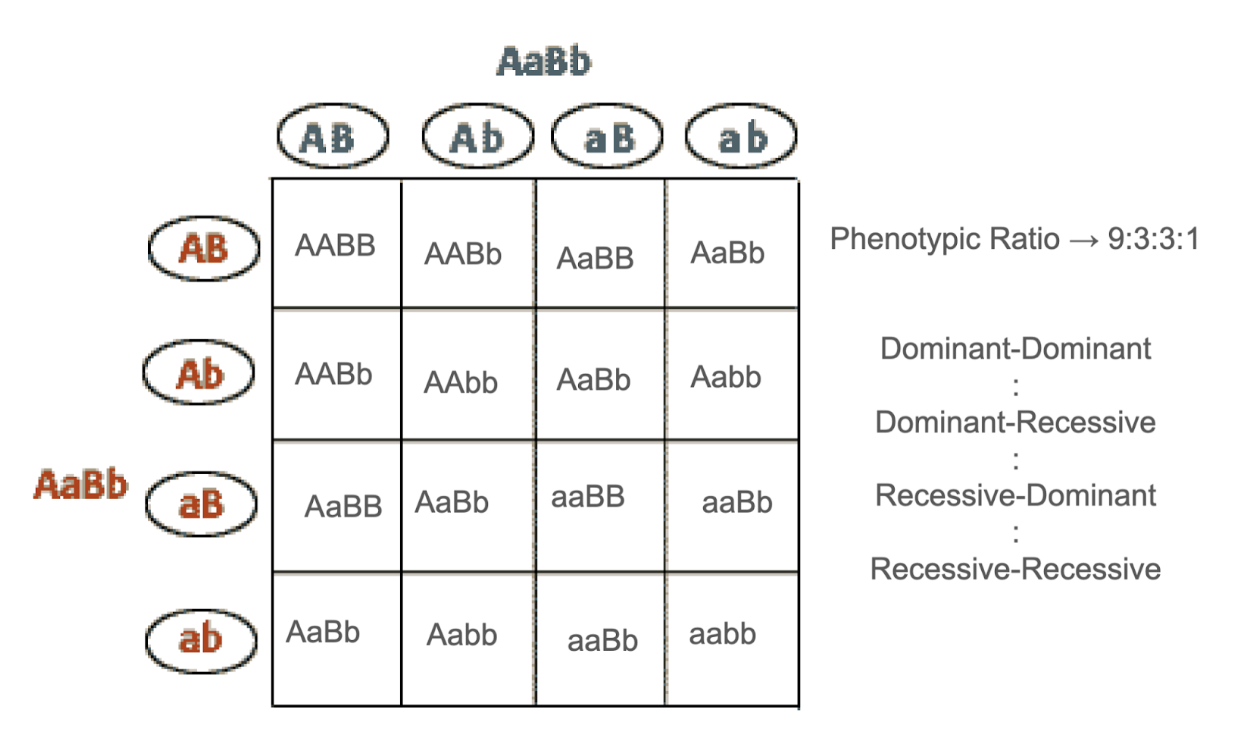
Dihybrid Cross - (ONLY) Probability (decimal)
Probability can be used to determine the possibility of a specific combination of genotypes
Steps:
1. Preform a monohybrid cross for each individual gene and determine the odds of gettin each genotype (fraction)
2. Multiple offs together
3. Answer reflects odds of an individual having ___ trait and ___ trait
“AND” = MULTIPLICATION, “OR” = ADDITION
Non-Mendelian Genetics (Complex Inheritance)
Exceptions to Mendel’s Laws
Law of Dominance
Law of Segregation
Law of Independent Assortment
These are not always true - types of exceptions include …
Incomplete dominance
Codominance
Multiple Alleles
Sex-linked
Polygenic inheritance
Linked genes
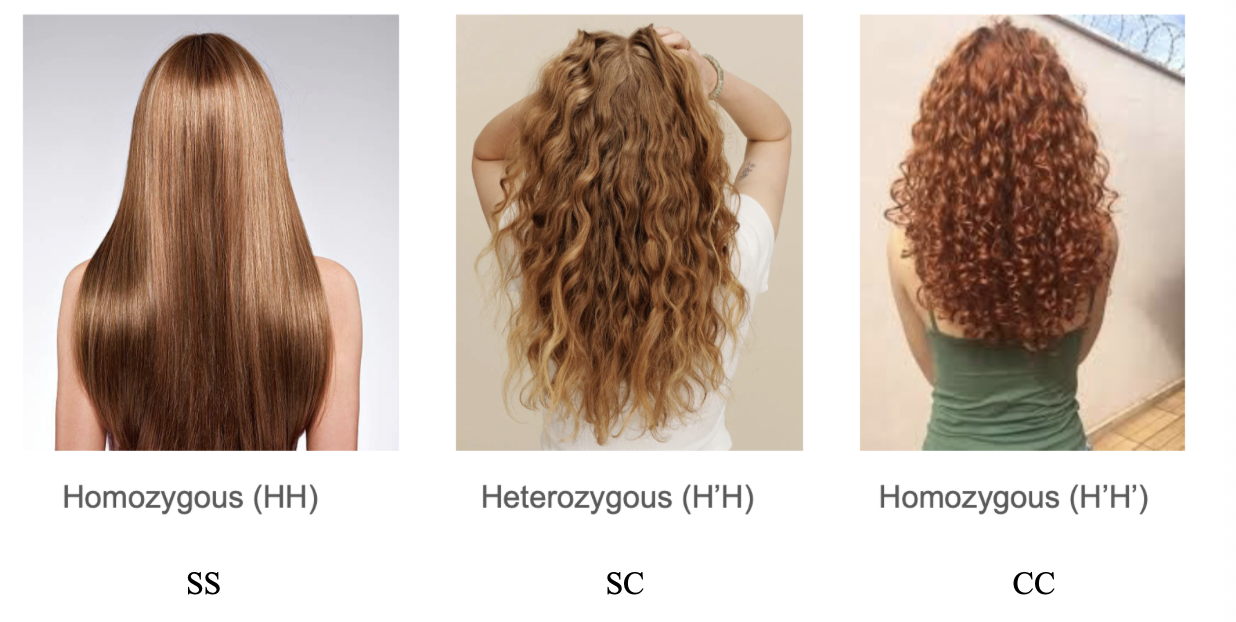
Incomplete Dominance
A heterozygous phenotype is a mixture of the two homozygous phenotypes - neither allele is completely dominant or completely recessive (blended)
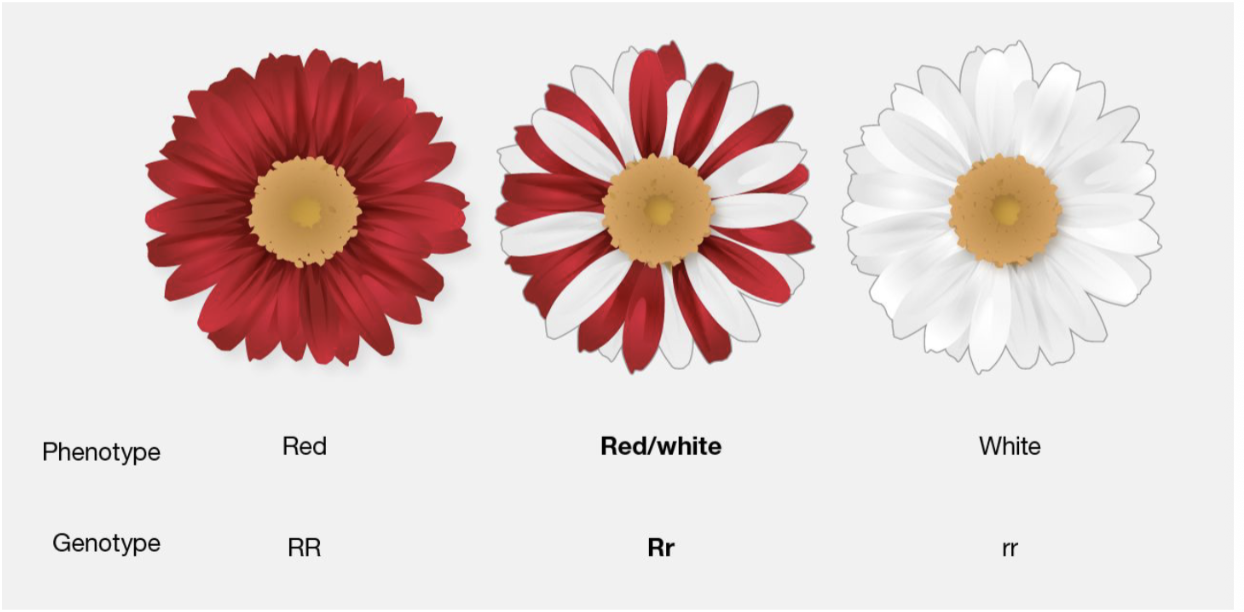
Codominance
A heterozygous phenotype fully and separately expresses both alleles (spotted)
No watered down to pink - fully red / white (both colors fully dominant)
Ex: Spotted animals
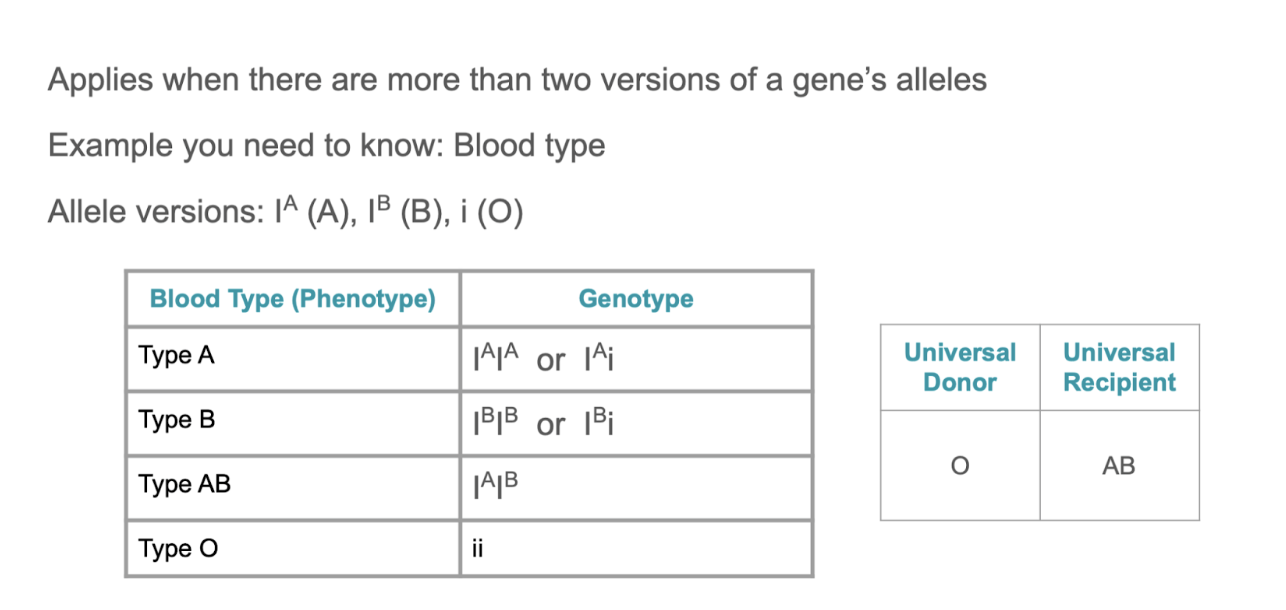
Multiple Alleles
A and B = dominant
O = recessive
Blood donations:
O: universal donor (can donate to anybody)
AB = can receive from anybody bc they have both
Sex-Linked Traits
Traits that are passed down on the X or Y chromosome
X-Linked alleles
Recessive
People with XX chromosomes need two copies of the allele to express the trait
If heterozygous, we consider these people “carriers” - they do not express the trait but have the ability to pass it to offspring
People with XY chromosome only need one copy of the allele to express the trait
Making the X-Linked traits much more common in males than females
X = Does not have trait
X’ = Trait Present
X’X = Carrier
Polygenic Inheritance
Some traits are controlled by multiple genes and the combination of alleles on those genes determine phenotype (range)
Polygenic = range (trait controlled by multiple genes)
Most things are polygenic inheritance
Ex: Height, skin color
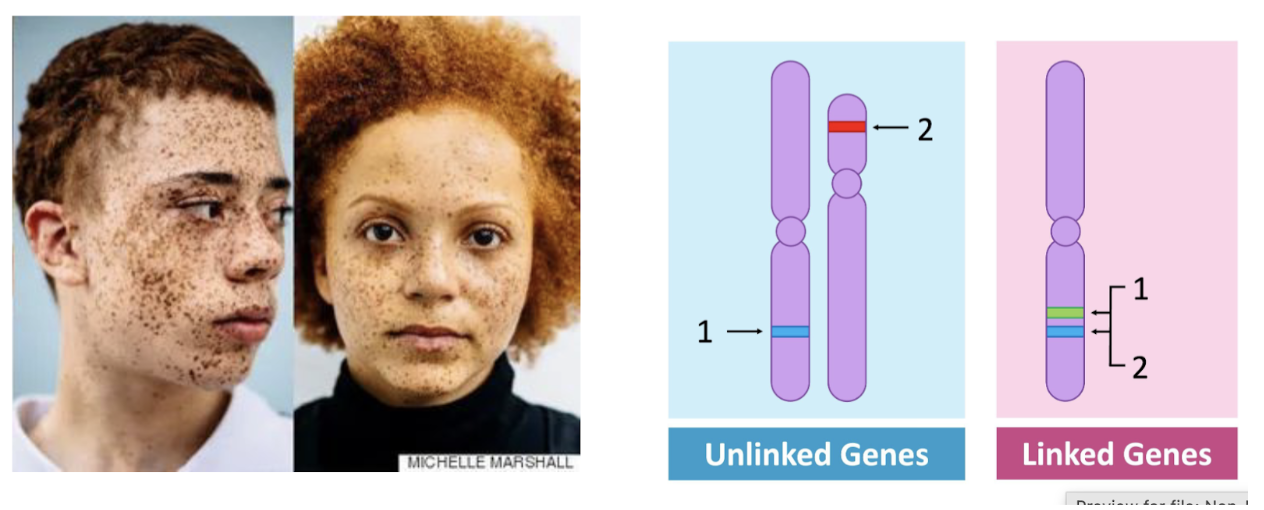
Linked Genes
Some traits are almost always found together. This happens because two genes are incredibly close to each other on the same chromosome making the chances that they will be split up during crossing over very small
Red hair and freckles
Almost never broken apart during meiosis (bc so close together there is a lesser chance)
The further apart two genes are, the more likely they are to break apart during crossing over
Autosomal
NOT sex-linked

