honors marine biology
 Studied by 0 people
 Call Kai
 Learn
Learn Practice Test
 Spaced Repetition
 Match
Match Flashcards
 Knowt Play
1/66

Earn XP
Description and Tags
blub blub
Name | Mastery | Learn | Test | Matching | Spaced | Call with Kai |
|---|
No analytics yet
Send a link to your students to track their progress
67 Terms
what are the different ways we can observe the ocean?
SCUBA, submersibles, ROV, AUV, and Eye in the Sea
what does the term salinity mean?
the the total amount of salt dissolved in water
what is the average salinity of the ocean?
about 35 parts per thousand
how would a dramatic increase or decrease in salinity effect ocean life?
it forces organisms to use more energy for osmoregulation
what factors affect the density of water in the ocean?
temperature
hydrogenous
formed from dissolved minerals in seawater
cosmogenous
formed by particles from outer space
biogenous
made from the remains of once living organisms
terrigenous
produced from continental rocks
when light penetrates the ocean, which color is absorbed first?
red light
when light penetrates the ocean, which color is absorbed last?
blue light
the basic structure of water
molecule
the types of atoms water consists of
hydrogen and oxygen atoms
the type of bonds that hold water together
hydrogen bonds
the different properties of water
solid, liquid, and gas
characteristics of the Coriolis Effect, wind patterns, and surface currents
the Coriolis Effect is when movement of air masses in the Northern Hemisphere go to the right, and in the Southern Hemisphere go to the left, it deflects wind patterns from the equator to the poles at 30° and 60° south, and surface ocean currents in each hemisphere are generated mostly by trade winds
thermoclines
zones of rapid temperature change
haloclines
regions where salinity increases rapidly
pycnoclines
regions where density increases rapidly
upwelling
either equatorial which is when surface water is carried by currents towards the poles; nutrient rich water from the depths replaces the water or coastal which is when water moves offshore due to Ekman transport, and nutrient-rich water from greater depths replaces the water
downwelling
when winds force oxygen-rich surface waters downward and along the continental shelf
how waves are created and affected by wind speed and fetch
waves are the result of a generating force and higher wind speeds create larger, more frequent, and more powerful waves
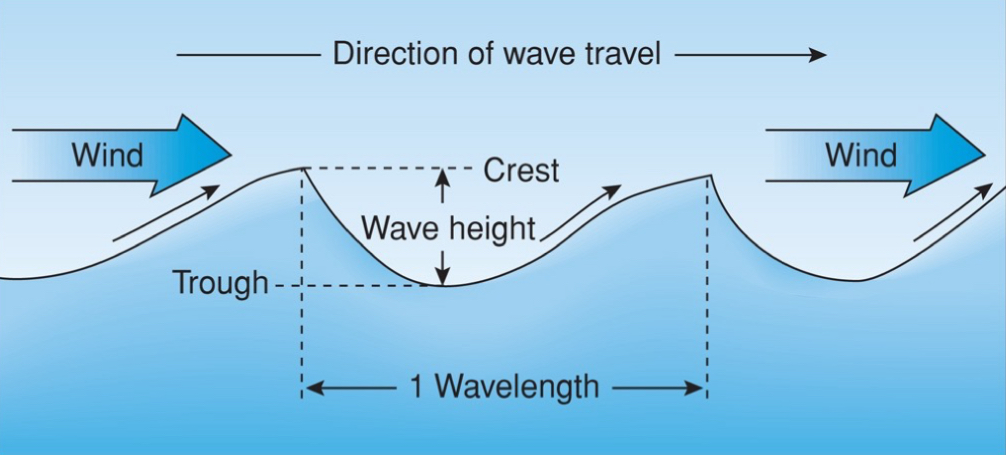
what are limiting factors and how do these limiting factors affect populations in an ecosystem?
limiting factors are environmental constraints that restrict how large a population can grow, preventing infinite growth and determining the ecosystem’s carrying capacity and they affect populations by slowing growth as resources dwindle, increasing competition, disease, or predation, and ultimately stabilizing the population size, forcing it to stay near the sustainable limit the environment offers
mutualism
when both benefit
commensalism
one benefits and the other is unaffected
parsitism
when one benefits and the other is harmed
the energy pyramid and different trophic levels
energy flows through trophic levels in an ecosystem, but only 10% of energy is transferred to the next level, with most lost as heat, meaning higher levels have less energy, fewer organisms, and typically only 4-5 levels exist
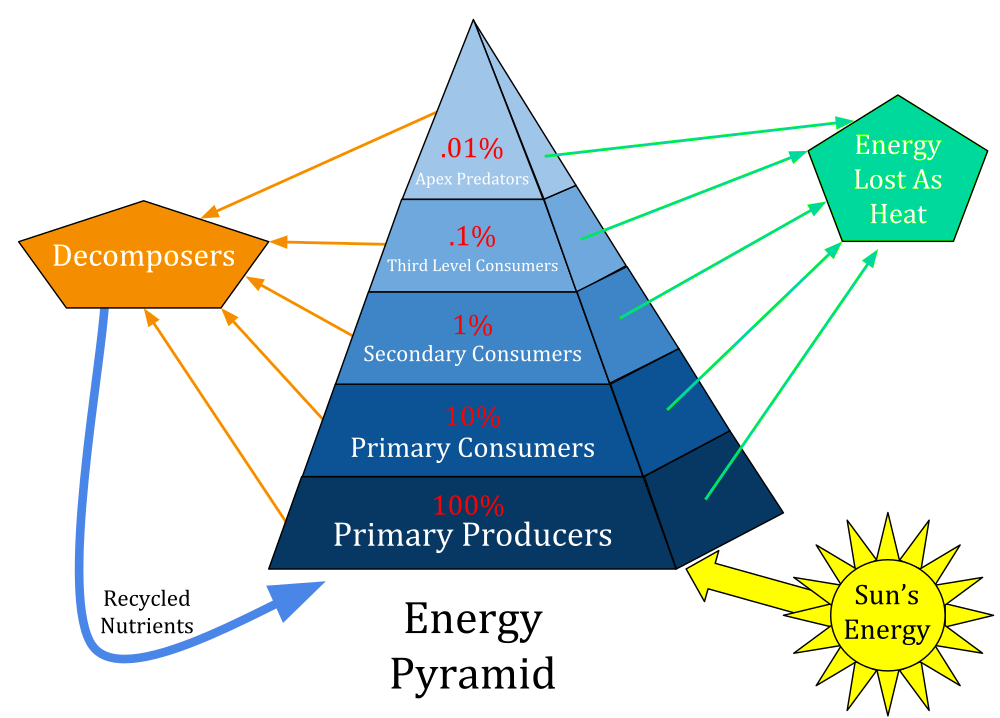
how the different organisms in the Ecosphere relate to each other to keep the system alive
organisms in an ecosphere maintain the system’s life through interconnected roles as producers, consumers, and decomposers, driven by energy flow and nutrient cycling, forming food webs through interactions like predation, competition, and symbiosis that regulate populations and recycle vital materials, creating a balanced, self-sustaining system where everything depends on something else for survival
bacteria
made of a cell wall, a cell membrane, and cytoplasm, have a simple structure consisting of a plasma membrane, cytoplasm, and ribosomes, often enclosed by a protective cell wall made of peptidoglycan, decompose organic matter to help digest food, found virtually everywhere on Earth, eat carbohydrates, organic compounds, and even some inorganic materials like methane or hydrogen, consume food by absorbing it through their cell membranes using mechanisms like transport proteins or by engulfing food particles through phagocytosis
archaea
made of cells with cytoplasm, a cell membrane, and a cell wall, features a unique cell membrane with ether-linked lipids, often an outermost S-layer of glycoproteins, and diverse cell shapes, perform unique functions like producing methane and ammonia oxidation, found almost everywhere on Earth, eat a wide variety of substances, including inorganic compounds like hydrogen and carbon dioxide, organic molecules such as proteins and carbohydrates, and even sunlight for a few species, can be autotrophic, heterotrophs, or mixotrophic
coccolithophores
made of tiny, star-shaped plates of calcium carbonate called coccoliths, perform phagocytosis, inhabit the upper layers of all the world’s oceans, get energy by photosynthesizing like plants and by consuming other organisms, consists of a single-celled organism enclosed by a protective shell called a coccosphere
diatoms
made of silica, have a rigid glassy cell wall made of silica called a frustule, which is made of two overlapping halves, produce a significant portion of the world’s oxygen through photosynthesis and serve as a foundational food source for marine life, found in nearly every aquatic habitat, eat through photosynthesis, where they create their own food using sunlight, carbon dioxide, and nutrients like nitrates and phosphates
dinoflagellates
primarily made of cellulose, feature two dissimilar flagella in perpendicular grooves that create a spinning motion, function as primary producers, contribute to marine food webs, form symbiotic relationships, and are responsible for bioluminescence found in all aquatic environments worldwide, eat through photosynthesis or by predation, consume small organisms like other plankton, diatoms, and bacteria
foraminifera
made of a shell called a test, act as a key part of the marine food web while also serving as valuable bioindicators for environmental studies, found in all marine environments, eat a variety of food particles, such as algae, bacteria, and detritus, by using their pseudopodia
radiolarians
made of silica, includes a siliceous skeleton, often intricate and made of silica, with a central capsule that divides the cell into inner and outer region, feed on bacteria and other plankton, participate in biogeochemical cycles, and form the basis of a food source for larger marine animals, found in all the world’s oceans, consume a wide variety of plankton, feed by extending their sticky, ray-like appendages, from their skeletons to trap and immobilize prey, which is then moved to a central cavity for digestion
phytoplankton
microscopic, plant-like organisms that perform photosynthesis to produce their own food, form the base of the food chain, and produce oxygen (coccolithophores, diatoms, dinoflagellates)
zooplankton
microscopic, animal-like organisms that consume phytoplankton and other zooplankton for energy, are primary or secondary consumers, and do not produce their own food
holoplankton
live their entire lives as plankton
meroplankton
only spend part of their life cycle as plankton
why are plankton so important?
they are the foundation of marine food webs and produce up to half of the world’s oxygen through photosynthesis
why are algae not considered to be plants?
they do not have leaves, stems, or roots
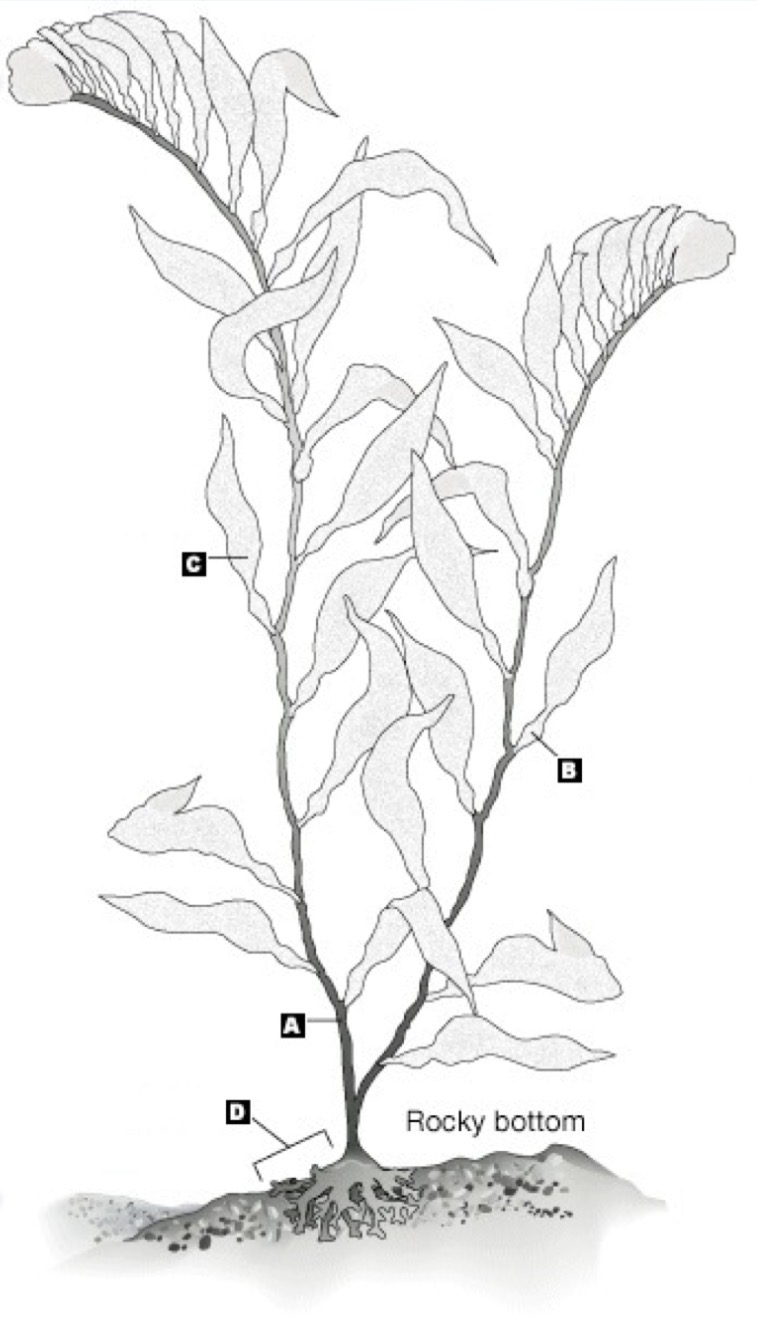
a
stipe
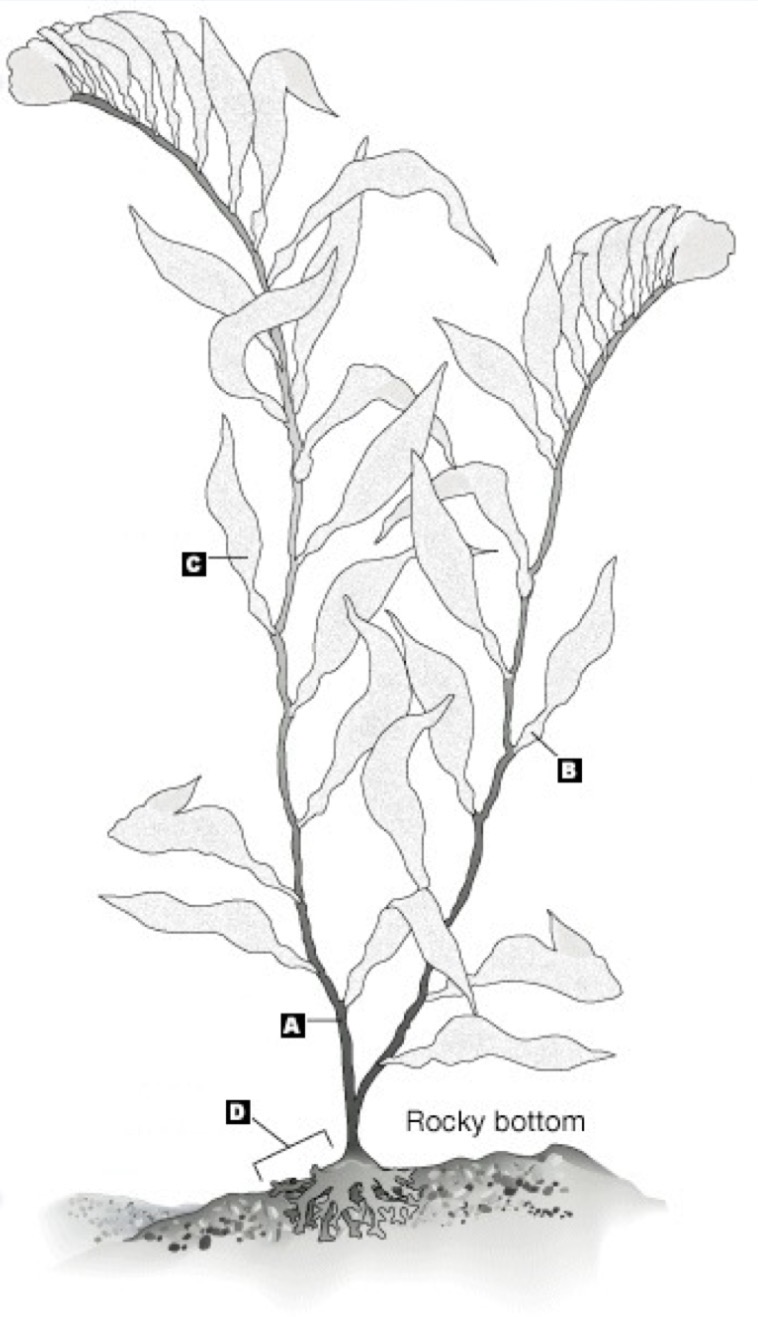
b
pneumatocyst
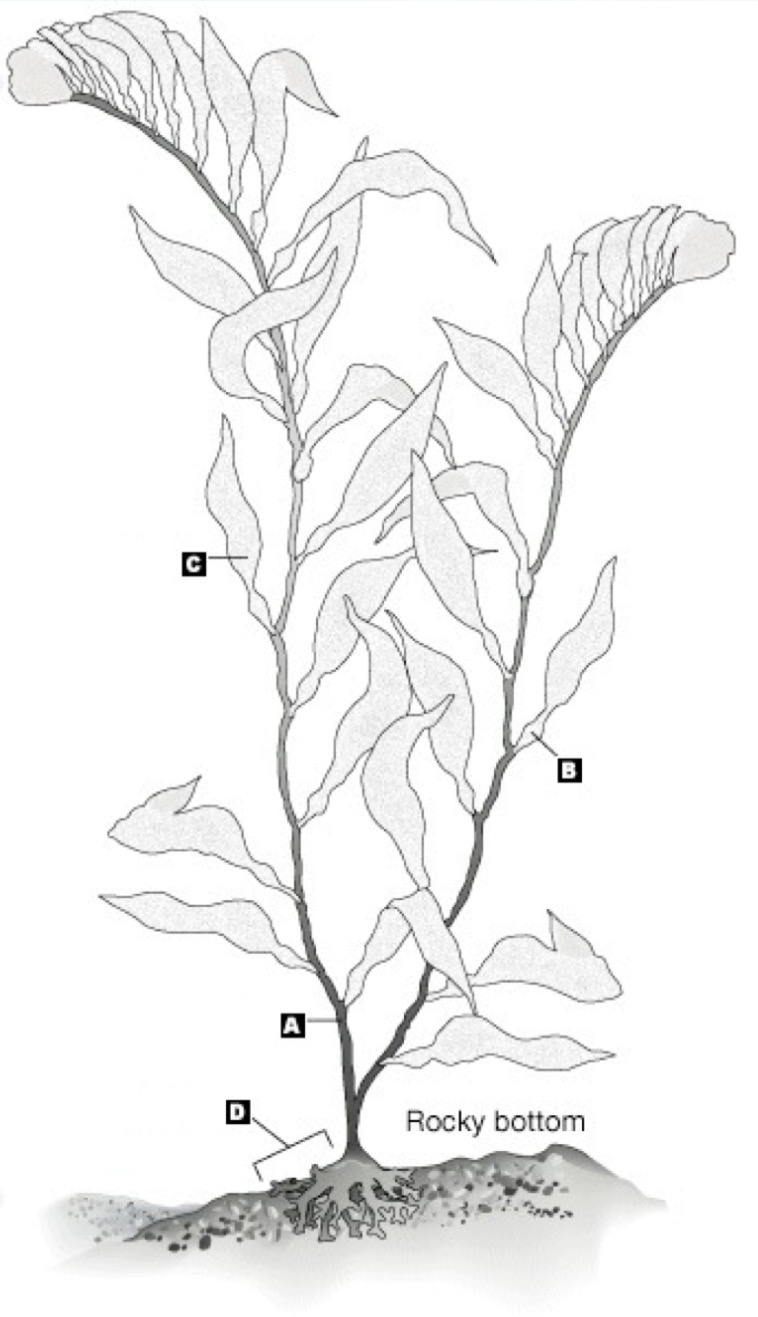
c
blade
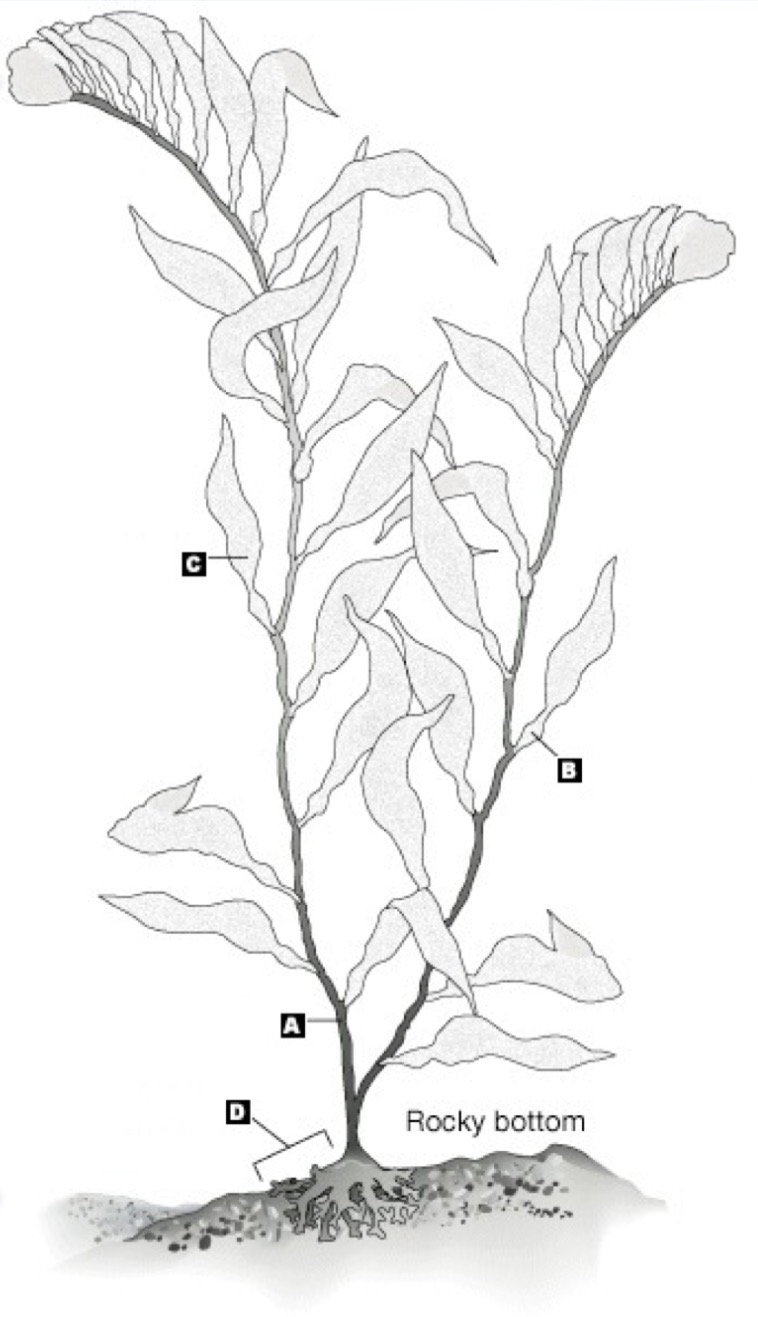
d
holdfast
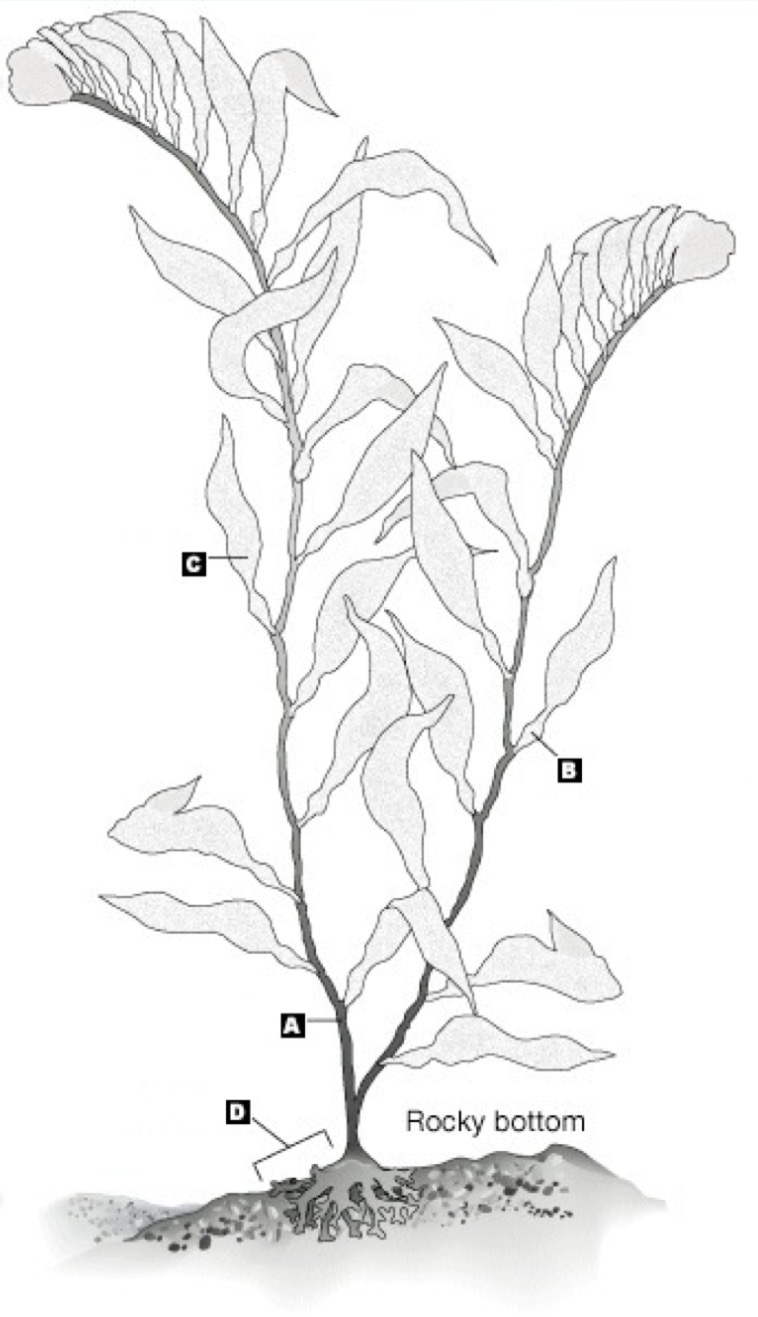
the entire thing
thallus
green algae
a vital food source, produce a significant portion of the world’s oxygen, and are closely related to plants
brown algae
have a unique pigment called fucoxanthin, which gives them their color and aids in photosynthesis
red algae
have the ability to thrive in deep water thanks to pigments like phycoerythrin, their lack of flagella, and unique cellular features like pit connections
human uses for green algae
taken as nutritional supplements and is in bio-fuels
human uses for brown algae
produces alginic acid, which is used as a stiffening agent for pastry fillings, instant puddings, salad dressing, milk shakes, whipped cream, ice cream, adhesives, explosives, and lotions
human uses for red algae
sushi “seaweed”, cheese, yogurt, laxatives, and has many uses in medicine
in what general type of environment are seagrasses found?
shallow, coastal marine environments
what likes to eat seagrass?
manatees, green sea turtles, and dugongs
where are mangroves found?
along tropical shores with limited wave action, subtle slope, and high rate of sedimentation
what ecological roles do mangrove forests play?
protect the coast from storms, provide a nursery for juvenile marine life, help filter sediment which keeps water near coral reefs clear, and remove carbon dioxide from the atmosphere
how do mangroves maintain proper salt balance?
black mangroves have salt glands and salt is concentrated in old leaves that are shed in others
how would an increase in ocean temperature affect ocean and wind currents
it makes surface waters lighter, potentially slowing deep ocean currents, while also providing more energy, which can strengthen winds and intensify storms, shifting jet streams poleward and altering wind-driven currents
how would an increase in ocean temperature affect salinity levels
it makes surface waters saltier by boosting evaporation, leaving salt behind
how would an increase in ocean temperature affect ecosystem
it disrupts ecosystems by causing coral bleaching, forcing species migrations, increasing harmful algal blooms, reducing oxygen, altering food webs, and impacting marine mammals and birds, threatening biodiversity, fisheries, and human livelihoods through habitat loss and food security issues
what are the different characteristics that all (mostly all) animals share
multicellular, cells are eukaryotic and lack cell walls, heterotrophs, can actively move
how do sponges reproduce asexually
budding, when the new sponge grows off the side of the old sponge, or fragmentation, which occurs by physically breaking off
how do hermaphrodite sponges reproduce
they produce both male gametes but not at the same time, water temperature changes stimulate gamete production, which is controlled by seasonal changes
how do sponges reproduce sexually
when sperm enters the sponge the same way food particles do, fertilizes egg, zygote is formed, develops into larva, floats until it finds a solid landing place, anchors and develops into adult sponge
classification taxa in order
domain, kingdom, phylum, class, order, family, genus, species
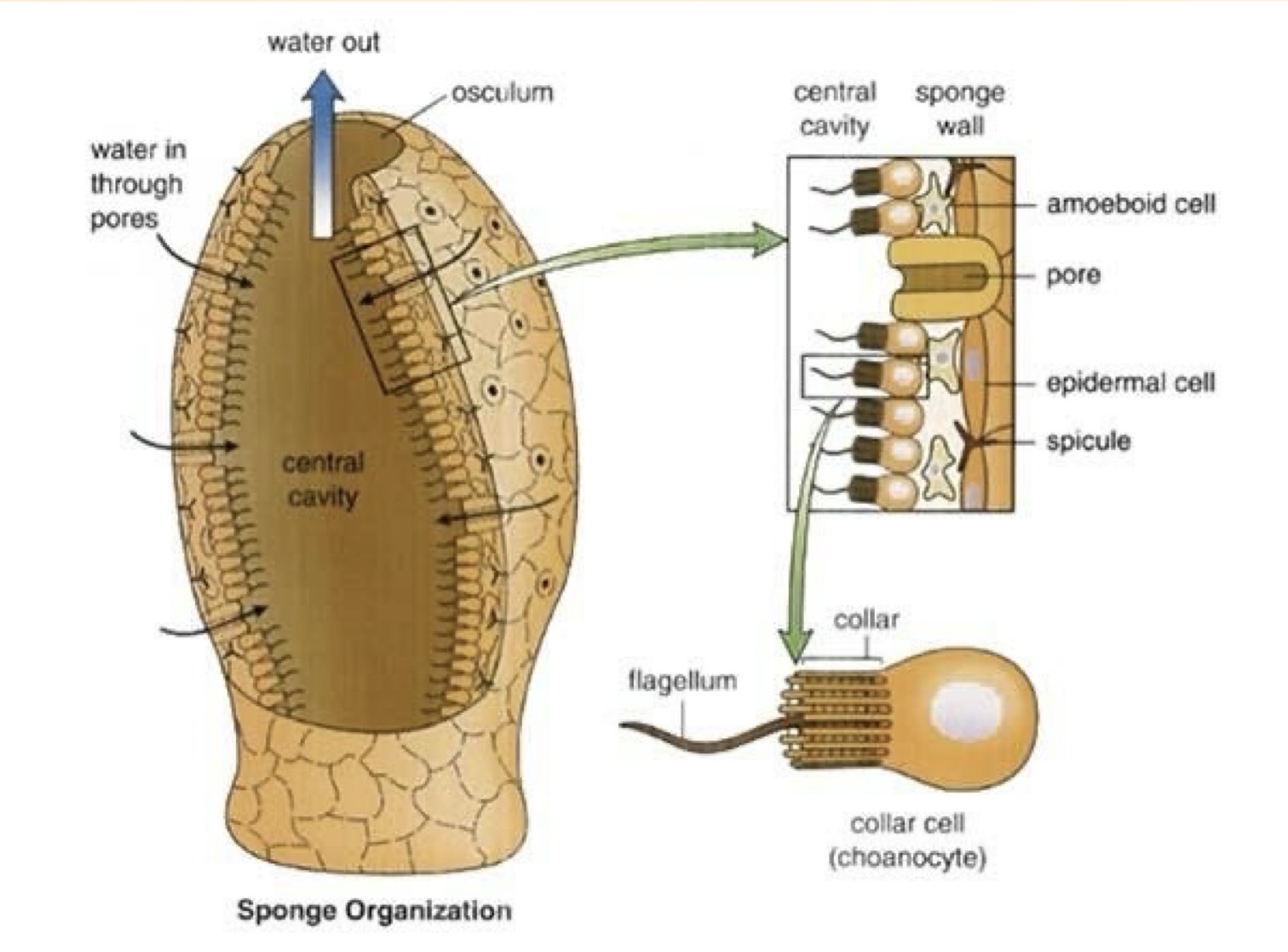
the 3 main parts of the sponge
how to write a scientific name
in italics and the genus name is capitalized
 Note
Note  Flashcards (56)