BT5 Reinforced Concrete Floor Systems
 Studied by 0 people
 Call Kai
 Learn
Learn Practice Test
 Spaced Repetition
 Match
Match Flashcards
 Knowt Play
1/64

There's no tags or description
Looks like no tags are added yet.
Name | Mastery | Learn | Test | Matching | Spaced | Call with Kai |
|---|
No analytics yet
Send a link to your students to track their progress
65 Terms
Reinforced concrete
one of the most widely used materials in modern construction because of its strength, versatility, and adaptability.
Floor systems in reinforced concrete structures
plays a significant role in the overall lateral stability of the building.
Slab
A flat, horizontal structural element used in buildings to create floors, ceilings, and roofs.
Slab
It is typically made of reinforced concrete and designed to support loads such as people, furniture, and equipment.
beams, columns, or walls.
Slab distribute these loads to the supporting:
One-way systems
load transfer occurs primarily in one direction
Two-way systems
load transfer occurs in two directions
One-Way Slab
A slab supported by parallel beams or walls, where the longer span is more than twice the shorter span.
Short span
primary load transfer direction in a one-way slab
Corridors, small rooms, and simple rectangular layouts
Application of one-Way Slab
Simple design, easy to construct
key advantage of a one-way slab
up to 3–4 m
maximum economical span for a one-way slab
One-Way Joist (Ribbed) Slab
A slab system where closely spaced, narrow beams (joists) run in one direction, with a thin topping slab above
Through ribs to supporting beams or walls.
primary load transfer direction in a one-way joist ribbed slab
Reduced concrete volume and weight; longer spans possible compared to plain slabs
key advantage of a one-way joist (ribbed) slab
Medium-span floors where weight reduction is critical
application of a one-way joist (ribbed) slab
Two-Way Slab with Beams
A slab supported on all four edges, with beams running along the perimeter or grid
Distributes load in both directions
primary load transfer direction in a Two-Way Slab with Beams
Square or nearly square floor panels
applications of a Two-Way Slab with Beams
Greater efficiency in load distribution; allows larger spans compared to one-way slabs
advantages of a Two-Way Slab with Beams
Flat Slab System
A slab directly supported by columns without beams, often thickened at the column locations
Drop panels
What structural feature is often added to flat slabs to resist punching shear?
Directly from slab to columns
primary load transfer direction in a Flat Slab System
Flexibility in architectural planning; reduced floor-to-floor height; easy installation of services integration
key advantage of Flat Slab System
Requires careful design against punching shear; not ideal for very heavy loads.
main limitation of flat slabs system
Offices, hotels, residential high-rise buildings, parking garages.
application of flat slabs system
Flat Plate System
Similar to flat slab but without drop panels or column capitals
Simplified construction, uniform thickness, ideal for moderate spans and light to medium loads.
Advantages of Flat Plate System
Apartments, condominiums, hotels.
Applications of Flat Plate System
Less resistance to punching shear compared to flat slab.
Limitations of Flat Plate System
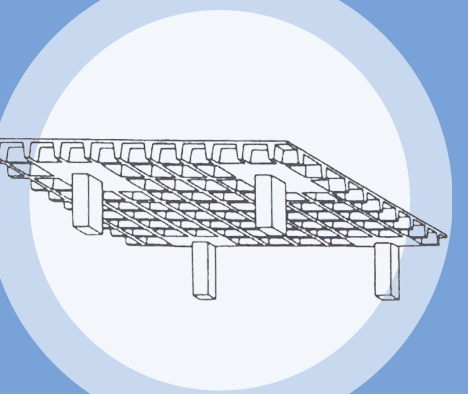
Waffle Slab (Two-Way Ribbed Slab)
A slab with a grid of ribs in two directions, usually cast using reusable forms.
Two-way distribution through ribs to columns and beams
load transfer of Waffle Slab (Two-Way Ribbed Slab)
High load-carrying capacity, lightweight, excellent for long spans, aesthetically expressive ceiling pattern.
advantages of Waffle Slab (Two-Way Ribbed Slab)
Auditoriums, theaters, large halls, industrial buildings.
applications of Waffle Slab (Two-Way Ribbed Slab)
Formwork cost is higher; not economical for small-scale projects
Limitations of Waffle Slab (Two-Way Ribbed Slab)
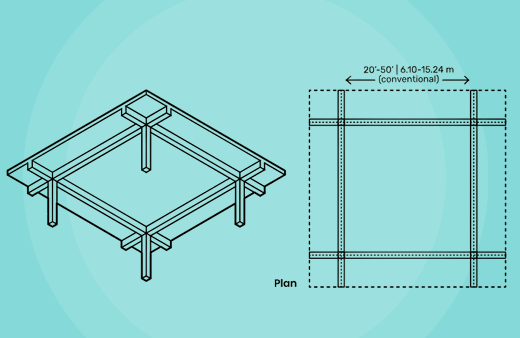
Beam and Slab Floor System
Slabs spanning between beams, which in turn transfer loads to columns.
Traditional, versatile, economical for moderate spans
Beam and Slab Floor System advantages
Residential and commercial structures with repetitive grids
Beam and Slab Floor System applications
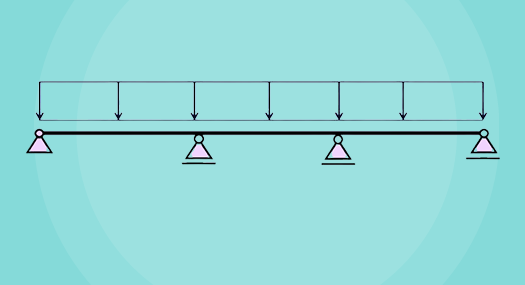
Continuous Beam Systems
Multiple spans of beams supporting slabs, designed to minimize deflection and optimize reinforcement
Efficient in material use, lower moments at supports
Continuous Beam Systems advantages
Multi-span corridors, repetitive long-span structures.
Continuous Beam Systems applications
Post-Tensioned Slabs
Reinforced concrete slabs in which steel tendons are tensioned after casting, improving span capacity.
Long spans with thinner slabs, reduced deflection, efficient material use
Post-Tensioned Slabs advantages
Parking structures, bridges, commercial buildings with open floor plans.
Post-Tensioned Slabs applications
Requires specialized labor and equipment
Post-Tensioned Slabs limitations
Post-tensioned slab
the goal is to achieve a 30-meter span with minimal deflection
Hollow Core Slabs (Precast RC Option)
Precast, prestressed slabs with hollow longitudinally.
Lightweight, quick installation, large spans possible.
Hollow Core Slabs advantages
Warehouses, offices, precast construction projects
Hollow Core Slabs applications
Transport and handling costs; limited flexibility for penetrations
Hollow Core Slabs limitations
Span length
short, medium, or long spans
Load requirements
light, moderate, or heavy.
Architectural constraints
ceiling height, service integration, aesthetics
Construction method
cast-in-place vs. precast, availability of formwork, construction timeline
Economy
material cost, labor skill, formwork reuse
Deflection and vibration control
serviceability requirements
Resistance to punching shear under heavy vehicle loads
In selecting between flat slab and waffle slab systems for a multi-level parking garage, which factor would most strongly favor the waffle slab?
ONE WAY SLAB PIC
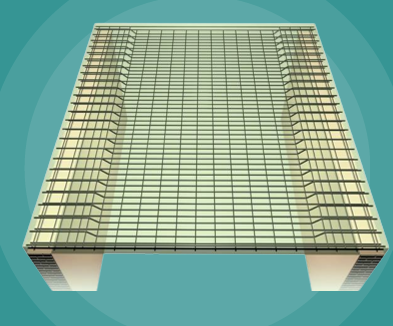
ONE WAY JOIST RIBBED SLAB PIC
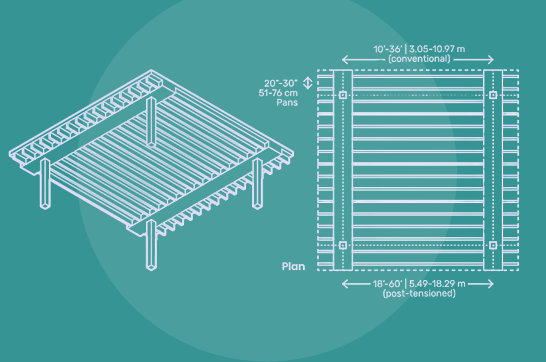
TWO WAY SLAB WITH BEAMS PIC
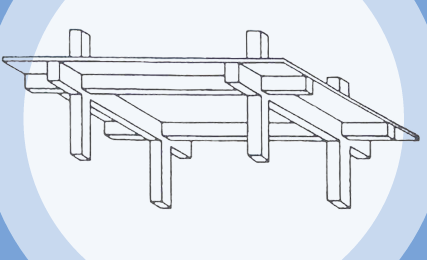
FLAT SLAB SYSTEM PIC
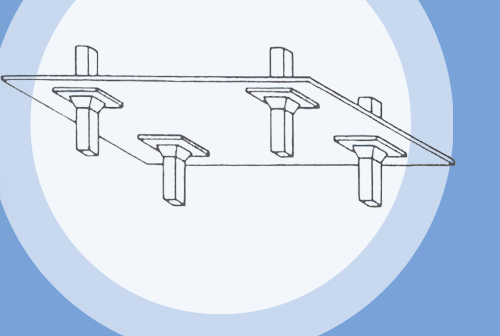
FLAT PLATE SYSTEM PIC
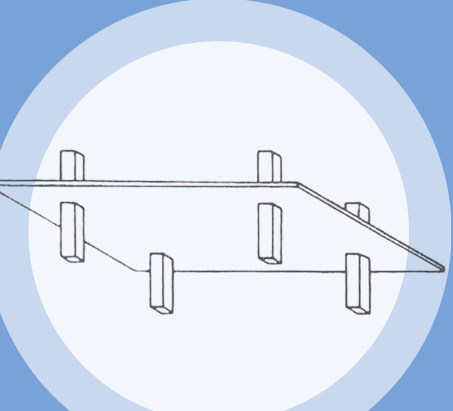
WAFFLE SLAB TWO WAY RIBBED PIC
BEAM AND SLAB FLOOR SYSTEM PIC
CONTINUOUS BEAM SYSTEMS PIC
 Note
Note  Flashcards (244)