AP Calc Unit 1
 Studied by 1 person
 Call Kai
 Learn
Learn Practice Test
 Spaced Repetition
 Match
Match Flashcards
 Knowt Play
1/83

There's no tags or description
Looks like no tags are added yet.
Name | Mastery | Learn | Test | Matching | Spaced | Call with Kai |
|---|
No analytics yet
Send a link to your students to track their progress
84 Terms
a straight line [vertical] =
undefined
what conditions make a limit discontinous
jump discontunity
removable
asymptotes
Determining a chart from the left and right side of limit
Ensure the numbers are very close to each other
if not
find the slope as it reaches the limit to find the # as it reaches a certain x
Chart slope example
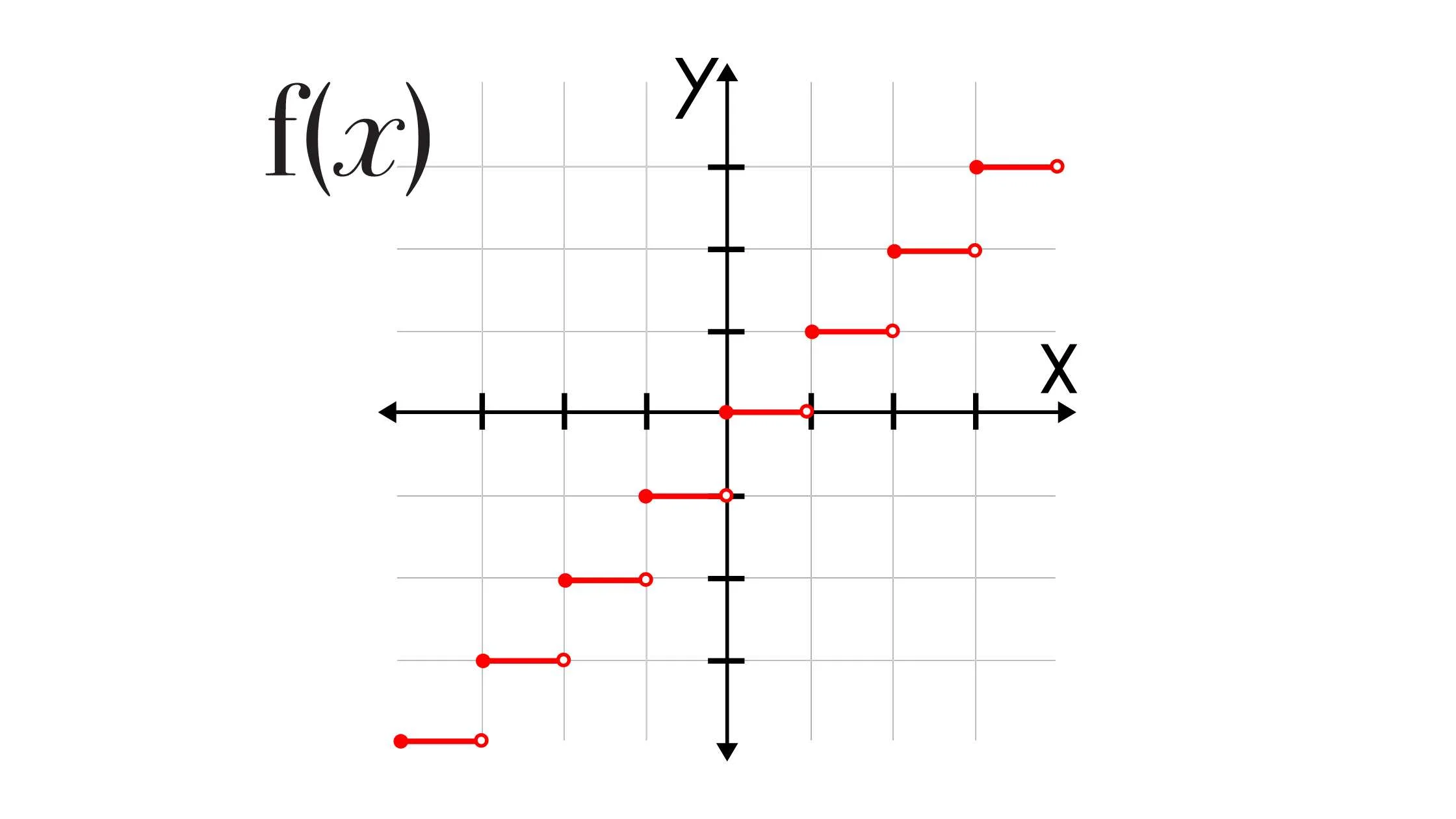
jump discontinuity
the function starts somewhere else completey
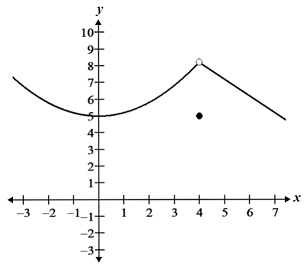
Removable discontinuity
the function is all in one except for one point
Constant Multiple
Lim(3 x f(x)) =
3 x (Lim f(x))
Sum
Lim (f(x) + g(x)) =
Lim f(x) + Lim g(x)
Difference
Lim (f(x) - g(x)) =
Lim f(x) - Lim g(x)
Product
Lim (f(x) x g(x)) =
Lim f(x) x Lim g(x)
Quotient
Lim (f(x)/g(x)) =
Lim f(x) / Lim g(x)
Power
Lim (f(x))n =
(Lim f(x))n
Root
Lim square root f(x) =
square root all of Lim f(x)
Trig mem
Sin [π/3] → 30 degree
[√3]/2
Trig mem
Sin [π/4]
[√2]/2
Trig mem
Sin [π/6] → 60 degree
1/2
Trig mem
Cos[π/3]
1/2
Trig mem
cos [π/4]
[√2]/2
Trig mem
cos [π/6]
[√3]/2
Trig mem
Tan [π/6]
[√3]/3
Trig mem
Tan [π/3]
√3
Trig mem
Tan [π/4]
1
sin x =
cos [90 -x]
aka the compliment
Trig mem
sin [π]
0
Trig mem
cos [π]
-1
Trig mem
tan [π]
sin [π] / cos [π]
Trig mem
Tan [π/2]
sin [π/2] / cos [π/2] = 0
Trig mem
sin [π/2]
1
Trig mem
cos [π/2]
0
Trig mem
sin [3π/2]
-1
Trig mem
cos [3π/2]
0
Trig mem
tan [3π/2]
0
Think of cos as
X coordinate
Think of sin as
Y coordinate
Trig mem
cot
cos / sin
or x/y
or 1 / tan
When do you use trig function theorems
when x is approaching zero
when the answer from substitution is originally #/0
an absolute function
found in a piecewise
Expand the condition
determine the number of x by solving for it [use only the eq. in the absolute bracket]
the first eq is the original eq in brackets when x > #
the 2nd is negative times the eq when x< #
An absolute functions limit
→ 0/0 version
plug in the limit from the closest number from the left or right side
2+= 2.1
2- = 1.99
Squeeze theorem
determining the limit of a function if it equals two others
g(x) < f(x) < h(x)
A fraction equals #/0
a infinite limit
A fraction equals 0/0
you will use a form of cancelling out
“estimate of instantaneous rate of change”
determine the slope using two points
a horizontal slope
equals zero
IVT Purpose
to determine continuity on an interval
when x=3 it is undefined
still can be continuous
piecewise function
a # told to be solved for isnt in the function
it is immediately cont. at that point
An absolute functions limit
→ #/0 version
Solve for a ± infinity
is to be treated like a regular absolute → all outcomes positive
Log (1)
0
square root of one also equals
one
a3- b3
[a - b] [a²+ab+b²]
a3+ b3
[a +b] [a²- ab +b²]
limit of cancellation of outter and inner fraction
make the denominators of both the same
do the outter inner rule
leave any multiplication undone → e.g 3x[x² +2]
any opposite subtractions leave out an -1 in their place → e.g. 3-x = [-1][x-3]
Limits of conjugate
square the num or den of the square root
the new eq is the same except, everything but the root gets squared
The opposite side of the fraction is multiplied by the square root eq except swap the ± for the opposite
piecewise function
reading 2- and 2+
1: less than 2
2: greater than 2
→ if x doesnt equal 2 then both fall into that category
a trig function equals 0/0 or approaches 0
apply special rules
Trig special theorem
sin x/ x
1
Trig special theorem
sin ax/ bx
or
ax/ sin bx
a/b
Trig special theorem
sin² ax/ bx²
a²/ b
Trig special theorem
a sin bx/ cx
[a x b]/ c
Trig special theorem
x / sin x
1
Trig special theorem
tan x/ x
1
Trig special theorem
tan ax/ bx
or
tan ax/ tan bx
a/b
Trig special theorem
all the cos functions that equal zero
cos x -1/ x
cos ax -1/ bx
cos x but as it approaches π/2
1 - cosx/ x
1 - cos ax/ bx
large trig theorem functions
split into two sections where u recognize where the top and bottom match
a function is always cont. if it is a
exponential or quadratic function
determining continuity
x = # must exist in domain
limit of x must exist
f(#) must equal existing limit
recognizing discontinuity
piecewise: not in domain
a removeable discontinuity
recognizing discontinuity
piecewise: Limit DNE
a jump discontinuity
determines variables that allow f(x) to be continuous on all real #’s
Determine all X’s
find eq that determines limit of all x’s
substitute the x in
distribute and turn into a system of equations
solve for both variables
if functions f and g are continuous at a
then subtracting, adding, dividing, or multiplying and g of a are all continuous
Infinite limits
a fraction as x approaches zero or equals #/0
plug in x as “a little more/less than x”
determine positive or negative num and den then apply the answer as ± infinity
Finding the vertical asymptote
set the den equal to zero
if needed factor the den
cancel if possible
As x → infinity
of a polynomial
If even is the highest power
x approaches + infinity = + infinity
x approaches - infinity = + infinity
If odd is the highest power
x approaches + infinity = - infinity
x approaches - infinity = + infinity
As x → infinity
#/ xn
As you plug in infinity as x = youre left w the answer 0
As x → infinity
Function of fraction rules
REFERING TO POWER OF X
N > D = a/b → divide w/ x→ then plug in infinity w ±
N = D = a/b
N < D = 0
infinity/ #
± infinity
As x → infinity
When there is a perfect square root
if the power is even sub x as |x|
if the power is odd sub x as x
As x → infinity
When there is a perfect square root: |x| edition
if x → - infinity:
sub as a negative x
As x → infinity
ex
approaches + infinity = + infinity
approaches - infinity = 0
if 1/e+infinity = 0
Horizontal asymptote
use the power rule of infinity
if N > D = no H.A.
IVT
“show that the eq has a solution on interval [#,#]
x is zero and one for example
sub both and determine in # asked for falls within the interval
→ in this case zero bc “solution” was asked for
IVT
explain
x exists on the interval due to IVT
→ note if asked could c exist on the interval = no bc ivt is must be there not could
Regular trig functions
simplify to the most before plugging in x
 Note
Note  Flashcards (23)