Microscopic Anatomy of Skeletal Muscle
 Call Kai
 Learn
Learn Practice Test
 Spaced Repetition
 Match
Match Flashcards
 Knowt Play
1/26

There's no tags or description
Looks like no tags are added yet.
Name | Mastery | Learn | Test | Matching | Spaced | Call with Kai |
|---|
No analytics yet
Send a link to your students to track their progress
27 Terms
Skeletal muscle
these muscles are directly or indirectly attached to the bones of the skeleton.
Skeletal muscle functions
1. Gives the ability to move
2. Maintains body posture
3. Supports soft tissue
4. Guards entrance and exits
5. Maintains body temperature
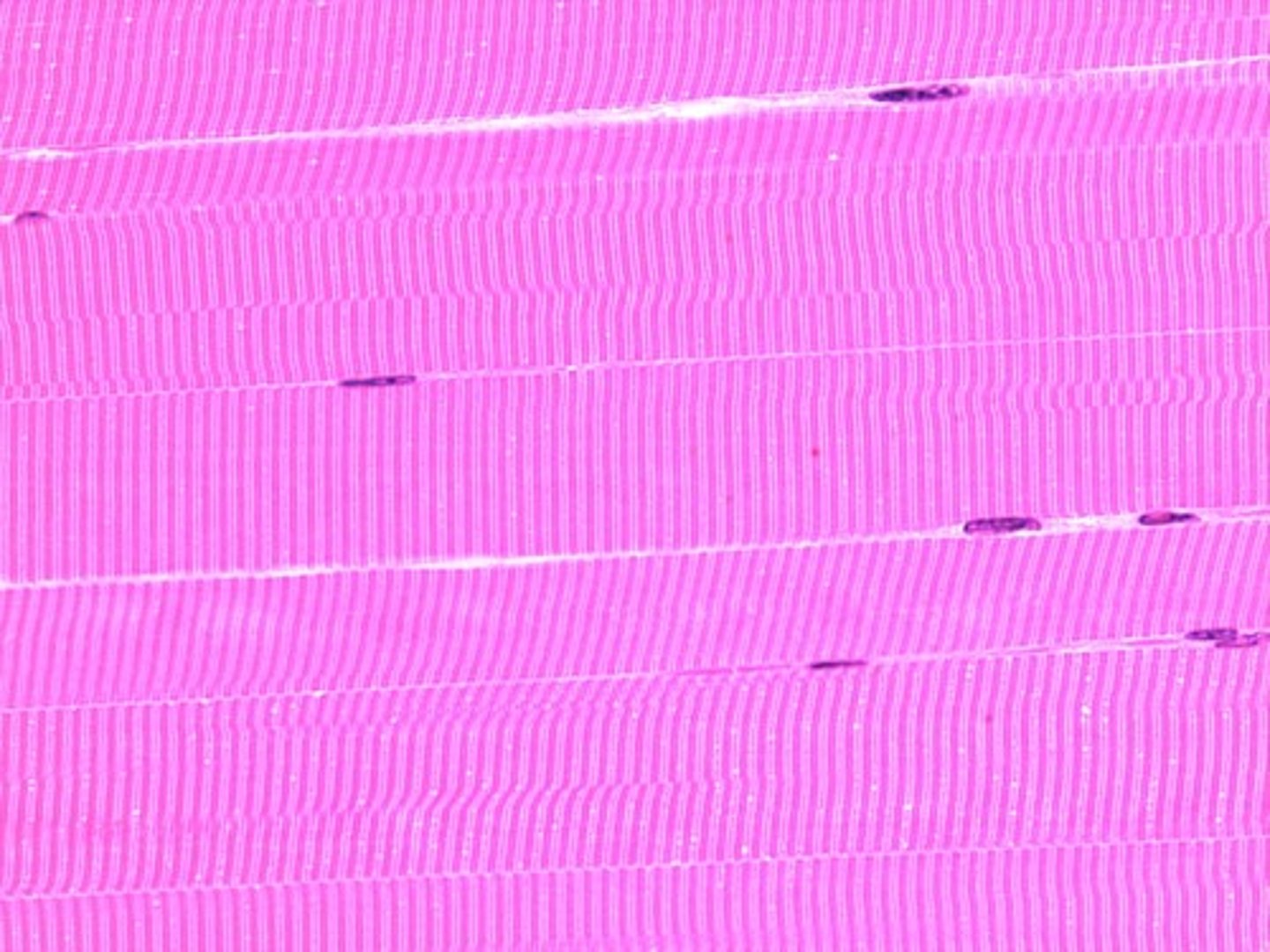
Muscle fibers
Skeletal muscle cells. They are long, cylindrical, and have more than one nuclei.
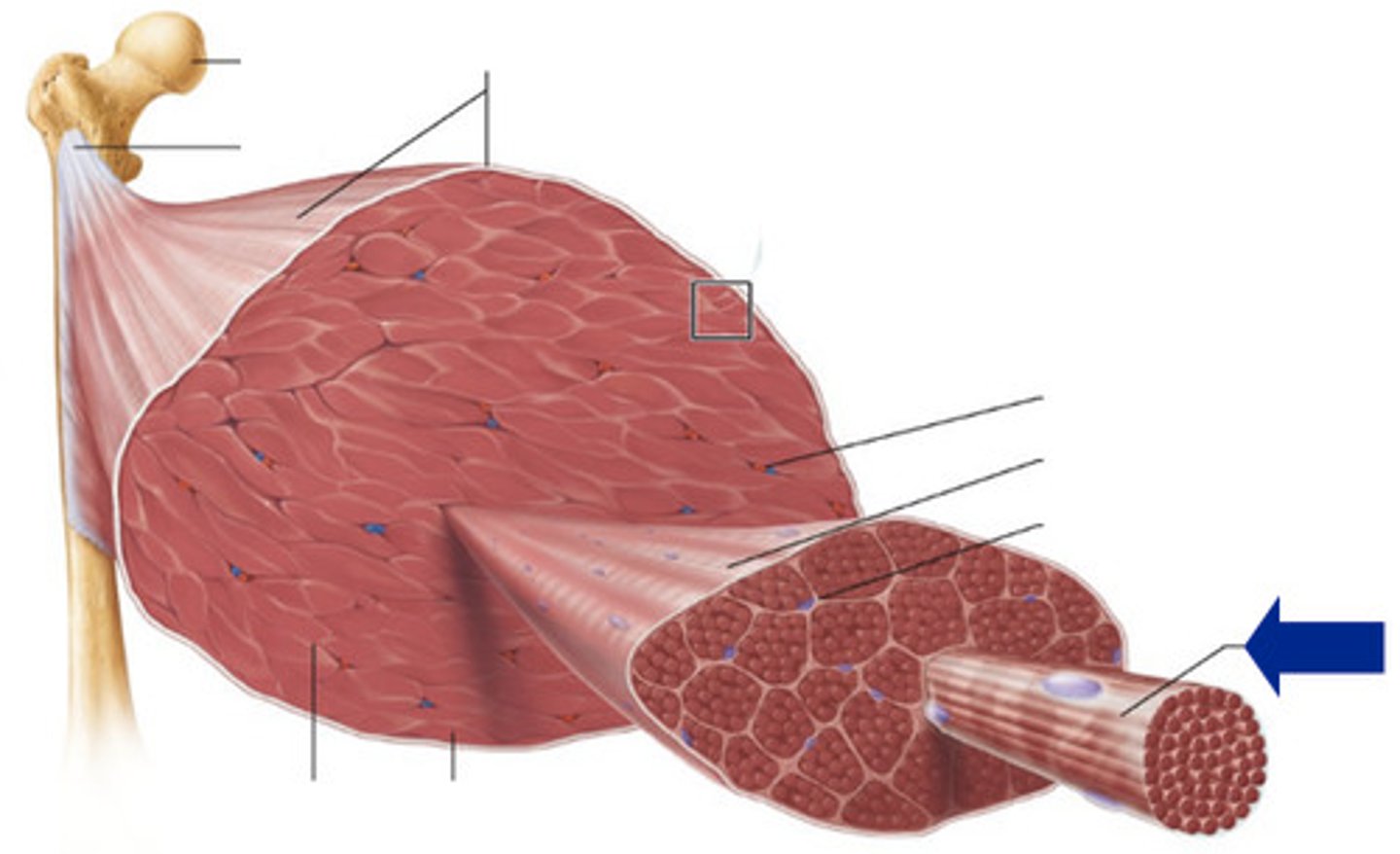
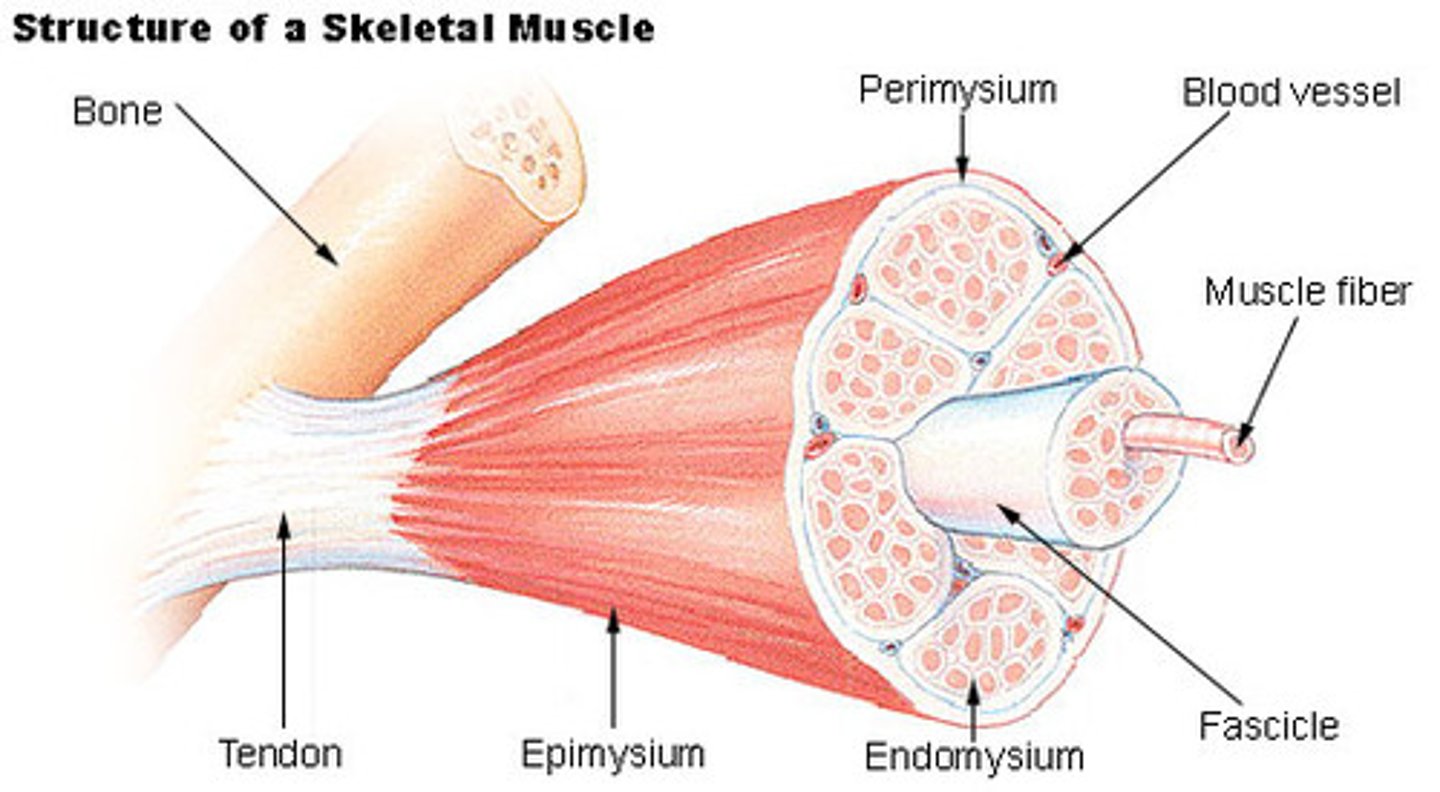
Endomysium
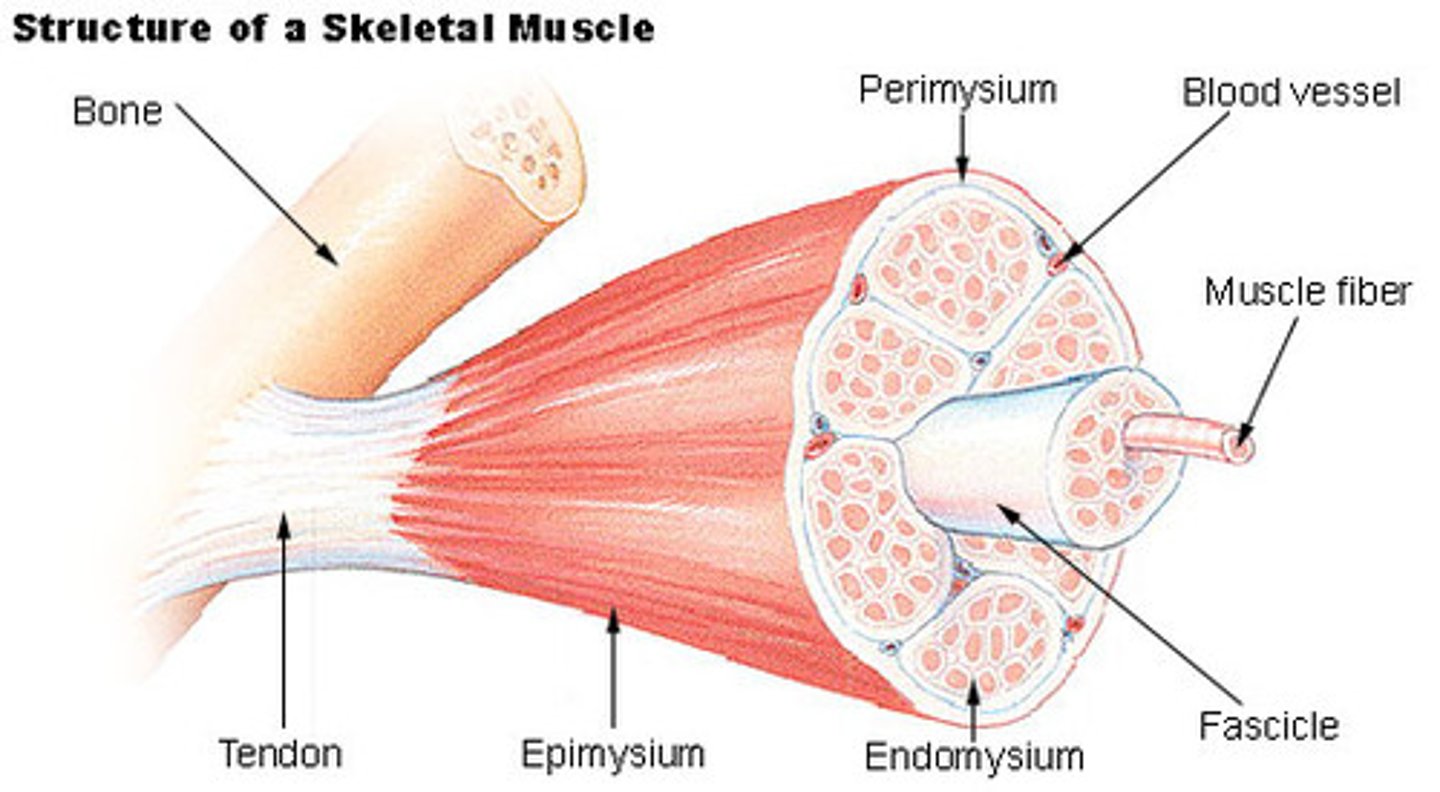
A membrane that surrounds each skeletal muscle fiber.
Perimysium
A membrane that surrounds several muscle fibers, forming a bundle of muscle fibers called a fascicle.
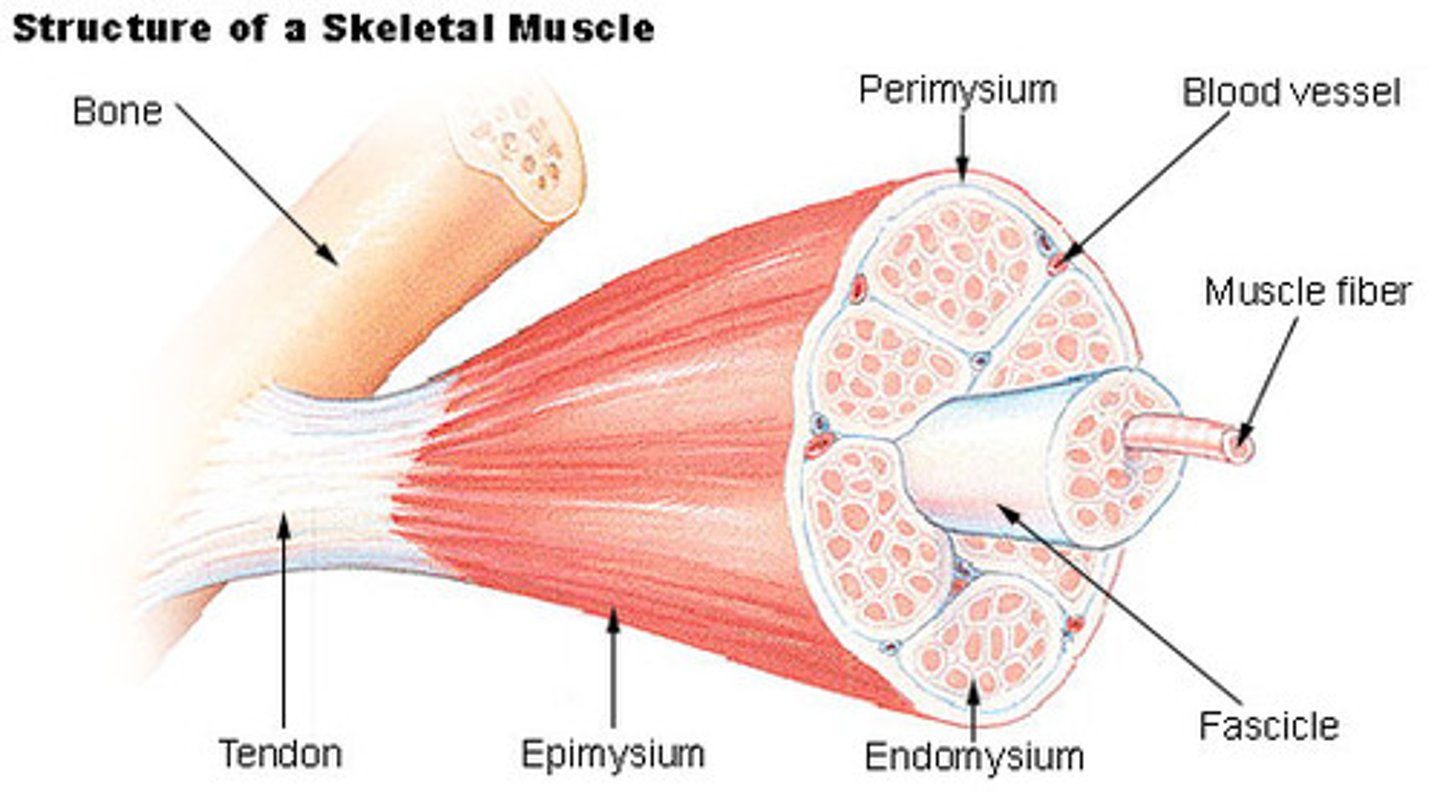
Fascicle
Bundle of muscle fibers surrounded by the perimysium
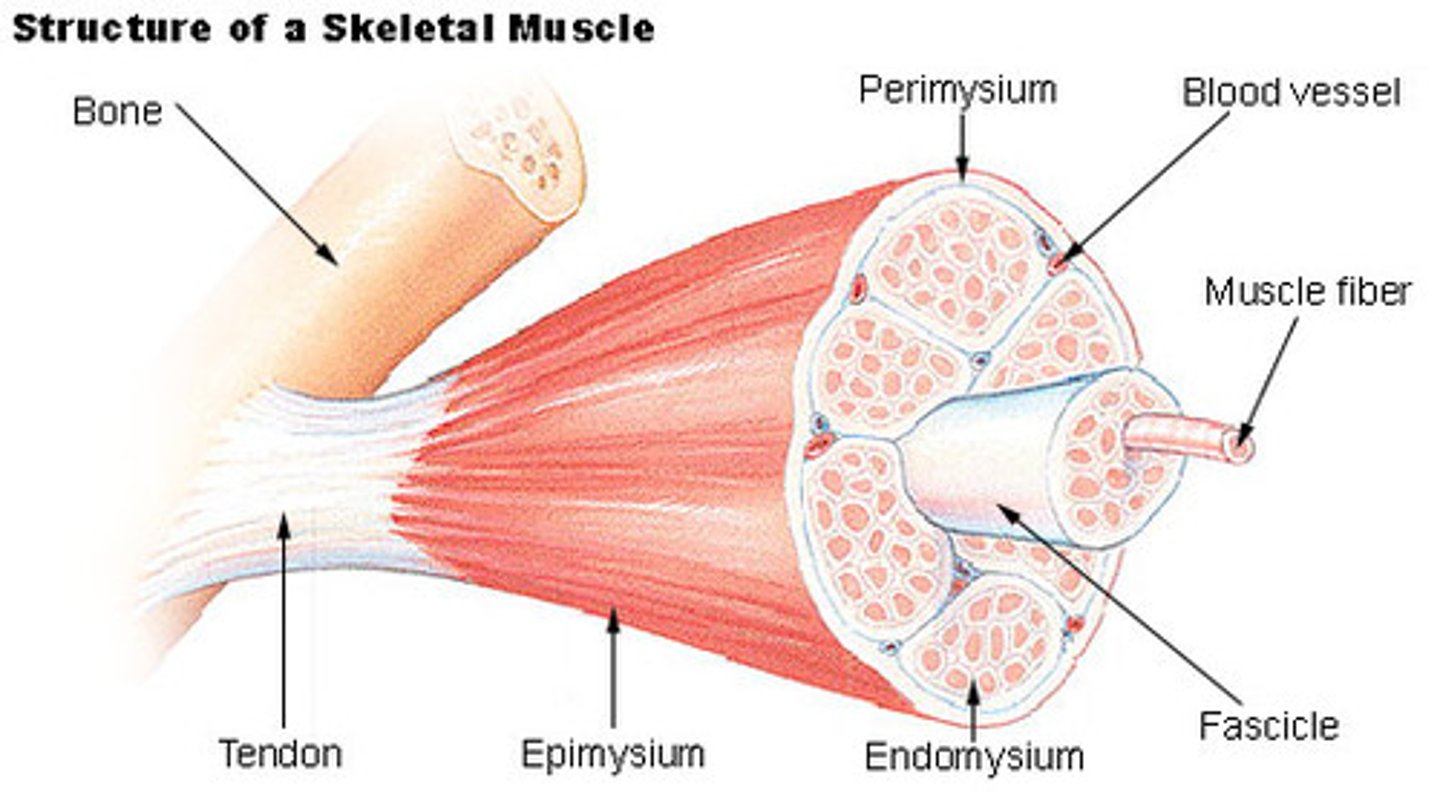
Epimysium
Sheaths that covers the entire muscle, sheathing a large number of fascicles. Dense irregular connective tissue.
Sarcolemma
Plasma membrane of a muscle fiber
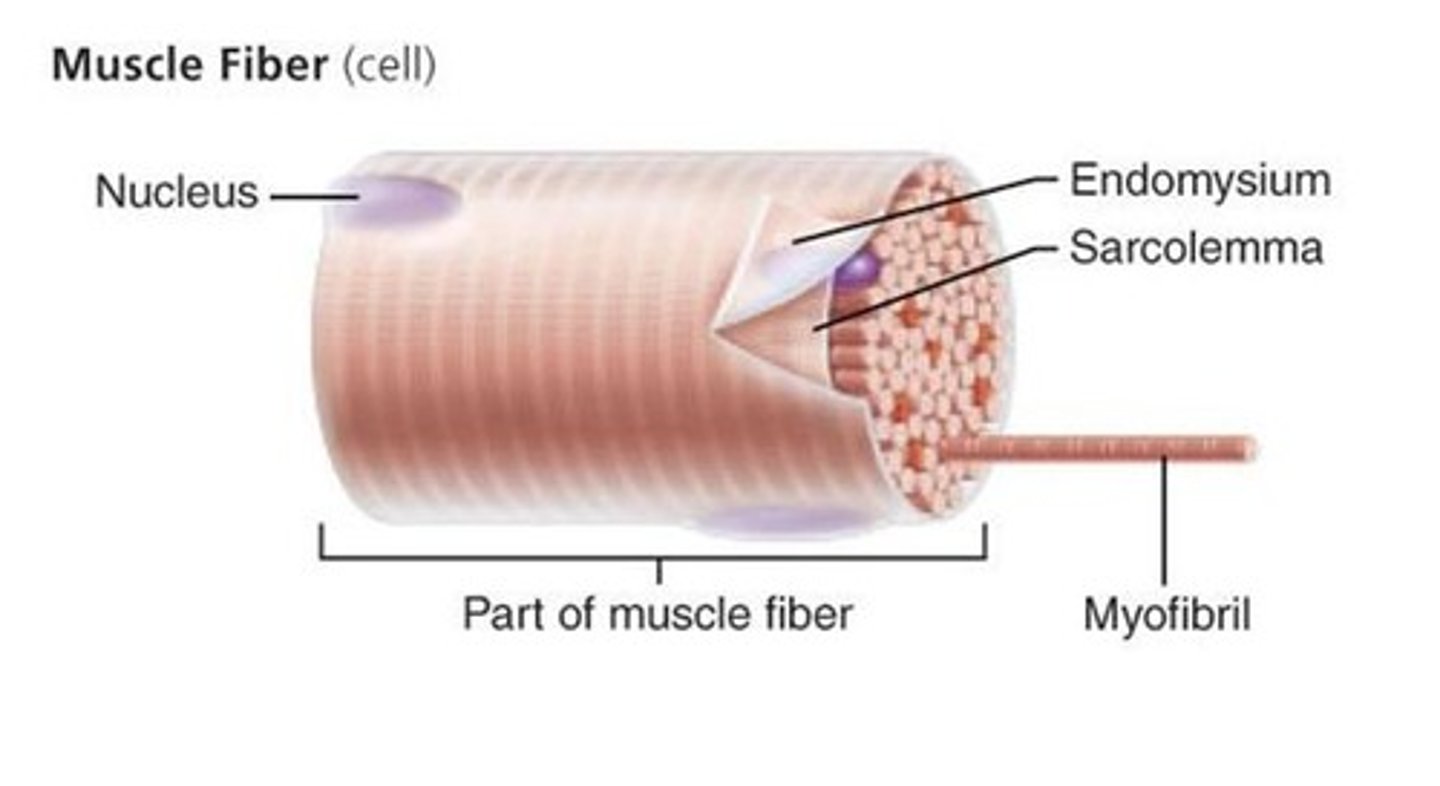
Myofibrils
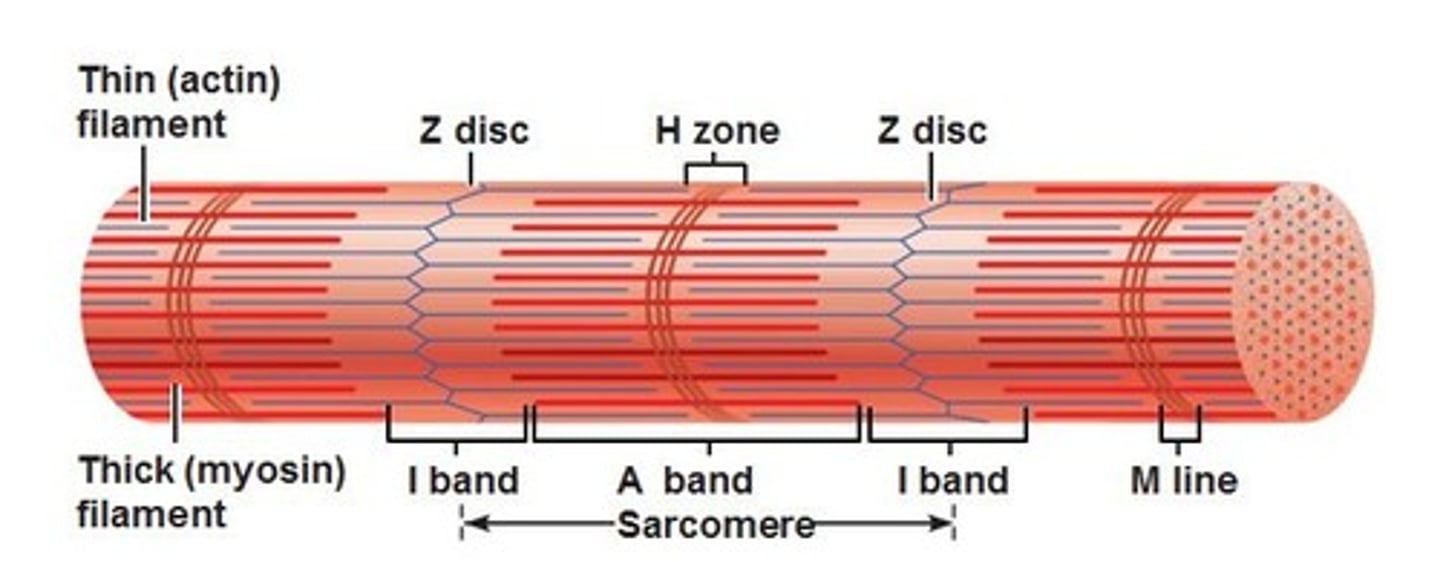
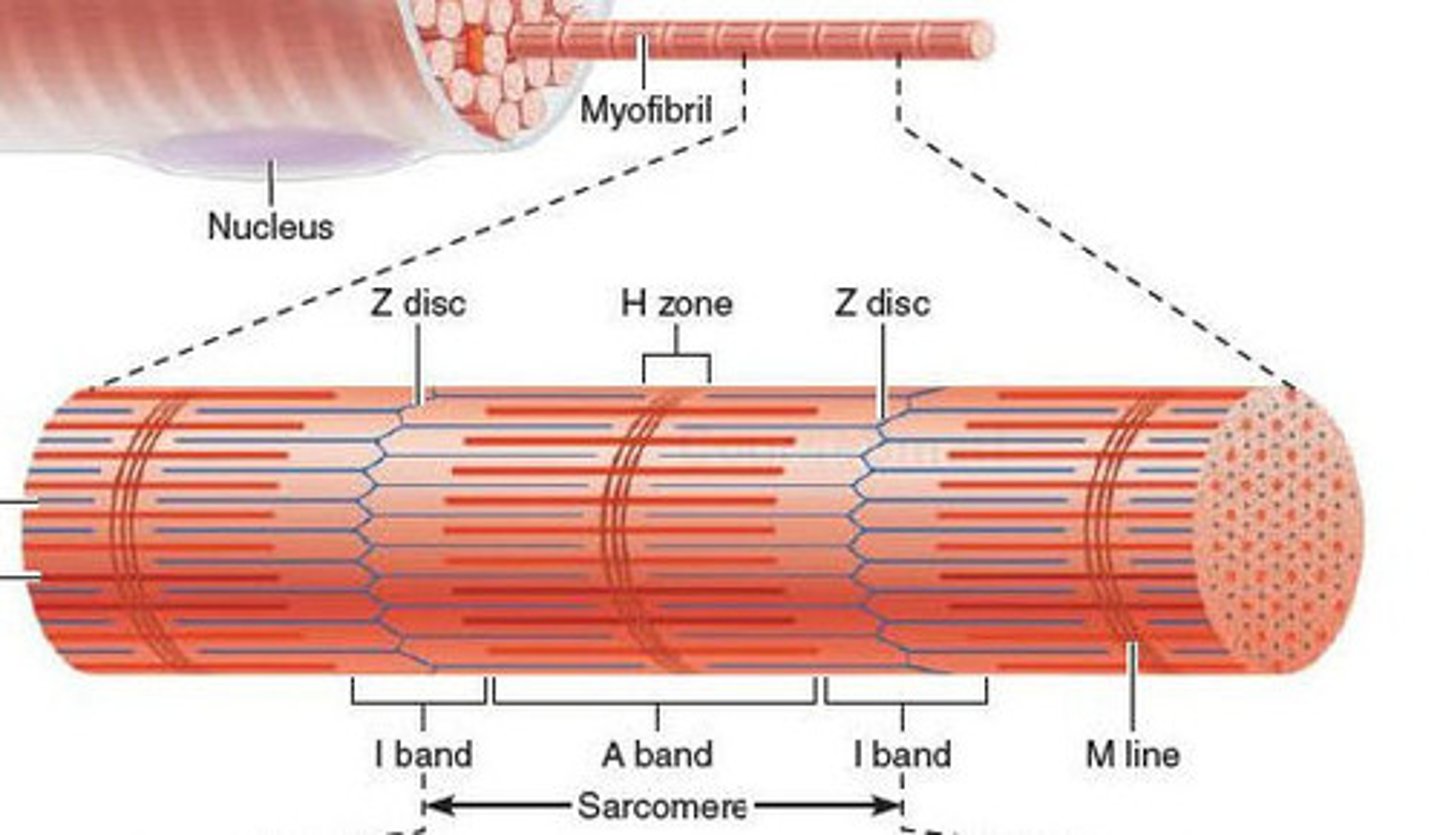
Contains alternating light (I) and dark (A) bands along the length of myofibrils give the muscle it's striped appearance.
Myofilaments
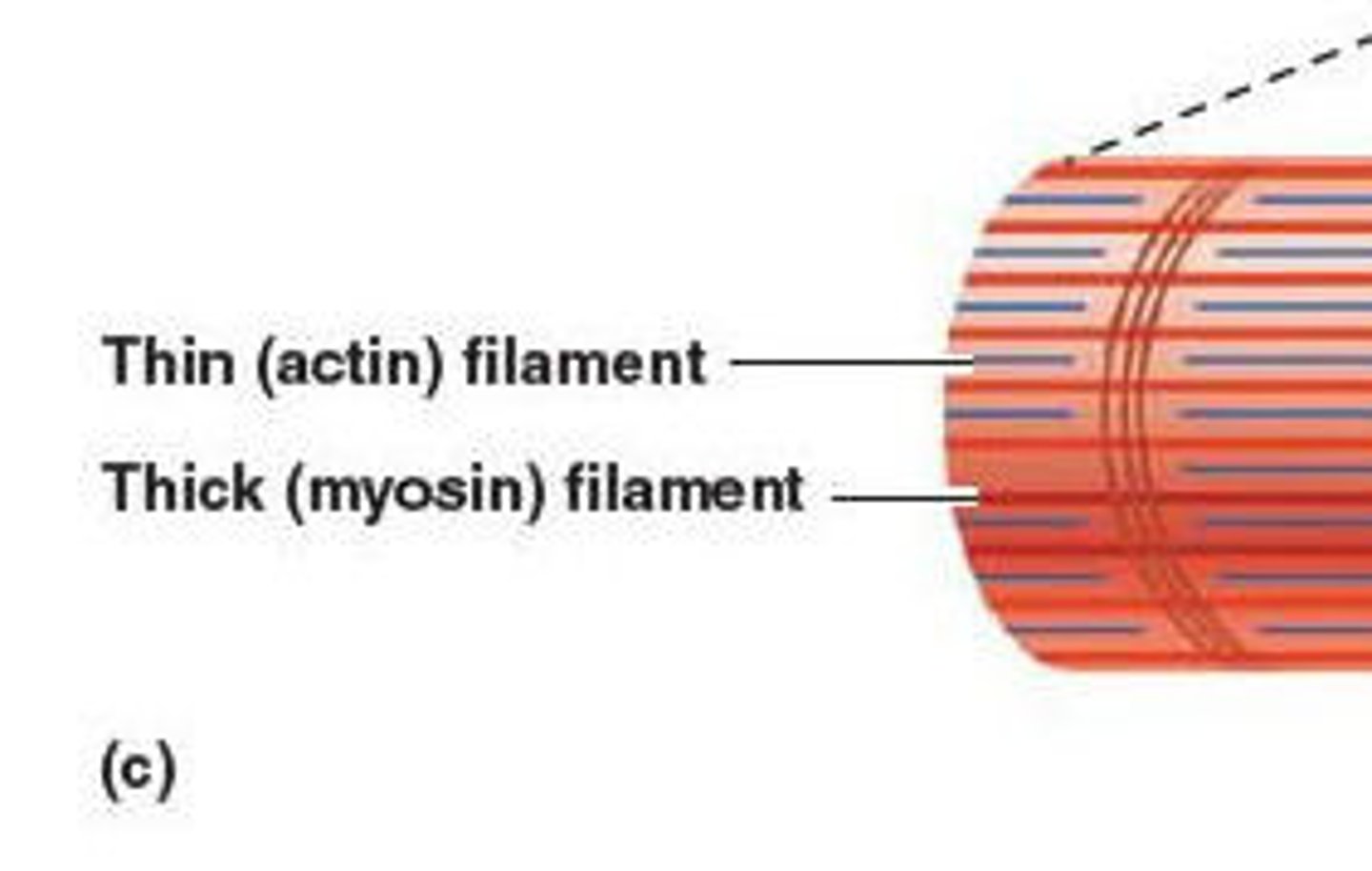
Threadlike structures that make up myofibrils. Made of actin and myosin.
What slide past each other during muscle contraction?
Actin and Myosin
Sarcomeres
Contractile units of muscle. Made up of the parts between two Z discs.
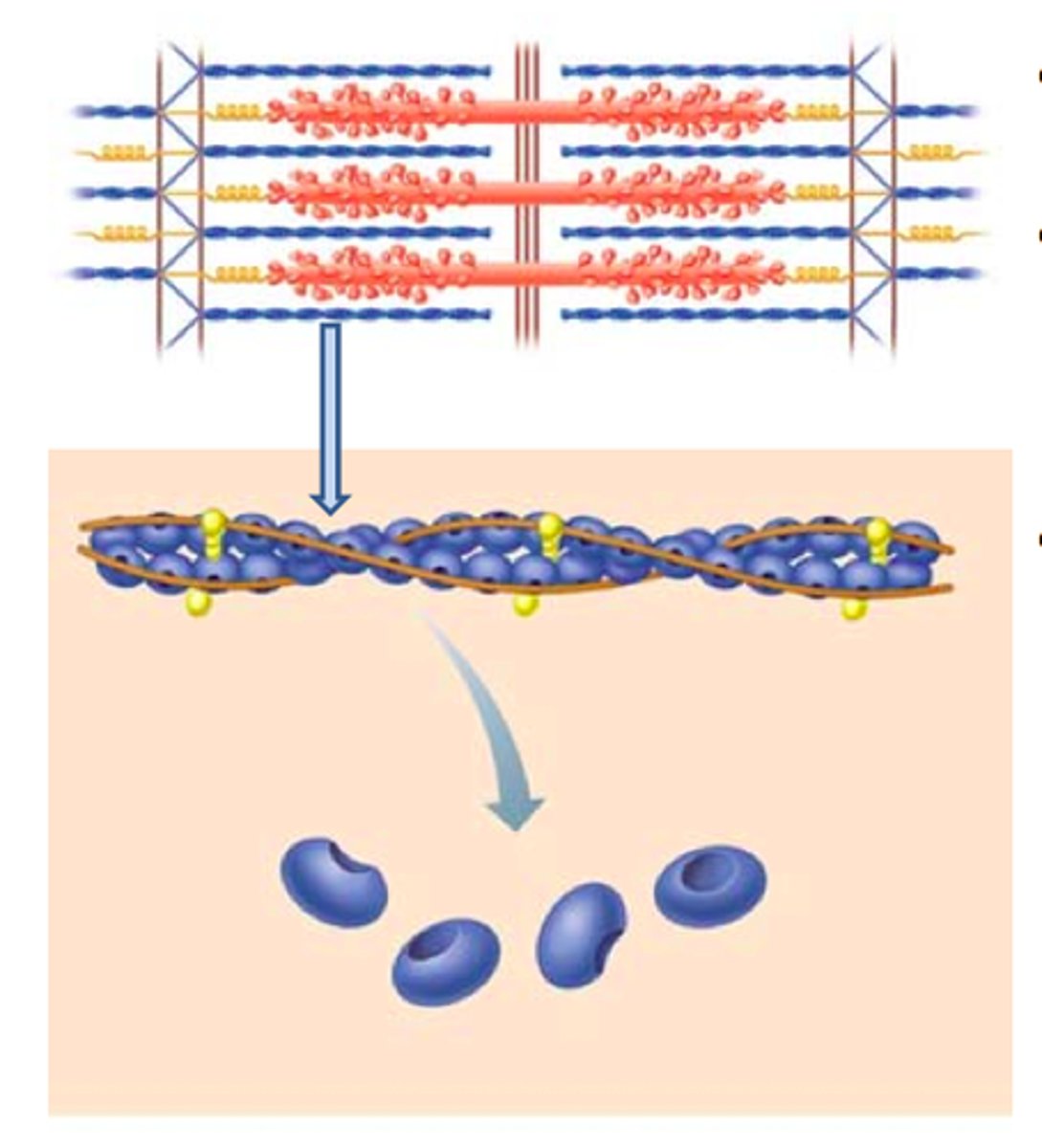
Thin filaments
actin
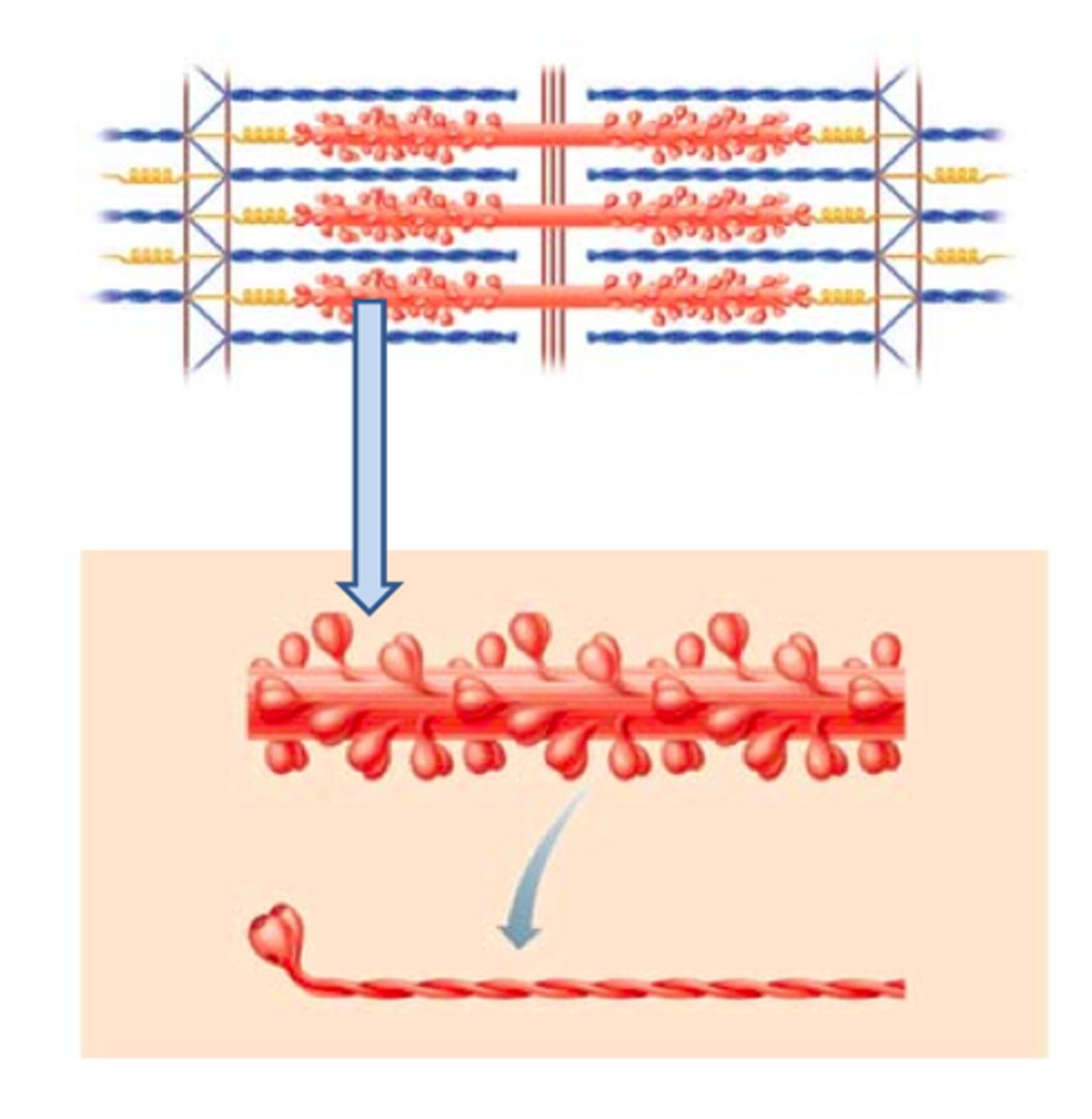
Thick filaments
myosin
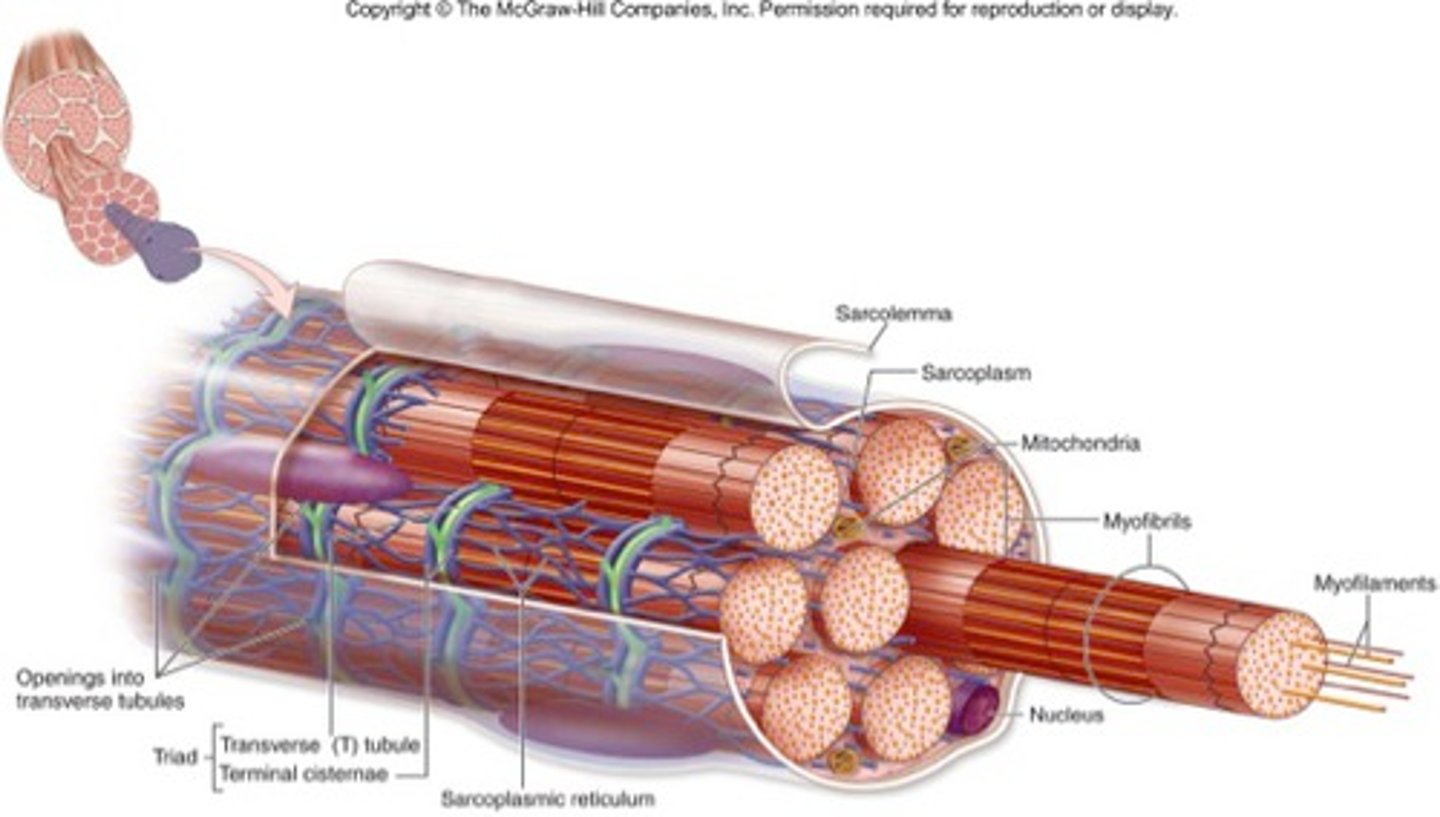
Transverse (T) tubule
Junction of an A and I band. Run deep into the muscle fiber between terminal cisterns.
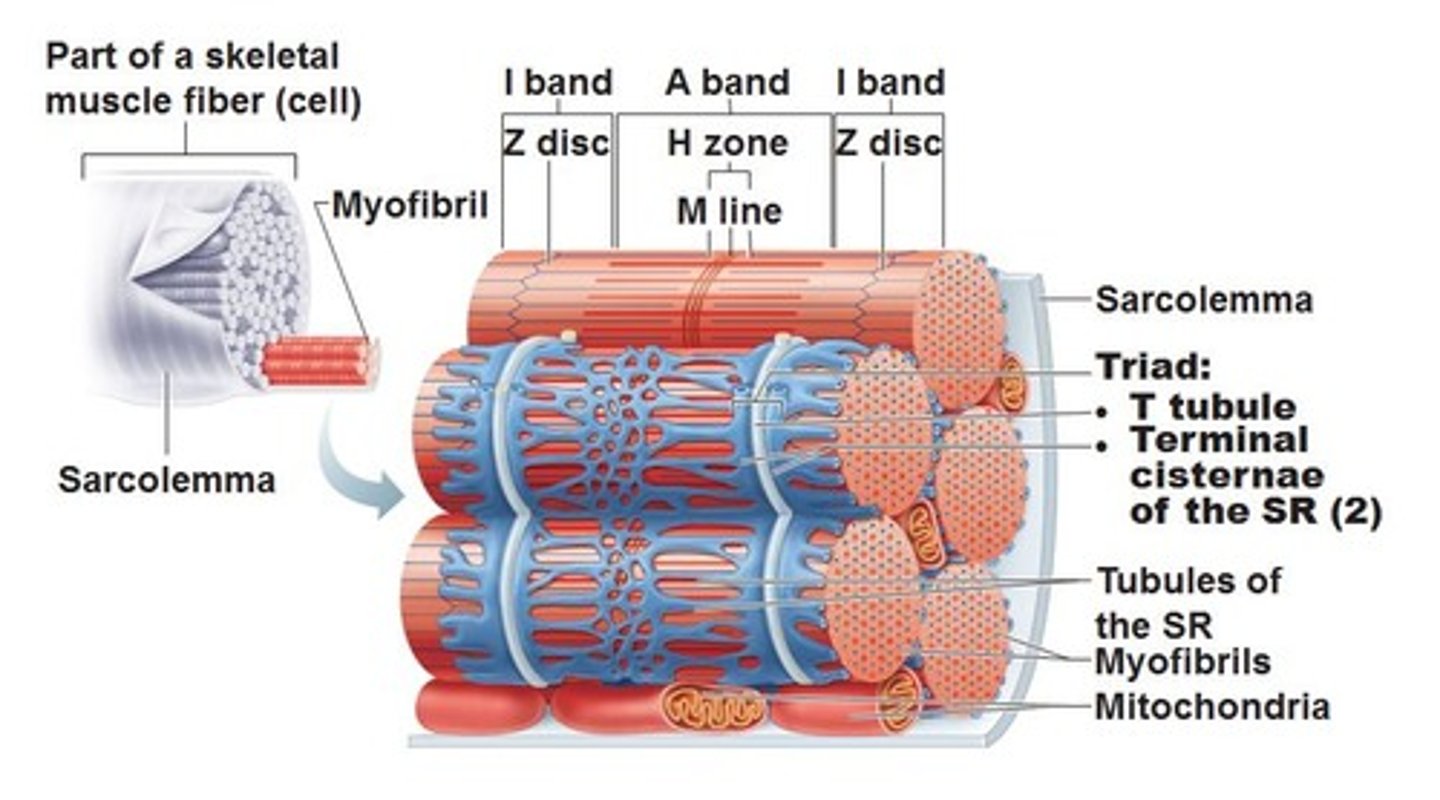
Sarcoplasmic reticulum
Forms a tubular network around each muscle fiber.
Neuromuscular junction
Junction between an axon of a motor neuron and a muscle fiber.
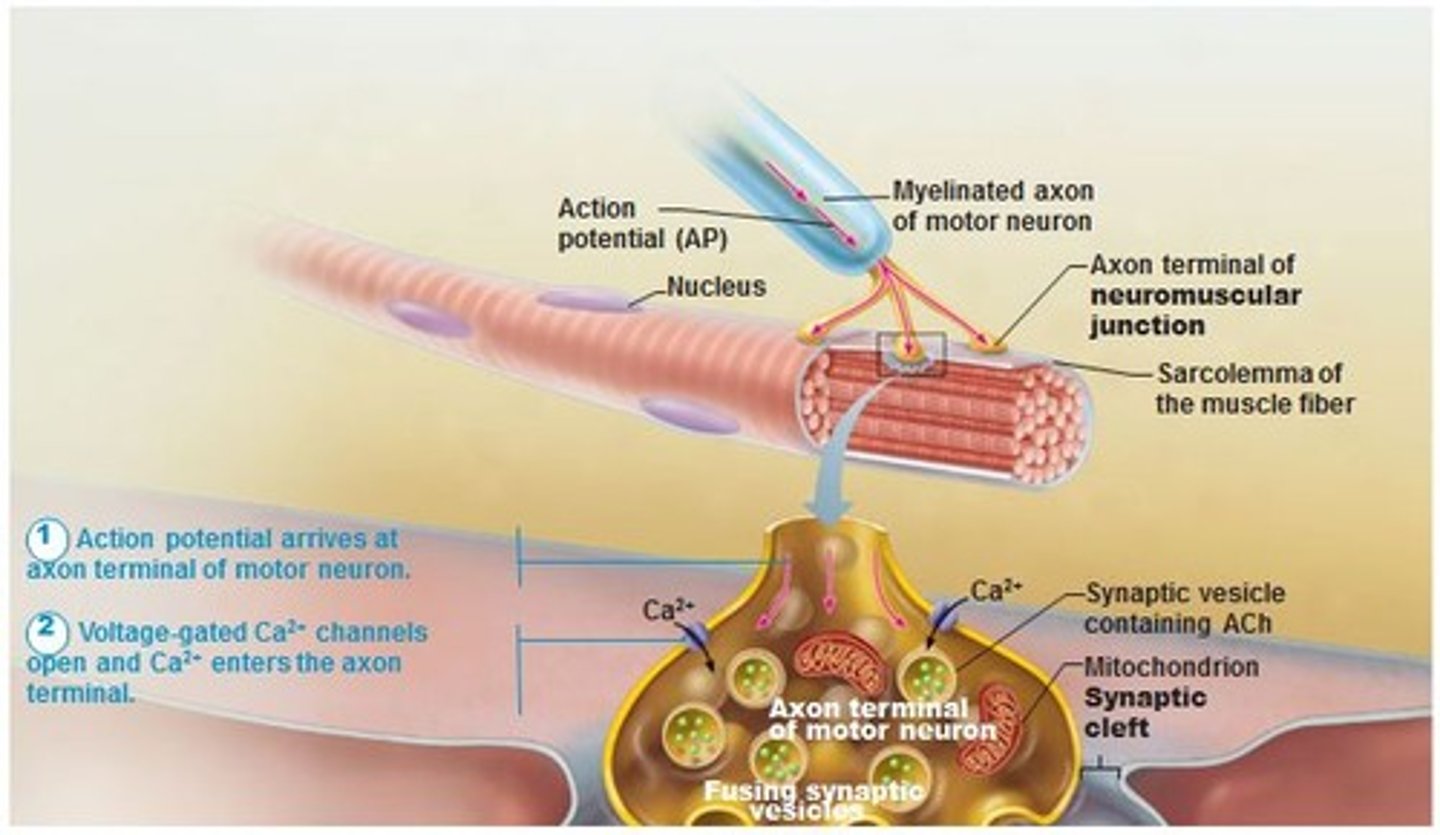
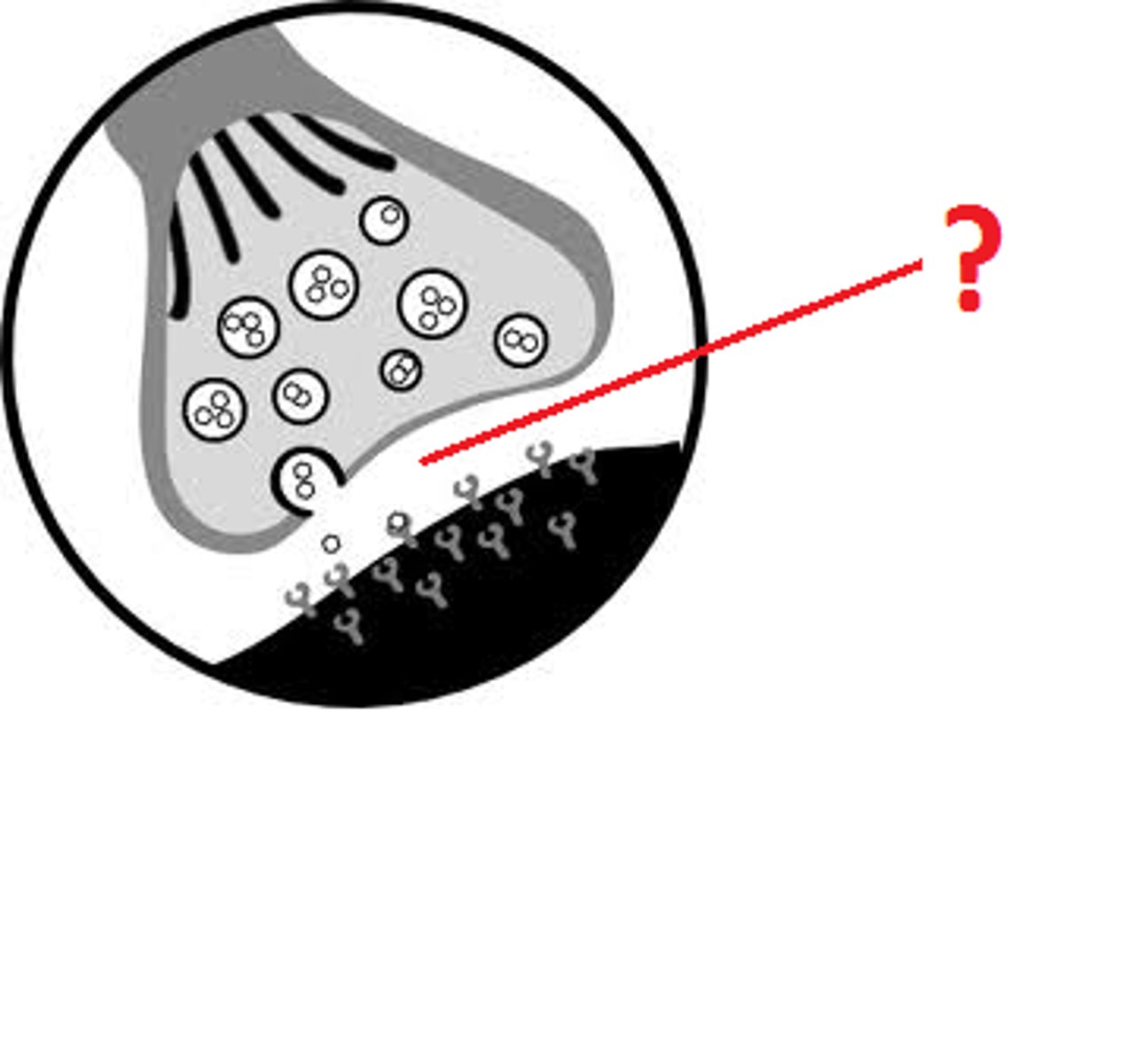
Synaptic cleft
A small fluid-filled gap that separates the neuron and the muscle fiber membranes.
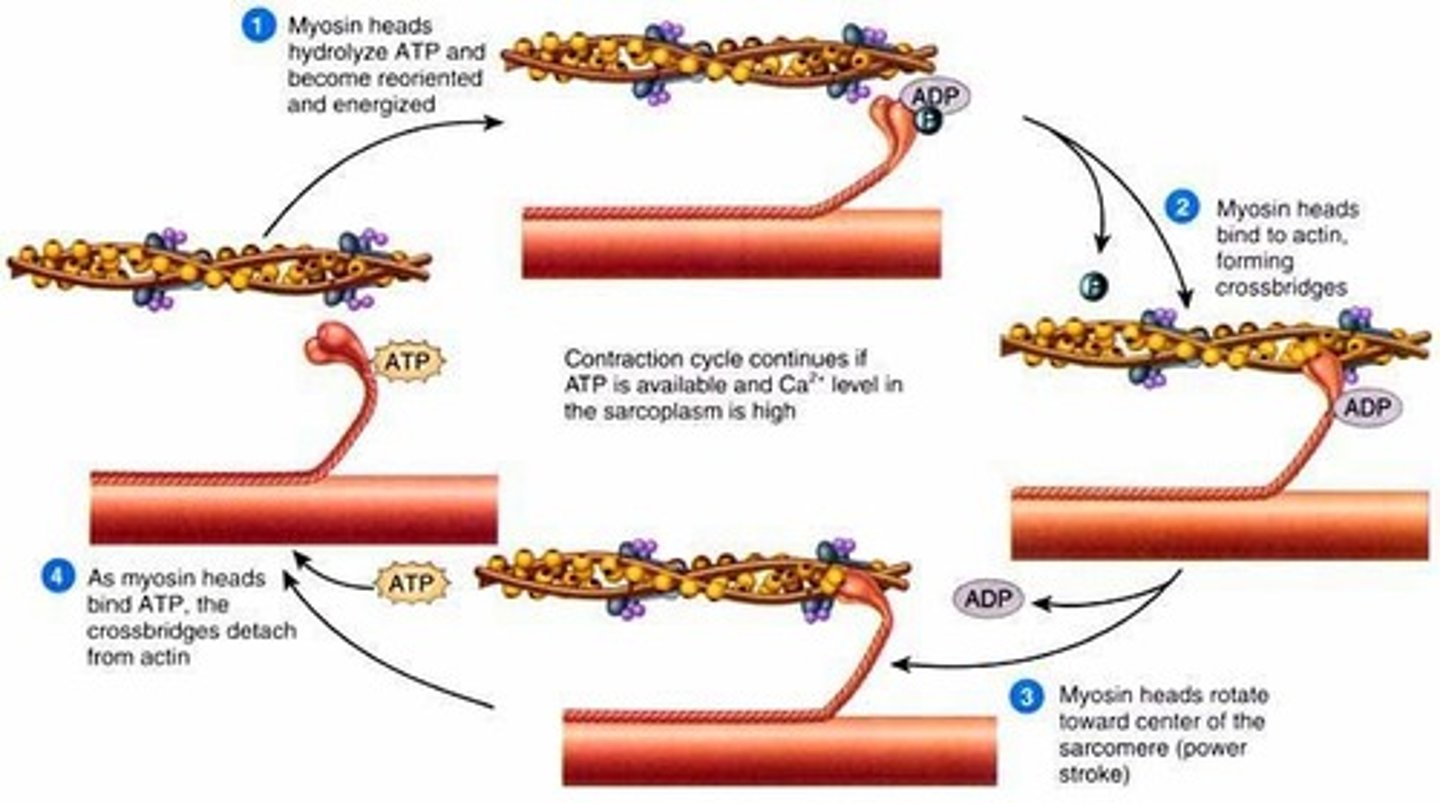
Myosin heads
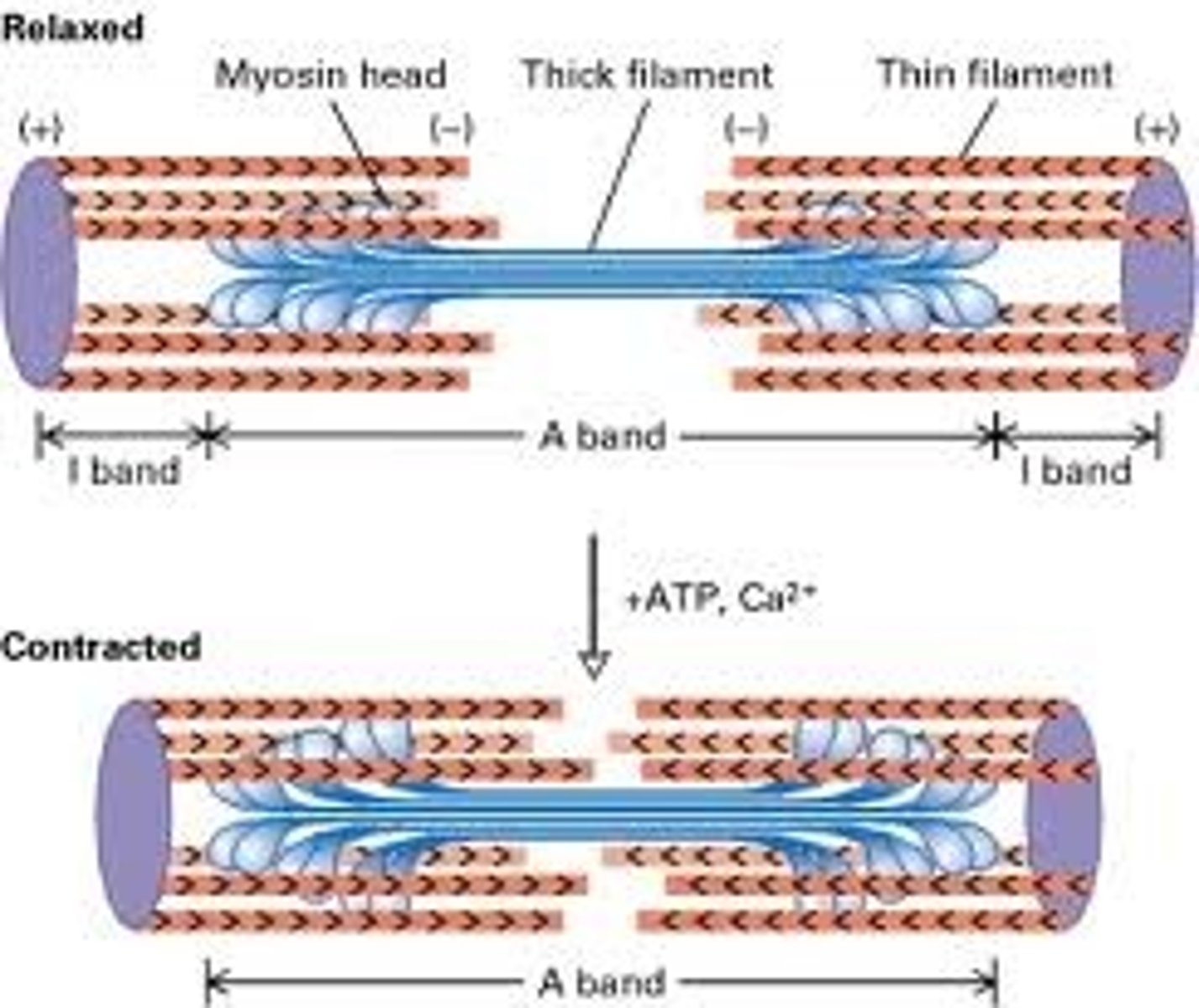
Tug on the thin actin filaments, causing contraction.
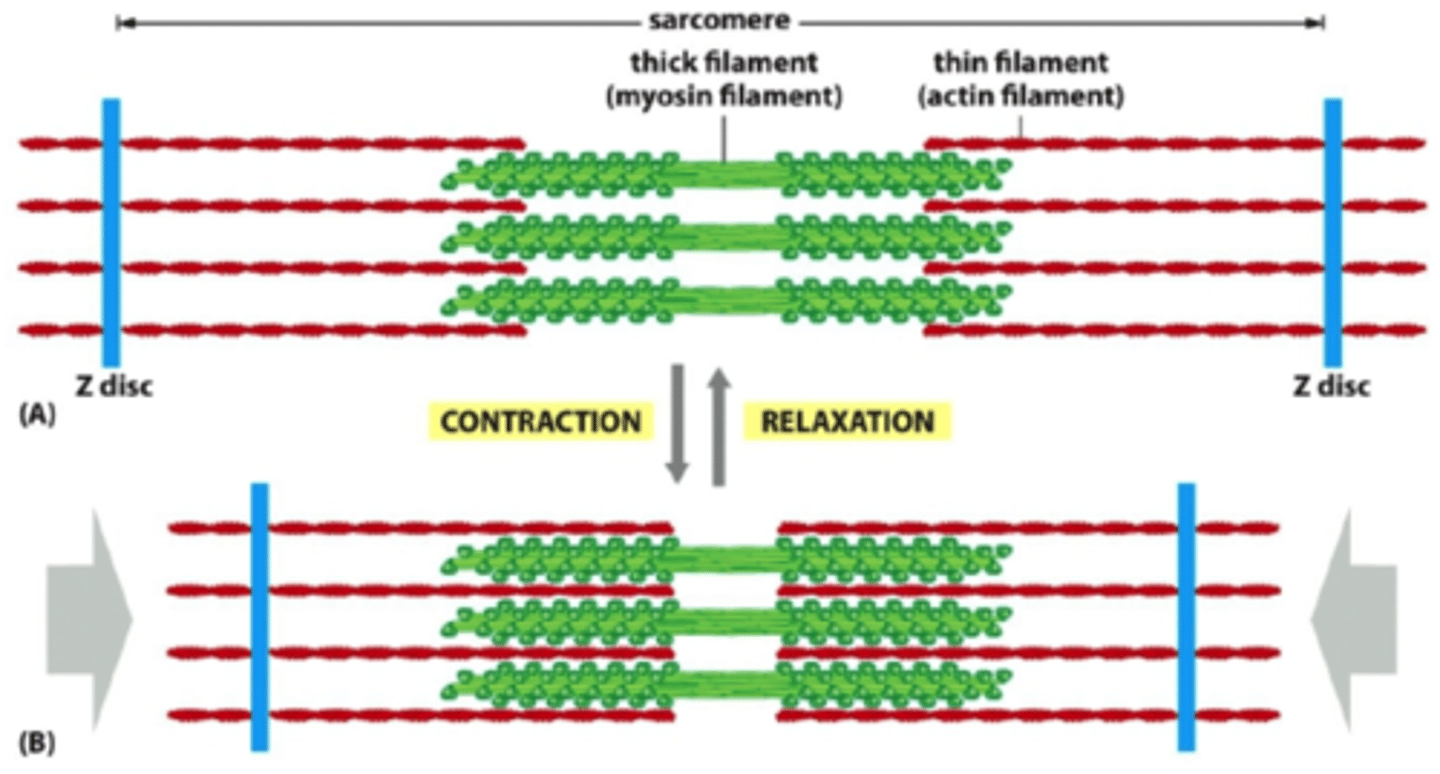
As a muscle shortens, what happens?
I bands shorten.
Distance between Z discs shortens.
H zones disappear.
Contiguous A bands move closer together, but their length does not change.
For a muscle to contract, what sequence of events must occur?
1. Fiber must be stimulated by a nerve ending.
2. An action potential must be generated in the sarcolemma.
3. The action potential must be related along the sarcolemma.
4. Intracellular calcium levels must rise, allowing muscle contraction to occur.
How does a motor neuron stimulate a skeletal muscle fiber?
1. Nerve impulse reaches the end of axon, axon terminal releases ACh into the synaptic cleft.
2. ACh attaches to ACh receptors on the sarcolemma of the fiber.
3. ACh binding triggers electrical events that generate an action potential.
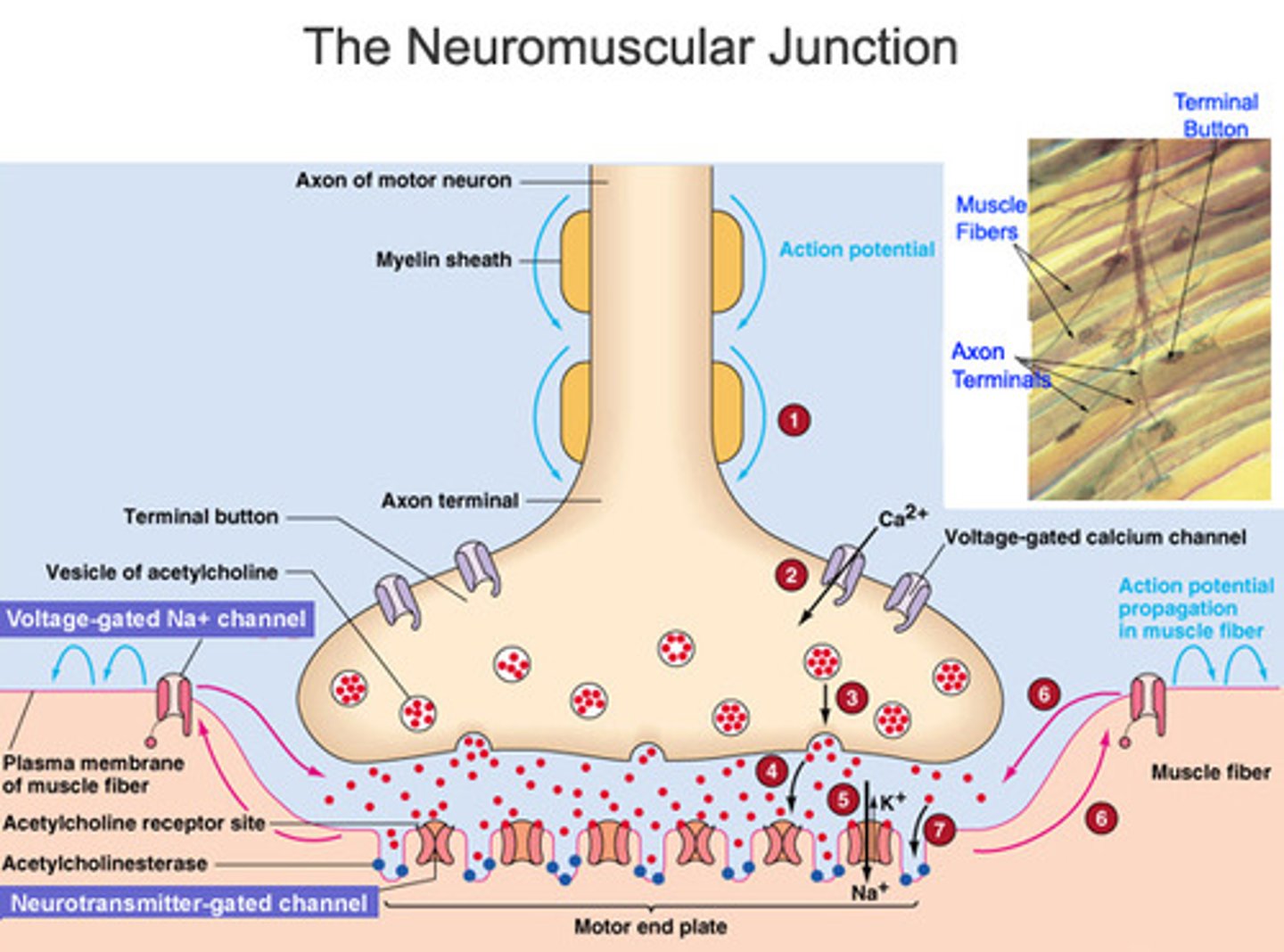
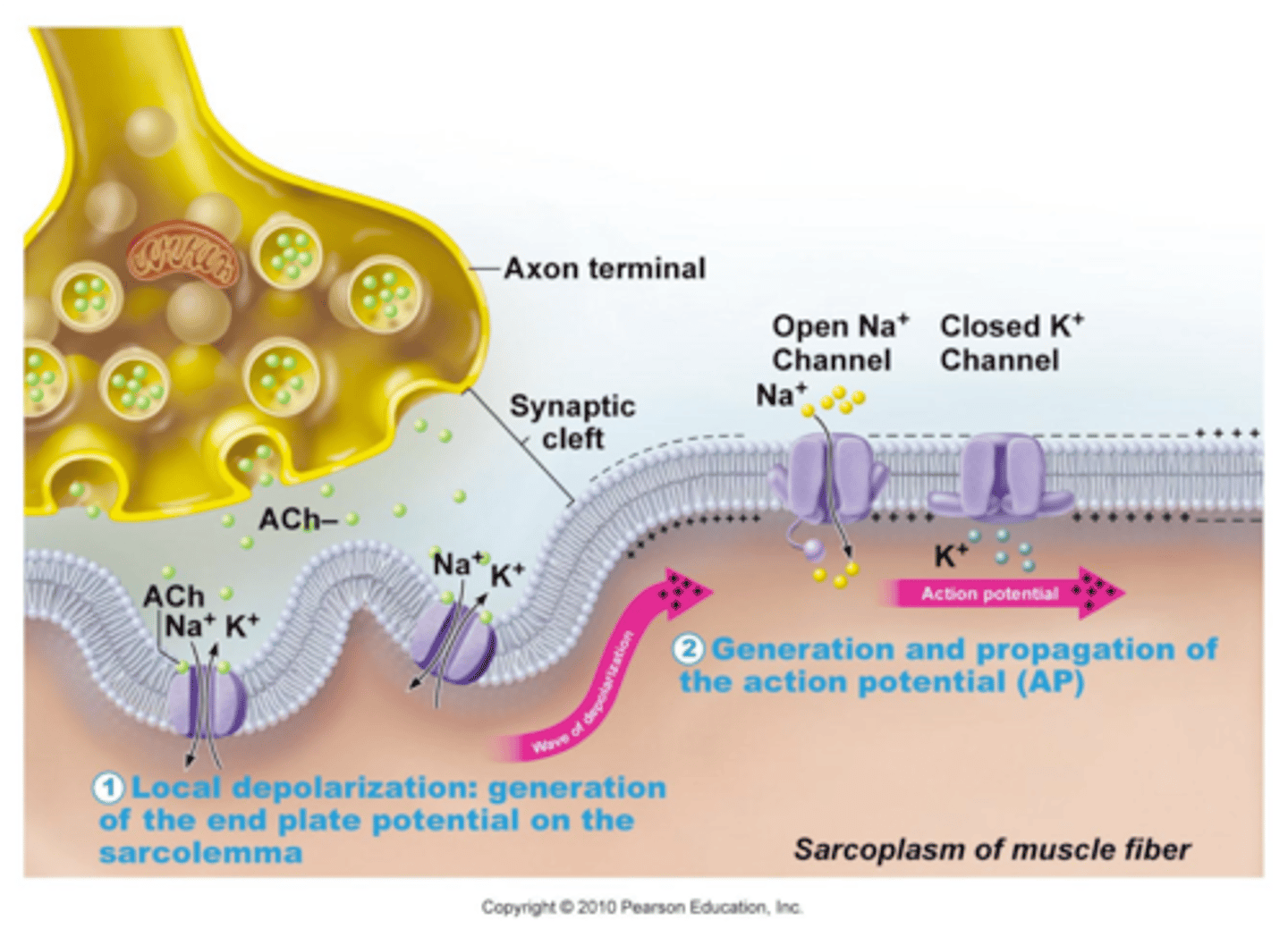
Generation of an action potential in a skeletal muscle fiber
1. Generation of end plate potential. ACh binds, opens Na channels, allowing it in.
2. Depolarization: Generation and propagation of an action potential. More channels open, allowing more and more Na into the cell.
3. Repolarization: returning the sarcolemma to it's polarized state. K channels open, it rushes out at restores the negative charge inside.
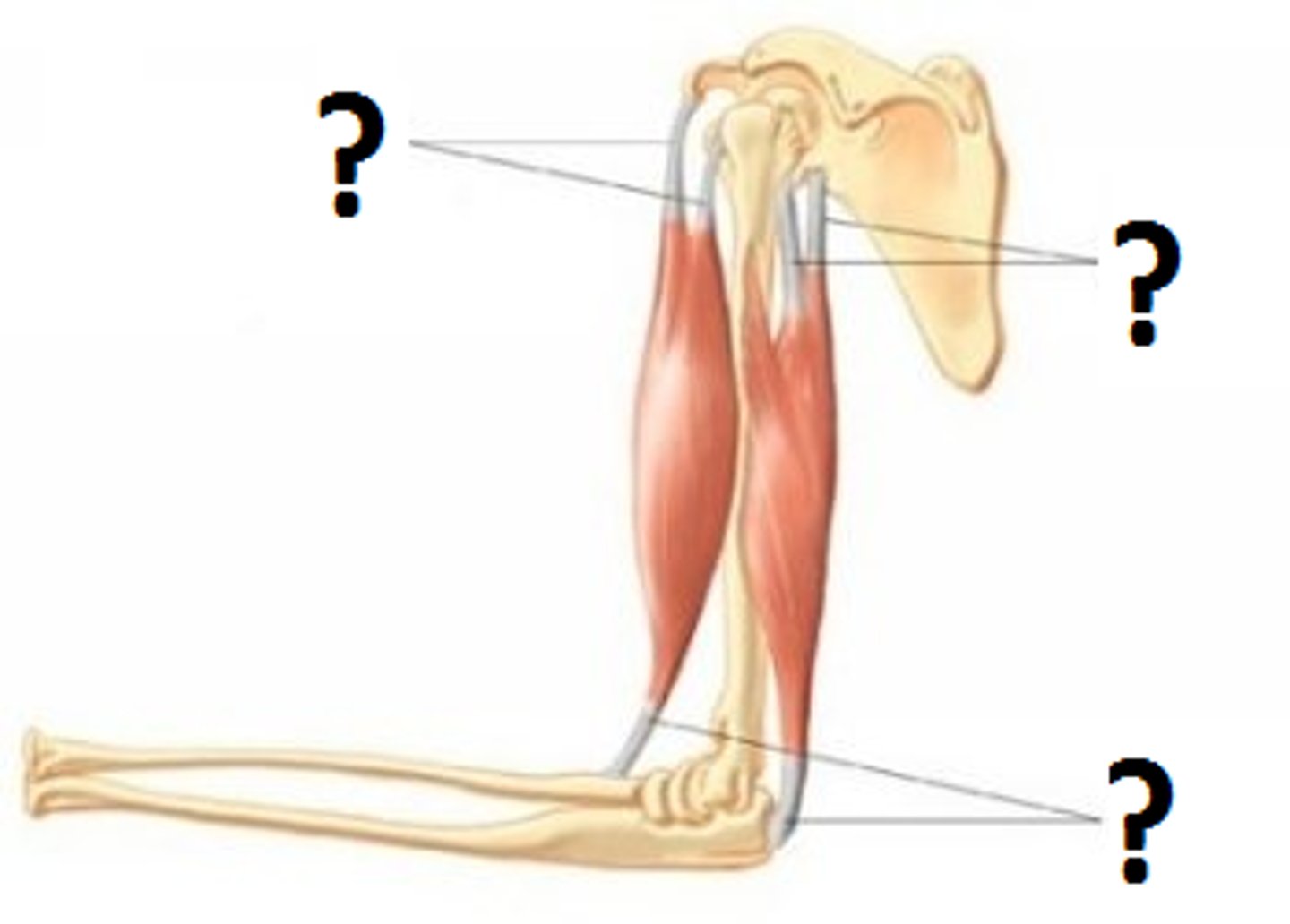
Tendons
Attach muscles to each other or indirectly to bones. Extension of the epimysium. Cordlike.
Muscle Insertion
Movable part of the muscle attachment
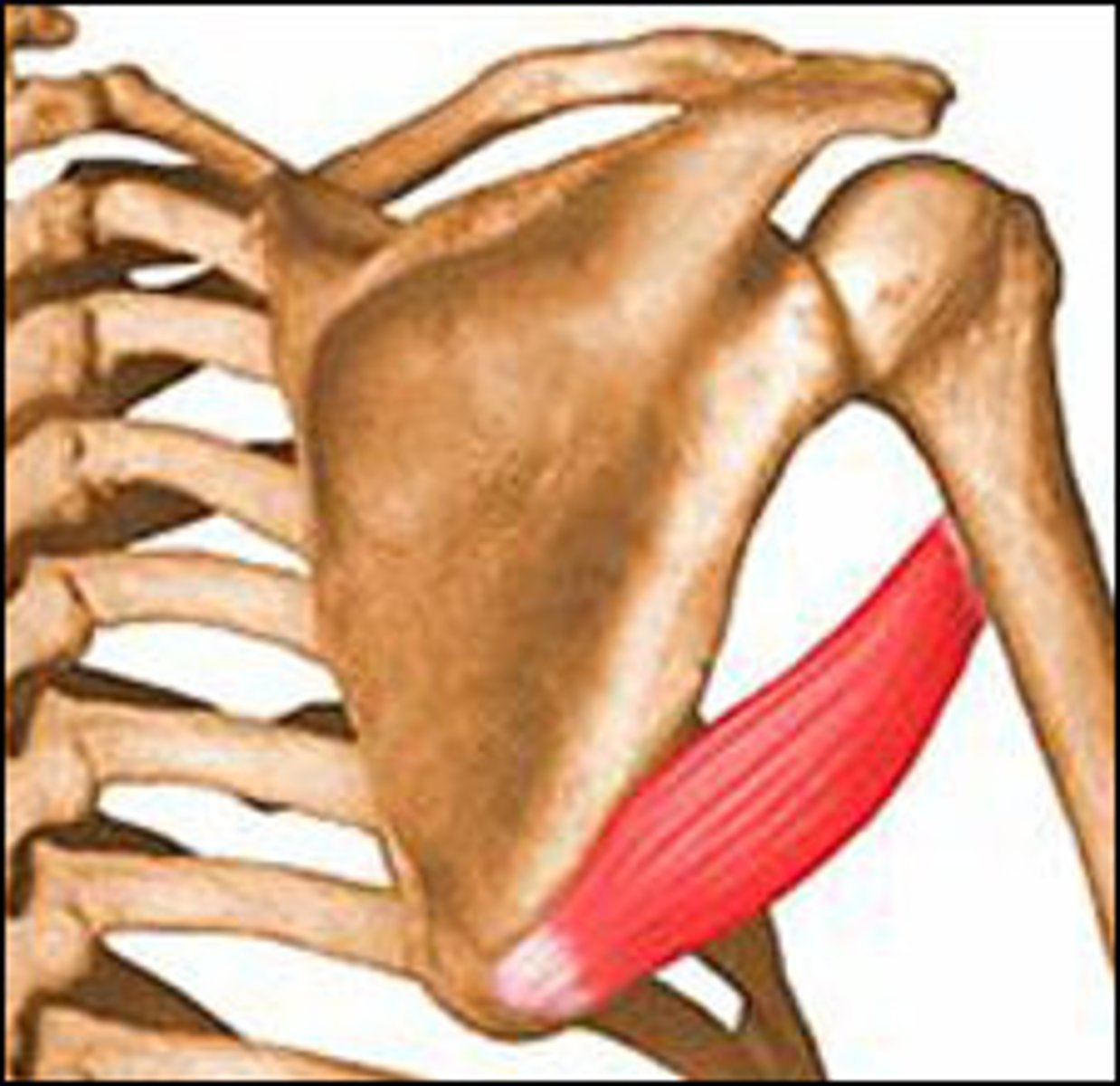
Muscle Origin
Immovable part of the muscle attachment
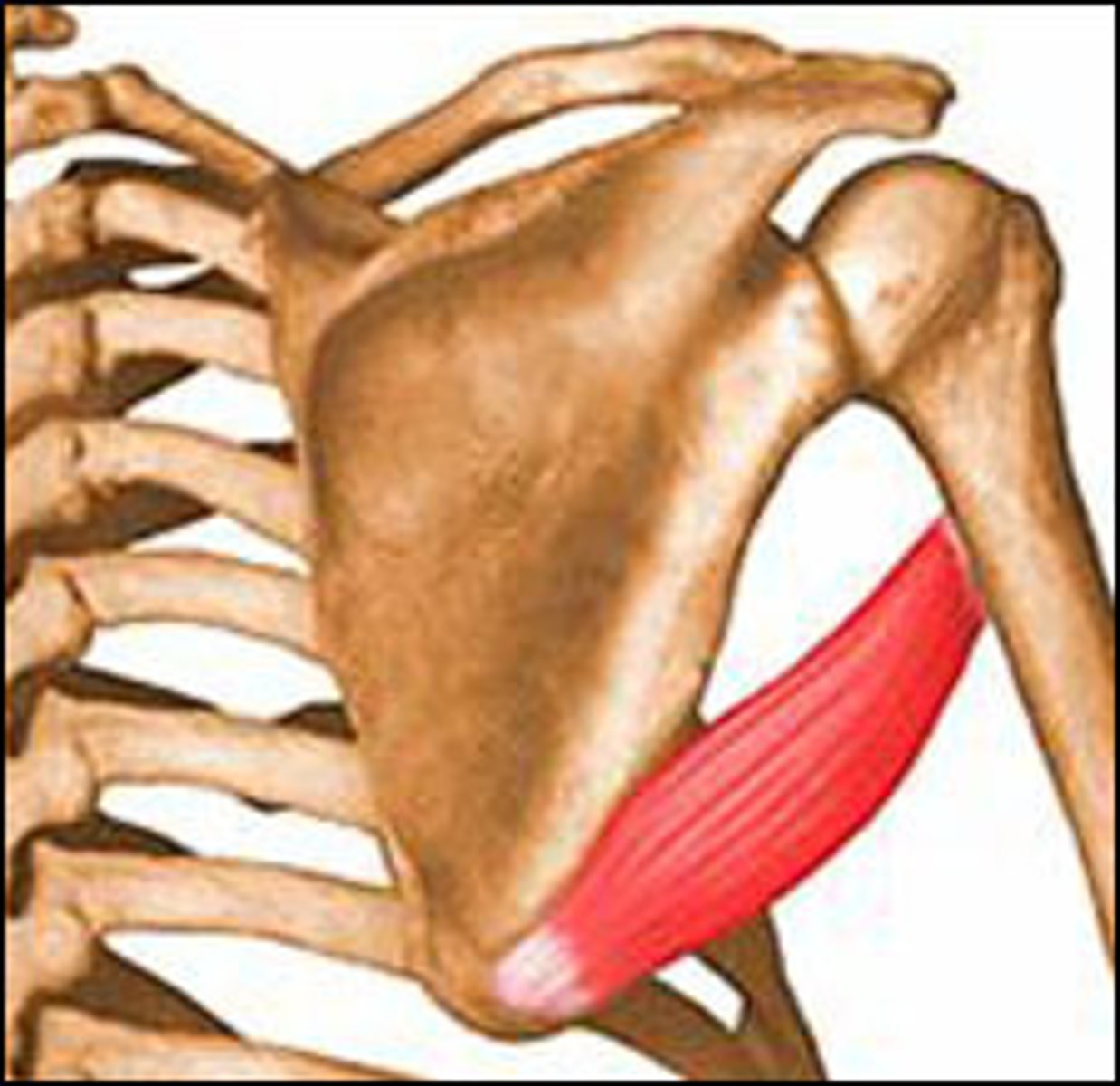
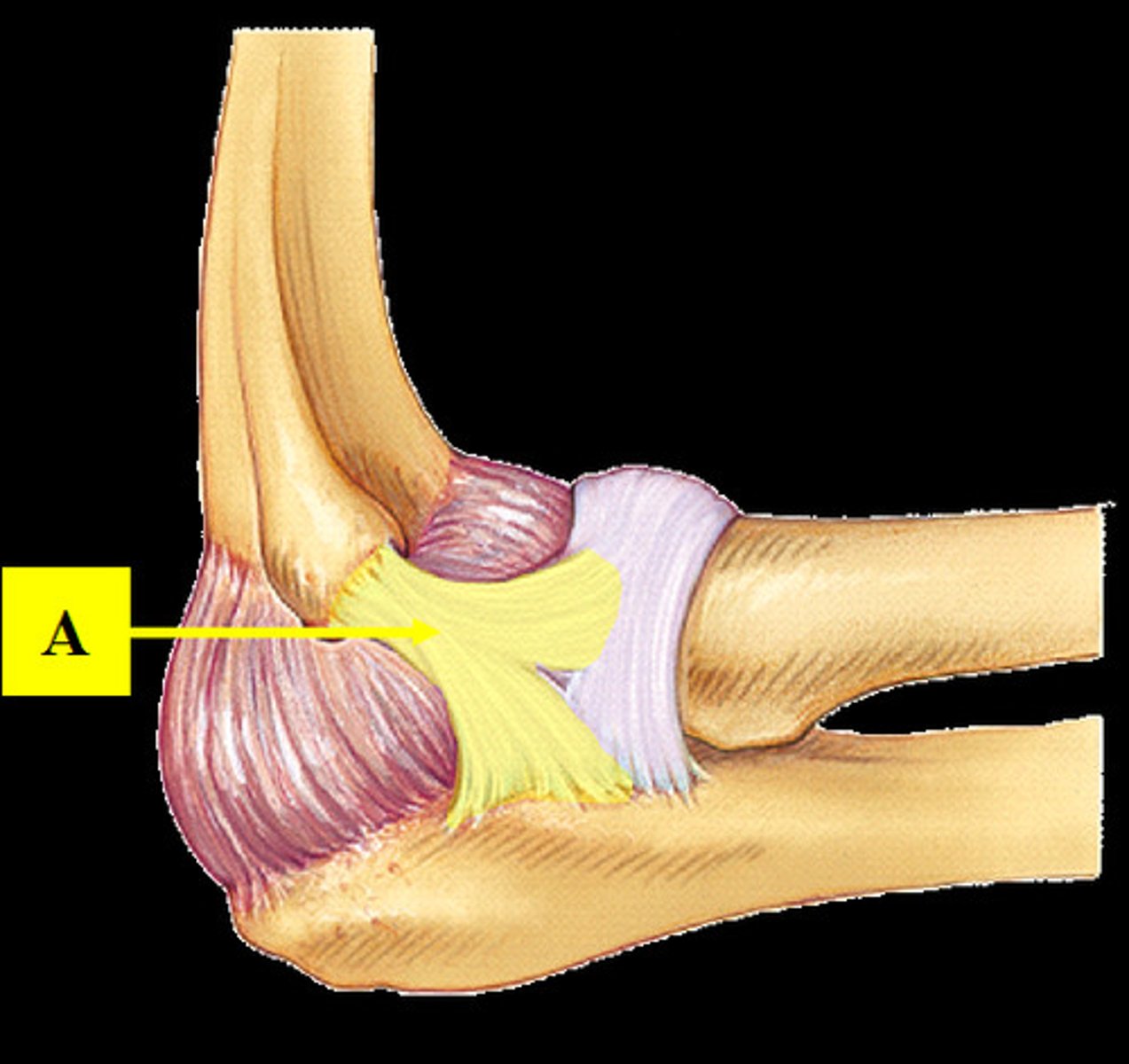
Ligaments
connect bone to bone at joints