Herpetology Amphibians
 Studied by 0 people
 Call Kai
 Learn
Learn Practice Test
 Spaced Repetition
 Match
Match Flashcards
 Knowt Play
1/160

There's no tags or description
Looks like no tags are added yet.
Name | Mastery | Learn | Test | Matching | Spaced | Call with Kai |
|---|
No analytics yet
Send a link to your students to track their progress
161 Terms
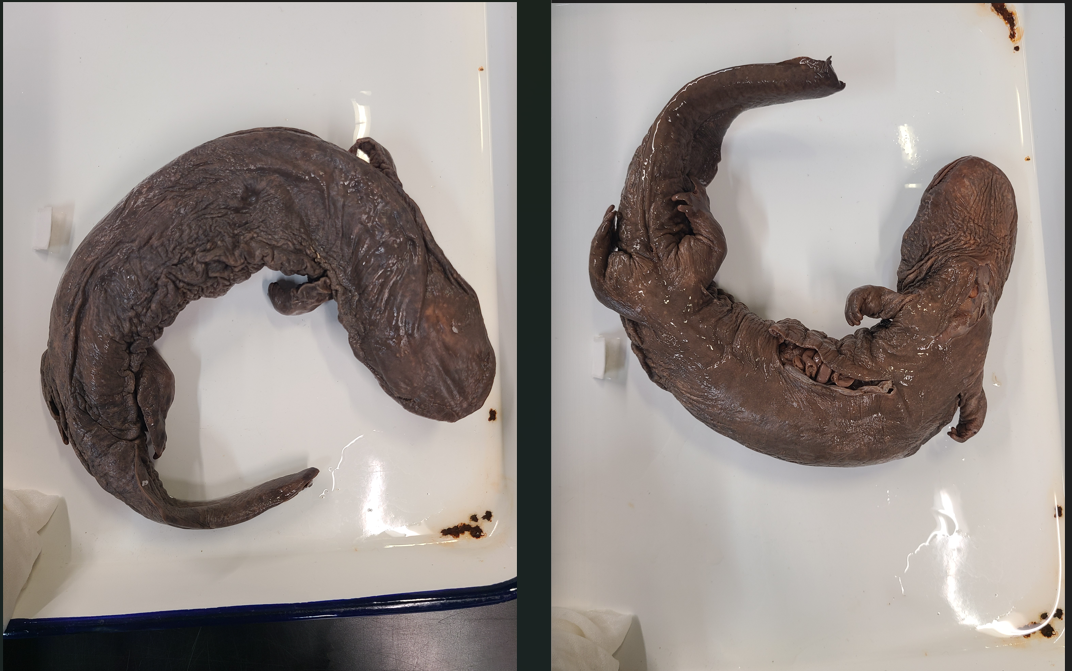
Scientific name and diagnostic features
Cryptobranchus alleganiensis, large with flat head
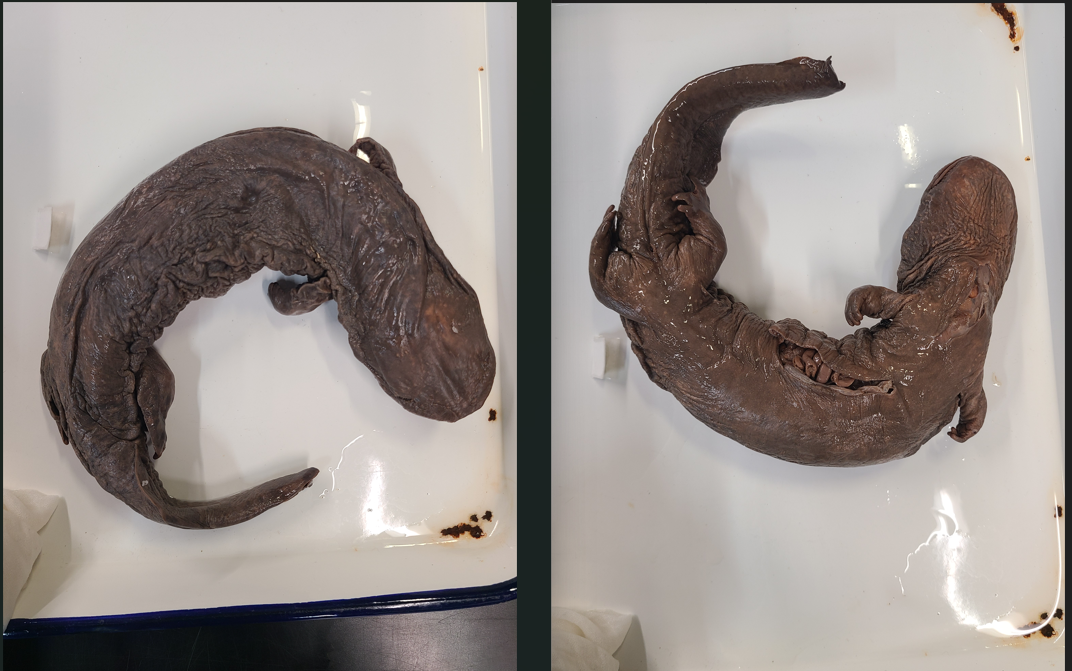
Order and Family of Cryptobranchus alleganiensis
Caudata Cryptobranchidae
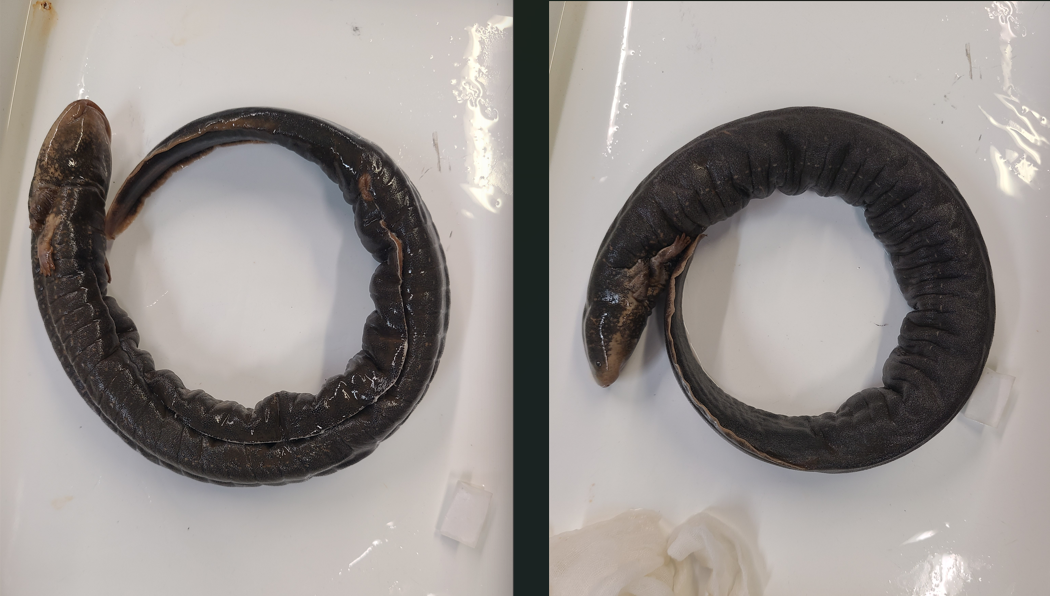
Scientific name and diagnostic features
Siren intermedia, lack hindlimbs
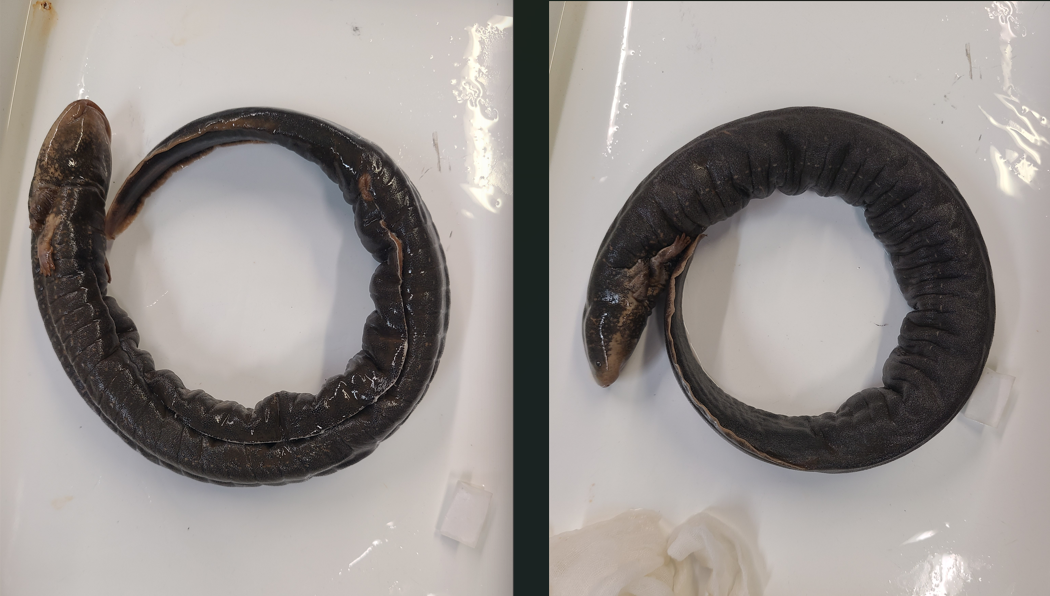
Order and Family of Siren intermedia
Caudata Sirenidae
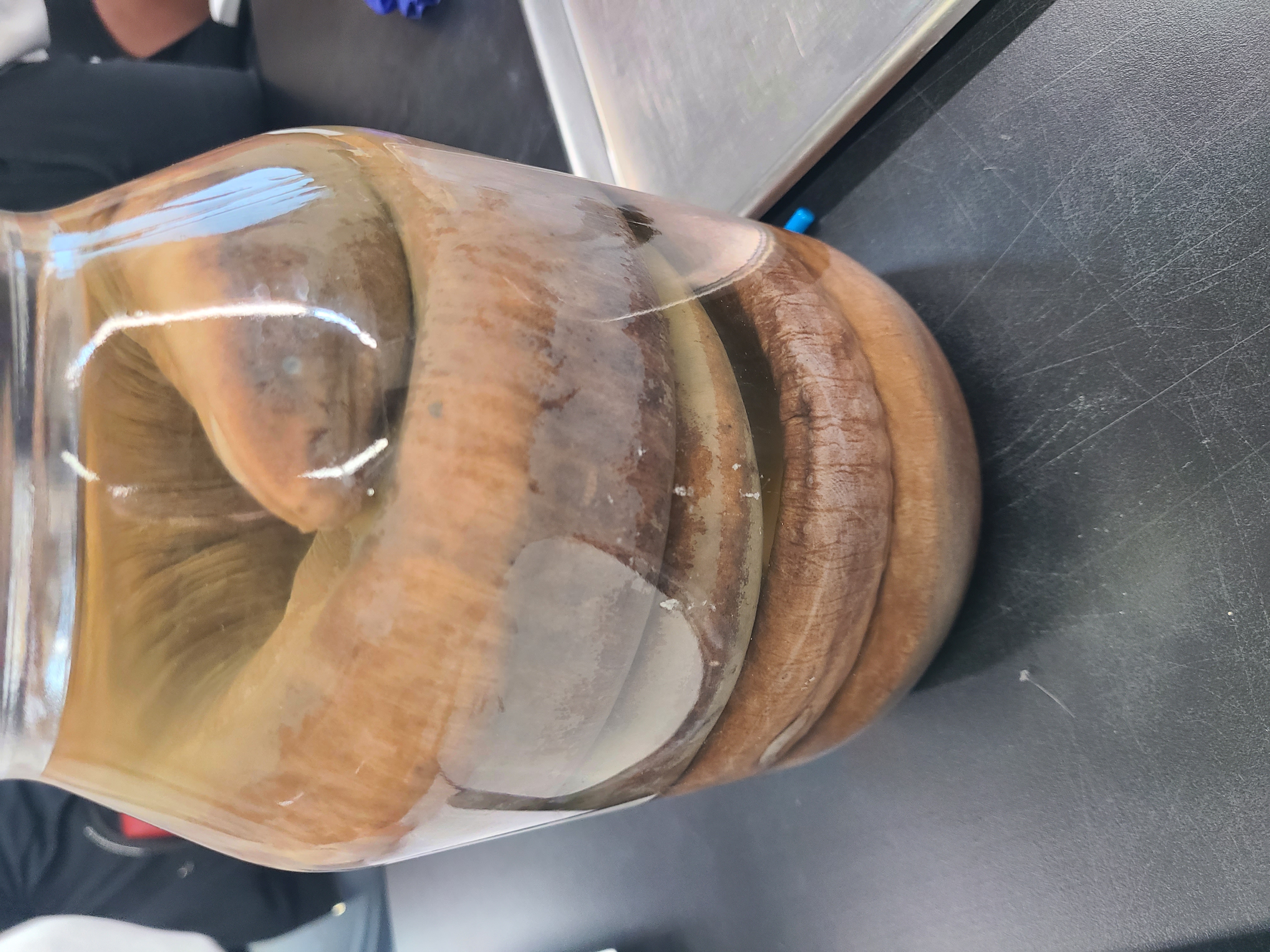
Scientific name and diagnostic features
Amphiuma tridactylum, eel-like body and three toes
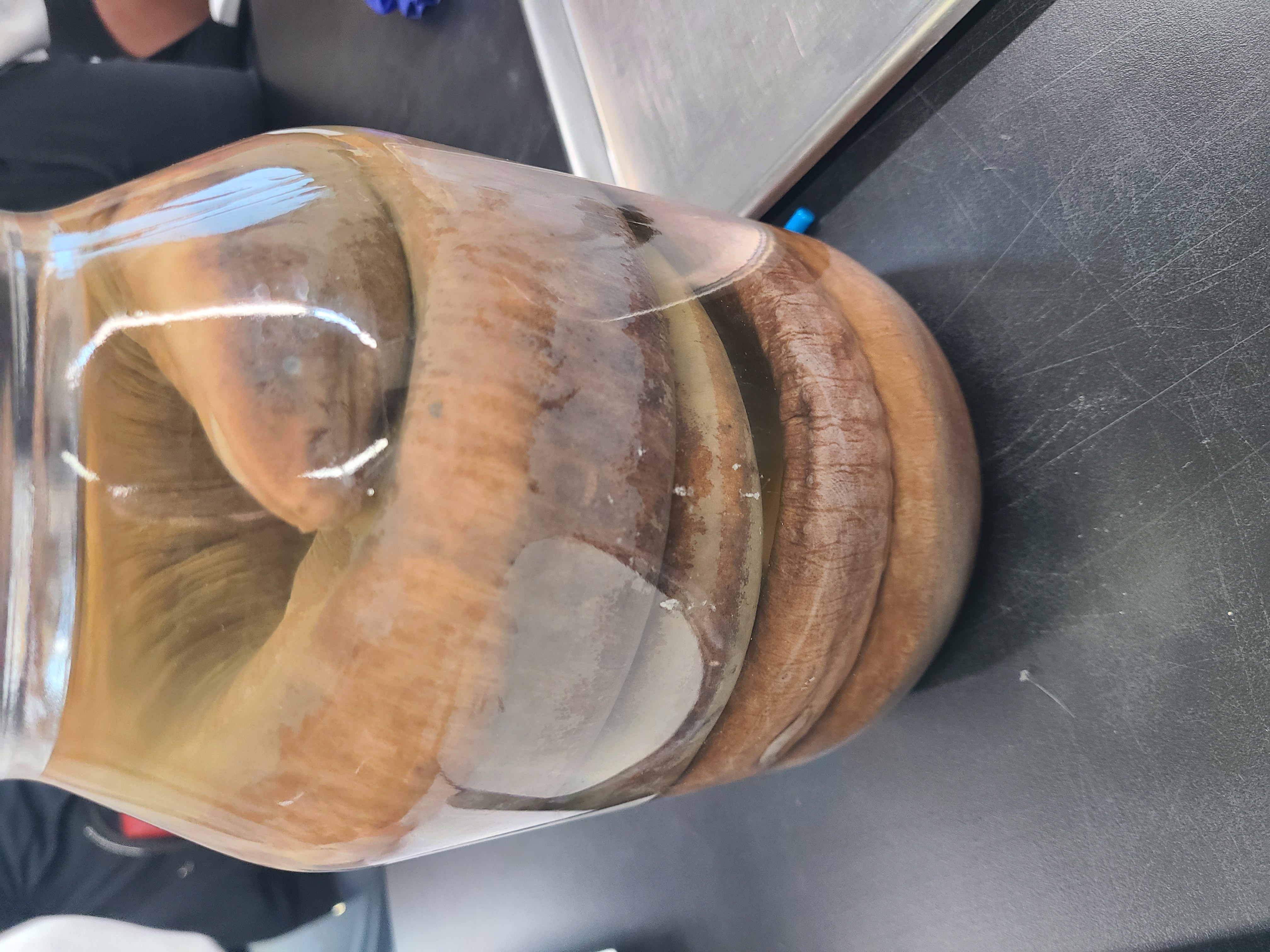
Order and Family of Amphiuma tridactylum
Caudata Amphiumidae
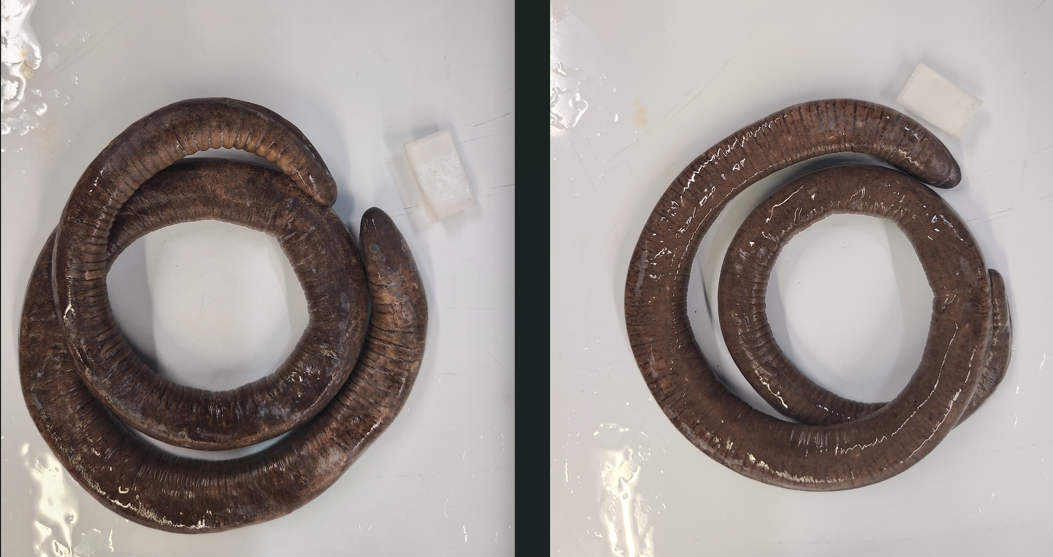
Scientific name and diagnostic features
Typhlonectes sp., Only primary annuli
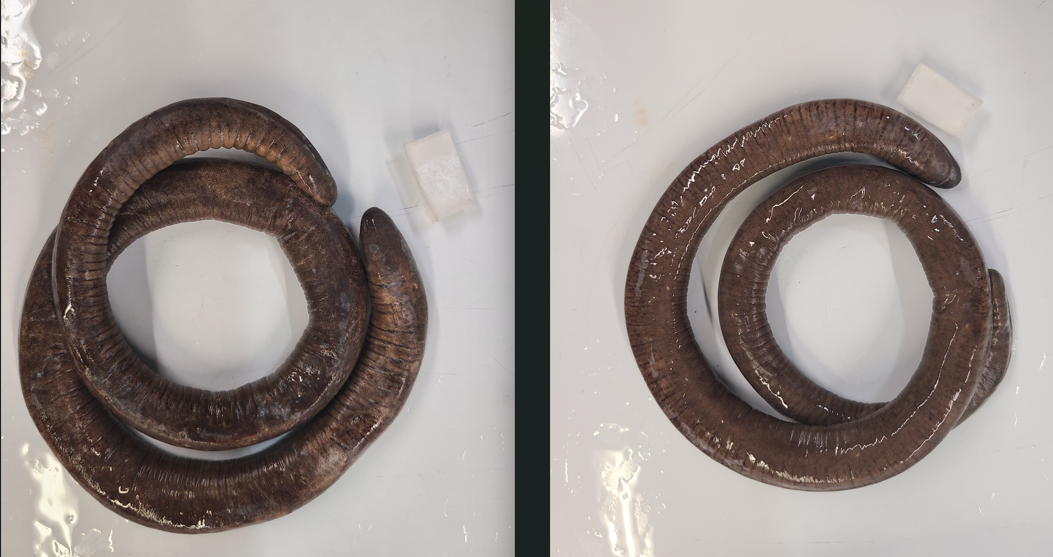
Order and Family of Typhlonectes sp.
Gymnophiona Typhlonectidae
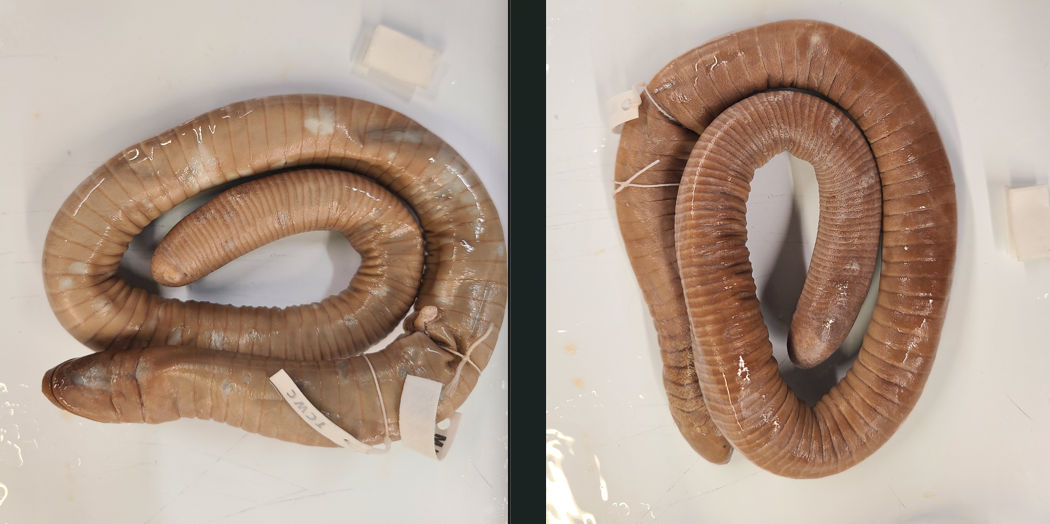
Scientific name and diagnostic features
Dermophis sp., primary and secondary annuli
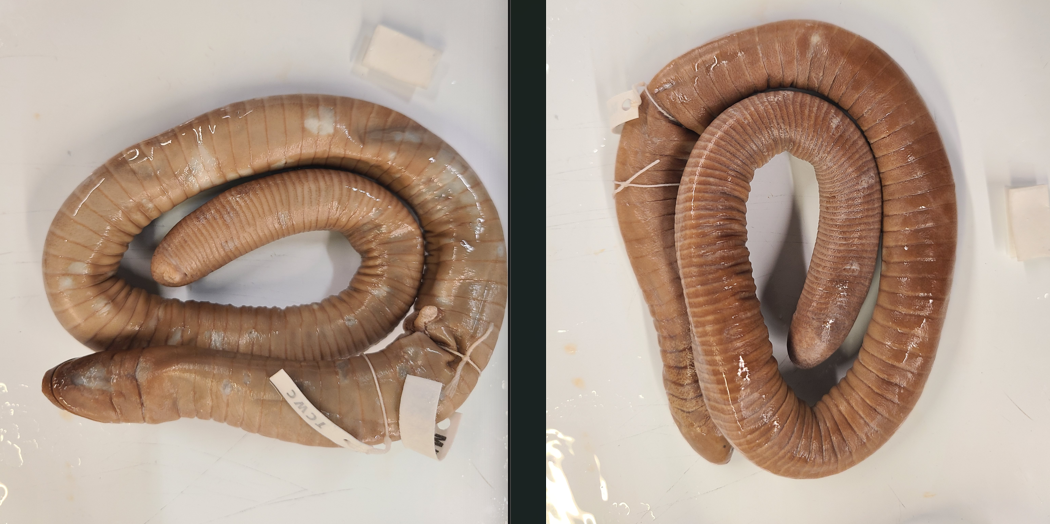
Order and Family of Dermophis sp.
Gymnophiona Dermophiidae
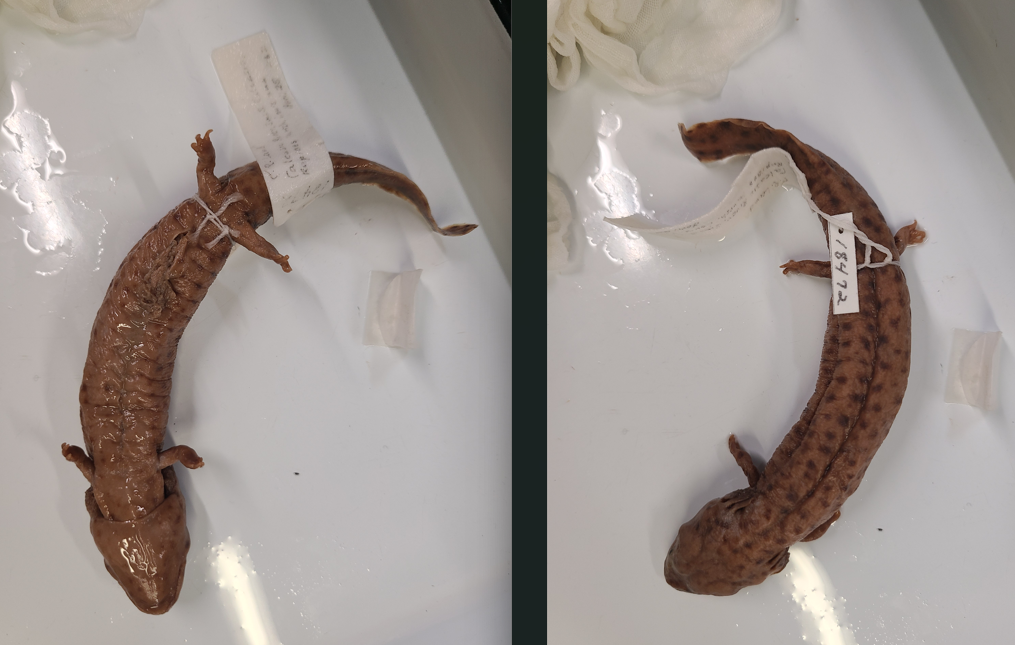
Scientific name and diagnostic features
Necturus beyeri, external gills and laterally flattened tail and 4 toes
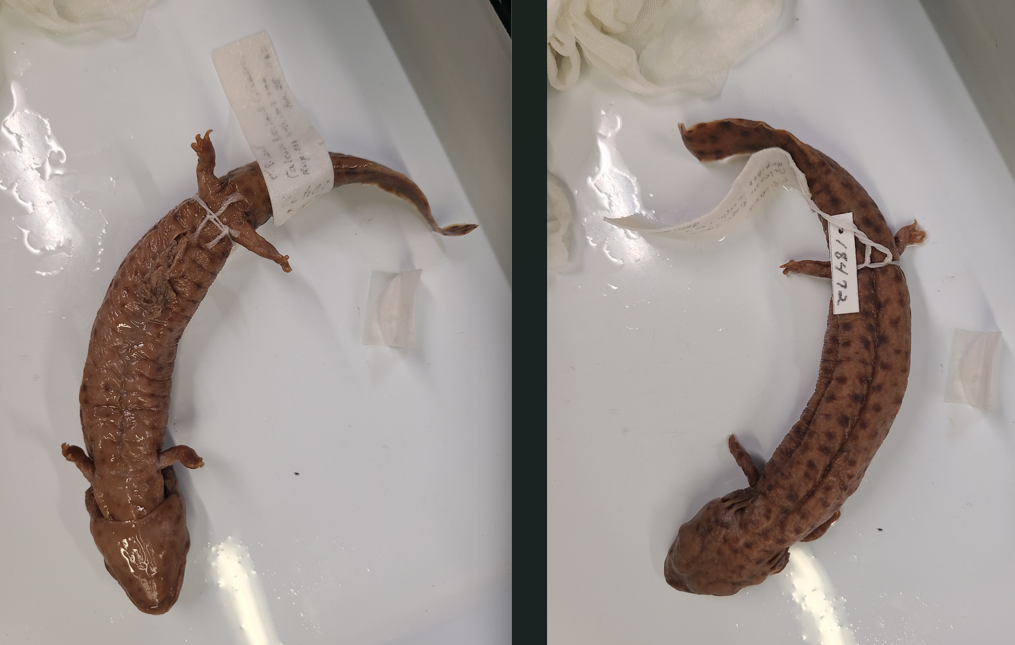
Order and Family of Necturus beyeri
Caudata Proteidae
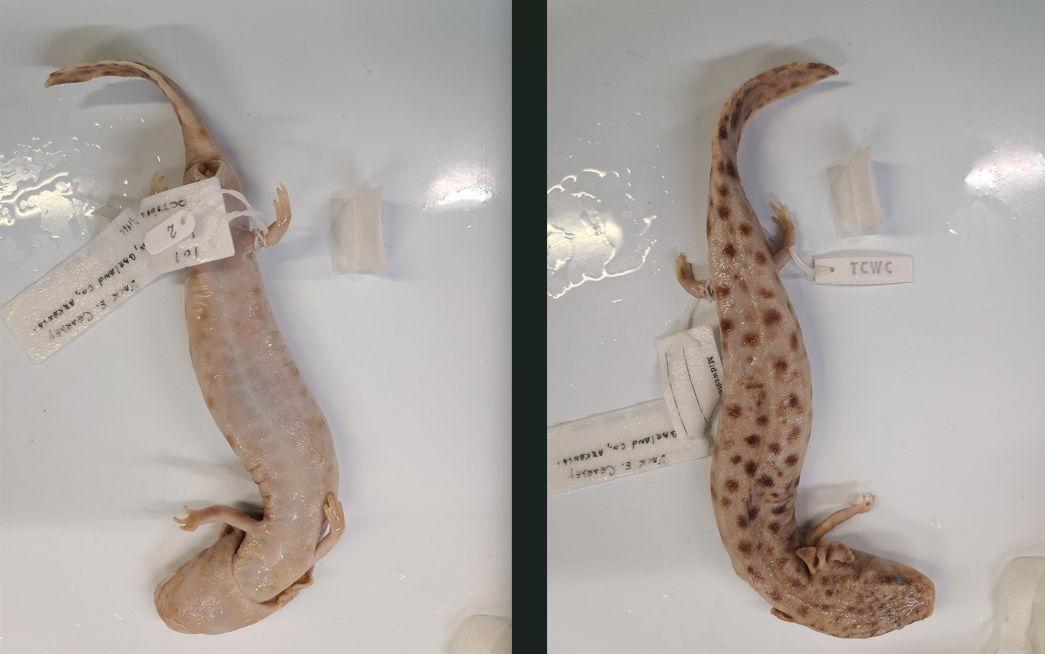
Scientific name and diagnostic features
Necturus maculosus, spotted and pointed tail and 4 toes
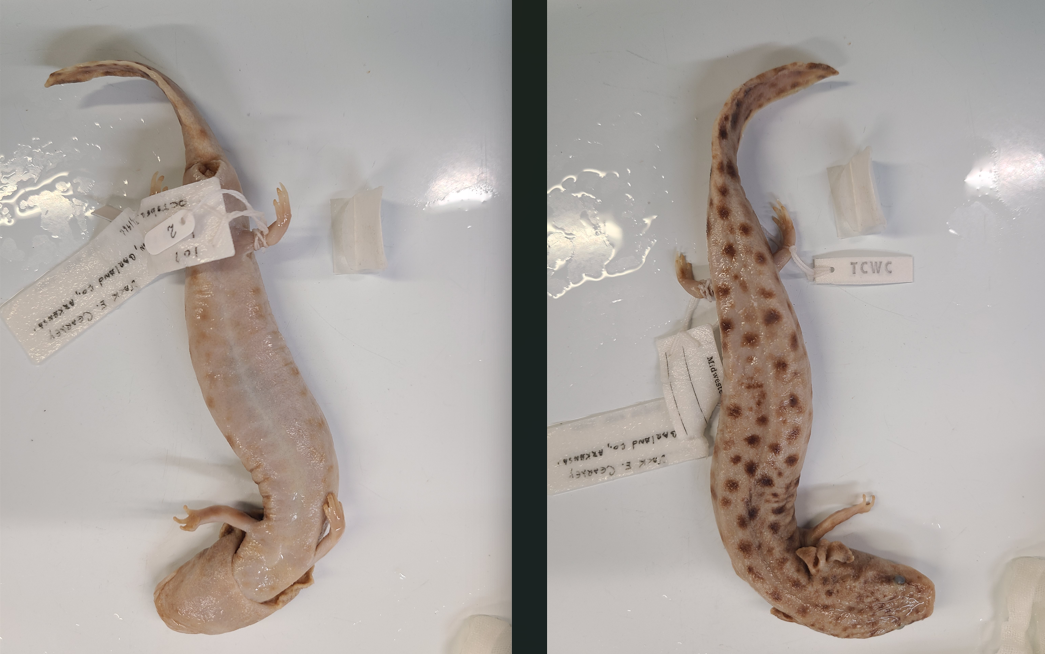
Order and Family of Necturus maculosus
Caudata Proteidae
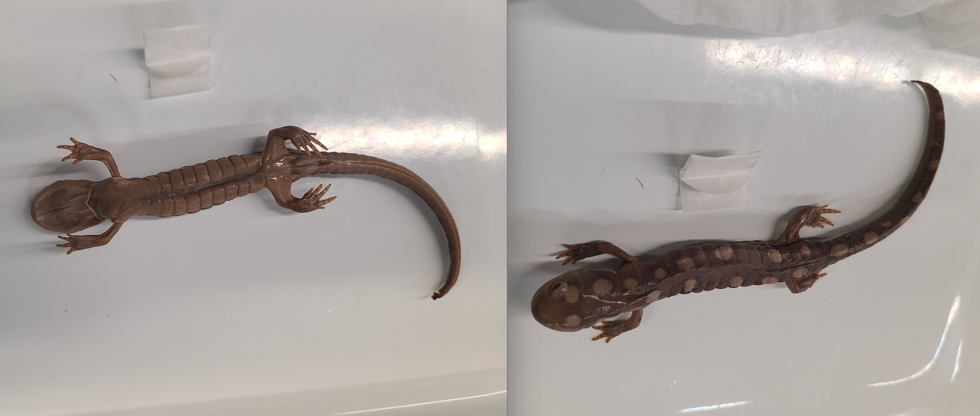
Scientific name and diagnostic features
Ambystoma maculatum, spots only on top
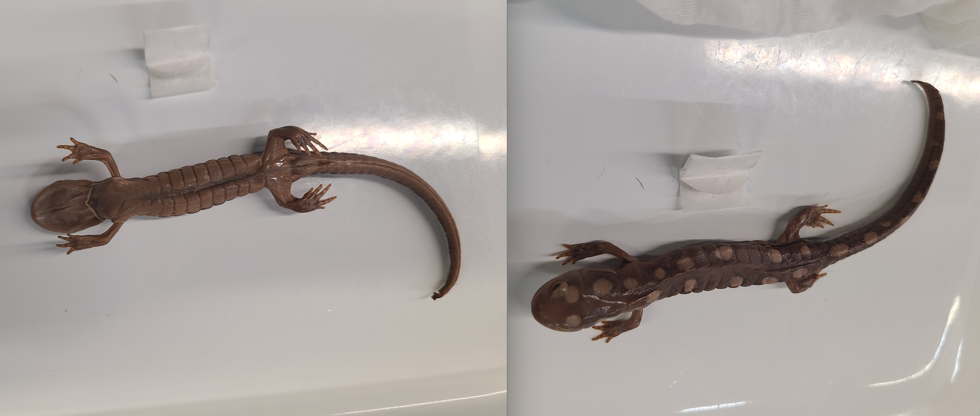
Order and Family of Ambystoma maculatum
Caudata Ambystomatidae
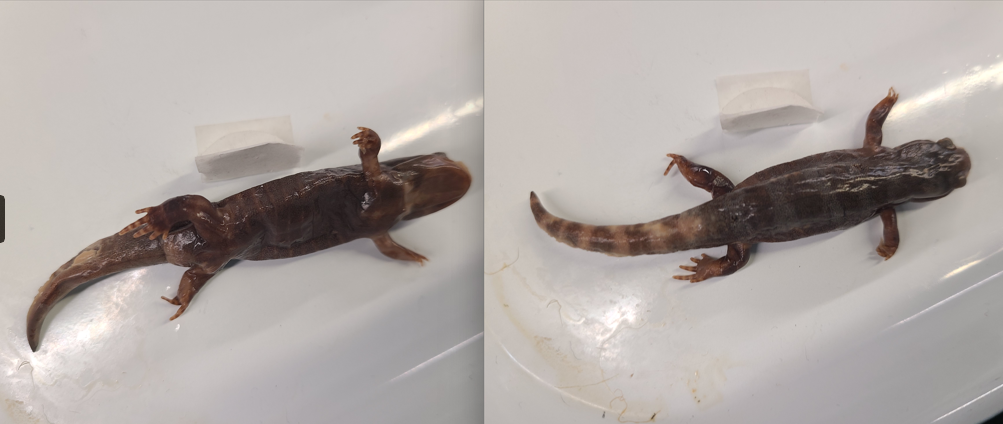
Scientific name and diagnostic features
Ambystoma opacum, ladderlike pattern
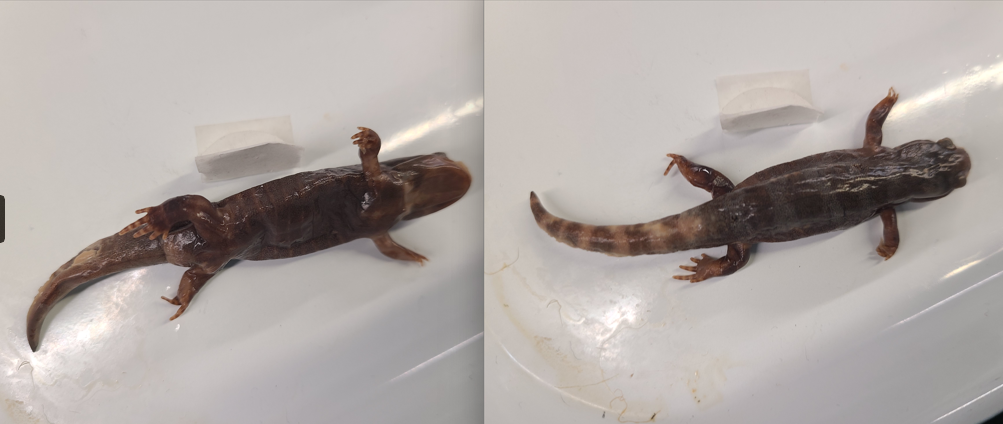
Order and Family of Ambystoma opacum
Caudata Ambystomatidae
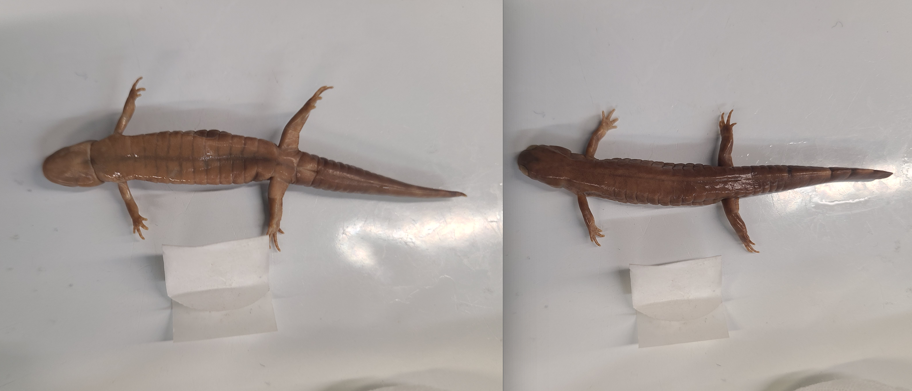
Scientific name and diagnostic features
Ambystoma texanum, muted color and small mouth
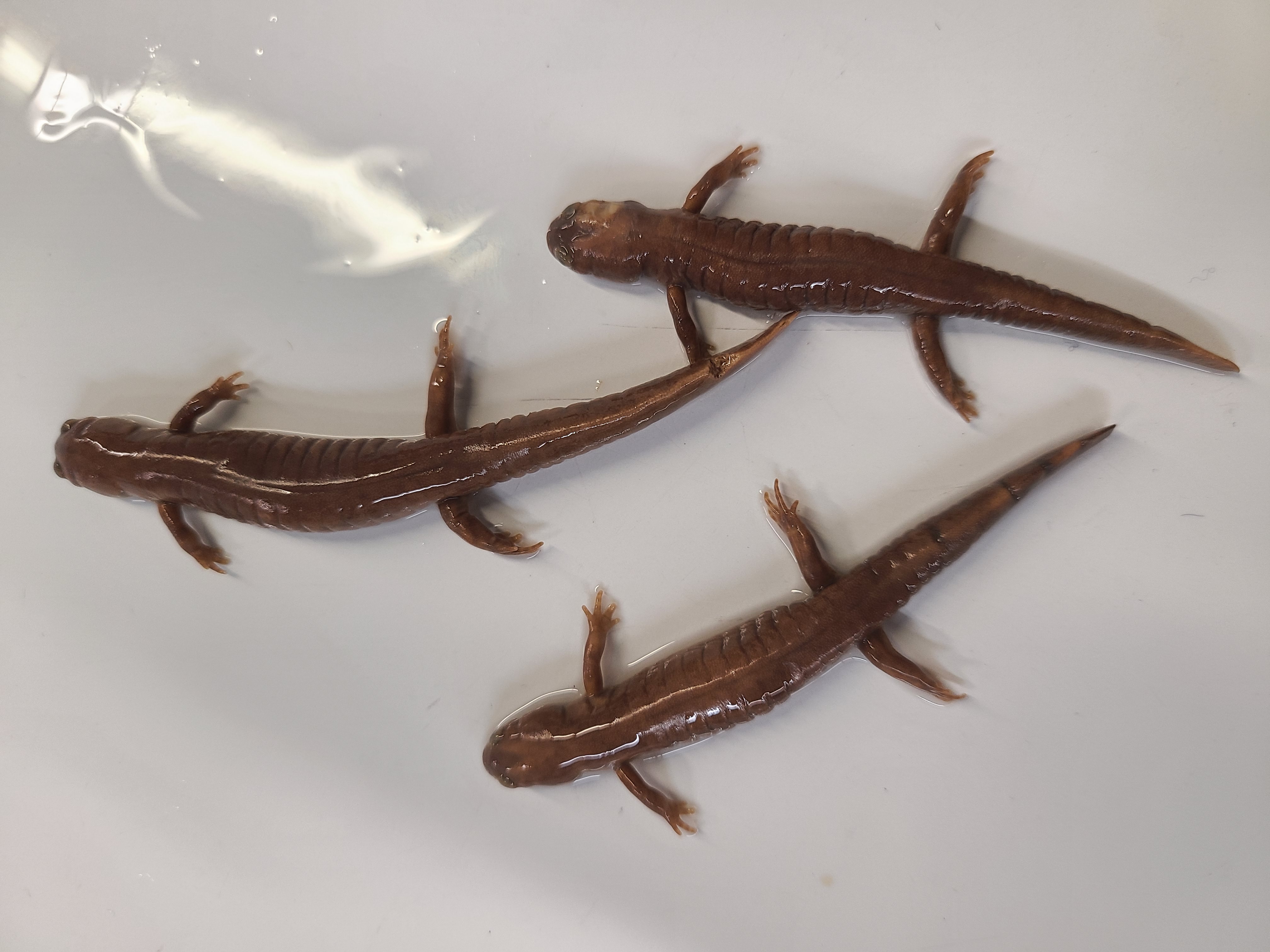
Order and Family of Ambystoma texanum
Caudata Ambystomatidae
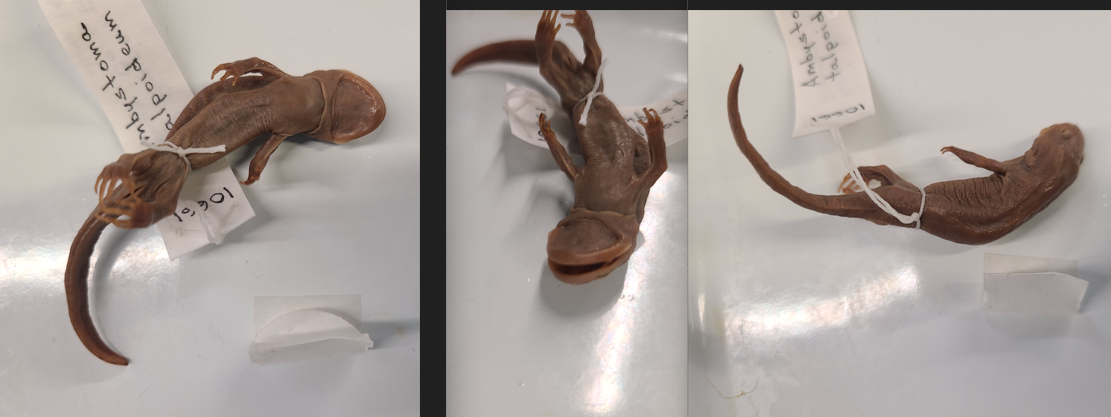
Scientific name and diagnostic features
Ambystoma talpoideum, head larger than neck and large mouth
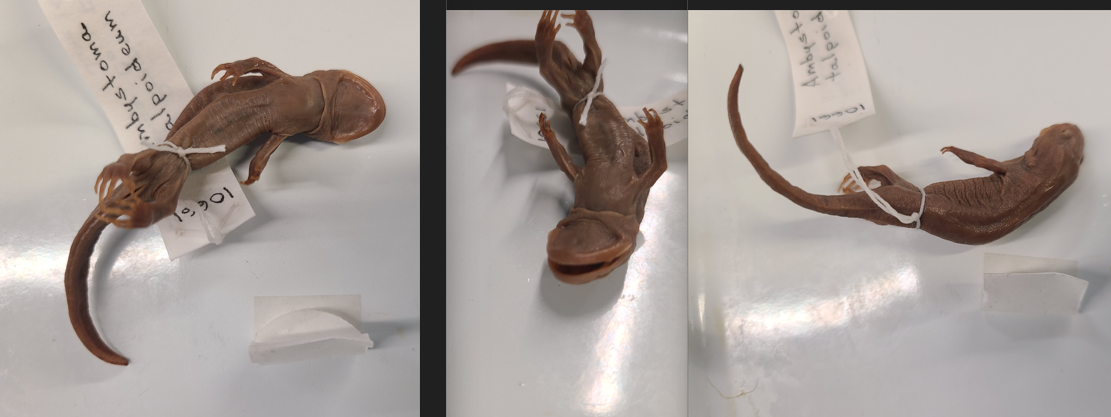
Order and Family of Ambystoma talpoideum
Caudata Ambystomatidae
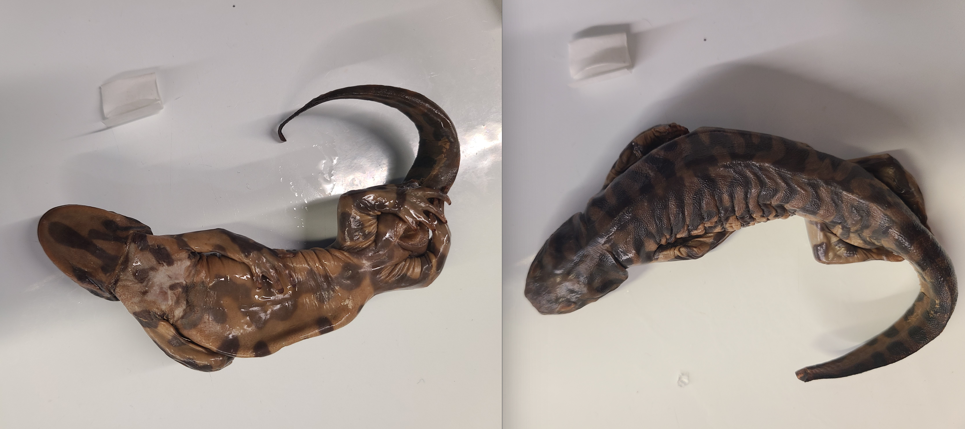
Scientific name and diagnostic features
Ambystoma tigrinum, large and distinct patterns
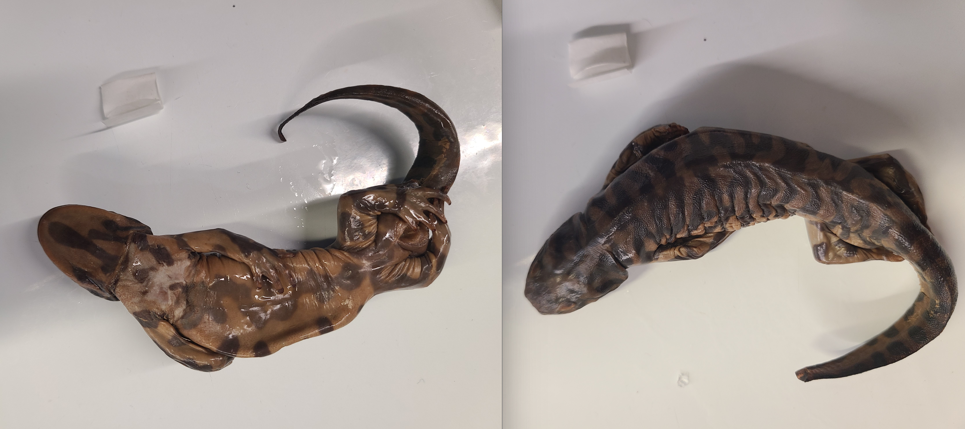
Order and Family of Ambystoma tigrinum
Caudata Ambystomatidae
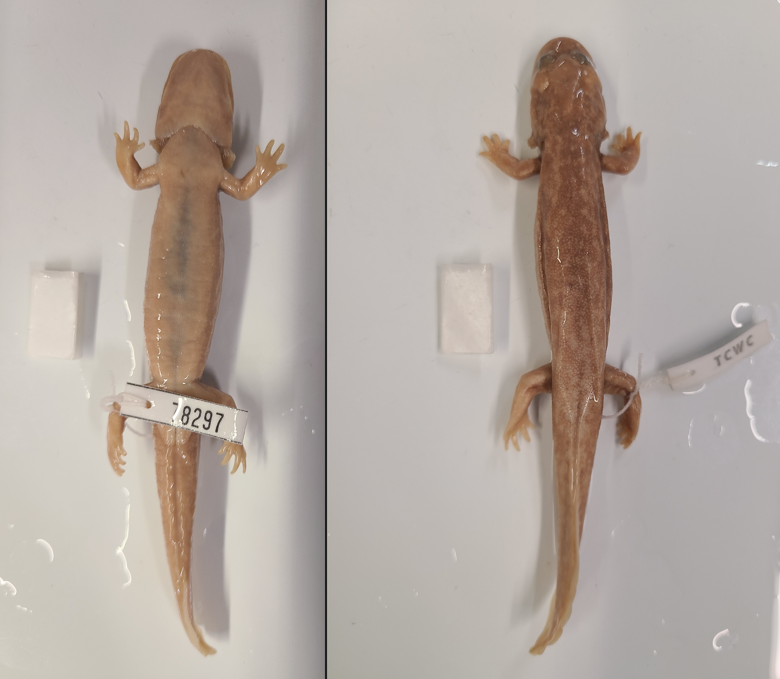
Scientific name and diagnostic features
Dicamptodon copei, external gills and front-facing eyes
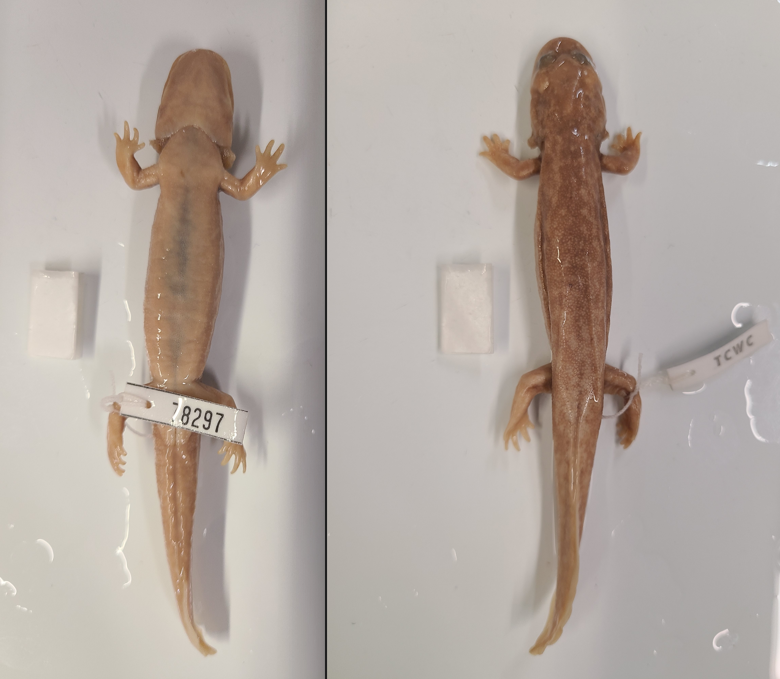
Order and Family of Dicamptodon copei
Caudata Dicamptodontidae
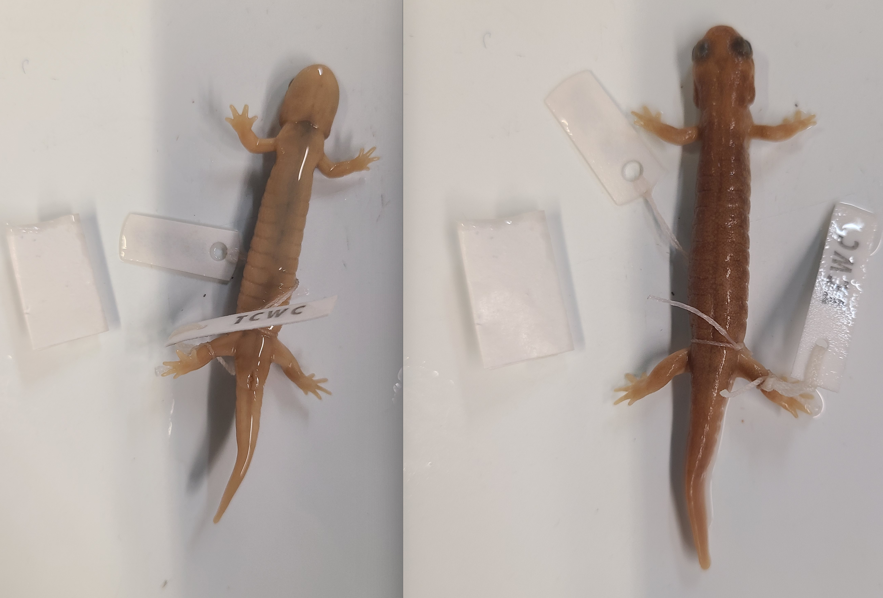
Scientific name and diagnostic features
Rhyacotriton sp., short round snout and squared off vent glands
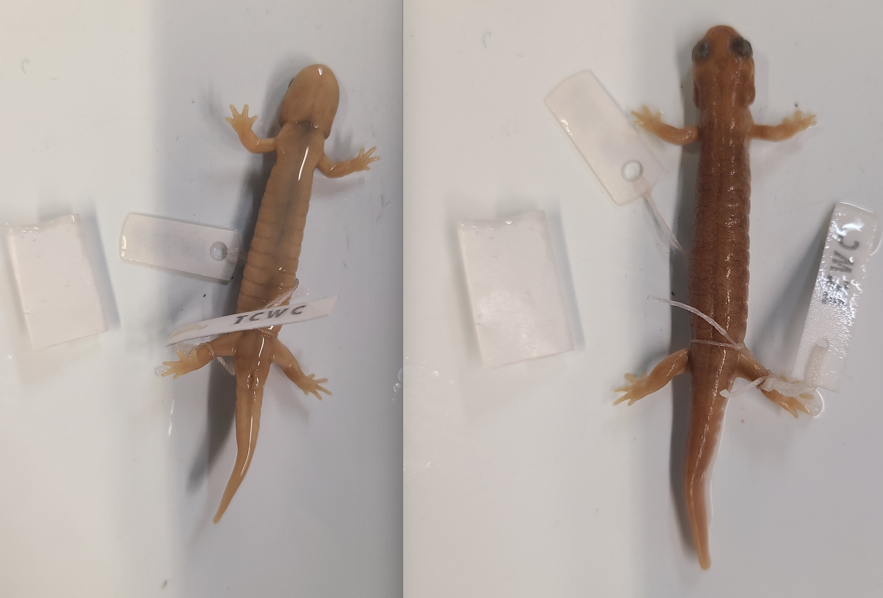
Order and Family of Rhyacotriton sp.
Caudata Rhyacotritonidae
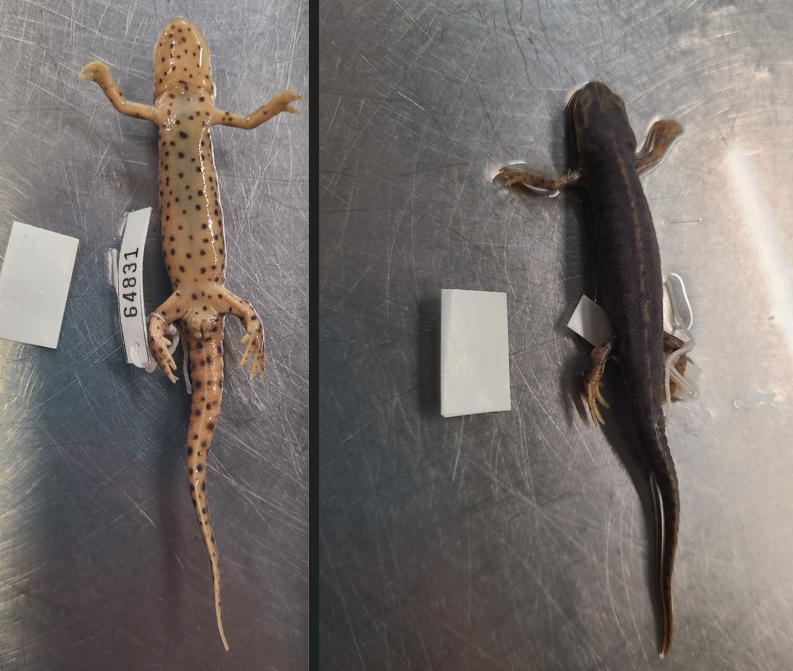
Scientific name and diagnostic features
Notophthalmus viridescens, spotted underbelly and dorsal keel
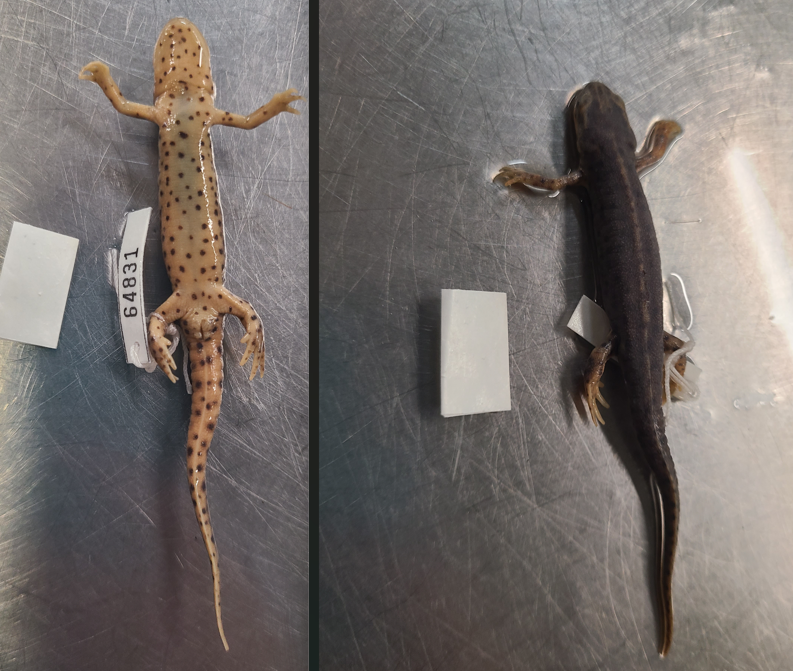
Order and Family of Notophthalmus viridescens
Caudata Salamandridae
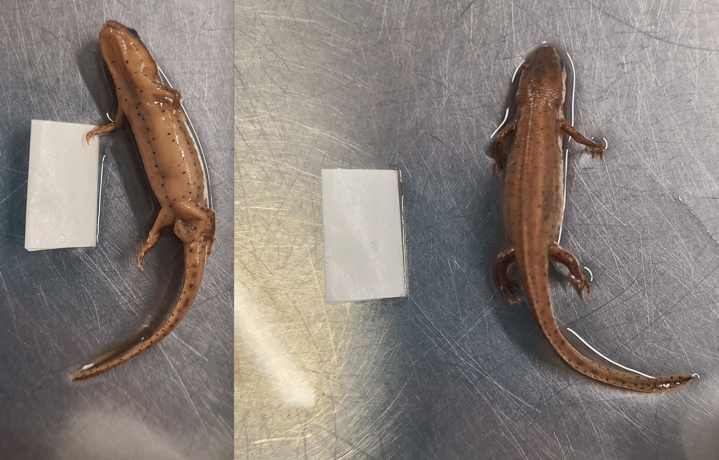
Scientific name and diagnostic features
Notophthalmus meridionalis, small dots and dorsal keel
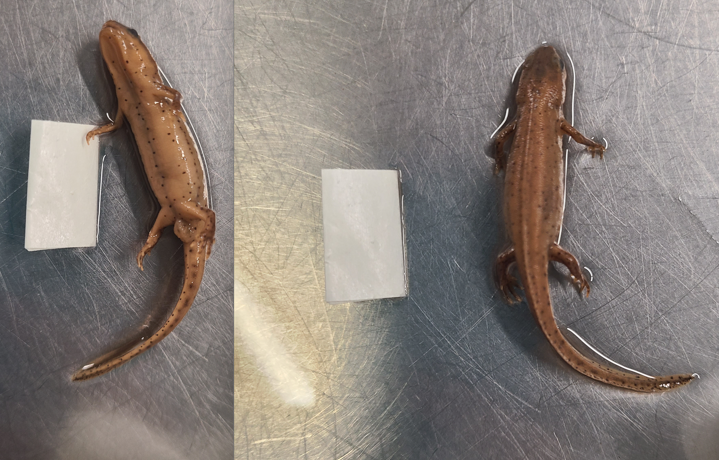
Order and Family of Notophthalmus meridionalis
Caudata Salamandridae
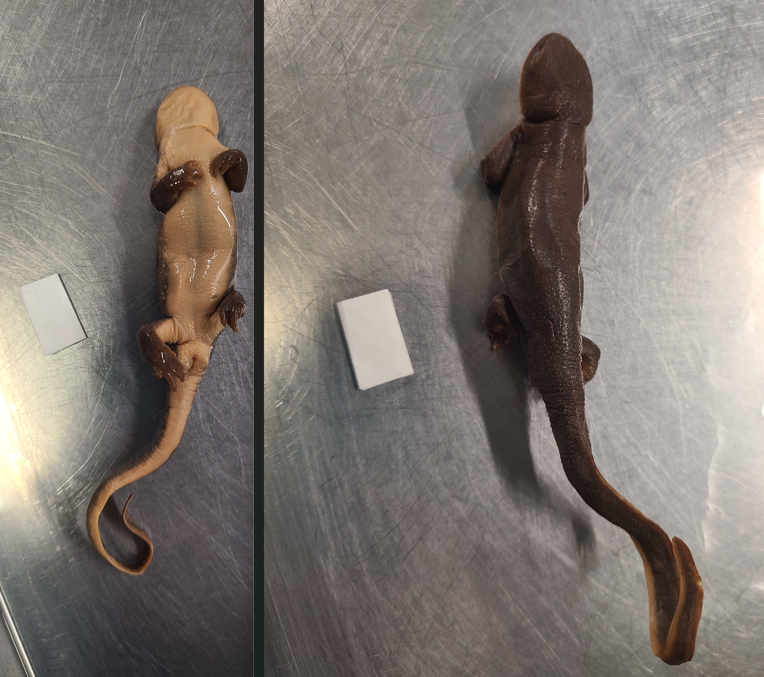
Scientific name and diagnostic features
Taricha sp., light underbelly and stout limbs
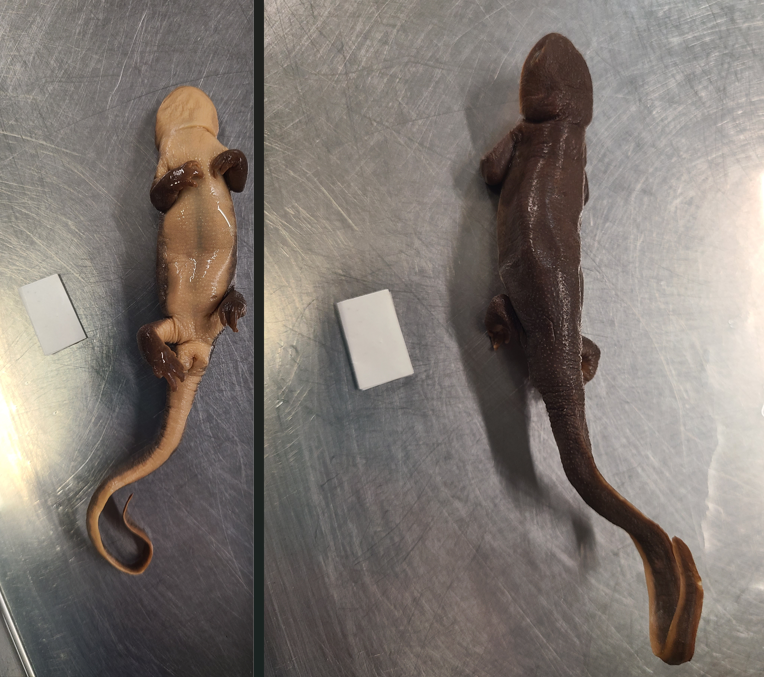
Order and Family of Taricha sp.
Caudata Salamandridae
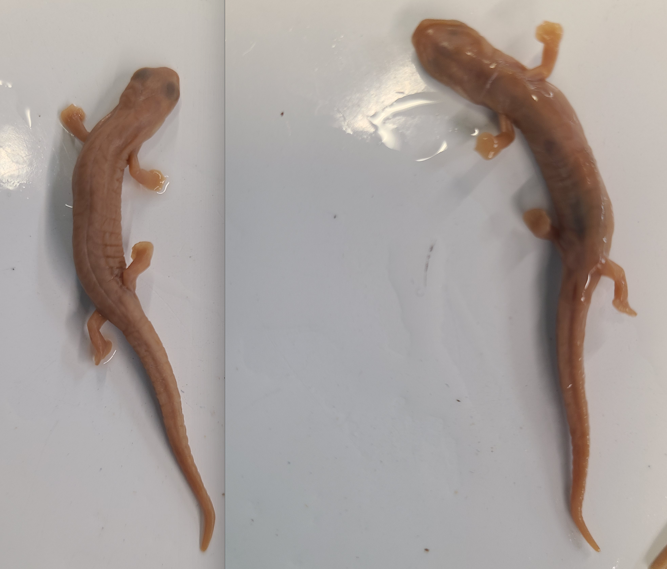
Scientific name and diagnostic features
Bolitoglossa sp., small and webbed duck feet
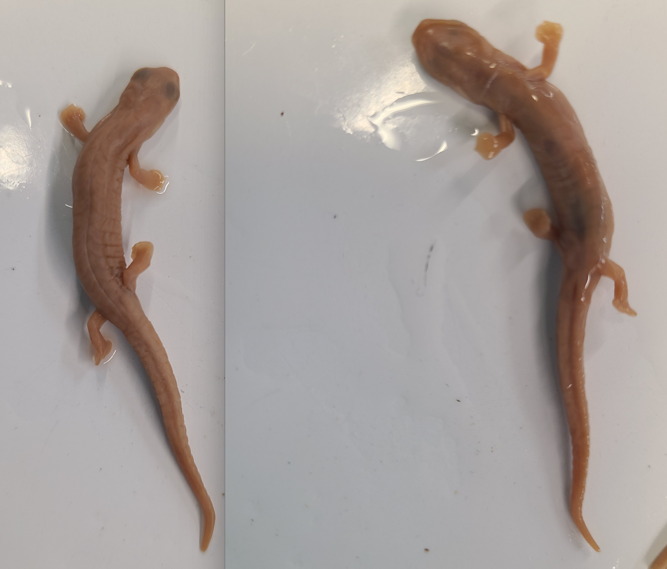
Order and Family of Bolitoglossa sp.
Caudata Plethodontidae Hemidactyliinae
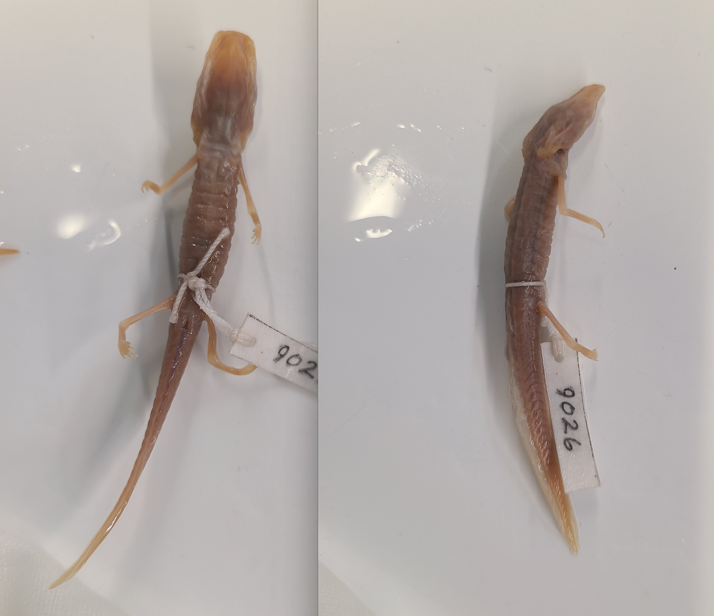
Scientific name and diagnostic features
Eurycea rathbuni, spindly limbs and external gills and no eyes
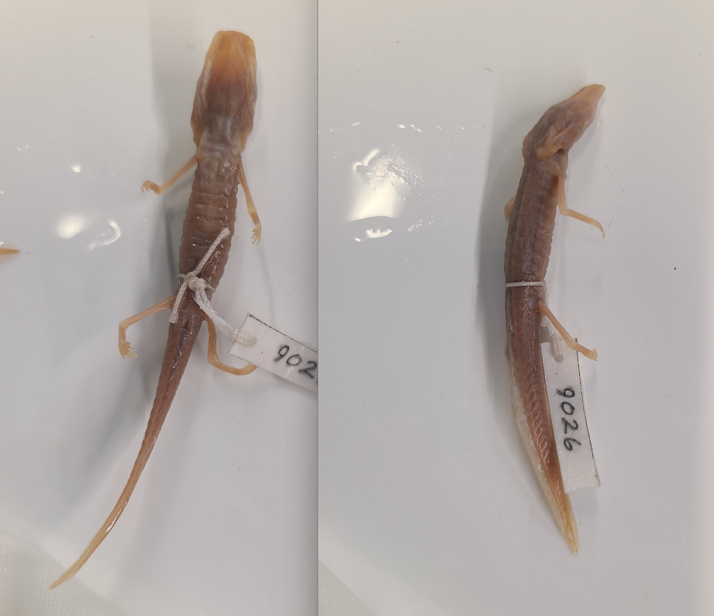
Order and Family of Eurycea rathbuni
Caudata Plethodontidae Hemidactyliinae
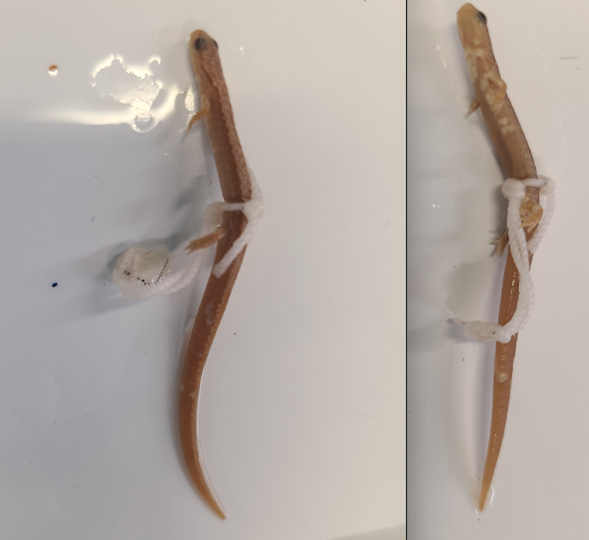
Scientific name and diagnostic features
Eurycea paludicola, slender with long tail and lighter dorsal stripe
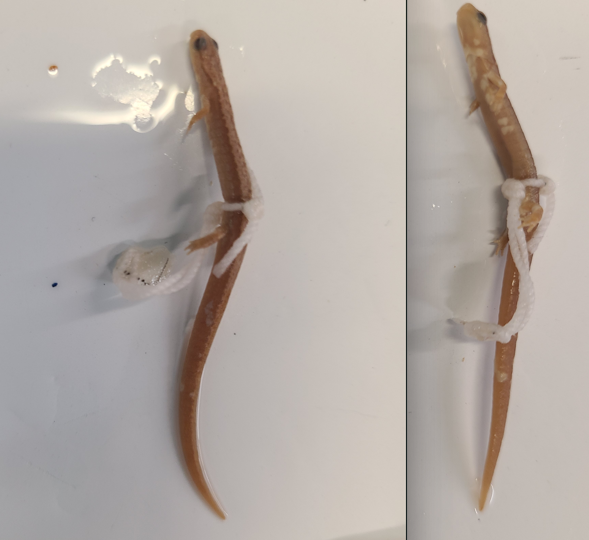
Order and Family of Eurycea paludicola
Caudata Plethodontidae Hemidactyliinae
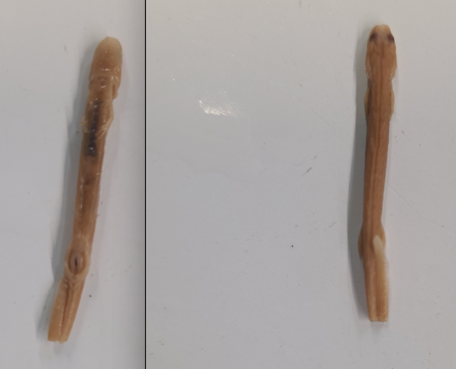
Scientific name and diagnostic features
Eurycea nana, tiny and external gills
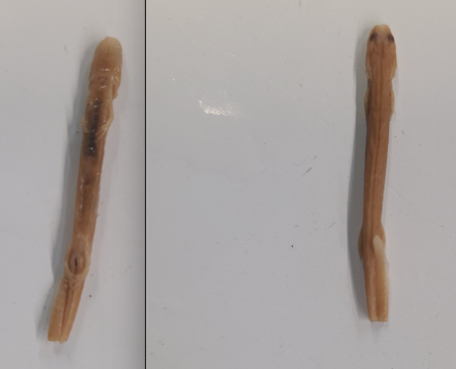
Order and Family of Eurycea nana
Caudata Plethodontidae Hemidactyliinae
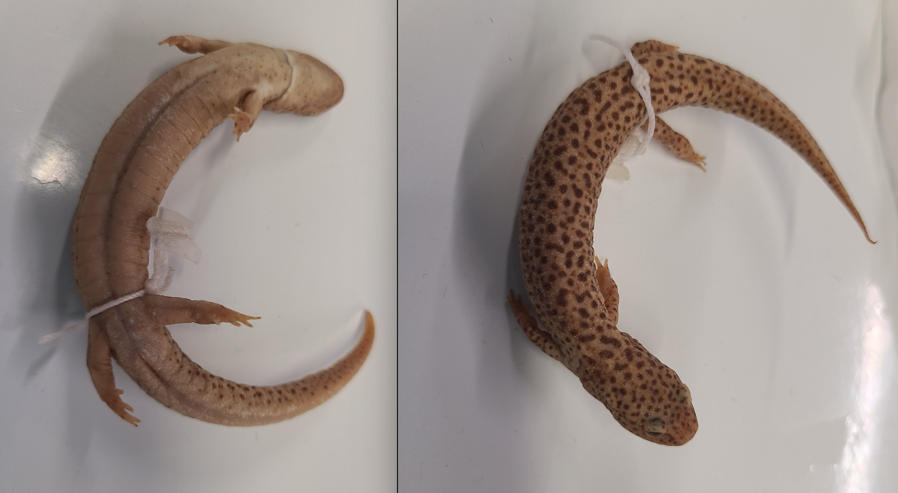
Scientific name and diagnostic features
Pseudotriton ruber, red and spotted
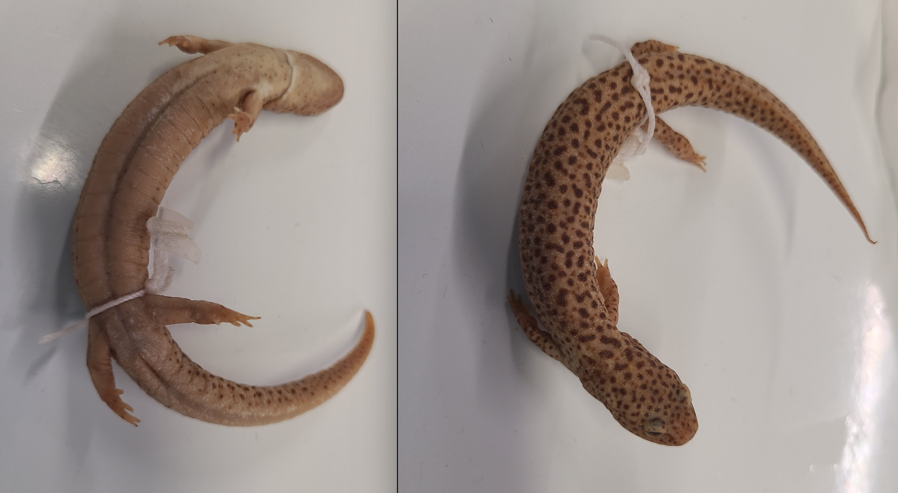
Order and Family of Pseudotriton ruber
Caudata Plethodontidae Hemidactyliinae
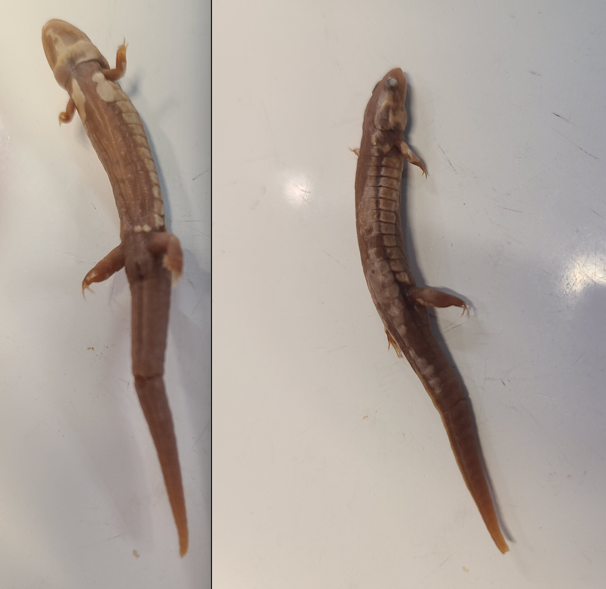
Scientific name and diagnostic features
Desmognathus auriculatus, lighter sides and moderately large eyes
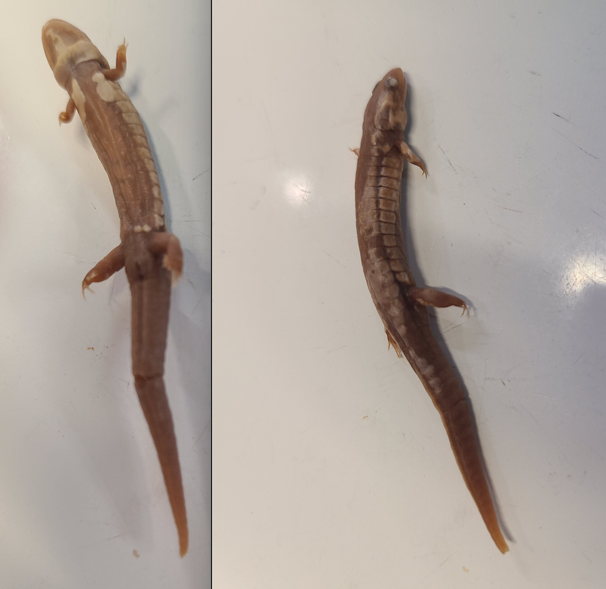
Order and Family of Desmognathus auriculatus
Caudata Plethodontidae Plethodontinae
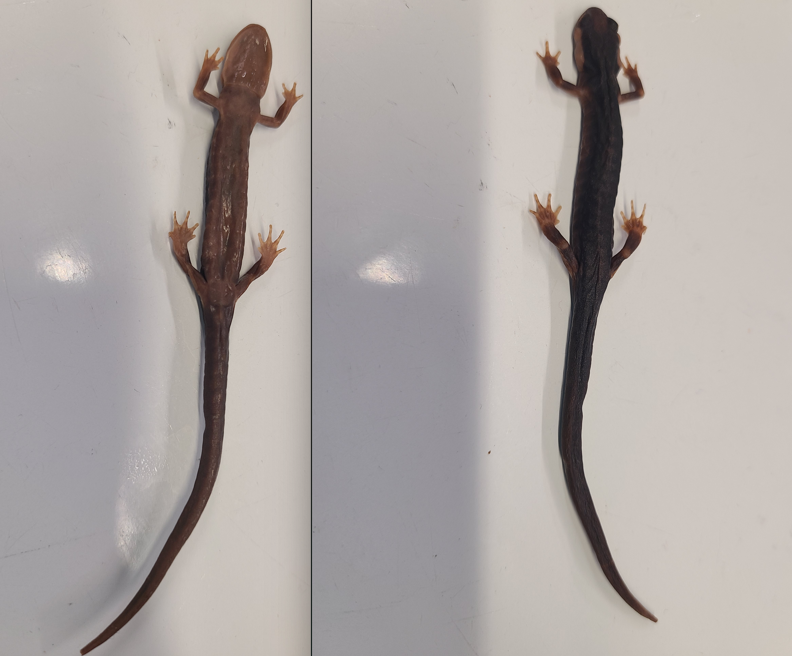
Scientific name and diagnostic features
Plethodon albagula, dark skin and long tail
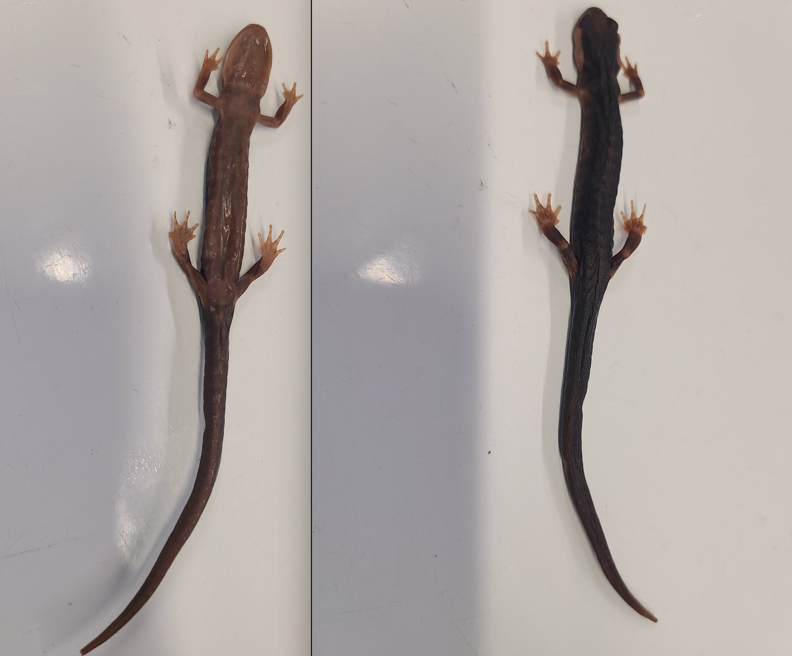
Order and Family of Plethodon albagula
Caudata Plethodontidae Plethodontinae
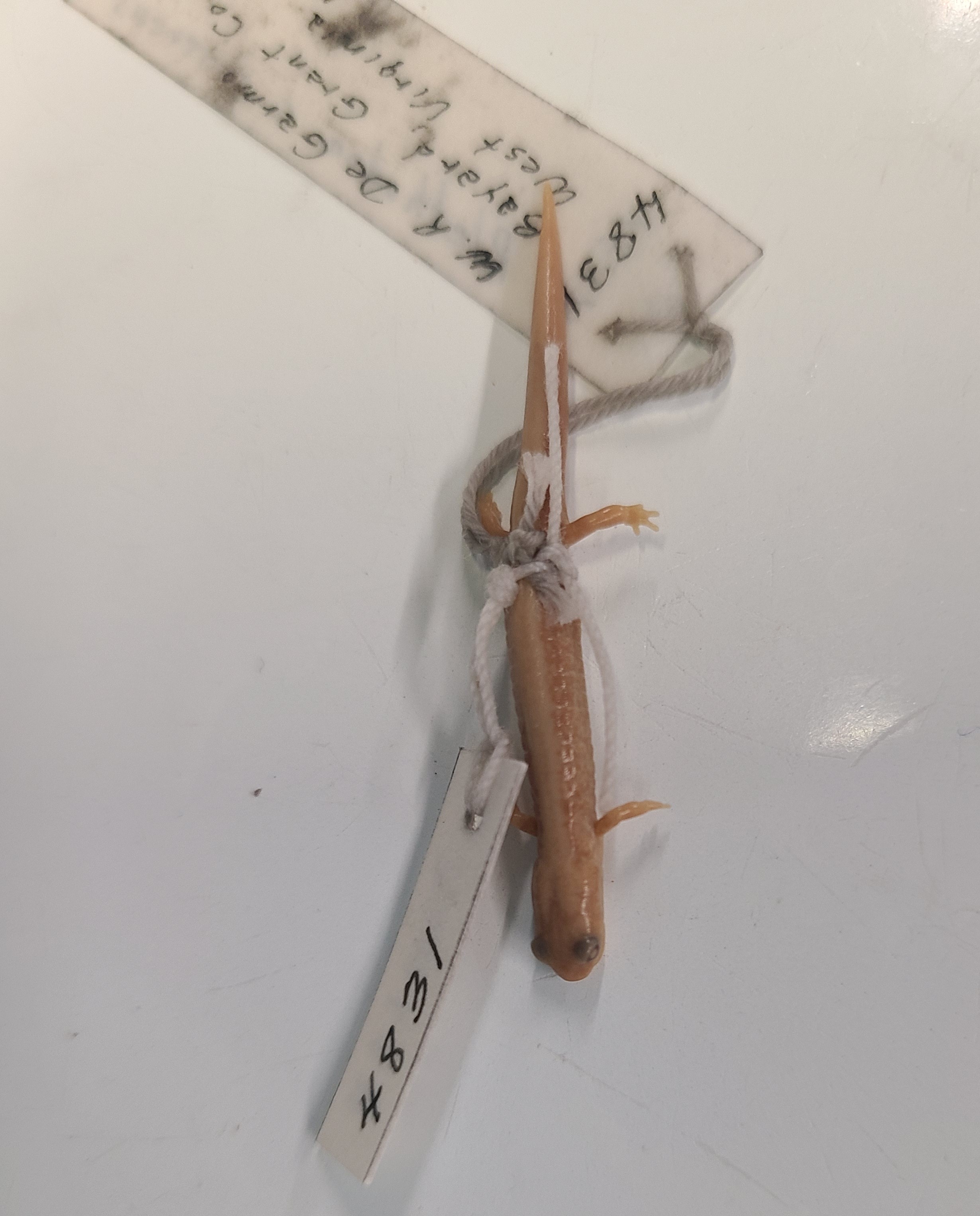
Scientific name and diagnostic features
Plethodon cinereus, tiny and lighter lateral line
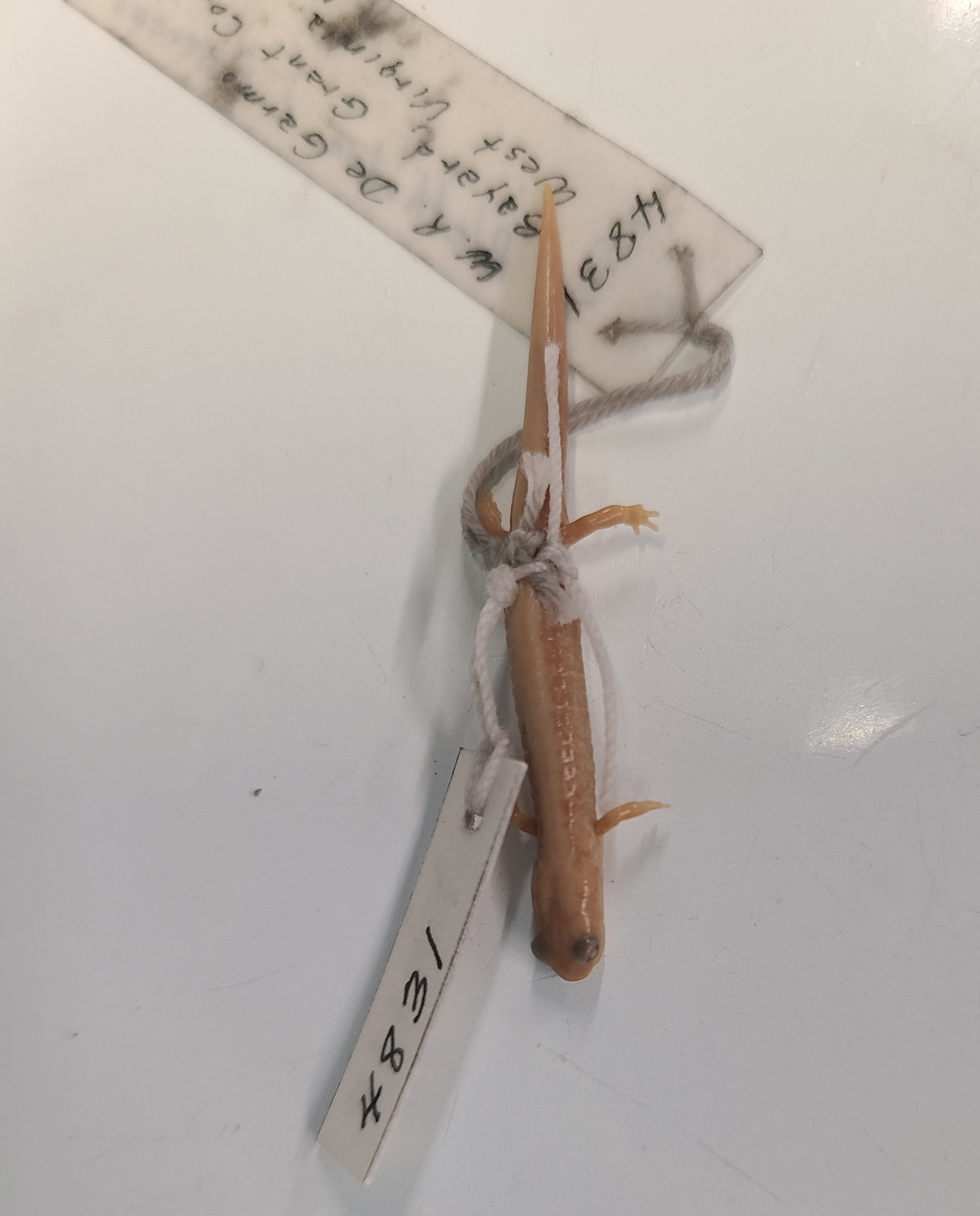
Order and Family of Plethodon cinereus
Caudata Plethodontidae Plethodontinae
Shared character of Caecilians
Annuli sometimes aligned with vertebrae and sometimes associated with dermal scales
Characteristics of family Typhlonectidae
Only primary annuli and no dermal scales. Posterior dorsal ridge and laterally compressed body
Distinguishing features of Caudata (Salamanders)
4 limbs without claws, tail in all life stages, no ears, gills, and true teeth and ribs
Distinguishing features of Cryptobranchidae
dorso-ventrally compressed heads and bodies, wrinkly skin, 1-2 gill slits
Distinguishing features of Ambystomatidae
stout bodies, blunt heads, costal grooves, with 4 front toes and 5 back toes, 22cm SVL
Distinguishing features of Dicamptodontidae
Robust bodies, broad heads, laterally flattened tails, and large size
Distinguishing features of Rhyacotritonidae
Squared-off glands posterior to vent in adult males, 6cm SVL
Distinguishing features of Salamandridae
No nasolabial or costal grooves, rough skin when terrestrial but smooth when aquatic, laterally compressed tail when aquatic, and 45cm SVL
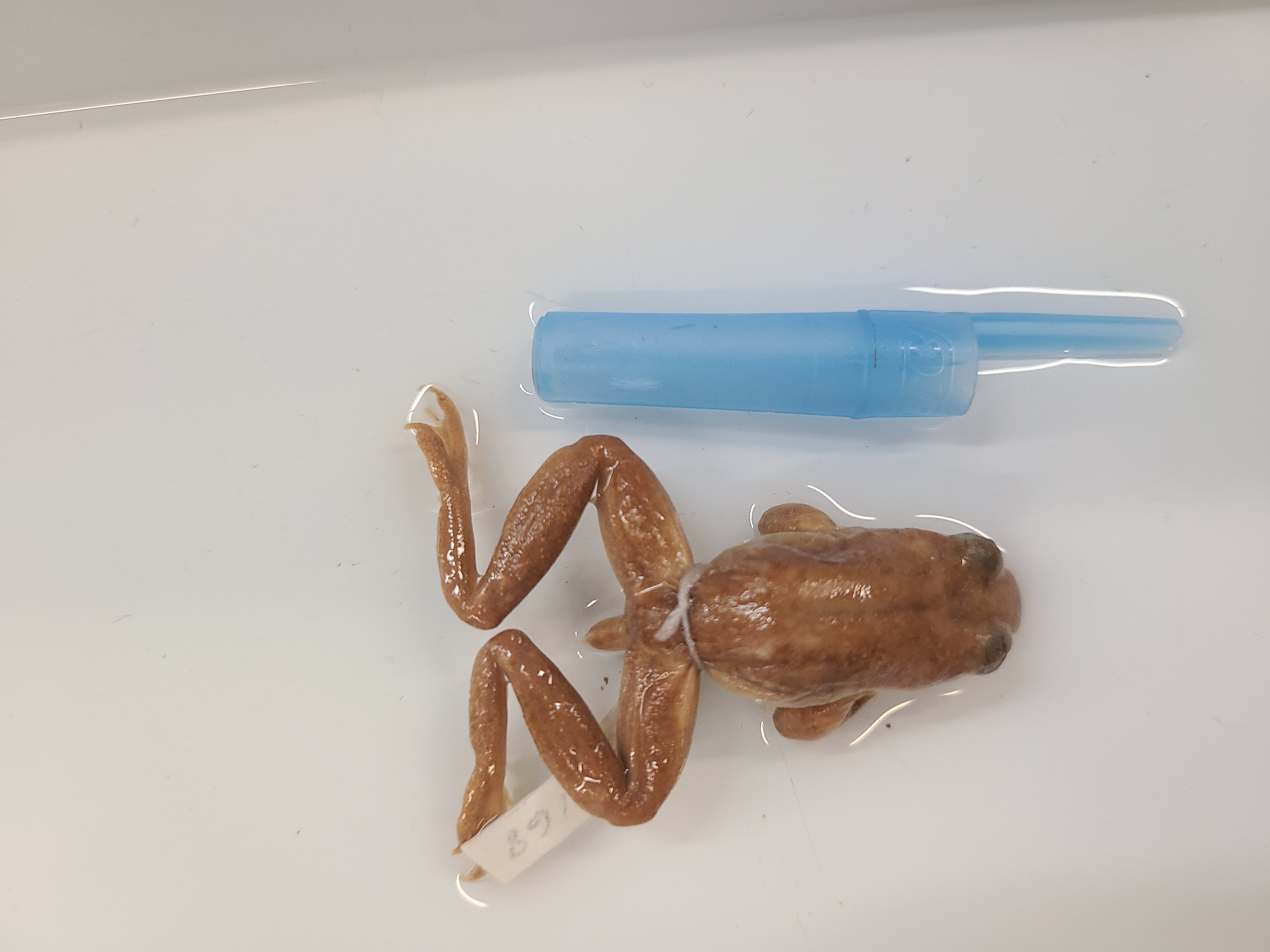
Scientific name and distinguishing feature
Ascaphus truei, tail
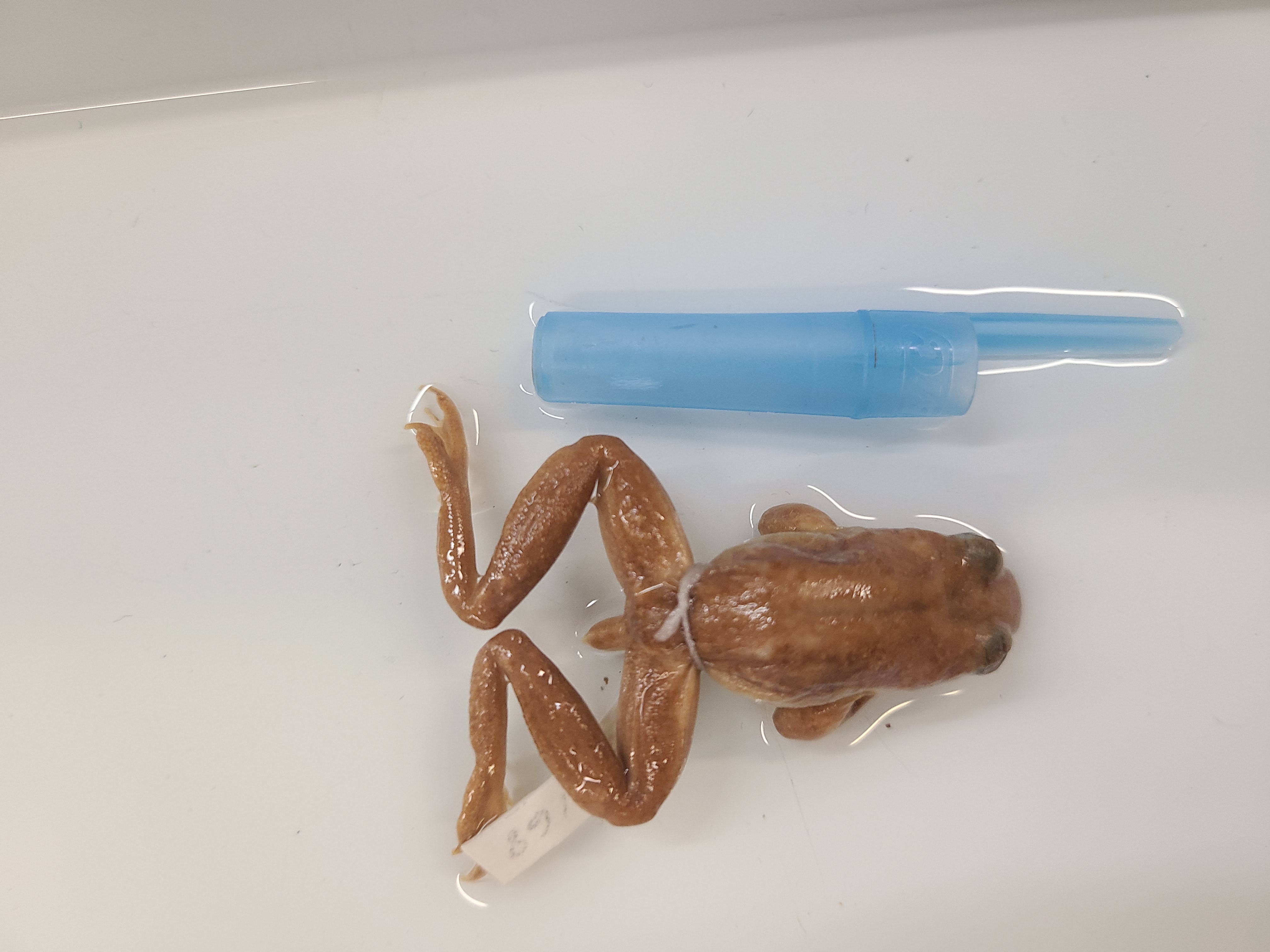
Order and Family of Ascaphus truei
Anura Ascaphidae
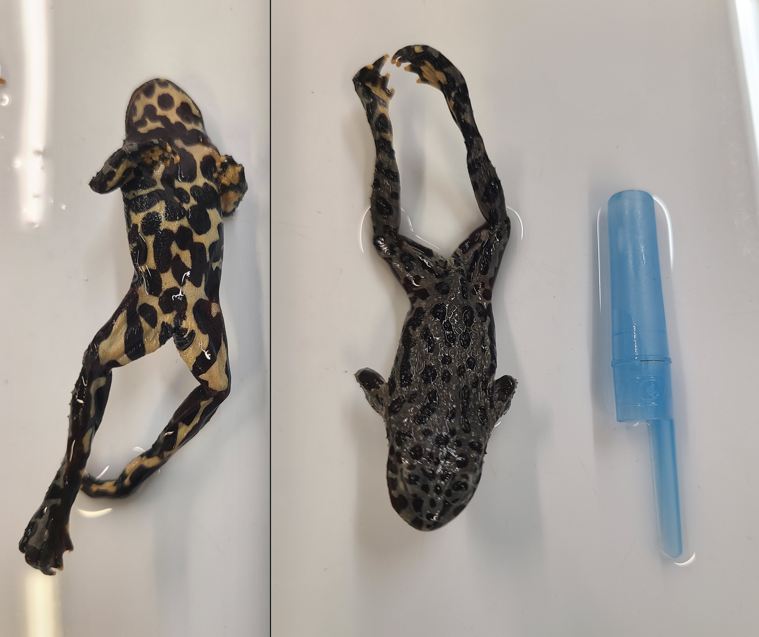
Scientific name and distinguishing feature
Bombina sp., red belly
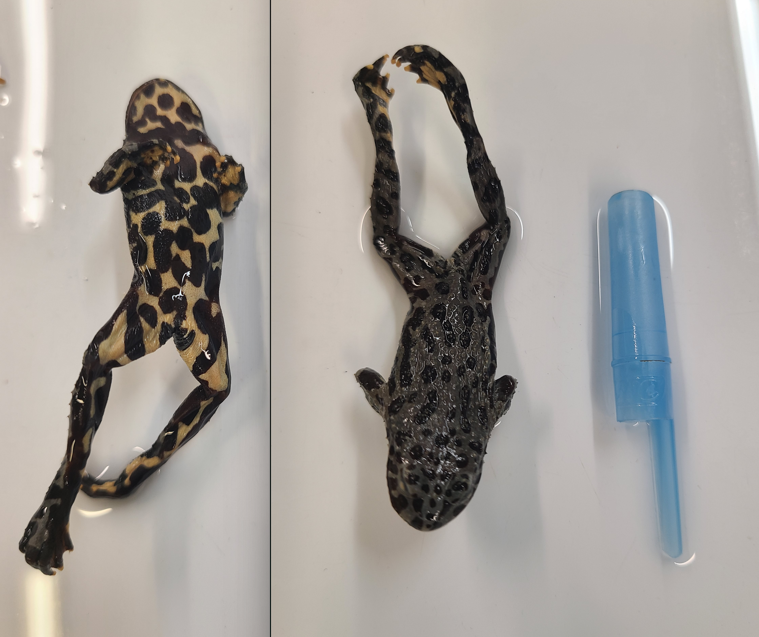
Order and Family of Bombina sp.
Anura Bombinatoridae
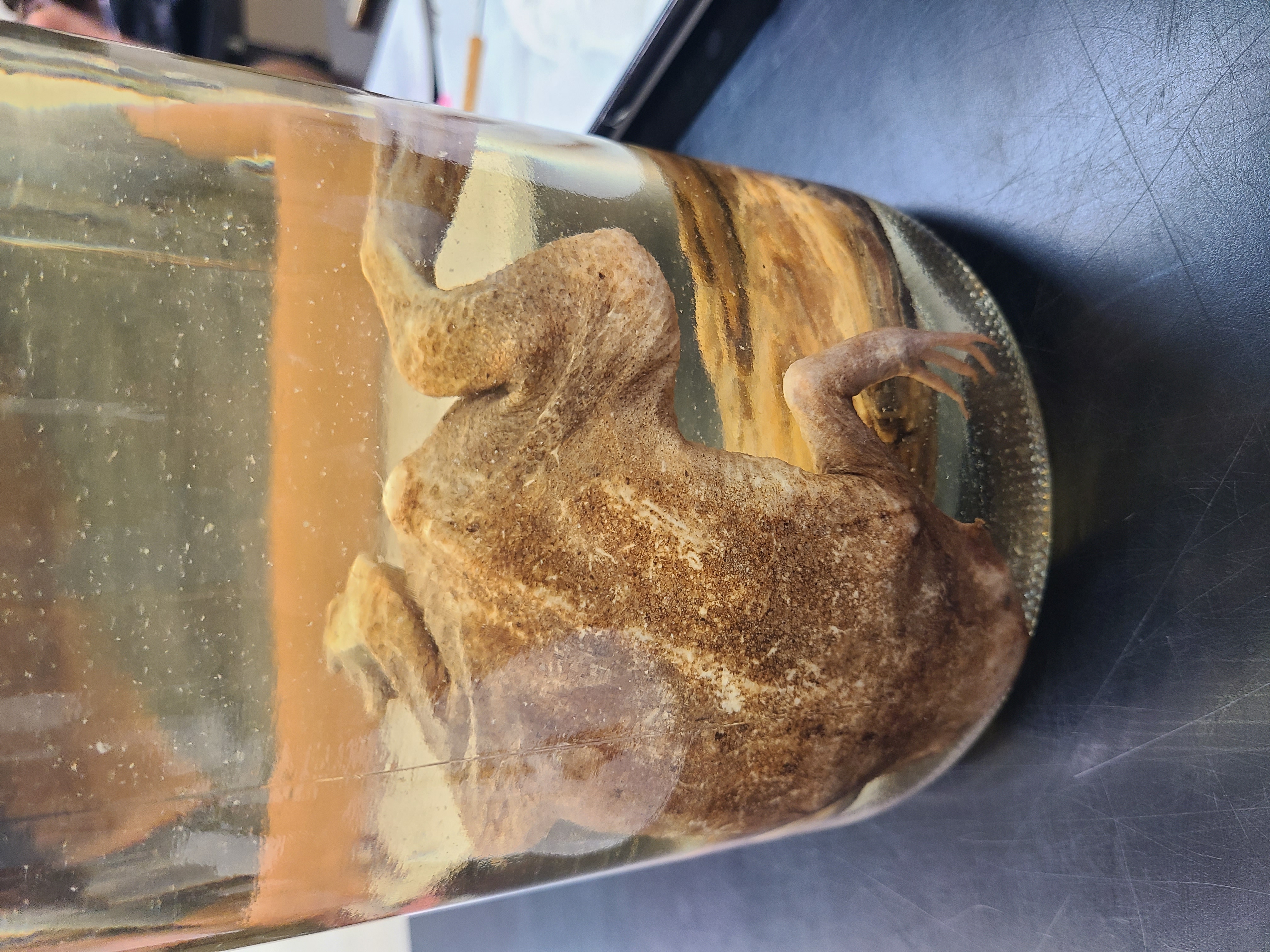
Scientific name and distinguishing feature
Pipa pipa, incubate eggs on back
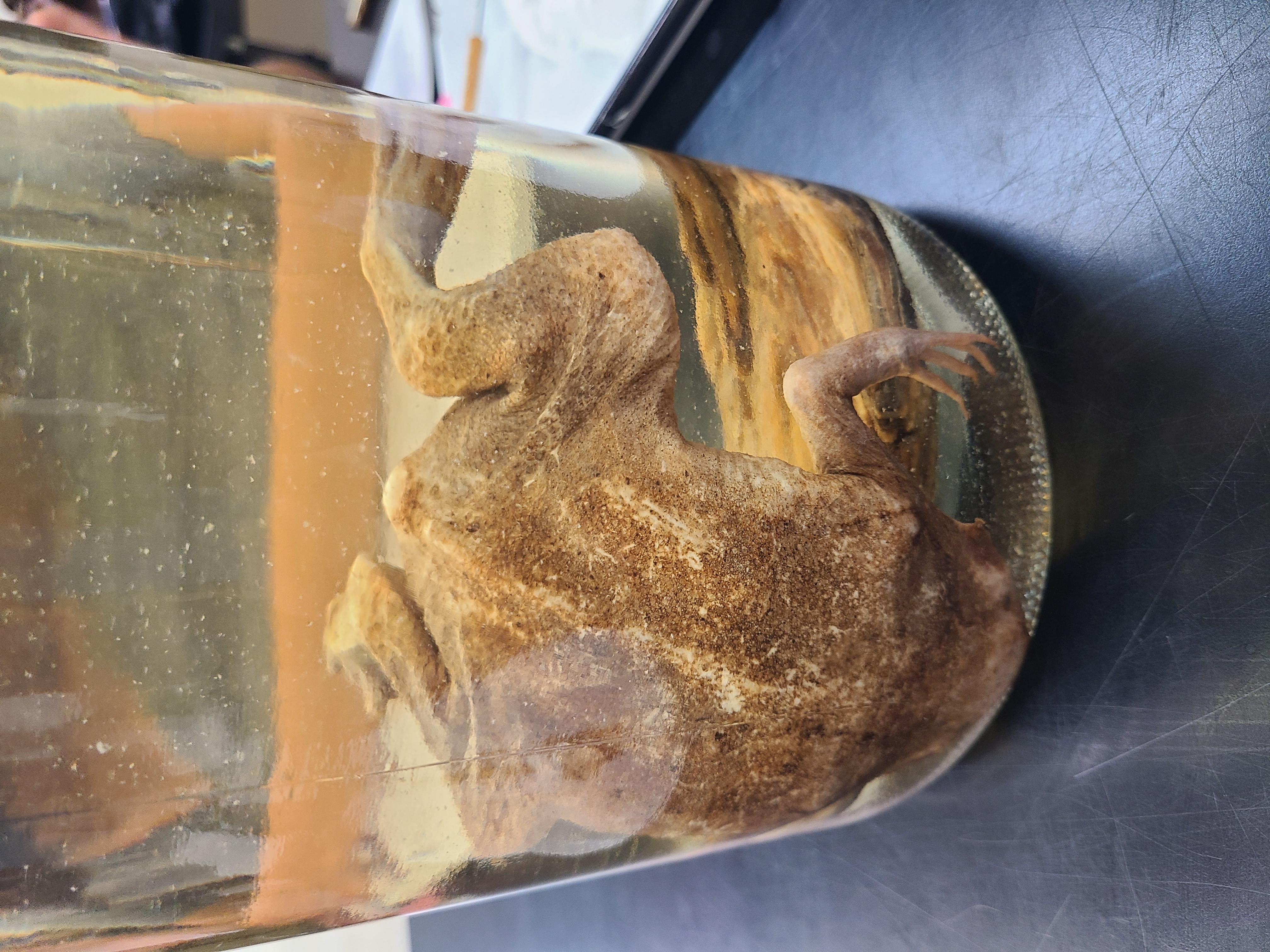
Order and Family of Pipa pipa
Anura Pipidae
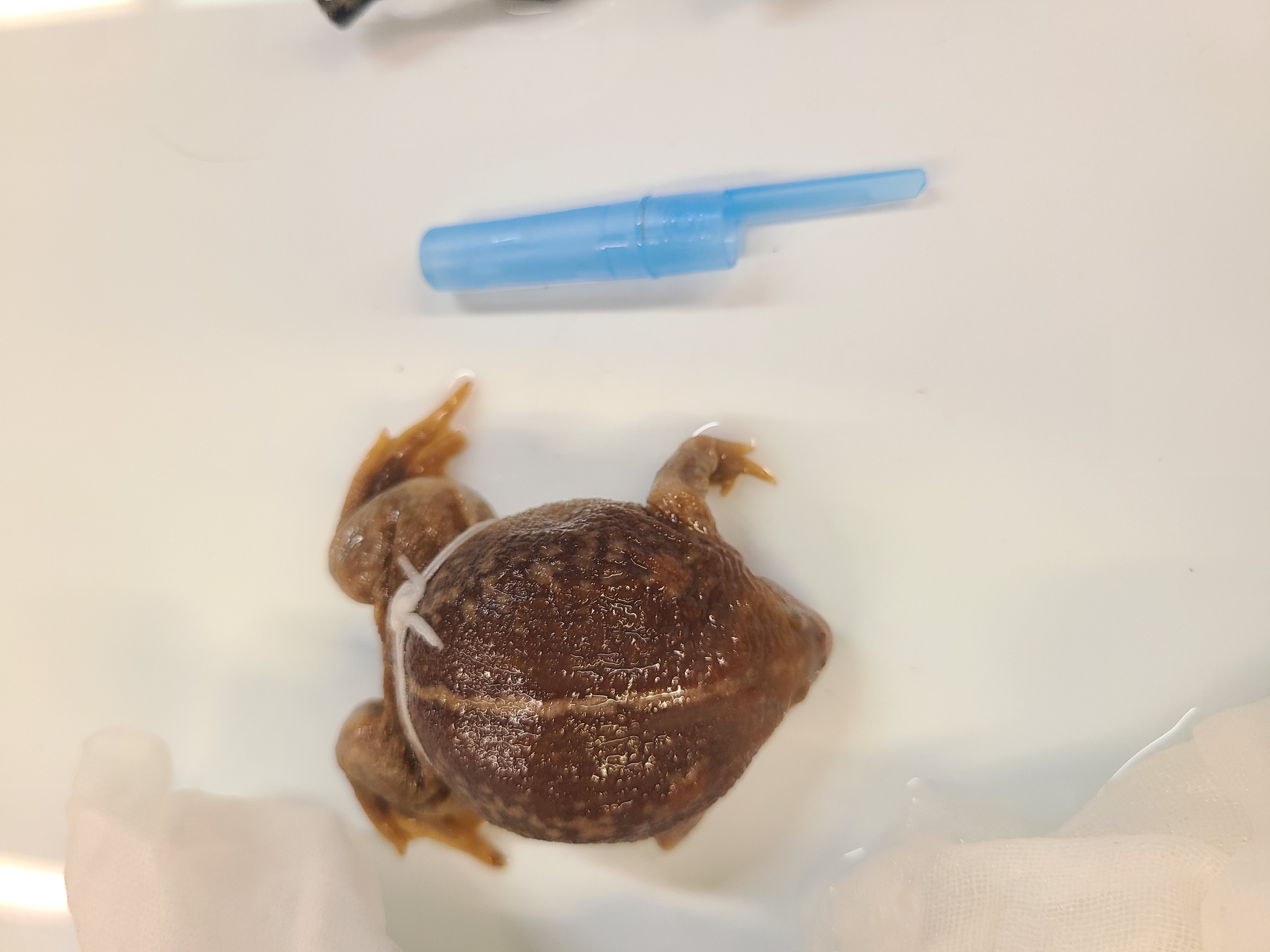
Scientific name and distinguishing feature
Rhinophrynus dorsalis, round for burrow digging
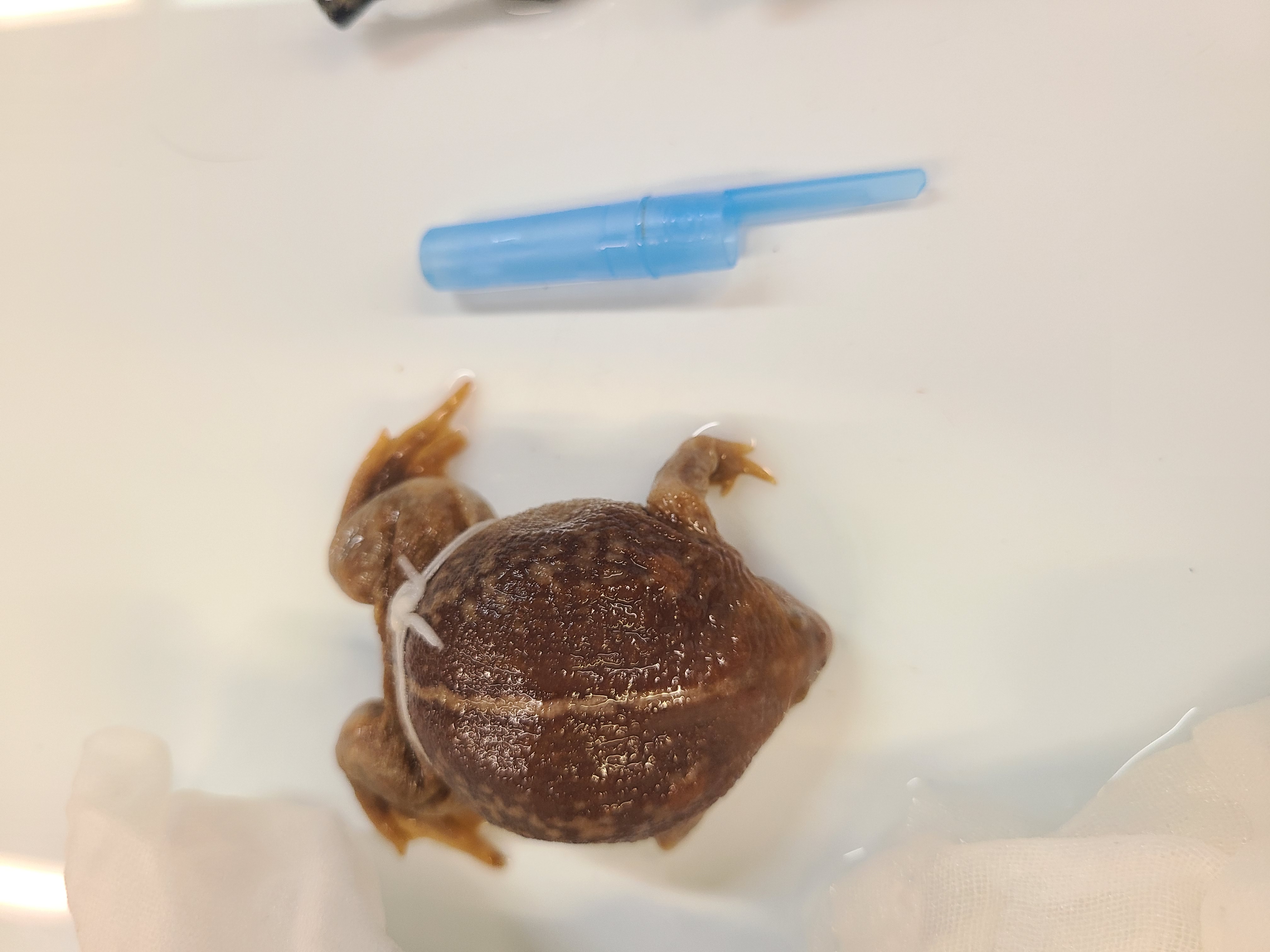
Order and Family of Rhinophrynus dorsalis
Anura Rhinophrynidae
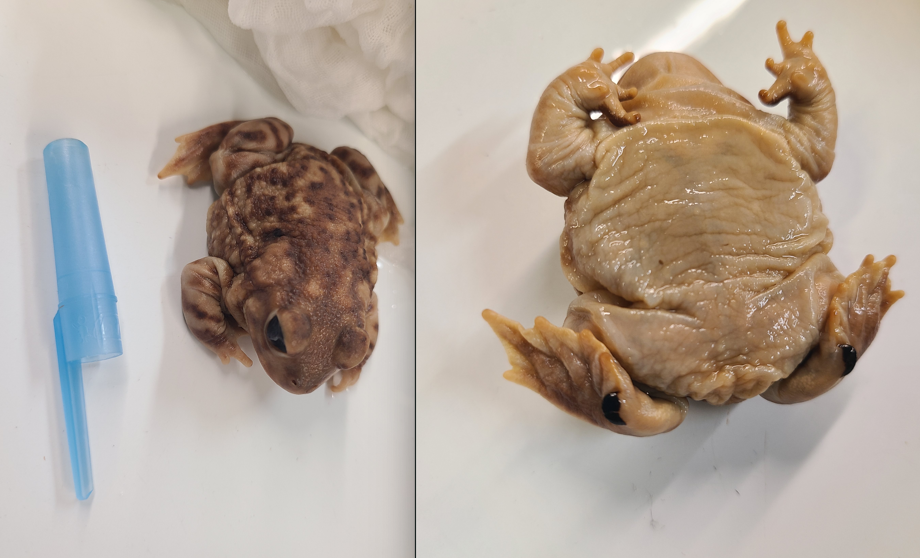
Scientific name and distinguishing feature
Scaphiopus couchii, sickle claw
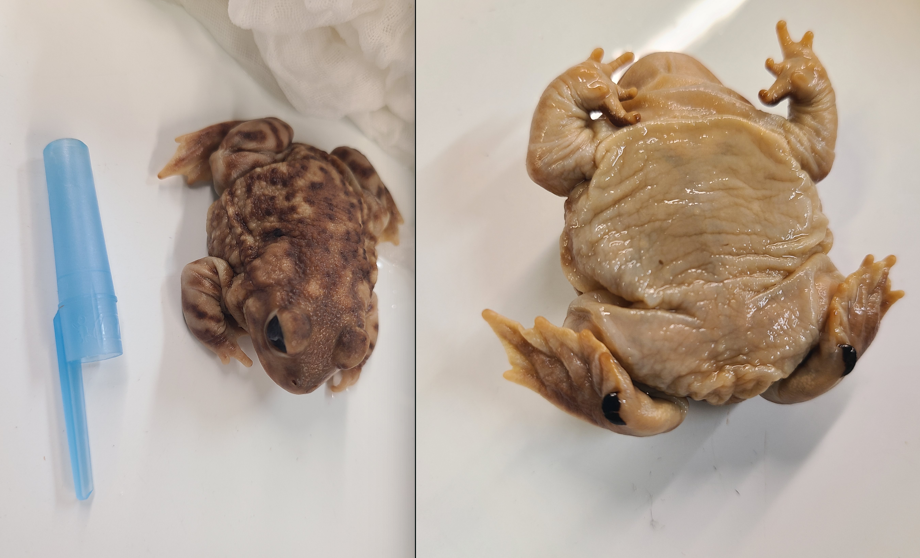
Order and Family of Scaphiopus couchii
Anura Scaphiopodidae
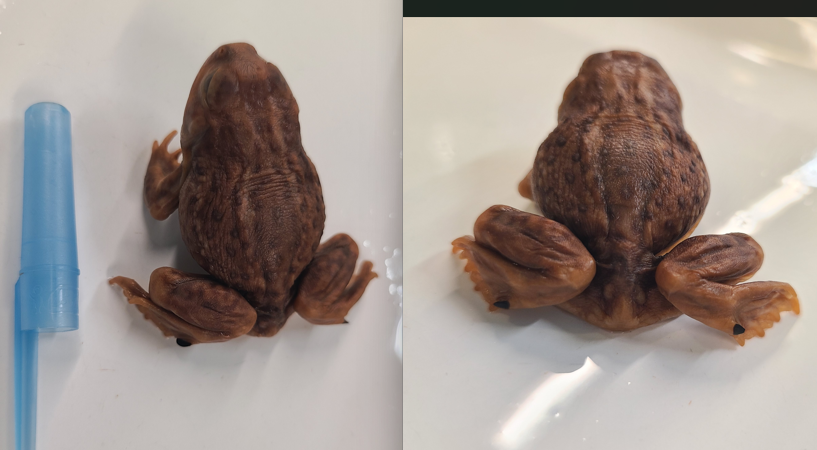
Scientific name and distinguishing features
Spea bombifrons, boss and rounded claw
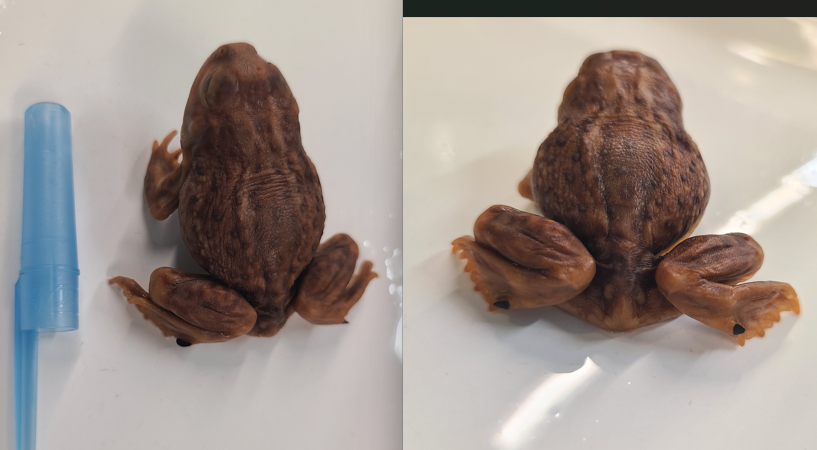
Order and Family of Spea bombifrons
Anura Scaphiopodidae
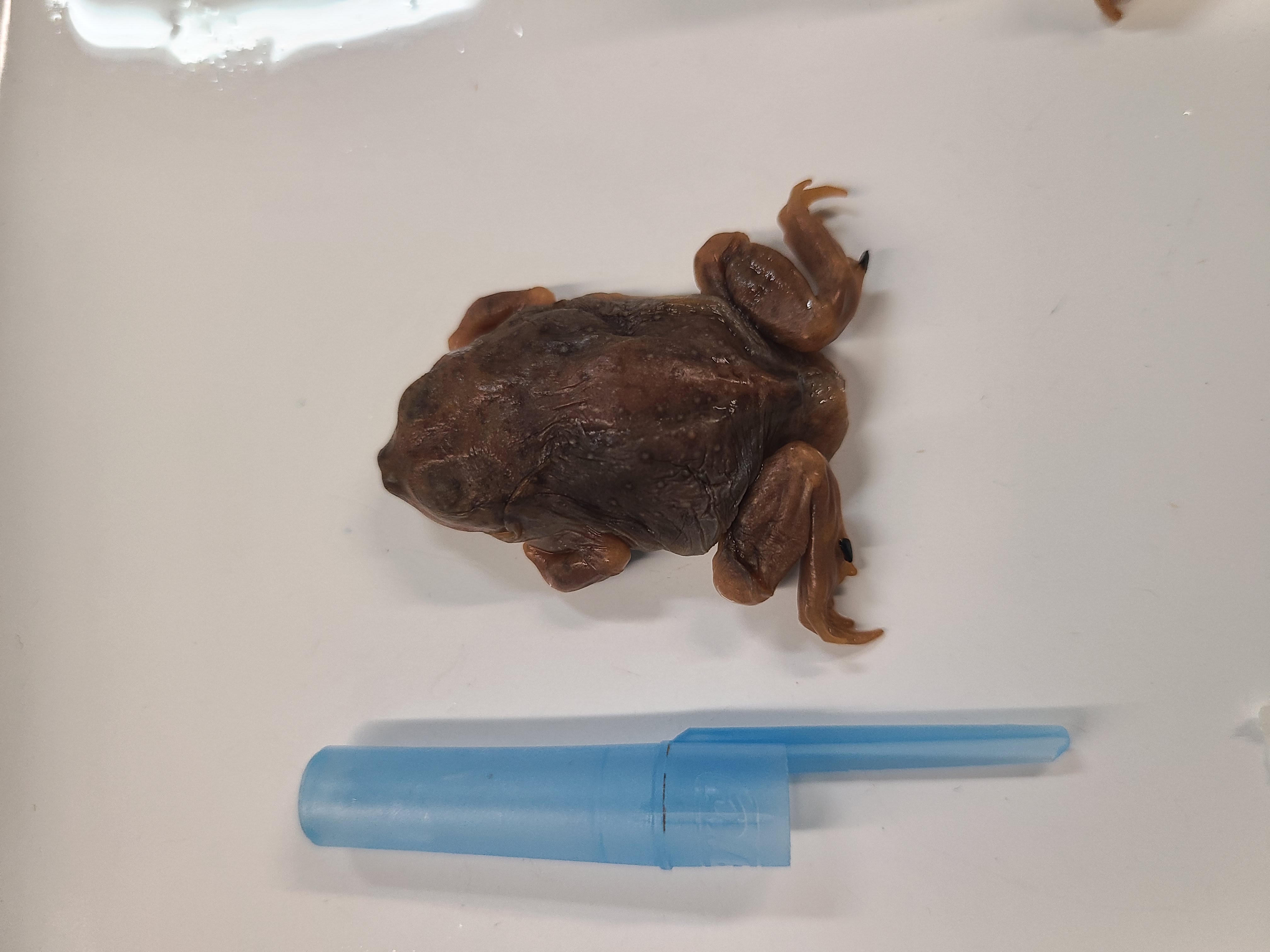
Scientific name and distinguishing features
Spea multiplicata, small and cone-shaped spade
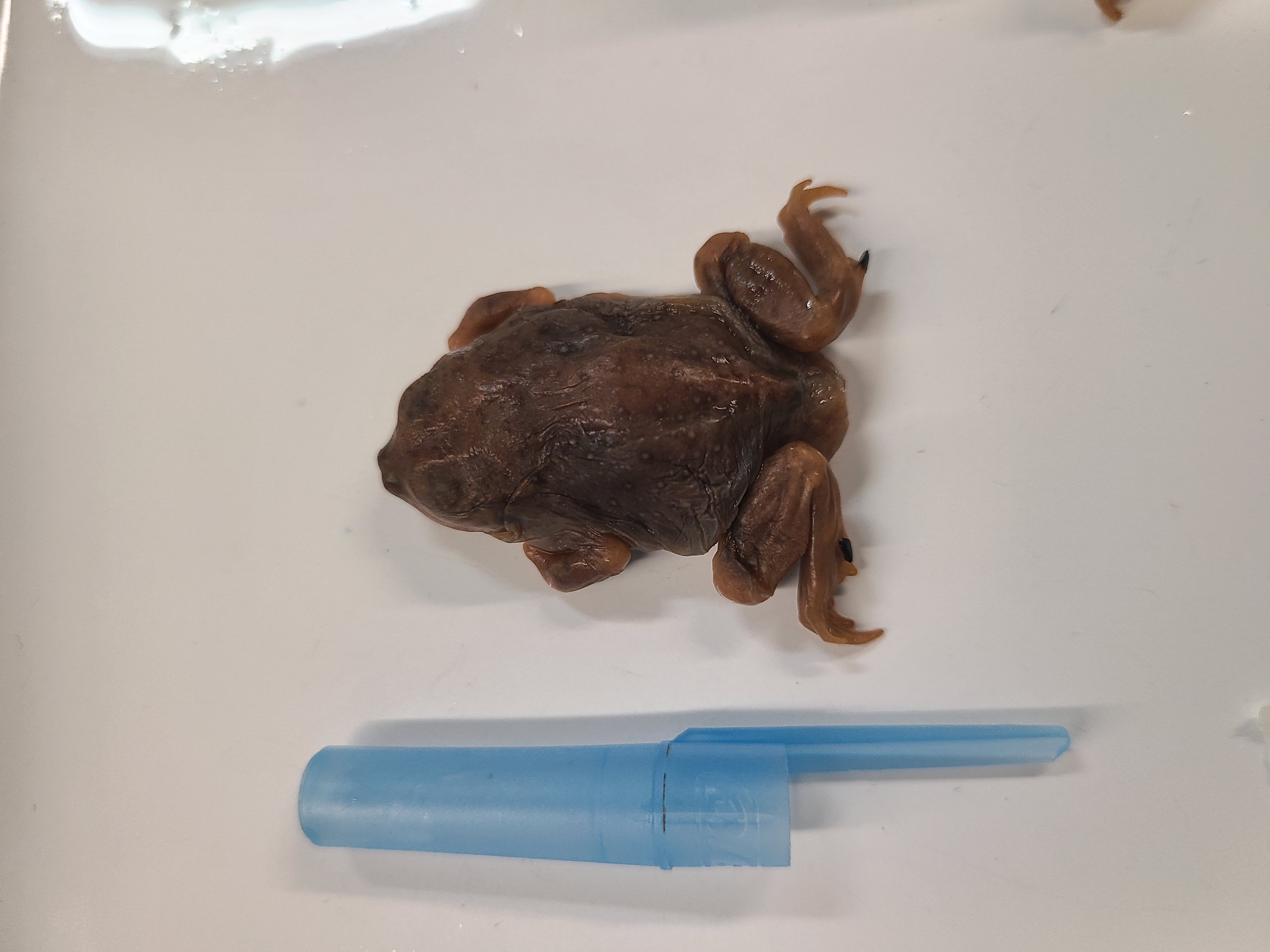
Order and Family of Spea multiplicata
Anura Scaphiopodidae
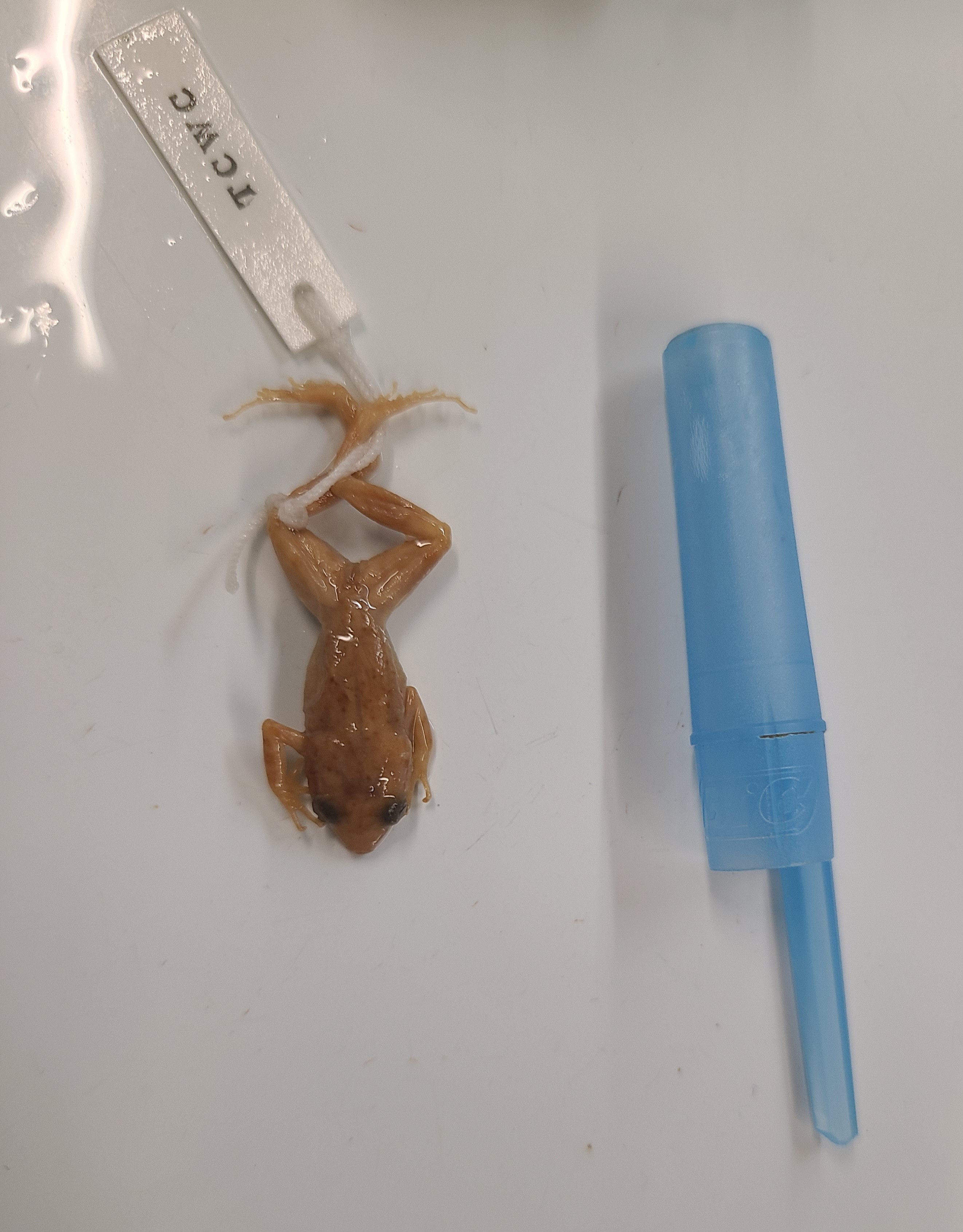
Scientific name and distinguishing feature
Eleutherodactylus cystignathoides, bumpy skin
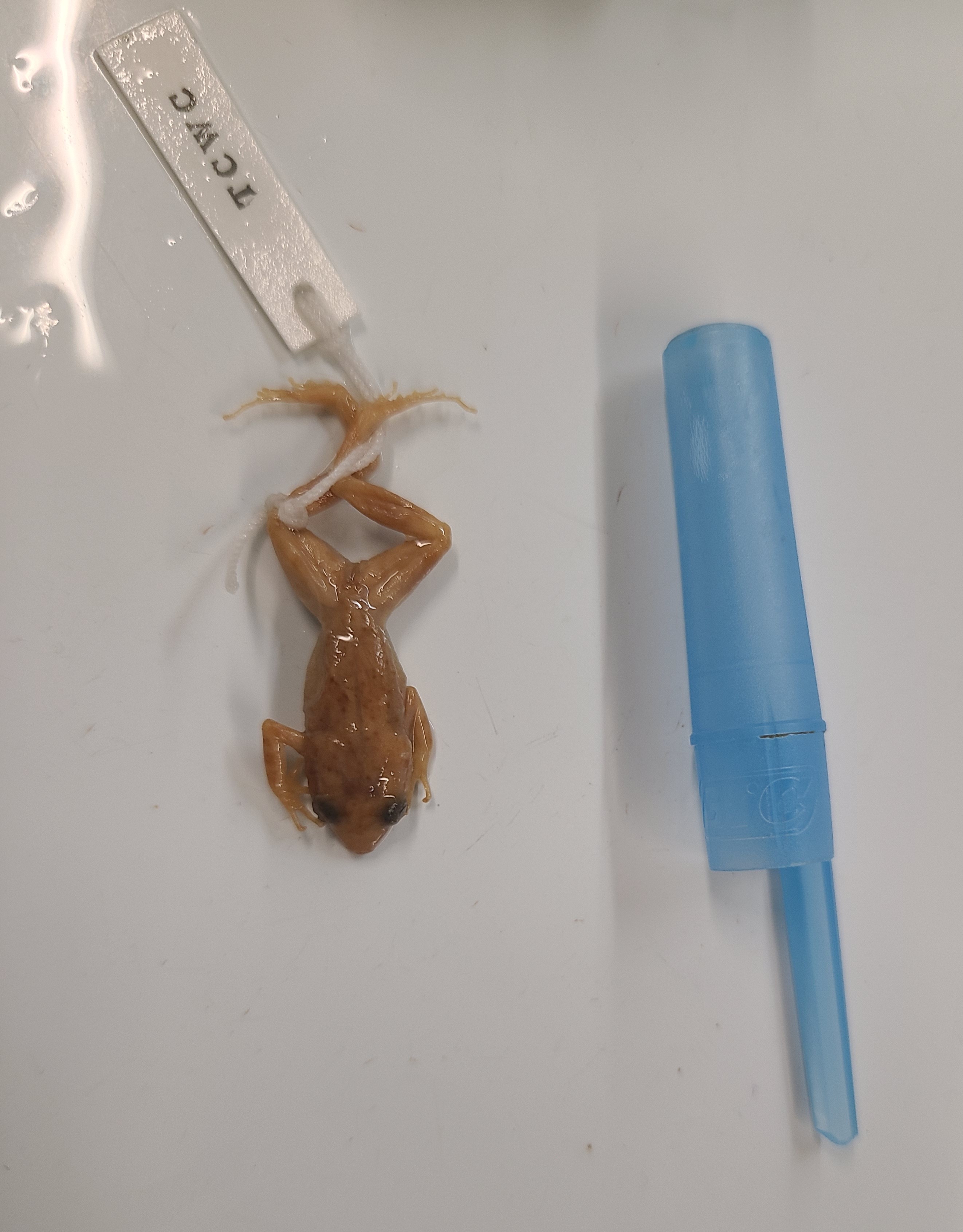
Order and Family of Eleutherodactylus cystignathoides
Anura Eleutherodactylidae
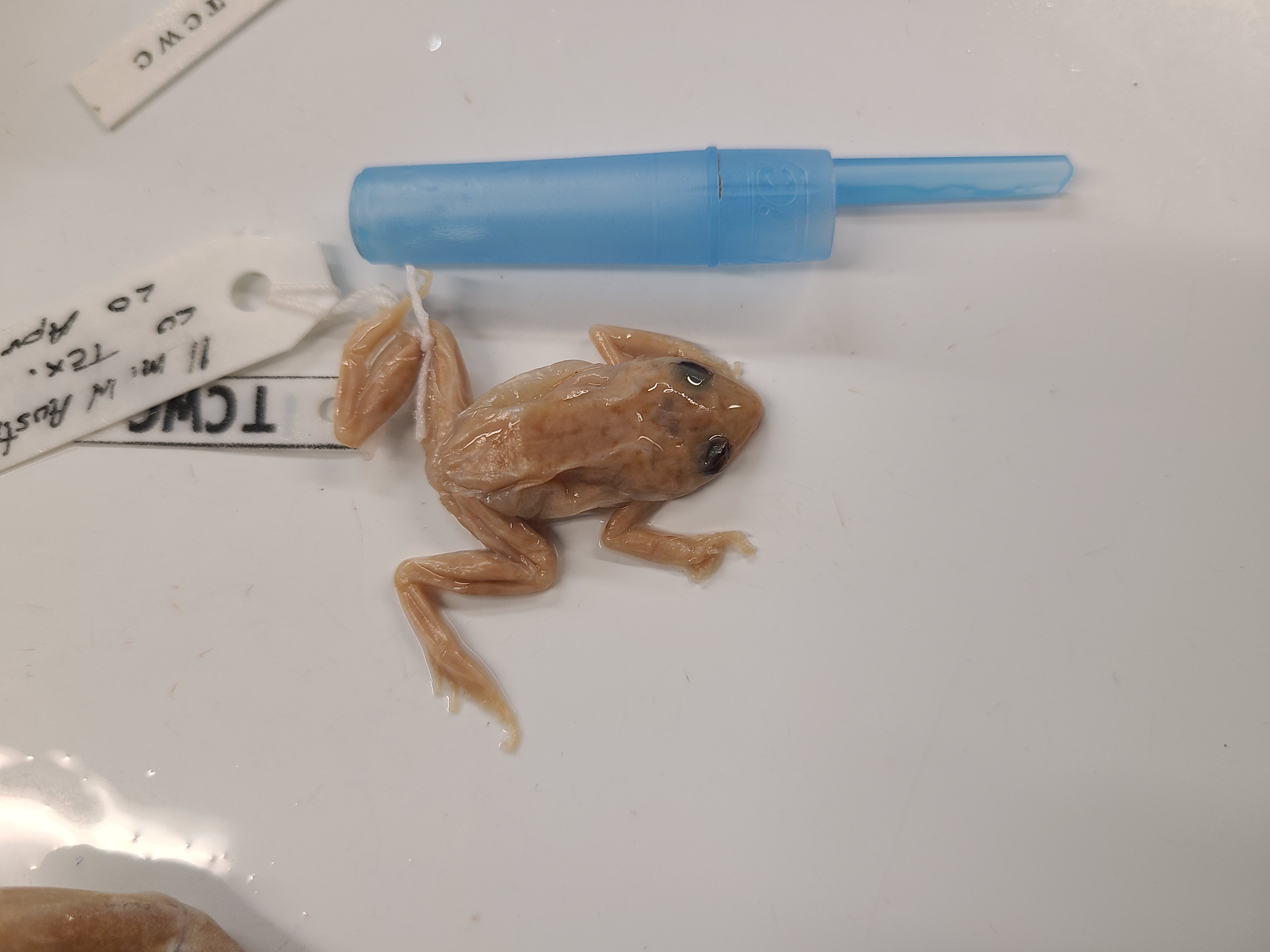
Scientific name and distinguishing features
Eleutherodactylus marnockii, smooth skin
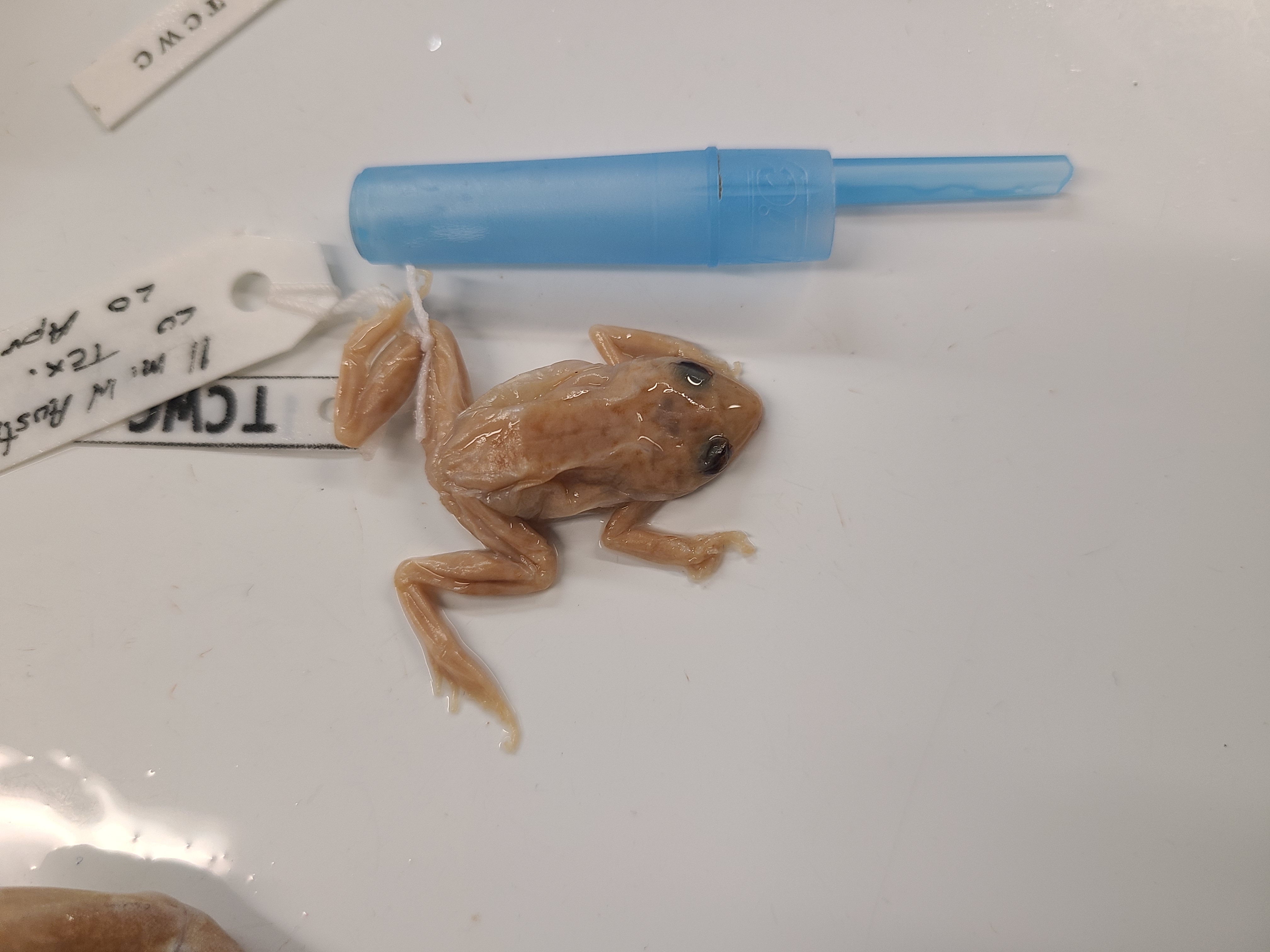
Order and Family of Eleutherodactylus marnockii
Anura Eleutherodactylidae
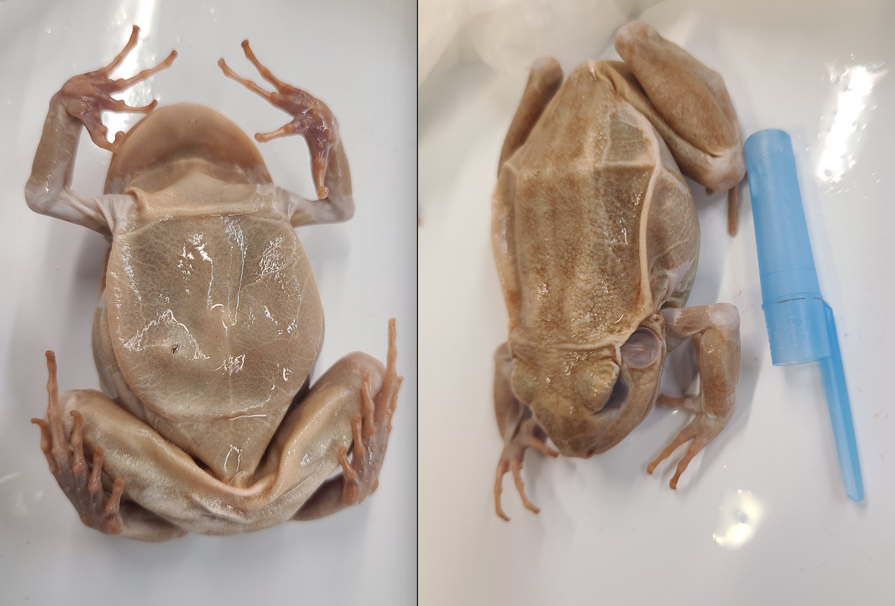
Scientific name and distinguishing features
Craugastor augusti, long fingers and skin folds
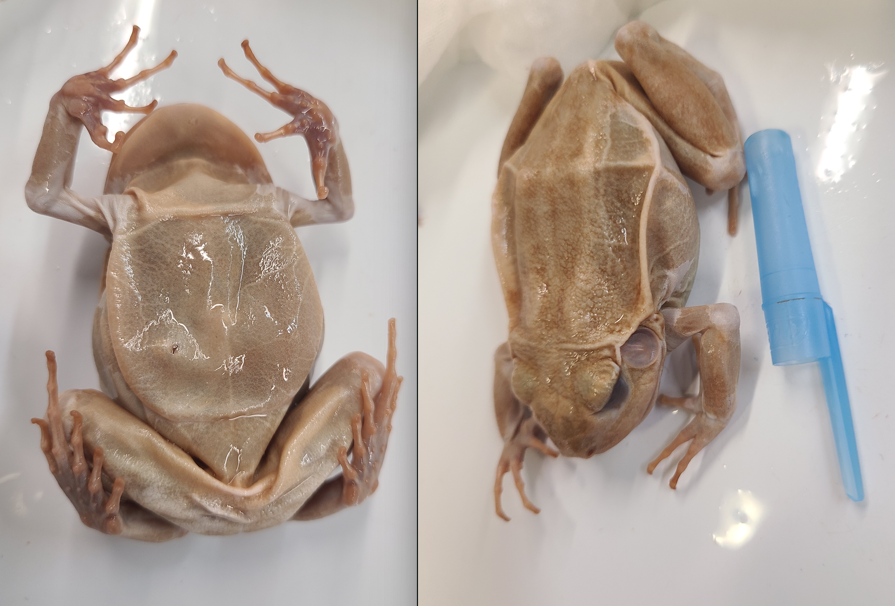
Order and Family of Craugastor augusti
Anura Craugastoridae
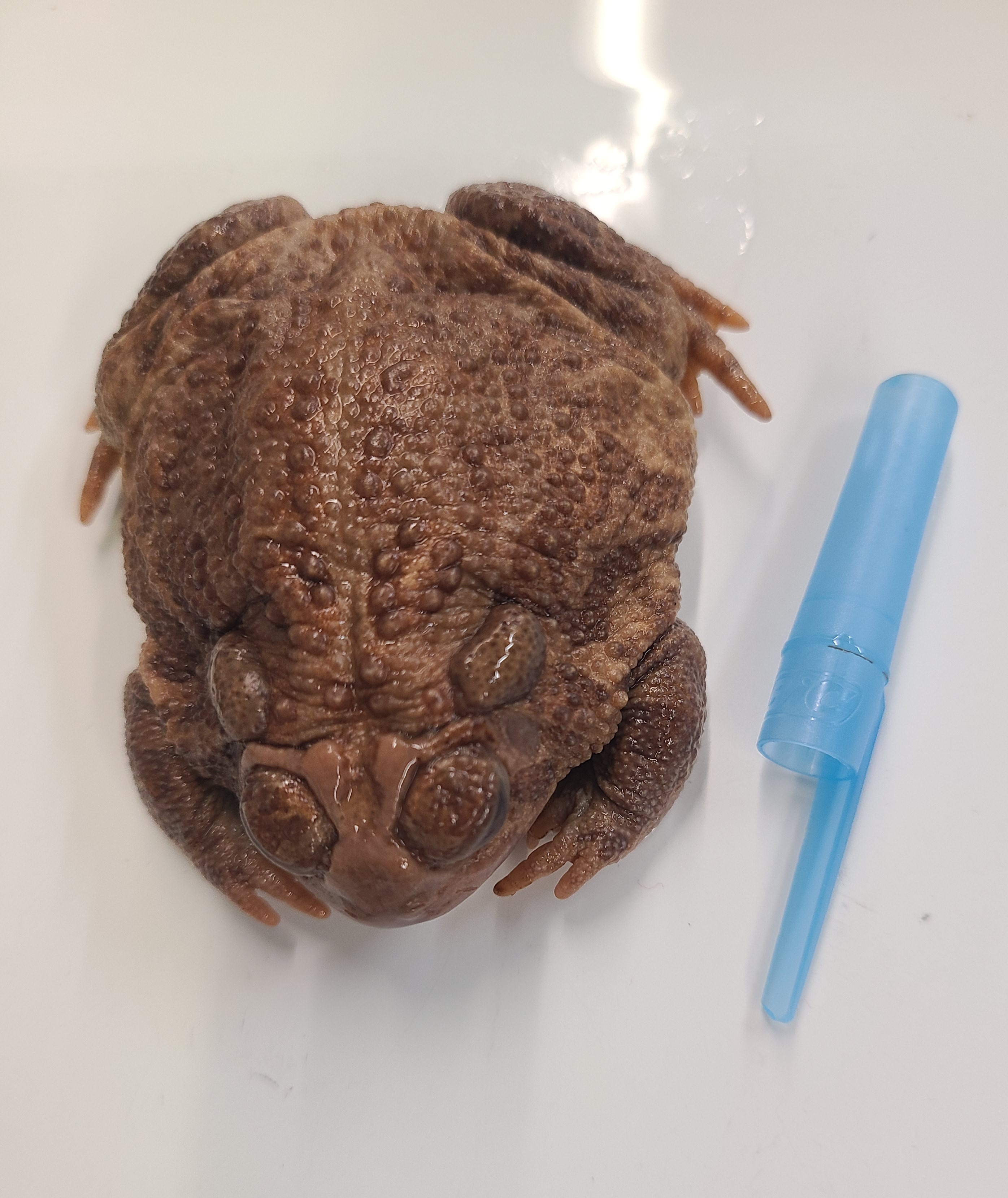
Scientific name and distinguishing features
Anaxyrus cognatus, prominent paratoid glands
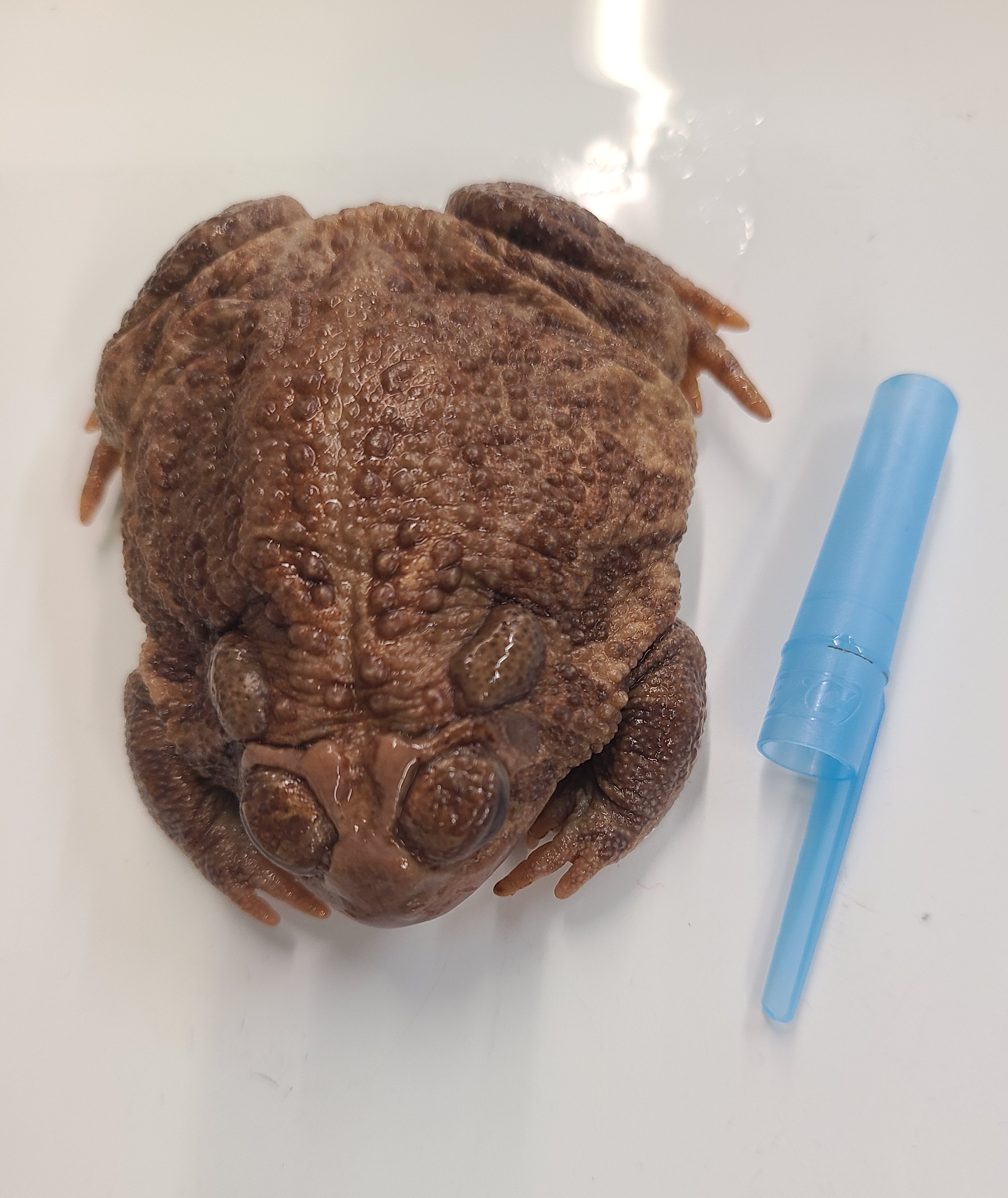
Order and Family of Anaxyrus cognatus
Anura Bufonidae
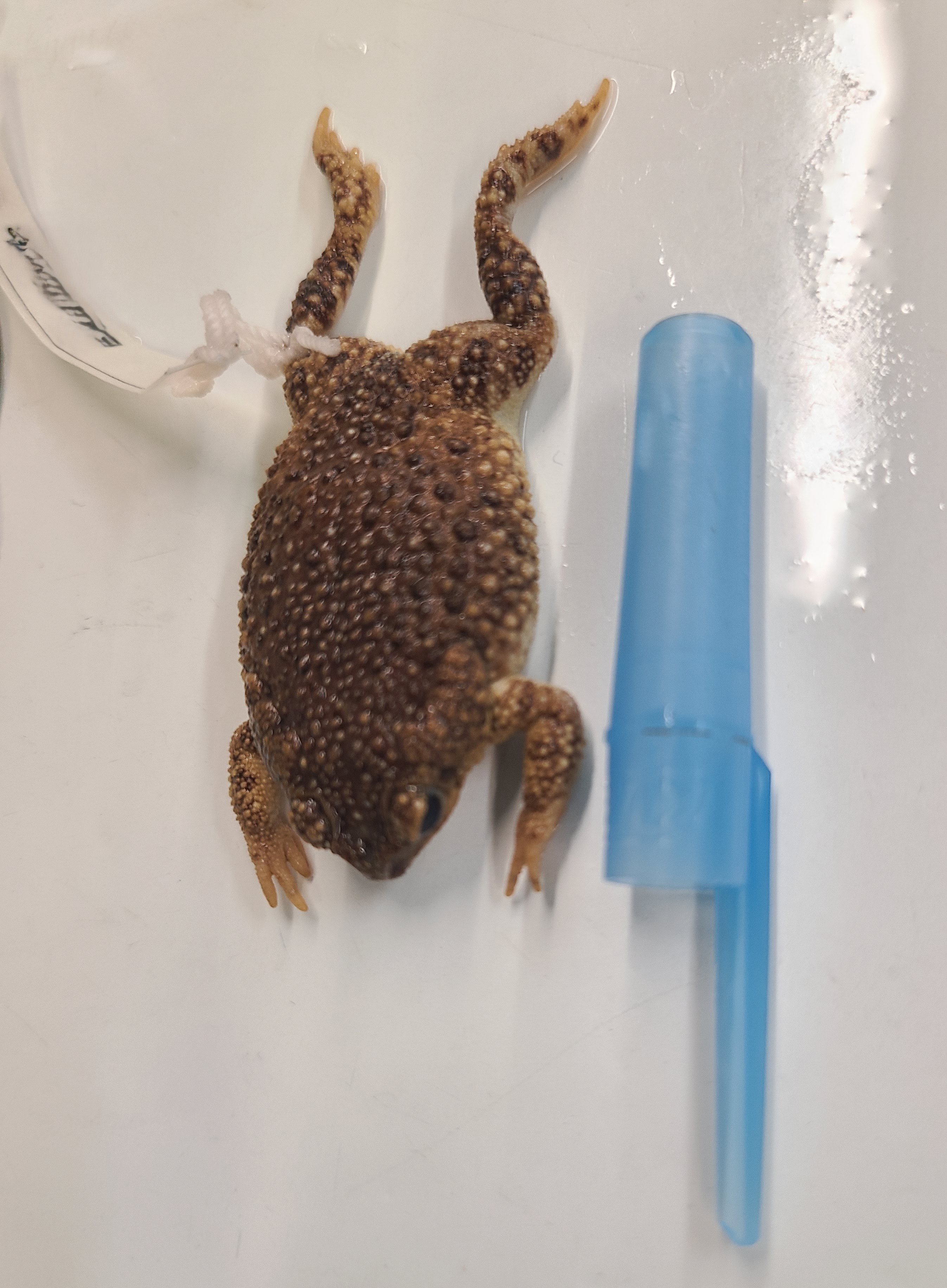
Scientific name and distinguishing features
Anaxyrus debilis, bumpy
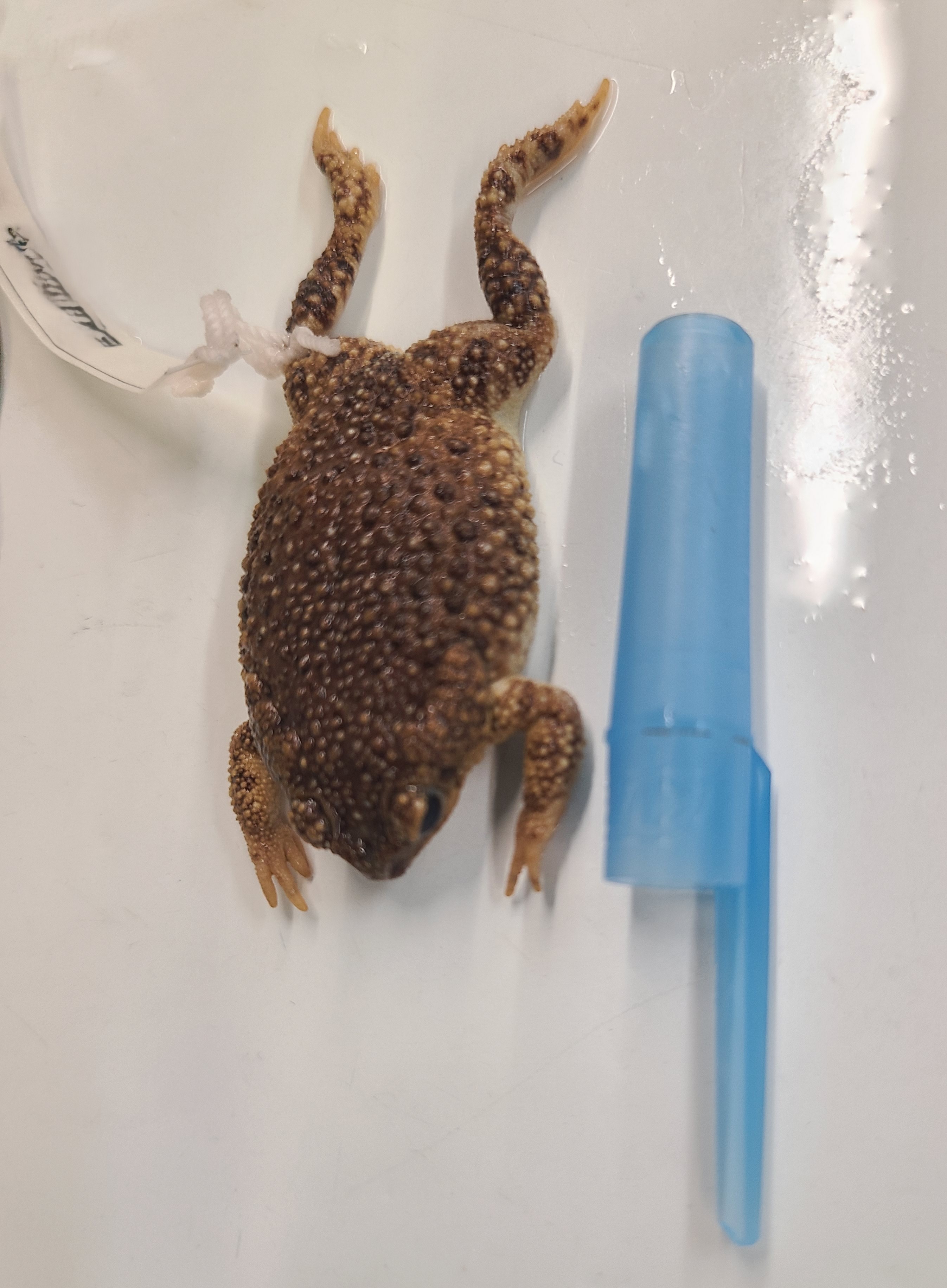
Order and Family of Anaxyrus debilis
Anura Bufonidae
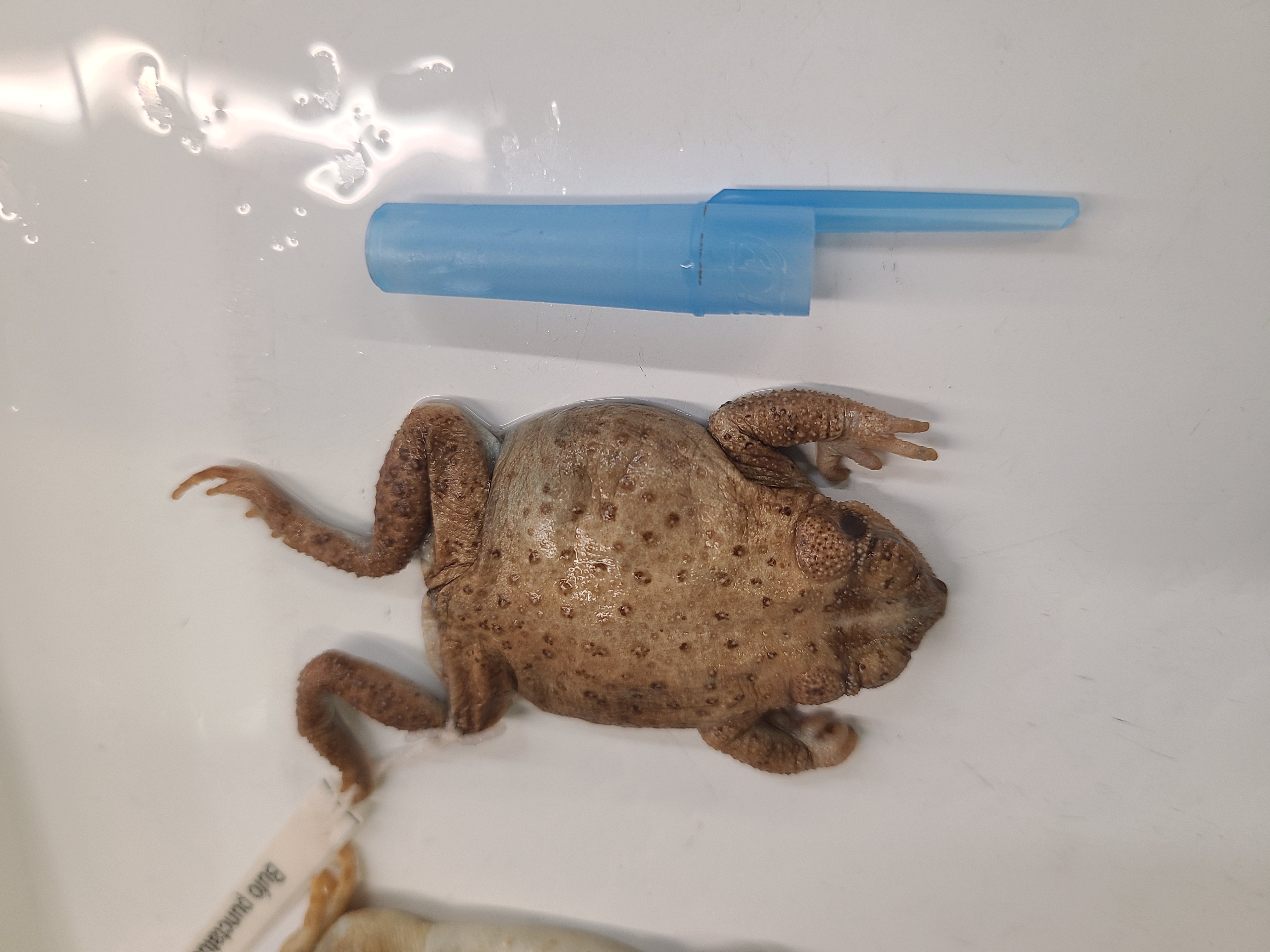
Scientific name and distinguishing features
Anaxyrus punctatus, evenly spaced warts
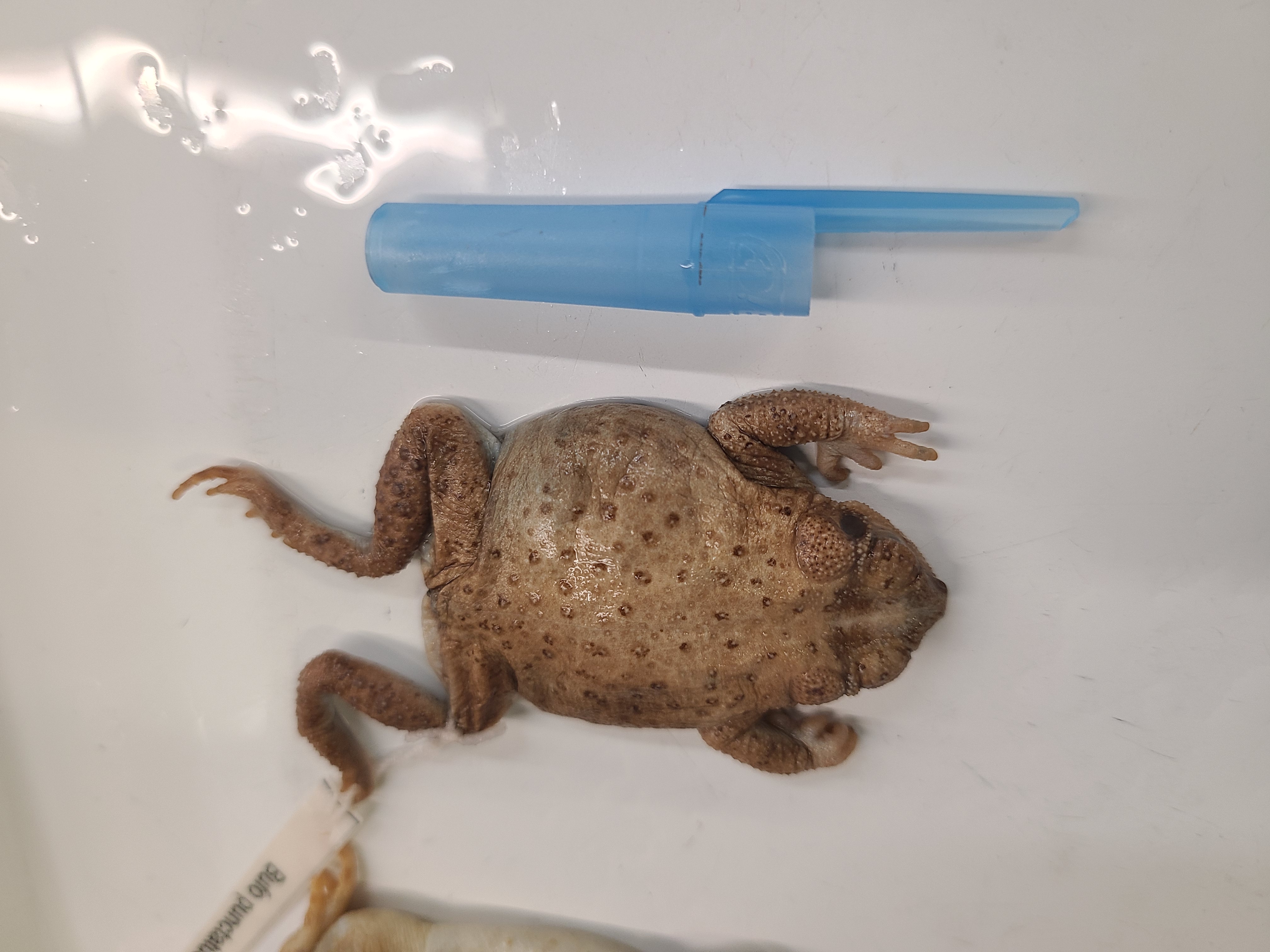
Order and Family of Anaxyrus punctatus
Anura Bufonidae
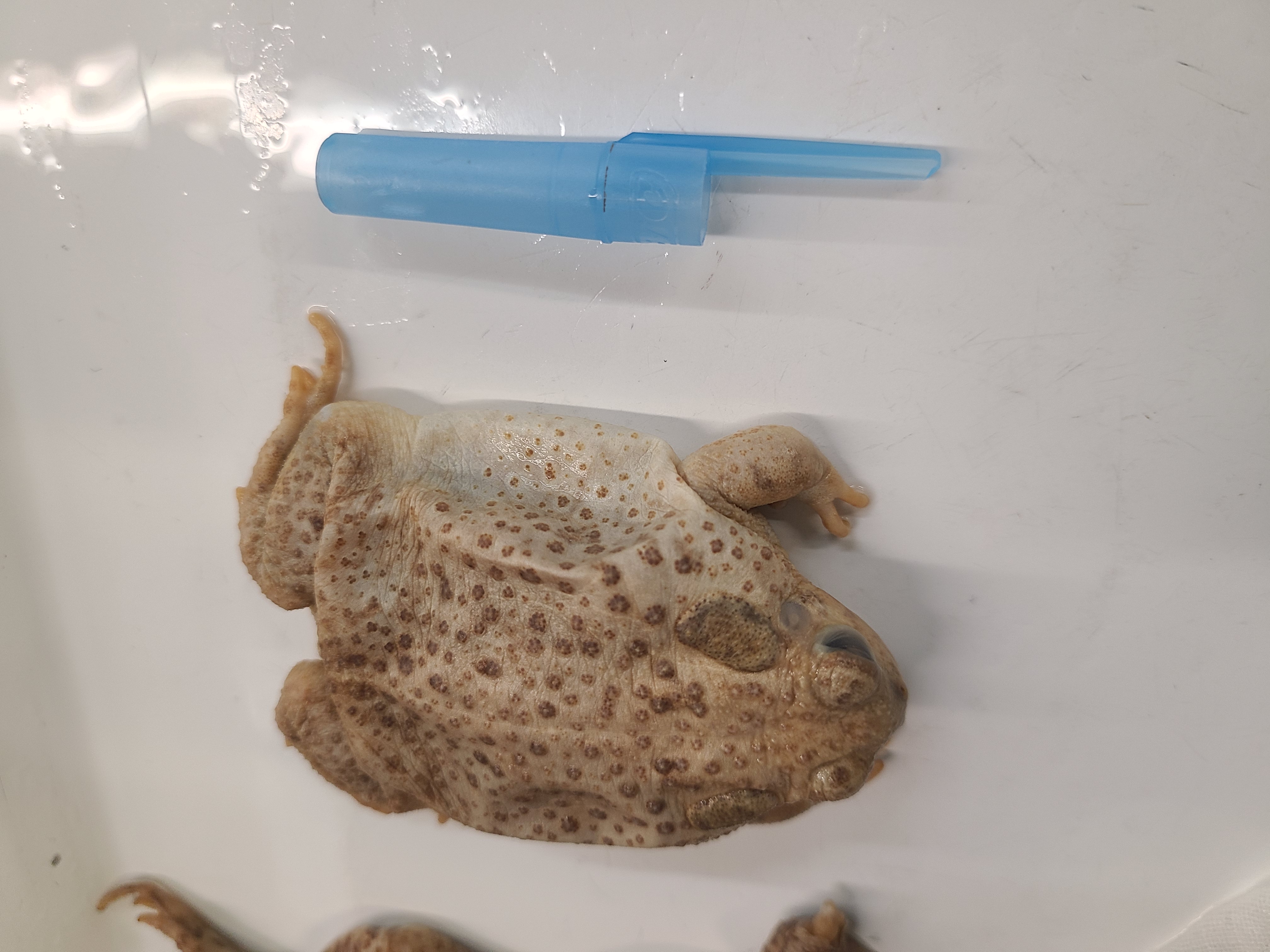
Scientific name and distinguishing features
Anaxyrus speciosus, kidney-shaped paratoid
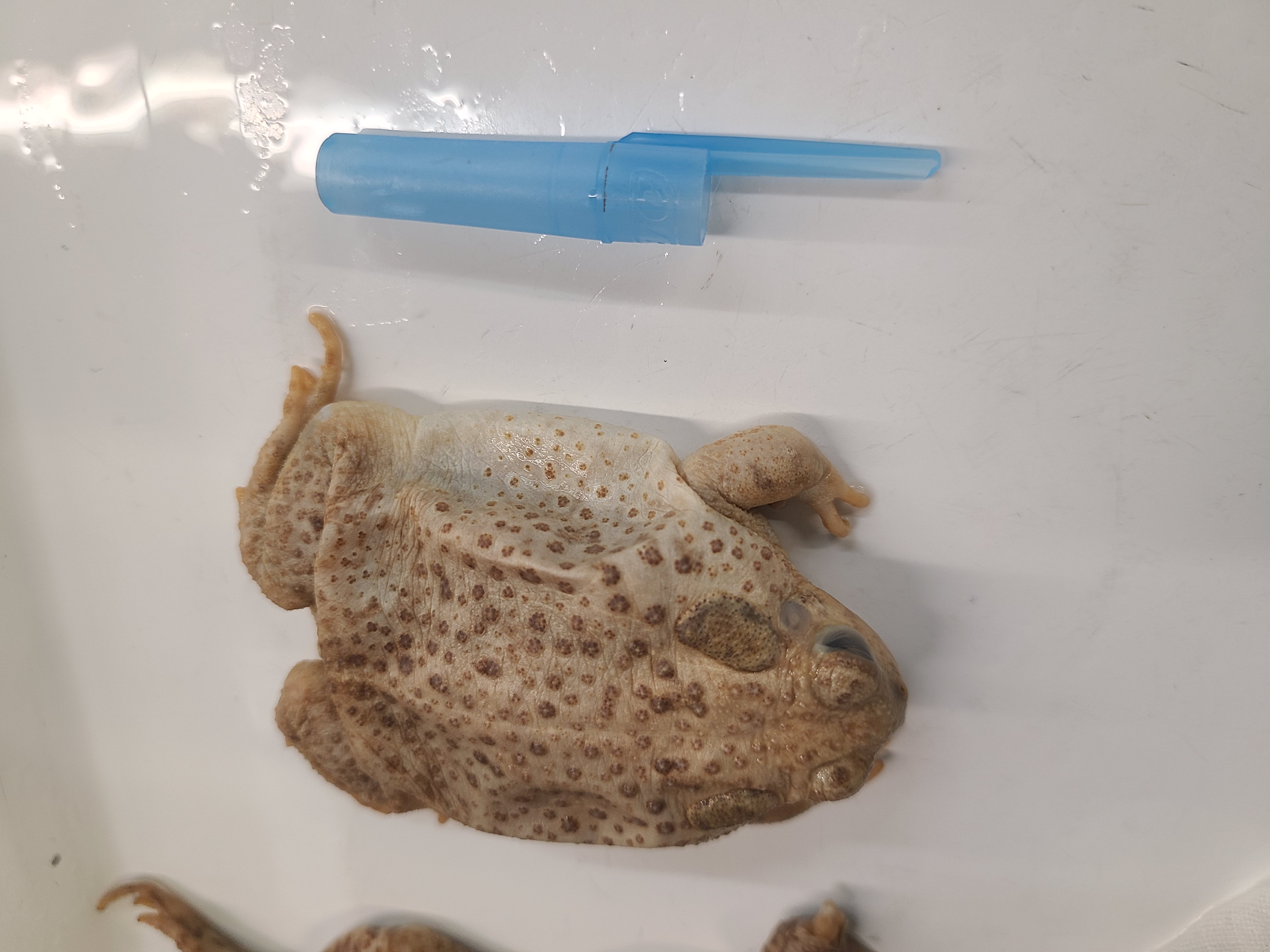
Order and Family of Anaxyrus speciosus
Anura Bufonidae
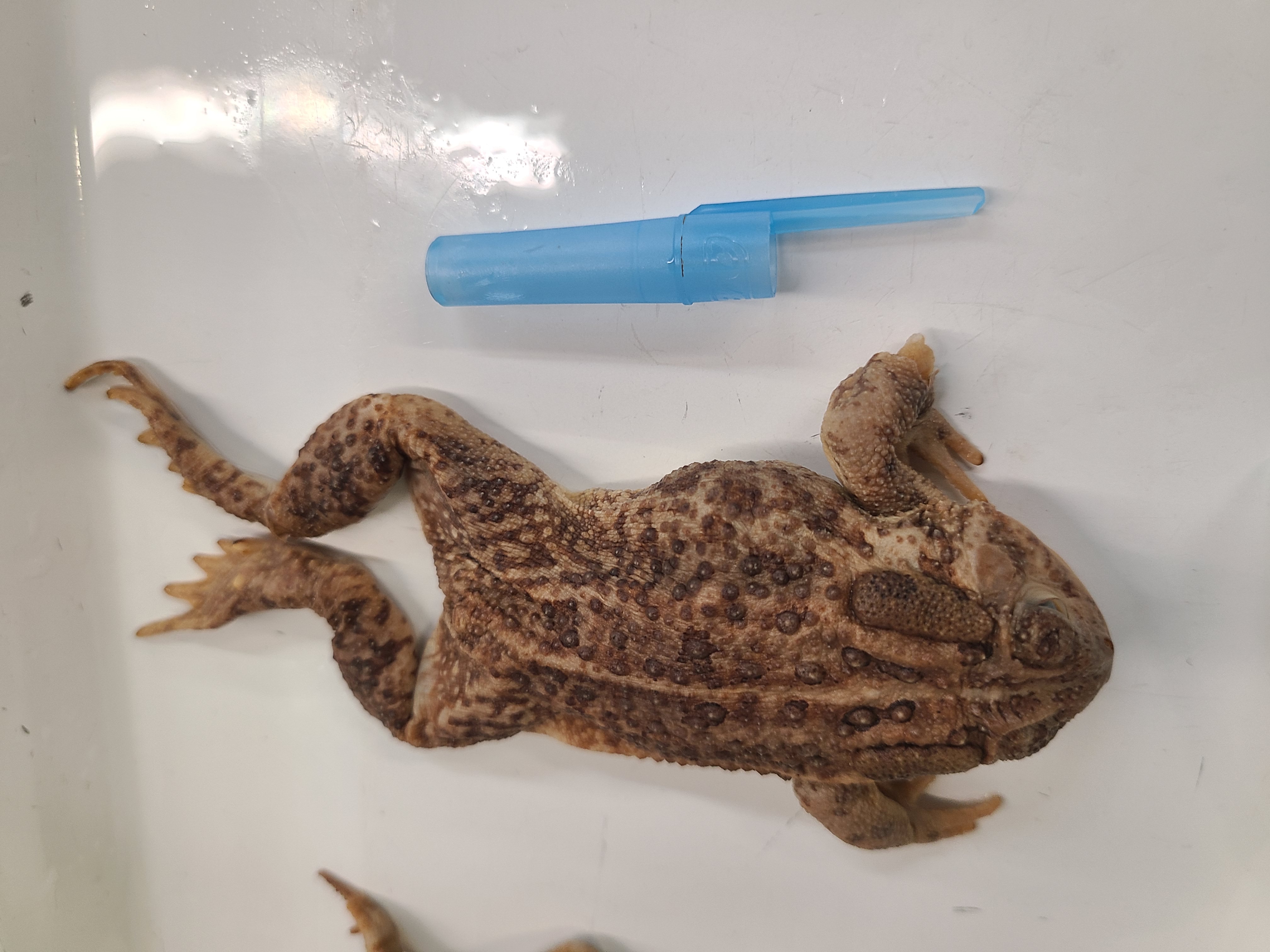
Scientific name and distinguishing features
Anaxyrus woodhousii, spots on warts
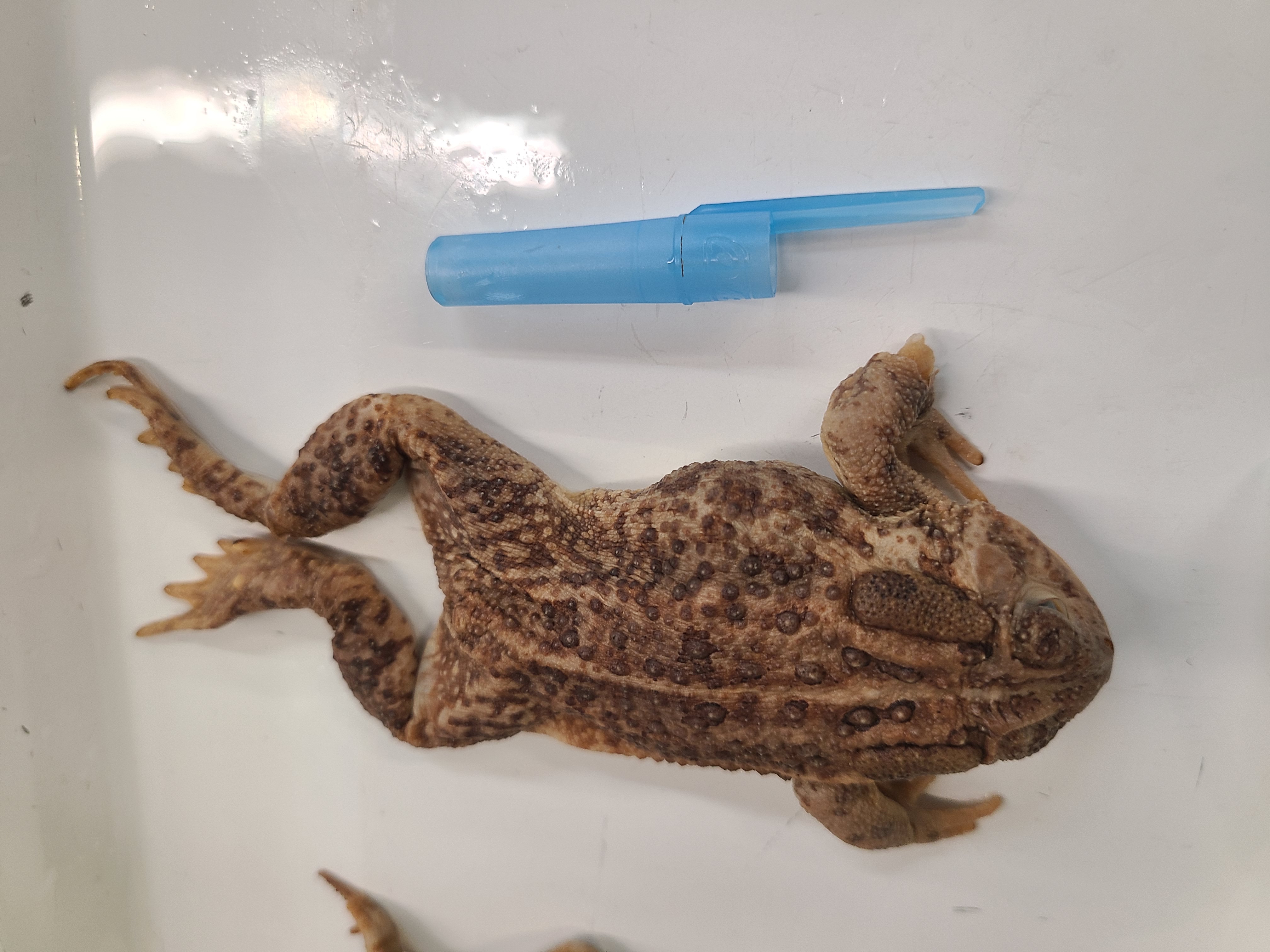
Order and Family of Anaxyrus woodhousii
Anura Bufonidae
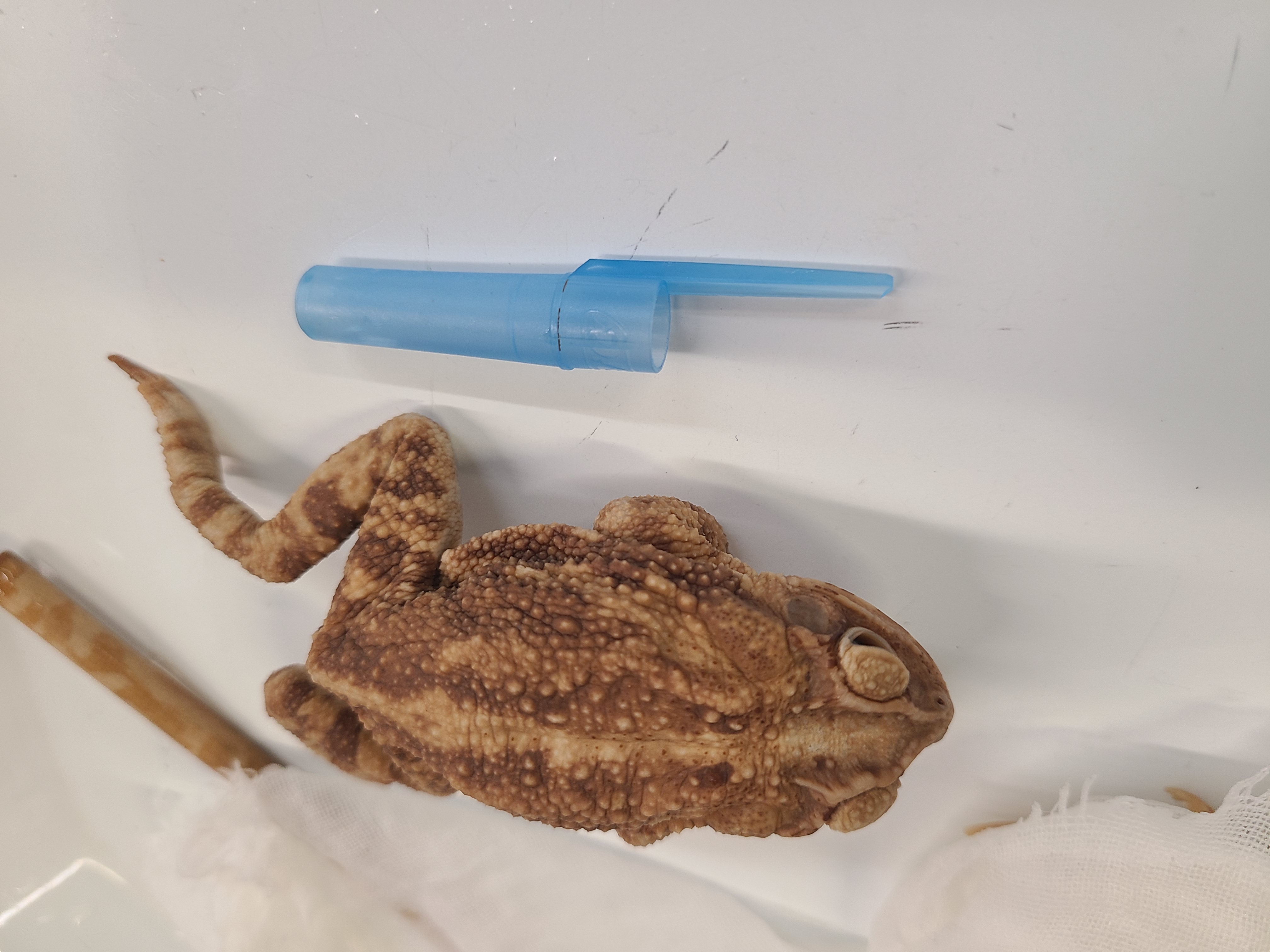
Scientific name and distinguishing features
Incilius nebulifer, cloudy pattern
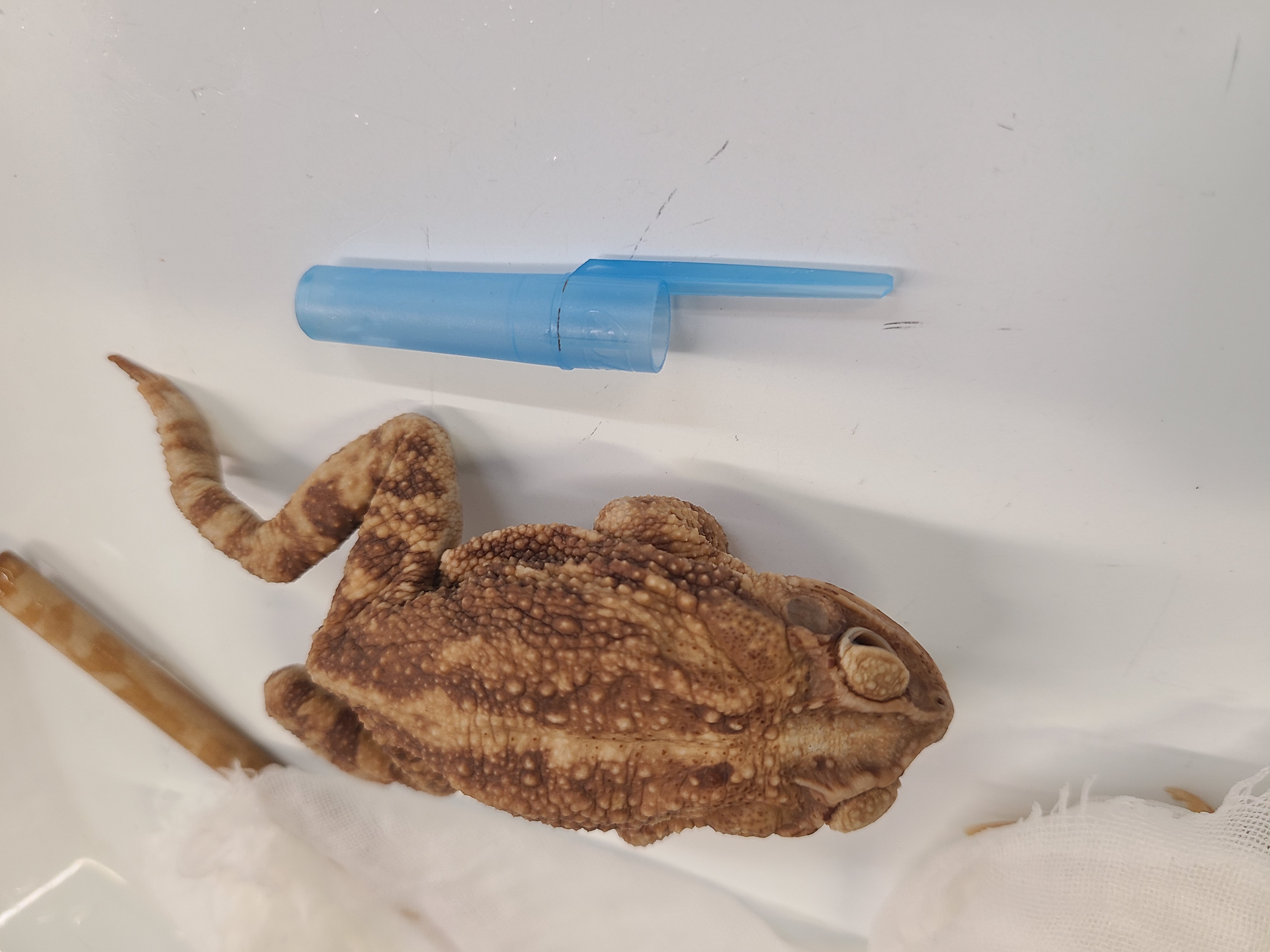
Order and Family of Incilius nebulifer
Anura Bufonidae
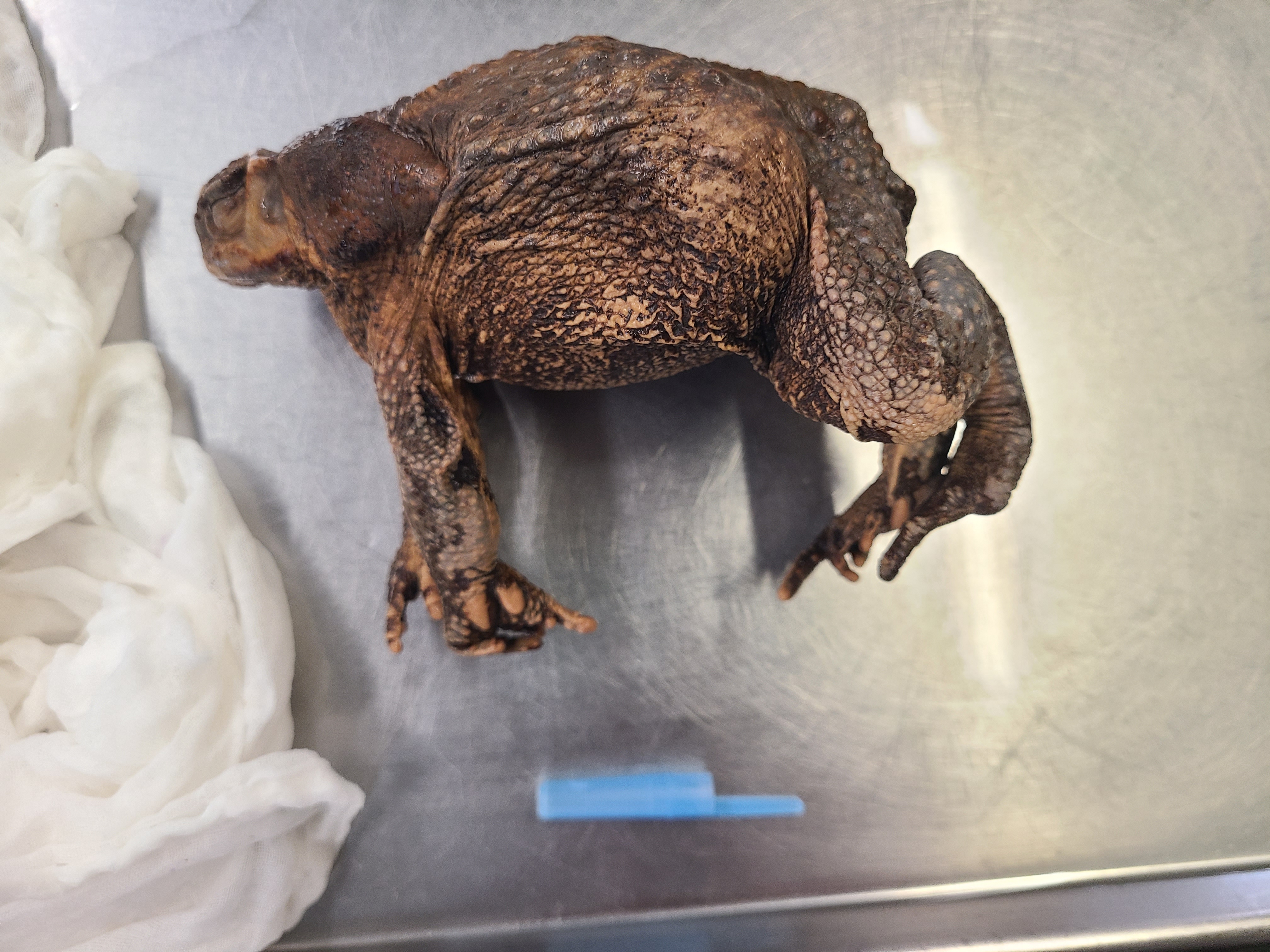
Scientific name and distinguishing features
Rhinella marina, giant
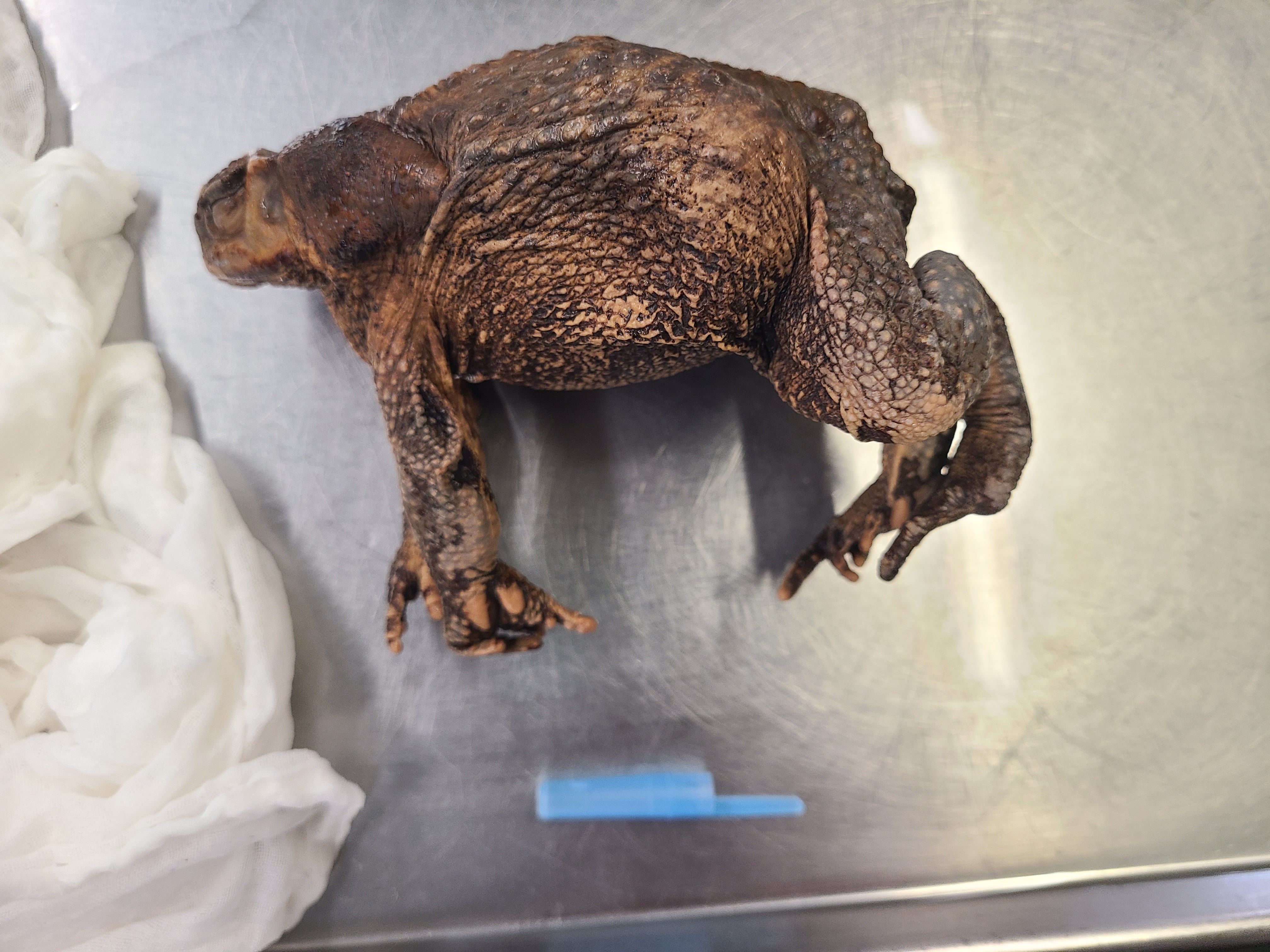
Order and Family of Rhinella marina
Anura Bufonidae
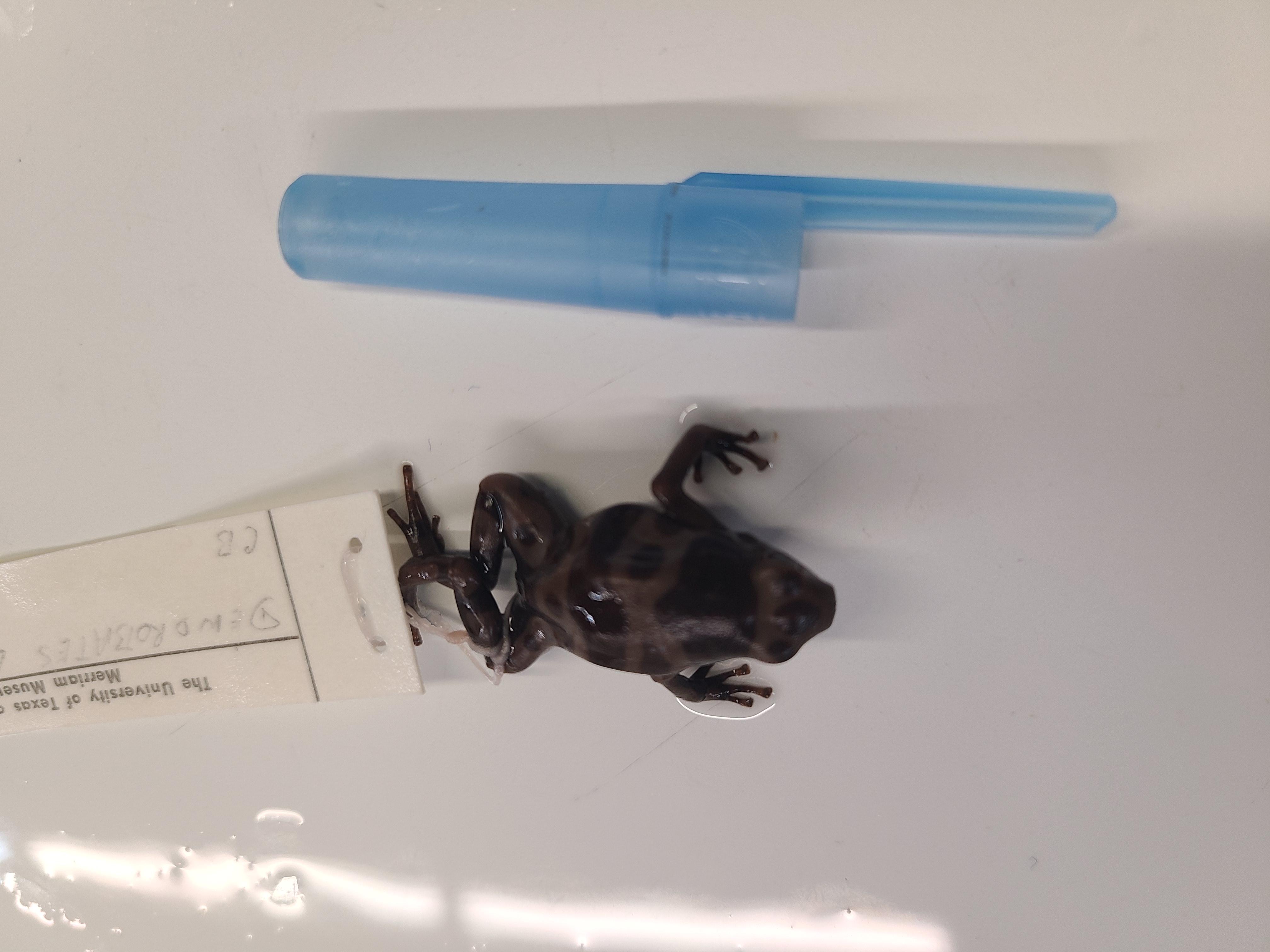
Scientific name and distinguishing features
Dendrobates leucomelas, aposematic coloration and T-shaped fingers
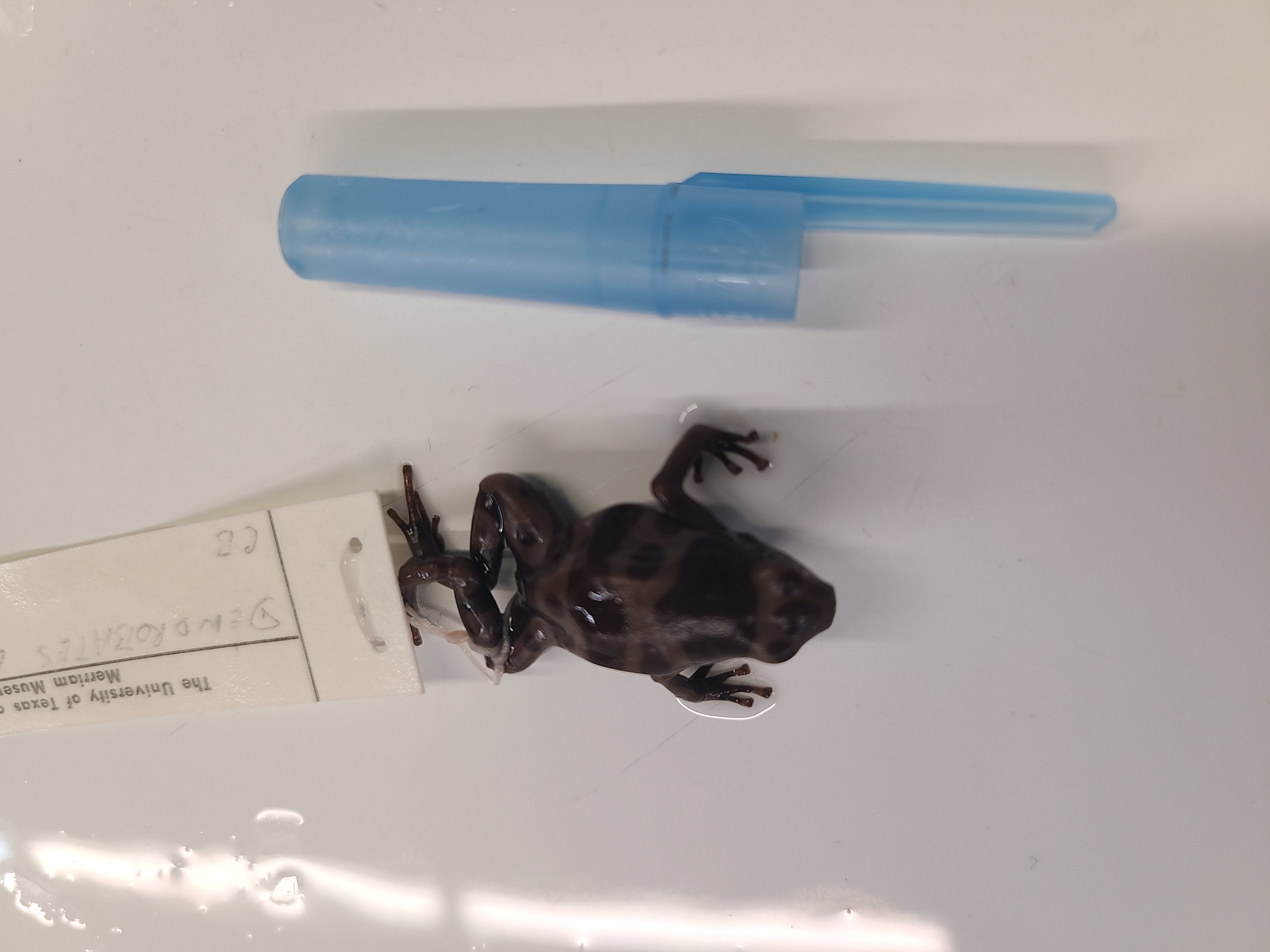
Order and Family of Dendrobates leucomelas
Anura Dendrobatidae
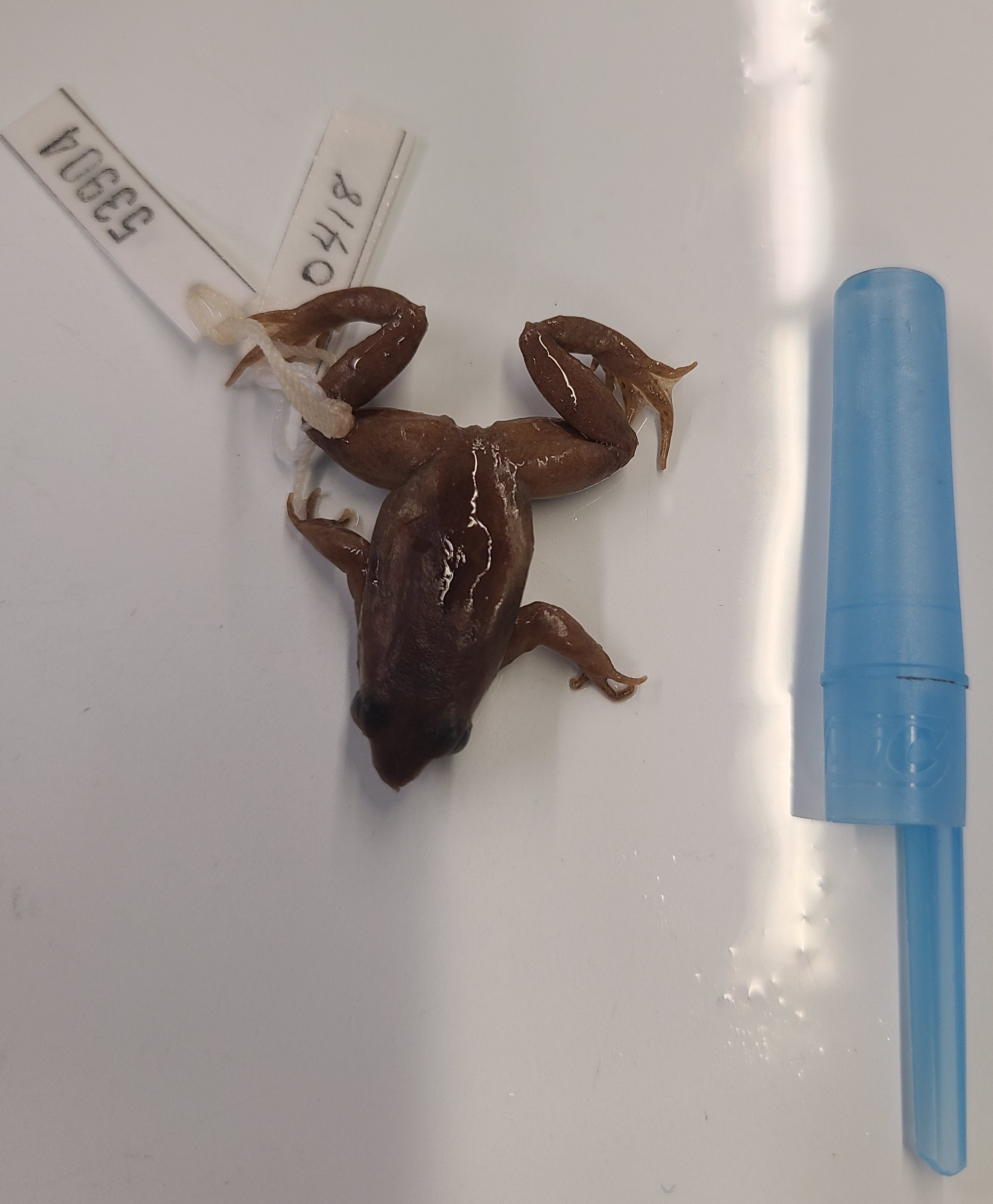
Scientific name and distinguishing features
Rhinoderma rufum, proboscis
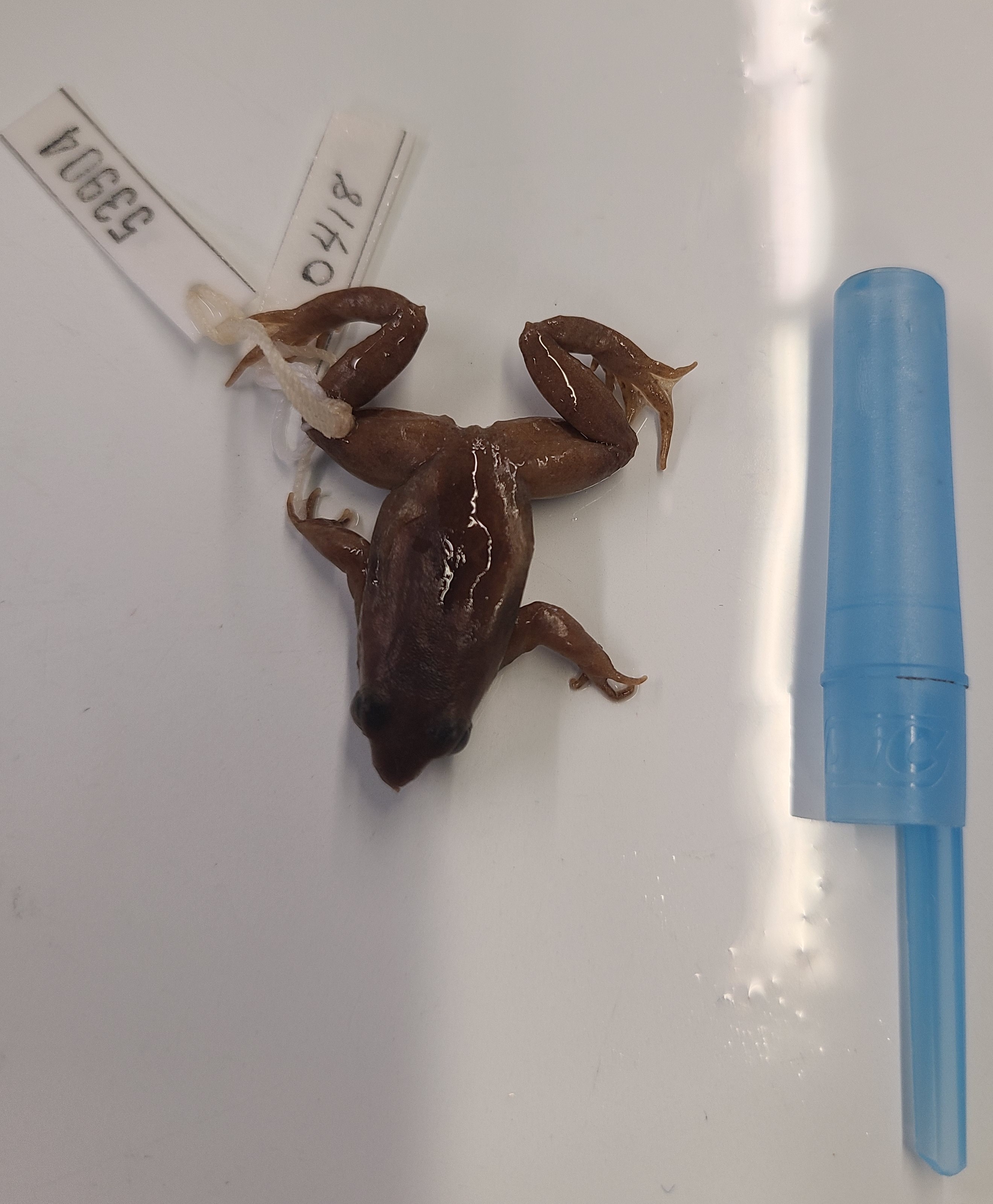
Order and Family of Rhinoderma rufum
Anura Rhinodermatidae
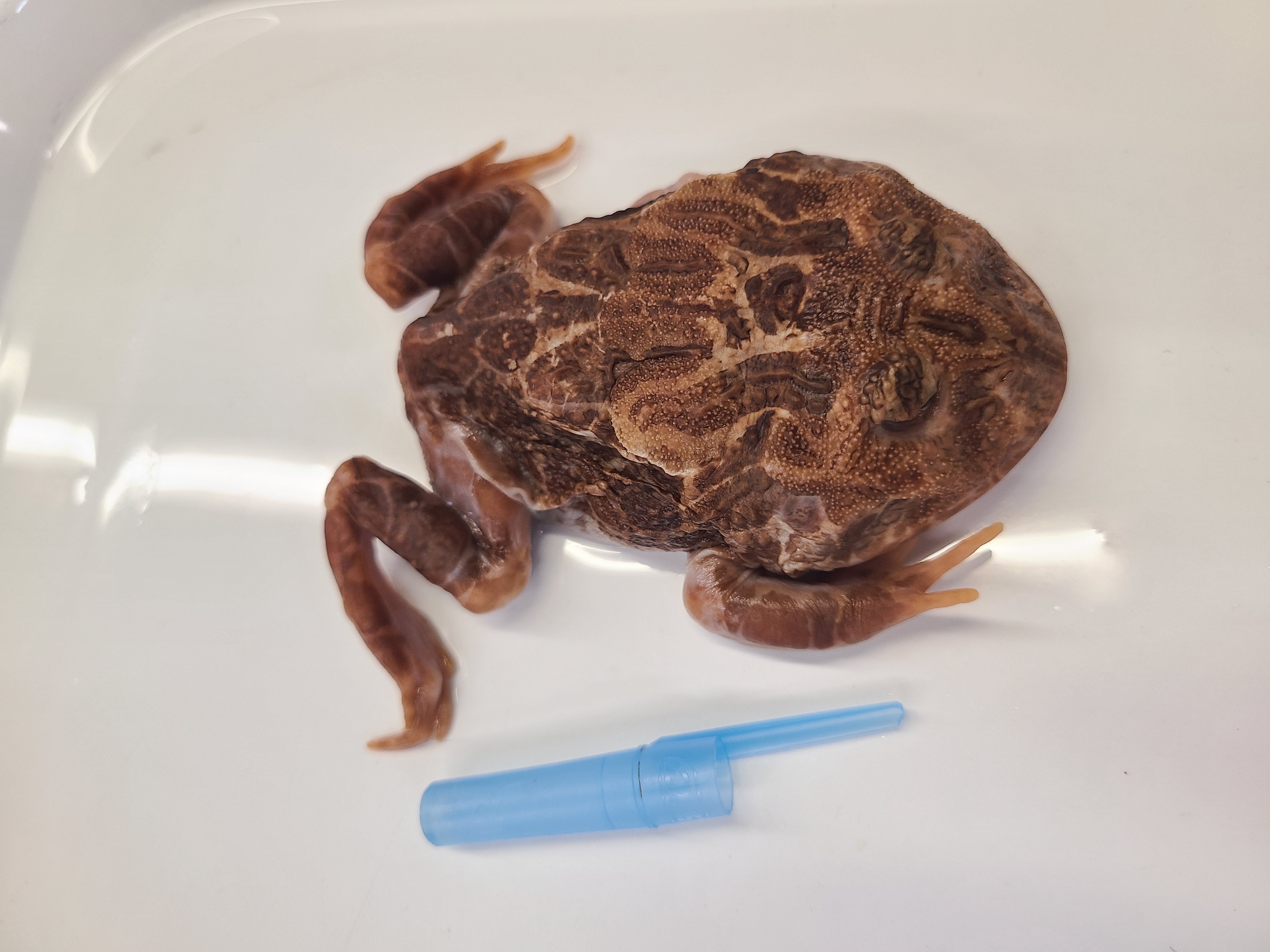
Scientific name and distinguishing features
Ceratophrys cornuta, large head
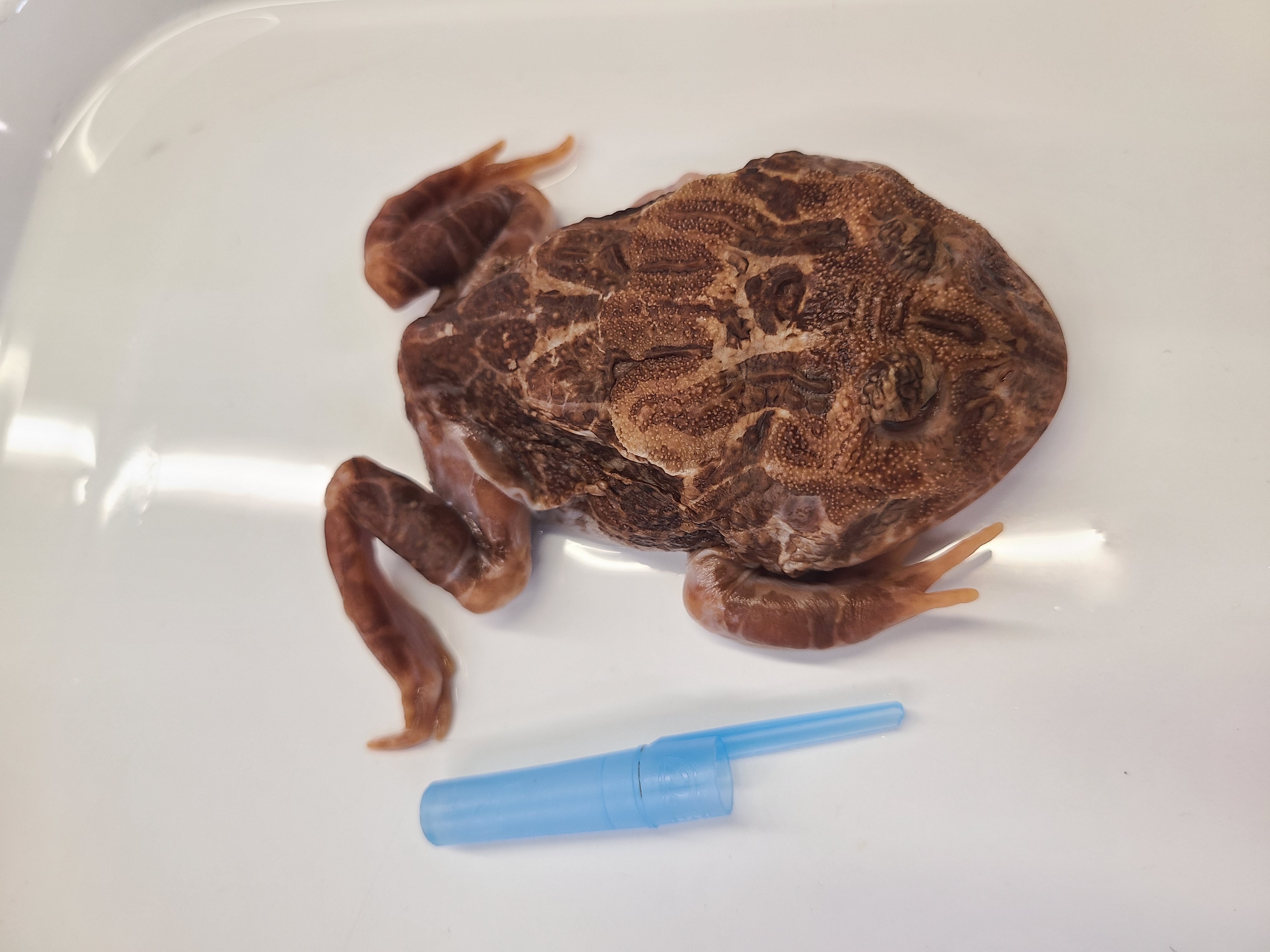
Order and Family of Ceratophrys cornuta
Anura Ceratophryidae
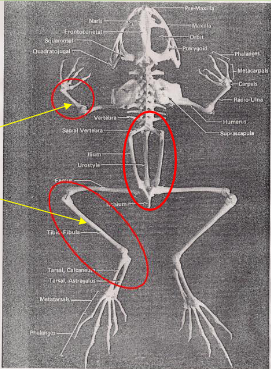
Characteristics of the order Anura
reduced skulls, tailless, 5-9 presacral vertebrae, postsacral vertebrae fused to coccyx, tongue attached to front of mouth, and external reproduction
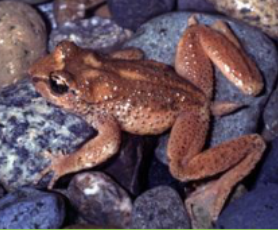
Characteristics of Ascaphidae
Males have extended cloaca “tail”, 3 palmar tubercles, lack tympana and vocal sacs
 Note
Note  Flashcards (35)