cervical and thoracic ortho
 Studied by 0 people
 Call Kai
 Learn
Learn Practice Test
 Spaced Repetition
 Match
Match Flashcards
 Knowt Play
1/38

There's no tags or description
Looks like no tags are added yet.
Name | Mastery | Learn | Test | Matching | Spaced | Call with Kai |
|---|
No analytics yet
Send a link to your students to track their progress
39 Terms
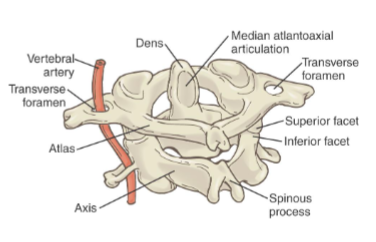
atlas vertbrae
C1; flexion, extension
axis vertebrae
C2; rotation
cervical disc characteristics
Cervical discs are smaller.
Less weight to support
No discs at C0–C1 and C1–C2
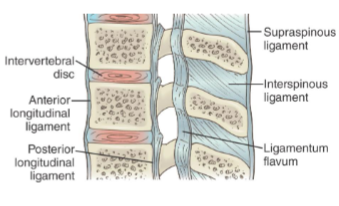
ALL- limits ext
PLL- limits flec
LF and IL- limits rotation and lateral movement
how many pairs of nerve roots are present for the cervical spine
8 pairs of nerve roots; Roots come together and divide into two rami
what is the role of rami (both ant/post ramus)?
carry sensory and motor info
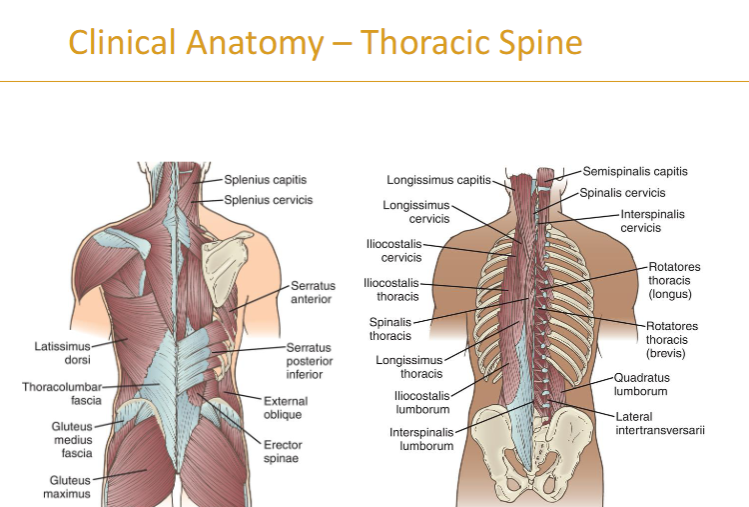
these muscles are correlated with c4/c5
Splenius capitis
• Splenius cervicis
• Semispinalis capitis
• Semispinalis cervicis
these muscles are correlated with c7
Longissimus capitis
• Longissimus cervicis
• Longus capitis
• Longus colli
what two cervical neck muscles assist in a little both of rotation and flexion?
scalene and sternocleidomastoid
what is thoracic outlet syndrome
compression of the brachial plexus causing nerve dysfunction
upper trap location and muscle action
skull to superior angle of scapula; elevation of shoulder
middle trap location and muscle action
superior angle of scap to inferior angle of scap; scapular retraction
lower trap location and muscle action
inferior angle of scap to distal end of the trap; depression of shoulders
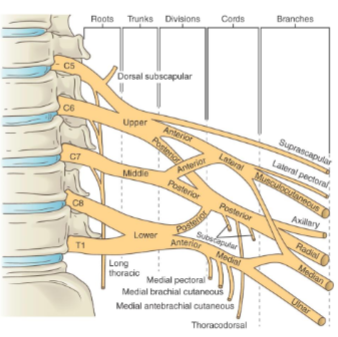
brachial plexus
C5–C8
‒ C4–T2 (may also contribute)
Innervates part of the shoulder, arm, and hand
cervical plexus
C1–C4
Innervates occipital, supraclavicular, shoulder, and upper thoracic region
c spine past history
History of spinal
pathology
▪ Recurrent brachial
plexus trauma
▪ Chest or breast pain
▪ Headaches or other
head pain
▪ Eye examination
▪ Psychosocial factors
History of the present
condition
Location of the pain
▪ Mechanism and onset of
injury
• Insidious onset
• Acute onset
▪ Consistency of the pain
▪ Postural influences
▪ Other symptoms
what is the most important first thing to ask a suspected neck injury athlete
does your neck hurt?
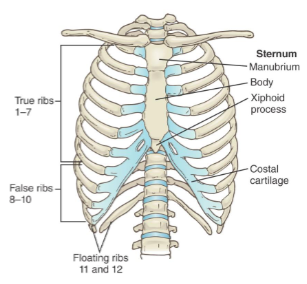
true ribs contain the least anmount of what
articular cartilage
which ribs are most likely to dislocate
floating
with pain over xiphoid process, what ribs should we think can be a part of the problem
floating
with pain over the body of the sternum, what ribs should we think can be a part of the problem
true
rib fractures are most likely caused from what
lateral load
what makes the cervical spine different
< weight, more mobility
extensors are located on the back of the spine where?
transverse processes
functional assessment
describe/reproduce motions that increase symptoms
work environment
sport position
cervical flexion and extension
neck MMTs need to fight gravity, these are the positions for each
flex= supine
ext= prone
lateral flexion= side lying
rotation= supine or side lying
what is torticollis
lack of lateral flexion/rotation
Cervical myelopathy s/s
Sensory disturbance of
the hands
▪ Muscle wasting of hand
intrinsic muscles
▪ Unsteady gait
▪ Hyperreflexia
▪ Bowel or bladder
disturbance
▪ Multisegmental weakness
or sensory changes
neoplastic conditions to consider for cervical spine conditions
▪ Age older than 50
▪ Previous history of cancer
▪ Unexplained weight loss
▪ Constant pain; no relief
with bedrest
▪ Night pain
vertebral nerve dysfunction can be caused by muscles from 1 or 2 things
1) the muscle of loose
2) muscle/tendon is angry and is compresses the nerve
flip over side for part 2
 Note
Note  Flashcards (62)