KIN 4512 Exam 2 sontag
 Call Kai
 Learn
Learn Practice Test
 Spaced Repetition
 Match
Match Flashcards
 Knowt Play
1/151

There's no tags or description
Looks like no tags are added yet.
Name | Mastery | Learn | Test | Matching | Spaced | Call with Kai |
|---|
No analytics yet
Send a link to your students to track their progress
152 Terms
prenatal development
development from conception to birth
early development is controlled by what?
genes
The embryo or fetus is sensitive to _____ factors
extrinsic
what are positive effects of prenatal development?
proper nutrients, exercise, general health of mother
what are negative effects of prenatal development?
abnormal external pressure to abdomen, viruses or drugs in bloodstream
implantation
process in which the blastocyst attaches to the wall of the uterus
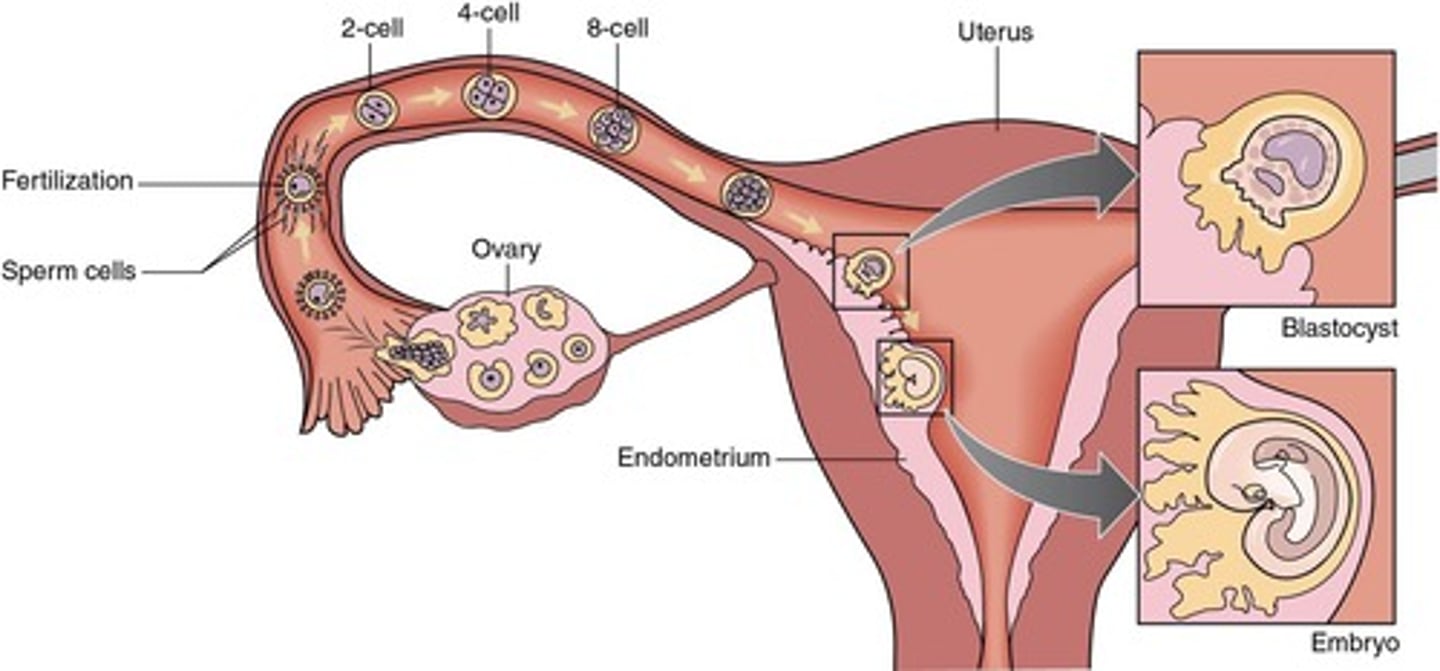
embryonic development
Conception to 8 weeks
Differentiation of cells to form specific tissues and organs
Limbs formed at 4 weeks
Human form noticeable at 8 weeks
in the fetal development : (8 weeks to birth) growth of organs and tissues occur by:
hyperplasia/ hypertrophy, plasticity, cephalocaudal, and proximodistal
hyperplasia
increase in cell number
hypertrophy
increase in cell size
cells have plasticity, which is:
modifiability. tissues can assume functions of other tissues
growth tends to proceed in two directions which are:
cephalocaudal and proximodistal
cephalocaudal development
growth head to toe
head and facial structure grow fastest
proximodistal development
near to far, growth proceeds from the body toward the extremities
fetal nourishment
oxygen and nutrients diffuse between fetal and maternal blood in placenta
poor maternal health status can affect fetus
Abnormal Prenatal Development: Genetic Causes
inherited abnormalities are dominant or recessive
new mutations can occur due to alteration or deletion of a gene during formation of egg/sperm cell
dominant genetic inherited abnormalities
one parent
recessive genetic abnormalities
both parents, less prominent
abnormal prenatal development: extrinsic
fetal nourishment comes from the carries which can be good or bad
teratogen
any drug or chemical that causes abnormal prenatal development upon exposure
ex: drugs, vitamins, hormones, etc
effects of teratrgoens depends on __
when the fetus was exposed and to how much of the substance
typically the earlier the exposure/infection, the more serious the abnormalities
external causes of abnormal development based physical environment
pressure, temperature, x-ray exposure, environmental pollutants
environmental effects can result in
delayed growth, malformation, life-threatening conditions, and the fetus' stage of development
examples of environmental effects
air pollution, caffeine, maternal occupation, and secondhand smoke
where does physical growth and development begin?
in the utero
parental development is influenced by which two factors?
genetic and extrinsic factors
individuals are, in part, products of the macros that affected ______?
their prenatal growth and development
what two things change individual constraints?
growth and aging
Genetic and extrinsic factors combine to
influence growth and aging
universality
patterns in growth and aging that hold for ALL humans
specificaility
individual variation in patterns in growth and aging
plotting overall growth allows us to compare an individual with the ______ and adjust expectations according
average
growth patterns are not _____.
linear
true or false
growth patterns are predictable and consistent?
true
overall growth (height) has what kind of curve
sigmoid curve
in girls the peak height velocity occurs at
11.5 to 12 years
what age do girls stop growing?
16
Boys peak height velocity occurs at
13.5 to 14 years
boys stop growing at around what age
18
what is the growth period called in males that contributes to absolute height differences?
the long growth period
weight follows what kind of pattern?
a sigmoid pattern
true or false?
weight is highly susceptible to extrinsic factors like diet and exercise?
true
peak weight velocity follows peak height velocity
•Males: delay of 2.5-5 months
•Females: delay of 3.5-10.5 months
extent of growth follows a ____ curve
distance curve
rate of growth has a ___ curve
velocity curve
extent of growth can determine what?
variables of growth at certain ages
the rate of growth can determine what?
peak growth velocity (the age that growth is fastest for a portion of the lifespan)
Peak Height Velocity (PHV)
age at which one is growing the fastest
what does age at takeoff mean?
age at which one changes from slow growth to rapid growth
PHV in boys
13.5-14 years
specific parts of the body, tissues and organs have different ____ rates.
growth
body proportions change from what to what?
head-heavy, short-legged form at birth to adult proportions
in adolescence, boys typically increase in ____
shoulder breadth
physiological maturation
the developmental process of leading to a state of full function
mature
as we grow in size and increase in years, we...
secondary sex characteristics are
aspects of form or structure appropriate to males or females, often used to assess physiological maturity in adolescence
secondary sex characteristics appear at a younger age in girls and boys or are early
matuerers
Girls mature __ than boys
faster
true or false? menarche occurs in girls and is after PHV by 11-12 months
true
maturation status - a constraint
ppl who are more mature are likely stronger and more coordinated
group youth sport teams according to age, not to what?
not maturation status
motor incoordination/ adolescent awkwardness
temporary effects for around ~6 months
increased risk for injury
early childhood (0-5 yr)
rapid increases in height during first two years
rapid increase in weight
head proportionally larger than body
legs grow faster than head and trunk
no sign of maturation present
late childhood (6-9 yr)
steady height changes
steady weight changes
legs continue to grow faster than trunk and head
puberty-induced body changes may begin as early as 9 yrs old in females
Early Adolescence (10-14 yr)
rapid height changes, peak velocity occurs btwn ages 11-14 (girls reach PHV earlier than boys)
rapid weight changes, peak velocity, occurs 2-5 months after height spurt
gender differences appear in shoulder to hip ratios
secondary sex characteristics appear
during periods of rapid growth, growth is
sensitive to alteration by environmental factors
ie. early diet (breastfed vs formula fed)
what extrinsic factors are most likely to affect growth during infancy?
nutritional, endocrine, and pyschosocial
second hand smoke, social influences

what extrinsic factors are most likely to affect growth during the adolescent growth spurt?
second hand smoke, belonging to a group, social settings
adulthood and aging -height
its stable in adulthood but may decrease in older adulthood
Why do you shrink as you age?
compression of cartilage pads; osteoporosis
knowledge of physical growth, maturation and aging allows parents, educators, and therapists, to understand how changing structural constraints affects what?
movement

the plateau in girls height happens before or after boys?
before
the distance curve is
the absolute
does rate of growth function as a constraint?
yes
endocrine system
exerts control over certain cellular functions using hormones
skeletal system structure is maintained via
cartilage
priamry ossification center
area in the mid portions of the shafts of long bones where bone cells are formed
secondary ossification centers (postnatal development)
Sites of bone formation in epiphyses after birth (following primary growth)
true or false? :Growth at the epiphyseal plates stops at different times for different bones
true
all bones are closed by age ___ for females and age ____ for males
15,18
on average, adults loose about one percent of bone mass per year
true
osteoporosis risk factors
leads to rib cage collopse, stooped posture, and reduced height
extent of bone loss is influenced by what?
diet, exercise, how we do in life, hormone levels
estrogen stimualtates osteblasts which helps
helps to be a reguawltor of bone mass and rebuild
hand size changes movement patterns (graph) showed that
the frequency of using 2 hands was higher at lower cup diameters for infants, than adults
Achondroplasia
•A disorder of bone growth that prevents changing of cartilage to bone (cartilage growth defects)
•Most common form of disproportionate dwarfism
what are some Common structural and functional differences
•Shorter fingers
•Shorter stature
•Enlarged head and forehead
•Limited range of motion at elbows
•Atypical spine structure (e.g., lordosis of spine: lordotic curve arches too far inward)
•Different body proportions (shorter limbs/longer trunk/larger head)
•Prenatal growth involves hyperplasia and hypertrophy
•Hyperplasia – an increase in the absolute number of cells
•Hypertrophy – increases the relative sizes of individual cells
what does postnatal growth follow?
hypertrophy
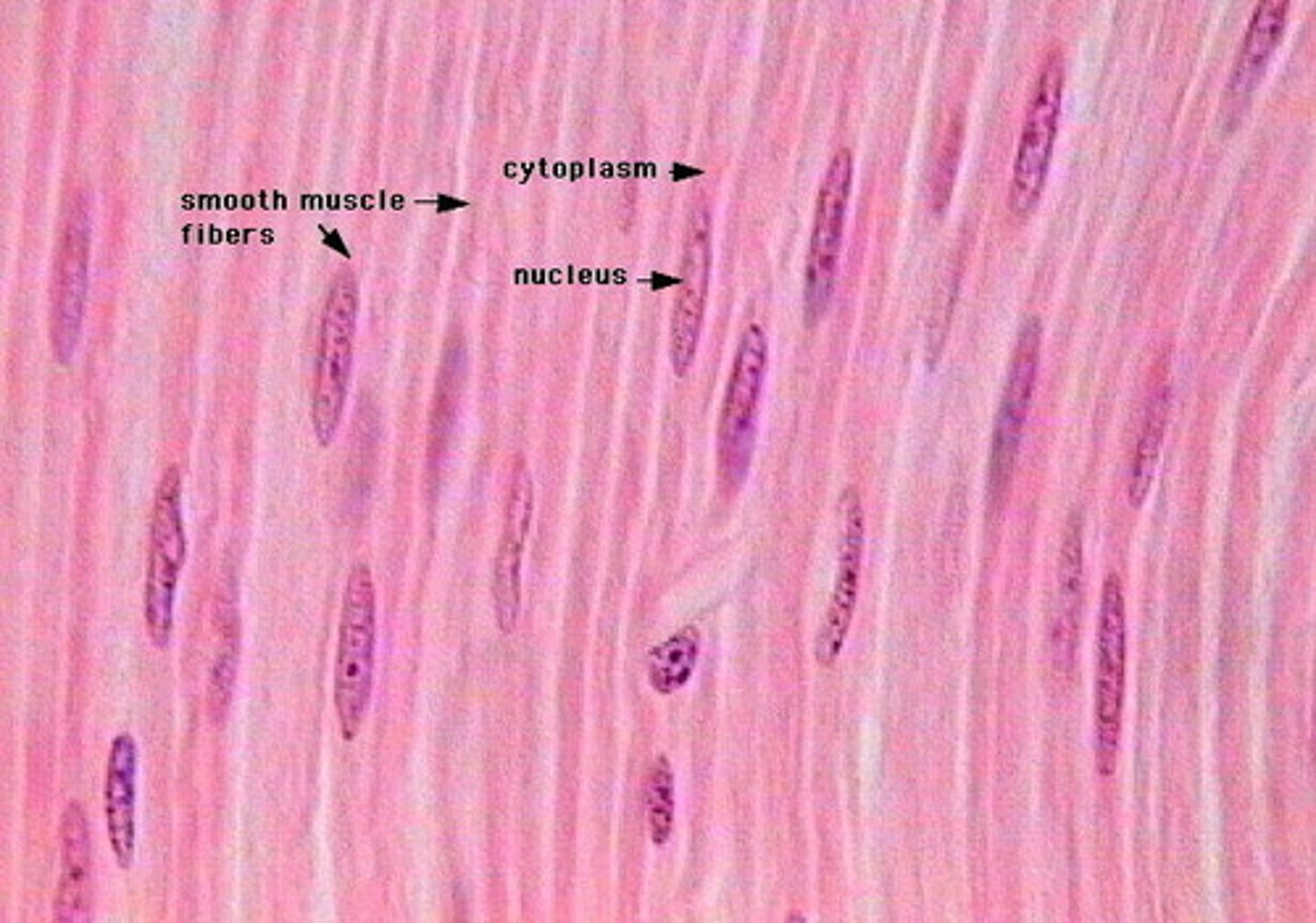
smooth muscle
•involuntary, non-striated muscle
•In organs: stomach, intestines, bladder, uterus, skin, etc.
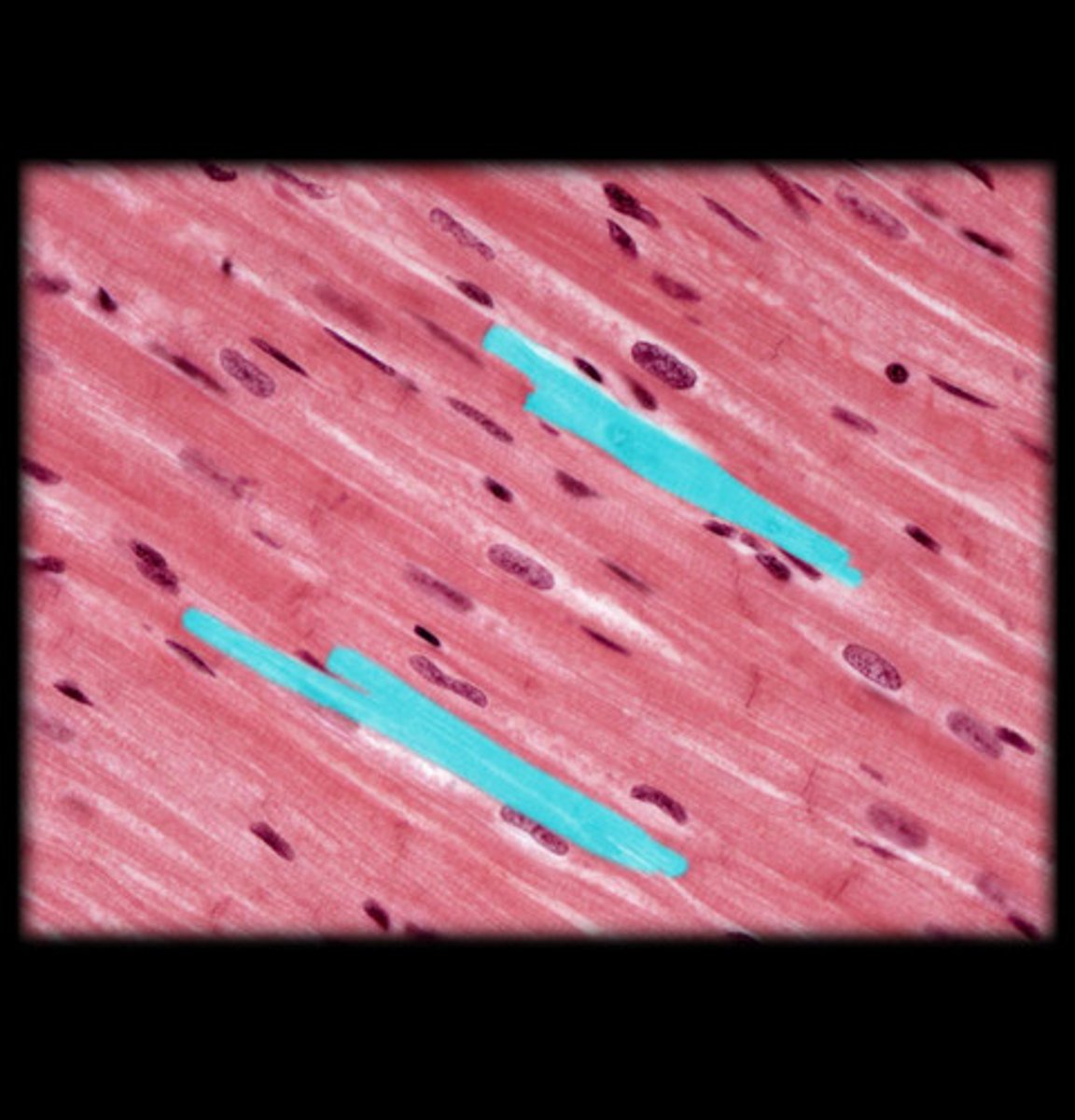
cardiac muscle
•involuntary, striated muscle
•In the heart
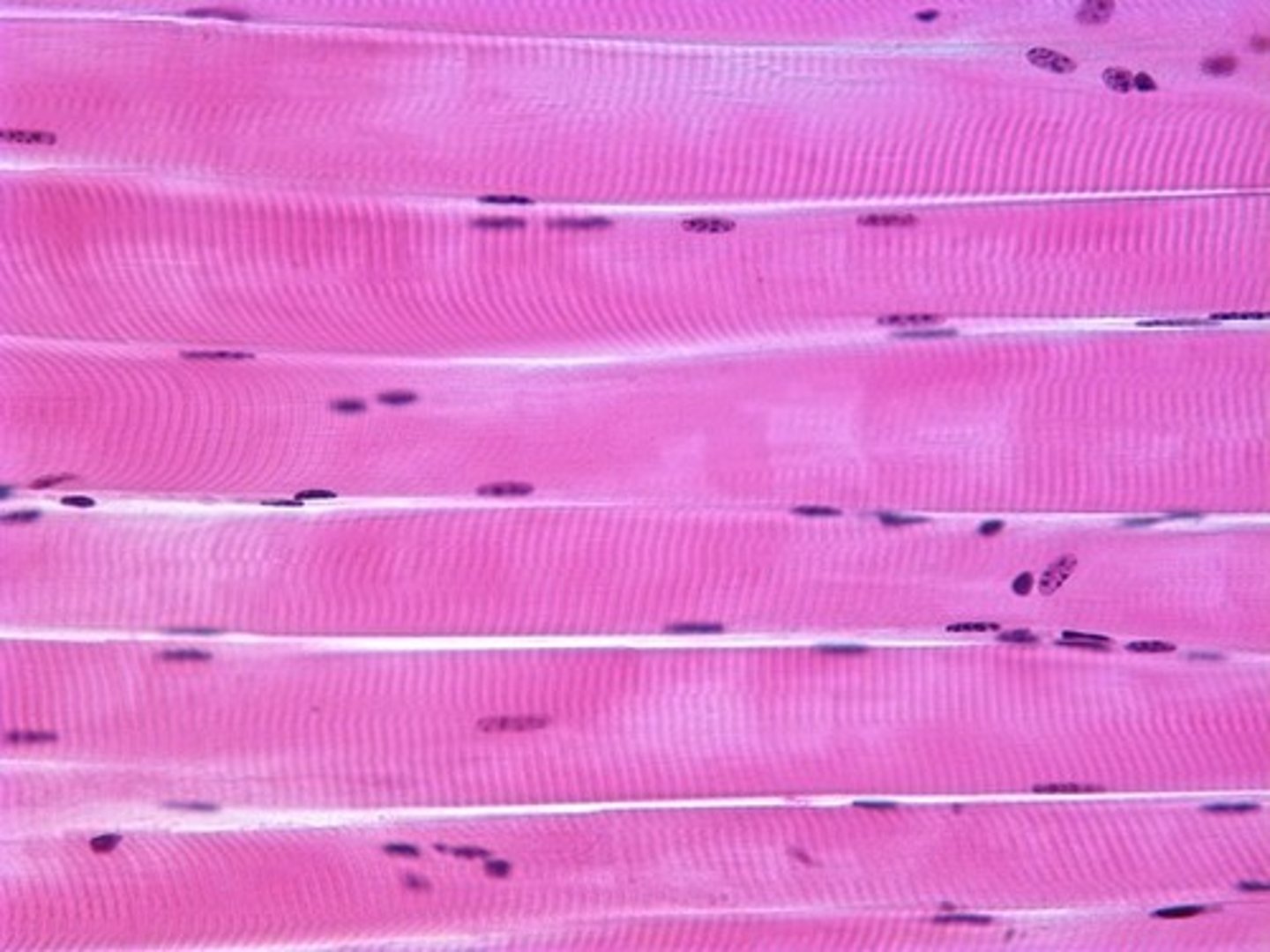
skeletal muscle
•- voluntary, striated muscle
•The muscles you "think" of when you hear muscles, attached to bones by tendons
adult muscle is composed of slow and fast twitch fibers
yes
fast twitch fibers (type IIa, IIx)
intense short duration activities
sarcopenia
the loss of muscle mass, strength, and function that comes with aging
By 80 years, an average of 30% of muscle mass is lost.
Decrease in number and size of muscle fibers.
Fast twitch fibers undergo a greater loss, than slow twitch (Nilwik et al., 2013)
More fat and connective tissue in limb muscles, than younger adults (Evans & Lexell, 1995).
Is there anything that can be done to prevent or reduce these declines?
why does this happen? •Aging: Heart loses its ability to adapt to increased workloads
•May be due to degeneration of heart muscle, decreased elasticity, changes in fibers of the valves, or (partly) lifestyle
•Heart rate variability (HRV) indicates cardiac health
•variation in the time interval between consecutive heartbeats in milliseconds
what does higher HRV mean?
•indicative of lower cardiac risk and better outcomes (lower morbidity, mortality, improved psychological well-being)
•

