Ovaries and Follicles

0.0(0)
studied byStudied by 0 people
0.0(0)
full-widthCall Kai
learnLearn
examPractice Test
spaced repetitionSpaced Repetition
heart puzzleMatch
flashcardsFlashcards
GameKnowt Play
Card Sorting

1/12

encourage image

There's no tags or description

Looks like no tags are added yet.

Study Analytics
Name
Mastery
Learn
Test
Matching
Spaced
Call with Kai

No study sessions yet.

13 Terms

1
New cards

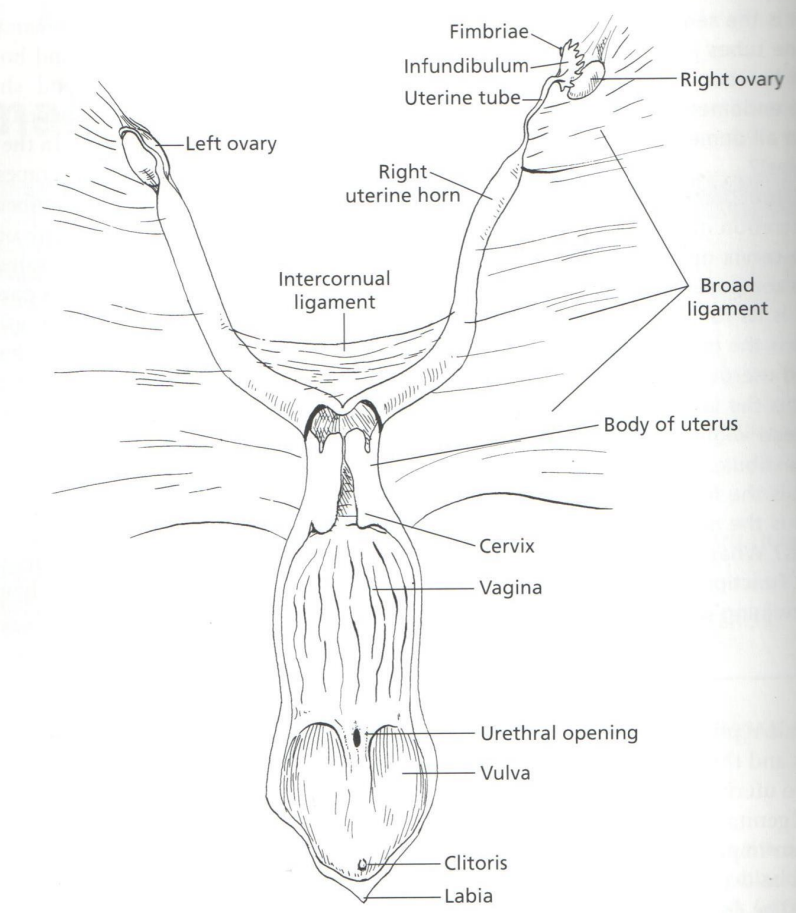
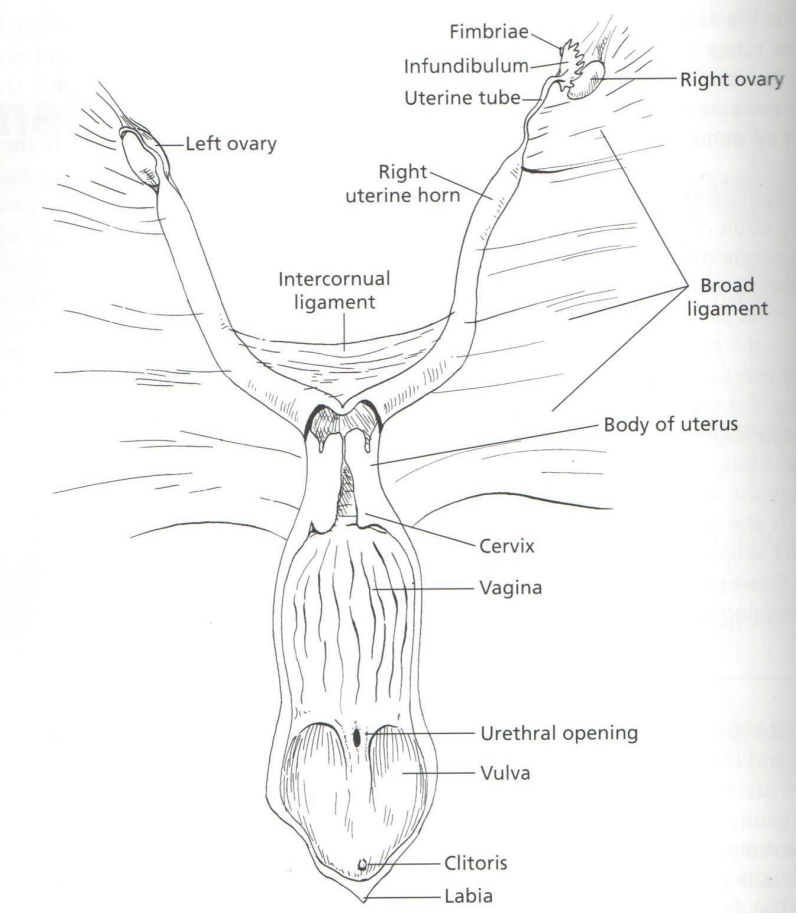
What are ovaries?

Paired glands that provide for the development of oocytes and production of hormones

2
New cards

What is ovulation?

The release of mature oocytes

3
New cards

Where are the ovaries located?

To its respective right or left kidney and is suspended form the dorsal wall of abdomen

4
New cards

Parts of the Ovary

  • What covers the ovary 

  • What is the periphery of ovary called 

    • Function 

  • What is the middle of ovary called 

    • Function

What covers the ovary: Tunica albuginea

What is the periphery of ovary called: Cortex (functional part

  • Function: Contains large mass of follicles in various stages of development

What is the middle of ovary called: Medulla (supportive part)

  • Function: Contains loose connective tissue, blood vessels, lymphatics and nerves
5
New cards
<p>Picture of&nbsp;</p>

Picture of 

knowt flashcard image
6
New cards

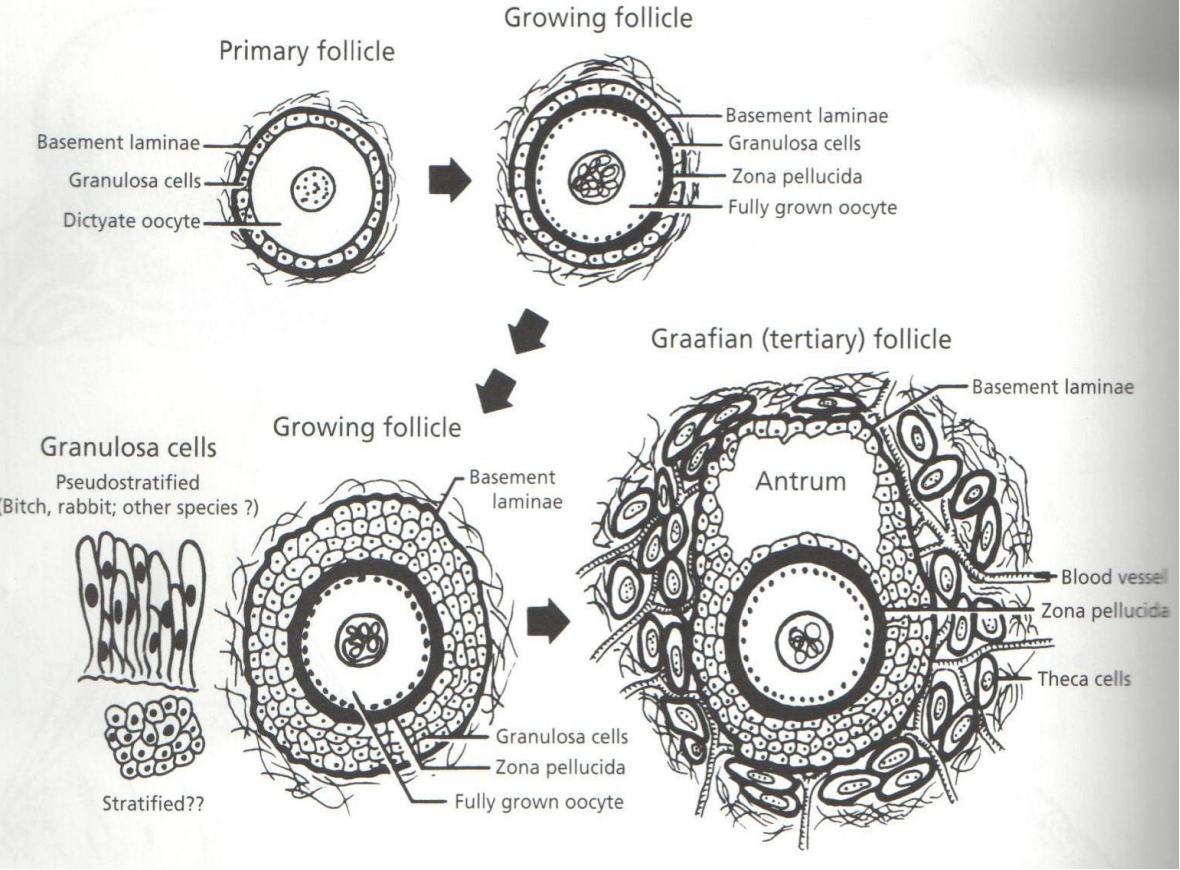
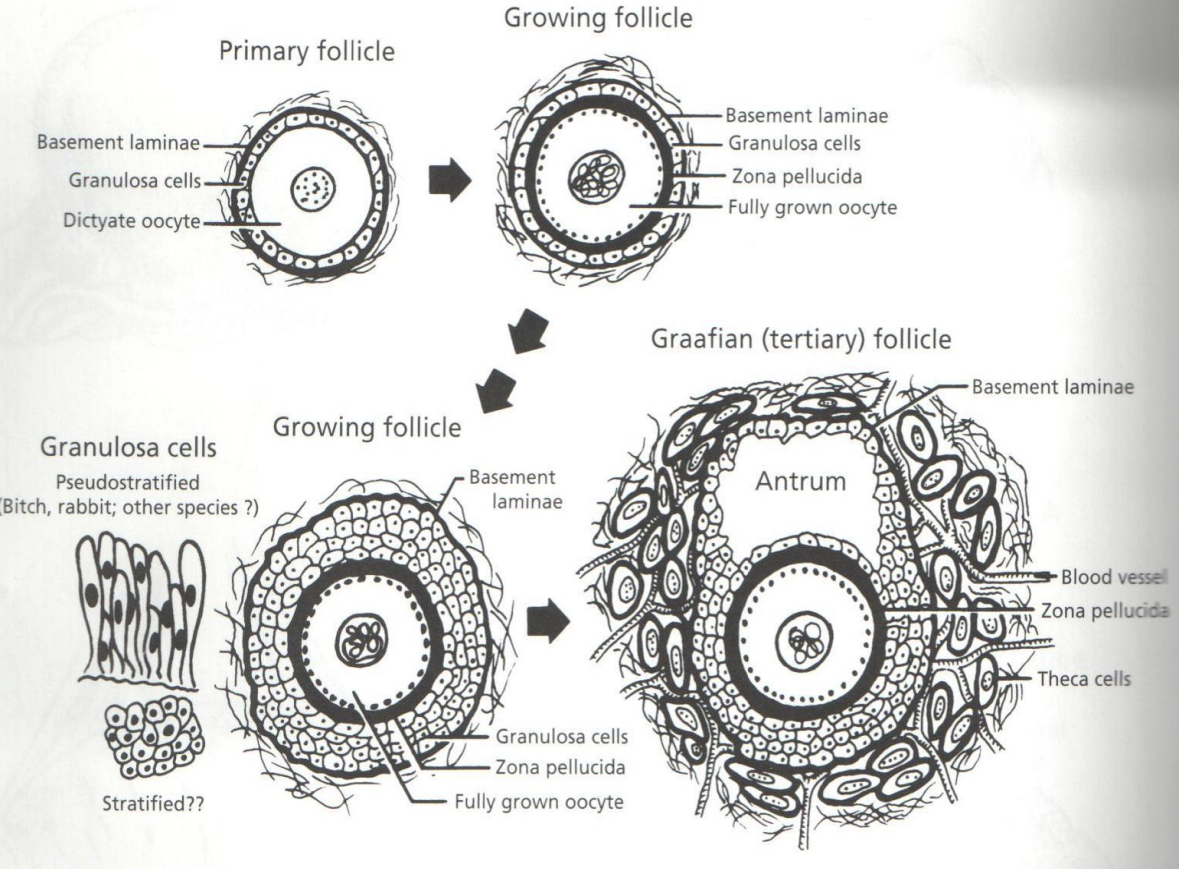
What are the 3 types of follicles in oocyte?

  • Primordial follicle #ffb3c6

  • Growing follicle #ff8fab

  • Graafian follicle #fb6f92

7
New cards

Primordial Follicle #ffb3c6

  • What does it contain 

  • Where do the oocyte in primordial follicle come from?

What does it contain: A single oocyte surrounded by.a single layer of granulosa cells

Where do the oocyte in primordial follicle come from: 

  • Derived from mitosis of oogonia in the embryonic genital ridge 

  • Which then migrates to the ovary 

<p><strong><u>What does it contain:</u>&nbsp;</strong>A<strong> </strong><span style="color: rgb(255, 179, 198);"><strong>single oocyte</strong></span> surrounded by.a<strong> </strong><span style="color: rgb(255, 179, 198);"><strong>single layer</strong></span> of<strong> </strong><span style="color: rgb(255, 179, 198);"><strong>granulosa cells</strong></span></p><p><strong><u>Where do the oocyte in primordial follicle come from:</u>&nbsp;</strong></p><ul><li><p>Derived from<strong> </strong><span style="color: rgb(255, 179, 198);"><strong>mitosis</strong></span> of<strong> </strong><span style="color: rgb(255, 179, 198);"><strong>oogonia</strong></span> in the<strong> </strong><span style="color: rgb(255, 179, 198);"><strong>embryonic genital ridge&nbsp;</strong></span></p></li><li><p>Which then<strong> </strong><span style="color: rgb(255, 179, 198);"><strong>migrates</strong></span> to the<strong> </strong><span style="color: rgb(255, 179, 198);"><strong>ovary</strong></span>&nbsp;</p></li></ul><p></p>
8
New cards

Growing Follicle #ff8fab

  • What 

  • What structures are absent in a growing follicle 

What: A follicle that has begun developing from the primordial stage but not yet formed thecal layer or antrum

Structures absent: Thecal layer or antrum 
<p><strong><u>What:</u> </strong>A follicle that has <span style="color: rgb(255, 143, 171);"><strong>begun developing</strong></span><strong> </strong>from the <span style="color: rgb(255, 143, 171);"><strong>primordial stage</strong></span><strong> </strong>but <span style="color: rgb(255, 143, 171);"><strong>not yet</strong></span> formed<span style="color: rgb(255, 143, 171);"><strong> thecal layer</strong> </span>or<strong> </strong><span style="color: rgb(255, 143, 171);"><strong>antrum</strong></span></p><p><strong><u>Structures absent:</u>&nbsp;</strong><span style="color: rgb(255, 143, 171);"><strong>Thecal layer</strong></span> or<strong> </strong><span style="color: rgb(255, 143, 171);"><strong>antrum</strong></span><strong>&nbsp;</strong></p>
9
New cards

Graafin Follicle? #fb6f92

  • What

  • What controls the formation of Graafian follicles

  • When does the formation start

What: A mature follicle with a visible antrum and 2 thecal layers

  • Theca interna 

  • Theca extera

What controls the formation of Graafian follicles:

  • Its hormone dependent

Formation starts: At puberty when LH and FSH levels start to rise and fall with each estrous cycle
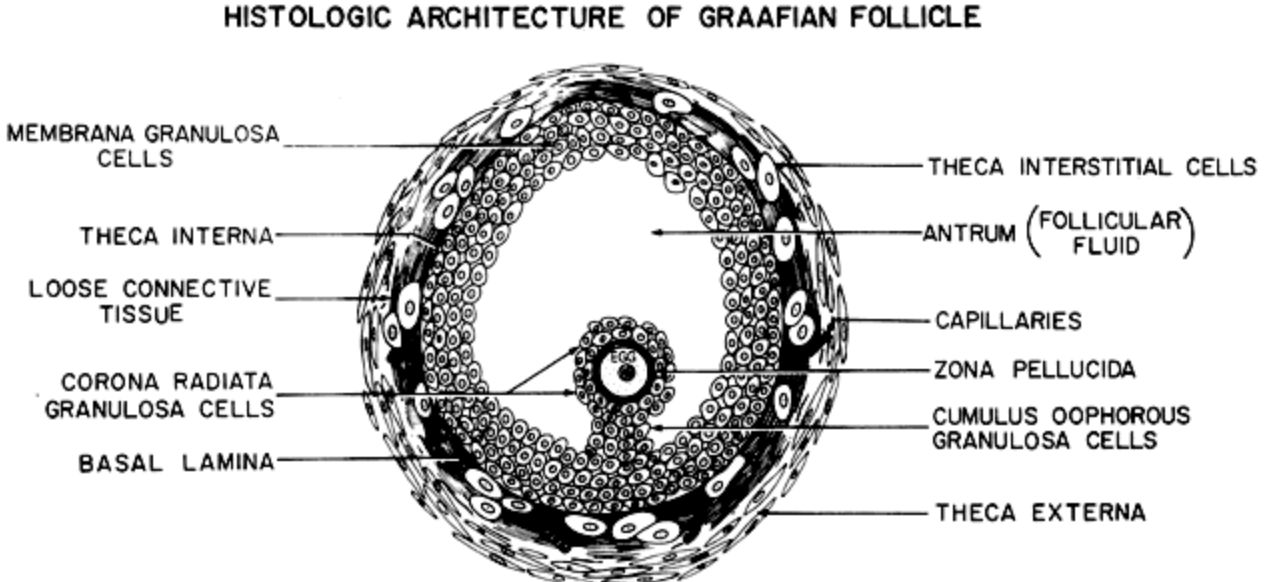
<p><strong><u>What:</u> </strong>A <span style="color: rgb(251, 111, 146);"><strong><span>mature follicle</span></strong></span><strong> </strong>with a <span style="color: rgb(251, 111, 146);"><strong><span>visible antrum</span></strong></span><strong> </strong>and <span style="color: rgb(251, 111, 146);"><strong><span>2 thecal layers</span></strong></span></p><ul><li><p><span style="color: rgb(251, 111, 146);"><strong><span>Theca interna&nbsp;</span></strong></span></p></li><li><p><span style="color: rgb(251, 111, 146);"><strong><span>Theca extera</span></strong></span></p></li></ul><p><strong><u>What controls the formation of Graafian follicles:</u></strong></p><ul><li><p>Its<span style="color: rgb(251, 111, 146);"> <strong>hormone dependent </strong></span></p></li></ul><p><strong><u>Formation starts:</u> </strong>At <span style="color: rgb(251, 111, 146);"><strong>puberty</strong></span><strong> </strong>when <span style="color: rgb(251, 111, 146);"><strong>LH</strong></span><strong> </strong>and <span style="color: rgb(251, 111, 146);"><strong>FSH</strong></span><strong> </strong>levels start to <span style="color: rgb(251, 111, 146);"><strong>rise</strong></span><strong> </strong>and <span style="color: rgb(251, 111, 146);"><strong>fall</strong></span><strong> </strong>with <span style="color: rgb(251, 111, 146);"><strong>each estrous cycle </strong></span></p>
10
New cards

Zona pellucida

  • What

  • Its function to fertilisation

What: A glycoprotein layer surrounding the oocyte

Function to fertilisation: Sperm must recoginse, bind and travel through zona pellucida to reach oocyte plasma membrane
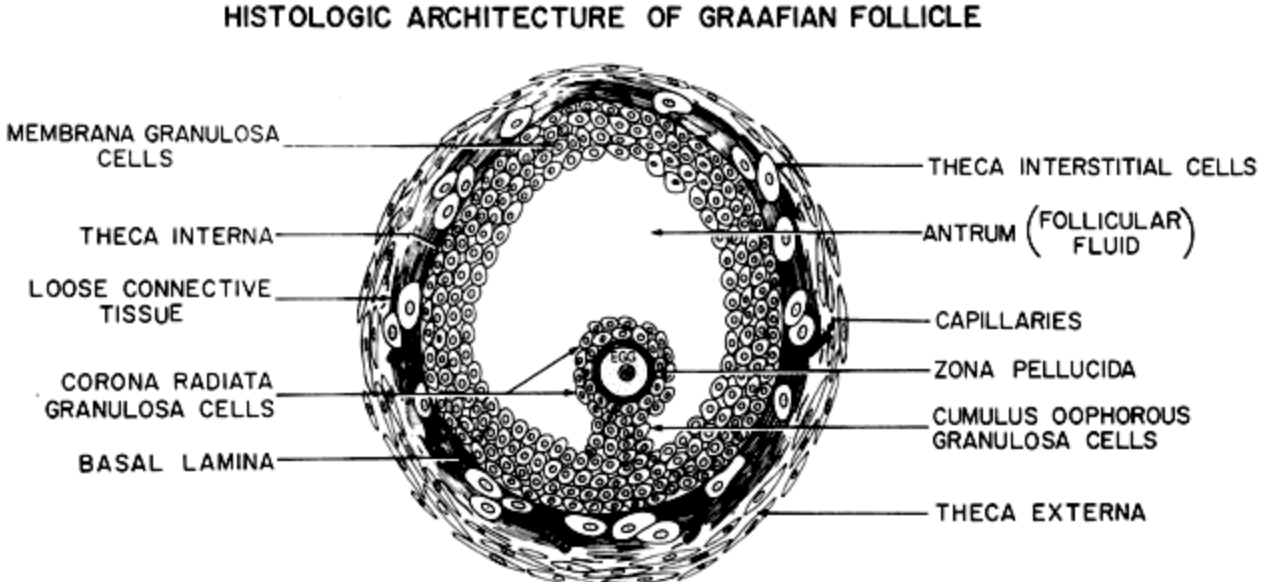
<p><strong><u>What:</u> </strong>A <span style="color: red;"><strong>glycoprotein layer </strong></span>surrounding the <span style="color: red;"><strong>oocyte</strong></span></p><p><strong><u>Function to fertilisation:</u> </strong><span style="color: red;"><strong>Sperm</strong></span><strong> </strong>must <span style="color: red;"><strong>recoginse</strong></span><strong>, </strong><span style="color: red;"><strong>bind</strong></span><strong> </strong>and <span style="color: red;"><strong>travel through zona pellucida</strong></span><strong> </strong>to reach <span style="color: red;"><strong>oocyte plasma membrane </strong></span></p>
11
New cards

What is follicle regression?

  • The periodic process in which immature ovarian follicles degenerate

  • And are re-absorbed during the follicular phase of the menstrual cycle

12
New cards

What happens to the multiple follicles that mature each month?

  • Only 1 follicle is ovulated 

  • Remaining undergo atresia 

13
New cards

What happens to the single dominant follicle after ovulation?

It becomes corpus luteum