Treatment Options for Large Animal Fractures
 Studied by 0 people
 Call with Kai
 Learn
Learn Practice Test
 Spaced Repetition
 Match
Match Flashcards
 Knowt Play
1/32

There's no tags or description
Looks like no tags are added yet.
Name | Mastery | Learn | Test | Matching | Spaced | Call with Kai |
|---|
No analytics yet
Send a link to your students to track their progress
33 Terms
nothing to bring horse back
welfare grounds → euthanise
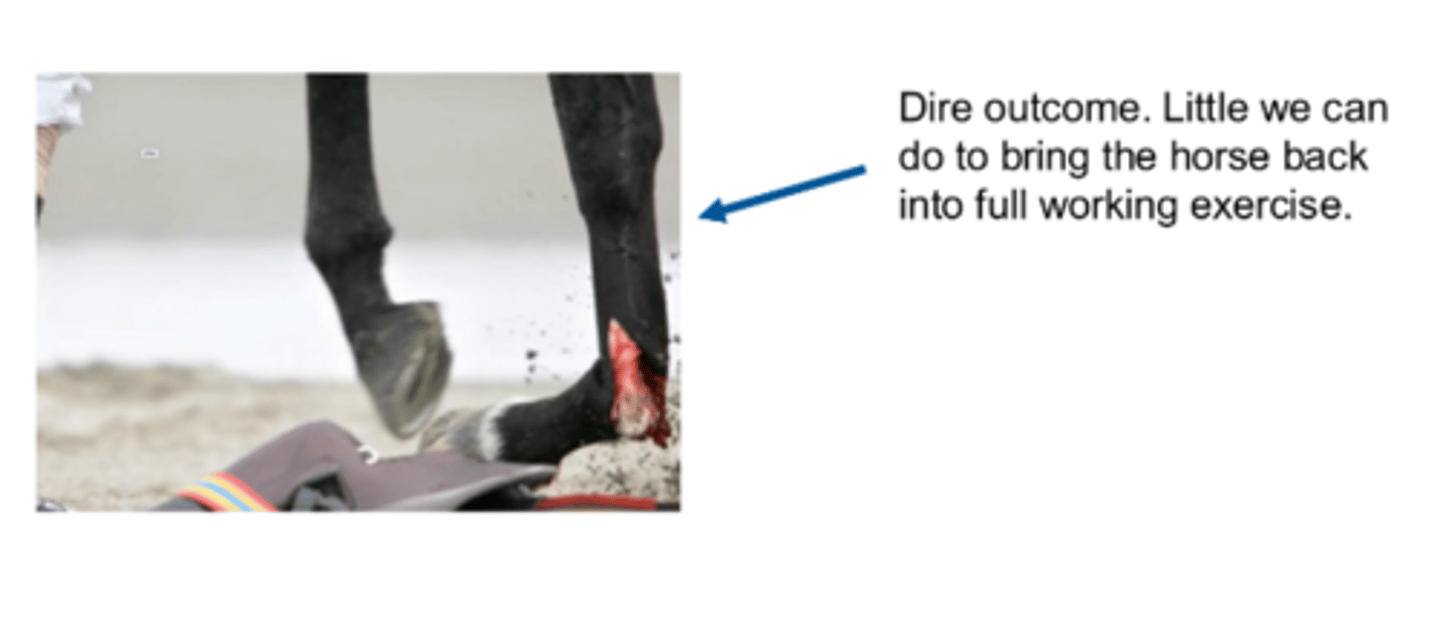
when welfare grounds means euthanise
-comminuted fractures of proximal and middle phalynx especially where cannot apply internal fixation
compound fractures of long bone
-complete fractures of long bones
-pelvic fracture
why euthanise in compound fractures of long bone
-contamination high
-not amenable to internal fixation
exception of euthanasia when complete fractures of long bones
-ponies under 300kg or foals
-financial considerations and owner expectations
when is fracture treatment not a day one skill
-incomplete fractures (immobilisation of site)
-isolation and stabilisation key
What is the forelimb zone 1 stabilization?
from distal metacarpus to hoof.
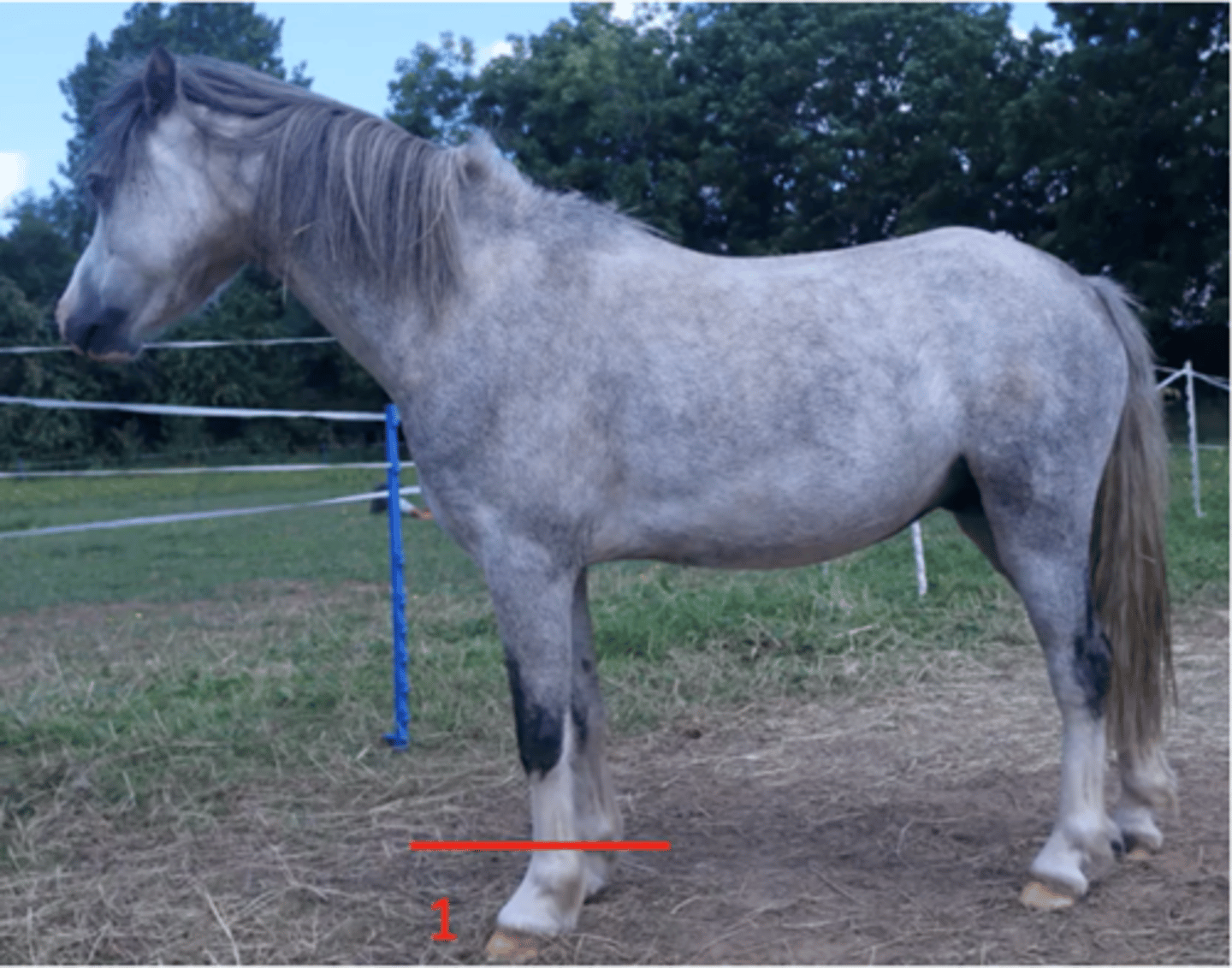
How should the cortices of the bone be aligned during forelimb zone 1 stabilization?
Align cortices of bone in a vertical plane.
How is stabilisation achieved for forelimb zone 1 stabilization?
Dorsal splint and bandaging, PVC drainpipe, and heel wedge.
What is the purpose for the dorsal parts during forelimb zone 1 stabilization?
Get dorsal parts into a straight line.
What is the location for forelimb zone 2 stabilization?
Distal radius to mid metacarpal region
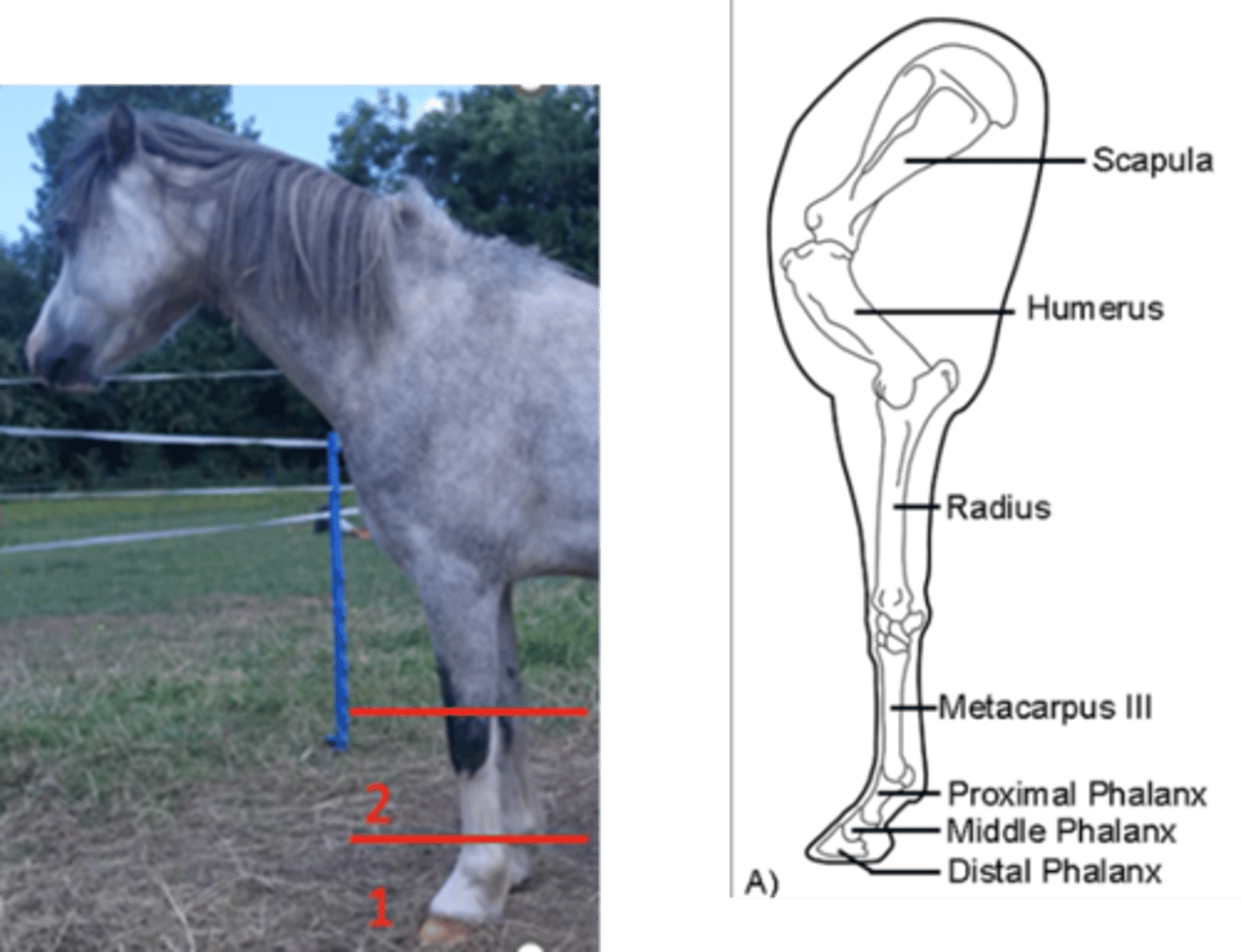
How should the cortices of bones be aligned during forelimb zone 2 stabilization?
Align cortices of bones in vertical plane
What type of splint should be applied for forelimb zone 2 stabilization?
Apply lateral and caudal splint
apply a heavier bandage (stabilise joints)
In forelimb zone 2 stabilization, how should the carpus be positioned?
Keep carpus in full extension
Which joint should be stabilized during forelimb zone 2 stabilization?
Stabilize metacarpophalangeal joint
What are the components of the forelimb zone 3 stabilization?
Proximal and middle radius
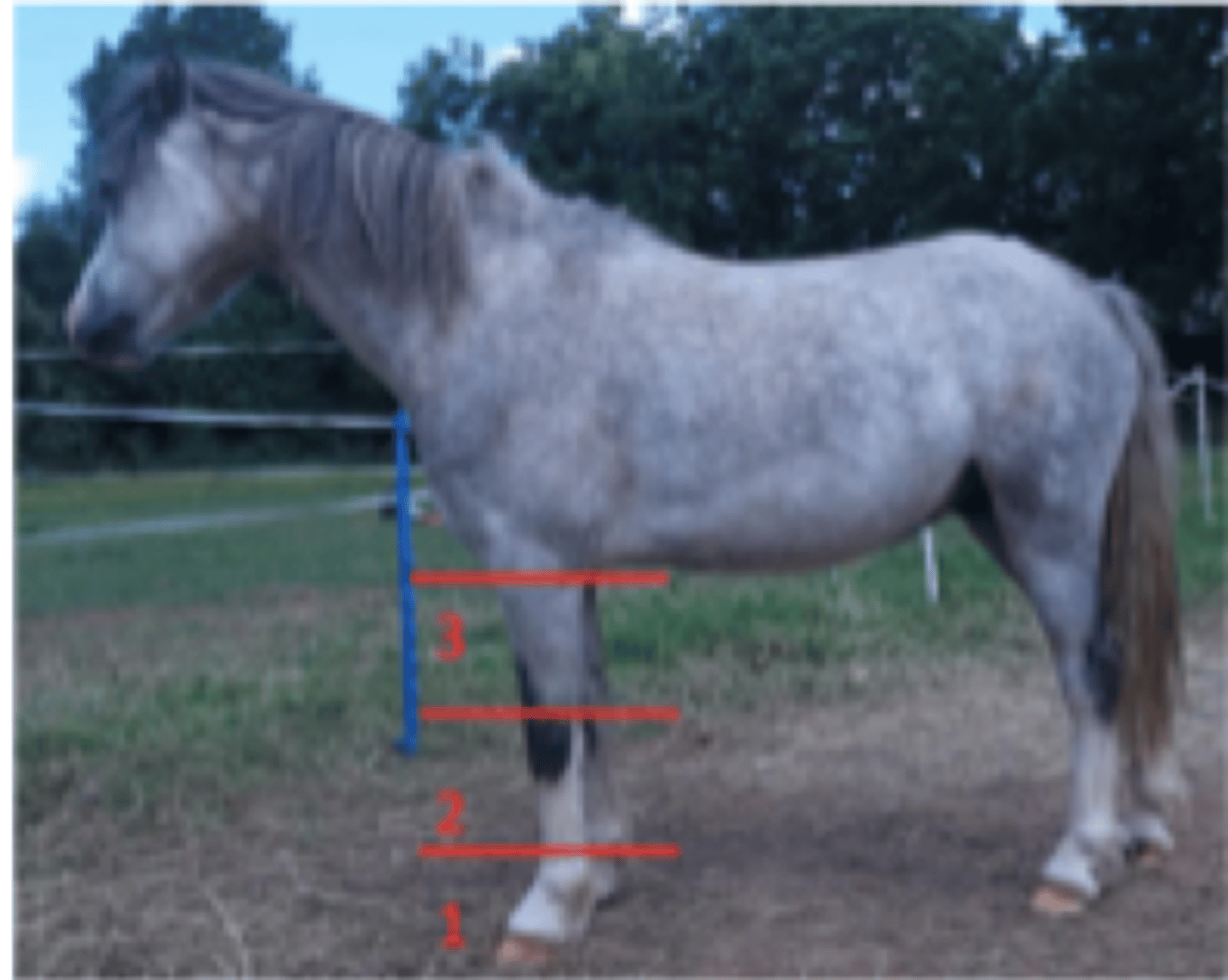
What is the purpose of stabilizing the forelimb zone 3?
Prevent abduction of limb
What type of bandage is used for forelimb zone 3 stabilization?
Full Robert Jones bandage
What additional support is used alongside the bandage for forelimb zone 3?
Lateral splint to withers
What is one goal of stabilizing the forelimb zone 3?
Stop leg swinging sideways and destabilizing fracture
forelimb zone 4 stabilisation
-proximal from zone 3 including scapula, humerus, ulna
-no stabilisation needed
-heavy distal limb bandage would have pendulum effect
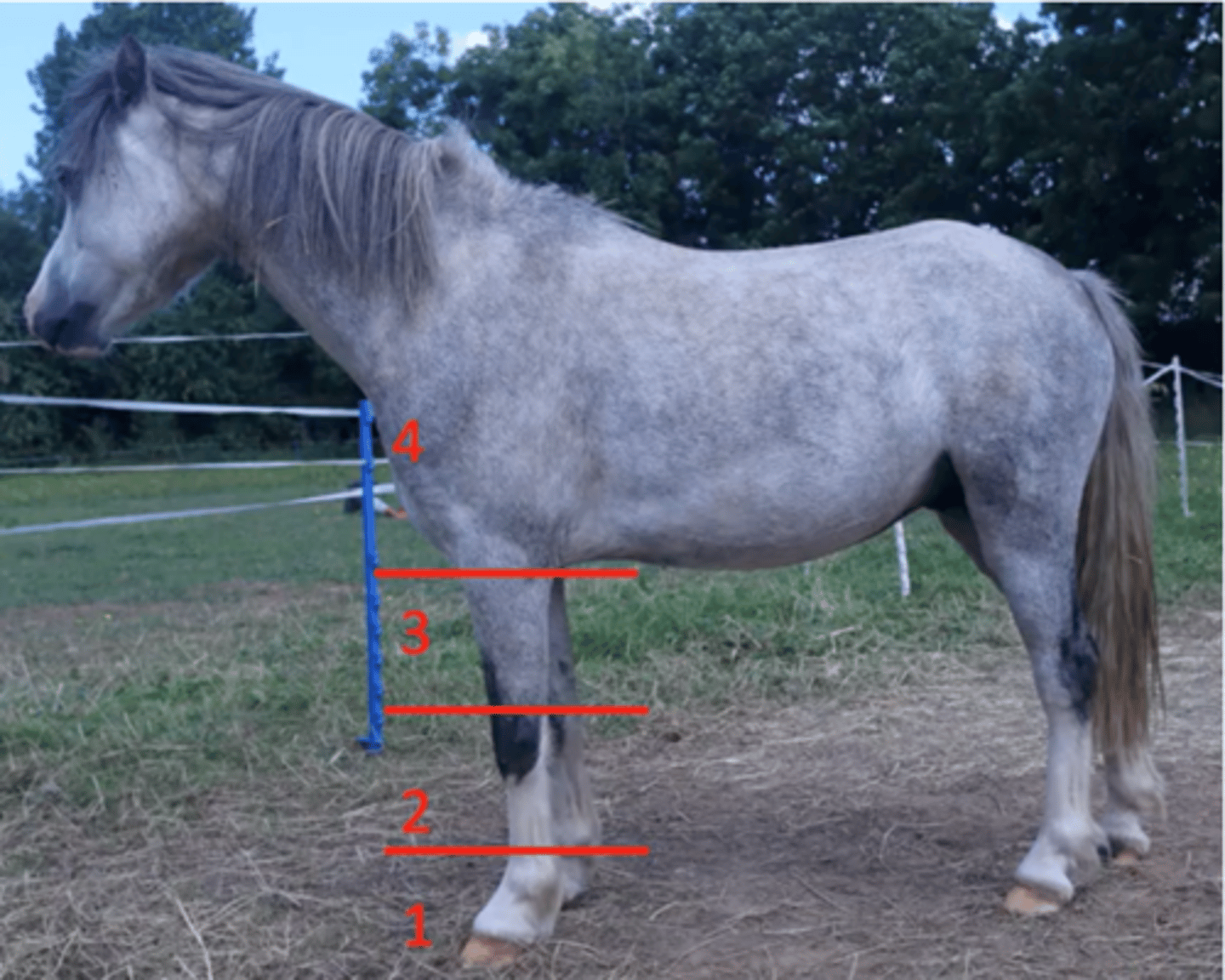
hindlimb zone 1
-distal metacarpus, proximal phalangeal bones
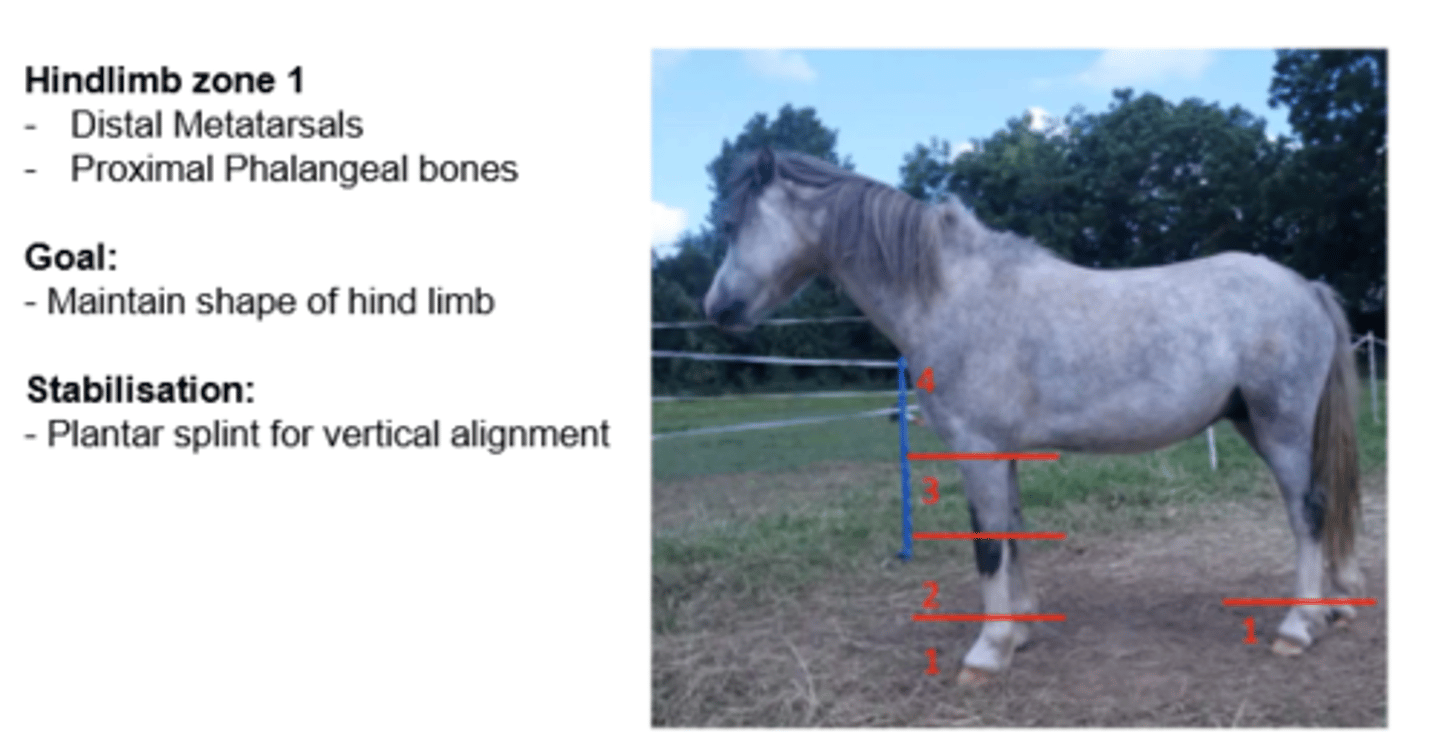
hl zone 1 goal
-maintain shape of hindlimb
hl zone 1 stabilisation
-plantar splint for vertical alignment
hindlimb zone 2 area
-zone 2 does not extend as proximally due to hock,
so middle and proximal metatarsal regions
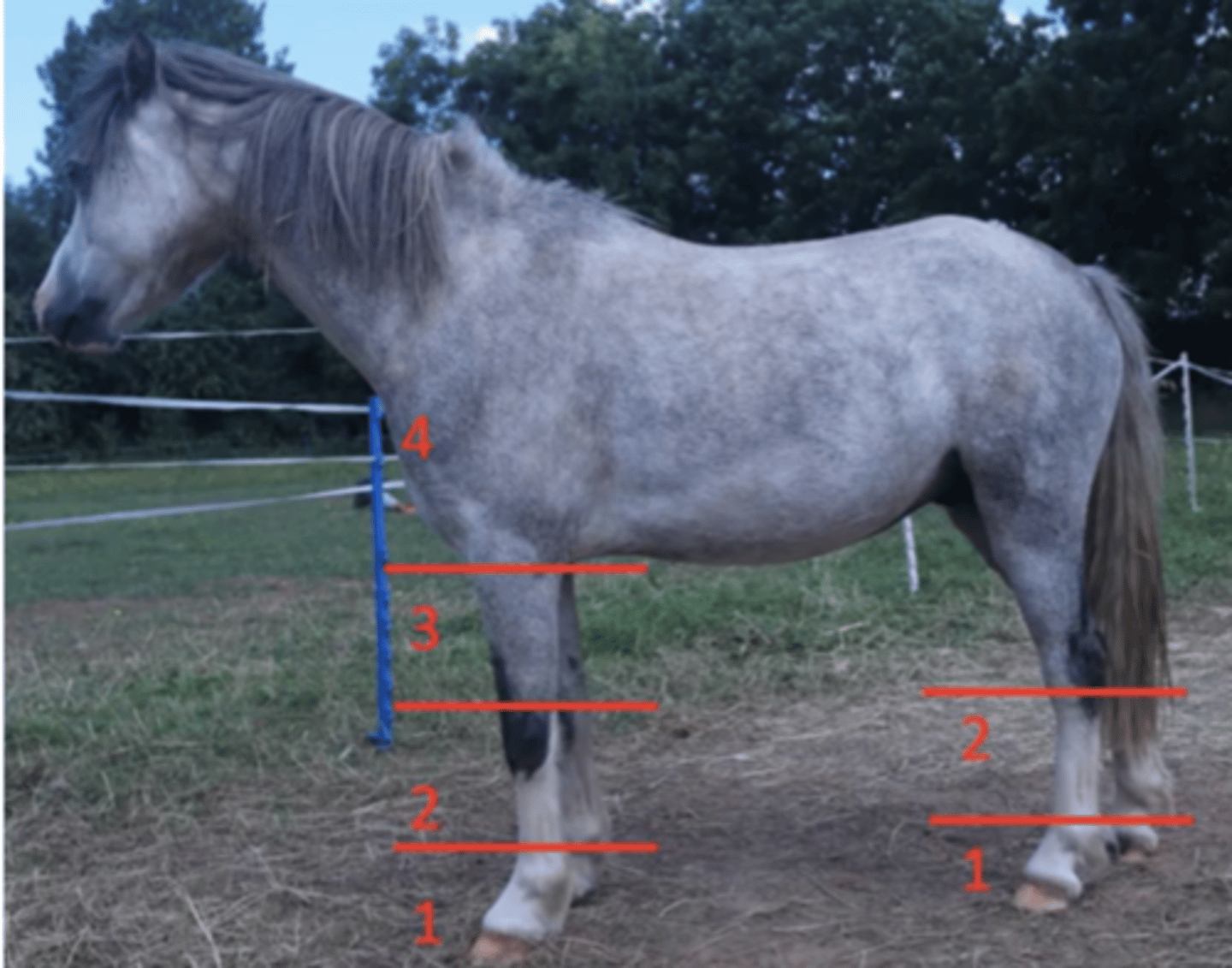
hindlimb zone 2 stabilisation
-heavy bandage and plantar splint
-possible lateral splint
hindlimb zone 3 area
-tibial fractures
-complicated to manage
-easily become open so poor prognosis
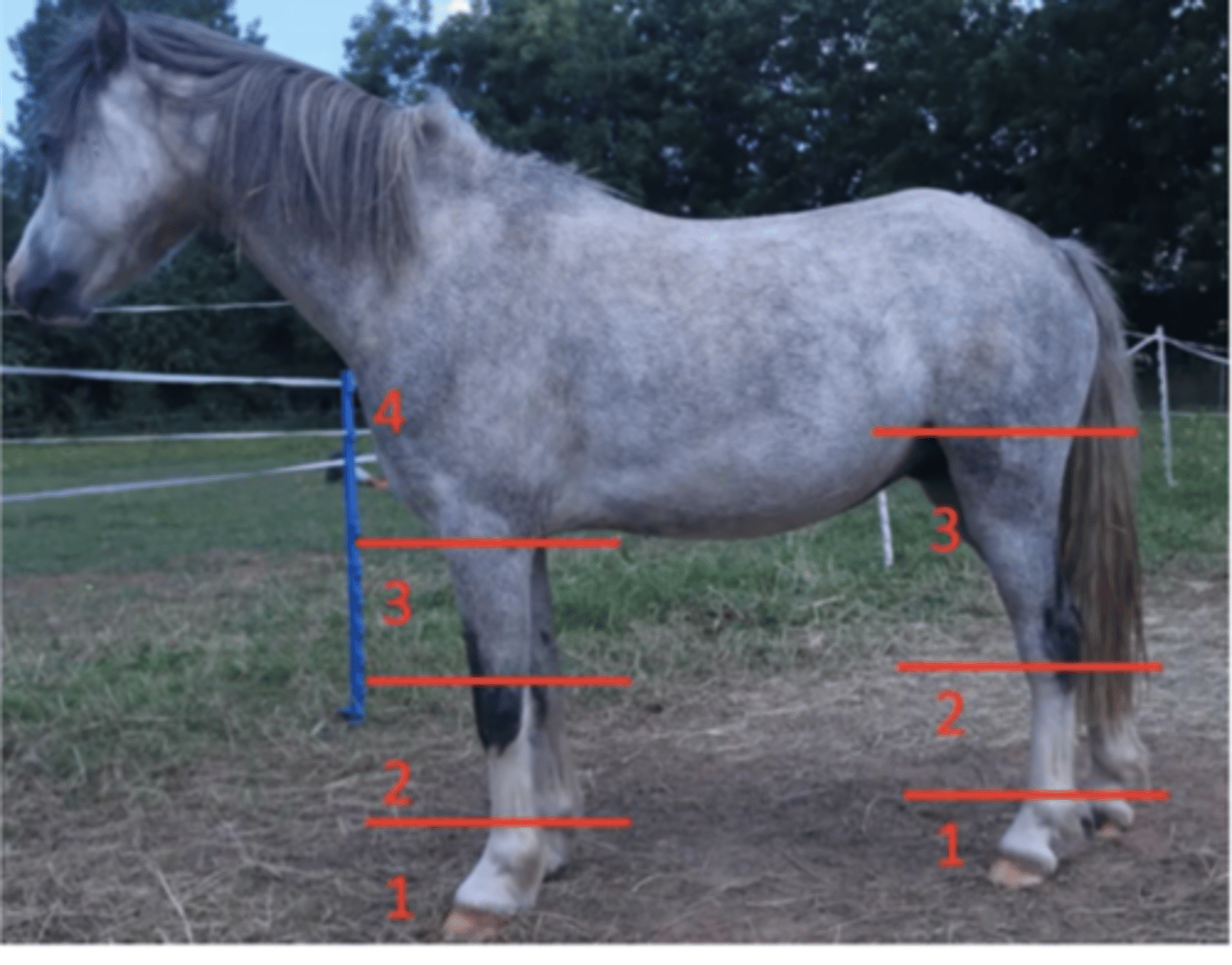
goal of stabilisation of zone 3
prevent abduction
stabilisation of zone 3 hindlimb
-long lateral splint
-reciprocal apparatus means flexion of stifle=flexion of hock, leads to collapse of tibial fracture
hindlimb zone 4 area
lots of muscle so natural stabilisation
hindlimb zone 4 goal
prevent abduction
hindlimb zone 4 stabilisation
-cannot apply bandage
-best left without as destabilise distal limb
what is kimzey leg saver
-aluminium and velcro straps
-dorsal splint
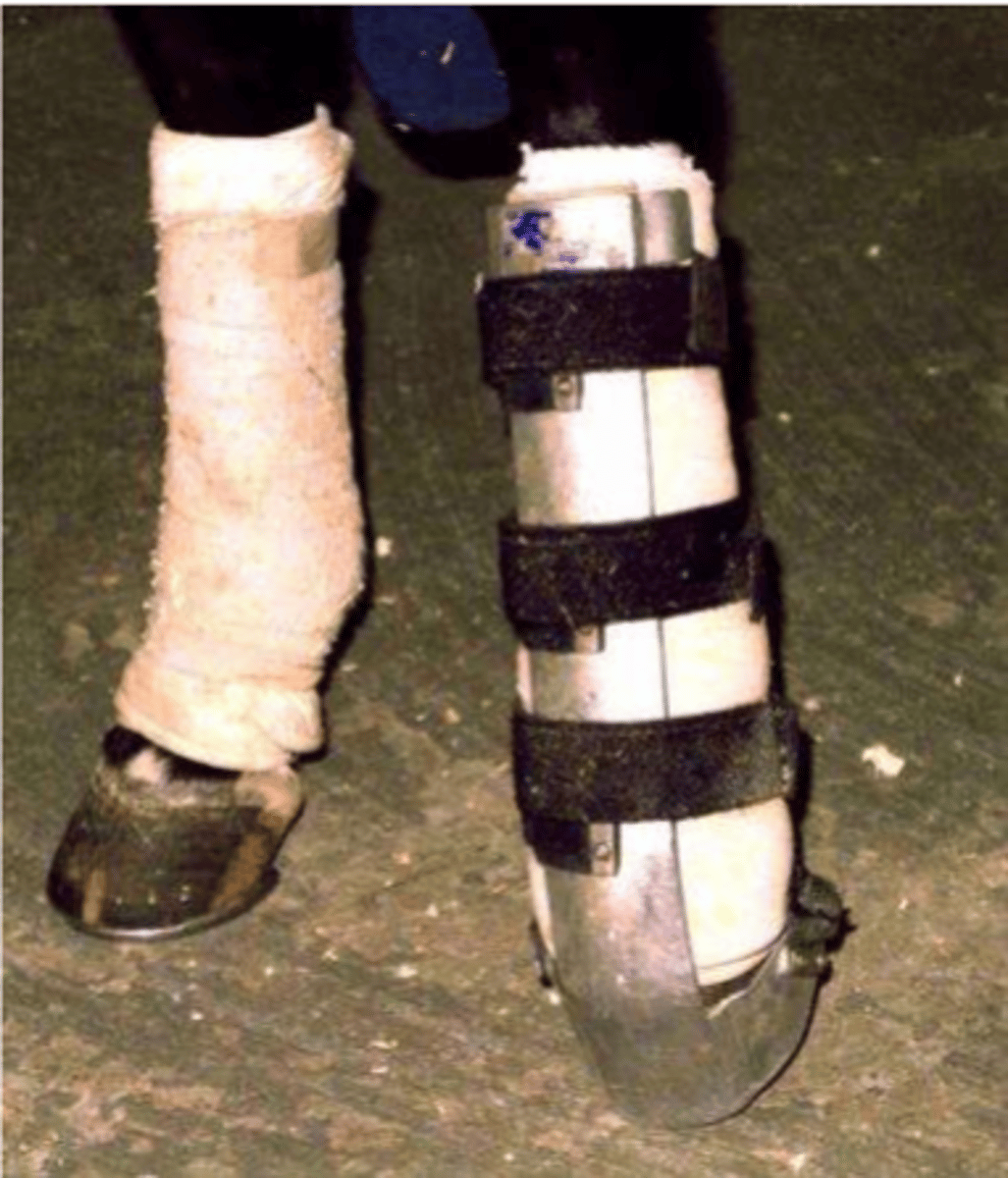
hindlimb stabilisation compared to forelimb in zone 3
moulded metal splint in zone hindlimb
 Note
Note  Flashcards (40)