class 3 climate systems 1
 Call Kai
 Learn
Learn Practice Test
 Spaced Repetition
 Match
Match Flashcards
 Knowt Play
1/24

There's no tags or description
Looks like no tags are added yet.
Name | Mastery | Learn | Test | Matching | Spaced | Call with Kai |
|---|
No analytics yet
Send a link to your students to track their progress
25 Terms
do kalvin and celsius use the same increment
yes, 1 degree celsius=1 kelvin
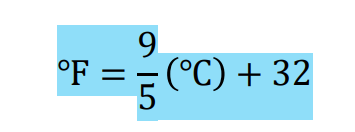
formula to calculate Farenheit
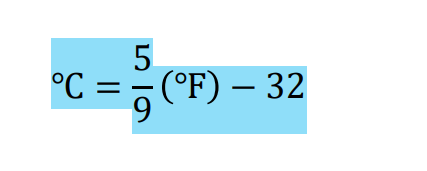
formula to calculate celsius
difference between climate and weather
climate: longer time scales (what weather looks like in 10 years)
weather: shorter time scales (what the weather looks like on a day to day basis)
climate is what you expect and weather is what you get
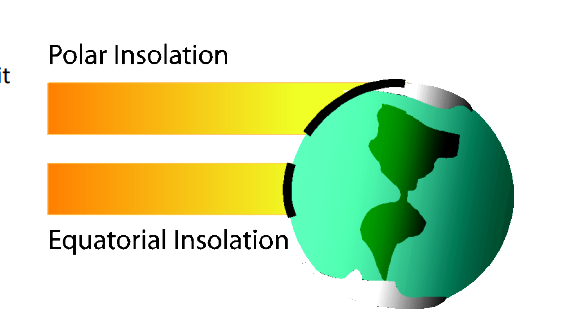
what is insolation
amount of solar radiation falling on a surface of earth
who gets more insolation the polar or the equator
the equator b/c the sun is more concentrated their the equator is warmer
albedo
earths reflectivity
the latin word for whiteness
used to describe how much sunlight is reflected from the surface of the earth
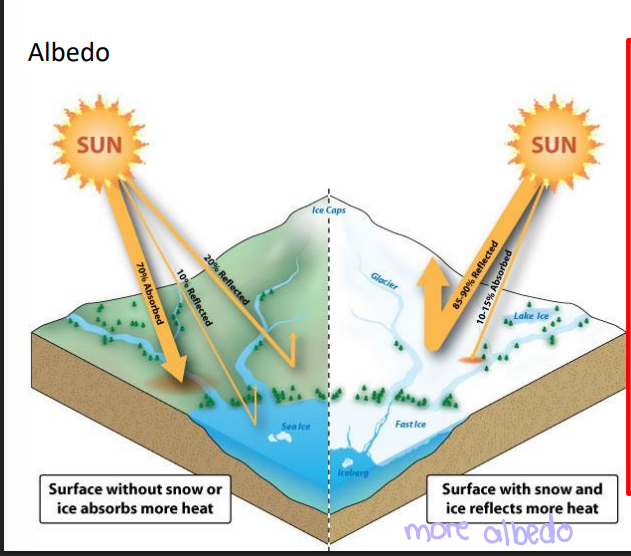
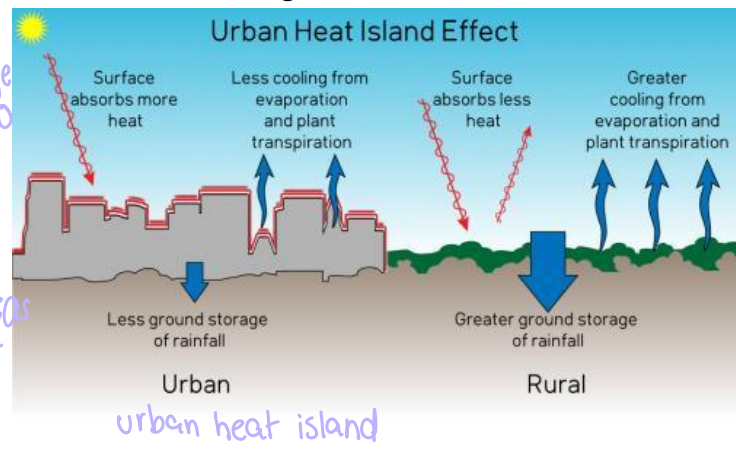
albedo with urban vs rural areas
urban: surface absorbs more heat, less colling from evaporation and plant transpiration
rural: surface absorbs less heat, more cooling from evaporation and plant transpiration
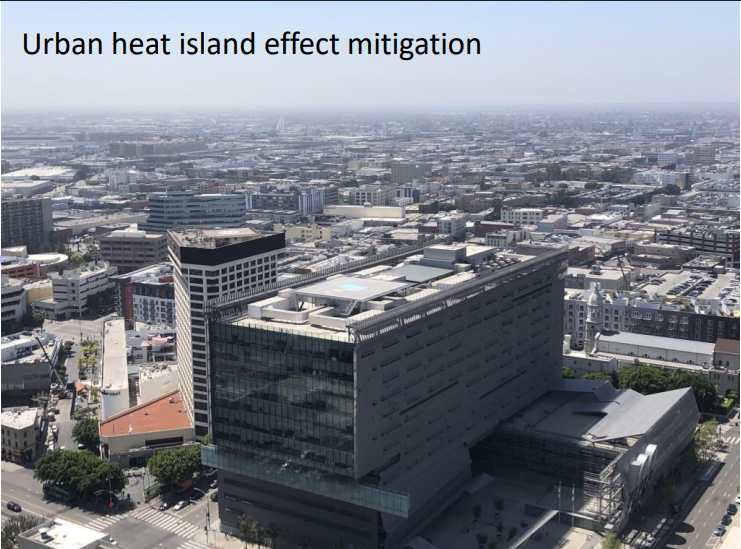
an example of how to help urban areas with low albedo
paint rooftops white
aftermath of Mt. pinatubo erupting in 1991 (volcano) (global cooling)
ash and sulfuric acid go up into the atmosphere and it reacts causing the sun to be reflected away from earth. which causes global cooling
greenhouse effect
amount of reflected light that is trapped
greenhouse effect with normal CO2
The greenhouse effect is a natural process that keeps Earth warm enough for life.
How it works:
The Sun sends energy (light) to Earth.
Earth absorbs some energy and radiates heat (infrared energy) back.
Greenhouse gases in the atmosphere—like CO₂, methane (CH₄), and water vapor—trap some of this heat, preventing it from escaping into space.
Without it, Earth would be about -18°C, instead of the 15°C we have now—way too cold for most life.
✅ Key idea: Greenhouse gases = Earth’s natural blanket. Keeps us alive.
greenhouse affect with too much CO2
Humans are adding extra greenhouse gases by burning fossil fuels, deforestation, and industrial activities.
More greenhouse gases → more heat trapped → global warming.
Effects include:
Extreme heat waves
Melting ice & sea level rise
More intense storms
Ecosystem collapse
So, the same natural greenhouse effect that kept us alive is now too strong, causing dangerous climate change
planet that has no green house effect
The Moon has almost no atmosphere, so it has no greenhouse effect.
Result:
Daytime temperatures are extremely hot (~127°C)
Nighttime temperatures are extremely cold (~-173°C)
This shows that without a greenhouse effect, life as we know it wouldn’t survive.
has the climate always changed
yes
why do we have seasons
tilt of the earth
when the northern hemisphere is tilted away from the sun it is winter
41,000 year cycles
axial precession
26,000 year cycle
as earth rotates it wobbles due to tidal forces
how many years it it for chnages in orbit
100,000 year cycle
what do orbit, tilt, and axial precession all impact
they all impact insolation
how has carbon dioxide impacted the past
it has caused massive extinctions
what is making us warmer
greenhouse effect
why does the atmosphere let heat in but not out
greenhouse gases let visible light from the sun pass through
greenhouse gases trap infrared waves
when visible light hits earth it is reradiated in all directions as infrared waves which is heat
some effects of rising temperature
winter warming three times faster than summer
warming summers feel like the south
why does sea level rise
-melting glaciers and ice sheets
-expansion of warming sea water
-as water gets warmer it expands. ice melts water expands=sea level rise

