COMPLAINTS
 Studied by 0 people
 Call Kai
 Learn
Learn Practice Test
 Spaced Repetition
 Match
Match Flashcards
 Knowt Play
1/24

There's no tags or description
Looks like no tags are added yet.
Name | Mastery | Learn | Test | Matching | Spaced | Call with Kai |
|---|
No analytics yet
Send a link to your students to track their progress
25 Terms
whose responsibility is it to manage complaints
the team
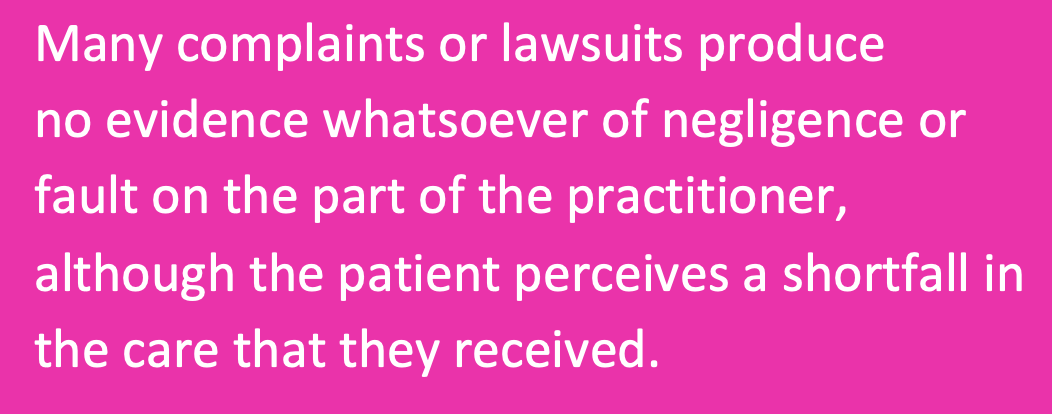
do most complaints involve negligence on part of the practitioner
what can complaints relate to
staff attitude
communication
lack of understanding
waiting times
the treatment itself
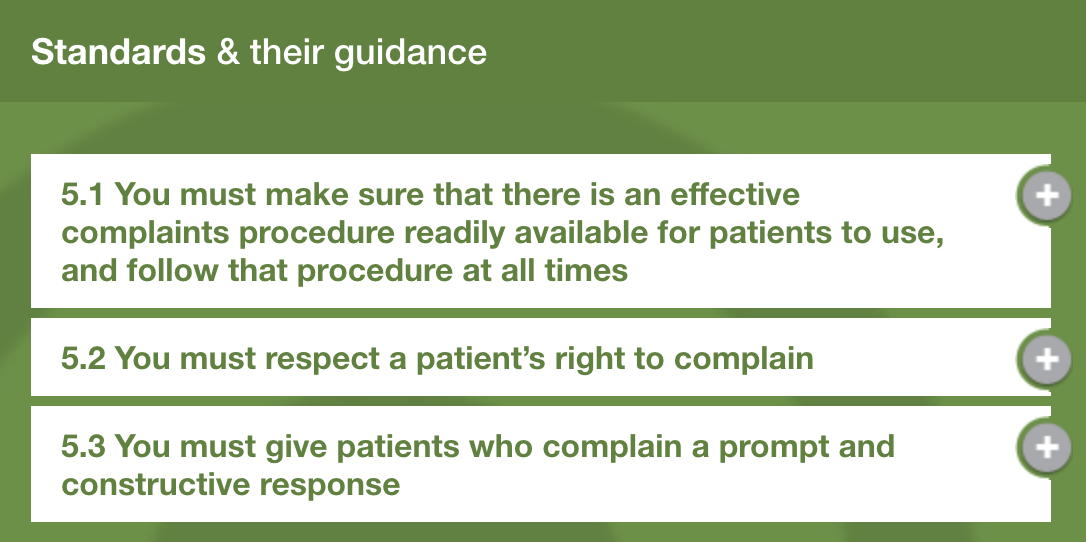
which GDC standard is directed at complaints
PRINCIPLE 5
how can complaints be avoided
be a good communicator
listen, spend time with patient, respect privacy and dignity, be polite and not over-familiar
manage expectations - do not offer more than you can deliver
find out patient’s priorities and concerns
give options and likely outcomes
work with your team - all staff contribute to rapport
avoid delays
maintain cleanliness
develop a reserve of good will between yourself and the patient
what should thinking time be proportional to
thinking time ∝ risk
outline what a reserve of good will is
if after each visit a patient is satisfied with your service they will naturally build up a reserve of goodwill
so if something goes wrong they are less likely to make a complaint against you
however if a patient is never satisfied and something then goes wrong, they are very likely to make a complaint
managing complaints: authorities in ascending order
voicing a concern (LISTEN)
in-house complaint to practice or ward
NHS or DCS processes
Parliamentary & Health Service Ombudsman
GDC investigation
civil or criminal lawsuit
outline the Parliamentary & Health Service Ombudsman
independent body (via NHS organisation first)
after internal complaints have been exhausted
complaint must be made within 1 year of being aware of problem
will not investigate complaint if there is a legal route available
managing complaints: difficult situations
set clear boundaries for acceptable behaviour
provide accurate information which is understood
seek help from relevant colleagues
be realistic in what can be achieved
managing complaints: difficult situations in CCDH clinic
if you feel a patient will escalate a concern/ their behaviour has been unacceptable you can fill in an ‘on the spot complaint form’
send to Tracey Plant/ hand to senior nurse
NHS Trust Complaints Policy 1
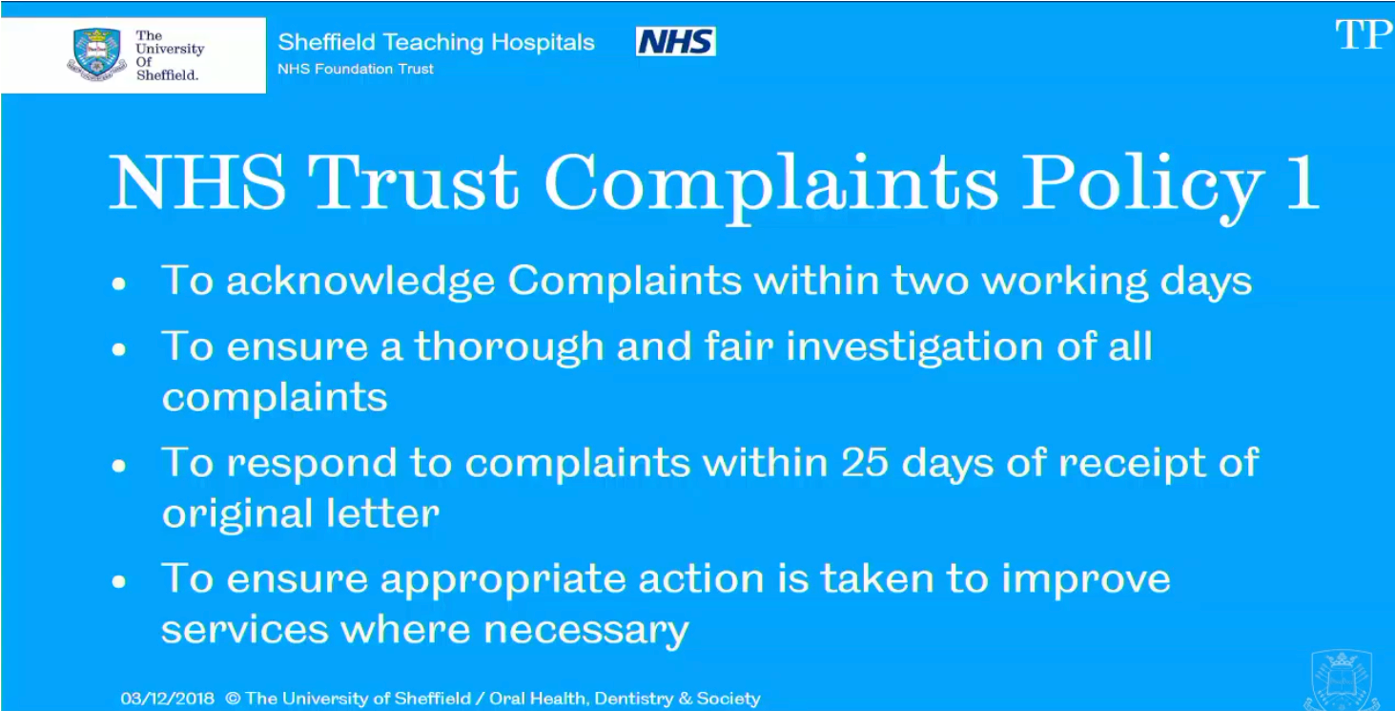
what does a ‘thorough investigation’ involve
reading patient notes
talking to everyone involved in treatment
getting statements
drafted response will be shared to everyone involved
NHS Trust Complaints Policy 2
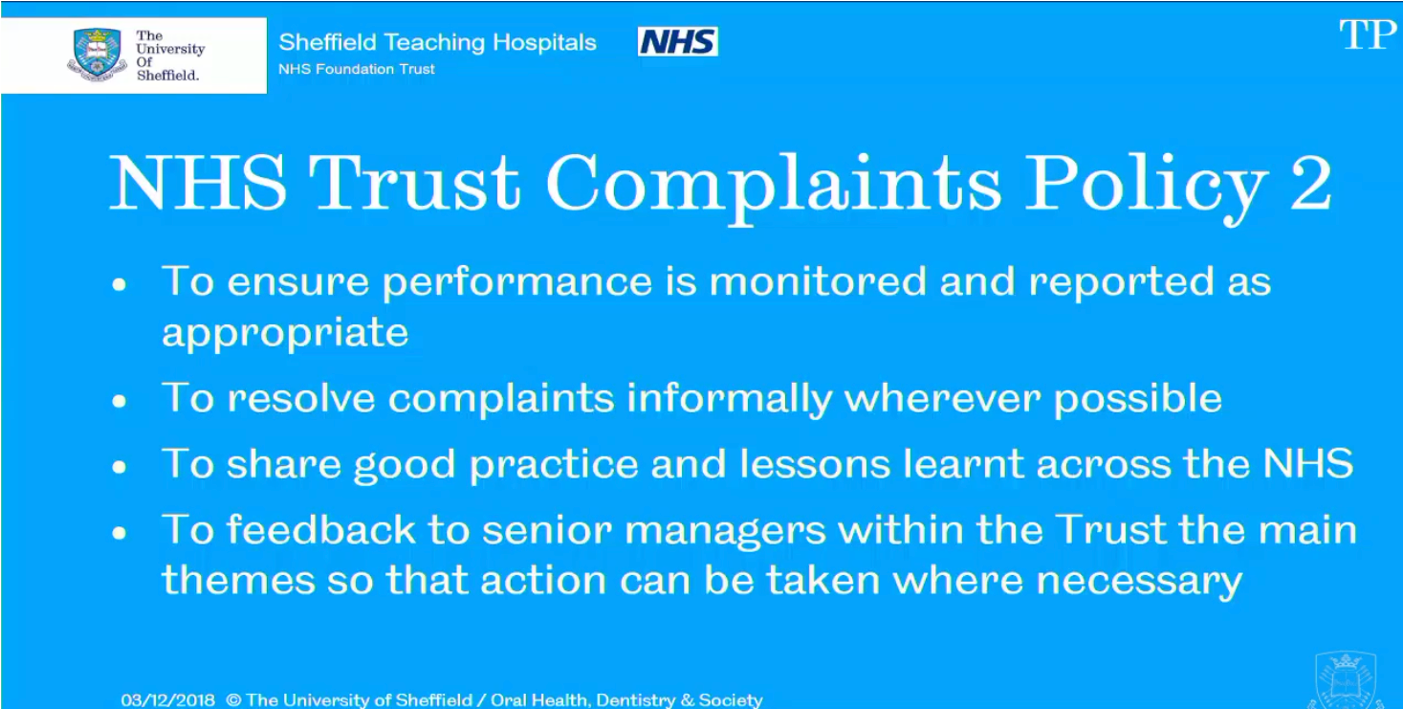
managing complaints: in-house/ local resolution
local resolution is the most effective method of addressing complaints as they arise
it is best practice to respond to complaints as promptly as possible
offer some options to resolve
may avoid escalation to formal complaint
RECORD IN PATIENT NOTES AND ACKNOWLEDGE
outline PALS
PALS = patient advice liaison
at CCDH PALS is ‘patient services team’
outline the Patient Services Team
they provide on the spot help and resolutions to patients with concerns
they also receive praise
liaise with NHS team with the aim of resolving concerns
help public if they wish to make a formal complaint to the ‘commissioner’
keeps records separate from clinical notes
records all communications fully
shares lessons with the team
involves patient
are patient complaints kept with their (medical) notes
no
outline the procedures during an investigation
identify issues/ concerns within the complaint
contact all staff involved, asking for statements where necessary
review the clinical notes where necessary
provide a response to the complaints coordinator
a meeting may be offered to the complainant
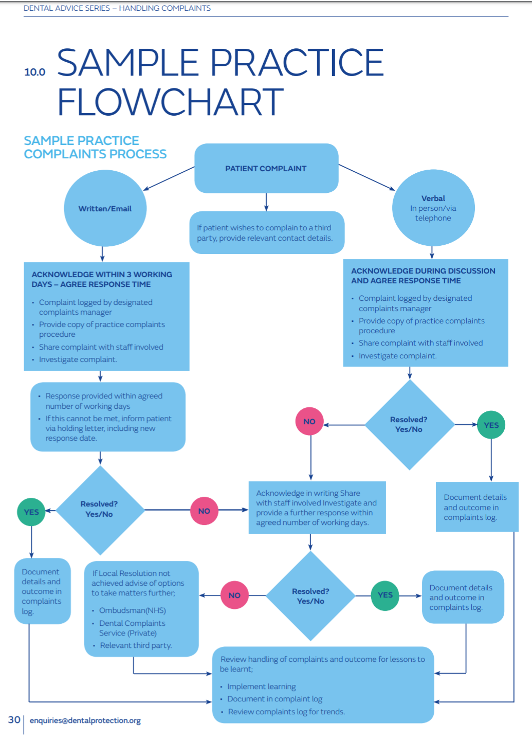
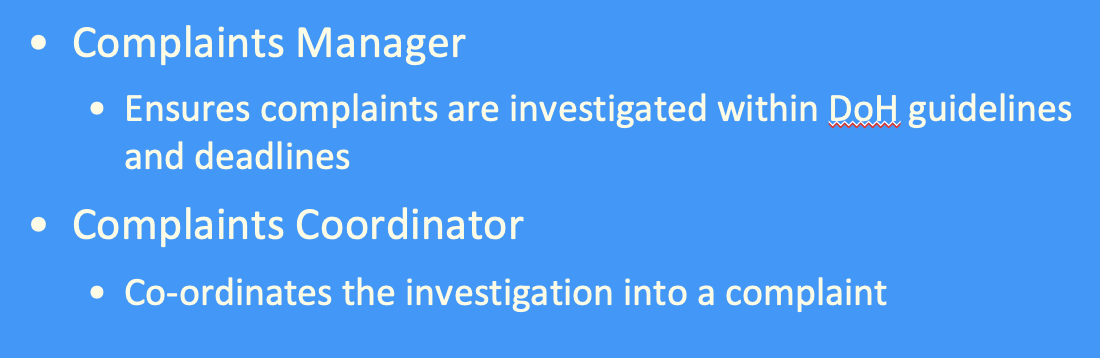
outline who is involved in the formal complaints process and their roles
how to respond to a complaint
Recognition - accept and find out
Empathy - active listening
Action - be active and explain timecourse
Compensation - not just money
Honesty - belief of honesty leads to acceptance
learning from complaints
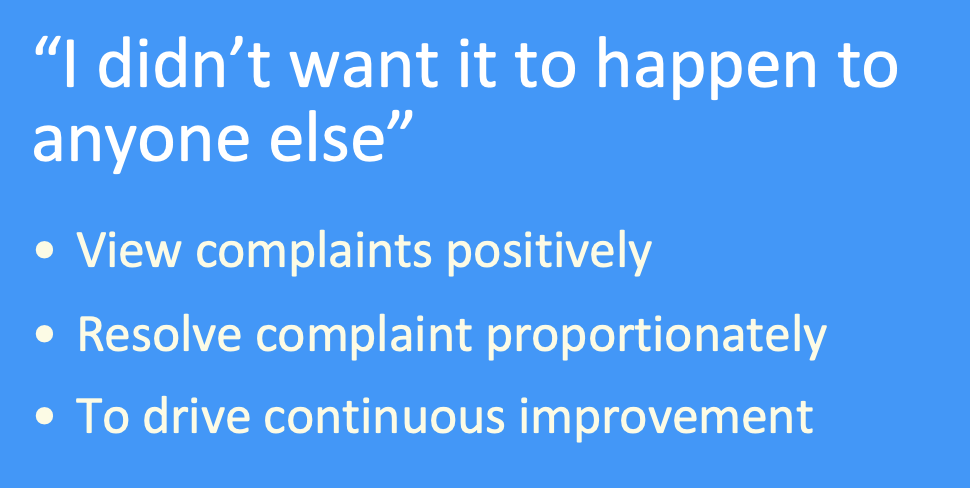
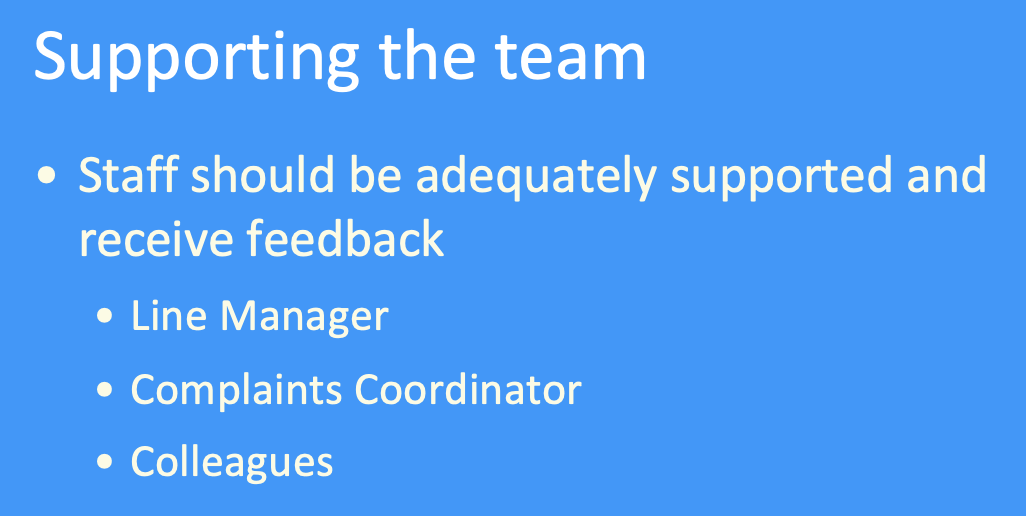
how should staff be supported during complaints
know to to escalate complaint to
know how to talk to patients
know what they can do better in the future
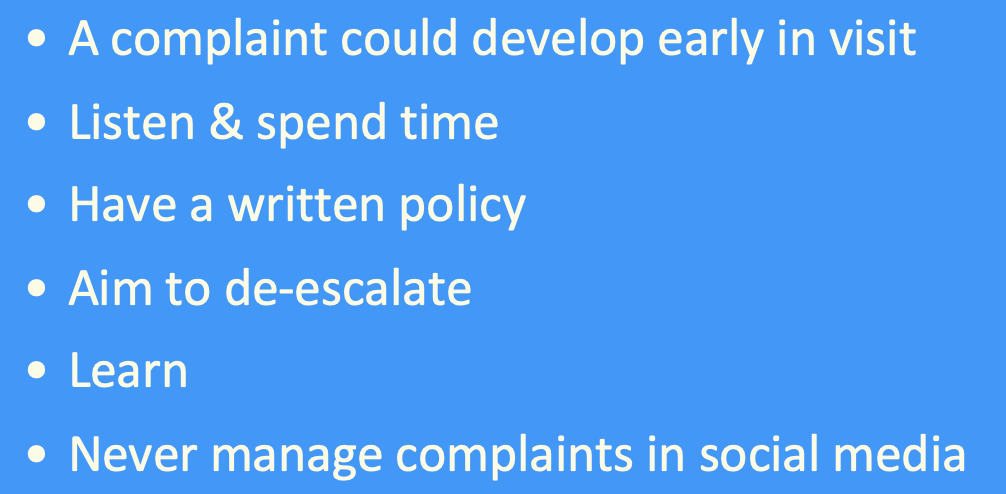
summary
 Note
Note  Flashcards (38)