Late 19th Century Art
 Call Kai
 Learn
Learn Practice Test
 Spaced Repetition
 Match
Match Flashcards
 Knowt Play
1/13

There's no tags or description
Looks like no tags are added yet.
Name | Mastery | Learn | Test | Matching | Spaced | Call with Kai |
|---|
No analytics yet
Send a link to your students to track their progress
14 Terms
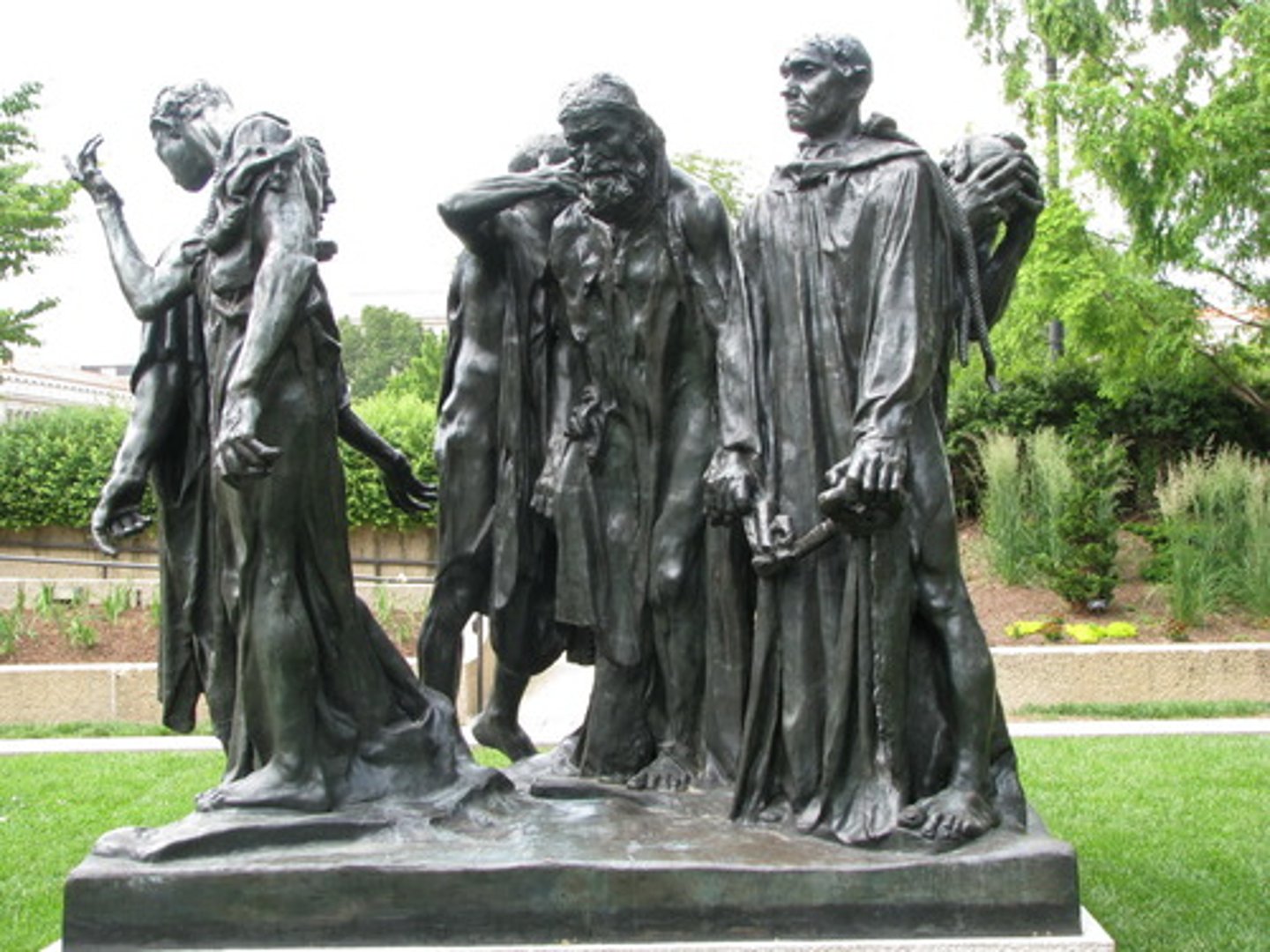
- submitted to the Salon of 1850-1851
- breaking stones down to rubble to be used for paving
- poverty emphasized
- figures born poor and will remain poor their whole lives
- reaction to labor unrest of 1848: demanding better working conditions
- large size of painting usually reserved for grand historical paintings, elevating commonplace into realm of legend and history
- men turned away: lack of individuality
The Stone Breakers
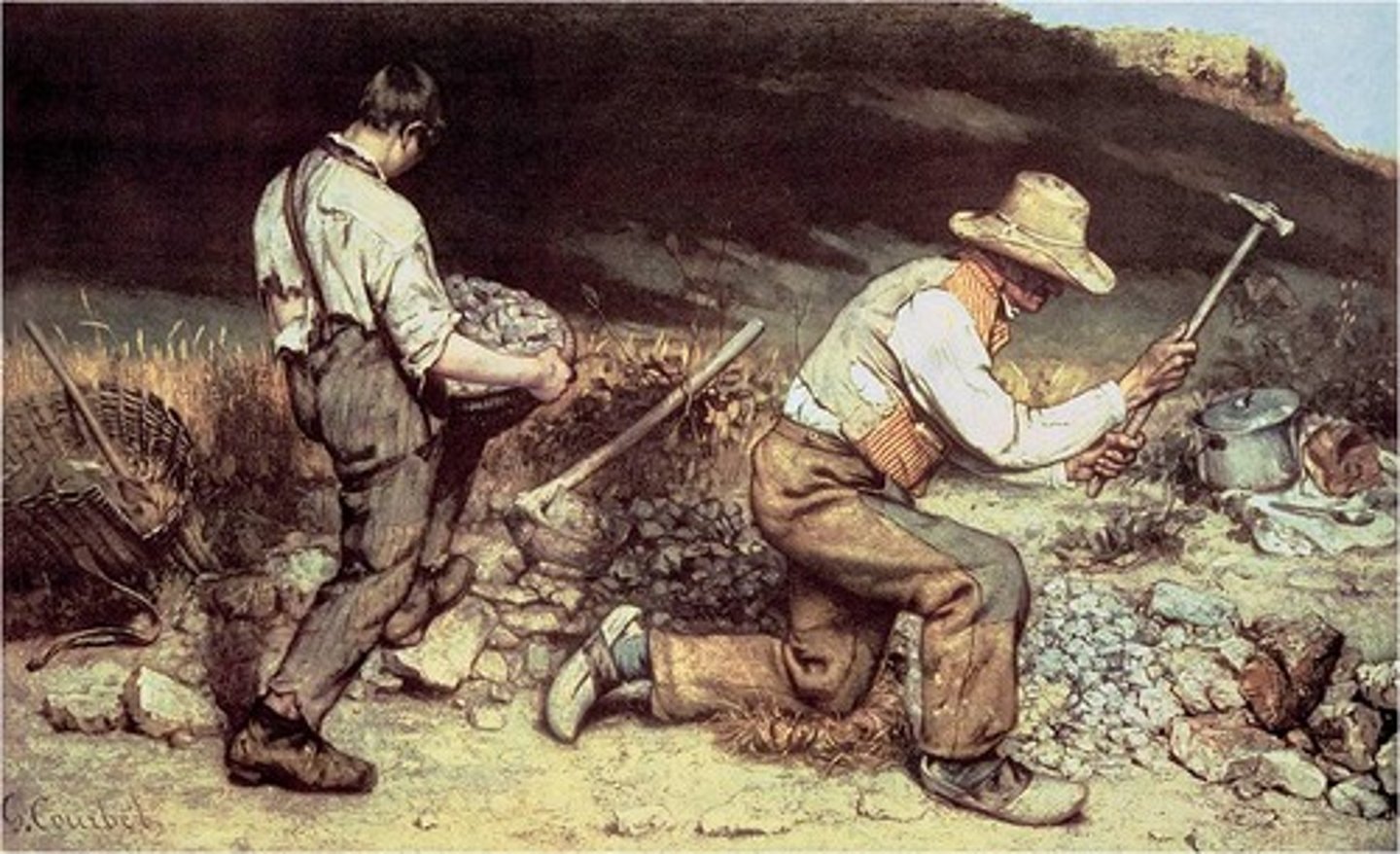
- Nadar was famous of taking aerial photos of Paris beginning in 1858
- presents Nadar as a quaky photography; in his excitement to get a daring shot he almost falls out of his balloon and loses his hat
- every building has the word "photographie" on it
- mocks claims that photography can be a "high art"; irony implied in title
- done after court decision in 1862 that determined that photographs could be considered works of art
- originally appeared in a journal: Le Boulevard
- intrusive photography: Nadar's balloon reused in the 1870 Siege of Paris
- foreshadows modern surveillance photographs
Nadar Raising Photography to the Height of Art
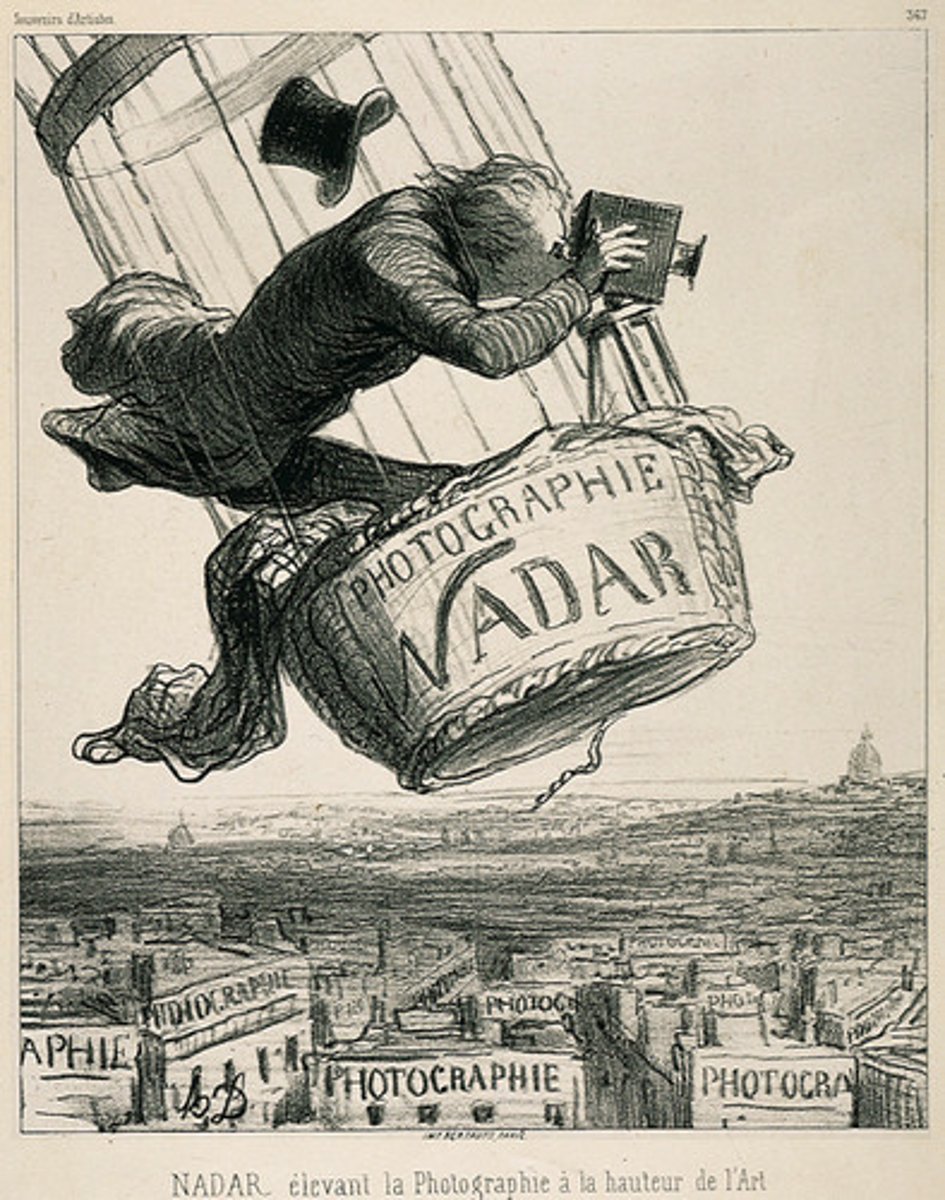
- created a sandal at the Salon of 1865
- traditional subject of reclining nude; inspired by Titian's Venus of Urbino
- figure cold and uninviting, no mystery/joy
- maid delivers flowers from an admirer
- common name for prostitutes of the time
- frank, direct, uncaring, and unnerving look startled viewers
- simplified modeling; active brushwork
- stark contrast of colors
- a mistress was common to upper class Parisian men
Olympia
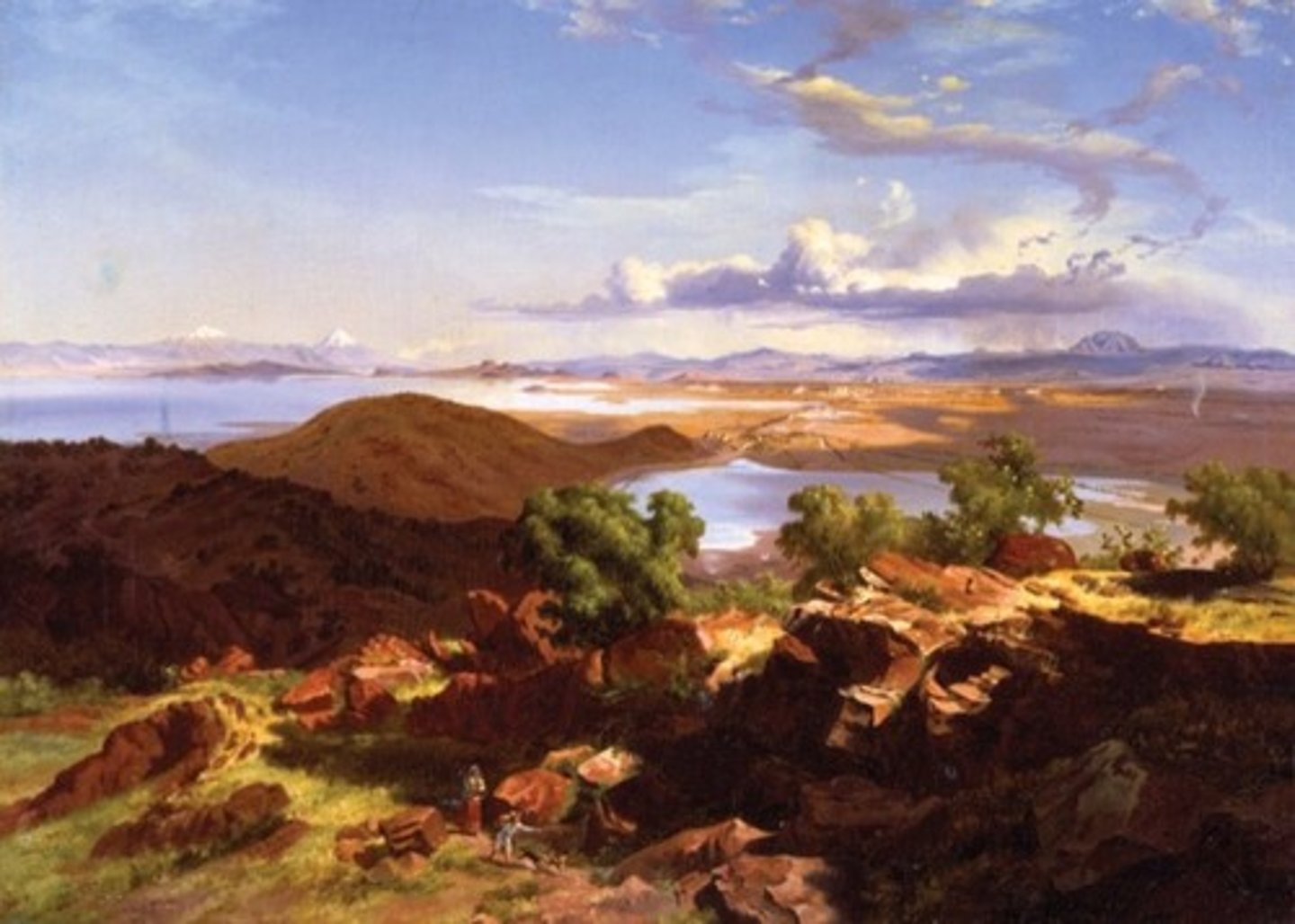
- primarily an academic landscape painter
- specialized in broad panoramas of the Valley of Mexico
- keen observer of nature: rocks foliage, clouds, waterfalls
- rejected realist landscapes of Courbet; romantic landscapes of Turner
- settled in Villa Guadalupe w. overview of the Valley of Mexico
- dramatic perspective; small human figures
- glories Mexican countryside
The Valley of Mexico from the Hillside of Santa Isabel
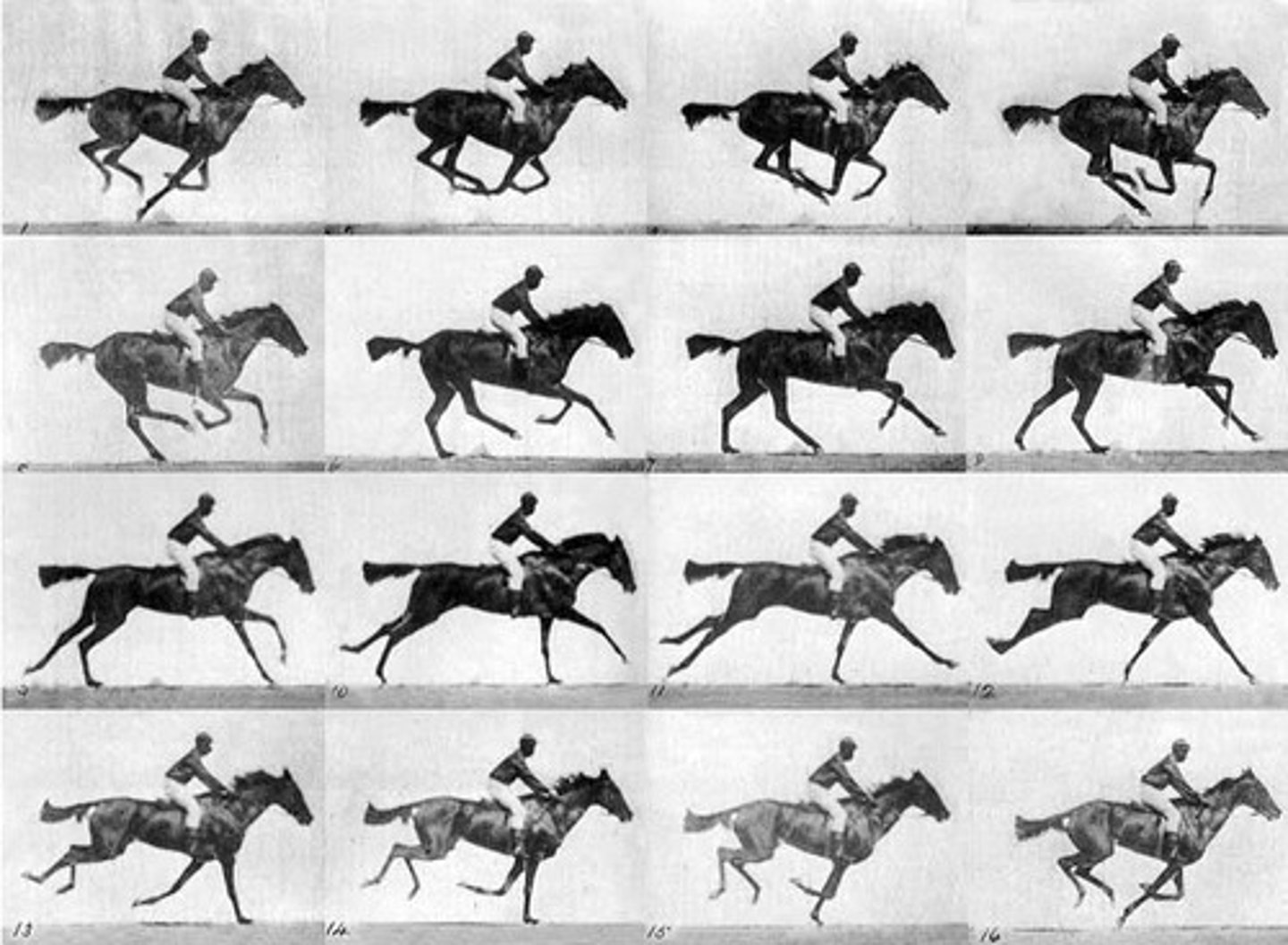
- photography now advanced enough that it can capture moments the human eye cannot
- cameras snap photos at evenly spaced points along a track, giving the effect of things happening in sequence
- bridge the gap between still photography and movies
- used a zoopraxiscope
- great influence on painters
- showed "rocking horse" position in art was unrealistic
The Horse in Motion
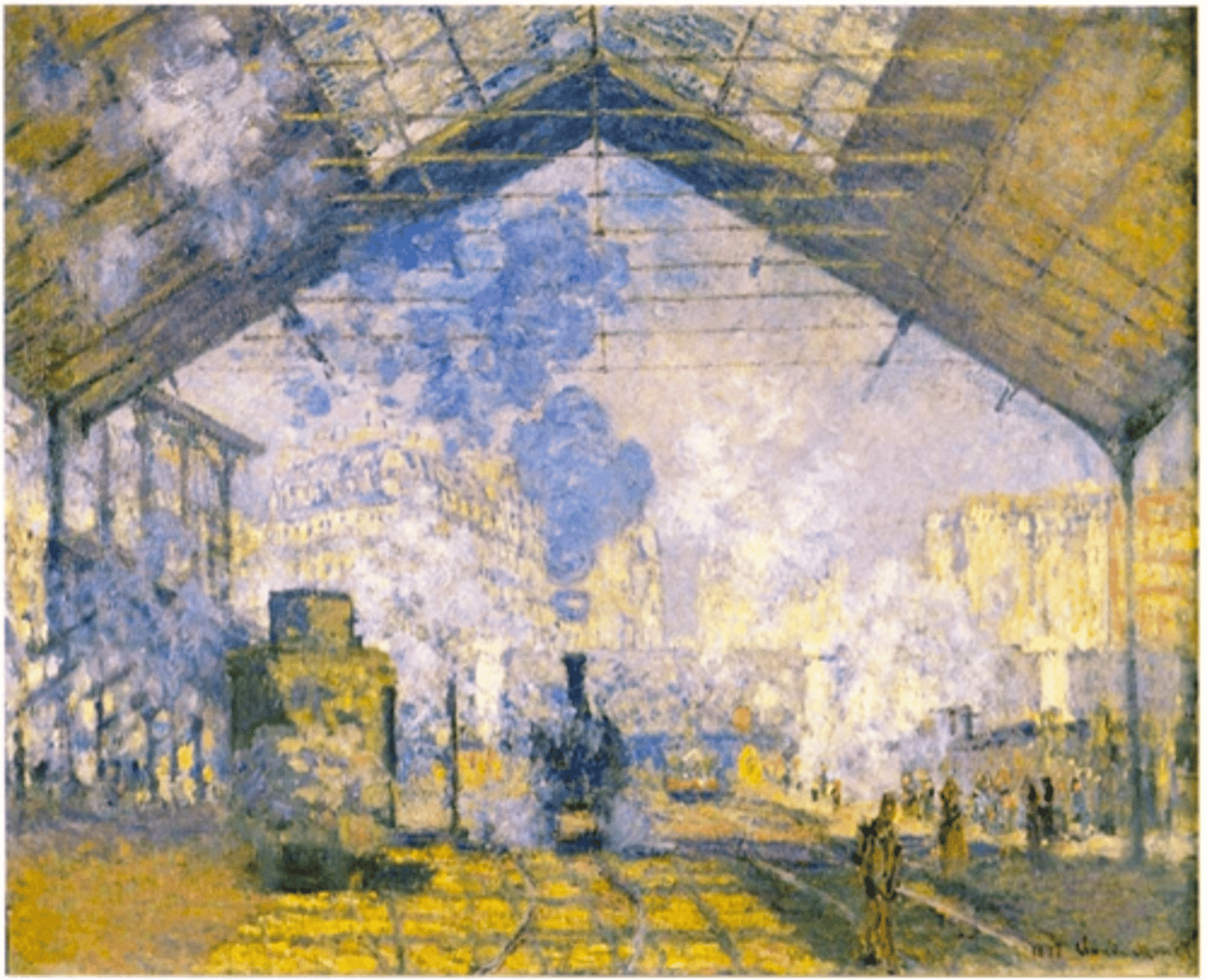
- exhibited at the Impressionist exhibition of 1877
- one of a series depicting this train station
- Monet famous for painting series of paintings on same subject at different times of day and different days of the year
- originally meant to be hung together for effect: Haystacks were his first group to be hung this way
- effects of steam, light, and color; not really about the machines or travelers
- subtle gradation of light on the surface
- forms dissolve and dematerialize; color overwhelms the forms
The Saint-Lazare Station
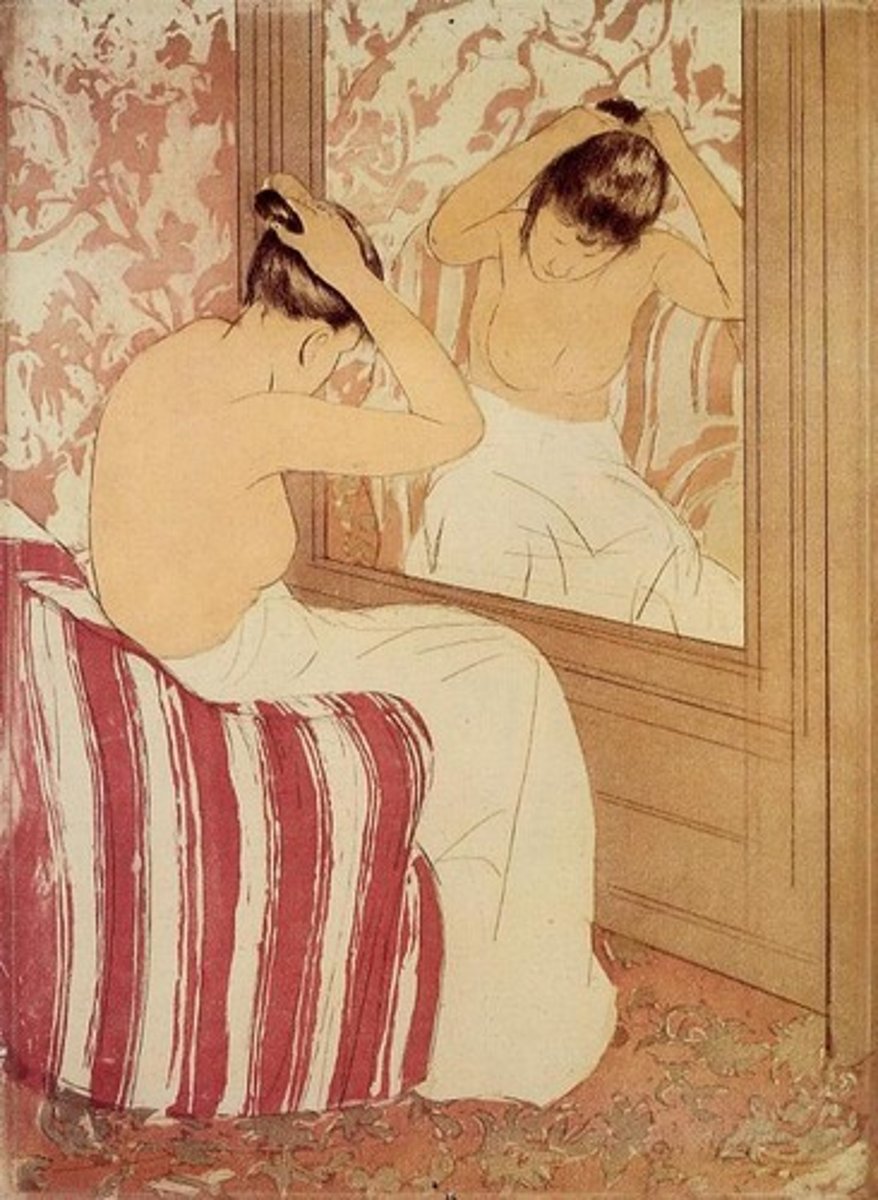
- Cassatt's world filled w/ women
- no posing or acting; figures possess a natural charm
- decorative charm influenced by Japanese art
- Japanese hair style; Japanese point of view: figure seen from the back
- tenderness foreign to other Impressionists
- part of a series of ten prints exhibited together
- contrasting sensuous curves of female figure w/ straight lines of furniture and wall
- pastel color scheme
The Coiffure
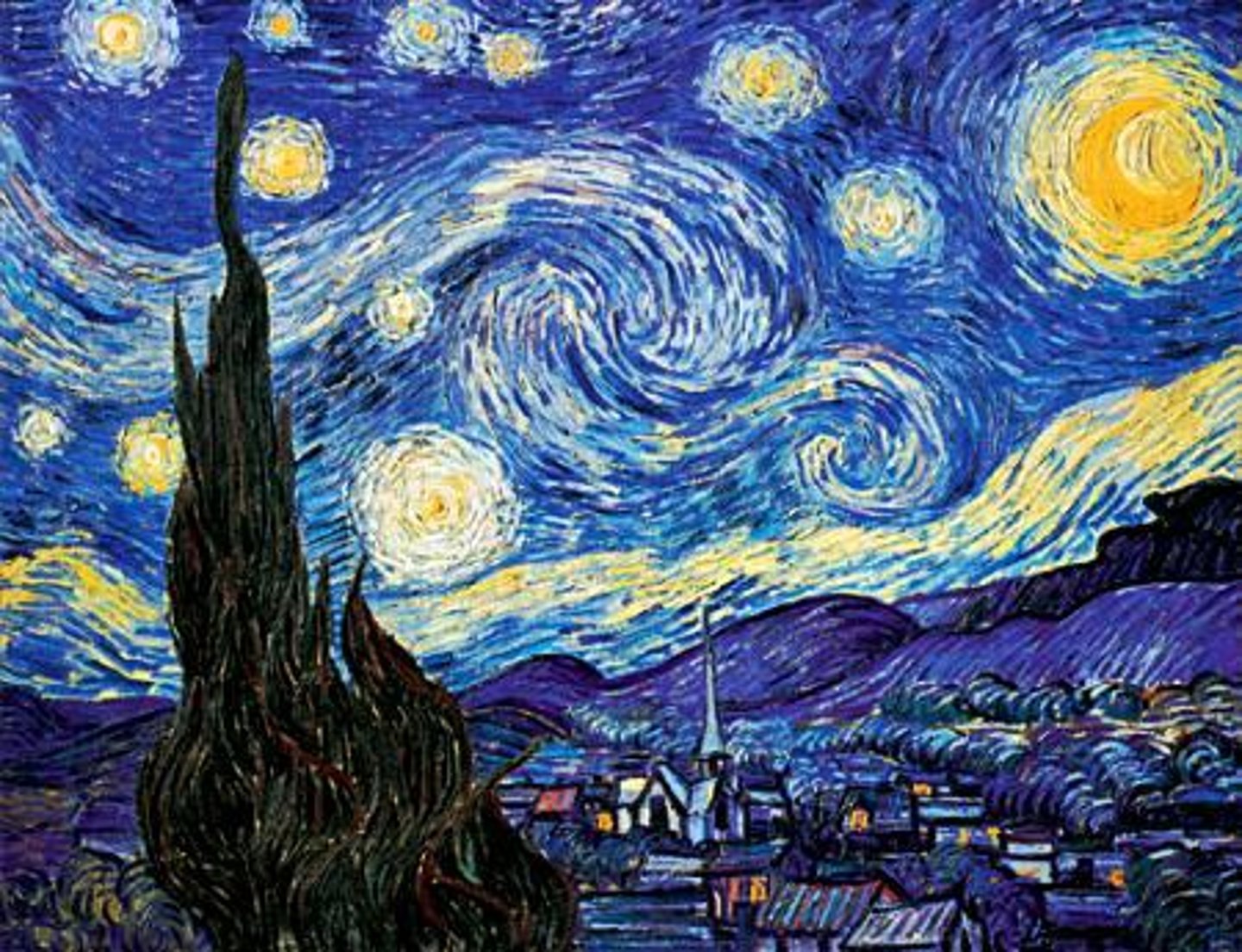
- thick short brushstrokes
- mountains in distance that Van Gogh could see at his hospital room in St.-Remy, steepness exaggerated
- composite landscape: Dutch church, crescent moon, Mediterranean cypress tree
- at one w/ forces of nature
- parts of canvas can be seen through the brushwork; artist need not fill every space
- strong left-to-right wavelike impulse in work, broken only by tree and church steeple
- trees like green flames reaching into sky exploding w/ stars over a placide village; cypress tree a traditional symbol of death and eternal life
- houses w/ touches of yellow to symbolize signs of life
- church spire bridges sky and people
The Starry Night
- painted during second stay in Tahiti between 1895-1901
- suffered from poor health and poverty; obsessed by thoughts of death
- learned of death of daughter, Aline, in April 1897; deeply shaken; determined to commit suicide and have this painting be his artistic will and testament
- story of life, right to left
- right: birth, infant and three adults
- center: mid-life; picking the fruit of the world
- left: death (a figure derived from Peruvian mummy exhibited in Paris); Blue Idol represents "The Beyond"
- figures in foreground represent Tahiti and an Eden-like paradise; background figures are anguished darkened figures
- rejection of Greco-Roman influence; Egyptian figures used for inspiration; Japanese prints in solid fields of color and unusual angles; Tahitian imagery in Polynesian idol
- Gauguin thought of painting as summation of artistic and personal expression
Where Do We Come From? What Are We? Where Are We Going?

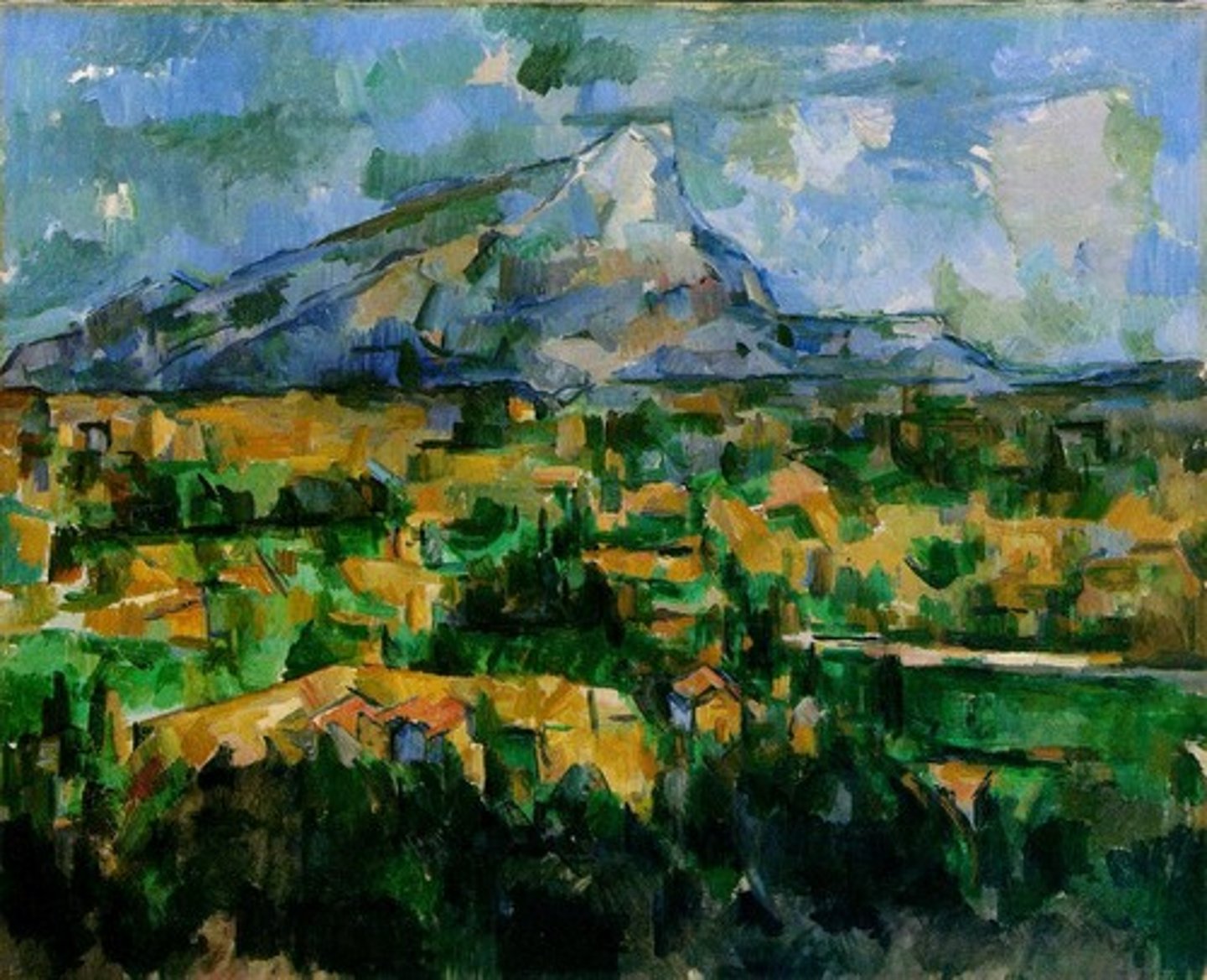
- one of eleven canvases of this view, series dominates Cezanne's mature period
- had contempt for flat painting, wanted rounded and firm objects but ones that were geometric constructions made from splashes of undiluted color
- used perspective through juxtaposing forward warm colors w/ receding cool colors
- landscape rarely contains humans
0 not in countryside of Impressionism, more interested in geometric forms than dappled effects of light
- not a momentary glimpse of atmosphere as in the Impressionists, but a solid and firmly constructed mountain and foreground
- landscape seen from an elevation
- invited to look at space, but not enter
Mont Sainte-Victoire
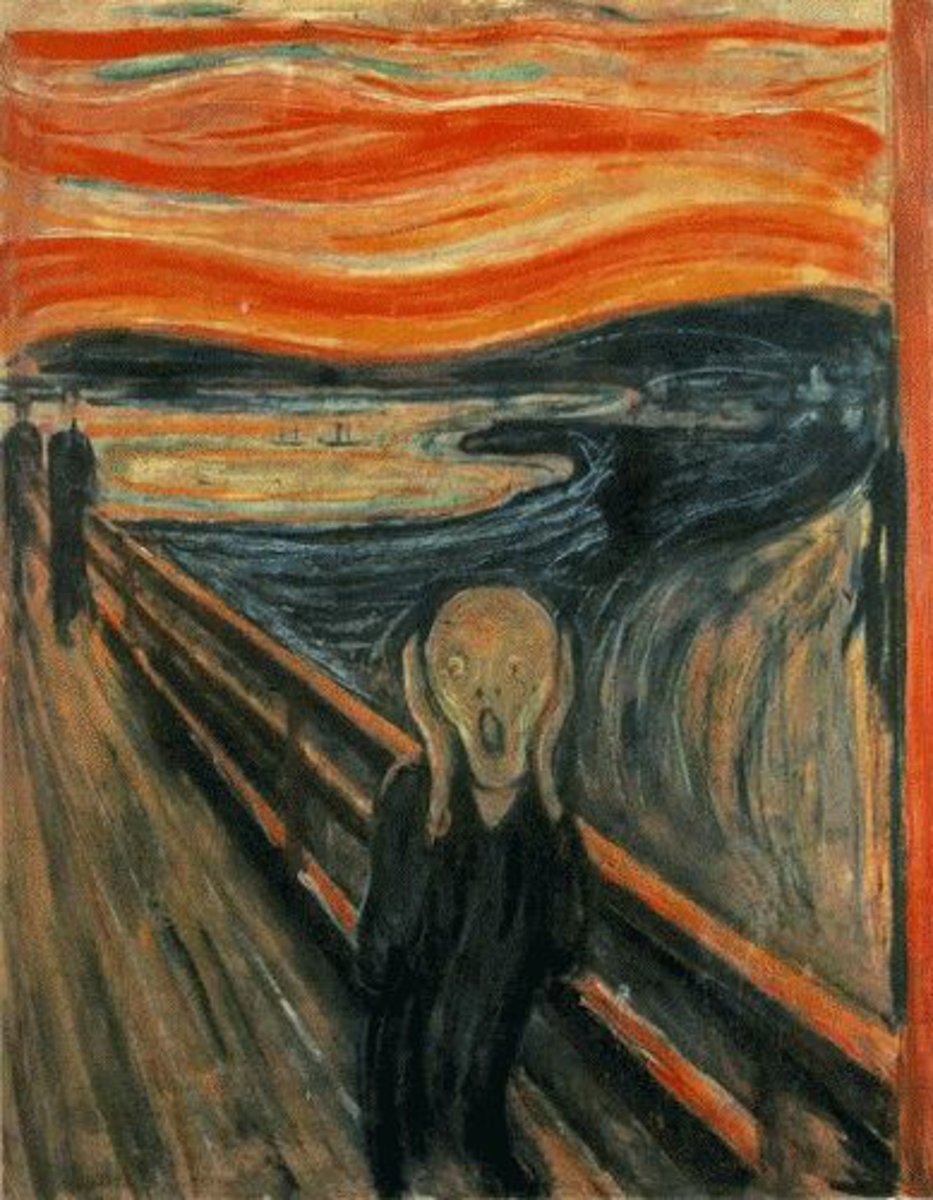
- figure walking along a wharf, boats are at sea in the distance
- long thick brushstrokes swirl around composition
- figure cries out in horrifying scream, the landscape echoes his emotions
- said to have been inspired by an exhibit of a Peruvian mummy in Paris
- discordant colors symbolize anguish
- emaciated twisting stick figure w/ skull-like head
- prefigures Expressionist art
- painted of a series called The Frieze of Life
- Art Nouveau swirling patterns
The Scream
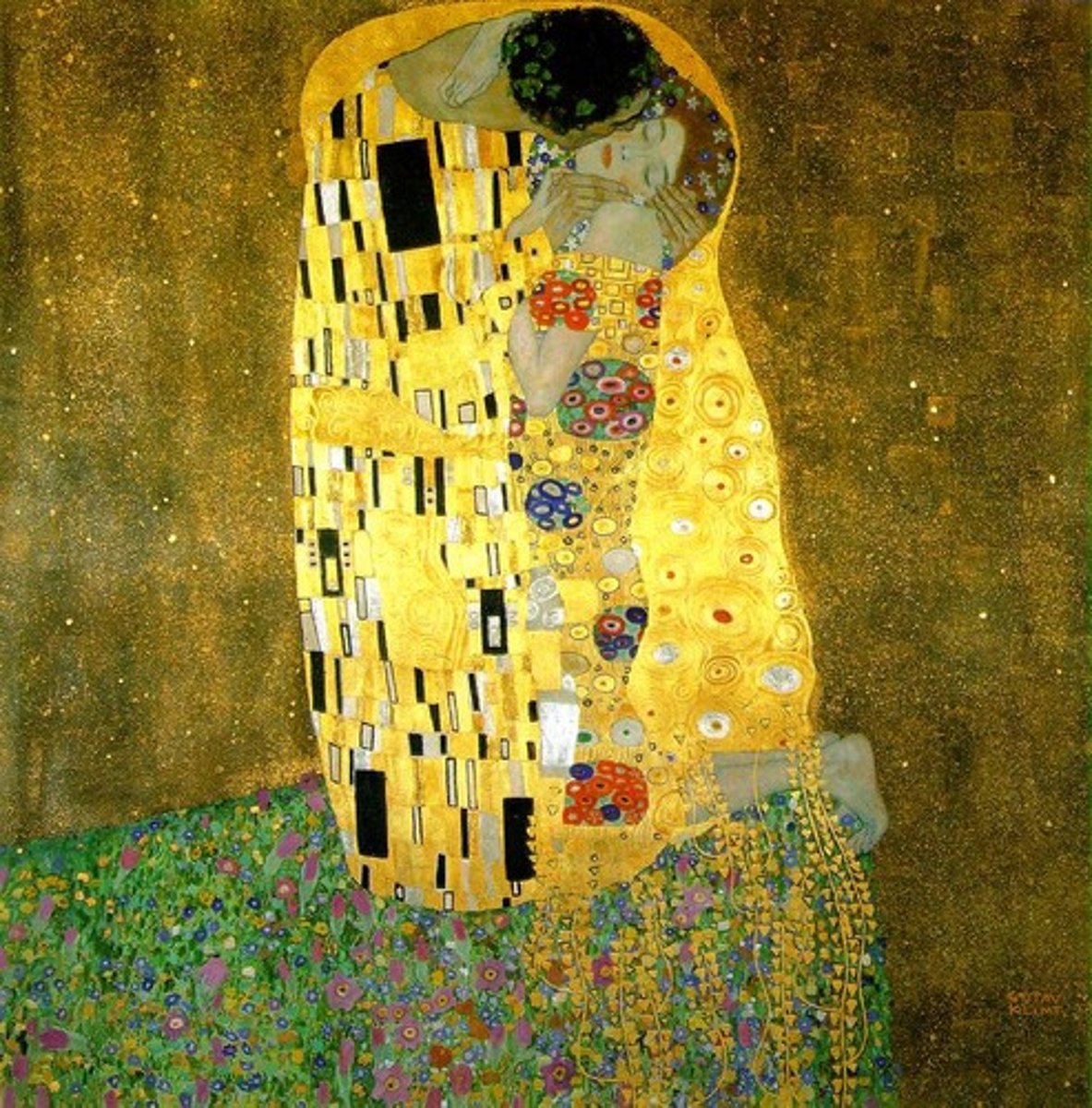
- little of human form is actually seen: two heads, four hands, two feet
- bodies suggested under a sea of richly designed patterning
- male figure has large rectangular boxes; female figure has circular forms
- suggests all-consuming love; passion; eroticism
- spaced in indeterminate location against flattened background
- gold leaf reminiscent of Byzantine mosaics
The Kiss
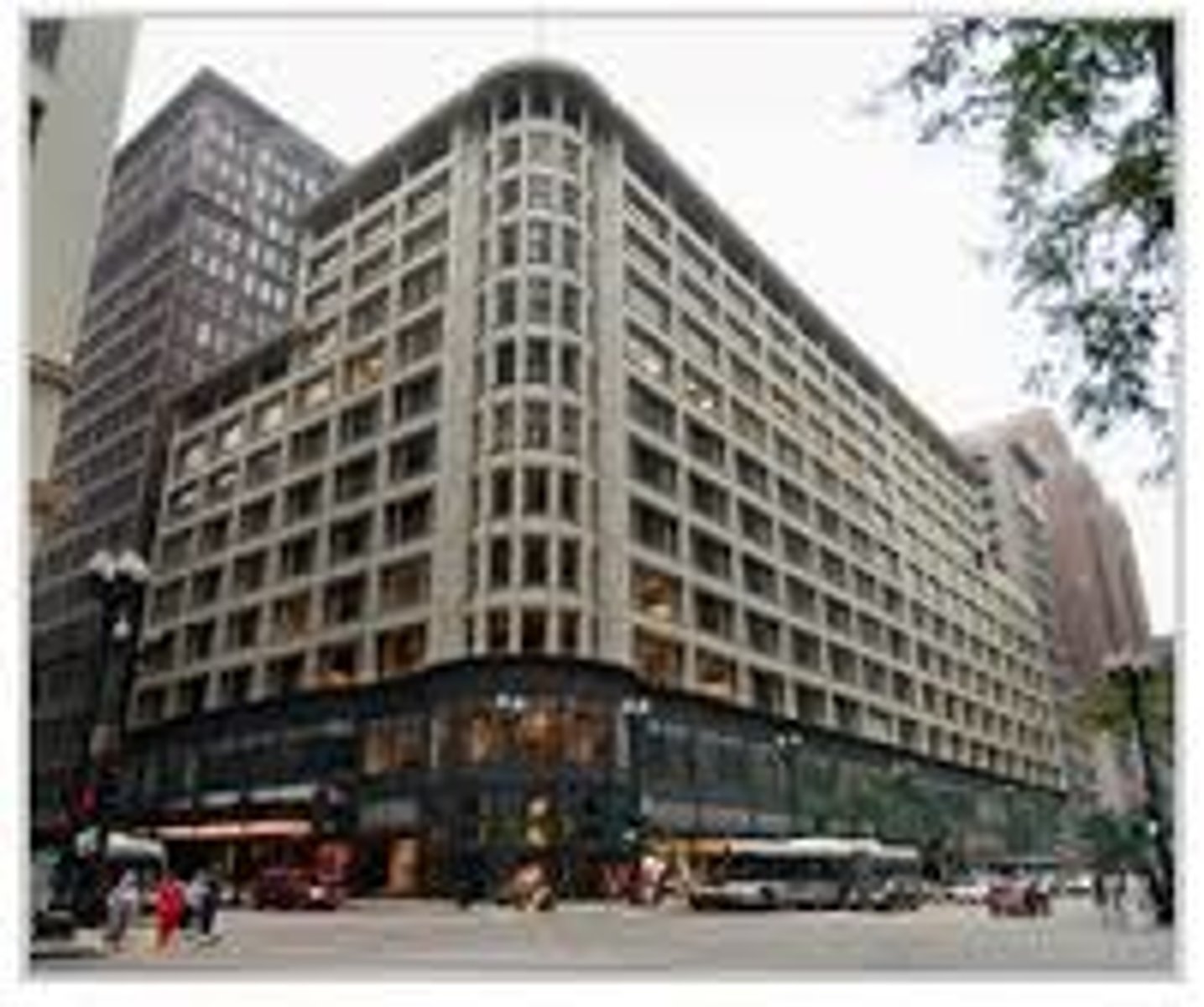
- horizontal emphasis symbolizes continuous flow of floor space
- maximum window areas to admit light, also to display store wares
- non supportive role of exterior
- cast iron decorative elements transformed store into beautiful place to buy beautiful things
- influence of Art Nouveau in decorative touches
- Sullivan motto: "form follows function"
- exterior coated in decorative terracotta tiles; original interior ornament elaborately arranged around lobby areas, hallways, elevator
- some historical touches in the round entrance arches and heavy cornice at top of building
Carson, Pirie, Scott and Company Building
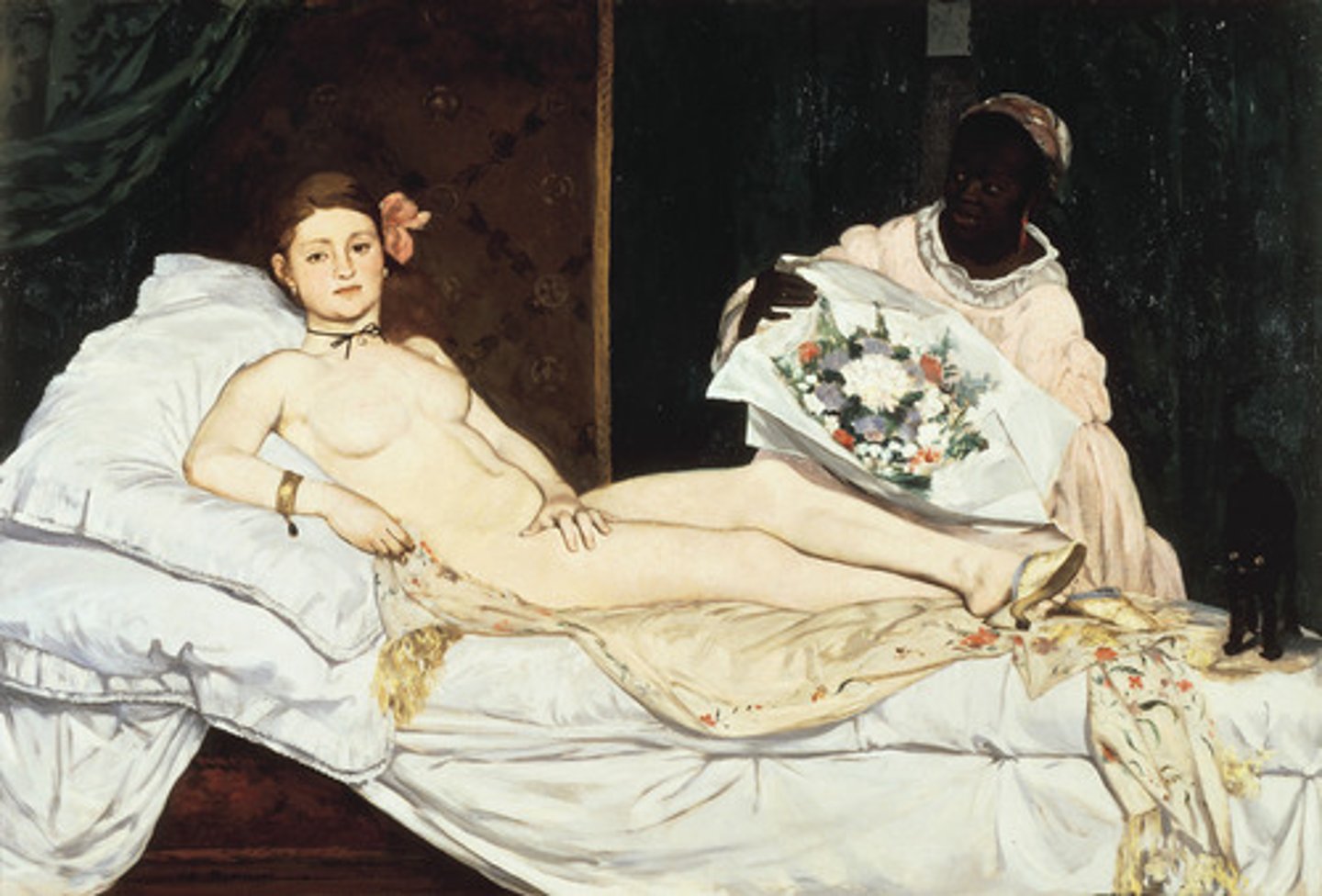
- six burghers offer their lives to the English king in return for saving their besieged city during the Hundred Years' War; English king insister burghers wear sackcloths and carry the key to the city
- parallels between Paris besieged during the Franco=Prussian War of 1870 and Calais besieged by the English in 1347
- figures sculpted individually, then arranged as the artist thought best
- figures suffer from privation; weak and emaciated
- each w/ different emotion
- central figure: Eustache de Saint-Pierre, who has large swollen hands an noose around neck, ready for execution
- details reduced to emphasize overall impression
- meant to be placed at ground level so people could see it close up; viewer forced to confront humanized individuals
- rejected by town council of Calais as being inglorious; they wanted single allegorical figure
- BIG BECAUSE NOT HAILED AS HEROES, BUT JUST PATHETIC HUMANS
The Burghers of Calais