[HOUSING] Lecture 1 - Historical Overview and Background of Housing
 Call Kai
 Learn
Learn Practice Test
 Spaced Repetition
 Match
Match Flashcards
 Knowt Play
1/58

There's no tags or description
Looks like no tags are added yet.
Name | Mastery | Learn | Test | Matching | Spaced | Call with Kai |
|---|
No analytics yet
Send a link to your students to track their progress
59 Terms
Prehistoric - Nomadic
Temporary encampments, terrain, water supply, wind and sun orientation, safety, fire, granary
Prehistoric - Egyptians 400 BC
City of Babylon
Bronze Age
Valleys of the Nile, the Tigris and Euphrates, Indus and Hwang Ho
Egypt
Memphis and Thebes
Mesopotamia (Bronze Age)
Ur, Nineveh, and Babylon (Bronze Age)
Huts and Traditional Houses
Bronze Age dwelling
Mohenjo Daro
35,000 residents Grid pattern Water closets Sewerage systems Paved streets and windows (Bronze Age)
Iron Age
Earliest building codes specifying structural integrity (2000 BC)
Code of Hammurabi
Defense and Water Supply
City planning for Greek and Roman empires centered urban housing for - (Iron Age)
Medieval Period
Growth of towns around a monastery or castle, Radiocentric pattern
Irregular street patterns, Church Influence
13th Century AD - Medieval Period
Towns with less than 10 000 residents
14th Century AD - Medieval Period
Florence with 10 000 inhabitants
Venice became trading center of Byzantine empire
16th Century
Rise of centralized monarchies and transatlantic trade
Capital cities and ports: Amsterdam, Rome, Lisbon, Antwerp, Seville, Palermo, Milan, Naples, Paris and London
15th-16th Century - Renaissance Period
Aesthetics as basic form of planning (Beauty, Form, Function)
Square patterns of plans
15th-16th Century - Renaissance Period
Small apartments for masses with atrium for rich
Leon Battista Alberti
Ideal City: Star shaped plans with street radiating from central point for church, palace, or castle
Conform to topography
Pierre Charles L’enfant
French-American engineer who prepared plan for Washington D.C.
17th Century
Formal placement of palace, church, or civic building (Dominant structure)
18th and 19th Century
Washington D.C - Baroque pattern of radiating avenues on gridiron plan
18th and 19th Century
English Towns - Grouped in terrace, crescent, circus, and square
19th Century Industrial Revolution
Migration of workers without sanitation and water
Laborers’ Dwelling Act
Late 19th Century - Britain embarked on public housing development
Post Industrial 20th Century
1970s - Approx. 30% of Britain’s housing was publicly subsidized
Canada’s Federal funds for people with lower incomes
International Bank for Reconstruction and Development
IBRD
Slum Demolition
Post Industrial 20th Century (1950s)
New town development (Brasilia)
Post Industrial 20th Century (1960s)
Self-help housing
Post Industrial 20th Century (1970s)
Siheyuan
Courtyard
Chinese Hutong
Typical Street
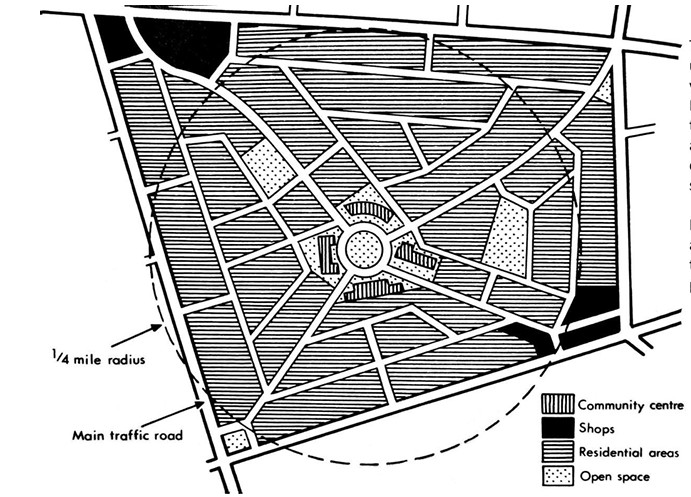
Theoretical diagram of Garden city (The Neighborhood Unit)
Howard dividing towns into wards of 5000 people each (Accessible central place within walking distance)
Raymond Unwin and Barry Parker’s Letchworth Garden City
First Garden City (1920)
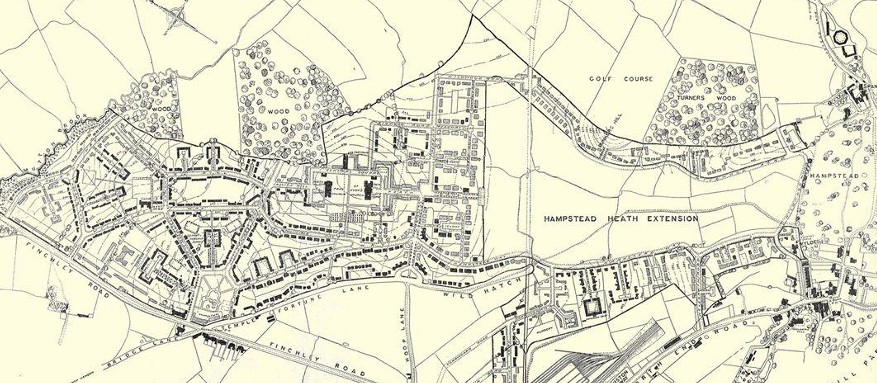
Hampstead Garden Suburb
Dormitory Suburb, Socially Mixed Community (Raymond Unwin and Barry Parker)
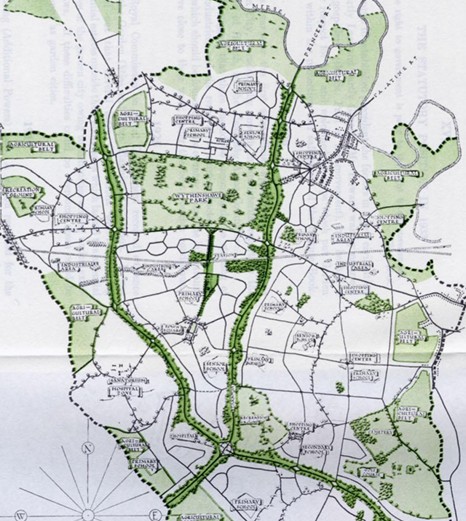
Barry Parker’s Wythenshawe
3rd Garden city with surrounding greenbelt
Raymond Unwin
“Nothing gained by overcrowding!“ 1912
Need for public open space
Green belts around new communities
Clarence Perry’s The New York Regional Plan
Multi-volume plan, neighborhood unit idea, sense of identity with the community
Cristopher Alexander’s “A City is not a tree”
Varied needs for different people
Principle of Choice
Clarence Stein
Architect Planner in NY who developed the Neighborhood Unit further
Superblock
Stein’s version of the garden city
Cul-de-sac
specialized roadways and separation of vehicular and pedestrian traffic. Neighborhood with elementary school at its center (Stein or Perry)
Patrick Geddes
‘‘Human Ecology” - Man and Environment
Conurbation
by Patrick Geddes, which describes a region with number of cities and with growing towns and suburbs
Le Play’s Triad
Place Work Folk
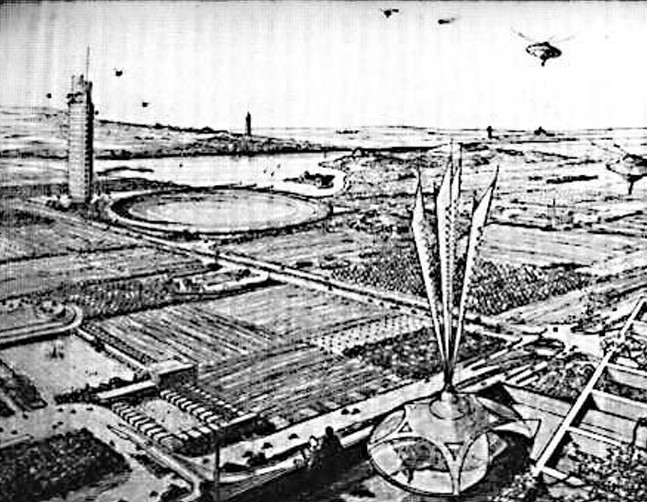
Frank Lloyd Wright’s Broadacre City
Single Family homes, each surrounded by an acre of land for own consumption
Gas station is focus of shopping
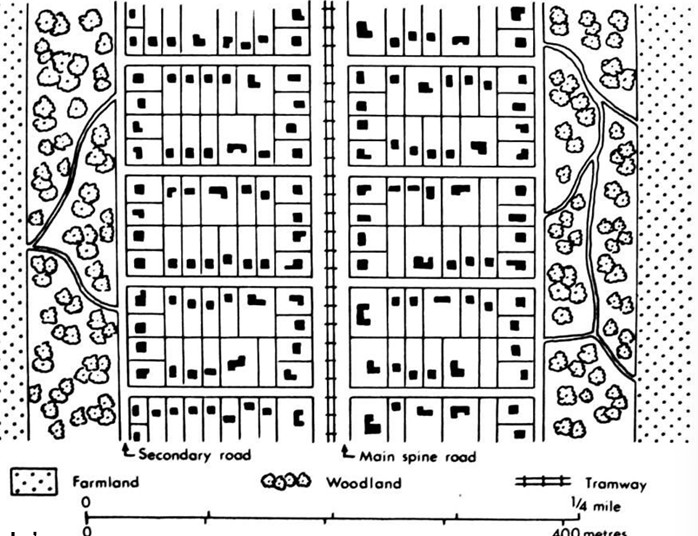
Arturo Mata’s Linear City
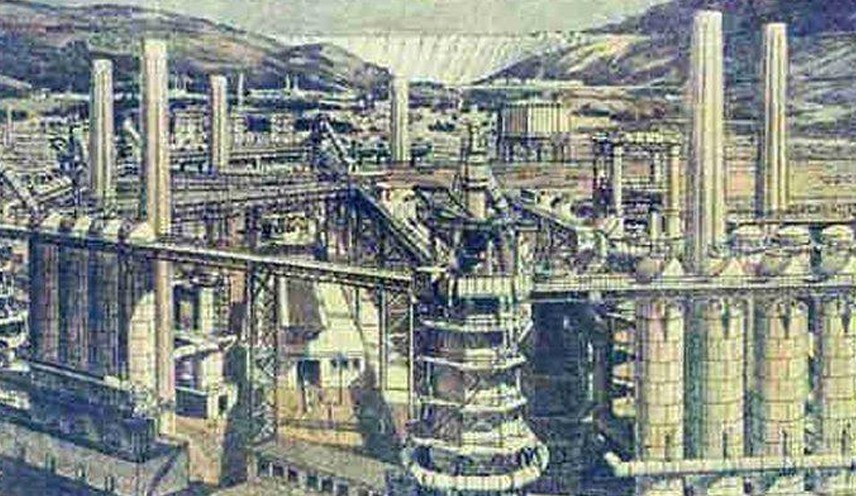
Tony Garnier’s Industrial City
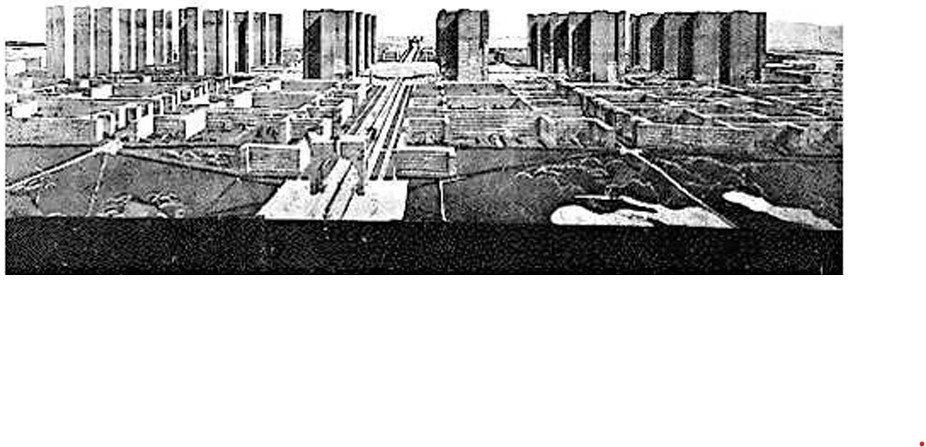
Le Corbusier’s Radiant City
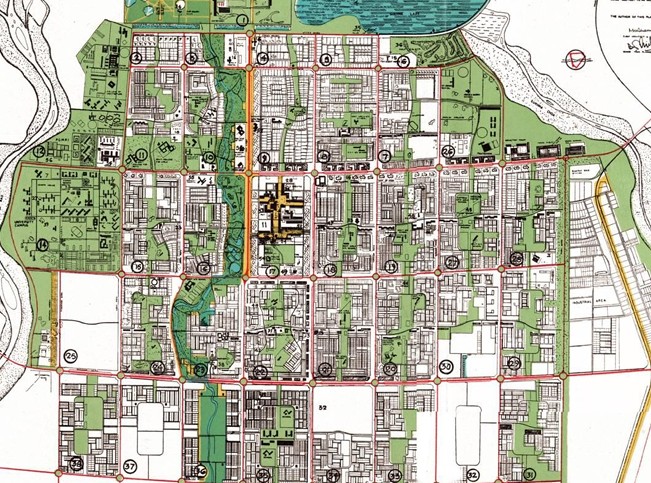
Chandigarh
planned city in India designed by Le Corbusier, based on sector planning, zoning, and modernist planning principles.
Jane Jacobs
“The Death and Life of Great American Cities“
Nothing wrong with high urban densities
Mixed Functions
Yuppificaiton
Philippine Pre-Colonial Period
Up to 1600s
Colonial Period
1600s-Americal Occupation
Post Colonial Period
1946 up to Present
Nipa huts and Indigenous Materials
Philippine Context of Housing
Spanish Colonization Period
“sitio-barrio-poblacion-cabecera system”
Law of the Indies
Plaza Complex
Intramuros
The Walled City
Mestizos and Filipino Principalia
Living in Binondo, Ermita, Quiapo, and Trazo
Filipino Lower Class
Living in Tondo
Chinese Mestizo
Dominance in commerce/indigenous elite
Urbanization in American Colonization Period
Manila at center with pockets of economic, political and cultural center in the countryside
Underdeveloped rural areas
Poor in Nipa huts

