AP World History Midterm
 Multiple Choice
 Call Kai
1/70

Earn XP
Description and Tags
(meant to be done multiple choice mode, multiple questions ask "which option".... there are no options on the flash cards)this has all the questions on MCQ's in the pastand some extra ones UNITS ARE COLOR CODED: red=unit 1 / blue =unit 2 / green =unit 3 / yellow =unit 4
Name | Mastery | Learn | Test | Matching | Spaced | Call with Kai |
|---|
No analytics yet
Send a link to your students to track their progress
71 Terms
After the expansion of Islam into Africa, an organized Christian presence remained in
Egypt and Ethiopia
By 1200 C.E. improved agricultural technology had spread throughout much of sub-Saharan Africa primarily through the
migration of Bantu-speaking peoples with their knowledge of ironworking and farmworking techniques

The point of view of the author can best be described as
Hostile to the peasants
Which of the following was a common feature of most Asian and European philosophies during the period of 1000 to 1450?
A close association with religion
In the period 1000 to 1450, which of the following developments partially resulted from knowledge of Greek science and technology?
Islamic medical books in Baghdad
Which of the following features of Europe in the period circa 1200-1450 most directly contrbuted to the fact that the king of Hungary did not recieve the military assistance that he requested in 1241, as mentioned in the third paragraph?
Which of the following best suppoirts the conclusion that Japan borrowed extensively from Tang and Song China?
Societal relations in Japan were based on Confucian principles of hierarchy
“Seeing that it is a girl’s destiny, on reaching womanhood, to go to a new home, and live in submission to her father-in-law and mother-in-law, it is even more incumbent upon her than it is on a boy to receive with all reverence her parents’ instructions. Should her parents, through excess of tenderness, allow her to grow up self-willed, she will infallibly show herself capricious and thus alienate his affection.”
Kaibara Ekken, Japanese author, Greater Learning for Women, 1716
The excerpt above exemplifies the continued influence on eighteenth-century Japan of which of the following?
The Confucian emphasis on filial submission
Which of the following pieces of evidence most strongly supports the author’s arguments about the quality of the highways described in the passage?
They were very broad, and some extended across the entire kingdom.
Which of the following pieces of evidence does the author most directly use to support his argument about the king of Spain following the Inca method of highway construction?
The Inca rulers only had to command their officials to construct a highway, and it was completed quickly.

Which of the following pieces of evidence does the author use to support his argument about the pride of Inca rulers in the second paragraph?
Inca rulers typically tried to construct bigger and broader highways than their predecessors if they wanted to undertake conquests
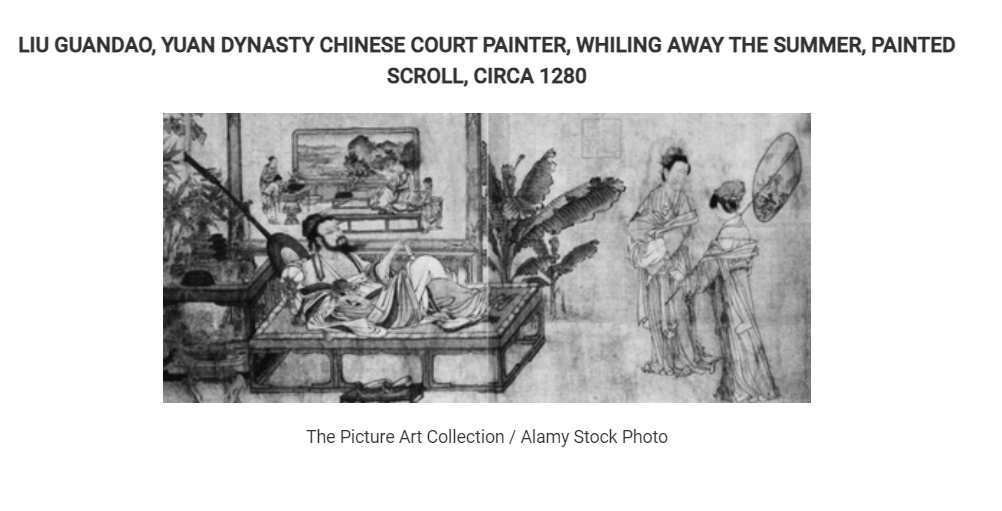
The image depicts a Chinese Confucian scholar and two female attendants. The image can best be used as a source of information about the……
social prestige of established educated elites in Chinese society under Mongol rule
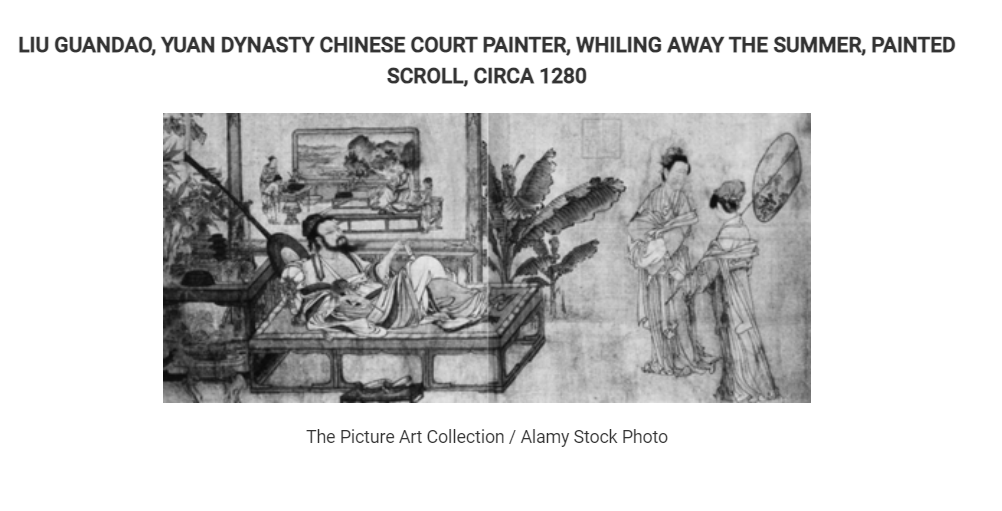
The image depicts a Chinese Confucian scholar and two female attendants. Which of the following historical continuities is best reflected in the image?
Chinese art continued to emphasize traditional subjects and styles.
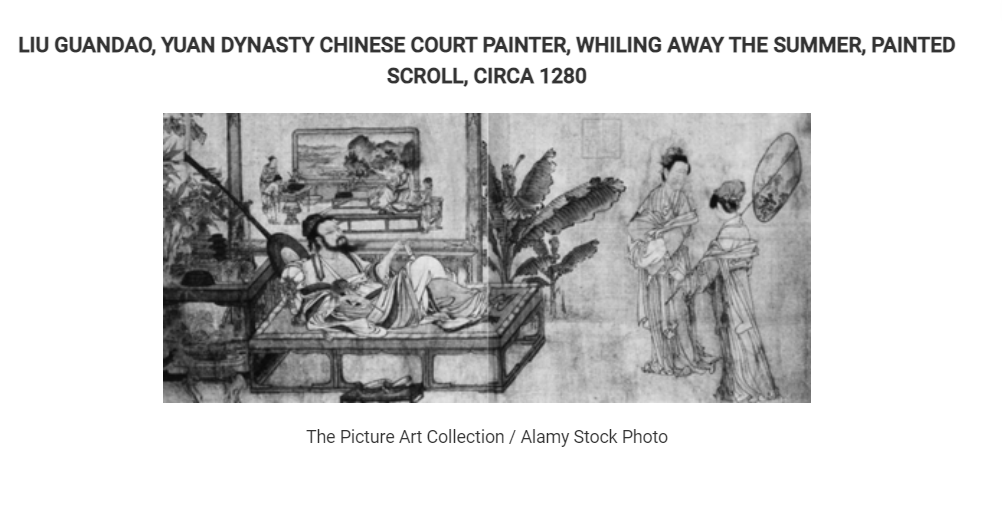
The image depicts a Chinese Confucian scholar and two female attendants. In addition to China, the cultural tradition alluded to in Liu Guandao’s painting strongly influenced the society and culture of
Korea
The responsibilities of aristocratic women in both feudal Japan and medieval Europe usually included
managing household supplies and fiances
Renaissance Italy and the Islamic Middle East after the decline of the ‘Abbasid Empire in the mid-tenth century are important examples of which of the following?
Political fragmentation and cultural creativity
"I am imperishable time;
The Creator whose face is everywhere;
Death that devours all things;
The source of all things to come."
The god Krishna speaks, Bhagavad Gita, Vedic sacred text, circa fifth century to second century B.C.E.
The excerpt above best represents which aspect of Hinduism?
The cyclical nature of death and rebirth

N/A
Agricultural output increased as a result of the use of the new crop strains, iron plows, and expanded irrigation
Judaism, Christianity, and Islam share which of the following?
They recognize the existence of Adam and of Moses.
Which of the following pairs of belief systems offered opportunities for women to lead monastic lives?
Buddhism and Christianity
In the period 900 to 1500 C.E., the Ottomans and the Aztecs were similar in that both peoples were
nomadic groups that migrated to already settled regions and conquered them
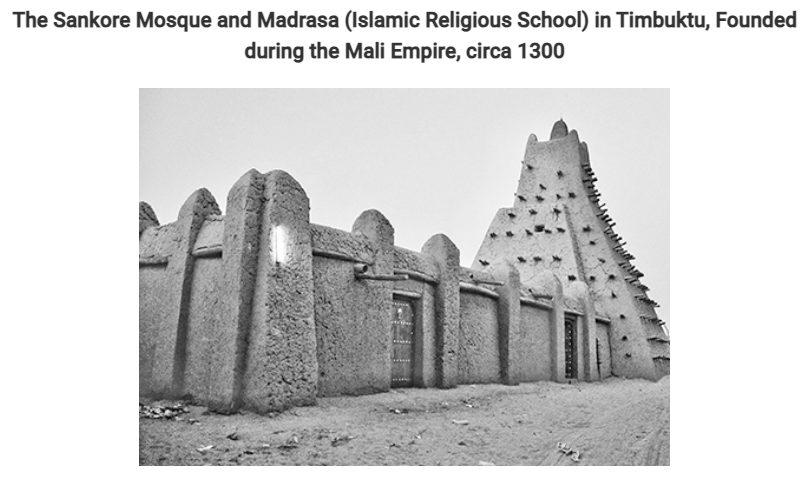
The structure shown in the image best illustrates which of the following?
Rulers’ use of monumental buildings to spread learning and culture
“[D]espite his ferocity, his military genius and his shrewd adaptation of tribal politics to his imperial purpose, Tamerlane’s* system fell apart at his death. As he himself may have grasped intuitively, it was no longer possible to. . . build a Eurasian empire on [nomadic] foundations. . . . The Ottomans, the Mamluk state in Egypt and Syria, the Muslim sultanate in northern India, and above all China were too resilient to be swept away by his lightning campaigns.
Indeed Tamerlane’s death marked in several ways the end of a long phase in global history. His empire was the last real attempt to challenge the partition of Eurasia between the states of the Far West, Islamic Middle Eurasia and Confucian East Asia. Secondly, his political experiments and ultimate failure revealed that power had begun to shift back decisively from the nomad empires to the settled states. . . . Lastly, his passing coincided with the first signs of a change in the existing pattern of long-distance trade, the [overland Silk Road route] that he had fought to control. Within a few decades after his death, the idea of a world empire ruled from Samarkand [Tamerlane’s Central Asian capital] had become [a fantasy].”
*a Turko-Mongolic ruler who conquered much of Central Asia and the Middle East in the late 1300s and early 1400s.
John Darwin, British historian, After Tamerlane: The Rise and Fall of Global Empires, 1400–2000, published in 2008
All of the following statements about nomadic empires in the period 1200–1700 are factually accurate. Which statement most likely explains why Tamerlane’s empire rapidly declined in the late fifteenth century?
Nomadic empires typically contained numerous tribes and confederations that were difficult to control.
Inca and Aztec societies were similar in that both
acquired empires by means of military conquest
“I, Edward, by the grace of God king of England, sent this decree to the reverend father in Christ William, by the grace of God archbishop of Canterbury, supreme Church leader of all England:
Know that, because of the great number of people who died in the recent pestilence, those who survive see that masters need servants, which have become scarce, and so they now refuse to serve as workmen unless they receive excessive wages.
That is why, I, considering the grave inconveniences that might come from the lack of such workmen, especially plowmen, and after consultations with the nobles and clergy of the realm, have decided that every man and woman of our realm of England shall be required to serve his or her lord at the wages that were provided five years ago, in the year 1346.
The lords are entitled to keep their serfs. If any such serf, man or woman, who is required to serve their lord will not do so, they shall be immediately committed to jail.”
King Edward III of England, the Statute of Laborers, royal decree, 1351
The terminology used in the opening sentence of the decree was most directly influenced by which of the following?
The deep influence of Christianity on medieval society and culture
Which of the following societies engaged in extensive maritime trade well beyond their borders in the fifteenth century?
Chinese in the Indian Ocean
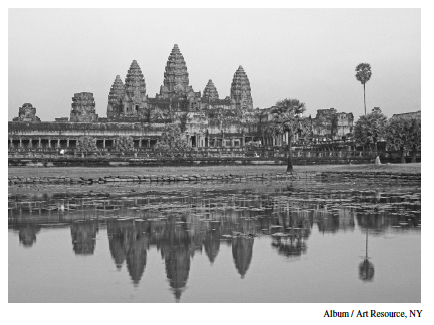
The photograph shows the Angkor Wat temple complex in Cambodia.
Angkor Wat in Southeast Asia built circa 1100 C.E., shown above, reflects which of the following world historical processes?
Increased cross-cultural interactions in the Indian Ocean region
Which of the following was the most important factor in the spread of the bubonic plague in Eurasia?
The Mongol expansion from central Asia to China, eastern Europe, and the Middle East
Which of the following most encouraged the development of new cities such as Cahokia along the Mississippi River, Swahili city-states on the East African Coast, Venice on the Mediterranean coast, and Hangzhou on China’s coast during the period 600 C.E. to 1450 C.E.?
Intensification of regional trade
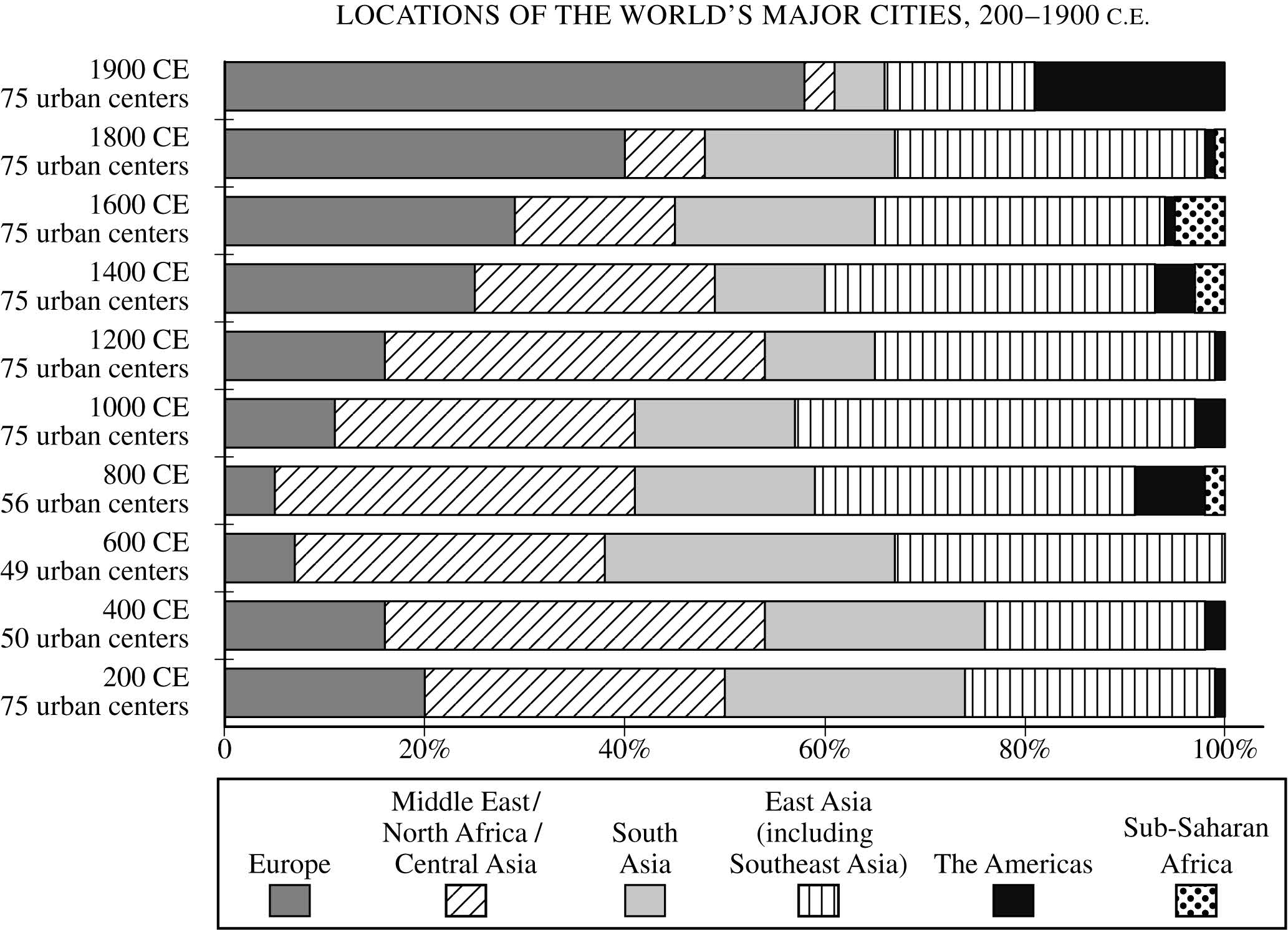
Data adapted from David Wilkinson, “Cities, Civilizations and Oikumenes,” Comparative Civilizations Review: Vols. 27 and 28: Nos. 27 and 28, 1992–1993
The changes in the distribution of cities in the period 1200 to 1400 C.E. best support which of the following conclusions?
The Mongol conquests had a more disruptive impact on the Middle East and Central Asia than they had on East Asia.
“If it were asked, why do we accept the theory of contagion, when already the divine law has refuted the notion of contagion, we will answer: The existence of contagion has been proved by experience, deduction, the senses, observation, and by unanimous reports. And it is not a secret to whoever has looked into this matter or has come to be aware of it that those who come into contact with plague patients mostly die, while those who do not come into contact survive. And amidst the horrible afflictions that the plague has imposed upon the people, God has afflicted the people with some learned religious scholars who issue fatwas* against fleeing the plague, so that the quills with which the scholars wrote these fatwas were like swords upon which the Muslims died. In conclusion, to ignore the proofs of plague contagion is an indecency and an affront to God and holds cheap the lives of Muslims.”
*rulings on Islamic law
Lisan al-Din Ibn al-Khatib, A Very Useful Inquiry into the Horrible Sickness, Granada, Spain, 1349–1352
The passage by al-Khatib is best understood in the context of which of the following?
The spread of the Black Death in the aftermath of the Mongol conquests
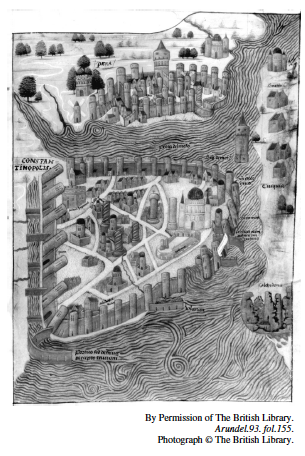
The thirteenth-century map of Constantinople shown above indicates that the city
was highly fortified against outside attacks
Commerce was a key mode of exchange between which of the following pairs of political entities?
The Crusader states and the Fatimid caliphate
Which of the following resulted from the fragmentation of the Mongol Empire following the death of Genghis Khan?
The development of khanates in Central Asia
Which of the following most directly contributed to the decline of Eurasian urban populations during the fourteenth century?
Epidemic disease
“The Crusader states were able to cling to survival only through frequent delivery of supplies and manpower from Europe. [They] were defended primarily by three semi-monastic military orders: the Templars, the Hospitallers, and the Teutonic Knights. Combining monasticism and militarism, these orders served to protect pilgrims and to wage perpetual war against the Muslims.”
Palmira Brummett, world historian, 2007
“Whenever I visited Jerusalem, I always entered the al-Aqsa Mosque, beside which stood a small mosque which the Franks had converted into a church ... [T]he Templars, ... who were my friends, would evacuate the little adjoining mosque so that I could pray in it.”
Usamah ibn Munqidh, Muslim historian, Jerusalem, circa 1138
The second passage does not support the first passage because the second passage
presents an incident in which a military order supported a Muslim traveler
A historian researching the effects of the Crusades on the diffusion of technology would probably find which of the following sources most useful?
Monks’ translations of Arabic mathematics texts brought from conquered territories
The lines on the map above illustrate which of the following?
Extent of trade routes
“In the year of our Lord 1315, hunger grew in the land. Entering the city we consider ‘them that are consumed with famine’ when we see the poor and needy, crushed with hunger, lying stiff and dead in the wards and streets.”
Johannes de Trokelowe, English monk, fourteenth century C.E
What mostly likely caused the famine described above?
The Little Ice Age
Source 1:
“[In the sixteenth through the eighteenth centuries] Europeans derived more profit from their participation in trade within Asia than they did from their Asian imports into Europe. They were able to do so ultimately only thanks to their American silver. . . . Only their American money, and not any ‘exceptional’ European ‘qualities’ permitted the Europeans [to access Asian markets]. . . . However, even with that resource and advantage, the Europeans were no more than a minor player at the Asian, indeed world, economic table [until the nineteenth century].”
Andre Gunder Frank, ReOrient: Global Economy in the Asian Age, 1996
Source 2:
“The societies of Europe had been at the margins of the great trading systems, but they were at the center of the global networks of exchange created during the sixteenth century because they controlled the oceangoing fleets that knit the world into a single system. Western Europe was better placed than any other region to profit from the vast flows of goods and ideas within the emerging global system of exchange. . . . [European states] were keen to exploit the commercial opportunities created within the global economic system. They did so partly by seizing the resources of the Americas and using American commodities such as silver to buy their way into the markets of southern and eastern Asia, the largest in the world.”
David Christian, This Fleeting World: A Short History of Humanity, 2008
The trade networks described by the two sources were most strongly influenced by...
increased European demand for luxury goods
Which of the following was the major contributing factor to the spread of the plague to Cairo, Beijing, and Florence in the fourteenth century?
Trade along the Mongol road system across Central Asia
Which of the following was an important continuity from the Ming Dynasty to the Qing dynasty in the seventeenth century?
The use of the examination system and other Confucian bureaucratic practices
Which of the following describes a major cause of the expansion of the Ottoman Empire in the fifteenth and sixteenth centuries?
Exploitation of artillery and small arms gave the Ottomans advantages over many of their political rivals.
“The state of monarchy is the supremest thing upon earth; for kings are not only God’s lieutenants upon earth, and sit upon God’s throne, but even by God himself are called gods. In the Scriptures kings are called gods, and so their power after a certain relation compared to the divine power.”
- King James I, speech to Parliament, England, 1610
The passage above is best understood in the context of which of the following?
European monarchs’ continued use of religion to legitimize political authority
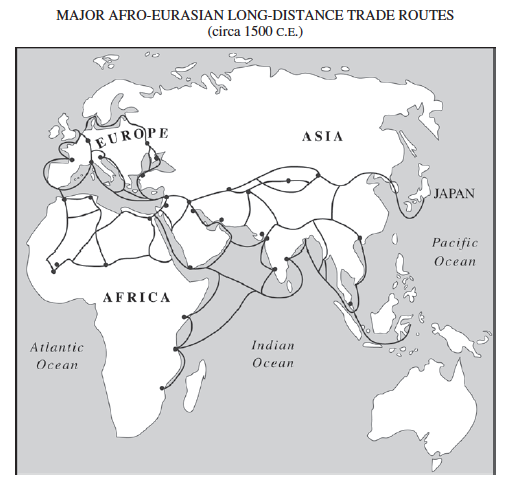
Which of the following about Afro-Eurasian trade is supported by the map above?
The Ottoman Empire was located at the intersections of major trading routes
Which of the following was a method rulers in Eurasia used to legitimize and consolidate their power during the period 1450 C.E. to 1750 C.E.?
Developing professional militaries
Which of the following is a similarity between the Ottoman and Chinese governments during the period 1450—1750 ?
An extensive governmental bureaucracy
“Last Will and Testament
I, Anna de São Jozé da Trindade, Roman Catholic since baptism, always firm in the faith of the Catholic religion, declare the present Will in the following manner:
I declare that I was born on the Coast of Africa from where I was transported to the states of Brazil and the city of Salvador in the state of Bahia where I have lived until the present. I was a slave of Theodozia Maria da Cruz, who bought me as part of a parcel of slaves, and who freed me for the amount of one hundred mil-réis,* which I gave her in cash. And as a freed woman I have enjoyed this same freedom without the least opposition until the present time.
I declare that I was never married and always remained single. And in this state I had five children.
I declare that the goods I possess are the following: a slave by the name of Maria, whom I leave conditionally freed for the amount of sixty mil-réis, to be paid to my granddaughter.
I also possess a group of two-story houses with shops at street level and a basement below with lodgings, located on the Ladeira do Carmo, where I live on land belonging to me.”
*currency unit in colonial Brazil
- Anna de São Jozé da Trindade, Afro-Brazilian woman, last will and testament, 1823
The passage best illustrates which of the following features of colonial Latin American history?
Christian religious practices were shared by many social groups.
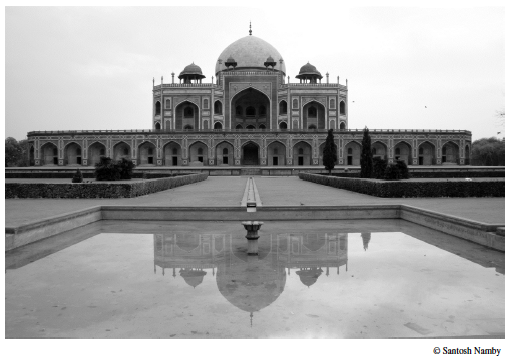
The photograph above of a sixteenth-century Mughal mosque in India built by Akbar is an example of which of the following?
Cultural syncretism
Which of the following statements is true about both the Mughal and Ottoman empires in the sixteenth century?
Both empires expanded through the use of gunpowder weapons and extensive bureaucracies.
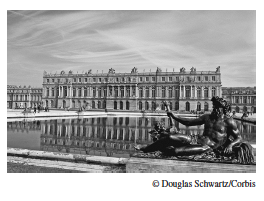
Which is the most likely reason that rulers during the seventeenth century built elaborate palaces such as the one at Versailles, France, shown above?
To demonstrate their wealth and power
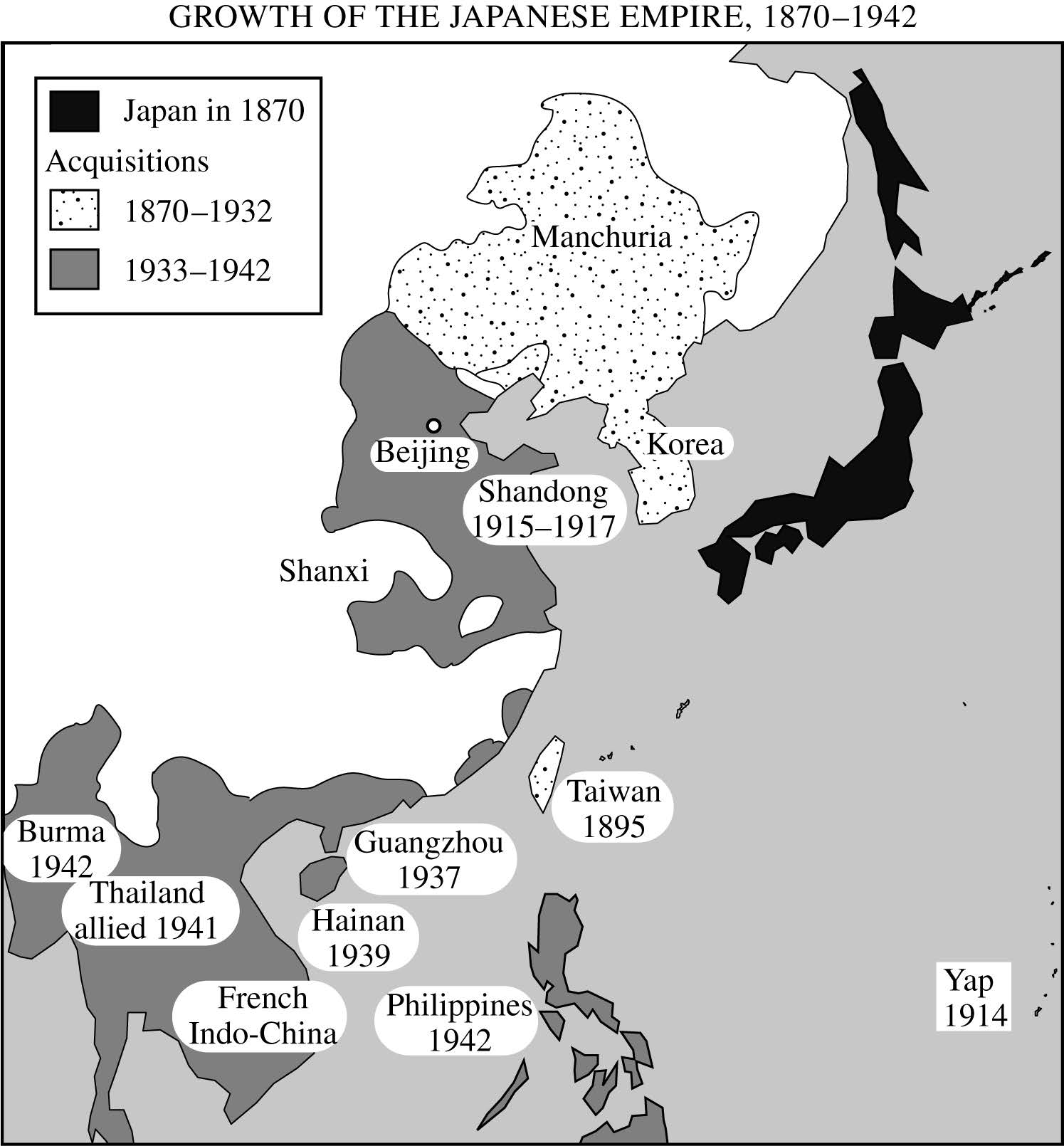
Which of the following empires in the period 1450–1750 engaged in a type of territorial expansion most similar to that depicted in Map 1 ?
The Mughal Empire
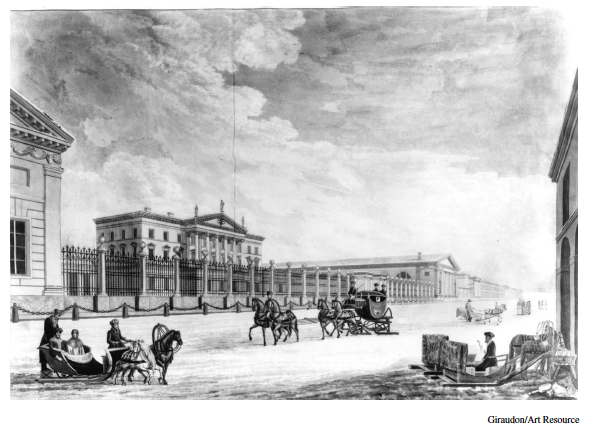
Which of the following world history processes was most responsible for the eighteenth-century cityscape of St. Petersburg, Russia, shown above?
Westernization
Which of the following statements is true about both the Mughal and the Ottoman empires in the sixteenth century?
Each had developed an efficient administrative structure.
“It is most evident that kings, queens, and other princes . . . are ordained of God, are to be obeyed and honored by their subjects; that such subjects as are disobedient or rebellious against their princes, disobey God.”
An Homily Against Disobedience and Willful Rebellion, Church of England, 1570
What could most reasonably be concluded from the sermon above?
Rulers often used religious ideas and institutions to justify their rule.
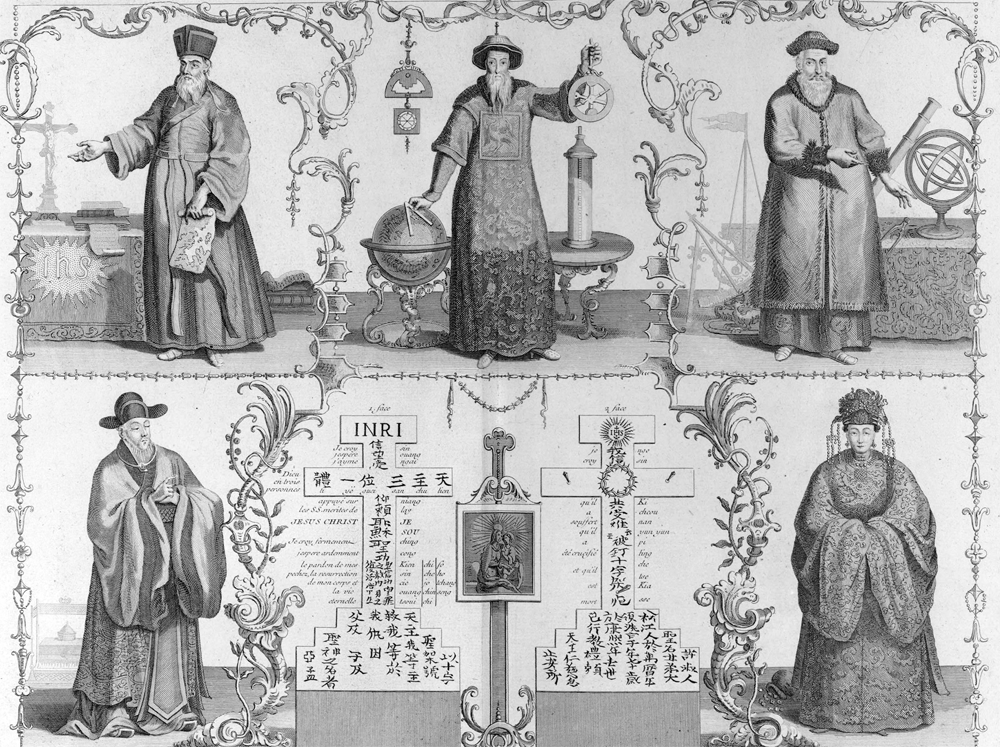
Which of the following developments in Europe in the sixteenth and seventeenth centuries most directly helps to explain the presence of the scholars shown in the image of China?
The Protestant Reformation led the Catholic Church to seek new converts outside of Europe.
“The Mughal emperor is not as wealthy as he might appear because he grants some of his lands to governors, in place of a salary, on condition that they pay a certain sum annually to the emperor out of any extra revenue that the land may yield. For his other lands, he has contractors collecting the taxes. Like the governors, they are bound to pay him an annual sum.
These governors and contractors have an almost absolute authority over the peasantry and nearly as much over the artisans and merchants. Nothing is crueler and more oppressive than the manner in which they exercise their authority.
There is no one before whom the oppressed peasant, artisan, or tradesman can pour out his just complaints. This debasing state of slavery obstructs the progress of trade and influences the manners and mode of life of every individual. There can be little encouragement to engage in commercial pursuits when success merely provokes the greed of a tyrannical official who has both the power and the desire to deprive any man of his wealth. If a man manages to obtain wealth, he would rather bury it in the ground and continue to appear poor, than risk being dispossessed by the state.”
- François Bernier, French traveler, letter to French finance minister Jean-Baptiste Colbert, 1670
Which of the following most accurately describes Bernier’s main argument concerning Mughal administration?
The Mughal government’s practice of tax farming was not an effective means of promoting economic growth.
“The Mughal emperor is not as wealthy as he might appear because he grants some of his lands to governors, in place of a salary, on condition that they pay a certain sum annually to the emperor out of any extra revenue that the land may yield. For his other lands, he has contractors collecting the taxes. Like the governors, they are bound to pay him an annual sum.
These governors and contractors have an almost absolute authority over the peasantry and nearly as much over the artisans and merchants. Nothing is crueler and more oppressive than the manner in which they exercise their authority.
There is no one before whom the oppressed peasant, artisan, or tradesman can pour out his just complaints. This debasing state of slavery obstructs the progress of trade and influences the manners and mode of life of every individual. There can be little encouragement to engage in commercial pursuits when success merely provokes the greed of a tyrannical official who has both the power and the desire to deprive any man of his wealth. If a man manages to obtain wealth, he would rather bury it in the ground and continue to appear poor, than risk being dispossessed by the state.”
- François Bernier, French traveler, letter to French finance minister Jean-Baptiste Colbert, 1670
The contractors described in the passage are an example of which of the following?
New elites recruited to generate increased revenue after imperial conquests
“The Mughal emperor is not as wealthy as he might appear because he grants some of his lands to governors, in place of a salary, on condition that they pay a certain sum annually to the emperor out of any extra revenue that the land may yield. For his other lands, he has contractors collecting the taxes. Like the governors, they are bound to pay him an annual sum.
These governors and contractors have an almost absolute authority over the peasantry and nearly as much over the artisans and merchants. Nothing is crueler and more oppressive than the manner in which they exercise their authority.
There is no one before whom the oppressed peasant, artisan, or tradesman can pour out his just complaints. This debasing state of slavery obstructs the progress of trade and influences the manners and mode of life of every individual. There can be little encouragement to engage in commercial pursuits when success merely provokes the greed of a tyrannical official who has both the power and the desire to deprive any man of his wealth. If a man manages to obtain wealth, he would rather bury it in the ground and continue to appear poor, than risk being dispossessed by the state.”
- François Bernier, French traveler, letter to French finance minister Jean-Baptiste Colbert, 1670
The actions of peasants, artisans, and merchants discussed in the third paragraph are an example of
challenges to imperial legitimacy based on ideas of human rights
“The Mughal emperor is not as wealthy as he might appear because he grants some of his lands to governors, in place of a salary, on condition that they pay a certain sum annually to the emperor out of any extra revenue that the land may yield. For his other lands, he has contractors collecting the taxes. Like the governors, they are bound to pay him an annual sum.
These governors and contractors have an almost absolute authority over the peasantry and nearly as much over the artisans and merchants. Nothing is crueler and more oppressive than the manner in which they exercise their authority.
There is no one before whom the oppressed peasant, artisan, or tradesman can pour out his just complaints. This debasing state of slavery obstructs the progress of trade and influences the manners and mode of life of every individual. There can be little encouragement to engage in commercial pursuits when success merely provokes the greed of a tyrannical official who has both the power and the desire to deprive any man of his wealth. If a man manages to obtain wealth, he would rather bury it in the ground and continue to appear poor, than risk being dispossessed by the state.”
- François Bernier, French traveler, letter to French finance minister Jean-Baptiste Colbert, 1670
All the following statements about Bernier are factually accurate. Which would most increase historians’ confidence in the reliability of his account?
He spent several years as an official at the Mughal imperial court.
“People who follow Judaism should pass their lives among Christians quietly, practicing their own religion and not speaking ill of Christianity. Moreover, a Jewish person should not attempt to convert any Christian. Whoever violates this law shall be put to death and lose his property
Jewish people may maintain their synagogues, but they cannot build new synagogues without our permission. Christians may not deface synagogues or steal anything from them. Jewish people shall not be forced to attend court by Christian officials on Saturdays [the Jewish Sabbath]. All legal claims between Christians and the Jewish community shall be decided by our royal judges and a Christian is forbidden from arresting or harming Jewish people or seizing their property.
Christians may not use force to convert a Jewish person to Christianity, though Christians should use the Holy Scriptures and kind words. Jewish people, however, should not attempt to interfere with a member of their community converting to Christianity of their own will. Any Christian, however, who converts to Judaism shall be put to death as a heretic.”
Law code issued by Alfonso X, king of the Christian Spanish kingdom of Castile, circa 1265
Source 2
“King Ferdinand and Queen Isabella, by the grace of God, King and Queen of Spain, greetings.
We learned that some wicked Christians in our kingdom adopted Jewish religious practices and cultural customs and apostatized from our holy Catholic faith because these Christians interacted with Jewish people. Therefore, we, with the counsel and advice of the clergy, noblemen, and other persons of learning and wisdom in our kingdom, order the Jewish community to depart and never to return. And we forbid any person or persons in our kingdom to receive, protect, or defend any Jewish person under pain of losing all their possessions, vassals, fortified places, and whatever financial grants they hold from us.”
Royal decree issued by King Ferdinand II and Queen Isabella of Spain, 1492
The two passages best illustrate which of the following continuities in world history?
While some states were willing to tolerate diversity within their territories, others suppressed diversity.
Source 1
“People who follow Judaism should pass their lives among Christians quietly, practicing their own religion and not speaking ill of Christianity. Moreover, a Jewish person should not attempt to convert any Christian. Whoever violates this law shall be put to death and lose his property.
Jewish people may maintain their synagogues, but they cannot build new synagogues without our permission. Christians may not deface synagogues or steal anything from them. Jewish people shall not be forced to attend court by Christian officials on Saturdays [the Jewish Sabbath]. All legal claims between Christians and the Jewish community shall be decided by our royal judges and a Christian is forbidden from arresting or harming Jewish people or seizing their property.
Christians may not use force to convert a Jewish person to Christianity, though Christians should use the Holy Scriptures and kind words. Jewish people, however, should not attempt to interfere with a member of their community converting to Christianity of their own will. Any Christian, however, who converts to Judaism shall be put to death as a heretic.”
Law code issued by Alfonso X, king of the Christian Spanish kingdom of Castile, circa 1265
Source 2
“King Ferdinand and Queen Isabella, by the grace of God, King and Queen of Spain, greetings.
We learned that some wicked Christians in our kingdom adopted Jewish religious practices and cultural customs and apostatized from our holy Catholic faith because these Christians interacted with Jewish people. Therefore, we, with the counsel and advice of the clergy, noblemen, and other persons of learning and wisdom in our kingdom, order the Jewish community to depart and never to return. And we forbid any person or persons in our kingdom to receive, protect, or defend any Jewish person under pain of losing all their possessions, vassals, fortified places, and whatever financial grants they hold from us.”
Royal decree issued by King Ferdinand II and Queen Isabella of Spain, 1492
The attitude toward religious practice expressed in Source 2 was most directly apparent in which of the following Spanish policies in the Americas in the period circa 1500–1750 ?
The state sponsorship of Jesuit missions to native populations
Source 1
“People who follow Judaism should pass their lives among Christians quietly, practicing their own religion and not speaking ill of Christianity. Moreover, a Jewish person should not attempt to convert any Christian. Whoever violates this law shall be put to death and lose his property.
Jewish people may maintain their synagogues, but they cannot build new synagogues without our permission. Christians may not deface synagogues or steal anything from them. Jewish people shall not be forced to attend court by Christian officials on Saturdays [the Jewish Sabbath]. All legal claims between Christians and the Jewish community shall be decided by our royal judges and a Christian is forbidden from arresting or harming Jewish people or seizing their property.
Christians may not use force to convert a Jewish person to Christianity, though Christians should use the Holy Scriptures and kind words. Jewish people, however, should not attempt to interfere with a member of their community converting to Christianity of their own will. Any Christian, however, who converts to Judaism shall be put to death as a heretic.”
Law code issued by Alfonso X, king of the Christian Spanish kingdom of Castile, circa 1265
Source 2
“King Ferdinand and Queen Isabella, by the grace of God, King and Queen of Spain, greetings.
We learned that some wicked Christians in our kingdom adopted Jewish religious practices and cultural customs and apostatized from our holy Catholic faith because these Christians interacted with Jewish people. Therefore, we, with the counsel and advice of the clergy, noblemen, and other persons of learning and wisdom in our kingdom, order the Jewish community to depart and never to return. And we forbid any person or persons in our kingdom to receive, protect, or defend any Jewish person under pain of losing all their possessions, vassals, fortified places, and whatever financial grants they hold from us.”
Royal decree issued by King Ferdinand II and Queen Isabella of Spain, 1492
Which of the following states in the period 1450–1750 adopted a religious policy that was most different from the religious policy expressed in Source 2 ?
The Mughal Empire under Akbar
“Many [Ottoman] Sunni religious scholars have labeled the Sufi whirling rituals* as ‘dancing,’ and have pronounced them forbidden, branding those who approve of them as infidels. The Sufis counter that these rituals are not dancing, arguing instead that they enliven the soul through a combination of music and movement, which, they say, allows them to focus on the spiritual aspects of religion. The common people flock to the Sufis, giving them offerings and gifts. Since their whirling rituals play a big part in their popularity, they will not abandon these practices anytime soon. The Sunni scholars have written many tracts and opinions against them . . . and this tug-of-war between the two parties has brought them into a vicious circle.”
*religious observances practiced by some Sufis in the Ottoman Empire
Katip Çelebi, Ottoman official, The Balance of Truth, philosophical and scientific treatise, 1656
Which of the following most directly strengthened Sunni religious scholars’ role as official interpreters of Islamic doctrine within the Ottoman Empire, as suggested by the passage?
The Ottoman Empire’s rivalry with the Safavid Empire
“Many [Ottoman] Sunni religious scholars have labeled the Sufi whirling rituals* as ‘dancing,’ and have pronounced them forbidden, branding those who approve of them as infidels. The Sufis counter that these rituals are not dancing, arguing instead that they enliven the soul through a combination of music and movement, which, they say, allows them to focus on the spiritual aspects of religion. The common people flock to the Sufis, giving them offerings and gifts. Since their whirling rituals play a big part in their popularity, they will not abandon these practices anytime soon. The Sunni scholars have written many tracts and opinions against them . . . and this tug-of-war between the two parties has brought them into a vicious circle.”
*religious observances practiced by some Sufis in the Ottoman Empire
Katip Çelebi, Ottoman official, The Balance of Truth, philosophical and scientific treatise, 1656
Outside of the Ottoman Empire, Sufis contributed most directly to which of the following during the period before 1750?
The spread of Islam to new locations on the margins of the Muslim world, such as southeast Asia
“To the count of Katzenellenbogen, Ziegenhain, and Nidda, my gracious lord.
Pope Leo X, in the bull in which he put me under the ban, condemned my statement that ‘to fight against the Turk is the same thing as resisting God, who visits our sin upon us with this rod.’ I still confess freely that this statement is mine. The popes and bishops called for war against the Turks in the name of Christ. Yet because Christ taught that Christians shall not resist evil with violence or take revenge, it is against His name.
In how many wars against the Turks have the bishops and clergy prevented Christians from enduring heavy losses? Indeed, the king of Hungary and his bishops were beaten by the Turks at Varna* and more recently a German army would perhaps have fought with more success, if it had not contained priests. If I were an emperor, a king, or a prince in a campaign against the Turks, I would encourage my bishops and priests to stay at home and mind the duties of their office, praying, fasting, saying mass, preaching, and caring for the poor, as not only Holy Scripture, but their own canon law teaches and requires. To this I say Amen, Amen.”
*a reference to a failed Christian Crusade launched against the Ottoman Turks in 1444
Martin Luther, German theologian, sermon addressed to a German prince, 1528
A historian interpreting the views expressed in the passage would likely explain that those views were most strongly influenced by Protestant desires to
reform Christian society by adhering more closely to Biblical teachings
“To the count of Katzenellenbogen, Ziegenhain, and Nidda, my gracious lord.
Pope Leo X, in the bull in which he put me under the ban, condemned my statement that ‘to fight against the Turk is the same thing as resisting God, who visits our sin upon us with this rod.’ I still confess freely that this statement is mine. The popes and bishops called for war against the Turks in the name of Christ. Yet because Christ taught that Christians shall not resist evil with violence or take revenge, it is against His name.
In how many wars against the Turks have the bishops and clergy prevented Christians from enduring heavy losses? Indeed, the king of Hungary and his bishops were beaten by the Turks at Varna* and more recently a German army would perhaps have fought with more success, if it had not contained priests. If I were an emperor, a king, or a prince in a campaign against the Turks, I would encourage my bishops and priests to stay at home and mind the duties of their office, praying, fasting, saying mass, preaching, and caring for the poor, as not only Holy Scripture, but their own canon law teaches and requires. To this I say Amen, Amen.”
*a reference to a failed Christian Crusade launched against the Ottoman Turks in 1444
Martin Luther, German theologian, sermon addressed to a German prince, 1528
A historian could best explain the arguments made in the passage regarding the pope and the clergy in the context of Protestant claims that the Catholic Church
had become corrupted by power
“To the count of Katzenellenbogen, Ziegenhain, and Nidda, my gracious lord. Pope Leo X, in the bull in which he put me under the ban, condemned my statement that ‘to fight against the Turk is the same thing as resisting God, who visits our sin upon us with this rod.’ I still confess freely that this statement is mine. The popes and bishops called for war against the Turks in the name of Christ. Yet because Christ taught that Christians shall not resist evil with violence or take revenge, it is against His name.
In how many wars against the Turks have the bishops and clergy prevented Christians from enduring heavy losses? Indeed, the king of Hungary and his bishops were beaten by the Turks at Varna* and more recently a German army would perhaps have fought with more success, if it had not contained priests. If I were an emperor, a king, or a prince in a campaign against the Turks, I would encourage my bishops and priests to stay at home and mind the duties of their office, praying, fasting, saying mass, preaching, and caring for the poor, as not only Holy Scripture, but their own canon law teaches and requires. To this I say Amen, Amen.”
*a reference to a failed Christian Crusade launched against the Ottoman Turks in 1444
Martin Luther, German theologian, sermon addressed to a German prince, 1528
A historian interpreting the passage would most likely explain that the audience of the sermon is an illustration of the fact that
political support from the German nobility aided in the development of the early Protestant community
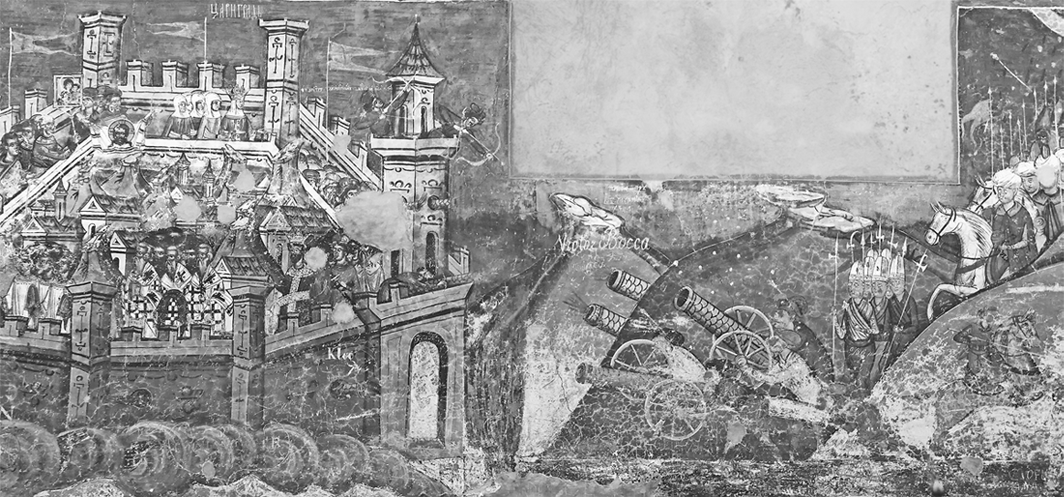
mage 1 best illustrates which of the following?
The importance of gunpowder to Ottoman expansion
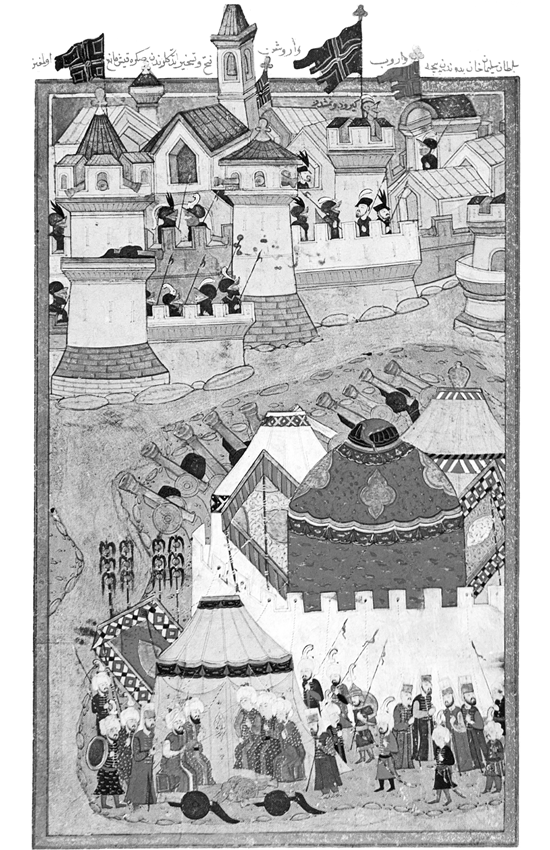
Which of the following most likely explains the inclusion of Image 2 in a court history of the Ottoman Empire?
To glorify imperial power by referring back to a celebrated era of Ottoman history
Image 1
FRESCO PAINTED ON THE OUTER WALL OF THE MOLDOVITA MONASTERY IN ROMANIA DEPICTING THE OTTOMAN SIEGE OF CONSTANTINOPLE IN 1453

The monastery was built in 1532.
Image 2

The image was produced for an official history of the Ottoman Empire compiled circa 1585.
In the sixteenth and seventeenth centuries, many states responded to threats of the type depicted in the two images by
seeking to increase tax revenues and professionalize their militaries

