Cell Biology Exam 4: Chapter 12 pt.2
 Call Kai
 Learn
Learn Practice Test
 Spaced Repetition
 Match
Match Flashcards
 Knowt Play
1/57

Earn XP
Description and Tags
The Cell Nucleus and the Control of Gene Expression
Name | Mastery | Learn | Test | Matching | Spaced | Call with Kai |
|---|
No analytics yet
Send a link to your students to track their progress
58 Terms
the DNA in the nucleus exists in what two forms that reflect the level of activity of the cell
euchromatin
heterochromatin
euchromatin (how packed is it, how does it appear, what cells is it prevalent in)
lightly packed form of chromatin (DNA, RNA, & protein) that is rich in gene concentration and is often (but not always) under active transcription
appears a small, darkly staining, irregular particles scattered throughout the nucleus or accumulated adjacent to the nuclear envelope
prevalent in cells that are active in the transcription of many of their genes
heterochromatin (how packed is it, where is it dispersed, what cells is it prevalent in)
tightly packed form of DNA
dispersed throughout nucleus and not readily stainable
most abundant in cells that are less active or not active
functions of heterochromatin
gene regulation
protects the integrity of chromosome/genome since it is tightly packed
euchromatin (what it is, and what percentage)
most active portion of the genome in cells
92% of human chromosomes
euchromatin after mitosis
returns to a dispersed state
heterochromatin during mitosis
of 2 varieties & is condensed during interphase so that when cells divide they have an entire set of chromosomes
2 types of heterochromatin
constitutive heterochromatin
facultative heterochromatin
constitutive heterochromatin (how it is, where is it found, what does it conisist of)
remains condensed all the time
found mostly around centromeres and telomeres
consists of highly repeated sequences and few genes
facultative heterochromatin (how is it, where it it found)
is inactivated during certain phases of the organism’s life
is found in one of the X chromosomes as a Barr body through X inactivation
X inactivation is a random process, making adult females genetic mosaics
Barr body
an inactive, condensed X chromosome found in the nucleus of female mammal cells.
Because females have two X chromosomes (XX) but only need one, the body deactivates the extra one during development to prevent excessive genetic information, creating a small "clump" known as a Barr body.
purpose of Barr body
regulate the # of X-linked genes being produced
balance between X-linked genes between males and females
dosage compensation
an epigenetic mechanism that equalizes the expression of X-linked genes between males (typically XY) and females (XX) to prevent lethal gene dosage imbalances
how does consitutive heterochromatin play a role in the expression of genes
can affect the genes near them (position-effect variegation)
how does facultative heterochromatin play a role in gene expression
the result of genes that are silenced through a mechanism such as histone deacetylation or siRNA through RNAi
Calico cat cloning
random inactivation of the X chromosome in different cells during embryonic development creates a mosaic of tissue patches
Facultative heterochromatin: when is it inactivated
inactivated during certain phases of the organism’s life
Facultative heterochromatin: where is it found
found in one of the X chromosomes as a Barr body through X inactivation
X inactivation (describe the process & what it does)
a random process, making adult females genetic mosaics
Facultative heterochromatin: placental mammals XIST (what it stands for & what it does)
in placental mammals, the X-inactive specific transcript (XIST), and RNA gene on the X chromosome, acts as the major effector of the X inactivation process
histone code hypothesis
states that the activity of a chromatin region depends on the degree of chemical modification of histone tails
the 2 ways histone tail modifications influence chromatin
serve as docking sites to recruit nonhistone proteins
alter the way histones of neighboring nucleosomes interact
karyotyping
an ordered visual display of chromosomes arranged by size, shape, and banding pattern
what can karyotyping be from
white blood cells
fetal cells by amniocentesis or chorionic villus sampling
what may the pattern on karyotype be used for
to screen chromosomal abnormalities
down syndrome: what is it also called
trisomy 21
down syndrome: the condition, features, frequency, why it occurs
an aneuploid condition resulting from three copies of chromosome 21
characteristic facial features, short stature, heart defects, mental retardation
frequency increases with age of mother
occurs due to nondisjunction → abnormal chromosome separation
telomere
the end of each chromosome, distinguished by a set of repeated sequences
telomerase
adds new repeats, it is a reverse transcriptase that synthesizes DNA from and RNA template
what are telomeres required for & why
the complete replication of the chromosome because they protect the ends from being degraded
telomerase activity is thought to have major effects on cells life
the end-replication problem
generation of single stranded overhangs that shorten DNA
the single-stranded overhang is not free but forms a loop
the loop is a binding site for telomere-capping proteins that protect the ends of the chromosomes and regulate telomere length
telomeres in somatic cells
in somatic cells, telomere lengths are reduced each cell division to limit cell doublings
when does a critical point occur from telomere shortening
when cells stop their growth and division
what happens in cells that can resume telomerase expression
they continue to proliferate
these cells continue to divide and do not show normal signs of aging
telomerase: cancer
90% of human tumors have cells with active telomerase
increase telomerase activity
continuous abnormal growth
germ cells telomerase activity
maintain their telomerase activity throughout life, ensuring maximal telomerase length throughout life
skin, intestinal, and hemopoietic stem cells telomerase activity
ensure the continual production of differentiated cells
hereditary anaplastic anemia (what does the person have + why & what does this cause + why)
the affected person has substantially reduced telomerase levels because of being heterozygous for the gene that encodes either the telomerase RNA or one of the protein subunits
this causes bone marrow failure, because their hemopoietic tissue becomes unable to produce enough blood cells over a normal human lifetime
what is epigenetics
the study of how our behaviors & environmental factors can cause changes that impact how our genes are expressed
what does epigenetic inheritance depend on
factors other than DNA sequences
what is an example of epigenetic inheritance
X chromosome inactivation
X chromosome inactivation
the two X chromosomes can have identical DNA sequences, but one is inactivated while the other is not
an epigenetic state can be ______ & give an example
reversed, ex.) X chromosomes are reactivated prior to formation of gametes
epigenetics: identical twins, parental histones, heterochromatin, euchromatin
differences in disease susceptibility and longevity between genetically identical twins may be due, in part, to epigenetic differences that appear between the twins as they age
parental histones determine the chemical modifications found in the newly synthesized histones
as heterochromatin is replicated, a histone methyltransferase labels the newly synthesized H3 molecules added into the daughter nucleosomes
euchromatic regions tend to contain acetylated H3 tails, a modification transmitted from parental chromatin to progeny chromatin
transcription factories (what is moved here & what is located here)
genes are physically moved to nuclear sites called transcription factories where transcription machinery is located
what are the 4 chromosomal abberations and human disorders
inversion
translocations
deletion
duplication
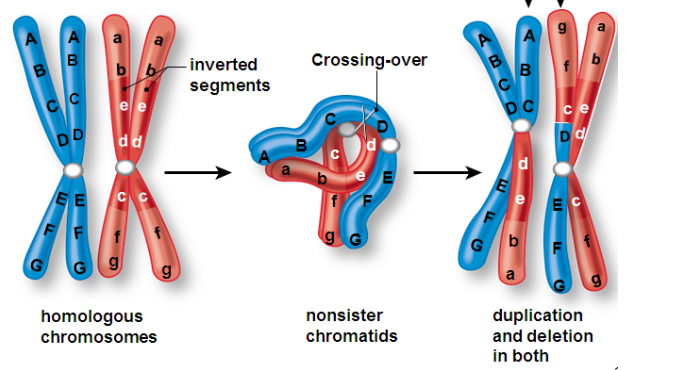
chromosomal abberations and human disorders: inversion (what happens, does it cause problems, meiosis)
chromosome breaks, turns 180 & reseals in a reverse order
usually do not cause problems, but reverse sequence of alleles can lead to altered gene activity if it disrupts control of gene expression
during meiosis, crossing-over can lead to recombinant chromosomes
chromosomal abberations and human disorders: translocations (what occurs, does it affect health, 2 syndromes)
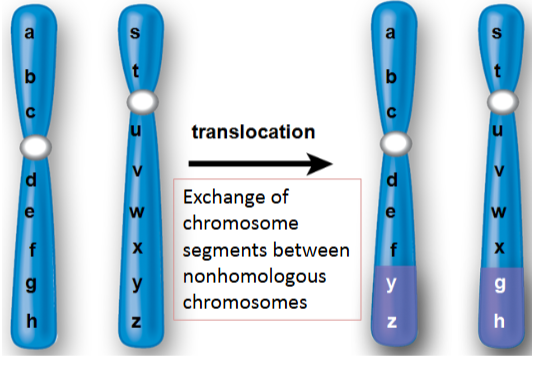
translocations are the result of attachments of all or one piece of one chromosome to another chromosome
individual healthy except if it disrupts a gene
5% of down syndrome cases causes by translocation between chromosomes 14 & 21
alagille syndrome translocation between chromosomes 2 & 20
what are 2 syndromes due to translocation
5% Down syndrome cases
Alagille syndrome
5% down syndrome cases
translocation between chromosomes 14 & 21
Alagille syndrome
translocation between chromosomes 2 & 20
chromosomal abberations and human disorders: deletion (what happens, 2 syndromes)
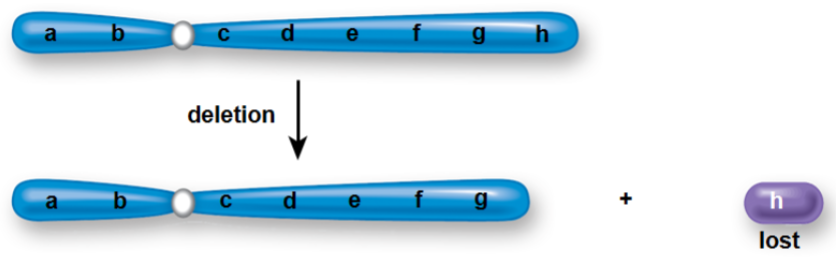
when a single break causes a chromosomes to lose an end or 2 breaks result in the loss of an internal segment (deletions results when there is a loss of a portion of a chromosome)
williams syndrome - long arm of chromosome 7 loses a tiny end piece (~26 genes or more)
cri du chat- chromosome 5 loses an end piece
williams syndrome
long arm of chromosome 7 loses a tiny end piece
cri du chat
chromosome 5 loses an end piece
what is Williams syndrome & what is it characterized by
deletion
rare neurodevelopmental disorder
distinctive “elfin” facial appearances along with a low nasal bridge
an unusually cheerful demeanor and ease with strangers (outgoing/sociable)
developmental delay and learning disabilities
cardiovascular problems
strikingly strong language and music skills
attention deficit disorder (ADD; easily distracted), problems with anxiety, and phobias
chromosomal abberations and human disorders: duplication (what occurs, what do the individuals have, syndrome)
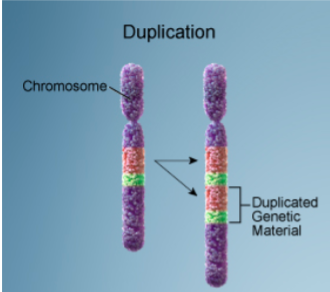
chromosome segment repeated
individual has more than 2 alleles for certain traits
inv dup 15 syndrome- inverted duplication of chromosome 15 (isodicentric 15)
inversion- segment joins in direction opposite from normal
inv dup 15 syndrome
inv dup 15 syndrome- inverted duplication of chromosome 15 (isodicentric 15)
inversion → segment joins in direction opposite from normal
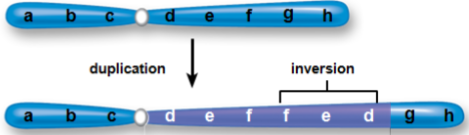
inv dup 15 syndrome (how many chromosomes, inheritance, & symptoms)
47 chromosomes instead of the normal 46
generally not inherited, it appears de novo; in one member of family, by chance
symptoms
delayed language development
poor motor skills such as walking or sitting up
low muscle tone (hypotonia), seizures, short stature, and intellectual disability
distinctive facial features may include epicanthal folds (skin folds at the inner corners of the eyes), a flattened nasal bridge, button nose, and a high arches palate (roof of the mouth)
some also have features of autism

