Diversity of Plant Study
 Call Kai
 Learn
Learn Practice Test
 Spaced Repetition
 Match
Match Flashcards
 Knowt Play
1/210

There's no tags or description
Looks like no tags are added yet.
Name | Mastery | Learn | Test | Matching | Spaced | Call with Kai |
|---|
No analytics yet
Send a link to your students to track their progress
211 Terms
1st Characteristic of Plants
Prescence of vacuoles
2nd Characteristic of Plants
Prescence of chloroplast
3rd Characteristic of Plants
Cell Walls that contain cellulose
4th Characteristic of Plants
Life cycle known as alternation of generations
5th Characteristic of Plants
Carb storage as starches
6th Characteristic of Plants
Embryo protection
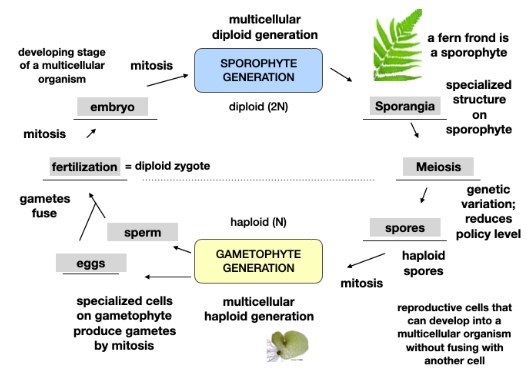
Alternation of Generations
typical plant life cycle in which a diploid multicellular sporophyte generation alternates with a haploid multicellular gametophyte generation
Plants 1st Ecological Role
primary production (supply food and O2)
Plants 2nd Ecological Role
providing habitat
Plants 3rd Ecological Role
improving and retaining soil
Plants 4th Ecological Role
regulating climate
Cuticle
waxy substance covering the above-ground parts of a plant; functions to prevent desiccation (so does stomata)
Pores
openings in the cuticle to allow for gas exchange; simple pores without guard cells are only found in liverworts
Stomata
openings in the cuticle to allow for gas exchange that are surrounded by a pair of specialized guard cells
Gametangia
multicellular organs that enclose plant gametes and prevent them from drying out; found in all plants except angiosperms. Contains the archegonium and antheridium
What does archegonium produce?
eggs
what does antheridium produce?
sperm
Sporangium
structure that produces spores
Spores
asexual reproductive cells are capable of developing into a new organism without fusion with another cell.
Thallus
bryophyte plant body: a plant body that lacks vascular tissue
Rhizoid
rootlike hair that anchors a plant and absorbs minerals and water from the soil
Vascular tissue system
the transport system of a vascular plant; transports water, nutrients, and sugars throughout the plant
Xylem
Specialized lignin-reinforced conducting vascular tissue that transports water and mineral solutes upward through the plant body
Phloem
vascular tissue that conducts organic solutes in plants
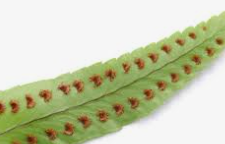
Sori
a cluster of sporangia, located on the underside of a fern frond
Evergreen
seed plants that shed leaves throughout the year
Deciduous
seed plants that drop all their leaves at one time
Monoecious
male and female organs on the same plant
Dioecious
male and female organs on different plants
Seed
contains a sporophyte embryo packaged with a food supply within a protective seed coat
Pollen grains
produced in microsporangia; consist of the male gametophyte surrounded by the microspore outer wall
Pollination
transfer of pollen grains to the female reproductive organ
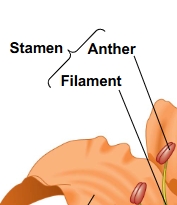
Stamen
male flower organ consisting of the anther and filament
Anther
structure on the stamens in which the pollen grains are produced
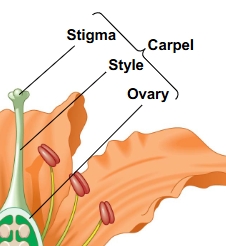
Carpel
female flower structure consisting of the stigma (sticky pollen landing pad), style, and the ovary containing the ovule(s)
Fruit
structure surrounding angiosperm seeds that is typically derived from matured ovary tissues
Cotyledon
seed leaf for embryo of a flowering plant; provides nutrient molecules for plant until photosynthesis begins
1st Characteristic Land Plants Share with Green Algae
multicellular
2nd Characteristic Land Plants Share with Green Algae
autotrophic
3rd Characteristic Land Plants Share with Green Algae
chloroplasts via primary endosymbiosis
4th Characteristic Land Plants Share with Green Algae
chloroplasts with chlorophylls a and b and 𝛽-carotene
5th Characteristic Land Plants Share with Green Algae
vacuoles
6th Characteristic Land Plants Share with Green Algae
cell wall with cellulose
1st Synapomorphy Found in Land Plants but not Green Algae
ability to live on land
2nd Synapomorphy Found in Land Plants but not Green Algae
embryo protection
3rd Synapomorphy Found in Land Plants but not Green Algae
a complex alternation of generations life cycle
4th Synapomorphy Found in Land Plants but not Green Algae
waxy cuticle
1st Ability plants had to obtain to be able to live on land
maintain moisture
2nd Ability plants had to obtain to be able to live on land
obtain resources from two locations
3rd Ability plants had to obtain to be able to live on land
support of the plant body
4th Ability plants had to obtain to be able to live on land
reproduce without water
What allowed plants to maintain moisture?
Adaptations such as a waxy cuticle and the presence of stomata in some plants help prevent desiccation.
How do land plants support their body?
The molecule lignin strengthens the cell walls of most plants and allows plants to stand tall.
How do land plants reproduce without water?
Some plants disperse sperm via pollen and do not require water for reproduction.
Non-Vascular Plants (bryophytes)
These plants lack vascular tissue and do not produce seeds. Includes mosses and liverworts
What must non-vascular plants rely on?
diffusion to distribute water and nutrients throughout the plant and reproduce
Why do non-vascular plants have to rely on water for reproduction
they have flagellated sperm that must swim from one plant to another to fertilize the egg.
Seed-Free Vascular Plants
These plants have vascular tissue that distributes water, nutrients, and sugars throughout the plant. Because of the vascular tissue, these plants are larger and taller than bryophytes.
What plants are seed-free vascular?
lycophytes and monilophytes (ferns and fern relatives
Do seed-free vascular plants rely on water?
Yes, they are restricted to moist environment since their sperm are flagellated and require water to fertilize an egg.
How are seed-free plants dispersed?
By spores
Gymnosperms or “naked seeds” plants
produce seeds and pollen, significant evolutionary adaptations. A huge amount of diversity and largest plants.
What are seeds primary function?
Protect the developing plant embryo, provide a food source for the plant until germinates and begins pollination, and dispersal
What is pollen primary function?
Allows plants to reproduce without water by carrying sperm from one plant to another
What are gymnosperms characterized by?
the presence of special reproductive structures called cones.
What plants are gymnosperms?
cycads, Ginkgo, and pines.
What are the largest plants?
Gymnosperms
Angiosperms
The most diverse group of plants produces flowers that contain a “vessel” called a carpel.
What are angiosperms characterized by?
by the presence of flowers (specialized reproductive structures) and fruit
How do most angiosperms disperse pollen?
they use animal pollinators.
How does the use of animal pollinators disperse pollen?
The structures of the flowers are specialized for attracting pollinators, which ultimately enhances reproduction.
How are angiosperms subdivided?
Based on morphological differences, 2 categories; monocots and dicots
What are the generations involved in alternation of generations?
the diploid sporophyte and the haploid gametophyte generations. Named for type of reproductive cells they produce.
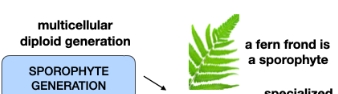
Sporophyte
A diploid (2n) multicellular stage in the life cycle of plants and certain algae, which develops from the fertilization of a haploid egg cell and a haploid sperm cell.
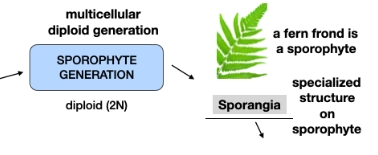
Sporangia
specialized structures on the sporophyte. These structures are different in different species of plants. Meiosis occurs within it
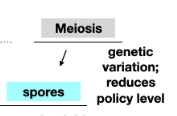
Meiosis
results in genetic variation (the daughter cells are genetically different from one another and the parent cell), and it also reduces the chromosome number, or ploidy level. A diploid cell that undergoes meiosis will produce haploid daughter cells.
In plants, what does meiosis produce?
Spores
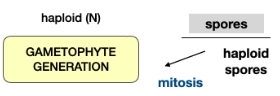
Gametophyte
the gamete-producing and usually haploid phase, producing the zygote from which the sporophyte arises. It is the dominant form in bryophytes.
How does gametophytes happen?
haploid spores undergo repeated mitotic divisions to produce the multicellular, haploid gametophyte generation.
Mitosis
cell division that results in an increase in the number of cells in an organism.
Gametangia
Specialized, multicellular cells on the gametophyte, produces the gametes
Why can’t the plant go through meiosis after the initial time?
Since the gametophyte is haploid, it cannot undergo meiosis because the chromosome number is already one and cannot be reduced further.
How are eggs and sperm produced?
By mitosis
Since plants have embryo protection, what does the sperm have to do?
the sperm from one gametophyte will swim (or be delivered via pollen in the seed plants) to the egg that remains within the female gametophyte.
Where does fertilization occur?
Within the female gametophyte
Once fertilization happens, what is the ploidy of the zygote?
Diploid
How are sporophyte embryos produced?
zygote must undergoes mitosis
Embryo
the developing stage of a multicellular organism
what must the embryo do to become a sporophyte?
It has to go through mitosis
homosporous
it only produces one type of spore.
heterosporous
they produce two different types of spores that develop into separate male and female gametophytes. Includes all seeds
In heterosporous, what does meiosis do?
It produces 2 types of spores, microspores and megaspores
Where are megaspores and microspores produced?
within separate structures called microsporangia and megasporangia.
endospory
the gametophytes develop via mitosis within the wall of the microspores and megaspores.
What happens to the microspores after their produced?
They undergo mitosis to produce the internal multicellular, haploid male gametophyte which is surrounded by the microspore wall - this structure (wall + male) is the pollen grain.
Heterosporous Male Gametophyte
consists of very few cells (or nuclei), including the sperm that will fertilize the female egg.
Heterosporous Female Gametophyte
will develop within the megaspore wall via mitosis. This process takes place within the ovule and will include the development of an egg cell.
Where does fertilization specifically occur for angiosperms?
In the ovule
After fertilization, the embryo will be__
encased in a seed coat with nutrition derived from the gametophyte's tissues, and then released into the environment for dispersal away from the parent plant (which reduces competition for resources)

In a phylogenetic tree, what is the outgroup?
Green Algae

