Topic 10: Lepidosaurs: Tuatara, Lizards, Snakes
 Call Kai
 Learn
Learn Practice Test
 Spaced Repetition
 Match
Match Flashcards
 Knowt Play
1/5

There's no tags or description
Looks like no tags are added yet.
Name | Mastery | Learn | Test | Matching | Spaced | Call with Kai |
|---|
No analytics yet
Send a link to your students to track their progress
6 Terms
Characteristics
largest group of non-avian reptiles
predominantly terrestrial
scales cover the skin
outer layer of epidermis is shed at intervals
may have a reduction or loss of limns
only tetrapod group with a transverse cloacal slit (horizontal instead of vertical)
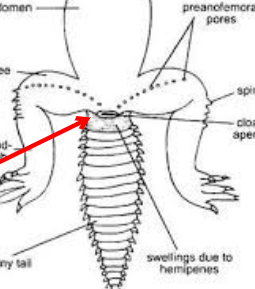
2 Orders of Lepidosaurs
rhynchocephalia - tuatara
only one extant species
squamata - lizards and snakes, more than 10k species (this is where species richness comes from)
Rhynchocephalia
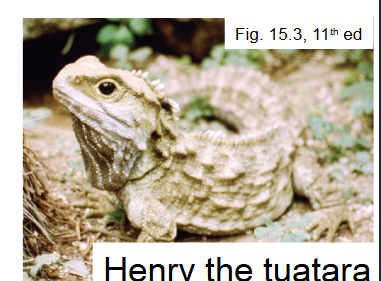
aka tuatara, the only extant species (Sphenodon punctatus)
only in NZ
nocturnal animals that feed on invertebrates and small vertebrates (frogs, lizards, birfs)
low active body temperatures because they live in damp, cool environments and are ectothermic for behavioural regulation
live in burrows
Lizards
belong to squamata
have determinate growth - genetically programmed to grow until X size then stop growing
42 families, about 6000 species
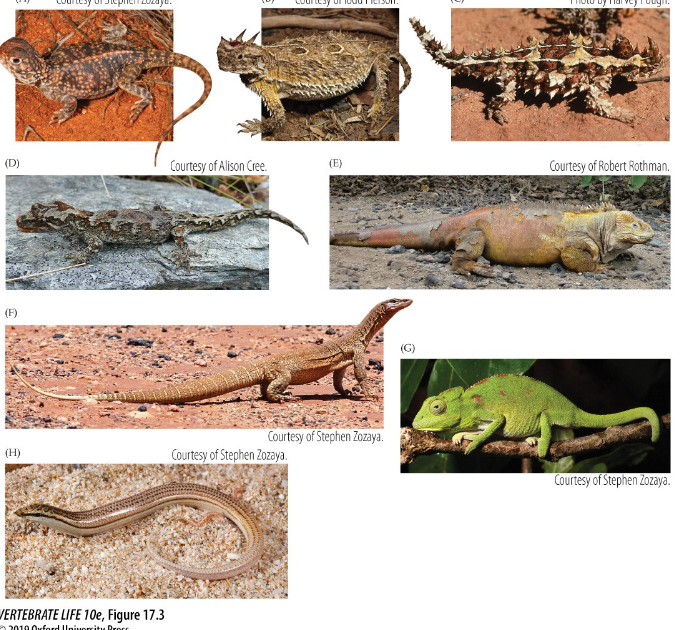
range in size with many body forms
different species are adapted to their environments
some have horns or spines for predators
chameleons have zygodactylous feet (joining fingers/toes) with opposing fingers for grabbing tree limbs, and a prehensile tail for grabbing
eyes most independently
most are dorsoventrally compressed and tend to be insectivores
Snakes
suborder serpentes
24 families, about 3000 species
probably evolved from a subterranean (underneath earth) lineage of lizards
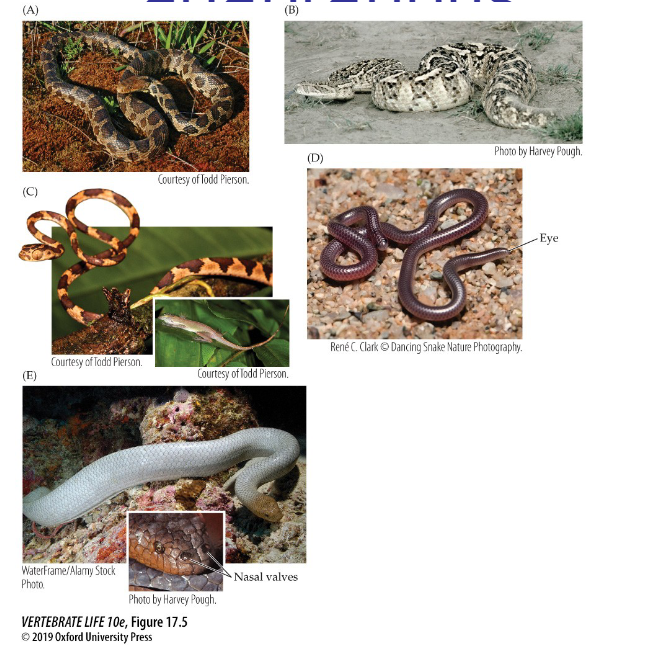
range in size and body form
fossorial species have really reduced eyes since they’re subterranean, some have venom with specialized retractable teeth
Snake Characteristics
forked tongues to collect chemical stimuli and transfer to the vermonasal organs
skull is very flexible with loosely connected mandibles and flexible skin
some are oviparous, others viviparous
sex determination of most species is by genetics, but some have temperature dependent, like tuatara, some skinks, and gekkonids)
most species have no parental care

