Interior design
 Studied by 0 people
 Call Kai
 Learn
Learn Practice Test
 Spaced Repetition
 Match
Match Flashcards
 Knowt Play
1/22

There's no tags or description
Looks like no tags are added yet.
Name | Mastery | Learn | Test | Matching | Spaced | Call with Kai |
|---|
No analytics yet
Send a link to your students to track their progress
23 Terms
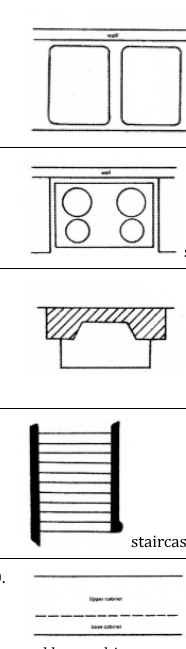
name the floor plan symbols
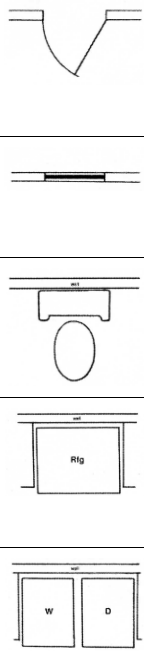
floor plan symbols
When drawing a floor plan to scale using graph paper, what measurement does each square represent?
1 foot
What measurements does a designer need before creating a scale floor plan?
Overall room dimensions
Wall lengths
Door and window sizes and locations
Ceiling height
Locations of fixed elements (plumbing, electrical, built-ins)
What is a floor plan?
scaled, top-down drawing that shows the layout of rooms, walls, doors, windows, and fixtures in a space.
What is a traffic pattern?
The pathways people use to move through a space from one area to another
What rooms are included in the private zone of a home?
Bedrooms
Bathrooms
Closets
What rooms are included in the social zone of a home
Living room
Family room
Dining room
Great room
What rooms are included in the work zone of a home?
Kitchen
Laundry room
Home office
Garage
What is universal design
Design that makes spaces usable by all people, regardless of age, ability, or physical condition
What is accessibility in interior design?
Design that allows people with disabilities to safely and independently use a space
What is adaptability in interior design
Design that can be easily modified over time to meet changing needs
Provide examples of features that might be used when universally designing a home
Wide doorways and hallways
No-step entrances
Lever-style door handles
Adjustable countertops
Walk-in showers with grab bars
Good lighting and non-slip flooring
TRUE or FALSE: The design can be used efficiently and comfortably with minimum fatigue is the principle of equitable use
false
TRUE or FALSE: The design only accommodates certain preferences and abilities is the principle of flexibility in use.
false
TRUE or FALSE: If the design is useful and marketable to people with diverse abilities, and provides the same means of use for all users it represents the principle of equitable use.
true
TRUE or FALSE: If the design can be used efficiently and comfortably with minimum fatigue, it represents the principle of low physical effort.
true
What is residential design?
The design of private living spaces, such as houses, apartments, and condominiums
What is commercial design
The design of public or business spaces, such as offices, hotels, restaurants, and retail stores
List the 5 phases of the design process into the correct order
Programming
Schematic Design
Design Development
Contract Documents
Implementation / Evaluation
What are important categories of questions that designers should focus their questions on when working with a new client?
Client needs and goals
Budget
Style and preferences
Lifestyle and functional needs
Timeline
Safety and accessibility
What factors influence a designer's choice in color scheme for a design plan
Client preferences
Purpose of the space
Lighting (natural and artificial)
Room size and shape
Mood or atmosphere desired
Existing materials and furnishings
 Note
Note  Flashcards (81)