Economics Macroeconomics

0.0(0)
studied byStudied by 0 people
0.0(0)
full-widthCall with Kai
learnLearn
examPractice Test
spaced repetitionSpaced Repetition
heart puzzleMatch
flashcardsFlashcards
GameKnowt Play
Card Sorting

1/159

encourage image

There's no tags or description

Looks like no tags are added yet.

Study Analytics
Name
Mastery
Learn
Test
Matching
Spaced
Call with Kai

No study sessions yet.

160 Terms

1
New cards

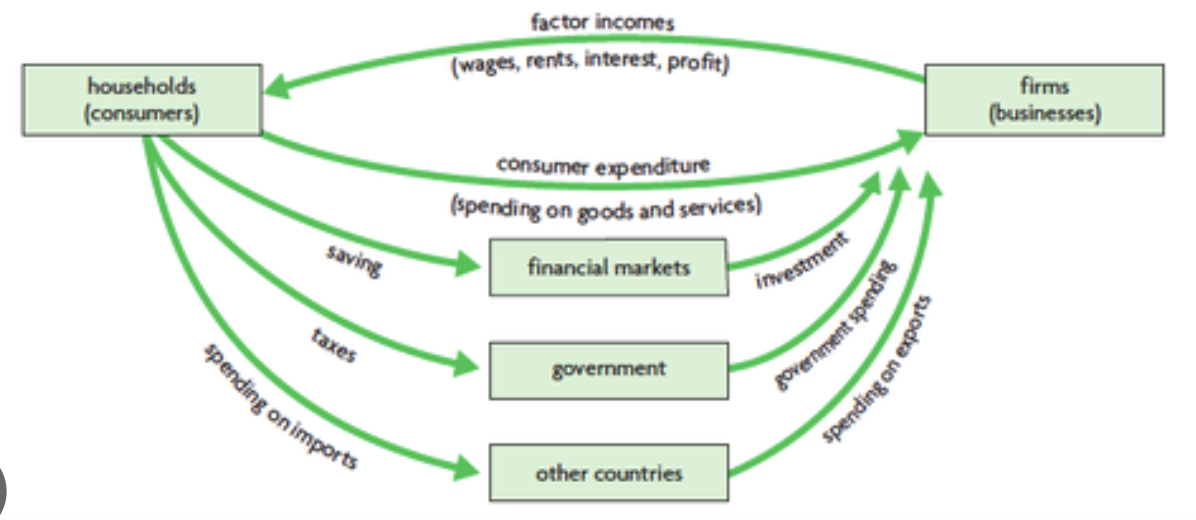
circular flow of income model

knowt flashcard image
2
New cards

GDP equation

C + I + G + (X - M)

3
New cards

GNI equation

GDP + (income from abroad - income sent abroad)

4
New cards

GDP deflator equation

nominal GDP / real GDP x 100

5
New cards
nominal value
measured in terms of current prices at a set year
6
New cards
real value
measured through changes in prices
7
New cards

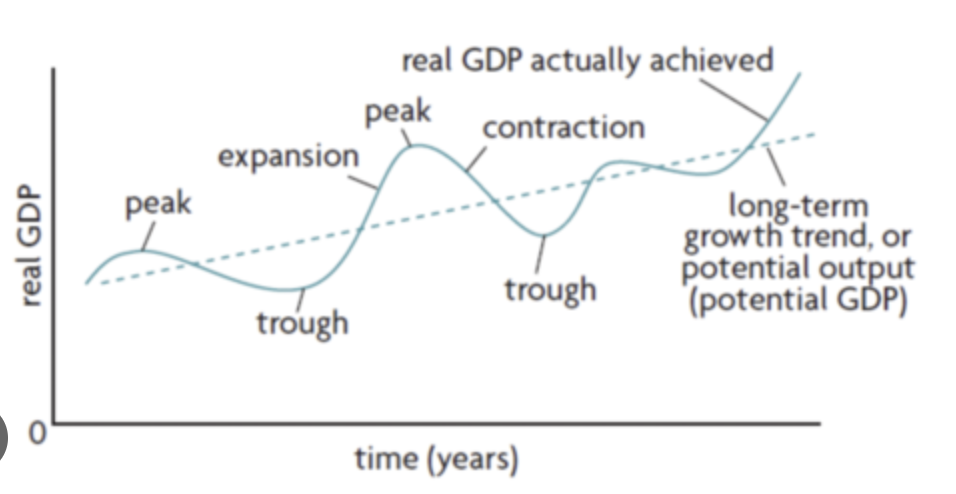
business cycle diagram

<p></p>
8
New cards

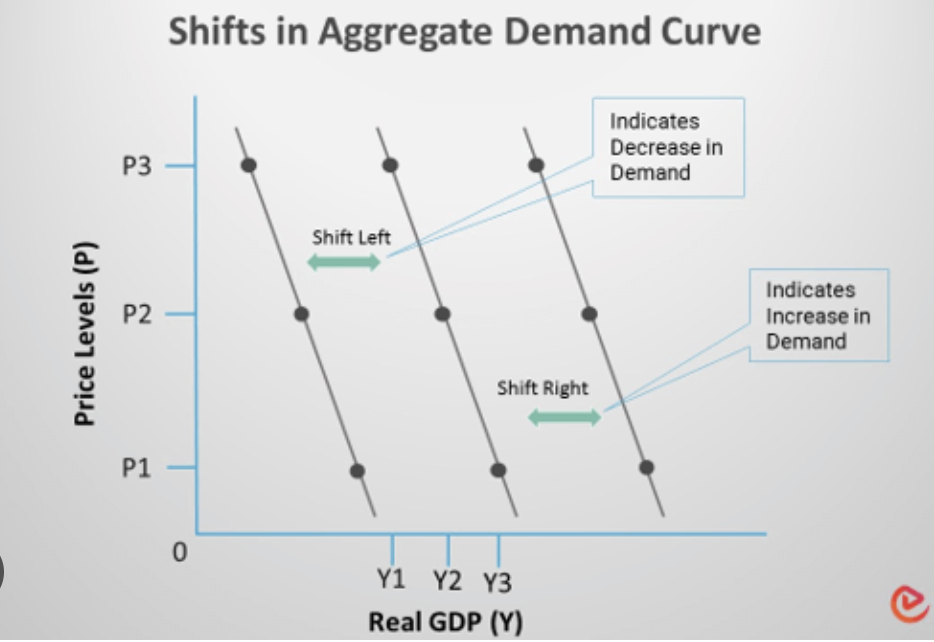
aggregate demand (AD) diagram

knowt flashcard image
9
New cards

changes in consumer confidence

high consumer optimism = shift right

low consumer optimism = shift left

10
New cards
changes in interest rates (consumer spending)

increase in interest rates = shift left

decrease in interest rates = shift right

11
New cards
changes in wealth

increase in consumer wealth = shift right

decrease in consumer wealth = shift left

12
New cards
changes in personal income taxes

increase in personal income taxes = shift left

decrease in personal income taxes = shift right

13
New cards
changes in the level of household indebtedness

high level of debt = shift left

low level of debt = shift right

14
New cards
changes in business confidence

high optimism = shift right

low optimism = shift left

15
New cards
changes in interest rates (investment spending)

increase in interest rates = shift left

decrease in interest rates = shift right

16
New cards
improvements in technology
shift right
17
New cards
changes in business taxes (AD)

increase in business taxes = shift left

decrease in business taxes = shift right

18
New cards
changes in level of corporate indebtedness

high level of debt = shift left

low level of debt = shift right

19
New cards
legal/institutional changes
increasing legal rights to ownership = shift right
20
New cards
changes in political priorities

increase in government spending = shift right

decrease in government spending = shift left

21
New cards
changes in economic priorities

increase economic growth = shift right

decrease economic growth = shift left

22
New cards
changes in national income abroad

country A's national income increases = country B shifts right

country A’s national income decreases = country B shifts right

23
New cards
changes in exchange rates

country A's exchange rates appreciate = country A shifts left

country A’s exchange rates depreciate = country A shifts right

24
New cards
changes in level of trade protection
country A has free trade, but country B imposes import restrictions from country A = country A shifts left, country B shifts right
25
New cards

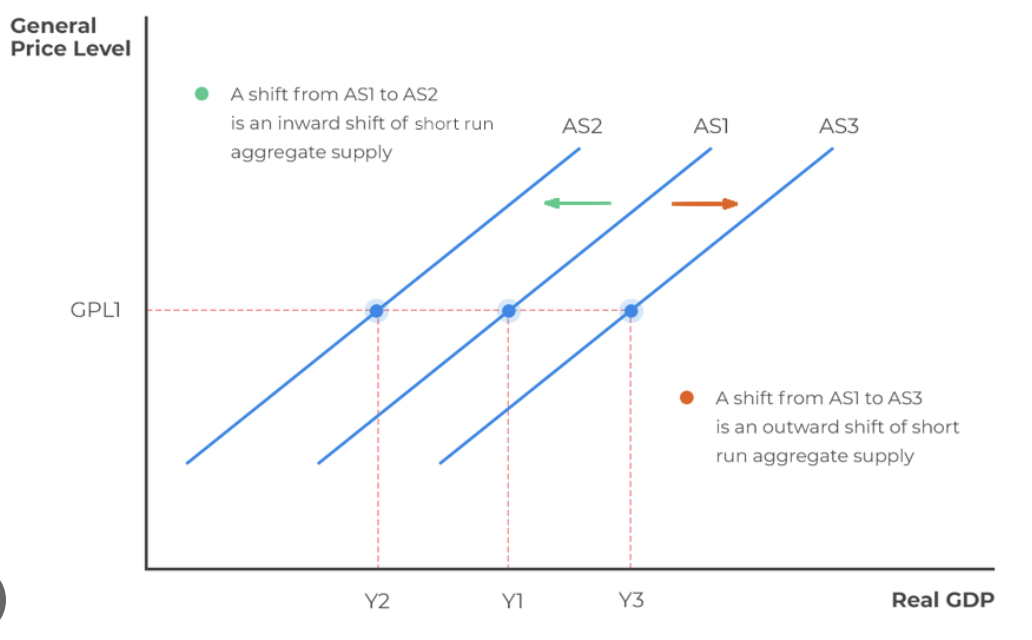
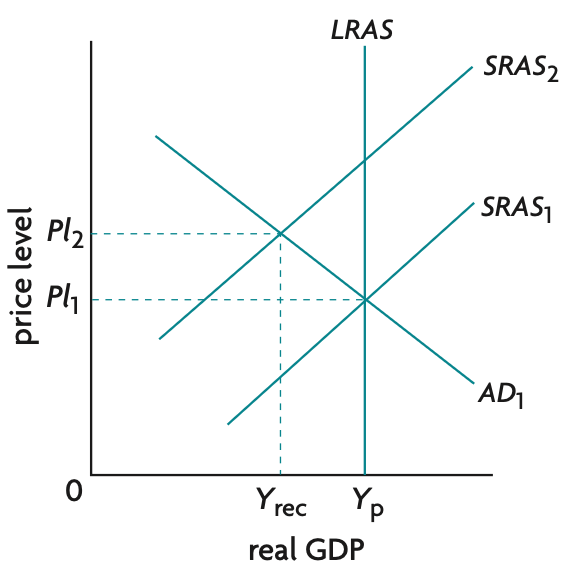
aggregate supply (SRAS) diagram

knowt flashcard image
26
New cards
changes in wages

increase in wages = shift left

decrease in wages = shift right

27
New cards
changes in non-labour resource costs of production

increase in resource costs = shift left

decrease in resource costs = shift right

28
New cards
changes in business taxes (AS)

increase in business taxes = shift left

decrease in business taxes = shift right

29
New cards
changes in subsidies offered to businesses

increase in subsidies = shift right

decrease in subsidies = shift left

30
New cards
supply shocks

positive supply shock = shift right

negative supply shock = shift left
31
New cards
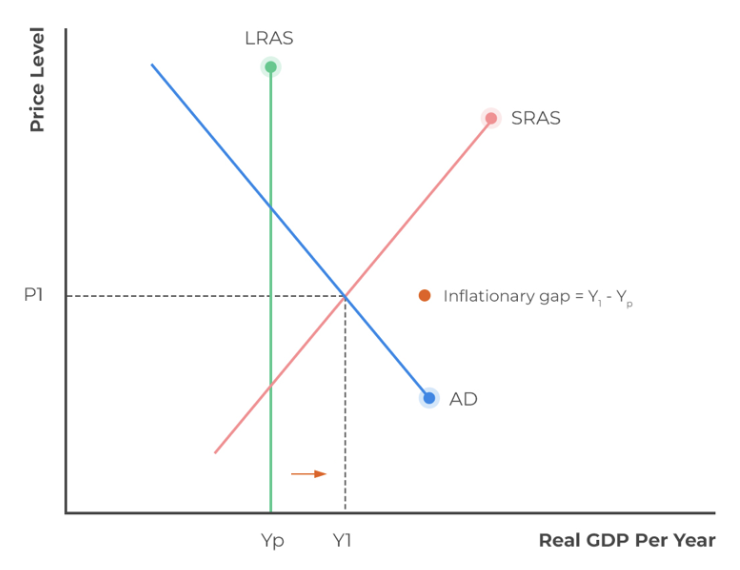
inflationary gap (new classical model)
Ye > Yp
Ye > Yp
32
New cards
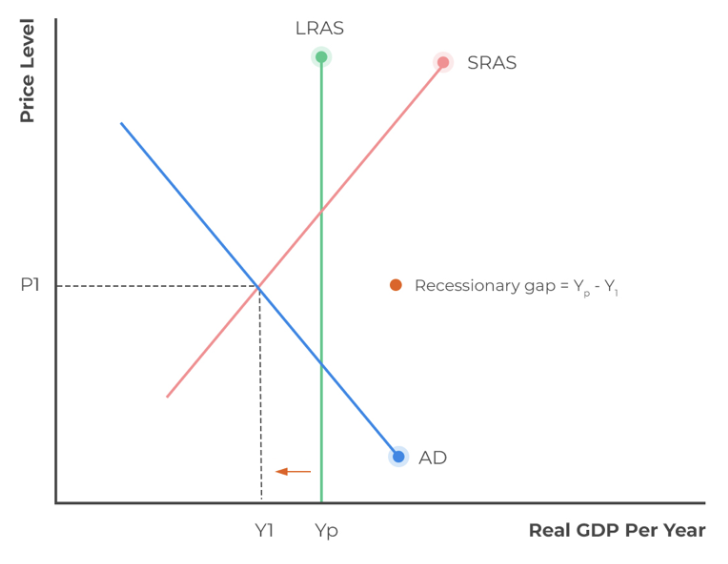
deflationary/recessionary gap (new classical model)
Yp > Ye
Yp > Ye
33
New cards

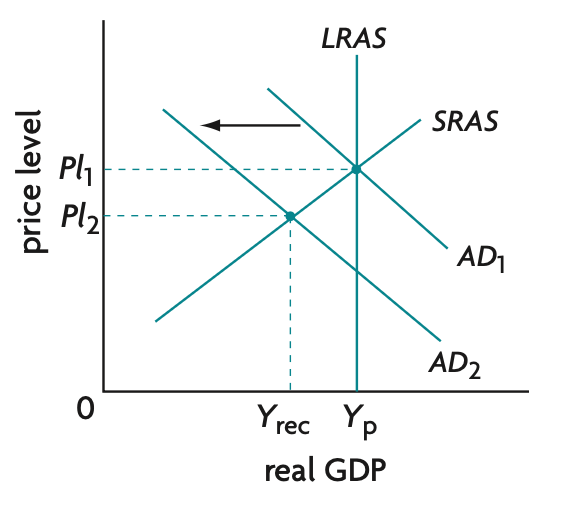
creating and eliminating a deflationary gap diagram
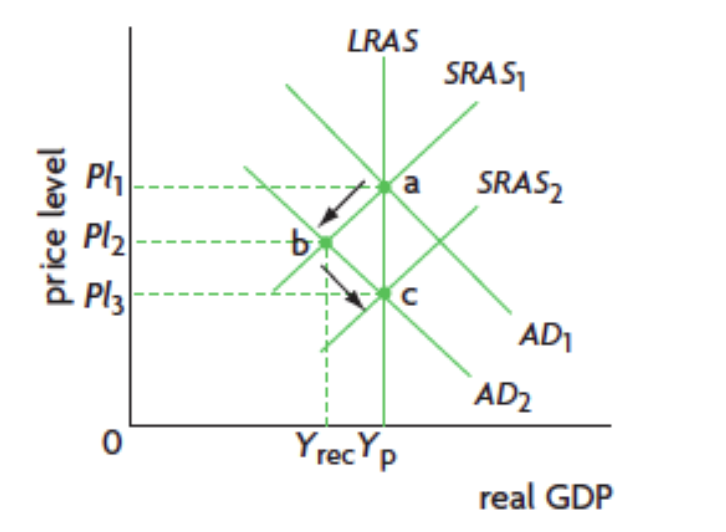
knowt flashcard image
34
New cards

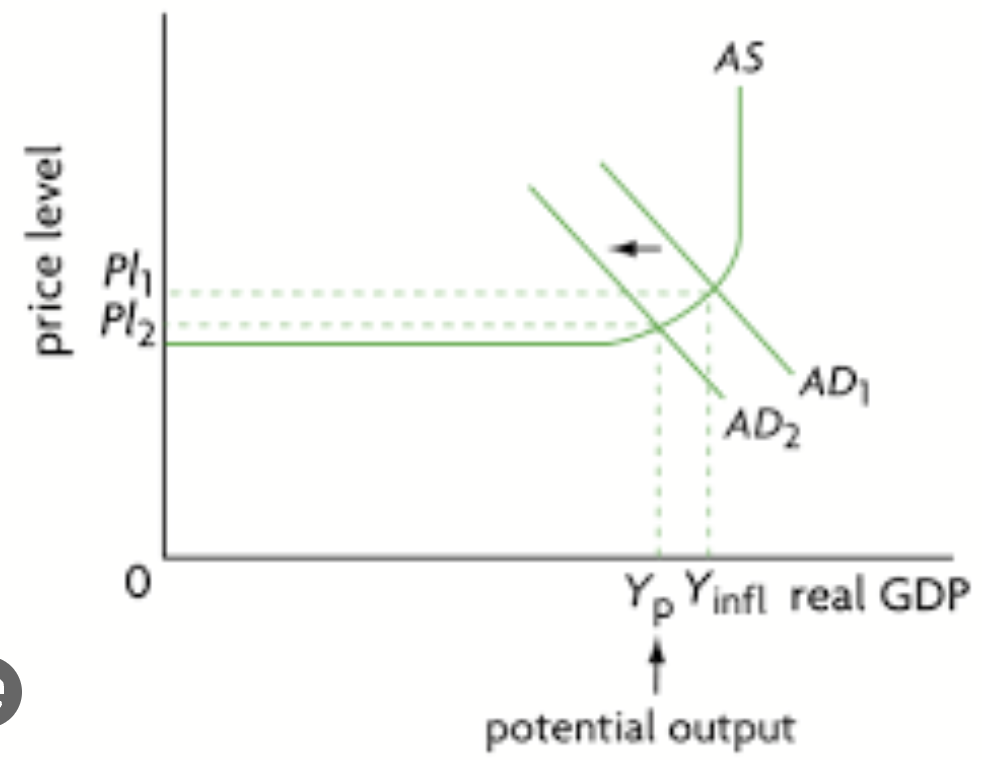
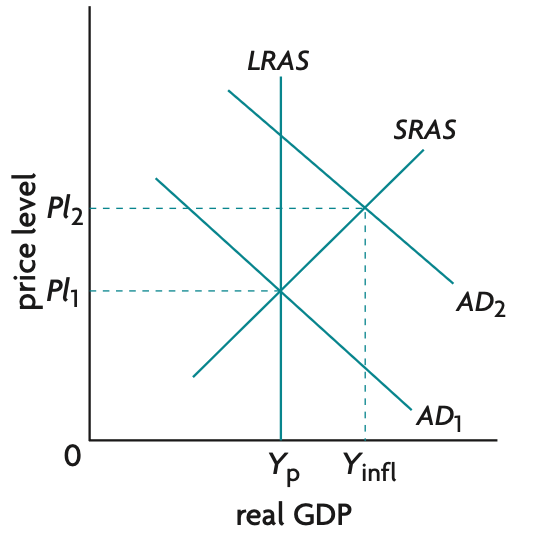
creating and eliminating an inflationary gap diagram
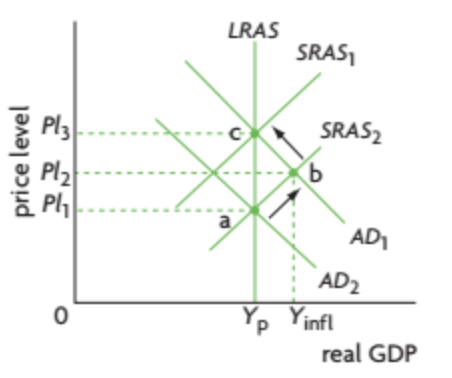
knowt flashcard image
35
New cards
inflationary gap (Keynesian model)
rightward shift
rightward shift
36
New cards
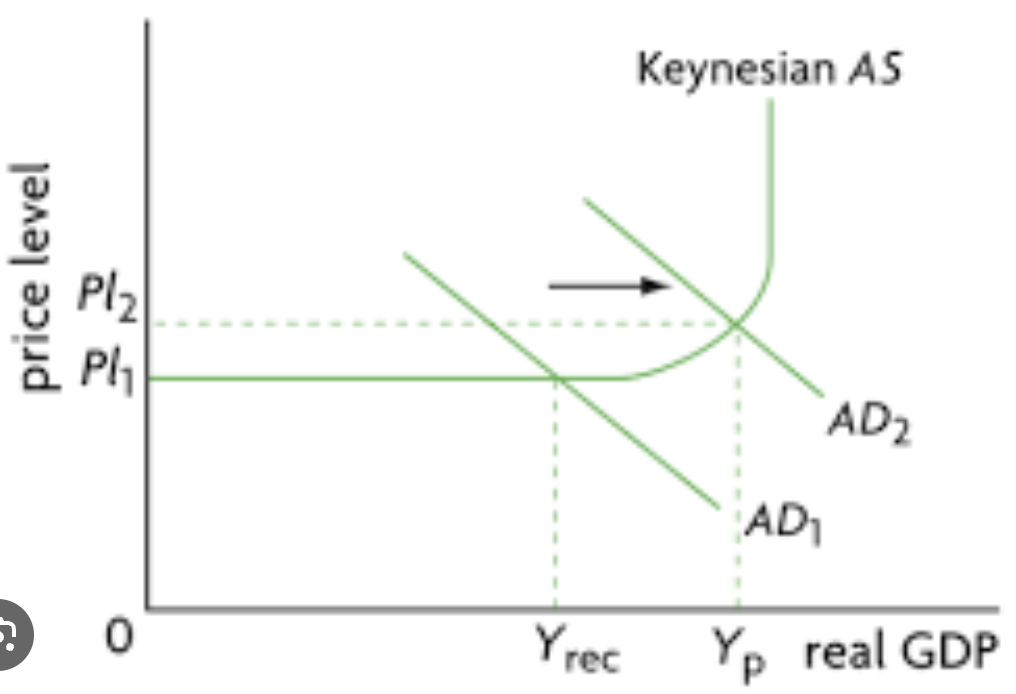
deflationary/recessionary gap (Keynesian model)
leftward shift
leftward shift
37
New cards
determinants of LRAS (all shift right)

- increase in quantity of factors of production

- improvement in quality of factors of production

- improvement in technology

- increase in efficiency

- better institutions

- reductions in natural rate of unemployment
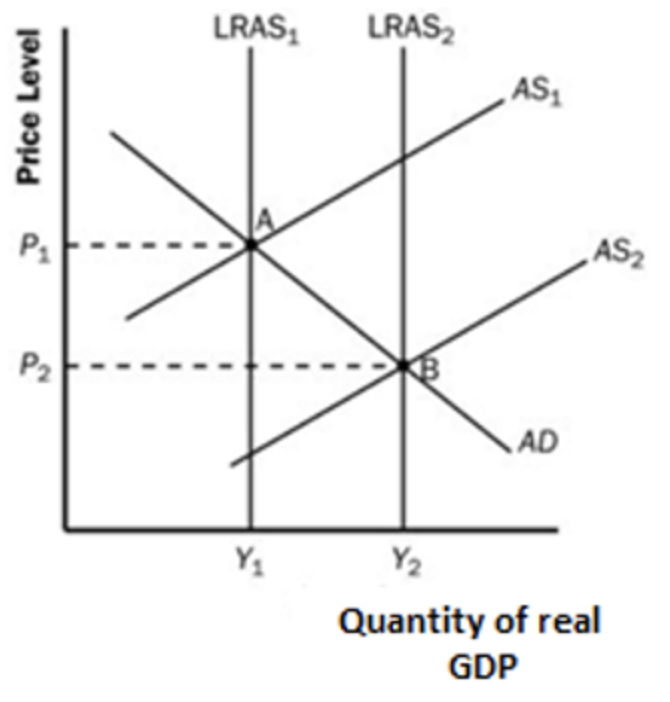
<p>- increase in quantity of factors of production</p><p>- improvement in quality of factors of production</p><p>- improvement in technology</p><p>- increase in efficiency</p><p>- better institutions</p><p>- reductions in natural rate of unemployment</p>
38
New cards
unemployment
people of working age who are actively looking for a job but who are not employed
39
New cards
underemployment
people of working age with part-time jobs who would rather work full time, or with jobs that do not make full use of their skills and education
40
New cards
labour force
people of working age who want to work, whether employed or unemployed
41
New cards
unemployment rate equation

number of employed / labour force x 100

42
New cards
underemployment rate equation

number of underemployed / labour force x 100

43
New cards
economic costs of unemployment

- loss of real GDP

- loss of income for unemployed workers

- loss of tax revenue for the government

- costs to the government of unemployed benefits

- costs to the government of dealing with social problems resulting from unemployment

- more unequal distribution of income

- unemployed people may have difficulties find work in the future
44
New cards
personal costs of unemployment
being unemployed and unable to secure a job involves a loss of income, increased indebtedness as people must borrow to survive, and loss of self-esteem
45
New cards
social costs of unemployment
high rates of unemployment can lead to increased crime and violence, drug use and homelessness
46
New cards
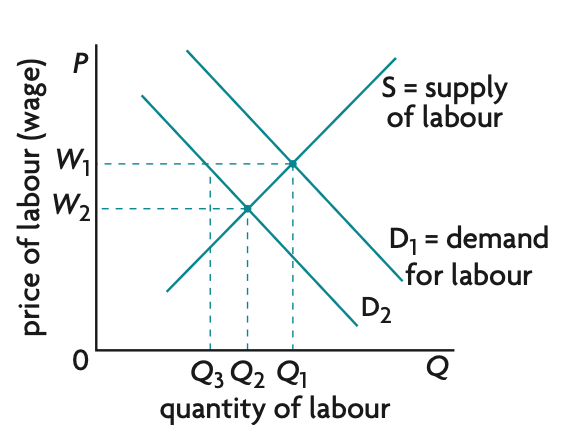
structural unemployment
occurs as a result of changes in demand for particular types of labour skills, changes in geographical location of industries and jobs, and labour market rigidities
47
New cards
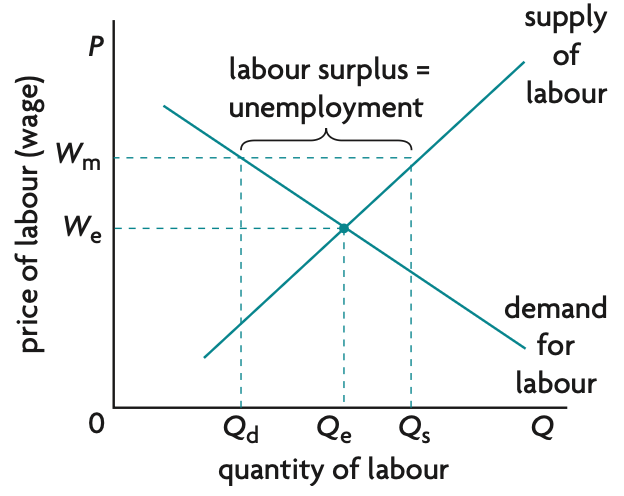
mismatches between labour demand and labour supply diagram (falling demand for labour)
knowt flashcard image
48
New cards
minimum wage legislation and labour union activities lead to higher than equilibrium wages and lower quantity of labour demanded
knowt flashcard image
49
New cards
labour market rigidities lead to an increase in costs of production causing a fall in Q produced; employers hire fewer workers
knowt flashcard image
50
New cards
frictional unemployment
occurs when workers are between jobs (short-term)
51
New cards
seasonal unemployment
occurs when demand for labour in certain industries change on a seasonal basis because of variations in needs
52
New cards
natural rate of unemployment (solutions in AS)
made up of structural, frictional, and seasonal unemployment
53
New cards
cyclical unemployment/demand-deficient unemployment (solutions in AD)
occurs during the downturns of the business cycle, when economy is in a recessionary gap
54
New cards
inflation
sustained increase in the general price level
55
New cards
deflation
sustained decrease in the general price level
56
New cards
disinflation
decrease in rate of inflation
57
New cards
consumer price index (CPI)
measure of cost of living for the typical household and compares the value of a basket of goods and services in one year with the value of the same basket in a base year
58
New cards
CPI equation

value of basket in specific year / value of same basket in base year x 100 (1dp)

59
New cards
% change in CPI equation

(final value of CPI - initial value of CPI) / initial value of CPI x 100

positive = inflation, negative = deflation

60
New cards
problems with CPI
  • different rates of inflation for different income earners

  • different rates of inflation depending on regional or cultural factors

  • changes in consumption patterns due to consumer substitutions when relative price changes

  • changes in consumption patterns due to increasing use of discount stores and sales

  • changes in consumption patterns due to introduction of new products

  • changes in product quality

  • international comparisons

61
New cards
demand-pull inflation
caused by increase in AD
62
New cards
cost-push inflation
caused by increase in SRAS
63
New cards
appropriate rate of inflation
2-3%
64
New cards

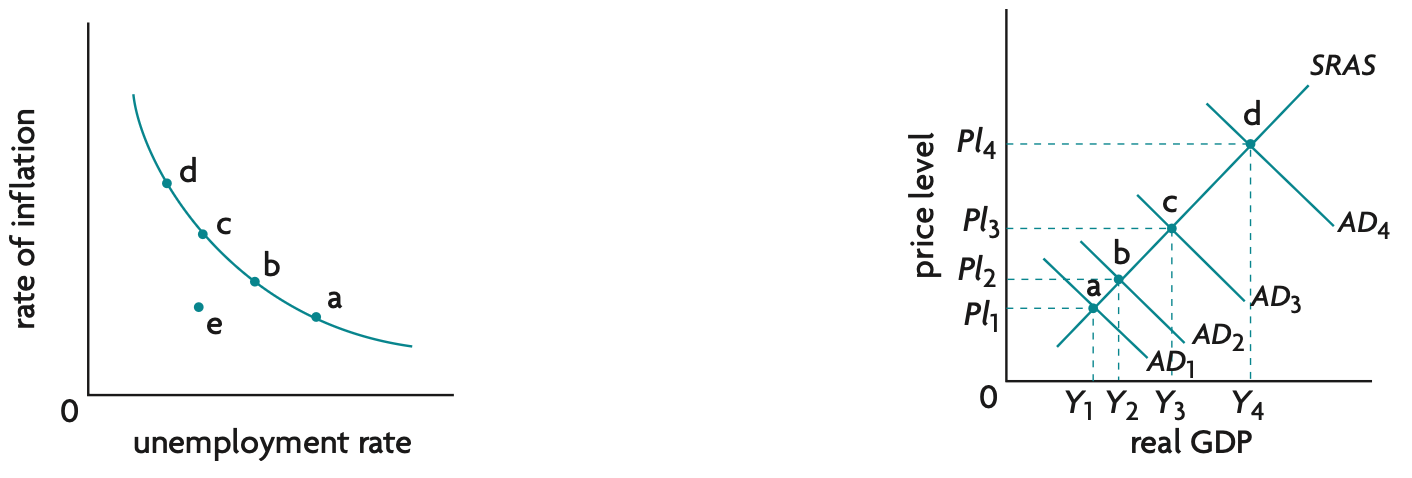
phillips curve diagram (SRPC)

relationship between unemployment rate and rate of inflation
65
New cards

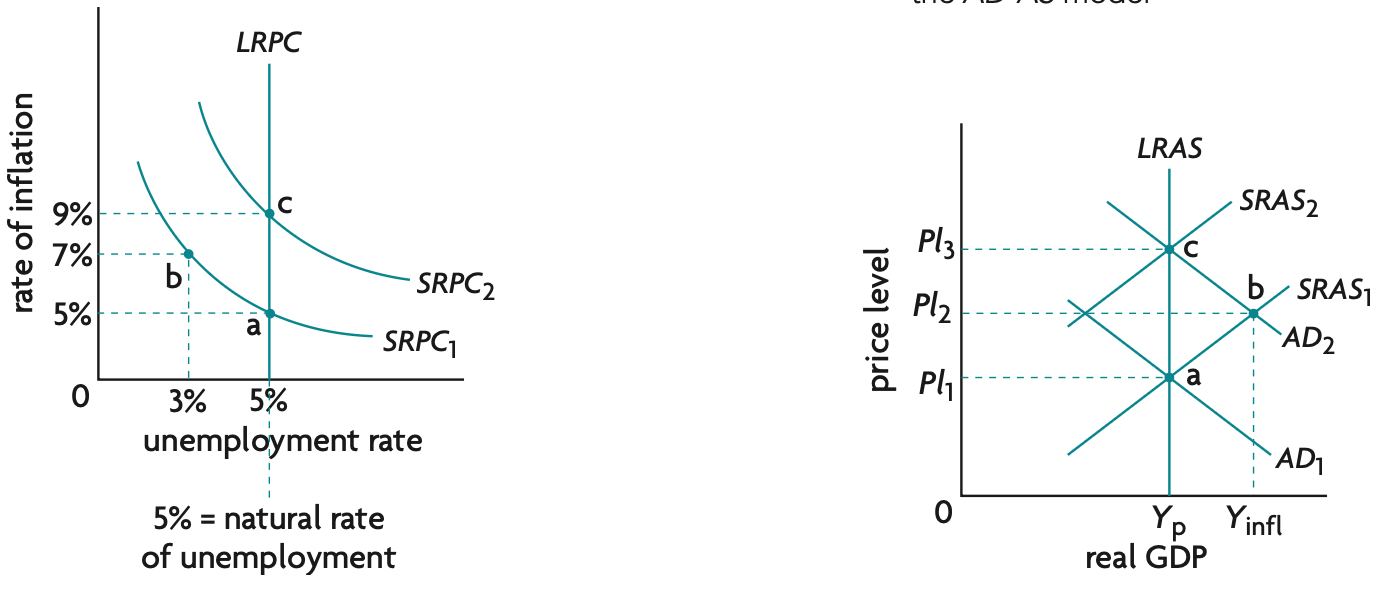
LRPC diagram

knowt flashcard image
66
New cards
stagflation
high unemployment rate and high rate of inflation (rightward shift of SRPC)
67
New cards
decrease in SRAS on phillips curve:
increase in SRPC (shifts up)
68
New cards

production possibilities curve (PPC) diagrams
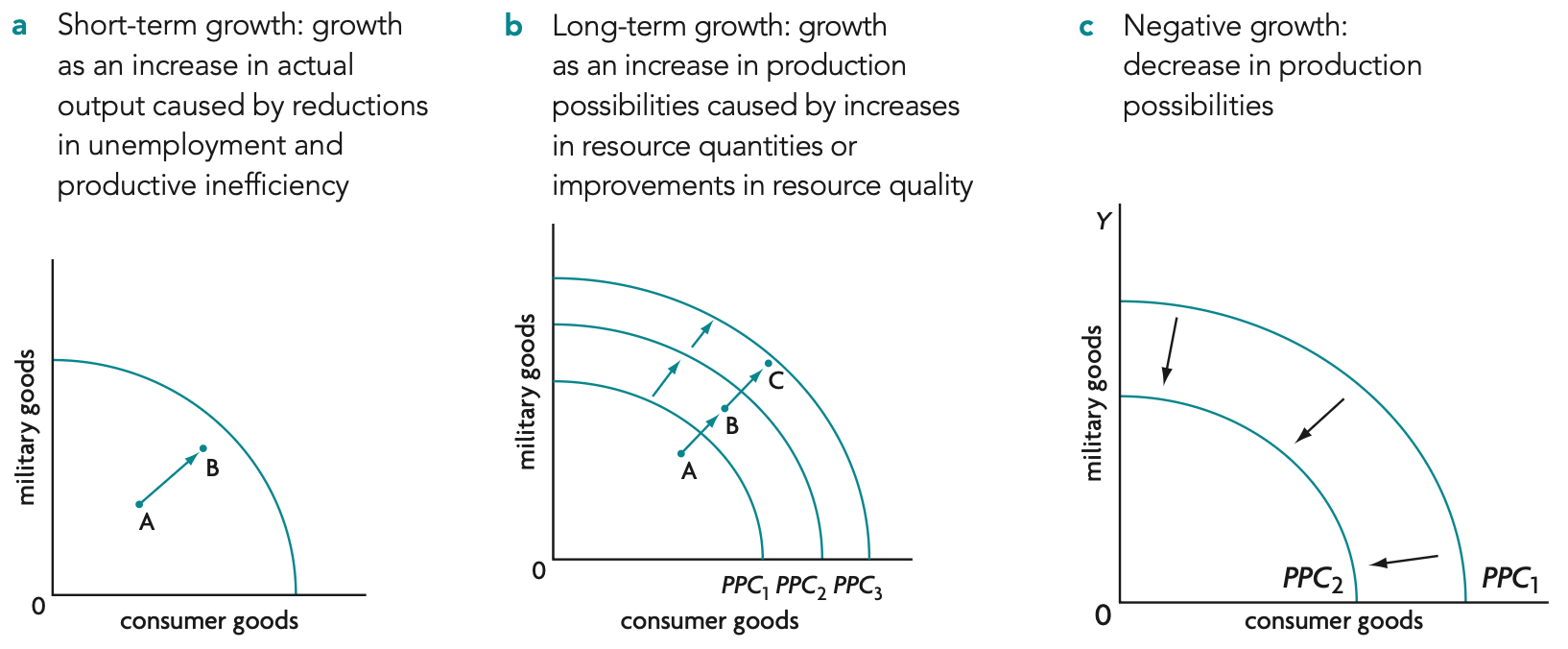
shows possible combinations of maximum output that can be produced by an economy
69
New cards
capital
resources that can produce a future stream of benefits
70
New cards
equity
condition of being fair or just
71
New cards
equality
state of being equal with respect to something
72
New cards
income inequality arises from...
differences in how evenly income is distributed in a population
73
New cards
wealth inequality arises from...
differences in the amount of wealth people own
74
New cards
quintiles, deciles, quartiles (%)
20%, 10%, 25%
75
New cards
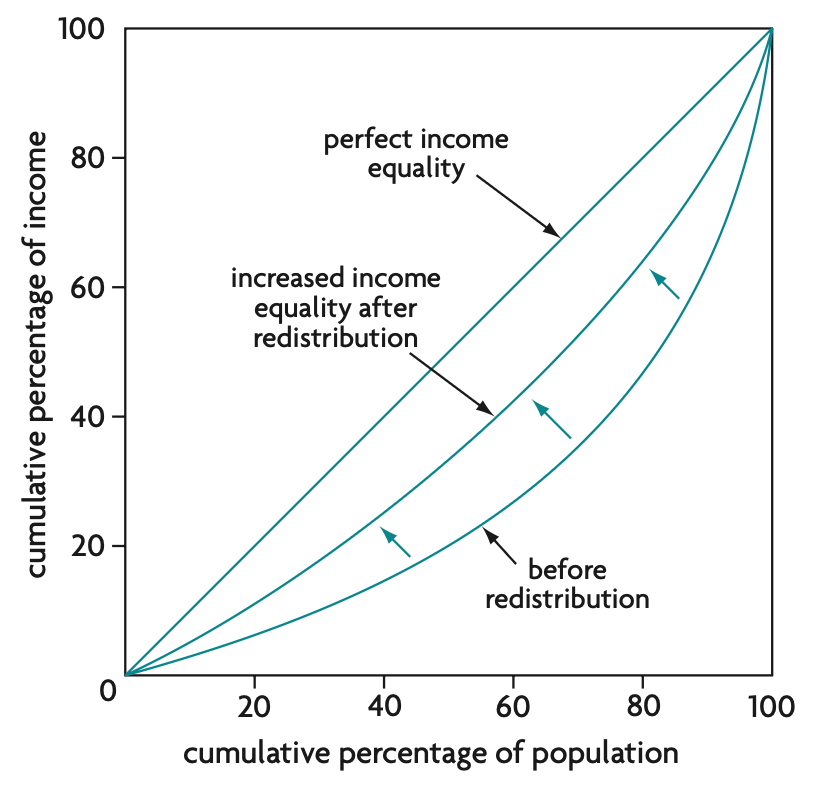
Lorenz curve
shows the degree of income inequality in an economy
76
New cards
Gini coefficient equation

area between diagonal and lorenz curve / entire area under diagonal x 100

77
New cards

Income equality based on Gini coefficient

closer to 0 = greater income equality

closer to 1 = greater income inequality

perfect income equality = 0

78
New cards
poverty
inability to satisfy minimal consumption needs
79
New cards
Absolute Poverty
minimum income level called poverty line which is less than $1.90 per day
80
New cards
Relative Poverty
compares the income of individuals or households in a society with median incomes
81
New cards
single indicators
minimum income standards (basket of goods needed to achieve minimum standard) and poverty line (income level considered minimally sufficient to sustain a family)
82
New cards
multidimensional
multidimensional poverty standards (health, education, living standards)
83
New cards
difficulties measuring poverty
over or under estimation may be dependent of government policy and budget restrictions
84
New cards
causes of poverty
unemployment, poor education/skills, poor health, wage differentials, born into poverty, tax cuts for well off, subsistence agriculture
85
New cards
15 mark question structure

1. introduction with definitions and argument

2. diagrams

3. explanation

4. real-world examples

5. evaluation using CLASPP (conclusions, long-term vs short-term, assumptions, stakeholders, priorities, pros and cons)

86
New cards
role of direct taxes in promoting equity
paid directly to the government tax authorities by the taxpayer (personal income taxes, corporate income taxes, wealth taxes, social insurance)
87
New cards
role of indirect taxes in promoting equity
paid indirectly through the suppliers of the good or service purchased (general expenditure taxes or sale taxes, excise taxes, customs duties)
88
New cards
proportional taxation
as income increases, the fraction of income paid as taxes remains constant (constant tax rate)
89
New cards
progressive taxation
as income increases, the fraction of income paid as taxes increases (increasing tax rate)
90
New cards
regressive taxation
as income increases, the fraction of income paid as taxes decreases (decreasing tax rate)
91
New cards
types of taxes
corporate income taxes (proportional), personal income taxes (progressive), indirect taxes (regressive)
92
New cards
average tax rate
tax paid divided by total income, expressed as a percentage
93
New cards
marginal tax rate
tax rate paid on additional income (layers of income are tax brackets and corresponding tax rates are marginal tax rates)
94
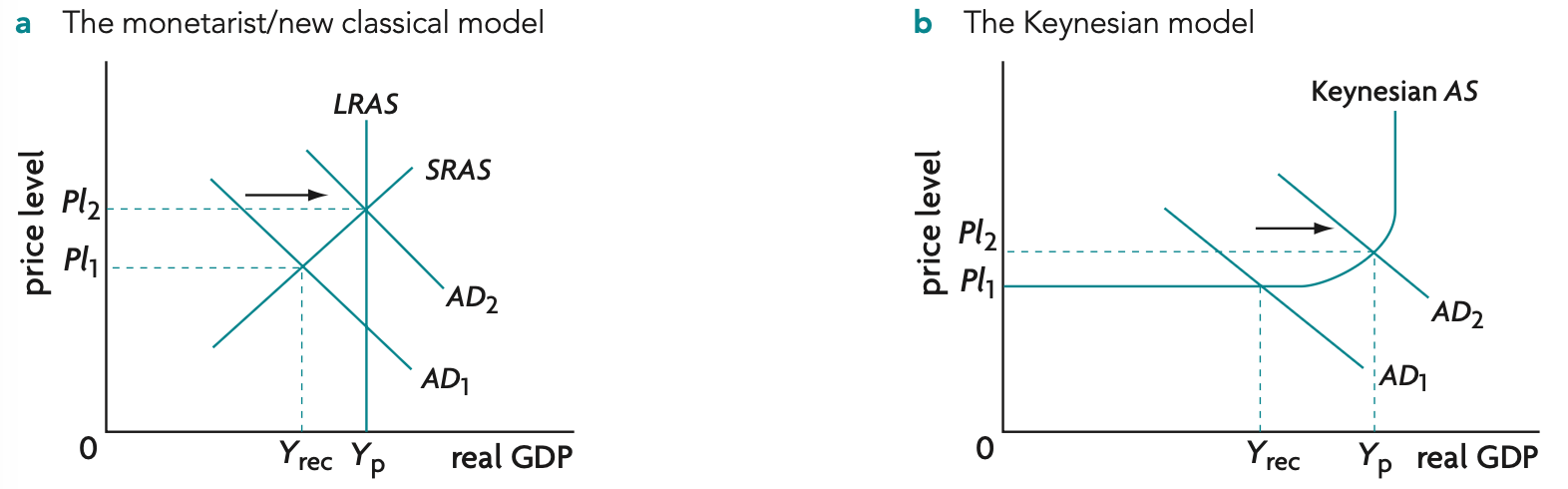
New cards

marginal tax rate equation

total marginal tax / average tax rate x 10
95
New cards
policies to reduce inequality of opportunity
access to high quality education and healthcare
96
New cards
transfer payments
payments made by the government to individuals specifically for the purpose of redistributing income away from certain groups and towards other groups (old age pensions, disability pensions, unemployment benefits, war veterans benefits, maternity benefits, child allowances, housing benefits, student grants)
97
New cards
government must ensure health and education are affordable for very low income groups accomplished by:
free or nearly free of charge services (subsidised provision), governments providing subsidies to private providers to increase supply
98
New cards
government intervention in markets
minimum wage legislation, food price ceiling, price floors for farmers
99
New cards
demand-side policies
focus on shifting AD, based on idea that short-term fluctuations in real GDP of the business cycle are due to actions of firms and consumers affecting AD, causing inflationary or deflationary gaps (brings AD to full employment level of real GDP)
100
New cards
expansionary policy diagram (both monetary and fiscal)
recessionary gap (increase in government spending, decrease in personal income taxes and business taxes)