ESS W2 L1 pt 2 - cycles of energy
 Call Kai
 Learn
Learn Practice Test
 Spaced Repetition
 Match
Match Flashcards
 Knowt Play
1/23

Earn XP
Description and Tags
cycle of energy in the biosphere
Name | Mastery | Learn | Test | Matching | Spaced | Call with Kai |
|---|
No analytics yet
Send a link to your students to track their progress
24 Terms
Definition of the biosphere:
Vladimir Vernadsky (1863-1945) :
“Activated by radiation, the matter of the biosphere collects and redistributes solar energy, and converts it ultimately into free energy capable of doing work on Earth (…).” Biosfera, 1926
Solar energy:
Earth receives energy from the sun
But the same amount of energy we receive from the sun is released back into space (mainly as heat energy)
First law of thermodynamics
Energy isn’t destroyed its transformed
What happens to that energy?
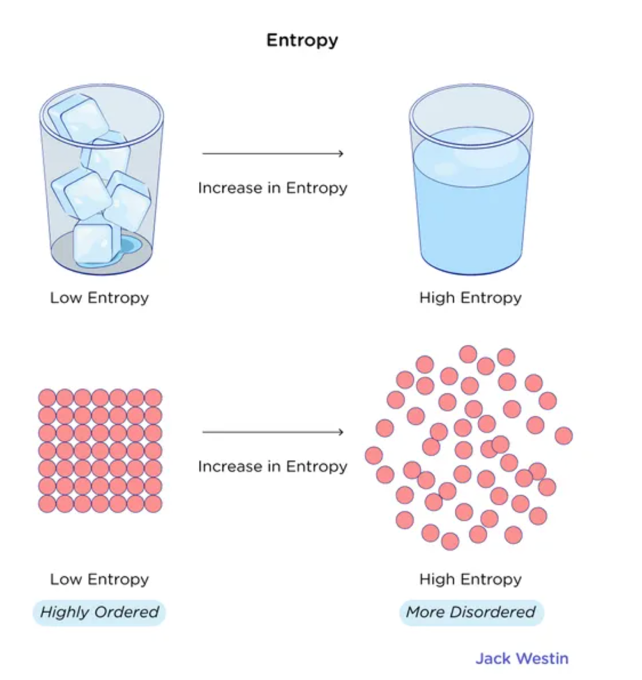
law of entropy:
2nd law of thermodynamics
A common way to describe entropy is an increase in disorder – things become more mixed or random, over time
It could be described as the spreading of energy over time
Entropy is why hot things cool down and cold things warm up
Or why gas expands to fill a container
Entropy is constantly increasing over time
If entropy (disorder) is constantly increasing, how is there life on earth?
If earth was a closed system, then eventually the spread of energy (entropy) would mean that the temperature of earth would be the same, and life would die out, everything would decay.
But earth is not a closed system as we have the sun
Entropy:
The sun gives us a constant stream of low entropy energy
Plants use this energy to grow and release heat energy (high entropy)
Animals eat these plants, releasing more heat energy
At each step, energy becomes more spread out – converting to high entropy energy
We receive high energy (low entropy) protons from the sun
The earth releases back the same amount of energy but in low energy protons (high entropy)
entropy - dissipating energy
Life is highly efficient at dissipating energy, converting it from low to high entropy
Energy transfer: As energy moves through the food chain, some of it is lost as heat (thermal), which increases entropy
Ecosystems are driven by the flow of energy and the increase in entropy
We are facilitating entropy, we are ‘doing the work’
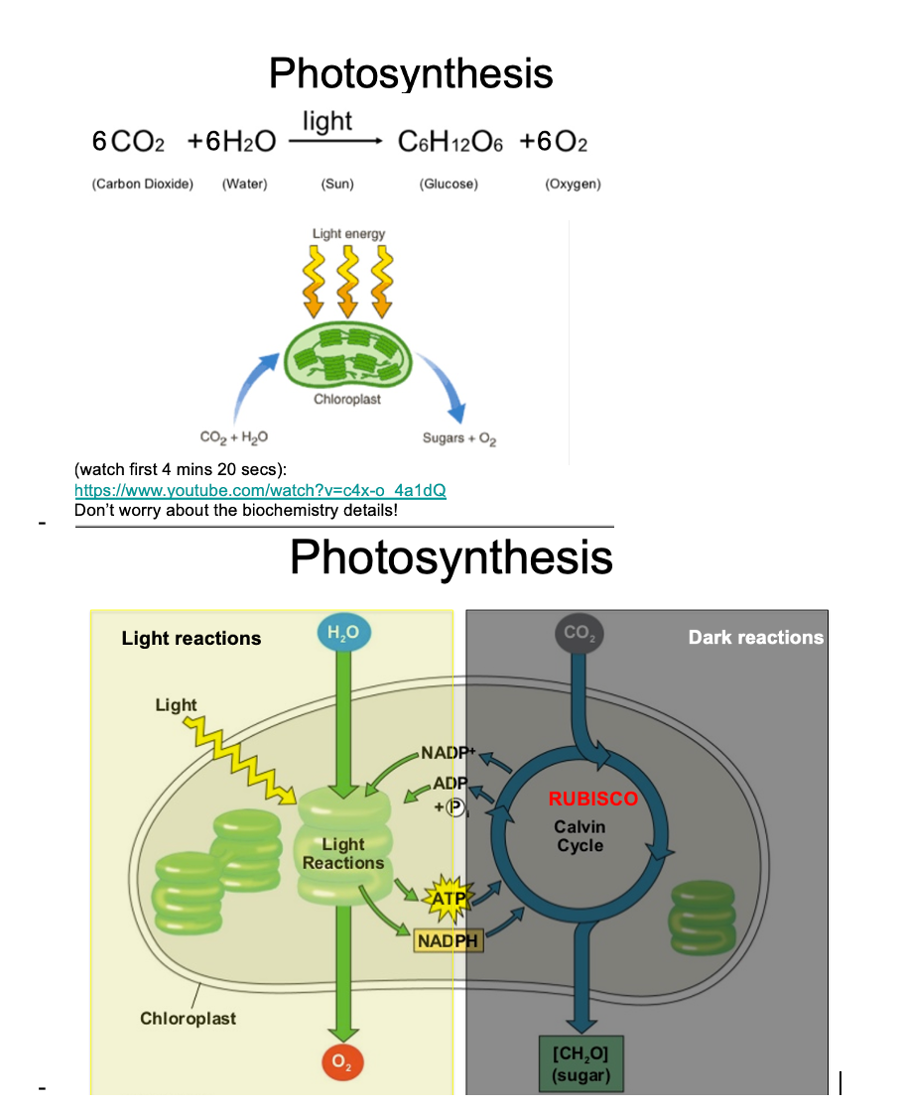
But life can go against the law of entropy:
However, life itself is highly organised, and can maintain a low entropy (ordered) structure
For example, during photosynthesis plants consume light from the sun and convert it into high entropy thermal energy, but at the same time decreases its internal entropy by producing sugars and carbohydrates (which are low entropy).
As more heat than sugars are produced, there is an overall increase in entropy, maintain the Second Law of Thermodynamics.
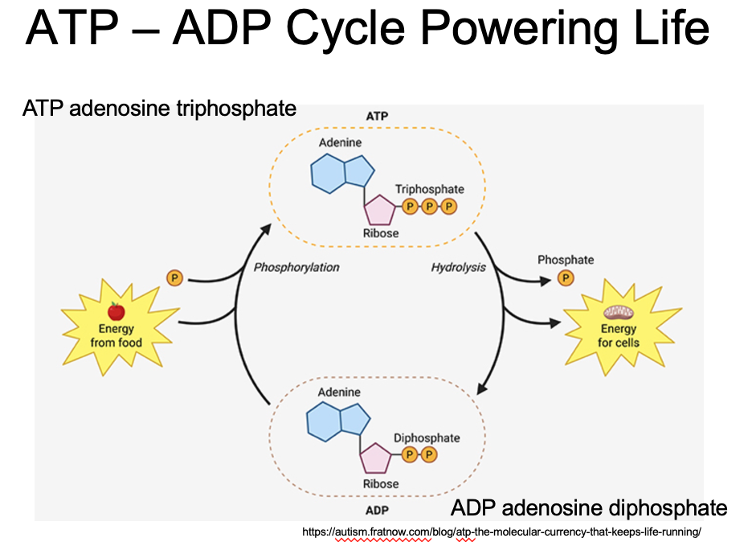
atp - add cycle powering life
atp - adenosine triphosphate
adp - adenosine diphosphate
two key parts to photosynthesis - light and dark reactions
this constant cycle of atp into ads powers this life
atp - add cycle powering life - light reactions
Sunlight captured by chlorophyll in chloroplast s- absorbs light energy into chemical energy – stored in energy molecules – ATP and NADPH
Water is being split into hydrogen and oxygen – oxygen produced through hydrolysis
ATP – three phosphate groups – bonds of this group which contain energy
ATP changed into ADP
This drives the dark reaction
atp - add cycle powering life - dark reactions
Co2 drawn down into biomass through enzyme rubisco – atmospheric carbon drawn into biomass through sugars
Rubisco is most abundant protein on earth
Most organic carbon transferred from atmo in this way
Photosynthesis from space:
Seeing photosynthesis from space
White light – transformed into fluorescence
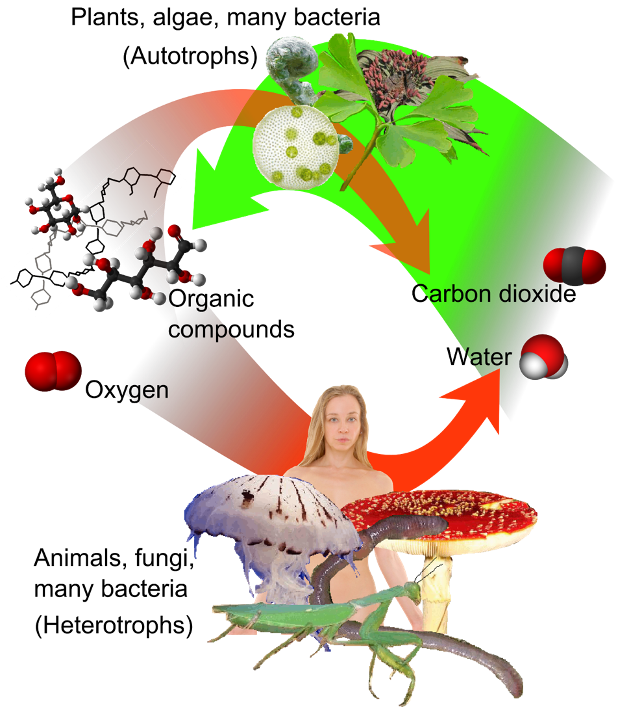
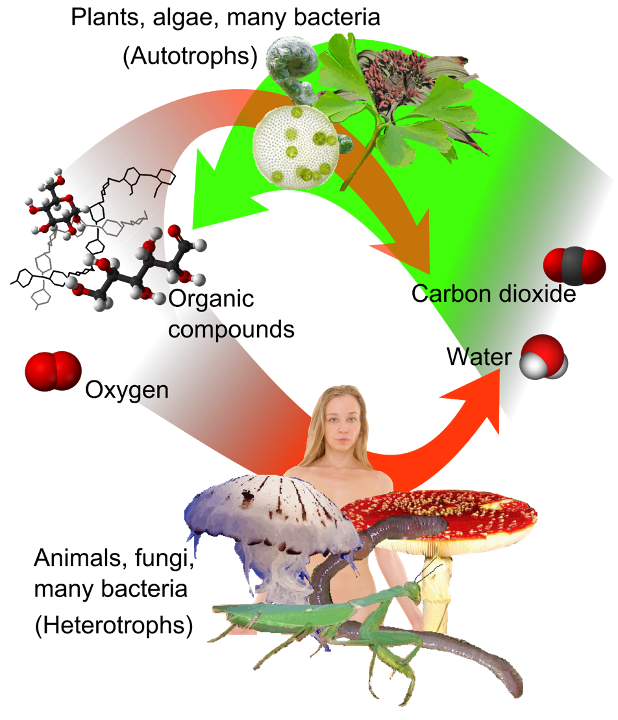
autotrophs
an organism that can produce its own food using light, water, carbon dioxide, or other chemicals – the foundation
The carbon compounds made by plants are food for other organisms.
e.g. plants, algae, many bacteria
heterotrophs
an organism that eats other plants or animals for energy and nutrients – consumers
e.g. animals, fungi, many bacteria
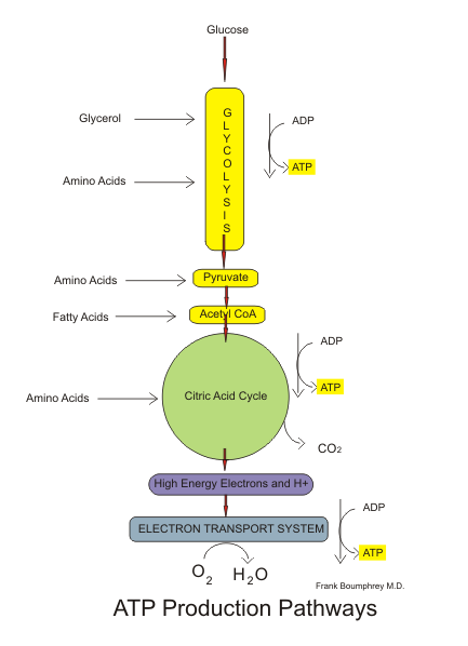
Heterotrophic respiration: the krebs cycle
Heterotrophs use carbon compounds in respiration
Take carbs. Sugars etc – use krebs cycle to break them down
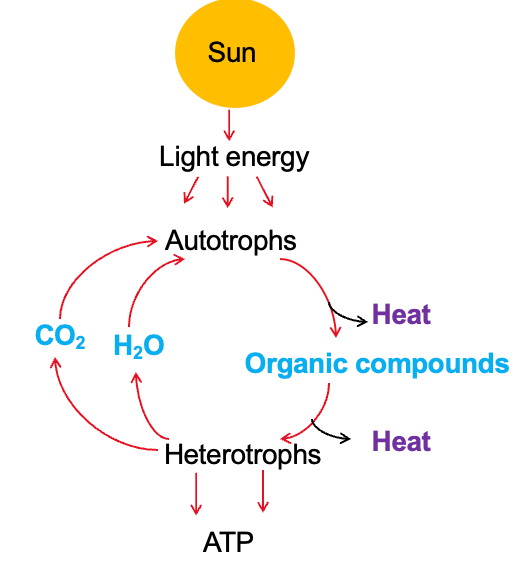
Flow of energy in the biosphere:

