~Complementary and Alternative Medicine and Aging: Mindfulness for Stress Reduction
 Studied by 0 people
 Call Kai
 Learn
Learn Practice Test
 Spaced Repetition
 Match
Match Flashcards
 Knowt Play
1/17

There's no tags or description
Looks like no tags are added yet.
Name | Mastery | Learn | Test | Matching | Spaced | Call with Kai |
|---|
No analytics yet
Send a link to your students to track their progress
18 Terms
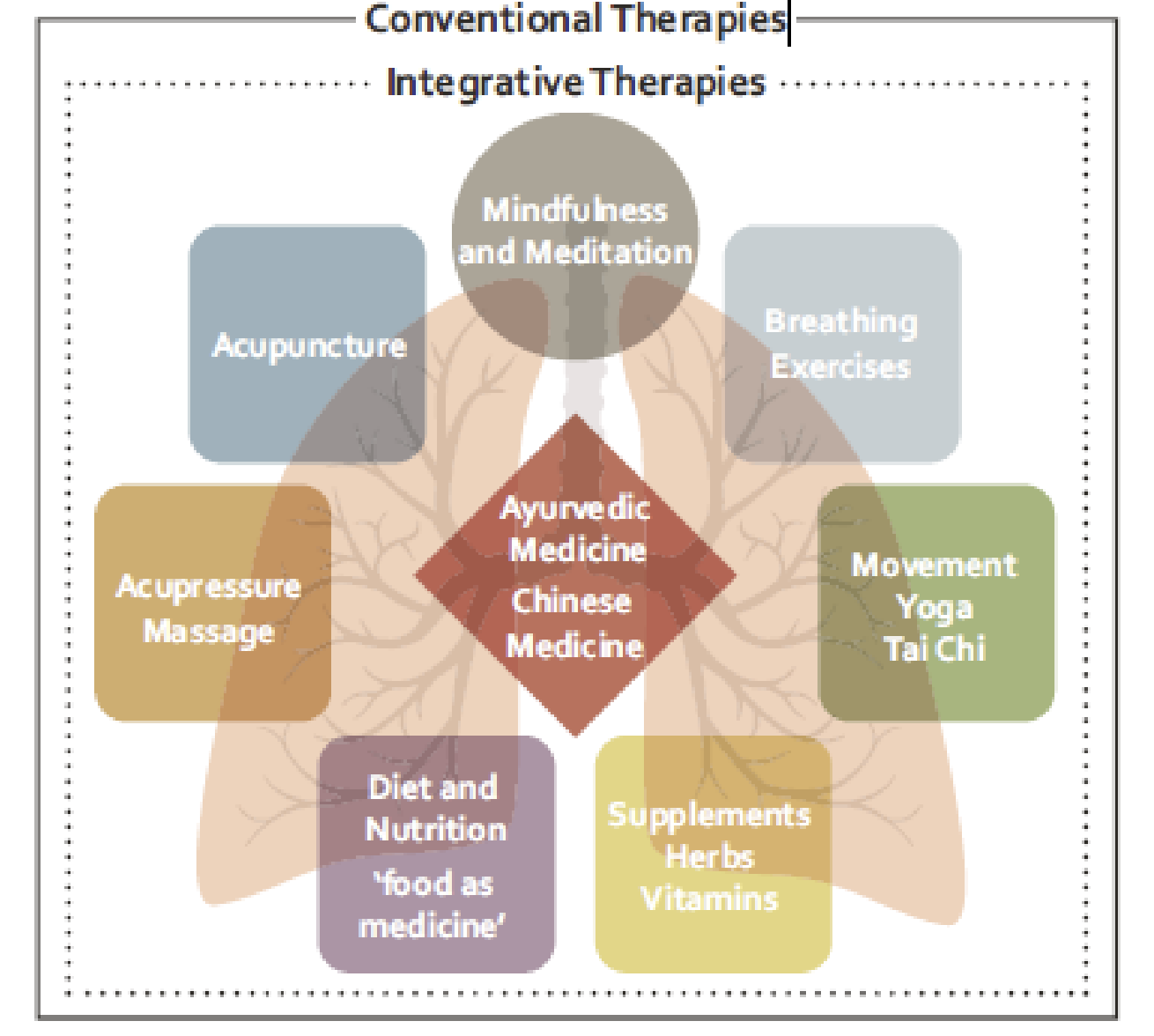
***Integrative Medicine
"Bridging together conventional (usual or mainstream care or “Western” medicine) with complementary traditional/ancient medical treatments in a coordinated way.” (NCCIH)
***Allopathic Medicine
The core of Western Medicine
Describes the field of medicine that most people traditionally use and refer to when seeking medical care
Also referred to as ”conventional” or “traditional medicine”
Includes:
Diagnostic methods (i.e., laboratory testing, heart monitoring, imaging, and strength tests)
Treatment methods include prescription pharmaceuticals (including the medication and intravenous infusion), surgery, radiation, lifestyle recommendations (sometimes), and referral to specialists or therapy practitioners, such as physical, occupational, and speech therapists
best used when people need immediate treatment
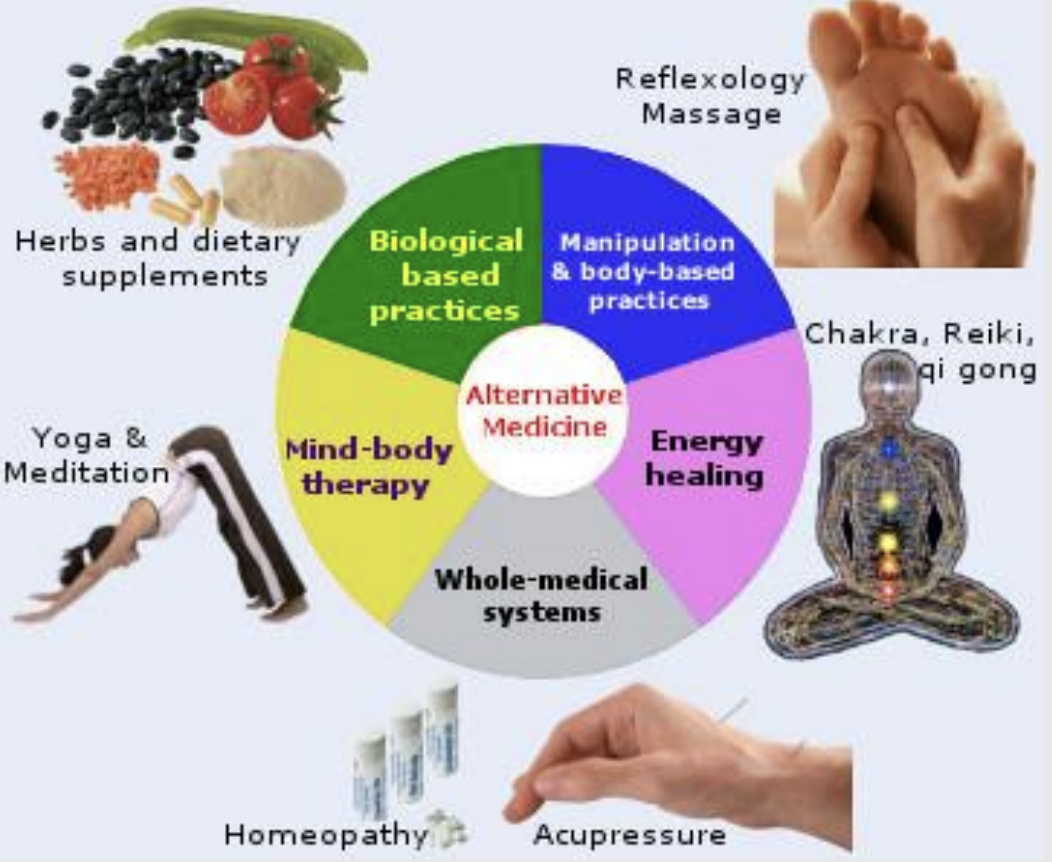
***Alternative Medicine
Term used to describe any medical treatment outside of allopathic medical treatment
Very broad term that can refer to thousands of treatment methods
Some of these treatments are evidence-based, and some are in the experimental stages
Practitioners of alternative medicine vary widely based on the training and type of alternative medicine
The benefits and purpose will vary based on the specific modality, model of care, and symptom(s) being addressed
***Complementary Medicine
Describes medical practices used in conjunction with standard medical care
e.g., taking anxiety medication + doing breathing exercises
Similar to alternative medicine, as both are broad terms that can refer to nearly any method of care
The context in which they are used sets them apart
The difference between the two terms is whether or not conventional medical treatment is also being sought
***Mind-body Interventions
Focus on treating the whole person
Evoke the relaxation response (reduce sympathetic nervous system activity)
Share a focus on attention to breath
Share principles of…
movement/posture;
controlled breathing; and
focused attention/meditation
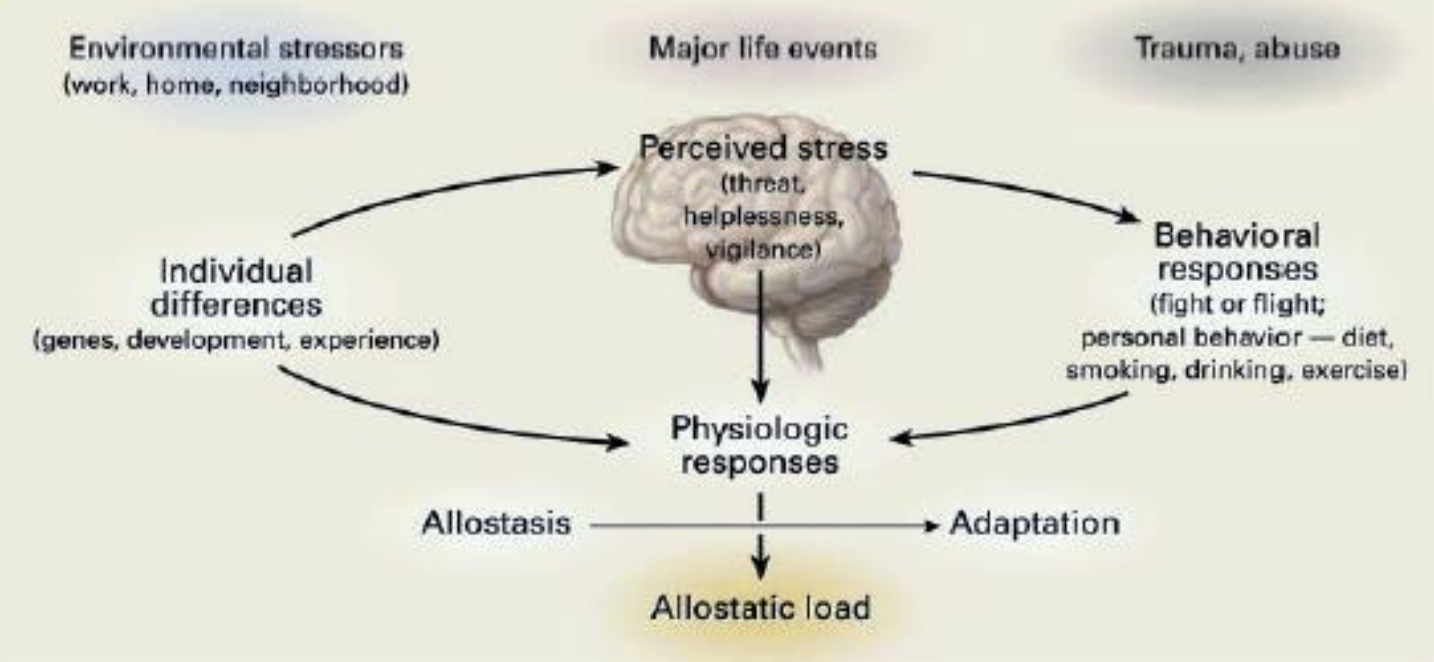
***Behavioral and ***Psychological Stress Response (allostasis)
Allostasis: “active process by which the body responds to daily events and maintains homeostasis (allostasis literally means “achieving stability through change”)
Chronically increased allostasis can lead to pathophysiology (when your body fluctuates up and down due to constant stressors)
Allostatic load or overload refers to the wear and tear that results from too much stress or inefficient management of allostasis, e.g., not turning off the response when it’s no longer needed; central role of the brain
Benefits and Costs of Stress
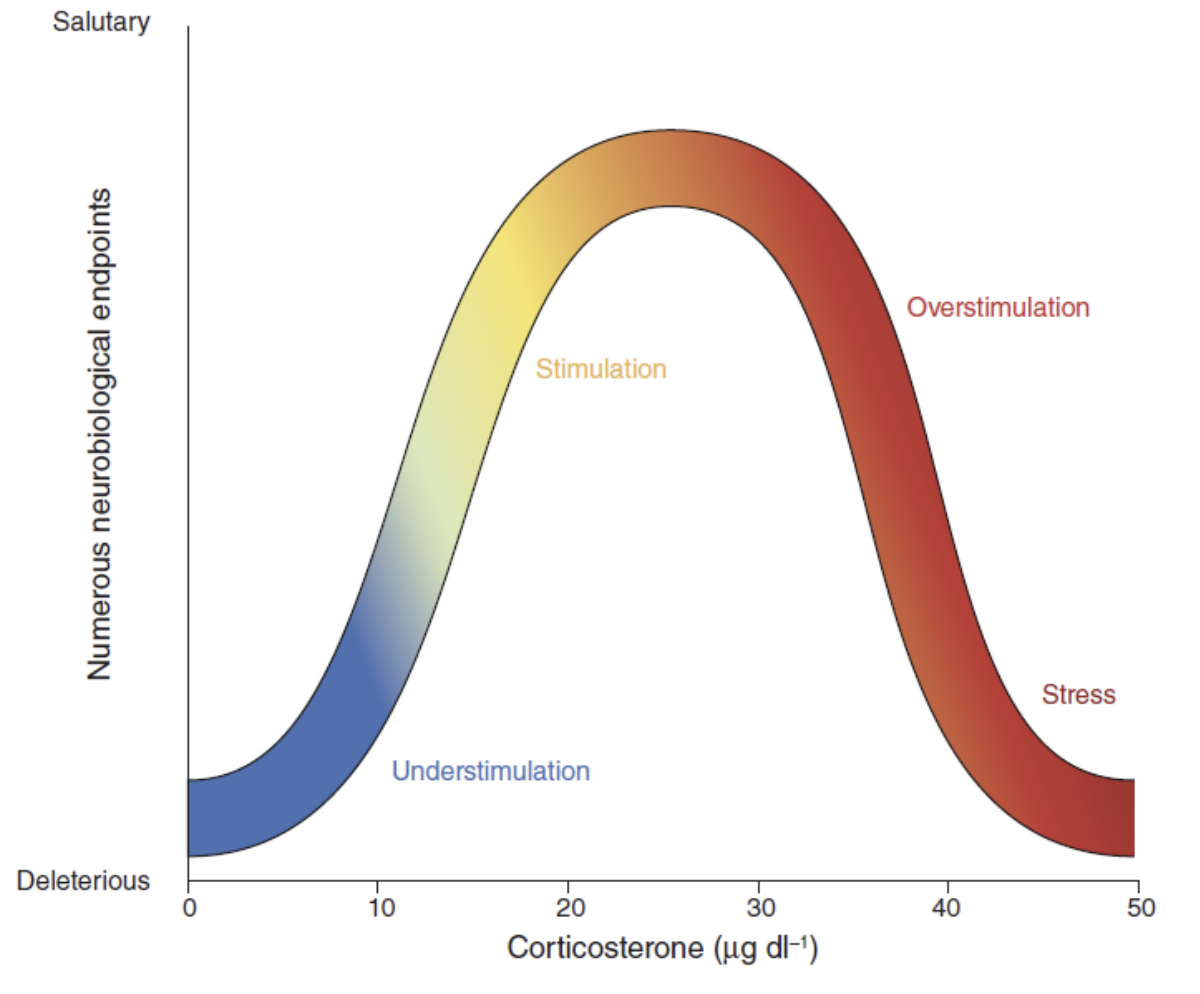
Conceptualization of the inverted-U in the context of the benefits and costs of stress
A broad array of neurobiological endpoints show the same property, which is that stress in the mild-to-moderate range has beneficial, salutary effects; subjectively, when exposure is transient, we typically experience this range as being stimulatory
In contrast, both the complete absence of stress, or stress that is more severe and/or prolonged than that in the stimulatory range, have deleterious effects
***Mindfulness
***Mind-body Interventions
Definition: “Paying attention to the breath on purpose, in the present moment, nonjudgmentally.“
Being fully present with whatever is happening
Being present for the unfolding rather than being driven by it; not running from the present or numbing oneself out
Noticing emotions, thoughts, images, and bodily sensations that arise, and simply returning to awareness of the breath
Nonjudgementally means with openness, acceptance, and curiosity
***Mindful Awareness equals __ + __ + __
== thoughts + emotions + sensations
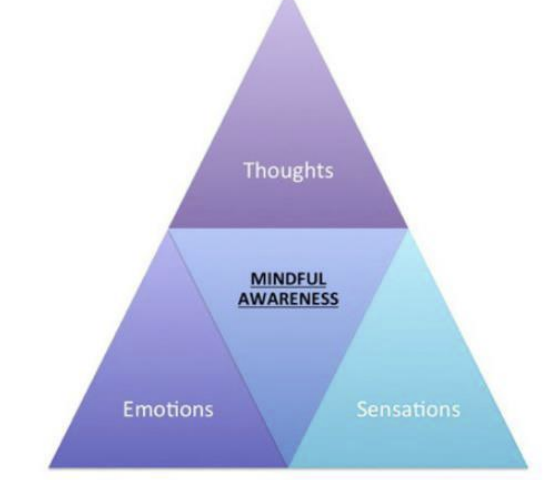
Benefits of ***Mindfulness
Stress Management
Reduced fight (anger/rage)-flight (running away)-freeze (paralyzed/frozen) stress response from autonomic nervous system
Buffer stress; build flexibility and balance
Stress is not the problem; it is how we relate to it
Change response/reaction to symptoms of stress
Deeper awareness (playing with being less mechanical)
Transformation
Less judging
Embodiment (greater awareness of being in your body)
More in touch with the warning signs and signals of the body
More ownership of one’s life
Mind cleaning
Unification of mind and body
Symptom Management
Regulation of emotions
Disengagement from maladaptive, automatic reactions and negative thoughts; less self-preoccupied ruminative thought and vigilance
Neuroplasticity- creates and strengthens new brain circuits
Increased wakefulness and QOL/richness
***Mindfulness Approaches
***Mind-body Interventions
Mindful Breath & Body Awareness
Body Scan
Mindfulness of Thoughts & Feelings
Mindful Movement - tuning into repetitive motion of the body (movement as meditation):
Movement (swinging) of the arms with walking
Kicking of the feet with swimming
Footfall in running
Sense of the body moving in space
Alternative objects of concentration (to the breath):
Tuning into:
Sensory Awareness: Body‘s touch points, sounds, gaze on an external object (e.g., sky or sunset)
Counting
Repeat short word or phrase (e.g., “calm“; “let it go”; “nothing to do, nowhere to go”)
***Walking Meditation Example
***Mind-body Interventions
“When walking, just walk“
No rushing, anticipation, wanting; without effort or striving
Awareness of the swinging of the arms, foot falling, or striking
Focus on different sensations –pressure, heaviness, stiffness, lightness, tingling; e.g., touch sensation of soles of feet hitting the ground beneath
Mindfulness of body posture in space
***Mindful Breathing Example
***Mind-body Interventions
Short guided, mindfulness exercises: 5–10 mins
Few minutes– 20 mins/day; as few as 3x breaths; the breath is always there to connect with
Noticing the physical sensations of the breath rather than thinking about the breath
Being with the breath rather than controlling it
Not judging breaths as “too deep, too shallow, too irregular”
***Progressive Muscle Relaxation Example
***Mind-body Interventions
A symptom of stress is muscle tension
Edmund Jacobson began his work on reducing muscle tension through progressive muscle relaxation in 1908
In order to relax, you must be able to differentiate between muscle tension and relaxation
Start from your head or your feet, and
—> continue up or down your body
For each part of your body, hold your breath and the tension for 3-4 seconds,
—> and then relax; when relaxing, exhale slowly and steadily
After exhalation, spend a few seconds paying attention to the way you feel,
—> and then move on to the next part of your body
***Occupational Therapy and Complementary Therapy
OTs can use any modalities, based on conventional medicine or CHA, in order to elicit occupational engagement
This is within OT’s scope of practice if the therapist is knowledgeable in the appropriate modality
In light of an increase in CHA use, the American Occupational Therapy Association stated that these approaches “may be used within the scope of occupational therapy practice when they are used in preparatory methods or purposeful activities to facilitate the ability of (patients) to engage in their daily life occupations”
***OT Process with Complementary Therapy
As with any treatment modality, occupational therapists must complete an evaluation and treatment plan to determine if the patient’s deficits and needs warrant the use of CHA
To maintain ethical and client-centered care in accordance with the values of the profession, an OT must assess the patient’s cultural traditions to determine if the use of CHA is appropriate
When is it ***outside of OT practice?
Some occupational therapy practitioners may use CHA in a manner that is technically outside of occupational therapy’s scope of practice
This is acceptable only if the occupational therapist possesses the mandatory certifications and licenses to practice CHA with a primary concentration
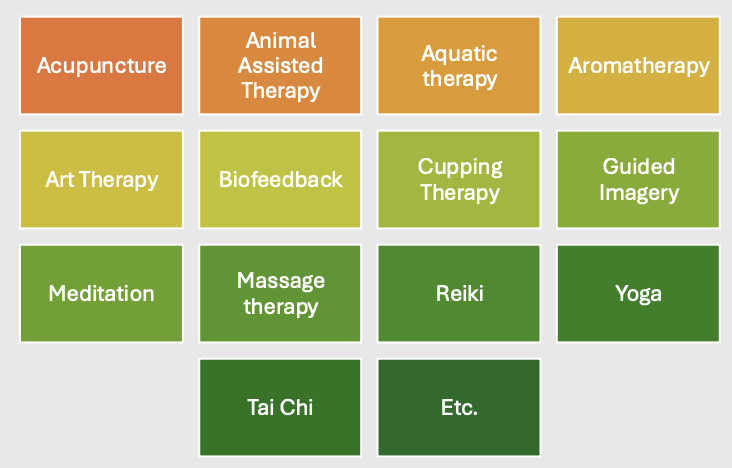
***Types of Complimentary Health Approaches
Acupuncture
Animal-assisted therapy
Aquatic therapy
Aromatherapy
Art therapy
Biofeedback
Cupping therapy
Guided imagery
Meditation
Massage therapy
Reiki
Yoga
Tai chi
Etc.
 Note
Note  Flashcards (56)