WASP ETHANOL paper
 Studied by 0 people
 Call Kai
 Learn
Learn Practice Test
 Spaced Repetition
 Match
Match Flashcards
 Knowt Play
1/19

There's no tags or description
Looks like no tags are added yet.
Name | Mastery | Learn | Test | Matching | Spaced | Call with Kai |
|---|
No analytics yet
Send a link to your students to track their progress
20 Terms
-80% in comparison to 4%
what percent EtOH could wasps regularly consume in comparison to the max for most other organisms
EtOH---ADH(alcohol dehydrogenase)---->
acetaldehyde (toxic)-----acetaldehyde dehydrogenase---->
acetyl-CoA (can incorporate into metab)
break down EtOH break down w/ enzymes
Vespa orientalis
social wasp that regularly consumes EtOH
-mutualism with yeast
- antimicrobial properties
-EtOH carries more energy than glucose
why might wasps benefit from consuming EtOH
They marked the EtOH with 13C (extra neutron) and then saw if the CO2 they emitted was also labeled with radioactive carbon
How did they measure if the wasps were using the EtOH for energy?
7 with different isoforms for each (splicing differences but same gene)
-ADH1-ADH7
-
How many ADH genes do humans have
-more copies
-better enzyme
-hornets have duplicates
how can greater EtOH metabolism be achieved
unequal crossing over during meiosis 1 prophase 1-
leads to gene duplication
one way paralogs exist
-survival probability
-life expectancy
-80% had little affect on hornet life expect or probability
-honey bees had low survival
what did they measure to see if oriental hornet was positively impacted by EtOH incomparison to honey bee
-looked at control hornet (no 13EtOH) and radio labeled hornet in comparison to radio labeled honey bee
-13CO2 only produced by hornet
13EtOH measurements
small sequences of dna brought together to form a continuous strand
what is a contig?
the simplest answer--> the answer that means the fewest number of character state changes on phylogeny
parsimony
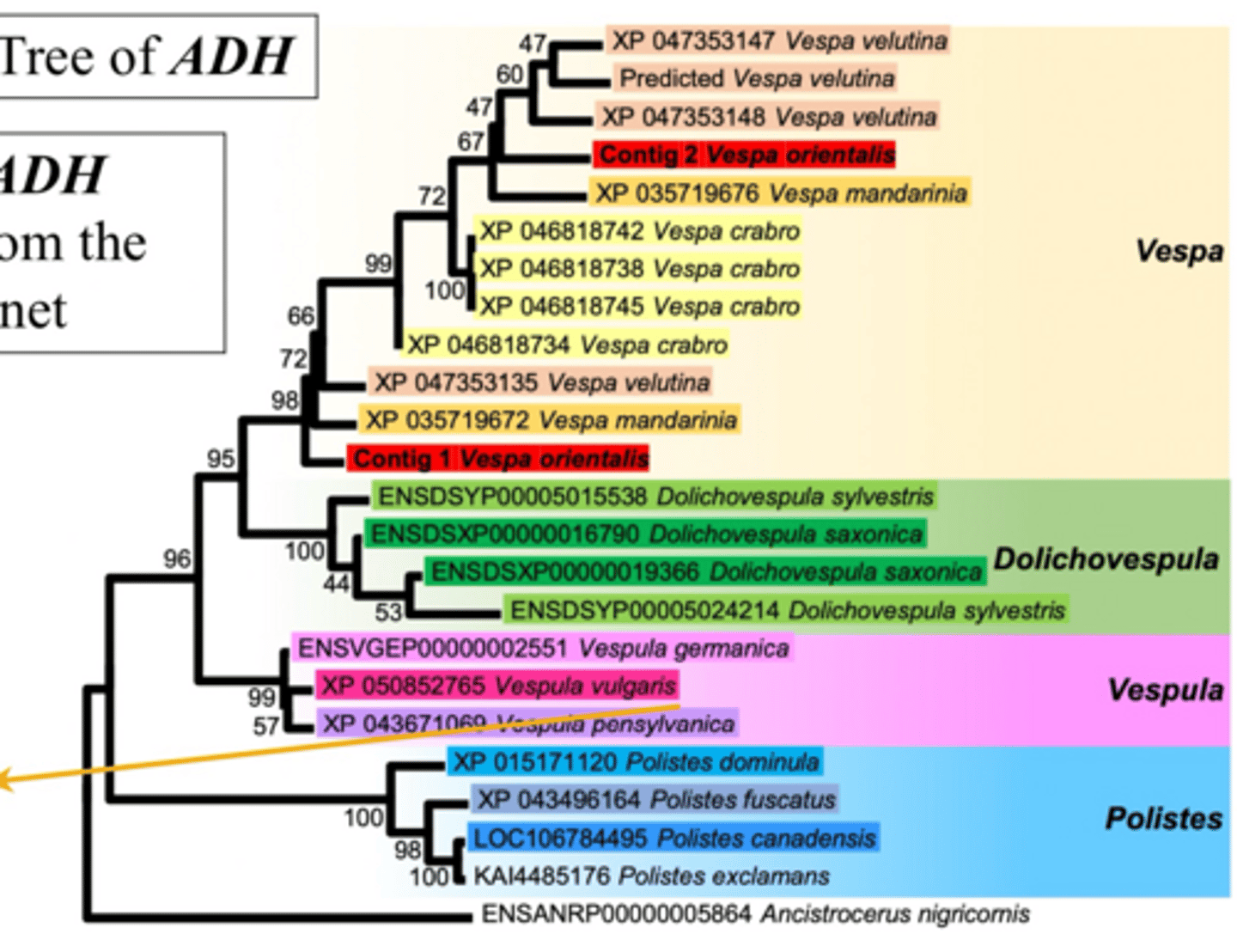
-number of times out of 100 that that contig ended up in the same place on the phylogeny
-shows how trust worthy that relationship is
boot strap valuesHbD vs HbA
-gene tree of ADH in the different species
-the oriental hornet had a duplicat \r
explain
-exons
-point to the right- 5-3 (coding strand)
-point to left- 3-5 non coding strand
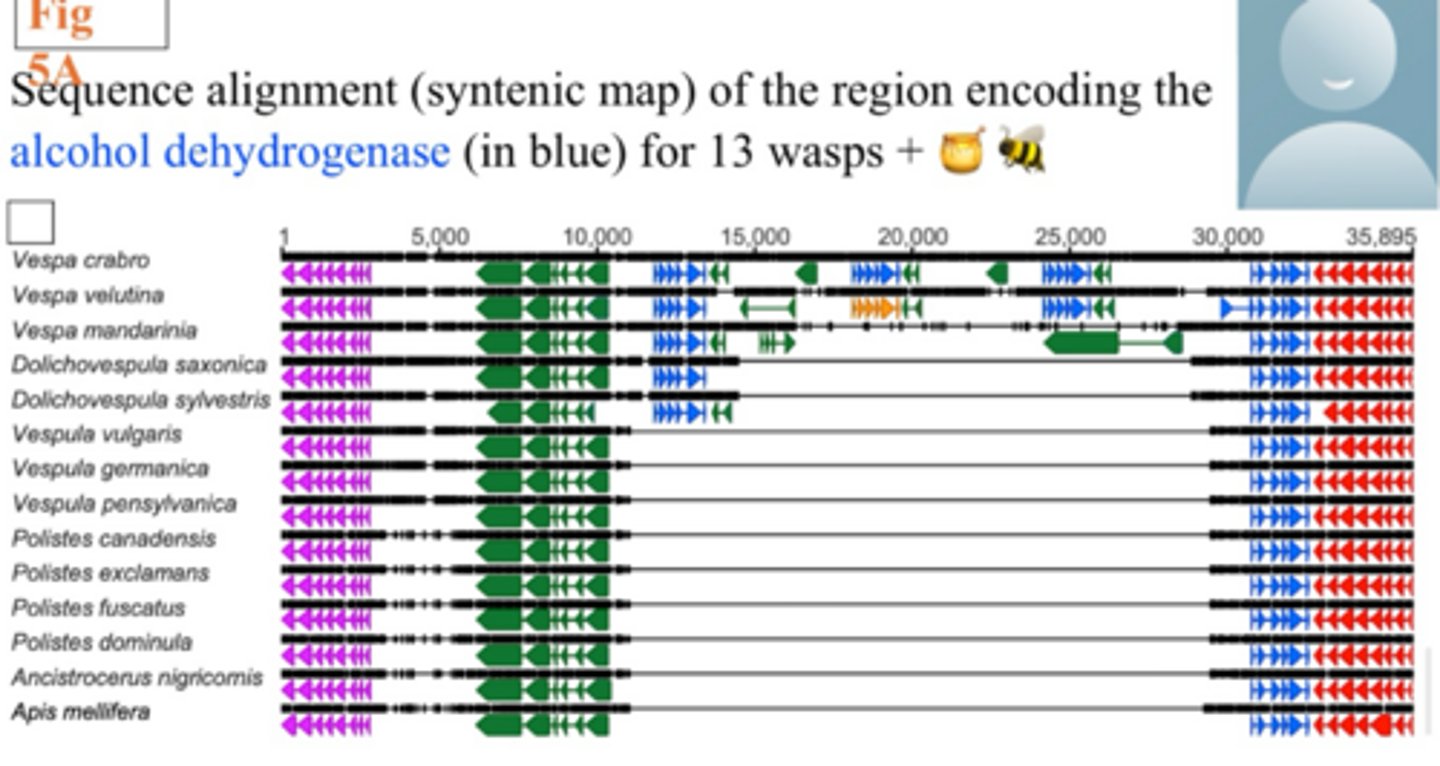
what are the arrows and what do the directions mean
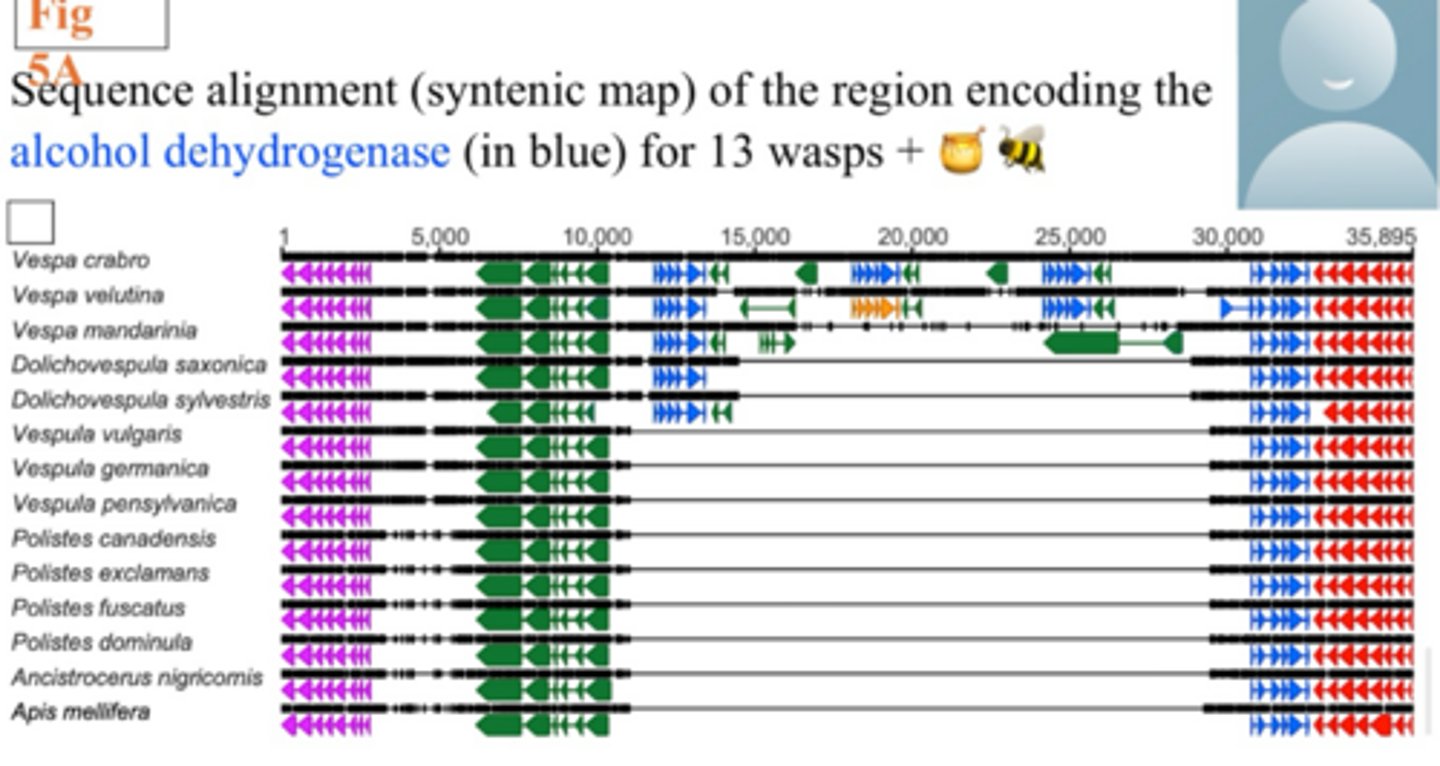
blue
what color is ADH
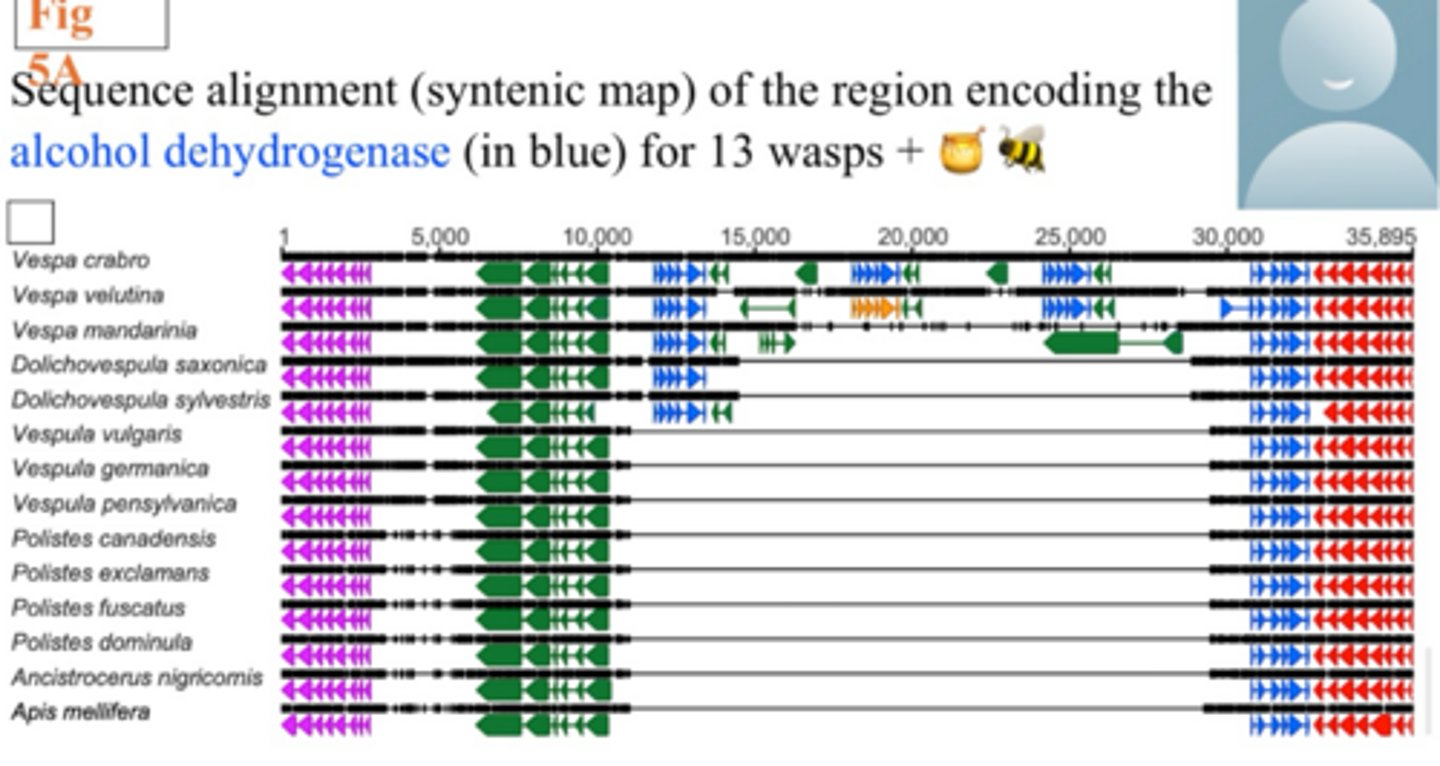
-thin black lines= non coding nucleotides
-gaps- computational necessity to allow synteny to "click"
-larger gaps= less closely related
thin black lines vs gaps
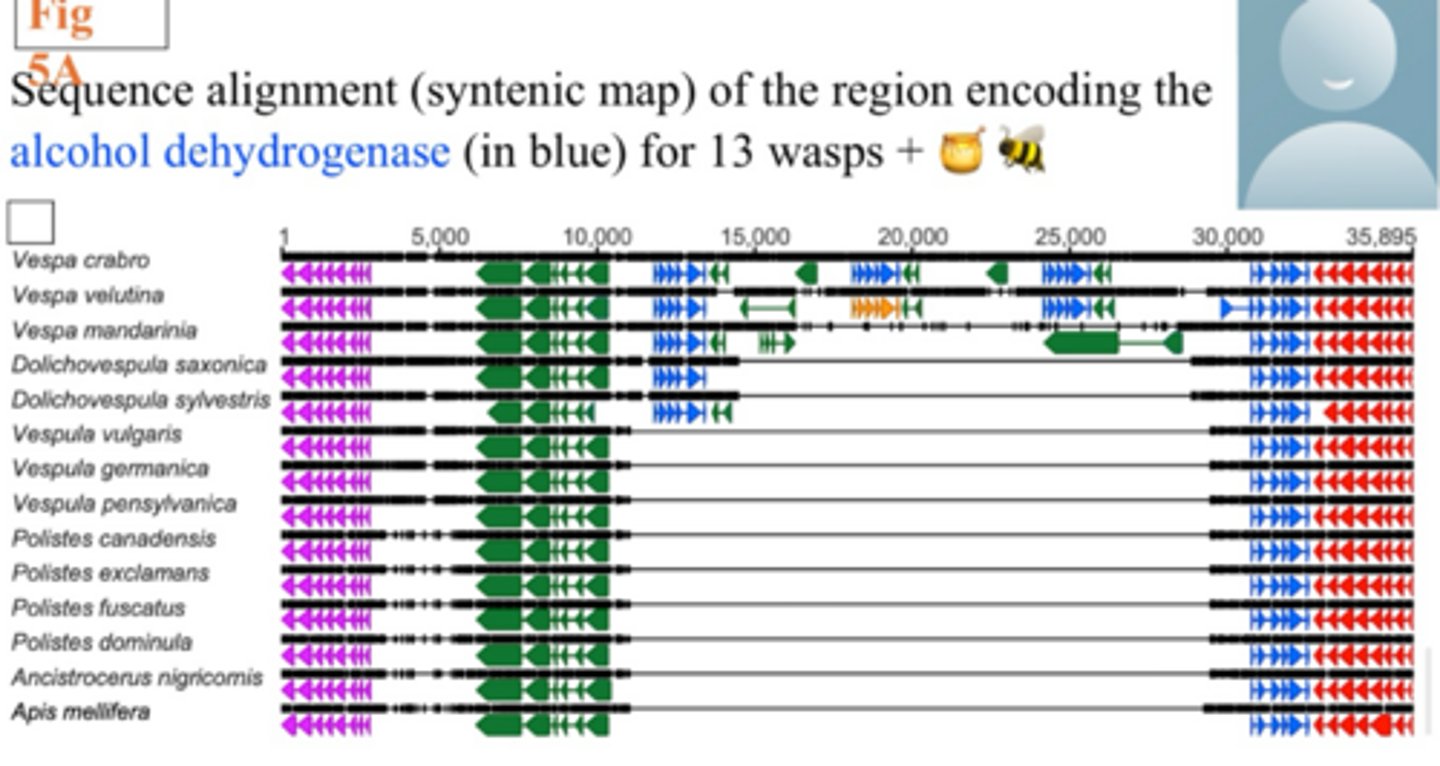
-blue repeats in crabro= paralog
-purple and red synteny= orthologs
paralog vs ortholog
ADH2 (or ADH1B)
which ADH in humans is for breaking down alcohol in the liver
ADH1B*1= most prevalent globally breaks down alcohol slower= less acetaldehyde accumulation
ADH1b*2- metabolized faster- leads to faster accumulation of acetaldehyde
main two isoforms of ADH1B
 Note
Note  Flashcards (62)