Chapter 6 DNA Replication and Repair
 Call Kai
 Learn
Learn Practice Test
 Spaced Repetition
 Match
Match Flashcards
 Knowt Play
1/10

There's no tags or description
Looks like no tags are added yet.
Name | Mastery | Learn | Test | Matching | Spaced | Call with Kai |
|---|
No analytics yet
Send a link to your students to track their progress
11 Terms
Q: Why is DNA's structure considered "simple" for replication?
A: Because of specific base-pairing: Cytosine (C) always pairs with Guanine (G), and Adenine (A) always pairs with Thymine (T).
Image Description: Imagine a ladder. The sides are the "backbone" made of sugar and phosphate. The "rungs" are the bases (A, T, C, G) held together by hydrogen bonds in the middle.
Q: What is the main structural difference between a Purine and a Pyrimidine?
A:
Purines: Have a double-ring structure (larger).
Pyrimidines: Have a single-ring structure (smaller).
Image Description: Imagine Purines as a "double-wide" house and Pyrimidines as a "single-unit" apartment.
Q: Which DNA bases are Purines and which are Pyrimidines?
A:
Purines: Adenine (A) and Guanine (G).
Pyrimidines: Thymine (T) and Cytosine (C). (Note: Uracil in RNA is also a pyrimidine).
Q: Why must a Purine always pair with a Pyrimidine?
A: To keep the width of the DNA helix constant (exactly 2 nanometers wide).
If two Purines paired, the "ladder" would be too wide and bulge.
If two Pyrimidines paired, the "ladder" would be too narrow and the bases wouldn't reach each other to bond.
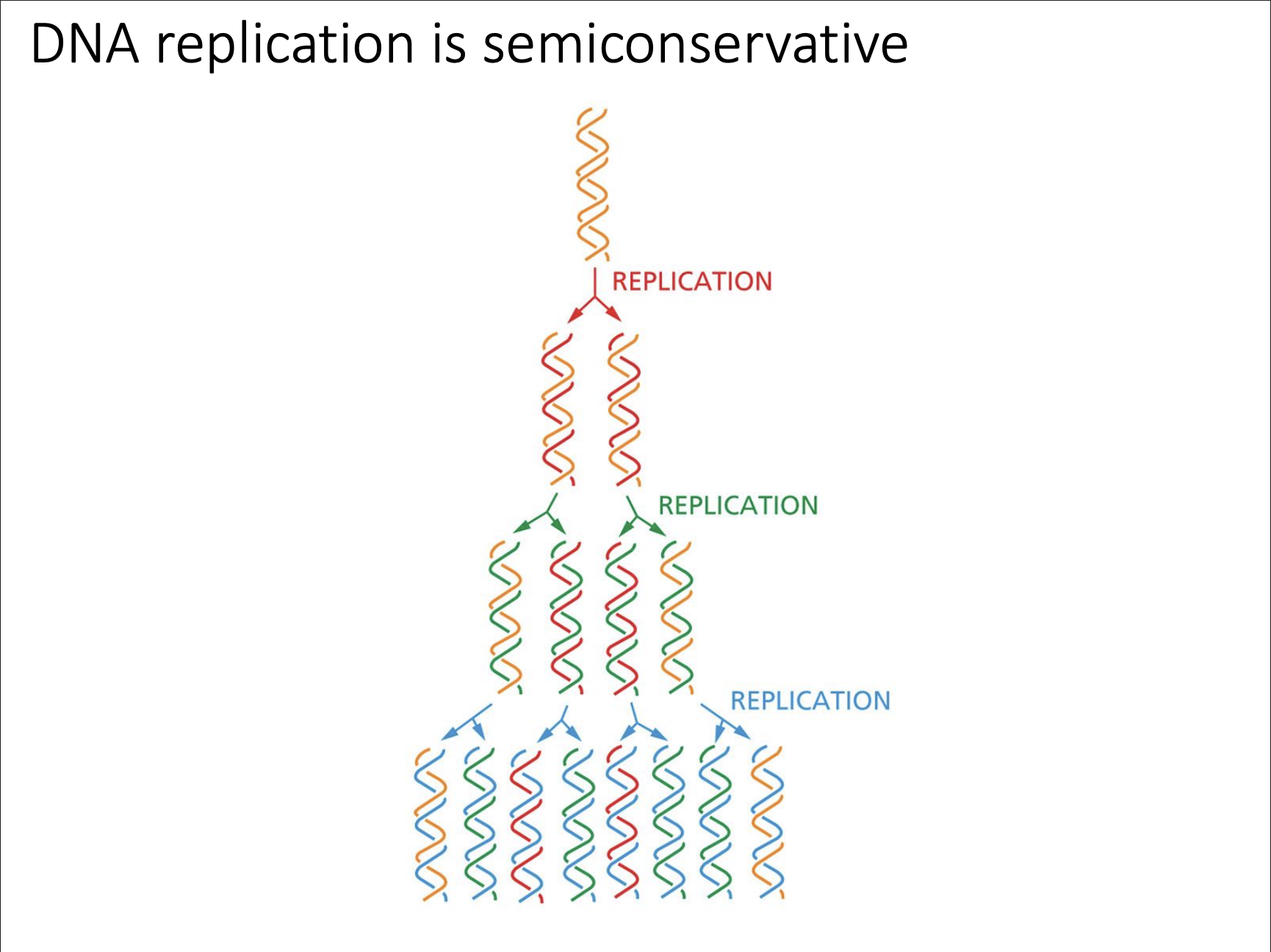
Q: What does it mean that DNA replication is "semiconservative"?
A: It means that after replication, each new DNA double helix consists of one original (parental) strand and one newly synthesized (daughter) strand
Q: How fast do human cells copy DNA?
A: They copy 3.1 × 10⁹ nucleotide pairs in just a few hours.
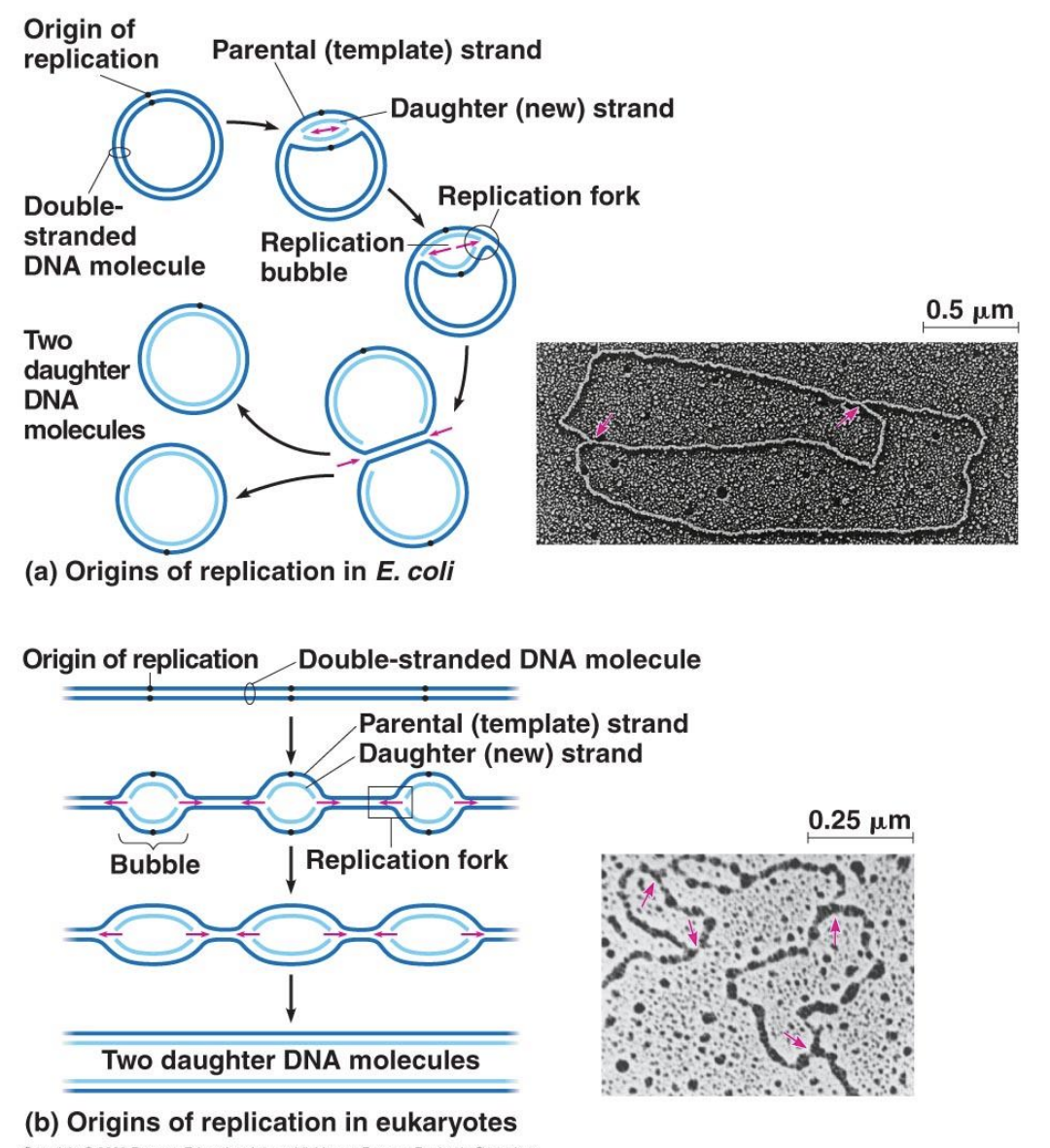
Q: How many origins of replication do bacteria typically have compared to eukaryotes (like humans)?
A: Bacteria typically have one single origin of replication, whereas eukaryotes have more than one on each chromosome.
Q: Approximately how many origins of replication are found in the human genome?
The human genome has about 10,000 origins, averaging roughly 220 origins per chromosome.
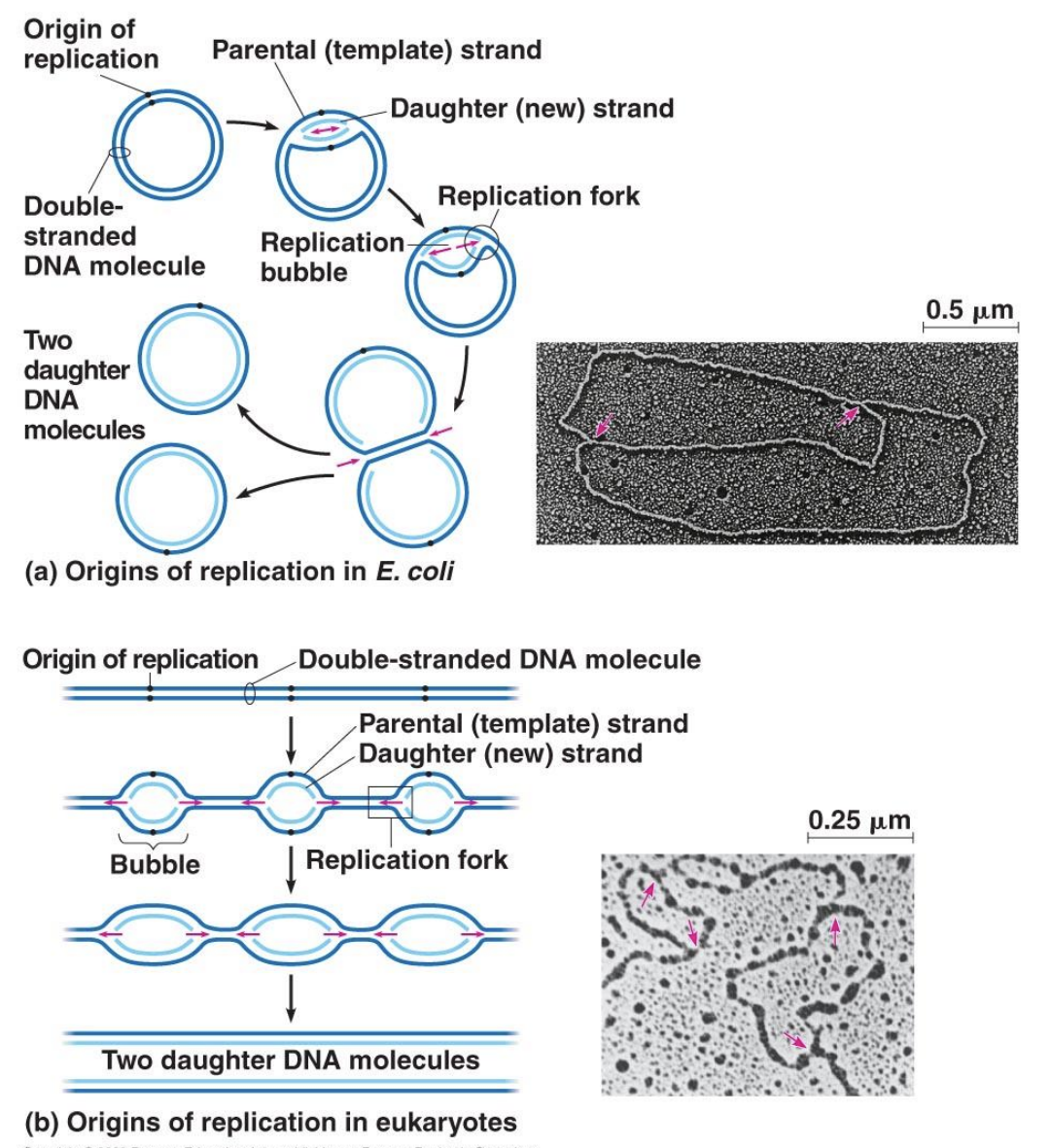
Q: What specific chemical characteristic is often found at origins of replication to make them easier to open?
A: They are often A-T rich.
Why? As you learned earlier, A-T pairs only have 2 hydrogen bonds, making them easier for the cell to pull apart than G-C pairs which have 3 bonds.
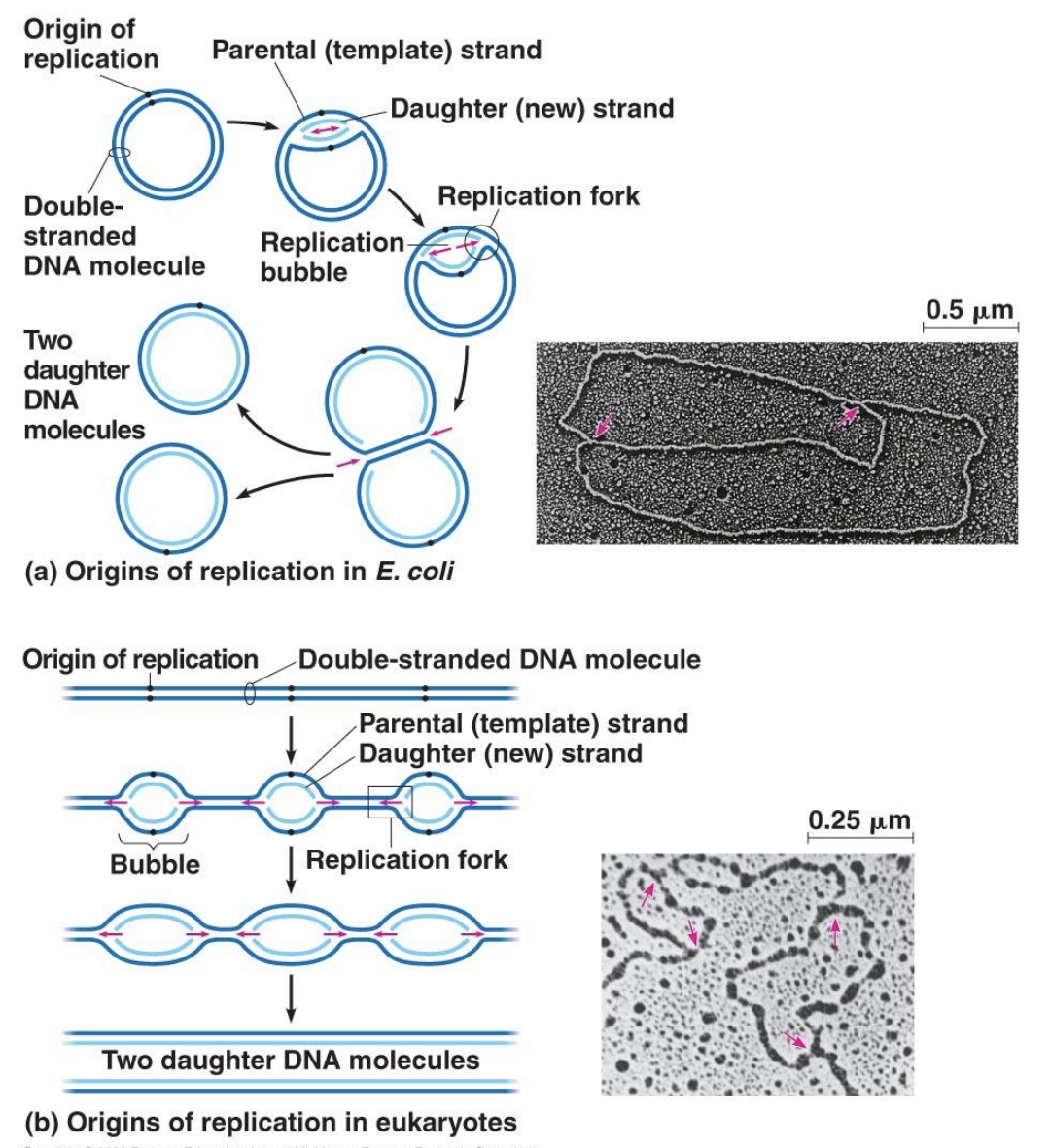
Q: What is the specific job of an "Initiator Protein"?
A: It is the "key" that starts the process. It binds to the origin of replication and physically opens the DNA helix by pulling the strands apart.
Image Description: Imagine a closed zipper. The Initiator Protein is like the hand that grabs the pull-tab and starts to unzip it so the "machinery" can get inside.
Q: Define a "Replication Bubble" and a "Replication Fork."
A:
Replication Bubble: The opened-up area of the DNA where replication is occurring.
Replication Fork: The Y-shaped junction at each end of the bubble where the DNA is actively being "unzipped".

