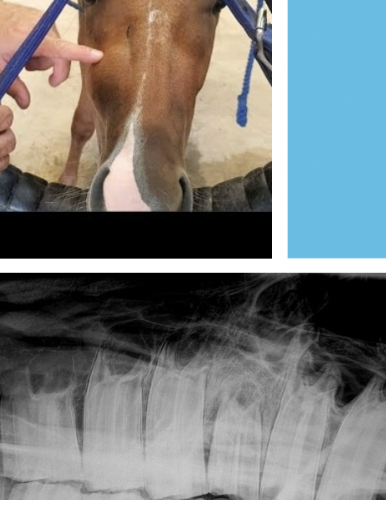
equine dentition
 Call Kai
 Learn
Learn Practice Test
 Spaced Repetition
 Match
Match Flashcards
 Knowt Play
1/10

There's no tags or description
Looks like no tags are added yet.
Name | Mastery | Learn | Test | Matching | Spaced | Call with Kai |
|---|
No analytics yet
Send a link to your students to track their progress
11 Terms
directional terminology
Occlusal surface: surface doing the biting/chewing + contacts the upper/lower teeth
Lingual surface: surface touching the tongue
Labial (buccal) surface: surface touching the lips or cheeks
dental formula
Upper Right = 100’s
Upper Left = 200’s
Lower left = 300’s
Lower right = 400’s
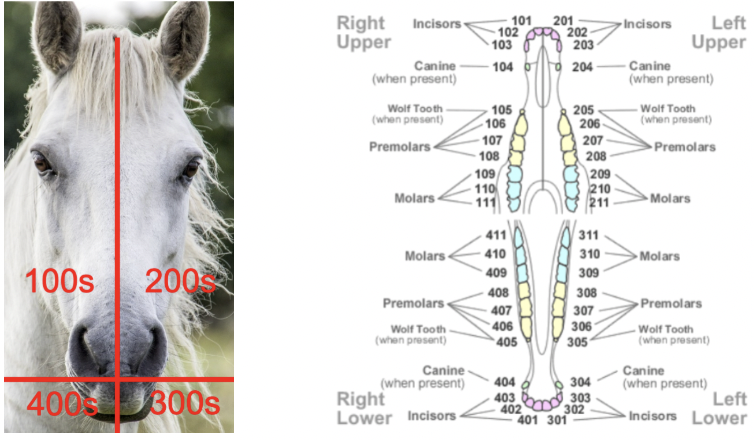
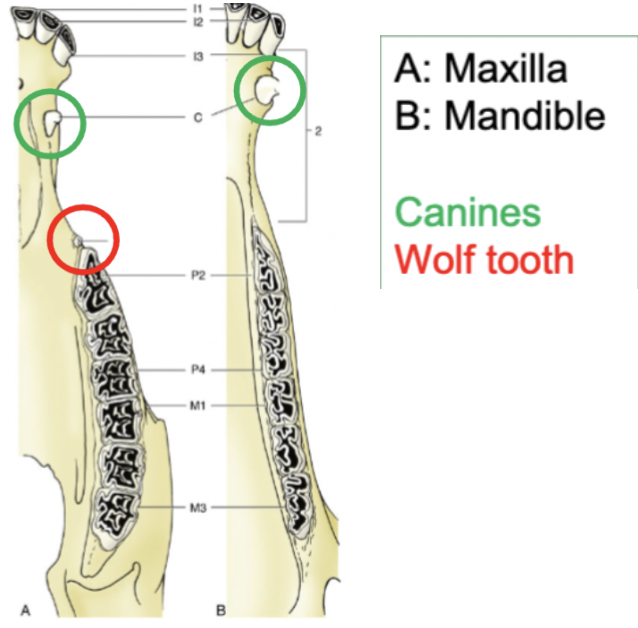
wolf teeth
Technically first premolar
Not always present
Very rare in mandible
Equally present in M/F
Can interfere with bit placement and comfort, so often need to be surgically removed
tooth development
Horses have 2 sets of teeth:
Temporary = deciduous teeth, milk teeth, or baby teeth
Begin to erupt in pairs, sometimes before birth
Permanent: begin to replace after 2.5 yrs
Start with center incisors
By 5 yrs, most horses have full permanent set
Only one set of permanent molars!!
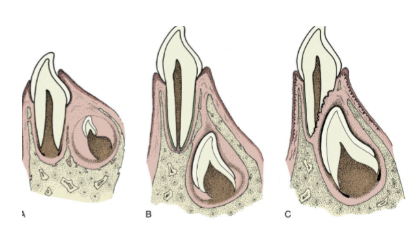
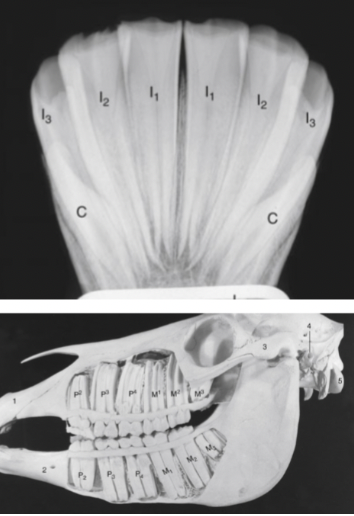
incsicors vs cheek teeth
Incisors
For cutting/shearing grass and hay
Implanted deep into jaw, roots converge together
Cheek teeth: premolars and molars
For grinding down plant material
Have 3-4 deep roots
Continuously erupt throughout life (replaces teeth from grinding)
Premolars and molars create continuous grinding surface with no gaps
dental pathologies: general
Can results in: anorexia, weight loss, choke (lodged food bolus in esophagus, but can still breathe)
May require: floating (filing teeth), surgery, altered diet/feeding strategies (soaking feed, alternate feed)
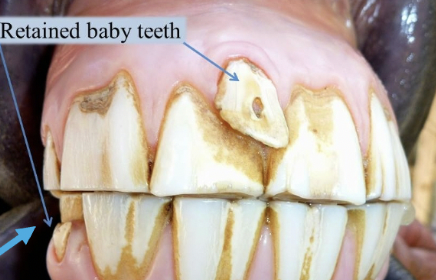
retained caps
Retained deciduous teeth
Permanent teeth erupt without loss of baby teeth
Requires surgical removal if they don't resolve on their own
Can result in malalignment of permanent teeth
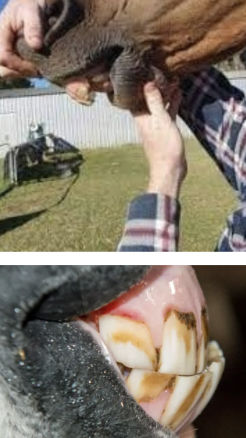
Malocclusions
Normal occlusion (teeth contact) = level incisor bite (no overbite like humans)
Malocclusion = any deviation
Overbite (parrot mouth) or underbite
Can result in uneven wear of cheek teeth, abnormal temporomandibular (jaw) articulation
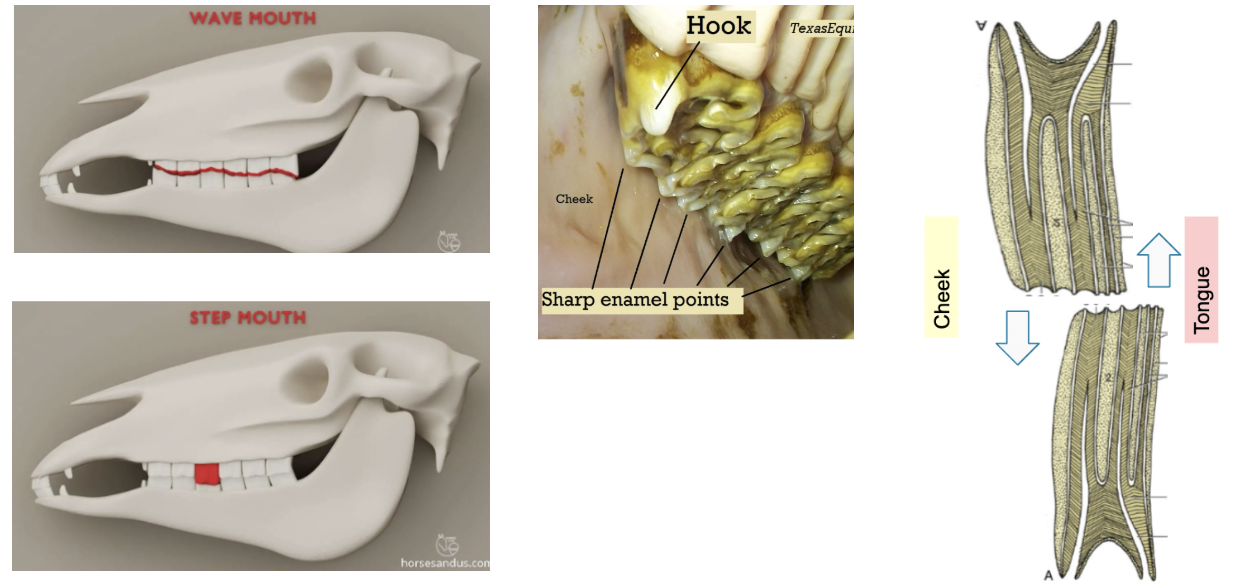
Cheek teeth abnormalities (4)
Points: sharp points develop on buccal surface of maxillary cheek teeth
Hooks: areas of rostral or caudal maxillary or mandibular cheek teeth that aren’t worn down by opposing tooth
Wave mouth: wave pattern develops on occlusal surfaces of cheek teeth, may be due to retained caps, molars that erupt too slowly, or missing teeth
Step mouth: one tooth much longer than others in same row, due to opposing teeth being missing/malformed
*Generally corrected by filing down (floating)
Wry nose
Lateral deviation of premaxillary + incisive bones of skill (one side of nose longer)
Congenital malformation
Can result in difficulty breathing
Malocclusion is guaranteed
Requires reconstructive surgery if severe
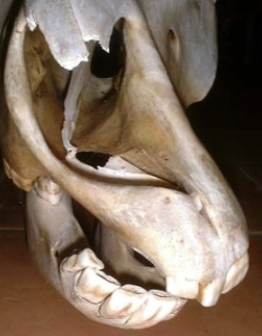
Tooth root abscess
Painful infection of cheek tooth root
Can destroy maxillary bone
Classic signs
Halitosis: bad breath
Nasal discharge: due to cheek teeth root interaction with paranasal sinuses
Swelling on bridge of nose or mandible
Possible draining tract where infection has progressed and exits the skin