Ap Psych unit 2
 Call Kai
 Learn
Learn Practice Test
 Spaced Repetition
 Match
Match Flashcards
 Knowt Play
1/35

There's no tags or description
Looks like no tags are added yet.
Name | Mastery | Learn | Test | Matching | Spaced | Call with Kai |
|---|
No analytics yet
Send a link to your students to track their progress
36 Terms
Critical Periods
rigid, specific time windows where essential experiences MUST happen for normal development
ex) visual development
Sensitive periods
more flexible windows where experiences that don’t happen can still happen later, but it’s harder
ex) learning a second language
Jean Piaget
theorized that children proceed distinct states of cognitive development, nature over nurture
Piaget’s theory of cognitive development (songs preoccupy chill fems)
sensorimotor stage, preoperational stage, concrete operational stage, formal operational stage
Sensorimotor stage
0-2 yrs
children take in world through sensory impressions & motor activities
peroperational stage
about 2-6 yrs old
egocentrism, animism, artificialism, theory of mind
Concrete operational stage
7-11 years old
think logically about concrete events
conservation
Formal Operational stage
around 12 years old
people begin to think logically about abstract concepts
Vygotsky’s sociocultural theory
nurture over nature
outside world provides “scaffolding” for personality
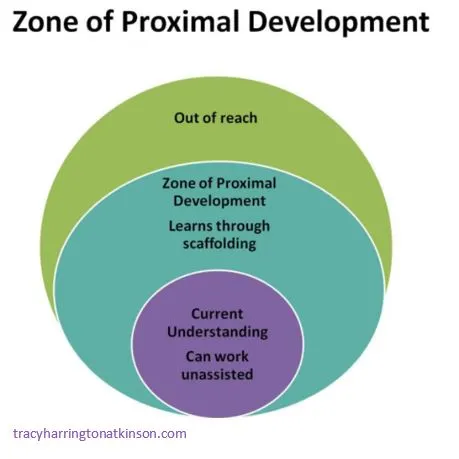
Zone of proximal development
basically the range where a child can learn a new skill if around a more skilled child
Language
spoke, written, or signed words and the way we use them to create meaning
Phoneme
smallest distinctive sound unit of a word
ex) ch, a, t
morpheme
smallest sound unit that carries meaning
ex) pre, ed, -ly
Grammar
system of rules that allows us to communicate with and understand others
semantics
set of rules for deriving meaning from sounds
mean
syntax
set of rules for combining words into grammatically correct
you get a tax if you arrange words wrong
Mechanics
set of rules that dictate how language is written
Babbling stage
starts at around 4 months
goo.
One-word stage/ holographic speech
around 1 yr old
(・∀・(・∀・(・∀・*)
telegraphic speech
around 2 yrs old
food. eat. now.
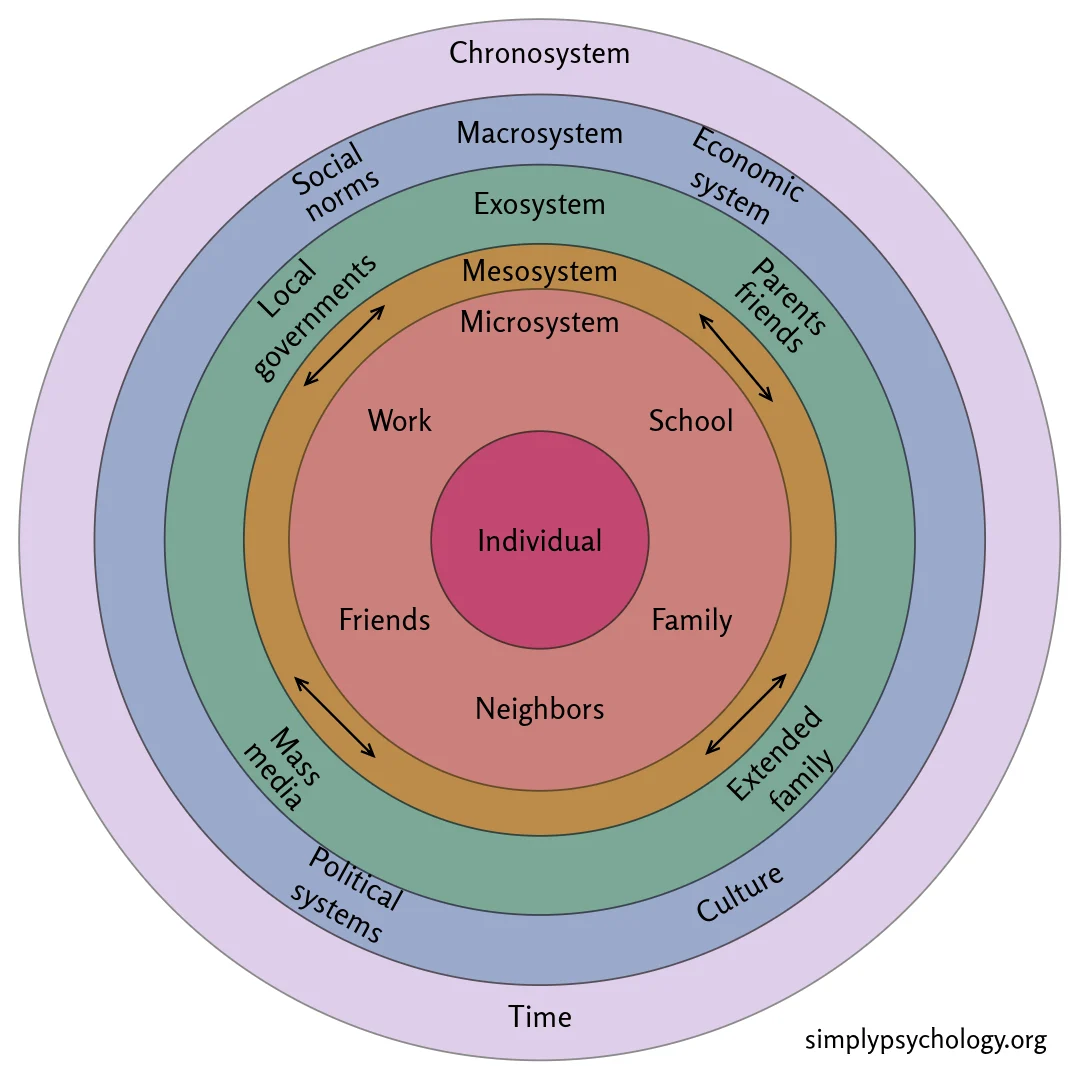
ecological systems theory
one’s social environment influences their human development
Separation anxiety
distressed when mother leaves
stranger anxiety
avoidant of stranger when alone, but friendly if mother is there too
the 4 parenting styles
1) permissive
2) authoritative
3) neglectful
4) authoritarian
Learning
the process of acquiring new and relatively enduring information or behaviors
Classical conditioning
link 2+ stimuli and associate events
ex) pavlov’s dog
operant conditioning
behavior is strengthened if followed by a reinforcer and diminished if followed by a punisher
cognitive learning/ observational learning
learning by watching others
Acquisition
the initial stage where one links a neural stimulus to an unconditioned stimulus so that the NS begins triggering a conditioned response
generalization
tendency to respond to similar stimuli after conditioned response
discrimination
learned ability to distinguish between stimuli
Operant conditioning
behavior is strengthened by a reinforcer and diminished by a punisher
continuous reinforcement
reinforcing the desired behavior every time it happens
good for quick acquisition, quick extinction after tho
intermittent/partial reinforcement
giving a reward for a behavior only sometimes
slower acquisition, but solwer extinction too!
fixed ratio schedule
reinforces a response only after a certain number of responses
but 2 get one free!
Variable-ratio schedule
reinforces a response after an unpredictable number of responses
slot machine!

