Enlightenment Philosophes and Key Ideas: Politics, Society, and Economics
 Call Kai
 Learn
Learn Practice Test
 Spaced Repetition
 Match
Match Flashcards
 Knowt Play
1/18

There's no tags or description
Looks like no tags are added yet.
Name | Mastery | Learn | Test | Matching | Spaced | Call with Kai |
|---|
No analytics yet
Send a link to your students to track their progress
19 Terms
What was the Enlightenment?
A movement in the 17th and 18th centuries applying natural laws to politics, society, economics, and religion.
Who were the philosophes?
An elite group of thinkers, mostly middle class, who applied reason to non-scientific issues and criticized established institutions.
What role did salons play during the Enlightenment?
Salons were social gatherings that allowed women to participate actively, where writers, thinkers, and artists shared and discussed ideas.
What is Deism?
A belief in a rational God who created the universe with natural laws, but does not intervene in human affairs or perform miracles.
What was Thomas Hobbes' view on human nature?
He had a pessimistic view, believing that without government, life would be 'nasty, brutish, and short.'
What is the social contract according to Hobbes?
An agreement where people give up some freedoms to an absolute ruler to ensure protection and order.
How did John Locke's views differ from those of Hobbes?
Locke believed people are inherently good, that rulers derive power from the consent of the governed, and that people have the right to rebel.
What natural rights did John Locke advocate?
The rights to life, liberty, and property, which governments must protect.
What were Voltaire's main contributions to the Enlightenment?
He argued for common sense, religious toleration, and freedom of speech, famously stating he would defend the right to speak freely.
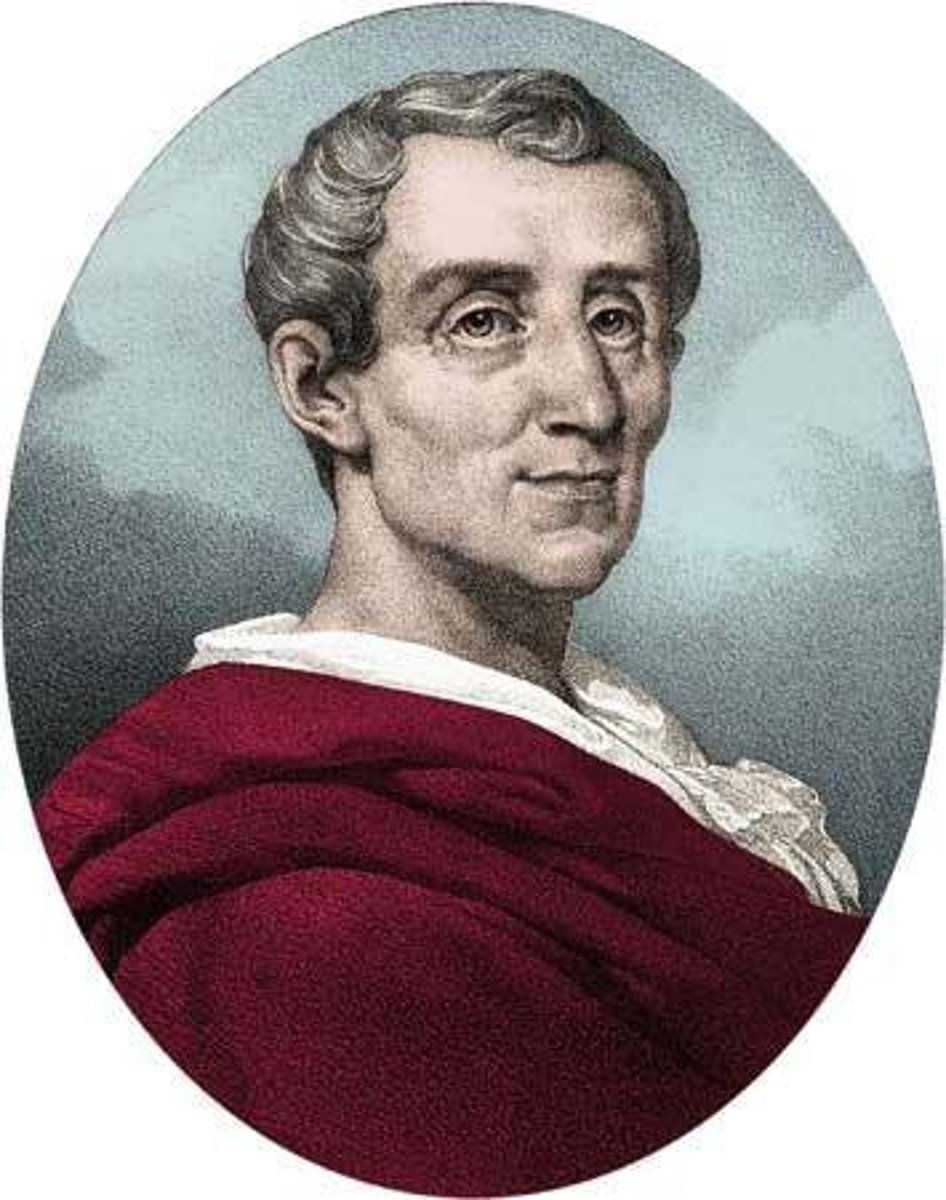
What was the purpose of Denis Diderot's Encyclopedia?
To change the general way of thinking by compiling knowledge on various topics, including government, philosophy, and religion.
What did Montesquieu advocate in 'The Spirit of the Laws'?
He discussed the separation of powers in government as a means to protect freedoms.
What was Jean Jacques Rousseau's view on human nature?
He believed humans are inherently good but corrupted by society, advocating for equality and the concept of the 'general will.'
What is the significance of Rousseau's 'The Social Contract'?
It posits that people form a community and choose their ruler, emphasizing popular sovereignty.
What were Cesare Beccaria's views on punishment?
He argued that laws exist to preserve order, and punishment should be proportional, opposing torture and the death penalty.
What did physiocrats believe?
They focused on economic reforms based on natural laws, opposing mercantilism and advocating for laissez-faire economics.
What is the main idea of Adam Smith's 'The Wealth of Nations'?
A free market should regulate economic activity, influenced by supply and demand, while the government has a duty to protect society.
What does the term 'invisible hand' refer to in economics?
The concept that individuals pursuing their own interests can unintentionally benefit society as if guided by an invisible hand.
What were Mary Wollstonecraft's main arguments in 'Vindication of the Rights of Women'?
She called for equal education for boys and girls and argued that women should have the freedom to make their own decisions.
What was the impact of the Enlightenment on society?
It encouraged critical thinking, challenged traditional authority, and laid the groundwork for modern democratic and human rights principles.
Explore top notes

Explore top flashcards
