weight management exam 2
 Call Kai
 Learn
Learn Practice Test
 Spaced Repetition
 Match
Match Flashcards
 Knowt Play
1/35

There's no tags or description
Looks like no tags are added yet.
Name | Mastery | Learn | Test | Matching | Spaced | Call with Kai |
|---|
No analytics yet
Send a link to your students to track their progress
36 Terms
stages of change/trans theoretical model
takes into account thinking. feelings, behaviors, relationships, and many other factors
6 stages
precontemplation
first stage in the TTM
don’t even know the problem exists, not ready for change, denies the problem, blames others
contemplation
second stage in the TTM
thinking about making the change within the next 6 months
preparation
third stage in the TTM
getting ready to make a change, will likely do something within the next 30 days
action
fourth stage in the TTM
you are making the change, will have consistent effort for the next 6 months
maintenance
fifth stage in the TTM
maintain the behavior for 6 month
termination
sixth stage of the TTM
behavioral strategies to consider
self-monitoring
stimulus control
cognitive restructuring
stress management
social support
self-monitoring
increase self-awareness
establish a baseline
stimulus control
establish and identify triggers that are helping or hurting the behavior
cognitive restructuring
how do you personally define success
make realistic expectations
make small changes
stress management
adding physical activity (movement)
emotional eating (not good to always lean towards a treat when you have a bad day)
negatives of labeling foods
leads to restrictive thinking and all-or-nothing thinking
makes people feel bad and guilty
realistic management goals
5-10% body weight loss
health, energy, fitness
well-being and self-esteem
mood and appearance
functional and recreational activity
benefits of modest weight loss
loss of 5-10% BW
decreases obesity-related chronic disease factors and improves other factors
decreases:
glucose/insulin
BP levels
A1C
TAGs
LDL
increases
HDL
quality of life indicators
methods of measuring
body fat %
waist circumference (Nadiya does not do this anymore)
inches
sizing of clothes
biochemical markers
challenging realities of weight loss
effort and work for weight loss maintenance is the SAME OR MORE for weight loss
average person wants to drop 30-35% of BW, most lifestyle changes lead to 8% loss
weight loss plateau
weight loss is at a standstill - VERY COMMON
usually around 6 months into making a change
very predictable
why does the body reach a plateau
the body weighs less - there is LESS of you to move around so the body burns less
how has body composition changed
lean body mass burns more than body fat
make sure the LBM is being worked and not starved
body becomes more efficient at both utilizing the calories put in AND the new exercise demands (when the body feels starved, the body will slow the metabolism)
what to do when you hit a plateau
reevaluate the diet
evaluate the caloric intake
are macro needs being met to meet demands
reevaluate activity
since you are in better shape, you can work more/harder
vulnerable periods for weight gain
pregnancy
childhood
adolescence
adulthood/menopause
how much should a person weigh
calculate IBW
need to know gender and height
does NOT help determine body comp.
IBW equation for female
100 lbs for the first 60”
then add 5lbs for every inch
ex: 5’1 (100 +5) = 105lbs
THEN ± 10%
IBW equation for male
106lbs for the first 60”
then add 6lbs for every inch
ex: 6”2 (106 + 14×6) = 190 lbs
± 10%
pregnancy
does NOT mean you get to eat 2
gestation is 40 weeks
weight gain starts in 2nd and third trimester
pregnancy weight gain saying
WHEN you gain weight during pregnancy is just as important as HOW much weight you gain
pregnancy chart
if you gain a lot of weight in the beginning, it is not the fetus, it is just the mother putting on extra fat
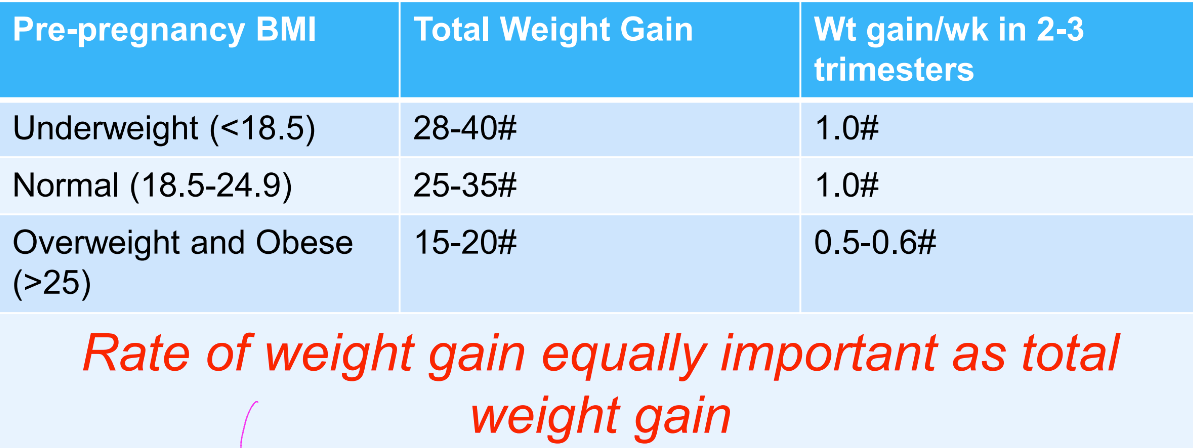
caloric needs during pregnancy/breastfeeding
only need 200 calories extra a day for pregnancy
need 800 calories extra a day for breastfeeding (from body having to prepare another food source)
childhood
high birth weight is linked to being overweight later in life
increases risk for C-section
typical BW weight 7-8.5lbs
breastfeeding decreases the risk of obesity
baby KNOWS how much to eat
will stop sucking for milk when it is done
early introduction of solid foods increases caloric intake TOO fast TOO quick
gestational smoking (47% increased risk in an increase in BW LATER in life)
when born, the baby if often underweight
childhood to adolescence
what happens we go through childhood that could increase risk for obesity
increases
screen time
sedentary behaviors
energy intake
independent food choices
body fat mass for girls as they enter puberty
body fat is higher in women than guys
relates to increasing risk of eating disorder
due to hormones: estrogen, progesterone
adulthood
decrease in lean mass with increase intramuscular fat
sports or other physical injury
stress
life course transitions
menopause
decrease in resting energy expenditure, lean body mass, energy requirements
stable or increasing kcal intake WHILE lessening activity
decreased sleep
increased risk for depression (need for meds)
side effects of meds are often weight gain
NEED to increase protein intake and start weightlifting (strengthens bones)
what causes weight gain in menopause (according to Nadiya)
shift in hormone levels
why does hormone shift cause weight gain in woman
redistribution of fat to the abd which increase visceral fat - increases risk for chronic disease
hysterectomy: second most common surgical procedure among women
this removes the uterus - replicates going through menopause - the women will go through the same side effects of hormone changes no matter the age
metabolic syndrome
needs there to be 3 indicators to be diagnosed
central of abdominal obesity (measure through waist circumference)
men - 40 inches or above
women - 35 inches or above
TAGs - greater than or equal to 150 mg/dL
HDL cholesterol (you WANT this to be hard)
men - less than 40 mg/dL
women - less than 50 mg/dL
BP - greater than or equal to 130/85 (normal is 120/80)
fasting glucose is greater than or equal to 100 mg/dL

