BIO PSYCH - LECTURE 3: MEMBRANE POTENTIALS
 Studied by 0 people
 Call Kai
 Learn
Learn Practice Test
 Spaced Repetition
 Match
Match Flashcards
 Knowt Play
1/11

There's no tags or description
Looks like no tags are added yet.
Name | Mastery | Learn | Test | Matching | Spaced | Call with Kai |
|---|
No analytics yet
Send a link to your students to track their progress
12 Terms
selective permeability
the membrane lets some ions pass easily (like K⁺ through leak channels) but blocks others unless they have a specific channel or pump
electrochemical gradient
the combined force of a chemical concentration gradient (difference in solute concentration) and an electrical gradient (difference in charge) across a membrane
Driving Force of Ion Movement
Vm - Eion
Difference between the membrane potential and the ion’s equilibrium potential
Ohm’s Law
Current = Conductance * Driving Force
I = g x V
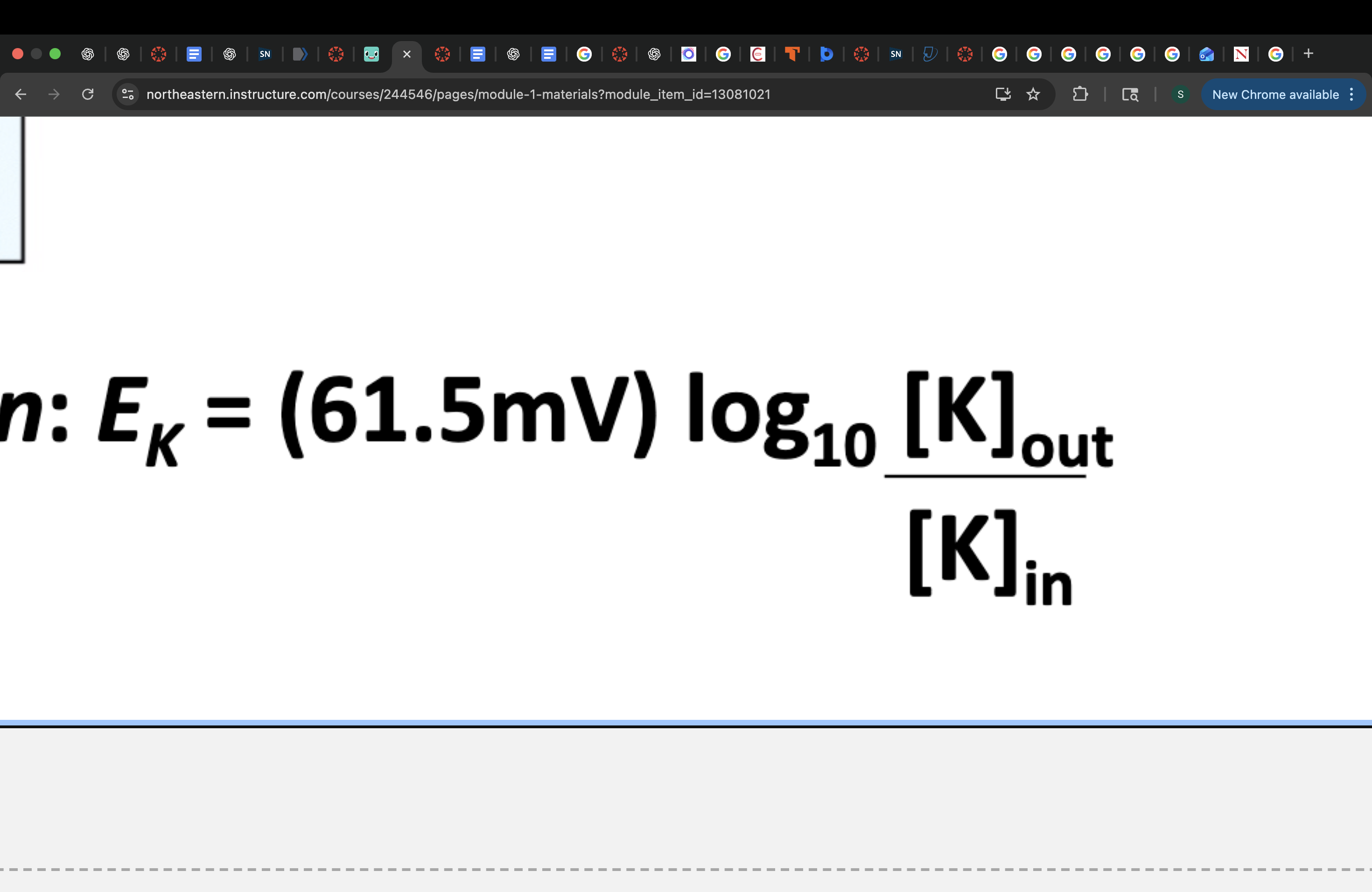
Nernst Equation
calculates equilibrium potential
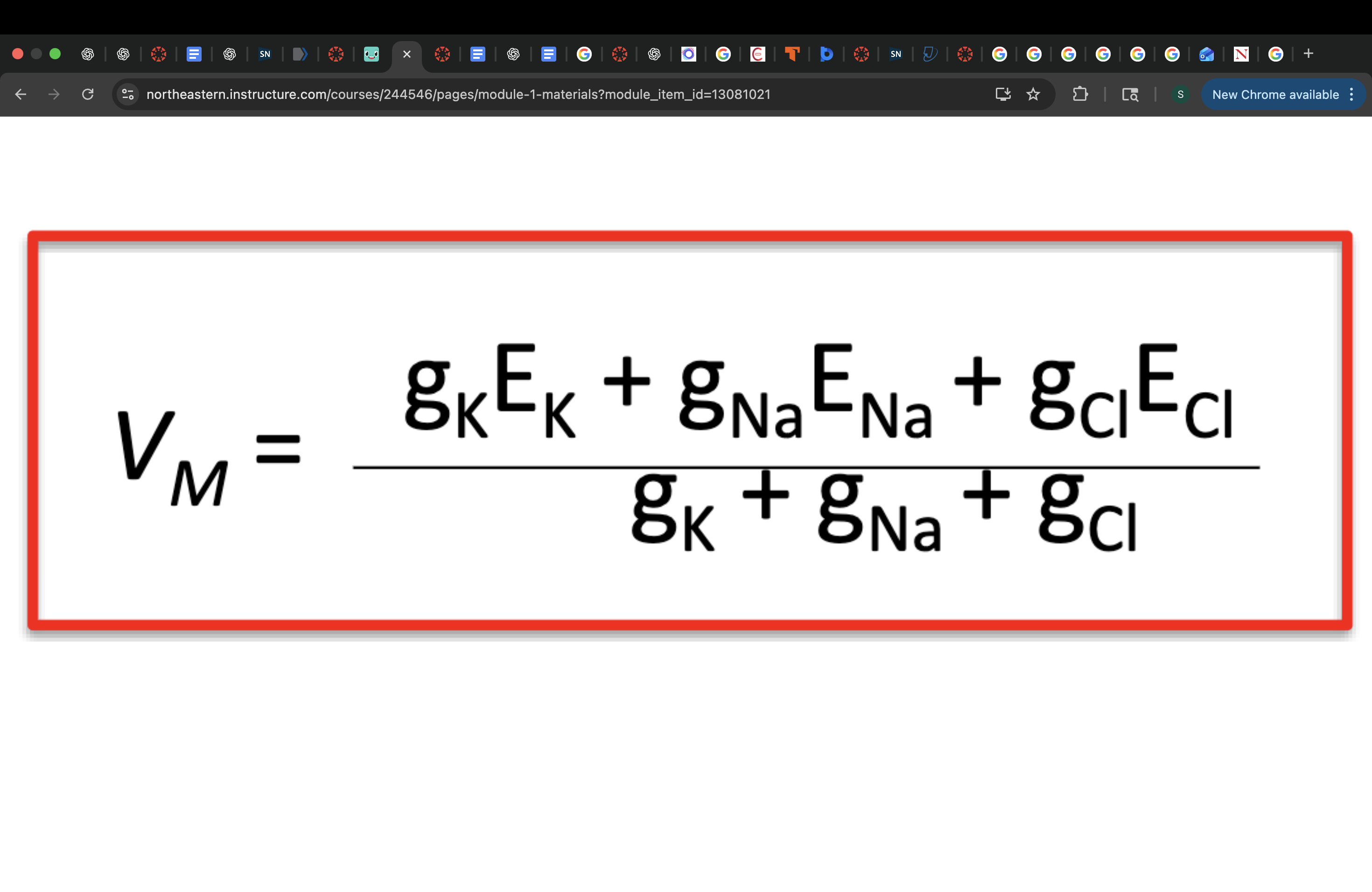
Goldman Equation
solves for the membrane potential given conductance and equilibrium potential
Conductance
how easily ions flow through the membrane; depends on how many channels are open
Equilibrium Potential
the specific membrane voltage where the electrical force pushing the ion across a cell membrane perfectly balances the chemical force (concentration gradient) pushing it the other way, resulting in no net movement of that ion in or out of the cell
Membrane Potential
the electrical potential difference across a cell's membrane, reflecting the distribution of ions
Current
movement of charge
Leak Channels
that allow ions to flow across the membrane, contributing to the resting membrane potential
Na+/K+ Pump
a transport protein that uses ATP to move sodium out of and potassium into a cell, helping to maintain the membrane potential
 Note
Note  Flashcards (62)