Gibberelin
 Call Kai
 Learn
Learn Practice Test
 Spaced Repetition
 Match
Match Flashcards
 Knowt Play
1/14

There's no tags or description
Looks like no tags are added yet.
Name | Mastery | Learn | Test | Matching | Spaced | Call with Kai | Chat |
|---|
No analytics yet
Send a link to your students to track their progress
15 Terms
What are Gibberellins?
A class of plant growth factors (hormones) that control seed germination and stem elongation.
What are the two primary roles of gibberellins (GA)?
To promote and control seed germination.
To promote stem elongation.
What is the first step in gibberellin-controlled germination?
The seed absorbs water. This activates the embryo to begin producing gibberellin.
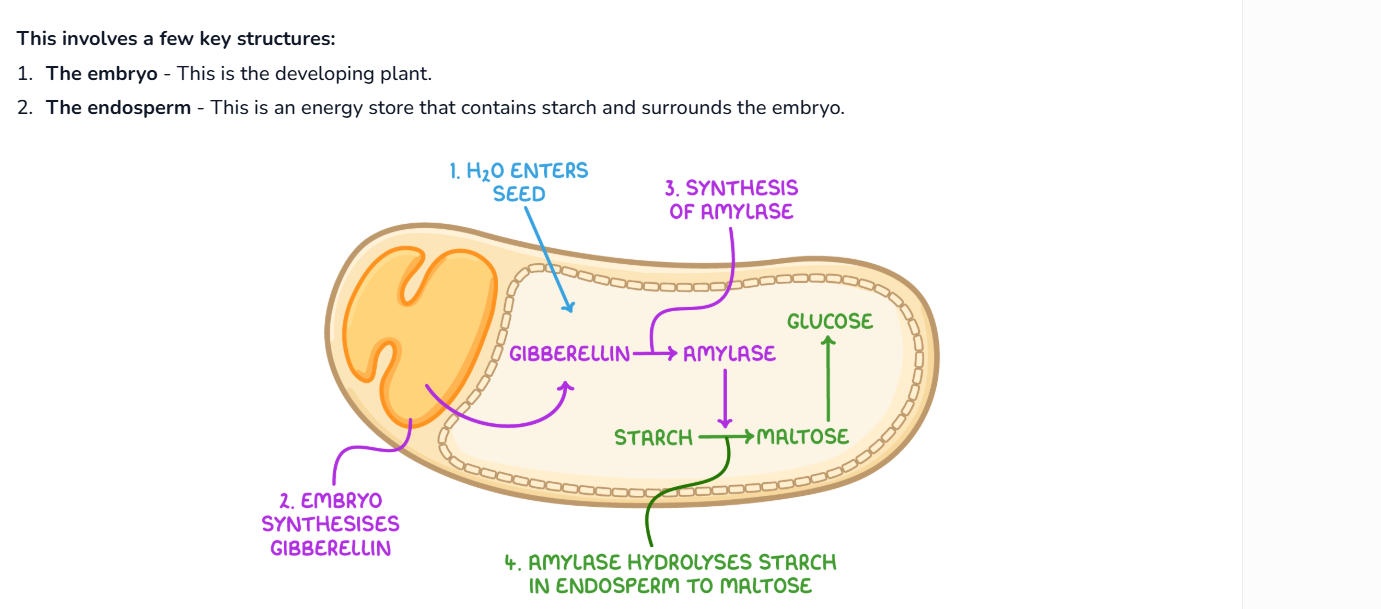
Where does the gibberellin diffuse to, and what does it target?
It diffuses to the aleurone layer (a layer of cells in the seed).
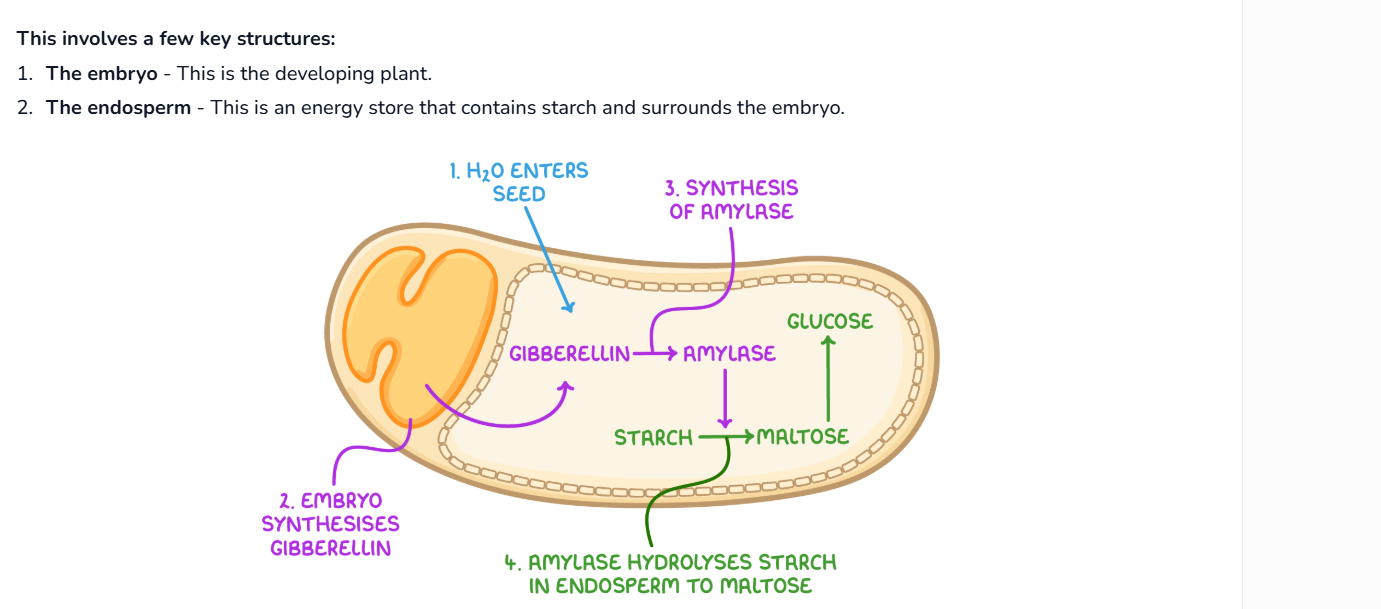
What does gibberellin stimulate the aleurone layer to produce?
Digestive enzymes, most importantly amylase.
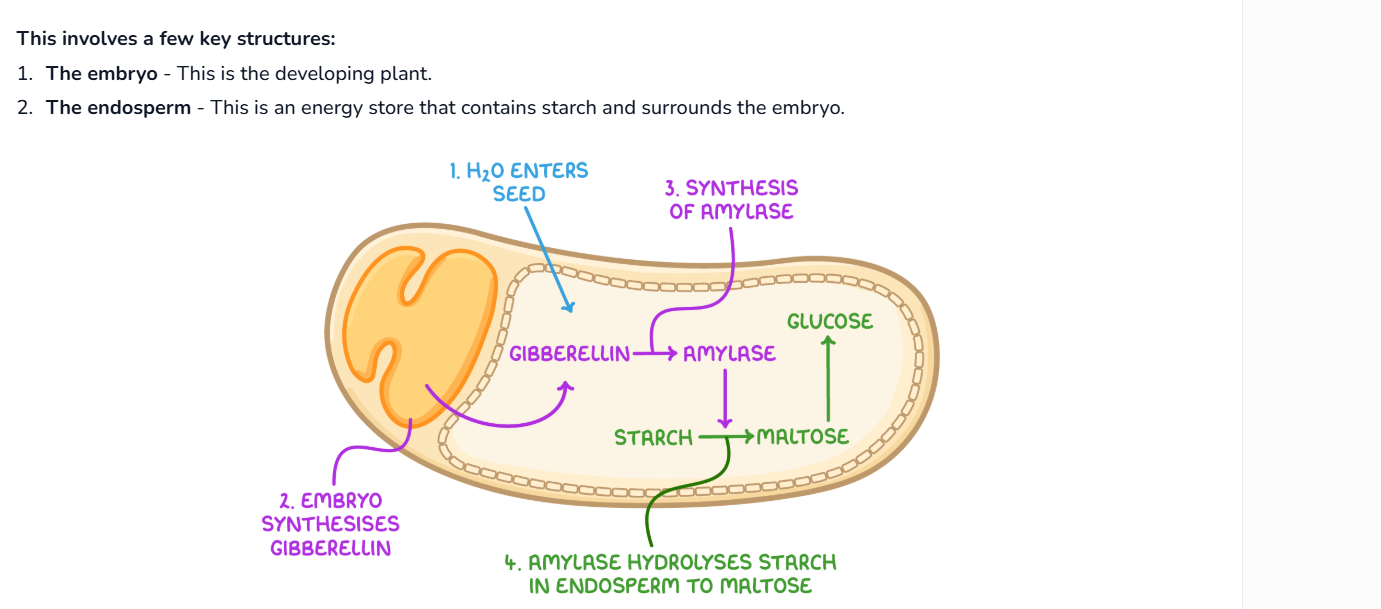
What is the function of amylase in the seed?
It hydrolyses the insoluble starch (stored in the endosperm) into soluble maltose (a sugar).
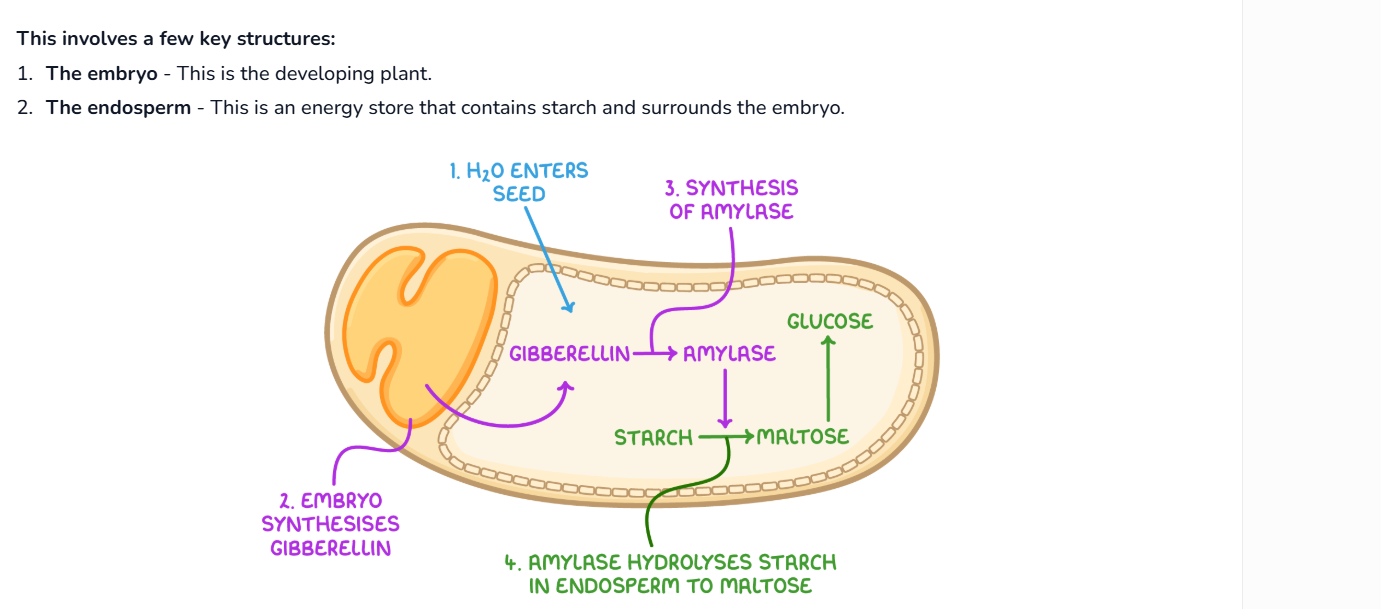
Why does the embryo need maltose?
It is used as a respiratory substrate. It is broken down in respiration to produce ATP, which provides energy for the embryo's growth.
How do gibberellins cause stem elongation?
They stimulate cell elongation and cell division in the internodes (the sections of stem between the leaves), causing the plant to grow taller.
What is the evidence for gibberellin's role in stem elongation?
Some dwarf varieties of plants (e.g., dwarf peas) are mutants that cannot produce gibberellin. If gibberellin is applied to them externally, they grow tall.
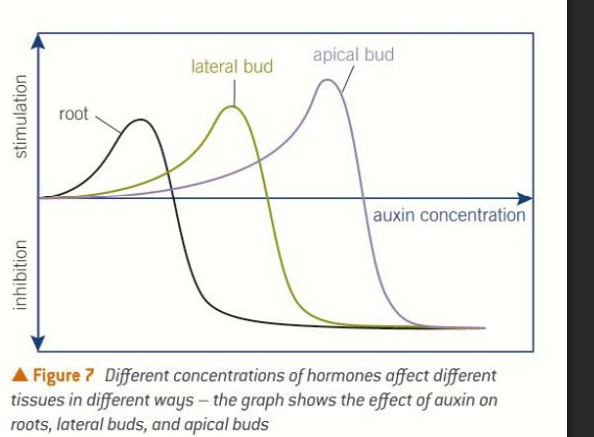
What is the evidence for gibberellin's role in germination?
Mutant seeds that lack the gene for gibberellin synthesis will not germinate. If gibberellin is applied to them externally, they will germinate.
As well as gibberellin biosynthesis indicators being added which prevent gibberellin production, keeping dormancy.
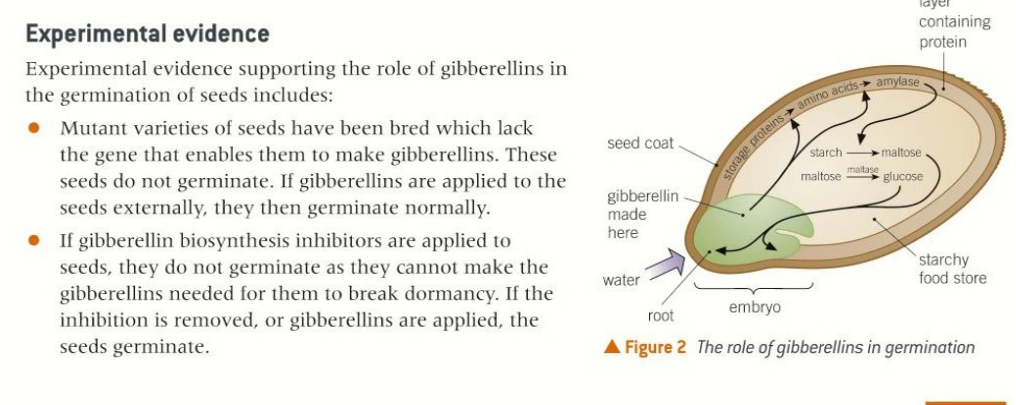
Describe the role of gibberellin in the germination of a starch-storing seed.(6 marks)
When the seed absorbs water, the embryo is stimulated.
The embryo produces gibberellin (GA).
GA diffuses to the aleurone layer (a layer of cells in the seed).
GA stimulates the aleurone layer cells to synthesise the enzyme amylase.
Amylase is secreted into the endosperm and hydrolyses the insoluble starch store.
This produces soluble maltose (and then glucose), which is used by the embryo as a respiratory substrate for ATP synthesis and growth.
Dwarf pea plants are short because they have a mutation that means they cannot produce gibberellin. Describe an experiment to confirm that gibberellin is responsible for stem elongation.
Group 1 (Experimental): Take a sample of dwarf pea plants and apply a gibberellin solution to them.
Group 2 (Control): Take a genetically identical sample of dwarf pea plants and apply a solution without gibberellin (e.g., water).
Method: Keep both groups in identical conditions (light, temperature, water).
Measurement: Measure the height (stem length) of all plants over a set period.
Result: The plants in Group 1 (with GA) will grow tall, while the plants in Group 2 (control) will remain dwarf. (Any 4 points)
A scientist finds mutant barley seeds that cannot produce amylase. Explain why these seeds would fail to germinate, even if gibberellin is present.(3 marks)
Even if gibberellin is present and stimulates the aleurone layer, no amylase can be produced.
Without amylase, the starch in the endosperm cannot be hydrolysed into soluble maltose.
Without this respiratory substrate, the embryo cannot produce ATP and therefore does not have the energy to grow.
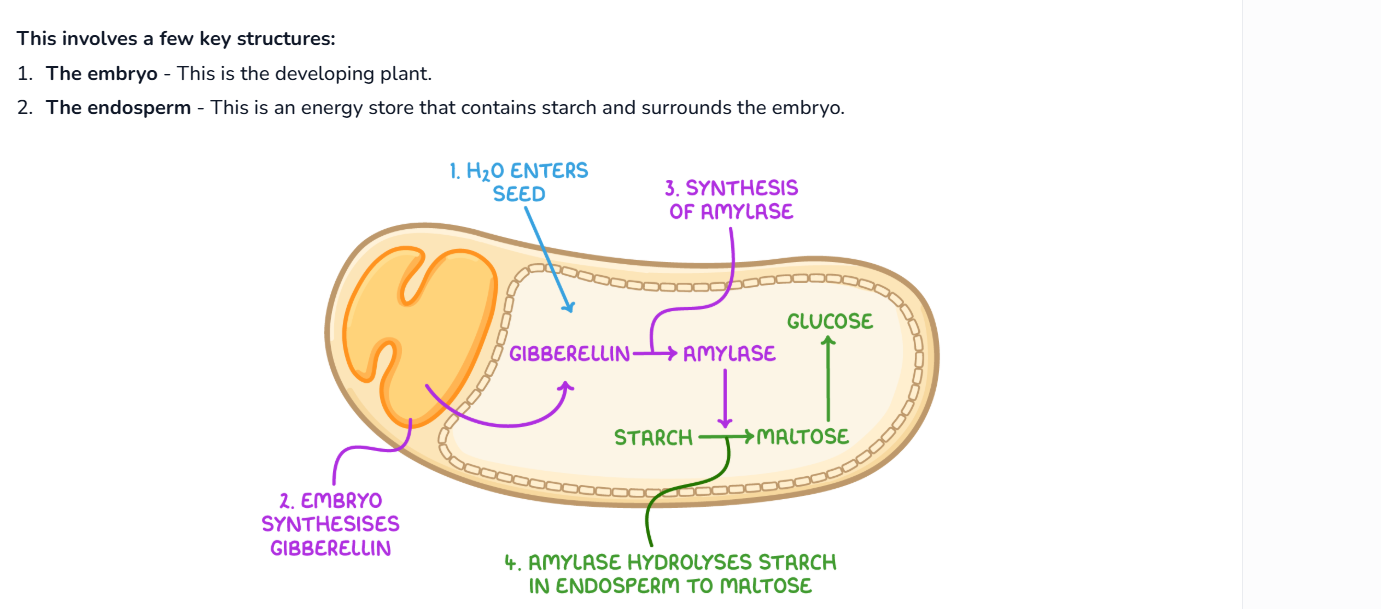
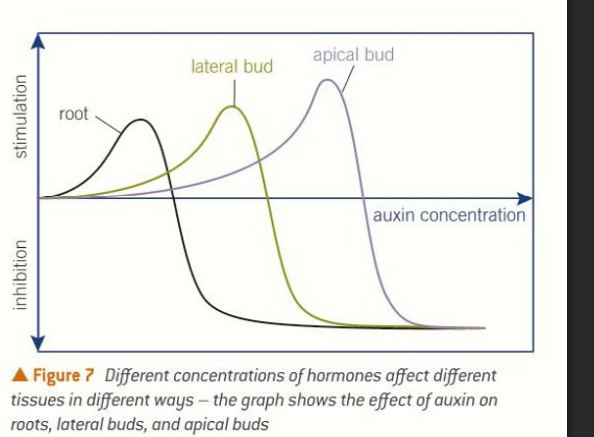
Distinguish between the role of auxin and gibberellin in stem elongation.(2 marks)
Auxin: Promotes cell elongation in the apical tip / zone of elongation to cause directional growth (tropisms).
Gibberellin: Promotes cell elongation in the internodes to control the overall height of the plant.
Explain the interaction between gibberellin (GA) and abscisic acid (ABA) in the context of seeds.(3 marks)
The hormones are antagonistic (have opposite effects).
Gibberellin (GA) breaks seed dormancy and promotes germination.
Abscisic Acid (ABA) induces and maintains seed dormancy, preventing germination (e.g., until conditions are right).