Test no.2 Greek Culture
 Call Kai
 Learn
Learn Practice Test
 Spaced Repetition
 Match
Match Flashcards
 Knowt Play
1/88

There's no tags or description
Looks like no tags are added yet.
Name | Mastery | Learn | Test | Matching | Spaced | Call with Kai |
|---|
No analytics yet
Send a link to your students to track their progress
89 Terms
Protogeometric
Associated with the Greek Dark Ages. Decoration is restricted to purely abstract elements and is characterized by broad bands and concentric circles.
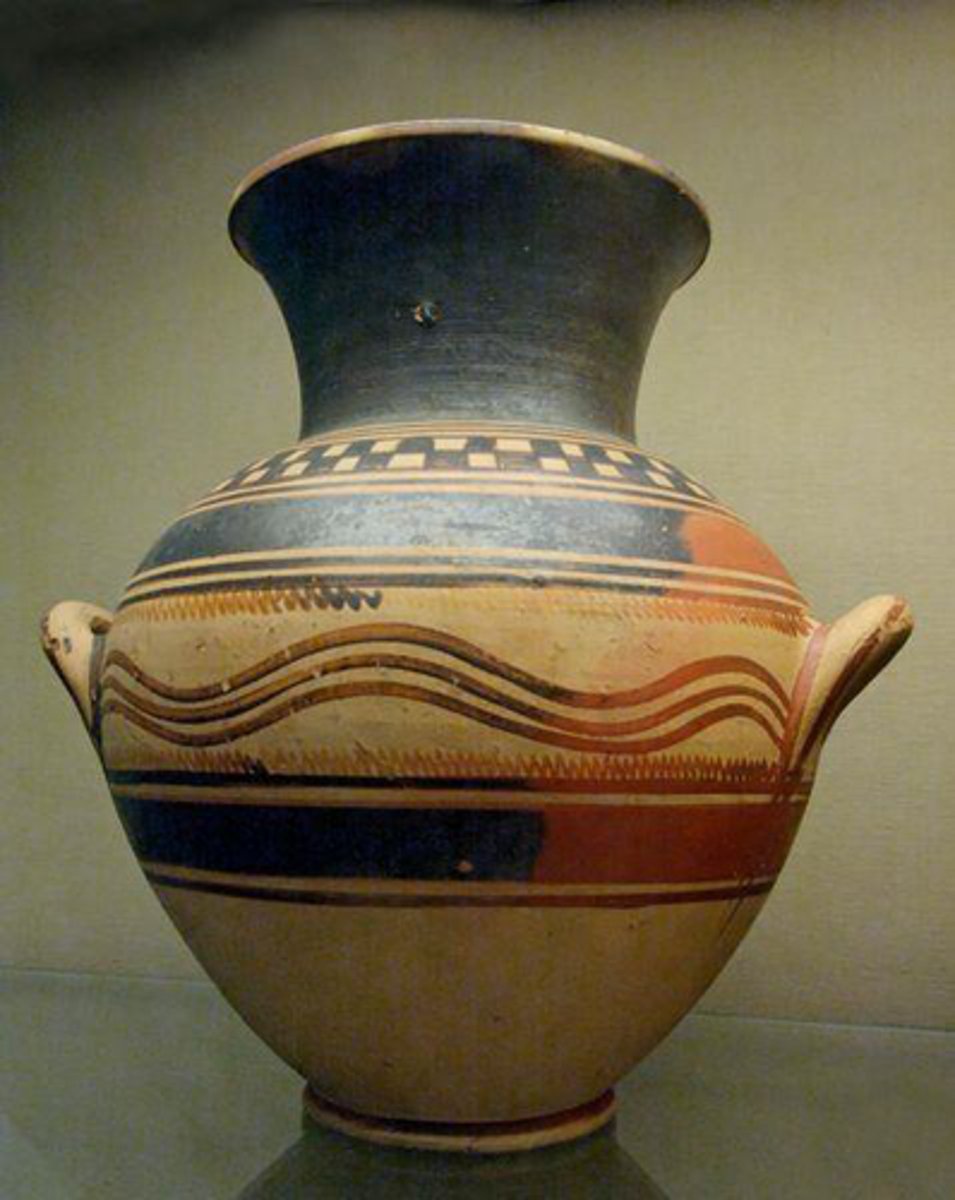
Geometric Characteristics
- bands and registers (of large mammals)
- Large vases were used as funerary markers
What were geometric pots made out of?
clay
What were the motifs on pottery in the 8th and 7th centuries?
- lions and griffins spread through the Mediterranean
- influences of Syria, Assyria, Phoenicia, and Egypt colliding with Greek culture
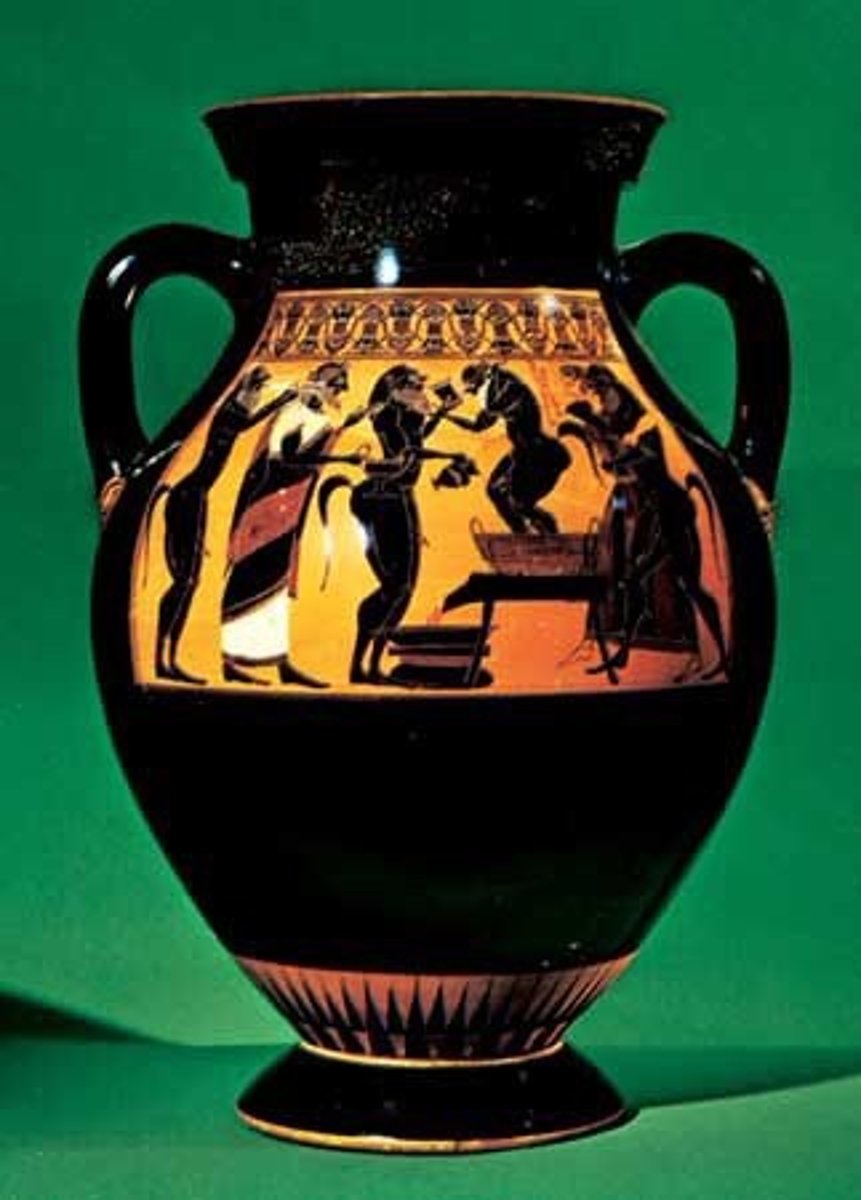
Black Figure Pottery
- black figures, etched silhouettes, lines, and contrast against a red background
- iconography frequently narrates mythological stories
- subject painted on the object with slurry
The Francois vase
Large, Attic Volute crater decorated in the black figure style
- one of the earliest pieces to depict multiple scenes
- 270 figures, 121 with inscriptions
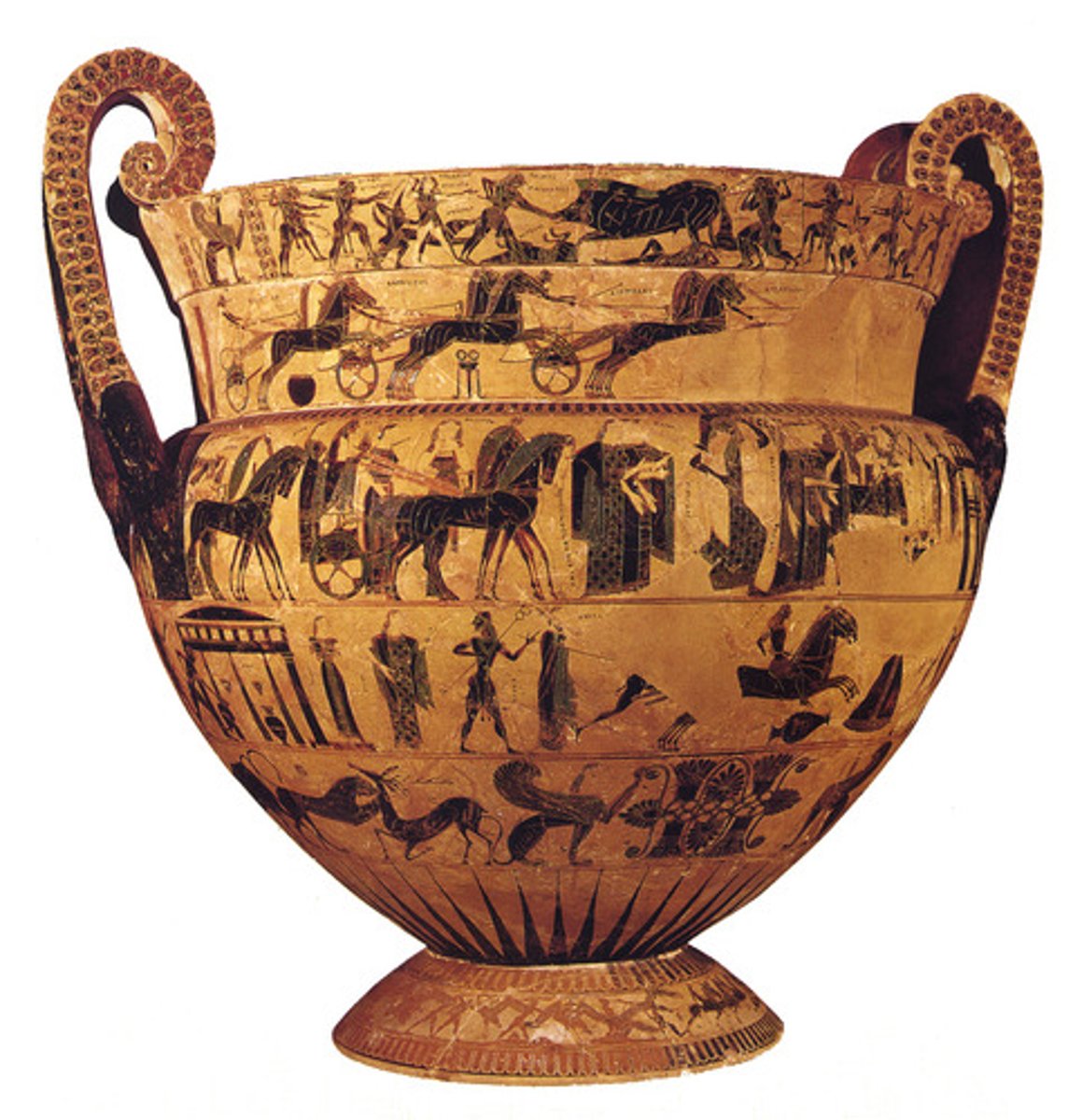
Functions of the Francois vase
- interior shows scratching, which might have been used for mixing
- use in symposia or in a funerary banquet honoring the deceased.
- Kraters used for mixing wine with water
Archaic sculptures
- male and female funerary monuments and religious offerings called kouros and kore figures with frontal position hanging down
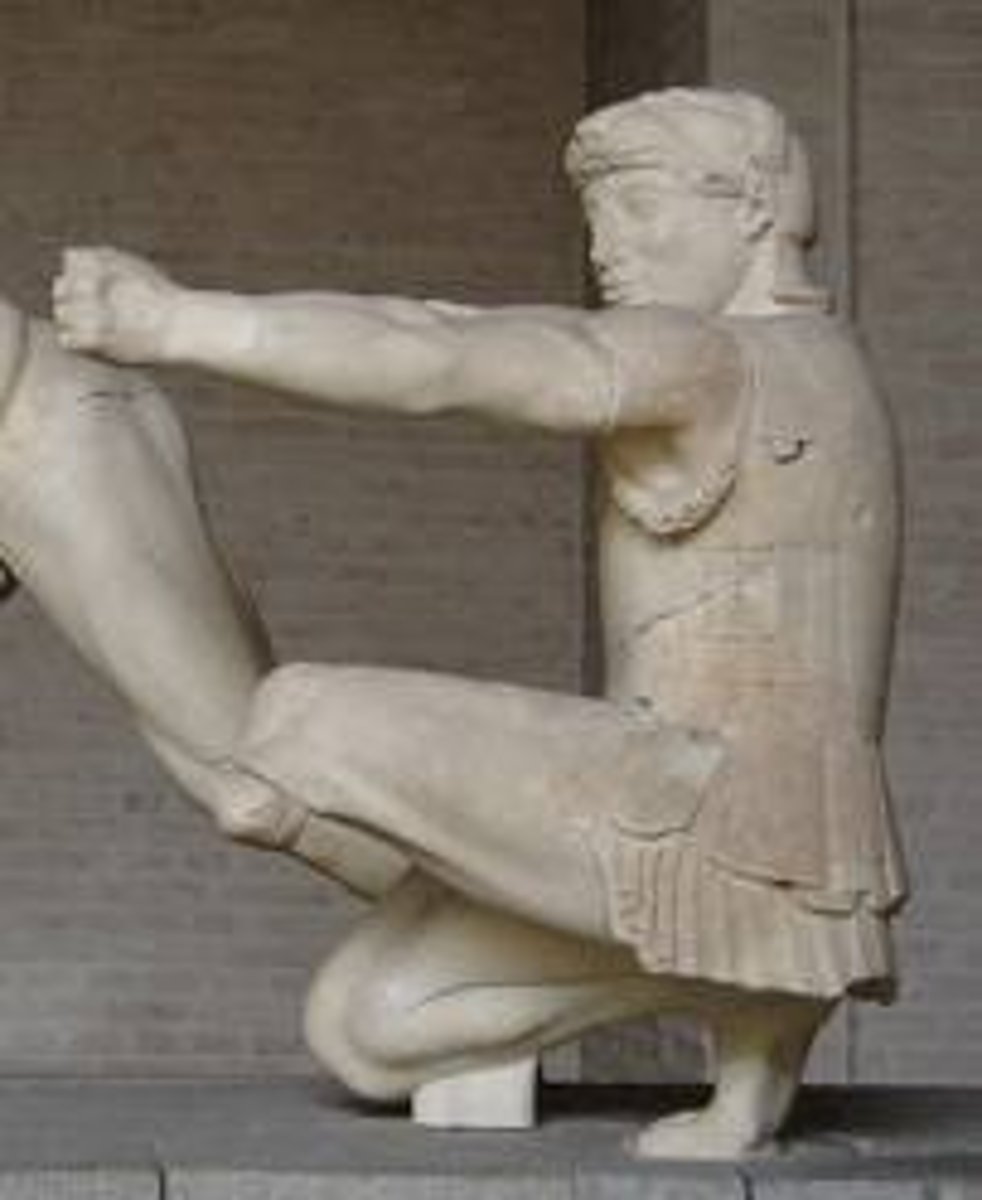
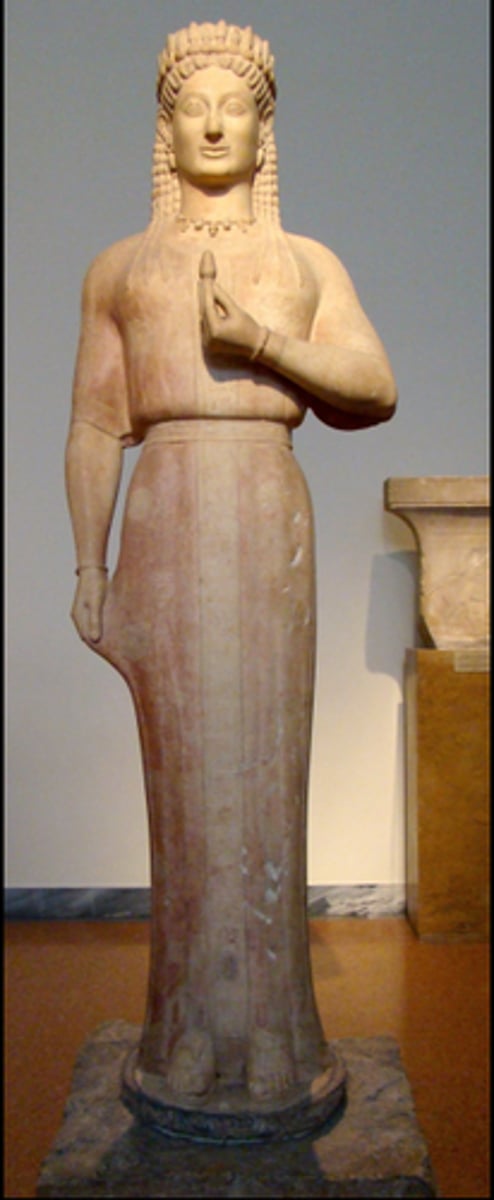
Phrasikleia Kore
- lotus imagery
- commissioned to be a grave marker
- polychromy
Greek Lyric or "Melic" Poetry
- associated with the 7th-5th century BCE
- product of social, political, and artistic environments
- what survives are fragments/lyrics
-
Sappho
Greek poet, she was one of the most famous lyric poets of Greece.
- from the city of Mytiline or Eresos on the island of lesbos
Mummy cartononage
- Ancient Egyptian mummies were covered with an outer casing made of linen, recycled plaster, and papyrus
Pindar
Lyric poet, best preserved work, wrote odes to victorious Olympians
- celebrates major religiously centered athletic events
The priamel
A literary device which focuses attention by presenting a list of items to compare, culminating with the item of interest
Peridios Circuit
Circuit of olympic, isthmian, delphic, and nemean games
Palaestra
exercise yard/room for gymnastics, wrestling, and more
Hellanodikai
judges or officials of the Ancient Olympic Games
Temenos
a sacred enclosure built to separate the ancient temple from the rest of the city
Hippodrome
An ancient Greek stadium used for horse and chariot racing
Stadion
foot-race
Pankration
an olympic event that combined wrestling and boxing
Hoplitodromos
A footrace where they wore armor while they raced
Heraia
Women had their own Olympics in non-Olympic years
- athletic events every 4 years for women only in honor of Hera
Epinicia
victory odes
Funeral Games
For Patroclus, Book 23 of the Iliad
Ritual Celebration of the Gods
Apollo and Zeus
Peridos Games
Olympia, Delphi, Isthmian (Corinth),
Nemea
Athletics as Religious (and Political) Festivals at
Panhellenic or local sanctuaries
Formal athletic competitions during religious festivals;
victory viewed as a favor of the presiding deity
▪ Sacrifices of animals, sacred processions, truces during
skirmishes and wartime, oaths by athletes
Olympic Games
Olympia was a sacred area (temenos)
surrounded by a wall containing several
temples and accommodations for sporting
events
Areas of competition (Olympics)
- Equestrian
- Pentathlon
- Combat Sports
Treasuries at Olympia
At the foot of Kronos Hill, eleven treasuries
formed the northern boundary of the
temenos (sanctuary)
• Built in 6th c. BCE by 11 Greek city-states
and this is where they are housed under the protection of a god, and they are given offerings
οἶκος/ οἶκοι
households
πόλις
city state
δῆμος
the people, the residents, and the collective body of the polis
τυράννος
An aristocratic ruler who appeals to the demos
κοῦρος, κόρη
male youth/young unmarried women
φύγας
exile
ὕβρις
violence
Major Bronze Age
Centers during the
Mycenean Period:
Mycenae, Tiryns,
Thebes, Athens, Gla,
Orchomenos, Pelos,
Knossos
Major Cultural Shifts during the 10th Century
- Loss of Linear B
- Collapse of urban centers
- widespread population decline
- no large-scale architecture
- development of iron-working
Technical Innovations during the 10th Century
- proto-geometric style of pottery using faster pottery wheels, and compasses to draw curvilinear designs
Usage of Iron
- Smelting of iron was learned from Cyprus and the Levant using local deposits of ores
- edged weapons used by warriors
Major cultural changes and innovations during the Archaic age (9th-5th century, early 5th century)
- rise of urban centers
- colonization and trade
- invention of currency
- rise of monumental architecture
- figurative art
City-state
politically independent and isolated urban centers that control the countryside
πόλις (polis)
transition from agriculture to a mercantile/trade-based economy
- rise of manufacturing (pottery)
- Non-aristocrats could gather in assemblies
Coinage/introduction of currency
- Before coinage, iron bars were the currency
- spread rapidly through polities and colonized territories
- Each polis mines its own coins
- monetization of trade
Phalanx
A military formation of foot soldiers armed with spears and shields
Attributes of Liberal Democracies
- governing system based on the will and consent of the governed
- adherence to the rule of law
- respect for universal human rights
Isogoria
equality of voice (freedom of speech)
Isonomia
equality before the law (all citizens are equal before the law)
Isotelia
All citizens contribute to political spending and the military according to their wealth and income
Isocracy
All eligible citizens have the same probability of being selected
Demokratia
The Greek word meaning rule, or power, by the people
- power broadly distributed
- Distinguished from the power exercised by an individual
- Distinguished from power exercised by an elite group (aristokratia/
oligarchia)
Demos
the people; the masses
Kratia
Power, constitutional authority
Aristos
"the best," the landed elite status
Oligos
"The few," power consolidated in the hands of the few privileged
Archia
The rule
Ekklesia
assembly
- during Pentecontaetia: 6,000 quorum of all male Athenians citizens
Council of Areopagos
Consisted of ex-archons, membership for life, and oversight over the laws
Thetes
Athenian citizens who did not own any land
Solon's Reforms
cancel debts, income tax, and more men could hold public office
Pisistratus
Son of Nestor, who accompanies Telemachus to Sparta
- formed allies with powerful families
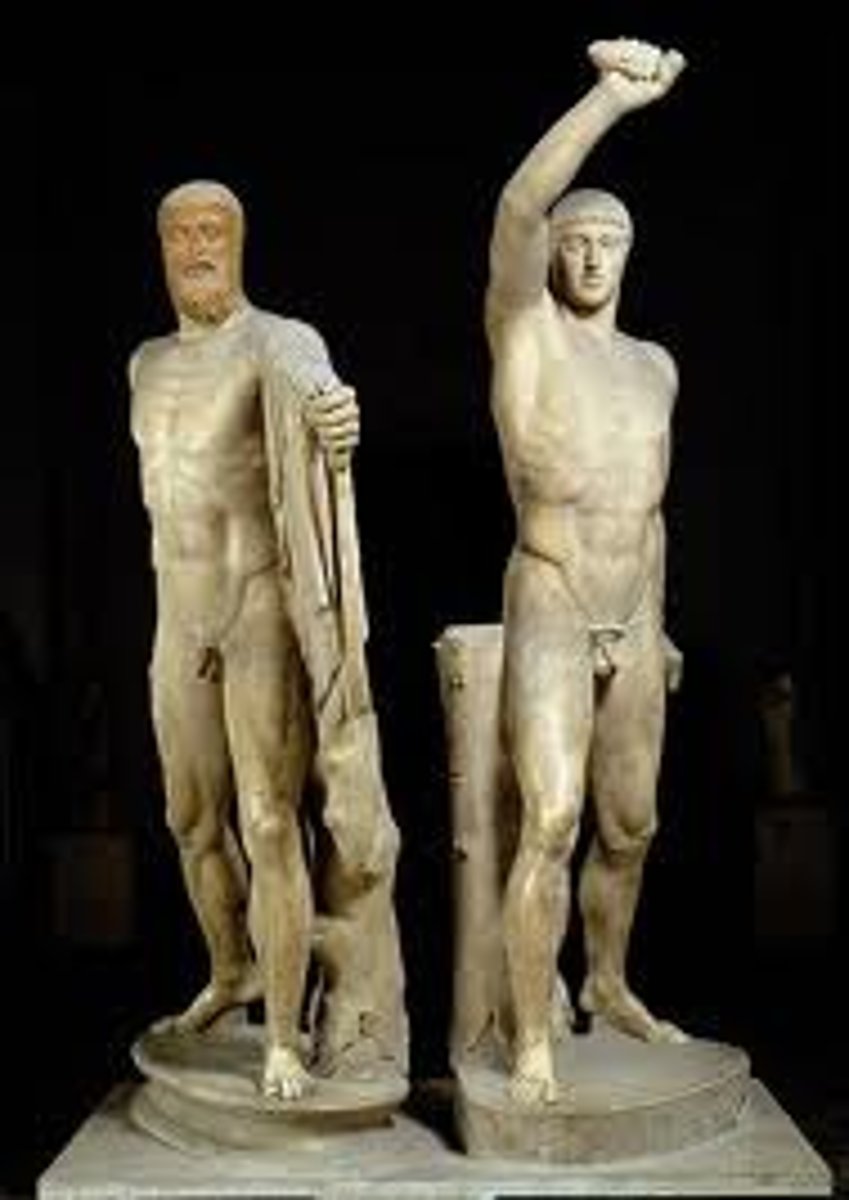
The Tyrannicides
two Athenian citizens who murdered the son of Peisistratus helped bring about the downfall of Athenian tyranny and paved the way for democracy.
Hippias and Hipparchus
The 2 sons of Peisistratos who succeeded him after he died.
Strategoi
This was a military commander. There was 1 per tribe.
Areopagus
The governing council of Athens was originally open only to the nobility. It was named after the hill on which it met.
Demes
The political division of Attica in ancient Greece.
- they were self-governing units
Eleutheria
freedom
ison
equality
Limits to freedom (ison)
- Metics who exercised citizen rights were liable to prosecution ( if indicted, they were sold into slavery and their property was confiscated)
Role of women in society
- played no public role except in the case of religious rites
Cleisthenes
An aristocrat created a council of 500 and benefited from the Athenian democracy
- replaced tribal clans with 10 geographic demes
Themistocles
A Greek military leader who convinced the Athenians to build a navy. This helped Athens win a major battle against Persia, the Battle of Salamis. He was ostracized around 471 BCE.
Persian Wars
- Hellenic victory in the wars
- Athens + Sparta led roles in the defeat of the Persian invasions
Peloponnesian League
an allied, very loose
Confederation of Poleis was founded around 550 BCE
under the hegemony of Sparta
Rules of the League (Peloponnesian)
- No binding treaty or agreement between
poleis
b. Each polis negotiated its own terms with
Sparta
c. Each polis agreed to have "Common friends
and enemies."
d. Each polis agreed to provide reciprocal
military aid
Delian League
An alliance headed by Athens that says that all Greek city-states will come together and help fight the Persians
The Pentecontaetia
A 50-year period of peace between the Greco-Persian War and the Great Peloponnesian War
What is a key ideology of Athenian Democracy regarding citizens?
Protection of the Rights of Athenian Citizens, equality of citizens
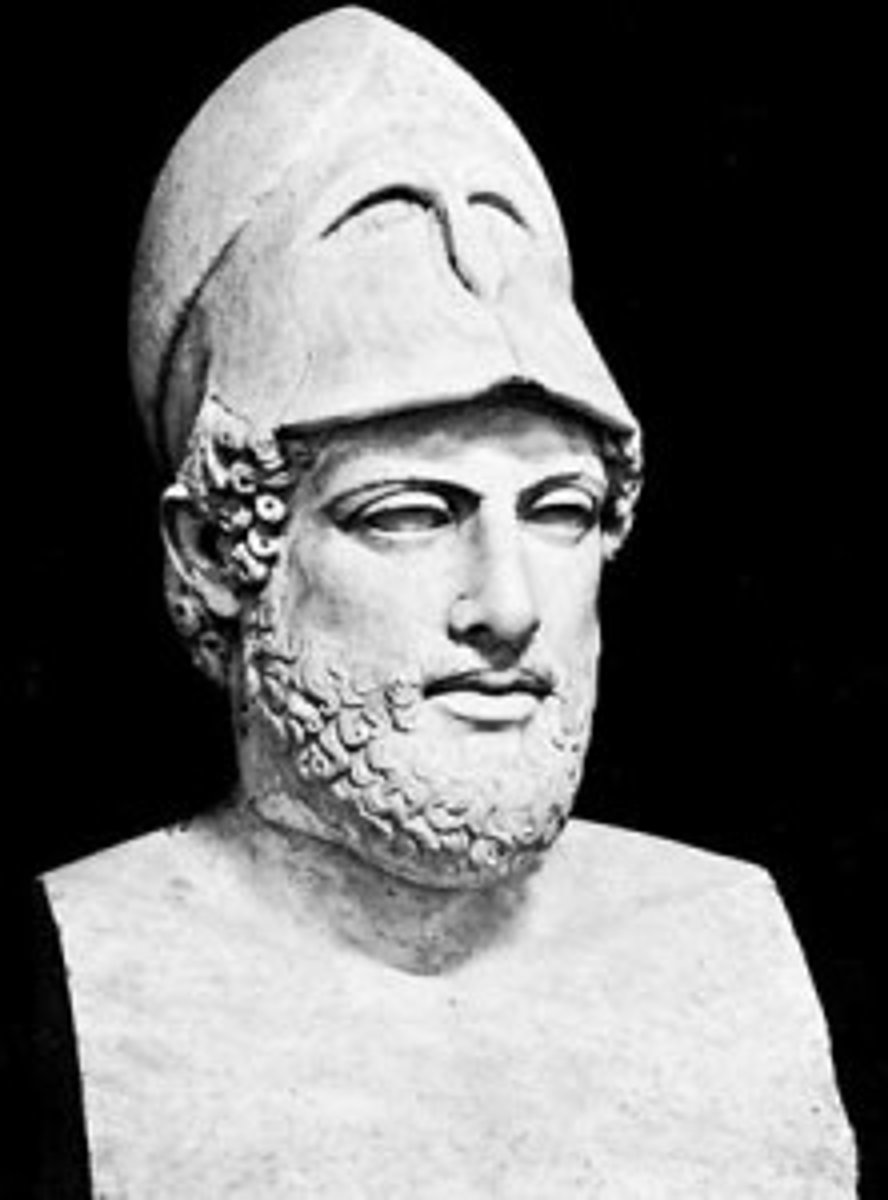
Pericles
Athenian leader noted for advancing democracy in Athens and for ordering the construction of the Parthenon.
Qualities of Pericles
- a prominent, influential figure in Athenian politics with masterful oratorial skills
- Held a powerful position of strategos for more than 20 years
Strategoi (during Pentecontaetia)
Elected annually, oratorical and rhetorical skills, political leadership,
and military leadership, usually held by a major, politically influential figures
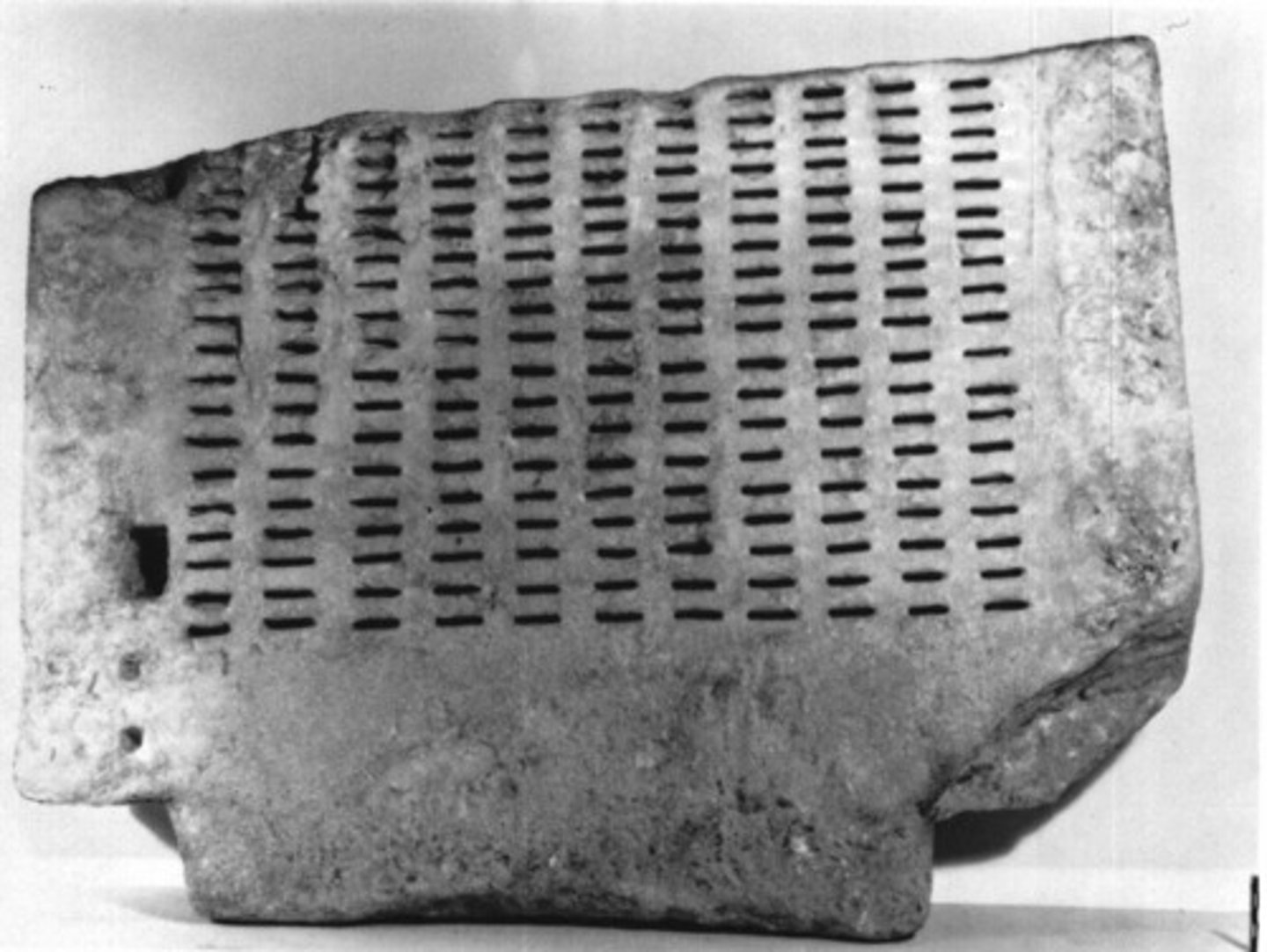
Kleroterion
Ancient Greek allotment machines that assigned jurors to the courts
Athenian Dramas
Annual festivals of the City Dionysia and the Lenaia, where dramatic competitions would take place
- Choruses and the cost of costumes would be paid through the city offices
Focusing Event
A major happening, often of crisis or disaster proportions, that attracts widespread media attention to an issue
Thucydides Trap
When a rising power causes fear in an established power, which escalates toward war
The dispute over epidamnus
Poleis (including Epidamnus) experience internal strife between democratic and
oligarchic factions.
• Athens and Sparta finally come to the precipice of war in 431 BCE over disputes among their allied cities, especially. Epidamnus, Corcyra, and Potidaea.
Mass Grave at Kerameikos Cemetery
Dated by pottery sherds to ~430 BCE
• Contained some 90 skeletons and possibly originally as many as 150
• Coincides with both the time of the siege of Athens by Sparta and the Plague
• Skeletons placed helter-skelter with no soil between them

