BIOL 354 MIDTERM 1 REVIEW
 Studied by 0 people
 Call with Kai
 Learn
Learn Practice Test
 Spaced Repetition
 Match
Match Flashcards
 Knowt Play
1/50

There's no tags or description
Looks like no tags are added yet.
Name | Mastery | Learn | Test | Matching | Spaced | Call with Kai |
|---|
No study sessions yet.
51 Terms
The scientific fact that species change through time, and that all life, including humans, has descended with modification from a common ancestor; changes in allele frequencies of a population over time
evolution
the science of discovering, describing, classifying and understanding the evolution of life on earth
systematics
tested concept supported by data
scientific theory
unproven speculation
nonscientific theory
a mechanism that can explain evolution
natural selection
evolution by natural selection makes 2 claims about the nature of species:
species change through time & are related by common ancestry
(Darwin’s principle) more offsprings produced than can survive
superfecundity
(Darwin’s principle) not all individuals are the same
natural variation
(Darwin’s principle) characteristics passed to offspring
heritability of traits
does natural selection act on population or individual level?
individual
does evolution occur to individuals or populations?
population
consists of individuals of the same species that are living in the same area at the same time
population (c)
similarity in structure despite different function (due to shared traits from common ancestor; ie hand bone)
homology
traits that are homologous with structures in other organisms that are more fully functioning (not useful to current organism; ie: tail bones/goosebumps in humans)
vestigial structures
__ leads to differential reproductive success (adaptation are an outcome of this process)
heritable variation
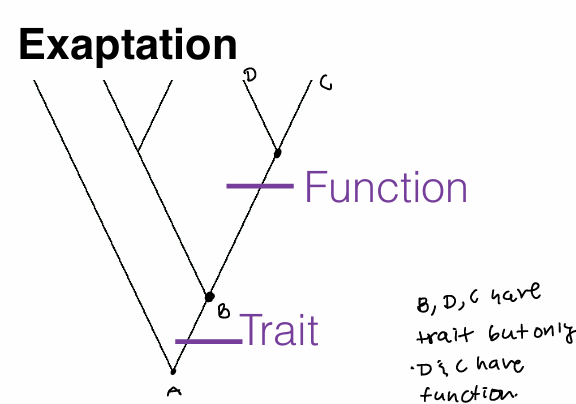
A trait shaped by natural selection for its current use (ie: thick fur in arctic mammals, echolocation in bats, venom in snakes)
adaptation
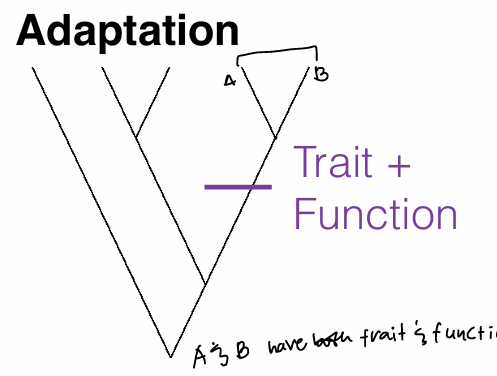
a trait that originally evolved for a different function (a trait that is co-opted for a new function; ie: bird feathers, penguin wings, horns in horned lizards)
exaptation (pre-adaptation)
coevolution can happen between
predator & prey; parasite & host
process of forming new species
speciation
process of deciding where one species ends and another begins (which population represents distinct species)
species delimitation
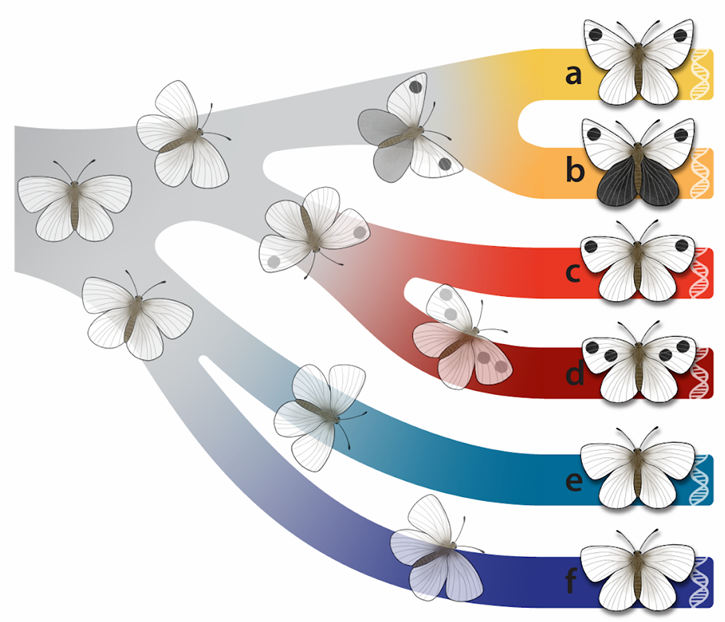
(species delimitation) genetically distinct but look identical in morphology (strongly reproductively isolated)
cryptic species (e/f)
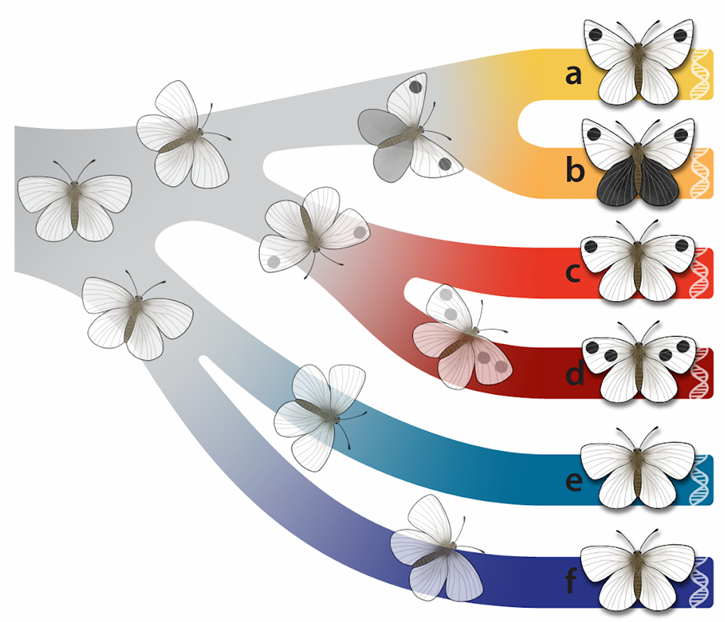
(species delimitation) population that are partially diverged; not fully separate species but also nota single cohesive species (intermediate stage where speciation is happening but not complete; some reproductive isolation)
grey zone (c/d)
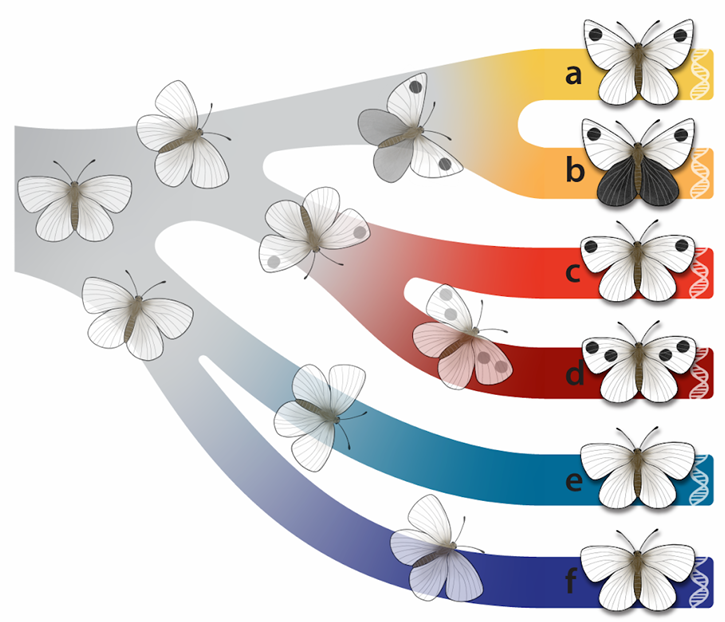
(species delimitation) ecologically distinct but not yet reproductively (early stage ecological divergence without full speciation; reproductive isolation is incomplete/absent)
recent adaptive divergence (a/b)
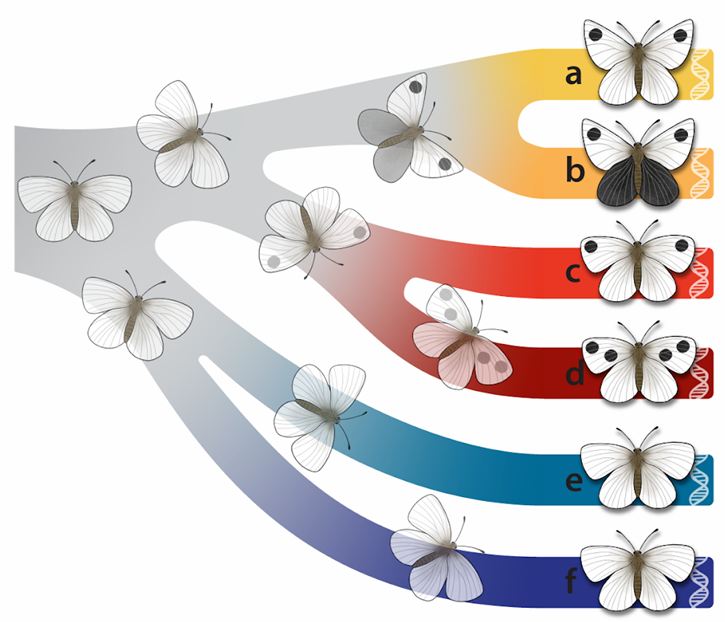
genetically distinct, ecologically & morphologically coherent (no gene flow, fully reproductively isolated)
good species (a/f)
possible outcomes: gene flow, hybridization, reproductive isolation & reinforcement
what happens when previous isolated population come into contact
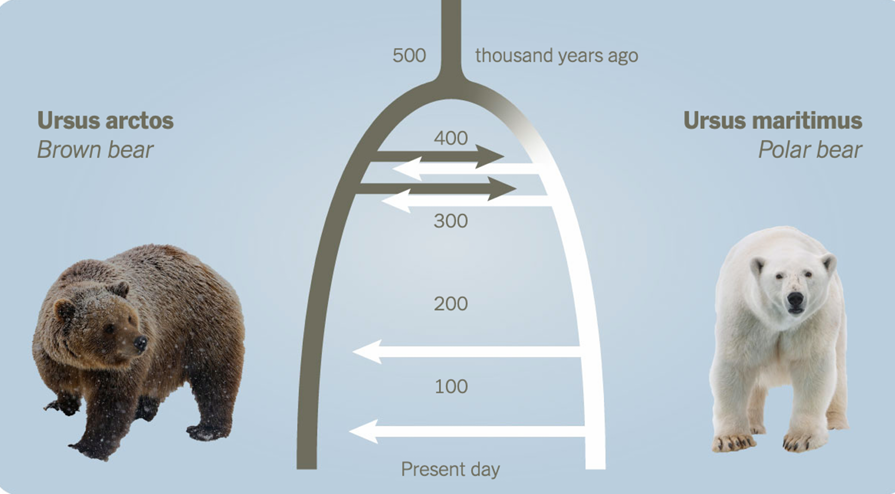
exchange of genetic info between population
gene flow
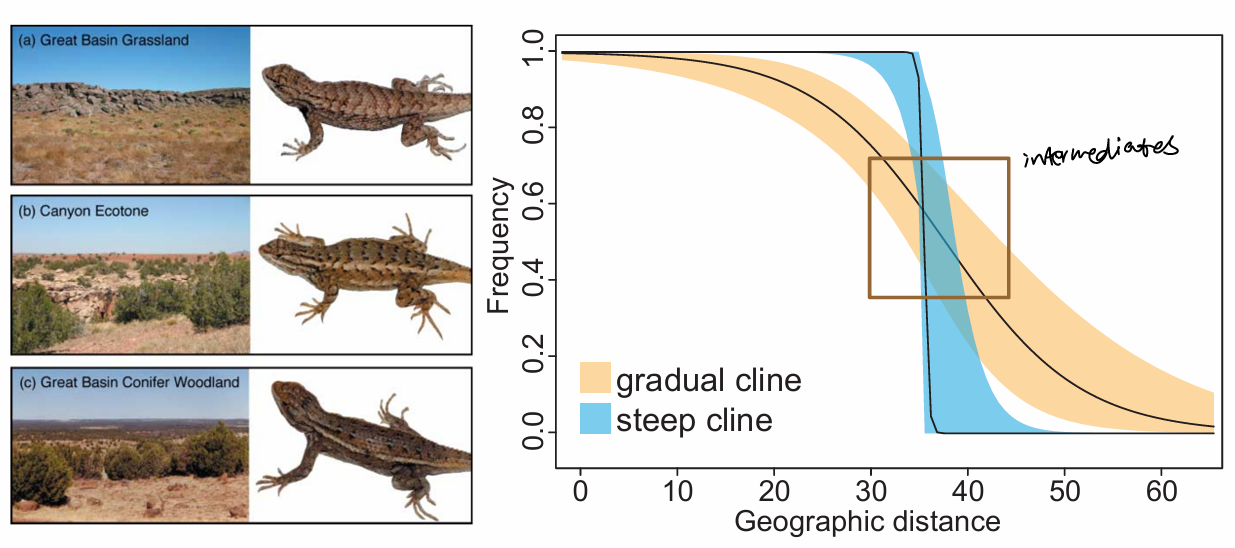
area where previously isolated population meet, mate & produce offsprings
hybrid zones
(Reproductive isolation) features that prevent mating (ie: ecological isolation such as temporal geographical; meet but dont mate due to sexual isolation or incompatibility)
premating barriers
(Reproductive isolation) mating occurs but zygotes are not formed (ie: gametic isolation: failure to fertilize)
postmating barriers
(Reproductive isolation) mating occurs but offspring have reduced fitness (ie intrinsic barriers: hybrid sterility or hybrid inviability )
postzygotic barriers
principle that states that offsprings of mixed alleles have lower fitness
Dobzhansky-Muller incompatibility
does natural selection strength or weaken reproductive isolating mechanism?
strengthen
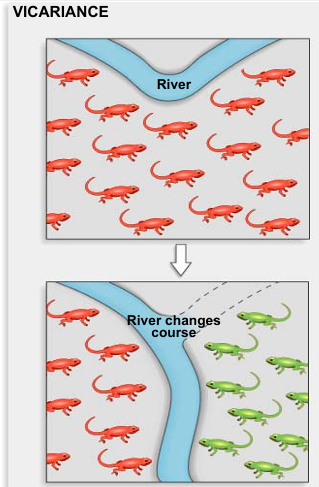
speciation resulting from physical isolation
allopatric speciation
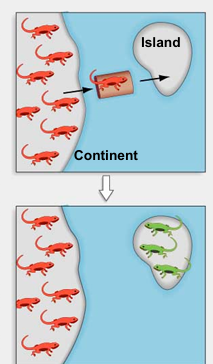
speciation resulting from the isolation of a small peripheral population, usually by disperal or colonization
peripatric speciation
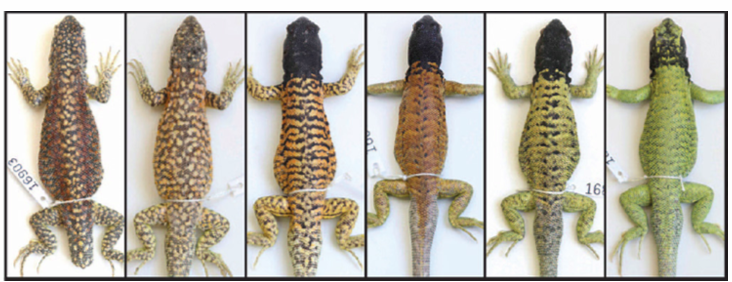
speciation across a continuous geographic are, usually across a habitat transition (2 population live next to each other, not fully separated, but experience different environemnt across that boundary)
parapatric speciation
when population becomes isolated by preferences for different habitats or mates, even through they arent physically isolated
sympatric speciation
duplicate chromosomes from the same species
autopolyploids
combine chromosomal sets from different species
allopolyploids
a diagram representing the evolutionary history of group of organisms
phylogeny
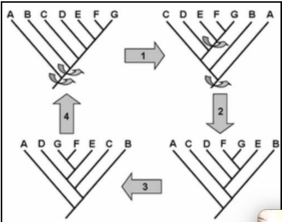
what are F & G considered?
sister taxa
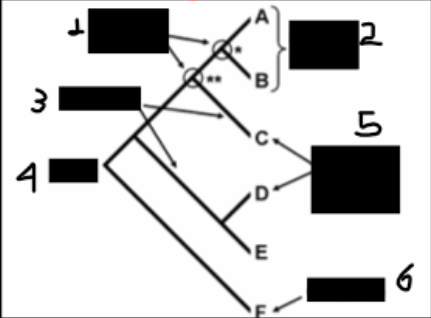
1
internal nodes
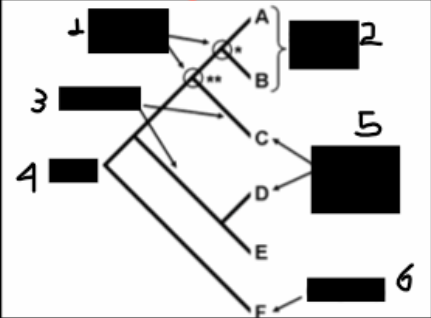
2
sister taxa (p)
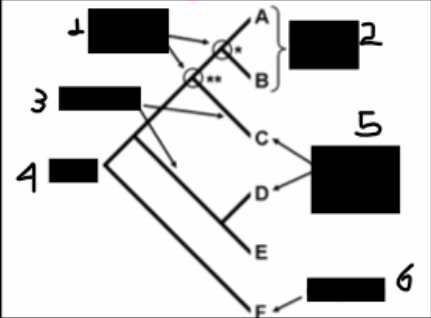
3
branches
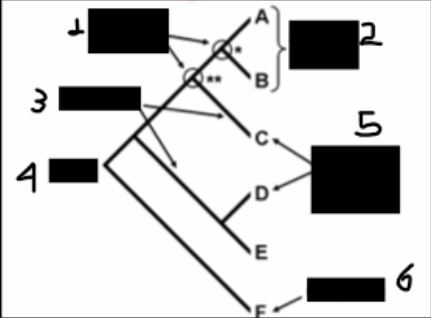
4
root
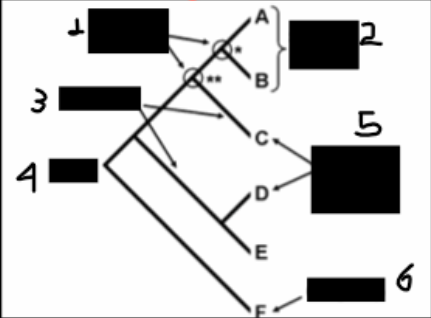
5
terminal nodes (“tips”)
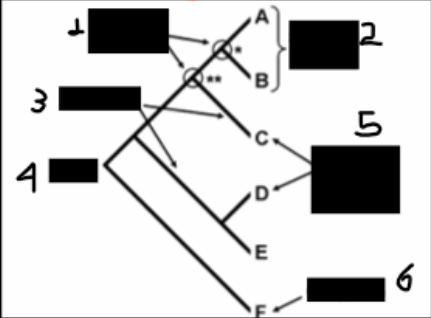
6
outgroup
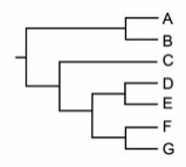
only the pattern of relationship matters (who’s closely related; branch length has no meaning)
cladogram
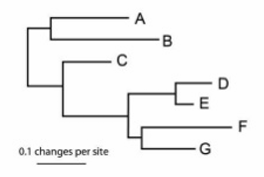
branch length = # of substitution or genetic change (longer branch= more molecular evolution; measures amount of change)
phylogram
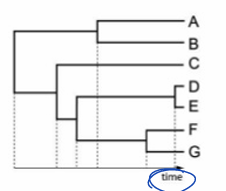
branch length= time since divergence (time tree)
chronogram
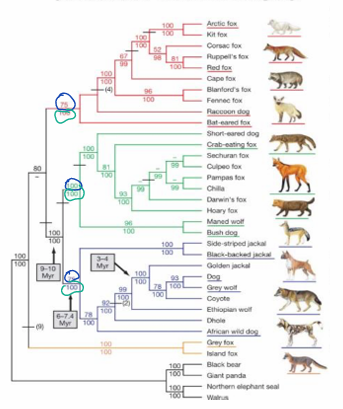
which values are the “bootstrap support”?
top %
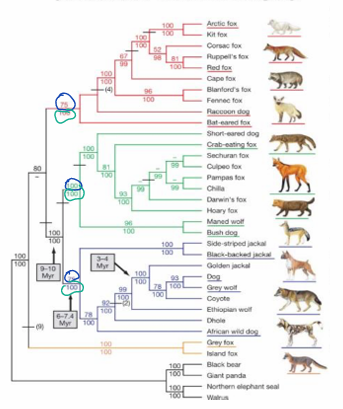
which values are the “posterior probability”?
bottom %
 Note
Note  Flashcards (120)